
“Anything that partakes of the nature of swamping our personality out of our control is never of God. Do we ever find a time in the life of our Lord when He was carried beyond His control? Never once. Do we ever find Him in a spiritual panic, crediting God with it? Never once; and the one great marvel of the work of the Holy Ghost is that the sanity of Jesus Christ is stamped on every bit of it.”
[…]
“Nowadays, people seem to have an idea that these ecstatic, visionary, excitable, lunatic moments glorify God; they do not, they give an opportunity to the devil. The one thing Jesus Christ did when He came in contact with lunacy was to heal it, and the greatest work of the devil is that he is producing lunacy in the name of God all over the world in the spiritual realm, making people who knew God go off on tangents…Beware of being carried off into any kind of spiritual ecstasy either in private or in public. There is nothing about ecstasy in these verses: ‘Thou shalt love the Lord they God with all thy heart.'”
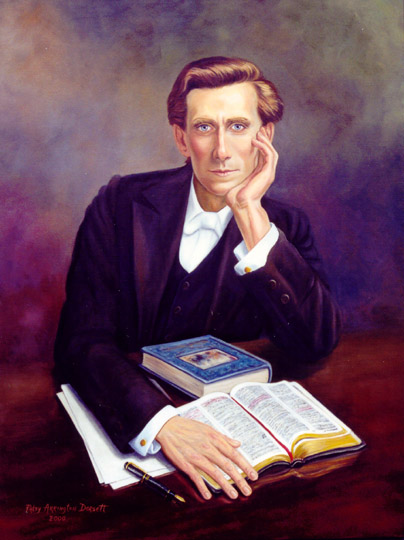
Oswald Chambers
1874-1917
 Christ Alone Wyoming