Obama Was Re-elected??

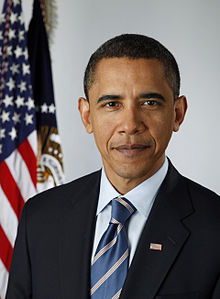
Yesterday, November 6, 2012, was election day in America. Two major party candidates, incumbent President, Barack Obama and challenger, Mitt Romney, waited for the results as the American people cast their votes. In the end, President Obama retained his office for another four years. Today, a great many Christians, greatly dismayed by the election results, are asking themselves, “Now what?”

From the moment I saw the results come in, I observed just about every possible response on social media. Some expressed outrage, others denied Mr. Obama would ever be their president, some half-jokingly talked of joining Texas in a secession from the Union. Yet, some remembered the scriptures and God’s sovereignty, “Daniel answered and said: “Blessed be the name of God forever and ever, to whom belong wisdom and might. He changes times and seasons; he removes kings and sets up kings…” (Daniel 2:20-21a).” There are no powers and authorities in this world that God has not established. Some He sets up for a blessing, some He establishes in judgment. But all are set in power for God’s glory alone.

The reason I write this is to encourage and remind the brethren that our hope is not in the governments and powers of this world, but in the King is the true power and authority over all things. When Jesus stood before Pilate, He said, “My kingdom is not of this world. If my kingdom were of this world, my servants would have been fighting, that I might not be delivered over to the Jews. But my kingdom is not from the world,” (John 18:36). Jesus established at that time that we are not to seek deliverance in worldly authority, but in Him alone. Therefore, our joy is not contingent on which candidate is elected, it is in the One who rules over us eternally. We do not find peace in presidents, congressman and governors, but in the One who willingly allowed those earthly authorities to crucify Him on our behalf.

Knowing this, we can read and submit to Romans 13: 1-7, “Let every person be subject to the governing authorities. For there is no authority except from God, and those that exist have been instituted by God. Therefore whoever resists the authorities resists what God has appointed, and those who resist will incur judgment. For rulers are not a terror to good conduct, but to bad. Would you have no fear of the one who is in authority? Then do what is good, and you will receive his approval, for he is God’s servant for your good. But if you do wrong, be afraid, for he does not bear the sword in vain. For he is the servant of God, an avenger who carries out God’s wrath on the wrongdoer. Therefore one must be in subjection, not only to avoid God’s wrath but also for the sake of conscience. For because of this you also pay taxes, for the authorities are ministers of God, attending to this very thing. Pay to all what is owed to them: taxes to whom taxes are owed, revenue to whom revenue is owed, respect to whom respect is owed, honor to whom honor is owed.” We submit, not because we believe in all the party platforms of the person in authority. We submit, because we honor the Lord who saved us and placed that person in power.

Now before everyone thinks I am suggesting that means we should just bow before every unjust ruling the government enforces, I am not advocating some sort of weak kneed, wishy-washy pacivity. Remember that when commanded by the Sanhedrin to cease preaching the name of Christ, Peter and John said, “Whether it is right in the sight of God to listen to you rather than to God, you must judge, for we cannot but speak of what we have seen and heard,” (Acts 4:19-20). When it came to obeying the commands of God, specifically in this case, the preaching of the gospel, the apostles understood, their obedience to the Lord superseded man’s authority. No earthly authority can command us to disobey the express commands of our Lord and Savior. If and when we are commanded to cease serving and obeying the Lord, then we may stand in opposition to earthly authorities.

This also does not mean that we stand idly by while we watch the authorities God has established abuse their power by promoting immoral and sinful laws. When we see the propagation of laws allowing for the wanton murder of children through abortion, or when we see the religious institution of marriage profaned through promotion of state recognized homosexual unions, we should stand up proclaiming “Thus saith the Lord…” in opposition to them. We should call our representatives and demand they honor the commands of God. We should file suit when unjust laws are passed. We should work within the God ordained governmental system to bring righteous laws into place. However, our hope is NOT in the establishment of those laws, it is in the One who established the system itself. We honor Him when we work peaceably within the system, rather than in rebelliousness or talk of secession.

So if our hope is not within the system, but in the Lord, what do we do? In 1 Timothy 2:1-3, we read, “First of all, then, I urge that supplications, prayers, intercessions, and thanksgivings be made for all people, for kings and all who are in high positions, that we may lead a peaceful and quiet life, godly and dignified in every way. This is good, and it is pleasing in the sight of God our Savior…” In other words, we need to be in continual prayer for those in authority over us, that they would come to repentance and faith in Christ, that God would grant them wisdom in their decisions and that they would honor God in their deeds. Also, we need to be about the preaching of the gospel to all we meet. Our hope for a country that is righteous and honoring to God is not in elected officials, but in the hearts that are changed through the power of the gospel. Only God can regenerate a sin hardened heart. Only by someone being made a new creation, with a heart inclined to obey God, will men and women desire to live in a culture that is free from immorality and decadence. While we do not preach the gospel to make culture better, but to save souls, a by product of regenerated hearts is a culture that begins to honor the Lord.

My encouragement to those who read this is to remember that our hope is not in who did or did not get elected last night. Our hope is in the sovereign Lord who saved us. Seek to honor and obey Him above all.

The Ultimate Act of Submission

Submission is a common theme in the Bible. At times it is interpreted improperly, causing a reaction of repulsion in many. Does the title of this article make your stomach turn a little? This is a theme we must explore.

Is submission only about wives submitting to husbands as Paul commands in Chapter 5 of his letter to the Ephesians? Do you immediately see that domineering husband pounding his fist on the table calling his wife to submit? I hope you’ll readily agree that there is so much more to submission than just wives submitting to husbands, but often this is the only picture non-Christians have of Biblical submission. I want to propose to you that there is a form of submission – the ultimate act of submission – that makes Christians unique in the world.

Even the words “submit” and “submission” have such a negative connotation in the world today. They carry a negative connotation because the concept (or misconception) stomps on our self-centered independent spirit. We don’t WANT to submit, because we are self-sufficient, self-reliant, self-righteous, self-centered, selfish…it is all about us – me, myself, and I. We reject the idea of submitting to another, even if we don’t admit it, the reaction is tucked deep into our hearts.  How can I submit to another when my focus is locked like a tractor beam on ME!?! I don’t have to submit to anyone else, some might say. I am free and independent.

Are we free and independent? Or are we to submit to something greater? So, what is the ULTIMATE act of submission for all of mankind?

We know we are to submit to the Government and authorities that God has put over us (1 Pet 2:13-17, Rom 13:1-7). This is beautiful and gospel centered, but not the ultimate act of submission.

Children are to submit to their parents (Eph 6:1-3). This is beautiful and gospel centered, but not the ultimate act of submission.

Slaves are to submit to masters…or more realistic today, employees are to submit to employers (Eph 6:5-8). This is beautiful and gospel centered, but not the ultimate act of submission.

Wives are to submit to their own husbands (Eph 5:22-23). This is beautiful and gospel centered, but not the ultimate act of submission.

As believers, we are all to submit to each other (Eph 5:20-21). This is beautiful and gospel centered, but not the ultimate act of submission.

Husbands are to submit to Christ (Eph 5:23-33). This is beautiful and gospel centered, but not the ultimate act of submission.

We must do all these. Its not negotiable. But there is still something greater. If all these Biblical commands are not the ULTIMATE act of submission, what is?

Prayer.

Man giving into dependency on his creator is the ULTIMATE act of submission. Simply praying.

Prayer is the ultimate act of submission for mankind because it forces us to look away from self and look to another in dependency. We must set our self-sufficiency and self-reliance down in the hallway before entering the prayer room to face our maker and find sufficiency in HIM and reliance on Him and dependence on HIM.

Jesus tells us: “But when you pray, go into your room and shut the door and pray to your Father who is in secret. And your Father who sees in secret will reward you.” (Matthew 6:6 ESV)

You get no fame when praying in secret. You get no accolades from those who hear when praying in public like the Pharisees. It can’t be an act. I’m not talking about public prayer, which is often a time when we show off and pray so men can hear us. I’m talking about the secret really prayer. It must be true submission to our God. We find yourself face-to-face with God in the Throne Room of Heaven and faced with the decision to submit to Him or to treat Him as our cosmic vending machine. Do we face Him and pray for what we want and then expect God provide because He is submissive to US? Or do we fall on our face in desperate reliance on the one who holds the stars in the sky (Heb 1:1-3)?

What does it look like for you? Is prayer for you just a chore or a laundry list of wants delivered as fast as possible? Or is prayer a time when you fall on your Abba, Father in complete reliance, dependency, worship, joy, and conversation. Is prayer cold and distant? Brief and lacking passion? Or are your regularly moved to tears and daily plead with God for His mercy and grace? What does it look like for you?

Paul and the other writers of the New Testament bring prayer to the forefront often with the following commands:

First of all, then, I urge that supplications, prayers, intercessions, and thanksgivings be made for all people… (1 Timothy 2:1 ESV)

Rom 12:12 – be in constant prayer
1 Cor 7:5 – devote yourself to prayer
2 Cor 1:11 – help us by prayer
Eph 6:18 – praying at all times in the spirit
Phil 4:6 – don’t be anxious…but in everything by prayer
Col 4:2 – continue steadfastly in prayer
1 Thes 5:17 – pray without ceasing
2 Thes 3:1 – pray for us
Heb 13:18 – pray for us
Jam 5:13 – if anyone is suffering…let them pray
Jude 1:20 – building yourselves up in your most holy faith and praying in the Holy Spirit
Rev 5:8 and 8:3 – we see the prayers of the saints in heaven

And from the Gospels:

Mat 6:5 – and when you pray you must not be like the hypocrites
Mat 6:9 – Pray like this…our Father
Mat 21:22 – and whatever you ask in prayer, you will receive
Luke 6:28 – pray for those that abuse you
Luke 10:2 – therefore pray earnestly to the lord of the harvest to send out laborers
Luke 22:40 – pray that you will not enter into temptation

Obviously Jesus, who was obedient and submissive to the Father, prayed in secret as our example. Jesus made prayer a priority:

Mathew 14:23 – And after he had dismissed the crowds, he went up on the mountain by himself to pray.
Mark 1:35 – And rising very early in the morning, while it was still dark, he departed and went out to a desolate place, and there he prayed.
Mark 6:45-46 – Immediately he made his disciples get into the boat and go before him to the other side, to Bethsaida, while he dismissed the crowd. And after he had taken leave of them, he went up on the mountain to pray.
Mark 14:32 – And they went to a place called Gethsemane. And he said to his disciples, “Sit here while I pray.”
Luke 6:12 – In these days he went out to the mountain to pray, and all night he continued in prayer to God.

Prayer is the air that the Christian must breath. If we come with a laundry list of wants and desires and not with a heart of true and complete submission, are we even praying at all? If we come self-reliant and self-sufficient, have we really come at all? I doubt it. How can we enter the Throne Room of Heaven with anything less than hearts on fire?

If we were faced with what Isaiah saw in his vision of the Lord on the throne in Isaiah 6, would we pray the same way we pray every day? Or would we respond as Isaiah did, “Woe is me, for I am a man of unclean lips!”  We need to get on our knees and prostrate in full submission and hear from our LORD.

Prayer is the ultimate act of submission for mankind, and I say mankind because there was another form of submission that has already been fulfilled. It is the true one and only holy and righteous act of submission that was fulfilled by Jesus Christ on the cross. God himself, in the form of man, equal to God but stripped of his majesty and glory was submissive to the Father to the point of death on the cross (Phil 2:5-8) having been made to be the sins of the elect adopted children of God (2 Cor 5:21). The Son of God submitted to the full punishment and death for all the sins of his adopted siblings. This can never be duplicated and will never be repeated because it is finished. Finished in Christ, who submitted for us once and for all.

Are we able to submit to our God in the truest sense? To submit to Him through prayer? Or will we hold onto our self-sufficient, self-reliant, self-centered disbelief?

Christ – our example, submission to authority

Here is the last of 6 messages from Pastor Conrad Mbewe, from Zambia in Africa, on the subject of biblical submission and exercising authority. You can find links to the previous messages here. Each of these 6 messages will convict you – as all humans have some rebellion in their flesh. Do not lose sight of the limits of earthly authority – but do not erect unbiblical limits on your submission thereto. Both ditches are dangerous to your soul.

This last message focuses on the example of the Lord Jesus – Who humiliated Himself to take on flesh and live as a human and submitted Himself in all things He said and did to our Heavenly Father. While the main point of the Lord’s earthly life is not merely to serve as an example (that is the main error of the emergents and myriad gnostics), He does shows us how to honor God with obedience.

The main point of Christ’s life was to earn his right to be the propitiation for the sin of the elect and keep Himself from sin and be raised from the dead. All to bring glory to His Father and redeem those chosen before the foundation of the world.

He desires obedience more than sacrifice – obedience can only come by the indwelling of the Holy Spirit – and not by the effort of any flesh. As the taxpayer in Luke 18, let each of us cry out to God for mercy and rely not at all on the flesh.

Authority in the Church

We now turn to the fifth message in Pastor Mbewe’s 6-part series on biblical Submission and authority, based on 1 Peter. You can find the previous posts here. As way of reminder, Pastor Mbewe is  the current pastor of Kabwata Reformed Baptist Church in Lusaka, Zambia, Africa. He is widely regarded as the African Spurgeon. KBC is presently overseeing the establishment of ten new Reformed churches in Zambia and Botswana. Conrad is the editor of Reformation Zambia magazine and writes three columns in two weekly national newspapers. His most recent contribution to a book is found in Dear Timothy—Letters on Pastoral Ministry, published by Founders Press. He is also the principal of the Reformed Baptist Preachers College in Zambia. He blogs at A Letter from Kabwata.

Today’s message is about the biblical model for the exercise of and submission to authority within the church. May everyone professing Christ as Savior submit to the Word of God – for the good of His people and the glory of His name.