 Not satisfied with the drivel that is known as the majority of what passes as Christian literature today, (obviously a reflection of what’s oozing from most pulpits), the Christian publishing world has long abandoned classic Christian literature like that found in the 1600s, 1700s, and 1800s.
Today, the Christian book publishing world is moving in directions that begs the question how they can still use the name “Christian.”
According to this news article, meet the new face of “Christian” literature:
Other Christian fiction shows growing sophistication. No longer must characters follow a predictable path to salvation, for instance. The heroine of Nicole Baart’s “The Moment Between,” published by Tyndale, is not a conventional believer but a spiritual seeker; the novel is set in a vineyard and deals with a suicide.
And as if it couldn’t get worse . . . it does:
Even as Christian publishing suffers during the recession — one study found net sales for Christian retailers were down almost 11 percent in 2008 — several publishing houses are adding or expanding their fiction lines with both the tame (Amish heroines) and boundary-pushing (Christian vampire lit).
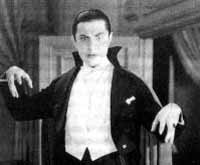
You heard right: “Christian vampire lit.” I never dreamed I’d ever in my life use those words in the same sentence.
More on “Christian vampire lit”:
On Sept. 15, WaterBrook Multnomah Publishing Group will release its take on vampires in “Thirsty,” by Christian chick-lit author Tracey Bateman. Not surprisingly, the marketing material mentions “Twilight,” the hit vampire book series and movie whose abstinence message resonated with many evangelicals.
Bateman’s vampire, Markus, is a character but also a metaphor for demons anyone must overcome, said Shannon Marchese, an editor at WaterBrook Multnomah who sought out Bateman for the project. The object of his obsession, Nina, is a divorced alcoholic dealing with addiction.
“These are themes that work in the Christian life,” Marchese said. “You have to fight to say, ‘Am I going to choose unconditional love and redemption or a life of following obsessions, a life with holes in it?”
Still, challenges exist beyond what to do with dripping fangs (they were edited out). On the theological front, questions lurk about whether a creature both alive and dead has a soul that can be saved.
“I think we can redeem a vampire,” said Bateman, adding that she won’t be a spoiler and disclose her character’s fate. “I don’t think this is a despair too dark to pull out of.”
The problem in the world of Christian publishing and bookstores can be summed up with the last line in this quote:
“If you look at ‘Left Behind,’ the moon turns to blood and one-third of the people die,” said Karen Watson, associate publisher, fiction, for Tyndale House, which published the series. “Or you have people with bonnets on drawing water from the well. It just tells me there are a wide range of things you can talk about, and Christian books can be a lot of things.”
It seems “Christian books” are a lot of things, but Christian.
If you enjoy good Christian fiction (without vampires) but cannot stand the garbage that passes as today’s Christian literature, I cannot recommend enough the book Basket of Flowers by Christoph von Schmid. And needless to say, you probably won’t find it in your local Christian bookstore!
 Christ Alone Wyoming