The Holy Spirit and Reformed Theology

Some books are a chore to read – because of content and/or style and/or the author’s competence as an author. Some books are a joy to read – the content is excellent, the style is engaging and the book is well written and Holy Spiritorganized. This book is such a book – joy unspeakable! Yet about this book, I will speak.

I received this book from a friend who manages a library at a Christian Seminary and wanted someone to read and review it. He got first peek at the review, ya’ll get it as a close “second”.

The Holy Spirit and Reformed Theology

edited by Joel Beeke and Derek Thomas

One area many reformed theologians tend to ignore is the person and work of the Holy Spirit. There is a legitimate concern by most preachers about exalting the Lord Jesus and being faithful to His gospel, but no preaching or evangelism or Bible study would be worthwhile if the Spirit of the living God did not faithfully attend each of these. This book – a compilation of articles on various works of the Holy Spirit, written by 9 Baptists and 9 Paedobaptists – is a wonderful examination of the biblical doctrine of the Holy Spirit. It was written in tribute to the work He has done in the life Geoff Thomas, a faithful gospel minister who has served half a century in the local church our Lord called him to. I have personally benefited greatly from Geoff Thomas’ commentary on Daniel and was most eager to read this book.

The Holy Spirit and Reformed Theology is divided into four sections – Geoff Thomas: Faithful Instrument of the Spirit in part I; Salvation and the Spirit of Christ in part II; Growth and the Spirit of Holiness in part III; and Ministry and the Spirit of Counsel and Might in part IV. As you can see from the section titles, the authors recognize and highlight myriad functions and characteristics of the Holy Spirit. The reader will come away from this book with a heightened sense of the power and majesty of the third person of the Holy Trinity.

I will highlight one chapter to give you a taste of the quality and penetrating theology the authors provide. Fred Malone’s chapter, #6, is titled The Holy Spirit and Human Responsibility – a topic I think many Christians fail to properly comprehend. Malone opens with an observation from Geoff Thomas’ book, The Holy Spirit: Man is fully responsible for his behavior and God is fully sovereign in His work to conform man to the image of His dear Son. In stark contrast to the “higher life” movements which advocate a theology of “let go and let God” and the self-improvement psychology, a biblical view of sanctification acknowledges the tension Thomas proclaimed.

Infamously promoted by the Roman Catholic Church is the conflation of justification and sanctification, leading to confusion about both doctrines. Justification is completely monergistic – by grace alone through faith alone in Christ alone. Sanctification involves man’s effort, so it is not the monergistic work of God alone – yet neither is it rightly called synergistic. This term conveys a process which depends on both elements – in the case of sanctification those are God and man. The truth of biblical sanctification is this: man cannot sanctify himself apart from the indwelling work and power of the Spirit of God; but the Holy Spirit can and does sanctify man without the man’s cooperation, though this should not be our aim. Our responsibility before God is to work with the Holy Spirit, not grieve Him.

In outlining this concept, Malone tells us, “Man does not regenerate himself; God does not repent and believe for man.” Sinners are made able and willing to repent and believe by the Spirit’s work of regeneration. Our nature is changed and we then “choose Christ” – because He first chose us. Our author points to Philippians 2:12-13, saying it “presents the earthly pursuit of Christlikeness as one hundred percent a sovereign work of God the Holy Spirit who works with us and also one hundred percent the work of man with his new God-given ability. If this two hundred percent sum sounds illogical, then we must bow to God’s Word, not man’s logic.” Let all the saints say, Amen!

Malone gives the reader a couple of wonderful paragraphs on the individual’s role in sanctification, with many Scripture passages (pages 76 and 77) and follows up with a short warning: “We cannot blame God for our lack of conformity to Christ.” He explains, “Every step we take forward in Christlikeness brings one hundred percent glory to God alone. However, if we are lacking in that conformity, we must take one hundred percent of the responsibility for that failure and press on by faith.” If this exhortation does not convict as it encourages us to trust all the more in the Lord, then “let a man examine himself to see if he be in the faith.”

This chapter ends by proclaiming the critical nature God’s Word plays in the justification and sanctification of God’s saints. As is pointed out elsewhere in this book, the Holy Spirit inspired the Scripture, equipped the men who put the Word into print, accompanies the reading and preaching of the Word to do His unique work in each predestined child who awaits (unknowingly) his redemption. “So Christians must give full attention to learning the Word of God to grow thereby (1 Peter 2:1-2).” Christian, do you value the Word of God? By this, I ask, do you read it with a humble heart seeking to meet with your maker and judge and Savior? I leave you with one more quote from Malone – “to the degree we live believing the indicatives of grace revealed in the Word – the love of God for us in Christ’s salvation, the unfailing faithfulness of God to His promises to work in us – so we grow in obeying the imperatives of the Word unto further sanctification and Christlikeness.”

Dear reader, the Holy Spirit is God and He works in and through His Word, to raise spiritually dead men to new life, to give them a new nature that loves rather than hates God, to cause us to want what is good and hate what is evil. This book provides a most valuable look at the depth and breadth of His work, highlighting what He does mostly in secret because His role is to bring honor and glory to the Father and the Son. Praise Him!

The Danger of Reformed Traditionalism

TRADITION! It’s a great song from Fiddler on the Roof. It has some value in the life of any church. But as tradition-banthe train wreck of Roman Catholicism (and others) demonstrate, it brings some dangers as well. When a tradition – such as holding to an overall good confession of faith – displaces Scripture, then, Houston, we have a problem!

There is a church, which shall remain unnamed, that is solid in many ways. The gospel is front and center, Christ is presented as the Redeemer and Judge in nearly every sermon. The entire worship service is carefully structured to humble the creature, exalt the Creator, and remind the redeemed that we have reason to rejoice and be thankful, but always aware of the sin that so easily entangles us.

This church had a vigorous and fruitful leader training program that equipped and tested men who desire to serve as pastor/elder. And yet, this church hides behind its beloved confession of faith, written in the 17th century, and does not so much as consider what the Scriptures say about the qualification of any given man unless the man claims to “fully subscribe” to the confession. This document covers a wider range of doctrine and deeper level of detail than do the biblical texts that reveal God’s requirements for the men who serve in this office. The confession demands agreement on a few issues that are beyond the denominational distinctives, which are a reasonable standard for serving in that church. It is said that “full subscription” to the confession is required to insure unity among the elders of that church – and that is a reasonable standard. But – these fine men consider the confession to be the sum of “sound doctrine” that the Apostle Paul requires of all Christians and, therefore, they will not consider ordaining and sending men who are qualified and agree with denominational distinctives unless they also claim full subscription to the confession. So it’s not about unity within the church, it’s about a narrow view unsupported by Scripture as to what “sound doctrine” is.

And that makes this article so relevant!

The Danger of Reformed Traditionalism

The New Testament speaks of inspired apostolic tradition, which is good, and non-inspired religious tra­dition, which is often bad. This data should make us wary of any non-inspired ecclesiastical tradition that competes with or invalidates the supreme authority of Scripture. In this post, I’ll note the tendency of becoming over-infatuated with a good tradition and the tendency of reacting to modern errors by relying more on one’s favorite tradition rather than Scripture. Both of these tendencies can make good people resistant to changes in their tradition that are biblically warranted. Moreover, they can subtly influence one’s hermeneutic so that the Bible is read through the lens of the tradition rather than the tradition through the lens of the Bible.

Religious Tradition: the Good and the Bad

The NT employs the Greek παραδοσις (paradosis) to refer to religious teaching that has been handed down orally or in writing, commonly known as “tradition.” One finds examples of both good and bad tradition. Inspired apostolic tradition is viewed in a positive light (1 Cor. 11:2; 2 Thess. 2:13). Non-inspired ecclesiastical tradition is usually viewed in a negative light  (Matt. 15:1-9; Gal. 1:13-14; Col. 2:8). The danger of non-inspired tradition is its potential for distorting, invalidating, and even supplanting biblical truth. This would hold true not only of non-inspired Jewish tradition but also of non-inspired Christian tradition.

Putting Tradition under Scripture

The framers of the Westminster Confession of Faith were well aware of this danger and addressed it unambiguously:

The supreme judge by which all controversies of religion are to be determined, and all decrees of councils, opinions of ancient writers, doctrines of men, and private spirits, are to be examined, and in whose sentence we are to rest can be no other but the Holy Spirit speaking in the Scripture (1.10).

All synods or councils, since the apostles’ times, whether general or particular, may err; and many have erred. Therefore, they are not to be made the rule of faith or practice; but to be used as a help in both (31.3).

Although the second paragraph cited above is not included in the 1689, the first paragraph is. So our Particular Baptist forefathers concurred with their Paedobaptist brothers on the supremacy of Scripture and the subordinate nature of religious tradition. The former was to be our “rule of faith and life”; the latter, “a help in both.”

Reformation Today

Throughout the last several decades many evangelical churches in America have been engaged in a process of reformation that is in some ways analogous to the great Protestant Reformation of the 16th century. Like the early Protestant churches, a number of churches today are reforming in doctrine, in worship, and in church government. In these and other respects, today’s reformation is similar to the Reformation of Luther, Zwingli, and Calvin, except on a smaller scale.

In other respects, however, these two reformations differ. For example, the Reformers lived in a context in which there was an overemphasis on the authority of the church and an under-emphasis on the priesthood of the believer (which is related to liberty of conscience). In our day it seems to be the reverse. Today there appears to be an overemphasis on the priesthood of the believer (i.e., individualism) and an under-emphasis on the importance and authority of the church. In the 16th century, the Reformers had to correct a distorted gospel, which attempted to make good works the instrument of justification, by restoring simple faith to its proper place. Today, we have to correct the perversion of grace and faith (i.e., Easy-believism) by an emphasis upon the necessity of good works as the fruit of saving faith.

There are other differences we could highlight. But there is one in particular upon which I’d like to focus our attention. This distinction between the Protestant Reformation and our modern reformation is subtle. But I believe it is an important distinction and worthy of our consideration.

To the Prophets and the Apostles!

One of the hallmarks of the Protestant Reformation was a movement away from traditionalism and a return to the Scriptures as the ultimate authority of the Christian church. This wasn’t a complete rejection of church tradition or legitimate human authority. Rather, it was a conscious effort to reestablish the primacy of Scripture in matters of faith and practice and to subordinate all church tradition to the teaching of Scripture.1 It was this restored focus upon Bible’s authority and teaching that gave birth to the Latin phrase, sola Scriptura (by Scripture alone). It also promoted the principle ecclesia reformata semper reformanda est secundum verbum dei (i.e., “the Reformed church is always being reformed by God’s word”).

To the Reformers and the Puritans!?

How does this differ from our modern reformation? Most Reformed churches today continue to affirm the principles of sola Scriptura and semper reformanda. However, alongside that affirmation, there is, I believe, a renewed emphasis upon historical tradition, particularly the Protestant Reformed and Puritan traditions. This renewed interest in the Reformed tradition is seen in the resurgence and republication of Reformed literature. Think, for example, of all the good Reformed and Puritan books that have been reprinted and republished by publishers like Banner of Truth Trust and Soli Deo Gloria. And many theologians today are publishing articles and books that analyze and expound this Reformed tradition—Luther’s doctrine of justification; Calvin’s doctrine of sacraments; the Puritan regulative principle of worship, etc.

Furthermore, there has been the republication of the great Reformed confessions and catechisms. This renewed interest in the Reformed creeds has coincided with the emergence of evangelical churches like ours that are studying and adopting these old creeds as doctrinal standards. In fact, many of these churches have chosen to express their commitment to and identification with this Reformed tradition by inserting the term “Reformed” in the name of the church. Thus, one can find a “Reformed Baptist Church Directory” on the Internet in which appear such names as, “Grace Reformed Baptist Church,” “Covenant Reformed Baptist Church,” or the “Reformed Baptist Church of Kansas City.” So alongside an affirmation of sola Scriptura, there is also this growing interest in and identification with the Reformed and Puritan tradition.

A Subtle Shift of Focus

As I said earlier, the Protestant Reformers were not opposed to all tradition. If you read their writings, you’ll find that they often cite the church fathers and earlier church tradition, sometimes in a positive light. For instance, both Luther and Calvin had a deep appreciation for the writings of Augustine. They quoted Augustine to demonstrate that what they were teaching was not entirely novel. But we do not seem to find among the Reformers a pronounced concern or preoccupation to be identified with the Augustinian tradition. We do not find Protestant churches springing up with the name, “The Augustinian Church of Wittenburg,” or “Grace Augustinian Church.” We do not find Luther and Calvin calling the church to return to the writings of Augustine. Rather, the Reformers were primarily concerned to take the church back not to Augustine, not to Athanasius, not to Irenaeus, but all the way back to Jesus, and to Paul, and to John, and to the other biblical writers.

By noting this contrast, I’m not implying that Reformed churches today are unconcerned with the Bible. On the contrary, one of the reasons churches like ours appreciate the Reformed tradition is because of its emphasis upon the Scripture. Along with the Reformers, we continue to affirm the principle of sola Scriptura. But here is where the danger lies: whereas the Reformers evaluated the faith and practice of the church in the light of Scripture; some Reformed leaders today seem to evaluate the faith and practice of the church in the light of the Reformed tradition, especially in light of their Reformed Confession of Faith. 

Confessionally Colored Lenses

Actually, the danger is really subtler. Few Reformed pastors today would begin their sermon by asking the congregation to turn to page 250 of Calvin’s Institutes of the Christian Religion or to chapter 14 of the Westminster Confession of Faith. Like the 16th century Reformers, modern Reformed pastors endeavor to take God’s people back to the Scripture. With a growing interest in and appreciation for the Reformed tradition, however, there can be a tendency to look at the Bible only through the lens of Reformed tradition. In other words, there is a real danger of imposing the Reformed tradition as a grid over the Bible and then insisting that every interpretation and application must agree with that tradition.

In principle no Reformed pastor or theologian would elevate his tradition to the same level as Scripture. But in practice I believe there can be a very subtle tendency in that direction. Let me give you two examples: first, consider Herman Hoeksema’s Reformed Dogmatics. This is a systematic theology written by a professor of the Protestant Reformed church. Let me quote the volume’s description from the dust jacket:

Here is a thoroughly Scriptural and Reformed exposition of the faith once delivered to the saints…. In the view of the author, there are three factors essential to a sound dogmatics.  The first is that dogmatics must be faithful to the Scriptures, and therefore thoroughly exegetical. The second is that fundamentally all of dogmatics must be theologically construed, and must therefore be theocentric. The third is that a sound dogmatics must be faithful to the Reformed creeds and to the dogma of the church (emphasis added).2

A perusal through the book demonstrates the author’s coordinate concern to base his doctrinal formulations both in the teaching of Scripture and also in the Reformed continental symbols.

A second example of this determination to remain within the confines of Reformed tradition can be found in D. G. Hart and John R. Muether, With Reverence and Awe: Returning to the Basics of Reformed Worship. In the introductory chapter, the authors identify the purpose and method of their book. In light of what they see as wrong assumptions and practices in modern worship, they write,

We need to return to basics on worship. That is the purpose of this little book. On the basis of Scripture and Reformed confessions, we have designed a primer on what is arguably the Christian’s most important calling. A primer is defined as a short, introductory book on a single subject. This is exactly what follows—a brief overview of how Reformed theology informs the way we think about, put together, and participate in a worship service (emphasis added).3

Can you see how in both of these examples the authors want us to look at the Scriptures through the lens of Reformed tradition? Of course, they affirm the authority of Scripture. But there seems to be an underlying assumption that the only right way to interpret and apply the Bible is through the medium of Reformed creeds.4 The unfortunate result is that one can begin interpreting the Bible in light of John Calvin instead of interpreting Calvin in light of the Bible. Instead of looking at the Confession through the lens of Scripture, we begin to view Scripture through the lens of the Confession. The result is that historical theology sometimes manipulates or misuses exegetical and biblical theology. Kevin Vanhoozer’s portrayal is not too far from the mark when he remarks, “One typically begins with a doctrinal confession and then sets off trawling through the Scriptures. One’s exegetical ‘catch’ is then dumped indiscriminately into parenthesis irrespective of where the parts were found.”5

The Genetic Fallacy

It’s a genetic fallacy to assume that because the Reformed tradition is a good tradition, everything that comes out of the Reformed tradition must be good. Conversely, it’s fallacious to argue that because other traditions have weaknesses, nothing can be learned from them. What Donald Carson says about some Christian theologians and leaders is especially true of a growing number in the Reformed community: “Christian thinkers have often mistaken their own tradition for the sum of all truth.”6 I fear that this faulty assumption can slowly erode our commitment to the principle and practice of sola Scriptura, and it can dangerously elevate the authority of our Reformed tradition. Moreover, it tends to discourage or minimize any post- 16th or 17th century doctrinal development and reformation. John Frame perceptively describes this infatuation with Reformed tradition:

[Scholars] may sometimes attach themselves to some movement in the past or present that they come to regard virtually as a standard of truth. In Reformed circles, this tendency leads to a fervent traditionalism, in which, not only the Confessions, but also the extra-confessional practices of the Reformed tradition, in areas such as worship, evangelism, pastoral care, are placed beyond question. In an atmosphere of such traditionalism, it is not possible to consider further reform, beyond that accomplished in the Reformation period itself. There is no continuing reformation of the church’s standards and practices by comparing them with Scripture. Thus there is no way in which new practices, addressing needs of the present time, can be considered or evaluated theologically. This is ironic, because one of the most basic convictions of the Reformed tradition itself is sola Scriptura, which mandates continuing reformation, semper reformanda. At this point, Reformed traditionalism is profoundly anti-traditional.7

Respect, Not Reverence

I am not opposed to creeds or confessions. On the contrary, I’ve recently written a series of posts defending the use of creeds and underscoring their value to the church.8 Of all the historical creeds, I believe those of the Reformed tradition most accurately represent the teaching of Scripture. Of all the Reformed creeds, I believe the 1689 Baptist Confession is, overall, the best! To use the language commonly found in many Reformed Baptist local church constitutions, I regard “the London Baptist Confession of Faith … as an excellent, though not inspired, expression of the teaching of the Word of God.” Moreover, I not only believe in the validity and value of the Confession, but I also believe we should know and acquaint our congregation with the teaching of its doctrinal standard(s).

I am, nevertheless, sensitive to the danger of an unhealthy veneration of the Confession. As James Williamson notes, “Documents gain an unsightly prestige over time when they are foundational documents for a given body of believers. They are invested with a sense of authority and regarded as virtually untouchable by succeeding generations. We have seen this happen with the King James Version of the Bible”9 Such thinking can create the impression that the Confession is incapable of improvement or that the Confession has said everything that needs to be said or that teachings of the Bible must conform in proportion and emphasis to the teaching of our Confession. We should respect good tradition, but we should resist the temptation to venerate that tradition.10 As church historian Philip Schaff cautioned, “Symbolatry [i.e., the veneration of creeds and confessions] is a species of idolatry, and substitutes the tyranny of a printed book for that of a living pope.”11 Most of my readers rightly reject the crass traditionalism of much “KJV Only-ism.” My hope is that we’ll also be wary of a kind of “1689 Only-ism” that invalidates the primacy of the Scripture and circumvents the need for ongoing reformation.

Back to the Future – Just Not Far Enough

One way to make progress in the future is to look back to the past. This is where theological tradition and historical theology can serve an important role. “The history of the biblical period enables us far better to understand the Scriptures,” writes John Frame, “and the post-biblical history helps us far better to apply the Word to our own times. The latter helps us both to avoid the mistakes of the past and to build on the foundations laid by those who have gone before.”12 But we do wrong if we turn primarily to historical theology in our defense of the faith. I fear this happens too frequently in Reformed circles. As Nicolas Alford insightfully observes,

As modern church life has become increasingly egalitarian, democratic, and individualistic, the proverbial pendulum has swung back wildly too far. Confessional hubris has been the result. Good men have rightly fled the errors of the day, but they have found refuge in the false citadel of illegitimate confessionalism.13

Instead of “confessionalism,” we need to promote and cultivate “something close to biblicism.”14 Instead of expending the bulk of our energies exegeting the Confession and the writings of Luther, Calvin, and the Puritans, we need to go back farther in history and find the answers and solutions to modern questions and problems as they’re provided in the writings of Moses, the Prophets, and the Apostles.

Ad (Bible) Fontes!

In order to prevent our esteem for the London Baptist Confession in particular or our Reformed heritage in general from subtly weakening our commitment to sola Scriptura, I suggest that (1) we beware of the danger of traditionalism and (2) we be aware of the limitations of our own Baptist Confession. Of course, we may, to use the language of the WCF, continue using the 1689 Confession as “a help for faith and practice.” Sound theological tradition can help us avoid the errors of the past and provide a foundation of theological reflection upon which we can continue to build our understanding of Scripture and its application for today. But we do wrong if we rely primarily on historical theology for our interpretation and defense of “the faith once delivered to the saints.” Such an inordinate reliance on historical tradition (as good as it may be) will in the end result in a departure from rather than a return to apostolic truth and practice. John Murray’s warning is particularly relevant for Reformed Christians today:

When any generation is content to rely upon its theological heritage and refuses to explore for itself the riches of divine revelation, then declension is already underway and heterodoxy will be the lot of the succeeding generation…. A theology that does not build on the past ignores our debt to history and naively overlooks the fact that the present is conditioned on the past. A theology that relies on the past evades the demands of the present.”15

The theology of the past provides us with a solid foundation. But we mustn’t stop building and refining our theological reflections on and applications of Scripture. We must go farther back to the fountains (ad fontes) of all saving knowledge and truth, the Scriptures of the Old and New Testaments. As we do, we’ll continue to respect our Reformed Confession and affirm the timeless truths contained therein. But we’ll also read the Confession through the lens of Scripture with a critical eye. Only in an atmosphere where the Bible reigns supreme and where the Reformed tradition serves the church rather than lords it over God’s people will the church mature in the grace and knowledge of Christ and effectively fulfill her mission to the world.

B.G.

Print Friendly
  1. For a brief overview of a Protestant view of ecclesiastical tradition in contrast with the Roman Catholic veneration of tradition and the anabaptist rejection of tradition, see Josh Dermer’s two part series, “We Have Tradition Too! Part 1″ and “We Have Tradition Too! Part 2.” []
  2. Reformed Dogmatics (Grand Rapids: Reformed Free Publishing Association, 1966). []
  3. With Reverence and Awe: Returning to the Basics of Reformed Worship (Phillipsburg: Presbyterian and Reformed, 2003), 13. []
  4. The reader is invited to read these works and judge for himself. The authors engage in precious little criticism of their own tradition. This is especially true of the second book, which seems to assume that Reformed worship as defined by the Puritan symbols is the only biblical way to worship God. []
  5. “From Canon to Concept: ‘Same’ and ‘Other’ in the Relation Between Biblical and Systematic Theology,” Scottish Bulletin of Evangelical Theology 12 (1994): 104, cited in Carson, The Gagging of God, 543. []
  6. The Gagging of God: Christianity Confronts Pluralism (Grand Rapids: Zondervan, ), 101. []
  7. “Traditionalism and Sola Scriptura (accessed Nov 17, 2011). []
  8. See my series “On the Validity & Value of Confessions of Faith,” Part I, Part II, Part III, Part IV. []
  9. “Is It Time for a New Confession?” 7. []
  10. I think John Frame reflects the proper balance when he writes, “So when the claims of a tradition are suitably modest, and that tradition facilitates the communication of the biblical Word of God, that tradition should be respected, even while being viewed with a critical eye. What we should avoid is traditionalism, such as (1) the view that once a tradition is established, it can never be changed, (2) the notion that some tradition is just as authoritative as Scripture, and (3) the notion that we should not test traditions by the Scriptures.” Doctrine of the Word of God (Phillipsburg: Presbyterian and Reformed, 2010), 282. []
  11. The Creeds of Christendom, 6th edition, ed. David S. Schaff, 3 vols. (1931; Grand Rapids: Baker Books, 1990), 1:7. []
  12. John Frame, “In Defense of Something Close to Biblicism: Reflections On Sola Scriptura and History in Theological Method,” WTJ 59:2 (Fall 1997): 271). []
  13. Emphasis his; “Confessional Imbroglio” (Unpublished paper, 2010), 18-20. James Williamson makes a similar observation: “Hand and hand with this overreacting adoration can go a traditionalism that looks back to a particular era rather than deeper into the Word of God itself for the answers to doctrinal questions and controversies of our day.” “Is It Time for a New Confession?” (Unpublished paper, 2009), 8. []
  14. See my article on sola Scriptura entitled “Something Close to Biblicism,” the title of which I borrowed from John Frame. []
  15. John Murray, “Systematic Theology,” in vol 4 of the Collected Writings of John Murray (Banner of Truth, 1982), 8-9. []

What Does it Mean to be Reformed?

What Does it Mean to be Reformed?

The hallmark cry of The Reformation centered on 5 solas – 5 statements on core Christian doctrines that define the Christian faith from the Scriptures:

Sola Scriptura -The Scripture Alone is the Standard5 Solas

Soli Deo Gloria! – For the Glory of God Alone

Solo Christo! – By Christ’s Work Alone are We Saved

Sola Gratia – Salvation by Grace Alone

Sola Fide -Justification by Faith Alone

Apart from these truths, many will be led astray from the narrow path of God’s Truth. Many reformed Christians add a reminder that we, as sinful creatures, will never stop learning about the Lord – and ourselves – in this age. This reminder was summed up in the phrase, Sempre Reformanda – Always Reforming; lest anyone think he has “arrived”.

To remind us of these biblical truths and provide a clear understanding of what those within a local church have in common faith, Reformed Churches are confessional – they hold to a written confession about how key Scriptures are interpreted and applied to life. Presbyterians have the Westminster Confession; paedobaptist congregationalists have the Savoy; Baptists have two London Baptist Confessions, the 1644/46 LBC and the 1689 LBC. There are others, but one gets the idea that confessions are useful and common, at least among certain churches.

This brings me to a sticky wicket, so to speak, of holding to a confession and to the higher principles of The Reformation. Confessions are good and useful tools to codify core doctrines around which a local church can grow and have close fellowship. They are subordinate to the Scriptures, not a tool by which to interpret the Scriptures. They are documents written in a particular historical context by men who were limited in their comprehension of Scripture and somewhat blind to their own presuppositions – as are all men. Standing on and under the Word of God, resisting the siren call to rely on the traditions of men (men we love and thank God for), and ever growing in our love and knowledge of God and His Word means we may discover errors in our confessions, wording that is no longer clear, or conclusions that don’t appear as evident as they must have to those brothers 400 years ago. Our confessions as well as our personal presuppositions need to be tested in light of Scripture, always reforming for the glory of our God. Not seeking change for cultural convenience, but in response to the command that we grow as Christians and churches and hold only to that which is good – Truth as God has revealed.

How does a Reformed church or Christian keep from allowing the confession to dictate beliefs on secondary issues, as if it were the ruling document? Is this not evident in many Reformed churches – people defend their confession first, or only? Brothers, this should not be so! To cling to one’s confession of faith, no matter how sound it may be, as one’s first priority is not Reformed. Such a priority reflects the carnal priorities of all false religions, and turns a good confession into another golden calf.

As Baptists learn more about the covenants of Scripture, apart from the Presbyterian hermeneutic so prevalent in Reformed publications, will we be willing to examine what our confession says about the secondary doctrines that flow out from one’s view of the covenants? If we are to be true to our calls of Sola Scriptura and Sempre Reformanda we will. And we will also not be willing to defend our confession by mere argument, but with a clear conscience led by the teaching from the Word of God.

This does not mean that aggressive “inquiries” that appear to be meant only for tearing down confessional doctrines should be entertained. It does mean that honest inquiries from saints who want to sincerely understand how a given doctrine is defended from Scripture should be welcomed. A clear indication of trouble is when secondary documents are not allowed to be questioned, this is a sign of cultish behavior.

Change for its own sake is rarely a good thing. But change when we see more clearly from the Word of God is always a good thing. And we mustn’t allow our own wisdom or that of men who went before us to stand in the way. How can we claim to be Reformed if our confession is unchangeable? While our confessions are good and useful, they must always submit to the Word of God and we must be willing to entertain honest questions from saints wishing to understand them better or examine them in light of Scripture, with the aim of being more accurate and, therefore, honorable to our God and useful to His children.

With much love for the brotherhood and malice toward none,

Sermon of the week: “Audacious Grace” by Akash Sant Singh.

Does God’s lavish, unexplainable grace offend you? Does it bother you that His grace can be extended to a wretch such as a serial killer, or is it only good for you?

I am happy to present another powerful and convicting message by Akash Sant Singh as your sermon of the week: God’s Audacious Grace.

Sermon of the week: “Biblical Nonconformity” by Robert Briggs.

Your sermon of the week is the three-part message, Biblical Nonconformity, by Robert Briggs. 

Biblical Nonconformity Part 1 (Introduction)

Biblical Nonconformity Part 2

Biblical Nonconformity Part 3 (Source of our Strength)

Sermon of the week: “The Gospel Revolution in Work” by Akash Sant Singh.

As a follow-up to last week’s two-part message on Christian work ethic by Brian Borgman (found here), DefCon is pleased to present another two-part message on this same subject by Akash Sant Singh entitled The Gospel Revolution in Work. This is a great message that every Christian should listen to whether they work in the home or outside of the home.

The Gospel Revolution in Work (Part 1)

The Gospel Revolution in Work (Part 2)

The Disrobing of Society and the Church

Swimwear not too long ago

In light of Pilgrim’s post on the quote from Jeremy Sonnier about swimwear I feel it a good time to add a post on this subject as it is something very near and dear to my heart.  It also is timely as a few weeks back I completed reading a booklet on Christian Modesty and swimwear.  I was hoping to do a formal study on this subject, but right now I have too many irons in the fire.  And so I will share some thoughts and then present the reader with this wonderful albeit challenging booklet.  Something I pray you will study on your own, prayerfully consider and then share far and wide with the Christian community who are in desperate need of such a teaching.  A teaching that few men who call themselves shepherds of God’s flock will touch with a ten foot pole.

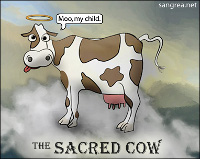
Don't touch me, I'm sacred!

As I write, please know that in no way am I judging any individuals as I write to teach and not  to condemn as my sincere desire is the glory of Christ and the building up of his church.  Something that is easy when you preach on subjects that always result in a resounding amen, but rather difficult when dealing with a subject like the one before us today.  A subject one might rightfully classify as a sacred cow that is rarely touched by the church where there are even those who hold to the Reformed faith that remain woefully silent.  This is a travesty where men of God who claim to be shepherds of Christ’s flock need well to examine themselves to ascertain why they will preach on the evils of decadent society outside their four walls, but will quickly become mute in addressing it within their congregation.  Are we not told to get the plank out of our own eye first so that we might then clearly see to remove the speck from our brother’s eye?  Does not judgment begin first with the house of God?

I also recognize in writing this article and posting the booklet by Jeff Pollard that there will be some who will not take the time to study this matter out as good Bereans, but will instead rail against it as being legalistic bondage that seeks to place fetters on our liberty in Christ.  As if liberty in Christ means that we can do anything the world does, slap a Christian liberty label on it, and go our merry way as if we’ve done nothing wrong.  This sadly is the mantra heard in many a church and from many a Christian where all manner of immodest dress have become as citadels that will be defended tooth and nail.  So much so that in only a few generations we have gone from a secular society that use to promote and defend modesty (due to Christian values undergirding it), to one that mocks modesty and promotes nakedness.  And tragically backing up the purveyors of indecency we have ourselves, the church to thank.  Thank either due to our silence and apathy, or thank due to our approval and defense.

One last item of introduction is vitally important that I ask the reader, and especially the ladies, to keep in the forefront of your mind.  For if you miss this, you will miss the true meaning of Biblical modesty and what we can learn from studying it.  Both quotes come from two messages given by Jeff Pollard which sum up beautifully the issue of modesty as it relates to our dear Christian sisters.  We read,

Modesty is not first an issue of clothing.  It is primarily an issue of the heart [1a] … that expresses itself in outward behavior. … [For there are] “women who can cover themselves from the neck down to the floor and be sensual, and there are Christians who have a  heart towards the things of the living God that being taught nothing in our culture regarding these things often display sensuality that they do not intend.[1b]

Zzzzzz...

I would build upon this and add that donning modest apparel does not in and of itself mean that a woman is righteous any more than wearing a bikini means a woman is wicked.  No, most assuredly not for we as Christians know that our righteousness that allows us to stand holy and pure before our God is not a matter of dress.  Rather, it is based on the imputed righteousness of another, our Lord and Saviour Jesus Christ.  But, this reality does not negate the call in Scripture for us to be holy (cf. I Pet 1:16), nor does it nullify the command given unto woman to adorn themselves in modest apparel (cf. I Tim 2:9).  But one of the huge impediments to this it is that we live in an extremely immodest world where many of the ladies in the church have not been taught these things.  Thus, a large part of the blame lies at the feet of the men  in the church (fathers, husbands, elders) who are supposed to be teaching on these matters and are not.

Likewise, many of the women, just as is true for the men, are wearing the fashions they have been taught to wear by their parents, society and even the church. And just as the fish gaily swimming about in the sea is ignorant that he is wet, so too we who swim about in the waters of an immodest world, are often oblivious to our immodesty.  Today, I hope that some of this will change even in a small way.  With this said, let us move forward in looking at swimwear.

The study of swimwear and how it evolved from the conservative style you see at the top of the article, to the licentious bikini found towards the bottom is quite a fascinating study.  In conducting such a study, or simply reading a booklet like the one by Mr. Pollard, one thing you will find is that our fashions for modern swimwear did not pop up out of thin air.  No, most assuredly not.  Instead, they were created by haters of Christianity and designed for a purpose and that purpose had nothing in view regarding holiness, modesty or Christian values.  Rather, they were created and designed then even as they are today, whether implicitly or explicitly, to break the shackles of Christian restraint and to “free” men and women to bare their bodies in expressions of so-called sexual freedom with women as the primary target.

These facts stated above, and they are facts, are not glossed over nor denied by the swimwear designers.  No, actually the exact opposite is true as the swimwear fashion moguls are unashamed to declare both the intent of these fashions, as well as the end result on society.  Many quotes, quotes from their own mouths, bare this out.  A few I will share below where you will find many more in Mr. Pollard’s booklet, and even more if you do your own research.  I only wish the same honest handling of the facts would be true for those Christians who earnestly seek to deny these realities and gloss them over in a Pollyanna-like manner.

The twentieth century defined a new era for swim wear. The revolution was instigated by two things: a greater interest in recreational sports and the influence of daringly cut French swimsuits. The torturous corset was finally dispensed with and the task of eroticizing the body was taken over by exposing the skin itself since there was nothing to equalize or camouflage the shape of the body. What occurred during the evolution of the bathing suit during the 20th century was a merciless exposure of the flesh due to the rapidly shrinking suit. [2] (bold added)

…the swimsuit has traveled through several different styles and designs, meant to both conceal and display, to excite and mollify. … [T]hroughout history, the swimsuit has always maintained a somewhat exciting presence in its combined purposes of revealing and concealing. In many ways, the swimsuit is so titillating a piece of clothing because it is—and always has been—the most revealing, socially appropriate clothing worn by either men or women. [3]

Socially appropriate is key.  If society says a given style of swimwear is acceptable such as a bikini, people wear it (including many in the church).  If society frowns on it, then people do not.  An interesting point to note is that the determiner of what is right or wrong is not God and his word, but rather the lost world.  Something to think about for the Christian who blindly accepts the fashions of this world.  And it is for this very reason that this “standard” based on the shifting sands of unregenerate man’s views is always trending in a downward direction.  A downward direction that results in the removal of more and more fabric, and the revealing of more and more flesh.  We see this very thing with swimwear.  And we see also that what was to one generation a moral outrage, becomes a celebrated right to the next.  This transpiring as “[t]he public’s concern with nudity eroded as time passed.” [4]

Everything's okay here!

Do we not see a continuation of this downward spiral today as even the bikini is becoming passé?  Certainly we do where this declension can be likened unto the proverbial frog being slowly boiled in a pot of water as he is totally oblivious of his being moved from life unto death.  In like fashion the same is happening with our world as we are being slowly boiled in a pot of wickedness as we too are moved from life unto death as we quickly slide towards Gomorrah.  But most are totally unaware of this “boiling” as our hearts have largely grown cold due to the increase of wickedness in our generation.  In part due to growing up and partaking of the sinful things of the world before Christ and not having them completely purged (as none of us do); in part due to our partaking of the same after Christ, whether intentionally or unintentionally, and in part due to our not being taught these things from the word of God.

Returning to our societal slide into Gomorrah, we find this has happened with swimwear in large part based on a few “trend setters” in the fashion industry who, in a quest to make a name for themselves, push the envelope on what is socially acceptable (the same happens with entertainment, music, etc.).  Again, the history of the swimsuit bares this out where the iconic bikini, a symbol today of a woman’s “freedom”, was only 60 years ago viewed as “scandalous” [5] by most (unsaved!) woman where it was either banned by law, or heavily discouraged [6].  Even the Parisian models for the inventor of the modern bikini, Louis Réard, would not initially wear this suit as it was too shocking to them.  The same was true with consumers as woman gasped at the idea of wearing such a provocative garment [7] where I’m sure most in the church of Jesus Christ fully believed it would never be widely adopted by secular women, let alone those professing the name of Jesus Christ.   Boy were they wrong.

Colored underwear - the new standard

The next step after the upper limits are pushed is to settle a little lower and make a few compromises to quell discontent and to ensure acceptance of the new standard.  The key to note is that this new standard has moved past what the prior generation accepted (i.e. the moral standard has been lowered) where it now becomes the new foundation.  A foundation that the next generation of designers will build upon as their starting point as they seek to lower the standard even further.  This done as they follow in the footsteps of their forefathers and seek to push the envelope in their generation.  And so it has happened with swimwear; something easily proved by reading a basic history coupled with a timeline that illustrates how what was unacceptable to one generation became acceptable to the next.  All as society went in a few generations from being totally covered and modesty dressed at the beach to being almost totally naked and dressed more erotically than a prostitute on a street corner.

Again, this is all by design and it is the intent of modern swimwear where designers see how far can they can go in not only stripping society down to bare minimums, but also in cleverly covering the body in innovative ways with modern stretch fabrics so as to craft an erotic package than can excite and arouse more than complete nakedness.  The one-piece being especially adept at this where women who may not have the much coveted flat abs, or sculpted backside deemed essential for the bikini, can magically make their so-called imperfections disappear by donning the modern one-piece.  These suits, along with the bikini and other styles are designed to ostensibly cover but not really clothe as their intent is to reveal and not to conceal.  We read,

Bathing suits are very important in the history of fashion because they are a garment in which one is dressed but not really clothed.  One is wearing enough clothing to be seen in public but not something that would be socially acceptable in any other context but on the beach. So it really shows us the limits of what society is willing to tolerate in terms of exposure of the body. Cynthia Cooper – McCord Museum (bold added)

We must pause here and ask some honest questions of ourselves if we profess to be Christians.  The first being, is the direction of the fashion industry moving in a more Christ-centric direction, or in a more pagan-centric direction?  That is, are the designs of swimwear in particular helping women to adorn themselves in modest apparel (cf. I Tim 2:9), or are they leading women to walk naked where the world sees their shame? (cf. Rev 3:17, 16:15)  Two, are Christians, generally speaking, salt and light unto this generation regarding beach/pool attire, or are they simply adopting the exact same titillating swimwear as worn by the unregenerate?  Three, what work of God would one say transpires in the heart of an individual when they step foot on a beach, or go to a pool or lake and strip down to what amounts to their underwear?  What  Biblical principle are they walking in that causes them to pop out their hidden body parts neatly and fashionably arrayed in a most alluring and sensual packaged that scream out look and lust?  And how is it that this can be done without blushing or feeling even a modicum of shame?  Finally, why is this disrobing viewed as acceptable at Christian beach parties and other like events, but would be deemed wicked if done at a Bible study or at a Sunday morning gathering of the church?

Underwear or swimwear?

I need to add that although woman’s fashion is by nature more sensual due to their bodies, men are not immune from these trends.  The Speedo is a perfect example of such an invention.  Nothing more than dyed underwear it has become perfectly acceptable in society due to the fact that it is approved swimwear for competitive swimming, water polo and other like sports.  Most men, Christian and otherwise, do not don these suits (unless they are competitive swimmers) as they prefer board shorts, but even so, they still bare mention as to how a perceived need (i.e. less drag in swimming to get a fast score), outweighs Biblical modesty.  The end result is clothing that would never be worn to work, school or with the body of Christ, now becomes socially acceptable by a verdict from our lost culture.  A verdict that most Christians give a hearty amen to.

The same holds true for men baring their naked upper bodies where history reveals, regardless of what your view is, that not too long ago this was totally unacceptable both by social mores and existing laws.  Laws again that were based on Christian values.  But sadly much of the church today is not only ignorant of history, but largely unconcerned with what it teaches as we are the “me” generation where all that matters is what we believe and how we feel.

Regarding male fashion, we read,

Modesty was an issue well into the 1920’s. Under the “Bathing Suit Regulations” published in May 17, 1917, men’s suits had to be worn with a skirt or have at least a skirt effect. The skirt had to be worn outside of the trunks. The other alternative was to wear a flannel knee pants with a vest and a fly front. During this time, the knitting mills were rapidly churning out many styles of suits, including the “speed suit,” an one piece suit with deeply slashed armholes and closed leg trunks. [8]

But, men were not satisfied as they too wanted disrobe like their female counterparts.  And all too ready to help these men out, the fashion industry gladly responded with a helping hand.

Though men were getting the opportunity to look better, there was still the little matter of baring the chest. Quite simply, it was frowned upon. However, men continued to fight for their right to expose their chest and by the early 1933, the result was a convertible-style suit that allowed the top to be removed. The introduction of the “Men’s Topper” introduced a new thrill in men’s swim wear. This unprecedented belted, two-tone wool suit gave the wearer the option to go bare (or not to go bare…). [9]

I ask where will this end?  What limits are being pushed today and what will be acceptable in tomorrow’s generation and defended by the church as Christian liberty?  Personally, I shudder to think as one need not conduct an extensive study (and I do NOT recommend it) to see that there is no shortage of rotten fruit pouring forth from the wicked imaginations of the fashion industry’s elite.  Thongs, tangas and other forms of “extreme” swimwear are widely gaining acceptance and popularity at a beach near you.  Wickedness that takes the bikini as its foundation and shaves off as much fabric as possible so that only the smallest patches and treads remain.  All of it being nothing more than pornography.

Another trend I need to mention is the taking of swimwear and like clothing from the beach out into the public square.  Red Carter, a famous swimwear designer, hopes to take the swimwear business into new categories such as sportswear and resort wear [10].  And no surprise as this is already happening where most Christians hardly blink an eye as it is being accomplished so surreptitiously and easily passes under the radar of the slumbering church.  For just one example, consider the mini, mini skirts that female tennis pros wear, coupled with the skin tight and low cut tops.  Now we are privy to viewing both their underwear and heaving breasts without having to set foot on the beach.  Anna Kournikova and Ana Ivanovic, two example out of many that could be cited, are poster girls for this immodesty.  Is it any wonder men love woman’s tennis?

I must close here but before I do, I want to reiterate that I write in love and not condemnation.  For if I were to condemn you, I would have to first condemn myself.  This as the one who pens this article is not some monk living high in the Himalayas who has gained mastery of his flesh and looks down with disdain on the mere mortals who struggle with these issues.  No, most assuredly not as I am a man not unlike any other.  Here, I have wrestled much with these areas and have been rebuked by the Spirit for the pride in my heart that has tempted me to disrobe so as to gain an approving look from any passing females.  And it need not be said, but say it I will, that I have struggled with lust due to the bombardment of so much nakedness before my eyes.

Bombardment an appropriate word as I from infancy have spent countless hours at the beach as my family owns a house that is only a few hundred feet or so from the surf.  As such, I grew up surrounded by copious amounts of nakedness and young nubile vixens who had no shame in strutting their wares up and down my street and in strategically planting themselves on the beach so as be front and center for all to admire.

But I have come to see things much differently than I did growing up, and even as I did for many years as a Christian.  Being part of a beach community, surfing, and attending churches that saw nothing wrong with these things made matters that much more difficult.  It was not until I moved a few thousand miles away from the beach that I began to hear that still small voice speaking to me on this subject.  At first I kicked hard against the pricks, but in time I saw clearly I was wrong as my heart and the issue at hand were laid bare before me.

My prayer for the reader is the same where I welcome you write to me if you want to discuss this matter further.  My plea is that you do not reject these things outright in knee-jerk fashion just because it is novel or because you don’t hear your pastor or favorite Christian personality speaking on these subjects.  Or, you reject it simply because it goes against what you “feel” in your heart.  Instead, please take the time to read Mr. Pollard’s book and especially listen to the multi-part audio presentation, study the Scriptures, pray for wisdom and even study history.  Be willing to go against the flow of society and even modern Christianity regardless if it means that you are labeled a legalist, fundamentalist, or all other manner of ignominious titles.  For such is the calling for all those who seek to truly follow Christ Jesus and to mortify (i.e. crucify) the deeds of the flesh.

To read the booklet by Jeff Pollard titled, Christian Modesty – The Public Undressing of America, please click here.

For a highly recommended audio presentation from Jeff Pollard, which is a follow-up to the booklet noted above, please listen here.