

Conscience has often lent its sanction to the grossest errors, and prompted the greatest crimes. Did not Saul of Tarsus, for instance, drag men and women to prison; compel them to blaspheme; and stain his hands in saintly blood, while conscience approved the deed—he believed that he was doing God service. . . . Read the Book of Martyrs, read the sufferings of our own forefathers; and under the cowl of a shaven monk, or the trappings of a haughty churchman, you shall see conscience persecuting the saints of God, and dragging even tender women and children to the bloody scaffold or the burning stake. . . . So far as doctrines and duties are concerned, not conscience, but the revealed Word of God is our one only sure and safe directory.
– William Guthrie
1620 – 1665
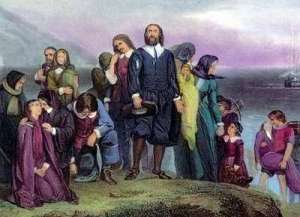 Consider your Lord and Master, you that call yourselves [Christ’s] disciples. Many look upon you that will not look unto [His] Word, and will judge [Jesus] by your practices. Do not damage [Him], by misrepresenting [Him]; as if [He] allowed those evils which you allow yourselves. Why should [He] be “wounded in the house of My friends” (Zech. 13:6). Why should you crucify [Him] afresh, and put [Him] to an open shame?
 You shall not hate your fellow countryman in your heart; you may surely reprove your neighbor, but shall not incur sin because of him. Leviticus 19:17
 The most spiritual attainment of a Christian in the world, the most spiritual, evangelical mourning and repentance that can be done by a Christian, is a mourning over his unbelief; that the Word of the Lord is not more precious to him; that he cannot trust God’s Word naked without props; that he doubts it so often, when darkness comes on; and that he lets go of this great rock, the faithfulness of God.
 Learn to apply Scripture. Take every word as spoken to yourselves. When the Word thunders against sin, think thus: “God means my sins.” When it emphasizes any duty, “God intends me in this.” Many put off Scripture for themselves, as if it only concerned those who lived in the time when it was written; but if you intend to profit by the Word, bring it home to yourselves: a medicine will do no good, unless it is applied.
 He that says he will be good tomorrow, says he will be wicked today.
 The abuses of the tongue are many, one of which is the malignity of it. And whereas in David’s time a malignant and virulent tongue was the badge of an Atheist . . . now alas! this blotch [has] become the blotch of God’s children, and of high professors of religion.
 I now see more good and more evil in men than I did before. . . . I once thought that anyone who could pray eloquently and fluently, and talk well of religion, had to be saints. But experience has revealed to me that low crimes can co-exist with high professions.
 A man may be theologically knowing and spiritually ignorant. . . . A man may be excellent in the grammar of Scripture, yet not understand the spiritual sense of it. . . . The highest rational knowledge of God cannot profit without the knowledge of faith. . . . It can be of no more advantage to us than it was to the Jews knowing Him, or to Judas living with Him. In the Scriptures, Christians are not called knowing persons, but believers.
 We read not that Christ ever exercised force but once, and that was to drive profane ones out of His temple, and not to force them in.
 Take notice, that it stands as a blot in the reputation of the Corinthians, that they were altogether for a gospel that should cost them nothing. Corinth was the most convenient, and so the most frequented, port of trade in all Greece. The inhabitants are said to have been very wealthy, proud, and voluptuous. They had abundance to spend upon themselves, but could find nothing for Paul, while he resided among them, and preached the gospel to them. . . . It is a sad word, but too frequently experienced, that a faithful minister of Christ may labor, and yet live in want, in a wealthy city.
 Christ Alone Wyoming