Quotes (724)

God’s electing a certain definite number is a manifestation of His glory. It shows the glory of His divine sovereignty. God is declaring His absolute sovereignty over His creation. He is showing us just how far that sovereignty extends. In purposely choosing some and passing on others, He shows that His majesty and power are unparalleled. Those who do not see glory and dominion in election simply do not understand God. They are not aware of His greatness, and do not understand grace. Grace is defined in election. God chose His people to happiness and glory long before they were born. He chose them out of the mass of fallen mankind. He loved them before they knew Him. He chose them when they did not deserve to be chosen. That is grace! The doctrine of election shows that if those who received God’s grace had earnestly sought it, it was God’s grace that caused them to seek it. It shows that even their faith itself is the gift of God, and their persevering in a way of holiness unto glory is also the fruit of electing love. Believer’s love of God is the fruit of and because of God’s love to them. The giving of Christ, the preaching of the gospel, and the appointing of ordinances are all fruits of the grace of election. All the grace that is shown to mankind, either in this world or in the world to come, is comprised of the electing love of God.

– Jonathan Edwards

1703 – 1758

Sermon of the week: “The Grace of God’s Law – God’s Law in the Life of the Saints” by Brian Borgman.

Brian Borgman We have finally reached the end of Brian Borgman’s thirteen-part series  entitled Introduction to the Reformed Faith. The Grace of God’s Law – God’s Law in the Life of the Saints is the concluding installment of this great series on the Doctrines of Grace that we began in October 2009.

I hope it has been a blessing to you all. For those who want to download the entire series, you can find it here.


Sermon of the week: “The Assurance of Grace – Assurance in the Life of the Saints” by Brian Borgman.

Brian Borgman Another fantastic sermon! Your sermon of the week is The Assurance of Grace – Assurance in the Life of the Saints by Brian Borgman. This is one that will not sit well with Roman Catholics and anyone else who rejects the idea of assurance.

This is part twelve of a thirteen-part series on the Doctrines of Grace entitled Introduction to the Reformed Faith by Pastor Brian Borgman. Be sure to check out the final installment next week.

Sermon of the week: “Grace Triumphant – Perseverance of the Saints” by Brian Borgman.

Brian Borgman Your sermon of the week is Grace Triumphant – Perseverance of the Saints by Brian Borgman. This is part eleven of a thirteen-part series on the Doctrines of Grace entitled Introduction to the Reformed Faith by Pastor Brian Borgman. Look for the next installment every other week.

Sermon of the week: “Grace Applied – Irresistible Grace” by Brian Borgman.

Brian Borgman

Your sermon of the week is Grace Applied – Irresistible Grace by Brian Borgman from his thirteen-part series on the Doctrines of Grace entitled Introduction to the Reformed Faith.  Look for the remaining three parts over the next few weeks.


Sermon of the week: “Grace secured – Limited Atonement” by Brian Borgman.

Brian Borgman If you struggle with the doctrine of Limited Atonement, I have just the sermon for you. I am confident that after listening to Grace secured – Limited Atonement, you will now be able to confidently place an “L” smack dab in the middle of your T.U.L.I.P.

Brian Borgman does a fabulous job in demonstrating from Scripture that Christ died for His elect, and not for everyone (e.g. those who reject Him).

You may want to have a pen and paper handy to jot down the copious Scriptural references that Borgman provides (and feel free to share them with DefCon readers in the comments section).

This is part nine of Borgman’s thirteen-part series on the Doctrines of Grace entitled Introduction to the Reformed Faith. Look for the each additional installment every couple weeks.


Sermon of the week: “Solus Christus – The Supremecy of Christ in Salvation” by Brian Borgman.

Brian Borgman Your sermon of the week is Solus Christus – The Supremecy of Christ in Salvation. This is part eight of a thirteen-part series on the Doctrines of Grace entitled Introduction to the Reformed Faith by Pastor Brian Borgman. Look for the each additional installment every couple weeks.


Sermon of the week: “Sola Fide – The Supremacy of God in Salvation” by Brian Borgman.

Brian Borgman Your sermon of the week is Sola Fide – The Supremacy of God in Salvation by Brian Borgman. This is part seven of a thirteen-part series on the Doctrines of Grace entitled Introduction to the Reformed Faith. It seems that this series gets better and better with each installment. Look for the each additional installment every couple weeks.

Sermon of the week: “Hell” by Don Kistler.

Similar to the impact of Tim Conway’s message on Hell (found on this post), your sermon of the week is another sobering one. Hell by Pastor Don Kistler is one of those sermons that everyone should hear if they take God and His wrath seriously–but prepare to be very uncomfortable.

Sermon of the week: “Grace Conceived – Unconditional Election” by Brian Borgman.

Brian Borgman Your sermon of the week is Grace Conceived: Unconditional Election by Brian Borgman. This is a great message on the doctrine of Election. If you struggle with this doctrine or simply want to know more about it, you must listen to this sermon.

This is part five of a thirteen-part series entitled Introduction to the Reformed Faith that Pastor Borgman gave in 1998. Look for the each additional installment every couple weeks.

Listen to another great sermon on this subject by Russ Sukhia found on this previous post.

Quotes (539)

A controversialist once said, “If I thought God had a chosen people, I should not preach.” That is the very reason why I do preach. What would make him inactive is the mainspring of my earnestness. If the Lord had not a people to be saved, I should have little to cheer me in the ministry.

I believe that God will save his own elect, and I also believe that, if I do not preach the gospel, the blood of men will be laid at my door.

Our Saviour has bidden us to preach the gospel to every creature; he has not said, “Preach it only to the elect;” and though that might seem to be the most logical thing for us to do, yet, since he has not been pleased to stamp the elect in their foreheads, or to put any distinctive mark upon them, it would be an impossible task for us to perform; whereas, when we preach the gospel to every creature, the gospel makes its own division, and Christ’s sheep hear his voice, and follow him.

C.H. Spurgeon

HT: Reformation Theology

Just what DOES 1st Timothy 2:4 mean, anyway?

As a sequel to this post. And again, should we differ on our views, may we always remember charity.

1st Timothy 2:4 is another verse some use to say that God’s will is that all men be saved. But is that what it really says? Let us allow God’s written word be the final arbiter. And as in our last study, we must go back a few verses before the passage in question.

1st Timothy 2:1-4 (NKJV)1 Therefore I exhort first of all that supplications, prayers, intercessions, and giving of thanks be made for all men, 2 for kings and all who are in authority, that we may lead a quiet and peaceable life in all godliness and reverence. 3 For this is good and acceptable in the sight of God our Savior, 4 who desires all men to be saved and to come to the knowledge of the truth.

Again, the questions:

  1. Who was this written to?
  2. Why was it written?
  3. What was the idea being expressed?

We can answer these questions quite a bit more easily than before. It was written to Timothy, whom Paul had begotten in the gospel, and had appointed to be the pastor of the church at Ephesus. It was written to instruct those who would be appointed as elders in the church. The idea being expressed was that the elders are to be more careful in the words and actions, and to be more devout in their service to God and their love toward others.

That said, let us examine the passage in question. And as we do, we will see a slight (but very important) distinction between the word translated here as “desires” and the word translated other places as referring to God’s “will.” In biblical Greek, there are words and other grammatical tools we do not have in English. There are ever-so-slight variations in the meanings of certain words (e.g., saw, looked, glanced, spotted…). That is why the process of translation is one which is very long, very tedious, and should NEVER be undertaken with any intentions other than to glorify God, and never entered into lightly.

First, there is the word “desires” as in God the Father, who desires all men to be saved…” This is the Greek word “thelo.” This is a bit of a sticky wicket (as they would say across the pond), for it has various meanings. It can mean “to intend, to purpose” or even “will” (not the noun “will” but the verb, the future tense of “to be“). However, if we use that meaning, then God is a liar, for then it would read, God the Father, who intends all men to be saved… I dare say none of us believe in universal salvation, which would be implied by that statement. Continue reading

Just what DOES 2nd Peter 3:9 mean, anyway?

whitefield JohnWesley

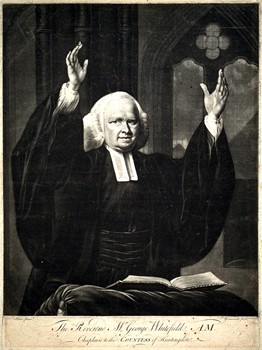
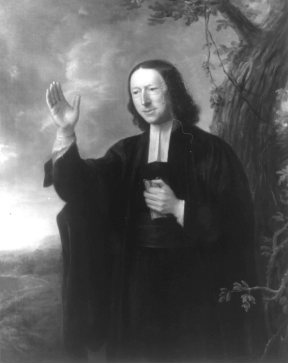
(Left: George Whitefield; Right: John Wesley. Two men who differed greatly concerning election, yet for all their differences, accorded the other as being very devout and godly men. Should we disagree, may we be as charitable.)

———————————————————-

Yesterday morning, in a group prayer before worship service, one of the fellows in the group quoted 2nd Peter 3:9 in the usual manner we hear so many people (mis)use it so often. Now, keep in mind, I dearly love this brother and I am not going to call someone a heretic just because they think this verse means that God wants every single person to be saved. But this IS the word of God we are talking about, and we do need to understand what God is saying, and what He is NOT saying. With that in mind, and with humble submission to His word, let us delve into this passage. And to do so, to keep it in context, we actually have to go back to verse 1, and begin there. That said, here is the passage in its entirety. 2nd Peter 3:1-9

1 Beloved, I now write to you this second epistle (in both of which I stir up your pure minds by way of reminder), 2 that you may be mindful of the words which were spoken before by the holy prophets, and of the commandment of us, the apostles of the Lord and Savior, 3 knowing this first: that scoffers will come in the last days, walking according to their own lusts, 4 and saying, “Where is the promise of His coming? For since the fathers fell asleep, all things continue as they were from the beginning of creation.” 5 For this they willfully forget: that by the word of God the heavens were of old, and the earth standing out of water and in the water, 6 by which the world that then existed perished, being flooded with water. 7 But the heavens and the earth which are now preserved by the same word, are reserved for fire until the day of judgment and perdition of ungodly men. 8 But, beloved, do not forget this one thing, that with the Lord one day is as a thousand years, and a thousand years as one day. 9 The Lord is not slack concerning His promise, as some count slackness, but is longsuffering toward us, not willing that any should perish but that all should come to repentance.

When studying any passage of Scripture, certain things need to be considered:

  1. Who was it written to?
  2. Why was it written?
  3. What idea was the author trying to convey?

So, let’s take these one at a time. Continue reading

A timely election day quote.

I couldn’t find a more appropriate quote for today than what I recently saw on a cup of Starbucks coffee. This apropos quote is by author Stephen Elliot:

“Politics is about getting outside of yourself and your own problems for a little while and fully immersing yourself in the lies and deceit of others.”