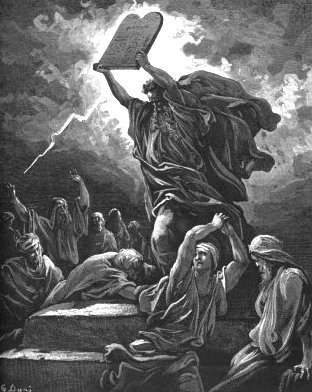
The Context of the Law

For the first time in my ministry, I have been studying in some depth the Ten Commandments. This has been a most profitable study in my own heart and life. I have been encouraged to share my notes, and while it is not the same as the message, I pray that someone might gain some profit from what is written. Lord willing, I will seek to share my notes on each message over the coming weeks. Please note these are the sermon notes I worked from, and do not contain the complete text of what I shared in the ministry of the Word.

**********
“The Context of the Law”

Text: Exodus 20:1-17, “And God spake all these words, saying, 2I am the LORD thy God, which have brought thee out of the land of Egypt, out of the house of bondage. 3Thou shalt have no other gods before me. 4Thou shalt not make unto thee any graven image, or any likeness of any thing that is in heaven above, or that is in the earth beneath, or that is in the water under the earth: 5Thou shalt not bow down thyself to them, nor serve them: for I the LORD thy God am a jealous God, visiting the iniquity of the fathers upon the children unto the third and fourth generation of them that hate me; 6And showing mercy unto thousands of them that love me, and keep my commandments. 7Thou shalt not take the name of the LORD thy God in vain; for the LORD will not hold him guiltless that taketh his name in vain. 8Remember the sabbath day, to keep it holy. 9Six days shalt thou labour, and do all thy work: 10But the seventh day is the sabbath of the LORD thy God: in it thou shalt not do any work, thou, nor thy son, nor thy daughter, thy manservant, nor thy maidservant, nor thy cattle, nor thy stranger that is within thy gates: 11For in six days the LORD made heaven and earth, the sea, and all that in them is, and rested the seventh day: wherefore the LORD blessed the sabbath day, and hallowed it.12Honour thy father and thy mother: that thy days may be long upon the land which the LORD thy God giveth thee. 13Thou shalt not kill. 14Thou shalt not commit adultery. 15Thou shalt not steal. 16Thou shalt not bear false witness against thy neighbour. 17Thou shalt not covet thy neighbour’s house, thou shalt not covet thy neighbour’s wife, nor his manservant, nor his maidservant, nor his ox, nor his ass, nor any thing that is thy neighbour’s.”

Intro: Our introduction to the Decalogue began by considering seven main points. We looked at their 1) Appearance summed up the law as the two great commands given by Christ, namely, a) Love the Lord your God with all your heart, soul, and mind, and b) Love your neighbor as yourself. With 2) Access we can understand that all are guilty because the law is written on the heart of mankind. 3) Authority tells us that God is the Giver and Fulfiller of the law. 4) Ability of the law is devastating in that it can only bring condemnation and separation from the holy, righteous God of heaven. 5) Assurance comes from the precious passage found in Psalm 19 and describes the perfect law of God. 6) Adversary of the law pointed directly to Satan. And 7) Acceptance of the law for a believer helps us love what provides protection. The main aspect we learned is that in order to live a life pleasing to the Lord we must learn to adore what God adores. He has given the law and it is in this law that we are to meditate day and night.

As with the purpose of every one of the 1189 chapters in God’s Word, the 20th chapter of Exodus is for the purpose of focusing on God. We do not need a chapter to show us how bad we are. Our depravity is always evident and even after salvation, the flesh can choose at times to revolt and bring dishonor to a holy God. This can and will result in discipline if the correction from God’s Word and the Holy Spirit do not bring changes to our heart and life.

Continue reading

A Common Thread

For the first time in my ministry, I have been studying in some depth the Ten Commandments. This has been a most profitable study in my own heart and life. I have been encouraged to share my notes, and while it is not the same as the message, I pray that someone might gain some profit from what is written. Lord willing, I will seek to share my notes on each message over the coming weeks.

**********
“Intro to the Decalogue – A Common Thread”

Text: Exodus 20:1-17, “And God spake all these words, saying, 2I am the LORD thy God, which have brought thee out of the land of Egypt, out of the house of bondage. 3Thou shalt have no other gods before me. 4Thou shalt not make unto thee any graven image, or any likeness of any thing that is in heaven above, or that is in the earth beneath, or that is in the water under the earth: 5Thou shalt not bow down thyself to them, nor serve them: for I the LORD thy God am a jealous God, visiting the iniquity of the fathers upon the children unto the third and fourth generation of them that hate me; 6And showing mercy unto thousands of them that love me, and keep my commandments. 7Thou shalt not take the name of the LORD thy God in vain; for the LORD will not hold him guiltless that taketh his name in vain. 8Remember the sabbath day, to keep it holy. 9Six days shalt thou labour, and do all thy work: 10But the seventh day is the sabbath of the LORD thy God: in it thou shalt not do any work, thou, nor thy son, nor thy daughter, thy manservant, nor thy maidservant, nor thy cattle, nor thy stranger that is within thy gates: 11For in six days the LORD made heaven and earth, the sea, and all that in them is, and rested the seventh day: wherefore the LORD blessed the sabbath day, and hallowed it.12Honour thy father and thy mother: that thy days may be long upon the land which the LORD thy God giveth thee. 13Thou shalt not kill. 14Thou shalt not commit adultery. 15Thou shalt not steal. 16Thou shalt not bear false witness against thy neighbour. 17Thou shalt not covet thy neighbour’s house, thou shalt not covet thy neighbour’s wife, nor his manservant, nor his maidservant, nor his ox, nor his ass, nor any thing that is thy neighbour’s.

Intro: From the records of ancient civilizations three millennia past to the laws of modern civilization, there is a common thread that resounds with each person. It will not leave them alone and the points it makes haunts every person who has ever lived or who will ever live. From a human perspective, each culture has resorted to establishing a set of punishments for those who seek to break the common thread that keeps humanity in line. From a divine perspective, the common thread only serves to prove that God is indeed true and every man a liar, and also points to an unfathomable doom reserved for each who disobey Deity.

If you were to find and visit a tribe that exists in a stone-age type of environment, you would find that little has changed with respect to this particular facet of human history and literature. The historical veracity of the common thread is unchallenged even though the literature originally presented is no longer in known existence.

Continue reading

The Way of Salvation

The Way of Salvation


At the heart of the controversy between Rome and historic Protestants is a dispute over the way of salvation. In speaking of salvation, we note that the term “salvation” encompasses a wide range of important topics, and it is important to distinguish between various aspects of redemption. 

Since the fall of mankind, the human race stands in need of salvation (or deliverance): deliverance from the guilt of sin, and also deliverance from the power of sin. From the biblical doctrine of justification, we learn the divine provision whereby sinners are delivered from the punishment due to the guilt of their sins. From the doctrine of sanctification, we learn the means whereby God delivers sinners from the reigning power of sin.

Of course, there are other facets of redemption, such as election, effectual calling, glorification, etc. Obviously the subjects of redemption are interrelated to one another; but they are not identical, and should not be confounded. Even though the various aspects of salvation bear a close relationship to one another, the scriptures clearly distinguish between them. In several places within Paul’s epistles, the apostle maintains a clear distinction between justification and sanctification. For example: “But ye are washed, but ye are sanctified, but ye are justified in the name of the Lord Jesus, and by the Spirit of our God” (1 Cor. 6:11; cf. Rom. 8:30; 1 Cor. 1:30). [1]

Another closely related topic is the nature of regeneration, or the new birth. Those whom God regenerates are given repentance, faith, and inward renewal so that they strive for godliness.

With the foregoing considerations in view, we wish to assert several important truths which bear on the state of Roman Catholicism and modern evangelicalism.

Read the rest here: http://www.swrb.com/newslett/actualNLs/2_shipwr.htm

Billy talks to his pastor

This is a priceless, funny conversation between a humble, inquisitive child (the sort of which Christ tells us His kingdom is made of) and his falsely assured pastor who has – no doubt – been trained at a Southern Baptist seminary.

Enjoy 🙂  From: http://thelightheartedcalvinist.com/

Billy Talks to His Pastor about God

John Pedersen

from The Trinity Review, July 1997


Billy: “Pastor, does God love everybody?”

Pastor: “Yes, Billy” (smiles, pats him on the head).

Billy: “How come it says in Romans 9 that he hated Esau?”

Pastor: “Been reading your Bible, huh, Billy?” (still smiles). “Well, the Bible also says that God hates, but that only is talking about God’s secret decree, and as far as we are concerned, he loves everybody.”

Billy: “Pastor?”

Pastor: “Yes, Billy.”

Billy: “If God tells us about his secret decree, is it still a secret?”

Pastor: “Er, well, I guess . . . not, Billy, but I meant that we should realize that there is a way the Bible talks about God’s love for everybody, and that’s what we should think about, not the one or two places where it says God hates.”

Billy: “Oh. How is it that God loves everybody?”


Pastor: “Well, he gives everybody rain and sunshine, and he blesses the people of the Earth with a conscience so they know right from wrong, and he has given them many gifts which they use to make the world a better and safer place to live.”

Billy: “Then he sends most of them to Hell?”

Pastor: “Yes, Billy.”

Billy: “Pastor?”

Pastor: “Yes, Billy.”

Billy: “Is it love for God to give people good things for a few years to make them feel comfortable and worthwhile, and then send them to Hell?”

Pastor: “Well, I . . . yes, it . . . is, I think because it would have been worse if, I mean it would be, um, well, it is, I guess, because he did not send them directly to Hell, but he allowed them to experience his goodness and his provision for his creatures. . . .”

Billy: “Is it love to let someone experience something good they will remember forever and always hate God for, because that good thing they loved more than forgiveness?”

Pastor: “Could we change the subject, Billy? I am not sure my answers are satisfying you.”

Billy: “O.K., Pastor. Did Jesus die for everybody?”

Pastor: “Why, sure, Billy.”

Billy: “Pastor?”

Pastor: “Yes, Billy.”

Billy: “If Jesus died for everybody, why isn’t everybody going to Heaven?”

Pastor: “Well, Billy, it’s because not everybody will accept him.”

Billy: “But, Pastor, I thought Jesus saved us. You are telling me that we save Jesus.”

Pastor (laughing nervously): “Of course not, Billy! I believe that Jesus saves us completely! However would you get the idea that I believed we save Jesus?”

Billy: “Well, Pastor, you told me that Jesus died for everybody, and that only those who accept him will be saved. So, this means Jesus’ death and resurrection, what Jesus does, cannot save us of itself, but something more is needed, and that something more is what we do by accepting him. For those who do not accept Jesus, they will perish. That means that Jesus’ dying for them cannot help them. In fact, it means that Jesus’ work for them was a miserable failure. On the other hand, those who accept him make his work effective by their acceptance—they save his work from being a failure. Without us, Jesus and his work of salvation would be doomed! If Jesus cannot save us without the permission we give of our own free will, then we are the real saviors, and Jesus is the one we save! Wow! What would he ever do without us?!”

Pastor: “Er . . . uh . . . that’s not what I mean. I mean if, it is , I said . . . no, I believe Jesus is the one who does the saving, Billy, it’s just that . . . God has made it so that we . . . are free to acc . . . meaning, we are, are . . . Billy, the Bible is mysterious. It seems to mean certain things, but it doesn’t really, like it says . . . you are using logic, Billy. The Bible is not logical and the truths are not something we can fit into our human minds.”

Billy: “Pastor?”

Pastor (now showing a slight frown): “Yes, Billy.”

Billy: “When you say the Bible is not logical, does that mean the Bible does not make sense? ‘Cause you made sense when you said the Bible wasn’t logical. I think it was because you used logic that you made sense.”

Pastor (now glowering at Billy): “No, Billy, I didn’t mean the Bible does not make sense. It does make sense, but just not our kind of sense.”

Billy: “Pastor?”

Pastor: “Yes, Billy.”

Billy: “Why would God give a Bible to us that did not make our kind of sense?”

Pastor: “Well, Billy, it’s not that . . . I think it’s . . . it makes sense, just does not give us the answers we like to hear, and says things that seem contradictory but really are not, to keep us from asking smart-aleck questions.”

Billy: “So, God doesn’t make our kind of sense to keep us humble?”

Pastor: “That’s right, Billy. God wants to keep us humble, so he does not let us think we can be absolutely certain about the things some proud people are certain about.”

Billy: “Pastor?”

Pastor: “Yes, Billy.”

Billy: “Are you certain about what you just said to me?”

Pastor (showing obvious irritation): “What do you think, Billy?”

Billy: “I think you just called yourself a proud person, but I don’t know why, ’cause you are so smart and know so much about God, and how much he needs us.”

Pastor: “Billy, why don’t you go out and play, like the other children?”

Billy: “Why should I go out and play, when I can stay in here with you and learn how to save God?”

Pastor: “You need to be careful, Billy. I never said we save God. You are the one who said that, remember. I simply believe our choices are significant, and God does not treat us like robots. He created us to have true human responsibility.”

Billy: “Pastor?”

Pastor (now looking quite angry): “This will have to be the last question, young man! I have important things to do and you should be outside playing.”

Billy: “When God put Abraham to sleep, was he telling him what he thought of his ‘human responsibility’?”

Pastor (seething): “I have a bad headache, Billy, and I can’t answer any more of your questions, but I can tell you this. Whoever has been teaching you has been telling you things a boy your age should not even be thinking about. It sounds like you have been learning some kind of hyper-Calvinism! You better be careful, young man!”

Billy: “I don’t know about hyper-Calintisim, but I have been reading these things in the Bible. Thanks for straightening me out. I will try to cut these bad parts out. Can I borrow some scissors?”

Pastor (rising from his chair): “Get out of here, you, you, you . . . !”

Billy: “That’s O.K., Pastor. I’ll ask Joey. He was using some good scissors when we were cutting out our ‘friends with Jesus’ pictures for Sunday school. Good-bye.”


The Trinity Foundation hereby grants permission to all readers to download, print, and distribute on paper or electronically any of its Reviews, provided that each reprint bear our copyright notice, current addresses, and telephone numbers, and provided that all such reproductions are distributed to the public without charge. The Reviews may not be sold or issued in book form, CD-ROM form, or microfiche.

© 1999-2006 Trinity Foundation
Post Office 68 — Unicoi, Tennessee 37692
Phone: 423.743.0199  Fax: 423.743.2005

What Is a True Christian?

What Is a True Christian?

Based on Article http://www.reformation21.org/articles/what-is-a-true-christian.php by Jeremy Walker

2 Corinthians 5:17 is foundational in that it makes a clear declaration that one who is a Christian is one who has been changed! Read and consider it carefully: “Therefore, if anyone is in Christ, he is a new creation. The old has passed away; behold, the new has come.” Does this describe one who is in love with the sins of his flesh, one who cares not for the Word of God or the ways of God? Or does this describe one who should love the things of God and grow in his understanding of God’s Word and repentance of his sin?

But how can you tell if you really are a Christian? How can you know if you have been born again? What are the definite marks of a new creation in Christ?

An excellent book by Gardiner Spring called The Distinguishing Traits of Christian Character suggests seven things that are not, in themselves, conclusive marks that a professed work of grace is true or false (commentary on each of these points in Walker’s article).

  1. Visible morality
  2. Head knowledge
  3. A form of religion
  4. Eminent gifts
  5. Conviction for sin
  6. Strong assurance
  7. Notable time or manner of one’s professed conversion

    While a Christian will display these in some degree, the mere presence of any or all of these does not prove one’s salvation.

There is almost nothing more dangerous than to imagine oneself saved and yet to remain unsaved. There is nothing more blessed than to know oneself a Christian grounded on a solid foundation.

From the Word of God, we gain a divine understanding of how we can be sure of our own standing in Christ – secure in His righteousness. 1 John gives us at least four indispensable indications of true Christianity (again, commentary on each of these points in Walker’s article).

  1. A humble and wholehearted embrace of the divine diagnosis of and remedy for sin
  2. A humble reverence for and joyful devotion to God and his glory
  3. A principled pursuit of godliness with an increasing attainment in holiness
  4. Affection for and attachment to God’s redeemed people

These four marks will invariably be present in a true child of God. They will not be perfect until glory, but they will be present now.

We cannot afford to be fooled, imagining ourselves saved when we are not.

If these indispensable indications, these marks of a true believer, are not in your heart and life, then you are not a Christian, whatever you claim or imagine, and you should not fool yourself nor dishonour Christ by claiming his name without walking in his ways. You blaspheme Jesus and expose him to scorn by taking the label of a true believer but living apart from his gracious power and saving wisdom.

But if these things are present in you and true of you then you are a Christian, and you should not dishonour Christ by denying the source of grace in you. Some doubting and fearful saints are terrified that they will lay claim to God’s grace in Christ without having it, and so walk in shadow if not in darkness, robbed of joy and neither being blessed nor blessing others as they might.

Jeremy Walker is a pastor of Maidenbower Baptist Church. He blogs at The Wanderer and is co-author of A Portrait of Paul: Identifying A True Minister of Christ (Reformation Heritage Books, 2010). My comment: This book on Paul is a most wonderful book that will benefit any Christian and every pastor.

Little Sins

Little Sins from http://www.gracegems.org/

(J.R. Miller, “Daily Bible Readings in the Life of Christ” 1890)

“Anyone who breaks one of the least of these commandments and teaches others to do the same–will be called least in the kingdom of Heaven.” Matthew 5:19 

A great many people are careful about breaking large commandments and committing heinous sins–while they commit ‘little sins’ continually and without scruple.

They would not tell a direct lie for the world–but their speech is full of little falsehoods!

They would not steal money from the purse or drawer of another–and yet they continually commit small thefts! For example, by mistake the grocer gives them a penny too much change–and they do not think of returning it. Through the carelessness of a postal worker, the postage stamp on a letter is left uncancelled–and they take it off and use it a second time.

They would not purposely try to blacken a neighbor’s name or destroy his character–and yet they repeat to others the evil whispers about him which they have heard, and thus soil his reputation.

They would not swear or curse in the coarse way of the ungodly–but they are continually using such minced oaths such as, Gosh! Gees! Heck! and other mild, timid substitutes for overt swearing.

They would not do flagrant acts of wickedness to disgrace themselves–but their lives are honeycombed with all kinds of little meannesses, impurities, selfishnesses, and bad tempers.

We need to remember, that little disobediences–harm our witness for the kingdom of Heaven.

Little sins–mar the beauty of our character.

Then, little sins are sure to grow! The trickling leak in the dike–becomes a torrent deluging vast plains!

Ofttimes, too, little sins are infinite in their consequences.

We ought never to indulge even the smallest faults or evil habits–but should aim always at perfection of character, and perfection is made up of ‘littles’.

~  ~  ~  ~  ~

Editor’s note: Minced oaths are used to avoid swearing, when expressing surprise or annoyance.

Minced oaths are usually, although not exclusively, religious in nature, and date from the days when it was irreverent and unacceptable to use the name of God, Jesus, or other sacred words in everyday speech. To mince your words, means to choose words so as not to offend anyone–except for God, who sees them as sacrilege (the sin of profaning sacred things). Here are a few examples:

Bejabbers — By Jesus
By George — By God
By golly — By God
By gosh — By God
Chrissakes — For Christ’s sake
Christmas — Christ’s Mass
Criminy — Christ
Cripes — Christ
Dad gum — God damn
Dagnabbit — God damn it
Dagnammit — God damn it
Dang — Damn
Darn — Damn
Darnation — Damnation
Doggone — God damn
Gee whizz — Jesus
Good grief — Good God
Goodness gracious — Good God
Gosh — God
Gosh darned — God damned
Heck — Hell
Jeepers Creepers — Jesus Christ
Jeez — Jesus
Jiminy Christmas — Jesus Christ
My goodness — My God
My gosh — My God
Tarnation — Damnation

Order of Salvation (Ordo Salutis)

What really happens when one is born again? If all one does is consider what is seen and felt, one will conclude that one is born again by choosing Christ or accepting Him.

But there is an unseen, spiritual reality described in the Bible – that man is born of the flesh dead spiritually, unable to do anything good and unable to desire to do anything good – as defined by God.

The humble creature who desires to know the Truth will – as best a man can do – set aside his presuppositions and preconceived conclusions that are based on what he sees and feels, and he will inquire humbly of the Lord, seeking wisdom from His Spirit, as he reads His word.

This that follows is an outline showing the spiritual reality – God predestined those He would save, in time, through faith (a gift given the elect) in Christ; who saves by grace alone and not through the deeds of the flesh or will of man, but by the will of God (John 1:12 – 13).

Order of Salvation (Ordo Salutis)

Predestination:

Rom. 8:29, 30; 9:1-25;
Eph. 1:3-14; 2 Thess 2:12,13

Effectual Calling (Regeneration)

John 1:12,13; 3:1-10; 6:44,45, 63-65
Eph. 2:1-5; Titus 3:3-6, Rom. 8:30

Faith/Repentance

Acts 20:21
(Faith)
Eph. 2:8,9; Phil. 1:29; Acts 13:48; 16:14;
18:27; James 2:14
(Repentance)
Acts 5:31; 11:18; 2 Cor. 7:10-11

Justification (Legal Declaration)

Deut. 25:1; Acts 10:43; Prov. 17:15
Rom. 3:21; 4:8; 5:1,2, 12-18; 8:32;

Gal. 2:16; 3:1-13; 2 Cor. 5:21; Phil. 3:9

Adoption

Rom. 8:15-17, 23-25; Gal. 4:1-5
John 1:12-13; 8:40 to end
I John 3:1,2

Definitive Sanctification

John 10:26-30; Rom. 6; I Cor. 1:2; 6:9-12

Progressive Sanctification

Lev. 11:44; Matt. 5-7; Rom. 13; Eph. 4-5;
Phil 2:1-13; I Cor. 13; Gal. 5:16-23;

I Peter 1:15,16; 2 Peter 1:1-10; 3:18
(Preservation of the Saints)
Jer. 32:40; John 6:37-40; 10:26-30
Rom. 8:30-end; Phil. 1:6; I John 3:9

Glorification

Matt 25; I Thess 4:13-end; 2 Cor. 5:1-8
Phil. 1:23; 3:20,21; I John 3:1-3
Rev. 6:9-10

What Vine are you Abiding In? (Part 2)

What Vine are you Abiding In? (Part 2)

Please take some time and read What Vine are you Abiding In? (Part 1). In Part 1, we looked at the context and background for our passage John 15:1-11 and Jesus’ teaching regarding the vine and the branches. We also had to face the tough question: “What vine are you abiding in? Jesus, the true vine? Or one that is untrue?

Now, in Part 2, we’ll ask another tough question: “What fruit are you bearing?”

BEARING FRUIT

Let’s jump back into our passage from John 15:

John 15:4 “…As the branch cannot bear fruit by itself, unless it abides in the vine, neither can you, unless you abide in me. 5 I am the vine; you are the branches. Whoever abides in me and I in him, he it is that bears much fruit, for apart from me you can do nothing.

So, what kind of fruit are you bearing? Are you bearing any fruit at all? Surely you are bearing fruit…its either good fruit or its bad fruit.

The purpose of the branch is to bear fruit. It is completely useless if it does not bear fruit. Notice how, from Part 1, the branches are pruned, cut off, and taken away, but the vine is never pruned or cutoff. There is no other purpose for the branch than to bear fruit. In order to bear fruit the branch must be fully connected to the vine. The branch gets all its sustenance from the vine. All the water and nutrients come from the roots to the vine to the branches in order to bear fruit. If the branch is disconnected or partially connected, it will NOT bear fruit…and we know what happens to that branch.

Jesus mentions “FRUIT” 6 times in this passage, do you think he is serious about it?

BAD FRUIT

Are you abiding in one of these unTRUE vines? One of these FALSE vines described earlier which makes you bear BAD FRUIT? False fruit? What does bad fruit look like? Let’s consider several passages from the Apostle Paul:

Romans 1:28-32

And since they did not see fit to acknowledge God, God gave them up to a debased mind to do what ought not to be done. 29 They were filled with all manner of unrighteousness, evil, covetousness, malice. They are full of envy, murder, strife, deceit, maliciousness. They are gossips, 30 slanderers, haters of God, insolent, haughty, boastful, inventors of evil, disobedient to parents, 31 foolish, faithless, heartless, ruthless. 32 Though they know God’s decree that those who practice such things deserve to die, they not only do them but give approval to those who practice them.

Any of these sound familiar? Recognize any of those fruits in your life? How about these: Continue reading

What Vine are you Abiding In? (Part 1)

One of my favorite passages in scripture is Jesus’ teaching on the vine and the branches. Let’s look at what it means for Christ to be the vine and for the believer to be the branch.

John 15:1-11
15:1 “I am the true vine, and my Father is the vinedresser. 2 Every branch in me that does not bear fruit he takes away, and every branch that does bear fruit he prunes, that it may bear more fruit. 3 Already you are clean because of the word that I have spoken to you. 4 Abide in me, and I in you. As the branch cannot bear fruit by itself, unless it abides in the vine, neither can you, unless you abide in me. 5 I am the vine; you are the branches. Whoever abides in me and I in him, he it is that bears much fruit, for apart from me you can do nothing. 6 If anyone does not abide in me he is thrown away like a branch and withers; and the branches are gathered, thrown into the fire, and burned. 7 If you abide in me, and my words abide in you, ask whatever you wish, and it will be done for you. 8 By this my Father is glorified, that you bear much fruit and so prove to be my disciples. 9 As the Father has loved me, so have I loved you. Abide in my love. 10 If you keep my commandments, you will abide in my love, just as I have kept my Father’s commandments and abide in his love. 11 These things I have spoken to you, that my joy may be in you, and that your joy may be full.

BACKGROUND AND CONTEXT
Before we get into the meat of this passage we need to consider the context and set the stage a bit. Just two chapters previous to our passage, we see Jesus and the disciples entering the upper room to celebrate the Passover together. This was likely just a few hours before Jesus teaches on the vine and the branches. In the upper room, Christ knows he is on his way to the cross his time has come. While in the upper room during the Last Supper, we see Jesus teach his disciples these humongous truths:

(a)  Jesus washes the feet of the disciples and introduces servant leadership – to love one another (John 13:1-17)
(b)  Jesus tells of a disciple who will betray him. (John 13:18-30)
(c)  Jesus introduces communion – (Mat 26:26-29)
(d)  Jesus introduces the new covenant of his blood (Luke 22:20)
(e)  Jesus introduces a new commandment – love one another (John 13:31-35)
(f)  Jesus foretells of Peter’s denial (John 13:36-38)
(g)  Jesus drops the deity bomb by declaring that He is the Way, the Truth, and the Life and no one comes to the Father except through him…and if you have seen him you have seen the father. (John 14:1-14)
(h)  Jesus promises the coming of the Holy Spirit (John 14:16)

Christ, after casually dropping these huge topics on his unsuspecting disciples during this  dinner, he says in  John 14:31: “Rise and let us go from here!” The disciples, I’m sure, are sitting at the table looking at each other a bit shell shocked asking, “What did he say? Another is coming? A Helper? Who? What was that about eating his body? Blood what? Hey, what about the blood?” As Jesus gets up and moves on…probably leaving the disciples at the table scrambling to catch up with him.

I AM THE VINE AND YOU ARE THE BRANCHES
Christ and the disciples leave the upper room that evening, likely dark by then, and make their way towards the Garden of Gethsemane. It is sometime during this walk that Jesus teaches on the Vine and the Branches. According to various commentaries, there are a couple of possible reasons why Christ compares himself to a vine and defines himself as the TRUE Vine.

Continue reading

The Spirit of the Age

I was going to post this as a response to this: http://defendingcontending.com/2011/02/17/inner-promptings/ but decided it warrants its own post.

New window
Print all
Many people have been misled by folk about how to find out the will of God – as if He’s hidden it from us and left us to our own devices. Throughout human history, folks have neglected the Word of God and relied on human wisdom to determine “god’s will” for things that the Bible tells us nothing about – where to live, where to work, whether to be a missionary to the Marshall Islands, and on and on.Listen to this message (preached by Voddie Baucham, taken from Romans 12:2) and see if you – like so many others – have been misled. Let us repent of none-sense and – by the Holy Spirit of the living God – pursue knowledge of Him and be content to let our future be in His capable hands.
There is another spirit operating among us and we must be able – and willing – to discern between the two and, if born again in Christ Jesus, choose that which is True.

D.A. CARSON SERMON ON HEAVEN AND HELL

DR. D.A. CARSON SERMON ON HEAVEN AND HELL

By on Jul 27, 2011 in Current Issues, Emergence Christianity, Emergent Church, Features, Rob Bell, Youth Ministry

As a leading online apologetics and discernment work Apprising Ministries has been warning you for a long time about the toxic teachings the Emerging Church rock star pastor Rob Bell, co-teaching pastor at Mars Hill Bible Church along with his good friend Shane Hipps.

Those not under the spell of Rob Bell, who’re willing to look at the evidence, will see he’s long been practicing the critical thinking skills-numbing corrupt Contemplative Spirituality/Mysticism (CSM), such as that taught by Living Spiritual Teacher and Quaker mystic Richard Foster along with his spiritual twin and Southern Baptist minister Dallas Willard.

You can see for yourself in AM articles like Through Rob Bell “The Great Enlightened Ones” Tell Us Man Has Divine Greatness and Rob Bell And Shane Hipps Teaching Mysticism and Rob Bell On His Practice Of “Militant Mysticism”.

This has much to do with Rob Bell Defending His Love Wins Mythology and his intimate involvement with the sinfully ecumenical neo-liberal cult of the Emergent Church aka the Emerging Church with its quasi-universalism in a new version of postmodern Progressive Christian theology under their spiritual circus “big tent” of empty Emergence Christianity.

I’m pleased now to bring you some proper Biblical teaching below by Dr. D. A. Carson. In the video following Carson “explores the Bible’s teaching on heaven and hell, God’s loving mercy and just wrath, in this lecture at The Gospel Coalition’s 2011 national conference.” Carson does a great job explaining universalism and debunking it; a must listen:

God: Abounding in Love, Punishing the Guilty (Carson Lecture) from The Gospel Coalition on Vimeo.

See also:

ROB BELL AND POSTMODERN NEO-LIBERALISM

IS ROB BELL EVANGELICAL?

ROB BELL ON THE RECORD CONCERNING SCRIPTURE

Poking Each Other in the Eye

Imagine for a moment that you are talking to a friend face-to-face, discussing something important. As you are talking you notice something floating in his eye. I would imagine that you would say, “Do you see that? “Doesn’t that bother you? Does it hurt?”

“What? See what?” They ask.

“Well, that thing in your eye. Can’t you feel it?”

“No, I don’t feel anything.” They reply, “I’m fine.” But they aren’t fine because this thing in their eye will eventually cause pain and damage. You feel compelled to help them.

“Come on; let me get that out for you.”

How quickly are you going to let a friend put their finger in your eye and pull something out? I know I wouldn’t be comfortable with it. My eye is incredibly sensitive. If your friend agreed to let you help and you were to pick this speck out of his eye, how would you do it?

I think it is safe to say that we would all be exceedingly gentle. We’d wash our hands, have the person lie down or sit in a chair, then we’d get an extra light so we could see better, then gently hold their eye open with one hand and with the gentlest touch possible you try to get the speck without poking your dear friend in the pupil causing pain and possibly more damage. You patiently try and try again with equal gentleness until the speck is out.

Now, imagine this scene again, except this time you have a patch on one eye and blurred vision in the other. Can you still get the speck? Or what if you just jump him in mid-conversation, peel his eyelid back rubbing, picking, and poking his eye until the speck is out? This would leave him in shock, pain, and stress. Would you do it this way or the first way? Does it matter? I think it matters greatly. Let’s look at some scripture inspiring this scene.

Matthew 7:1-5
1 “Judge not, that you be not judged. 2 For with the judgment you pronounce you will be judged, and with the measure you use it will be measured to you. 3 Why do you see the speck that is in your brother’s eye, but do not notice the log that is in your own eye? 4 Or how can you say to your brother, ‘Let me take the speck out of your eye,’ when there is the log in your own eye? 5 You hypocrite, first take the log out of your own eye, and then you will see clearly to take the speck out of your brother’s eye.

We know this passage of scripture from Jesus’ Sermon on the Mount in regard to judging others and pointing out hypocrites. But, have we ever considered what it takes to actually get the speck out of our brother’s eye? Have we ever thought about the gentleness and sensitivity that it takes? Did Jesus use the eye here because of how sensitive our eyes truly are? So often we like to focus on not being “hypocritical” when pointing out the speck in your brother’s eye and forget about our methods. We’ll use this passage when feeling defensive: “you can comment on my sin when you get that gigantic beam out of your own eye!” Rarely do we even consider taking special care in how we “take the speck out of your brother’s eye.” Isn’t this level of gentleness and sensitivity the primary goal?

Continue reading

The Barley Harvest

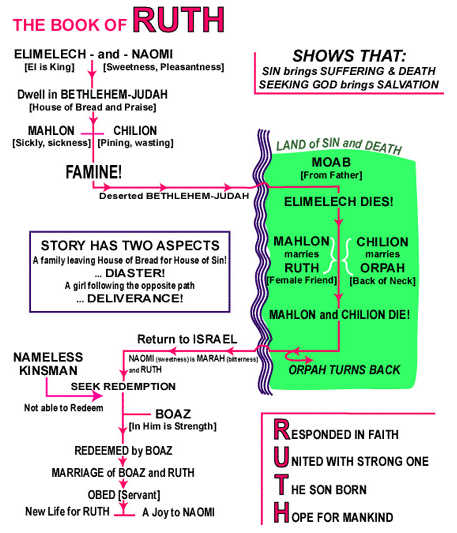
We’ve likely all read the book of Ruth. We just started a four-week visit to this small book and I cannot but post it here and plead with any visitors to give it a listen. 

What is the book of Ruth really about? This book is considered one of the most beautiful pieces of literature ever written, but is it more than just a beautiful story? In this introduction to our four week series on Ruth, Pastor Voddie gives a beautiful picture of the message contained in this book and how it should impact our lives.

You cannot comprehend the message in this book unless you take into account the biblical context. This introductory sermon provides that in an extraordinary fashion.

Defending, Contending – what?

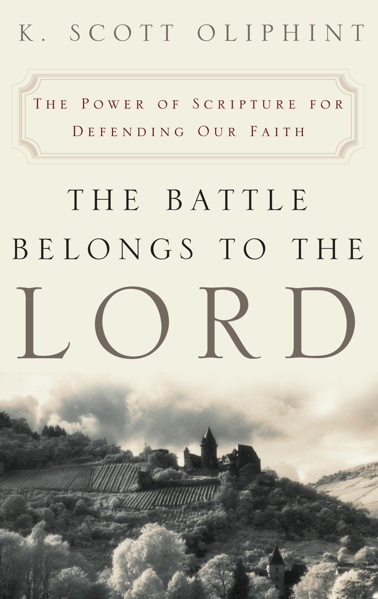
I recently started reading K. Scott Oliphant’s new book, The Battle Belongs to the Lord. Chapter 2 is an examination of the book of Jude and the author does an excellent job of explaining what we (those who are redeemed by the blood of Christ) are to defend and why we are to do so. He also describes the people and the motivation of those who “crept in unnoticed” and pose a danger to the church.

The exegesis of Jude in worth the price of the book. Here’s a taste for your condiseration:

“Jude’s description of the enemies who have made their way into the church is illuminating. He does not describe them as merely worldly people. … They [are people who] know the tradition and can “speak the language.” … The reference to Korah would have been particularly stunning to Jude’s readers (see Numbers 16 and 26.) … To put it (Korah’s rebellion) in New Testament terms, Korah used his leadership position in the church to exalt himself and his own agenda.”

Reading this chapter reminded me of a 28 minute message from a dear brother, introducing Jude. Listen to this message, buy the book. Then you will have a better understanding – perhaps an initial understanding – of why it is important to contend for the faith and what that faith is.

What’s The Big Deal on Creation?

Many Christians point out that the word “day” in Genesis chapter one can mean something other than a 24-hour day and, therefore, the scientific view that the world is billions of years old can be reconciled to the Scriptures.

But how does one determine when the Hebrew word “yom” means a 24-hour day and when it means an undetermined length of time? As with all interpretation, context is key.

And, as with all Scripture, understanding the authority of God as the ultimate rule of interpretation of His Word and His creation is foundational to everything else.


In this hour long free video from Answers in Genesis, you will see how dangerous it is to play fast and loose with the Word of God and be taught why the “yom” must mean 24-hour day in Genesis chapter 1.

May the Lord God of Heaven be our guide – and not any snake who relies on human “wisdom” to cause us to question His Word.

Is your Worldview based on the world?

Many professing Christians think man has more wisdom than God in determining how long the creation took. Of course, few people put it in those terms, but that is what it boils down to. Here’s an example.

What are the consequences of disbelieving in a literal 6 day creation? We deny the clear teaching of the Old and New Testament. Jesus taught (recorded in Mark 10:6) that man and woman were created in the beginning of creation – not after a long, long time.

And when we deny the clear teachings of the elementary things of Scripture, why should our children believe us or our pastors when they are taught about sin and deliverance from its consequences? If creation is reduced to a fairy tale, we have breached the foundation of God’s revelation to man. God stated out His special revelation to man with the words, “In the beginning, God created the heavens and the earth.” Creation is important to Him – it ought to be to us.

For a few days, you can download a 40 minute video in which Ken Ham describes the importance of believing God’s Word – for you and the next generation. In it you will find out:

The next generation is already calling it quits on traditional church. Next Sunday, look around, two thirds of the young people in your church are already disengaged from the message they are hearing. And it’s not just happening on the nominal fringe; it’s happening in the most solid “Bible-believing” churches.

In this important DVD, Ken Ham discusses the profound cultural changes taking place in our Western world, as God’s Word is rejected and man’s fallible ideas are welcomed. Ken relates some of the shocking statistics presented in the book Already Gone that reveal the reasons why young people are leaving church and abandoning the faith of their parents.

The church is failing to give children real answers to their questions. We are losing our kids long before college. But this is far from a hopeless situation. Ken explains how we can fight back for our children, and what we can do to ground our children in the faith and prepare them for the challenges of the secular world.

HT to my good friend at PurposeDrivel

Have You Asked Jesus to Leave You Alone Yet?

Have you asked Jesus to leave you alone yet? Maybe you are like me and you were called by Jesus as a young adult. Or maybe you have known of Jesus your entire life. Maybe your earliest memories of childhood include Sunday school songs about Jesus and memory verses at church. So, why would you ever ask Jesus to leave you alone? It is an absurd thought, isn’t it? After all this time, you have Jesus! Don’t you want him to stay? I propose that if you don’t ask Jesus to depart from you, then you may not know him at all. Follow me to the shores of Gennesaret (Lake Galilee) more than 2000 years ago as told by Luke.

Luke 5:1-3:

1On one occasion, while the crowd was pressing in on him to hear the word of God, he was standing by the lake of Gennesaret, 2 and he saw two boats by the lake, but the fishermen had gone out of them and were washing their nets. 3 Getting into one of the boats, which was Simon’s, he asked him to put out a little from the land. And he sat down and taught the people from the boat.

Jesus was on the scene and being pressed by the large crowd following him and listening to him teach, he ran out of dry ground and was basically forced to climb into a boat. Jesus climbed into Simon’s (Peter) boat. Do you think this boat choice was a random selection? No, it wasn’t random. Before time began the Father set an appointment with the Messiah in Peter’s life to have this discussion. Jesus showed up on time, as he always does.

Continue reading

Christ – our example, submission to authority

Here is the last of 6 messages from Pastor Conrad Mbewe, from Zambia in Africa, on the subject of biblical submission and exercising authority. You can find links to the previous messages here. Each of these 6 messages will convict you – as all humans have some rebellion in their flesh. Do not lose sight of the limits of earthly authority – but do not erect unbiblical limits on your submission thereto. Both ditches are dangerous to your soul.

This last message focuses on the example of the Lord Jesus – Who humiliated Himself to take on flesh and live as a human and submitted Himself in all things He said and did to our Heavenly Father. While the main point of the Lord’s earthly life is not merely to serve as an example (that is the main error of the emergents and myriad gnostics), He does shows us how to honor God with obedience.

The main point of Christ’s life was to earn his right to be the propitiation for the sin of the elect and keep Himself from sin and be raised from the dead. All to bring glory to His Father and redeem those chosen before the foundation of the world.

He desires obedience more than sacrifice – obedience can only come by the indwelling of the Holy Spirit – and not by the effort of any flesh. As the taxpayer in Luke 18, let each of us cry out to God for mercy and rely not at all on the flesh.

Authority in the Church

We now turn to the fifth message in Pastor Mbewe’s 6-part series on biblical Submission and authority, based on 1 Peter. You can find the previous posts here. As way of reminder, Pastor Mbewe is  the current pastor of Kabwata Reformed Baptist Church in Lusaka, Zambia, Africa. He is widely regarded as the African Spurgeon. KBC is presently overseeing the establishment of ten new Reformed churches in Zambia and Botswana. Conrad is the editor of Reformation Zambia magazine and writes three columns in two weekly national newspapers. His most recent contribution to a book is found in Dear Timothy—Letters on Pastoral Ministry, published by Founders Press. He is also the principal of the Reformed Baptist Preachers College in Zambia. He blogs at A Letter from Kabwata.

Today’s message is about the biblical model for the exercise of and submission to authority within the church. May everyone professing Christ as Savior submit to the Word of God – for the good of His people and the glory of His name.