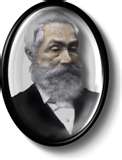
 Hardly had the early persecutions [of the Christians] ceased till that falling away set in. Jerome lifts the veil in the fourth century, and disclosed a truly melancholy picture. In vain we look for the humility, the simplicity, and the purity of the early Church. The gold refined in the furnace of ten persecutions is waxing dim. The vine which Paul planted at Rome is being transformed into the vine of Sodom. The pastors of the church are becoming inflamed with the love of riches, and are striving with one another for pre-eminence. Rome daily sees her bishop ride forth in a gilded chariot, drawn by prancing steeds. Her clergy show themselves attired in robes of silk. The members of their flock crowd alternately the church and the theatre, and rush with indecent haste from superstitious rites performed at the tombs of the martyrs to the games and sports of the circus. The “apostacy” has fairly set in. The corruption grows with the current of the centuries. It shapes itself into system, it builds error upon error, and buttresses itself all round with assumptions and falsehoods. The organization in which it enshrines itself necessarily and naturally finds for itself a chief or head. Now comes the Pope and his hierarchy. The “Man of Sin” has appeared.
– J.A. Wylie (from The Papacy is the Antichrist)
– 1808 – 1890
 He that seems righteous toward men, and is irreligious toward God, is but an honest heathen; and he that seems religious toward God, and is unrighteous toward men, is but a fake Christian.
 Too many Christians, just like their unsaved counterparts, are impressed by appearances rather than structure; are seeking thrills and excitement rather than substance; are more apt to respond to emotional manipulation than a rational discourse. How does a church compete in this rather crowded marketplace? If entertainment has become the standard way of life (as some are suggesting) then how can the churches vie unless they become a bastion of entertainment? But if it gives way to this powerful temptation has not the church been transformed into something other than the church?
 Our purest works are no better than filthy rags, when tried by the light of God’s holy law. . . . Our best things are stained and tainted with imperfection. They are all more or less incomplete, wrong in the motive or defective in the performance.
 You know there are two great plagues that have distressed the church of Christ and it will never be quite free from them; a multitude of hypocrites on a fair day, and a multitude of apostates on a foul day.
 I believe one of the greatest crutches in the church is the nursery. Parents who have neglected to train their children have very little encouragement to do so when there is a place to hide them. The father who should be up in arms by the time he gets home from church because of the embarrassment to which his child subjected him ends up going home with a clear conscience while the nursery worker takes a handful of aspirin.
 Catholics are totally dependent upon priests for their salvation. It is the priest who is said to cause regeneration and justification in baptism (CCC 1992, 1213); absolve mortal sins in the confessional; dispense the body and blood of Jesus in the Eucharist; impart the Holy Spirit in the sacrament of Confirmation; and offer the sacrifice of the Mass for souls suffering in
  Richard Baxter said, “Don’t pretend to love your people if you favor their sins.” Any pastor who says, “We don’t deal with sin here” doesn’t love his people, and it’s questionable whether he loves his God. Anybody who loves God loves what God loves, and what God loves is holiness and God loves His people to be holy, and if you’re indifferent toward their sins, then you don’t love people. If you say . . . as you hear preachers say, “God loves you, God loves you, God loves you,” then you have to immediately say, “And if you don’t turn to receive His Son you’re going to Hell.” If you love God and you love people you say that. And if in the church you say, “God loves you, God loves you so much that He gave His Son,” you’re going to have to also say, “God loves you so much that He wants you to stop that sin, He wants you to abandon that sin or you’re going to be put out of His Church. He’s a man who expresses the true and the pure, not some mushy sentimentalism.
 To imagine, therefore, so small a thing as a bee, a fly, a grain of corn, or an atom of dust, can be made out of nothing, would stupefy any creature who considered it. But how much more is it to behold the heavens, with all the troops of stars; the earth, with all its embroidery; and the sea with all her inhabitants of fish; and man, the noblest creature of all, and all to have risen out of the womb of mere emptiness.
 Roman Catholicism is the most evil perversion of Christianity Satan could devise. It is pagan, wicked, and deceptive. It is a works-oriented system that perverts the works of Christ in many blasphemous ways (the papacy being one) and was the reason the Protestant Reformation was necessary. How sad it is that many “evangelicals” today are trying to undo it.
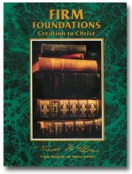 Methods and terminology used in evangelism all over the world have so distorted the Gospel that Christians need to be taught afresh the basic fundamentals of God’s saving work in Christ, so their presentation of the Gospel will be according to the Word of God. Even though many people have been saved under present evangelistic methods, many others have not clearly understood the Gospel. The message they heard so emphasized man’s part in conversion that God’s perfect finished work and complete provision for helpless sinners in Christ was not understood and believed. If people’s attention is directed inward to their own doing, even those who are truly saved will often lack assurance of salvation. The question will constantly arise within their hearts, “Was I sincere enough? Did I do it correctly? Did I truly receive Christ? Did I really give my heart to Jesus?”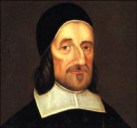
 The blessed founder of Christianity chose to make his advent among the lowly and the despised. This was agreeable to the spirit of that Holy Religion which he came to establish. There was a time when a multitude of his followers, astonished and convinced by the omnipotence displayed in his wondrous miracles, were disposed to” take him by force to make him a king,” but so far from encouraging their design, the inspired historian tells us” that he departed again, into a mountain himself alone.” (John vi., 15.) In reply to the inquiries of the Roman governor, he uttered those memorable words, “MY KINGDOM IS NOT OF THIS WORLD,” and his whole conduct from the manger to the cross, and from the cross to the mount of ascension, was in strict accordance with this characteristic maxim of genuine Christianity.
 Christ Alone Wyoming