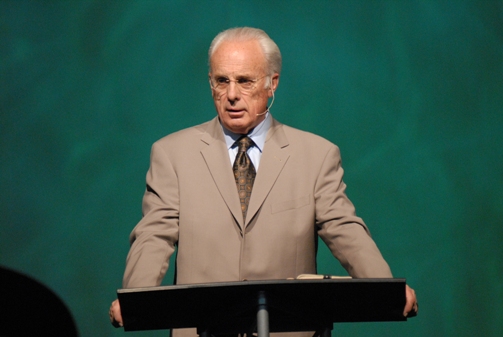
Gospel, Discernment, and Passion 2013!

It is my prayer that this post will prove to be a connection between the matters of presenting the gospel and that of the area of discernment among the body of Christ.

First, I note that each contributor has a different set of giftings for which I am very thankful. When The Pilgrim was the primary owner of the blog, we were blessed in the addition of good men who I believe continue to take Defending Contending in a solidly, biblical direction. Chris, who took over from The Pilgrim, has a huge heart for evangelism and outreach as does Bill Phillips. Manfred, Fourpointer, and Abiding Through Grace have helped to bring a solid reformed perspective to this part of the blogosphere. The Pilgrim and I set a tone for world missions and also the need of discernment in the Body of Christ.

2paths
Yet, each contributor is only human. We make mistakes, and further, we all have areas of sin that the Holy Spirit has to work to correct in our lives. None of us have arrived, nor would we ever want to portray such a picture. As our long-time readers will remember, there are times that we have each had to ask forgiveness for something we wrote, maybe that was in haste or in anger. Through all of this we continue to move forward and desire to grow in the grace and knowledge of Christ.

For the record, we are not always in agreement with our thought processes, nor with a particular point of doctrine that we seek to understand. However, there is no question that we all love the Savior and desire truth in the inward parts of our heart and soul. My fellow contributors may not even be in full agreement with this post, but I believe I can safely assert that we all have the same desires – purity in the church and a church that is fervent about spreading the gospel message!

Recently, both Chris and I have posted a few articles that have dealt with two areas that are not diametrically opposed to each other. Conversely, they are actually a very necessary part of how we are to operate within the confines of a local church setting. His approach and strong desire for the presentation of the gospel has been matched by my own desire to have a spirit of discernment as we present our case before the thousands of readers we see come to DefCon every week.

In the midst of this, some have questioned our decisions either to bring a spotlight on a pastor, or in not going far enough in our condemnation. This is my main reason for writing this, especially in light of what we are seeing take place at Passion 2013 right now in Atlanta, Georgia.

From a gospel perspective, I believe that if more people were being presented with a Christ-centered message versus a man-centered message that there would be far fewer who were in attendance. The problem with Passion 2013 is that those in attendance are being driven by emotion. Further, they are seeing this event being openly endorsed by men such as David Platt and Justin Taylor. This event is not only being endorsed by well-known ministers, but men who should know better are also involved in preaching there such as John Piper.

The question we are faced with is, “Does such an endorsement automatically place men like Piper, Platt, or Taylor under such a cloud that we have the right to call their salvation into question and classify them as unbelievers?”

This is where the discernment perspective must come in. There are wolves who have always sought to infiltrate the church of the spotless Lamb of God. There will always be wolves. There can be no doubt that the salvation of a person is a matter that ultimately can only be known between that individual and the Sovereign God of the Universe. However, the Scriptures make it abundantly clear that we can be fruit inspectors and that by the works of others we can have a clearer picture as to their spiritual condition or lack thereof.

Taking this to another level, we must also consider discipline as found in Matthew 18. First, we must recognize that discipline is to be practiced between fellow believers, but that some aspects can only be effected in a local church setting. As an example, if I have offended another brother contributor, I have the responsibility before God to make that right. However, should things heat up and we have a falling out, neither my church, nor the church where the fellow contributor is in fellowship, have the right to bring another under discipline if they are not a member or in fellowship with that particular assembly.

Therefore, for those who lack in discernment in evangelical circles, we at DefCon can only bring warnings to others. We cannot bring ultimate judgment against another. Further, many seek to use Matthew 18 to make the point that if we have not taken our grievances to that person in question that we have no right to make public our concerns. This also comes from a poor understanding of this passage. The level of discipline is first to be enacted and finalized at the level to which it is either private or public knowledge. For example, if a brother contributor and I have a disagreement and we resolve the matter without it going public in any form or fashion, it goes no further. Restoration has taken place.

However, a person who has a public ministry and has openly stated where he stands or is showing a lack of discernment has taken the matter to a public level. There is no more private conversations necessary for the testimony at stake is no longer just a personal one, but is a dispersion against the Bride of Christ before a lost world.

Either way, at no point, does Matthew 18 give us the freedom to state to the world that the person who is offending others is an unbeliever. We are told and given the right by Christ that if such a person goes all the way to the final step of discipline that they are to be placed outside of the protection of the local church. They are then to be TREATED as one who is an unbeliever. The entire process is to continue giving forth the message to them and seek to provide restoration. This was a primary purpose for the writing of 1 and 2 Corinthians. Matthew 18 was fully enacted, but 2 Corinthians was necessary for the church to see their error in not admitting the brother back into fellowship. In this case, the man in question was in grievous sin that was not even found among the amoral society of Romans. Yet, at no point in either book does Paul question this man’s salvation!

jesusband
So, let us look further at the events currently unfolding at Passion 2013. There are some there who are teaching another gospel and are openly teaching or practicing or promoting heresy. This, in my estimation, includes Louie Giglio. It also includes groups or individuals that are practicing doctrines of demons. This group would include David Crowder, Christy Nockels and the band Jesus Culture.

A thorough expose on these groups can be found at Apprising.Org, and I highly recommend any person with questions to go and read my Christian brother’s blog posts before making any negative comments about my inclusion of these groups or individuals. Suffice it to say for now that these music artists are highly charismatic and further give evidence that Jesus is merely a byword, not a Person Who has changed their way of life. For further information, I would highly recommend reading the following post as well on the connections of those leading Passion 2013.

In addition, you have a woman, Beth Moore, who is clearly in contradiction to the teaching of God’s Word. She is considered an elder, teaches and preaches to men, but further is openly involved in the Roman Catholic teaching of contemplative mysticism. This type of meditation and mindless repetitious prayers were openly condemned by our Savior during His earthly ministry. Beth continues to refuse to be corrected and has continued a slide further into the acceptance of Roman Catholics as being on the same road to heaven as Christianity.

The Bible makes it clear that there is only one way to heaven, and what the Roman Catholic system teaches is not salvation by faith through grace alone. Beth is no longer just endorsing religions such as Roman Catholicism. Her teaching shows that she is promoting a completely different gospel. While we would pray and hope that she will see the error of her ways, we can only conclude at this point with the words of the apostle Paul in Galatians 1 – if anybody, even an angel, preach ANY OTHER gospel than what we have preached to you, then let them be accursed. This is not my words, nor is it my decision. Her actions and words bring condemnation upon her and her ministry.

So what about John Piper? Personally, I have learned much from several of his earlier books with the exception of his teaching of “Christian” hedonism. A very poor choice of terminology and shaky theology at best is at play here. However, in more recent times, there have been growing questions about his connections, his endorsements, and I am convinced that this has produced questions about where his theology is changing to from books such as “Future Grace.”

His endorsements are wrong, and I have not seen one thing that convinces me that he is preaching at Passion 2013 with the intention of bringing biblical clarity to the thousands who are gathered. Actually, he now openly endorses the ungodliness that is in place, holds hands with Beth Moore, and has even been captured on video practicing contemplative mysticism! This certainly does bring him into question and at this time, I believe we are only left with two conclusions. First, his lack of discernment continues to drive him down the road towards full-blown apostasy at the expense of biblical truth. Second, while I am not prepared to question whether he has ever come to a point of saving faith, I am prepared to learn from the words of John MacArthur, who has in the past noted that a person who evidences no change, has no fruit, and continues in full-blown apostasy must be concerned as to whether they were ever saved to begin with.

Sadly, the problem is compounded by the inclusion of heretics like Judah Smith, who co-pastors a church with his wife in Washington. His connection includes preaching at Rick Warren’s Saddleback Church and Mark Driscoll fully endorsed this event. Yes, this is the same Driscoll and Warren that are so openly welcomed and share pulpits with John Piper. These men all have the same thing in common – they are students of humanist authors like Peter Drucker, who died as a heathen pagan – without Christ.

My prayer is that those who like Chan, Piper, Platt, and Taylor, who have preached and taught the truth will wake up and see the truth. The truth is that they are being sucked into the whirlpool of expediency, the whirlpool that says numbers are more important than truth, the whirlpool that produces ever-increasing numbers of false conversions, and the whirlpool of apostasy that threatens to swallow all the other whirlpools like the black holes of space. Soon no spiritual light will shine forth from their ministries for error, heresy, and the doctrines of demons will swallow any glimmer from view, or it will ultimately prove that there was no light to begin with.

nouturn For now, I would share the words from the apostle Paul as seen in 2 Corinthians 11:13-15, “For such are false apostles, deceitful workers, transforming themselves into apostles of Christ. And no wonder! For Satan himself transforms himself into an angel of light. Therefore it is no great thing if his ministers also transform themselves into ministers of righteousness, whose end will be according to their works.”

Today, we MUST have the true gospel of Jesus Christ being preached to the world. The church has an awesome responsibility to reach out to the world and share in love the truth of God’s Word. The world must hear that there is ONLY one way to heaven and that is through the finished work of Jesus Christ.

However, preachers, pastors and ministers of the gospel must not only practice spiritual discernment, but they must also teach their people how to discern between what is right and what is wrong. Conferences like Passion 2013 are filled with thousands who are either not saved, or they fall under the category of being let down by the men who were entrusted with their spiritual well-being.

Pastors who have not stood up to this nonsense should repent for putting their people in harm’s way. Parents who have allowed their children to attend such a conference should also repent for putting their children, whom they were given to protect, in the way of the forces of hell that seek to blind the minds of their precious gifts. Men like Francis Chan, David Platt, Justin Taylor, and John Piper have a responsibility to take a stand no matter what it costs in the way of book sales, or affiliations, or even the numbers of followers they have garnered. If there is a time for men like these to take a stand and apologize for their lack of discernment and for misleading the body of Christ around the world by their open endorsements of heresy, charismania, and yes, even the doctrines of demons being openly endorsed by people like Beth Moore, Mark Driscoll, Louie Giglio and others.

But then again, Paul warned us in 2 Thessalonians that there would come a time before the return of the Lord that apostasy would take place within the church. Maybe this is what we are seeing. I fear for those who have failed in their calling and with their testimony. I fear for what they will face when they stand before the Lord in judgment.

May we not pride ourselves on who we are, nor that we have not fallen ourselves! Brothers and sisters, may our thoughts remain on the Author and Finisher of our faith. May we remember that but for the grace of God, we could be the ones that are where these others now find themselves.

Soli Deo Gloria,

Mark – TJM

Quotes (938)

“If signs and wonders did still exist, do you think they would be given to people with bad theology? You think God would give Benny Hinn the power to do miracles to authenticate really bad theology? If those gifts existed, they would belong to the purest, most faithful, sound teachers of the word of God to authenticate their teaching–not to hair-brained people who spew out whatever comes into their head.”

John MacArthur

Sermon of the week: “Sovereign Election, Israel & Eschatology (a.k.a. Why Every Self-Respecting Calvinist is a Premillennialist)” by John MacArthur.

John MacArthur Your sermon of the week is Sovereign Election, Israel & Eschatology (a.k.a. Why Every Self-Respecting Calvinist is a Premillennialist) by John MacArthur. This is the message that caused a stir a few years ago when MacArthur delivered it at the Shepherd’s Conference.


Not all the contributors on this blog agree with MacArthur on this subject, but I wanted to make it available here for those who have not listened to it yet.

You may also want to hear the opposition’s position to the Premil view posted last week by ATG.

For a more in-depth examination of this subject, I highly recommend MacArthur’s six -part series found on this previous post. (I actually prefer MacArthur’s six-part series as he has more time to unpack his points, and makes a more convincing argument for the Premil position, than he does in today’s single message.)

You can download this week’s message by MacArthur by going to the page found on this link, or just right-click and save this link.

A Case for the Pre-Existence of the Son of God

A Case for the Pre-Existence of the Son of God

Defining Who is the Son of God and Proving His Eternal Existence

INTRODUCTION

            Over two-thousand years ago in the small village of Bethlehem, made famous as the boyhood home of King David (1 Sam 16:1, 17:12, Luke 2:4), a baby was born. Only a few miles from Jerusalem, the epicenter of the Jewish religious culture of the time, this baby would grow up amidst swirling controversy regarding who he was. Who is this child? He would be called many things, however, one title condemned him for blasphemy by the High Priest Caiaphas and the Council of scribes and elders who arrested and tried him and led to his execution (Mt 26:37, Mt 26:62-66, Jn 19:7). The question came from Caiaphas, “I adjure you by the living God, tell us if you are the Christ, the Son of God.” Jesus answered directly, “You have said so.”You have stated the truth. Caiaphas tore his clothes[1] – a forbidden act by the High Priest – as a display of extreme grief for blasphemy.[2] Jesus claimed to be the Son of God and he was executed for it.

            We have the advantage on this side of the cross, two-thousand years later, with the aid of Holy Scripture to see that Jesus was in fact the Son of God (Jn 1:1-14) and was wrongly executed by the council in a purely legal point of view. However, Jesus is God and his mission was to come to earth and be executed as a sacrifice for the sins of the children of God (Ephesians 1-2, Phil 2:5-8, Col 1:11-22, 1 Pet 1:2). Although we now have great hope in Christ, the Son of God, controversy still swirls around who he is. Several religions that claim the name of Jesus do not consider him to be God, such as the LDS and Jehovah Witnesses, but they consider Him to be a created being. Within the orthodox Christian circles Jesus is known to be God, but there is disagreement on whether or not he has been God for all eternity. Did the Son of God exist eternally, outside time and space, as the Son before he was born in the form of man before born as the baby Jesus, born of Mary? Or was it at the incarnation that Jesus came into being by becoming man generated by the Father?

            I propose that the evidence proving the Son of God’s pre-existence before the incarnation is overwhelming and inarguable for not only LDS and Jehovah Witnesses[3], but also for all within the Christian faith. Before proposing the evidence supporting the pre-existence of the Son of God, a brief description of the opposition is in order.


OPPOSITION TO THE PRE-EXISTENCE OF THE SON OF GOD

            The opposition to who Jesus is and what it means for Him to be the Son of God has been argued since Jesus was born in Bethlehem. Many false doctrines were found in the early church, towards which Jesus’ beloved disciple John wrote his entire Gospel and epistles to refute (John 20:31), the Apostle Paul worked diligently to correct through his many epistles and missionary journeys (Rom 8:1-4, Col 1:15-20), as well as Peter and the writer of Hebrews (1 Peter 1:20, 2 Peter 1:16-21, Heb 1:1-3). The eternality of the Son, as the second person of the Trinity was so hotly contested a few hundred years after the incarnation that the Nicene Council developed the Nicene Creed to establish a proper view on the Son and to distance themselves from the modalistic theology of Sabellianism[4] and the argument by the Arians[5] of the day that insisted that the Son of God was a created being.

            Centuries later new religions arose which claimed the name of Jesus Christ, yet they did not attribute deity or pre-existence to him. In the early 1800’s, Joseph Smith founded the Church of Jesus Christ and the Latter Day Saints, claiming that the Son of God was merely a created being and Lucifer’s brother.[6] In the 1870’s Jehovah Witnesses arose who teach Jesus is no more than the archangel Michael[7], another created being. The LDS and the Jehovah Witness religions are rightly consider by professing Christians to be cultic and not a denomination within the protestant faith.

Another high profile stream of incorrect teaching regarding the Son of God has invaded the charismatic denominations. In particular, the televangelist T.D. Jakes with his “oneness” Pentecostal faith, author of over 30 books many of which have been on the NY Times Bestseller List, has had a worldwide stage for many years and teaches that Jesus is the Father, Jesus is the Son, and Jesus is the Holy Spirit and that the doctrine of the Trinity is in fact a polytheistic heresy[8]. Although no credible theologian would give Jakes theology thirty seconds of consideration, the average Christian is easily fooled by the TV shows, bestselling books, and charismatic personality. These fallacies are as important to refute as what the Fathers of the Nicene Creed were fighting against 1700 years ago.

            More interesting even yet, and much closer to home, is the change that John MacArthur has transitioned through only a decade ago. MacArthur, one of America’s greatest teachers and preachers, released an article in 2001 stating:

“…I want to state publicly that I have abandoned the doctrine of ‘incarnational sonship.’ Careful study and reflection have brought me to understand that Scripture does indeed present the relationship between God the Father and Christ the Son as an eternal Father-Son Relationship. I know longer regard Christ’s sonship as a role He assumed in His incarnation.”[9]

MacArthur’s abandonment of this doctrine through careful study of the Scriptures signals to us that there is a vital need for careful study and reflection on the Scriptures by every believer, even for every respected teacher, preacher, and theologian. Let us now turn to carefully considering what the Bible says about the relationship between God the Father and God the Son.

EVIDENCE OF THE PRE-EXISTENCE OF THE SON OF GOD

            Ten proofs regarding the pre-existence of Jesus Christ as the Son of God and second person in the Trinity need careful consideration.

Proof (1): I Am. The most basic proof of Jesus Christ’s pre-existence as the Son of God, and an assumption that must be made at the outset, is his divinity. Jesus being fully God implies his eternality. We see from the “I am” (egō eimi) statements found in Jesus’ own words, that He is claiming to be equal to God, the Father. In chapter 8 of John’s gospel, Jesus provides a direct claim to deity and pre-existence through the most notable “I am” statement.  Jesus tells the Jews, “If anyone who keeps my word, he will never taste death,” (Jn 8:52, ESV). The Jews fire back at Jesus by asking if he is greater than Abraham. After all, Abraham died and so did all the other prophets of God. So how can this man claim to have power over death? How can he speak with authority regarding Abraham as if he knows him? Jesus, they argue isn’t even fifty years old, how can he have seen Abraham?[10] Jesus then makes the claim to deity and pre-existence: “Truly, truly, I say to you, before Abraham was, I am,” (Jn 8:58, ESV). Continue reading

Sermon of the week: “Why We Believe and Others Reject” by John MacArthur

Your sermon of the week by John MacArthur explains Why We Believe and Others Reject.

As a side note, the day that DefCon posts its sermons of the week will change this week. Our sermons of the week will no longer post on Thursday mornings but will now post on Sunday mornings beginning this Sunday, January 1st.

Pictures of Christ–right or wrong?

In the comment thread of a recent post (which has since been removed), some comments were posted concerning the varied exegeses of Exodus 20:4-6 that have been offered over the years. One such interpretation says that the passage should be read (to paraphrase),

Do not make images. Do not bow down to them or serve them.

The other position says the passage should be read (again, to paraphrase),

Do not make images in order to bow down and serve them.

Having just completed a survey of the book of Exodus (which I may be posting here in a short while), here is the conclusion I have come to. I believe the second interpretation (Do not make images of God in order to worship the images.) to be the proper one. I hope to show, by way of Scripture, why I feel this to be so.

I will say, however, at the outset (and will expound on this in due time) that one must be careful with said pictures. One can fall into one of many errors:

  • They can wind up worshipping the image (as the Romanists do).
  • They can wind up thinking that having a picture of Christ on their wall makes them a Christian, even though their hearts are far from Him (as many Americans do today).
  • They can wind up thinking that said depiction of Christ is what He actually looked like (as the Mormons believe that He had milky white skin, rather than being [more likely] a darker-skinned Semite, He being a Jew of that time. We will also leave aside the brown-haired, blue-eyed Jew of the Jesus of Nazareth TV-movie).
  • Or they may simply see Him as being a man, and not God in the flesh (as the Emergents and liberals do).

While we cannot depict the glory of God (for it was always hidden, either within a cloud, or a pillar of fire, or within the bush that burned), we can depict the humanity of Christ. Treated carefully enough, and used in the proper context, I believe that pictures of Christ in the flesh are not necessarily sinful.

First, let’s begin with the idolatry committed by the Israelites at the foot of Mount Sinai, in Exodus 32:1-61 Now when the people saw that Moses delayed coming down from the mountain, the people gathered together to Aaron, and said to him, “Come, make us gods that shall go before us; for as for this Moses, the man who brought us up out of the land of Egypt, we do not know what has become of him.” 2 And Aaron said to them, “Break off the golden earrings which are in the ears of your wives, your sons, and your daughters, and bring them to me.” 3 So all the people broke off the golden earrings which were in their ears, and brought them to Aaron. 4 And he received the gold from their hand, and he fashioned it with an engraving tool, and made a molded calf. Then they said, “This is your god, O Israel, that brought you out of the land of Egypt!” 5 So when Aaron saw it, he built an altar before it. And Aaron made a proclamation and said, “Tomorrow is a feast to the LORD.” 6 Then they rose early on the next day, offered burnt offerings, and brought peace offerings; and the people sat down to eat and drink, and rose up to play.

The people wanted gods to worship–“gods” that they could see with their eyes and touch with their hands; “gods” who would let them unleash the sin that burned within them. And rather than serve the true YHVH, they created a false “yhvh” that was more to their liking. So, when Moses returned to the foot of the mountain, God commanded that the calf be ground to powder and the people drink down their iniquity. Then, God commanded that the sons of Levi take their swords, go through the camp, and slay all those who did not repent of their idolatry (Exodus 32:25-28). (The many blatant inaccuracies in Cecil B. DeMille’s landmark film may be addressed in another post). Paul uses this event to call the Corinthians away from their own idolatry (1st Corinthians 10:5-7).

Now, here’s the question: if the people had simply fashioned a calf out of gold, would God have commanded them to be killed? No. What was their sin? They made this calf in order to worship it. “Come, make us gods that shall go before us…This is your god, O Israel, that brought you out of the land of Egypt!” They had fashioned a figure of an animal, yes–but the real sin was ascribing to that statue the name of YHVH and dancing around and calling it “our god.” This was the force of the Second Commandment–making a graven image in order to worship it.

We see another example in Judges 17:1-6. The mother of Micah (not to be confused with the prophet Micah, which book bears his name) had statues made for him to put in his house to reside with the other idols. Again, is the sin the making of the statue–or the ascription of deity to that statue?

I say all this by way of introduction, since it seems that the crux of the debate resides in whether or not the picturing of Jesus by painter or sculptor is sinful. On this, the prophet Moses said, from the LORD–

Deuteronomy 4:15-1915 Take careful heed to yourselves, for you saw no form when the LORD spoke to you at Horeb out of the midst of the fire, 16 lest you act corruptly and make for yourselves a carved image in the form of any figure: the likeness of male or female, 17 the likeness of any animal that is on the earth or the likeness of any winged bird that flies in the air, 18 the likeness of anything that creeps on the ground or the likeness of any fish that is in the water beneath the earth. 19 And take heed, lest you lift your eyes to heaven, and when you see the sun, the moon, and the stars, all the host of heaven, you feel driven to worship them and serve them, which the LORD your God has given to all the peoples under the whole heaven as a heritage.”

In Deuteronomy we find, as it were, sermons (expositions and applications) of the various commands found in that first covenant. This passage is an exposition and application on the Second Commandment in the Decalogue. Now, in this passage, is this–

  1. A command from God to not carve images of animals or bugs or birds or or fish or humans? Or…
  2. A command about carving images of animals or bugs or birds or fish or humans in order to worship them?

There is a difference. If this is a command to not carve images of animals or bugs or birds or fish or humans–and if you feel that making pictures of Christ is idolatry–then, to be consistent, you must remove any figures and pictures of any animals or bugs or birds or fish or humans from your house, because you are guilty of idolatry. If you wear a shirt or a hat or any article of clothing that contains any picture of any “likeness of male or female, the likeness of any animal that is on the earth or the likeness of any winged bird that flies in the air, the likeness of anything that creeps on the ground or the likeness of any fish that is in the water beneath the earth” then you must get rid of it to be consistent in your beliefs. Take down any paintings of any animals you have on your walls, for it is idolatry. Don’t watch sports–ANY sports–for every sport has teams that are depicted by some kind of animals or bugs or birds or fish or humans. If you are in the Army, don’t become a colonel, since they wear an eagle as their insignia.

If your children have dolls, or action figures, you must get rid of them. We must also condemn any statues or pictures of any human being. If you live in St. Louis, and your kids have posters of Albert Pujols on their wall, take them down. Go to Philadelphia, PA, and petition the city to get rid of the statues of George Washington and Ben Franklin and Thomas Jefferson. Go to your local city council and beseech them to take down any statues of any significant figure of that city’s history, for it is idolatry.

  • That scrapbook filled with pictures from your wedding? Get rid of it.
  • The paintings of your grandparents or great-grandparents? Gone.
  • Got pictures of your children in your wallet? Goodbye.
  • Get rid of any books or magazines or any other publication that has any picture of any human being.
  • Lose the camera.
  • Don’t buy your children pens, pencils, markers, paint, or any other thing by which they may make a picture of any living creature lest they commit the sin of idolatry.

These are the things one must do to be consistent. For all of these–images of animals or bugs or birds or or fish or humans–are grouped together with images of “things in heaven”.

So then, the sin is not in depicting the “likeness of male or female, the likeness of any animal that is on the earth or the likeness of any winged bird that flies in the air, the likeness of anything that creeps on the ground or the likeness of any fish that is in the water beneath the earth”. The sin is in in depicting the “likeness of male or female, the likeness of any animal that is on the earth or the likeness of any winged bird that flies in the air, the likeness of anything that creeps on the ground or the likeness of any fish that is in the water beneath the earth” in order to worship it. Ascribing some power to it that belongs to God and God alone.

Just as the mere act of looking up at the stars in the sky is not idolatry. For God also commanded Moses to tell the people, “And take heed, lest you lift your eyes to heaven, and when you see the sun, the moon, and the stars, all the host of heaven, you feel driven to worship them and serve them…” If looking up at the stars is a sin, then God commanded Abram to sin, since He told him to “Look now toward heaven, and count the stars if you are able to number them” (Genesis 15:5). To be consistent, never look at the stars or you are guilty of idolatry.

In both of these, the sin is not carving images of animals or birds or bugs or even humans; nor is the sin in simply looking up into the starry skies. The sin is ascribing to animals, bugs, birds, stars, moon, etc the attributes and power that belongs to God and God alone.

Now, I know the counter-argument. “OK, fourpointer, you’re saying it’s OK to have pictures of Christ, are you then saying it’s OK to make images of God the Father or God the Holy Spirit?” No, I’m not saying that at all. Did God the Father take on human flesh? Did God the Holy Spirit take on human flesh? Obviously, the answer to both questions is “No” (leaving the arguments of the Sabellians and Modalists for another day). Christ, however, did take on human flesh. He did take on the nature of man and was, in fact, a man. He did not simply look like a man; He did not simply appear as though He was a man. He was–A MAN. Philippians 2:8And being found in appearance as a man… 1st timothy 2:5For there is…one Mediator between God and men, the Man Christ Jesus. And it is that humanity that is is captured in pictures.

But is simply having a picture of Christ idolatry? Is having a picture of any human being idolatry? In order to be consistent, one must answer each of those questions in the same manner as the other. And if having pictures of human beings is not a sin, then to be consistent, having pictures of Christ–who was Himself of two natures, one of those natures being a man, being  human (albeit without sin)–should not be considered idolatry. Unless one ascribes to the picture itself some power or attribute that belongs to Christ alone. Such as the Romanist who believes that bowing before a statue of Christ (or, even worse, Mary His mother) can bring them some benefit–as though the statue itself possessed the power to grant forgiveness or heal infirmities.

In conclusion, allow me to summarize these many words with an illustration. If I pull a piece of paper out of my wallet–a piece of paper with ink of varying colors and hues and shades–and I tell you “This is my wife.” Am I trying to say that I am married to that piece of paper and those inks and hues? Or am I saying “This is a depiction of my wife”? If I mean to say that I am married to a piece of paper, then something’s wrong with my thinker. But if I mean to say “This is a depiction of the woman I am married to” then I have a proper sense of things and I am speaking correctly. Much the same thing is involved with depicting scenes from the ministry of Christ while He walked the earth. Is one in sin if they do so? Only if they carry the depiction too far and ascribe power and deity to the depiction. (If, when they say, “this is Christ”, they are actually saying that the picture or statue is, indeed and in fact, Christ). Or if they value the humanity of Christ at the expense of giving Him the worship he deserves. Or if they declare “this is what Christ looked like.” We do not know what He looked like.

But we can say “This is a depiction of The Sermon on the Mount” or “This is a depiction of what it might have looked like when Christ called Zacchaeus” without crossing the line into full-fledged idolatry. (I will say this: The vast, overwhelming majority of pictures/paintings/sculptures depicting the crucifixion deserve to be thrown in the fire for the fact that they do not come close to giving an accurate description of what it looked like. But that’s for another day).

Thus Moses said in Deuteronomy 4:23-28“23 Take heed to yourselves, lest you forget the covenant of the LORD your God which He made with you, and make for yourselves a carved image in the form of anything which the LORD your God has forbidden you…25 When you beget children and grandchildren and have grown old in the land, and act corruptly and make a carved image in the form of anything, and do evil in the sight of the LORD your God to provoke Him to anger, 26 I call heaven and earth to witness against you this day, that you will soon utterly perish from the land which you cross over the Jordan to possess; you will not prolong your days in it, but will be utterly destroyed…28 And there you will serve gods, the work of men’s hands, wood and stone, which neither see nor hear nor eat nor smell.” If a person makes for themselves “a carved image in the form of anything which the LORD your God has forbidden”–that is, an image of something made for the purpose of worshipping the image–then God will indeed give that person over to that idolatry (see Romans 1:22-32). And in fact, by depicting the humanity of Christ, we rebuke the heresies of the Docetists, the Gnostics, and the Valentinians who all denied the humanity of Christ, refusing to believe that He actually had flesh and bone.

Sermon of the week: “Atonement and Justification – The Pharisee and the Tax Collector” by John MacArthur.

Your sermon of the week is Atonement and Justification: The Pharisee and the Tax Collector by John MacArthur.

A great message from a great portion of Scripture.

Sermon of the week: “The Rich Man and Lazarus” by John MacArthur.

Your sermon of the week is on the subject of Hell in the sobering message The Rich Man and Lazarus by John MacArthur.

This sermon is a follow-up to this previous message by MacArthur. I encourage you to listen to them both.

Sermonof the week: “Preaching the Gospel Message” by John MacArthur

John MacArthur Your sermon of the week is Preaching the Gospel Message by John MacArthur. This sermon delivered at the 2007 Resolved conference outlines how God sovereignly uses weak and foolish messengers to employ the foolish means of preaching about the foolishness of the cross all to accomplish God’s sovereign will in His plan of salvation.

Sermon of the week: “Three Reasons to Fear God” by John MacArthur.

Your sermon of the week is Three Reasons to Fear God by John MacArthur.

MacArthur begins this sermon by asking those in attendance what they would preach if they had one opportunity to speak in the largest church. He then reveals that when Jesus preached to the largest audience He had, He preached on the subject of Hell; something not even conceived of by most of today’s pastors.

Sermon of the week: “The Grim Reality of the Last Days” by John MacArthur.

John MacArthur Your sermon of the week is The Grim Reality of the Last Days by John MacArthur. This is not a topic Joel Osteen would dare touch, and it’s definitely not a message for the faint-hearted.

Mike Ratliff had this to say about this sermon:

John MacArthur preached something I had never heard before, which compared the eschatology of Islam with that of the Book of Revelation from our Bible. The main character in Islam’s eschatology is called the Mahdi. Also, according [to] their eschatology, Allah sends Jesus back to Earth to serve as the Mahdi’s greatest servant to convert the world to Islam. John MacArthur shows in his sermon how all of this lines up with the Antichrist and the False Prophet. Toward the end of their reign on earth, a false prophet comes to earth who opposes them and there is a great war. In Muslim eschatology, they win and this false prophet is overthrown, but as we know in the book of Revelation, This “false prophet” is the real Jesus Christ who will win that war. My summary pales in comparison to Dr. MacArthur’s fine sermon. I suggest you listen to it.

Sermon of the week: “The Rise and Fall of the World” by John MacArthur.

John MacArthur Your sermon of the week is The Rise and Fall of the World by John MacArthur from his study in the book of Daniel.

The Rise and Fall of the World (Part 1)

The Rise and Fall of the World (Part 2)

The Rise and Fall of the World (Part 3)

Sermon of the week: “Why Every Calvinist Should be a Premillennialist” by John MacArthur.

John MacArthur I was tempted to replace the image for this week’s speaker to that of a can of worms. Judging by the title of the sermon, you can imagine why.  Your sermon of the week (in six parts) is Why Every Calvinist Should Be a Premillennialist by John MacArthur.

I expect that this sermon will cause a stir in the comment thread, but based on MacArthur’s teaching in this series (backed up by copious amounts of Scripture), I don’t see how a postmill or amill position can stand. But, with that said, I am anxious to read the comments and will gladly check out any sermons or lectures that our postmill and amill readers wish to link to in an effort to learn more about this intriguing subject that, until just a few years ago, I never knew existed.

Why Every Calvinist Should Be a Premillennialist (Part 1)

Why Every Calvinist Should Be a Premillennialist (Part 2)

Why Every Calvinist Should Be a Premillennialist (Part 3)

Why Every Calvinist Should Be a Premillennialist (Part 4)

Why Every Calvinist Should Be a Premillennialist (Part 5)

Why Every Calvinist Should Be a Premillennialist (Part 6)

Sermon of the week: “The Sufficiency of Scripture” by John MacArthur.

John MacArthur Your sermon of the week is The Sufficiency of Scripture by John MacArthur. In this message MacArthur defends the perspicuity of the Bible starting from the very first attack against God’s Word in the Garden of Eden all the way up to the current attack on God’s Word by the Emergent movement. This is one you won’t want to miss.

Sermon of the week: “The Sanctifying Shepherd” by John MacArthur.

John MacArthur Another great message for your sermon of the week, The Sanctifying Shepherd, was delivered at the 2009 Resolved Conference

John MacArthur has a bold proclamation for pastors: Quit trying to be funny and entertaining; be a sanctifying shepherd to your congregation. And if you’re not a pastor, MacArthur’s plea to you is: find a sanctifying shepherd to be your pastor.

A candid message that I wish most pastors I know would listen to.

Sermon builder: Preparing a sermon.

The following is the complete Sermon Builder found here on the Shepherd’s Conference website:

Welcome to the Sermon Builder – a step-by-step guide for expository sermon preparation. While the Sermon Builder will not write someone’s sermon for them, it is intended to lead pastors and Bible teachers through the basic steps of exegesis and exposition. It is our desire that even the experienced expositor, as he works his way through the Sermon Builder, will be refreshed and reminded of helpful principles and truths.

The Sermon Builder has divided the sermon building process into four main stages: 1) Preparation, 2) Precision, 3) Production, and 4) Presentation. Later stages can be accessed immediately by clicking on the corresponding link at the top of the page. Each stage is divided into specific steps. By clicking “next” or “back” users can navigate from one step to the next.

With each step, users can also click on the online links listed to the right of the text. These links are designed to give the user immediate access to helpful resources and sermon building tools.

Continue reading

“Salvation MUST Be Evidenced by Works”–Who Said That??

You will be shocked–SHOCKED!!–at who was one of the earliest promoters of “Lordship Salvation”. That is, the fact that if one is a Christian, they will grow in the grace and knowledge of the Lord Jesus Christ, and their lives will be marked by repentance and good works. Not works leading to salvation, but rather works springing from salvation.

Jonathan Edwards taught “Salvation by Works”!!!

All the “Easy-Believers®” who want to toss men like John MacArthur and Paul Washer under the bus for teaching that the life of a true Christian will be radically different from a Non-Christian because the believer’s life will be marked by repentance from sin, obedience to Christ, and “fruits worthy of repentance”–these “Easy-Believers®” will also have to consign the great Puritan preacher Jonathan Edwards to the same fate.

***SARCASM ALERT!!!***