95 THESES AGAINST DISPENSATIONALISM

Each week, I will list a portion of the short paragraphs from the NiceneCouncil.com’s concise but thorough imagesexamination of the critical errors with the theological system known as dispensationalism. Of course, dispensationalism is, like most other systems, not comprised of a monolithic group who all believe alike. So please bear in mind this series in not an attack on any person, but an examination of a system. With that, here is the introduction.

Preface
What follows should not be interpreted to mean that NiceneCouncil.com nor the historic Bible believing church would place every dispensationalist outside of the Christian faith. We acknowledge that most are dedicated to the foundational orthodox doctrines of Christianity. Unlike the sixteenth century dispute over the doctrine of justification, this is an in-house discussion, a debate among evangelical Christians. We recognize and treasure all born again believers who operate within a dispensational framework as brothers and sisters in Christ.

However, we must remember that Paul loved his fellow apostle Peter and esteemed him the senior and more honored of the two of them. Nevertheless, when it came to a point of theology that had profound implications for the purity and health of the Church, Paul was constrained by his love for Christ and the Truth publicly to withstand Peter to his face. (Galatians 2:11)

Therefore, because we believe that dispensationalism has at least crippled the Church in her duty of proclaiming the gospel and discipling the nations, and out of love for the truth and the desire to bring it to light, the following propositions will be discussed in a series of videos written and produced by NiceneCouncil.com under the title The Late Great Planet Church. And as iron sharpens iron we request that every Christian, congregation, and denomination discuss and debate these issues. By the grace of our great Sovereign let us engage in this debate with an open mind and an open Bible. Like the Bereans nearly two thousand years ago, let us “search the Scriptures daily, to see whether these things are so.”

A CALL TO SELF-EXAMINATION

A CALL TO SELF-EXAMINATION  kom

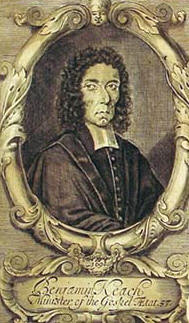
by Benjamin Keach

What can render the state of a person worse than to be an enemy of God, Jesus Christ, and the power of godliness; and yet to think he is holy and a good Christian? Nay, because his conscience is blind in the matter, it acquits him since it lacks saving light, while he keeps up in a zealous performance of the external acts of duty and religion; by which means he is deprived of that help which some openly profane gain from the rebukes and lashes of their own consciences, which often proves a means of their conversion. But the hypocritical professor, not knowing he lacks a changed heart, nor understanding that he is without those Sacred Principles from whence should flow all he acts and does, but contrariwise he is stirred up by false Principles, and acts only by the power of natural conscience and affections, having no clear judgment to discern his own danger, nor what a state he is still in. His condition is deplorable, and this unclean spirit is worse and more dangerous than that which he was in before.

Their blindness and ignorance consists in that they cannot discern nor distinguish between a changed heart and a changed life, or between legal reformation and true regeneration. They think, because their behavior seems so much better than it was before, in their own apprehension, and in the apprehension of others also, their condition is good enough. They comparing themselves with themselves, beholding what a vast difference there is, or seems to be in respect of what they once were, when swearers, drunkards, whoremongers, etc., cannot but commend themselves to themselves. Once they saw themselves sinners, and called themselves so, and were ashamed of their own sinful and wicked lives; but now they are righteous in their own eyes, and so have no need of any further work, being arrived to that state of holiness (so they think) to that degree of piety, to that change, to that conversion, that they conclude they need not seek for further change and yet they are deceived…

The state of the self-righteous and Pharisaical persons is far worse than the state of gross and profane sinners. These are sick and know it not; wounded, but see no need of a physician… They may conclude they are converted, and therefore seek not after conversion.

It is a hard and difficult thing to bring a Pharisaical person, one that looks upon himself to be a religious man, to see his woeful state and condition.

Men may be civilized, and make a great profession of religion, and pass for saints on the earth, that are not such in the sight of God in heaven.

It is a most dangerous thing to make a profession of religion without true regeneration being first wrought in the soul; better to be no professors at all, than not so as to be sincere…

This may inform us of the cause and reason there is so great reproach brought upon religion, and on the ways of God, and on the people of God, by some who profess the gospel. Alas, many of them who are called saints, we may fear are but counterfeit Christians, such as who never experienced a true work of grace; they may have knowing heads, but unsanctified hearts…

Moreover, it sharply reproves those preachers whose great business is to bring men into visible profession, and make them members of churches, whose preaching tends more to bring persons to baptism, and to subject to external ordinances, than to show them the necessity of regeneration, faith, or a changed heart. For the Lord’s sake take heed what you do, if you would be pure from the blood of all men. We too often see when people are got into churches, they conclude all is well; and when conversion is preached, they do not think it concerns them, but other people who are openly profane: and thus they come to be blinded, maybe to their own destruction…

It may also put us all upon a strict examination of our own hearts, lest we should be found to be some of these false and counterfeit Christians. And that we may clear ourselves in this matter; consider:

1. Were you ever thoroughly convinced of your sinful and lost condition by nature, and of that horrid evil there is in sin? Did you ever see sin as the greatest evil, most hateful to God, not only of the evil effects of sin, but also of the evil nature of sin, not only as it has made a breach between God and man, but has also defaced the Image of God in man, and made us like the devil, filling our minds with enmity against God, godliness, and good men?

2. Is there no secret sin lived in and favored, the evil habit never being broke? Is not the world more in your affections, desires, and thoughts, than Jesus Christ?

3. Are you willing to suffer and part with all that you have, rather than sin against God? Do you see more evil in the least sin, than in the greatest suffering?

4. Do you as much desire to have your sins mortified as pardoned, to be made holy as well as to be made happy? Do you love the work of holiness as well as the reward of holiness? Do you love the Word of God for that purity which is in it, as well as the advantage that comes by it?

5. Have you seen your own righteousness as filthy rags, and have you been made poor in spirit?

6. Have you received a whole Christ with a whole heart? A whole Christ comprehends all His offices (prophet, priest, and king), and a whole heart includes all our faculties. Is not your heart divided?

7. Is Christ precious to you, even the chiefest among ten thousand? Are you the same in private as in public? Do you love Christ above son or daughter? Do you love the Person of Christ?

8. Can you bear reproof kindly to your faults, and look upon him your best friend, that deals most plainly with you?

9. Do you more pry into your own faults, than the miscarriages of others? Are you universal in your obedience? Do you obey Christ’s Word, His commands, because you love Him?

10. Have you been the same in a day of adversity, as now you are in a day of prosperity?

11. Can you say you hate sin as sin? Is your mind spiritual, and set upon heavenly things? Do you love the saints, all the saints, though some of them are not of your sentiments in some points of religion?

12. Can you go comfortably on in the ways of Christ, though you meet with little esteem among the saints? Can you stay your souls upon God, though in darkness, having no light? Is all the stress of your justification and salvation built upon Jesus Christ?

Consider these few questions, and do not doubt but that your hearts are sincere, when you can give a comfortable answer to them, though it be with some fear and doubts that still may arise in you. A true Christian is ready to mistake what belongs to him, and take that to be his, that belongs to an hypocrite; while, on the other hand, an hypocrite mistakes that which belongs to him, and applies that to himself, which is the portion of sincere Christians. – Benjamin Keach

Taken from The Counterfeit Christian or the Danger of Hypocrisy by Benjamin Keach, (London: John Pike, 1691). Some archaic words have been modernized.

Do not quickly read these questions and forget about them. Many professing Christians today are simply outwardly religious, but their hearts have not been changed by the regenerating power of God. Christ demands the supreme place in your heart and affections. If you love anything more than Christ; if you love anything equal to Christ (though you may have a wealth of biblical knowledge); you are not a child of God. “Do not be deceived” (Galatians 6:7).

Test ALL Things, Cling to that which is Good!

Each of us has doctrines we hold to without properly examining them in light of Scripture – that’s how we are wired as humans. This comes into play on this notion of Christian Sabbath keeping which was first invented by early Roman Catholics in the 6th century and codified in paedobaptists’ system of theology a thousand years later. Now it is a tightly held tradition by many; and many who love this teaching celebrate any work that supports their perspective – which does their argument no good. Walter Chantry’s book, Call the Sabbath a Delight, is such a work. In my two years of researching this subject, this book did more to convince me this “Christian Sabbath” is not defensible from Scripture than anything written against this doctrine. The best thing about this book is that it’s small and short.

Call the Sabbath a Delight call-the-sabbath-walt-chantry

by Walter Chantry – a critical review

Walter Chantry was born and raised in a Presbyterian home and graduated from a Presbyterian school (Westminster Theological Seminary). This is something worth mentioning, as it’s obvious he was heavily influenced by our paedobaptist brothers. Let each one of us realize we are likewise influenced by what we’ve taught and think is “so” and need test all things in light of God’s holy Word. In the introduction to this book, Chantry starts off presuming the Decalogue (not called the Ten Commandments until the New Geneva Bible) equals God’s moral law. Since this is foundational to his entire argument, it needs some explanation and defense, not mere assertion – but our author provides none. Perhaps he assumes everybody knows this or accepts it. Why this is problematic will be shown later. This short introduction to his book sets his premise, in which he comes across very much like the folks in the movie, Divided: just as the movie implied teenagers were going to hell because the right church program was not available, so Chantry paints a picture of a culture hell-bound because people have turned their back on the so-called Christian Sabbath: “We should consider it nothing less than shockingly unacceptable for Bible teachers and ministers to undermine the practice of the worship and service of God by teaching against the Sabbath law.” This pragmatic streak is another thing that shows up throughout this book. But we know, God saves His elect through the gospel people; salvation does not come through the Law or through behavior modification.

In chapter 1, Chantry quotes Ex 20:8-11 and calls it the 4th commandment. Does anyone think the tablets God wrote on contained all those words for the “4th Word”? By assuming all the words in these verses are the commandment, he fails to see the ceremonial, judicial, civil, etc. content in this and several of the commandments. He considers all of Ex 20:3 – 17 to be “the Ten Commandments”, summing up God’s moral law. If the 10 Words on the first set of tablets is God’s moral law, why do we not have those 10 Words clearly preserved in Scripture rather than bound up in words that conveyed the re-issue of the covenant of works to the Hebrew people? And why does the record of the Decalogue differ, particularly in the 4th commandment, between Ex 20 and Deut 5? Our author merely waves this aside, asserting, “as originally given on Mount Sinai (Exodus 20), the fourth law was enforced with an argument from God’s behavior during creation week.” Yes, the Lord gave illumination of His Sabbath command to the Hebrews by pointing back to the 7th day of creation, providing an example of the rest He was commanding the Hebrews to keep. God doesn’t call the 7th day of creation a Sabbath in Ex 20 – but He does use that word to describe the sign He has given the Hebrews. In his effort to defend his position, Chantry claims, “the Ten Commandments per se are free of all ceremonial and judicial peculiarities of the Mosaic covenant.” If this is true, should not the Lord have struck Moses dead for changing His eternal, moral law with he “rehearsed the Ten Commandments to Israel” in Deuteronomy? If by this our author means that embedded in the text of Ex 20:3 – 17 are the “the Ten Commandments per se”, that some of what’s recorded in this passage is not God’s moral law, he should have developed this argument. He leaves us wondering what he means, because he consistently calls “the Ten Commandments” God’s moral law and he does not tell us what he thinks “the Ten Commandments per se” might be. Just as we don’t have an inspired record of “the 10 words”, neither do we have for “the Ten Commandments per se”.

Chantry tells us (page 24) that Rom 2:15 is proof that Adam was given the Decalogue when he was created. This verse tells us that Gentiles without the law of Moses have the works of the law written on their hearts – it does NOT prove Adam was created with the Decalogue written on his conscience as claimed. Further, how could Adam know the Decalogue or any version of the moral law of God prior to having knowledge of good and evil? The law – any law – brings awareness of sin (evil); Adam knew none of this before he ate and his eyes were opened. Before the Fall, Adam and Eve knew the goodness of God; they did not know evil. After he and Eve ate the forbidden fruit, God said “the man has become like one of us in knowing good and evil.” It appears that Adam was given the moral law of God in conjunction with The Fall – not when he was created nor when he walked in innocence.

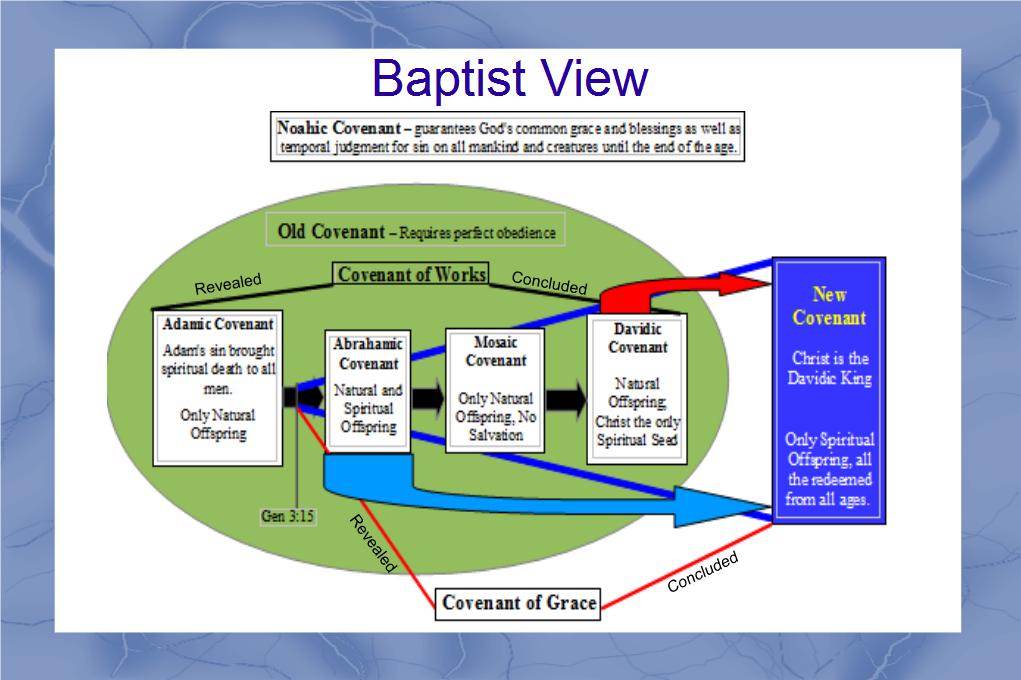
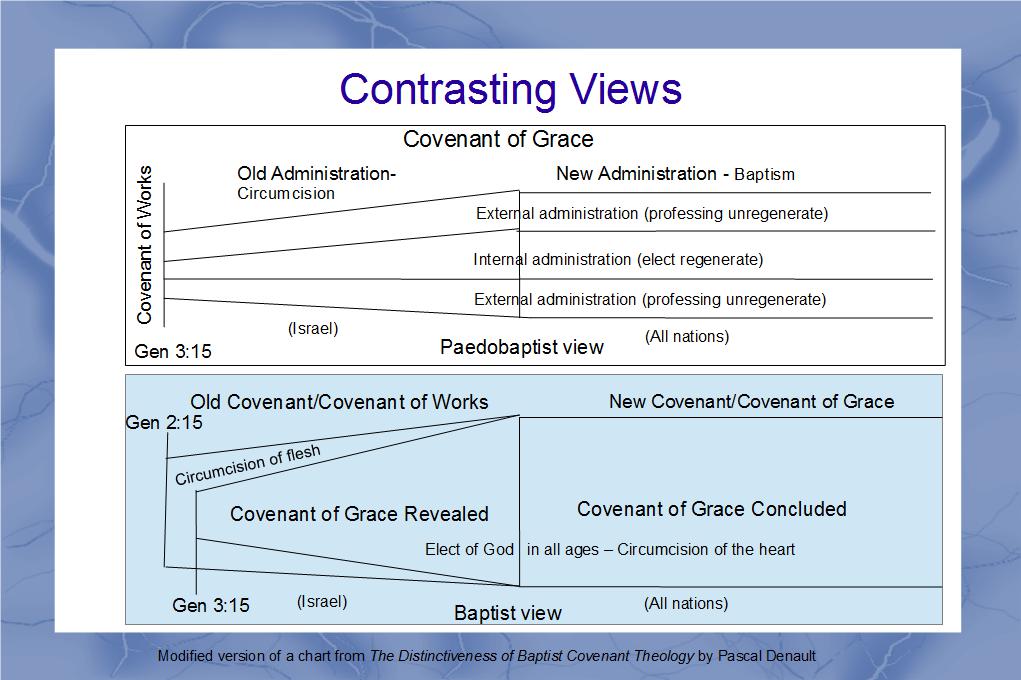
There is, however, much to agree with in this book – we do get guidance from God as to what is honorable from His moral law, Christians are to be joyful about gathering on the Lord’s Day, he decries the overly rigid rules-based Puritan view of enforcing their Sabbath – which the authors of the WCF had as their baseline for their view. But Chantry, who was raised and educated as a Presbyterian, doesn’t seem to see the difference between the Jews living under the Old Covenant and the children of Abraham according to the promise living in the New Covenant. And he lumps all who don’t see this equivalence into the dust bin of dispensationalism (this line of argument takes up most of chapter 4, providing a platform for Chantry to condemn all who disagree by saying, “Never in Israel or the church did the gospel of salvation by grace through faith promote lawlessness.” This is the bucket all who do not hold his view are thrown into. There is no other position in Chantry’s model: if you are not a Sabbatarian, you are an antinomian. This is, sadly, an all-too-common assertion by Sabbatarians.

Another problem in claiming the Decalogue equals God’s moral law comes into play when Chantry argues for its universal application to all men at all times – implicitly endorsing blue laws and contradicting the historical record of Scripture and all of mankind. Only by Special Revelation can man know he is to worship God on a given day. How can the entire 4th Commandment, as presented herein, be universal when it’s apparent everywhere that many don’t know it, when nowhere in Scripture are any people outside the Mosaic Covenant punished for violating it? Nowhere in general revelation is man given the 7 day week; yet there is every evidence that all men everywhere know murder and robbery, etc. are wrong and all men worship something. God’s moral law is known to man and no man is without excuse. But there is no evidence that weekly rest from labor is part of that moral law; it appears only in context with God’s covenant people. Nowhere in any version of the 10 Commandments are people told to worship God on the Sabbath and nowhere in the Scriptures is the first day of the week called “Sabbath”. Yet we know from Scripture that the saints gathered to worship on the day after the Sabbath. They went to the synagogues to dispute with the Jews on the Sabbath.

He gives conflicting messages, telling us rightly that, as Peter said, we are not to live under the Mosaic law (beginning of chapter 2). But our author makes no effort to separate God’s moral law from the Mosaic Covenant in applying his sabbatarian argument. He cites Isaiah 58:13 & 14 as “a discussion of the Sabbath in all its spiritual beauty. Here is a text in which the Sabbath Law is presented without the drab and unappealing attire of judicial additives.” But Chantry told us in chapter 1 that “the Ten Commandments per se are free of all ceremonial and judicial peculiarities of the Mosaic covenant.” Is he now citing Isaiah 58 as proof against his assertion from chapter 1? He gives superficial attention to Scriptures but spends lots of pages talking about the woeful state of the culture and giving what can only be called pragmatic advice. “Mothers and fathers must work at making the Sabbath a delight to their children. Boys and girls must not come to view the day of worship as grim and repressive.” One cannot muster up nor manufacture “the joy of the Lord”. If mom and dad are new creatures in Christ, they will have joy in the worship, instruction, and fellowship that takes place in a local church. Yes, they will have sin to deal with and must strive for holiness. This should be modeled for their unregenerate small children – those impressionable young people can be easily trained to look like covenant children; but that is a very dangerous role for any person to play. As with the taking of the Lord’s Supper, young people ought to see Christian character and worship but parents ought to know they cannot participate unless they be born again.

Chantry (page 52) says there are some who “the claim that the New Testament is silent on the fourth commandment.” He then shoots himself squarely in the foot by claiming Matt 12:1-14, Mark 2:23- 3:6, Luke 6:1-11, Luke 13:10-17, Luke 4:1-6, John 5:1-18, and John 7:20-24 are New Testament teachings about Christians keeping the Sabbath – “They contain our Lord Jesus’ frequent and extensive teaching on the subject.” All of these passages are records of activity by Christ and/or His disciples doing kingdom work on the Jewish Sabbath with those under the Mosaic Law. He fails to cite the clear and thrice-told declaration (Ex 31:13 – 17, Ez 20:12. Ez 20:20) that the Sabbath is a sign between YHWH and the Jews. Chantry goes on to claim (page 54), that in Mark 2:27-28, Christ points back to creation in defending the continuation of the weekly Sabbath – And he said to them, “The Sabbath was made for man, not man for the Sabbath. So the Son of Man is lord even of the Sabbath.” Chantry claims the phrase, “the Sabbath was made”, refers to the 7th day of creation. He compares this passage from Mark to Paul’s very clear tie of creation to marriage – “Paul uses almost an identical formula in 1 Corinthians 11:8-9. ‘Man is not come from woman, but woman from man; neither was man created for woman but woman for man.’” Contrary to Chantry’s claim, there is no comparison: Paul clearly cites Genesis 2:18 – 23, but one has to claim Moses used the wrong word in writing Genesis 2:2-3, because he didn’t use the word for Sabbath found in Exodus 20. The Hebrew word for the “rest” God observed on the “seventh” day found in Genesis 2:2-3 is shābat; a primitive root; to repose, i.e. desist from exertion; the word for Sabbath in Exodus 20:8-11 is shabbāt; intensive from <H7673> (shabath); intermission, i.e. (specific) the Sabbath. These two are related but are not the same.

He constantly insists the Sabbath was created in the beginning, because God set aside the 7th day as His day of rest, made it holy, blessed it because on it He rested from creation. No mention of Sabbath, no command to man to do anything nor punishment of man for failing to obey this command. Nehemiah (chapter 9 verses 13 & 14) records that God gave the Sabbath to the Jews on Mt. Sinai. The sabbath that Christ says was made for men – not just for the Jews – is that sabbath rest all elect enter into when we are raised to new life in Jesus and cease from our working to be right with God as the Old Covenant demands. Hebrews 4 is not talking about a continuation of the pale, weekly day of the Jewish religion, which was a type and weak imitation of the eternal rest and reconciliation He bought with His blood.

In chapter 5, Chantry inadvertently makes my point – that the moral law of God is not equal to the Decalogue, though it shone through the Decalogue – when he observes that Jesus and the disciples defined moral purity by quoting the Decalogue. When the commandments are quoted in the New Testament, they rarely (once?) include the judicial/ceremonial language contained in Ex 20 and Deut 5. These first century men knew the actual “10 Words” as did their Jewish audiences. And not once does Jesus or His apostles teach or enforce any type of sabbath keeping as described in the Westminster Confession of Faith and the 1689 London Baptist Confession in context of the Christian faith. But Chantry doesn’t see this – he says, “Keeping the Sabbath Day holy is a commandment embedded in the code of moral law written by God’s own finger. It is a part of the definition of righteousness.” (page 63) Many theologians like to make much of the fact that God wrote the 10 Words on the first set of tablets, tablets made of stone – which Moses destroyed. The second set of tablets, which probably carved by Moses as commanded by God, were stored in the Ark of the Covenant, along with the jar of manna and Aaron’s rod. This Ark of the Covenant was lost in antiquity, and according the Word of God, is to be forgotten – (Jr 3:15-16): “And I will give you shepherds after my own heart, who will feed you with knowledge and understanding. And when you have multiplied and increased in the land, in those days, declares the LORD, they shall no more say, “The ark of the covenant of the LORD.” It shall not come to mind or be remembered or missed; it shall not be made again.” Might these “tablets of testimony” (Ex 31:18) of the Mosaic Covenant be types and shadows that point us to something greater, as so much of what God gave Israel in that covenant is properly recognized as? God’s law written on tablets of stone, given to people with hearts of stone, who gathered for worship in a temple of stone. Compare this the new Covenant Jeremiah writes about: God’s people given hearts of flesh to replace their hearts of stone, God’s law written on the tablets of our hearts rather than tablets of stone, and we are God’s temple which is comprised of spiritual stones He is assembling for Himself. Chantry goes on to state (still on page 63),“The ways in which the moral law was applied and the way it was enforced differ greatly when we compare the management of Moses and the management of Christ.” This sounds a whole lot like our paedobaptist argument – that the covenant of Moses is part of the covenant of grace, just under a different administrator.

Chantry is right and correct in pointing out the ancient basis of the covenant of grace, delineating the difference between it and the Mosaic Covenant. His guidance regarding motives, in chapter 6, is solid, although he continues to use dramatic and inaccurate comparisons – calling those who do not align with his view of the first day of the week, lawless, antinomian. This is poor practice. It will take a biblical argument pressed on me by the Spirit of God that convinces me of anything – not a comparison between Christians and the culture.

In his argument about why Christians worship on Sunday, there is no argument – until he describes how the Sabbath was moved to the day after the Sabbath. If one takes the stone tablets as God’s moral law, rather than seeing them as a lens through which His moral law shone in the context of the Mosaic Covenant, then one must find a way to explain how that “which God wrote with His finger” was changed without a command from God. If the entire record in Ex 20 known as the 10 Commandments is considered to be God’s moral law, then one cannot accept changing the day (explicitly called out as the seventh day, not “every seventh day, and not the first); that is as much a part of God’s moral law as is the command to work six days (not five). And the 4th commandment does not command worship – but to keep it holy, set apart, and to abstain from work. But, if one sees God’s moral law as described above – shining through the Decalogue rather than the Decalogue being the source – then we can easily accept this change in the day, seeing the moral principle as the key thing. The Jews were commanded to honor the seventh day; Christ was raised from the dead on the first day and we gather for worship on that day. I know that many theologians agree with Chantry that Heb 4 is a proof text for weekly Sabbath keeping. But the Old Testament type given was a one time entry into temporal rest, just as was Creator God’s one time entering into His rest from Creation work – so why would the rest between these two be other than the one time rest the elect enter into when they are redeemed by Christ and take His light load upon them and find rest in Him? It is a stretch that belies belief to claim this is a weekly Sabbath, something that was a pale shadow of what was promised in Gen 3:15.

In the last chapter, Chantry tries to write off biblical passages that appear to teach that a festival or a new moon or a Sabbath were a shadow of what was to come, Col 2 being “the most striking and troublesome” for the author. “It is apparent that these three texts are describing ceremonial and judicial laws of Moses. … Weekly Sabbath-keeping as required in the fourth commandment does not fit the description of days described in Romans 14, Galatians 4 and Colossians 2.” His argument for this position is tied to his insistence on a creation ordinance – “The weekly Sabbath day is a creation ordinance just as is marriage. Moses said so (Genesis 2:1-3), Jesus said so (Mark 2:27, 28)! So did the author of Hebrews 4:3-4!” That Genesis 2 says nothing about a weekly pattern of rest for men does not come into Chantry’s evaluation of this topic. This pattern of days refers to all of the holy days of the Jews from yearly feasts to the weekly Sabbath, and comes from repeated descriptions of the Mosaic ritual, found in 1 Chron 23:30-31; 2 Chron 2:4, 8:12-13, 31:3; Neh 10:33; Isaiah 1:13-14; Ezek 45:17; and Hosea 2:11. This is another indication that the Mosaic code, of which the Decalogue is part, does not apply to Christian as a law – but as a type or shadow of the Christ to come. Our exodus is not from Egypt; that country is a type for sin and wickedness. The moral law, though it is revealed within the Mosaic code, is eternal and no more uniquely part of that Sinai covenant than the New Covenant is – though the covenant of grace was progressively revealed over time, even within the era of the Mosaic Covenant. His last point addresses “proper Sabbath behavior.” He gives some good counsel on the limits of elders and common sense examples of variation depending on circumstance, but defaults to Jewish rules to guide us. He does finish with a recognition that Sabbath keeping isn’t the “answer to all man’s ills”, but still holds up a Christian imitation of the Jewish rite as a joy for us to keep.

In explaining how the Sabbath day can be changed from the 7th to the 1st day, Chantry accepts the narrative accounts in Scripture which document the fact that Christians met for worship on the 1st day, claiming this does not “cause the entire law to crumble or disappear.” But if the Decalogue and this commandment in particular have no judicial or ceremonial content, then changing from “the seventh day” should take something more substantial. It is a common hermeneutic rule – narrative is not normative; one doesn’t build doctrine from narrative. Why should one be able to change God’s moral law by narrative example?

Regarding the assertion that the Decalogue is or sums up God’s moral law, this is a very complex topic that would benefit from a well researched book being written. One would need to develop the concept of “God’s moral law”, get a handle on what may have been carved on the stone tablets compared to what Moses recited to the Hebrew nation, and examine the biblical history and biblical theology of the relevant texts. If someone knows of such a work, please chime in!

The authors of Chantry’s “List of Outstanding Materials on the Sabbath” is comprised of 18 paedobaptists and 1 Baptist – Erroll Hulse, plus the Westminster Confession of Faith and Shorter and Larger Westminster Catechisms. This, in itself, tells us where the bulk of support is for Chantry’s position – those who flatten out the covenants and, in an opposite ditch from the dispensationalists, see equality of identity between the church and the nation of Israel.

Give me the joyful gathering of the saints who eagerly come together to worship the Lord and build one another up; I care not to enter into the shadow of what Christ brought to His church.

Strange Fire

Strange Fire by John MacArthur  strange-fire-the-danger-of-offending-the-holy-spirit-with-counterfeit-worship

a review

One area many – dare I say most – current day evangelicals have gone astray from orthodox Christianity is the topic of MacArthur’s latest book. From Southern Baptists to contemporary “Christian” radio, slogans and anecdotes fill space and airways with the message that it’s normal to hear from God. This is not the biblical message of “hearing” from God as you read and study His Word – it’s the dangerous practice of believing inferences and confirmations from myriad sources are God’s way of “speaking to your heart”. It is this claim of extra-biblical revelation that MacArthur addresses in Strange Fire. If your blood isn’t stirred up by the thought of reading and entire book detailing the train wreck of uninhibited charismania, it’s important, maybe more so – that this book also provides the child of God very good counsel on the identity, mission, and work of the Holy Spirit.

MacArthur’s book is comprised of 12 chapters on topics covering new apostles and prophets, gifts of healing and tongues, the work of the Spirit in salvation, sanctification, and the Scripture; the last chapter is an open letter to his continuationist friends. And he provides a handy appendix with several pages of quotes from the past on the topic of the continuation of spiritual gifts, in support of his claim that the current craze is not part of historic, orthodox Christianity. I’ve heard from some who think MacArthur has lumped all continuationists into one bucket of heresy – drawing equivalence between some respected theologians and the likes of Benny Hinn. But MacArthur’s letter to his friends is very clear that he sees much good in the work of these friends, as well as much thin theological ice that their “open canon” represents. He considers them dear brothers who need to be awakened to the danger they pose by sharing some views with flaming heretics – sometimes endorsing and appearing with them.

I will leave it to you to read the chapters detailing the train wreck of the strange fire doctrines, and focus some attention on the last third of the book. Citing an observation from A.W. Tozer, MacArthur says our “view of God is the foundational reality in our thinking, and it encompasses all that we believe about the Holy Spirit.” He points out the truth that while many miracle seekers flock after Benny Hinn and Todd Bentley, a true miracle takes place every time a spiritually dead sinner is raised to new life in Christ. This is too mundane for experience-based Christians, but is glorious to behold by those who inhabit the heavens – and ought to be recognized as such by us. The Holy Spirit works in the birth of new saints by a.) convicting the unredeemed of their sins, b.) convicting unbelievers of righteousness, and c.) convicts sinners that divine judgments are real and necessary. The Spirit of the living God then regenerates the elect – removes the heart of stone and gives a heart of flesh by granting faith to believe the gospel. This is work man cannot do, any more than man can bring about his own natural birth. Salvation is of the Lord, as Jonah declared from the belly of the fish, and the triune God does not share His glory with anyone.

Still in this vein, the Holy Spirit also brings repentance to those He regenerates, liberating us from the power of sin and death and producing love for His righteousness. He enables fellowship with God and makes sweet the fellowship of the saints. We are heirs of the kingdom, free from the dread of God and drawn to Him as our Father, enabled to joyfully sing praises to Him. And here, then, is one biblical truth that cannot be reconciled with the “second baptism” doctrine: the Holy Spirit indwells every man, woman, and child He raises to new life in Christ. He is our Comforter and Helper; protecting, empowering, and encouraging us.

MacArthur delineates the difference between being filled with the Spirit of God and the heretical notion of being drunk on the Spirit. Drunkenness is irrational, out-of-control behavior, while filled with the Spirit is joyful, self-controlled submission to God. Being filled with the Spirit of God is an ongoing experience in the life of every Christian – not an occasional orgy with John Crowder. “Rather than being hopelessly distracted by charismatic counterfeits, believers need to rediscover the real ministry of the Holy Spirit, which is to activate His power in us through His Word, so that we can truly conquer sin for the glory of Christ, the blessing of His church, and the benefit of the lost.”

His last chapter on the true work of the Holy Spirit focuses on the Spirit’s role and identity in the Scriptures. MacArthur gives us a very quick run through history, highlighting a few of the faithful men used by God and several of those who fell or jumped into heresy and have misled countless simple folk. “By departing from the sole authority of Scripture, bot Roman Catholicism and theological liberalism became enemies of true Christianity, fraudulent versions of the very thing they claimed to represent. … Because He is the God of truth, His Word is infallible. Because He cannot lie, His Word is inerrant. Because He is the King of kings, His Word is absolute and supreme.” The Spirit inspired the writing of Scripture, provides illumination for the minds of Christians, and the Spirit gives power to the reading and preaching of Scripture. To reject the Scriptures is to reject the Spirit of God – and the entire trinity.

In his “open letter”, the last chapter, MacArthur observes that, “rather than confronting charismatic errors head-on, continuationists leaders find themselves flirting with aspects of a movement that is full of serious error and corrupt leadership.” These otherwise solid theologians allow the charismatics to set the vocabulary, changing the meaning of words and phrases from what the Bible and history show them to be, in order to justify the nonsensical babbling that passes for tongues in modern churches. “The continuationist position invites any personal impression or subjective feeling as a potential revelation from God. Moreover, it removes any authoritative, objective standard for questioning the legitimacy of someone’s supposed revelation from God.”

All in all, this should be a welcomed book in any Christian’s home. We do need to be provoked to think biblically – about gifts and the One Who gives them.

Instructions for the Ignorant

Instruction for the Ignorant:

BEING A SALVE TO CURE THAT GREAT WANT OF KNOWLEDGE, WHICH SO MUCH REIGNS BOTH IN YOUNG AND OLD.

PREPARED AND PRESENTED TO THEM IN A PLAIN AND EASY DIALOGUE, FITTED TO THE CAPACITY OF THE WEAKEST.

‘My people are destroyed for lack of knowledge.’–Hosea 4:6

Bunyan’s Catechisminstructions-for-the-ignorant

ADVERTISEMENT BY THE EDITOR.

This little catechism is upon a plan perfectly new and unique. It was first published as a pocket volume in 1675, and has been republished in every collection of the author’s works; and recently in a separate tract. The earliest edition that has been discovered bears the date of 1691; from which our copy has been prepared for the press. This is the first book of this class that was composed upon the broad basis of Christianity, perfectly free from sectarian bias or peculiarity. It is an exhibition of scriptural truths, before which error falls without the trouble of pulling it down. It is in the world, like the ark of God in the temple of Dagon. It is alike admirably calculated to convey the most important truths to the inmates of a palace or of a workhouse,–to the young or to the aged,–to the ignorant Roman Catholic, or to the equally ignorant Protestant. Its broad catholicity is its distinguishing excellence. In the separate communions included within the general church of Christ are various, and in many respects, inestimable compendiums of Christian truth, arranged for the catechetical instruction of the young and ignorant; but it cannot be denied that these, one and all, exhibit some marks of sectarian feeling and dogmatic teaching in the details that relate to the special views which each communion takes of certain scriptural doctrines. The reason why this should be the case is very obvious: there would be no differences of opinion amongst Christians except from conviction that these differences are essential, and such conviction naturally leads to these points of disagreement being (may we not say?) rather too obtrusively enforced as part and portion of a saving belief. All Bunyan’s efforts were to awaken sinners to a sense of their degradation, misery, and danger, and to direct them to the only refuge from the wrath to come–the hope set before them in the gospel; and then leaving the pious convert to the guidance of his Bible in forming his connections in the pilgrimage of life. Bunyan is solemnly in earnest; his desire is, that poor sinners should be relieved from ignorance, darkness, and destruction, and be introduced into the glorious liberty of the sons of God. May his impressive injunction be indelibly fixed upon our souls, ‘To read, ponder over, and receive the wholesome medicine as we shall answer in the day of the terrible judgment.’–GEO. OFFOR.

Read this 24 page catechism here.

What’s the Significance of the Lord’s Supper?

As with baptism, there is much more meaning in this ordinance than what meets the eye. Every time weLords-Supper are given the blessed opportunity to be nourished spiritually with this ordinance, how it represents the broken body and shed blood of Christ, which cut the New Covenant and in which we have our adoption as sons of the Living God. This description is right and it is a main point we supposed to gain from observing this ordinance. We will examine these truths – but there is another aspect that I think will add a deeper appreciation and greater holy awe of our Lord and Savior. We read from 1 Cor 11 each week, but the establishment of this ordinance is also found in Matthew 26, Mark 14, and Luke 22. This is an important means God has given us, we must diligently inquire of His Word what it means and how we are to practice it. 

Click here to listen to the message.

Making Your Calling and Election Sure

This is a wonderful post by Mike Ratcliff. It is most important for every professing Christian to strive for holiness and not take the grace of Christ for granted. Here’s the introduction, make sure you head over to Mike’s blog to read the whole article. It will convict you if you are a child of the living God, for none of us walk entirely as we ought.

How can we know if we are truly in Christ? Or you may ask, “What is the fruit which genuine believers bear?” If true salvation is as impacting on a believers life as we contend then there should be verifiable evidence or fruit manifested in that life. The problem is in knowing what evidences really prove the presence of God in a person’s life and those that do not. I have noticed most professing Christians look at the wrong things in their self-evaluations to determine if they are in Christ. Real evidence of the presence of God in a person’s life will be the fruits of salvation. These fruits will in turn lead to outward manifestations of “goodness” or “religiosity” which, unfortunately, can be counterfeited. These outward manifestations are often what we look at to determine if we are a “good Christian” or not. My brethren, this is a fallacy. Any activity or attitude that can be counterfeited by a false believer cannot be used to verify ones salvation.

Let’s take a close look at these evidences that should never be used to verify our salvation. 

Read the rest here.

Baptism – What’s the BIG DEAL?

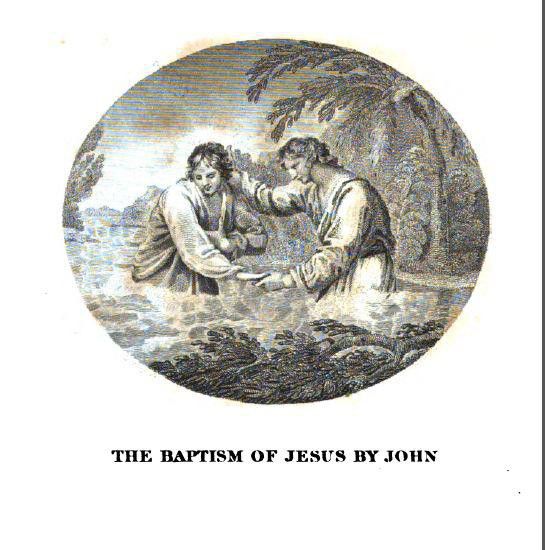
One area Baptists and paedobaptists commonly agree is that there are only two ordinances given to the Baptismchurch, contrasted with the seven claimed by the Roman Catholics. While we agree on what these two ordinances are – baptism and the Lord’s Supper – we do not agree on some of the details, particularly as regards baptism. We baptize believers – by submersion. We’re in the minority. Denominations that practice infant baptism include Roman Catholics, Eastern and Oriental Orthodox, Anglicans, Lutherans, Presbyterians, Methodists, some Nazarenes, the United Church of Christ (UCC), Moravian Church, Metropolitan Community Church, Wesleyans, and Episcopalians. There are those who believe baptism is salvific – Church of Christ, Disciples of Christ, and those who hold to Federal Vision. I will not go into that discussion, just know they are out there.

Baptists have long loved to call themselves – ourselves – “people of the book”, denoting our claim to being among those who stand on the sure foundation of Scripture and under the authority of Scripture. May this be true of us, as many wise and solid sounding arguments have been marshaled in support of the opposing view of baptism – the sprinkling of little ones. I do not want to spend much time explaining why the paedobaptist view on baptism is wrong, I will appeal to a few of their finest theologians to tell us they are wrong.

Listen to the message here

God’s Wisdom in Proverbs

Any preacher worth his office will tell you that proper handling of wisdom literature (particularly GWIP_thumb[2]Ecclesiastes, Song of Solomon, and Proverbs) is most difficult. Even “simple” Hebrew narratives do not always flow in chronological form as does western literature. Wisdom literature adds another twist in that it not only is designed to impart wisdom, it requires wisdom from God to rightly draw out the meaning. In his book, God’s Wisdom in Proverbs, Dan Phillips leads us by the Word of God to rightly understand this part of the His Word. And he does it with a good sense of humor that should have you smiling broadly, if not laughing out loud. This is not a commentary – it is a guide-book to this overly familiar book in God’s Word.

This book has eight chapters:

  1. Essentials for Understanding Proverbs

  2. The Stated Design of Proverbs

  3. The Foundation of Wisdom

  4. WISDOM: Seeking and Finding

  5. Relating to God by Trust and Worship

  6. Skill in Godly Relationships

  7. Skill in Godly Marriage

  8. Skill in Godly Child-training

There are four appendices, covering the question of human authorship, word studies in Proverbs, an examination of Proverbs 22:6, and preaching and teaching from Proverbs.

Throughout this exceptional book (I only regret not reading it when I first bought it a couple years ago), Phillips keeps front and center the need we all have for a healthy fear of Creator God as the beginning of wisdom and as the posture that keeps us from being full of self and/or comfortable with sin. Says the author – “A God-fearer today is the man who has repented of his good works as well as his bad, trusted Christ alone as his Savior, relied on Christ’s righteousness alone, by the grace of God alone, and taken God’s Word alone as his marching orders, with God’s glory alone as his uniting motivation. That is the man who fears God.” AMEN!

Brothers and sisters – this entire book is founded on this very perspective. It will serve the body of Christ very well.

In telling us how to gain wisdom, he compares it to getting bread. Though the Lord’s prayer includes “give us this day our daily bread”, one doesn’t merely wish or pray for bread. He works for it, goes to where it is, buys it. The same principle, he tells us, applies whether we are after wisdom or whole wheat – pray and work. Creator God rules by means as well as ends.

In helping us understand the large volume of verses expounding foolish behavior, having just discussed the child who honors his parents, Phillips writes, “By contrast, in Proverbs the foolish child is neglectful during his years of instruction and learning (10:5), disregards what he has been taught (19:27), is abusive and insulting to his parents (19:26), is stupid (17:25, 19:13), ignores correction (31:1), and hangs around with sorts of people his father warned him about (1:10. 24:21, 28:7).” Which of us see our younger selves in this summary? Perhaps we are grieved by a close friend or a child of our own who embodies this whole-hearted foolishness. Our hearts should break – yet we should trust in God and cry out to Him for mercy on the fool. For no man can rescue a fool from his God-hating position, none of us can debate or argue the spiritually dead man to come to life. Let us continually thank the Lord for having delivered us from darkness and pray without ceasing for those who are perishing, while we proclaim the gospel to them.

I am tempted to tell you all the good things in this book – but then I would violate the reason for this review. Let me be content to assure you that each chapter and appendix will prompt you to think biblically, will cause you to repent of foolishness or a casual attitude towards the Word of God, will encourage you to trust God all the more and show you the joy that is ours as we walk as children of the light.

The chapter on child-training is worth the retail price of the book. Among the many good things he teaches us, Phillips says, “We must not rear our children in a certain way because it will work (pragmatism); we must rear them in such as way because it pleases and honors Yahweh (fear of Yahweh). God’s pleasure and glory must be our focus. Then we can trust the results to Him with a clean conscience (Prov 16:1, 3, 9).”

One of the comments that made me smile with irony – his style is priceless while the observation is sobering – is in the chapter on marriage. “Modern Christian thought often drinks long and deep at the trough of sociology and psychology, adds a sprinkling of Christainoid pixie-dust, and then merely closes in prayer.”

Lastly, I will tell you about the 3rd appendix, covering Proverbs 22:6. You know the text – Train up a child in the way he should go; even when he is old he will not depart from it. How many of us have given serious thought to this verse? Do we know what Solomon meant, or our we content to merely see the words and allow our culturally trained brain and self-righteousness nature to guide to a conclusion? I’ve read of the interpretation Phillips argues for here and found it to make much more sense than the way I’ve been this verse all my life. He will make you think deeply, even if you do not agree with him.

I’ve been in contact with Dan Phillips and found him to be very cordial and brotherly, even though I told him I abhor dispensationalism (which he holds to). I dare say we would be friends if our paths crossed. He passed this along to me –during November the Proverbs book is actually on sale for 65% off. You have to order it from Kress here in Texas (http://bit.ly/18iX5b5), and use the coupon code BR60833557256.

The Rickety Bridge and the Broken Mirror

The Rickety Bridge and the Broken Mirror by Hal Brunson  9780595438167

Hal Brunson’s book, The Rickety Bridge and the Broken Mirror, is a small collection of parables – two parables about Paedobaptism (one of which brings in Dispensationalism for comparison) and one parable about the death of Christ. Although a short book, Brunson’s work is a compelling examination of some unbiblical teachings about ecclesiology and soteriology. Baptism is the foil in both cases.

The first parable is the tale of a meeting between two now famous men – the young but already distinguished Princeton teacher, Benjamin Breckenridge Warfield and the aged and famous John Nelson Darby. Attending the meeting, as Warfield’s escort from London to Oxford, was a young man of the name Harmon Diapson – grand nephew of the infamous Charles Darwin. On the train to Oxford, Warfield and Darby engage in a vigorous discussion about theology, all the vast differences that exist between the Presbyterian Covenant Theology and the then still-new system of Dispensationalism.

Overhearing this discussion on the train is a portly, cigar smoking man that is, at length unable to restrain himself and asks to participate, making the bold assertion that he can prove that Warfield and Darby have much in common – as though they are approaching each other from opposite ends of a rickety bridge and will meet in the middle, over a deep gorge of false teaching. Warfield and Darby are incredulous and protest wildly; young Diapson is eager to hear this man who describes himself as a country parson. Through many questions of these well known theologians, the parson quips that he sees the basic structure of the bridge connecting them. Darwin’s grand nephew sees it first – “It’s a biological bridge, sir: both coventalism and dispensationalism unite in this one idea – the Abrahamic Covenant finds its earthly fulfillment in biological offspring.” The parson congratulates Diapson, adding “Mr. Darby sees the fulfillment in the Jewish child, and Dr. Warfield sees the fulfillment in the Christian child.”

Brunson comments, “Because of that mutual mistake, the dispensationalist commits an eschatalogical error – the covenant finds it ultimate fulfillment in the biological descendant of the ethnic Jews, and the paedobaptist commits an ecclesiastical error – the covenant finds its ultimate fulfillment in the biological descendant of the Christian parent.” This Presbyterian view amounts to gross presumption that so-called covenant children are in the New Covenant, to be confirmed later in life.

The second parable, The Broken Mirror, drives deeper into the paedobaptist problem, highlighting their common twisting of Peter’s sermon in Acts 2. This is an oft overlooked but grievous error that every Christian should be on guard against. Buy the book to find out more about this parable.

The third parable in this too-short book is of the Death of Christ. In this section, Brunson does not rely on fanciful tales to illustrate absurdities in theology, he examines picturesque Scripture that serves as types that point to and illustrate the depth and glory and horror of the death of our Savior. And in this section of the book, Brunson displays a glorious view of Christ that will do the soul of any Christian much good. He examines:

      1. the oceanic chaos of pristine creation

      2. the flood of Noah

      3. the sorrows of David described as “great waters

      4. the casting of Jonah into the sea, and, finally,

      5. Jesus’ understanding of His death as an apocalyptic baptism.

I will leave you with a couple short examples of the author’s style in this section, the first one talking about the flood: “The captain of our salvation may have gone to the depths for the salvation of His people, but the old ship of Zion rides the waves with linen sails unfurled, impervious to raging winds and roaring waves, speeding safely upon the scarlet billows of judgment to the soul’s desired haven.” Later in this section, “These graphic symbols of baptism require an understanding of our Savior’s death as an immersion, not just into waters of physical suffering and death, but into the oceanic fury of God’s wrath.” Oh, the Savior’s love for His Father – and all those He chose to redeem in Christ!

At the end of the book is a short record of a debate between the author and a friend of his who is a Presbyterian. Brunson, the Baptist, set the rules – no Baptist sources could be used, only “secular” or paedobaptist. The results are devastating, as Brunson reveals one after the other of heralded paedobaptist theologians defending believer’s baptism and admitting there is no biblical support for infant sprinkling. B.B. Warfield being one of the star witnesses against his own position.

This is a delightful book, well written and easy to read. Brunson keeps Christ in focus and the Word of God as the foundation of all his arguments. I am so glad I found it and read it.

The Kingdom of God

The Kingdom of God by Jeffrey Johnson

Although I had been raised in a family that attended various churches, from non-imagesdenominational military chapels with no discernible doctrine to Nazarene churches with Arminian theology (later in life I was to wonder why those preachers ever preached anything other then Hebrews chapter 6), I was never with an interest in the Word of God. When I was redeemed, I began my search for meaning in the Scriptures and found the popular dispensational teaching of my Baptist church to be very suspect and off track. Once I began learning the doctrines of grace (known as Calvinism), the Scriptures came into a more clear view and then reformed theology was opened to me and I saw the larger redemptive story in the Bible; the main point of the Scripture is to show man how sinful he is and point him to the promised Redeemer.

But something still wasn’t right. The predominate teaching in the reformed world is from the Presbyterians. And while I can accept their church practices (though I cannot agree with them), I could not see how they made the church equal to the nation of Israel. This perspective, and a couple others closely related to it, cause our Presbyterian brothers to view virtually all Scripture as applicable to the church. It was the complete opposite of what I was taught in my dispensational churches, where there is near complete separation between the church and the nation of Israel. Neither system made sense to me.

By the providential hand of God, the early part of the 21st century has brought us a renewed interest in historical Baptist views. While several very good books have been written in this rather large field, the one that made the biggest impact on me was The Fatal Flaw of the Theology Behind Infant Baptism, by a man who has become a dear friend to me, Jeffrey D. Johnson. That book made a very clear, biblical argument against the underlying theology of paedobaptism and introduced me to an historic and biblical Baptist view of covenant theology. This title, plus a couple of books on biblical theology (a process that keeps systematic theology from losing its place in Scripture – biblical theology is the contextual study of what the Bible says. The historic, redemptive context of a passage provides more clues to its meaning than anything other than related Scripture.), were foundational in helping me the Word of God even more clearly.

And now, much to my joy, our brother and servant of God, Jeff Johnson, has written another book: The Kingdom of God, A Baptist Expression of Covenant and Biblical Theology, due out early next year. Rather than a polemic pointing out the errors of paedobaptist theology (in an effort to convince Baptist to stay in the camp and comprehend a better view of the covenants), Jeff’s new book is a focused apologetic in favor of the historic Baptist view of covenant theology and biblical theology.

Is this stuff important? While it’s not as important as a biblical comprehension of who you are and who is the Christ, it is pretty important stuff. Because it will help the reader see the importance of approaching the Scriptures with humility rather than with unexamined presuppositions that subtly influence your understanding of what you read. When we open the Bible, we are taking into our minds the Word of God. The right fear of God and humility because we rightly see ourselves are essential attitudes for certain understanding of His Word and the covenants revealed therein. Charles Spurgeon went as far as to say, “The doctrine of the covenant lies at the root of all true theology. It has been said that he who well understands the distinction between the covenant of works and the covenant of grace, is a master of divinity. I am persuaded that most of the mistakes which men make concerning the doctrines of Scripture are based on fundamental errors with regard to the covenants of law and grace”

Johnson’s writing style is straight forward and easy to read. The main focus on his study of covenant theology is the Abrahamic Covenant and the duality therein. Failure to see the continuity as well as the discontinuity would leave one embracing paedobaptist theology on the first hand or dispenationalism on the other. From an early chapter in his new book, “In one sense, the debate between the continuity and discontinuity of the Old and New Covenants centers on the true identity of the people of God and the relationship between Abraham’s physical seed and Abraham’s spiritual seed, which returns us to the original question. Who are the true people of God? Are God’s people “the nation of Israel”? Are the people of God “believers and their seed?” Are the people of God “believers only?” Are God’s people some sort of combination of the two groups? The differing answers given to this question are what separate these theological positions from one another.”

He ends this section of the book with an examination of the covenant theology revealed in the book of Romans, showing how the Apostle who wrote Galatians was consistent in his theology, even when it went against his deepest human concerns.

The second part of the book is relatively short introduction to biblical theology which makes this topic approachable by any child of God. The historical record from Scripture shows the rise and fall of kingdoms and peoples, all of which were brought to pass to deliver, preserve, and protect the promised Seed. Creator God is the God of means as well as ends. Biblical theology helps us see His hand of providence in history and keeps us from falling into the error of thinking man is in charge of his own destiny.

There is a BONUS appendix in this book, where brother Johnson takes a quick look at The New Perspectives on Paul. Some who are impressed with the wisdom of man have been swept away by this new view; Jeff shows us why the wisdom of God is to be trusted – even in the face of all the king’s men with all their advanced degrees. The biblical Apostle Paul, not the one found in The New Perspectives, told us he did not come to us with brilliance of speech or wisdom, for he didn’t think it was a good idea to know anything among us except Jesus Christ and Him crucified. He came to us in weakness, in fear, in much trembling. His speech and proclamation were not with impressive words of wisdom but with a powerful demonstration by the Spirit, so that our faith would not rest on the wisdom of men but on God’s power.

40% off: Pre-publication sale for The Kingdom of God: A Baptist Expression of Covenant & Biblical Theology.  280 page, hardcover with dust jacket.  Retail price $28.00.  No payment necessary until after it is released. To reserve a copy, email freegracepress@gmail.com. Reserve two copies for 50%, plus free shipping. This is a pre-publication sale only. This offer ends on 27 November.

Still …

True, biblical love, is not self-serving. It is a gift from God, given in measure to His redeemed. Far too often, people who are married fail to grow in their love for their spouses, but continue to live for love themselves. This should not be so among the people Christ has redeemed by His blood.

Friends of mine, at my church, made this short video – depicting the love from God that we ought have for one another. Particularly in the covenant of marriage. I pray this prompts many to examine themselves and turn to YHWH in repentance and renewed faith.

Why God Won’t Go Away

Why God Won’t Go Away by Alister McGrath

a reviewwhy-god-wont-go-away-sm

 In his book, Why God Won’t Go Away, Alister McGrath acquaints his reader with “new atheism”, a term apparently coined in 2006. He identifies four well-known atheists (Richard Dawkins, Daniel Dennett, Sam Harris, and Christopher Hitchens) with this philosophy, telling us how it got started, what’s new about it, what characterizes it, and how we as Christians should respond to it. As we read through this book, we find that there’s about as much “new” in new atheism as there is in new age – it’s an age-old false view of creation that unrighteous men use to suppress the knowledge of Truth that our Creator has put into His creation (Romans 1:18). The common element in this view, advocated by these high profile professing atheists, is a condescending attitude toward Christianity. Much ink has been spilled by these men trying to dissuade people from believing in the One Who created all things and people. Books such as The God Delusion and The End of Faith, as if there could be a human that could live on this earth without having faith in something – even if only that the chair would hold up when sat upon. These men tend to lump all professed religions together in an effort to “prove” God cannot exist because He is full of contradictions. No matter that the Word of God reveals that man creates and worships and serves all sorts of false gods and calls some of by the name of the one true God.

Hitchens admits he is not merely unconvinced of God’s existence, but that he is more an anti-theist than an atheist. McGrath quotes a humanist chaplain from Harvard, who defines anti-theism this way: “While atheism is the lack of belief in any god, anti-theism means actively seeking out the worst aspects of faith in god and portraying them as representative of all religion. Anti-theism seeks to shame and embarrass people away from religion, browbeating them about the stupidity of belief in a bellicose god.” People whose focus is on tearing down their enemies tend to lose all sense of perspective and end up redefining who they are by their irrational inability to allow Christians to believe what they want to.

Chapter 3 is a provoking look at a history full of violence committed by professing Christians, which gives a high road of condescension to the anti-atheists. Ah, but we also get a look at the history of bloodshed at the hands of atheists – this proving what Christians know to be biblical truth: all men are capable of hideous acts. The Lord God of Heaven restrains sinful men so that very few are as bad as they might be and His Spirit leads the redeemed to desire holiness rather than the sinful desires of the flesh.

Next up, the enlightenment is still going strong, as our anti-atheists worship at the altar of human wisdom. We learn here why it is hopeless to try and argue an anti-atheist into the kingdom of God – it’s hopeless to try and argue anyone into the Kingdom of God. Men are born again, not of blood nor of the will of the flesh nor of the will of man, but of God. We should not be tempted to argue with lost people over facts related to the gospel – they are at war with God and He alone can give a man with a heart of stone understanding and love for Him. The intellect of the anti-atheists blinds them to the Truth, and only the Author of Truth can give him sight.

Where McGrath departs from his call as a gospel minister is in the last chapter. He heralds Mother Teresa and declares his desire to emulate her. This woman is held up by many as a model Christian, but she made it clear many times that she did not even try to convert anyone to Christ; she thought God would be pleased and save as many as tried to be good Hindus, Buddhists, or whatever false religion one was following. This is not the model for any Christian. McGrath talks around the gospel and then states that he “cannot pursue this matter further here.” He does, however, make note that “Christian beliefs, like those of the New Atheism or any other worldview, ultimately lie beyond final rational proof.” Amen! And this is why worldly wisdom is foolishness and why we must trust God and be unashamed of His gospel and willing to be thought of as fools for Christ because we will not retreat from His Word. This book would have ended much better if McGrath would have spent three pages explaining the biblical answer to the anti-atheists – those enemies of God have no other place to go if they want truthful answers to their questions.

Is the Sabbath a Creation Ordinance?

Clipboard01If you say the Sabbath is a Creation Ordinance, a few guidelines for the discussion and a couple of observations. First, define “Creation Ordinance”; secondly, explain from Scripture how it is determined that Sabbath keeping is a Creation Ordinance. Thirdly, is Sabbath keeping binding on Christians (exegesis of Scripture); fourthly, where is the command to move the observance from the 7th day to the 1st day?

Observations: Most reformed folk consider marriage a Creation Ordinance, and we do see a command in Gen 2 regarding it. However, I know of no theologian who thinks every person or every Christian is commanded to marry. It is normal, blessed by God, etc. but not commanded.

1. Why would one Creation Ordinance NOT be a command and another one BE a command?
2. When is Sabbath keeping first observed in Scripture?
3. What is your interpretation of the manna collecting commands in Ex 16?
4. Where in the New Testament do you see Christians keeping the Sabbath?

What is a disciple?

What is a disciple?Disciple Making Church-background

Little Tommy was doing very badly in math. His parents had tried everything; tutors, flash cards, special learning centers, everything they could think of. Finally, in a last ditch effort, they enrolled him in the local Catholic School.

After the first day, little Tommy came home with a very serious look on his face. He didn’t kiss his mother hello, but instead went straight to his room and started studying. When his mother went up to check, she found books and papers spread out all over the room and Tommy hard at work.

To her further amazement, the minute he finished dinner he marched back to his room without a word and hit the books as hard as before.

This went on day after day, for the entire first term until Tommy finally brought home his report card. He quietly laid it on the table, went on up to his room, and hit the books. With some trepidation, his mom looked at it, but to her surprise and relief, little Tommy had an “A” in math.

Unable to contain her curiosity any longer, she went up to his room and asked “Son, what was it? Was it the nuns?” Tommy shook his head. “Well then,” she continued, “was it the books, the discipline, the structure, the uniforms, WHAT was it?”

Tommy just looked at her and said, “On the first day of school, when I saw that guy nailed to the plus sign, I knew they weren’t fooling around.”

You see, Tommy developed a COMMITMENT that changed his life! The funny part is that we all know Tommy’s commitment was based on a misunderstanding. Tommy was a learner, but not a disciple. His work was good – by man’s standards – but his motive was all wrong.

Commitment is like faith in several ways. Like faith, the object or reason for your commitment is what determines how significant it is. Like faith, commitment can be based on the wrong motivation. And like faith, commitment is important, and must be focused on Christ if it to have any value.

From the Homan Bible Dictionary: “In the Greek world the word “disciple” normally referred to an adherent of a particular teacher or religious/philosophical school. It was the task of the disciple to learn, study, and pass along the sayings and teachings of the master. Disciples of the rabbis could select their teachers.

One can assume that Jesus used traditional rabbinic teaching techniques (question and answer, discussion, memorization) to instruct His disciples. In many respects Jesus differed from the rabbis. He called His disciples, saying, “Follow me”. He taught more as a bearer of divine revelation than a link in the chain of Jewish tradition.”

Disciples of Christ are called by Him – they haven’t chosen Him.

It’s the Heart of the matter

Here’s the unpleasant reality – behavior doesn’t necessarily reveal the heart. Tommy’s mother wanted him to do better in math. But no parent would want his child to have Tommy’s motivation as the reason for the proper behavior. That funny story points out a major problem in many people’s lives: they make major commitments based on misconceptions, we do the right thing for the wrong reason. When circumstances get difficult, the false premise of our commitment causes it to crumble. Like a house built on sand. Our boy Tommy probably lost his zeal for math after a few semesters. He may have found out the truth about the “guy nailed to the plus sign”.

What does the Bible say about those who would be Christ’s disciples? In Luke 14: 25 – 27 “And there went great multitudes with him: and he turned, and said unto them, If any man come to me, and hate not his father, and mother, and wife, and children, and brethren, and sisters, yea, and his own life also, he cannot be my disciple. And whosoever doth not bear his cross, and come after me, cannot be my disciple.” This is a standard traditional rabbis and other teachers did not require. But we Christians are to love Christ more than we love our Earthly family.

Matthew 28:16 – 20 The Great Commission: “Then the eleven disciples went away into Galilee, into a mountain where Jesus had appointed them. And when they saw him, they worshipped him: but some doubted. And Jesus came and spake unto them, saying, All power is given unto me in heaven and in earth. Go ye therefore, and teach all nations, baptizing them in the name of the Father, and of the Son, and of the Holy Ghost: Teaching them to observe all things whatsoever I have commanded you: and, lo, I am with you alway, even unto the end of the world. Amen.

This word, “teach” is the Greek word “math-ayt-yoo’-o“ (verse 19) or “didasko” (verse 20), both of which mean to disciple or instruct. One thing of interest here: Christ is telling His disciples to “teach all nations” – yet He is not telling each disciple to teach all nations. The church must evangelize and disciple the whole world, but only God Himself can tell you and I where and how we are to “go and teach”. It’s obvious that not every disciple can go to all nations. But the church can!

Luke 6:46 “why call ye me, Lord, Lord, and do not the things which I say?” The Lord wants us to realize that our words must be backed up by our actions. We aren’t the first generation to live at odds with our professed beliefs. And the world is watching us, to see if we live on Monday in accordance to our “Amens” on Sunday.

Matthew 22:37 – 40 The Greatest Commandment: “Jesus said unto him, Thou shalt love the Lord thy God with all thy heart, and with all thy soul, and with all thy mind. This is the first and great commandment. And the second is like unto it, Thou shalt love thy neighbor as thyself. On these two commandments hang all the law and the prophets.

If we are Christ’s disciples, we will love Him with the right motive and that love with be evident to others. If we don’t obey Him in the things that we know are His will, how can we claim to be His disciples?

Consider marriage, the most serious, sacred commitment one person can make to another person – created to give mankind a glimpse of Christ’s commitment to the church. Yet many marriages end in divorce and so often the reason – more properly, the excuse – is irreconcilable differences. Many people get married with prenuptial agreements in place. Plans already made and documented, detailing who gets what WHEN they divorce. These folk are planning to fail. Many people get married not realizing God is the author of the institution – whether they believe in Him or not. They get married thinking they are going to be able to change their mate into their own image. They get married thinking their own faults will be overlooked but they won’t overlook their mate’s. All of these misconceptions lead to unrealized expectations and frustrations. And failure. The sacred commitment is abandoned. One’s view of marriage reveals one’s view of God. This happens in the church as often as outside the church. By people focused on self, not Christ

The American Heritage Dictionary defines commitment as “A pledge to do. The state of being bound emotionally or intellectually to a course of action or to another person.” Why is it that our “pledge” to cherish until death often fails? Do we let the state of our emotions rule our intellect, creating irreconcilable differences where the Lord intended complimentary strengths and weaknesses? Many do, and the “life-long” commitment is abandoned.

Commitment Isn’t Enough

You recall the case of three teenagers, named Hananiah, to Mishael, and Azariah. The king ordered all his people to worship an idol and these boys were committed to their God – not his – so they refused. The king had the boys brought before him and told them to bow down to the idol or be burned to death in the furnace. These teenagers, you know them as Shadrach, Meshach, and Abednego, replied to the king, “O Nebuchadnezzar, we do not need to defend ourselves before you in this matter. If we are thrown into the blazing furnace, the God we serve is able to save us from it, and he will rescue us from your hand, O king. But even if he does not, we want you to know, O king, that we will not serve your gods or worship the image of gold you have set up.” Nebuchadnezzar was committed. He threw the boys into the furnace. But God had a plan working that the king could not see and did not anticipate, one that ultimately changed his plans to line up with God’s.

Mere commitment might have let them comply with Nebuchadnezzar because of irreconcilable differences between their religion and life itself. They could have rationalized this one compromise, because commitments are made to be broken. But their commitment had been left behind; they had surrendered their rights – abandoned their lives – to God and could not go back. Regardless of the outcome. The young men went beyond commitment – they were disciples. That’s the line that we must cross – leaving the future to God, obeying Him despite the consequences. Because we know Him and trust Him.

Abandoned to God

The American Heritage Dictionary defines abandon as “To surrender one’s right; give up entirely. To yield oneself completely.”

Commitment is good, but in our language today, it implies too much ongoing effort on our part. It is too often bound up in circumstances that shift as sand on the beach during a hurricane. As such, commitment falls short, leaving us free to re-evaluate our decision and change it as circumstances warrant. The call of Christ is for you and me to yield completely – no turning back. And commitment cannot take us as far as Christ would have us go in our walk. Like going to Europe – you can drive yourself to the airport, but you will have to trust completely in the airplane and its crew to get you across the ocean.

When a pastor calls upon you to make a commitment for Christ, he better be telling you to abandon your life to Christ. A former pastor of mine said, “God didn’t invade planet Earth to change your life, He came to kill you!” Jesus said to his disciples, “If anyone would come after me, he must deny himself and take up his cross and follow me. For whoever wants to save his life will lose it, but whoever loses his life for me will find it.” (Matthew 16:24-25) You cannot accept His gift of salvation on your terms – with an escape clause or an opportunity to bail out if times get tough. Life in Christ is complete – on His terms. With His unconditional love, Christ calls us to an unconditional surrender. Paul wrote in Galatians 2:20” I have been crucified with Christ and I no longer live, but Christ lives in me. The life I live in the body, I live by faith in the Son of God, who loved me and gave himself for me.” Nobody who was ever crucified lived. And there’s no turning back. Is your commitment strong enough to ensure you will never turn back? Mine isn’t and neither is yours. We’re men, our will is insufficient. As Dirty Harry puts it, “A man’s gotta know his limitations.”

This is standard Jesus set with His own life. Philippians 2:6-8 “Your attitude should be the same as that of Christ Jesus: Who, being in very nature God, did not consider equality with God something to be grasped, but made himself nothing, taking the very nature of a servant, being made in human likeness. And being found in appearance as a man, he humbled himself and became obedient to death – even death on a cross!” Yes, Christ was committed – perfectly. And there’s the rub – our commitments, and the efforts to keep them, are imperfect.

What was so special about the death of Christ that goes beyond commitment? He was arrested and dragged all over town during the dead of night, repeatedly beaten and mocked through six separate trails. Whipped 39 times with a whip of leather with knots holding bits of bone or balls of lead. Romans had scourging down to science, bringing the victim as close to death as possible. The balls bruised, the leather thongs cut open the bruises. Continued beating tore into muscles, tearing them such that bleeding flesh hung in quivering ribbons. Arteries, veins and muscles were torn open, at times even entrails were laid bare. Normally, a victim would faint after two and half minutes.

How many of us would find a way out of a commitment before we got to the whip? And He had yet to face the cross. And we deserve that death; He didn’t.

Mel Gibson’s movie did not exaggerate the cruelty of the suffering Christ submitted Himself to.

Prior to His arrest, Christ prayed “Father, if you are willing, take this cup from me; yet not my will, but yours be done.” Then He was led away, beaten, and nailed to the cross.

Abandon: “To surrender one’s right; give up entirely. To yield oneself completely.” Not my will, but His. This is the standard, the call of Christ to men.

Who Holds the Future?

Professional athletes are committed. They work hard, give of themselves and perform amazing physical feats. But how often do contract disputes, injuries, personal issues get in the way of their commitment? As remarkable as your favorite football player is on the field, his efforts fall short of perfection. Since Troy Aikman could not predict the future nor control the aging of his own body, his relationship with the Dallas Cowboys ended a year or two earlier than he planned. In spite of his passionate commitment to play baseball, Daryl Strawberry’s unplanned drug addiction was more powerful. These athletes are wonderfully talented, but they cannot control what is yet to come.

Your marriage will never be what you expected. No matter how hard you work, it’s a commitment that you may not be able to keep. Your life will never turn out how your planned it. Because we are not in control and cannot see the future, sacred relationships must be marked – controlled – by something that will not change. Something outside yourself, that is true whether you agree with it or not, is true whether you know about it or not. God’s Word is true, will never fail, will never change. Everything crafted by man will fail, will change.

He calls you and me to walk in obedience as sons of the most high King of kings. He says if we love Him we will obey His teachings. We should be able to say, “I’m abandoned to the One who love me and gave Himself that I might have life eternal.” So great a gift – all the world’s riches could not buy it. Such a small price for me to pay – not to earn it, but to demonstrate that He’s given it to me – obey the perfect will of my Father in heaven, rather than my myopic, self destructive will. And He promises peace and joy – something the whole lost world is dying for and cannot deliver. How could we refuse?

No Turning Back

When Hernando Cortez landed his Spanish fleet on the shores of Mexico in the spring of 1519, he considered his mission too critical to quit. So when the difficulties in the New World proved to be more than his crews envisioned, he ordered them to burn the ships that brought them the new world – and could take them back to Spain. It may be that he had heard the legend of a Greek general who torched his ships so his army would not be tempted to retreat in the heat of the battle. Whatever his reason, Cortez took the commitment he and his men had made and turned it into being completely yielded. No turning back – abandoned to the mission.

Why does this matter?

Everyone wants to live a life that matters. Every godly man wants to leave a godly legacy. What does it take to do so?

Consider Goodyear, Rockefeller, Pulitzer, Vanderbilt, Morgan, Macy, Gould, Crane, Astor. Names you know. In 1886 some of the East Coast’s most prominent millionaires purchased a coastal island near Georgia for a hunting preserve and winter family retreat. Members of the exclusive, clannish Jekyll Island Club, they controlled one-sixth of the world’s wealth, forging together an alliance that virtually controlled America’s corporations and government. As an example, in one of the elegant private rooms of the secluded Jekyll Island Clubhouse, top government officials hammered out the first draft of the Federal Reserve Act.

The first transcontinental telephone call was initiated from the Jekyll Island Clubhouse to President Woodrow Wilson in Washington and Alexander Graham Bell in New York. J. P. Morgan twice financed the teetering United States government, staving off federal bankruptcy. The Jekyll Island Club was the absolute highest form of a temporal kingdom. These men were committed – devoted – to worldly success and had achieved it!

Though they once commanded one-sixth of the world’s wealth, these power brokers have two things in common with every other man of their era: All their plans have come and gone, and they are all dead.

Today, the Jekyll Island Club is history. Curious visitors wander among a half-dozen restored buildings scattered around the grounds. The overgrown weeds, the peeling paint, the shattered glass – all vividly illustrate the futility of man-made kingdoms. Except those restored for tourists, the posh winter “cottages” lay in ruin, representing the final destiny of all the kingdoms of man.

What good will it be for a man if he gains the whole world, yet forfeits his soul?” (Matthew 16:26). All the benefits of prosperity are temporal. All the risks of prosperity are eternal. Tread lightly in temporal kingdoms, for all our plans will come to an end, and then we die. The only profit that matters is an eternal one. Are you spending your wealth for Earthly pleasures or are you sending it ahead to heaven by building the kingdom of God?

What are you committed to? If your commitment is to reform your flesh – compelling yourself to bigger and better things – your focus is on the wrong target and you will fail. Your commitment, if you are to succeed, must be in Christ – plus nothing. “Seek ye first the kingdom of God…” “Be anxious for nothing …” Not “Me first!” Where’s your focus? Your commitment? Want success in the battle over your sinful flesh? “Walk in the spirit and ye shall not fulfill the lust of the flesh.”

Commitment? Go farther. Mere commitment won’t take you where Christ calls you to go. You want success in your walk with the Savior and your marriage? Deny – abandon – yourself to a higher calling. Are you willing to answer His call? Want to leave a godly legacy? The legacy you leave will be the legacy you live. You don’t build a legacy in the last six months of your life. As the wall of Jerusalem was rebuilt one stone at a time, your godly legacy will be built one day, one decision, at a time. You can’t microwave it, buy it from L.L. Bean, or fake it. Live for Christ! Walk in the spirit and you will fulfill His plan for your life. Only at the end of such a life will you or I have the legacy we yearn to leave for our children and grand children.

In 1994, a team of Christians arrived in Stravopol, Russia to distribute Bibles. A local resident recalled seeing Bibles in an old warehouse – they had been confiscated in the 1930s when Stalin was persecuting the church. Amazingly, the Bibles were still there!

Among those who showed up to load them into trucks was a young agnostic student who was simply looking to earn some easy money. But he soon slipped away from the job with a Bible he had stolen. Some time later, a fellow worker found him in a corner, weeping. Out of the hundreds of Bibles, he had stolen one that bore the handwritten signature of his own grandmother. Persecuted for her faith, she had no doubt prayed for her family often. God used that woman’s Bible – preserved for 60 years – to convict her young grandson of his sins.

Romans 10:17 – “So then faith cometh by hearing, and hearing by the word of God.” It is the Word of God that convicts people of their sin and brings them to Godly repentance. We must know this or else we will fear failure about our ability to witness and evangelize adequately.

Want success that matters? I do. Abandon yourself to Christ and let Him direct your work, use your wealth, and secure your future. There is hope in none other and in Him alone is there eternal security.

Truth and Error

Truth and error

Near Truth:  Departing from what God has said is serious. quote-a-rusty-nail-placed-near-a-faithful-compass-will-sway-it-from-the-truth-and-wreck-the-argosy-walter-scott-166220

God’s Truth: Genesis 2:16 – 17 “And the LORD God commanded the man, saying, Of every tree of the garden thou mayest freely eat: But of the tree of the knowledge of good and evil, thou shalt not eat of it: for in the day that thou eatest thereof thou shalt surely die.”

The temptation: Genesis 3:1 “Now the serpent was more subtle than any beast of the field which the LORD God had made. And he said unto the woman, Yea, hath God said, Ye shall not eat of every tree of the garden?

Near Truth: Genesis 3:2 – 3 “And the woman said unto the serpent, We may eat of the fruit of the trees of the garden: But of the fruit of the tree which is in the midst of the garden, God hath said, Ye shall not eat of it, neither shall ye touch it, lest ye die.”

Consequence: Genesis 3:16 – 19 & 22 – 24 “Unto the woman he said, I will greatly multiply thy sorrow and thy conception; in sorrow thou shalt bring forth children; and thy desire shall be to thy husband, and he shall rule over thee. And unto Adam he said, Because thou hast hearkened unto the voice of thy wife, and hast eaten of the tree, of which I commanded thee, saying, Thou shalt not eat of it: cursed is the ground for thy sake; in sorrow shalt thou eat of it all the days of thy life; Thorns also and thistles shall it bring forth to thee; and thou shalt eat the herb of the field; In the sweat of thy face shalt thou eat bread, till thou return unto the ground; for out of it wast thou taken: for dust thou art, and unto dust shalt thou return…. And the LORD God said, Behold, the man is become as one of us, to know good and evil: and now, lest he put forth his hand, and take also of the tree of life, and eat, and live for ever: Therefore the LORD God sent him forth from the garden of Eden, to till the ground from whence he was taken. So he drove out the man; and he placed at the east of the garden of Eden Cherubims, and a flaming sword which turned every way, to keep the way of the tree of life.”

Lesson: That which sounds like Truth may not be. If one simple Truth (Do not eat from the tree of knowledge of good and evil) cannot be held in a more perfect mind than we have, how much more need do we have than Adam and Eve to study the Word of God in order to not depart from it? We have been given much more Truth and have a great need for the Holy Spirit to teach us.


Pragmatism: Doing God’s work our way can be dangerous, methods do matter.

God’s way: Numbers 4:14 – 15 “And they (Aaron and his sons) shall put upon it all the vessels thereof, wherewith they minister about it, even the censers, the fleshhooks, and the shovels, and the basins, all the vessels of the altar; and they shall spread upon it a covering of badgers’ skins, and put to the staves of it. And when Aaron and his sons have made an end of covering the sanctuary, and all the vessels of the sanctuary, as the camp is to set forward; after that, the sons of Kohath shall come to bear it: but they shall not touch any holy thing, lest they die. These things are the burden of the sons of Kohath in the tabernacle of the congregation.”

Man’s way: 2 Samuel 6:2 – 4, 6 -7 “And David arose, and went with all the people that were with him from Baale of Judah, to bring up from thence the ark of God, whose name is called by the name of the LORD of hosts that dwelleth between the cherubims. And they set the ark of God upon a new cart, and brought it out of the house of Abinadab that was in Gibeah: and Uzzah and Ahio, the sons of Abinadab, drave the new cart. And they brought it out of the house of Abinadab which was at Gibeah, accompanying the ark of God: and Ahio went before the ark. … And when they came to Nachon’s threshingfloor, Uzzah put forth his hand to the ark of God, and took hold of it; for the oxen shook it. And the anger of the LORD was kindled against Uzzah; and God smote him there for his error; and there he died by the ark of God.

Consequence: Departure from God’s clear instruction can kill a man.

Lesson: Focusing on “what works” is not normally the right thing to do. We know not what the future holds, therefore we know not “what works”. Man vainly imagines what is good and strives to acheive it. God tells us to obey Him and trust Him for the results.


Carelessness.

God’s way: Exodus 28:40 – 43 “And for Aaron’s sons thou shalt make coats, and thou shalt make for them girdles, and bonnets shalt thou make for them, for glory and for beauty. And thou shalt put them upon Aaron thy brother, and his sons with him; and shalt anoint them, and consecrate them, and sanctify them, that they may minister unto me in the priest’s office. And thou shalt make them linen breeches to cover their nakedness; from the loins even unto the thighs they shall reach: And they shall be upon Aaron, and upon his sons, when they come in unto the tabernacle of the congregation, or when they come near unto the altar to minister in the holy place; that they bear not iniquity, and die: it shall be a statute for ever unto him and his seed after him.”

Man’s way: Numbers 3:2 – 4 “And these are the names of the sons of Aaron; Nadab the firstborn, and Abihu, Eleazar, and Ithamar. These are the names of the sons of Aaron, the priests which were anointed, whom he consecrated to minister in the priest’s office. And Nadab and Abihu died before the LORD, when they offered strange fire before the LORD, in the wilderness of Sinai, and they had no children: and Eleazar and Ithamar ministered in the priest’s office in the sight of Aaron their father.”

Consequence: Negligence of God’s clear instruction can kill a man.

Lesson: God does not depend on any man or group of men. If we are careless with our charge, He will use others.

(Note: I am not, in these two examples, advocating that Christians should adhere to Levitical requirements; merely pointing out that God is serious about telling us what He requires.)


Doctrine: Compromising on God’s established teachings is evil.

God’s way: Ephesians 2:13 – 22 “But now in Christ Jesus ye who sometimes were far off are made nigh by the blood of Christ. For he is our peace, who hath made both one, and hath broken down the middle wall of partition between us; Having abolished in his flesh the enmity, even the law of commandments contained in ordinances; for to make in himself of twain one new man, so making peace; And that he might reconcile both unto God in one body by the cross, having slain the enmity thereby: And came and preached peace to you which were afar off, and to them that were nigh. For through him we both have access by one Spirit unto the Father. Now therefore ye are no more strangers and foreigners, but fellowcitizens with the saints, and of the household of God; And are built upon the foundation of the apostles and prophets, Jesus Christ himself being the chief corner stone; In whom all the building fitly framed together groweth unto an holy temple in the Lord: In whom ye also are builded together for an habitation of God through the Spirit.”

Man’s way: Galatians 2:11 – 14 “But when Peter was come to Antioch, I withstood him to the face, because he was to be blamed. For before that certain came from James, he did eat with the Gentiles: but when they were come, he withdrew and separated himself, fearing them which were of the circumcision. And the other Jews dissembled likewise with him; insomuch that Barnabas also was carried away with their dissimulation. But when I saw that they walked not uprightly according to the truth of the gospel, I said unto Peter before them all, If thou, being a Jew, livest after the manner of Gentiles, and not as do the Jews, why compellest thou the Gentiles to live as do the Jews?

Consequence: Polluting God’s doctrine with traditions of men will be noticed.

Lesson: Our public reputation and ego are of no consideration to God. His teachings – His doctrine – will be taught correctly or the false teacher will (sooner or later) be disciplined.


Summary: The Scriptures are full of instruction from God to us – as individuals and as a church. Being cavalier with our personal walk or public service is sin. Each man should humbly submit himself to the Holy Spirit of God for instruction and discipline, and be on guard to not let his heart become hard. It is the nature of deception for the one being deceived to be ignorant of his condition. Do not trust yourself. Submit to God. Study His Word. Fellowship with others who are serious about their walk with the Redeemer of your soul.

Baptist Covenant Theology

Reformed theology is often referred to as covenant theology – based on the covenants between God and Baptist Covenant Viewman revealed in Scripture and the view that God deals with us primarily through covenants. One of our old Baptist brothers, C. H. Spurgeon, had this to say about the importance of understanding the covenants of Scripture: “The doctrine of the covenant lies at the root of all true theology. … I am persuaded that most of the mistakes which men make concerning the doctrines of Scripture are based upon fundamental errors with regard to the covenants of law and grace.” He went on to say: “The covenant of works was, “Do this and live, O man!” but the covenant of grace is, “Do this, O Christ, and thou shalt live, O man!”” As we will see, the differences we have with our Presbyterian brothers has to do with these two covenants. Pascal Denault, in The Distinctiveness of Baptist Covenant Theology describes them thusly: The Covenant of Works is revealed by the light of nature; nature’s light teaches self-righteousness (Rom 2:15). The Covenant of Grace is revealed by the Spirit of God; He reveals Christ’s righteousness.

The entire message with all the slides mentioned can be downloaded or listened to here.

A Defense of Credo-Baptism

I testify that baptism or dipping in water is one of the commandment of this Lord

Jesus Christ.

By John Clark, Physician of Rhode Island in America, 1652

That this commandment of Jesus is by way of dipping, and, as it were by drowning, overwhelming or burying in water and not by sprinkling with water, appears many ways.

1. In that although there be frequent mention made of that appointment of Christ in His last will and testament, yet is it never expresses by the word that may be rendered rantism, or sprinkling, but by the word that is rendered baptism, or dipping.

2. In that the word by which it is so frequently expressed doth in proper English signify to dip, to plunge under water, and as it were, to drown, but yet so as with safety so that the party (as to the manner) may be drowned again and again, see the instance of Naaman. He dipped himself seven times in Jordan (2 King5:14) and to this sense of the word (at least in that place) both the Greek, Latin and English Churches agree.

3. In that the phrase (in which there is mention made of such an appointment of Christ) doth necessarily import such a thing, and, therefore, when mention is made of baptizing, there generally followeth that word the preposition (iv) which is commonly translated in or into which suits the dipping, and not the preposition (sun) which signifies with and so suit with sprinkling. It may as well be rendered I baptize you in water and he shall baptize in the Holy Spirit (Mar 1:8) as it is rendered John did baptize in the wilderness and in the river of Jordan (vs 4, 5) or that John was in the Spirit on the Lord’s day (Rev 1:10) and they were baptized in the cloud and in the Sea (1 Cor 10:2). Yea, it might as well be rendered I baptize, or dip you, into water as it is rendered they were casting a net into the Sea (Mar 1:16) for the words are the same and it would be an improper speech to say John did baptize with the wilderness and they were casting a net with the Sea.

4. That this appointment of Christ is by way of dipping, and not sprinkling, appears in that for the resemblance and likeness hereunto. The Israelites passing under the cloud and through the Sea where the Egyptians that were their lords and commanders, their pursuers and enemies, that sought their destruction were drowned, left behind and seen no more, is by the Holy Spirit called a baptism (1 Cor 10:1,2) They were baptized in the cloud etc. Observe, it is not here rendered with the cloud and with the Sea, as in the other place (Mar 1:8) with water, because it suits with sprinkling although the word be the same, but in the cloud and in the Sea which suits with dipping or overwhelming. So, with the appointment of Christ, they passing through the midst of the red or bloody Sea on dry land which stood on both sides as a wall, and being under the Cloud, were as men, in a carnal eye, overwhelmed and drowned and yet truly saved and safe from their enemies.

5. That this appointment of Christ was not by sprinkling, but by dipping, or putting the person into or under the water appears by Phillip’s baptizing the Eunuch. It is said They went down into the water, both Philip the baptizer and the Eunuch that was the person to be baptized, and being there in the water, Philip baptized, or dipped him in that water as John did Jesus in the river of Jordan. Then it is said as they descended, or went down into the water, so they ascended or went straight way up out of the water. See Acts 8:38, 39; Matt 3:16. Mark the expression: “And Jesus, when He was baptized, went up straightway out of the water..”, therefore had he been down in the water.

6. That this appointment of Christ was not by sprinkling, but by dipping, or , as it were a drowning, appears in that John the Baptizer, his work being to baptize, remains in the wilderness by the river of Jordan and afterward in Aenon. The reason that this is rendered by the Spirit of God why there he abode, was, because there was much water there, which need not have been if that appointment could have been performed by sprinkling and not by dipping. See Luke 3:2,3 John 3:23.

7. That this appointment of Christ was not to be performed by sprinkling, but by dipping etc. Appears from the nature of the Ordinance itself. It is such an Ordinance as whereby the person that submitteth thereto doth visibly put on Christ Jesus the Lord and is hereby visibly planted into His death, holding forth therein a lively similitude and likeness unto His death. Whereby only through faith he now professeth he hath escaped death and is in hope to obtain life and peace everlasting and so to have fellowship with Him in His death as to be dead with Him and thereupon to reckon himself to be dead indeed unto sin, Satan, the law and the curse. See Gal 3:27; Rom 8:2,3; 5:7,8,11; 1 Cor 15:29. But the planting of a person into the likeness of death is no ways resembled by sprinkling. But by dipping it is lively set forth and demonstrated.

8. This appointment of Christ, Baptism, is an ordinance whereby the person that submitteth thereto, doth visibly and clearly resemble the burial of Christ, and his being buried with Him. So, as in respect of the old man, the former lusts and conversation, like the Egyptians, to be taken out of the way and seen no more. See Romans 6:4,6; Col 2:12. But sprinkling doth no way lively resemble the burial of Christ, or the persons being buried with Him as dipping doth.

 9. This appointment of Christ, Baptism, is an ordinance whereby the person that submitteth thereto doth visibly and lively hold forth herein the resurrection of Christ, declares Him Whose life was taken from the Earth to be alive again, Who although he died and was buried, yet was He not left in the grave to see corruption, but was raised again and behold He liveth for evermore. As hereby he holds forth the resurrection of Christ, so doth he also his own being planted in the likeness thereof so as to reckon himself to be in his soul and spirit quickened and risen with Christ from henceforth to live unto God the fountain of life and to Christ Jesus the Lord Who died for him, and rose again and so to walk in newness of life in this present evil world, being also begotten unto a lively hope that in the world to come, he shall be raised and quickened both in should and body to a life everlasting. See (Rom 6:4,5,8,11; Acts 8:33,35,36; Col 2:12; Rom 8:11; 1 Cor 15:29; 1 Pet 1:3. Sprinkling doth no way lively resemble the resurrection of Christ, or the souls or bodies rising, or being raised by Him, as the way of dipping doth. Therefore, this appointment of Christ was, and still is, to be performed by way of dipping or putting the person into or under the water and not by sprinkling.

 That this dipping in or into water in the name of Jesus is one of the commandments of this Lord Jesus Christ doth evidently appear Matt 28:19; Mark 16:15, 16 compared with Acts 2:38, 41; 8:36, 38 and 10:47, 48. And that it is also to be observed by all that trust in Christ, as other of is commands, as He is Lord, until He come again, is likewise expressly manifested to be His will: Matt 28:20; Gal 1:7, 8; Jude 3; 2 Tim 2:2; Col 2:5, 6; Rev 2:25; 3:11 Hold fast till I come. Rev 22:14, 19; Heb 12:25

A visible believer or disciple of Christ Jesus (that is, one that manifesteth repentance towards God and faith in Jesus Christ) is the only person that is to be baptized with that visible baptism or dipping of Jesus Christ in water

 That a visible disciple or scholar of Christ, one that manifesteth himself to have heard Him, to have been taught by Him and to have yielded himself to Him as his teacher, is the only person, etc. Will be made manifest:

 1. By the commission itself and the argument stands thus-they and they only have right t this ordinance and appointment of Jesus Christ, whom the Ordainer Himself, Christ Jesus the Lord, hath appointed it to disciples and to believers and to such only. The first proposition cannot be denied and the second will easily be roved. See the commission by which the apostles were warranted to administer this ordinance. So must all baptize or they will appear but usurpers (Mat 28:18, 19). All power is given to me in heaven and in earth, saith the Lord, Go ye therefore and disciplize or make disciples not among the Jews only, but among the Gentiles and Nations and baptize them. If the question should have been made, Lord whom shall we baptize of the Nations among the Jews and Gentiles? His answer was given in the words before. He would have given no other. You shall baptize amongst the Nations Jews and Gentiles, such as first been taught, and by teaching have been made my disciples. Mar 16:16 go ye into all the World, saith the Lord, and preach the gospel to every creature-to the Gentiles as well as the Jews. He that believeth and is baptized shall be saved etc. If the question should be here propounded again who among the religious and strict Jews and the loose and profane Gentiles should be baptized, the answer is plain-those to whom the Gospel first hath been preached and they through that Gospel have also believed.

 2. By the practice of the commissioners of Christ who were faithful unto their Lord and to the charge which He gave them. The argument stands thus: Such as faithful Apostles, and first commissioners of Christ Jesus the Lord administered this ordinance of baptism unto such and only such ought to be made partakers thereof. But the Apostles and first commissioners of Christ administered not this ordinance unto carnal babes, infants of days(these are by the scriptures declared to be conceived in sin to be brought forth in iniquity, and in being born of the flesh to be but flesh, and so by nature the Children of wrath, one as well as another, being also untaught), but to such as first were taught and were ordained by the immortal seed of the world to be born again and as new born babes in Christ, having tasted of the sincere milk of the word, desire still more of the same that they might grow up thereby and such as appeared to be converted and to become as little ones, such little ones as believed in Jesus.

 The first proposition I suppose none that own Christ and his Apostles will dare to deny. And the second which is more questionable will also be proved. See Acts 2:38, etc. Although Peter with the 11 calls upon the convicted Jews to repent and to be baptized every one in the name of the Lord Jesus for the remission of sins, and tells them that then they shall be made partakers of the Holy Spirit, and that they should not need to distrust it, he shows them the largeness of the promise that was made concerning the pouring forth of the Holy Spirit, it being promised to be poured forth upon all flesh as they had expressed in the beginning of their discourse out of Joel 5:16, 17 and therefore saith ‘tis to you and to your children and to all that are a far off even as many(of you, your children and such as are a far off) as the Lord our God shall call. Yet, he baptized none, but such as were called by the holding forth the word of salvation by Jesus Christ as appears in the words. For they that gladly received his word were baptized and they only, for they that were baptized were added and continued together in the disciples’ doctrine and in fellowship and in breaking of bread and in prayer and continued daily with one accord in the Temple, and breaking bread from house to house, did eat their meat with gladness and singleness of heart. This place, therefore, if rightly considered, will be so far from affording a ground for the baptizing of the children of believing parents, because here it is said the promise is to you and your children, that it will sufficiently evince the contrary. Such an apprehension is accompanied with 2 or 3 evident mistakes. There is a mistake in the promise, in the parties to whom the promise belongs and the manner how it is to them and their children.

 1. There is a mistake if the promise in that it is looked at as the covenant of Grace which doth ingratiate the soul into and gives it an interest in all the privileges of the Gospel of Christ. So in order doth go before baptism or any other visible ordinance and appointment of His whereas is very truth by promise there, is meant that Holy Spirit of promise which they which believed in Christ, and obeyed Him, should, according to promise, receive after He was ascended unto the right hand of the Father as appears John 7:39; 14:16; 16:7. That which He had here shed abroad in a powerful manner upon the Apostles, and that which these Jews also believing and obeying the Gospel of Christ should also receive and therefore saith Peter, Repent and be baptized and ye shall receive etc. And was no other than that which was of old prophesied of by Joel as is declared in v.16 and so is a promise that follows faith and obedience and not such as goes before to give right to this appointment of Christ.

 2. There is a mistake in the parties to whom the promise belongs. For whereas it is said to you and to your children, and thereupon it is conceived to be meant believers, and their infants of days which upon that account are to be baptized, it is plain and evident when the apostle spoke these words to them, they could not be looked upon as believers, forasmuch as they being pricked at the heart and only convinced of their evil in murdering the Lord of life, propounded what they should do to be saved which is far from believing. To which the apostle replies, Repent and be baptized in the name of the Jesus for the remission of sins. To conceive that by their children were meant infants of days, it may be as well as understood by your sons and daughters which should so receive of the promise of the Spirit as to prophecy mentioned in the seventeenth verse of this chapter to which these words are related: and to make it appear that the promise was not so either to them or their children (as yet manifested) to give them right unto baptism. After many more words used by the apostle to persuade them to save themselves from this adulterous generation, it is said, but as many as gladly received his word, were baptized and but only such and not their infants of days. They that were baptized continued together in such appointments of Christ as infants are in no measure capable of.

3. There is a mistake in the manner how this promise is to them and their children, not spoken to them now as believers and their children as having right and interest peculiar by them, but, indeed, to them and their children no otherwise than to all that are a far off. If taken in the general, cannot be understood but with respect to the general promise which is to pour forth His Spirit upon all flesh. But, if with the restriction, which is, even as many as the Lord our God shall call, then parents and children, Jews and Gentiles, such as are near, and such as are a far off, must be called by the word of His grace before they can have a peculiar right and interest in this Spirit of promise. So a child that is called to believe and obey the Gospel may have this promise made good unto him before his father, and a Gentile that is a far off before a Jew that is near.

This will appear also by other instances as of Philip baptizing in Samaria. They were men and women that he baptized there, such as believed and received the word with great joy (Acts 8:8, 12). When the Eunuch seeing the water, asked what should let him to be baptized. Philip intimates that although he had been taught, yet want of a manifestation of faith would be a let (v. 36, 37) and whereas there is mention made of whole houses that were baptized, that the commissioner might appear faithful unto their Lord, and keep close to the very words of their commission, you shall find they were first taught, and by teaching, were made His disciples, and gladly received His word. See it in Cornilius’ household (Acts 10:44, 47) compared with the jailers’ household (Acts 16: 32, 34). They spake unto him the word of God and unto all that were in his house, and he set meat before them, and rejoicing, believing in God with all his house. See it also in Crispus’ household (Acts 18: 8-11), Stephanus’ household (1 Cor 1:16, 17 compared with 16:15). And as for Lydia’s household (Acts 16), the Spirit of God being more silent therein, they that cannot interpret it by the other four, nor yet by the commission itself, nor by the commissioners’ faithful observance thereof in all other instances, let them prove, if they can, these three particulars: a. That Lydia ever had a husband. B. In case she had, that ever she had any children by him, and if so, then in the c. That they were not dead or so grown up that they might hear and receive the word gladly as well as their mother.

 A third argument to prove that a visible believer is the person that according to the mind of Christ is to be baptized in water may be taken from the order which the Spirit of Christ lays down: faith and baptism, in the scriptures of truth, putting faith still in the first place witness Mark 16: 15, 16, Matt 28: 19; Heb 6; Eph 4.

 A fourth argument may be taken from the nature of the ordinance and a fifth from John’s baptism. Yea, much more might be said to this point, but this may suffice.

 The only person that is to walk in the visible order of his house and so to wait for his coming the second time in the form of a Lord and King with his glorious Kingdom according to promise.

 That he is the only person that is to enter into and walk in the visible order of His house will evidently appear, if the order in which our Lord left His house when he went to His father to receive His Kingdom, be duly considered. In His last will and testament, we shall find it thus recorded. When our Lord was about to be gone, he gave order unto His apostles whom He made stewards in His house of the mysteries of God to make Him disciples of all Nations and that such as were to be made should then be baptized and so visibly be planted into Christ and put on Christ, and having so received Him, should walk in Him, observing all things whatsoever He had commanded. The first thing whereof as touching order was to be added or joined one to another in the fellowship of the Gospel by a mutual professed subjection to the Scepter of Christ and being a company thus called out of the world, from worldly vanities, and worldly worships after Christ Jesus the Lord (which is the proper English of these words-the Church of Christ, and is in other terms called the Household of faith) should steadfastly continue together in the Apostles’ doctrine, the consolation, reproof, and instruction thereof, in fellowship, the mutual support both inward and outward, in breaking of bread, thereby remembering the death of our Lord whose soul was made an offering for sin. As His flesh is meat indeed, and His blood drink indeed by the help of the Spirit to nourish our souls and spirits up unto eternal life and in prayer, one with and for another. This is the absolute order which the Lord hath appointed in His last will and testament. This appeareth both by His own precept and command, and by the practice of such as first trusted in Him. And, if so, then neither infants of days, nor yet such as profess themselves to be believers in Jesus, but refuse as a manifestation thereof, according to the practice of such as first trusted in Christ, to yield themselves to be planted into the death, burial and resurrection of Christ, and so visibly to put Christ on, as did the Christians of old, I say, such have no right to enter into, or walk in the order of the Gospel of Christ. To conclude the point the argument stands thus: they, and they only , have visible right to enter and walk in the visible order of Christ’s house, and so to wait for His coming, whom Christ Jesus Himself being the Lord of the house, hath appointed, and His Apostles being His stewards, have approved of, but such as first have been taught and made disciples or scholars of Jesus and believers in Christ, and afterwards have been baptized or dipped and thereby visible and lively planted in to the death, burial and resurrection of Christ, are they, and they only, whom Christ hath appointed and the apostles approved of. See His commission. Peruse their practice, ergo, they and they only have visible right to enter into and walk in the order of Christ’s house and so to wait for His coming the second time in the for of a King with His glorious Kingdom according to promise. See for a further confirmation of the last clause in the first epistle to the Corinthians !: 7; 1 The 1: 10; 2 The 3: 5.