Battle Plans

Battle Plan Battle Plan

A review by Stuart Brogden

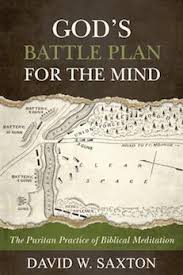
David W. Saxton’s God’s Battle Plan for the Mind is a tightly-packed synthesis of Puritan thoughts on biblical meditation from more than 3 dozen books. In twelve chapters, he covers several important topics, such as defining the difference between biblical mediation and unbiblical meditation. But first, he wants to show us the joy of developing the habit of meditating on the Word of God and throughout the book he shows the pitfalls of being negligent and the nourishment to our souls we gain by persisting in getting the most of our relationship with our Lord and Savior.

What does it mean to meditate? It means to think personally, practically, seriously, and earnestly on how the truth of God’s Word should look like in life.” (page 2) That is helpful in our world in which so many endorse and practice pagan meditation. Saxton reminds us that God has designed us and ordained His Word to be compatible – we find comfort and relief when we are close to Him; we find our Who He is and how we draw close in His Word. “God has chosen primarily to help us deal with discouragements and sin by applying divines truth to our minds. … Biblical meditation on Scripture acts as a believer’s medicine because God’s Spirit always uses the balm of His truth to provide lasting comfort and help.” (page 3) If believers do not spend time and effort in the Word of God, contemplating its truth and application to him, he will be drawn aside to lesser things and be weakened rather than strengthened.

On page 8, our author quotes Philippians 4:8-9 as an example of how God shows proper biblical meditation. Finally, brothers, whatever is true, whatever is honorable, whatever is just, whatever is pure, whatever is lovely, whatever is commendable, if there is any excellence, if there is anything worthy of praise, think about these things. What you have learned and received and heard and seen in me — practice these things, and the God of peace will be with you. (ESV) He then tells us (page 9), “This passage pronounces a blessing not on those who merely know God’s will, but rather on those who have put His will into everyday practice by dwelling on God’s truth.”

One aspect of this book that grew somewhat tedious for me is the sheer quantity and concentration of quotes from the Puritans. Many pages have 6 to 8 quotes, with sentences and paragraphs peppered with footnotes; often taking more space than Saxton uses. While it is good to read the thoughts of these long-gone saints, it is a bit distracting for so many quotes to be used in short space. But let’s get on with the book!

In advocating biblical mediation, Saxton (pages 28 & 29) tells us that the Bible is full of admonitions for God’s people to remember – as a form of mediation. “Revelation 2:5 demonstrates that this kind of meditation is actually the first step towards evangelical repentance: “Remember therefore from when thou art fallen, and repent, and do the first works; or else I will come unto thee quickly, and will remove they candlestick out of his place – unless thou repent.” “Remember” is the word mnamoneuo, which means “to recall information from memory.” The word does not suggest that a person has actually forgotten. Rather, it commands the believer to recall or to think about again.” I would add that this word also conveys the notion of being told to not forget something, to bear in mind – as when your mother would you to remember to bring your coat home from school. Still on page 29, we are given Thomas Hooker’s definition of biblical meditation, one I think worth meditating on: “Meditation is a serious intention of the mind whereby we come to search out the truth, and settle it upon the heart.” While I think this is an excellent definition, I am weary of present day duality of heart and mind – as if one’s heart (pointing to the chest) is what the Bible means by this term, rather than “heart” being a Hebrew metaphor for the seat of one’s being – the soul, which includes our mind.

In chapters 4 and 5, Saxton explores “occasional meditation” and “deliberate meditation”, showing from the Puritans and the Word of God how unplanned, near-spontaneous contemplation of some attribute of God is as valuable as planned study and prayer and pondering the Word. Occasional meditation ought to fill our minds during the day, rather than our routine absorption of cultural media and the attending thoughts it stimulates. We are cautioned to be on guard against the mystical practice of Rome and others with regards to occasional meditation, but also to persist in training ourselves to think on and ponder the Word of God and how it applies to our daily lives throughout our days. We are urged to memorize Scripture as a safe guard for our thought-life. That’s good advice – I dare most of us are not taking it! Deliberate meditation is pressed on us as necessary for spiritual life – if we do not make plans to read, study, pray over, and ponder God’s Word, our sinful minds will fill us with fleshly desires. I am an advocate of making time early in the day, the calibrate my thinking with the Scriptures before I engage the world. Many of the Puritans agree with me, but they also recognize the danger of dictating specifics to others – some may function better later in the day. So each man must be convinced in his own mind.

William Bridge taught that meditation on the Word should be divided into four parts. The believer must consider the exactness of the commandment, the faithfulness of the promise, the terror of the threatening, and the weightiness of the examples.” (page 62) This I see as excellent counsel. Far too many Christians have a casual attitude towards the Word of God, actually caring not for various passages that do not conform to their presuppositions. Encouraging Christians to ever trust God, Saxton sums up a Puritan view: “In His wise and perfect dealings, the Lord sometimes causes His people to experience unusual times of joy, sorrow, decision, or change. These are all His divine gifts to turn the believer’s heart to seriously consider God’s dealings to gain His perspective from His Word.” If we grasp the truth of the sovereignty of God, we will embrace this idea – nothing we encounter is “happenstance”; all is God’s providential care, an expression of His kindness towards us. There is excellent teaching on choosing subjects to meditate upon – from sin and death to eternity to hell, and God’s rescue of His people. Our author quotes Thomas Watson (page 93): “Meditation on hell would rejoicing in a child of God … Christ Himself has felt the pain of hell for you. The Lamb of God being roasted in the fire of God’s wrath, by this burnt-offering the Lord is now appeased toward His people. Oh how may the godly rejoice!” Do we see the Lord in this light? Do we begin to comprehend how blessed we are by NOT having to face God’s wrath?

As with all things, Saxton and the Puritans see the main focus of meditation being to bring glory to God. How much of our prayer life is fleshly? Physical healing is always needed – but how often at church prayer meetings do we hear moans and weeping over spiritual matters? Is the eternal destiny of our family and friends as important as losing 10 pounds or getting a higher paying job? Do we recognize how desperately we need God’s grace this day? He quotes Henry Scudder (page 100) – “when you arise and dress yourself, lose not that precious time (when your mind is freshest) with impertinent and fruitless thoughts…. This is a fit time to think about why you have need of apparel.” The Fall affects everything in this age. I heard a pastor remark that every time a dog barks, he is reminding us that our race caused him and all creation to be cursed. We messed it up – not the dogs that God was kind enough to give us as companions. Do we admit to being Adam’s offspring, in need of the last Adam’s righteousness and thankful for His submission to the Father in all things? That is a good thing to meditate upon!

In chapter 10 we are given the benefits of meditation: it deepens repentance; increase resolve to fight sin; inflames heart affection for the Lord; increase growth in grace; provides comfort and assurance to the soul; creates a life of joy, thankfulness, and contentment; deepens and matures a Christian’s experience; and improves the knowledge and retention of God’s Word. That’s quite a list! Any one of these benefits is more than enough to show any child of God that he should spend more time and mental energy consuming and pondering the Word of God and how, now, he should live. None of us has “arrived” nor will any of us do so in this age. Brothers and sisters – we need these benefits and others who have gone before us bid us drink deeply from the fount of God’s Word to gain them. If you and I are honest, we admit we have no excuse for our negligence in pursuing godliness. Saxton calls upon the Puritans to speak to this in chapter 11 – Enemies of Meditation.

But there are a couple things in chapter 10 that must be highlighted, showing us that neither Saxton nor his beloved Puritans had it all together, either. First up, a short quote from Thomas Watson, a very credible witness for the Lord – but not perfect. Saxton quotes Watson from Heaven Taken by Storm (pages 106 – 107): “If only people meditated on the damnableness of sin … they would break off … sinning and become new creatures.” This is cobbled together from a short paragraph from Watson’s pen:

Meditation produceth reformation, Psalm cxix. 59. ‘I thought on my ways, and turned my feet unto thy testimonies.’ Did but people meditated on the damnableness of sin; did but they meddled with it, there is a rope at the end of it, which will hang them eternally in hell, they would break off a course of sinning, and become new creatures. Let all this persuade us to holy meditation. I dare be bold to say that if men would spend but one quarter of an hour every day in contemplating heavenly objects, it would leave a mighty impression upon them, and, through the blessing of God might prove the beginning of a happy conversion.

First, let’s all agree that spending time humbly before God as revealed in Scripture will cause reformation within the Christian. But can pondering sin and stopping any one or several of them actually cause a child of wrath to be born again and adopted by God? Mr. Watson had this backwards! God is the One who works transformation by raising a spiritually dead person to new life, becoming a new creature in Christ – not by any works on the part of the creature, for then we would have cause to boast in our flesh! God works reformation in the lives of His people, as we all are on a journey of becoming more conformed to Christ and need His Spirit working within us to make it so. These two things are not the same. From other things written by Watson, I think he knew this – but his writing and thinking (like mine) is not perfect. And he errs in this instance.

Secondly, after quoting Jonathan Edwards (page 110), Saxton says, “Meditation causes believers to grow in grace because it allows the word of His grace to minister a genuine building up of the soul.” (emphasis mine) We must always be on guard with how we characterize the Creator. He does not need our permission or cooperation to work His grace in our lives. He does instruct and equip us to cooperate with Him in this endeavor, but we do not allow Him to work His grace in our lives. Our brother would serve us better by saying that meditation promotes the Word of His grace to build up our soul.

Sanctification (which all of what this book discusses fit within) is a curious process. Unlike justification, sanctification is not monolithic. And while we are encouraged to cooperate with the Holy Spirit in our ongoing sanctification, there are times in each believer’s life that He sanctifies us without our cooperation. Praise the Lord that He does not grow weary or negligent in His work, though we may be from time-to-time! But note this – apart from the Spirit working in us, we cannot sanctify ourselves. Jesus said, “apart from me you can do nothing.” Game, point, match.

Last gripe – in the last chapter, careless language once again inserts an unbiblical image that has been promoted and abused by many, though I do not think this is Saxton’s intention. On page 130, Saxton tells us: “Our deceitful hearts seek to convince us that we have the innate ability to live the Christian life in our own power. Only humble prayer can drive out that evil spirit.” Two things are evident in this short quote: He contradicts himself, telling us rightly we cannot live the Christian life in our power, then telling us how to do so! Then he tells us that sin in us is an evil spirit. Accepting this image without realizing God’s truth leaves us open to being misled. Bob Larson has made untold sums of money playing on the fears of those who do not know the Lord or who are ignorant of the fact that if the Spirit of the living God indwells us, no evil spirit can therein abide. Though our flesh is affected and afflicted by indwelling sin, our soul is perfectly righteous and “possessed” by the Spirit of God. Only lost persons can have an evil spirit within them. That should make us thankful yet again to be found in Christ!

To conclude (lest I go on too long, as is my wont), this is a most excellent book, much needed in every church and by every child of God – for who does not need more grace and closeness with our Lord? Saxton tells us (page 131), “normal Christian growth can be a messy, painful, and imperfect struggle. Yet, just the same, it is a struggle worth fighting.” In his conclusion, he tells us, “The believer’s ultimate purpose is to glorify God through becoming more life Jesus Christ (Rom 8:28-30; 2 Cor 3:18). … This process of progressive sanctification is all of the Lord’s grace, yet it is a duty in which God’s people are responsible to participate.” “Find your greatest delight in life in the presence of Christ though His Word.” (page 137)
Man of Sorrows

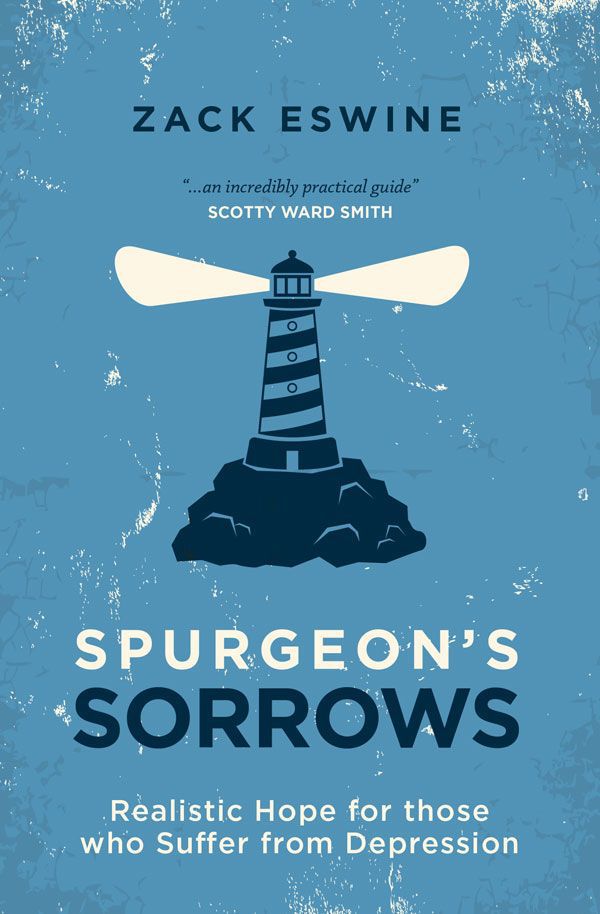
Spurgeon’s Sorrows Sorrows

A review by Stuart Brogden

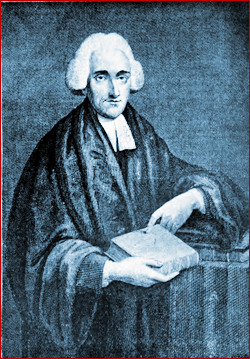
Zack Eswine has written an easy-to-grasp overview of a condition many Christians and pastors spend too little time understanding. Some because they’ve bought into the lie that being healed by the stripes of Christ is a temporal healing, and we should have no sickness if our faith is strong enough. Some because they do not understand mental problems and do not trust psychiatrists. Eswine studied Charles Spurgeon, who suffered with depression and wrote about it, and he brings the Word of God and the words of men to bear to clear the air and give us hope. My hope is to bring to light a few of the good insights this book has to offer and help my fellow Christians better understand this issue so that we might be used to do good to our brothers and sisters who are suffering with depression.

So let’s sample this book, see how Spurgeon dealt with it, and how our Creator advises us.

Chapter 3

Conversion to Jesus isn’t heaven, but its foretaste. This side of heaven, grace secures us but doesn’t cure us.

“Though substantial healing can come, Charles reminds us that often it waits till heaven to complete its full work.

“We do not profess that the religion of Christ will so thoroughly change a man as to take away from him all his natural tendencies; it will give the despairing something that will alleviate that despondency, but as long as that is caused by a low state of body, or a diseased mind, we do not profess that the religion of Christ will totally remove it. No, rather, we do see every day that amongst the best of God’s servants, there are those who are always doubting, always looking to the dark side of every providence, who look at the threatening more than at the promise, who are ready to write bitter things against themselves …

“Therefore we sufferers of depression in Christ may grow terribly weak, even in faith, but we are not lost to God.

“It is Christ and not the absence of depression that saves us. So, we declare this truth. Our sense of God’s absence does not mean that He is so.”

This is critical for us to grab hold of – our position as children of God, His redemption and righteousness is not based on or determined by how we feel. It is based on His work to earn His place as the Lamb of God, taking our sin upon Himself, and imputing His righteousness to us. These facts and the promises of God are what determine our standing before Him. Our emotions are given to us by God but we are prone to being dragged away from Truth by them.

Chapter 4

“Religion offers both a challenge and a help to those who suffer mental disorders. This challenge surfaces when preachers assume that depression is always and only a sin.”

The author goes on to identify the hope is, as studies which indicate people who are part of a religious community do better with mental health (citing Lauren Cahoon, “Will God Get You Out of Your Depression?” (ABC News, March 19, 2008))

Depression for the Christian is often based on the perception that God has abandoned him. This is a very tangible example of how our theology matters and how our faith must rest in Christ and not our perceptions of His love for us. No doubt, this is easy to say and terribly hard to find comfort in when one is captured by his emotions. Our author quotes saints of old often and here, he shows us they did not neglect Satan. The devil doesn’t cause depression but he certainly is eager to encourage it! At this point, the Christian must fight.

“We plead not ourselves, but the promises of Jesus; not our strengths but His; our weaknesses yes, but His mercies. Our way of fighting is to hide behind Jesus who fights for us. Our hope is not the absence of our regret, or misery or doubt or lament, but the presence of Jesus. “Doubting Castle may be very strong, but he who comes to fight with Giant Despair is stronger still!”” (a quote from Charles Spurgeon, “Christ Looseth From Infirmities,”)

He goes on to cite “three tough words” from Spurgeon. First, he defends those who suffer by pointing them to Christ. Secondly, he cautions them not to haunt themselves on purpose with the dreaded notion that somebody somewhere might be happy. Thirdly, Spurgeon would – when he thought it necessary, be direct with those who refused to fight their depression. His sermon, A Call to the Depressed, is cited as a prime example of this tactic. “Perhaps in this sermon, we see Charles the human being trying imperfectly to administer help to sorrows not easily diagnosed. In his earnest and fragile attempts to help, we see our own.”

Chapter 6

“Jane Kenyon’s remarkable poem, “Having it out with Melancholy,” poses two “God” problems associated with depression and our attempts at care. First, depression ruins our “manners toward God” because it teaches us “to exist without gratitude,” and tempts us to answer the purpose of our existence as “simply to wait for death,” since “the pleasures of earth are overrated.” Second, depression tempts our friends to offer the following advice: “You wouldn’t be so depressed if you really believed in God.””

This chapter provides the reader with biblical counsel for those who are depressed, who, our author points out, “lean on metaphors” to describe how they are feeling. Mental problems are hard to convey to those who have not experienced them, so abstract descriptions rarely suffice. The Bible communicates mental anguish via metaphor: Ps 88:3-7, 69:15, Job 13:25, Prov 18:14, et. al.

Three ways metaphors are sufficient to communicate to those in depression:

“(1) Metaphor leaves room. It does not propose to cover every angle, understand every possibility or to explain every detail. It does not require only one possible explanation. Language that proposes to do this with depression exposes its ignorance of the situation at hand.

“(2) Metaphor allows for nuance and difference. Since each person’s experience with depression differs, metaphor allows for diverse expression. Formulaic prose or platitudes immediately reveal their lack of realism regarding how depression damages someone.

“(3) Metaphor requires further thought and exploration. It is a word of invitation more than destination which, we observed earlier, is crucial for gathering up the debris of depression.”

The Bible communicates a creator God Who completely understands His creatures and the plights we face.

“A larger story about God exists that possesses within it a language of sorrows so that the gloomy, the anguished, the dark-pathed, and the inhabitants of deep night are given voice. Such a god-story is neither cruel nor trite. Such a story begins to reveal the sympathy of God.”

Divine sympathy is your teacher, dear caregiver; your ally and friend, dear sufferer. Let His sorrow’s language help you.

Chapter 7

Four ways we can make things worse:

“1. We judge others according to our circumstances rather than theirs. “There are a great many of you who appear to have a large stock of faith, but it is only because you are in very good health and your business is prospering. If you happened to get a disordered liver, or your business should fail, I should not be surprised if nine parts out of ten of your wonderful faith should evaporate.” Jesus teaches us about those who lay up heavy burdens on others but do not lift a finger to help (Matt. 23:4).

“2. We still think that trite sayings or a raised voice can heal deep wounds. A person “may have a great spiritual sorrow, and someone who does not at all understand his grief, may proffer to him a consolation which is far too slight.” Like a physician who offers a common ointment for a deep wound, we “say to a person in deep distress things which have really aggravated him and his malady too.” In this regard, Charles teaches us the Scriptures, “Whoever sings songs to a heavy heart is like one who takes off a garment on a cold day, and like vinegar on soda” (Prov. 25:20).

“3. We try to control what should be rather than surrender to what is. We must not “judge harshly, as if things were as we would theoretically arrange them, but we must deal with things as they are, and it cannot be questioned that some of the best believers are at times sorely put to it,” even “to know whether they are believers at all.” The Scriptures teach us about Job’s friends who struggled at this very point.

“4. We resist humility regarding our own lack of experience. “There are some people who cannot comfort others, even though they try to do so, because they never had any troubles themselves. It is a difficult thing for a man who has had a life of uninterrupted prosperity to sympathize with another whose path has been exceedingly rough.” The Apostle Paul teaches us to comfort others out of the comfort that we ourselves have needed and received (2 Cor. 1:4).

“According to the Bible, when we encounter someone who weeps, we too are meant to weep (Rom. 12:15). When someone encounters adversity they are meant to reflect and meditate, and we with them (Eccles. 7:14). Without this together-sympathy our attempts to help others can lose the sound of reality. The loss of this sound of reality forges the larger reason for our harshness.”

Chapter 8

I wrap up with the author’s review of how our Savior relates to us. The common passage, Hebrews 4:14-16 (Since then we have a great high priest who has passed through the heavens, Jesus, the Son of God, let us hold fast our confession. For we do not have a high priest who is unable to sympathize with our weaknesses, but one who in every respect has been tempted as we are, yet without sin. Let us then with confidence draw near to the throne of grace, that we may receive mercy and find grace to help in time of need.) emphatically tells us that Jesus has suffered temptation and is able to sympathize with us – and He bids us come to Him! He is the cure what ails our souls and minds. This is not, as we are told, only in the here-after – the Lord is our comfort in this age. For in this age we are hated by the world, attacked by our flesh, and wearied by all the effects of sin that inhabit us and our environment. Jesus is our ever present helper and that’s where I want to end.

Arminianism: The Road to Rome

Arminianism: The Road to Rome

Augustus Toplady (1740-1778)

hymnwriter and theologian

Whose Voice Do You Hear? toplady3

“My sheep, saith Christ, hear my voice, and I know them, and they follow me; and I give unto them eternal life, and they shall never perish. O, most worthy Scriptures! which ought to compel us to have a faithful remembrance, and to note the tenor thereof; which is, the sheep of Christ shall never perish.”Doth Christ mean part of his elect, or all, think you? I do hold, and affirm, and also faithfully believe, that he meant all his elect, and not part, as some do full ungodly affirm. I confess and believe assuredly, that there shall never any of them perish: for I have good authority so to say; be- cause Christ is my author, and saith, if it were possible, the very elect should be deceived. Ergo, it is not possible that they can be so deceived, that they shall ever finally perish, or be damned: wherefore, whosoever doth affirm that there may be any (i.e. any of the elect) lost, doth affirm that Christ hath a torn body.”1

The above valuable letter of recantation is thus inscribed: “A Letter to the Congregation of Free-willers, by One that had been of that Persuasion, but come off, and now a Prisoner for Religion:” which superscription will hereafter, in its due place, supply us with a remark of more than slight importance.


John Wesley, A Friend of Rome?

To occupy the place of argument, it has been alleged that “Mr. Wesley is an old man;” and the Church of Rome is still older than he. Is that any reason why the enormities, either of the mother or the son, should pass unchastised?

It has also been suggested, that “Mr. Wesley is a very laborious man:” not more laborious, I presume, than a certain active being, who is said to go to and fro in the earth, and walk up and down in it:2 nor yet more laborious, I should imagine, than certain ancient Sectarians, concerning whom it was long ago said, “Woe unto you Scribes, hypocrites; for ye compass sea and land to make one proselyte:”3 nor, by any means, so usefully laborious, as a certain diligent member of the community, respecting whose variety of occupations the public have lately received the following intelligence: “The truth of the following instance of industry may be depended on: a poor man with a large family, now cries milk, every morning, in Lothbury, and the neighbourhood of the Royal Exchange; at eleven, he wheels about a barrow of potatoes; at one, he cleans shoes at the Change; after dinner, cries milk again; in the evening, sells sprats; and at night, finishes the measure of his labour as a watchman.”4


The Quarrel is With the Wolf

Mr. Sellon, moreover, reminds me (p. 128.) that, “while the shepherds are quarrelling, the wolf gets into the sheep fold;” not impossible: but it so happens, that the present quarrel is not among “the shepherds,” but with the “wolf” himself; which “quarrel” is warranted by every maxim of pastoral meekness and fidelity.

I am further told, that, while I am “berating the Arminians, Rome and the devil laugh in their sleeves.” Admitting that Mr. Sellon might derive this anecdote from the fountain head, the parties themselves, yet, as neither they nor he are very conspicuous for veracity, I construe the intelligence by the rule of reverse, though authenticated by the deposition of their right trusty and well-beloved cousin and counsellor.

Once more: I am charged with “excessive superciliousness, and majesty of pride:” and why not charged with having seven heads and ten horns, and a tail as long as a bell-rope? After all, what has my pride, or my humility, to do with the argument in hand? Whether I am haughty, or meek, is of no more consequence either to that, or to the public, than whether I am tall or short: however, I am, at this very time, giving one proof, that my “majesty of pride” can stoop; that even to ventilate the impertinences of Mr. Sellon.


Arminianism at Home in Rome

But, however frivolous his cavils, the principles for which he contends are of the most pernicious nature and tendency. I must repeat, what already seems to have given him so much offence, that Arminianism “came from Rome, and leads thither again.” Julian, bishop of Eclana a contemporary and disciple of Pelagius, was one of those who endeavoured, with much art, to gild the doctrines of that heresiarch, in order to render them more sightly and palatable. The Pelagian system, thus varnished and paliated, soon began to acquire the softer name of Semipelagianism. Let us take a view of it, as drawn to our hands by the celebrated Mr. Bower, who himself, in the main, a professed Pelagian, and therefore less likely to present us with an unfavourable portrait of the system he generally approved. Among the principles of that sect, this learned writer enumerates the following:

“The notion of election and reprobation, independent on our merits or demerits, is maintaining a fatal necessity, is the bane of all virtue, and serves only to render good men remiss in working out their salvation, and to drive sinners to despair.   “The decrees of election and reprobation are posterior to, and in consequence of, our good or evil works, as foreseen by God from all eternity.”5

Is not this too the very language of modern Arminianism? Do not the partizans of that scheme argue on the same identical terms? Should it be said, “True, this proves that Arminianism is Pelagianism revived; but it does not prove, that the doctrines of Arminianism are originally Popish:” a moment’s cool attention will make it plain that they are. Let us again hear Mr. Bower, who, after the passage just quoted, immediately adds, “on these two last propositions, the Jesuits found their whole system of grace and free-will; agreeing therein with the Semipelagians, against the Jansenists and St. Augustine.”6 The Jesuits were moulded into a regular body, towards the middle of the sixteenth century: toward the close of the same century, Arminius began to infest the Protestant churches. It needs therefore no great penetration, to discern from what source he drew his poison. His journey to Rome (though Monsicur Bayle affects to make light of the inferences which were at that very time deduced from it) was not for nothing. If, however, any are disposed to believe, that Arminius imbibed his doctrines from the Socinians in Poland, with whom, it is certain, he was on terms of intimate friendship, I have no objection to splitting the difference: he might import some of his tenets from the Racovian brethren, and yet be indebted, for others, to the disciples of Loyola.


Papists and Predestination

Certain it is, that Arminius himself was sensible, how greatly the doctrine of predestination widens the distance between Protestantism and Popery. “There is no point of doctrines (says he) which the Papists, the Anabaptists, and the (new) Lutherans more fiercely oppose, nor by means of which they heap more discredit on the reformed churches, and bring the reformed system itself into more odium; for they (i.e. the Papists, & etc.) assert, that no fouler blasphemy against God can be thought or expressed, than is contained in the doctrine of predestination.”7 For which reason, he advises the reformed world to discard predestination from their creed, in order that they may live on more brotherly terms with the Papists, the Anabaptists, and such like.

The Arminian writers make no scruple to seize and retail each other’s arguments, as common property. Hence, Samuel Hoord copies from Van Harmin the self same observation which I have now cited. “Predestination (says Samuel) is an opinion odious to the Papists, opening their foul mouths, against our Church and religion:”8 consequently, our adopting the opposite doctrines of universal grace and freewill, would, by bringing us so many degrees nearer to the Papists, conduce to shut their mouths, and make them regard us, so far at least, as their own orthodox and dearly beloved brethren: whence it follows, that, as Arminianism came from Rome, so “it leads thither again.”


The Jesuits and Predestination

If the joint verdict of Arminius himself, and of his English proselyte Hoord, will not turn the scale, let us add the testimony of a professed Jesuit, by way of making up full weight. When archbishop Laud’s papers were exam- ined, a letter was found among them, thus endorsed with that prelate’s own hand: “March, 1628. A Jesuit’s Letter, sent to the Rector at Bruxels, about the ensuing Parliament.” The design of this letter was to give the Superior of the Jesuits, then resident at Brussels, an account of the posture of civil and ecclesiastical affairs in England; an extract from it I shall here subjoin: “Father Rector, let not the damp of astonishment seize upon your ardent and zealous soul, in apprehending the sodaine and unexpected calling of a Parliament. We have now many strings to our bow. We have planted that soveraigne drugge Arminianisme, which we hope will purge the Protestants from their heresie; and it flourisheth and beares fruit in due season. For the better prevention of the Puritanes, the Arminians have already locked up the Duke’s (of Buckingham) eares; and we have those of our owne religion, which stand continually at the Duke’s chamber, to see who goes in and out: we cannot be too circumspect and carefull in this regard. I am, at this time, transported with joy, to see how happily all instruments and means, as well great as lesser, co-operate unto our purposes. But, to return unto the maine fabricke:–OUR FOUNDATION IS ARMINIANISME. The Arminians and projectors, as it appeares in the premises, affect mutation. This we second and enforce by probable arguments.”9


The Sovereign Drug Arminianism

The “Sovereign drug, Arminianism,” which said the Jesuit, “we (i.e. we Papists) have planted” in England, did indeed bid fair “to purge our Protestant Church effectually. How merrily Popery and Arminianism, at that time, danced hand in hand, may be learned from Tindal: “The churches were adorned with paintings, images, altar-pieces, & etc. and, instead of communion tables, alters were set up, and bowings to them and the sacramental elements enjoined. The predestinarian doctrines were forbid, not only to be preached, but to be printed; and the Arminian sense of the Articles was encouraged and propagated.”10 The Jesuit, therefore, did not exult without cause. The “sovereign drug,” so lately “planted,” did indeed take deep root downward, and bring forth fruit upward, under the cherishing auspices of Charles and Laud. Heylyn, too, acknowledges, that the state of things was truly described by another Jesuit of that age, who wrote: “Protestantism waxeth weary of itself. The doctrine (by the Arminians, who then sat at the helm) is altered in many things, for which their progenitors forsook the Church of Rome: as limbus patrum; prayer for the dead, and possibility of keeping God’s com- mandments; and the accounting of Calvinism to be heresy at least, if not treason.”11


Arminianism From the Pit

The maintaining of these positions, by the Court divines, was an “alteration” indeed; which the abandoned Heylyn ascribes to “the ingenuity and moderation found in some professors of our religion.” If we sum up the evidence that has been given, we shall find its amount to be, that Arminianism came from the Church of Rome, and leads back again to the pit whence it was digged.


ENDNOTES:

1. Strype, u.s.
2. Job 1:7 with 1 Peter 5:8.
3. Matt. 23:15.
4. Bath Chronicle, for Feb. 6, 1772.
5. Bower’s Hist. of the Popes, vol. 1, p. 350.
6. Bower ibid.
7. Arminius, in Oper. P.115. Ludg. 1629. (See book for Latin.)
8. Hoord, In Bishop Davenant’s Animadversions, Camb. 1641.
9. Hidden works of darkness, p. 89, 90. Edit. 1645.
10. Tindal’s Contin. of Rapin, vol. 3 octavo, 1758.
11. Life of Laud, p. 238.

Accidental Discipleship

Change. All of us want to – need to – change in some way. We try all sorts of tactics, theories, imagesand drugs. All of which are shortcuts, focused on defeating the desires of our flesh. Too seldom do we seek God’s wisdom, thinking His way takes too long, requires too much effort.

But change is the wrong goal. It’s what the flesh wants and it’s a shortcut that will lead to disappointment or destruction. Knowing Jesus is the correct goal. In Him we are complete (Colossians 2:10). Whatever change is truly needed in our lives will be wrought by the Spirit of God if we abandon our plans for self-justification and pursue Christ. Not improvement, not change for the better, not relief from our pain; just Jesus.

Pursuing the wrong objective – a better life, defeating a habitual sin – is like attacking a heavily defended fortress (a stronghold) with toy weapons. We will be defeated. When we focus on the enemy, the sin, the stronghold that assails you – you are drawn away from the narrow path that Christ calls His brothers to walk. Only by keeping your eyes focused on your Guide can you keep from straying from the narrow way.

Christ is more than our goal. He is our creator, example, savior, teacher, brother, and King. All battles against sin will be – and can only be – won by making a determined, get-up-when-you-fall, faith-based pursuit of Jesus the Christ. When you or I fail to pursue Him, we grow complacent and disenchanted with Him. The allure of the flesh entices (James 1:14 & 15) and we fall – or jump – into sin. Why didn’t God stop us? Why didn’t He prevent it? He gave us His Spirit and His Son – and the choice to walk in Him or walk in the desires of our flesh. He gives us the promise that if we walk in Him, we will not fulfill the desires of the flesh (Gal 5:16). The flip side of that coin is also true: if we walk in the flesh we will not fulfill the desires of His spirit, but of our flesh.

Seek to know Him. Paul told the church at Corinth, “I determined not to know anything among you, except Jesus Christ, and Him crucified.” (1 Corinthians 2:2) Christ alone – good enough for the Apostle Paul. Is He enough for you? If not, it’s not because He is lacking – it’s because you and I choose wrong and fail to be thankful for Him. Choose Christ – above all else – regardless of your emotions.

As Jesus was deliberate in coming to Earth (Philippians 2:5 – 11) to seek and save you and me, we who are redeemed by His blood must be deliberate in seeking His will, His Word – Him.

If a man expects to drift into spiritual obedience or maturity, he is mightily deceived. This is what Satan would have God’s children believe – that we can mature to Christ-likeness by going with the flow.

Remember: The path of least resistance makes both men and rivers crooked. Choose to pursue Christ and he we will make your path straight. (Psalms 27:11)

Prevenient Grace

I have come to see the argument over God’s sovereignty and man’s responsibility as a key dividing line between true submission to God and actual worship of self. Those who cannot accept the hard teachings of God always come up with a man-pleasing alternative. From “natural causes” for the crossing of the Red Sea to “natural causes” for the resurrection of spiritually dead souls – our natural state is to deny God’s sovereignty. There is no neutral corner into which we can retreat. We who have been born again by the Spirit of the living God must submit to Him, though our flesh fails us and always tries to lead us astray.

gracewriterrandy's avatarTruth Unchanging

Many have posited what they call the doctrine of prevenient grace which, according to their view, grants the power of “libertarian free will” universally. Most seem clueless about how they are using that term. The more intelligent of them will actually attempt to define what they mean by free will. They define it as “a person’s ability to choose other than he has chosen.” If I choose to eat chicken, I have equal ability to choose to eat steak. I have no issue with the idea that God has granted people the freedom of choice. Even the vilest sinner is free to choose to leave his sins and follow Christ if he wishes. If he should choose that option, he would do so because he had chosen to do so freely and apart from external constraint. By that, I do not mean that the human will is autonomous and acts…

View original post 2,566 more words

Indicatives and Imperatives

The Bible is full of commands, Old Testament and New. Perhaps no issue confuses people as much as rightly determining which commands are for New Covenant people and how they are to obeyed.  Early in the history of our religion, an argument arose that continues still today: does almighty God command man to do that which he is unable to do? When Augustine wrote a prayer asking the Lord to command what He would and grant what He commanded, Pelagius went bonkers over the thought that God must grant the creature the ability to obey what God commanded. His view was that man must inherently be able to do what God commands him to do, as it violated his sense of “fairness” for God to command man to do what man could not.

In our day, many people think Matt 5:48 (be ye perfect as your Father in heaven is perfect) is a command we can perform. This perspective is fraught with an unreasonably high opinion of man, missing the point that Christ alone is perfect and we can only be acceptable in the Father’s sight by being found in Him – not by working real hard trying to be perfect.

To properly interpret and apply commands from God, one must understand the context (historical and theological) and getting things in their proper order – commands follow and are applied according to identity; imperatives follow indicatives. The command to repent and believe on Christ can only apply to and be obeyed by one who has been regenerated and raised from spiritual death by the Spirit of God.

While not anywhere close to a comprehensive lesson on this topic, it’s important to grasp it in order to see why what the preacher in the following sermon did was so wrong. This is not an uncommon error, but it’s one we must be on guard against – no matter who is preaching.

The title of this problematic sermon is good (available here): 4 Marks of a Hell-Bound Man. It sounds like a message about indicatives that reveal one bound for hell. But the way John MacArthur preaches this sermon is to present each of the 4 marks as something you can choose to do if you want to go to hell – “How is it that people die in their sins unforgiven? How does that happen? Unjustified, unconverted, unregenerated, unredeemed and bound for everlasting hell. Well, there are four attitudes that guarantee you will die in your sin, four attitudes. If you want to die in your sin then these four things will make that a reality.”  These four attitudes, self-righteousness, worldliness, ignorance, and unbelief are each presented with this assessment: “You want to die in your sin? Be selfrighteous, worldly, unbelieving and willfully ignorant.” Continue reading

The Little God Who Can’t

The Little God Who Can’timages

Is God unable to save everyone he loves?  Here’s more thought on a delicate subject.

————————————————————-

In reading about the life of the nation of Israel in the Old Testament, one cannot help being struck by the enormity of what a failure it all was.  There were grand and glorious promises made to the Hebrew people about their life in their promised land, but the writings of Moses also contained prophecies about a crashing destruction that would come upon their nation in the end.  What was God doing?  Why would he create such a grand experiment in the life of humanity knowing that it would only end in failure and tragedy?  Was God unable to make such a great and elaborate plan a success rather than a failure?  The answer, of course, is made plain in the New Testament.  God’s full intention was to show and prove to all people that man has sinned against the God who made him and fully deserves eternal death.  It was and still is a hard lesson to learn.

In our world today man still has not fully understood what it was that the failure of Israel taught us — that man cannot save himself by being “good” and keeping laws — or even by making correct decisions. Even a large part of the Christian community today believes in a religious system that leaves the far greater part of humanity in a burning hell rather than “saved” because they have not “done” something to make themselves acceptable to God.

To many Christians today God is a failure. He means well, but He just can’t get what He wants. He supposedly wants to save the whole world of humanity from hell, but that obviously is not happening; and people that he (supposedly) dearly loves are being separated from him for eternity. Popular Christian belief today requires that a person must first hear the gospel, believe it, then repent and confess their sin.  Then they can become born again and go to heaven. The truth is , however, that for the first 4,000 years of human history there was no New Testament gospel as we have it today.  And even in modern times the greater part of the world’s population still has not heard it.

Has Israel’s failure to save themselves in Old Testament times now become God’s failure in our time?  The choice of heaven or hell is now (supposedly) in the hands of man. God is excluded from the contest (gamble). He wants everybody to be eternally “saved,” but the losses are terrible, and hell is filling up with unbelievers who do not choose God. What can God do? He is powerless. He made the rules and now He must abide by them. Will He grieve forever because people He loves are in a state of eternal torment? Is this the God we believe in?  Is something wrong?

*

Radio Pastor Loren Henry Wilson

Responsibility, Inability and Grace

A great review of important issues that bear on the essential doctrine of soteriology – how is one saved? By John Hendrix. accounted-as-righteousness_t_nv

Responsibility, Inability and Grace

“All that the Father gives Me will come to Me…” – John 6:37

The truth of God’s word is honored not in holding exclusively to one truth to the exclusion of another truth, but in believing the whole counsel of God. The Bible plainly teaches that man is responsible to obey the summons of God to repent and believe the gospel just as it plainly teaches that he is morally unwilling and unable to do so. These two seemingly contradictory assertions can be reconciled when we understand that, after the fall, God’s perfect standard for holiness for man does not change … so even the very desire for faith, by which we believe in Christ who justifies sinners, can only belong to us, not by nature but by a gift of grace, that is, by the inspiration of the Holy Spirit amending our will and turning it from unbelief to faith and from godlessness to godliness. Jesus says, “no one can come to me [i.e. believe in me] unless the Father who sent me grants it.” (John 6:54) Again, the Apostle Paul says, “And I am sure that he who began a good work in you will bring it to completion at the day of Jesus Christ” (Phil. 1:6). And again, “For by grace you have been saved through faith; and this is not of yourselves, it is the gift of God” (Eph. 2:8).

Furthermore some teach that God has mercy upon us when, apart from his regenerative grace, we believe, will and desire to believe, but do not confess that it is by the work of renewal by the Holy Spirit within us that we even have the faith, the will, or the desire to do all these things; If we make the assistance of grace depend on our own wisdom, humility, prudence, obedience, sound judgment or good sense, but don’t agree that it is a gift of grace itself that we are obedient and humble, we then directly contradict the Scripture which says, “What have you that you did not receive?” (1 Cor. 4:7), and, “But by the grace of God I am what I am” (1 Cor. 15:10).

The following chart shows that the Bible clearly teaches both man’s responsibility to believe the gospel and his inability to do so. The third column helps us to understand how those whom God has set his affection on infallibly come to faith, in spite of this inability and, most of all, how this gives all glory to God in the work of salvation: Augustine once said, “God bids us do what we cannot, that we may know what we ought to seek from him.”

(This chart is loosely based on a chart by Lamar McKinney)

The Responsibility of Man

The Inability of Man

Monergistic Grace of God

Come unto me, all ye that labour and are heavy laden, and I will give you rest.

Matt. 11:28

No man can come to me, . . .

John 6:44a

. . . except the Father which hath sent me draw him: and I will raise him up at the last day.

John 6:44b

…whoever believes in Him shall not perish, but have eternal life.

John 3:16

…men loved the darkness rather than the Light…and will not come into the light…

John 3:20, 21

..”But he who practices the truth comes to the Light, so that his deeds may be manifested as having been wrought in God.”

John 3:21

Note: there are, indeed, those who come to the light — namely those whose deeds are the work of God. “Wrought in God” means worked by God. Apart from this gracious work of God all men hate the light of God and will not come to him lest their evil be exposed.

Seek ye the LORD while he may be found, call ye upon him while he is near:

Isa 55:6

There is none that understandeth, there is none that seeketh after God.

Rom 3:11

. . . I was found of them that sought me not; I was made manifest unto them that asked not after me.

Rom 10:20b

This is His commandment, that we believe in the name of His Son Jesus Christ…

1 John 3:23

“…the sinful mind is hostile to God. It does not submit to God’s law, nor can it do so.

Romans 8:7

you do not hear, because you are not of God.

John 8:47

“…and these whom He called, He also justified;

Rom 8:30

…and as many as were ordained to eternal life believed.

Acts 13:48

God…commandeth all men every where to repent.

Acts 17:30

…the Spirit of truth, whom the world cannot receive, because it neither sees Him nor knows Him

John 14:7

“…if perhaps God may grant them repentance leading to the knowledge of the truth.”

2 Tim 2:25

. . . whosoever will, let him take the water of life freely.

Rev 22:17b

So then it is not of him that willeth, . . .

Rom 9:16a

“…but on God, who has mercy.” – Rom 9:16b

…Thy people shall be willing in the day of thy power,. . .

Ps 110:3a

Look unto me, and be ye saved, all the ends of the earth: for I am God, and there is none else.

Isa 45:22

. . . Except a man be born again, he cannot see the kingdom of God.

John 3:3a

. . . The God of our fathers hath chosen thee, that thou shouldest . . . see that Just One, . . ..

Acts 22:14

But as many as received him, to them gave he power to become the sons of God, even to them that believe on his name:

John 1:12

But the natural man receiveth not the things of the Spirit of God: for they are foolishness unto him: neither can he know them, because they are spiritually discerned.

1 Cor 2:14

But as many as received him, . . . were born, not of . . the will of the flesh, nor of the will of man, but of God.

John 1:12-13

. . . if thou shalt confess with thy mouth the Lord Jesus, . . .

ROM 10:9

. . . no man can say that Jesus is Lord . . .

1 Cor 12:3b

. . . but by the Holy Ghost.

1 Cor 12:3b

. . . make you a new heart and a new spirit: for why will ye die, . . ?

Ezek 18:31

The heart is deceitful above all things, and desperately wicked: . . .

Jer 17:9

A new heart also will I give you, . . . and I will take away the stony heart . . .

Ezek 36:26

“If you wish to be complete, go and sell your possessions and give to the poor, and you will have treasure in heaven; and come, follow Me.”

Matt 19:21

“Again I say to you, it is easier for a camel to go through the eye of a needle, than for a rich man to enter the kingdom of God.”


Matt 19:23

“Then who can be saved?” And looking at them Jesus said to them, “With people this is impossible, but with God all things are possible.”

Matt 25b-26

God knoweth we have nothing of ourselves, therefore in the covenant of grace he requireth no more than he giveth, and giveth what he requireth, and accepteth what he giveth.” – Richard Sibbes

John Hendryx
Monergism

It Was a LIE!

Any Christian with basic knowledge of the Bible knew it was a false tale – a lie – from the very Heaven

beginning. But how many professing Christians were taken in? We who claim Christ should not be such easy targets for deceptive tales that rail against the Word of God given to us.

Now, the publisher, author, his parents, and who all else who was involved in allowing this take the country by storm admit is was a lie! Of course, the Washington Post has the story – when has that paper not delighted in trying to bring disgrace to the body and name of Christ.

Read it before they take it down – click this sentence to open the story on the Washington Post web site.

Here’s how it opens:

Tyndale House, a major Christian publisher, has announced that it will stop selling “The Boy Who Came Back From Heaven,” by Alex Malarkey and his father, Kevin Malarkey.

The best-selling book, first published in 2010, purports to describe what Alex experienced while he lay in a coma after a car accident when he was 6 years old. The coma lasted two months, and his injuries left him paralyzed, but the subsequent spiritual memoir – with its assuring description of “miracles, angels, and life beyond This World” – became part of a popular genre of “heavenly tourism.”

Earlier this week, Alex recanted his testimony about the afterlife. In an open letter to Christian bookstores posted on the Pulpit and Pen Web site, Alex states flatly: “I did not die. I did not go to Heaven.”

Contrasting Adam and Israel

This comparison came to me a while back while I was studying for a hand of Godsermon. I do not presume to have unearthed deep truths, but pray this simple comparison prompts the reader to consider each Word that has proceeded from the mouth of God.

Contrasting Adam and Israel.

Adam Israel
Formed by God from the dust of the earth. Formed by God from the dust of the people of the world.
Was brought to life by the word and breathe of God. Was brought into being by the word of God.
Had close fellowship with God. Had close fellowship with God.
Was given a covenant within which to live and prosper. Was given a covenant within which to live and prosper.
Broke the covenant and received the penalty of death, which was carried out in due time. Broke the covenant and received the penalty of death, which was carried out in the fullness of time.
Was cast out of the garden, cursed to walk and work in the world which was wrecked by The Fall. Was divorced by God, left desolate, cursed to walk and work in darkness until the light of Christ.
As a type of Christ, Adam points us to the anti-type, Christ Jesus, in whom there is life for Adam’s children who are secure in the Last Adam. As a type of Christ, Israel points us to the anti-type, Christ Jesus, in whom there is life for Abraham’s children of promise.

A CHRISTOTELIC VIEW OF DANIEL 9:24-27

What follows is an excellent approach to an optimum understanding of this famous but often Disp
misunderstood passage from God’s Word, written by Zachary Maxcey who blogs at Providence Theological Seminary Blog (http://nct-blog.ptsco.org/)

A Preliminary Plea for Tolerance in Non-Essential Eschatological Matters

Few areas of theological study ignite such heated controversy as eschatology. Sadly, on account of eschatological differences, Christians all too often hurl harsh, bitter invectives against those whom they would claim as their fellow brothers and sisters in Christ. Such behavior, not to mention the doctrinal divisions, both damages the public witness of the Body of Christ and significantly hinders the proclamation of the Gospel. In the words of the Apostle James, My brothers, this should not be  (James 3:10).[1] As believers in Christ, we must be able to lock arms together on all essential matters of the Christian faith, while agreeing to disagree in non-essential or disputable matters. We must remember that famous statement of Rupertus Meldenius, In essentials unity, in non-essentials liberty, in all things charity. [2] When we fail to do so, we stand in violation of Christ’s command to love one another as He loved us, an outworking of the second greatest commandment (John 13:34; Matt 22:39). As long as we accept the absolute essentials[3] of orthodox Christian eschatology, we can agree to disagree with fellow believers on such eschatological questions as the timing of the rapture, the issue of the millennium, or the Seventy Weeks prophecy. If we are unable to respectfully[4] differ in Christian love with fellow believers on these (and other) disputable matters, we, including this author, have absolutely no business communicating our eschatological opinions.

Download the 56 page document here: https://app.box.com/s/fmyp05zgs8t1b112nz52

What Does God say about Bioethics?

Christian Bioethics 517UykgR7dL._BO2,204,203,200_PIsitb-sticker-v3-big,TopRight,0,-55_SX278_SY278_PIkin4,BottomRight,1,22_AA300_SH20_OU01_

A review by Stuart Brogden

This book, subtitled A Guide for Pastors, Health Care Professional, and Families, is part of a series on Christian ethics published by B&H Publishing Group. I dare say anyone within each of those groups would be challenged to think more biblically about the relevant issues as well as being better informed by reading this book. In the preface, the series editor tells us the thesis of this book by asking this question: “How do we move from an ancient text like the Bible to twenty-first-century questions about organ transplants, stem-cell research, and human cloning?” This book, written by an ordained minister of the gospel (C. Ben Mitchell) and a physician (D. Joy Riley), gives solid counsel and these emotionally charged issues in 9 chapters, and is broken up into four parts: Christian Bioethics, Taking Life, Making Life, and Remaking/Faking Life. The format of each chapter is a look into a real life situation immersed in the subject, followed by questions for reflection, and Q & A between the authors. Other than a too frequent quoting of Roman Catholics as though that Church is Christian institution, this team provides solid insight from God’s Word on each of these topics.

Chapter 1 gives the reader an overview of the Hippocratic Oath which opened my eyes to the ancient context and false gods the oath was originally made to and the awareness that most doctors today do not subscribe to this oath, which we mostly know as the pledge to, First, do no harm. This was spelled out in explicit language that forbid euthanasia and abortion. The absence of a doctor’s oath to “do no harm” may cause a patient to wonder how much he can trust his doctor. In summing up this topic our physician author observes (page 22, italics in original) “Doctors should work hard to be trust-worthy and humble.” A few pages later (page 28), as they address stem-cell research, our minister reminds us, after quoting 2 Peter 1:3, “God has not left his people without guidance in every area of life. Although the Bible is not a science textbook, its message speaks to the deep underlying values that can guide decisions about scientific matters. Although the Bible is not manual of medicine, its truths may be applied to medical decision making.” This is a key perspective for every child of God to properly understand how to walk in the light of God’s Word. Much of the rest of chapter 2 is good advice for properly reading and understanding the Scriptures, taking into account literary, historical, and cultural context as well the genre of what is being read.

The chapter addressing abortion is sobering and probably eye-opening for most. The authors make a full-court press to establish the humanity of every life, starting from conception. Mitchell makes the essential connection between our view of Jesus and our view of humanity, developing the humanity of our Lord to show how every mortal is given value by the Creator – above all other life forms – from the time the egg is joined with a sperm. At the end of chapter 3, the authors exhort Christians to be active in opposing abortion and supporting life, but they draw no lines of getting involved with pro-life Roman Catholics. Christians must be deliberate and biblically thoughtful in deciding who to get cozy with in the public arena. The next chapter covers death and dying, providing thought-provoking observations about the details of pain and suffering and how one’s Christian world view informs us. A key element in handling the death of any person, they tell us, is to remember the patient (perhaps a close relative) is a human being, not merely a patient to be treated. “Much of the suffering of dying persons comes from being subtly treated as nonpersons.” (page 85) There is discussion of the efforts to extend life, even at the expense of that life being human. It is a long-held desire of fleshly human beings to grasp eternal life in our present form, without submitting to God’s revealed plan of redemption – which includes our death and resurrection. Being a faithful child of God includes how we approach death – do we trust our heavenly Father in our dying as did our Savior? Again, we get faithful advice (pages 100 & 101): “Through the resurrection of Christ, God has given us grounds to hope that death, however awful, will not have the last word.” Amen!

As they move from taking life to making life, the reader is presented with a biology lesson on how babies come into the world. They take this opportunity to reinforce the Christians view of anthropology (page 113): “Knowing that pregnancy occurs at fertilization rather than at implantation will help us make several important distinctions later.” They then cover several options medicine has provided for artificial this or that, discussing the line we cross regarding family integrity and God’s authority, observing (page 123), “When a third party intrudes on the procreative relationship, the divinely instituted structure of the family is altered. Trouble is bound to follow.” This may be unwelcome by some, who have such a great desire for a child that their love for the Word of God is overshadowed. All of us fall into this pit on one issue or another from time-to-time, so let us not rush to judgment.

The last part of this fine book covers the definition of death and the forces behind the changes we’ve seen in the last 50 years; organ donation and transplants; cloning and human/animal hybrids; and life extension practices. In this last category, we are introduced to trans-humanists, a group that wants to extent life in the human body and beyond. This was the topic of recent movie, Transcendence, which traced the consequences of a computer scientist whose “essence” was transferred into a powerful computer he had built. It gets very ugly before it ends. In summing up how we who profess Christ ought to look at aging, Mitchell provides a contrast between Christians and Trans-humanists (page 181): “Interestingly, the trans-humanists and Christians seem to have some common concerns. We share:

  • The quest for the good life.
  • Longing for immortality
  • Pursuit of the relief of human suffering
  • Appreciation for technology’s benefits.

Where we differ is in the mean to achieve these aims. For Christians the good life and the goods of life are found in God and his presence in our lives. The good life is not defined by the number of years one lives but the reality of God’s presence in however many years one lives. While we, like the apostle Paul, long for immortality, Christians understand that they already possess it. … Another place we differ with the trans-humanist is in loathing every human limitation. Because we are creatures and nor creators, we accept most limitations as gifts from the One who made us.”

And while there is much more in this book that will do the reader much good, I think that is a wonderful point on which to end this review. Christian – are you content with our God’s provision in your life? Do we think we deserve better than YHWH has given us? To quote the Apostle, “Who are you, oh man, to answer back to the One who made you thus?” Let us, as did the Lord Jesus, trust ourselves to the One who judges justly. Trust God, rejoice always, pray without ceasing, give thanks in all circumstances, for this is the will of God for you in Christ Jesus. In living and dying – and all that comes between those two finite points.

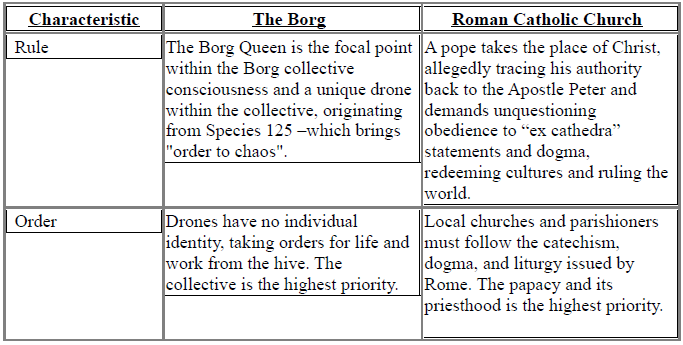
Accidental Similarities?

borg_queenpope_benedict_

This is the tale of two organizations with eerie similarities in how they evolved through the years. One is fictional, the other quite real. As far as we know, these similarities are not intentional, though this author believes in a Sovereign God – meaning there are no coincidences.

Nobody knows for certain the origin of either organization. Both entities appeared in time and “history” was filled in after the fact to varying degrees. They gave rise to charismatic, authoritarian leaders whose power was rarely challenged. Each leader provides communications to the respective “collective”, insuring each “drone” has the official message, disregarding any information that may contradict it regardless of veracity.

The first encounter locals had with either resulted in the same outcome: death or being assimilated. With each assimilation, the conquering organization was changed, having taken on various characteristics of the culture it conquered. As time went by, the original culture of each organization resulted in something that was not true to either their beginnings or the cultures from which they assimilated new converts.

They each proclaimed that they, alone, represented the best hope for civilization – claiming to be the only legitimate culture into which all would be assimilated or disposed of. Each left a path of wreckage and death in their wake, blind to the needs of outsiders and blind to the errors of their ways and beliefs.

Here now, is a concise comparison between these two cultures. My goal is to make clear the old truism: truth is stranger than fiction.

Chart 1
Chart 2
chart 3

Note: No sources are listed, as fans of the Borg know their stuff and likely are not put off by this little article and Roman Catholics have their own sources and would not condescend to read anything I might suggest. So this document stands on its own, as my personal perspective, not needing to be defended against the Romans nor explained to the Reformed.

With the Pope’s latest visit to the US (this was written in 2008), I’ve begun to notice certain similarities between him, and Batman…

1. Both use an assumed identity.

2. Both costumes include headwear.

3. Both costumes include a cape.

4. Both assisted by young boys.

5. Batmobile/Popemobile

6. Both control vast economic empires, handed down to them by a previous “father figure.”

7. Both live in huge mansions.

8. Both have dark events in their pasts, which they would rather not discuss.

9. Both have an aging English butler, who’s been in the family for decades.

10. Batsignal in the sky over City Hall summons Batman. White smoke in the sky over the Vatican summons a new Pope.

11. The Batplane/Popeplane

12. The Batcave/Underground Tunnels at the vatican

Let it be known that I do not hate Roman Catholics. I hate false doctrine that denies essential Christian Truths whether it is proclaimed by Catholics, Hindus, Episcopalians, Southern Baptists, or my own self. For this a Truth – God (by this I mean the Great I AM of the Bible) alone is without false ways.

All blessing and glory and honor and power be unto the Lamb of God! Christ is risen – He has conquered sin and death and saved His chosen ones by His grace, lest anyone boast in the flesh.

Jeremiah’s Lament

Jeremiah’s Lament Jeremiah

What In The World Is Going On? – Reviewed by Stuart L. Brogden`

Once more, a “Christian” book touts its status on the New York Times and USA Today Best Seller’s list. Each time I read such a book, I try to find out why worldings would find the book so interesting. This book is a sensational fable presented as fact, based on a theology birthed by Roman Catholic Jesuit priests in the 16th century and a mystic young woman of the 19th century who belonged to the Plymouth Brethren. The priests developed the future-based Anti-Christ and Mary McDonald was given the pre-trib secret rapture in a dream, which she told to John Darby (details on this background here: http://www.dispensationalism.org.uk/). This is not the faith that was once for all delivered to the saints. While some Christians have accepted premillenialism since the first century A.D., the dispensational twists (pre-trib rapture, fixation on the Anti-Christ, and focus on national Israel) are new fabrications. If dispensationalism is true, why would Sovereign God keep it a secret from His people for 1800 years?

David Jeremiah starts each chapter with a story from culture or history that sets the stage for his “prophetic clues”. None of these 10 prophetic clues make any sense unless one accepts the fable that dispensationalism is biblically sound. But there is not a single verse in the Bible that supports the pre-trib rapture, not one. Please watch this short video to gain a better understanding of this issue: http://www.youtube.com/watch?v=uQgrJ-pYhCM

I will not comment on each chapter – to do justice on such an effort would take a book. One more preface to specific comments: Dispensationalists tend to be guilty of paying heed to current events and finding some prophetic Scriptures that can be wrapped around them, sounding biblical to those who are not disciplined in studying Scripture. To facilitate this, Jeremiah starts each chapter with a tale from recent history or current events. He claims (page xv) to be “viewing current events from the perspective of God’s wonderful Word” but a careful review of his book and of Scripture discloses that he is reading the Word of God through the lens of current events. This leads into his “prophetic clue” of each chapter, as he acts as a pied piper of dispensational error.

The dispensational error of being focused on Israel shows up in a classic way on page 3: “Apparently God finds Abraham and his descendants to be of enormous importance.” This tendency of assigning value to the creation rather than seeing God using sinful, rebellious people for His purposes is a common affliction. Further in this opening chapter, pages 4 & 5, the author brags on the Jews throughout history – as if they, rather than Almighty God were responsible for their success and influence. Yet he admits on page 7 that “The Bible tells us His choice of Israel had nothing to do with merit.” Back a page, Jeremiah proclaims his belief that God’s promise of land was the most important covenant promise made to Abraham and on pages 9 – 11 he tells us it is not yet fulfilled. Yet Hebrews 11:8-10 show that Abraham “was looking forward to the city that has foundations, whose designer and builder is God.” In John 8:56, the Lord declared to the Jews, “Your father Abraham rejoiced that he would see my day. He saw it and was glad.” Abraham knew the terrestrial property which Israel fully claimed all that was promised by God (read Joshua 21:41 – 45), contrary to the dispensational claim that this promise is yet to be fulfilled. The promised land on Earth was a type and shadow of the Promised Land that Christ will bring all that the Father has given Him unto. Not some dusty bit of the mid-east. Still in the opening chapter, on page 18, we are told that the promise given in Jeremiah 32:37 – 38 is yet to be fulfilled. This promise, however, was fulfilled at Calvary, when Christ ended the Jewish religion and delivered on His promise to pay the debt for all God’s chosen people, giving each new-born Christian a safe refuge and identity as His people.

Chapter two shows a man who knows or cares so little about spiritual realities that he bases a sermon or two on crude oil (page 35), calling it “the stuff of life” (page 27) and a “sign” (the inference I drew is that he considers this a biblical sign). On page 30, the author reveals that he disbelieves the biblical account of creation, believing oil took “eons of time” to create. On page 38, Doctor Jeremiah tells us that Deuteronomy 33:24 (And of Asher he said, “Most blessed of sons be Asher; let him be the favorite of his brothers, and let him dip his foot in oil.) and Genesis 49:22 – 26 indicate there is oil beneath the dirt occupied by the modern nation of Israel. The oil mentioned in Deuteronomy is olive oil, used in medicine and religious anointing. The passage from Genesis simply refers to blessings directly from God in Heaven and indirectly from God here below. To derive a promise of crude oil from these passages is perhaps the worst example of eisegesis (reading assumptions into Scripture) that I’ve seen.

Let me say that I agree with parts of this book. The author’s warning (page 42) that we who profess Christ remain vigilant and focused on the Lord and his admonitions #2 –10 (pages 233 – 234) on how to live until the Lord returns are both spot-on. Likewise, chapter 4 – his warning about Islam – is a bold statement that many soft-hearted, fuzzy-thinking people need to read.

But the balance of the book is in the same vein as the first two – based on faulty presuppositions rather than on Scripture. On page 69, Doctor Jeremiah tells us that Romans 13:11 is a warning about the end of the age, but the context clearly is that of instructing Christians how to live in the world, in light of our firm hope of eternal life. On the same page, we see another common aspect of dispensational teaching – a works-based view of salvation, wherein one is told to “accept His offer of salvation”. The Bible tells us we are drawn to Christ and salvation is “not of blood nor of the will of the flesh nor of the will of man, but of God.” (John 1:12 & 13). This Arminian error shows up in a couple places throughout this book and is deceptive and man pleasing – but has more in common with heresy than with biblical truth.

Compounding his error in teaching a pre-trib rapture, Jeremiah devotes a chapter (#5) to digging a deeper hole. He claims 1 Thessalonians 4:13 – 18 describes the pre-trib rapture (page 102) and he calls this a “stealth event” (page 100) which only Christians are aware of (page 206). A stealth event which only Christians witness, characterized by “a cry of command, with the voice of an archangel, and with the sound of the trumpet of God”. Reads like something everybody will know about – like the resurrection of every soul on Judgment Day.

In chapter 6, we are told that the Bible prophecies a role in the end times for the United States of America and foretells Russia invading Israel. This is in your Bible to same degree as his crude oil find in chapter 2. He relies much on his country, calling our way of life “our lifeline” (page 129). Perhaps he ought to look unto Christ as his lifeline! On the next page, he quotes the “high priest” of pre-trib rapture, Tim LaHaye, who asks, “Why would the God of prophecy not refer to the supreme nation in the end times in preparation for the one-world government of the Antichrist?” I suggest LaHaye and Jeremiah reacquaint themselves with the lesson of Judges 7:2 and Psalms chapter 20. God does not need nor does He depend on horses, chariots, or superpowers.

Chapter 7 is devoted to propping up the fable from Rome that there is a future Antichrist who will rule the world. Remember – this doctrine did not exist until the 16th century and appears to be a Roman Catholic response to The Reformation, which taught that the office of pope was the AntiChrist. In this chapter, Jeremiah quotes A.W. Pink as a supporter of this view. This was true, but Pink later repented and had unkind things to say about dispensationalism, in the same way a former smoker hates cigarette smoke. Read Pink’s later statement, in four chapters, here: http://www.pbministries.org/books/pink/Dispensationalism/dispensationalism.htm

My suggestion to the reader who wants to know what will happen is to read the Gospel of John and cry out to God for repentance and faith. Christians do not fear tribulation, for our God is a strong tower and a secure refuge. Out God knows how to save His people from harm, in the midst of trouble. We are promised safety from the wrath of God’s judgment (Romans 8:1) but we are promised trouble and tribulation while we live on planet earth: Matthew 24 describes significant tribulation that His people will face; John 16:33 informs us we will have tribulation in this world; Romans 8:35 tells us tribulation will not separate us from Christ; Romans 12:12 tells us to rejoice in tribulation. Rather than being raptured before tribulation, the Bible tells us we will be preserved in and through tribulation! This is more to the glory of God – shielding and protecting His own – than a pre-trib rapture, where He snatches them up before trough times hit. It takes a mighty God to protect His people through the midst of tribulation. Have faith in God!

Are we Christians? Or are we worldlings?

Are we Christians? Or are we worldlings? rick+warren+wide+gate

(Horatius Bonar, “Self-Denial Christianity”)

“Woe to those who are at ease in Zion!” Amos 6:1

What do we say to . . .
our self-indulgence,
our spiritual sloth,
our love of ease,
our avoidance of hardship,
our luxury,
our pampering of the body,
our costly feasts,
our silken couches,
our brilliant furniture,
our gay attire,
our jeweled fingers,
our idle mirth,
our voluptuous music,
our jovial tables, loaded with every variety of rich viands?

Are we Christians? Or are we worldlings?

Where is the self-denial of the New Testament days?

Where is the separation from a self-pleasing luxurious world?

Where is the cross, the true badge of discipleship, to be seen–except in useless religious ornaments for the body, or worse than useless decorations for the sanctuary?

“Woe to those who are at ease in Zion!”
Is not this the description of multitudes who name the name of Christ? They may not be “living in debauchery, lust, drunkenness, orgies, carousing and detestable idolatry.” But even where these are absent, there is ‘high living’–luxury of the table or the wardrobe–in conformity to ‘this present evil world.’

“At ease in Zion!” Yes! there is the shrinking . . .
from hard service;
from ‘spending and being spent;’
from toil and burden-bearing and conflict;
from self-sacrifice and noble service;
for the Master’s sake.

There is conformity to the world, instead of conformity to Christ!
There is a laying down, instead of a taking up of the cross.
Or there is a lining of the cross with velvet, lest it should gall our shoulders as we carry it!
Or there is an adorning of the cross, that it may suite the taste and the manners of our refined and intellectual age.

Anything but the bare, rugged and simple cross!

We think that we can make the strait gate wider, and the narrow way broader, so as to be able to walk more comfortably to the heavenly kingdom. We try to prove that ‘modern enlightenment’ has so refined ‘the world and its pleasures’, that we may safely drink the poisoned cup, and give ourselves up to the inebriation of the Siren song.

“At ease in Zion!” Even when the walls of our city are besieged, and the citadel is being stormed!

Instead of grasping our weapons, we lie down upon our couches!

Instead of the armor, we put on the silken robe!

We are cowards, when we should be brave!

We are faint-hearted, when we should be bold!

We are lukewarm, when we should be fervent!

We are cold, when we should be full of zeal!

We compromise and shuffle and make excuses, when we should lift up our voice like a trumpet! We pare down truth, or palliate error, or extenuate sin–in order to placate the world, or suit the spirit of the age, or ‘unify’ the Church.

Learn self-denying Christianity. Not the form or name, but the living thing. Let us renounce the lazy, luxurious, self-pleasing, fashionable religion of the present day!

A self-indulgent religion has nothing in common with the cross of the Lord Jesus Christ; or with that cross of ours which He has commanded us to take up and carry after Him–renouncing ease and denying self.

Our time,
our abilities,
our money,
our strength–
are all to be laid upon the altar.

“Woe to those who are at ease in Zion!”
Amos 6:1

A Lesson on Gratitude

A wonderful look at Christian gratitude from a dear friend of mine. You can read more of his work here: By Way of Reminder.

By Way of Reminder #83 Reminder
Gratitude (2/5)

On the twenty-first of the seventh month, the word of the LORD came by Haggai the prophet saying … “For thus says the LORD of hosts, ‘Once more in a little while, I am going to shake the heavens and the earth, the sea also and the dry land. I will shake all the nations; and they will come with the wealth of all nations, and I will fill this house with glory,’ says the LORD of hosts. (Haggai 2:1, 6-7)

And His voice shook the earth then, but now He has promised, saying, “Yet once more I will shake not only the earth, but also the heaven.” This expression, “Yet once more,” denotes the removing of those things which can be shaken, as of created things, so that those things which cannot be shaken may remain. (Hebrews 12:26-27)

In the previous issue we contemplated the end of our days on Earth, hoping we will look back and see how His word inspired us to action. Though we do not work to build the Kingdom of God here on Earth, our work in this life ought to be an example of what we consider important for the next. We must trust Scripture to stand as truth while many try to discredit His plan, words, and character.


All of the most popular religious beliefs (except agnostics) teach some form of afterlife. Protestants and pagans alike have been guilty of teaching that everyone will end up…somewhere. Hey, if it’s better than this life, why should we care to know more? Heaven is merely a relief from pain: “They are in a better place.”

I am grateful that Heaven is not just better than this life, but because our Lord is there! After the shaking of these dusty dwellings, the church will be together at last (Hebrews 11:40). The innumerable redeemed from every nation and tongue will finally look upon the King of Kings, face-to-face (Revelation 7:9-12).


The heart of man, raging against God, desires to put trust in a system of ever-evolving truths, rather than be accountable to one constant. This self-refuting way of life does not end in truth, nor does it give aid in times of uncertainty. “Science” is heralded as a system of religion, instead of cataloged hypotheses.

I am so grateful that God does not share His glory with another (Isaiah 42:8), nor does He excuse a sideways glance at His nature, His image, His name, nor His day(Exodus 20:1-11). This is grace, to command our attention (Hebrews 12:1-2) that we might not lose hope as we strive toward home (Philippians 3:12-14).


One of the most potent arguments against God is the exactness that exists in observable movements of space and time. Some reason that “winding the clock back” to the beginning of time would provide ample evidence that everything started with a bang, not a purposeful, inspired event by a sovereign Creator.

Know this first of all, that in the last days mockers will come with their mocking, following after their own lusts, and saying, “Where is the promise of His coming? For ever since the fathers fell asleep, all continues just as it was from the beginning of creation.” For when they maintain this, it escapes their notice that by the word of God the heavens existed long ago and the earth was formed out of water and by water, through which the world at that time was destroyed, being flooded with water. But by His word the present heavens and earth are being reserved for fire, kept for the day of judgment and destruction of ungodly men. (2 Peter 3:3-7, emphasis mine)

I am grateful, because His Kingdom stands just as He commands, just as He sustains all things (Colossians 1:17). Even the skeptics are being preserved by His word, that He might exact His plans. Contrary to what man thinks he knows,Yahweh of the Bible preserves clear instructions, commands, and evidences of His character within the pages of Scripture, and for our good (2 Timothy 3:14-17).

Therefore, since we receive a kingdom which cannot be shaken, let us show gratitude, by which we may offer to God an acceptable service with reverence and awe; for our God is a consuming fire. (Hebrews 12:28-29)

Do justly. Love kindness. Walk humbly. Stay tuned.

In Christ,

CK Hicks

“I will always be ready to remind you of these things, even though you already know them, and have been established in the truth which is present with you.” (2 Pt. 1:12)

Copyright © 2014 CKHicks.com, All rights reserved.

Rick Warren has a pope!

James White continues to stand firm, praise the Lord! I do wish, however, that he would not run to the Reformation as his first line of defense as he often does. While I agree with and thank God for the Reformation, our first line and only line of defense is the Bible – as White came back to later in the video. Also, nowhere in the Bible do we see or get instruction on “living out the gospel”. The gospel is a report of the news of Christ’s redemptive work – it’s not something we live out. Because of the work of the Holy Spirit in conjunction with the gospel, we are raised to new life and live for the glory of God, proclaiming the gospel to dead men everywhere. But we do not and cannot live the gospel

None the less, may the Lord protect and hold up our dear brother as he continues to press on!

Persuasive Preaching

Persuasive Preaching Overstreet revised3 (7-19-14)

A review by Stuart Brogden

R. Larry Overstreet has subtitled this book, A Biblical and Practical Guide to the Effective Use of Persuasion, and in his prologue (page 4) makes the case that in order for preaching to be persuasive it must include a public invitation. We will see, in chapter 12, that Overstreet is not a disciple of Charles Finney – he warns about the abuse that has followed after Finney’s “new methods”, comparing persuasion with manipulation. What, then, does our author mean by the term “persuasive preaching?” He defines it at the end of chapter 1, page 14:

“(a) the process of preparing biblical, expository message using a persuasive pattern, and

(b) presenting them through verbal and nonverbal communication means

(c) to autonomous individuals who can be convicted and/or taught by God’s Holy Spirit,

(d) in order to alter or strengthen

(e) their attitudes and beliefs towards God, His Word, and other individuals,

(f) resulting in their lives being transformed into the image of Christ.”

While I would combine (c) with (b) and (e) with (d), the overall point he is making is one I think any pastor could embrace. What pastor would not want his people to be transformed by the renewing of their minds as a result of the Spirit working through his preaching?

The bulk of this book, chapters 3 – 11, is an extensive, technical argument in favor of persuasive speech, from the Bible and pagan perspectives – heavily footnoted. I found this part of the book ponderous and laborious; perhaps because I am already convinced that the Lord has shown us we are to be persuasive in our presentation of His Word, while not trusting in our ability to persuade men as an effective means of building His people up.

I think chapter 13, “The Holy Spirit in Preaching”, is the most important part of the book. Overstreet rightly points out that He is the originator of God’s Word (page 172), the revealer of God’s Word (page 172), the communicator (page 175), and the propagator of God’s Word (page 177). We are reminded that the Holy Spirit equips the preacher (180) and the listeners (181). These are excellent reminders and much needed in these days, as so many people have apparently latched on to the notion that preachers are the ones who do these things! Our author instructs us to not grieve or quench the Spirit, but walk in the Spirit, be filled with the Spirit, and in prayer to the Spirit (pages 184 – 191). If the book had ended here, it would have been fine. But Overstreet told us in the prologue that persuasive preaching must include an invitation – so the last chapter, 14, is on that topic.

Much of this last chapter presents the reader with the notion that chapter 13 was not for real – as men are presented as the change agents for “receiving Christ” and “committing themselves to full-time Christian service” (page 194). Overstreet acknowledges (195) that decisions are sometimes known only to God but tries to make the case for public invitations in order make them known to men. He quotes Faris D. Whitesell, who comes across as a Finney disciple: “Anything that helps us to carry out the principles and teaching of the Scriptures in a more effective and practical way is scriptural.” I cannot help but think of Eli’s children and wonder of Whitesell and Overstreet recall their doom.

As he pulls together his arguments in favor of public invitations within the local church, he draws on myriad passages of Scripture that show public invitations and exhortations being made without the local church. The invitations in the Bible are consistently “repent and believe!”, called out all men everywhere. Within the church, we see an intense struggle to stay faithful to the Word to equip the saints. Only once that I am aware of do we see unbelievers in the church – and they are not invited to the front. The focus from Paul is to be clear in the presentation of the Word of God, that the unbeliever might be convicted of truth (1 Cor 14:22 – 25).

While I am not in agreement with Overstreet’s premise – persuasive preaching does not have to end with a public invitation – I am encouraged by his counsel on the use and construction of the invitation:

Be Sensitive to Length

Be Clear in Appeal

Be Exact in Action

Be Loving in Presentation

Be Consistent with Message

Be Positive in Expectation

Be Earnest in Delivery

And he is wise in his warnings the problems one might face with the use of public invitations:

The Liability of Confusion

The Liability of Narrowness

The Liability of Weariness

The Liability of a “Canned” Invitation

The Liability of Unethical Behavior


The focus of this book is good – preachers ought to be persuasive in their preaching! Preachers ought to call men to repent and believe, to cast aside sin and press on with our eyes fixed on the Lord. But we find no biblical warrant for having a public invitation at the end of our sermons. I am thankful for men who understand the dangers of abusing the invitation system – though that abuse tends to be the model followed by most who use it. My prayer is that those who think it important would find in this book a sound argument for being sober and restrained in its practice, lest men think it’s the preacher upon whom all things depend.

Taste and See!

Taste and See!

A review by Stuart Brogden

Barry Cooper has written a short but most excellent book, entitled Can I really trust the Bible? And other questions about Scripture, truth and how God speaks. While many very good and expansive apologetics books have been written, this small volume provides the reader an accessible wealth of information and insight as to the nature of the collection we call the Bible. Cooper gives us 5 short chapters, answering three questions, “Does the Bible claim to be God’s word?”, “Does the Bible seem to be God’s word?”, and “Does the Bible prove to be God’s word?” from 5 different perspectives:

  1. The world, the word, and what Jesus thought of the Bible.
  2. The word, the Word, and the rightness of writing.
  3. Consistency, conspiracies and corruptions.
  4. Canon, contradictions and criticisms.
  5. Tasting, seeing, and the sweetness of Scripture.

Our author introduces his book with a short look back at Winnie the Pooh and his penchant for honey – and how Pooh proved honey. The jar had a label claiming it was honey, but could the label be trusted? The contents looked like honey, but you can’t tell for sure by looking. The only way to be sure the jar contained honey was to taste it and see!

In explaining how the Bible is trustworthy, Cooper reminds us that the Bible does not claim to contain all knowledge about God – but that it contains all we need to know about God. And, still in chapter one, he points out Jesus’ attitude towards Scripture – He does not differentiate between the words of God and the word He caused men to write. The inspired word is trustworthy – not all any human author of Scripture wrote is inspired, only that which God intended and caused to be included in the canon of Scripture. In explaining the need we have of God’s written word, our author explains that giving it to us in writing allows God’s people to be sure and definite of knowing God’s word. If someone comes along claiming to speak for God, God’s word tells us how to respond – as the Bereans did, by searching the Scriptures to see if things are true; to test all things and cling to that which is good. Having God’s word in writing provides us this defense.

And since the Bible is the word of God, it is reasonable that He provided for its protection, preservation, and its identity as His word. The Roman Catholic Church claims that it decided what was in the canon of Scripture. Some evangelicals have been put off or discouraged by these claims. But Cooper rightly points out that the early church (hundreds of years before anything recognizable as the Roman Catholic Church) “didn’t willfully “declare” certain books to be from God; they could only recognize what was already apparent.” If God is God, sovereign over all He created, why should we be surprised when He uses His creation to produce, preserve, publish, and declare His word?

In chapter 4, Cooper gives us 7 quick arguments to refute claims that the Bible has errors:

  1. It’s not an error if it’s not in the original documents. There are scribal errors in every translation, but the enormous number of copies across the ages allows us to know what the autograph said.
  2. It’s not an error if we misunderstand the author’s intention. The Bible contains several genres of literature and literary customs of the authors’ eras. We cannot understand the Bible if we do not try to comprehend the historical and literary context of each passage.
  3. It’s not an error if it’s a paraphrase. Biblical authors often sum up accounts to provide something easy to listen to or read – same as when you summarize a movie you’ve seen.
  4. It’s not an error if it’s “phenomenological language”. When people describe things from their perspective, rather than objectively reporting facts, that phenomenological language. Cooper observes that a weatherman who talks about the sun rising is not called a liar – his audience knows what he means. He is using a literary custom of our day and telling it from his and our perspective.
  5. It’s not an error if someone else says it. This is when the Bible records someone telling a lie – the Bible is not in error. It is accurate in that it reports the lie. The liar is in error.
  6. It’s not an error if the Bible doesn’t speak definitively or exhaustively on every subject. Scripture doesn’t cover every topic, but it is authoritative on everything it does cover.
  7. It’s not an error if it ain’t written proper. Unlearned men speaking in sentence fragments are not errors. The issue is truthfulness – not passing a journalism exam.

Lastly, our author exhorts us to taste the Scriptures, to see if they are sweet to our souls as honey is to our tongues. Since the Spirit of God is the Author of Scripture, and since He lives in everyone who has been born of God, He will work in each child of God to develop our taste buds and give us understanding as we read and ponder the Word of God. Cooper warns us, the Bible “hasn’t been given to us so that we can know about God. It has been given to us so that we can know God.” He then quotes A.W. Tozer:

The Bible is not an end in itself, but a means to bring men to an intimate and satisfying knowledge of God, that they may enter into Him, that they may delight in His Presence, may taste and know the inner sweetness of the very God Himself in the core and center of their hearts.

This, dear reader, is the bottom line: Those who have been made alive in Christ will experience what Cooper and Tozer wrote about. Those who have not been born again will not be able to. Our goal is not to convince unbelievers the Bible is true. Our goal is to know the Bible is true by our our knowledge of the Word Himself – and make noise about Him and His gospel to those who are not of His sheepfold, trusting that He will bring all the sheep home that the Father has given Him. This is what His word tells us – and His word is trustworthy.