Judgment and Discipline – Part 2

You can read Part 1 of this series here.

Again, let’s sum up the first post. While the ultimate judgment comes from God, the Lord Jesus makes it clear that judging another is not only permissible, but is commanded to be fulfilled. However, this judgment is only to be based on issues of the heart. It is not to be done with harshness, but in a way that shows humility as well as a true desire to follow the dictates of Scripture. If Scripture is NOT the basis for judging another, then it is wrong.

We come now to the second part of Judgment. How is the matter of judgment addressed by the early New Testament church and in particular by the apostles as they addressed the believers in each local assembly? Were the antics, false teachings, and sin found even in the early New Testament swept under the rug so-to-speak? Do we find the apostles “judging” the lives of those who claimed the name of Christ? Let’s look at a few examples that run contrary to the modern mindset that we are “not to judge.”

1. Ananias and Sapphira in Acts 5 are a good place to start. They sinned against God and lied to the apostles about a financial matter. Surely, that couldn’t be a really serious matter. After all, I’m sure everybody was doing it to some degree. WRONG ANSWER! God killed them. Judgment fell and it was handled by the church leaders in a way that made it clear to the condemned couple as well as to those in and outside of the church that sin is to be judged.

2. To the Romans, Paul wrote in Romans 16:17, “Now I urge you, brethren, note those who cause divisions and offenses, contrary to the doctrine which you learned, and avoid them.”

3. We move to the environs of Corinth and find a situation where a man was involved in sexual relations with his father’s wife (step-mom). Paul wrote to the believers and encouraged them to embrace this man and just love him back to Jesus. WRONG ANSWER! He soundly rebuked this church for allowing the sin to continue and informed them in harsh terms that if they did not deal with the problem, then he was going to when he arrived. Paul clearly is addressing believers, even those who are deliberately choosing to enjoy the fruits of sin for a season.

1 Cor. 5:9-12, “I wrote to you in my epistle not to keep company with sexually immoral people. Yet I certainly did not mean with the sexually immoral people of this world, or with the covetous, or extortioners, or idolaters, since then you would need to go out of the world. But now I have written to you not to keep company with anyone named a brother, who is sexually immoral, or covetous, or an idolater, or a reviler, or a drunkard, or an extortioner–not even to eat with such a person. For what have I to do with judging those also who are outside? Do you not judge those who are inside?

4. Gal. 6:1-2, “Brethren, if a man is overtaken in any trespass, you who are spiritual restore such a one in a spirit of gentleness, considering yourself lest you also be tempted. Bear one another’s burdens, and so fulfill the law of Christ.” This verse will feature significantly in regards to the matter of discipline, but is worth mentioning here as well. For there to be restoration, there must be a time of judgment where the sin of the individual is brought to account.

5. Paul then writes to the believers in Thessalonica and gives three words of admonition and exhortation in regards to judging. In each instance, he is referring to those who claim the name of Christ. He does not say one word about “just accepting them as they are.” In the strongest of language, Paul reiterates the position the early New Testament church was to hold against a brother who does not obey the words taught from Scripture by the apostle. DO NOT KEEP COMPANY WITH THEM! Why? So, they will be ashamed and turn from their sin. No other way to describe this term, but that it is judgment against another believer.

A) 1 Thess. 5:14, “Now we exhort you, brethren, warn those who are unruly, comfort the fainthearted, uphold the weak, be patient with all.”
B) 2 Thess. 3:6, “But we command you, brethren, in the name of our Lord Jesus Christ, that you withdraw from every brother who walks disorderly and not according to the tradition which he received from us.”
C) 2 Thess. 3:14-15, “And if anyone does not obey our word in this epistle, note that person and do not keep company with him, that he may be ashamed. Yet do not count him as an enemy, but admonish him as a brother.”

6. When writing to the young elder, Timothy, Paul says in 2 Tim. 2:25-26, “In humility correcting those who are in opposition, if God perhaps will grant them repentance, so that they may know the truth, and that they may come to their senses and escape the snare of the devil, having been taken captive by him to do his will. Again, this judgment is AGAINST those who are believers. They are opposing some aspect of the truth and yet Paul clearly commands a young elder, who was NOT an apostle, to judge those individuals.

7. Finally, Paul wrote to Titus, who was sent to minister to the Cretans. This group of people were notorious for being lazy gluttons. In Titus 3:10-11, he lets Titus know that he is commanded to “Reject a divisive man after the first and second admonition, knowing that such a person is warped and sinning, being self-condemned.”

Let’s summarize – the early New Testament church looked much different than today’s church. Today’s church is self-seeking and refuses to condemn sin. They want to take one phrase of the Lord Jesus Christ to the exclusion of the remainder of His teachings as well as ignoring the teachings of the apostles. The early New Testament church grew tremendously because people FEARED the Lord. Sinners were afraid to be caught in their sin for it meant being excluded from the protection of the local assembly. Judgment was expected both from the church corporately as well as by individuals who noted another who chose to remain in their sin.

It is our responsibility to judge one who remains in their sin. When a person rejects the admonitions of a caring, loving, and humble believer who desires their restoration, that person is to be shunned and treated as an unbeliever. We are not to invite them into our home for fellowship all the while hoping that things will change in their lives. In other words, we do NOT continue to treat them as we would a brother or sister who is striving for a life of holiness.

The bottom line is this in regards to judgment – NO JUDGMENT = NO HOLINESS. NO HOLINESS = NO PURITY. NO PURITY = NO CHURCH. NO CHURCH = NO LIFE. NO LIFE = NO CHRIST!

(…to be continued…)

Modern Ecumenists and the Return to Rome

POPE/

I recently watched an ecumenical dialog at Wheaton College between Timothy George, Dean of the Southern Baptist Beeson Divinity School, and Francis Beckwith, a “Protestant” who recently returned to Rome. Words fail me at how disgusted I was as the cotton candy eating, Kumbaya singing and kid-glove handling of the damnable errors of the religion of Rome. This coming not from a pulpit sitting believer who has never studied doctrine related to Catholicism, but from a Dean of one of the leading Southern Baptist Seminaries who is obviously very well read in these areas. I’m still waiting for the outcry from the Southern Baptist Convention.

More could be said, but I will leave that to James White, a man I greatly respect and one whom I have learned a great deal from. A man who, like, Richard Bennett of Berean Beacon, is willing to speak out against the foundational errors of the Roman religion that separate it from true, Christ-centric, Biblical Christianity. One who also will challenge the ecumenists of our day who are causing a great many to stumble and are fueling the confusion between Rome and true Christianity, and further abetting the plans of the Pope to gather the “lost” sheep back into his open arms.

From the Alpha and Omega Ministries Apologetics Blog, James White writes:

I will be slamming more church doors in my face tomorrow on the DL [Dividing Line broadcast] as I begin working through the entirety of the Timothy George/Frank Beckwith dialogue from Wheaton. What I mean by that, of course, is that it is grossly unpopular to address, in a fair, biblical, historical fashion, the subject of Roman Catholicism, and even more so, to criticize non-Catholics who refuse to see the real issues of the gospel that are at stake when we speak of Roman Catholicism. But, it must needs be done. Someone has to speak up when men are intent upon reducing the gospel to a mere matter of opinion. So I will begin working through the dialogue–all of it–on the program tomorrow, beginning with Timothy George’s opening assertion that the gospel of Rome saves—not that he said those words, but, within the first minute he referred to Beckwith as his “brother in Christ,” making it very clear from the start that whatever “differences” that exist, they do not separate us from salvation. Beckwith likewise provided a number of quotes I will be adding to the chapter I had already finished (but will now expand) on whether he ever actually crossed the Tiber in the first place. (Source: Link)

The programs are not sound bites as the subject is too deep and important to cover with a 15 minute pod-cast. I encourage all those who really want to better understand the nuances of what we are dealing with in the evangelical world of ecumenical compromise, please listen to the following Dividing Line Programs.

  • 9/15 program – Program where James White begins working through the Timothy George/Frank Beckwith dialogue.
  • 9/17 program – Second program dealing with George/Beckwith dialogue.
  • 9/22 program – Third program as James works through the Beckwith/George dialogue from Wheaton.

Judgment and Discipline – Part 1

Does Matthew 7:1 preclude one true believer from finding a fault or dealing with a matter of sin against another? Was Jesus in the Sermon on the Mount informing His listeners that they were essentially to ignore on-going sin or the slighting of the name or character of the Most Holy One of Israel?

Within much of professing Christianity, there appears to be a perverse pleasure that comes with misquoting Scripture or taking it out of context. This is normally done for one of two reasons. First, it suits the purposes of the individual seeking to defend their position (whether that be poor doctrine or sin). Second, this is used as a tactic for defending the position of another (like a minister) while making sure that nobody is allowed to hold that person accountable.

The problem is compounded when the favorite verse of many evangelicals is trotted out of the stables, “Judge not so you be not judged!” The parading of this verse is expected to answer all those who would dare to hold another “Christian” accountable for their words or actions. Judgment is thus fortunately averted and all is at peace within evangelicalism with the exception of those “nasty” legalistic types who think that Scriptures are to be taken and obeyed literally.

Many have come to DefCon who fit into the categories already listed above. They hear us taking a stand against charlatans, wolves in sheep’s clothing, false prophets, heretics, mockers of the Lord Jesus Christ, etc. and want us to back off their favorite personages. They do not want their hero to be held accountable to the Word of God or even to local churches. If one DARES to speak up, their favorite verse is brought out as some kind of token “proof” that those individuals are allowed to relish in their sins and that those who condone them are right in doing so.

Putting aside personal feelings (which are bound to get hurt) and pet peeves (which do no justice to the entire Word of God), let’s see what the Scriptures have to say about both judgment and discipline. This blog may come in more than one part as we seek to understand what God has to say about these two vital teachings found throughout the New Testament. Let’s begin with Judgment.

1. Judgment ultimately falls under the remit of God for it is He Who puts up one and puts down another. God alone has the power to bring the final judgment which will befall all who reject Christ as Saviour. He alone does what He will and there is none who can stay His hand or even say to Him, “What do you think you are doing?”

2. Judgment fell directly from God in both Old and New Testament settings. However, there are many recorded instances where God chose to use human instrumentality. This is evident in the warnings given, in the admonition against sins committed, and even at times in the administering of that judgment.

3. In Matthew 7:1, Jesus is actually dealing with the actions of the Pharisees and scribes who would condemn a person based on personal, private opinion of another. More times than not, the Pharisees were exceptionally good at studying the Bible and making their own conclusions about the most trivial of matters while leaving important doctrine undone. The Jewish listeners would have understood this very clearly and it was one more reason why the Pharisees hated Jesus. He was stepping on their turf. They wanted to be able to judge, condemn, and castigate their fellow Jews for the minutest of details. This is clearly pointed out when the Lord Jesus Christ addresses the heart issues of His hearers. “You say adultery, I say simply looking with lust is the same. You say murder, but I say that hating another is the same.”

4. Jesus knew the REAL issue surrounding Him during His earthly ministry had nothing to do with the white-washed sepulchers walking around on two feet. The REAL issue was what was in the heart of man. He knew that if the people covered their sins by making a pretense at religion, they would feel they had pacified the wrath of God. This is what the apostle Paul addresses in Romans 2:1-2, “Therefore you are inexcusable, O man, whoever you are who judge, for in whatever you judge another you condemn yourself; for you who judge practice the same things. But we know that the judgment of God is according to truth against those who practice such things.” Paul knew that the issue was the heart of man. He knew that many were only seeking to judge others based on what they were already doing but in their heart. They were saying one thing and secretly practicing another.

5. In John 7:24, Jesus continues dealing with the religiosity. He says, “Do not judge according to appearance, but judge with righteous judgment.” In other words, any judgment that must be done is to be conducted with no partiality and not based on tradition or mere man-made rules. All judgment must be performed and it must be performed based on the principles that are found in the Word of God.

So, let’s sum up this first post. While the ultimate judgment comes from God, the Lord Jesus makes it clear that judging another is not only permissible, but is commanded to be fulfilled. However, this judgment is only to be based on issues of the heart. It is not to be done with harshness, but in a way that shows humility as well as a true desire to follow the dictates of Scripture. If Scripture is NOT the basis for judging another, then it is wrong.

Does this fit in line with what we at DefCon are seeking to do? The answer must be YES. To date, all that we seek to post here is not for the purpose of nit-picking at others over what many would deem inconsequential matters. Our desire is and always has been that the Lord Jesus Christ be exalted and glorified in all things. When things are being done in what passes for Christianity (particularly in America) that fly in the face of clear Scripture, WE MUST JUDGE. We MUST take a stand against those things which bring harm to the testimony of the Lord Jesus Christ. We MUST rise up against those who would pervert the things of Christ. To do otherwise is to deny the commands of our Saviour.

(…to be continued…)

Nothing but the blood.

It Is Finished


For the life of the flesh is in the blood, and I have given it to you on the altar to make atonement for your souls; for it is the blood by reason of the life that makes atonement. Leviticus 17:11

What can wash away my sin?
Nothing but the blood of Jesus;
What can make me whole again?
Nothing but the blood of Jesus.

And according to the Law, one may almost say, all things are cleansed with blood, and without shedding of blood there is no forgiveness. Hebrews 9:22

For my pardon, this I see,
Nothing but the blood of Jesus;
For my cleansing this my plea,
Nothing but the blood of Jesus.

And from Jesus Christ, the faithful witness, the firstborn of the dead, and the ruler of the kings of the earth. To Him who loves us and released us from our sins by His blood. Revelation 1:5

Nothing can for sin atone,
Nothing but the blood of Jesus;
Naught of good that I have done,
Nothing but the blood of Jesus.

Knowing that you were not redeemed with perishable things like silver or gold from your futile way of life inherited from your forefathers, but with precious blood, as of a lamb unblemished and spotless, the blood of Christ. 1 Peter 1:18-19

This is all my hope and peace,
Nothing but the blood of Jesus;
This is all my righteousness,
Nothing but the blood of Jesus.

Much more then, having now been justified by His blood, we shall be saved from the wrath of God through Him. Romans 5:9

Now by this I’ll overcome—
Nothing but the blood of Jesus,
Now by this I’ll reach my home—
Nothing but the blood of Jesus.

In Him we have redemption through His blood, the forgiveness of our trespasses, according to the riches of His grace. Ephesians 1:7

Glory! Glory! This I sing—
Nothing but the blood of Jesus,
All my praise for this I bring—
Nothing but the blood of Jesus.

Be on guard for yourselves and for all the flock, among which the Holy Spirit has made you overseers, to shepherd the church of God which He purchased with His own blood. Acts 20:28

Oh! precious is the flow
That makes me white as snow;
No other fount I know,
Nothing but the blood of Jesus.

You are worthy to take the scroll and to open its seals, because you were slain, and with your blood you purchased men for God from every tribe and language and people and nation. Revelation 5:9

Introducing A.C.E.

Apologetics

We are unveiling a new feature on DefCon: Answering Common Errors.

This will be a quick reference apologetics page that answers many of the falsehoods and errors levied against the Christian faith.

It features a common error with a link to a previous DefCon post with the answer.

New entries will be added regularly so check back often. If you know of any past posts featured on DefCon that you think should be included in this list, let us know.

You can check out the new A.C.E. page by clicking here, or access it later from the tab above the header of the DefCon blog between About Us and Rules of Engagement.

God’s courtroom

As I type this, the sentencing phase of the Letalvis Cobbins trial is taking place. If the system works as it should, he will receive the death penalty. Why? Because that is what he deserves for the crimes he has committed. They were heinous, barbaric, abominable, and not simply inhumane–but inhuman. And because of the inhumanity with which he and his accomplices acted toward Channon Christian and Christopher Newsom, they should all be removed from society and sentenced to death. (And before you say that the death penalty is “unbiblical” I would direct you to Romans 13:1-4).

Right now, his sister is pleading on his behalf, that he not be sentenced to death. She, along with the rest of his family, is pleading that the judge and jury spare his life. And they may succeed. They may play on the sympathies of the judge and the jury, or the judge and jury may be so soft-hearted that they will sentence Cobbins to life without parole. And as this unfolds, several thoughts come to mind.

First, is Letalvis Cobbins any worse than we are? Consider this for one moment. Letalvis Cobbins committed one of the most despicable murders in the history of Knoxville, or Tennessee, or the United States for that matter. But is that so very different from the ways we break God’s laws? Without the Holy Spirit of God dwelling in those of us who know Jesus Christ as our Lord and Savior; without the Holy Spirit of God holding back the wicked hearts of evil men, there is not one person on the face of the earth–past, present, future–who has not been capable of doing everything Letalvis Cobbins did–and worse. (And when I say, “not one person” I am, of course, excluding Christ our Lord.)

Second, as much as he deserves the death penalty for his crimes, are we any less deserving of eternal punishment for trampling over the laws of Almighty God? Which of us can say that we are “not as bad” as he is? We may not appear to ourselves or to other humans to be as bad. But who is the final decider on what and who is “good?” Which brings me to………

Third. On the day when we stand before God to give an account, there will only be two possible scenarios for us:

1) We can stand there, alone, with no one to plead our cause. When the books are opened, and the charges read, we will not have an attorney. We will not have friends and family pleading with The Judge that we were a “good person.” And even if our friends and family could stand there and plead for us, God will not see us as a “good person.” Why? “No one is good but One, that is, God” (Mark 10:18). Our friends will do no good pleading our cause. Our family will do no good pleading our cause. Not even the Virgin Mary will do any good pleading our cause. Without the blood of the spotless Lamb of God (1st Peter 1:18-19), the Great Mediator (1st Timothy 2:5) and Advocate (1st John 2:1), then all the pleading on our behalf is useless. Because when God judges, He does not offer compassion. He does not offer mercy. If anything, when we stand there and beg for mercy, He will say, “I offered you mercy. I gave you My Son, and you wanted nothing of Him. Now, I want nothing of you.”

And then what will they cry? “‘Lord, Lord, have we not prophesied in Your name, cast out demons in Your name, and done many wonders in Your name?’” (Matthew 7:22). And they will cry, and they will weep, and they will gnash their teeth (Luke 13:28). All to no avail. For He will cast His fiery gaze at them and declare, for all to hear, “‘I never knew you; depart from Me, you worker of iniquity!’” (Matthew 7:23).

No mercy.
No compassion.
No retrial.

No appeal to a higher court. For there is no higher court than the one presided over by that Great and Perfect Judge, Almighty YHVH. And they will be cast into a Lake burning with fire and brimstone (Revelation 20:15), and their torment will be eternal, and the smoke of it will rise like incense to the heavens (Revelation 14:11), as a memorial to the perfect justice of a perfect and holy God. And His justice is perfect, because all men are judged by the same Law, by the same Judge, and with no respect of person (Romans 2:11; Romans 3:19-20; Deuteronomy 1:17; 2nd Samuel 14:14; 2nd Chronicles 19:7; Acts 10:34; Revelation 20:12).

So I ask you, my friend, who is pleading for you?
Mother?
Father?
Friend?
Priest?
Joseph Smith?
Your “good works?”

Unless it is the blood of Jesus Christ our Lord which is pleading to the Father on your behalf, be sure that you will receive nothing less than what you are due: eternal punishment for transgressing the eternal Law of an eternal God.

OR………

2) As guilty and as heinous as the crimes committed by Cobbins et al, , there is an even greater One who will plead for us to that eternal and Almighty God if we ask. The name of that advocate is Jesus Christ the Lord. If He is pleading for us, we can stand there, with our sins forgiven, having been paid for on the cross of Golgotha. Those who have acknowledged Christ Jesus as Savior AND LORD will have their debts wiped off the books. And when they stand before the Great and Almighty Judge of all, they can hear their final verdict read–“NOT GUILTY!!” 1st Timothy 2:5For there is one God and one Mediator between God and men, the Man Christ Jesus. And that Mediator is seated at God’s right hand, ever ready to make intercession for us (Hebrews 7:25). And as many as He draws, and as many enter into Him for rest, and as many as He saves, He saves to the uttermost.

We will face consequences for our actions here on earth. But be assured, friend, that there is hope even for one like Letalvis Cobbins. And there is even hope for one like you.

Refuting the cry of “Make Jesus Lord Today!”

Have you ever heard one of these “preachers” as they stand there and try to sound all hip and cool and relevant by saying that you should “Make Jesus Lord today!!!” That is about one of the most unbiblical statements a person can make. We don’t “make” Jesus Lord–

HE ALREADY IS!!!!!!!!

Acts 2:36-“Therefore let all the house of Israel know assuredly that God has made this Jesus, whom you crucified, both Lord and Christ.” Over 100 times in the New Testament, Jesus is called “LORD.” Philippians 2:11…and every tongue will confess that Jesus Christ IS LORD Friend, you CANNOT be saved WITHOUT confessing Jesus Christ as Lord. Romans 10:9IF you confess Jesus Christ as LORD, and believe in your heart God raised Him from the dea, you will be saved. Does Paul say “If you confess Jesus Christ as savior” you will be saved? NO. He says, “If you confess Him as LORD” you will be saved. See that? We don’t make Jesus Lord–we confess that he IS Lord!!!!!!!!!

Here is Dr. John MacArthur exposing the error that is taught throughout modern American evangelicalism today.

Error: “Everybody was Catholic Until the Reformation”

95-theses

Question: Has the church of Our Lord always been “catholic?”
Answer: Yes

Question: Has the church of Our Lord always been “Catholic?”
Answer: No

Now, don’t accuse me of speaking out of both sides of my mouth. It is a matter of splitting a hair that needs to be split. There is a world of difference between little-‘c’ “catholic” and Big-‘C’ “Catholic.” Allow me to explain.

The word “catholic’ simply means “universal.” Or “worldwide.” The church—the TRUE church—is the joining together of all those who believe in and worship the Lord Jesus Christ and whom He has bought with His blood. Acts 20:28“Therefore take heed to yourselves and to all the flock, among which the Holy Spirit has made you overseers, to shepherd the church of God which He purchased with His own blood. It is my intention to show, as faithfully to the truth as possible, that the assertion that “No other churches existed except the Roman Catholic Church until the Reformation” is a false assertion which is based on a faulty knowledge of history.

Let me make one other thing known: it is not my intention to “bash” individual members of the Roman system. I’m sure these people believe with all their heart that Rome is the seat of all power in the church, and that Mary is answering their prayers. Just like Mormons believe the Book of Mormon is from God Himself and that Joseph Smith was His prophet. Just like Muslims believe they are going to “Paradise” if their “good deeds” and alms outweigh their “bad things.” So please do keep that in mind.

The Roman Catholic Church has taken it upon herself to misappropriate the word ‘catholic’ and apply it to herself. So, whenever you read one of the Early Church Fathers (ECFs) use the Greek word καθολικός (katholikos, catholic, universal), Rome says, “See? They were Catholic” (BIG-‘C’). But here’s their problem: the ECFs were using καθολικός in the “universal” sense—NOT the “Romish” sense. Another word they have appropriated is “Tradition.” Any time they see the word “Tradition” used by Augustine or Gregory of Nyssa or Cyprian—they take it to mean the “Traditions” that Rome has adopted. Therefore, they tell their followers, “See? These men taught that people back then should follow the old traditions! ” This, too, is faulty reasoning. Because what Rome has done is take a word that looked back in time and applied it to things they have added to Scripture (more on sola scriptura may come at a later date, but not here). All that being said, let’s begin by looking back at the founding of Christ’s church.

If you ask Rome, they will tell you that the headship of the church was given to Peter, in Matthew 16:18, when Jesus told Simon Peter, “And I also say to you that you are Peter, and on this rock I will build My church, and the gates of Hades shall not prevail against it.” However, in calling His disciples, Jesus never tells any of them that they will be the “visible head” of His church—unless you subscribe to the Romish misinterpretation of His words in Matthew 16:18. So when it all boils down, the validity of the Roman Catholic Church rests upon two things:

(1) The interpretation of a single verse of Scripture; and
(2) Whether or not one regards the ECFs as being of equal authority as Scripture.

Continue reading

Steven J. Lawson: “Who Is Your Mother?” (Galatians 4:21-4:31)

Lawson new

Galatians 4:21-4:31 (NASB)21 Tell me, you who want to be under law, do you not listen to the law? 22 For it is written that Abraham had two sons, (AB)one by the bondwoman and one by the free woman. 23 But the son by the bondwoman was born according to the flesh, and the son by the free woman through the promise. 24 This is allegorically speaking, for these women are two covenants: one proceeding from Mount Sinai bearing children who are to be slaves; she is Hagar. 25 Now this Hagar is Mount Sinai in Arabia and corresponds to the present Jerusalem, for she is in slavery with her children. 26 But the Jerusalem above is free; she is our mother. 27 For it is written, Rejoice barren woman who does not bear; break forth and shout, you who are not in labor; for more numerous are the children of the desolate than of the one who has a husband. 28 And you brethren, like Isaac, are children of promise. 29 But as at that time he who was born according to the flesh persecuted him who was born according to the Spirit, so it is now also. 30 But what does the Scripture say? Cast out the bondwoman and her son, for the son of the bondwoman shall not be an heir with the son of the freewoman. 31 So then, brethren, we are not children of a bondwoman, but of the free woman.

Question: What is the one thing that separates true followers of Christ from those trapped in false religions?

Answer: The fact that the one who has put his faith in Christ as their Savior and Lord have been set free from the Law of sin and death (Romans 8:2) because the law could not make us free because of the weakness of our flesh (Romans 8:3), and they place NO FAITH in their own works, which can never make one righteous. For if there had been a law given which could have given life, truly righteousness would have been by the law (Galatians 3:21).

Yet the one who is trapped in a false religion will still go through their life counting up all their “good deeds” and all their “bad deeds,” thinking that all the while God is smiling upon their enterprise–yet He is pleading from Heaven, “This is My Beloved Son–Hear HIM!!”

Here is the fourteenth installment of this series going verse-by-verse through what Dr. Lawson calls “Paul’s Most Explosive Letter.” You can listen by left-clicking this link.

Dr. Steven J. Lawson: “The Dangers of Legalism” (Galatians 4:8-4:11)

Galatians 4:8-11 (NASB)8 However at that time, when you did not know God, you were slaves to those which by nature are no gods. 9 But now that you have come to know God, or rather to be known by God, how is it that you turn back again to the weak and worthless elemental things, to which you desire to be enslaved all over again? 10 You observe days and months and seasons and years. 11 I fear for you, that perhaps I have labored over you in vain.

How easy it is for us, once we have been saved, to think that if we ever slip up ever again, even once, we will be in danger of Hellfire all over again. And so we cling hard to the commands that we find. Should we obey God’s commands? ABSOLUTELY! But it is not by spotless perfection to the law that we continue to be saved–for that is impossible! But, when we do sin, we have an advocate with the Father, and that sin has already been paid for on the cross!

Here is the twelfth installment of this series going verse-by-verse through what Dr. Lawson calls “Paul’s Most Explosive Letter.” You can listen by left-clicking this link.

Dr. Steven J. Lawson: “From Slavery to Sonship” (Galatians 4:1-4:7)

Galatians 4:1-7 (NASB)1 Now I say, as long as the heir is a child, he does not differ at all from a slave although he is owner of everything, 2 but he is under guardians and managers until the date set by the father. 3 So also we, while we were children, were held in bondage under the elemental things of the world. 4 But when the fullness of the time came, God sent forth His Son, born of a woman, born under the Law, 5 so that He might redeem those who were under the Law, that we might receive the adoption as sons. 6 Because you are sons, God has sent forth the Spirit of His Son into our hearts, crying, “Abba! Father!” 7 Therefore you are no longer a slave, but a son; and if a son, then an heir through God.

We who were once enslaved to our sinful flesh, who did nothing more (and nothing less) than to carry out the wicked desires of our despicable flesh. We who were once outside the family of God, and were indeed His enemies. Now, God sending His Son to redeem us from the curse of the law, to adopt us as sons, that we might call Him “Abba, Father!”

Here is the eleventh installment of this series going verse-by-verse through what Dr. Lawson calls “Paul’s Most Explosive Letter.” You can listen by left-clicking this link.

Just what DOES 1st Timothy 2:4 mean, anyway?

As a sequel to this post. And again, should we differ on our views, may we always remember charity.

1st Timothy 2:4 is another verse some use to say that God’s will is that all men be saved. But is that what it really says? Let us allow God’s written word be the final arbiter. And as in our last study, we must go back a few verses before the passage in question.

1st Timothy 2:1-4 (NKJV)1 Therefore I exhort first of all that supplications, prayers, intercessions, and giving of thanks be made for all men, 2 for kings and all who are in authority, that we may lead a quiet and peaceable life in all godliness and reverence. 3 For this is good and acceptable in the sight of God our Savior, 4 who desires all men to be saved and to come to the knowledge of the truth.

Again, the questions:

  1. Who was this written to?
  2. Why was it written?
  3. What was the idea being expressed?

We can answer these questions quite a bit more easily than before. It was written to Timothy, whom Paul had begotten in the gospel, and had appointed to be the pastor of the church at Ephesus. It was written to instruct those who would be appointed as elders in the church. The idea being expressed was that the elders are to be more careful in the words and actions, and to be more devout in their service to God and their love toward others.

That said, let us examine the passage in question. And as we do, we will see a slight (but very important) distinction between the word translated here as “desires” and the word translated other places as referring to God’s “will.” In biblical Greek, there are words and other grammatical tools we do not have in English. There are ever-so-slight variations in the meanings of certain words (e.g., saw, looked, glanced, spotted…). That is why the process of translation is one which is very long, very tedious, and should NEVER be undertaken with any intentions other than to glorify God, and never entered into lightly.

First, there is the word “desires” as in God the Father, who desires all men to be saved…” This is the Greek word “thelo.” This is a bit of a sticky wicket (as they would say across the pond), for it has various meanings. It can mean “to intend, to purpose” or even “will” (not the noun “will” but the verb, the future tense of “to be“). However, if we use that meaning, then God is a liar, for then it would read, God the Father, who intends all men to be saved… I dare say none of us believe in universal salvation, which would be implied by that statement. Continue reading

Just what DOES 2nd Peter 3:9 mean, anyway?

whitefield JohnWesley

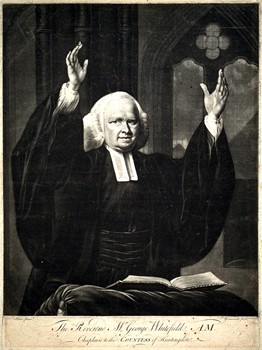
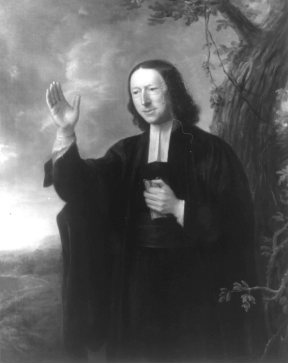
(Left: George Whitefield; Right: John Wesley. Two men who differed greatly concerning election, yet for all their differences, accorded the other as being very devout and godly men. Should we disagree, may we be as charitable.)

———————————————————-

Yesterday morning, in a group prayer before worship service, one of the fellows in the group quoted 2nd Peter 3:9 in the usual manner we hear so many people (mis)use it so often. Now, keep in mind, I dearly love this brother and I am not going to call someone a heretic just because they think this verse means that God wants every single person to be saved. But this IS the word of God we are talking about, and we do need to understand what God is saying, and what He is NOT saying. With that in mind, and with humble submission to His word, let us delve into this passage. And to do so, to keep it in context, we actually have to go back to verse 1, and begin there. That said, here is the passage in its entirety. 2nd Peter 3:1-9

1 Beloved, I now write to you this second epistle (in both of which I stir up your pure minds by way of reminder), 2 that you may be mindful of the words which were spoken before by the holy prophets, and of the commandment of us, the apostles of the Lord and Savior, 3 knowing this first: that scoffers will come in the last days, walking according to their own lusts, 4 and saying, “Where is the promise of His coming? For since the fathers fell asleep, all things continue as they were from the beginning of creation.” 5 For this they willfully forget: that by the word of God the heavens were of old, and the earth standing out of water and in the water, 6 by which the world that then existed perished, being flooded with water. 7 But the heavens and the earth which are now preserved by the same word, are reserved for fire until the day of judgment and perdition of ungodly men. 8 But, beloved, do not forget this one thing, that with the Lord one day is as a thousand years, and a thousand years as one day. 9 The Lord is not slack concerning His promise, as some count slackness, but is longsuffering toward us, not willing that any should perish but that all should come to repentance.

When studying any passage of Scripture, certain things need to be considered:

  1. Who was it written to?
  2. Why was it written?
  3. What idea was the author trying to convey?

So, let’s take these one at a time. Continue reading

Dr. Steven J. Lawson: “Justification By Faith Alone” (Galatians 3:6-14)

lawson

6 Even so Abraham believed God and it was reckoned to him as righteousness. 7 Therefore, be sure that it is those who are of faith who are sons of Abraham. 8 The Scripture, foreseeing that God would justify the Gentiles by faith, preached the gospel beforehand to Abraham, saying, “all the nations will be blessed in you.” 9 So then those who are of faith are blessed with Abraham, the believer. 10 For as many as are of the works of the Law are under a curse; for it is written, cursed is everyone who does not abide by all the things written in the book of the Law, to perform them. 11 Now that no one is justified by the Law before God is evident; for, the righteous man shall live by faith. 12 However, the Law is not of faith; on the contrary, he who practices them shall live by them. 13 Christ redeemed us from the curse of the Law, having become a curse for us–for it is written, cursed is everyone who hangs on a tree14 in order that in Christ Jesus the blessing of Abraham might come to the Gentiles, so that we would receive the promise of the Spirit through faith.

If a man is not justified by keeping the rite of circumcision, then how could any of our other works justify us? We could do all the good works we could find to do, we could do all the serving we want, we could be dunked in water every Sunday–and it would do nothing to put us in right standing before God. If Paul says here that we are justified by faith alone–not faith and circumcision–then how do some say that we are justified by faith and baptism? If Abraham was justified before his circumcision, then how do some say that one is not justified before his baptism?

Here is the seventh installment of this series going verse-by-verse through what Dr. Lawson calls “Paul’s Most Explosive Letter.” You can listen by

Was Christ “tempted”–or “tested”?

Here is an article I posted at my own blog a while back. With the back-and-forth still going on here concerning Mark Driscoll’s assertions that Jesus wanted to have sexual relations with a woman, I decided it was high time to post it here, for easier reference. Here is Mark Driscoll’s comment that Jesus had desires to “know” a woman:

“If you’re tempted to these sorts of things — including sexual sin — some of you say, ‘Now Mark, Jesus wasn’t sexually tempted.’ Well, of course he was — 30 something year old single man who had women who adored him. You don’t think he ever wanted the comfort of a woman? You don’t think he ever got tired of going to bed by himself? You don’t think that he didn’t once want to have intimate relations with a woman? He was tempted.”
(Mark Driscoll – “How Human was Jesus?”, October 15th 2006, emphases mine.)

I have formulated a biblical defense of not only the sinlessness of Christ, but the fact that He did not have even the desire to sin. The Scriptures we will focus on are:

Hebrews 2:18For in that He Himself has suffered (lit., experienced) being tempted, He is able to aid those who are tempted.
Hebrews 4:15For we do not have a High Priest who cannot sympathize with our weaknesses, but was in all points tempted as we are, yet without sin.
James 1:13-15Let no one say when he is tempted, “I am tempted by God”; for God cannot be tempted by evil, nor does He Himself tempt anyone. But each one is tempted when he is drawn away by his own desires and enticed. Then, when desire has conceived, it gives birth to sin; and sin, when it is full-grown, brings forth death.
Galatians 1:17For the flesh lusts against the Spirit, and the Spirit against the flesh; and these are contrary to one another, so that you do not do the things that you wish.
Genesis 3:15“And I will put enmity between you and the woman, and between your seed and her Seed; He shall bruise your head, and you shall bruise His heel.”

Some other verses we will look at later: Luke 22:31; 1st Corinthians 5:5; 1st Timothy 1:20; Job 2:6.

Continue reading

Steven J. Lawson: “Contending For the Gospel” (Galatians 2:11-21)

Galatians 2:11-21 (NASB)11  But when Cephas came to Antioch, I opposed him to his face, because he stood condemned.  12 For prior to the coming of certain men from James, he used to eat with the Gentiles; but when they came, he began to withdraw and hold himself aloof, fearing the party of the circumcision.  13 The rest of the Jews joined him in hypocrisy, with the result that even Barnabas was carried away by their hypocrisy.  14 But when I saw that they were not straightforward about the truth of the gospel, I said to Cephas in the presence of all, “If you, being a Jew, live like the Gentiles and not like the Jews, how is it that you compel the Gentiles to live like Jews? 15 We are Jews by nature and not sinners from among the Gentiles;  16 nevertheless knowing that a man is not justified by the works of the Law but through faith in Christ Jesus, even we have believed in Christ Jesus, so that we may be justified by faith in Christ and not by the works of the Law; since by the works of the Law no flesh will be justified.

17 “But if, while seeking to be justified in Christ, we ourselves have also been found sinners, is Christ then a minister of sin? May it never be! 18 For if I rebuild what I have once destroyed, I prove myself to be a transgressor. 19 For through the Law I died to the Law, so that I might live to God. 20 I have been crucified with Christ; and it is no longer I who live, but Christ lives in me; and the life which I now live in the flesh I live by faith in the Son of God, who loved me and gave Himself up for me. 21 I do not nullify the grace of God, for if righteousness comes through the Law, then Christ died needlessly.”

What is the gospel? The gospel is this: that God the Son came into the world, clothed in sinful flesh, to reconcile those written in the Lamb’s Book of Life with the God they had spent many years rejecting, hating, and rebelling against–all the while putting ourselves on the throne that rightly belongs to God. But here’s the thing. Our sins still need to be punished, or they had to be forgiven. Otherwise, a man could not rightly enter into the kingdom of God. In other words, we have to be justified in the eyes of God in order to gain admission to His kingdom–the kingdom of His dear Son.

Listen closely starting at about the 26:00 mark, and you will understand why we at DefCon don’t associate with or support certain “ministries”–and why this tripe about how the most important thing we should be concerned with is “UNITY! UNITY! UNITY!”–is nonsensical rubbish.

So, how is a man justified? Is it by keeping the Law? Does he have to do enough “good works”–which are, in fact, nothing more than wicked works performed by vile men? Or does God justify us, declare us not guilty, because of our faith in Christ? Find out in this, the sixth installment of this series going verse-by-verse through what Dr. Lawson calls “Paul’s Most Explosive Letter.” You can listen by left-clicking this link.

Dr. Steven J. Lawson: “Paul Continues His Defense” (Galatians 2:1-10)

 
1 Then after fourteen years I went up again to Jerusalem with Barnabas, and also took Titus with me. 2 And I went up by revelation, and communicated to them that gospel which I preach among the Gentiles, but privately to those who were of reputation, lest by any means I might run, or had run, in vain. 3 Yet not even Titus who was with me, being a Greek, was compelled to be circumcised. 4 And this occurred because of false brethren secretly brought in (who came in by stealth to spy out our liberty which we have in Christ Jesus, that they might bring us into bondage), 5 to whom we did not yield submission even for an hour, that the truth of the gospel might continue with you. 6 But from those who seemed to be something—whatever they were, it makes no difference to me; God shows personal favoritism to no man—for those who seemed to be something added nothing to me. 7 But on the contrary, when they saw that the gospel for the uncircumcised had been committed to me, as the gospel for the circumcised was to Peter 8 (for He who worked effectively in Peter for the apostleship to the circumcised also worked effectively in me toward the Gentiles), 9 and when James, Cephas, and John, who seemed to be pillars, perceived the grace that had been given to me, they gave me and Barnabas the right hand of fellowship, that we should go to the Gentiles and they to the circumcised. 10 They desired only that we should remember the poor, the very thing which I also was eager to do.

Paul continues to hammer away at his critics who question his credentials as an apostle of Christ. They are willing to concede that he may have been sent out by men–but they will not acknowledge that he was sent by the risen Christ Himself. Here, Paul lets it be made known that even the apostles of Christ knew that Paul was who and what he said he was. Here is the fifth of this series going verse-by-verse through what Dr. Lawson calls “Paul’s Most Explosive Letter.” You can listen by left-clicking this link.

Quotes (497)

calvin

John Calvin on James 2:24 and Romans 3:28–

“It appears certain that [James] is speaking of the manifestation, not of the imputation of righteousness, as if he had said, ‘Those who are justified by faith prove their justification by obedience and good works, not by a bare and imaginary semblance of faith.’ In one word, he is not discussing the mode of justification, but requiring that the justification of all believers shall be operative. And as Paul contends that men are justified without the aid of works, so James will not allow any to be regarded as Justified who are destitute of good works … Let them twist the words of James as they may, they will never extract out of them more than two propositions: That an empty phantom of faith does not justify, and that the believer, not contented with such an imagination, manifests his justification by good works.”

–John Calvin, Institutes of the Christian Religion, 3:17:12

The Fall of Man Part One: Introduction

Word and Verse is working through the Bible as part of the blog’s new direction to do more exposition studies in this new year. This week, I begin a multi-part series looking at the fall of man (Genesis 3), which in itself is a fascinating study giving us a glimpse into the nature of man, the wiles of the devil, and the promise of the Savior.

Part One: Introduction

From all angles, the account of the fall of man is fascinating, simply because it presents, in a nutshell, the origin of man’s sin and its consequences, the wiles of the devil and his modus operandi, God’s promise of a savior fulfilled in our Lord and Savior Jesus Christ, and finally, God’s benevolent provision for His creation which, in my opinion, can even be seen as a foreshadow of how the atonement for our sins will be made.

Read more at WordnVerse.com.