Evangelism, Facebook, and modesty.

What does evangelism, Facebook, and modesty have in common? More than you may think.

Thanks to Trish Ramos for daring to touch this taboo issue affecting the church. I wish more women like Trish would take a stand with the few men who have already dared to address this problem. Together we’d still comprise only a minuscule minority, but that should not discourage us from encouraging the church to let the gospel revolutionize this area of our lives. We’ve been quietly stumbling over this elephant in the room for far too long.


Source: Fish With Trish

No doubt our Facebook pages can be a witnessing tool for the Gospel and with the advancement of modern technology and all the various social media venues, we don’t even have to leave the house to be a witness for the Lord. In fact, why else have a Facebook, but to tell of the Lord’s wondrous deeds and call others to turn from their sins and trust in the Savior, Jesus Christ. I’m sure there are many other reasons why we have Facebook pages but in the midst of it all, proclaiming the gospel should be the chief aim for any follower of Christ.

To show this more clearly, when you accept a friend on Facebook, typically the very first thing they do is view your pictures. In fact, sometimes that’s all they may do. They quickly skim through them to see how you look and what you’ve been up to for the past decade or two and then off they go, onto the next person’s page. It reminds me of the ol’ adage, “a picture is worth a thousand words.” This saying refers to the idea that a picture communicates something. Sometimes it communicates too much. So with that in mind, when was the last time you went through your Facebook pictures and asked yourself, “Is this modest?” or “What am I communicating to my ‘friends’?” and “Would I want my brothers and sisters in Christ looking at theses pictures?”

Ladies, this is especially for us. If you are a professing Christian and if you haven’t done this already, here’s something practical that you can do: Go through every picture on your Facebook (This may take time depending upon how many pictures you have, but it will be worth it since on Judgment Day you will give an account to the Lord for all of these things) and if you are dressed in an immodest manner, hit ‘Delete!’

If you need help with deciphering what is modest and what is immodest, ask a modest sister in your local church for help, or a godly older women who can give you wise counsel, or ask your husband (assuming that he has biblical standards for modesty). And if all else fails and you have no one else to go to, well then, there’s always me and I’ll be quick to toot my modesty horn.

For starters, here’s a few specific areas that might help you out, let’s begin with cleavage. Ladies, if you are showing cleavage, hit ‘Delete’ as fast as you can! I don’t care how “cute” you look or if someone else posts to pic of you or if it was way back in your BC (before Christ) days. This is not acceptable in any circumstances for a woman who professes to follow Christ. Simply delete the picture or ‘Un-tag’ yourself.

If you have photos of you or your friends in bikinis, hit ‘Delete’ as quickly as you can and don’t look back. Or if your mid (midriff) section is showing hit ‘Delete’ please. And short shorts are a no no, so you know what to do with that, ‘Delete, delete, delete’. And then check your heart and ask yourself, “What is it within me that desires to present myself in this manner?” and “What does this speak of the condition of my heart?”

“In like manner also, that women adorn themselves in modest apparel…” 1 Timothy 2.9a

For more great resources on this subject, please go to these past two posts to download the following  sermons:

Validating the Gospel in Modesty by Albert N. Martin

The Soul of Modesty by C. J. Mahaney

I also recommend the following reads:

The Disrobing of Society and the Church by DefCon contributor Brother Michael

Modesty, Morality, and Miss America by DefCon contributor Coram Deo

Navigating Through Life

A couple of words have been rattling around in my head the past few days.  This all started with all the hype over the new “i” device from Apple Computer – the iPhone.  People have gone mad over this $500 phone, just as they have gone mad over the latest game systems.  We’ve had the iPod, iPhone, and the iPad – and several iterations of each.  Is your life marked by the madness we’ve seen over these things?  Perhaps you’re like me – I don’t like cell phones and I access the Internet the old fashioned way, with a computer.  Whatever our particular likes and dislikes, each of us – I dare say – have things of this world that have attached themselves to our affections in ways that reduce our effectiveness as disciples of Christ.

The two words that have been rattling around in my head are “indifferent” and “intentional”: opposite ends on the scale of attitude of the first person – “I”.  Here’s my theory: the degree of intentionality we have towards the world increases the indifference we have towards God.  I hold that the corollary is true as well: the degree of intentionality we have towards the Lord increases the indifference we have towards the world.  I call this the “I continuum” – you heard it here first!  You cannot be intentional towards God and indifferent to Him at the same time.  Nor can you be intentional towards God and the world at the same time.  I’m not saying we should be unconcerned about the world – we are told to be good stewards of the planet and to be proclaiming Christ to the human creatures.  But the value system of the world is another matter – that’s an evil that we all too often provide open access into our soul.

The Bible tells us “Ye Adulterers and adulteresses! Do you not know that friendship with the world is enmity with God? Whoever therefore wants to be a friend of the world makes himself an enemy of God.”  (James 4:4) and in 1 John 2:15 – 17 “Love not the world, neither the things that are in the world. If any man love the world, the love of the Father is not in him.  For all that is in the world, the lust of the flesh, and the lust of the eyes, and the pride of life, is not of the Father, but is of the world.  And the world passeth away, and the lust thereof: but he that doeth the will of God abideth for ever.”  The world is not our friend and it is not the standard of what is right and good.  When the world tells you to acquire stuff to satisfy your deepest longings, you’re being told to buy bread that leaves you poor and hungry, you’ll be led down paths of regret and defeat.

We also read in the Bible “the flesh lusteth against the Spirit, and the Spirit against the flesh: and these are contrary the one to the other” and “the works of the flesh are manifest, which are these; Adultery, fornication, uncleanness, lasciviousness, Idolatry, witchcraft, hatred, variance, emulations, wrath, strife, seditions, heresies, Envyings, murders, drunkenness, revellings, and such like “ (Gal 5:17 & 19 – 21).  Our flesh is not our friend and it is not the standard of what is right and good.  Our flesh is in league with the world!  This is why the world’s methods work so well on us.  We cannot trust our flesh – the Bible tells we cannot even know our own heart (Jer 17:9).

Thirdly, we see in Scripture another enemy of the cross – Satan.  The Lord Jesus was having a coffee talk with the local church leaders of the day.  John records the discourse in chapter 8 of his gospel: “I know that ye are Abraham’s seed; but ye seek to kill me, because my word hath no place in you.  I speak that which I have seen with my Father: and ye do that which ye have seen with your father.  They answered and said unto him, Abraham is our father. Jesus saith unto them, If ye were Abraham’s children, ye would do the works of Abraham.  But now ye seek to kill me, a man that hath told you the truth, which I have heard of God: this did not Abraham.  Ye do the deeds of your father. Then said they to him, We be not born of fornication; we have one Father, even God.  Jesus said unto them, If God were your Father, ye would love me: for I proceeded forth and came from God; neither came I of myself, but he sent me.  Why do ye not understand my speech? even because ye cannot hear my word.  Ye are of your father the devil, and the lusts of your father ye will do. He was a murderer from the beginning, and abode not in the truth, because there is no truth in him. When he speaketh a lie, he speaketh of his own: for he is a liar, and the father of it.  And because I tell you the truth, ye believe me not.”  (John 8:37 – 45)  Satan is not our friend and he is not the standard of what is right and good.  He wants to kill and destroy you and me.

So we see from God’s Word that there are three powerful forces aligned against us: the world, our flesh, and Satan.  They work in near perfect harmony to lure us aside from righteousness and into sin – however small the departure and slight the sin; it’s a foothold that can quickly grow into a stronghold.  Every time you and I sin, we befriend the world, esteem the flesh, and honor Satan – and we dishonor holy God and His sacrifice.  Do we see sin in such a way?  Or is it merely a bad habit that needs to be replaced with a good one?

Since we are opposed by this “Axis of evil”, to coin a phrase, how can we navigate through life without making a mess of everything?  Fortunately for the Christian, there are three who are on our side and they are more powerful than the “Axis of evil.”  The God of Heaven and Earth has given us all we need (2 Peter 1:2 – 3 “Grace and peace be multiplied unto you through the knowledge of God, and of Jesus our Lord, According as his divine power hath given unto us all things that pertain unto life and godliness, through the knowledge of him that hath called us to glory and virtue”); all we need do is move from indifferent to intentional towards the Lord and follow the One who called us to new life and holds us in His grip of grace.

To navigate through life, we need a guide, a map and a compass.  All must be credible.  There is only one trustworthy guide – Christ Jesus.  There is only one trustworthy map – the Bible.  There is only one trustworthy compass – the Holy Spirit.  The Guide God sent to us is not charismatic or interested in anything beyond leading and carrying us to the proper destination.  He will not pander your flesh nor entice you with worldly things.  The map God provides is not flashy in appearance and does not contain tips on cheap hotels or entertaining stops along the way.  The Bible is only intended to show one how lost he is and show him the way home once he is found.  The Compass God gives us is not like the one held by Captain Jack Sparrow – always pointing to what he wants the most.  The Holy Spirit convicts us of sin and points us to repentance and obedience.

But if you want none of that, if you wish to be indifferent towards God and intentional towards the world, here’s a quick “top-10” list to guide you along the way to perdition:

 Ten Steps to Carnal Living*

(from pages 171 & 172 of At the Altar of Sexual Idolatry by Steve Gallagher)

  1. Spend as much time watching secular television as possible.  You owe it to yourself.
  1. Eat sweets as often as you possibly can and give in to every craving for food immediately.
  1. Worry about loving yourself more, and God and other less.
  1. Fill your life with fun things and avoid adversity at all cost.
  1. Be a taker, not a a giver; after all, you already paid taxes!
  1. Never do anything that anyone would construe as fanaticism; you do have an image to uphold!
  1. You need not worry about having daily devotions; you do not have time!
  1. When you are confronted with sin in your life, go directly into delusion.
  1. Anytime you have a problem, always refer to a psychology book; psychologists know much more about life than God.
  1. Give in to every sexual urge; after all, God created them in you.

From the opposite end of the “I Continuum”:

Instructions for daily conduct (John Mason)

For you know what instructions we gave you by the authority of the Lord Jesus.” 1 Thessal. 4:2

1. Make the word of God the rule of all you do.

2. Whatever you do, do it in the strength of Christ. Without Christ, you can do nothing. Of yourself, you cannot even think a good thought; but you may do all things, through Christ strengthening you. Nature is a dry root–no gracious actions spring from it. Grace depends on continual supplies from Christ–as of sap from the root. Be strong in the Lord, and in the power of His might, and then nothing shall be too hard for you. All things are possible to him who believes and relies upon Christ’s power.

3. As we are to act by the power of Christ, so we are to present our services for acceptance in the name of Christ. The best we can do–needs His intercession, blood, and merits–to render it acceptable to God. In the Lord alone–we have righteousness and strength.

4. Whatever you do, do all to the glory of God. Selfishness is the natural idolatry of the human heart. The design and tendency of piety is to take the heart off self–and set it upon God. That duty which does not begin and end with God is no part of godliness. Self must be cast down–and God alone exalted.

5. To spend every day well, let your waking thoughts be with God;  let your fervent prayers ascend in the name of Christ; let the Word of God be your counselor; let the fear of God be always before your eyes. In all your actions, let integrity and uprightness preserve you. Set a watch over your lips, and a guard upon your spirit, that you be not provoked to anger, nor speak unadvisedly with your lips.

6. At night, review the actions of the day. Give to God the glory of what has been good; take shame to yourself for what has been evil. Review the dispensations of God’s providences–and consider their special meaning and application. Acknowledge the mercies of God received through the day. Submit to the afflictions laid upon you. Commit yourselves afresh to the mercy and protection of God, through Jesus Christ–that you may be preserved through the slumbers of the night, and be permitted to wake in peace–whether it be in earth or heaven.

By these points let every action be examined–
By whose rule have I acted?
In whose strength have I acted?
In whose name have I acted?
For whose glory have I acted?
What faith, humility, self-denial, love to God
and Christ, have there been in my actions?

Parting thoughts:

For to be carnally minded is death; but to be spiritually minded is life and peace.” Romans 8:6

(John Owen) Let a man profess what he will–if his thoughts are generally conversant about earthly and worldly things–he has an earthly and worldly mind. And if his thoughts are generally conversant about sensual things–he has a sensual and carnal mind. “For as he thinks in his heart–so is he.” Proverbs 23:7


D.A. CARSON SERMON ON HEAVEN AND HELL

DR. D.A. CARSON SERMON ON HEAVEN AND HELL

By on Jul 27, 2011 in Current Issues, Emergence Christianity, Emergent Church, Features, Rob Bell, Youth Ministry

As a leading online apologetics and discernment work Apprising Ministries has been warning you for a long time about the toxic teachings the Emerging Church rock star pastor Rob Bell, co-teaching pastor at Mars Hill Bible Church along with his good friend Shane Hipps.

Those not under the spell of Rob Bell, who’re willing to look at the evidence, will see he’s long been practicing the critical thinking skills-numbing corrupt Contemplative Spirituality/Mysticism (CSM), such as that taught by Living Spiritual Teacher and Quaker mystic Richard Foster along with his spiritual twin and Southern Baptist minister Dallas Willard.

You can see for yourself in AM articles like Through Rob Bell “The Great Enlightened Ones” Tell Us Man Has Divine Greatness and Rob Bell And Shane Hipps Teaching Mysticism and Rob Bell On His Practice Of “Militant Mysticism”.

This has much to do with Rob Bell Defending His Love Wins Mythology and his intimate involvement with the sinfully ecumenical neo-liberal cult of the Emergent Church aka the Emerging Church with its quasi-universalism in a new version of postmodern Progressive Christian theology under their spiritual circus “big tent” of empty Emergence Christianity.

I’m pleased now to bring you some proper Biblical teaching below by Dr. D. A. Carson. In the video following Carson “explores the Bible’s teaching on heaven and hell, God’s loving mercy and just wrath, in this lecture at The Gospel Coalition’s 2011 national conference.” Carson does a great job explaining universalism and debunking it; a must listen:

God: Abounding in Love, Punishing the Guilty (Carson Lecture) from The Gospel Coalition on Vimeo.

See also:

ROB BELL AND POSTMODERN NEO-LIBERALISM

IS ROB BELL EVANGELICAL?

ROB BELL ON THE RECORD CONCERNING SCRIPTURE

My thoughts on youth ministry and Vacation Bible School.

Summertime means BBQ, swimming pools, fireworks, and lemonade. But it also means sweltering heat, mosquitoes, and Vacation Bible School.

For many Christians this is the time of the year when they’re all abuzz about the wildly popular week-long evangelical event known as Vacation Bible School (commonly referred to by its acronym, VBS).

In terms of the high level of anticipation, collective excitement, Madison-Avenue-style marketing, and pulpit-driven hype, this event has vaulted in importance within Christendom to rival that of Christmas and Easter. If there are only three events on the Christian calendar that get highlighted every year, VBS is certainly one of them.

Because of Vacation Bible School’s prominence in the church, I wanted to take this opportunity to make some observations about this annual cultural Christian phenomenon and (by extension) youth ministry as a whole.

Before we begin, allow me to be brutally honest.

First let me say that it is no secret to the readers of this blog (and those who know me personally) that I am a youth ministry abolitionist. I am passionate about this subject and I’ve pulled no punches in my conversations and my treatises about it, but at the same time I do recognize that many involved in these types of ministries are well-meaning and have the best of intentions. Unfortunately, pure motives and best intentions do not excuse or justify the wholly destructive nature of the extra-biblical model of youth ministry (and VBS).

I also want to make it abundantly clear that I do not believe those engaging in various forms of youth ministry are in danger of Hell-fire because of their involvement or participation (for salvation is by grace alone through faith alone in Christ alone). I also have dear Christian brothers who are involved in youth ministry (in fact one of them leads such a God honoring and holy life that I feel like a heathen next to him and despair that I will never reach his level of love, grace, and sanctification) and although I adamantly disagree with them on this subject, I can still have meaningful fellowship with them.

But I would appreciate the reciprocal consideration from youth ministry proponents regarding their misrepresenting and making a caricature out of those who oppose youth ministry (and those who encourage others to return to the biblical and traditional church model of raising and teaching children) as is so often done.

In their efforts to preserve youth ministry, critics of family integrated worship and family integrated churches (FICs) often defend their position by warning that proponents of family integration run the risk of becoming overbearingly patriarchal, Pharisaical, legalists who erroneously believe that worshiping together as a family ensures their children’s salvation, who refuse to evangelize anyone outside of their immediate family, and who place their family in higher regard than the Bride of Christ.

These are unfair depictions that I keep hearing levied against those who reject youth ministry for family based worship, yet these critics have failed to cite one example of these extreme wayward families they keep warning about (or claimed to have even met one).

Ironically, even though they reject the FIC model because they believe it has potential to be taken to extremes, youth ministry proponents overlook, make excuses for, or simply dismiss the problems inherent with youth ministry. These are not rare exceptions, they are very common and almost the standard. The mountain of dysfunctionality seen in so many youth groups can be cited (and many have been featured on this very blog) as well as the mind-numbing statistics that have proven the utter failure of youth ministry.

I have yet to become or meet even one of these types of families that youth ministry proponents keep warning that we have a great potential to become. Is it likely that there are some families out there who do fit that caricature? I’m sure there are, but these are the exception, whereas it seems to be the norm to see utter foolishness exhibited in youth ministries; so many of which resemble a scene out of William Golding’s Lord of the Flies.

I sincerely do not write this missive (some would call it a tome) with the intention to cause division or create animosity among my brothers and sisters in the Lord. I pray that this is not received as derision, but as a thoughtful critique; prompting us to examine why we do what we do. It is meant to shed light on a practice that many promulgate without ever examining or even considering what the results (or ramifications) are. I also hope that this will serve as a clarion call for readers to eventually abandon this practice and return to the biblical model of raising and teaching our children in the Lord. But to those who do not, I will still love you, still fellowship with you, and still consider you my brothers and sisters in the Lord.

Continue reading

A letter to the Apostle Paul.

Justification

“A Letter to Paul the Apostle”
The Trinity Review, July, August 1988
Copyright (C) 2003
_______________________________________________________

A Letter to Paul the Apostle

Charles Phinney

Presbyterian Church in Asia Minor

Committee on Missions

Paul the Apostle

c\o Aquila the Tentmaker

Corinth, Greece

Dear Paul:

We recently received a copy of your letter to the Galatians. The committee has directed me to inform you of a number of things, which deeply concern us.

First, we find your language to be somewhat intemperate. In your letter, after a brief greeting to the Galatians, you immediately attack your opponents by claiming they “want to pervert the gospel of Christ.”

You then say that such men should be regarded as “accursed”; and, in another place, you make reference to “false brethren.” Wouldn’t it be more charitable to give them the benefit of the doubt—at least until the General Assembly has investigated and adjudicated the matter?

To make the situation worse, you later say, “I could wish those who trouble you would even cut them selves off!” Is such a statement really fitting for a Christian minister? The remark seems quite harsh and unloving.

Read the entire letter here.

HT: Flock Alert

The Invention of Adolescence.

An interesting article on the invention of adolescence by Otto Scott.

Adolescence is now accepted by most Americans as a strange and difficult period marked by wild swings of mood, outbursts of temper, rudeness, rebelliousness, and personality changes — all involuntary. They would be surprised to learn that this period was unknown, unrecognized, and unseen in every previous civilization, culture, and society throughout the immensely long history of humanity. It is, even today, unknown in large areas of the inhabited world.

Read the entire article here.

Poking Each Other in the Eye

Imagine for a moment that you are talking to a friend face-to-face, discussing something important. As you are talking you notice something floating in his eye. I would imagine that you would say, “Do you see that? “Doesn’t that bother you? Does it hurt?”

“What? See what?” They ask.

“Well, that thing in your eye. Can’t you feel it?”

“No, I don’t feel anything.” They reply, “I’m fine.” But they aren’t fine because this thing in their eye will eventually cause pain and damage. You feel compelled to help them.

“Come on; let me get that out for you.”

How quickly are you going to let a friend put their finger in your eye and pull something out? I know I wouldn’t be comfortable with it. My eye is incredibly sensitive. If your friend agreed to let you help and you were to pick this speck out of his eye, how would you do it?

I think it is safe to say that we would all be exceedingly gentle. We’d wash our hands, have the person lie down or sit in a chair, then we’d get an extra light so we could see better, then gently hold their eye open with one hand and with the gentlest touch possible you try to get the speck without poking your dear friend in the pupil causing pain and possibly more damage. You patiently try and try again with equal gentleness until the speck is out.

Now, imagine this scene again, except this time you have a patch on one eye and blurred vision in the other. Can you still get the speck? Or what if you just jump him in mid-conversation, peel his eyelid back rubbing, picking, and poking his eye until the speck is out? This would leave him in shock, pain, and stress. Would you do it this way or the first way? Does it matter? I think it matters greatly. Let’s look at some scripture inspiring this scene.

Matthew 7:1-5
1 “Judge not, that you be not judged. 2 For with the judgment you pronounce you will be judged, and with the measure you use it will be measured to you. 3 Why do you see the speck that is in your brother’s eye, but do not notice the log that is in your own eye? 4 Or how can you say to your brother, ‘Let me take the speck out of your eye,’ when there is the log in your own eye? 5 You hypocrite, first take the log out of your own eye, and then you will see clearly to take the speck out of your brother’s eye.

We know this passage of scripture from Jesus’ Sermon on the Mount in regard to judging others and pointing out hypocrites. But, have we ever considered what it takes to actually get the speck out of our brother’s eye? Have we ever thought about the gentleness and sensitivity that it takes? Did Jesus use the eye here because of how sensitive our eyes truly are? So often we like to focus on not being “hypocritical” when pointing out the speck in your brother’s eye and forget about our methods. We’ll use this passage when feeling defensive: “you can comment on my sin when you get that gigantic beam out of your own eye!” Rarely do we even consider taking special care in how we “take the speck out of your brother’s eye.” Isn’t this level of gentleness and sensitivity the primary goal?

Continue reading

Defending, Contending – what?

I recently started reading K. Scott Oliphant’s new book, The Battle Belongs to the Lord. Chapter 2 is an examination of the book of Jude and the author does an excellent job of explaining what we (those who are redeemed by the blood of Christ) are to defend and why we are to do so. He also describes the people and the motivation of those who “crept in unnoticed” and pose a danger to the church.

The exegesis of Jude in worth the price of the book. Here’s a taste for your condiseration:

“Jude’s description of the enemies who have made their way into the church is illuminating. He does not describe them as merely worldly people. … They [are people who] know the tradition and can “speak the language.” … The reference to Korah would have been particularly stunning to Jude’s readers (see Numbers 16 and 26.) … To put it (Korah’s rebellion) in New Testament terms, Korah used his leadership position in the church to exalt himself and his own agenda.”

Reading this chapter reminded me of a 28 minute message from a dear brother, introducing Jude. Listen to this message, buy the book. Then you will have a better understanding – perhaps an initial understanding – of why it is important to contend for the faith and what that faith is.

What’s The Big Deal on Creation?

Many Christians point out that the word “day” in Genesis chapter one can mean something other than a 24-hour day and, therefore, the scientific view that the world is billions of years old can be reconciled to the Scriptures.

But how does one determine when the Hebrew word “yom” means a 24-hour day and when it means an undetermined length of time? As with all interpretation, context is key.

And, as with all Scripture, understanding the authority of God as the ultimate rule of interpretation of His Word and His creation is foundational to everything else.


In this hour long free video from Answers in Genesis, you will see how dangerous it is to play fast and loose with the Word of God and be taught why the “yom” must mean 24-hour day in Genesis chapter 1.

May the Lord God of Heaven be our guide – and not any snake who relies on human “wisdom” to cause us to question His Word.

Is your Worldview based on the world?

Many professing Christians think man has more wisdom than God in determining how long the creation took. Of course, few people put it in those terms, but that is what it boils down to. Here’s an example.

What are the consequences of disbelieving in a literal 6 day creation? We deny the clear teaching of the Old and New Testament. Jesus taught (recorded in Mark 10:6) that man and woman were created in the beginning of creation – not after a long, long time.

And when we deny the clear teachings of the elementary things of Scripture, why should our children believe us or our pastors when they are taught about sin and deliverance from its consequences? If creation is reduced to a fairy tale, we have breached the foundation of God’s revelation to man. God stated out His special revelation to man with the words, “In the beginning, God created the heavens and the earth.” Creation is important to Him – it ought to be to us.

For a few days, you can download a 40 minute video in which Ken Ham describes the importance of believing God’s Word – for you and the next generation. In it you will find out:

The next generation is already calling it quits on traditional church. Next Sunday, look around, two thirds of the young people in your church are already disengaged from the message they are hearing. And it’s not just happening on the nominal fringe; it’s happening in the most solid “Bible-believing” churches.

In this important DVD, Ken Ham discusses the profound cultural changes taking place in our Western world, as God’s Word is rejected and man’s fallible ideas are welcomed. Ken relates some of the shocking statistics presented in the book Already Gone that reveal the reasons why young people are leaving church and abandoning the faith of their parents.

The church is failing to give children real answers to their questions. We are losing our kids long before college. But this is far from a hopeless situation. Ken explains how we can fight back for our children, and what we can do to ground our children in the faith and prepare them for the challenges of the secular world.

HT to my good friend at PurposeDrivel

It’s Time for Vacation Bible School! – Or Is It Time to Repent?

Vacation Bible School sounds innocent enough, it started with good intentions: Christians wanting to reach children with the good news of Jesus.

Christianity Astray reports:

Unofficially, it’s possible to trace the roots of VBS as far back as the 1870s, when the Methodist Episcopal Church offered summer Sunday school institutes to the general public near Lake Chautauqua, New York. In 1873, Bishop John H. Vincent proposed the movement should include educational and cultural programs, and soon other Christian groups across the country followed suit with their own summer retreats, many of them offering services for children.

Vacation Bible school as we know it today got its start more than 20 years later on New York City’s East Side. Mrs. Walker Aylette Hawes of the Epiphany Baptist Church noted a rapid increase in the number of immigrant children in the slums. In July 1898 she rented the only place available—a saloon—to run a Bible school for six weeks during the summer. Hawes structured her program around worship music, Bible stories and Scripture memorization, games, crafts, drawing, cooking, etc. The school caught on: Hawes was presiding over seven separate schools by the time she retired from her work in 1901.

Note – no effort to involve or reach out to the parents of these street urchins. A culturally relevant program that would be attractive to young children who were dead in their sins. (This remains the foundation of many church-based youth programs, a century later.) This approach not only extends the recent invention of adolescence, it encourages adults to behave as if they were small children. This year’s promotional materials from Lifeway are a prime example:

How did parents and the church train children before such hip, cool, fun, and unbiblical programs were developed? I’m glad you asked. Here’s a sample of one tool that was used from the 17th century and is still in use in some churches; it’s an extract of the Shorter Baptist Catechism:

Q. 43. What is the preface to the ten commandments?
A. The preface to the ten commandments is in these words, I am the Lord your God, who brought you out of the land of Egypt, out of the house of slavery.

Q. 44. What does the preface to the ten commandments teach us?
A. The preface to the ten commandments teaches us that because God is the Lord, and our God, and redeemer, therefore we are bound to keep all his commandments.

Q. 45. Which is the first commandment?
A. The first commandment is, You shall have no other gods before me.

Q. 46. What is required in the first commandment?
A. The first commandment requires us to know and acknowledge God to be the only true God, and our God; and to worship and glorify him accordingly.

Q. 47. What is forbidden in the first commandment?
A. The first commandment forbids the denying, or not worshiping and glorifying the true God as God, and our God; and the giving of that worship and glory to any other, which is due to him alone.

Q. 48. What are we specially taught by these words before me in the first commandment?
A. These words before me in the first commandment teach us that God, who sees all things, takes notice of, and is much displeased with, the sin of having any other god.

I ask you – which method of instructing children is God honoring?

Quotes (888)

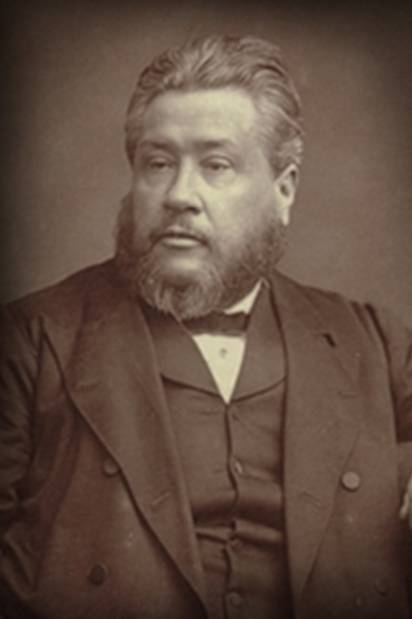
“It is in the gymnasium of affliction that men are modeled and fashioned in the beauty of holiness, and all their spiritual powers are trained for harmonious action. It was meet also that they should suffer, in order to complete their service. Like their Lord, they had to be made perfect through suffering; and if they had not suffered they had not finished the work which he had given them to do. They needed tribulation, moreover, that they might be made like their Savior; for a saint untroubled, how can he be like the man who wore the thorn crown? Never smitten, never slandered, never despised, never mocked at, never crucified, then how could we be like our Head? Shall the servant be above his Master, or the disciple above his Lord?”

From a sermon by Charles Haddon Spurgeon entitled “What And Whence Are These?,” delivered February 25, 1872.

C. H. Spurgeon

1834 – 1892

3 Diagnostic Questions for the Christian

Every child of God ought to know what his Father desires for him. I seem to find three basic questions people ponder that leaves me with the impression that many who claim Christ struggle with the very idea of determining God’s will for their lives.

1.)      How do you determine the will of God for your life?  First – make sure you know and obey the revealed will of God, those things He has made clear for each of us.  For example: 1 Thessalonians 4:3 – 7, 1 Thessalonians 5:16 – 22, and 1 Peter 2:13 – 17.  His first priority for each of His children is to conform us to His Son (Romans 8:28 – 30).

Beyond God’s revealed will, theologians categorize the will of God as providential – pleasing to Him because it aligns with His revealed will.  How does one determine God’s providential will?  First, study, know, and obey God’s revealed will, paying attention to principles found in Scripture on the topic at hand.  Secondly, ask the Lord for wisdom – for He loves to give such to His children, and He is wiser than we.  Thirdly, get godly counsel.  Fourthly – decide.  If we live believing God’s will for our mate, job, vacation, car, or dinner is a unique choice that He has hidden from us, we will be frustrated.  Knowing His character and living in humble obedience to Him – as we study His revealed will – will equip us to make choices that please Him, as we exercise His providential will.

When we make what seem to us as stupid choices – we should review how we made the decision.  If we were aligned with the Lord, we can be assured it was right and we now face decisions on how to respond.  If you marry “the wrong woman”, know and obey God’s revealed will for how to live with your wife.

2.)      Can anyone have assurance of salvation?  Before having assurance of salvation, a man should make sure he is redeemed.  Scripture tells us we can know we are in Christ (1 John 5:13). and Scripture also tells us how to know: we keep His commands – 1 John 2:3 – 6; love the brotherhood – 1 John 2:9 – 11, 1 John 3:10, and 1 John 5:1 – 3; love not worldly things – 1 John 2:15 – 17; believe in the Lord Jesus – 1 John 5:10 – 12; confess Him as Savior – 1 John 4:13 – 15; love God – 1 John 4:16; keep ourselves from wickedness – 1 John 5:18 – 21.  We cannot do these things to be saved – we diagnose our spiritual condition by examining if and how we do them.

3.)      Is every Christian supposed to witness?  Many people look to Ephesians 4:11 and think only those called to be an evangelist are required to witness, to proclaim the gospel.  What does Scripture say?  As we saw from 1 John 4:13 – 15, one mark of a Christian is that he testifies (V 14) and confesses (v 15) Christ to be the Son of God.  To testify means “to bear record of”, “to give witness of”; to confess, in this context, means “something said, a reasoned statement, an account or communication, preaching”.  In John 10:22 – 25, Jesus told the Jews that His works bore witness of Him.  Since we are the workmanship of Christ, we ought to willingly be witnesses of Him.  We see Peter and John, in Acts 4, unable to keep from telling people of Jesus, even in the face of threats from the government (Acts 4:19 – 20).  We need to keep in mind that it’s not our job to convince people to save themselves – which we can’t do and neither can they.  Salvation is the work of the Holy Spirit and since He abides in every Christian, He will do His work when we are witnesses of Jesus.  Every Christian can do this work and every Christian should do this work.  In the Great Commission, the Lord first tells us to “Go and teach all nations”.  The only rational conclusion is that those to be taught must first be witnessed to and redeemed before they can be taught.  So don’t think this commission doesn’t apply to you if you aren’t a teacher.  Finally, look to the reward we gain by being faithful in this ministry – Revelation 12:11 shows martyrs recognized by God for their testimonies of Him.  It’s always good for the Lord of Creation to approve your work – even if it’s as simple as telling people about Jesus.

4.)      A bonus question, as follow-up.  What is “the Gospel”, beyond simply being “good news”?  Paul tells us (Romans 1:16) “it is the power of God unto salvation to every one that believeth; to the Jew first, and also to the Greek.”  In 1 Corinthians 1:17 – 18,  we see that the Gospel is about the cross: “For Christ sent me not to baptize, but to preach the gospel: not with wisdom of words, lest the cross of Christ should be made of none effect. For the preaching of the cross is to them that perish foolishness; but unto us which are saved it is the power of God.”  Further in this passage, we see that it’s also foolishness and a stumbling block to men – so no man can win a soul to Christ by force of intellect or smooth speech.  We find in 1 Corinthians 15 what is perhaps the best summary of the Gospel of Jesus: “Moreover, brethren, I declare unto you the gospel which I preached unto you, which also ye have received, and wherein ye stand;

By which also ye are saved, if ye keep in memory what I preached unto you, unless ye have believed in vain.  For I delivered unto you first of all that which I also received, how that Christ died for our sins according to the scriptures;  And that he was buried, and that he rose again the third day according to the scriptures:  And that he was seen of Cephas, then of the twelve:  After that, he was seen of above five hundred brethren at once.”

The Gospel declares that Christ died as prophesied and required by the law as punishment for our sins.  Man is wicked and sinful and in desperate need of a savior – Christ is the One.  He was buried and raised from dead – as foretold in Scripture – though man tried everything to obscure the Truth of the resurrection.  And Christ was seen by hundreds of people who were still alive when Paul wrote this, meaning they could have called him a liar to his face – if the Gospel was false.  Your personal testimony is good news, but it’s not the Gospel of Jesus Christ and it won’t save anyone.  Your walk of obedience is pleasing to the Lord, but your lifestyle is not the Gospel of Jesus Christ and it won’t save anyone.  Trust God when he says “the Gospel of Jesus is the power of God unto salvation to every one that believes.

Have You Asked Jesus to Leave You Alone Yet?

Have you asked Jesus to leave you alone yet? Maybe you are like me and you were called by Jesus as a young adult. Or maybe you have known of Jesus your entire life. Maybe your earliest memories of childhood include Sunday school songs about Jesus and memory verses at church. So, why would you ever ask Jesus to leave you alone? It is an absurd thought, isn’t it? After all this time, you have Jesus! Don’t you want him to stay? I propose that if you don’t ask Jesus to depart from you, then you may not know him at all. Follow me to the shores of Gennesaret (Lake Galilee) more than 2000 years ago as told by Luke.

Luke 5:1-3:

1On one occasion, while the crowd was pressing in on him to hear the word of God, he was standing by the lake of Gennesaret, 2 and he saw two boats by the lake, but the fishermen had gone out of them and were washing their nets. 3 Getting into one of the boats, which was Simon’s, he asked him to put out a little from the land. And he sat down and taught the people from the boat.

Jesus was on the scene and being pressed by the large crowd following him and listening to him teach, he ran out of dry ground and was basically forced to climb into a boat. Jesus climbed into Simon’s (Peter) boat. Do you think this boat choice was a random selection? No, it wasn’t random. Before time began the Father set an appointment with the Messiah in Peter’s life to have this discussion. Jesus showed up on time, as he always does.

Continue reading