Futureville – A Bridge Too Far

Futureville – A Bridge Too Far

A review by Stuart Brogden

The premise behind Skye Jethani’s book, Futureville, is a good one – “What we think Futurevilleabout tomorrow matters because our vision of the future is what determines how we understand the present.” (page 3) Chapters 3 and 4 serve to provide common, but flawed, views of the created order and how it will be in the next age. In each of these, roughly showing the unrealistic golden age embraced by post-millennials and the pessimistic end of the world embraced by dispensationalists, the author provides historical and biblical support for his view of the flaws in each. In chapter 5, Jethani tells us what, in his opinion, the proper view of tomorrow is, with the remainder of the book examining various aspects of our lives that are impacted by our world view.


Chapter 2 begins a scene describing the 1939 New York World’s Fair, describing the image of the future presented by the mythical community of Pleasantville. The author uses this as a springboard to call the Christian focus of “last things” Futureville. This term is the title of the book, of course, and it becomes – for me – a tiresome term that is over-used. He contrasts the end of the age with the beginning – the Garden. In doing so, Jethani does well to explore the nature and meaning of the Garden of Eden, making very credible and solid connections with the New Earth. He tends to stretch points too far and does so with this statement (page 25): “Scripture affirms that humans require beauty to thrive. Beauty nourishes our spirit the way food nourishes our bodies.” He provides no footnote, no Scripture reference. The Bible tells me music has value but that only Christ can satisfy and nourish our souls. There is no substitute.


In keeping with his pattern of coming up with unusual terms for well known biblical concepts, Jethani calls the post-millennial view evolution and dispensationalism is evacuation. His descriptions of the effects of each of these views are well presented. Of the evolutionary view, he says (page 46) “The belief that we are responsible for the creating Futureville fueled many ministries and Christian initiatives.” Indeed, if we think we are to bring in “the golden age of Christianity”, we will behave far differently than if we believe it will all burn and nothing is worth saving. Jethani’s thesis is that a solidly biblical view of end times – where the heavens and earth (all that God created) will die in God’s judgment as Peter describes it. But as the body of Christ lie in the grave for three days and was resurrected in far better shape, so will the created order. That which was cursed by God as a result of Adam’s sin groans in anticipation of this resurrection.


The balance of the book covers his view of the resurrection of the earth and what that means, as well as our vocations, the order of God’s creation, the beauty and abundance thereof, finishing up with our hope – which is rightly rooted in the resurrection of the Lord Jesus. Jethani’s case for the resurrection of the earth, rather than the total annihilation of it, is credible and convincing. The conclusions he draws in these last chapters are less so. He refers to the God-declared beauty of the Garden of Eden and the God-ordained beauty of the tabernacle and then extrapolates that to thinking what man does is likewise valuable. He agrees with Richard Mouw that of “the artifacts and creations of pagan cultures, God will instead purify and redeem them for use in Futureville for his glory.” (page 95), going so far as to say, “In Futureville, King David may someday admire Michelangelo’s status of himself” (page 96). He comes too close to a post-millennial view in telling us “We have a role to play in God’s plan to unite heaven and earth, to advance the story of of the world to culmination, and to see the earth cultivated into the garden city.” (page 97) Jethani’s case for thinking the work of the unredeemed will be purified and used by God in “Futureville” is contrary to what the Bible tells us about those people and their “righteous acts”. Not all the works of Christians will pass through God’s judgment – why would anyone think some of the works of reprobates will? The trees in the garden and the tabernacle in the wilderness were God’s handiwork – He caused the Egyptians to give their wealth to the Hebrews, He gave the plans for the tabernacle to Moses, He gave wisdom and skill to various workers to build it. No work of man has these critical attributes – it is a bridge too far to say pagan art can be pleasing to God; that art generated by those who hate Him and are the objects of His wrath.


In describing the importance of social work and relieving the suffering of people, Jethani tells us there should be no tension between social justice and gospel evangelism – they are both vital (pages 122 – 124). In his discussion of this concept, he falls into the same pit many others have – putting more emphasis on that which can be measured, while claiming to extol evangelism equally; apparently forgetting the biblical injunction that godliness is a higher priority for the Christian than physical wellness or fitness (1 Tim 4:6-16). His post-millennial view shows up again (page 131) when he says “The Communion table looked forward to the coming day when all injustice would be made right in the garden city of God.” While the Corinth church was a hot-bed of selfishness and other problems, the message in 1 Cor 11 about the Lord’s Supper is a reminder that they who are in Christ are equal, without social standing or rank differences; a reminder that Christ earned His standing as the Lamb of God and bought us with His blood; a reminder that He has gone to His Father and will return to take us home. Being with Jesus where there is no sin or temptation thereto – that is what the table declares to us. It puts the sacrifice of Christ and our eternity with Him in terms of human value to claim Communion is about injustice coming to an end.


All in all, this book has much to recommend. But there is just as much to be wary of. It is a good thing if one wants to be properly oriented to the future so he will live rightly today. A better, more biblical approach would be to study the Idealist or Optimistic Amillennial perspective, using a good guide to Revelation such as Dennis Johnson’s Triumph of the Lamb. God’s people need to better understand His Word – for in it alone He has given us what we need for godly life and true worship of Him. And to bring Him glory is our highest aim in life – as it is for all creation.

Hell – Wrongly Presented

All You Want to Know About Hell  Hell

by Steve Gregg

a review by Stuart Brogden

From the not-so-fine folks at Westboro Baptist Church to Rob Bell, it seems that nearly everyone has an opinion about Hell and who will end up there. Steve Gregg’s book promises to tell us everything we want to know about the subject, claiming to present “three Christian views of God’s final solution to the problem of sin”. This leads the reader to expect a biblical defense and analysis of this topic. These three views are listed as the Traditional, Conditional, and Restorational views. I hope to show you how this works out so you can determine if this book will strengthen your faith in the biblical God.

The forward, ostensibly written by Gregg, reveals his bias early on as he asks the reader to conduct a thought experiment – If the Bible said nothing about hell, which of the three views would you expect God to choose based on what the Bible says about God; and then, “Based upon your character, which would you wish for Him to choose?” We will see this orientation repeated within this book – looking at creator God or some doctrine from a humanistic perspective rather than a biblical one. This is a recipe for trouble. The Introduction is a walk through various man-centered views about innocence and goodness and punishment, accompanied by the assertion that none of these three views about hell “denies any major affirmation of the gospel” (page 4). Prior to providing a summary of the three views, Gregg says, “I have come to believe that none of these positions can justly be called “heretical.” All are held by evangelicals who accept the authority of Scripture.” Gregg includes Roman Catholics, Christian liberals, and neo-orthodox within his overly broad category of “evangelicals” and he has a rather liberal view of “accepting the authority of Scripture.” This causes some of the author’s confusion on this topic. After describing these three views, he tells us his intention is not to promote any one view. The overviews provided in the Introduction include myriad proof-texts for each – a particularly unsatisfactory method of supporting a doctrinal position, as lack of context allows virtually any Scripture to be claimed by virtually anyone for virtually any argument. And a common thread throughout the book is one of questioning the traditional view.

One thing about our author which is very good – he is not blinded by what he was taught and does seek to prompt the reader to think about what he reads in Scripture. This is a good thing, one that I believe most folks pay little heed to. A case in point – many English Bibles carelessly use the word “hell” for the grave and for hell. The Apostles’ Creed doesn’t help in this particular case. We must be careful how we read.

Gregg starts off chapter 1 (page 17) saying, “Atheists find the doctrine (of hell) to be a strong deterrent to their belief in the God of Christianity.” Perhaps he meant to say that atheist claim this to be so, they hate God and will do what they can to judge the Judge of all creation. The truth about atheists is that they are dead in sin and unable to believe in Christ – unless the Spirit of God raise them up and give them faith. In his supposedly even-handed review of the Calvinistic view, Gregg actually ridicules it by describing this view of God as “a bipolar entity” who is “about equally divided between extreme love and extreme hatred”, and declare this not to reflect the biblical God (page 23). An honest reading of just about any book in the Bible shows the Creator, Sustainer, and Judge of all flesh as One Who saves whom He wishes and destroys whom He wishes. Romans 9 is a prime example of this dynamic picture of the only true God. Throughout this chapter our author portrays hell as the product of human thought, pulls Scripture out of context to make a point, and claims the Roman Catholic Church’s political campaigns known as the Crusades demonstrates how hellish Christians can be. Here’s that humanistic view – anyone who claims to be a Christian is to be accepted as one. Then, when some professing Christians do hellish things, we can drag the Bible through the mud with them. While any Christian is capable of doing pretty much any wicked thing, every true Christian is indwelt by the Holy Spirit and not be at peace with sin. The decades-long Crusades do not represent Christians who got lazy and lapsed into sin. It was a deliberate series of acts that cannot be reconciled to Christianity, organized by a cult that has done more to kill Christians and keep the Bible locked up than the Muslims ever have.

In the last few pages of this chapter, titled, “Why Hell?”, Gregg (pg 47) claims “a punishment that never reaches an end can only guarantee that justice will never finally prevail. Unless the sinner’s sin actually deserves infinite punishment, such punishment must be inherently unjust.” In the next paragraph, Gregg notes that these points he just made “are the reasonings of mere men – but what other reasoning is at our disposal?” Yet on page 40, we were told the “approach that evaluates a teaching merely from the standpoint of human reactions to it is inferior, in that it is man-centered. To be authentic, Christian theology must be God-centered.” To this, all God’s children say a hearty AMEN! But, as I noted at the beginning, a humanist view pervades this book. He brings this chapter to a close observing that eternal punishment to satisfy God’s wrath is a “harder sell” than a hell that serves a redemptive purpose, then he quotes the liberal, Clark Pinnock: “The traditional view of the nature of hell does not cohere well with the character of God disclosed in the gospel.” If the character was only disclosed to us in “the gospel” (one cannot help but wonder if Mr. Pinnock knows the biblical gospel), then one might listen. But that’s not the case. The Christian accepts the Word of God as His wisdom revealed to us and we submit our minds to that, crying out to the Holy Spirit for understanding. We do not lean on our own understanding! Elsewhere Gregg acknowledges the notion that a creature sinning against an infinite Creator is viewed, by some, as justifying infinite punishment. He also mentions in his argument for the traditional view the reality that unredeemed sinners in hell do not stop sinning; therefore, their punishment doesn’t stop. Both of these aspects are worthy of consideration before one embraces a position promoted by a “Christian liberal.”

Gregg spills a lot of ink telling us that hell is not mentioned very much in Scripture and that hell was not a “front-burner” issue for the Savior or His apostles. “They must have found something other than terror to motivate them to obedience and service.” Our author laments gospel preaching that is basically a warning to escape the coming judgment of God – rightfully so, as that is not faithful preaching. The gospel is fundamentally about the redemption of sinners by grace alone through faith alone in Christ alone – to be with Him forever on the new earth. Gregg is right (pg 61) to point out that repentance accompanies faith and should not be ignored in gospel preaching. Two pages later, he tells us of devout Christian man who testified that “he could not become a Christian (that is, he could not love God) until he actually came to disbelieve in the traditional doctrine of hell.” This is not the way a person is saved – this is the story of a man seeking a god made in his image because he does not like the God Who is. He quotes Pinnock again, propping up the notion that people must be convinced to save themselves, and then says “We must not allow pragmatism to drive our message. Our message must be the truth. Any deviation from what the Bible really teaches may produce undesirable and unforeseen consequences.” And yet he keeps on bringing up ideas and suggestions that God will not punish unrepentant sinners for eternity – sounding to me more like the serpent in the garden than a Christian theologian. And then he ends the chapter reminding us, “God alone is enough for those who seek and find Him.” AMEN!

Gregg’s personal bias shows forth in the chapter discussing Lazarus and the rich man, as he asserts (page 70) that the scene of demons emerging from the pit in Rev 9, 11, and 20 “is not properly identified with what we commonly think of as hell.” Two pages later we read, “Hades itself is destined to be cast into the lake of fire (Rev 20:14), so it obviously is not the same thing as the lake of fire.” Each of these scenes presents the abyss where demons come from and go back to – what I commonly think of as hell. I also see Revelation as a picture book of progressive parallel series of re-tellings of the church age, culminating with the return of Christ, the judgment of the people of earth, and the establishment of the new earth where He will reign with all the redeemed for eternity. Since John’s Apocalypse is apocalyptic literature, we need to see the word pictures as such and not take them literally. This helps one not fall into the problems that hound Gregg.

Chapter 5 is a word study on Gehenna and Aionios, and our author seems to be stuck in his literal interpretative mode, seeing this word refer to various places where people and trash were burnt, etc. and having trouble seeing that as a metaphor for the place where unrepentant sinners will be punished for eternity. Having previously told us, rightly, that a doctrine does not need to be repeated multiple times to be valid, Gregg now turns the other cheek and notes that Jesus spoke about hell very little. He sums up this teaching thusly (page 89): “We are told almost nothing about it (hell) in these places (the gospel accounts), except that bodies (footnote Matt 5:29,30; 18:9; Mark 9:43,45,47) can be thrown into “everlasting” and “unquenchable” fire there (footnote Matt 18:8; Mark 9:43,45,48), resulting in a fate worse than mere mutilation or martyrdom, involving the destruction of soul and body (footnote Matt 10:28).” He then laments that this does not seem to be enough detail or discussion about something as important as eternal punishment. If one has a biblical understanding of redemptive history, sees the curses in Deut 29 for anyone who fails to keep the law, grasps the picture of atonement, partially comprehends the holiness of God and His righteous hatred of sin, see how Christians are redeemed and rescued from the wrath of God by the Lamb of God – those few passages Gregg cited are more than adequate to show what will happen to all whose name is not written in the Lamb’s Book of Life. The temporal references to punishment and fire are shadows of the eternal things they represent just as sure as the Levitical sacrifices were (Heb 8:5). It does the child of God no good at all to discount the seriousness of sin, making hell little more than a rehabilitation camp, and denigrating the perfection of Christ in the flesh and His atoning sacrifice for the elect.

In discussing the Greek word, aionios, Gregg again gets bogged down in literal, temporal uses and the definition that fits those circumstances – and then imposes that definition on the eternal, spiritual circumstances. This is done with the apparent aim of trying to show that eternal destruction means something less, something more bearable, something redemptive; something unbiblical. He rightly warns about the improper use of concordances, but (page 101) uses a footnote to tell us why we should not think of this Greek word as meaning eternal – because in 20 out of more than 320 uses it points to something in the past, but “rarely if ever to a limitless past.” More than 300 times the word indicates indefinite continuance, 20 times it points to the past. When it points to the past, it normally doesn’t mean limitless. So when this word points to the future and, in more than 300 instances, indicates indefinite continuance, we should think it doesn’t mean endless. It’s just not as explicit as Gregg would like it, not clear enough for those without spiritual eyes to see and believe.

Lastly, we’ll take a look at his defense of the traditional view – that hell is the eternal punishment of fallen angels and unrepentant sinners. He appears to have no problem with the idea that the soul of man is eternal. That’s his first point in defending this view. Next up is the nature of hell – fire can be figurative or literal, some think hell is simply being ignored by God (page 139). As noted above, we see both in what we are saved from and what demons and unredeemed are destined to suffer, those in hell are not separated from God, they are separated from everything except His wrath. And His wrath they will suffer under for an indefinite continuance – eternity. His 3rd point is that repentance will be unavailable in hell. How could there be, considering the judgment that determines destiny happens when man dies? Repentance is a gift from God to His redeemed – not something extended to those in hell. This is one reason unlimited atonement is wrong thinking – the blood of Jesus would not have been shed for anyone not predestined by God the Father and sealed by God the Spirit. The three holy persons of the Trinity are unified – why would they be at odds with one another in this greatest exchange? The 4th point is the right perspective that the saints’ joy in heaven (or the new earth) will not be affected or mitigated by knowledge of the damnation of the lost. Our joy will based on being with God, not on being forgetful of His justice on the wicked. There but by the grace of God go you and I.

In his cross-examination of this position, Gregg argues for temporal interpretations of passages such as Matt 3:10 & 12, insisting they are nor eschatalogical. But the student of God’s Word will know that many prophecies in the Old and New Testaments have a “near” and a “far” application – such as the famous citation in Matt 2:15, claiming Hosea’s prophecy for Jesus, that most certainly was written as a remembrance of the faithfulness of God in redeeming Israel from Egypt. And the same story of John the Baptist cited in Mark 3:10 is found in Luke 3, where verse 15 makes it clear that the winnowing John speaks of is eschatalogical. When Gregg discussed “the wages of sin”, he sides with liberals who think God would have spoken clearly to the ancient people if He intended them to know they might face eternal punishment (page 143). But the Bible tells us that, when Adam ate from the forbidden tree, his eyes were opened and he knew good and evil. From that point on, all human flesh knew right from wrong (Roman 2:12 – 15), just as Cain knew murder was wrong without ever being told. Do we believe the Word of God or a liberal that questions it? When the author ponders “the worm that does not die”, he argues that this is used to describe corpses – and corpses are not what traditionalists say are in hell. So Is 66:24 can’t be talking about hell. He skips right over Psalm 22:6 and Job 25:6 where man is called a worm – so we take our meaning from context and know that when the Bible refers to worms, it can mean men who are not corpses.

Once again, in his argument starting on page 178, Gregg acknowledges Revelation to be apocalyptic literature (page 179) and applies that to the “torment” described in Rev 14:10-11, but not so the “fire and brimstone”. He asserts (page 179) “However, “fire and brimstone” were previously seen in Revelation in connection with temporal judgment that are not associated with the lake of fire (Rev 9:17-18). He then quotes William Fudge, who was educated by the Church of Christ (at Abilene Christian College) and denies that man’s soul is immortal; because such a thing would require the traditional view of hell. The quote from Fudge: “It is not at all clear that Revelation 14:9-11 is even speaking about final punishment.” Let’s look at this passage and see. Here’s the cited text: Revelation 14:9-11 And a third angel followed them and spoke with a loud voice: “If anyone worships the beast and his image and receives a mark on his forehead or on his hand, he will also drink the wine of God’s wrath, which is mixed full strength in the cup of His anger. He will be tormented with fire and sulfur in the sight of the holy angels and in the sight of the Lamb, and the smoke of their torment will go up forever and ever. There is no rest day or night for those who worship the beast and his image, or anyone who receives the mark of his name. Many people who see John’s Apocalypse in the idealist view see seven parallel and progressive retellings of the age between Christ’s two advents, with the end of this age being told several times – including the end of chapter 14. Read the balance of this chapter and it becomes clear we’re reading the end of the age and doom that awaits all who worship not the God of heaven and earth.

He continues to claim the temporal judgments, such as what God poured out on Sodom and Gomorrah, mean that references to them and the use of similar terms (like fire and brimstone) must not be eternal. But we do see how temporal things are signs and types of eternal things (such as in Hebrews 9:1-10). And since we know that the soul of man lives forever (Gregg has pointed us to some of these, such as Dan 12:2-3), and since unrepentant sinners have sinned against the perfect, absolutely holy God, and they will not stop sinning once in hell, their torment will be eternal. And one last comment on this book, because it is as the preacher said in Ecclesiastes 12:12, there is no end to the making of many books, and much study wearies the body. Gregg quotes another liberal, as John Stott ended up, in observing that Rev 14:11 says “it is the smoke (evidence that the fire has done its work) which ‘rises forever and ever’” – in making the assertion that people are not punished “forever and ever”. It’s only the smoke of their “light and momentary” torment that produces smoke which “rises forever and ever”. Every camper knows that the only way smoke will continue to rise is if the fire continues to have fuel. Without fuel, the smoke will dissipate and slowly stop – it will not continue forever and ever. And since the Lord Jesus described hell (Mark 9:44, 46, & 48) as the unquenchable fire, where Their worm does not die, and the fire is not quenched. How much more clear can it be? Living man is described as a worm; in hell, the worm does not die and the fire is not quenched. And the smoke of that fire which is not quenched as it burns those who dieing do not die, rise forever and ever – as they never repent but keep on cursing God throughout eternity. This is the biblical truth of hell that soft-headed liberals cannot face.

Holy God redeems some and saves us “from the wrath to come” (1 Thess 1:10). Those for whom He did not shed His blood He will reject, telling them ‘I never knew you! Depart from Me, you lawbreakers!’ On Judgment Day, those whose names are not written in the Lamb’s Book of Life (which were written before the foundation of the world – see Rev 13:8) will look for a place to hide from the Lamb of God – but there will be no place to hide, no deed done in darkness that will not be revealed. Just as Satan and his demons are thrown into the lake of fire, where they will be tormented day and night forever and ever (Rev 14:10), so will all those who were not predestined to eternal life be cast into the lake of fire. The Bible calls this “the second death” (Rev 14:14). Revelation 20:15 tells us And anyone not found written in the book of life was thrown into the lake of fire. Contrary to the question Gregg would to plant in our minds, in this one passage of God’s holy Word we see that those whose names are not written in the Lamb’s Book of Life are thrown into the lake of fire, the same place Satan and his demon are thrown, where they all will be tormented forever – and the smoke of their torment will go up forever and ever. This is the second death that all men deserve. This is the wrath of God from which we who are in Christ Jesus are shielded (Romans 8:1). This is the doom that awaits all who do not believe and will not repent.

The gospel of Jesus Christ is all about Him. It is a reminder that all men have rebelled against Holy God and all deserve His wrath. But the Lord Jesus has gone before us – the Law-giver became the Law-keeper on the account of the Law-breakers. He has surrendered His perfect life as an atonement for people of every nation, tribe, and tongue – all those whose names were written in the Lamb’s Books of Life before He founded the world. We have a surety that cannot be taken from us – there is, therefore, no condemnation for those who are in Christ Jesus. And since there is no other name on earth or in heaven by which man must be saved, all those who do not place their faith and trust in Him, who do not repent daily and seek to honor Him will suffer the just reward for the sin they carry in their flesh as children of Adam and the sin they commit in their bodies because they are slaves to it. There is a penalty to pay and if Christ has not paid your debt, you will suffer for eternity racking up a bill that will never be marked, “PAID IN FULL!” Therefore, believe on Jesus, repent and seek Him while is it yet today!

Hell is not part of the gospel. The Bible does not give us a lot of details on hell, just as does not give a lot of details on heaven or the new earth, which will be the eternal home for Christians. That doesn’t mean these issued are unimportant, but it means they are not of first priority. “What I must do to be saved?” That is the question which must be answered. That is why the gospel is of first importance. We should not argue secondary issued with those who are “outside the camp”. They need to believe in Jesus, not figure out hell. We who are in Christ are to never stop growing in faith and knowledge of Him. All else is secondary. Think on heavenly things – that is where we are seated with Christ at this moment!

The Holy Spirit and Reformed Theology

Some books are a chore to read – because of content and/or style and/or the author’s competence as an author. Some books are a joy to read – the content is excellent, the style is engaging and the book is well written and Holy Spiritorganized. This book is such a book – joy unspeakable! Yet about this book, I will speak.

I received this book from a friend who manages a library at a Christian Seminary and wanted someone to read and review it. He got first peek at the review, ya’ll get it as a close “second”.

The Holy Spirit and Reformed Theology

edited by Joel Beeke and Derek Thomas

One area many reformed theologians tend to ignore is the person and work of the Holy Spirit. There is a legitimate concern by most preachers about exalting the Lord Jesus and being faithful to His gospel, but no preaching or evangelism or Bible study would be worthwhile if the Spirit of the living God did not faithfully attend each of these. This book – a compilation of articles on various works of the Holy Spirit, written by 9 Baptists and 9 Paedobaptists – is a wonderful examination of the biblical doctrine of the Holy Spirit. It was written in tribute to the work He has done in the life Geoff Thomas, a faithful gospel minister who has served half a century in the local church our Lord called him to. I have personally benefited greatly from Geoff Thomas’ commentary on Daniel and was most eager to read this book.

The Holy Spirit and Reformed Theology is divided into four sections – Geoff Thomas: Faithful Instrument of the Spirit in part I; Salvation and the Spirit of Christ in part II; Growth and the Spirit of Holiness in part III; and Ministry and the Spirit of Counsel and Might in part IV. As you can see from the section titles, the authors recognize and highlight myriad functions and characteristics of the Holy Spirit. The reader will come away from this book with a heightened sense of the power and majesty of the third person of the Holy Trinity.

I will highlight one chapter to give you a taste of the quality and penetrating theology the authors provide. Fred Malone’s chapter, #6, is titled The Holy Spirit and Human Responsibility – a topic I think many Christians fail to properly comprehend. Malone opens with an observation from Geoff Thomas’ book, The Holy Spirit: Man is fully responsible for his behavior and God is fully sovereign in His work to conform man to the image of His dear Son. In stark contrast to the “higher life” movements which advocate a theology of “let go and let God” and the self-improvement psychology, a biblical view of sanctification acknowledges the tension Thomas proclaimed.

Infamously promoted by the Roman Catholic Church is the conflation of justification and sanctification, leading to confusion about both doctrines. Justification is completely monergistic – by grace alone through faith alone in Christ alone. Sanctification involves man’s effort, so it is not the monergistic work of God alone – yet neither is it rightly called synergistic. This term conveys a process which depends on both elements – in the case of sanctification those are God and man. The truth of biblical sanctification is this: man cannot sanctify himself apart from the indwelling work and power of the Spirit of God; but the Holy Spirit can and does sanctify man without the man’s cooperation, though this should not be our aim. Our responsibility before God is to work with the Holy Spirit, not grieve Him.

In outlining this concept, Malone tells us, “Man does not regenerate himself; God does not repent and believe for man.” Sinners are made able and willing to repent and believe by the Spirit’s work of regeneration. Our nature is changed and we then “choose Christ” – because He first chose us. Our author points to Philippians 2:12-13, saying it “presents the earthly pursuit of Christlikeness as one hundred percent a sovereign work of God the Holy Spirit who works with us and also one hundred percent the work of man with his new God-given ability. If this two hundred percent sum sounds illogical, then we must bow to God’s Word, not man’s logic.” Let all the saints say, Amen!

Malone gives the reader a couple of wonderful paragraphs on the individual’s role in sanctification, with many Scripture passages (pages 76 and 77) and follows up with a short warning: “We cannot blame God for our lack of conformity to Christ.” He explains, “Every step we take forward in Christlikeness brings one hundred percent glory to God alone. However, if we are lacking in that conformity, we must take one hundred percent of the responsibility for that failure and press on by faith.” If this exhortation does not convict as it encourages us to trust all the more in the Lord, then “let a man examine himself to see if he be in the faith.”

This chapter ends by proclaiming the critical nature God’s Word plays in the justification and sanctification of God’s saints. As is pointed out elsewhere in this book, the Holy Spirit inspired the Scripture, equipped the men who put the Word into print, accompanies the reading and preaching of the Word to do His unique work in each predestined child who awaits (unknowingly) his redemption. “So Christians must give full attention to learning the Word of God to grow thereby (1 Peter 2:1-2).” Christian, do you value the Word of God? By this, I ask, do you read it with a humble heart seeking to meet with your maker and judge and Savior? I leave you with one more quote from Malone – “to the degree we live believing the indicatives of grace revealed in the Word – the love of God for us in Christ’s salvation, the unfailing faithfulness of God to His promises to work in us – so we grow in obeying the imperatives of the Word unto further sanctification and Christlikeness.”

Dear reader, the Holy Spirit is God and He works in and through His Word, to raise spiritually dead men to new life, to give them a new nature that loves rather than hates God, to cause us to want what is good and hate what is evil. This book provides a most valuable look at the depth and breadth of His work, highlighting what He does mostly in secret because His role is to bring honor and glory to the Father and the Son. Praise Him!

Strange Fire

Strange Fire by John MacArthur  strange-fire-the-danger-of-offending-the-holy-spirit-with-counterfeit-worship

a review

One area many – dare I say most – current day evangelicals have gone astray from orthodox Christianity is the topic of MacArthur’s latest book. From Southern Baptists to contemporary “Christian” radio, slogans and anecdotes fill space and airways with the message that it’s normal to hear from God. This is not the biblical message of “hearing” from God as you read and study His Word – it’s the dangerous practice of believing inferences and confirmations from myriad sources are God’s way of “speaking to your heart”. It is this claim of extra-biblical revelation that MacArthur addresses in Strange Fire. If your blood isn’t stirred up by the thought of reading and entire book detailing the train wreck of uninhibited charismania, it’s important, maybe more so – that this book also provides the child of God very good counsel on the identity, mission, and work of the Holy Spirit.

MacArthur’s book is comprised of 12 chapters on topics covering new apostles and prophets, gifts of healing and tongues, the work of the Spirit in salvation, sanctification, and the Scripture; the last chapter is an open letter to his continuationist friends. And he provides a handy appendix with several pages of quotes from the past on the topic of the continuation of spiritual gifts, in support of his claim that the current craze is not part of historic, orthodox Christianity. I’ve heard from some who think MacArthur has lumped all continuationists into one bucket of heresy – drawing equivalence between some respected theologians and the likes of Benny Hinn. But MacArthur’s letter to his friends is very clear that he sees much good in the work of these friends, as well as much thin theological ice that their “open canon” represents. He considers them dear brothers who need to be awakened to the danger they pose by sharing some views with flaming heretics – sometimes endorsing and appearing with them.

I will leave it to you to read the chapters detailing the train wreck of the strange fire doctrines, and focus some attention on the last third of the book. Citing an observation from A.W. Tozer, MacArthur says our “view of God is the foundational reality in our thinking, and it encompasses all that we believe about the Holy Spirit.” He points out the truth that while many miracle seekers flock after Benny Hinn and Todd Bentley, a true miracle takes place every time a spiritually dead sinner is raised to new life in Christ. This is too mundane for experience-based Christians, but is glorious to behold by those who inhabit the heavens – and ought to be recognized as such by us. The Holy Spirit works in the birth of new saints by a.) convicting the unredeemed of their sins, b.) convicting unbelievers of righteousness, and c.) convicts sinners that divine judgments are real and necessary. The Spirit of the living God then regenerates the elect – removes the heart of stone and gives a heart of flesh by granting faith to believe the gospel. This is work man cannot do, any more than man can bring about his own natural birth. Salvation is of the Lord, as Jonah declared from the belly of the fish, and the triune God does not share His glory with anyone.

Still in this vein, the Holy Spirit also brings repentance to those He regenerates, liberating us from the power of sin and death and producing love for His righteousness. He enables fellowship with God and makes sweet the fellowship of the saints. We are heirs of the kingdom, free from the dread of God and drawn to Him as our Father, enabled to joyfully sing praises to Him. And here, then, is one biblical truth that cannot be reconciled with the “second baptism” doctrine: the Holy Spirit indwells every man, woman, and child He raises to new life in Christ. He is our Comforter and Helper; protecting, empowering, and encouraging us.

MacArthur delineates the difference between being filled with the Spirit of God and the heretical notion of being drunk on the Spirit. Drunkenness is irrational, out-of-control behavior, while filled with the Spirit is joyful, self-controlled submission to God. Being filled with the Spirit of God is an ongoing experience in the life of every Christian – not an occasional orgy with John Crowder. “Rather than being hopelessly distracted by charismatic counterfeits, believers need to rediscover the real ministry of the Holy Spirit, which is to activate His power in us through His Word, so that we can truly conquer sin for the glory of Christ, the blessing of His church, and the benefit of the lost.”

His last chapter on the true work of the Holy Spirit focuses on the Spirit’s role and identity in the Scriptures. MacArthur gives us a very quick run through history, highlighting a few of the faithful men used by God and several of those who fell or jumped into heresy and have misled countless simple folk. “By departing from the sole authority of Scripture, bot Roman Catholicism and theological liberalism became enemies of true Christianity, fraudulent versions of the very thing they claimed to represent. … Because He is the God of truth, His Word is infallible. Because He cannot lie, His Word is inerrant. Because He is the King of kings, His Word is absolute and supreme.” The Spirit inspired the writing of Scripture, provides illumination for the minds of Christians, and the Spirit gives power to the reading and preaching of Scripture. To reject the Scriptures is to reject the Spirit of God – and the entire trinity.

In his “open letter”, the last chapter, MacArthur observes that, “rather than confronting charismatic errors head-on, continuationists leaders find themselves flirting with aspects of a movement that is full of serious error and corrupt leadership.” These otherwise solid theologians allow the charismatics to set the vocabulary, changing the meaning of words and phrases from what the Bible and history show them to be, in order to justify the nonsensical babbling that passes for tongues in modern churches. “The continuationist position invites any personal impression or subjective feeling as a potential revelation from God. Moreover, it removes any authoritative, objective standard for questioning the legitimacy of someone’s supposed revelation from God.”

All in all, this should be a welcomed book in any Christian’s home. We do need to be provoked to think biblically – about gifts and the One Who gives them.

God’s Wisdom in Proverbs

Any preacher worth his office will tell you that proper handling of wisdom literature (particularly GWIP_thumb[2]Ecclesiastes, Song of Solomon, and Proverbs) is most difficult. Even “simple” Hebrew narratives do not always flow in chronological form as does western literature. Wisdom literature adds another twist in that it not only is designed to impart wisdom, it requires wisdom from God to rightly draw out the meaning. In his book, God’s Wisdom in Proverbs, Dan Phillips leads us by the Word of God to rightly understand this part of the His Word. And he does it with a good sense of humor that should have you smiling broadly, if not laughing out loud. This is not a commentary – it is a guide-book to this overly familiar book in God’s Word.

This book has eight chapters:

  1. Essentials for Understanding Proverbs

  2. The Stated Design of Proverbs

  3. The Foundation of Wisdom

  4. WISDOM: Seeking and Finding

  5. Relating to God by Trust and Worship

  6. Skill in Godly Relationships

  7. Skill in Godly Marriage

  8. Skill in Godly Child-training

There are four appendices, covering the question of human authorship, word studies in Proverbs, an examination of Proverbs 22:6, and preaching and teaching from Proverbs.

Throughout this exceptional book (I only regret not reading it when I first bought it a couple years ago), Phillips keeps front and center the need we all have for a healthy fear of Creator God as the beginning of wisdom and as the posture that keeps us from being full of self and/or comfortable with sin. Says the author – “A God-fearer today is the man who has repented of his good works as well as his bad, trusted Christ alone as his Savior, relied on Christ’s righteousness alone, by the grace of God alone, and taken God’s Word alone as his marching orders, with God’s glory alone as his uniting motivation. That is the man who fears God.” AMEN!

Brothers and sisters – this entire book is founded on this very perspective. It will serve the body of Christ very well.

In telling us how to gain wisdom, he compares it to getting bread. Though the Lord’s prayer includes “give us this day our daily bread”, one doesn’t merely wish or pray for bread. He works for it, goes to where it is, buys it. The same principle, he tells us, applies whether we are after wisdom or whole wheat – pray and work. Creator God rules by means as well as ends.

In helping us understand the large volume of verses expounding foolish behavior, having just discussed the child who honors his parents, Phillips writes, “By contrast, in Proverbs the foolish child is neglectful during his years of instruction and learning (10:5), disregards what he has been taught (19:27), is abusive and insulting to his parents (19:26), is stupid (17:25, 19:13), ignores correction (31:1), and hangs around with sorts of people his father warned him about (1:10. 24:21, 28:7).” Which of us see our younger selves in this summary? Perhaps we are grieved by a close friend or a child of our own who embodies this whole-hearted foolishness. Our hearts should break – yet we should trust in God and cry out to Him for mercy on the fool. For no man can rescue a fool from his God-hating position, none of us can debate or argue the spiritually dead man to come to life. Let us continually thank the Lord for having delivered us from darkness and pray without ceasing for those who are perishing, while we proclaim the gospel to them.

I am tempted to tell you all the good things in this book – but then I would violate the reason for this review. Let me be content to assure you that each chapter and appendix will prompt you to think biblically, will cause you to repent of foolishness or a casual attitude towards the Word of God, will encourage you to trust God all the more and show you the joy that is ours as we walk as children of the light.

The chapter on child-training is worth the retail price of the book. Among the many good things he teaches us, Phillips says, “We must not rear our children in a certain way because it will work (pragmatism); we must rear them in such as way because it pleases and honors Yahweh (fear of Yahweh). God’s pleasure and glory must be our focus. Then we can trust the results to Him with a clean conscience (Prov 16:1, 3, 9).”

One of the comments that made me smile with irony – his style is priceless while the observation is sobering – is in the chapter on marriage. “Modern Christian thought often drinks long and deep at the trough of sociology and psychology, adds a sprinkling of Christainoid pixie-dust, and then merely closes in prayer.”

Lastly, I will tell you about the 3rd appendix, covering Proverbs 22:6. You know the text – Train up a child in the way he should go; even when he is old he will not depart from it. How many of us have given serious thought to this verse? Do we know what Solomon meant, or our we content to merely see the words and allow our culturally trained brain and self-righteousness nature to guide to a conclusion? I’ve read of the interpretation Phillips argues for here and found it to make much more sense than the way I’ve been this verse all my life. He will make you think deeply, even if you do not agree with him.

I’ve been in contact with Dan Phillips and found him to be very cordial and brotherly, even though I told him I abhor dispensationalism (which he holds to). I dare say we would be friends if our paths crossed. He passed this along to me –during November the Proverbs book is actually on sale for 65% off. You have to order it from Kress here in Texas (http://bit.ly/18iX5b5), and use the coupon code BR60833557256.

I’ve Got Your Back

Jim Galvin, co-creator and co-editor of the Life Application Study Bible, advertises himself as an organizational consultant specializing in strategy, effectiveness, and change who is relentlessly focused on releasing the potential of IveGotYourBack-400pxleaders and organizations. He has written a book on biblical principles for leading and following well, titled I’ve Got Your Back. I was provided a copy of this book free of charge provided I review it. So here ya go!

I’ve Got Your Back by Jim Galvin

a review by Stuart Brogden

This book is subtitled, A Leadership Parable – biblical principles for leading and following well, and indeed most of this small volume is a story about common folk who are professing Christians struggling with life’s challenges and being gently educated by someone older and wiser. The second part of the book, one chapter, boils down the biblical principles contained in the 11 chapters of the parable and puts them squarely into their proper theological context.

Throughout the book, Galvin shows us application of biblical leadership principles, not so different from many books that do so, but leave out the person and the work of Jesus Christ – without Whom none of us can do anything good! This focus is made clear in the theological wrap up, but not so much in the parable. The author provides good counsel through his mentor, Jack, structuring three categories of leadership with 5 ways of following. Applying these in accordance with proper interpretation of the Bible, Galvin fails to press on the characters – and his readers – that all good we are able to do is by the grace of God in His Son. There is much talk about God and the Lord, along with much self-talk about making choices and facing fears – none of this is bad. It simply does not bring in the One in Whom we are able to do all things. This dawned on me as I was reading the last chapter – it’s subtle enough that one might not notice the absence of Christ from the parable, at least in a meaningful way. Chapter 5 is a prime example: quite a bit of Scripture presented showing how one is to live. Not a hint of the only provision we have for living right – only advice to “work harder”. Here’s the fine point – we are to work hard, but never thinking we are sufficient apart from Christ; not a one-time decision to follow Him, but a daily recognition that He is our strength and wisdom and strong tower.

Our author makes clear the monergistic aspect of our salvation, calling us passive in our justification, and he goes on to say that our sanctification is very much a cooperative effort in which we work hard and strive for godliness – “while remaining utterly dependent on his (the Holy Spirit) power.” Amen, hallelujah, praise the Lord! The first 9 pages of part 2 are very good and have a proper focus on our eternal dependence on God. Some of the content on pages 148 & 149 need to be woven into the parable; if the author thinks he put it there, it did not work for me, Christ is hidden.

I think Galvin’s categories of leadership and followship are mostly on target and will be valuable to the reader. The danger for all of us is to follow Jack’s lead in the parable and teach biblical principles apart from the person and the work of Christ Jesus, leading people to think they can do what the author tells us (in part 2) we cannot do – manage life with others in work and church without being a new creature in Christ and trusting in Him alone for strength and wisdom to live rightly in this evil age.

Read the book – but by all means do not fail to read part 2. The parable alone is not what the body of Christ needs. We need to be reminded to fix our eyes on the unseen, trusting in the Lord of Heaven for protection and provision now and for eternity. To Him be honor and glory and dominion forever!

Blood Work

Blood work – this is a common phrase used in the medical industry. Every critical medical procedure must be based on BLO01BH_200x1000accurate blood work – the chemistry demanded by the body relies on the right delicate balance and the blood work reveals what that chemistry mix is, so the doctors can proceed safely. The body depends on blood work.

In a recently released book, Anthony Carter documents in thirteen short but deep chapters how blood work is crucial to the health of the body of Christ. The book, Blood Work – How the Blood of Christ Accomplishes our Salvation, takes a refreshing and humbling look at the death of Christ and how His blood avails for us. The body of Christ depends on the blood work of the cross.

The Bible has more to say about the blood of Christ than the cross and the death of Christ. Though all three of these are intrinsically linked, it is the blood of Christ that is most often mentioned as being critical to our spiritual health, such as in Rev 12:11 – And they have conquered him by the blood of the Lamb and by the word of their testimony, for they loved not their lives even unto death.

The blood work of Jesus Christ reconciles sinners to Holy God. Our eternal safety and security depend on His blood work.

Carter tells us that our religion is a bloody one – not because of the renegades who wrongly shed the blood of men in the Crusades, the Great Inquisition, and other sinful actions by professing Christians. Christianity is a bloody religion because the perfect Lamb of God was predestined to be slain to take away the sins of people throughout the world – as many were called and believed on Christ.

In his book, Carter reminds us that we are purchased by the blood of Christ; cleansed by the blood of Christ; ransomed, justified, redeemed, sanctified – and more! – all by the blood of the Lord Jesus, who is the Christ. Rather than shrinking back from talking about the bloody cross of the Lord, we are encouraged to embrace and proclaim it! His blood avails for each of His chosen ones and without it none of us can be reconciled or brought near to God. It is foolishness to the world and all who are perishing – but the cross of Christ is the power of salvation to those who are being saved.

This book reminds us of what is essential for the body of Christ – we need good blood work. And there is none better than that of Jesus Christ. It is a bloody cross to which we cling, it is that blood spilt on Calvary that cleanses us from sin – all other blood stains us. Proclaim the blood of Christ – without His blood work none will be justified or reconciled to Holy God.

O precious is the flow

That makes us white as snow.

No other fount I know,

Nothing but the blood of Jesus.

This book available here in several formats.

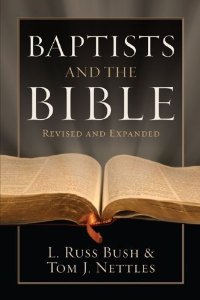
Comparison Between Particular and General Baptists

I recently read this book which documents how Baptists throughout the past few centuries have been known as men of the 41HUukthTrL._SY300_book. Whether a man was a general or particular Baptist, a common thread through them was a high and proper regard for the Word of God. This is, one hand, a most encouraging book, as it shows how Baptists have been faithful to the Word of God in face of opposition from within and without the camp of Christ. On the other hand, it is a reminder that sin yet inhabits the saints of God and some will be led astray – and worse: there are false brothers within the camp and some will be shown by their works and doctrine to be no child of God. Heart-breaking as it is, such false ones must be treated as such and not as brothers. Perhaps God will yet bring them to repentance and faith. Our call is to be faithful to the message He has given us and not curry favor with men.

It is a very good book – I was surprised by it. One excellent tool in this book is the chart below, documenting the differences between these two main groups of Baptists: those who hold to the particular redemption that Christ applies only to the elect and those who hold to a general redemption in which Christ died for all men.

Comparison Between Particular and Genera – L. Russ Bush

The Church – Why Bother?

I was privileged to be able to read this book before it went to print. My short review is below, but first – here is a short promotional video from the author, for the book which can be purchased here: http://www.freegracepress.org/?p=1050

Review of Jeffery D. Johnson’s THE CHURCH: WHY BOTHER?

By Stuart L. Brogden, Jan 2012

The table of contents highlights key areas of ecclesiology that gives the reader high hopes from the beginning. In his Introduction, Johnson rightly begins with a contrast between “easy-believism” and “Lordship salvation”, describing the link between one’s view of soteriology and ecclesiology. A low view of God brings about easy-believism and a hatred for the sovereignty of God. In his discussion of Lordship salvation, the author explains the biblical view of this transaction – such that no one reading would be able to keep their straw-man view of Lordship salvation (professing it is works-based) in hand. Grace alone accompanied by repentance – a stark contrast to the normal process of decisional regeneration. The Introduction comes to a satisfying close by telling us the reason for the book: to “show how a high view of God and a low view of man should shape our understanding of the nature, purpose and functions of the local church.” To that end, Johnson has review questions at the end of each chapter, for group discussions. Furthermore, each chapter has a sub-title, providing insight to what lies ahead.

Chapter 1 (“Wow, What Nice Facilities You Have”) focuses on the nature of the church; Johnson provides a solid, biblical portrayal of the New Testament church, as a Truth bearer comprised of justified, sanctified believers who are united for the life of the brotherhood and proclamation of God’s Word. Frank Viola should read this book 🙂 Chapter 2 (“Church, Why Are We Here?”) is all about the purpose of the church – to glorify God by upholding the Truth, bringing the saints to maturity, and to evangelize the lost. This is accomplished by standing firm on the whole counsel of God’s Word, fostering holiness in its members. Chapter 3 (“Culturally Acceptable, I Mean ‘Relevant’”) then tells us the nature of the church. Johnson draws a clear line between God’s prescription and description of the church and natural man’s view with this piercing analysis: “When the line between a holy church and secular world is blurred, undoubtedly the church will become anthropocentric (man-centered) rather than Christocentric (Christ-centered).” The chapter is a fine description of both sides of this issue, leaving no doubt where Truth lies – the church must reflect Christ if it to bring glory to God or be any good to man.

Next, in chapter 4 (“Programs, Programs, Programs”), the author reviews the activities of the church. Rather than embracing myriad programs of all stripes to reach the culture, the church has 5 basic activities for use in fulfilling the first and most important part of its two-fold mission(to glorify God): to worship God 1) by preaching the Word; 2) through prayer; 3) through fellowship; 4) through the ordinances; and 5) through song. There may be other activities in a church, but they must not be permitted to overshadow these 5 or push them aside. This leads to the next chapter (#5 – “Hey God, Look at Me Worship”), which covers worship. Johnson provides 6 aspects of right worship – all of which are from, through, and to God and Christ. He then defends “Biblical Regulated Worship” with 6 principles, including a detailed examination of the need for holiness and demand that it not be sensual. His 5th principle is one that would benefit many in the home-church movement – worship must be orderly. Lastly, he re-emphasizes the reality that any worship of God that does not come from His Holy Word is the product of man’s imagination and not fit for use in His body; the church does not have the authority to be creative in worship.

Chapter 6 (“Drive-thru Membership”) is about membership, emphasizing the importance of belonging – in contrast to the cultural concept of association by convenience. Johnson describes the terrible impact of post-modern, self-absorbed thinking which reduces membership to a social experiment. He moves on to describe the spiritual union enjoyed by those in the local church, which is the result of the Holy Spirit working therein. This chapter has a rather long and beneficial description of the necessity, seriousness, responsibilities and privileges, and terms of church membership. The section on responsibilities and privileges details responsibilities toward God, one another, church leadership and those outside the church. This leads naturally to the discussion in chapter 7 (“Church Discipline, What’s That?”) on church discipline, starting with this: “The church must deal with the leaven before it contaminates the spiritual integrity of the whole church (1 Cor 5:7-8).” The author provides 5 steps of church discipline; describes the attitude of church discipline; the purpose, authority, and efficacy of church discipline. All of this is founded on Scripture and reasoned faithfully.

Authority within the church is the subject of chapter 8 (“The Survey, ‘Says’”), in which Johnson begins by summarizing the nature of the church (covered in chapter 1) and quickly moves to a short examination of cultural influences that undermine the authority God has given each church; summing it thusly: “The church abrogates its authority by putting the potential visitor in charge.” He then provides a concise review of the biblical authority in each church followed by a good review of the basic government thereof. The chart comparing qualifications for elders and deacons is very helpful to anyone studying the two offices of the church. A large bit of this chapter is devoted to describing the pastor – he is called by God, called to be shepherds, called to serve, called to preach, called to counsel, and called to live an exemplary life. Our author then provides a short summary the responsibilities of elders and of church members (using the unfortunate term “laity”). This chapter is packed with much good information not found nor discussed in many churches, as so many are allergic to spiritual authority.

Chapter 9 (“We Need Concession, Not Confessions”) – the last chapter of the book – discusses doctrinal standards within the church. Johnson begins by examining how many churches have abandoned confessions in favor of vague, ambiguous statements motivated by (1.) indifference, (2.) ignorance, (3.) pragmatism, and (4.) mysticism. This chapter is focused on mysticism, as the author believes it to be the root of the others. He gives short reviews of the first 3 rationales and moves to a somewhat longer review of mysticism, describing its nature, its influence, and the corrective action. Johnson admits some parallels between Christianity and mysticism, acknowledging the saving knowledge one has of Christ cannot be communicated to others; knowing Christ is a gift from God to each one called. Yet God is – within limits He established – knowable by man in general and in a saving way by the elect. This is the conflict with mysticism, which is founded on the presumption of the ultimate unknown being that which is sought. The fact that man cannot know God completely does not make mysticism correct, as God is known by many and can be known. Johnson uses this confusion in the ranks as a platform to encourage the use of confessions – to equip the saints with biblical truth upon which their experiences and emotions are rooted. That of God which is knowable is summed up in a good confession and this provides a useful tool to defend against mindless chatter about “just being biblical” or “all I need is Jesus”. We do need to be biblical and Christians do need Jesus – but we must be equipped by the biblical revelation, not led astray by human ignorance.

Not to be overlooked is the appendix, which provides excellent tools helpful in generating a church membership agreement, outlining responsibilities of church and members.

Those churches which have neglected the serious aspect of membership would benefit greatly from a close study of this entire book, including the appendix. For a short book, this book is a great resource for any pastor or church member who wants to better understand what the Word of God says about His church. It is easy to grasp the author’s message and short enough for even the post-modern ADHD adult to get through. It will benefit the soul of anyone who reads it. May God use this book for His glory and the good of His people.

Pagan Christianity?

I was given the task of reading and reviewing this book as part of a project at my church. Frank Viola is aggressive in defending his perspective; if you want his view you can easily find one or more of his blogs. With that short introduction, here’s my lengthy review.

Pagan Christianty?

By Frank Viola and George Barna

Reviewed by Stuart L. Brogden

The thesis statement of this book is found in the Preface, written by Viola, on page xix: “we intend to show how that organism (the first century church) was devoid of so many things we embrace today” and on page xx: “We are seeking to remove a great deal of debris in order to make room for the Lord Jesus Christ to be the fully functioning head of His church.”

In the Preface, he repeatedly refers to “the contemporary church” as their foil – no doubt most reformed Christians would also take issue with many things done in that name. Reinforcing what I infer as a mystical view of God and Truth revealed in the thesis, Viola tells us, “the New Testament vision of church best represents the dream of God.” and “The normative practices of the first-century church were the natural and spontaneous expression of the divine life that indwelt the early Christians.” (page xix) Their mystical view of the body of Christ is fully spelled out later in the book. Also on page xix, the author’s beloved “organic church” is described thusly: “An organic church is simply a church that is born out of spiritual life instead of constructed by human institutions and held together by religious programs. Organic churches are characterized by Spirit-led, open-participatory meetings and nonhierarchical leadership.” We will see that “Spirit-led” means “everyone doing what seems right in their own eyes”. In the delving Deeper section on page xxxi we are told that their “goal is not to develop a full description of the organic church but only touch on it when necessary.” See – we get explicit wrong-doings by the contemporary and institutional church but only vague and partial descriptions of the proposed answer to those evils.

Viola shows his misunderstanding of the work of the Holy Spirit of God, ascribing (page xix) His actions as “the natural and spontaneous expression of the divine life that indwelt the early Christians”. The Bible is clear that God is a God of order, not chaos; He is not a natural expression of what is in man (Psalms 50:21). He is not “spontaneous” – acting on whimsy; He has planned and has ordered all things to the fulfillment of His plans (Psalms 135:6 and Ephesians 1:11).

In Barna’s Introduction, we discover the authors see themselves – and the Lord Jesus – as Revolutionaries, working to correct the centuries-long trial of errors foisted upon us by religious men. He rightly identifies legitimate problems in many churches (mega-churches, satellite campuses, affinity and age segregated groups, etc.) on page xxvii – and then reveals that this book is our trustworthy guide to find out God’s will for the church. He concludes by telling us that he wants the reader “to think carefully and biblically about how you practice your faith with other Christians.” Barna concludes with, “We pray that this book will help you to do your part in straightening out the crooked path of the contemporary church.” We shall see.

The “Jesus” of the OC is manifested by “open sharing” in all church meetings – this is the normative method that “is completely scriptural”, especially if the only scripture one reads is 1 Corinthians 14:26 – 29. They have an unbiblical view of Jesus Christ and an unbiblical view of the church – which they consider (page xxviii) to be “Himself in a different form. This is the meaning of the phrase “the body of Christ”.” Deep in the appendix, on page 268, we read, “When each member of His body shares his or her portion of Christ, then Christ is assembled.”

Wayne Grudem sheds a better light on this concept on page 858 of his Systematic Theology: “In 1 Corinthians 12 the whole body is taken as a metaphor for the church, because Paul speaks of the “ear” and the “eye” and the “sense of smell” (1 Cor 12:16 – 17). In this metaphor, Christ is not viewed as the head joined to the body, because the individual members are themselves the individual parts of the head. Christ is in the metaphor the Lord who is “outside” of that body that represents the church and is the one whom the church serves and worships.” There are, as Grudem goes to point out, different uses of the word “body” as a metaphor for the church – the context in which each metaphor is used reveals its meaning. Barna and Viola appear to hold to the Roman Catholic view of the church as the “continuing incarnation” of Christ rather than properly viewing Christ as reigning in heaven in addition to dwelling among us. As for the biblical view of the church, one cannot comprehend that unless one studies the Pastoral Epistles – and there’s no indication the authors have even read them.

Consistently in this book, the method of “proving” their case builds on setting up a straw man they call the “institutional church” (IC) – a seemingly equivalent term for the “contemporary church” – and presenting an ill-defined “organic church” (OC) as the only Christ-honoring alternative. This IC straw man is constructed from mostly undocumented sources of history, which reflect the main line record of the Roman Catholic Church. There is no evidence that the remnant of God which did not follow Rome (as in Andrew Miller’s Church History) was ever considered by the authors – for therein one would find local churches without many of the errors that have crept into most churches since ~ 400AD. Too many reformed churches have forgotten “Semper Reformda!”, stagnating in partial reform that still has a lot in common with Rome. These present day vestiges of Rome ought to be critiqued and Protestants should repent and reform to the Biblical model. Some of this book’s critique rightly applies to some churches, but does not warrant the radical, semi-biblical approach advocated.

Continue reading

Book recommendation: “The Giant Killer” by A.L.O.E.

I recently finished reading an intriguing story by ALOE (A Lady Of England) to my children entitled, The Giant Killer (1856).

This allegorical tale (told in a fashion similar to Bunyan’s Pilgrim’s Progress) is about a noble knight named Fides who battles giant sins such as Giant Untruth, Giant Hate, and Giant Pride. Reading this to my children gave us much to talk about and helped them understand the battles with sin that we all face.

Lamplighter Publishing describes the book as follows:

The battle continues to rage, day by day and moment by moment. But must we meet the enemy blindfolded? In order to subdue, we must see the real foe; in order to conquer, we must face the true enemy. Through this allegorical tale, we will be better equipped to recognize, then to effectively slay, the many Giants who confront us. We will break through the web of Sloth, struggle out of the pit of Selfishness, choke up the fount of Anger, flee the secret lurking-place of Untruth, and triumph over our most malicious enemy—Pride. The Giant Killer is the tool to reach for if you or your loved ones need encouragement or confidence to enter into the battlefield once again. If you feel that you have nothing firm upon which to lay hold, this book will help you to grasp the strong cord of Love as your means of safety and deliverance.

And here is a reader’s review:

Another wonderful book from Lamplighter Publishing, The Giant Killer is an allegorical story of Christian warfare. Constantine and Adolphus, twin brothers, are sent to live with the Roby family to have Mr. Roby educate them. The spoiled 10-year-olds have much to learn about kindness, thankfulness, and manners. Mrs. Roby teaches these children and her own about godly character traits through stories about “The Giant Killer.” The Giant Killer must fight and conquer the Giants of Sloth, Selfishness, Untruth, Hate and Pride with the sword and armor given to him by his King. Your children will learn as these fictional children did to fight the enemies of the King that are in their own hearts.

Although this is not the best Lamplighter book I’ve ever read (The Basket of Flowers still holds the position of number one for me), it is still a good book that I recommend, and espeically for Christian parents to read to their children.

The Tragedy of American Compassion

The Tragedy of American Compassion – Marvin Olasky

Reviewed by Stuart Brogden, 30 Oct 2011

Tragedy and Compassion – two words that we don’t normally associate together. How could compassion be tragic? While we likely have different levels of bad news in mind when think of tragedy, we are all in agreement that tragedy is bad and something ought to be done. Although I think the TV news industry is working hard to widen the definition to include hangnails.

Compassion is a bit more complicated. We tend to think of compassion from the ame perspective that we think of love – the unbiblical, Greco-Roman emotional view. Americans view compassion today differently than we did 250 years ago. We want to “relieve suffering” but don’t stop to think about the proper way of doing this, or even if there is such a thing. There are some issues – life threatening, for example – for which rapid elimination of the threat is proper. But there are many life issues that are the accumulation of bad decisions for which there is no proper quick relief. We can look at G.W. Bush’s policy in the Middle East, thinking the solution there was to quickly implant democratic governments. People will not value the liberty a representative government of laws brings until they realize their need of it. Small children will not realize the value of math if mom tells them the answers rather than teaches and asks diagnostic questions.

Biblical compassion is based on biblical love – wanting the best (as God defines it) for the person and to honor God. As we’ve been taught, good deeds must incorporate right motive, right method, right attitude, and right objective. So biblical compassion must be based on a biblical view of God and of man. Our goal is not to bail a man out – it is to set him on his feet, exposed to the gospel, equipped to provide for his family.

It is this framework that Olasky has done a masterful work outlining in this book. The Puritans had a reformed view of man: he is depraved and will avoid that which is unpleasant (work) if at all possible. This perspective, encoded in the laws of the late 17th century, was evidenced by giving time rather than treasure, requiring “decent living” of those being helped, punishment for wrongdoing – which included slothfulness. A key attribute of this perspective was the personal knowledge and connection between the better-off and the poor. Works-testing was required, so that a man or woman who was able to work would be put to work in order to secure food and shelter. “This social policy was based upon the theological view that stressed man’s sinfulness, which only God’s grace could change.” (pg 10) Further, “nothing that could contribute to the breakup of families, or to the loss of the family’s central role as support of its members was encouraged.” (pg 11) So a three-legged stool of family, church, and neighborhood was in place. The goal was not equal treatment of all who were in need, but personal attention to each with the aim of building responsibility and morality.

Poverty – caused by circumstances such a illness or death – was seen differently than pauperism, a lifestyle of living off others with no regard for personal responsibility. Ten causes of pauperism were identified: ignorance, idleness, intemperance (personal character), “want of economy”, imprudent and hasty marriages (circumstances), lotteries, pawnbrokers, brothels, and gambling houses (institutions). Last on the list were charities that gave away money too freely.

A key aspect of being responsible toward the poor was trying to discern between those stricken by poverty and those trying to “game the system”. “Their goal was not to weed out people – for they saw all as created after God’s image, and thus very different from weeds – but to require self-confrontation” and admission of their need. “The poverty which proceeds from improvidence and vice ought to feel the consequences and penalties which God annexed.” No one, however, was left to starve. “Tough love”, as it was called not too long ago. “When anyone asked for relief, the appropriate deacon investigated in order to discriminate and beneficially assist the really necessitous and deserving poor.” Your deacons have studied this aspect of benevolence, and have been encouraged by Job’s view of this activity: Job 29:15 – 16: I was eyes to the blind and feet to the lame. I was a father to the needy, and I searched out the cause of him whom I did not know.

These methods, motives, means, and aims resulted in changed lives. Those predestined by God to new life were saved, others found meaning in the moral goodness of working for their food. As cities grew and problems more evident, agencies emerged to take advantage of economies of scale. Yet “charity leaders believed that few would volunteer many hours each week of they did not see themselves as soul-savers and not just bread-providers.” (pg 30) In the mid 19th century, Charles Brace, who had hoped for political change to help poor folk, quickly realized that “high taxes that supported a corrupt city administration were part of the problem, not a road to solution.” (pg 31) Brace tried direct material distribution to needy children (bypassing families and churches) but learned “if you put a comfortable coat on the first idle and ragged lad who applies, you will have fifty half-clad lads, many of who possess hidden away a comfortable outfit leaving their business next day, to get jackets for nothing”. He learned that spiritual reform must go hand-in-hand with material reform. This Christian view of man and compassion took care of what modern folk have called “human debris” – those folk without normal capacities of thought or emotional relationships, which governments tend to put away.

And while this country was in pursuit of this God-honoring perspective, Benjamin Franklin saw in London, in 1766, the destruction wrought by the British welfare act: “There is no country in the world in which poor are more idle, dissolute, drunken and insolent. The day you passed that act you took away before their very eyes the greatest of all inducements to industry, frugality and sobriety, by giving them a dependence on somewhat else than a careful accumulation during youth and health for support in age and sickness … Repeal that law and you will soon see a change in their manners. St. Monday and St. Tuesday will cease to be holidays. In this country, such welfare was widely hated and seen for the danger it was. Charities continued to see two categories of deserving poor people – the impotent poor, who could not help themselves (due to age, illness, etc.) and the able poor, who could work and would be required to do so. Being poor carried some measure of shame, seen as a deterrent to the attraction of pauperism.

Continue reading

Living Dangerously: A Dangerous View

Almost a year ago now, I had a quick discussion with the author of Living Dangerously: Seven Keys to Intentional Discipleship in the comments of one of his blog posts.

Before I knew Shawn Anderson was the author of any book, I disagreed with the YouTube video he posted and with his related comments.

One of my points of disagreement is one I’ve argued many times before. Some people seem to think that “converts” are the lowly dregs of the Christian world, getting into heaven by the skin of their teeth. “Disciples,” on the other hand, are the real go-getters for Christ. However, there is no distinction between converts and disciples in the Bible. People are either dead in sin or born again. There’s nothing in between. (That being said, there are false converts and false disciples.)

The other point of disagreement is also a common misunderstanding based on the incorrect definition of disciples and converts. When Jesus commanded us to make disciples in the Great Commission, what exactly was He asking believers to do?

The Great Commission (Matthew 28:19-20) has four parts that we should obey:

  1. Go.
  2. Make disciples of all nations.
  3. Baptize them in the name of the Father, Son and Holy Spirit.
  4. Teach them to obey everything He has commanded us.

What does it mean to “make disciples”? To me, it’s obvious that making a disciple (part 2) is different from discipling someone. Discipling someone is teaching that person to obey (part 4). Was Jesus being repetitive? I don’t think so. Making a disciple means guiding an individual toward salvation through Jesus Christ. How does someone get saved? By hearing the gospel (Romans 1:16). The portion of making disciples that God has entrusted to us is proclaiming the gospel (Romans 10:14–15).

(I want to note that the discussion on this aspect of the blog post ended very strangely. The author of an entire book that promotes a viewpoint that is opposite to mine said he agreed with me. I doubt that I convinced Anderson he was wrong. If I had, he would have taken Living Dangerously out of print. I don’t know why he ended up saying he agrees with me other than to shut me up. I would have preferred that he block me rather than patronize me [if that’s what he was doing]).

What makes Living Dangerously appalling is that approximately half of it was spent explaining research about what aspects of a “discipler” caused the non-Christian to come to faith. On page 36, Anderson writes, “The next several chapters are devoted to examining the character traits that influenced people to become disciples of Jesus.”

For example, the characteristics that most influenced women to come to Christ (filtered to exclude related “disciplers”) were, in order: knowledgeable, trustworthy, caring, faithful, authentic, passionate and loving.

Christians should be all of those things. However, no one should get saved because of the qualities of another Christian. We should submit to Christ because we see the truth and love of Christ in the gospel. We love Him because He first loved us. We don’t love Him because a Christian was knowledgeable.

So to summarize, I don’t recommend the book. I think it shows a basic misunderstanding of what causes someone to come to Christ—the gospel (Romans 1:16). There are many more examples in the New Testament of people coming to salvation by a seemingly chance encounter with a stranger willing and ready to give the gospel than people being saved by a long process of the non-Christian getting to know a really lovable Christian. True disciples are made by Jesus when He raises someone from spiritual death when they hear the gospel and believe. In our evangelism, we need to focus more on getting ourselves out of the process and simply telling His story.

IndoctriNation

I just finished watching this movie. A gentle but forceful examination of the government school system in our country, revealing why it can not be reconciled with a Christian worldview.

http://www.youtube.com/watch?v=n5s1xq-oxu0&feature=youtu.be

WACO, Texas, Oct. 12, 2011 /Christian Newswire/ — As the 2012 presidential race begins to draw public attention, a new film seeks to bring education to the forefront of public debate. ‘IndoctriNation: Public Schools and the Decline of Christianity in America,’ a documentary that explores the origins and social impact of America’s public school system, will be released on DVD October 18, followed by public screenings in select cities across the US. The controversial film has sparked debate among Christians and atheists over the roles of faith, and government in education.

Recent news coverage has highlighted the controversy of several presidential candidates who will seek to dismantle the US Department of Education if elected, a goal shared by Ronald Reagan but abandoned by the Republican Party in recent years.

“People are starting to wake up to the damaging effects of a government controlled education monopoly,” says ‘IndoctriNation‘ co-director, Colin Gunn, a Scotland-born filmmaker living in Texas. He continues, “We now are facing all these problems in America – high taxation, welfare dependency, government debt – and as Christians and conservatives we have to see we can’t solve those problems until we solve the public schooling problem.”

Gunn, a homeschool father of eight, asserts that school problems go much deeper than Federal involvement in education. Last summer, he took a road trip across the USA in a yellow school bus, along with co-director Joaquin Fernandez and the Gunn family, recording interviews for ‘IndoctriNation.’ He spoke with teachers, administrators, parents, evangelical leaders, and other whistleblowers who gave insight into the complex political, economic, and moral problems with America’s educational system.

IndoctriNation‘ has garnered support from Christian ministries and influential leaders. MOVIEGUIDE® founder, Dr. Ted Baehr, gives his endorsement, saying, “‘IndoctriNation‘ is an extremely important movie. Every church in America should show [it].”

“Every Christian parent with a child in a government school should see this,” says Cal Thomas, syndicated columnist and FOX News contributor.

John Taylor Gatto, former New York City and New York State Teacher of the Year, has long been an outspoken critic of government schools and is featured in the film. Gatto asks candidly, “Is there an idea more radical in the history of the human race than turning your children over to total strangers who you know nothing about, and having those strangers work on your child’s mind?”

Since a large majority of Christian children attend a public school, Gunn will seek to reach their families when the film is shown at screenings sponsored by churches and individuals who are concerned about the effects of public education on today’s youth.

Colin Gunn is an award-winning producer, director, and accomplished animator. Originally from Hamilton, Scotland, Gunn is now a US citizen and lives in Waco, Texas with his wife and eight children.

More information about the ‘IndoctriNation‘ film and public screenings can be found at www.indoctrinationmovie.com.

Defending, Contending – what?

I recently started reading K. Scott Oliphant’s new book, The Battle Belongs to the Lord. Chapter 2 is an examination of the book of Jude and the author does an excellent job of explaining what we (those who are redeemed by the blood of Christ) are to defend and why we are to do so. He also describes the people and the motivation of those who “crept in unnoticed” and pose a danger to the church.

The exegesis of Jude in worth the price of the book. Here’s a taste for your condiseration:

“Jude’s description of the enemies who have made their way into the church is illuminating. He does not describe them as merely worldly people. … They [are people who] know the tradition and can “speak the language.” … The reference to Korah would have been particularly stunning to Jude’s readers (see Numbers 16 and 26.) … To put it (Korah’s rebellion) in New Testament terms, Korah used his leadership position in the church to exalt himself and his own agenda.”

Reading this chapter reminded me of a 28 minute message from a dear brother, introducing Jude. Listen to this message, buy the book. Then you will have a better understanding – perhaps an initial understanding – of why it is important to contend for the faith and what that faith is.

Film Recommendation: “Divided.”

I admit that, although passionate about the subject of the dividing of the family in the church (and the damage it has caused), I was not moved by the trailer for the new documentary on the subject entitled Divided when I first watched it a couple months ago.

It wasn’t until my wife ordered the DVD and we watched it that I realized the documentary was much better than the trailer (seen below) led on.

Here is the description of the documentary:

There is a crisis. Christian youth are rapidly leaving evangelical churches for the world. This well-recognized disaster has been the topic of significant discussion in recent years for both church leaders and modern news media. DIVIDED follows young Christian filmmaker Philip LeClerc on a revealing journey as he seeks answers to what has led his generation away from the church.

Traveling across the country conducting research and interviewing church kids, youth ministry experts, evangelists, statisticians, social commentators, and pastors, Philip discovers the shockingly sinister roots of modern, age-segregated church programs, and equally shocking evidence that the pattern in the Bible for training future generations is at odds with modern church practices.

He also discovers a growing number of churches that are abandoning age-segregated Sunday school and youth ministry to embrace the discipleship model that God prescribes in His Word.

This division in our churches goes beyond just dividing the youth from their parents. The body of Christ is described as one body, yet we see an ever increasing pressure within churches to segregate and divide the body of Christ in all different directions and it’s all being done without any Scriptural instruction, example or precedence to support these divisions.

A kingdom divided against itself will not stand and we see the modern American church being divided into singles groups, women’s groups, men’s groups, seniors groups, services for contemporary music preference groups, services for traditional music preference groups, married couples groups, 20-something groups, 30-something groups, and the list goes on and on.

With all these divisions being promoted within the Western church is it any wonder why we find the bride of Christ in the condition she’s currently in?

This division within our churches is most disappointing when it comes to the youth. What message are we giving our children when they are ushered from the service as soon as the pastor is about to deliver the life giving words of holy Scripture?

This documentary (featuring interviews from such notables as Paul Washer, Voddie Baucham, Ken Ham, and Doug Phillips) is a must-see for everyone who’s in a church that’s currently dividing the children from their parents and from the preaching of the Word.

Listen to Brian Borgman’s message to his congregation in which he dismissed the children from service for the last time in Children in Worship.

See also:

Peanut Butter Salvation and Other Stupid Church Tricks.

Youth Ministry: a 50-year Failed Experiment.

Who’s Pastoring the Youth Pastors?

Changed by God

David Brainerd (1718-1747) was a missionary to the American Indians in New York, New Jersey, and eastern Pennsylvania. Born in Connecticut in 1718, he died of tuberculosis at the age of twenty-nine.  Many people know of his work among the Indians, but in reading his diary (as edited by Jonathan Edwards), I was most struck with the work the Lord did in David Brainerd. 

Early in his short life, Brainerd admits, in his fallen state, to being irritated by 4 specific doctrines of God (pgs 64 & 65):

  1. The strictness of the divine law.  “I found it condemned me for my evil thoughts and sins of my heart, which I could not possibly prevent.
  2. Salvation is by faith alone.  “God would not come down to lower terms and He would not promise life and salvation upon my sincere and heart prayers and endeavors.
  3. As one dead in sin, he did not understand saving faith.  “I read the calls of Christ to the weary and heavy laden; but could find no way that He directed them to come in.
  4. The Sovereignty of God.  “I could not bear that it should be wholly at God’s pleasure, to save or damn me, just as He would.  That passage, Romans 9:11-13, was a constant vexation to me, especially verse 21.”

In all his vexation at his condition, Brainerd records that he “never once prayed from any respect to the glory of God.” (pg 68)  All of his religion had been “nothing but self-worship, and a horrid abuse of God.” (pg 69)

A short time later, having been saved and experiencing manifold witnesses of the Lord working in his life and those of the Indians, he had learned to trust God: “I have been too much laboring for spiritual life, peace of conscience, and progressive holiness, in my own strength; but now God showed me, in some measure, the arm of all strength, and fountain of all grace.” (page 194)

We also see a helpful attitude towards his work and that of God: “Although I could not but continue to use the means by which I thought proper for the promotion of the work, yet God seemed, as I apprehended, to work entirely without them. … I found myself obliged and delighted to say, “Not unto us,” not unto instruments and means, “but to thy name be glory.””  And, “Thus God has begun, thus He has hitherto surprisingly carried on a work of grace amongst these Indians.  May the glory be ascribed to Him, who is the sole Author of it!” This is a man who has found the peace of working with his whole heart and soul for the right reason, trusting wholly in God for the work only He can do.

As one reads about the short life of David Brainerd, we see the young man maturing, yet always falling short.  Progressive sanctification, this is called.

And we see, a few months before his death, a deep understanding of the doctrines of grace that once caused him to hate God. He, weak in body, “Discoursed before the administration of the sacrament from John 1:29 – Behold the Lamb of God, that taketh away the sin of the world.” Where upon he considered three points that are well our attention:

I.                    In what respects Christ is called the Lamb of God and is so called (1) from the purity and innocency of His nature; (2) from His meekness and patience under sufferings; (3) from His being that atonement which was pointed out in the sacrifice of lambs, and in particular by the paschal lamb.

II.                 How and in what sense He “takes away the sin of the world: not because all the world shall actually be redeemed from sin by Him, but because (1) He has done and suffered sufficient to answer for the sins of the world, and so to redeem all mankind; (2) He actually does take away the sins of the elect world.

III.               How we are to behold Him in order to have our sins taken away: (1) not with our bodily eyes; nor (2) by imagining Him on the cross; but (3) by a spiritual view of His glory and goodness, engaging the soul to rely on Him.

Would that you and I saw such wondrous Truth in such a simple verse! This is a mark that God has changed the man. No one can be saved and left without a mark from this mighty work of His Spirit. Let the Christian examine himself and see if there be any marks from of the saving grace of Holy God in his life and on his soul. If you be in Christ, rejoice! And know that it is God Himself that wills and performs His good pleasure in and through you – for the glory of His name.

Book recommendation: “Terror at Beslan” by John Giduck.

“For a single religion to spawn so much hatred, so much inhuman capacity to commit violence against the innocent–even if those innocent are the citizens of a perceived enemy nation or culture–there must must be a cause. That cause cannot be the preaching of tolerance and peace so often ascribed to it.”

Terror at Beslan (page 376)

John Giduck of the Archangel Group wrote a shocking and terrifying book on the terror attacks that took place on September 1, 2004 on a school in Beslan, Russia. Not only shocking and terrifying because of his detailed portrayal of what took place, but also because this same type of attack has been promised to come to America, and that Beslan was only a dress rehearsal for what we are to experience.

I don’t read many secular books but this is one that I highly recommend. Giduck details the history of conflict in Russia that led up to the horrific attack on the innocent men, women, and children at the Beslan school on that fateful day. He also details the initial attack as well as the counter-attack by Russian forces. Giduck even chronicles the history of Islam, including the laundry list of terrorist acts perpetrated by the “Religion of Peace” on innocents around the world. Giduck also gives warning to those in America’s schools, law enforcement, and private sector of what to look out for, because it’s not a  matter of if, but when a similar attack occurs on our soil; the terrorists have made this clear, including Bin Laden.

Here’s what others are saying about the book:

“Don’t just read this book, study it and apply it.” – Lt. Col. Dave Grossman

“This should be required reading for law enforcement and school officials alike.” – Connie Bond, Editor of The Police Marksman Magazine

“An explosive expose of Russian failure and what America must do to protect its children.” – John A. Anderson, Retired Sgt. Major U.S. Army Special Forces

“Without doubt, in my 37 years of law enforcement the Beslan tragedy . . . makes for one of the most chilling analyses and accountings of any event I have ever experienced. Only 9/11 was more appalling to me.” – Ed Ray, Director of Security, Denver Public Schools

You can purchase this book on Amazon where currently it is rated at 5 out of 5 stars.

Warning, the books contains graphic descriptions and images. The book also contains profanity on page 238.

I’ve included the following video to acquaint you with what this book is about.

Finally, here’s another great video and a great detailed review of the book.

“With our destruction as the common goal that has brought them [terrorists] together, how is it that our survival has not yet served as the common goal necessary to bring us together?”

Terror at Beslan (page 327)

Film review: The Bible vs. Joseph Smith.

Joel Kramer and Sourceflix have hit another home run with their latest release, The Bible vs. Joseph Smith.

DefCon has been pleased to feature Joel Kramer’s past documentaries DNA vs. the Book of Mormon, The Bible vs. the Book of Mormon, and Lifting the Veil on Polygamy, and now The Bible vs. Joseph Smith continues in the excellence of quality, production, and product.

Joel Kramer sits down with a lifelong Mormon and puts Bible prophets and Mormon prophets to the Deuteronomy 18 test “to see which prophets are truly speaking for God.”

This video not only deals with such problems as the Book of Mormon error of stating that Jesus was born in Jerusalem, but it also deals with Joseph Smith’s problems of false prophecy, so clearly in fact, that I suggest to you that this video conclusively proves that Joseph Smith was a false prophet.

“In a conversation between a Christian and a Mormon, the prophets of both the Bible and the Book of Mormon are put head to head in a test to see which prophets are truly speaking for God. If even one prophecy fails to come true, that prophet is a false prophet, and must be put to death.”

Entertainment Tonight, Or Home Failures?

There will be many who would question my thoughts on this post, but before you comment or leave mad, I would implore you to consider the words of Scripture to see whether we have been truly led astray or whether what we set in front of our eyes and our children is really nothing more than harmless, mindless entertainment.

Let’s consider a few “harmless” movies and see if this is truly honoring and glorifying God in what they portray. These little insights can be found from Plugged In Online, which I highly recommend the reader to use when considering what will be shown to the family while enjoying a bowl of popcorn or ice cream. We will consider some of the worst aspects as there are plenty of people who will seek to point out the good that can be learned from watching the slurry that exudes from every pour of Hollywood.

Avatar – This movie has been covered in a recent post, but a few aspects to consider – “Both men and women wear little more than loincloths, and the race’s catlike tails don’t fully obscure their backsides. Neytiri and other Na’vi females wear ornamental coverings that don’t really conceal their breasts…a female pilot wears a tight, cleavage-revealing tank top. [Characters] are seen unclothed while strategically wrapped in vines. [The two main characters] consummate their relationship in a sensuous scene that shows them kissing and intertwined. They sleep together afterward and are said to be ‘mated for life.'”

Valentine’s Day – Great chick flick, right? Words better describing this entertaining movie for couples would be fornication, adultery, homosexuality, etc.

Dear John – another tear-jerker of a movie? – Again, fornication plays a part of this movie as does taking both the name of God and the Lord Jesus Christ in vain.

How about for the kids?

Where the Wild Things Are – only rated PG but manages to use the “d” and the “h” word along with taking the Lord’s name in vain a few times. What in the world are we teaching our children when this becomes acceptable? By the way, what is the operative number of times needed before the movie gets turned off????

Sherlock Holmes – Surely, just a remake of the old Basil Rathbones, right? Well, only if you throw in far too many sexual innuendos, drunken and debauched behaviour, and the Lord’s name taken in vain.

The Twilight Saga – Perfect for those nights your teenage girl wants her friends over for a great “Christian” sleepover. After their ears are filled with enough swear words to last a month along with the Lord’s name in vain, their eyes will have enjoyed the allure of vampires and humans longing to be with each other no matter what the cost.

2012 – For those who take an avid interest in wanting to know how the world will end according to Hollywood in 2 years, you will have 2 whole years to ingest the following details taken directly from Plugged In Online – “One f-word. Four s-words. Nearly 20 misuses of God’s name (paired with “d‑‑n” at least five times). Jesus’ name is abused twice. “A‑‑,” “h‑‑‑” and “b‑‑tard” are also blurted out. An obscene gesture is made.”

************
Dear reader, that is enough for now as we have not the time nor the inclination to review all movies both current and past for those who come to DefCon. However, the question you need to ask yourself is not, “Does this movie allow a good expression of the modern culture?” It is not, “Will I have a great time with my family or my wife as we waste the next two hours?” It is also not, “Does this movie portray POSITIVE elements that outweigh the ‘handful’ of bad things that might be in the movie?”

We are to be seeking to live a holy life in EVERY area of our lives before God and succumbing to the wiles of the evil one (via Hollywood and the silver screen) is a great way for your home to end up as a failure. It is about far more than just being entertained and having a great date with the wife or a “family” night at home (or at the movies) with the kids.

The questions should be, “Does EVERY aspect of this movie glorify God and bring honour to His HOLY name? Does this movie fill my mind with images that create lustful desires or does it point me to live more like Jesus Christ? Does this movie fill my ears with words that make my soul cringe or does it use wholesome speech that edifies my soul (you can also use this for preachers like Mark Driscoll as well)? Does this movie demean sex and the holy covenant of marriage or does it exalt the God-given responsibilities which help my spouse and I to be thankful for what we have learned and that we can implement in our own marriage?

In the words of several of the Psalms — Selah. Meditate on these things!