Quotes (817)

You and I can choose to continue with business as usual in the Christian life and in the church as a whole, enjoying success based on the standards defined by the culture around us. Or we can take an honest look at the Jesus of the Bible and dare to ask what the consequences might be if we really believed Him and really obeyed Him.

– David Platt

How to brainwash a nation and a people.

Very interesting video clip, on so many levels; especially when you realize how many Christians have been seduced–thinking “conservative” politicians are somehow the answer to this nation’s dilemmas. We’re headed to one conclusion, regardless of who’s in power . . . one will just get us there faster than the other.

Was Jonah a false prophet?

What’s one of the first things a Mormon or Jehovah’s Witness says when you point out the plethora of false prophecies uttered by their leaders?

Well, Jonah was a false prophet!”

As if Jonah being a false prophet would somehow  give their leaders license to make as many false prophecies as they desire.

But did Jonah prophesy falsely? Or is this just one more example of an attack on God’s word by those lacking even the basic understanding of proper biblical hermeneutics in an effort to drive your attention away from their respective men behind the curtains?

The following piece by Hank Hanegraaf (regardless how you feel about him) quickly, succinctly, and conclusively destroys the shallow argument that Jonah was a false prophet, and it sends those wishing to trample on Scripture (in their pursuit to justify their false leaders) back to the drawing board to search for better proof texts.

From CRI:

THE PROPHET JONAH- Introduction
You wouldn’t normally expect Jehovah’s Witnesses, Mormons, and skeptics to agree on much of anything. Yet all three share a similar opinion regarding, of all things, the Book of Jonah. Can you guess what it is? The CRI Perspective in a moment.

THE PROPHET JONAH- False Prophet?
Jehovah’s Witnesses, Mormons, and skeptics all agree that Jonah uttered a false prophecy when he proclaimed, “Yet forty days and Nineveh will be overthrown” (Jonah 3:4). But, of course, Nineveh repented and was therefore not overthrown. Skeptics often refer to this as a clear example of false prophecy in the Bible. Jehovah’s Witnesses and Mormons claim this unfulfilled prophecy provides biblical precedent for the unfulfilled predictions of their own religious leaders. These arguments, however, are seriously flawed. Let me tell you why.

THE PROPHET JONAH- First…
First of all, Jonah did not make a mistake; he said exactly what God told him to say (Jonah 3:1). The Jehovah’s Witnesses and Mormons, on the other hand, do not claim that their predictions were exactly what God wanted said. Even they agree that any error is the fault of men, and not God. Therefore, Jonah is irrelevant to their case. Yet they want their teachings to be regarded with the same authority as that of biblical prophets!

THE PROPHET JONAH- Second…
Second, Jonah’s prophecy was not in error, because implied in the prophecy was a condition under which the predicted judgment would not take place. The Ninevites clearly understood what Jonah meant — namely, that their city would be overthrown unless they repented (Jonah 3:5-9). Since God spared Nineveh, obviously He meant the prophecy to be understood that way (Jonah 3:10). Even Jonah understood it that way, since he admitted in prayer that he knew God wanted to show mercy to the Ninevites (Jonah 4:1-2). So all of the parties involved — God, Jonah, and the Ninevites — understood that the prophecy was conditional.

THE PROPHET JONAH- Finally…
The same cannot be said for the erroneous predictions made by the Jehovah’s Witnesses or by the Mormon prophets. Their predictions were never understood to be conditional at all. Thus, Jonah’s prophecy gives no comfort to the false prophets of today. Nor was it a false prediction, as the skeptics wrongly claim. In fact, I like what the Bible says: “No prophecy of Scripture came about by the prophet’s own interpretation. For prophecy never had its origin in the will of man, but men spoke from God as they were carried along by the Holy Spirit” (2 Pet. 1:21 NIV).

On Jonah’s prophecy, that’s the CRI Perspective. I’m Hank Hanegraaff.

Does the Book of Mormon really contain the “fullness of the gospel?”

The following is from Rocky of Mormon Outreach as found on Facebook:

If the Book of Mormon contains the “Fulness [sic] of the Gospel” why aren’t these Mormon Doctrine essentials listed in the Book of Mormon?

1. Church organization
2. Plurality of Gods
3. Plurality of wives doctrine
4. Word of Wisdom
5. God is an exalted man
6. Celestial marriage
7. Men may become Gods
8. Three degrees of glory
9. Baptism for the dead
10. Eternal progression
11. The Aaronic Priesthood
12. Temple works of washings, anointing, endowments, sealing.

If I took these 12 Mormon doctrinal points away, would I have Mormonism? Answer: No!

So, answer the question: “If the Book of Mormon contains the ‘Fulness [sic] of the Gospel’ where are these Mormon Doctrine Essentials?”

Quotes (811)

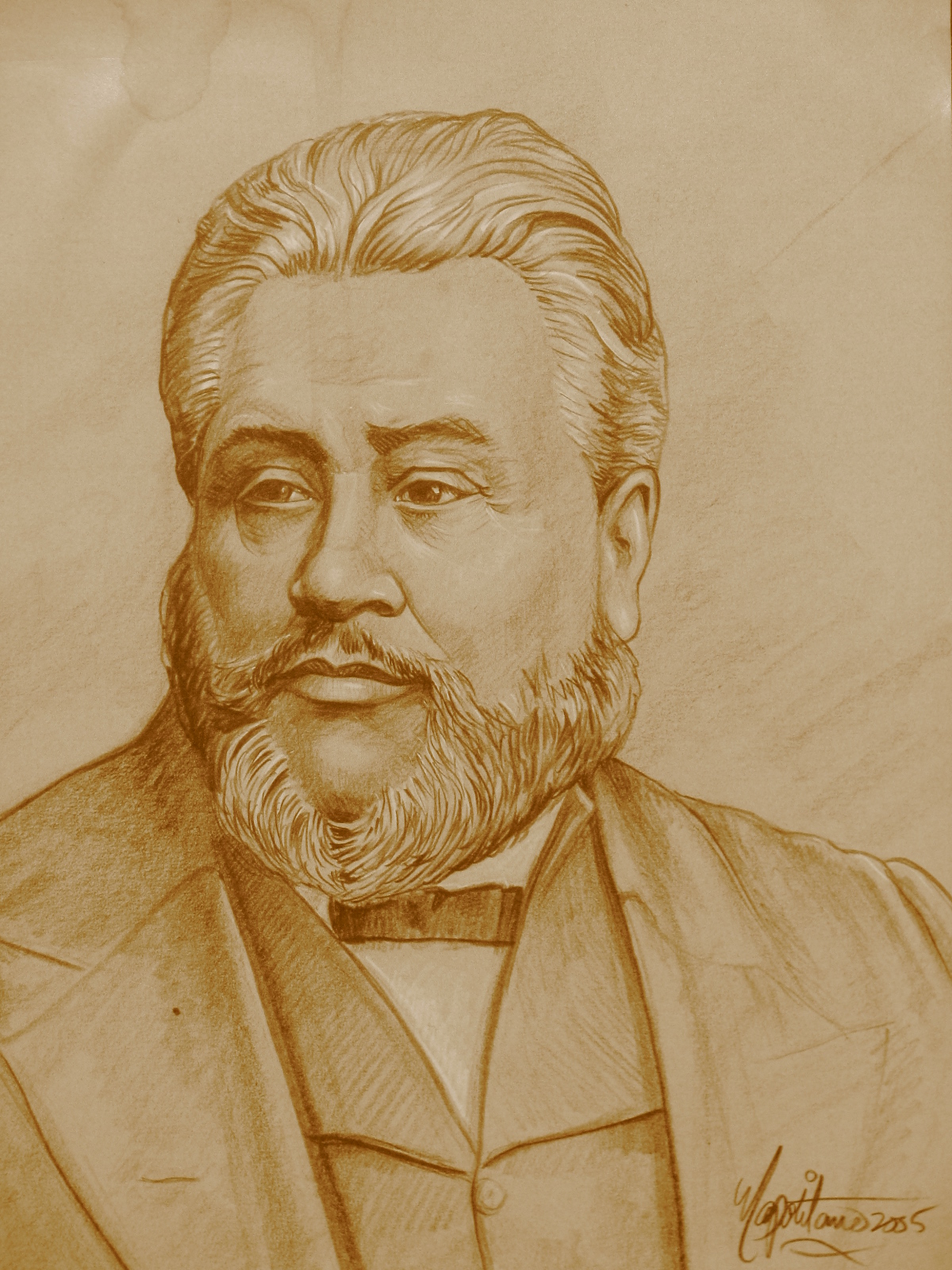
I know very many decent people who seem to have resolved never to come to Christ until they can understand how the doctrine of election is consistent with the free invitation of the Gospel. I might just as well determine never to eat a morsel of bread until it has been explained to me how it is that God keeps me alive, and yet I must eat to live.

– Charles Spurgeon

1834 – 1892

Quotes (810)

Knowledge of the truth will bring division. Those who follow Jesus by abiding in his Word will be divided from those who do not. . . . Doctrine divides believers from unbelievers. Without doctrine there will be no division.

–          Mike Gendron

For your information.

Aside from our new look, here are three things I wanted to notify DefCon readers about:

1). We’ve updated our  Rules of Engagement page. The revisions were performed solely for the purpose of clarity.

2). For those who are new to DefCon you can also find us on FaceBook.

3). WordPress has recently provided a new feature on blogposts in which you can “Like” it. If you like a certain post, all you have to do is click on the comments link and between the post and the thread of comments you will see a button that says, “Like.” Just click on that button and it will register that you liked that particular post. However, you must be logged in to WordPress in order to use this feature. Creating a WordPress account only takes a moment of your time, is free, and does not require you to manage a blog of your own. Plus, once you have a WordPress account, you can upload a cool little avatar to appear alongside all your comments instead of the standard generic avatar automatically generated by WordPress.

Mormon missionaries caught (once again) revealing their disdain for other beliefs.

If you’ve ever tried sharing the truth of the Gospel with a Mormon, if you’ve ever challenged them on their doctrine, or if you’ve ever quoted one of their prophets on such morsels as the Adam is God doctrine, the Blood Atonement doctrine, the racism issues, the false prophecies of their prophets, etc., then it’s inevitable that you’ve been responded to with some canned retort similar to this:

“Why spend so much time attacking other people’s religion? Mormonism never does that.”

At first glance it appears that the Mormon who says this is taking the morally superior high ground, but in reality, anyone who knows anything about Mormon history knows that this regurgitated platitude is tantamount to a bald-faced lie.

The very idea that a Mormon will flat out lie about such a disprovable notion is astounding when you consider that the very origin of their organization is based on the ideal that all other religions are false and that they’re the one true church.

You can’t claim to represent a religion that was founded on attacking all other religions while simultaneously claiming that neither you nor your organization ever attack or speak critically of other religions.

In the past Defcon has chronicled Mormon Missionaries mocking a black Baptist preacher (the video has since been removed from Youtube), as well as posting quotes from their own materials of Mormon founders, leaders, and prophets attacking Christians and Roman Catholics.

Then there’s even the controversy of Mormon Elder Nate T. Nelson who even mocked those without a clear religious persuasion as seen in here and here.

The latest example of Mormons showing their true colors about other religions can be seen in their damaging and defacing of the property of a Romish church as reported in this news video.

Quotes (805)

http://easterpeople.wordpress.com/2009/07/23/im-a-charismatic-baptist-reformed-calvinist/

I am told that, years ago above the Falls of Niagra, a boat was upset, and two men were being carried down by the current. Persons on the shore managed to float a rope out to the men, who both seized the rope. One of them held fast to it and was safely drawn to the bank. But the other, seeing a great log come floating by, unwisely let go of the rope and clung to the great piece of timber, for it was the bigger thing of the two and apparently better to cling to. Alas, the timber with the man on it went right over the vast abyss, because there was no union between the wood and the shore. The size of the log was no benefit to him who grasped it. It needed a connection with the shore to produce safety. So, when a man trusts his works, his prayers, alms giving, sacraments, or anything of the sort, he will not be saved, because there is no connection between him and God through Christ Jesus. But faith, though it may seem to be a slender cord, is in the hand of the great God on the shore.

– Charles Spurgeon

1834 – 1892

Sermon of the week: “Fine Sounding Arguments” by Thabiti Anyyabwile.

Your sermon of the week is a fine message by Thabiti Anyabwile entitled Fine Sounding Arguments. The subtitle of this message is How Wrongly ‘Engaging the Culture’ Adjusts the Gospel.

Anyabwile deals with the propensity of so many Christians to “engage the culture” in ways that are not biblical, and he examines not only what “engaging the culture” should be, but he shows how current culture-engaging methods may actually be counter-productive to the message of the cross.

A very well formulated and delivered sermon; it will make you rethink what you’ve been conditioned to believe about our role as believers in relation to how we are to engage the culture.

Compromising with a cult.

Many false prophets will arise and will mislead many. Matthew 24:11

Here is a brief but shocking article from Presbyterian Pastor Jay Moses (whose profile says that he “comes from an ecumenical past“) that you must read to believe:

Reflections from Nauvoo by Pastor Jay

I have always found two things in life to be true:  God plants good people in every race or religion, and I’ve never met a Mormon I didn’t like.  I found both of these convictions confirmed in my experience with the Red Carpet trip, with First Pres and LDS Wheaton Ward, to Nauvoo last May 22nd-23rd.

A joint group of over 80 participants from each community boarded a bus and headed South/West to the historic town of Mormon Nauvoo.  We were given the hospitality of the LDS and Church of Christ churches as we learned more about one of the fastest growing religions in the world and the largest religion born on post-pilgrim American soil.  People are more than intellectual dogmas and beliefs … these beliefs are lived and embodied in our families and communities; it is imperative that we enter into each other’s sacred spaces and places, into each other’s tragedies and joys, if we truly seek to know each other as we seek to be known:  that is as children of God.

Nauvoo is a symbol for the intersection of both of these occurrences in a community’s life; joy and tragedy. I was especially moved by being invited to preach at the place (70’s Hall) and pulpit that Joseph Smith occupied so long ago. The fact that a community who experienced so much pain and estrangement from mine, both historically and theologically, would extend such grace to me was an experience of reconciliation and love that I will never forget and will continue to grow into.

As Joseph Smith left the common road of his day, he was plagued by a question that is as relevant now as it was 150 years ago: “What church is the right one?”  From this trip a powerful reply could be formulated:  the one that loves the other as themselves.

Also check out the pictures of this church’s “interfaith fellowship trip” on the church’s website here, which includes: posing in front of an LDS temple, a photo of the statue of Moroni, and an interfaith worship service described as follows:

. . . everyone attended an interfaith worshop [sic] service together on Sunday morning, May 23, 2010, with both Dr. Jay Moses from First Presbyterian . . . and LDS Bishop Reed Nuttal . . . preaching.

This event was even featured in a recent Mormon Times article (found here).

The problem isn’t so much that Jay Moses wants to compromise with the cult of Mormonism (he’s entitled to shipwreck his own soul if he wants to). The problem is that he’s leading his congregation (including children) down that broad path with him. I wonder, was there anyone–even one–in that  church that stood up and protested?

I know that after my departure savage wolves will come in among you, not sparing the flock; and from among your own selves men will arise, speaking perverse things, to draw away the disciples after them. Acts 20:29-30

This level of error, compromise, and downright apostasy is nothing new in the church; even the disciples in the first century dealt with those who crept in unnoticed with the goal of harming the sheep (see all the epistles).

What is ironic, however, is that the LDS organization is willing to compromise with Christians (even if the Christians are in name only). The current Mormon hierarchy has been relentless in their insatiable quest to appear more like Christians. And what makes this so intriguing is that Mormonism’s founders were rabidly anti-Christian. See some of the lovely things that founding Mormon leaders taught and believed about Christians and Christianity here.

Truth is, if Mormonism’s founders knew what has become of Mormonism, they’d be rolling in their graves.

It’s apparent why modern day Mormonism is trying to assimilate in its endeavor to appear Christian, but it’s not so clear why a man, charged with the shepherding of his flock in a little Presbyterian church, would deliberately lead those in his congregation into the arms of a cult rife with damnable doctrines of demons.

It’s also very sad that so many in his church followed him in this seduction when anyone with even a shred of discernment knows Mormonism worships a different god than the God who has reveled Himself in Scripture. Even Mormonism’s late prophet Gordon B. Hinckley conceded that Mormons and Christians don’t believe in the same Jesus when he said in June of 1998 in LDS Church News:

In bearing testimony of Jesus Christ, President Hinckley spoke of those outside the Church who say Latter-day Saints ‘do not believe in the traditional Christ.’  “No, I don’t.  The traditional Christ of whom they speak is not the Christ of whom I speak.  For the Christ of whom I speak has been revealed in this Dispensation of the Fullness of Times.”

This axiom renders the very idea of Christians (monotheists) and Mormons (polytheists) worshiping together as impossible.

Bernard P. Brockbank said in the Mormon publication The Ensign in May 0f 1977 (page 26):

It is true that many Christian churches worship a different Jesus Christ than is worshiped by the Mormons or The Church of Latter-day Saints.

Even a cursory perusal of Mormon doctrine corroborates the fact that the Jesus of the Bible and the Jesus of Mormonism are starkly different, and since the Jesus of Scripture said that He was the Way, the Truth, and the Life, and that no one gets to the Father except through Him (John 14:6), then those trusting in the Mormon “Jesus” have placed their hope and faith in a counterfeit Christ, and counterfeit Christ’s cannot save.

I am amazed that you are so quickly deserting Him who called you by the grace of Christ, for a different gospel; which is really not another; only there are some who are disturbing you and want to distort the gospel of Christ. But even if we, or an angel from heaven, should preach to you a gospel contrary to what we have preached to you, he is to be accursed! As we have said before, so I say again now, if any man is preaching to you a gospel contrary to what you received, he is to be accursed! Galatians 1:6-9

HT: Mormon Outreach via facebook

How great Thou art.

And still, man, in the wickedness of his heart, is so depraved that he has the audacity to shake his fist at the sky and proclaim God doesn’t exist . . . or he goes to church and lives his life like God doesn’t exist.

Old Mormon vs New Mormon: The Missouri Prophecies

Another DefCon exclusive:

What happens when a 19th century Mormon meets a 21st century Mormon? Find out in the first installment of the new series: “Old Mormon vs New Mormon.”

And when we get into Jackson county to walk in the courts of that house, we can say we built this temple; for as the Lord lives we will build up Jackson county in this generation.

Brigham Young

Times & Seasons

Volume 6 Page 956

April 06, 1845

To be in readiness to move into Jackson county in two years from the eleventh of September next, which is the appointed time for the redemption of Zion.

Joseph Smith

History of the Church

Volume 2 Page 145

August 16, 1834

The day is near when a Temple shall be reared in the Center Stake of Zion, and the Lord has said his glory shall rest on that House in this generation, that is in the generation in which the revelation was given, which is upwards of thirty years ago.

George Q. Cannon

Journal of Discourses

Volume 10 Page 344

October 23, 1864

Continue reading

At what point would you walk out of this church, or would you?

In this snippet, at what point would you walk out?

During the rock concert “worship,” the Christless, it’s–all-about-you pep talk, or the offering of a free week gym membership?

Or would you sit through it all believing that this is somehow the same Christianity that 2,000 years of martyrs have shed their blood for?

Why does everything have to be dumbed down for kids?

While Jewish kids are memorizing the Torah and Muslim kids are memorizing the Koran, these kids are being entertained to death by singing hot dogs and hamburgers, and their parents, youth leaders, and church think all is well.

A family of families.

Here’s an excellent article from Voddie Baucham in response to those who inaccurately and unfairly misrepresent Family Integrated Churches.

Is the Church a Family of Families?

Part One:

Any church that does not look like the ‘norm’ is always trying to explain itself.   This is a fact we know all too well at Grace Family Baptist Church.  We explain ourselves to those who visit us, those who call us trying to determine if it is a good idea to visit, those who are interested in finding or starting a church like ours, and those who are sure that we are some kind of “Patriarchy” cult.  Sometimes we explain ourselves in painstaking detail.  At other times we use shorthand.  One example of that ‘shorthand’ is our ubiquitous and somewhat enigmatic statement, “The church is a family of families.”

For some people, this captures the essence of the distinction between the FIC, and the neo-traditional church.1  For others, their presuppositions, and/or misconceptions about the FIC (along with the lack of clarity inherent in the phrase) get in the way.  This last group ranges from people who simply wish we were clearer in our statement, to those who find in the ‘family of families’ terminology the theological ‘smoking gun’ for which they have searched in an effort to discredit this “extreme overreaction” to the current crisis in contemporary youth ministry.2

We recognize that this may be an unnecessary stumbling block for those with a genuine interest in the Family Integrated Church concept, as well as those attempting to explain it to others.  Therefore, allow me to offer a bit of clarity as to what we mean when we use the term ‘family of families’ to describe the church.

Continue reading