Should a Christian vote for Mitt Romney?

I recently read a piece entitled A Vote For Romney is a Vote for the LDS Church written by Warren C. Smith (not to be confused with the Warren Smith who exposed Rick Warren’s New Age agenda and ties to Robert Schuller in his book Deceived on Purpose).

Here’s a quote from the thought-provoking article that–for the record–I completely agree with:

“To elect a Mormon President is to advance the cause of the Mormon Church. Non-Christians likely don’t care much about this point one way or the other. But for the Christian, this is a vital issue. . . . The validation of the false religion of Mormonism would almost certainly have the effect of leading many astray. Evangelical Christians should have no part of that effort. . . . A Romney presidency would have the effect of actively promoting a false religion in the world. If you have any regard for the Gospel of Christ, you should care. A false religion should not prosper with the support of Christians. The salvation of souls is at stake.”


Unveiling Grace by Sacred Groves.

A wonderful series of testimonies from those who turned from the “Jesus” of Mormonism to the true Jesus revealed in Scripture. 

It’s amazing what happened to these former Mormons when they actually read their Bibles.

Source: Sacred Groves


A new approach to evangelism and apologetics?

We’ve all experienced how Mormon apologists play the victim card anytime the truth about their organization and prophets are revealed:

“You’re picking on us.”

“You’re just anti-Mormon.”

“We never attack anyone’s faith like you do.”

“We have better things to do than attack other people’s faith like you.”

Well, apparently some Christian evangelists have taken these LDS accusations (as false as they are) to heart and have “cleverly” decided to tackle the soul-damning errors of this false religious system with a new and much more soft, cuddly, warm, and fuzzy approach.

Although this hug-evangelism is in retaliation to certain street preachers who they think are too mean, the “hugs not thugs” campaign is completely devoid of the gospel. Read more about this at Evidence Ministries

The Jesus of the Bible compared with the Jesus of Mormonism.

A former Mormon–one who came to a saving knowledge of the true, biblical Christ–penned the following piece found at Mormon Coffee:

This is the Christ of Mormonism:

1. He lives as a humanoid god on a star near Kolob along with his father god, bound by the physical world; he does not transcend the material.
2. He is the brother of satan.
3. He had to earn his own salvation while he was on earth.
4. He offers his “grace” only to those who work hard enough.
5. He is not from everlasting to everlasting, but was created a finite time ago by his father god, who in turn was also created by his own father god, who in turn was created by his own father god, so on and so forth
6. He is not the greatest being possible.
7. He is finite.
8. His blood is not powerful enough to wipe away any sin.
9. He aided his father in creating earth by organizing already existing matter; he is not capable of creating things out of nothing.
10. He must submit to a moral law that existed before he did.
11. You can one day become just like him.

This is the Christ of the Bible:

1. He is a spirit being that transcends space and time.
2. He is the brother of no creature; He is God, from everlasting to everlasting. No one can claim kinship with Him except those He purchased for Himself on the cross. And He is not the same type of creature they are. He is not a creature, He is God.
3. Jesus is the Author of Salvation; to say that He needed to earn His salvation is absurdity.
4. He offers His sovereign grace to whomever He sovereignly chooses; we are all tainted by sin and vile in His holy eyes. Therefore, no one is more worthy than any other human being. Thus, His grace that He offers is given unconditionally. His grace is true grace, a beautiful gift.
5. He is from everlasting to everlasting. He was never created, and Has been in relationship with the Father and the Holy Spirit forever.
6. He is the greatest being possible, the Most High God. There is no one like Him and there is no one who will ever be anything like Him.
7. He is infinite, both in essence and in His divine perfections.
8. His blood is powerful enough to wipe away any sin, regardless of heinousness and duration. The only sin that cannot be forgive is blasphemy against the Holy Ghost; and this is not because the blood of Christ is not powerful enough to wash it away, but because God has so sovereignly decreed that all persons who blaspheme the Holy Ghost should not receive forgiveness.
9. He created everything that exists out of nothing by the mere word of His mouth.
10. There is no external law that He submits to; He is the Author and the Source of the Law.
11. No one can ever come near to obtaining the glory and excellency of Christ.

For another article comparing the true Jesus of Scripture to that of the many counterfeit Christs of the false cults and religions, see Which Jesus Do You Worship?

Dear Mormon, can you guess who said the following?

Dear Mormon, can you guess who said the following?

1).

I saw two spirits… One was God my maker, almost in bodily shape like a man… below him stood Jesus Christ my Redeemer, in perfect shape like a man…

2).

. . . the angel had made known to me in the vision, that all Churches and Denominations on the earth had became corrupt . . .

3).

He also told me, that every denomination of professing Christians had become extremely corrupt . . .

Answers:

Continue reading

Examining the evidence of Mormonism.

Two former Mormons explain the evidence they discovered that led them out of Mormonism and into Christianity in this eleven-part video from the John Ankerberg Show.

One:

Continue reading

Did King David have to pay for his sin in Hell?

In recent years Mormonism has been trying very hard to appear as if they are Christians (a far cry from historic Mormonism who openly opposed biblical Christianity), and due to Mormonism’s great PR, many folks have bought this lie, believing that Mormonism is just another branch or denomination of Christianity (a recent example can be seen here).

But anyone who takes the time to study what Mormonism actually teaches and believes (and who knows the biblical doctrines of the Christian faith) is well aware that nothing could be farther from the truth. Christianity and Mormonism are not compatible. Mormonism preaches another gospel with another Christ; neither of which can save.

There are many examples that can be cited of the great chasm of theology between biblical Christianity and Mormonism, but today I wanted to bring your attention to Mormonism’s version of the unforgivable sin, the concept of Mormon purgatory, and Mormonism’s doctrine of Blood Atonement.

Simply put, the LDS doctrine of Blood Atonement teaches that some sins a man commits cannot be cleansed by the shed blood of Christ and that man has to shed his own blood (die) in order to atone for that sin (as if man’s own blood is of greater value and is more efficacious in washing away sin than that of the Son of God).

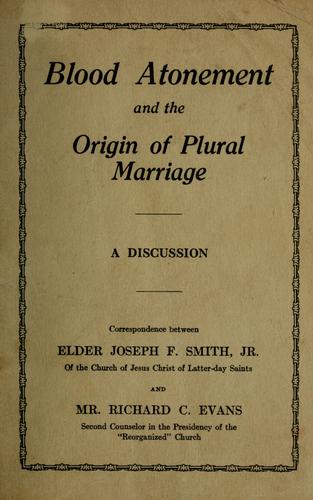
Although this post is not primarily about Mormonism’s doctrine of Blood Atonement, being acquainted with it will help you better understand the concept of Mormon purgatory as well as their version of the unforgivable sin. You can find out more about the Mormon doctrine of Blood Atonement here: The Mormon doctrine of Blood Atonement as taught by Brigham Young and here: The Doctrine of Blood Atonement as taught by the Mormon organization.

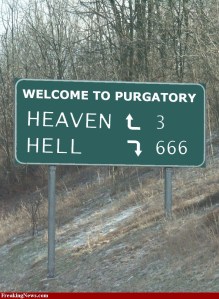
Roman Catholicism is credited with creating the  fictional place between Heaven and Hell called purgatory which they claim is where sinners burn off (atone for) their sins. In reality it was just a way to make more money for Rome. Mormonism, on the other hand, did not invent a new place of torment or suffering, they just employ Hell itself as the place where some sinners pay for their sins.

Where Mormonism’s Blood Atonement leaves off with the sinner paying for his sin on earth, Mormon purgatory picks up in the afterlife.

The following excerpts come from Spencer W. Kimball (the twelfth president, prophet, seer, and revelator of the Mormon church) from chapter nine of his book The Miracle of Forgiveness. After seeing what Mormonism teaches about forgiveness, you’ll wonder what’s so miraculous about it.

From Page 127:

The murderer denies himself salvation in the celestial kingdom, and in this sense he cannot be forgiven for his crime.

So there’s no forgiveness for murderers? Try to find that in Scripture.

From Page 128:

Another scriptural character responsible for murder-and this in conjunction with adultery-was the great King David. For his dreadful crime, all his life afterward he sought forgiveness. Some of the Psalms portray the anguish of his soul, yet David is still paying for his sin.

The Prophet Joseph Smith underlined the seriousness of the sin of murder for David as for all men, and the fact that there is no forgiveness for it. “A murderer, for instance, one that sheds innocent blood, cannot have forgiveness. David sought repentance at the hand of God carefully with tears, for the murder of Uriah; but he could only get it through hell: he got a promise that his soul should not be left in hell.”

Wow! According to Mormonism David is still paying for His sin and he’s in Hell clinging to the promise that eventually he’ll get out because God won’t leave him there forever?

From Page 129:

Man’s mortal life is given him in which to repent and prepare himself for eternity, and should one of his fellowmen terminate his life and thus limit his progress by making his repentance impossible, it would be a ghastly deed, a tremendous responsibility for which the murderer might not be able to atone in his lifetime.

Since when does man atone for any of his own sins? Atonement for sin is what Christ–the spotless Lamb of God–came to earth to accomplish. If man could do it then there would be no need for a Savior.

From Page 131:

Even unpardonable sins should be repented of. The murderer does not have eternal life abiding in him, but a merciful God will grant to every soul adequate rewards for every good deed he does. God is just. He will compensate for every effort to do good, to repent, to overcome sin. Even the murderer is justified in repenting and mending his ways and building up a credit balance in his favor.

Man does not build up his own credit balance. He is incapable of doing such a feat. This is why Christ died, in order to remove our sin and credit His righteousness to us (2 Corinthians 5:21).

As if this wasn’t enough to send you running, on this same page (131) Kimball quoted Joseph Smith when he said that murderers “could not be baptized for the remission of sins, for they had shed innocent blood.” Then Kimball quoted Doctrines & Covenants 42:18 when he said “Thou shalt not kill; and he that kills shall not have forgiveness in this world, nor in the world to come.

So, according to Mormon theology, not only would King David have to suffer in Hell to atone for his sin of murder, but so would the likes of Moses and the Apostle Paul (and they still would not receive forgiveness). Apparently the Apostle Paul was unaware of this minor detail because he was under the (inspired) assumption that “to be absent from the body is to be with the Lord(2 Corinthians 5:8)
and “to live is Christ and to die is gain”  (Philippians 1:21).

And lest you think you’re safe because you’ve never murdered anyone, remember that Jesus equated being angry with your brother to that of murder; both being in danger of the judgment (Matthew 5:21-22).

The Mormon teaching that some sinners are outside the realm of Christ’s atonement and God’s forgiveness is not only completely foreign to the Bible but the Mormon doctrine of Blood Atonement and the idea that murderers cannot be forgiven but must seek repentance while in Hell is utterly blasphemous, for it ascribes to the sinner’s suffering and shed blood a purity and cleansing power that Christ’s suffering and shed blood was supposedly insufficient to provide.

There is only one transgression that the Bible clearly expresses that will not be forgiven, and it is the blasphemy of the Holy Spirit. Matthew 12:31-32 says:


Wherefore I say unto you, All manner of sin and blasphemy shall be forgiven unto men: but the blasphemy against the Holy Ghost shall not be forgiven unto men. And whosoever speaketh a word against the Son of man, it shall be forgiven him: but whosoever speaketh against the Holy Ghost, it shall not be forgiven him, neither in this world, neither in the world to come.

Notice the Bible says that “all manner of sin” will be forgiven except “blasphemy against the Holy Ghost.” Mormonism has once again taken the liberty to add to and alter God’s perspicuous Word.

No sinner is ever justified before God or has their sins cleansed because they died or suffered for their own transgressions. Only sinners who have put their faith in Christ have had their sins removed by Him (Acts 10:43, Romans 5:2, 1 John 3:5), and they are saved from the wrath of God by the precious shed blood of Christ (Romans 5:9, 1 Peter 1;18-19) not by man’s shed blood nor by man suffering in purgatory or Hell.

If we confess our sins, He is faithful and righteous to forgive us our sins and to cleanse us from all unrighteousness. 1 John 1:9

__________________________________________________________

You can read Kimball’s The Miracle of Forgiveness online here.

Mormon prophet lends credibility to a wild claim.

Mormonism is known for its tall tales: Claims of Quaker-like people living on the moon, people living on the sun, God living on the planet Kolob, spiritual vegetables, black skin being a sign that you’re cursed of God, or Joseph Smith’s claim that he was visited by two members of the Trinity in the secluded woods (depending, of course, on which version of his vision you actually believe).  

Then there’s this doosey from Spencer W. Kimball, the twelfth president, prophet, seer, and revelator of the Mormon church writing in his book The Miracle of Forgiveness (pages 127-128) about an encounter a fellow Mormon had with a still-living biblical character.

Meet 6,000+ year-old Cain:

On the sad character Cain, an interesting story comes to us from Lycurgus A. Wilson’s book on the life of David W. Patten. From the book I quote an extract from a letter by Abraham O. Smoot giving his recollection of David Patten’s account of meeting “a very remarkable person who had represented himself as being Cain.”

“‘As I was riding along the road on my mule I suddenly noticed a very strange personage walking beside me—. His head was about even with my shoulders as I sat in my saddle. He wore no clothing, but was covered with hair. His skin was very dark. I asked him where he dwelt and he replied that he had no home, that he was a wanderer in the earth and traveled to and fro. He said he was a very miserable creature, that he had earnestly sought death during his sojourn upon the earth, but that he could not die, and his mission was to destroy the souls of men. About the time he expressed himself thus, I rebuked him in the name of the Lord Jesus Christ and by virtue of the Holy Priesthood, and commanded him to go hence, and he immediately departed out of my sight . . . .”

How an LDS faction is born.

In light of the question posed in Coram Deo’s recent post, and in light of this fictional article about a Mississippi farm boy claiming revelation that the LDS church is apostate, I offer for your listening pleasure an audio piece that you can stream (for free) or download (for a small fee) from the podcast This American Life about how a real faction/split from Mormonism occurs with all sides claiming inspiration, revelation, and heavenly visitations (just like Joseph Smith).

You can find the podcast here. (The part of interest is the first 22 minutes of the hour-long podcast.)

The reason this piece is relevant is because we so often hear the mantra from the Mormon camp that Christianity is false as evidenced by its denominations, while Mormonism is true because they’re one and united, without any splits, divisions, or denominations.

This, like so many other LDS claims, is simply not true. Mormonism is rife with splits and divisions. You can see them chronicled here: The Lie of LDS Unity.

Sermon of the week: “The Deity of Christ – An Examination of the Verses the Cults Use” by Charlie Campbell.

Your sermon of the week is one that defenders of the faith are going to love. The Deity of Christ – An Examination of the Verses the Cults Use by Charlie Campbell examines the eight most commonly used verses that Jehovah’s Witnesses employ to attack Christ’s deity. Campbell does a fantastic job of presenting the texts as the Jehovah’s Witnesses do (twisted and out of context), then he goes point by point as he dismantles each of their misrepresentations using the light of Scripture.

HT: The Atlantic Baptist

Roman Catholicism’s competition in Mexico.

I recently read an article about cults in Mexico that I found absolutely fascinating. It seems that the Roman Catholic organization is experiencing some competition in one of their stronghold nations.

Here’s a quote from the article about the growing worship of fictional drug-trafficking saint, Jesús Malverde:

“The emotional pressures, the tensions of living in a time of crisis lead people to look for symbolic figures that can help them face danger,” says José Luis González, a professor at Mexico’s National School of Anthropology and History who specializes in popular religions. Among the helper figures are Afro-Cuban deities that have recently found their way to new shores and outlaws that have been transformed into miracle workers, like a mythical bandit from northern Mexico called Jesús Malverde. There are even saints from the New Testament repurposed for achieving not salvation but success. In this expanding spiritual universe, the worship of a skeleton dressed in long robes and carrying a scythe—La Santa Muerte—is possibly the fastest growing and, at first glance at least, the most extravagant of the new cults.

There’s a reason for God’s prohibition against graven images and the bowing down to them. Our hearts are truly idol factories and here’s an example of how one such idol was created:

Eligio had been working as a driver in 1976 when he was knifed and shot in a holdup and left for dead. He prayed to Malverde, whose only monument at the time was a pile of rocks where his grave was said to be, promising to erect a proper shrine in Malverde’s honor if the saintly bandit saved his life. When he survived, he kept his word. González appears to have understood that people would grasp Malverde’s real importance only if there were an image of him they could worship, but unfortunately no photograph of Malverde existed—and, in fact, no evidence at all that he’d ever lived. In the 1980s González asked an artisan in the neighborhood to create a plaster bust: “Make him sort of like Pedro Infante and sort of like Carlos Mariscal,” Infante being a famous movie star from Sinaloa and Mariscal a local politician.

And then there’s the skeletal idol of death known as La Santa Muerte reminiscent of the Grim Reaper:

Antonio explains what gives La Santa Muerte her powerful attraction: “La Muerte is always beside you—even if it’s just a little postage stamp that you put up above your cot, you know that she’s not going to move, that she’ll never leave.” . . . El Niño and Antonio say just that La Santa Muerte will grant your prayers—but only in exchange for payment, and that payment must be proportional to the size of the miracle requested, and the punishment for not meeting one’s debt to her is terrible.

I find it ironic that the official position of the Roman Catholic organization is in opposition to the worship of Jesús Malverde and La Santa Muerte when they are one of the worst offenders of idol worship around and seem to have no problem when the idol being worshiped is one that they’ve created.

Mexicans who retain a strong connection to the Roman Catholic faith might turn instead to St. Jude Thaddeus. At a time when no-win situations abound, he is experiencing a rise in popularity comparable only to that of La Santa Muerte, perhaps because he is known in the Catholic Church as the patron saint of desperate causes. . . . St. Jude’s official feast day is October 28, and thousands of his followers feel inspired to come and pray to him on that day every month. Sixteen Masses are celebrated in the parish from dawn to evening, and worshippers crawl to the statue of the saint on their knees, praying for help, protection, and survival.

But let me caution you, before we look down on these souls in Mexico who are steeped in idol worship, let us not forget that we in America are equally as guilty of this sin; our idols just come in different forms (cars, sports, money, status, possessions, self, etc.).

To read the entire National Geographic article (and to view more pictures) visit National Geographic online.

Did God sin?

This video portrays why my heart grieves for these precious souls and why Mormonism and Christianity never has and never will be compatible.

Source: GodNeverSinned.com

The lie of LDS unity.

If I had a nickel for every time a Mormon cited Christendom’s presence of denominations as proof that Christianity is apostate while citing their Mormon unity as proof that they’re the one true church, I’d have . . . well, an awful lot of nickels.

Chances are, if you’ve ever engaged Mormons in a debate you too have experienced this erroneous LDS apologetics tactic. But do not feel at a loss on how to cut through this smokescreen, for below is a list posted by 4 Mormon.org citing the plethora of Mormon splits, divisions, and denominations.

______________________________________________________

MORMON SPLINTER GROUPS

Sects that broke away from the Church of Jesus Christ of Latter-day Saints

Proponents of the Salt Lake City based Church of Jesus Christ of Latter-day Saints (also known as LDS or Mormons) boast of the alleged “unity” of their 12 million membership. Pointing to multiple denominations of Christian churches, Mormons attribute their “unity” (i.e., uniform church structure and belief) to latter-day revelation and to additional books they regard as Scripture.

They challenge the potential convert to read and pray about the Book of Mormon in order to gain a “testimony” of the truthfulness of the book. This “testimony” (consisting of a “burning in the bosom” sensation) is alleged to be the main test for determining whether the potential convert should become a member of the LDS Church. Given the fact that over 100 splinter groups have developed on the foundation of the Prophet Joseph Smith and the Book of Mormon, we question the validity of the Mormon “testimony” in solidifying the Church of Jesus Christ of Latter-day Saints as the sole possessor of the “restored gospel.” Since all of these movements base their authority on the Book of Mormon and the Prophet Joseph Smith, how can a “testimony” gained through praying about the Book of Mormon be sufficient to prove which church of all of these movements one should join? The following list of dissident groups is taken from the book Divergent Paths of Restoration:

FOUNDED BETWEEN 1830 AND 1844

  • Pure Church of Christ, Wycam Clark, 1831
  • The Independent Church, Hoton, 1832
  • Church of Christ, Ezra Booth, 1836
  • Church of Christ, Warren Parrish, 1837
  • The Church of Jesus Christ, the Bride, The Lamb’s Wife, George M. Hinkle, 1840
  • Church of Christ, Hyrum Page, 1842
  • Church of Jesus Christ of Latter Day Saints, F. Gladden Bishop
  • True Church of Jessu Christ of Latter Day Saints, Law, Foster, Higbee, 1844
  • Church of Christ, William Chubby

NON-EXTANT MOVEMENTS FOUNDED 1844-1860

  • Church of Christ / Church of Jesus Christ of the Children of Zion, Sidney Rigdon, 1844
  • Church of Jesus Christ of Latter Day Saints, James Emmett, 1844
  • Church of Christ, S. B. Stoddard, Leonard Rich, James Bump, 1845
  • Indian Mormon, 1846
  • Church of Christ, William McLellin, David Whitmer, 1847
  • Church of Jesus Christ of Latter Day Saints, William Smith, 1847
  • Congregation of Jehovah’s Presbytery of Zion, Charles B. Thompson, 1848
  • Church of Christ, James C. Brewster, 1848
  • Church of Jesus Christ of Latter Day Saints, Lyman Wight, 1849
  • The Bride, The Lamb’s Wife or Church of Jesus Christ of Latter Day Saints, Jacob Syfritt, 1850
  • Church of Christ, Hazen Aldrich, 1851

EXTANT MOVEMENTS

Splinter Groups and Sub-movements of The Church of Jesus Christ of Latter Day Saints, James J. Strang, 1844

  • Church of Christ, Aaron Smith, 1846
  • Church of the Messiah, George J. Adams, 1861
  • Church of Jesus Christ of Latter Day Saints (Strangite)
  • Holy Church of Jesus Christ, Alexandre R. Caffiaux
  • House of Ephraim and House of Manasseh of the Church of Jesus Christ of Latter Day Saints, Jerry Sheppard
  • The True Church of Jesus Christ of Latter Day Saints, David L. Roberts
  • Marriage Counseling Group
  • Church of Jesus Christ of Latter Day Saints, John J. Hajicek
  • Strangite Believers in Pennsylvania

Splinter Groups and Sub-movements of The Church of Jesus Christ of Latter-day Saints, Brigham Young, 1847

  • Church of Jesus Christ of Latter Day Saints or Church of the First Born, Joseph Morris, 1861
  • The Prophet Cainan or Church of Jesus Christ of the Saints of the Most High God, George Williams, 1862
  • Morrisite Group, John Livingston, 1864
  • Church of Zion, William S. Godbe, 1868
  • Church of the First Born, George S. Dove, 1874
  • Priesthood Groups (Fundamentalists), 1890
  • United Order of Equality, Ephraim Peterson, 1909
  • The Church of Jesus Christ of Israel, J. H. Sherwood
  • Order of Aaron, Maurice L. Glendenning
  • Church of Freedom of Latter Day Saints, 1950s
  • Zion’s Order of the Sons of Levi, Marl V. Kilgore, 1951
  • The Church of the Firstborn of the Fulness of Times, Joel F. LeBaron
  • The Church of the Firstborn, Ross W. LeBaron, 1955
  • Perfected Church of Jesus Christ of Immaculate Latter Day Saints, William C. Conway, 1958
  • Church of Jesus Christ of Latter Day Saints, John Forsgren, 1960
  • Church of Jesus Christ, William Goldman, 1960
  • LDS Scripture Researchers/Believe God Society, Sherman Russell Lloyd, 1965
  • The Church of the Body and of the Spirit of Jessu Christ, Max Powers, 1965
  • United Order of the Saints of Guadeloupe, Michel Gamiette, 1966
  • United Order of the Family of Christ, David E. Desmond, 1966
  • Split from Zion’s Order of the Sons of Levi, Eldon Taylor, 1969
  • Homosexual Church of Jesus Christ, Denver, Colorado, 1972
  • Latter Day Saints Church, N.S. Park, 1972
  • The Church of the Lamb of God, Ervil M. LeBaron, 1972
  • The Church of Jesus Christ of Latter Day Saints, Mikhail Krupenia, 1972
  • The New Jerusalem Group, Kathryn Carter, 1972
  • The Watchmen on the Towers of Latter Day Israel, Miltenberg, Braun, 1973
  • Church of Jesus Christ in Solemn Assembly, Alexnader Joseph, 1974
  • Evangelical Church of Christ, Church of the New Covenant in Christ, John W. Bryant, 1974
  • Split form Zion’s Order of the Sons of Levi, Barton Kilgore, 1975
  • Affirmation, 1975
  • Church of Jesus Christ of Latter Day Saints, Robert Simons, 1975
  • Church of the Firstborn of the Fulness of Times, Bruce Wakeham, 1975
  • Aaronic Order Break-off, 1977
  • Christ’s Church, Inc., Gerald Peterson, 1978
  • Church of Jesus Christ, Art Bulla, 1978
  • The Restorers or School of the Prophets, Robert C. Crossfield, 1979
  • Zion’s First International Church, LeeAnn Walker, 1980
  • The Free Will Mormon Church, Franklin Lee Coleman, 1980
  • Church of Jesus Christ, Jorge Mora, 1981
  • Sons Ahman Israel, Davied Israel, 1981
  • Samoan LDS Church, New Zealand, 1981
  • The Millennial Church of Jesus Christ, Leo P. Evoniuk, 1981
  • Peyote Way Church of God, Immanuel P. Trujillo, 1981
  • The Chruch of Jesus Christ of the Saints in Zion, Ken Asay, 1984
  • Break from the Church of Jesus Christ in Solemn Assembly, 1984
  • Church of Jesus Christ of All Latter-day Saints or Restoration Church of Jesus Christ, Antonio A. Feliz, 1985
  • Church of Christ of Latter-day Saints, Robert P. Madison, 1985
  • Church of Christ the Firstborn of the Fulness of Times, Siegfried J. Widmar, 1985
  • Church of Jesus Christ of Latter Day Saints Fundamentalists, Wight Family, 1985
  • Mormon Fundamentalists, England, Alan and Marian Munn, 1986
  • Churchof Jesus Christ Omnipotent, 1987
  • Community of Zion, Central Utah Division
  • Church of the First Born, General Assembly

Splinter Groups and Sub-movements of The Church of Jesus Christ, Alpheus Cutler, 1853

  • Church of Jesus Christ, Clyde Fletcher, 1953
  • The Restored Church of Jesus Christ, Eugene O. Walton, 1979

Splinter Groups and Sub-movements of The Reorganized Church of Jesus Christ of Latter Day Saints, 1851-1860

  • Church of the Christian Brotherhood, Richard C. Evans, 1917
  • The Church of Christ, the Order of Zion, John Zahnd, 1918
  • The Church of Jesus Christ, Thomas W. Williams, 1925
  • Church of Jesus Christ Restored, Stanley M. King, 1970
  • New Jerusalem Church of Jesus Christ, Barney Fuller, 1975
  • Church of Christ Restored, Paul Fishel, 1976
  • True Church of Jesus Christ of Latter Day Saints, Forrest Toney, 1980
  • Church of the Restoration or Churches of Christ in Zion, Robert Chambers, 1981
  • Lamanite Ministries for Christ or New Covenant Ministries for Christ, 1984
  • Restoration Branches Movement, 1984
  • Church of Jesus Christ, the Lamb of God, A. Lee Abramson, 1985
  • Church of Jesus Christ, Zion’s Branch, John Cato, 1986
  • Church of Christ, David Clark, 1986
  • Independent Church of Jesus Christ of Latter Day Saints, Christopher C. Warren, 1986
  • Native Indian Church

Splinter Groups and Sub-movements of The Church of Jesus Christ, William Bickerton, 1862

  • Reorganized Church of Jesus Christ, Allen Wright, 1907
  • Primitive Church of Jesus Christ, James Caldwell, 1914

Splinter Groups and Sub-movements of Church of Christ (Temple Lot), Granville Hedrick, 1863

  • Church of Christ, Independent, Informal, Frank F. Wipper, 1927
  • The Church of Christ, Otto Fetting, 1929
  • Church of Christ, P.A. Ely, 1929
  • Church of Christ, C.W. Humphrey, 1929
  • Church of Christ, Samuel Wood, E.J. Trapp, 1930
  • Church of Christ (Restored), A.C. DeWolf, 1936
  • Church of Christ, E. E. Long, Thomas Nerren, 1936
  • Church of Christ, Paul Hilgendorf, 1942
  • The Church of Christ With the Elijah Message, W. A. D. Draves, 1943
  • Church of Christ, Pauline Hancock, 1946
  • Antarctica Development Interests or the New American’s Mount Zion, John Leabo, 1955
  • Church of Christ at Zion’s Retreat, Gerald Hall, 1973
  • The Church of Israel, Dan Gayman, 1973
  • Break from the Church of Christ (Hancock), Davison, Michigan, 1973
  • The Church of Christ, Restored Gospel 1929, 1985

Sermon of the week: “A Final Word” by Angelo Sanchez.

What message would you deliver to your congregation if it was your final sermon after twenty years as their pastor?

Find out what candid words of exhortation and warning Pastor Sanchez has for not only his congregation but also for the pastor taking his place in the message A Final Word.

This message delivered to his congregation after two decades of service is very revealing and should be heard by all pastors and their congregations, especially new pastors entering into ministry.

Glenn Beck’s Trojan Horse.

Last year, Mormon radio host Glenn Beck swept the conservative political movement off its feet (and many Evangelical Christians as well) with his Divine Destiny rally.

At that time (and since) many non-discerning Christians have embraced Glenn Beck as a brother in Christ and have even made excuses and justifications for his Mormon theology (a theology that’s antithetical to biblical Christianity).

But now, while Beck’s Trojan Horse sits benevolently within the walls of Evangelicalism, the trapdoor on the underbelly of the wooden horse is opening to reveal its contents . . . and it isn’t pretty.

Brannon Howse has written an article on Beck’s new book (co-authored by Keith Ablow).  The book, entitled The 7 Wonders That Will Change Your Life, has revealed Beck’s New Age leanings. And judging by the quotes cited from Beck’s book, it makes Joel Osteen’s Your Best Life Now look like a doctrinally sound tome of deep Christian theology.

Below are some of the quotes from Beck’s book that I obtained from Brannon Howse’s article (you can read the entire exposé here.)

I can’t help but wonder if the Mormon organization is going to publicly renounce the New Age teachings in Beck’s book (and discipline Beck), and I wonder if the Christians who supported Beck–claiming that he was indeed a Christian–are going to retract their support (or at least distance themselves).

Page 154:

“As Keith likes to say, ‘There’s no original sin left in the world. Everyone’s just recycling pain now.'”

Page 165:

“People are inherently good.”

Page 157:

“Finding what worked for me made all the difference. Finding what works for you will do the same.”

Page 162:

“There is no infant delivered evil, out of the womb. There never has been. Not even one…Charles Manson was not born evil. Ted Bundy wasn’t. The BTK killer wasn’t. Hitler wasn’t.”

Page 149:

“Latter-day Saints do not believe that your chances ever cease, even with death. They end only with the full understanding and denial of truth by your own exercise of real free will. And even then there is no ‘lake of fire.'”

Page 149-150:

“I questioned everything I could think to question about the faith. I went over my doubts again and again with the church bishop. I read everything there was to read on their website and every word of Mormon Doctrine…I went to anti-Mormon literature for hints, but I found most of it to be unfair or just plain wrong. I tried every trick I could think of to find a contradiction. The problem was that I couldn’t. Mormonism seemed to explain the world and my place in it better than any other faith I had looked at.”

Page 132:

“Pray to whatever higher power you believe in…Praying that God or Nature or the Cosmos or your own internal, immeasurable reservoir of spirit allows you the courage and faith to find and then face the truth…”

Page 74:

“Just be sure you visit with a minister or therapist from a religion or healing discipline you actually have affinity for, or suspect you might.”

Page 57:

“The third chapter of Exodus helped me start to understand how crucial it was that my focus be on finding God not just in the seas or the cosmos, but in myself.”

Page 58:

“If God is everything and everywhere and inside everyone, then I figured He had to be inside me, too…”

Page 71:

“Divine power is still inside you.”

Page 283:

“Reach out to people to steady them and enrich them and reflect back to them the light that comes from God inside them.”

Page 254:

“You won’t doubt your ability to achieve what you want to achieve in this life because you won’t doubt that God is not only by your side, but inside you.”

Page 79:

“You have a polestar inside you. It is connected with all the energy in the universe. When you begin to follow that star you align yourself with immeasurable, inexplicable forces that will actually help you manifest your best intentions.”

Page 85:

“As you commit to unlocking and bringing forth the truth inside you, don’t be afraid to pray for help. Don’t be reticent to sit with yourself in silence and meditate. Connect with the miracle of spirit, of God, that has lived inside you from long before you were born.”

Brannon Howse also aptly observes Beck and Ablow’s common application of terms of subjective truth:

Beck’s book uses the phrase “Your truth” or “your true path” or “my truth” at least 23 times. Here are a few examples:

“It is never too late to embrace your truth.” (Page 124)

“What is your truth whispering?” (Page 130)

“Use compassion to stay on the path to your own truth… (Page 161)

“…determination to unearth and embrace my truth.” (Page 215)

“The fact that I am always attempting to honor my truth… (Page 216)

“There is only your truth.” (Page 220)

“You must use courage and faith to empty the hard drive of your soul and then fill it with your truth.” (Page 288)


Is Joseph Smith the gateway to heaven?

Joseph Fielding SmithAbsolutely amazing blasphemies from the Mormon church:
“[There is] “no salvation without accepting Joseph Smith. If Joseph Smith was verily a prophet, and if he told the truth…no man can reject that testimony without incurring the most dreadful consequences, for he cannot enter the kingdom of God” -Joseph Fielding Smith, Doctrines of Salvation, vol. 1, p.190
George Q. Cannon
“If we get our salvation, we shall have to pass by Joseph Smith; if we enter our glory, it will be through the authority he has received. We cannot get around him.” -1988 Melchizedek Priesthood Study Guide, p. 142, Apostle George Q. Cannon
Brigham Young

“He that confesseth not that Jesus has come in the flesh and sent Joseph Smith with the fullness of the Gospel to this generation, is not of God, but is anti-christ.” -Brigham Young, Journal of Discourses, vol. 9, p.312

“No man or woman in this dispensation will ever enter into the celestial kingdom of God without the consent of Joseph Smith…every man and woman must have the certificate of Joseph Smith, junior, as a passport to their entrance into the mansion where God and Christ are… [Joseph Smith] reigns there as supreme a being in his sphere, capacity, and calling, as God does in heaven. Many will exclaim—”Oh, that is very disagreeable! It is preposterous! We cannot bear the thought!” But it is true.” -Brigham Young, Journal of Discourses, vol. 7, p.289-91

Gordon B. Hinckley

“Our entire case as members of The Church of Jesus Christ of Latter-day Saints rests on the validity of this glorious First Vision. … Nothing on which we base our doctrine, nothing we teach, nothing we live by is of greater importance than this initial declaration. I submit that if Joseph Smith talked with God the Father and His Beloved Son, then all else of which he spoke is true. This is the hinge on which turns the gate that leads to the path of salvation and eternal life.” -Gordon B. Hinckley, Ensign Mag., Nov. 1998, pp.70-71

Orson Hyde

“I tell you, Joseph holds the keys, and none of us can get into the celestial kingdom without passing by him. We have not got rid of him, but he stands there as the sentinel, holding the keys of the kingdom of God; and there are many of them beside him. I tell you, if we get past those who have mingled with us, and know us best, and have a right to know us best, probably we can pass all other sentinels as far as it is necessary, or as far as we may desire. But I tell you, the pinch will be with those that have mingled with us, stood next to us, weighed our spirits, tried us, and proven us: there will be a pinch, in my view, to get past them. The others, perhaps, will say, If brother Joseph is satisfied with you, you may pass. If it is all right with him, it is all right with me. Then if Joseph shall say to a man, or if brother Brigham say to a man, I forgive you your sins, “Whosoever sins ye remit they are remitted unto them;” if you who have suffered and felt the weight of transgression—if you have generosity enough to forgive the sinner, I will forgive him: you cannot have more generosity than I have. I have given you power to forgive sins, and when the Lord gives a gift, he does not take it back again.” -Apostle Orson Hyde, Journal of Discourses, Vol. 6, p.154-155

But what saith the eternal Word of God?

1 Timothy 2:5

For there is one God, and one mediator also between God and men, the man Christ Jesus.

John 14:6

Jesus said to him, “I am the way, and the truth, and the life; no one comes to the Father but through Me.

Source: MormonWiki

Mark Hofmann’s parole board letter released.

The handwritten letter by Mormon forger and bomber, Mark Hofmann, to his parole board in 1988 has finally been released.

For those not familiar with Hofmann and the great Salamander Letter controversy, here’s a synopsis:

Mark Hofmann fooled the prophets and leaders of his church in the 1980s when he began making a lucrative living by selling them forged (fake) documents that were damaging to Mormonism. These documents were purchased by the Mormon church and archived away (or destroyed) so that no one would ever see them.

(The fact that LDS prophets were so easily fooled by forgeries is telling, as well as the fact that the LDS leadership–thinking the documents were genuine–were willing to pay a lot of money to procure them from Hofmann to keep the world from seeing them. These two facts alone speak volumes about Mormonism . . . but I digress.)

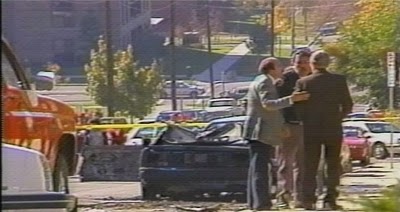
Once Hofmann’s scam began to unravel he resorted to bombs. In the end, two people were killed and Hofmann was seriously injured when one of the bombs detonated prematurely.

For a more detailed examination of the incident, I highly recommend the book The Mormon Murders.  It is a riveting page-turner investigated and written by two secular (non-Mormon, non-Christian) authors.

Hofmann opened his letter to the Utah parole board with this amazing statement:

“These are some of my thoughts concerning my crimes and how I became what I am. As far back as I can remember I have liked to impress people through my deceptions. In fact, some of my earliest memories are of doing magic and card tricks. Fooling people gave me a sense of power and superiority. I believe this is what led to my forging activities.”

You can read the whole letter (in PDF format) here.

For those of you who have studied early Mormon history (pre-revisionism), I am certain that you find the same irony in this quote as I did: This quote could easily be ascribed to Mormonism’s founder, Joseph Smith, and it would be just as accurate and apropos.

It’s true that the fruit never falls far from the tree.

(FILE | The Salt Lake Tribune) Mark W. Hofmann, left, and LDS Church leaders N. Eldon Tanner, Spencer W. Kimball, Marion G. Romney, Boyd K. Packer and Gordon B. Hinckley examine the Anthon transcript April 22, 1980.

Quotes (845)

Catholics are taught to believe a miracle has occurred when the inner essence of the host (wafer) is changed into the body and blood of Christ even though it still looks and tastes like a wafer. Can you think of any miracle in the Bible that never appeared to happen?

– Mike Gendron

Sermon of the week: “The Socinians” by Phil Johnson.

We conclude our five-part series by Phil Johnson entitled A Survey of Heresies with The Socinians.

If you’ve missed any of our past installments from this series, you can download the entire series here.

Old Mormon vs New Mormon: Celestial Marriage.

DefCon presents another installment of Old Mormon vs New Mormon.

See our previous installment Old Mormon vs New Mormon: The Missouri Prophecies here.