Source: OverruledMovie.com and ParentalRights.org

 In the recent past I’ve attempted to address some of the concerns I’ve had with those who use defending the faith as a conduit to unleash a torrent of scathing attacks in harsh-toned debates and disagreements with those whom they’re in disagreement with. I posted two such admonitions this past year: One was a sermon on combative Calvinists and the other was a short video on pride and defensiveness.
One of the biggest challenges for those engaging in online discussions and debates while defending the Christian faith (and the Doctrines of Grace) is the temptation to be harsh and snarky, and how easy it is to fall into that mindset without even trying.
Thankfully, this detriment-to-the-gospel type of blogging is the exception and not the norm, but even so, it still needs to be addressed.
I am publishing this post as a check for all of us who engage in online apologetics, and pray that this will help to refocus us on the purpose of our blogging.
It would also be of great benefit if we ask others to critically review what we’re writing in posts and in comment threads, and be willing to take their opinions and criticisms with an open and graceful heart.
I seriously want you to take a moment to reflect on whether or not you are one of these venomous bloggers. We must all examine ourselves, our spirit, and our motivations, and the following questions may be a good start:
– Is the vast majority of what you are producing coming from a negative attitude, inciting unnecessary argumentative debates when kinder words would have sufficed and been more effective?
– Is your writing known more for its condescending tone than its content?
– Are your words bitter and acidic, or are they kind and salted with grace?
– Is your response to people who disagree with you snarky and vitriolic, or graceful and from a heart of love?
– Do you write for the sole purpose of seeking out someone who doesn’t hold to your views so you can have an opportunity to publicly disembowel them with your superior intellect, or do you put material out there to educate, encourage, help, and edify others while simultaneously contending for the faith?
– Do you look at those deceived by false doctrine with contempt, or do you grieve for them and seek to lovingly correct them lest they should eternally perish?
If you are taking pleasure in your abrasive monologues and predictably harsh dialogues, I beg you to check your spirit and reevaluate why you do what you’re doing.
For those of you who are not sure of what I am talking about, I offer the following samples from the blogging world, including the unnecessary practice of name calling (e.g. referring to Arminians as “Armidiots”):
“Took this illiterate Armidiot flunky a full week to devise this moronic non sequitur of a ‘comeback.’ . . . ‘a 2-ton jumping, screaming elephant in a tool shed is all but invisible to an Armidiot like yourself . . .’. God help me, I really, truly DISLIKE Armidiots, and would hate to think they are bound for the same Heaven as are Bible-believers. Let them simmer evermore in their infernal ‘Freewill Paradise.'”
And
“Not sure what, if anything, he is ‘smoking,’ but Roger Olson is a loose, slutty whore (spiritually speaking).”
And
“. . . your obstinate BLINDNESS to the most BASIC and ESSENTIAL facts is nothing short of wicked perversion. And it’s exactly what one expects from today’s Armidiot. I’m curious to know, ol’ scholar, which ‘strong Calvinist Bible College’ you slept through, and how in HELL you managed to pilfer a diploma from the stack before your expulsion.”
There truly is no place for name calling in our defense of the faith. As far as I’m concerned this is completely unacceptable behavior and has gone far beyond the scope of how a Christian apologist should be corresponding with believers and unbelievers alike.
This type of exchange is in no way beneficial or instructive to the target of these angry words nor is it edifying to anyone else who happens to read it. This kind of discourse in the name of Christ and sound theology is grieving and should rightly be condemned.
I appeal to the coarse and caustic Calvinistic Christians to quit bringing reproach on the gospel with such inflammatory and pungent speech.
I recently wrote about how Christians’ behavior breeds atheism, but is your caustic Calvinism breeding Arminianism? Is it repelling people from ever considering the Doctrines of Grace?
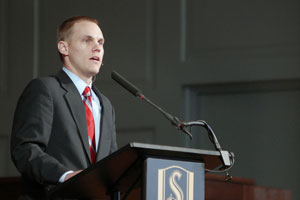 We continue our Saturday sermon series from David Platt. The Gospel Demands Radical Compassion is part three in this eight-part series.
This series was the inspiration for Platt’s book, Radical.
Here is the description of the series:
“In the same way, any of you who does not give up everything he has cannot be my disciple.” With these words, Jesus turned away large crowds who were following Him. With grace and authority, He beckoned potential followers to consider the demands of discipleship. For most, the price was too high and the cost was too great. In the 2000 years since Jesus spoke these words, it begs the question: Do we in contemporary Christianity realize the high price of following Jesus? Do we understand the great cost for all who call themselves followers of Christ? Take a closer look at the words of Jesus that require us to consider the implications of the Gospel for every facet of our lives.
 Do you pray as a benefactor or a beggar? Do you pray at all?
You won’t want to miss this Thursday’s sermon of the week by Akash Sant Singh, A Praying Family.
Pastor Akash tears down the false notion of God being our cosmic vending machine, and he cuts to the quick regarding our prayer life and the many excuses we make for the lack thereof. As always, Pastor Akash steps on toes but with love and grace, and all for the glory of the Lord.
 We continue our Saturday sermon series with the second installment from David Platt’s series Radical which inspired the book by the same name.
This week’s message is The Gospel Demands Radical Sacrifice (you can find last week’s message here).
This sermon series is one of the most sobering and deeply challenging that I’ve ever listened to. I have found it to be incredibly convicting and trust that you will too.
 Your sermon of the week is Brokenness by Voddie Baucham. This is a powerful message on King David’s brokenness that you won’t want to miss (unless of course you’re a Rob Bell fan or like the book The Shack since Baucham pulls no punches on these conduits of false doctrine). This is one of Baucham’s best messages and I encourage all DefCon readers to download this one.
Joel Osteen introduces his audience to someone he describes as a “world changer,” a “history maker,” and “one of the great voices of our generation.”
And the crowd goes wild!
You’ve enjoyed Ten (very) quick questions for Jehovah’s Witnesses, Ten more (very) quick questions for Jehovah’s Witnesses and Another ten (very) quick questions for Jehovah’s Witnesses. DefCon presents ten more questions from Keith Walker of Evidence Ministries. Viewer discretion advised on the fourth video below.
1.
2.
3.
4.
5.
6.
7.
8.
9.
10.
 Yes, I’m going to do it. Starting today I am going to post a series of sermons so weighty and so sobering that I dare say they rival any other sermon ever presented on DefCon in the area of depth of conviction. If you don’t believe me, I dare you to listen to today’s message (part one in the series) entitled What the Gospel Demands.
For the next eight Saturdays I challenge all the readers of DefCon to listen to this series. Some of you will be glad you did, but some of you may be angry with what you hear and refuse to listen to any more after today.
I expect some to be repentant due to deep conviction after listening to this message. And I even expect some to be very angry due to that same conviction after listening to this message. But I can’t fathom anyone being indifferent to this message.
I warn you, though, this series will end on Saturday, December 24th, and more than likely it will damper your current view of the upcoming self-indulgent Christmas festivities.
As a follow-up to last week’s two-part message on Christian work ethic by Brian Borgman (found here), DefCon is pleased to present another two-part message on this same subject by Akash Sant Singh entitled The Gospel Revolution in Work. This is a great message that every Christian should listen to whether they work in the home or outside of the home.
The Sola Sisters have posted a doozey about Mark Driscoll talking to demons and giving extra-biblical advice on how to perform exorcisms.
Had I only read the transcript from the following video–not knowing who it came from–I would have never guessed it came from Mark Driscoll. I would have been sure it came from someone who frequents TBN.
Be sure to visit the Sola Sisters article (linked above) for more on this latest movement away from biblical Christianity by Mark Driscoll.
The gospel reveals eternal realities about God that we would sometimes rather not face. We prefer to sit back, enjoy our clichés, and picture God as a Father who might help us, all the while ignoring God as a Judge who might damn us. Maybe this is why we fill our lives with the constant drivel of entertainment in our culture—and in the church. We are afraid that if we stop and really look at God in His Word, we might discover that He evokes greater awe and demands deeper worship than we are ready to give Him.
– David Platt

A lesson for all of us to consider from the puritan Joseph Meade:
I once walked into a garden with a lady to gather some flowers. There was one large bush whose branches were bending under the weight of the most beautiful roses. We both gazed upon it with admiration. There was one flower on it which seemed to outshine all the rest in beauty. This lady pressed forward into the thick bush, and reached far over to pluck it. As she did this, a black snake, which was hid in the bush, wrapped itself round her arm. She was alarmed beyond all description; she ran from the garden, screaming, and almost in convulsions. During all that day she suffered very much with fear. Her whole body trembled, and it was a long time before she could be calmed. That lady is still alive. Such is her hatred now of the whole serpent race, that she has never since been able to look at a snake, even a dead one. No one could ever persuade her to venture again into a cluster of bushes, even to pluck a beautiful rose.
Now this is the way the sinner acts who truly repents of his sins. He thinks of sin as the serpent that once coiled itself around him. He hates it. He dreads it. He flees from it. He fears the places where it inhabits. He does not willingly go into the haunts. He will no more play with sin than this lady would afterwards have fondled snakes.
 For the next two weeks DefCon will be bringing you sermons on the subject of Christian work ethic and how the gospel plays out in our vocations.Whether you work outside the home, from home, are a homemaker, a boss, an employee, a student, a husband, a wife, or a child, the next two weeks are for you.
This week we present Brian Borgman’s message entitled The Christian Work Ethic, and next week we’ll present a different message from a different pastor dealing with the same topic.
I trust that the convicting admonishments of the next two weeks will ultimately be an encouragement to you in whatever vocation God currently has you.
(See also the follow-up to Borgman’s message: The Gospel Revolution in Work by Akash Sant Singh.)
You’ve enjoyed Ten (very) quick questions for Mormons, Ten more (very) quick questions for Mormons, and Another ten (very) quick questions for Mormons. DefCon now brings you ten more questions from Keith Walker of Evidence Ministries.
1.
2.
3.
4.
5.
6.
7.
8.
9.
10.
 Children are seen as complications, or even obstacles, in the perpetual quest for fun, excitement, and fulfillment. To see this attitude among the ungodly is to be expected. . . . What should alarm us, however, is that Christians are making the same complaint. In reality, these complaints by frazzled mothers worn out by “hyperactive” or “strong-willed” children (an earlier generation would have called them unruly) are merely symptoms of a disease. The root cause of this disease is the rejection of the commands of God: Christian families have brought this affliction upon themselves by following the “empty and deceitful” philosophies of the world. Although most evangelicals pride themselves that they are–unlike the “liberal churches”–true to the Bible, many of these evangelical leaders and authors adhere to the same philosophy of child training as the non-Christian educators and psychologists.
– William & Colleen Dedrick
From: The Little Book of Christian Character & Manners
 I just read an excellent article from NCR on Chuck Colson’s position on the issue of Mitt Romney’s Mormonism and its pertinence in American politics. Although the author of the article is Roman Catholic (which leads him to some erroneous conclusions like suggesting that Romanism is Christian), he does make some great points about this issue that Evangelical Christians should be cognizant of, while simultaneously pinpointing some of Chuck Colson’s poor misuse of Scripture.
Here’s an excerpt from the article:
Mormons are polytheists. They believe that the Father, the Son and the Holy Spirit are three different gods,that there are countless other gods besides, and that somewhere there is a “God the Mother” with whom the Father celestio-biologically reproduced Jesus.
Further, they believe that we are the same species as the gods and that by being a good Mormon you can grow up to be a divinity with your own planet of billions of people worshipping you.
Worse, they claim that actual Christianity is a false and degraded, apostate Christianity. That they are the true, restored Christianity.
They are therefore polytheists of a type that goes way beyond ancient paganism. Back then apotheosis was reserved for the emperor or the pharaoh, but more importantly polytheists did not claim to be Christians, much less to be the only true expression of Christianity with actual Christianity being a theological perversion.
Mormonism thus subverts the core doctrine of Christianity (the doctrine of God), passes off true Christianity as a counterfeit, and holds itself out to the public to be the genuine article.
You can read the entire article here, and as usual, the Mormons have flooded the comment section of the article.
______________________________________________
See also:
Should a Christian vote for Mitt Romney?
Should Christians vote for the lesser of two evils?
A shocking realization if a Mormon becomes president of the United States.
 But when Christ appeared as a high priest of the good things to come, He entered through the greater and more perfect tabernacle, not made with hands, that is to say, not of this creation; and not through the blood of goats and calves, but through His own blood, He entered the holy place once for all, having obtained eternal redemption. For if the blood of goats and bulls and the ashes of a heifer sprinkling those who have been defiled sanctify for the cleansing of the flesh, how much more will the blood of Christ, who through the eternal Spirit offered Himself without blemish to God, cleanse your conscience from dead works to serve the living God?
– Hebrews 9:11-14
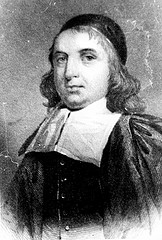 Those who sweat in worldly pursuits are commonly cold in godly pursuits.
– William Jenkyn
1613–1685

 Christ Alone Wyoming