The poorest man in the world.

The following sobering piece comes from the Fruin family currently serving as missionaries in Mexico:
_____________________________

The Meeting
It was dusk on Friday evening as we were driving up the dirt road that we call the short-cut to our home that sits in the middle of a ranch in northern Mexico. We were on an uphill, curving section that is very stony and rutted. The combination of road conditions and deep shadows required my undivided focus. “Watch out,” cried my wife, “I think that’s a man!” I had not seen anything but, directed by her gaze, I saw what did indeed appear to be a man just beside the right front corner of our full sized van. His dingy clothing served as camouflage on the unpaved road. I had just missed putting our wheel directly through his body lengthwise. He did not jump up. He did not dodge. “He must be passed out,” I thought to myself. He had moved ever so slightly assuring me he was not dead. The terror of nearly accidentally killing someone began to fade and, as will happen at times like these, was replaced by anger and indignation. “Some fool had become so inebriated that he passed out in the middle of the road,” I reasoned.
Continue reading here.

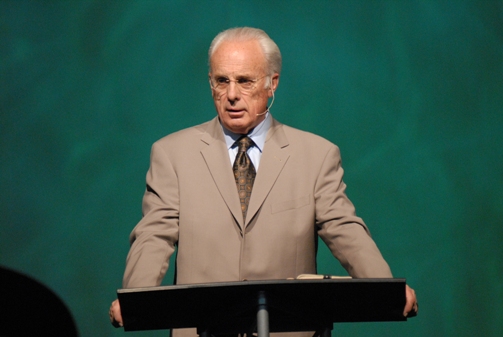
Sermon of the week: “A Tale of Two Sons” by John MacArthur.

John MacArthur Your sermon of the week is a wonderful exposition of the parable of the prodigal son like you’ve never heard before, entitled A Tale of Two Sons. This sermon by John MacArthur was delivered at the 2006 Resolved Conference.

I found this to be a delightfully fresh teaching on this well-known parable, an insight that will make you look at this parable in a whole new–and much deeper–light.


Phil Johnson on MacArthur and “Lordship Salvation”

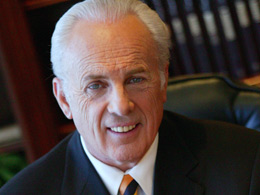
In the whole debate over “Lordship Salvation”, John MacArthur has had a big red target painted on him, and those who teach “easy-believism” have strung him up and flung him into the depths of Hell because of one paragraph of one book he wrote 7 years ago (“Hard To Believe”). See, the “easy-believer®” doesn’t want to hear the fact that if a person is saved, they will show evidence of their salvation through good works (even though the Holy Writ is clear in many places, such as James 2:14-24 and Ephesians 2:10) that believers are saved in order to perform good works–not that those good works save them. They are so focused on painting Johnny Mac as a heretic, that–well, why bother letting the facts get in the way?

Now, let me ask you this: who would give you a better and more accurate picture of what I believe–someone who heard me say something seven years ago–or someone who hears me teach every week, who knows me personally, and has heard me explain my beliefs over the last several years?

The same question can be asked of those who continue to bash Dr. MacArthur. Who would give you a better and more accurate picture of what he believes–someone who read one paragraph of one book written seven years ago–or someone who knows him personally, works with him every day, and in fact is the editor of most of Dr. MacArthur’s books?

Phil Johnson is the editor of Dr. MacArthur’s books, and is closer–much closer–to Dr. MacArthur than those who continue to smear Dr. MacArthur’s name with accusations based on a statement that Dr. MacArthur never made to begin with. The statement in question is:

Salvation isn’t the result of an intellectual exercise. It comes from a life lived in obedience and service to Christ as revealed in the Scripture; it’s the fruit of actions, not intentions.

Now, it certainly sounds like Dr. MacArthur is teaching salvation by works. But, here’s the kicker–Dr. MacArthur never wrote those words! Here is the explanation from Phil Johnson, posted over at Paleoevangelical (Phil Johnson’s words are in green, Lou Martuneac’s words are in blue, text pertaining to the revision is in purple)–

Continue reading

Sermon of the week: “A Theology of Creation” by John MacArthur.

John MacArthur Two weeks ago we concluded our evolution / creation series by John MacArthur entitled The Battle for the Beginning. As a follow-up to that series I present this week’s sermon of the week by John MacArthur entitled A Theology of Creation.

This is a great message that covers the subject of creation, evangelicals who reject the first two chapters of Genesis for other theories about creation, and concludes with examining evangelicals who have bought the lie of radical environmentalism (who are “working for the Lord” by trying to preserve the very earth God cursed back in Genesis).

This will surely step on the worldview toes of many emergents, liberals, and post-moderns.


Sermon of the week: “The Implications of Evolution” by John MacArthur.

John MacArthur Your sermon of the week is the final installment from John MacArthur’s series The Battle for the Beginning, entitled The Implications of Evolution. We’ve been featuring this series every other week since May and you can find the whole series on MacArthur’s website here.

We will be featuring one more sermon from MacArthur on the subject of creation (unrelated to this particular series) in two weeks.

Sermon of the week: “Creation, Day 6” by John MacArthur.

John MacArthur Your sermon of the week is Creation, Day 6 by John MacArthur (three parts) from his series The Battle for the Beginning. We’ve been featuring this series every other week. The next installment will be in two weeks.

Creation, Day 6 (Part One)

Creation, Day 6 (Part Two)

Creation, Day 6 (Part Three)

Sermon of the week: “Creation, Day 2” by John MacArthur.

John MacArthur Your sermon of the week is Creation, Day 2 by John MacArthur from his series The Battle for the Beginning. We’ve been featuring this series every other week on DefCon. The next installment will be in two weeks.

Sermon of the week “The How, Why, and When of Creation” by John MacArthur.

John MacArthur Your sermon of the week is the third edition of John MacArthur’s The Battle for the Beginning series with a two-part message entitled The How, Why, and When of Creation.

The How, Why, and When of Creation (Part One)

The How, Why, and When of Creation (Part Two)

Sermon of the week: “God – Creator and Redeemer” by John MacArthur.

John MacArthur This is the next installment on the subject of creation vs evolution by John MacArthur from his series The Battle For the Beginning. It is entitled God: Creator and Redeemer. Look for the next installment in two weeks.

Sermon of the week: “Creation – Believe it or Not” by John MacArthur.

John MacArthur We’re beginning a new series here on DefCon by John MacArthur on the subject of God’s  creation (versus man’s theory of evolution) from his series The Battle for the Beginning. We begin with the following two-part message entitled Creation – Believe it or Not.

Creation: Believe it or Not (Part One)

Creation: Believe it or Not (Part Two)

Look for the next installment in two weeks.


Sermon of the week: “Ministry in an Age of Itching Ears” by John MacArthur.

John MacArthur Today’s sermon is another great one from John MacArthur entitled Ministry in an Age of Itching Ears.  This is not a message that most American pastors would appreciate; which is precisely why it’s DefCon’s sermon of the week.

Sermon of the week: “The Atonement: Real or Potential?” by John MacArthur.

John MacArthur Your sermon of the week is a fantastic one. Grab a pen and paper because you will be taking copious notes (I had to keep pulling the car over to write). I bring you this Thursday’s sermon by John MacArthur entitled The Atonement: Real or Potential?

This is a great message. The only disappointment I had was that in this 30 minute sermon MacArthur did not (in my opinion) spend enough time dealing with the arguments against limited atonement. For another great sermon on limited atonement in which the opposing arguments are dealt with in greater depth, check out the sermon Grace Secured: Limited Atonement found on this post.

MacArthur sums up the universalist atonement proponent’s argument perfectly when he says those who reject limited atonement believe that Jesus died for everybody in general, and no one in particular.

Sermon of the week: “Sheep Among Wolves” by John MacArthur.

John MacArthur Your sermon of the week is a two part message by John MacArthur entitled Sheep Among Wolves. MacArthur identifies how to spot the wolves, what methods they will use to kill the sheep, and how the sheep should respond to the presence of wolves. I highly recommend this to the readers of DefCon.

Sheep Among Wolves 1

Sheep Among Wolves 2

_________________________________________________________________________________

See the DefCon post: Are We Supposed To Pray For The Wolves?

When being nice is wrong.

http://uninews.com/blog/?p=63

The following is from John MacArthur’s book The Jesus You Can’t Ignore: What You Must Learn from the Bold Confrontations of Christ. And as always, he’s spot on.

~~~~~~~~~~~~~~~~~~~~~~~~~~~~~~~~~~~~~~~~~~~

The problem is that the needed reformation within evangelicalism won’t occur at all if false ideas that undermine our core theological convictions cannot be openly attacked and excluded. When peaceful coexistence “with our deepest differences” becomes priority one and conflict per se is demonized as inherently sub-Christian, any and every false religious belief can and will demand an equal voice in the “conversation.”

That has actually been happening for some time already. Listen, for example, to what some of the leading voices in and around the Emergent movement have said. Tony Campolo is a popular speaker and author who has a major influence in evangelical circles. He believes evangelicals should be in dialogue with Islam, seeking common ground. In an interview conducted by Shane Claiborne,Campolo said:

I think that the last election aggravated a significant minority of the evangelical community, believing that they did not want to come across as anti-gay, anti-women, anti-environment, pro war, pro capital punishment, and anti-Islam. There is going to be one segment of evangelicalism, just like there is one segment in Islam that is not going to be interested in dialogue. But there are other evangelicals who will want to talk and establish a common commitment to a goodness with Islamic people and Jewish people particularly.

Brian McLaren is perhaps the best-known figure in the Emergent conversation. He thinks the future of the planet—not to mention the salvation of religion itself (including Christianity)—depends on a cooperative search for the real meaning of Jesus’ message. In McLaren’s assessment, this means an ongoing dialogue between Christians and followers of all other religions. This, he is convinced, is of the utmost urgency:

In an age of global terrorism and rising religious conflict, it’s significant to note that all Muslims regard Jesus as a great prophet, that many Hindus are willing to consider Jesus as a legitimate manifestation of the divine, that many Buddhists see Jesus as one of humanity’s most enlightened people, and that Jesus himself was a Jew, and without understanding his Jewishness, one doesn’t understand Jesus. A shared reappraisal of Jesus’ message could provide a unique space or common ground for urgently needed religious dialogue—and it doesn’t seem an exaggeration to say that the future of our planet may depend on such dialogue. This reappraisal of Jesus’ message may be the only project capable of saving a number of religions, including Christianity.

Indiscriminate congeniality, the quest for spiritual common ground, and peace at any price all naturally have great appeal, especially in an intellectual climate where practically the worst gaffe any thoughtful person could make is claiming to know what’s true when so many other people think something else is true. Besides, dialogue does sound nicer than debate. Who but a fool wouldn’t prefer a calm conversation instead of conflict and confrontation?

In fact, let’s state this plainly once more: Generally speaking, avoiding conflicts is a good idea. Warmth and congeniality are normally preferable to cold harshness. Civility, compassion, and good manners are in short supply these days, and we ought to have more of them. Gentleness, a soft answer, and a kind word usually go farther than an argument or a rebuke. That which edifies is more helpful and more fruitful in the long run than criticism. Cultivating friends is more pleasant and more profitable than crusading against enemies. And it’s ordinarily better to be tender and mild rather than curt or combative—especially to the victims of false teaching.

But those qualifying words are vital: usually, ordinarily, generally. Avoiding conflict is not always the right thing. Sometimes it is downright sinful. Particularly in times like these, when almost no error is deemed too serious to be excluded from the evangelical conversation, and while the Lord’s flock is being infiltrated by wolves dressed like prophets, declaring visions of peace when there is no peace (cf. Ezekiel 13:16). Even the kindest, gentlest shepherd sometimes needs to throw rocks at the wolves who come in sheep’s clothing.


HT: Apprising Ministries

MacArthur – America Abandoned by God!

Note – MacArthur preached this message on the National Day of Prayer at Woodmen Valley Chapel, May 2007.

Part 1

Part 2

Part 3

HT: Magonian

Quotes (650)

Richard Baxter said, “Don’t pretend to love your people if you favor their sins.” Any pastor who says, “We don’t deal with sin here” doesn’t love his people, and it’s questionable whether he loves his God. Anybody who loves God loves what God loves, and what God loves is holiness and God loves His people to be holy, and if you’re indifferent toward their sins, then you don’t love people. If you say . . . as you hear preachers say, “God loves you, God loves you, God loves you,” then you have to immediately say, “And if you don’t turn to receive His Son you’re going to Hell.” If you love God and you love people you say that. And if in the church you say, “God loves you, God loves you so much that He gave His Son,” you’re going to have to also say, “God loves you so much that He wants you to stop that sin, He wants you to abandon that sin or you’re going to be put out of His Church. He’s a man who expresses the true and the pure, not some mushy sentimentalism.

– John MacArthur