 They that know God will be humble; they that know themselves cannot be proud.
– John Flavel
1627 – 1691

They that know God will be humble; they that know themselves cannot be proud.
– John Flavel
1627 – 1691
 Today’s families are suffering because the concepts of biblical family government–unknown to many in these last generations–have been replaced by humanistic and so-called “modern” ideas about child rearing that have produced anarchy in the home. Home has become simply a “crash pad”–a place to make a quick stop for food, clothes, and sleep. Each family member’s energies are focused on relationships and activities outside the home; there is little life within the family circle. The wisdom of past generations is disregarded; hence, grandma and grandpa find it best to live far away. Fathers focus all their attention on their work outside the home to supply the material needs of the crash pad and the family’s ever-increasing lust for entertainment. Mothers seek outside responsibilities in response to their discontent with life at home. Children put their trust in the wisdom of the group and seek security in peers, demanding more and more entertainment outside of the home.
– William & Colleen Dedrick
From: The Little Book of Christian Character & Manners

For I testify about them that they have a zeal for God, but not in accordance with knowledge. For not knowing about God’s righteousness and seeking to establish their own, they did not subject themselves to the righteousness of God. For Christ is the end of the law for righteousness to everyone who believes. Romans 10:2-4
They just don’t get it.
The false religions and cults simply cannot grasp the simplicity of the gospel message. This is evidenced anytime you have a conversation with one of them about sin, grace, faith, and justification.
You can go round and round in debate with a member of one of these organizations and you often walk away with a headache because they can’t see the forest for the trees.
They have been so indoctrinated to believe their respective organization’s interpretations of biblical texts that when someone presents them with the proper interpretation of biblical texts (using Scripture to interpret Scripture) they simply reject it.
It is so sad to watch the deceived continue in their deception, especially when they are leading others down the same broad path.
It’s like trying to convince a fish that it’s wet; the fish has known nothing but wet, so it cannot even fathom what dry is.
Recently the Jehovah’s Witnesses stopped by my home and dropped off an advertisement with my wife for an upcoming event. They won’t stay to talk (our house has been flagged for almost five years now) but they will occasionally still drop off literature . . . and run.
 In their latest dump-and-run literature drop they gave my wife a flier for their upcoming commemoration of the anniversary of Jesus’ death. Here’s the opening line from that advertisement:
“John the Baptizer stated that Jesus ‘takes away the sin of the world.’ (John 1:29) This drew attention to Jesus’ role in saving obedient mankind.”
Jesus saved the obedient?
See how subtle their deception is?
The obedient don’t need a Savior. Jesus Himself said He came for the sinner, not the righteous (Matthew 9:13, Mark 2:17).
This declaration by the Jehovah’s Witnesses is predicated on the erroneous assumption that our obedience is a prerequisite for Christ to be able save us. This is classic Watchtower Organization rhetoric and is essentially the doctrine of all cults and false religions: Believing you must do your part and cooperate with God to help Him or enable Him to save you.
They just don’t get it.
If the Jehovah’s Witnesses believe obedience is required as a means or requirement of salvation (which anyone who knows Watchtower doctrine can attest that this is indeed their position) then they better be obedient to all the Law without ever sinning once from cradle to grave, otherwise they will be found guilty of breaking all the Law (James 2:10):
For whoever keeps the whole law and yet stumbles in one point, he has become guilty of all.
But what’s even more damning to those seeking salvation via the conduit of obedience is the fact that they are under a curse for doing the very thing they think will save them (Galatians 3:10):
For as many as are of the works of the Law are under a curse; for it is written, “CURSED IS EVERYONE WHO DOES NOT ABIDE BY ALL THINGS WRITTEN IN THE BOOK OF THE LAW, TO PERFORM THEM.”
What Jehovah’s Witnesses (and Mormons, and Roman Catholics, and Muslims, etc.) fail to understand is that regeneration comes before obedience, not the other way around. Romans 8:6-8 makes our inability very clear:
For the mind set on the flesh is death, but the mind set on the Spirit is life and peace, because the mind set on the flesh is hostile toward God; for it does not subject itself to the law of God, for it is not even able to do so, and those who are in the flesh cannot please God.
 It’s a classic case of putting of the cart before the horse.
They just don’t get it.
It’s only after we’ve been saved, regenerated, made alive in Christ, been born again, that our works and obedience are pleasing and acceptable to God
Our obedience is borne out of a love and desire to please the One who purchased us with His own blood, not out of us trying to appease Him and merit His favor like the pagans try do for their idols.
Our obedience, and the good works we do after being saved, come from God and are prepared beforehand for us to walk in (Ephesians 2:10). This is why our behavior should reflect our conversion (Matthew 3:8, Luke 3:8, Acts 26:20, Ephesians 4:1) and why the absence of which should cause us to question whether or not we’ve been genuinely converted.
Test yourselves to see if you are in the faith; examine yourselves! Or do you not recognize this about yourselves, that Jesus Christ is in you– unless indeed you fail the test? 2 Corinthians 13:5
Simply put, regeneration precedes obedience (John 14:15, John 14:21-24, 1 John 3:24).
What obedience did Abraham offer to become righteous before God (Genesis 15:6, Romans 4:3)? What obedience did John the Baptist declare to those coming to be baptized (Matthew 3:2)? What obedience did Christ declare upon the start of His earthly ministry (Matthew 4:17) or later in His ministry (Luke 13:5)? What obedience did the thief on the cross exhibit to be with Jesus that very day in paradise (Luke 23:39-43)? What obedience did Paul tell the Philippian jailer he needed to perform to be saved (Acts 16:30-31)?
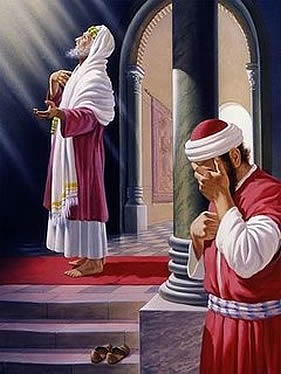 The false faiths that dot the landscape of Christianity like pock marks all invalidate the word of God for the sake of their traditions (Matthew 15:6), and their works-righteousness gospel is in complete contradiction to Jesus’ teaching of the means of the free gift of God’s grace and mercy as cited in His example of the Pharisee and the tax collector in Luke 18:9-14. You cannot read those words of our Lord and still believe that your obedience (or anything for that matter) merits you any favor in God’s eyes. If you still believe otherwise, then you make Christ’s brutal, bloody, and barbaric sacrifice null and void because it was all done in vain.
I do not nullify the grace of God, for if righteousness comes through the Law, then Christ died needlessly. Galatians 2:21
See also: Why Don’t They Get it?
 The Bible records in Acts 17:11 that the Apostle Paul commended the Bereans for comparing what he taught and said to Scripture. Rather than taking offense at what others might consider to be “criticism,” Paul encouraged them to compare everything he was teaching to the Word of God. He did not regard those who sincerely measured what he said by Scripture as being “difficult,” or “divisive,” or having a “critical spirit.” He understood that for truth to prevail in the Church, everyone’s teachings–even his own–would have to be proven by the Word of God.
– Warren Smith
From Deceived on Purpose
 The world does not object to your being a Christian for a time, if she can but tempt you to cease your pilgrimage and settle down to buy and sell with her in Vanity Fair. The flesh will seek to ensnare you, and to prevent your pressing on to glory. “It is weary work being a pilgrim; come, give it up. Am I always to be mortified? Am I never to be indulged? Give me at least a furlough from this constant warfare.” Satan will make many a fierce attack on your perseverance; it will be the mark for all his arrows. He will strive to hinder you in service: he will insinuate that you are doing no good; and that you want rest. He will endeavor to make you weary of suffering, he will whisper, “Curse God, and die.” Or he will attack your steadfastness: “What is the good of being so zealous? Be quiet like the rest; sleep as do others, and let your lamp go out as the other virgins do.” Or he will assail your doctrinal sentiments: “Why do you hold to these denominational creeds? Sensible men are getting more liberal; they are removing the old landmarks: fall in with the times.” Wear your shield, Christian, therefore, close upon your armor, and cry mightily unto God, that by his Spirit you may endure to the end.
– C. H. Spurgeon
1834 – 1892
 Seducers are more dangerous enemies to the church than persecutors.
– Matthew Henry
1662 – 1714
HT: What They Said
 I notice that many here do not like the term “heretic.” There seems to be agreement that one must deny certain doctrines “essential to salvation” in order to be a heretic. This is very new thinking. Look, for example, at the definition in Webster’s Dictionary (1828):
1. A person under any religion, but particularly the Christian, who holds and teaches opinions repugnant to the established faith, or that which is made the standard of orthodoxy. In strictness, among Christians, a person who holds and avows religious opinions contrary to the doctrines of Scripture, the only rule of faith and practice.
2. Anyone who maintains erroneous opinions.
Hence, those ideas that elevate the standard by which one is considered heretical are actually a product of modern political correctness. I do, however, understand that our modern, feminized, extremely sensitive sensibilities are offended by name-calling of any kind (except the names we call insensitive, unkind “heresy hunters”), but that doesn’t change the fact that the term is accurate. In fact we are all “heretics” in some point of doctrine or other. That’s why we continue to search the Scriptures daily. I don’t know about you, but I desire to correct my heresies, not soften the blow by raising the bar so that I never feel the sting of the offensive title.
– Voddie Baucham
 There are three things that earthly riches can never do; they can never satisfy divine justice, they can never pacify divine wrath, nor can they every quiet a guilty conscience.
– Thomas Brooks
1608 – 1680
HT: What They Said
 When we consider the very being of God, we find ourselves so far from the true knowledge of it that we cannot come up with the right words and expressions. As we seek to meditate in our minds and frame thoughts about God as we do about other objects of thinking, we fall so far short that we make an idol in our mind and worship a god of our own making, and not the true God that has made us. We may as well hew Him out of wood or stone as form Him as a being in our minds, suited to our imaginations. The best thoughts of the being of God are ones in which we realize that we cannot truly comprehend Him as He is.
– John Owen
1616 – 1683
 We naturally love our ease, and would have nothing befall us that is grievous to flesh and blood; and gracious persons pray and strive to prevent and remove afflictions. But yet the experience of all, good and bad, in all ages of the world, proclaims this upon the housetops, that more have got good by afflictions than by being without them. . . . There is more danger in freedom from affliction than we are willing to suspect; and it is more difficult to love and fear and trust God when we have the world, than when we want it. . . . Why, then, is an afflicted condition to be preferred? Some that have had experience of both say that they have been afraid to be without their afflictions.
– Samuel Annesley
1620 – 1696
 Anyone can profess to be a Christian but a genuine faith will be evidenced by how a person lives.
– Mike Gendron
 We do not act as the salt of the earth or shine as the light of the world by necessarily denouncing the sins of our worldly associates. Our own holy life will serve as a sufficient rebuke. And our interest in others at this point is not their conduct, but their need of Jesus Christ as their savior.
– Jerry Bridges
(From: The Pursuit of Holiness)
 Let us strive to know more and more, every year we live, our need of a mediator between ourselves and God. Let us seek more and more to realize that without a mediator our thoughts of God can never be comfortable, and the more clearly we see God the more uncomfortable we must feel. Above all, let us be thankful that we have in Jesus the very Mediator whose help our souls require, and that through Him we may draw near to God with boldness, and cast fear away. Out of Christ, God is a consuming fire. In Christ, He is a reconciled Father. Without Christ, the strictest moralist may well tremble, as he looks forward to his end. Through Christ, the chief of sinners may approach God with confidence, and feel perfect peace.
– J. C. Ryle
1816 – 1900
HT: JC Ryle Quotes
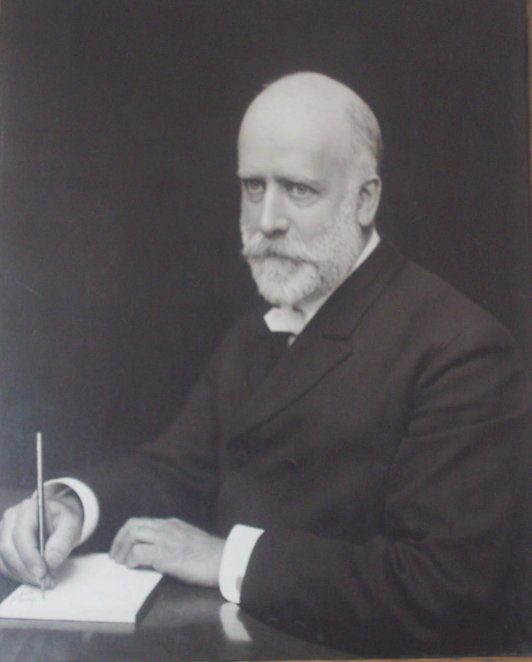 The truly wise man is he who believes the Bible against the opinions of any man. If the Bible says one thing, and any body of men says another, the wise man will decide, “This book is the Word of Him who cannot lie.”
– R. A. Torrey
1856 – 1928
Tragically, the many warnings given in the New Testament about spiritual deception are not taken seriously. People are so comfortable in their church or religion that they have no hunger for spiritual truth. Deluded by arrogance, they deny their ignorance of God’s Word. Many Christians have only a superficial knowledge of the Gospel. They know Jesus died for the sins of the world, but they don’t know why He had to, or why it pleased the Father to crush Him (Isa. 53:10).
– Mike Gendron
 Your sermon of the week is one that defenders of the faith are going to love. The Deity of Christ – An Examination of the Verses the Cults Use by Charlie Campbell examines the eight most commonly used verses that Jehovah’s Witnesses employ to attack Christ’s deity. Campbell does a fantastic job of presenting the texts as the Jehovah’s Witnesses do (twisted and out of context), then he goes point by point as he dismantles each of their misrepresentations using the light of Scripture.
 It is easier to hate than to love–and some of us may often find ourselves dangerously close to creating our own Ninevah. Perhaps the people that inhabit our “Ninevah” are abortionists, homosexuals, political enemies, cultists, or an ethnic group we are uncomfortable with. The question we must honestly consider is this: will our prejudice cause us, like Jonah, to be guilty of silence, or will we intentionally express the heart of God? Jonah chose silence and hate rather than obedience and love.
– David Sper
The most terrifying words any professing Christian could ever hear would be the Lord Jesus declaring: “I never knew you, depart from me” (Mat. 7:23). On judgment day those words will be heard by many who once made professions of faith and claimed to be followers of Jesus. Yet very few evangelical leaders appear to be concerned.
– Mike Gendron
 There has never been a time in this dispensation of grace when the enemies of the gospel have so actively sought the support of the Lord’s people. The doctrine-free, false prophets of ecumenism are the respected apostles of our age. They turn to us with invitations to cooperate, share pulpits, join campaigns, reach communities, and support good causes. The new evangelicals have heeded these siren songs and gone over to dialogue. The fundamentalist, as the prophet of old, must see them as the Devil’s invitations.
– John Ashbrook
 Christ Alone Wyoming