When you’re feeling lonely, remember, he does too.
When you’re feeling depressed, remember, he does too.
When you’re feeling your inadequacies, remember, he does too.
When you get unjustly angry, remember, he has too.
When you get convicted for mistreating your wife, remember, he has too.
When you feel like you’ve failed your children, though doing your best, remember, he has too.
When you make a serious mistake, remember, he will too.
When you forget something important, remember, he will too.
When you fail to be graceful, remember, he will too.
And on Sunday, when you see him stepping up to the pulpit, thunderously teaching and preaching about sin, the gospel, and how he desperately needs God and His grace, just remember, you do too.
Cliches are normal in any language. Sometimes they are able to capture a snippet of thought accurately, other times they muddy the waters of theological judgment. Of course, the impact of any cliche is purely subjective, but it seems that western Christianity is full of cliches that are just not biblically supported. Obviously from the title, you know which one I have in mind so I won’t waste time getting to the point.
Where in the bible do we even find a hint that a convert of Jesus Christ IS NOT a disciple? For the most part, I get it. I get that the idea here is that we focus on making true disciples rather than just a mere decision to follow Christ. However, the reality of the matter is, when a person repents of their sin and trusts in Jesus’ finished work to save them from their sin, if their regeneration is from the Holy Spirit and they exhibit a life that bears fruit and perseverance in Christian character and godliness, that person is not only a convert, but a disciple of Jesus Christ. The moment anyone is saved from their sin, they become a disciple. A follower of Jesus. A convert of Christ. The idea that we can gain a convert but not a disciple is not only unbiblical, but absurd.
One of the ways this cliche gains ground is from the Carnal Christian doctrine and Decisionism. Although they are distinct in some ways, both feed off each other. They propose that a person can become a Christian, yet still live carnally. Also, they teach that a person can have Jesus as Savior, but not as Lord. Furthermore, you can make a decision to follow Christ, but still be a babe or carnal for most, if not all, of your christian life. If such a thing is believed and taught in your church, run.
For the most part, a person may have good intentions when stating this cliche, or they are ignorant of its presupposition. That happens. We want to try and provide someone with the benefit of the doubt as much as possible. Also, not everyone that states this cliche may come from a Carnal Christian perspective (at least not knowingly). But the main thrust here is to challenge even the possibility that someone can become a true convert to Christ, but not be a disciple. They may be a young disciple, a new disciple, or even a false disciple if they fall away. But, in the mean time, they are disciple nevertheless until proven otherwise. The same goes for the word convert. They are semanitcally interchangeable.
In Acts 3:19 Peter preached repentance and conversion. In Acts 15, Paul and Barnabas described to the Phoenicians and Syrians the conversion of the Gentiles. In Psalm 51, David mentioned teaching transgressor God’s ways and converting them (sounds like the Great Commission in a nutshell). In Acts 6:1 it mentions how disciples were multiplying. Acts 14 also mentions making many disciples, and they just started in the faith. And even verses that don’t use the words translated as “convert” or “disciple” in both old and new testaments still semantically explain what conversion and being a follower of Jesus/God is, and are an inclusive list which helps us to systematically understand that to turn from sin and turn to God is conversion and discipleship. Sure, it involves lifetime dedication, devotion, repeated repentance, and obedience to the one you profess to know and love. But it is still conversion and discipleship nevertheless. And to throw a wrench in this whole matter, even Judas was called a disciple when, in reality, he was not.
It would necessitate a bible study of multiple passages and words that would help illustrate my point further. Nevertheless, it is my hope that we grasp that this cliche doesn’t really demonstrate a biblical understanding of a follower of Christ. No matter how you slice it, a disciple is a convert and a convert is a disciple. They can be used interchangeably. And that is the beauty of language and words within language. There may be times when using the word “convert” describes an entry level understanding of just coming to faith in Christ, and other times when someone calls you a convert of Christ and you have been in the faith for years. The same goes for disciple. Some can call you a disciple of Christ and you just got saved yesterday, and you can be called a disciple after years of obedience to Him. It depends on the context and how the word is used. And Scripture illustrates this fact.
Therefore, if the Holy Spirit has indeed saved you, regenerated you, called you out of darkness into light, and you drop your nets, repent, and follow Christ, from that point forward you are a disciple and a convert to Christianity. However, remember that you can be a professing disciple/convert, but not truly be one. I pray the Lord opens our eyes to this truth.
If you have followed DefCon or any other site that affirms gospel-centered theology, you have already run across mounds upon mounds of reasons why lifestyle evangelism is unbiblical. We’ve expounded, extrapolated, and exegeted this to death in order to reveal why trying to win souls by simply just living your life before the unsaved is plainly unbiblical. But the one thing we have failed to do is teach how to engage a person that believes we should simply let our good works shine before men, and then be ready to give an answer for the reason of the hope that lies within you when they ask you.
I like to keep the target of an article directly in my gaze. Therefore I will not exhaustively offer my insights as to why I think this strategy of evangelism is good or bad depending on the context. But here is a mock conversation that will reveal the most devastating question you can ask someone that believes in lifestyle evangelism, which will allow the drill of the gospel to penetrate the problem at its core and root out this man-centered method.
(Background: You are walking down the street and you see someone with a sign by a booth that says “FREE HUGS.” You notice it also has Jesus’ name on some of the other signs, so you walk over to investigate)
Lifestyle Evangelist (LE): Would you like a free hug today?
You: Sure. What’s it for?
LE: We just want to demonstrate the love of Christ and show that we love you?
You: Ah. I see. Do you preach the gospel when you get people who are interested?
LE: We are showing the gospel by sharing the love of Christ through hugs.
You: So what is the greatest demonstration of God’s love to mankind?
LE: Jesus Christ dying for our sins.
You: So how do your hugs measure up?
Did you catch the point? The last two questions really expose the root problem of merely “demonstrating” the love of Christ without opening your mouth about the gospel. And the previous to last question really sets up the penetrating question at hand.
If someone feels that they are being more effective (which is pragmatism by the way) by sharing the gospel through their lifestyle and neglect to share the good news of Christ, by asking them, “What is the greatest demonstration of God’s love?” you will bypass any defense and shoot right to the source of why Christians should even bother to spread the gospel in the first place. The sacrifice of Christ for sin! Even more so, when you ask them “How does their (insert good work here) measure up?” it pinches the nerve of this pragmatic error and hopefully causes the hearer to question their means of “spreading” the gospel. Or, in their minds, letting their good works shine. Because it causes the person to take notice that they are basically saying their good work, whatever that may be, is a proper or better demonstration than Christ’s sacrifice for sin.
If it is true that Christ died for our sin, and that while we were still sinning, Christ died for us, if this gruesome act is what God had to undergo in order to save men from sin, death, and hell, how in the world could any of our good works ever measure up!? Sure we do good works because we are saved, and yes, as a byproduct of our preaching our good works compliment our message, but there is nothing (and I mean nothing) that we can do (ever) that will be a better demonstration of God’s love other than what He has already done! Let’s read that one more time. This is extremely important. There is nothing we can do to demonstrate the love of God in such a way that would project the glory of the gospel than what God has already done. That should be one of the greatest assurances for fearlessly speaking the gospel. But oftentimes, it’s not. Forgive us Lord for our unbelief.
I’m not saying taking up your cross is not a powerful testimony. But it’s not the gospel. I’m not saying you can’t give to the poor. But it’s not the gospel. I’m not saying you can’t show kindness, goodness, meekness, humility, love, self control, gentleness, and the like. But it’s not the gospel. I am not saying that your works amount to absolutely nothing when trying to be a witness in the world. But it’s not the gospel! All these things are types and shadows that should point to the gospel message. And even if they do demonstrate the power and love of Christ in some measure, none of our good works should be held to such a high regard that we think it measures up to the love of Christ efficaciously demonstrated to us on the cross. Tell the old, old story of He who paid an eternal price for our sin and gave Himself for us to make us free from sin’s power!
Remember that the above conversation is only an example. Each conversation is unique and can flow in different directions. However, don’t lose sight of the main point. It might take a little persuasion to reveal what you are trying to say, but as long as you keep the last question in sight (really the last two questions), you should be able to drive home the single, most important point of how the gospel should be shared – that we should tell someone what is the gospel, not just show them! To do otherwise is to essentially say that what we are doing is a better demonstration than what God has done.
Not everyone consciously affirms the doctrine of election. The reasons for this vary and are definitely outside the scope of this particular article. But whether you don’t like it, don’t agree with it, or are simply neutral about it for the time being, predestination and election are concepts in Scripture that every believer will be confronted with. Even if you choose not to deal with it, the unbelieving world still has heard about it, learned it when they were in church as a kid, and/or logically deduces it through the knowledge that God knew before hand that man would fall, and yet still created us. So even if we bury our head in the sand and ignore this, the world will not let us. And, if we have faithful pastors and brethren in Christ who challenge, edify, and provoke us in godliness through the word of God, they won’t let us ignore this topic either.
Although you may hold to a more unique position concerning predestination and election, you will probably sympathize with either of these two views:
God chose to save some out of His own free will, without regard to their future faith in Him.
God chose to save some out of His own free will, but with regard to their future faith in Him.
I hate to be overly simplistic, but this is really the pivot point of almost every predestination conversation. Regardless of whether or not you believe man’s will is totally free or a slave, whether man can fall away from grace, or that man has the ability to resist God’s grace, this is where the starting line is painted.
Does God choose men from before the foundation of the world in accordance with man’s future faith? Or does God do this freely from His own volition without regard to who He knew would choose Him? This may sound a little extreme, but I propose that, although this conversation is important, and that I lean toward God choosing of His own volition without regard to our future faith, in the grand scheme of things, both are essentially saying the same thing, just with different emphasis. Here’s what I mean.
Whenever I get into a conversation with someone that strongly insists that God foreknew who would choose Him, and therefore chose who would be saved from that, my normal reaction is not to exegete Romans 8:29 properly (although certain contexts may allow for it). Nor do I fret when someone dogs election and predestination when they make mention of how God is a tyrannical, diabolical, evil, etc., for electing some to salvation while choosing others also to hell (which is often a straw man, misunderstanding, misinterpretation, ad hominem, and most of the time, a deliberate negligence to comprehend the doctrine of reprobation. Meanwhile wrongly attributing predestination to double predestination). I just simply ask if they believe God is omniscient. That’s all. Here’s why.
If God is omniscient, then that means He knew even before all of us were born who would be saved. God still possessed this knowledge of whom He would choose, and He had it without our permission. How we see God working this out from Scripture can be debated, but it can still be a bit of a red herring sometimes to discuss in my opinion. Because since God is omniscient, He knew from the foundation of the world who was destined to salvation. Understanding this, if God knew who would be saved, even before we were born, how does the fact that He chose based off our faith change the reality that God was in the beginning sovereignly deciding who would be saved? Did you catch that? Let’s say it another way. Even if God did indeed choose to save some based off of who would trust Him, and He foreknew who would believe Him, and from that decided, how does that negate the fact that He decided before we were even born? Even before we were even able to exercise that faith? We still didn’t have a say in the matter!
My intent here is not to rouse strife for shock and awe. I developed this in order to establish some peace in a conversation as well as some logical agreement. If you are a Christian, and you believe that God is omniscient, by default you implicitly ascribe to predestination and election, although unadmittedly. You may not believe that God elected and predestined some despite their faith, but you must logically deduce and concede to the fact that God’s omniscience alone makes election at least plausible. And by simply trying to soften the blow of election in saying that God chose some to be saved in accordance with our faith, one must admit that it doesn’t sweep away the problem at hand – that man’s problem with God is His sovereignty and free will to do as He pleases way before we were even born! A problem that even most professing Christians today have contention with. But if we are honest, we have no choice but to affirm this if we believe God is omniscient.
I hear the marching drum pounding with an army of rebuttals. One rebuttal is that even though God is omniscient, that doesn’t mean men are not accountable for their sin. I agree. Often Calvinists are attacked because others believe that in the doctrine of election that man can’t be held responsible for their sin. This of course is not true, but once again outside the scope of this article. Another rebuttal is that God’s omniscience is not the same as God choosing some to be saved. I agree again. But His omniscience alone approves of His will to choose because it was already in His nature to know and do as He pleases. So while the act of knowing and choosing may be distinct, they are in harmony with each other. Because how does God know who will be saved, and yet, decide against it? And if He did change His mind, and like man wavered between choosing (which I don’t believe), it still leaves us with the same conclusion.
Let’s say you’re still not convinced. For argument sake, let’s say you’re not persuaded that God’s omniscience does not equal affirming predestination and election, and that election (where God chooses of His own will and pleasure without regard to who would choose Him) still presents an evil, unbenevolent God. Philosophically speaking, you cannot have mercy without judgment, can you? Can you have evil without good? Can you understand salvation without sin? At base level, if you didn’t believe in double predestination (the idea that God chooses some to heaven as well as hell), or even predestination (God elects some to be saved meanwhile passing over others), you still would have to conclude that God knew from the beginning who would go to hell and to heaven. Unless you believe in universalism where God saves everyone eventually, or affirm a pelagian/deistic god who purposefully limits His own knowledge of the future so as to not infringe upon the will of man (both are heresy by the way), you must believe, as a Christian, that some will inevitable go to heaven or hell in the end. And God knew it! This isn’t fun to talk about out loud. I know. But it is still reality. Regardless of which side of the fence you stand on, you must, I repeat, you mustsubmit to the idea that God knew from the beginning who would eventually go to heaven or hell. It’s not about whether or not God is evil or good, or making Him more or less benevolent. It’s about accurately representing God and His word without conceding to man’s ideas of how they feel God should act.
I don’t say any of this without grace. It took me a long time to come to these realizations, and I trust that many readers will find what I have said offensive. Meanwhile others are perhaps still trying to comprehend such a deep theological issue. Trust me, I sympathize. I only wish to make plain that in arguing for whether or not God chose in accordance with man’s will or His own, that we don’t cower from it simply because some have issues with it. And whatever the motive someone has to propagate that God chose because He knew who would have faith in Him, it doesn’t really change anything in light of God’s omniscience. Because if God is omniscient, He still knew, before we were born, who would be saved. And He still acted, prior to our birth, based upon His own will and good pleasure and consulted no one in process!
In essence, we will always end up back to square one regarding the most classic question ever asked by man: “If God knew man would fall, why did He create us in the first place.” The answer may vary depending on your theology, but it doesn’t do away from the inescapable truth that God, if He is truly that, has already determined who would be saved, based off of the good pleasure of His will, and the benevolence of His person. And that it will be through the sacrifice of Jesus Christ – Son of God, 2nd person of the Trinity, fully God fully man – that this salvation is attainable. Because, if you think about it, God didn’t have to save anyone. None! We all deserve hell. Period. If God saved one person, it would be the most gracious and loving act that God could have bestowed upon a human being, and God would be perfectly justified in sending the rest to eternal torment. But since God is infinitely more gracious than we could imagine, He has chosen to save millions to date (by my puny estimation). If man wants to secure his free will and be a contributor to their salvation, they can have it. So as long as God gets to keep His free will and do as He pleases without obligation to any man’s volition.
With the rise of social media, it is very easy to “friend” someone you are complete strangers with, or with someone who may be a friend of a friend. Within Western Christendom there is the opportunity to connect with your favorite pastor/teacher, or at least one of their close associates. And if you know one of their close associates, then you’ll probably get bombarded with friend requests. And if people are flooding to be your friend because you know X person, then that makes you pretty popular too and somewhat influential. But herein lies the problem.
Some people on social media are doing what I call “bandwagon fellowship.” They only care about who you are or what your ministry does only because of who is associated. It has been something that has turned my stomach for a few years now. And one of the dangers is that unless you are in the circle of the elite, it can easily become an “us vs. them” playing field. Also, what eventually happens is that people begin to gossip and slander on social media for all to read simply because their social media associate did not do, or did do, something they didn’t agree with. Because no real fellowship or Christ centered foundation was present, it is just as easy to divorce yourself from someone as it was to be their “friend.” It is sort of like dating, but for socialmediaphiles.
That’s not the worst part. The worst part is that this inevitably breeds the very worst, demonic mindset that it is not about what you know, but who you know. And sadly, this kind of thinking has been around for centuries. How that looks may change, but the reality of it does not. And this grieves me. Very much so. Instead of believers being known for their knowledge concerning the Gospel/Scripture, their character in accordance with God’s word, and whether or not they are truly a believer in Christ, we seem to only turn our heads and give notice to those that are most influential or are friends with those that are (or at least friends with friends who are friends with those that are). One day, you’re a nobody, and another day, get a famous person/preacher to mention your name or take a picture with you, then you get a thousand likes on Facebook. Or even better, friend requests and a following! Perhaps even start your own discernment blog, apologetics ministry, radio show, etc.
I’m not saying that we can’t appreciate the approval of godly men. I would be a hypocrite to say that I haven’t sought counsel or advice from prominent men I respect. Also, I’m not saying that it’s evil take selfies with respected members in the Christian community. But beware of vain-glory and self-seeking. Beware of bandwagon fellowship and false pretenses. I have had a great time with popular people in the faith, but often chose not to post selfies or friend them on Facebook just because I had few moments with them (sometimes I didn’t know they were popular). I seek genuine Christian fellowship. One that does not vainly recognize, or even ignore, someone because they are/are not popular. One that glorifies Christ and furthers the gospel in a way that would solidify the fellowship in time of trial rather than dissolve at the first drop of conflict.
If you build upon another foundation other than Christ, be sure that whatever you gain will crumble. If you base your friendships on the superficial surface of social media, don’t be surprised to have your phantom fellowship wiped away by something else just as superficial. If your hope of salvation is built on nothing less than Jesus’ blood and righteousness, then you should have your hope of true Christian fellowship built upon the same pretense. Anything else leads to contentions, strife, bitterness, envy, vain-glory, and self-seeking. May God deliever us from bandwagon fellowship.
See James 3:13-18, 4:1-5; Philippians 2:3-4; 1 John 1:6-7
I think it’s humorous that the headlines say that governors and mayors are banning “non-essential” travel to Mississippi. Does anyone know why? Because they can’t legally stop anyone from traveling there! That’s not within their jurisdiction. Saying that you’re banning non-essential travel is the same as demanding that someone not to do something even though, in reality, I can’t stop you. Don’t be fooled by media’s linguistic tricks. These “bannings” do not accomplish anything but to trick the linguistically and legally ignorant person into thinking that what these people are doing is significant.
If someone can do a better job at defining what they mean by “non-essential” then a conversation can be had. Here is a quick, but not authoritative, media clip that will help shed some light on the subject.
While some Christians like to make April 1st “National Atheist Day,” I think it is a perfect day to reflect on our own foolishness. The Bible has much to say about what makes a fool. Way too many references for me to pack into one blog post! But a few years ago I complied a list of 17 ways you can know if you’re a fool. Some might pertain you, some might not. But if you want to know if you are being foolish, this list might be the snappiest way to find out. Reflect and pass on.
When you trust your heart. He who trusts in his own heart is a fool, But whoever walks wisely will be delivered. -Proverbs 28:26 How can we trust something that is more deceptive than the devil himself? If God is true, and we place our heart’s desires over His revealed word, we are indeed fools.
When you spread gossip. Whoever hides hatred has lying lips, And whoever spreads slander is a fool. -Proverbs 10:18 Slander may be information that is true or not true which is meant to destroy the character, reputation, or perception others may have about a particular person(s). The reason why you are a fool when you slander is because, often times, you might be spreading something that doesn’t accurately depict the person, event, situation, etc. Be careful! Only God has the big picture.
When you think it is fun to do things that are sinful. To do evil is like sport to a fool, But a man of understanding has wisdom. -Proverbs 10:23 This is a tough pill to swallow. There are some things that may seem sinful and are not, and not sinful yet are. But it should never be fun and delightful for us to partake, or devise a plan to partake, in anything that we know to be sinful. To do so is foolish.
When you think your way is right and God’s is wrong. The way of a fool is right in his own eyes, But he who heeds counsel is wise. -Proverbs 12:15 Be not wise in your own eyes: fear the LORD, and depart from evil. -Proverbs 3:7 This goes along the same lines as point 1, which I think is a foundational point concering why we sin in the first place. Nevertheless, to justify your own reasoning over God’s revelation, is worthy of the title of fool.
When you won’t listen to good correction, even from your parents. A fool despises his father’s instruction, But he who receives correction is prudent. -Proverbs 15:5 Parent’s are there for our good. Sometimes we may not have godly parents, or we have parent’s that were/are never there for us. But regardless of the source of instruction, godly and good instruction is to be received and praised. To reject this will often be to your detriment.
When you only care about what you have to say and not the truth. A fool has no delight in understanding, But in expressing his own heart. -Proverbs 18:2 Just want to vent? There may be a time and place for that. But if your end goal isn’t to discover truth, or find a godly solution, you’ve stepped into the realm of fools.
When you live as though God does not exist. The fool has said in his heart, There is no God. -Psalm 14:1 This verse isn’t for atheists only. The essence of atheism is not just declaring openly that God does not exist. It is a philosophy of the heart that lives as though God does not exist. And there are millions of people who are professing Christians who live like atheists although they profess to know Him. A heart unconvinced by the gospel and unregenerated by God’s Spirit will have a heart that is full of foolishness.
When you are a woman who is loudly argumentative and don’t care if you’re right or wrong. A foolish woman is clamorous: she is simple, and knows nothing. – Proverbs 9:13 Men have many marks that make them foolish. So do women. This verse can pertain to men just as much as women, but this kind of behavior should be checked at the door if you’re this kind of women.
When you laugh at sinful things or don’t take sin seriously. Fools make mock at sin: but among the righteous there is favor. -Proverbs 14:9 The idea here is that we don’t take the nature of sin lightly. We are not supposed to jeer at the severity of sin, and we are to remain aware of the seriousness of it. By slighting sin, and removing the sobering nature of it, we can drop the psychological barriers that alarm us of its danger. This is foolish indeed.
When you refuse to turn away from sin. A desire accomplished is sweet to the soul, But it is an abomination to fools to depart from evil. -Proverbs 13:19 Repentance is a beautiful thing. God grants us repentance so that we might know Him more intimately. But refusing to repent is a dangerous game. Whether it is a sin against your spouse, neighbor, co-worker, child, and yes, God, turn away from the evil you have committed against them! To refuse makes you a fool.
When you don’t like to meditate about life after death, but rather about what is fun and pleasurable now. The mind of the wise is in the house of mourning, While the mind of fools is in the house of pleasure. -Ecclesiastes 7:4 (NASB) I quoted the NASB here because the important sense of this verse needs to readable (although I think the NLT, I hate to say, is more spot on to the sense of this verse). The house of mourning here is speaking about death. A funeral home is the best way to translate it in our time. Pondering eternity and death can truly make one wise. But in our day and age, everything is about the here and now, and what is the most pleasurable experience we can have. Fools live in that kind of mindset. Although it is good to enjoy live and the things that God has given us to enjoy freely, a fool has no pleasure in pondering eternity.
When you have a bad temper, or are quick to get angry. Do not be quick to be angry, For anger rests in the heart of fools. -Ecclesiastes 7:9 If you have ever been angry, justified or not, we know what quality product anger can produce (insert sarcasm here). There is nothing wrong with righteous anger. But even then, if we do not know how to bring it captive to Christ, we will allow the fire to burn too long in our hearts which will in turn produce catastrophically foolish results.
When you think you are smarter than you actually are and are stubbornly unpersuaded in a sinful manner. Do you see a man wise in his own eyes? There is more hope for a fool than for him. -Proverbs 26:12 This verse points out that you are in a worse condition than a fool when you are like this. If there is any hope for a fool, it is nill in comparison to thinking you are wise in your own eyes. Refer to point 1 and 4 if you need help in this area.
When you are unthankful for the knowledge of God, and exchange the truth of God for a lie. …although they knew God, they did not glorify Him as God, nor were thankful, but became futile in their thoughts, and their foolish hearts were darkened. Professing to be wise, they became fools, and changed the glory of the incorruptible God into an image made like corruptible man… -Romans 1:21-23 Whatever revelation God has given man, it is so that man can, in turn, glorify God. In nature, the conscience, and even some revelation through His Word, each man is without excuse before God. To be unthankful, to reject His goodness, to exchange what we know about the truth of God for a lie, and suppress it in unrighteousness is the epitome of foolishness! Apart from the grace of God, how else could we escape such a despairing condition? Nothing but the blood Jesus can set us free.
When you live for money, retirement, riches, etc., but have neglectful care for your eternity. But God said to him, ‘Fool! This night your soul will be required of you; then whose will those things be which you have provided? So is he who lays up treasure for himself, and is not rich toward God. -Luke 12:20-21 Wealth in the world is not wealth in the spirit. Don’t be fooled by material gain, meanwhile neglect heavenly treasures. It is foolish to gain much, but lose your soul in the end.
When you recklessly spend money. There is desirable treasure, And oil in the dwelling of the wise, But a foolish man squanders it. -Proverbs 21:20 This doesn’t not mean that if you are wise you will always be rich. There are plenty of people who are very wise, and God has limited them monetarily. But what this does mean is that the foolish don’t know how to reserve themselves and spend money wisely. That pay check, tax return, Christmas bonus, loan, or whatever, will be squandered irresponsibly. Are you a reckless spender? Then you are a fool.
When you don’t trust Christ alone to save your from your sin, and instead would rather trust in anything else but the Bible. But everyone who hears these sayings of Mine, and does not do them, will be like a foolish man who built his house on the sand: and the rain descended, the floods came, and the winds blew and beat on that house; and it fell. And great was its fall. -Matthew 7:26-27 Obeying Christ is an outpouring of our salvation.There is nothing more important in this world than to know you are saved by Christ and are obeying His commandments. To do otherwise is eternally foolish! If you are not reading God’s word in order to know Him more, so that you can obey and love Him as you were created to do, you are indeed foolish.
Once again, this is not an exhaustive list, but I pray this would be edifying and convicting enough for each of us to evaluate the foolishness dwelling within ourselves quicker than pointing out the foolishness we see in others.
Imagine reaching thousands upon thousands of people and almost never having to open your mouth. Sounds impossible doesn’t it? Other than the fact that millions of professing believers think they can actually accomplish this kind of thing by just living a Christian lifestyle among the lost, there is truly a way which you can do this. Gospel tracts.
Passing out gospel tracts is the only true lifestyle evangelism that can reach the lost without necessarily saying anything. Of course, this may not always be the case. There will be conversations started based upon the curiosity of those that take some of the tracts that are passed out. But isn’t that the goal of lifestyle evangelism? Projecting the life of Christ so that people ask you what makes you different? Well, gospel tracts will most certainly do that! But the best part is, if you are unsure, fearful, not eloquent, or just don’t know where to begin in your evangelistic endeavors, gospel tracts are not just a great starting point, but a formidable weapon in the Christian artillery that can be carried around until we enter in the joy of the Lord.
I cannot express how many times someone has told me they cannot be a regular, consistent, and purposeful witness simply because they wouldn’t know what to say, or because of their perceived lack of ability. They prefer to let their “light shine” so that their good works will glorify God among the heathen. When I introduce the fact that gospel tracts can help them overcome those fears and apparent lack, I am met with a resounding, “No thanks,” or with other terrible excuses as to why they cannot pass out a simple piece of gospel literature. It astounds me with the amount of timid excuses people make concerning why they “cannot” reach the lost, you’d think that passing out tracts would be going out of style!
When it comes to the idea of lifestyle evangelism, if you really want your light to shine before men, pass out gospel tracts! It is a dynamic way to fulfill what you’re hoping to accomplish if speaking a word about the gospel is hard for you. Most of the time, you’d be surprised how much of your lifestyle is of no concern to the unbeliever. That is until you hand them a gospel tract. If I am suspecting correctly, some of us may want to develop the relationship first so that we can reach them more intimately. Perhaps even serving them so as to open doors for the gospel. Nothing wrong with service and friendship. But if you really want them to see Christ in you, tracts will definitely make that happen at lightening speed. Folks may not chase you down, but you will get the gospel to them, which subliminally is our professed purpose for living our lives before the lost anyway, isn’t it?
If you want to know what it would be like to preach to thousands of people without saying a word, pass out tracts. If you want your light to shine to that cashier in Walmart, give them a tract after you pay. If you want your waiter to know that you love Christ, leave a generous tip (I MEAN THAT), and leave a gospel tract. If you want your co-workers to know you love Jesus, ask them for their address, send them a gift, and put a gospel tract with it. This goes for your family, friends, and any one else you want to see Christ in you, the hope of glory!
It’s not a problem that gospel tracts may not be your “thing.” But if you don’t choose this option and prefer instead to continue in your Christian walk hoping the lost will recognize something in you about Christ, and you choose never to regularly, constantly, and purposefully communicate the gospel toward, family, friends, co-workers, and strangers, then you are a hypocrite and are being apocitic. You’re not practicing lifestyle evangelism, but lifestyle hypocrisy. God has graced us with an amazing gift – eternal life. He’s given us minds to comprehend the gospel, and mouths to tell it. Since that is not enough for some of us, He has given us the printing press by which we can order tracts by the box full. If that doesn’t tickle our fancy, and we are somewhat literate, we have pen and paper at home by which we can use to spread the gospel in our writing if we don’t like the print of others. Regardless of the mode, true lifestyle evangelism is worked out through a Christian not just living out the commandants of our Lord, but teaching others to do the same (Matt 28:20). If it is still too much for you to at least give someone something that can preach the gospel for you if you feel like you are unable, then cast your Christian profession aside and embrace your title as an unbeliever.
“If Jesus is precious to you, you will not be able to keep your good news to yourself; you will be whispering it into your child’s ear; you will be telling it to your husband; you will be earnestly imparting it to your friend; without the charms of eloquence you will be more than eloquent; your heart will speak, and your eyes will flash as you talk of his sweet love. Every Christian here is either a missionary or an impostor. Recollect that. You either try to spread abroad the kingdom of Christ, or else you do not love him at all. It cannot be that there is a high appreciation of Jesus and a totally silent tongue about him. Of course I do not mean by that, that those who use the pen are silent: they are not. And those who help others to use the tongue, or spread that which others have written, are doing their part well: but that man who says, “I believe in Jesus,” but does not think enough of Jesus ever to tell another about him, by mouth, or pen, or tract, is an impostor”
If you’re like me, you cringe when you hear the trite phrase, “love the sinner, hate the sin.” Depending on who who says and hears this, this can be interpreted a multitude of ways. A liberal leaning might mean it as, “love the sinner, accept the sin.” Another way that someone might take this is “love the sinner, accommodate/tolerate the sin.” Of course, whenever this subject comes up with professing Christians, it tends to lean more toward, “love the sinner, don’t talk about the sin.” In other words, love them as they are, and simply share the love of Christ (whatever that looks like these days). But then you have the more dreaded extreme by which certain people love the sinner, by showing the maximum amount of hatred toward the sin. That is, they show that they “love” the sinner through harshly expressing their extreme hatred for the sin.
Other than this phrase becoming a mantra for pragmatic church goers who don’t really understand the gospel, and the relationship between God’s wrath and His grace, one of the greatest reasons why this phrase should be offensive to any Christian is that it is attributed to God. Before this idiom was clipped into a nifty little catch phrase for practical application in talking to homosexuals, prostitutes, drug addicts, etc., it was originally stated that “God loves the sinner, but hates the sin.” Meaning that when God looks at a person, His love for them seems to be disconnected from their crime. In essence, God loves the criminal, but only hates the crime.
I would love to go into why the Bible doesn’t truly say this about God. But this subject has been greatly dealt with by mainstream writers. My intent here is to ask another question. “Can this phrase be redeemed?” Regardless of how people may feel about this phrase (myself included), is there a way in which we can twist this quaint phraseology to our advantage to start a biblical conversation and get down to the nuts and bolts of what the gospel is really about? I think we can.
I attended a men’s Bible study about two weeks ago with my church. We were discussing a chapter in Jerry Bridges’ book, The Joy of Fearing God, and this subject of love the sinner hate the sin was brought up. I thought this would go in the direction it usually goes. People getting offended and drawing strong pragmatic lines, and eventually parting ways. However, that was not the case. Every man at that table delivered some pretty informative concepts concerning the kind of theology this tiny phrase insinuates, and the cautious approach we need to have in accepting/stating this phrase. The most interesting part was how we were able to dissect the phrase in our favor to discuss the biblical model of how God, and how we, should deal with sin. Although this was not their intention in the discussion, it opened up my eyes to the possibility that I can now use this phrase in my favor to preach the gospel.
As I mentioned above, when people use “love the sinner, hate the sin” it can mean several things to different people in various contexts. But from this point on, if someone tells me “love the sinner, hate the sin” I will respond in one of three ways:
1. Yes but, do you really love the sinner? If you do, then why won’t you talk to them about their sin so that they might know about salvation. Jesus, Peter, Paul, James, and all Christians in church history mentioned, exposed, and unashamedly condemned sin when they preached the love, mercy, and grace of Jesus Christ and His redemptive work on the cross. And they didn’t just lightly gloss over it. So if you really love the sinner, but hate the sin, then you should at least talk about their sin(s) so that they might come to know Jesus, and why they must be born again!
2. But do you really hate the sin? Think about this, if you really hated the sin, you would talk about it. People are prone to talk about what they are emotionally pleased and disgusted with. This doesn’t mean we turn Westboro Baptist on someone when we preach the gospel, but it is a valid question to ask someone if they lob this phrase at you. If you truly hate the sin, and know that sin is the reason for which Christ died, don’t you think God hated it too? So much so that Christ endured the wrath of God so that guilty sinners can be set free?
3. Love the sinner, hate the sin? Only if it’s biblical. This was one of my favorite points in our men’s meeting (my most favorite is below). If a professing Christian tries to persuade me that I should be more loving toward the sinner, and simply express hatred toward the sin, I would then simply respond, “only if it’s biblical.” This will hopefully spark a conversation about how God both loves and hates the sinner, and that He expresses both anger/wrath just as much as He does mercy/grace. Only God is able to love and hate sin and sinners, and do so equitably, with balance, and without contradiction. I would love to show how the work of election is a crucial puzzle piece that helps us to understand this concept of God’s love/hatred better, but that is beyond the scope of this article. For now, “only if it’s biblical” is a great way to retort in order to get a discussion going.
I might not have been able to “redeem” this phrase, but responding in one of these three ways is best when someone decides to press this practical dogma against you. Regardless of how we respond, the idea that we must grasp is that asking the right question(s) about what someone means when they say “love the sinner, hate the sin” will hopefully lead to a conversation about the gospel and God’s greatness to redeem criminals to Himself. God’s hatred and love were both fully expressed on the cross when Christ was being punished on our behalf for sin. God unleashed His holy fury on Christ, who became sin for us. His love was equally poured out by demonstrating in that while we were still sinning, Christ died for us. If we trust in that sacrifice, and repent of our sin, God’s holy hatred and wrath that abides upon us, is propitiated. And although God loves us in the general sense that we are His creation, only His beloved, those that are born again, experience the fullness of His grace, love, and mercy.
As I hinted at above, there is a statement that better expresses what should be our reaction toward the lost, and has become my new, favorite rebuttal. If you are a Christian, and you know the true, unadulterated gospel, let this be your mantra: Love the sinner, preach the gospel. (Thank you Sam Young for this quote).
This may seem silly to bring up, but there is a point concerning a specific “spiritual gift” (which is really not a spiritual gift) that many not only claim they have, but they also misapply! It is not only a phantom gift, but it’s supposed application is misdirected. I have searched far and wide for this gift for many years. At this point, it is safe to assume that it is at the end of a theological rainbow. And the only ones that find it are those that are taught that it exists. What is it? Nothing but the “gift” of hospitality.
Let’s begin on where they get this idea comes from. 1 Peter 4:9 says we are to show one another hospitality without grumbling. Sounds pretty straight forward. The grammatical construction implies, though, that it is following from the commands in verse 7. That means amongst other things like being watchful and sober in our prayers, and having fervent love for one another, we are to be hospitable to one another without complaining. Once again, pretty straight forward. But where someone infers from this verse that God endows us with a spiritual gift in order to be gifted in hospitality is confusing. I can see how maybe some make the mistake of reading verse 10 into verse 9 since it mentions “gifts,” but nevertheless cannot see how they can be confident about their conclusion. The list of gifts in Peter starts in verse 10, not 9. But there’s more. Romans 12 has a similar situation.
This is another popular passage cited to didactically reveal spiritual gifts. In Romans 12:6, the apostle Paul explicitly mentions “gifts differing according to the grace that has been given to us.” However, that list terminates at verse 8. Once again, the construction is in such a way that verse 9 begins a new didactic exhortation, and verse 13 is where we see hospitality cited. In context, along with Peter, we must understand that this is not referencing some special ability that the Holy Spirit gives us. In some indirect sense, once we are born again, God gives us a new heart for fellowship with believers and a love for evangelism that causes us to love the unsaved. But that is not what the “gift of hospitality” teachers assume. The believer of the hospitality gift must understand that the exhortations to use gifts differing according to grace terminates at verse 8. Then, verse 9 begins a separate set of exhortations.
So why harp on this? Why pluck this string? Two reasons: excuses and exegesis.
One the one hand, there is always someone that will misapply a verse, gift, theology, etc., to their advantage in order excuse their responsibilities (or sin) in other areas of their Christian life. For example, they won’t evangelize because their gift is to open up their home (hospitality) to bible study. While that is good and necessary at times, this is not a substitute for any discpline the Christian is called to. And, hospitality in the Bible has more application toward persecuted and traveling believers whom have been banished from their homes, or are on evangelistic journeys. Sure opening your home is hospitable, and can be a fulfillment of Scriptural hospitality depending on the situation. But we must remember that is still not a spiritual gift.
On the other hand, basic exegesis concerning how words and theological concepts are used in their context cannot be stressed enough. The main point I’m trying to make here is that while this phantom gift is microscopic in the grand scale of heretical dogma being preached in the world, a misapplication or misunderstanding like this has avoidable consequences on a your thinking and behavior. If this simple thing cannot be grasped, exegeted, and applied correctly, what can be said of our attitude toward the basics of the gospel, or even biblical discernment? I’m not trying to make a mountain out of a mole hill, but there is something to be said about such a loose approach to Scripture. Of course, this is not a new problem, but I’m attempting to use this phantom gift to shed light on an age-old issue. The issue being the lack discernment for practical thelogy. And it is my hope that we continue to discern from where our othropraxy flows.
“I’m going to drink a lot of Budweiser tonight, Tracy, I promise you that,” he added. “I’m going to take care of those things first and definitely going to say a little prayer and thank the man upstairs for this great opportunity.” (emphasis added)
This is what all star football quarterback, Peyton Manning, said after he won Super Bowl 50 this past Sunday. Some congratulated him for sharing his “faith” in national television. However, what is the man upstairs supposed to mean? Or better yet, whom is he referencing?
I have been personally annoyed by this statement for many years. When someone calls God the man upstairs, it is a telling sign that they don’t know Him. Think about it this way. If my mother lived upstairs in my two-floor apartment building, and I referred to her as the woman upstairs, what does that infer about the relationship that we have? From a linguistic standpoint, it could just be a cultural phrase, and it’s semantic intention is purely arbitrary. However, throughout history, Christianity is defined by Christ dying for sinners, then regenerating and adopting them as His children. From there we continually cry out, “Abba, Father” (Romans 5:15). We are made sons and daughters by His will (John 1:13), and are no longer called children of wrath (Ephesians 2:3-6). At what point in Scripture or history among God’s people do we find such distancing language to describe God?
I am not too upset over Peyton’s choice of words. In part, I’m glad he said it. Because maybe now we can discuss how a true believer ought to address God among the heathen. If He is our God, why choose language that infers a gap in the relationship? This kind of speech is typically used by those that do not have a meaningful relationship. By that I mean, usually, none at all. If I called my wife “the woman upstairs,” there would be some indication that the relationship is straining, unless there’s an obvious sign I was joking.
But many aren’t joking when they use this trite slogan. To some, this is most recognition they will give God, and that is enough for them. To others, this is a hat tip of humble reverence. Whether it is done ignorantly, or with purpose, those that say that they know Him should not (dare I say will not) bow to this kind of speech. If eternal life, as defined by Christ, is knowing God, and His son whom He sent (John 17:3), I can’t see how a truly regenerated believer would allow such catchphrases to dwell in their vocabulary.
On one hand, I am saying that Christians need to rethink such pithy slogans to describe their God. On the other hand, I believe that this phrase is a penalty flag, that could be a sign that the person does not know Jesus. In other words, I believe anyone who uses “the man upstairs” has never actually met the Man (Christ Jesus; 1 Timothy 2:5). But who am I kidding? Could someone be a true believer and mistakenly utilize such ignorance? I have to consent to the possibility. But more often than not, specifically in my experience, whenever I hear “the man upstairs” come out of someone’s mouth, what follows after, whether in word or deed, as just as atrocious.
It is very comforting to know that Pastor Saeed is no longer in harms way of the Iranian government. Many have already spread the good news via social media and other outlets. But while we stand by and praise God for this man’s safety, do we know what he believes? Have Christians not made the same mistake before in standing by certain preachers, politicians, celebrities, or movement leaders only to have a black eye later on because we did not endeavor to know their doctrinal stance?
This article is not assuming to know what Pastor Saeed believes. As far as I know, there are no public statements that have been posted concerning this topic. However, there is background information that may give some indication to the kind leanings that Saeed may have. DISCLAIMER: This is not a condemning post! I repeat. This is NOT a condemning post. This is purely informational, although I have my personal concerns. I do not believe that Saeed is not Christian. I do not have any evidence to make such a conclusion at this time. I am merely challenging us to always consider who we are supporting and ask ourselves if our own convictions will allow us to do so. The following is just a series of links I discovered when trying to figure out what Pastor Saeed believes. Although I found nothing on Saeed, did find other somewhat relevant information.
AEA was started by John E. Douglas Jr in 1954 and several other pastors who became independent in order to form this organization. http://wordpress.aeaministries.org/history/
Source 2 above reveals that Douglas Jr. was a convert of A.A. Allen who was one of the more popular “faith healers” of his day and a very controversial figure.
The “Latter Rain Movement” was one of the many baseline movements for the modern charismatic chaos witnessed today.
Douglas Jr. hired John Douglas Sr. to be radio spokesperson for AEA and started the international ministry World Missionary Evangelism (WME). http://wordpress.aeaministries.org/history/
Once again, all these links are not to insinuate that Pastor Saeed is not a Christian. It is good to know those that labor among us, especially if we plan to support them. This is purely informational and is meant to bring awareness to the kinds of beliefs Pastor Saeed may hold. While I am happy Saeed is freed, I am tired of professing Christians making the same mistake over and over again and not doing their homework.
I have heard whispers throughout my lifetime as a Christian that hints at the fact that a person can be a Christian yet be a “secret disciple.” The primary example all fingers point to is Joseph of Arimathea, the “secret disciple” which asked for the body of Jesus. Is this true? Does the Bible teach that we can be “secret disciples” of Jesus Christ?
When we read in John 19:39 about Joseph being a disciple but “secretly,” we are not reading a narrative of approval. If we want to know how John felt (underneath the inspiration of the Holy Spirit) about those that “believed” on Jesus but didn’t confess Him openly, we must go to the book of John Chapter 12:42 – 43. It states:
“Nevertheless among the chief rulers also many believed on him; but because of the Pharisees they did not confess him, lest they should be put out of the synagogue: For they loved the praise of men more than the praise of God.” (Emphasis added).
The chief rulers here included those that are typically known as the Sanhedrin, which Joseph was an “honorable” member of (Mark 15:43). What John reveals here is the symptom and the disease. The symptom is that they did not confess Christ before men. Why? Because the disease is that they loved the praise of men MORE than the praise of God. Interesting. Moreover, if you were to consider what John says about Joseph in light of these verses, it is plausible to deduce that he felt the same way when he exposed why Joseph was a “secret disciple” in the first place. It says in John 19:38 that he was a disciple secretly “for fear of the Jews.” If someone is trying to justify that it is possible to be a “secret disciple” because it says so here, they would also have to consider the exposition of the rest of the verse and ask themselves whether or not this is a badge of honor. That is like saying, “Hey, I am proud to be a secret disciple because I’m scared.” While maintaining the position of being a secret disciple, it is inevitable that you would be biblically declaring your sin. Now, even though I have revealed all this, there are some good things that we can learn from Joseph’s mistake despite him being secretive about his belief in Christ.
Let us first consider that Joseph was known as being honorable and having a good reputation (Luke 23:50). Apparently he was also rich (Matt 27:57) and was held to a prominent position in the Sanhedrin (Mark 15:43). It is also worthy to note that his faith in the Old Testament Scripture was genuine as well understanding that he was looking for the Kingdom to be come and be fulfilled (Mark 15:43). Finally, he was also of those among the Sanhedrin that did not consent to the unjust manner of Christ’s trial and death (Luke 23:51). So what we are dealing with here is an individual who was indeed sincere in his dealings, just in his judgments, and desirous to be a disciple of Christ, but he was confronted with what every person who wishes to follow Christ is confronted with – fear of man.
In my book, “Apocity: The Greatest Omission,” I reveal why the sin of not evangelizing (apocity) is caused by fear. Fear is one of the giants that seek to slay us when it comes to our open confession of Christ in any shape or fashion. But can we continually be a fearful “secret disciple” and still be a faithful follower of Jesus Christ? I think the Scriptural answer is no! Here’s why. As we already stated, Joseph is not painted in a positive light when it says that he was secretly a disciple. The Scriptures and history teaches us pretty plainly how one is portrayed when they deny Christ in any fashion. Also, when you read how John portrays Joseph asking for the body of Jesus, it is clear that John is making a parallel. In order for Joseph to ask for the body of Christ, he essentially had to do two things:
He had to forsake his worries concerning what the Jews were going to do and boldly ask for the body of Christ. Some Greek expositors say that Joseph literally had to “summon the courage.” Why? Because he knew that doing this was going to cost him his position, his reputation, and his standing among the Jews.
In forsaking his position as chief priest, he willingly defiled himself with a dead body, even though Leviticus 21 teaches that priests are not to do so.
The only dead bodies priests were allowed to make contact with were the bodies of their immediate relatives (see Lev. 21:1-4). This presents a spiritual illustration that is powerful if you have ears to hear. That being said, we clearly see a bolder Joseph. Although I am speculating by saying this, it seems to me that John was somewhat putting his stamp of approval upon Joseph at this point. It is kind of like saying, “this man, who was once a ‘secret’ (insert sarcasm here) disciple, now boldly and unashamedly asked for the body of our Savior, even though he knew it would cost him everything!” Finally, John points out how even Nicodemus, “who first came to Jesus by night” (John 19:39), is now also putting himself at risk by day! This is what we should exemplify! Not secret discipleship! If you are of the persuasion that you can continually follow Christ secretly, here is my final plea.
When someone justifies their apocity (in other words, their reluctance to share their faith in any way) by using Joseph of Arimethea as an example, it should sadden us considering the much happier and bolder ending to this man’s story. When we take the negative aspects of a person’s character in Scripture and we use that as an excuse as to why we can continue in sin, whether apocity or any sin, we miss the mark of what Scripture is teaching us. God’s word shows us our flaws so that His grace can abound, and so His goodness can lead us to repentance. Not only that, it serves as a warning to us to be obedient and NOT make the same mistakes (Romans 15:4). Although in the grand scheme of things, a person who is a professing believer will have seasons of shame, if the Holy Spirit truly resides within them, they can’t but speak the things which they have seen and heard (Acts 4:20). So if you are reading this, and you believe you can be a faithful witness of Jesus Christ “secretly” through fear, I beg you to consider the sin which you are justifying. Do not think that just because Scripture exposes Joseph of Arimethea as being secretive that you can continue in the same fashion. There is no shame in being a Christian. The shame we feel only comes when we refuse to openly declare that we are Christians, knowing that Christ openly bought us, bearing our shame that we deserved.
Special note: I foresee some making an clamorous rebuttal to what I have stated above by revealing the work of those in foreign countries whose work in the gospel in very “secretive.” The problem is context. Those who are “secretive” are so in a difference sense than Joseph of Arimathea. To point out the covert work for the sake of the gospel is not the same as being silent for fear of man. Not only that, shame on those that try to use the work of those who are missionaries overseas as a means to justify our fearful silence in America. It does not compare. Let’s remain steadfast in our witness. It’s one thing to use discretion concerning when to speak the gospel, it is quite another thing to succumb to fear. I pray the Holy Spirit will teach you the difference.
This article does not merit a long, drawn out introduction or explanation, so I will get right to the point. Men, are you being the devotional leader in your home? Women, this same line of questioning goes for you too if you have children. When I say devotional leader, by that I mean, are you carving out time from your day or week to feed your family with the Word of God? This can be done through established Bible study, or short lessons everyday about Scriptural truths. I’m going to reveal one way in which this can be done, but for the sake of brevity, are you making an effort to pass along Scripture verses that you have recently read or lessons that God has taught you from His word? The key here is that you are already setting aside personal devotional time with Christ, which automatically should overflow to your family. I’m not talking about forcing time to develop a sermonette so that you can share some elaborate dissertation with your wife or children. I’m talking about genuinely spending time to be with Christ through His word and simply sharing what was learned with your family. If nothing was “learned,” at the very least, find a Bible verse that you feel would be some encouragement or edification to them.
If you are anything like me, you probably have a job. And finding time can be frustrating if you are extremely busy. However, using technology is an excellent and simple way to share golden nuggets from Scripture that do not merit a long conversation. Let me reiterate that again. We often think that sharing God’s truths require long or elaborate explanations in order to have an effective transaction. This may be true when we learn something that requires a bit of background information, but there are acres of Scriptural truths that can be shared with a simple click. Case in point.
One day, as I was reading Proverbs, I came across Proverbs 14:26 which says, “In the fear of the LORD there is strong confidence, And His children will have a place of refuge.” Does this Scripture require a through explanation? Depending on why I am sending it and the situational/scriptural context, perhaps. However, since this Scripture was simple enough to understand, I took the initiative to send this verse as a text to my wife. She responded, “Amen!” After that, there was nothing more to be said. But I wanted to share with her something that I thought would encourage her.
Keep in mind that this is only one example. Also, remember that this is not a suitable substitute for actually discussing Scriptural truths at dedicated times throughout the week, but can be an effective way to share really quick, easy to understand truths that God has revealed to us. Furthermore, you may strike oil (figuratively speaking) and may open a fountain of conversation by sending these tiny devotionals. Moreover, think about how many texts, emails, and social media posts are created daily that are not specifically for the edification of our spouses or children? A little personal message may go a long way.
Whether using texts, emails, or social media, take advantage of these avenues to edify your family. Gold dust is seemingly worthless until you gather enough of it, melt it down to make golden bars. The same is true sending these tiny, seemingly insignificant texts or media messages that contain small, but golden, truths of Scripture. After a long while of gathering and sending, they will have become important bricks in priming and building up your family in the most holy faith.
It should be no surprise to any believer that the Christian worldview is going to be hated. Jesus promised that those that follow Him will be hated because they really hate Christ Himself. But we are entering into a new area of deceit. An era that will not even heed or reason according to its own authority. An era where it is okay to contradict your own worldview because there are no absolutes, and there is no way to tell whether or not what we know is right, right?
This kind of postmodern buffoonery has disparagingly rooted itself deeper by denying the most fundamental knowledge in the scientific community – what makes us male or female. Here is a great illustration of what is common knowledge concerning how gender assignment occurs in the most basic of biological text books.
If you have read anything about genetics, this is how this chart works. Typically (I’m saying typically for a reason, which you will see below), the sperm will enter the egg during intercourse where the egg houses the X chromosomes. Gender is determined by the sperm, because it can have the X or Y Chromosomes. When we have XX, it is girl. When we mix XY, we have a boy. But wait, there’s more! There is a gene present in the Y chromosome called SRY protein. This gene is responsible for initiating male sex determination in humans, which then will typically cause testes to grow. Wherever this protein is absent, ovaries will grow instead. There are other factors that affect development of sexual organs, but overall, this is how sex determination works. For a great graphic visual of how this works, go here. (Warning: This video goes over anatomy. Although it doesn’t show actual human genitalia, it does reveal the process via computer graphics)
However, because of the fall of Adam in the garden, this process does not always work together harmoniously. Disorders of sexual development (DSD), or atypical genitalia, is a condition which can be diagnosed with various kinds of outcomes, including hermaphroditism. The percentage of people that can be classified as true hermaphrodites are very small. And even though there are other conditions that are likened to this, there are procedures in place that can assist parents and doctors to determine the sex of the child. For more reading about this, click here.
Now let us get to the meat of the matter. Since Bruce Jenner’s “sex change,” there has been a circus of people on TV and in the media outlets that are giving their various opinions on this critical issue. The biggest problem I see is that the majority of people who are applauding this behavior are lashing their tongues at those who view this kind of behavior has unnatural. I have read some pretty hateful comments on Vanity Fair’s Facebook page that truly should be deemed hateful. Anything from “sick” to “yuck” to “I just vomited.” But those remarks don’t get nearly as much attention as those that say, “Bruce Jenner is still a man” or something along those lines.
If we were to place the biblical worldview aside, what do you say about those that are calling Bruce by his new name Caitlyn? What about when they address him as she? What should we call those that bow the knee to such an idea that breast implants and facial reconstruction (which is all Bruce has done for now) makes a male female? One thought comes to mind, science haters. That’s right, science haters. Because it seems that science is the new hate speech. If that is too strong, then science deniers is also fitting. Either way a point in this direction needs to be made.
When we reevaluate what exactly makes us male and female from the time of conception, it should cause a reasonable human being to stop for a second and ponder that sex reassignment requires a change of genetic make up! As of right now, that is genetically impossible! For now at least. What’s worse, though, is if you even challenge the idea that Bruce Jenner is still male because of the scientific reasons cited above, you are still labeled a bigot and hateful person. Hold the phone! Am I a bigot because I cite the most fundamental knowledge discovered by the scientific community? Are we to throw out and burn every page that demonstrates to us the most basic knowledge of how we are made male or female? This is pretty scary stuff. Not only are Christians labeled bigots and haters because we state that homosexuality is sinful, but now foundational scientific discoveries are being openly defied in the name of sexual freedom.
America lost its moral fabric a long time ago. Tracing the black thread that has unraveled us to this point would be too much to write and is outside the scope of what I am trying to convey here. But when a country is willing to spit in the face of the most basic of testable, observable, and repeatable proofs concerning our genetic make up, we have indeed jumped off the precipice of moral hypocrisy to pure insanity. People will quote scientific discoveries all day long and will try to pit it against the Bible as if true science contradicts Scripture. They will quote study after study, and journal after journal using a Darwinian worldview in an attempt to demolish and minimize Christianity as being dangerous, insane, and intellectually foolish. But it seems that observable science is only the intellectual high ground when it is convenient.
The fact that the scientific community is not in an uproar concerning the antics put out by the media and liberal activists is not at all surprising to me. Mankind desires to be autonomous and to be free to sin however they like. They will jump from one argument to the next, like a checker piece, to justify their actions and their immorality, even when they know it is inconsistent within their own worldview. The American public has demonstrated that they are willing to overthrow what has been scientifically observable in order that they might celebrate what they feel is a “heroism.” It doesn’t require any specific worldview or a rocket scientist to affirm that X and Y Chromosomes make a male. But we are not to fret. The gospel of Jesus Christ shines the brightest in times like this.
Decade after decade God has shown Himself mighty in nations that have lived in all manner of confusion and debauchery. And there are only a few ways God moves in times like this – judgment or revival (in some ways, a mixture of both). I’m praying to see God glorify Himself through the faithful few who are going to be bold as lions, and will make the effort to speak truth to their neighbor, their co-worker, friends, and family…Christians who will display the love of Christ by opening their mouths wide to proclaim the truth that Jesus saves sinners wherever people are found. We need a holy people to walk righteously before a perverse generation, and to make His gospel known. Let’s be about our master business and be a witness to those that are within our reach. These things that sinful men glory in are temporary, but there is an eternity that awaits us all.
There is a video floating around in social media where a preacher by the name of Tatsuo Akamine was arrested for “disturbing the peace.” The officer eventually arrested him and took him away. I am writing, not to give an exhaustive thought on the whole situation, but to present a lost theology that I think applies here and in many other contexts within our American culture.
First, it is best to watch the video to get some background.
Also, if you want to tap into my brain as to what sparked me to write about this, please read Tony Miano’s article about what both the preacher and the officer did wrong. It is very enlightening, and it will further assist where I am coming from in this article. (Tony Miano is a preacher with 20 years of law enforcement experience as well as several run-ins with the law in other countries)
Let’s kick start this with a thought from Charles Spurgeon from “Lectures to my Students.”
“I am somewhat pleased when I occasionally hear of a brother’s being locked up by the police, for it does him good, and it does the people good also. It is a fine sight to see the minister of the gospel marched off by the servant of the law! It excites sympathy for him, and the next step is sympathy for his message. Many who felt no interest in him before are eager to hear him when he is ordered to leave off, and still more so when he is taken to the station. The vilest of mankind respect a man who gets into trouble in order to do them good, and if they see unfair opposition excited they grow quite zealous in the man’s defense.”
Obviously, this portion of LTMS would be fitting if the preacher, Tatsuo, was yielding to arrest without giving any resistance. But it is a great point to ponder should we have to be persecuted for righteousness sake.
I had a brother in Christ who came and helped us during an outreach for Cheyenne Frontier Days 2014 here in Cheyenne, Wyoming that talked about all the times he was arrested and set free. That’s right! He has been arrested multiple times, held in confinement, but no charges were ever made against him! Why? This is what he says (not exact words).
“Our law system, unfortunately, is designed for you to plead ‘not guilty’ so that you can pay court fees, lawyer fees, and so on. Although I could easily challenge the law, I don’t. Why? When I go to court, and they hear about what I did, when they ask me if I would like to plead guilty or not, I always say, ‘Guilty your honor.’ That shocks the judge and officer every time. They are expecting me to say ‘not guilty’ and evoke amendments and rights, but I don’t have time for that. When they ask me ‘why’, if I am allowed to give an explanation, I just kindly tell them,’If preaching the gospel is a crime, then I am guilty as charged.’ This way, they can see that I am being unlawfully held. But if they charge me with something, it actually has to be illegal, or they have to find some way to dig up a law that says it’s illegal. They haven’t done it yet, and I continue preaching and handing out tracts and talking to people until one day it actually becomes illegal.”
This is a great point to consider. I have often felt this way when discussing the subject of preaching the gospel. Sure, we don’t have any right to be dishonoring to the Lord and belligerent. And we do have rights as Americans. But we are Christians first, Americans second. We are to yield to detainment even if it is unjust at times, and we know it.
In my career, I have been brought to the law before, but not for preaching the gospel. But I still applied the same biblical principles of peace, yielding to those in authority, and cordial, Christian behavior. It really helped people to see that I wasn’t the monster they wanted me to be. It made the process much smoother, and in the end, God delivered me without conviction. If He didn’t, I was still prepared to endure what I felt would be God’s will for me at the time. That’s right. I was ready to go to jail for something I didn’t do. It is a different feeling. It is a different way of thinking, knowing that I would have to prepare to praise God for going to jail. Military jail at that. But God is faithful and sovereign.
The reason I felt this way is because whether it is for the gospel or not, I feel like we forget that God’s people have endured different kinds of suffering in the Bible. Also, there are multiple Scriptures that teach us something about yielding to authority without resistance, even if we know we are in the right. I pray these Scriptures would help us to have a right attitude about how we are to approach authorities.
Ecclesiastes 10:4 “If the spirit of the ruler rises against you, Do not leave your post; For conciliation pacifies great offenses.”
Titus 3:1-2 “Remind them to be subject to rulers and authorities, to obey, to be ready for every good work, to speak evil of no one, to be peaceable, gentle, showing all humility to all men.”
Romans 13:2 “Therefore whoever resists the authority resists the ordinance of God, and those who resist will bring judgment on themselves.”
1 Peter 2:23 “…who, when He was reviled, did not revile in return; when He suffered, He did not threaten, but committed Himself to Him who judges righteously…”
I know that each Scripture above has its individual contexts. I know that when it comes to the gospel, we are to obey God rather than men. I know that if the laws of the land are unjust, we are to take up the banner of Christ and speak up against it. However, don’t take what I am saying out of context. The Scriptures above indicate some kind of yielding and suffering under authority. If a ruler or authority comes against you, control your body and tongue, and yield to the authority that has been given to them. This doesn’t mean you always have to remain silent. It just means your attitude and motives need to be submissive to the authority that has been granted to them when the time comes for you to face arrest, detainment, or possibly death (if it ever comes to that). Also, another option, as Tony Miano points out in his article, is to actually stop doing whatever is causing the authority to come against you, and further inquire about the law or contact a law organization like Liberty Institute to find out more information.
One final thought. In presenting these texts, I am not saying you shouldn’t go to the law if you feel it is necessary. I am also not saying that you shouldn’t utilize some of the resources like Liberty Institute that help people who are unlawfully charged. What I am saying is that maybe it is time we start showing the world how sovereign God by showing some submission, and how we care more about souls being saved than our own rights. Some of us like to tell non-believers that we don’t have any other rights before God because we are sinners who have broken His law, and yet turn around and demanding “our rights” when law enforcement challenges us. This ought not to be so. We are to be Christians first, with the humility of Christ to guide us in our sufferings and persecutions. If we are to be hauled away by the law, go to with a humble heart that doesn’t resist. If it is not for the gospel, the same applies, because we are still ambassadors of the King.
I pray God prepare us all for the persecution that is on the horizon. I am also desperately praying for revival. Go into all the world. Preach the gospel to every creature.
I recently had a run in with someone who posed themselves as believing a doctrine called the “Incarnational Sonship” of Christ. I soon discovered this was merely a small, insignificant theological problem compared to his views about the Trinity as a whole. Nevertheless, the actual position of the Incarnational Sonship of Christ peaked my interest because I had never heard the term before. In essence, the doctrine can be briefly summed up by saying that it is a position in which someone does not believe that Jesus was the “Son of God” from eternity. This doesn’t mean that they believe Jesus Christ is not eternal. They just believe that the Sonship began when he was “begotten.” In other words, the title of Son of God did not become realized until Jesus’ incarnation.
Although this sounds strange to the ears, and would merit anyone espousing this doctrine having to reinterpret the many Scriptures that affirm the eternal Sonship of Christ, I believe it is possible to hold this position and be truly born again (I’m making room for grace). Moreover, I recognize that theological ignorance or semantical misunderstanding can play a role as to why someone would choose to believe this doctrine, even after being confronted with the insurmountable truth that Christ was always the Son of God before time began.
Surprisingly, John MacArthur once held to this doctrine (other advocates were Ralph Wardlaw, Adam Clarke, Albert Barnes, Finis J. Dake, & Walter Martin). Thankfully he no longer believes it, but I figure posting his article here would be fitting. After all, why write about something when someone else credible has done the work, right? It is my hope that in revealing this doctrine we all become more aware of the various kinds of Christological teachings, even the ones the skate on thin ice.
I also stumbled across a gem of a post that explained this theology in contrast to the Eternal Sonship of God. After researching this doctrine, I found this contrast helpful.
ETERNAL SONSHIP:
Jesus was always the Son of God. He is the Eternal Son. “Son of God” is Who He Is. His Sonship directly relates to His Deity.
INCARNATIONAL SONSHIP:
Before the incarnation, Jesus was the Eternal Logos, not the Son. “Son of God” is What He Became. His Sonship directly relates to His incarnation, and has no bearing on His essential Deity.
ETERNAL SONSHIP:
Christ’s Sonship is essential to His true identity and cannot be divorced from the person that He is. “Son of God” is who He is in His being of beings.
INCARNATIONAL SONSHIP:
Being the Logos is essential to His inherent unchanging identity.”Son of God” is merely a title and role that He assumed, a relationship He was born into.
ETERNAL SONSHIP:
“Son of God” means equal with God, indicating likeness or sameness of being.
INCARNATIONAL SONSHIP:
“Son of God” as an attribute of assumed humanity speaks of subservience, being less than God. [A debatable point]
ETERNAL SONSHIP:
God the Father has always been God the Father.
INCARNATIONAL SONSHIP:
God has always been God. Prior to the incarnation He was “father” in a metaphorical sense as Creator. With the Incarnation He became a Father in the literal sense. Relationship does not involve a change in Person.
ETERNAL SONSHIP:
The Father-Son relationship has eternally existed in the Godhead. Before the Incarnation the Son was ever in the Father’s bosom.
INCARNATIONAL SONSHIP:
Before the incarnation there was no Father-Son relationship in the Godhead. This does not imply there was no Triune relationship between persons (God, Logos and Holy Spirit), merely that we have no other term but “God” to represent the 1st Person of the Trinity. The Logos was ever in God’s bosom.
ETERNAL SONSHIP:
The Father sent His own Son into this world (see John 3:16-17; Galatians 4:4; etc.).
INCARNATIONAL SONSHIP:
God sent His own Logos — the One who was born Son — in Person into this world. Once again, a change in relationship does not equate to a change in Person
Taken from bro.ralph@gmail.com
Because of my recent experience, here is a warning/exhortation. If you come into contact with someone that believes that Christ was not eternally the “Son of God,” take a breath and don’t be quick to label them as a heretic. Find out if they believe whether Jesus eternally existed with the Father before the world was made. If they deny that Jesus, as the 2nd person of the Trinity, did not exist with the Father before time began, and/or they believe that Jesus and the Father are not one essence yet two distinct persons (not “manifestations” like some Oneness Pentecostals like to say), then it is safe to expose it as heresy. If, after pleading with them and correcting them on their position, they remain resolute, warn them about their dangerous position, that you will be obligated to warn others concerning them (especially if they are a teacher/leader), and that they will be marked as a heretic. You want to give space for them to admit openly that they are willing to at least consider the essential doctrine of Christ and His eternal essence.
If provided an opportunity, follow up and find out if there is any change or a willingness for further discussion. If, for whatever reason, they are unwilling to discuss the issue with you, and remain staunch concerning their heretical position, then the removal of the right hand of fellowship is sadly in order. This doesn’t mean you can’t talk with them in future contexts, pray for them, or perhaps further assist them with good works (if they care to have you in their company) that may open their hearts to the true gospel. It just means you can no longer consider them a brother or sister, or among those who are truly born again. However, if they are a teacher, leader, or just a strong advocate of their heresies, one of the options is avoidance.
Some Scripture concerning the handling of heretics: Romans 16:17; Titus 3:10; 1 John 1:7-11.
One final thought. It is one thing to contend against a Mormon, Jehovah’s Witness, Oneness Pentecostal, Roman Catholic, etc. that are openly affirming their denomination and what they believe (whether ignorantly or with knowledge), but it is quite another when you have someone that marches among the ranks of Christianity who are posing to have a biblical view of the essentials of the faith and are found wanting. Also, it is important to reserve heretical judgment toward someone until we are absolutely sure, beyond the shadow of a doubt, they are believing historical heresies. Always verify and ask for clarity. We are to treat all people with respect, but we must fear God and sin enough to speak the truth to others that may hold to damnably erroneous views of Christ. Let love lead our motive, truth organize our thoughts, the gospel guide our passions.
John Bunyan in the classic novel, Pilgrims Progress, illustrates the 9 progressive steps toward personal apostasy. This list is modified and modernized for your understanding. Please read and take heed. Save this in your journal, your computer, or make it your bookmark, but remember this well. I have bolded words that are important elements of understanding. If you want to read this portion of Pilgrims Progress in context, click here
You draw away your thoughts from the remembrance of God, death, and judgment to come.
Then, you slowly stop private duties like closet prayer, curbing your lusts, watching for temptation, sorrow for sin, and the like.
Then, you turn away the company of lively and warm Christians.
After that, you grow cold to public duty, as hearing the word preached, reading the bible, godly fellowship, and the like.
Then, you begin to pick holes in the coats of some of the godly; and do it maliciously, that you may have a seeming excuse to throw [the Christian] religion (for the sake of some sin you have seen in others) behind your back.
Then, you begin to adhere to, and associate yourself with, carnal, loose, and immoral men/women.
Then, you give in to carnal and immoral discourses in secret; and you are glad if you can see such things in anyone else that is called Christian, that way you can commit your sin more boldly through their example.
After this, you begin to play with little sins openly.
And then, being hardened, you prove yourself to be as lost as they are. Thus, being launched again into the gulf of misery, unless a miracle of grace prevent it, you perish forever in your own deception.
“He who goes about as a slanderer reveals secrets, Therefore do not associate with a gossip” –Proverbs 20:19 (NASB)
As Christians, we should not only be able to rightly discern sound doctrine, but we need to be able to discern sound character. There are many things we all may fail in, but that doesn’t mean we should never be corrected and rebuked for bad character. As we are cautious about heresies that tend to infiltrate our western churches, so we also must be cautious concerning red flags about other people’s character.
In this particular portion of Proverbs, Solomon warns us about a particular problem in human nature – gossip. Particularly, it is gossip that spreads (mis)information, truthful or not, that brings a stain upon another person, intended or unintended. Whether done ignorantly or maliciously is not the warning here. The warning that this proverb is trying to help us understand is that a slanderer comes with a warning sign: A mouth that doesn’tshut.
I picked the Scripture version above because it is the best translation that I think projects the concept of this passage. Although not word for word, if I had to summarize and use the GRV (George’s Revised Version), I would say something like this:
“He who is gossiper reveals secrets, therefore do not have fellowship with or share information with those that are constantly opening their mouths.”
The reason why I worded it this way is because there are a few words in this Scripture that give the picture of someone who is always saying something, or sharing information about others, who will inevitably spread information about you.
The first Hebrew word, רָכִיל rakiyl (talebearer, gossiper, informer), is a word that describes someone that tells others information or “tales” (thus the term “talebearer” in certain translations). Chances are, it will be about things that they have no right to share, or were told in confidence something that they should not tell others. Everyone knows someone like this, so this should be of no surprise that these kinds of people have been around for ages. The next word is פָּתָה pathah (one who opens his lips). This word gives a linguistic picture of something spacious and wide, but is used idiomatically to speak of someone who can’t keep their mouth shut. It relates to our English idiom of disgust when we say, “You know, you got a big mouth!” There are no limits, self-control, or barriers to the kind of information that this person will share! Finally, the last word is עָרַב `arab. This word conveys fellowship and sharing. Other uses include giving a pledge, but in this context, it is like exchanging pledges. In other words, there is a trade or transaction of information, which always happens if you are going to communicate meaningfully with another human being.
If you notice, the gossiper has to open their mouths and tell someone something that they should not. And this is the WARNING SIGN that we should all take heed to. If there is someone who spreads information about someone else, they will spread information about you. The best way to confront the person is to ask, “Am I supposed to know this information?” Or, if you hear information that may not be accurate, you can correct or inform the individual, taking into the consideration that it’s information that you are not able to openly express as well. Sometimes, a gossiper shares misinformation to gain more information to use it at their whim, so be careful!
The point is primarily this. Scripture warns us to be discerning of individuals that just can’t seem to keep their mouth under control, especially when it comes to information that we should not be privy to. Now, I am a talker. I love linguistics. I love communicating with my brethren about what’s on my heart and how I feel, but I usually only speak to a small circle of discerning friends about certain individuals that have caused me angst. The catch here is that the kind of speech that I should not exchange with someone else is information that may defame, stain, or hurt another individual’s reputation, or spread information that a person has confided with me on. I am not to divulge or indulge anything that I discern to be slanderous. This discernment is a muscle that we need to exercise and make stronger in our day and age where clicking “share” or sending emails without face-to-face conflict is so prominent. And our spiritual palates need to be trained to refuse the juicy morsels that so often cause our gossiping ears to salivate.
Even though I have painted an evil picture upon a person whose disposition is as I previously mentioned, I need to make it a point to inform you that gossip is forgivable. Oftentimes, slander is not tolerated, and it shouldn’t be. But we must remember that we are obligated to show forgiveness toward those who are of this kind of character. If a person is repentant about it, we must show mercy. While it is true that we will probably be more discerning in the future, we should never shy away from offering reconciliation, even if it may take a little while to come to fruition. The sin of gossip is a sin of the heart that is manifested in the tongue, and Christ died for that sin too.
I leave you with Psalm 15 as an exhortation of what a godly character should look like. Of course we know this is not an exhaustive list, but it is still an important one nevertheless. I have highlighted verse 3 in reference to what I have written thus far for your instruction.
Psalm 15 (NKJV)
The Character of Those Who May Dwell with the LORD
A Psalm of David.
1 LORD, who may abide in Your tabernacle?
Who may dwell in Your holy hill?
2 He who walks uprightly,
And works righteousness,
And speaks the truth in his heart;
3 He who does not backbite with his tongue,
Nor does evil to his neighbor,
Nor does he take up a reproach against his friend;
4 In whose eyes a vile person is despised,
But he honors those who fear the LORD;
He who swears to his own hurt and does not change;
(The following article was written on another site, but I wanted to share it here as well)
There is a cliché that says there are six million ways to die. Have you heard it? I’m not sure of the veracity of such a statement, but even if that were true, that doesn’t concern me as much as how many opportunities there are to die. Regardless of the innumerable ways a person can die, the more sobering thought that should grip us is that every second that passes, and approaches, was/is another opportunity to pass away. Let me put this into perspective in a couple of ways.
If you drive, how many intersections do you cross while you drive? Ever counted? Have you ever thought about a drunk driver, a phone texter, or just a person not paying attention, running that red light, slamming into you, and killing you? Every intersection is another probability for that.
How about this. You are at work, at home, or anywhere else, and you have a brain aneurism, or a heart attack, or some other bodily organ fail on you, which costs you your life. Have you ever wondered how something like that can hit, literally, at any second? With six millionish ways to die, the probabilities that something outside of you, or inside of you, can take you out is absolutely flooring when you think about that reality. But, once again, the ways you can die is not as frightening as to how often that opportunity presents itself. Here is another perspective that I hope will rock your thinking. Since I am going to die at any time (whenever my time comes), I am going to use the smallest, most comprehensible measurement of time to show you how many opportunities I have personally had to die – the second.
To read the rest of the article, please click here.


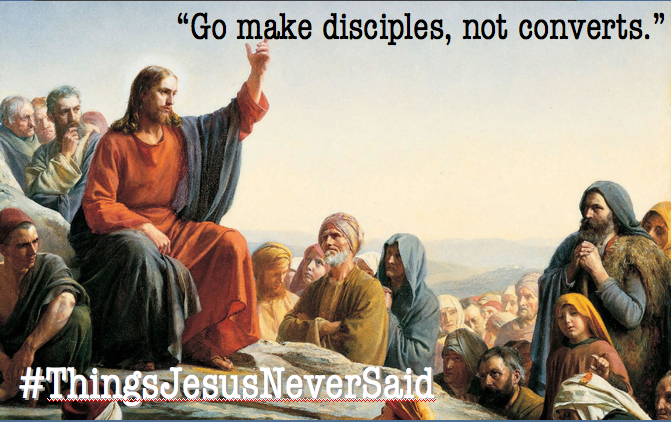











 Christ Alone Wyoming