
With so many professing Christians who, by their lives, deny the truth of the gospel, these messages are good for all! While no human is without sin until he dies or Christ returns, there is no basis for comforting a soul as being in Christ if there is NO mark of being a new creature in Christ. There is no litmus test to prove one is redeemed, there will be signs of life in everyone who has been born of the Spirit of the Living God!
Encouragement
A True Believer in Christ – Part 1
Here is another short series from Igor Shafhid, a dear brother in Christ from Russia. It is my prayer that each of us examine himself to see if we be in the faith, as the Apostle Paul exhorts to do. Brother Igor is arm-in-arm with the Apostle.
Noah’s Ark
NOAHS ARK
By Edward Griffin
(1770—1837)
With all the hoopla about the movie (which I recommend you don’t spent time or money on), this article could not be timed better.
“By faith Noah, when warned about things not yet seen, in holy fear built an ark to save his family. By his faith he condemned the world and became heir of the righteousness that comes by faith.” Hebrews 11:7
The ark is admitted by the apostle to have been a distinguished type of Christ.
“HE wiped out every living thing that was on the surface of the ground, from mankind to livestock, to creatures that crawl, to the birds of the sky, and they were wiped off the earth. Only Noah was left, and those who were with him in the ark!” Genesis 7:23
In that period before the flood, when the age of man was more than 900 years, the temptation to put death out of view was great. A Church there was—but by intermarrying with the wicked world it had become corrupt, and at last almost extinct. This was the first illustration of the fatal consequence of too close a connection between the Church and the world. By these means the Spirit of God was provoked to depart, and general licentiousness ensued. The Church became reduced to a single family, and the rest of the world sunk into infidelity and vice. “The LORD saw how great man’s wickedness on the earth had become, and that every inclination of the thoughts of his heart was only evil all the time.” Genesis 6:5
Thus the universal and complete effect of the fall was publicly ascertained. This done, God determined to cast away the world as ruined, and to make a new beginning on the foundation of grace, commencing a new stock in the family which included the whole church. This rejection of the world is expressed in the following strong eastern figure, “The LORD was grieved that he had made man on the earth, and his heart was filled with pain! So the LORD said, “I will wipe mankind, whom I have created, from the face of the earth—men and animals, and creatures that move along the ground, and birds of the air—for I am grieved that I have made them.” Genesis 6:6-7
For a hundred and twenty years, “God waited patiently in the days of Noah while the ark was being built. In it only a few people, eight in all, were saved.” The history leads us to suppose that the whole of this period was taken up in building the ark. In the infancy of the ‘building arts’ such a vessel must have cost immense labor, and it was so unpopular an undertaking, that few if any besides the family of Noah would be induced to engage in the the work. His sons were born about twenty years after the building commenced, and for a long time they could afford him no assistance. Cheered by the society and counsel of his venerable father and grandfather, he wore out the hundred and twenty years in patiently waiting for the fulfillment of the prediction. When the ark was finished, God brought all the creatures into it and shut Noah and his family inside.
The old world is devoted to destruction. The waters are to rise and rage above the highest mountains. No vessel had yet been invented to ride the waves. How can any escape? God only can find out the way. He causes an ark to be constructed, in which his friends find refuge, while the waves of wrath sweep away a wicked world. Who that turns his eye towards this frightful scene, is not reminded of that spiritual ark in which the friends of God are sheltered while the floods of vengeance sweep away an unbelieving world?
This prepares the way for us to meditate on the conduct of Noah while laboring for that refuge, and the conduct of that profligate generation who cast contempt on him. The things most worthy of notice in respect to Noah, are his faith, his obedience, his patience, his self-denial, and his fortitude.
(1.) Noah’s FAITH. While he sat at rest in his house, pursuing a life of devotion, and mourning over the abounding wickedness of the times, he heard a voice—a voice declaring that the end of all flesh was at hand—a voice which fixed the event and the manner, but concealed the time. The voice assured him that the wicked would be destroyed, and that the only safety for him was in an ark, which he must at once set about preparing. All this was strange, and different from anything he had experienced. Yet the patriarch believed God. He did not doubt because he had never seen such a thing before, nor because the events predicted might be at a considerable distance. He admitted a realizing belief that the wicked would be destroyed, and that his only safety was in an ark. His faith was sufficient to influence his conduct and to lead him to the labor of 120 years. Not knowing how near the deluge might be, and contemplating so vast a work before him, he saw that he had no time to lose. He felt the urgent call for haste, apprehending that if he delayed, the deluge might come before he was ready; at the same time trusting in God that if he was diligent, that the judgment would be deferred until he was prepared. Here were all the trials of faith which good men experience now. O that they could as fully believe the threats and promises of God; and while they feel the pressing need of haste, could trust in him to connect their diligence with the promised salvation. Let them not doubt because the events foretold differ from their past experience, nor because they are many years distant.
Noah believed God, because his mind was not blinded by sin; but his contemporaries were blinded. This was the difference between them. He believed God’s threatenings and promises, and they believed not. Hence he could consume the labor of 120 years in building an ark, and they could spend that solemn time in mocking at his sacred toil. They could not have acted thus, had they really believed that a flood was coming on the world. This is the difficulty with sinners now. Though God has foretold the destruction of the wicked—they do not really believe it. Did they truly believe that the destruction would come, and that there is no safety but in the spiritual ark—they could not thus reject a Savior, and sleep out life in worldliness and vain security!
(2.) Noah’s OBEDIENCE. God ordained him to provide for his safety by constructing an ark; he did not hesitate a moment—he entered on the work at once, and consumed 120 years in one unbroken course of obedience. And let us who are commanded to secure the spiritual ark, obey, and devote our whole lives to the attainment of this end.
(3.) Noah’s PATIENCE. Consider his patience under labors and sufferings, the length of which he could not foresee. There is no account of his impatience under the hardships of 120 years, nor of his complaining that the time was long, though it probably proved much longer than he had expected. Possibly at no time during the whole period did he look upon the flood as far distant; and yet deliverance continued to fly. But his patience never failed. O that Christians could now as patiently submit to the labors and trials of the spiritual warfare half as long, without complaining that their hardships have no end.
(4.) Noah’s SELF-DENIAL. He possessed great wealth, or he could not have built such an immense ark. Before this command came, he was probably engaged in extensive business, and found his wealth flowing in from every quarter. But at the command of God he gave up all other employments, and consumed his wealth upon that immense building, which could be of no other use than to save him and his family and the animal tribes from the threatened destruction. He forsook all, and was content to wait for his remuneration in the new world—in the world that followed the flood. This was as great a self-denial as for Christians now to abandon all their possessions for Christ, and to wait for the recompense of the eternal world.
(5.) Noah’s FORTITUDE. Except for his father and grandfather and the rest of his own family, he stood aloneagainst a frowning world. It is hard for Christians now, with millions on their side, to stem the torrent of angry opposition, especially in places where that opposition triumphs. How hard then for the patriarch, who had all the sensibilities of a man—to encounter, single-handed, a contending and ridiculing world. He submitted to the scoffs of his acquaintances, his superiors in rank and fortune, his inferiors, his relations, and his enemies! He heard, undismayed, their endless charges of bigotry, superstition, intolerance, and the like. He was a preacher of righteousness; but he preached without success, and drew taunts instead of tears. He never seems to have made a single convert in 120 years! The uniform tenor of his address must have been that of warning and condemnation. The case admitted of no other.
His daily labor upon the ark carried also the strong language of reprobation, “By his faith he condemned the world.” He constantly proclaimed the approaching destruction of the world, for their wickedness.
Such an unheard of enterprise as the construction of an enormous vessel to ride the waves—the construction of it in the midst of the dry land—under the idea that a flood was coming upon the world—was an oddity abounding with apparent folly, and calculated to excite men’s scorn as well as their anger; and could not fail to call forth the highest contempt and indignation from the ungodly world. How often was he called a madman and a fool! Those who passed by, would insultingly wag their heads. Others would curse him. The children would mock at him as he walked the streets, and load him with the epithets which they had heard their parents use. All the wit and raillery of the age would be leveled against him! The news of his foolish undertaking would travel to remote nations—and from all quarters derision and reproaches would come in.
All this time he had no man beyond the bounds of his own family to whom he could impart his cares, or on whose bosom he could repose. He could ask no counsel. He could go no where, he could look no where, without meeting theblasting frown of the ungodly world. His character and reputation were totally ruined with every person on earth, except his own family. He was shut out from all society, except what he found at home. The question would often be asked, “Who made YOU wiser and better than all of us?” That question, had he not been supported by faith as well as fortitude, would have crushed him. Losing sight of the divine testimony and commission, and looking only at himself, he would shrink into nothing, and say, “Who am I—to be the reprover of the whole world?”
But faith joined to fortitude, supported him. His unconquered mind rose above the opinion of the united ungodly race. He would not think that sterling which all men approved, nor that vile which all men condemned. He rested on a higher decision.
The reproaches of the wicked would become more and more triumphant and insufferable, the longer the event wasdelayed! To see ‘the madman’, as they would call him, foretelling destruction year after year, without any prospect of a fulfillment; to see him laboring to build an enormous vessel for ten, twenty, forty, eighty, a hundred years, without any sign of a deluge, though he might have expected it long before, and might have intimated that expectation; how great must their contempt and triumph have arisen! How often would they load him with the titles of ‘false prophet’, ‘impostor’, and ‘liar’! How often would they tauntingly ask, “Where is the destruction which you have so long foretold? Why, as far back as anyone can remember, everything has remained exactly the same since the world was first created!” But this heroic saint, far from being conquered by reproaches, resolved to believe and obey God, rather than man. With astonishing fortitude, he held fast his integrity for 120 years.
At length, the long expected day arrived which was to show that his labors and hopes were not in vain—which was to put an eternal end to the scoffs and exultations of his enemies.
Finally, the frightful morning began! The heavens gathered blackness. Angry tempests conflicted in the skies. The lightnings flashed in the skies! Word was spread, that Noah and his family had entered into the ark. The ungodly then began to fear!
Before long, floods of water poured from the sky. Some now began to turn their eyes towards the ark; others stood doubting; others still dared to scoff!
The waters go on to increase. The rivers fill—and start to overflow. The waters begin to rise in the streets. Some flee into their houses; others, more intimidated, hasten to the hills! Others are now convinced, and with dreadful fright, are seen wading towards the ark!
The fountains of the great deep are now broken up. The waters rise more rapidly, and begin to rush with impetuous force. With difficulty they stand against the stream. They struggle for their lives to reach the ark! Thousands come—some wading, some swimming, some sinking, some hanging onto the ark with the grasp of death—all screaming for admission!
But it is too late! Time was, when the ark was open and they might have entered in—but that time is past! Where are now those tongues which derided the enormous vessel and the man who built it? Now what do you think of him—who for more than a century has borne the character of a fool and madman! They would give a thousand worlds—to be in his condition now!
Those nearest to the ark, cry and plead for admission, but in vain! The waters roar! The ark is lifted up! They sink and are seen no more!
By this time, every wretch on earth is thoroughly convinced. Hear their cries from the tops of the houses, which are answered by wails from those on the hills. See the multitudes who have fled to the mountains. How like frightened sheep they crowd together! Now the waters, roaring and foaming, have reached their feet! They flee up to the highest ridge—but the floods pursue them there! Some are able to climb the lofty oaks—and the waves overtake them there! They flee to the highest branches, and for a moment have time to reflect on their former madness: “How could I disbelieve the Lord’s prophet? Where is now the ark which I scorned? Where am I going? O eternity! eternity! What a dreadful God have I despised!” On the topmost bough, the impetuous torrent sweeps them. Their hold is broken—and they sink to rise no more!
The ark floats by—and sails over the heads of the revilers and persecutors! Only that blessed family in the ark, are safe!
The same terrors will seize an unbelieving world when Jesus comes again! “As it was in the days of Noah, so it will be at the coming of the Son of Man. For in the days before the flood, people were eating and drinking, marrying and giving in marriage, up to the day Noah entered the ark; and they knew nothing about what would happen until the flood came and swept them all away! That is how it will be at the coming of the Son of Man!” Matthew 24:37-39
When we reflect on the wretched antediluvians, we perceive their folly in not believing God, and are ready to say with the Jews, “If we had lived in their days—we would not have done thus!” But sinners repeat the same folly now! God has told them that he will destroy the world—that shortly, all the wicked of the present generation shall be overwhelmed in a flood of wrath! To convince them that the destruction is coming, he has set forth a spiritual ark. He has sent out preachers of righteousness to warn them. Every circumstance is the same. The destruction is ascertain—it is as near—and there is no escape but in the ark! But sinners will not believe. They spend their time perhaps in scoffing at the serious apprehensions of Christians, and in despising the ark. Greater madness never existed before the flood!
The time is coming when Christians will not be deemed mad men for their concern to secure a saving interest in Christ; when it will appear that they did not believe and labor and bear reproaches in vain. The time is coming when those who are now as secure, as healthy, as those foolish wretches before the flood, would give ten thousand worlds—for the place of the lowest Christian whom they now despise. When the door of the kingdom shall be shut, and there is no more entering in; when they shall stand outside and say, “Lord, Lord, open to us!” and he shall answer, “I never knew you!” when the sluices of infinite vengeance shall be unstopped; when the heavens shall be on fire above their heads, and the earth shall rock beneath their feet; when the sea shall rage and rise and flood the distant land; when all the elements shall make war on man; when they shall flee from the waves—and the flames shall devour them; when they shall flee from the wonders in the heavens—and the opening earth shall engulf them; when they shall stretch out their hands to God—and find him only a consuming fire; when more piteous shrieks shall be heard from every quarter—than were heard in the days of the flood; when they shall see the Noahs whom they despised riding above their heads—and themselves sinking in an ocean of fire!
Ah, what will be their dread then!
O sinners—believe God’s Word! Now is your time to avoid the terrors of that dreadful day. Enter the ark—Jesus Christ! By all the solemnities of that coming scene—I entreat, I beseech you to hasten into the ark! Come, for the floods are rising! Come quickly, or the next hour may be too late!
“As it was in the days of Noah, so it will be at the coming of the Son of Man. For in the days before the flood, people were eating and drinking, marrying and giving in marriage, up to the day Noah entered the ark; and they knew nothing about what would happen until the flood came and swept them all away! That is how it will be at the coming of the Son of Man!” Matthew 24:37-39
Brought to you by Grace Gems
False Prophets in the Church – Part 2
Here is the second message in this two-part series. I hope this has informed and encouraged you to stand for truth,  not take anything for granted, and serve well our Lord and His people.
False Prophets in the Church – Part 1
This is the first of a two-part message broadcast over the radio several years ago. Each part is about 30 minutes. While there are nits that can be picked regarding a few things he says, this man is on target and the church needs to hear this message.
A Catholic Priest is Biblically Saved
A dear brother in Christ, who I had the pleasure of meeting several years ago, testifies of how the great and mighty Creator God saved his soul, from the pit of being a Roman Catholic Priest.
Declaration of the Faith and Practice of the Church of Christ
A Baptist perspective on how to do church, from the mid-1600s.
Declaration of the Faith and Practice of the Church of Christ,
in Carter-Lane, Southwark, under the Pastoral Care of Dr. John Gill, Read and assented to, at the Admission of Members.
HAVING been enabled, through divine grace, to give up ourselves to the Lord, and likewise to one another by the will of God, we account it a duty incumbent upon us, to make a declaration of our faith and practice, to the honour of Christ, and the glory of his name; knowing, that as with the heart man believeth unto righteousness, so with the mouth confession is made unto salvation; (Rom. 10:10) a which declaration is as follows, viz.,
I. We believe, That the Scriptures of the Old and New Testament, are (2 Tim. 3:15-17; 2 Peter 1:21) the word of God, and the only (John 5:39; Acts 17:11; 2 Peter 1:19, 20) rule of faith and practice.
II. We believe, That there is but one (Deut. 6:4; 1 Cor. 8:6; 1 Tim. 2:5; Jer. 10:10) only living and true God: that there are (1 John 5:7; Matthew 28:19) three persons in the Godhead, the Father, the Son, and the Holy Ghost, who are equal in nature, power, and glory; and that the Son ((John 10:30; Phil. 2:6; Rom. 9:5; 1 John 5:20) and the Holy Ghost (Acts 5:3, 4; 1 Cor. 3:16, 17; 2 Cor. 3:17, 18) are as truly and properly God as the Father. These three divine persons are distinguished from each other, by peculiar relative properties: The distinguishing character and relative property of the first person is begetting; he has begotten a Son of the same nature with him, and who is the express image of his person; (Ps. 2:7; Heb. 1:3) and therefore is with great propriety called the Father: The distinguishing character and relative property of the second person is that he is begotten; and he is called the only begotten of the Father, and his own proper Son; (John 1:14; Rom. 8:3, 32) not a Son by creation, as angels and men are, nor by adoption, as saints are, nor by office, as civil magistrates; but by nature, by the Father’s eternal generation (Ps. 2:7) of him in the divine nature; and therefore he is truly called the Son: The distinguishing character and relative property of the third person is to be breathed by the Father and the Son, and to proceed from both, (Job 33:4; Ps. 33:6; John 15:26 and 20:26 and 20:22; Gal. 4:6) and is very Properly called the Spirit, or breath of both. These three distinct divine persons, we profess to reverence, serve, and worship as the one true God. (1 John 5:7; Matthew 4:10)
III. We believe, That before the world began God did elect (Eph. 1:4; 1 Thess. 1:4 and 5:9; 2 Thess. 2:13; Rom. 8:30; Eph. 1:5; 1 John 3:1; Gal. 4:4, 5; John 1:12) a certain number of men unto everlasting salvation whom he did predestinate to the adoption of children by Jesus Christ of his own free grace, and according to the good pleasure of his will; and that in pursuance of this gracious design, he did contrive and make a covenant (2 Sam. 23:5; Ps. 89:2, 28, 34; Isa. 42:6) of grace and peace with his son Jesus Christ, on the behalf of those persons; wherein a Saviour (Ps. 89:19; Isa. 49:6) was appointed, and all spiritual (2 Sam. 23:5; Isa. 55:3; Eph. 1:3) blessings provided for them; as also that their (Deut. 33:3; John 6:37, 39 and 10:28, 29; Jude 1) persons, with all their grace (2 Tim. 1:9; Eph. 1:3; Col. 3:3, 4) and glory, were put into the hands of Christ, and made his care and charge.
IV. We believe, That God created the first man, Adam, after his image, and in his likeness, an upright, holy, and innocent creature, capable of serving and glorifying him: (Gen. 1:26, 27; Eccl. 7:29; Ps. 8:5) but he sinning, all his posterity sinned in him, and came short of the glory of God; (Rom. 5:12 and 3:23) the guilt of whose sin is imputed; (Rom. 5:12, 14, 18, 19; 1 Cor. 15:22; Eph. 2:3) and a corrupt nature derived to all his offspring descending from him by ordinary and natural generation: (Job 14:4; Ps. 51:5; John 3:6; Ezek. 16:4-6) that they are by their first birth carnal and unclean; averse to all that is good, incapable of doing any, and prone to every (Rom. 8:7, 8 and 3:10-12; Gem 6:5) sin: and are also by nature children of wrath, and under a sentence of condemnation; (Eph. 2:3; Rom. 5:12, 18) and so are subject, not only to a corporal death, (Gen. 2:7; Rom. 5:12, 14; Heb. 9:27) and involved in a moral one, commonly called spiritual; (Matthew 8:21; Luke 15:24, 32; John 5:25; Eph. 3:1) but are also liable to an eternal death, (Rom. 5:18 and 6:23; Eph. 2:3) as considered in the first Adam, fallen and sinners; from all which there is no deliverance, but by Christ, the second Adam. (Rom. 6:23 and 7:24, 25 and 8:2; 2 Tim. 1:10; 1 Cor. 15:45, 47)
V. We believe, That the Lord Jesus Christ, being set up from (Prov. 8:22, 23; Heb. 12:24) everlasting as the Mediator of the covenant, and he having engaged to be the (Ps. 49:6-8; Heb. 7:22) Surety of his people, did In al. 4:4; Heb. 2:14, 16, 17) human nature, and not before, neither in whole, nor in part; his human soul being a creature, existed not from eternity, but was created and formed in his body by him that forms the spirit of man within him, when that was conceived in the womb of the virgin; and so his human nature consists of a true body and a reasonable soul: both which, together and at once the Son of God assumed into union with his divine person, when made of a woman, and not before; in which nature he really suffered, and died (Rom. 4:25; 1 Cor. 15:3; Eph. 5:2; 1 Peter 3:18) as the substitute of his people, in their room and stead; whereby he made all that satisfaction (Rom. 8:3, 4 and 10:4; Isa. 42:21; Rom. 8:1, 33, 34) for heir sins, which the law and justice of God could require; as well as made way for all those blessings (1 Cor. 1:30; Eph. 1:7) which are needful for them both for time and eternity.
VI. We believe, That eternal Redemption which Christ has obtained by the shedding of his blood (Matthew 20:28; John 10:11, 15; Rev. 5:9; Rom. 8:30) is special and particular: that is to say, that it was only intentionally designed for the elect of God, and sheep of Christ, who only share the special and peculiar blessings of it.
VII. We believe, That the justification of God’s elect, is only by the righteousness (Rom. 3:28 and 4:6 and 5:16-19) of Christ imputed to them, without the consideration of any works of righteousness done by them; and that the full and free pardon of all their sins and transgressions, past, present, and to come, is only through the blood of Christ, (Rom. 3:25; Eph. 1:7; Col. 2:13; 1 John 1:7, 9) according to the riches of his grace.
VIII. We believe, That the work of regeneration, conversion, sanctification, and faith, is not an act of (John 1:13; Rom. 9:16 and 8:7) man’s free will and power, but of the mighty, efficacious, and irresistible grace (Phil. 2:13; 2 Tim. 1:9; James 1:18; 1 Peter 1:3; Eph. 1:19; Isa. 43:13) of God.
IX. We believe, that all those, who are chosen by the Father, redeemed by the Son, and sanctified by the Spirit, shall certainly and finally (Matthew 24:24; John 6:39, 40 and 10:28, 29; Matthew 16:18; Ps. 125:1, 2; 1 Peter 1:5; Jude 24; Heb. 2:13; Rom. 8:30) persevere; so that not one of them shall ever perish, but shall have everlasting life.
X. We believe, That there will be a resurrection of the dead; (Acts 24:15; John 528, 29; Dan. 12:2) both of the just and unjust; and that Christ will come a second time to judge (Heb. 9:28; Acts 17:31; 2 Tim. 4:1; 2 Thess. 1:7-10; 1 Thess. 4:15-17) both quick and dead; when he will take vengeance on the wicked, and introduce his own people into his kingdom and glory, where they shall be for ever with him.
XI. We believe, That Baptism (Matthew 28:19, 20; 1 Cor. 11:23-26) and the Lord’s Supper are ordinances of Christ, to be continued until his second coming; and that the former is absolutely requisite to the latter; that is to say, that those (Acts 2:41 and 9:18, 26) only are to be admitted into the communion of the church, and to participate of all ordinances in it, (Mark 16:16; Acts 8:12, 36, 37 and 16:31-34 and 8:8) who upon profession of their faith, have been baptized, (Matthew 3:6, 16; John 3:23; Acts 8:38, 39; Rom. 6:4; Col. 2:12) by immersion, in the name of the Father, (Matthew 28:19) and of the Son, and of the Holy Ghost.
XII. We also believe, That singing of psalms, hymns, and spiritual songs vocally, (Matthew 26:30; Acts 16:25; 1 Cor. 14:15, 26; Eph. 5:19; Col. 3:16) is an ordinance of the Gospel, to be performed by believers; but that as to time, place, and manner, every one ought to be left to their (James 5:13) liberty in using it.
Now all and each of these doctrines and ordinances, we look upon ourselves under the greatest obligation to embrace, maintain,, and defend; believing it to be our duty (Phil. 1:27; Jude 3) to stand fast in one spirit, with one mind, striving together for the faith of the Gospel.
And whereas we are very sensible, that our conversation, both in the world and in the church, ought to be as becometh the Gospel of Christ; (Phil. 1:27) we judge it our incumbent duty, to (Col. 4:5) walk in wisdom towards them that are without, to exercise a conscience (Acts 24:16) void of offence towards God and men, by living (Titus 2:12) soberly, righteously, and godly in this present world.
And as to our regards to each other, in our church-communion; we esteem it our duty to (Eph. 4:1-3; Rom. 12:9, 10, 16; Phil. 2:2, 3) walk with, each other in all humility and brotherly love; to watch (Lev. 19:17; Phil. 2:4) over each other’s conversation; to stir up one (Heb. 10:24, 25) another to love and good works; not forsaking the assembling of ourselves together, as we have opportunity, to worship God according to his revealed will; and, when the case requires, to warn, (1 Thess. 5:14; Rom. 15:14; Lev. 19:17; Matthew 18:15-17) rebuke, and admonish one another, according to the rules of the Gospel.
Moreover, we think ourselves obliged (Rom. 12:15; 1 Cor. 12:26) to sympathize with each other, in all conditions, both inward and outward, which God, in his providence, may bring its into; as also to (Rom. 15:1; Eph. 4:12; Col. 3:13) bear with one another’s weaknesses, failings and infirmities; and particularly to pray for one another, (Eph. 6:18, 19; 2 Thess. 3:1) and that the Gospel, and the ordinances thereof, might be blessed to the edification and comfort of each others souls, and for the gathering in of others to Christ, besides those who are already gathered.
All which duties we desire to be found in the performance of, through the gracious assistance of the Holy Spirit whilst we both admire and adore the grace, which has given us a place, and a name in God’s house, better than that of sons and daughters. (Isa. 56:5)
Discussing Free Will – Part 4
In this four-part series (audio is about an hour long), Jim McClarty and his friend Alex Franzone  discuss various aspects of free will. What is it and – most importantly – what does the Bible say about it?
Here’s the fourth and last part.
Listen and talk among yourselves.
I pray this short series has been edifying.
Discussing Free Will – Part 3
In this four-part series (audio is about an hour long), Jim McClarty and his friend Alex Franzone discuss various aspects of free will. What is it and – most importantly – what does the Bible say about it?
Part four in a few days.
Listen and talk among yourselves.
Discussing Free Will – Part 2
In this four-part series (audio is about an hour long), Jim McClarty and his friend Alex Franzone discuss various aspects of free will. What is it and – most importantly – what does the Bible say about it?
Part three in a few days.
Listen and talk among yourselves.
The Kind of Preaching God Blesses
This is a message from the 2012 Shepherds’ Conference and delivered by Dr. Steve Lawson. The text is from 1 Corinthians 2.
When Good Men go Wrong.
Augustine is a man beloved by both Calvinists and Catholics. I dare most who read this blog can think of one 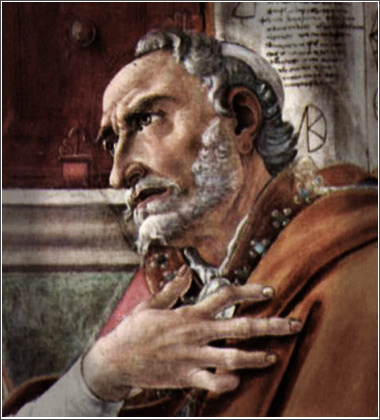 or reasons we like him. How many of us are aware of the gross error he taught? Here’s a sample of why Rome loves this man.
Augustine of Hippo, did not shrink from giving a dogmatic basis to what had come to be the practice of the church, and even professed to find warrant for it in Scripture. “It is, indeed, better that men should be brought to serve God by instruction than by fear of punishment, or by pain. But because the former means are better, the latter must not therefore be neglected. Many must often be brought back to their Lord, like wicked servants, by the rod of temporal suffering, before they attain the highest grade of religious development. . . The Lord himself orders that guests be first invited, then compelled, to his great supper.” And Augustine argues that if the State has not the power to punish religious error, neither should it punish a crime like murder. Rightly did Neander say of Augustine’s teaching, that it “contains the germ of the whole system of spiritual despotism, intolerance, and persecution, even to the court of the Inquisition.” Nor was it long before the final step was taken in the church doctrine of persecution. Leo the Great, the first of the popes, in a strict sense of that term, drew the logical inference from the premises already provided for him by the Fathers of the church, when he declared that death is the appropriate penalty for heresy.
Once more, let us be just: the Roman Church is right in this conclusion if we grant its first premise, that salvation depends not on personal faith in the Lord Jesus Christ, as a result of which or in connection with which the Holy Spirit regenerates the soul immediately, but is to be attained only through the church and its sacraments— baptism accomplishing the soul’s regeneration, and this new life being nourished and preserved through the Eucharist and other sacraments. Granting this doctrine of sacramental grace, not only is Rome justified in persecuting, but all who believe in sacramental grace are wrong not to persecute. For if salvation is impossible except through the church and its sacraments, every heretic is, as Rome charges, a murderer of souls. Is it not right to restrain and punish a murderer? From this point of view it becomes the duty of the church to root out heresy at all cost of human life—to make the world a desert, if need be, but at any rate to ensure peace. And all persecutors have been half-hearted in the work except only Rome; she has had the courage of her accursed convictions. She alone has recognized that if you say A you must say B, and so on, to the end of the alphabet; that if you once begin to persecute you must not tremble at blood and tears, nor shrink from sending men to the rack, the gibbet, and the stake. The Inquisition is the perfectly logical, the inevitable outcome of Roman doctrine, and the entire system of persecution is rooted in this idea of sacramental grace.
From Henry Vedder’s A Short History of the Baptists
The World a Sorry Comforter
George Mylne, 1871
The Preacher speaks of some who “had no comforter,” because, as we infer that they sought comfort wrongly — on earthly, and not on heavenly grounds. And so it is too often with the bereaved — people try to cure their broken hearts with human remedies, the quackery of the world, which mocks the patient, and does not heal him. And thus, when sorrow comes, mourners are urged to seek their consolation in worldly pleasure, and to drown their recollections for a season, only to return more bitterly at last. They might as well expect a cure from sheer intoxication — as banish sorrow thus!
“Miserable Comforters” are they who recommend such remedies to distract your grief. Pleasure can only make a man forget his sorrows; and as waters wear the stones by ceaseless droppings — so a continuous round of pleasure may in time induce complete oblivion.
Yet this, to say the least, is a dishonorable way of stifling sorrow — advisedly I use the word. It does dishonor to the dead, that you must needs forget him, and for his memory substitute the theater, the race-course, or the whirling dance. Could he but know the fact, or tell the feelings of the eternal world — would he commend your conduct, or consider it a compliment to be banished thus from mind? Through pleasure you may try to forget your friend. The giddy spectacle, whatever it may be, hides him from view. It must be so. Such objects are not transparent, but opaque, with their many sorts of deadening influences.
Not so the atmosphere of God’s grace. Its clear expanse forms no impediment to vision — quite the reverse. It gives you objects to survey, as clear as itself. It invites you to fix your eye on Jesus, Himself the Sun of that clear medium — Himself the object to bring out its properties. This will hide nothing from your view, that may be safely looked upon. It hides, indeed, objects of earthly vanity, as they again obscure the Cross. But it enables you to see more clearly, as you ought to see, all lawful objects of consideration. It enables you to weigh their consequences, discern their right proportions, and look upon them as they are looked upon by God. May you thus bear your sorrow honorably, and know the dignity of sanctified distress!
It is also dishonoring to yourself not to confront your sorrows like a man. It implies a lack of courage, the absence of proper self-command. There is something wrong, you may be sure — for is it correct, is it manly, thus to cheat the soul, to hide yourself behind some passing vanity, rather than face the sober truth? It proves you lack a higher principle, the muscles and sinews of a braver purpose, a mind nerved against unworthy refuges, a buoyancy to rise above the wave.
Yet I mean not Stoicism — encasing the mind with adamant, suppressing sensibilities, ignoring natural affection — its ground of resignation fatalism, unconscious or avowed; a dogged resolution to suffer on; a sullen tribute to some principle of harm — too blind to trace, too proud to own, the hand of the Almighty. Stoicism is not courage! There is nothing noble in its composition. It is rather cowardice, making its would-be hardiness a refuge for its lies. It dares not see affliction in its proper light.
Oh no! the strength of which I speak is something higher. It has no place whatever in the natural man. It is the offspring of saving grace. It brings its powers and its consolations from another world.
In some there is a way of sorrowing, nor seeking its distractions in the world, nor yet hardening itself in stoicism; feeding in calmness on its sensibilities, clothed in the mantle of a mournful dignity, attending to life’s duties with self-denying purpose, exhibiting a quiet resignation to the blow. Yet it lacks the principle of God’s grace, the principle of glad compliance with the will of Heaven; sorrowing, yet able to rejoice, distressed yet cheerful; not merely saying, “This is a grief — and I must bear it!” (Jeremiah 10:19), but counting it a privilege to feel a Father’s Hand — rising above the instrument, to see a Father’s Love, serene in the resilience of grace. It is thus the bread of bitterness is turned to sweetness, and the path of sorrow trodden with unfaltering steps, because of consolations that the world knows nothing of, and because the everlasting arms are underneath — surely, sweetly, sensibly.
Thus fortified and taught, a man may look bereavement in the face, undaunted. No need has he to seek a refuge in the world, and drown his sensibilities inpleasure. He has no need to arm himself with stoicism. He meets affliction not as a foe, but as a friend — the bearer of a message from the Lord. To turn from facing it, would be to scorn its mission, to hide himself from God.
Yet trust not in any power of your own. Would you do honor to yourself aright, you must have engrafted spiritual principle, engrafted courage — a self within, entirely distinct from what by nature bears the name — a New Creation in heart and mind — in principle and powers (2 Corinthians 5:17). May you thus be qualified to have a true respect for self, and have a self worthy to be respected!
But, most of all, to seek your comfort in the world is most dishonoring to God. Man was intended to hold communion with His Maker, in Him to find his consolation — -to have his Maker for his friend. But Adam fell, and, with the fall, there came a sad estrangement between him and God — an estrangement, shared by all his posterity down to the present hour. And thus, my friend, why don’t you take your sorrows to the Lord? Because you are estranged from Him. Conscious of sin, you sullenly avoid your Maker — and seek your comfort in the world.
And is it to be always so — that God, the kindest and the best, should be a cipher to your sorrowing heart — that He alone should be the subject of studied disregard? Perhaps this sad bereavement was sent to teach you better things — to show you where true comfort is to be found — and make you see your danger, if you treat your Maker as a thing of nothing, and systematically pass Him by.
Hasten to be wise. Hasten to be childlike with the Lord. Hasten to be at peace with Him through a Savior’s Blood. Hasten to regard Him as your Comforter — to treat Him as your friend.
And as the world can give no real consolation — then as little can we gain by borrowing its grief. “The sorrow of the world works death” (2 Corinthians 8:10). And this it does in many ways. It means that we grieve, irrespectively of God — that we sorrow without a comforter — that our sorrow is indulged in to satiety — that our sorrow is pent up within the breast without a safety-valve — -that we sorrow with nothing to relieve it — -that our mind is fixed on its own distress — -that we have nothing to break the continuity of wearying thought. Such sorrow wearies the flesh — it dries the bones (Proverbs 17. 22), secretly undermines the health, openly shows upon the countenance, induces gradual decay — and thus, eventually, works death!
How many, hence, have died of broken hearts! How many have committed suicide! And all, because they had no real Comforter! Had they only been at peace with God — had they only confided to Him their sorrow — their grief would have found an outlet, and their life would have been saved. And then they might have said, “I shall yet praise Him who is the health of my countenance, and my God” (Psalm 42:11).
Ask the physician, and he will tell you how sickness is often averted by a peaceful mind. Can they but avert the sickness, the patient lives. And what will keep from sickness, like a mind at peace with God? Contrast with this a broken heart — and from what does it proceed? From some hidden canker left to prey upon the mind, unchecked, unremedied — some wound unmollified with ointment (Isaiah 1:6) — some worm that feeds upon the root, sapping the constitution, eating out the stamina of life!
Such is the sorrow of the world. I beg you, Mourner, give not way to it. Before morbid feelings root themselves eradicably — bestir yourself. Shake off theviper which would eat into your heart. Awake to consciousness and healthful thought. “Is any afflicted — Let him pray!” — thus says the Scripture (James 5:13). Let him speak to God — to Him, unfold his grief. This at once unfolds the spring which opens the safety-valve, and lifts the sluice of healthy sensibilities. You are “afflicted” — then speak to God in the attitude of humble prayer. At any rate, my friend, speak to God. Catch not infection from the world — which is sorrow unto death.
The sorrow of the world works death in yet another form. Instead of leading you to God, it takes you further From Him — further from grace — further From Christ — further from hope — further from eternal life! Instead of softening the heart — it hardens. It engenders a deadened spirit, a conscience not awake to suitable impressions — it paves the way for death — death here, and death hereafter! Then take a lesson, Mourner, if such is your temptation. Shun worldly sorrow, which eats as a canker! Seek peace. Seek sweet serenity. Seek life for soul and body in the simple remedy of Christ — the balsam of the soul.
God’s Moral Law
This post is a quiz! Most Christians acknowledge a moral law at work in all men, seeing this in myriad places  in Scripture – most explicitly, perhaps, in Romans 2: For when Gentiles, who do not have the law, by nature do what the law requires, they are a law to themselves, even though they do not have the law. They show that the work of the law is written on their hearts, while their conscience also bears witness, and their conflicting thoughts accuse or even excuse them.
Here’s the quiz: Where is the moral law defined in Scripture and when was it given to man? Please reason your answer to this two-part question with the Word of God. The goal here is to stir our thinking and draw us to Scriptures, not relying solely on what men have taught us.
I’ll tell you what think after some of you answer. Have fun!
~~~~~~~~~~~~~~~~~~~~~~~~~~~~~~~~~~~~~~~~~~~~~~~~~~~~~~~~~~~~~~~~~~~~~~~
Thanks to all who participated! It’s not likely what you will read next will satisfy everyone, but please read carefully and seek to understand what is written.
One of the problems we must all acknowledge is that the Bible does not provide a definition of “God’s Moral Law”, nor does it use that term in describing it. This is where many presuppositions come into play.
Three statements for your consideration: 1) There is a moral law from God that has been written on every soul, leaving no person with an excuse to claim he did not know. 2.) This moral law was given to man at the Fall, not at Creation. 3.) This moral law shines through the Decalogue, is not defined nor contained in the Decalogue.
As for the first point, I think the citation from Romans 2, above, proves that well enough. Those who want to argue against this point will have to be very calm and biblical to be heard. As for the second point, consider the biblical record: before the Fall, Adam and Eve had fellowship with God and knew the goodness of God. It was not until after Adam sinned that they had knowledge of both good and evil (Gen 3:7 and 22). As Paul wrote in Romans 7, knowledge of the law (here, he is talking about the Decalogue, which applied the Moral Law to the Hebrews) brings knowledge of sin. Adam knew not sin until he sinned. Since he sinned, he had need of the Moral Law. God wrote His Moral Law on Adam’s soul and Eve’s when He banished them from the Garden.
Thirdly, the Moral Law of God shines through the Decalogue, which applies that Law to the Hebrews, wrapping it in ceremonial language that applies to them alone. If one looks at the biblical context and direct biblical commentary about the Decalogue, there is no reason to claim those “tablets of testimony” as binding on all men everywhere. The 17th century theologian John Owen observed this in his Works, 22:215:
The nature of the decalogue, and the distinction of its precepts from all commands, ceremonial or political, comes now under consideration. The whole decalogue, I acknowledge, as given on mount Sinai to the Israelites, had a political use, as being made the principal instrument or rule of the polity and government of their nation, as peculiarly under the rule of God. It had a place also in that economy or dispensation of the covenant which that church was then brought under; wherein, by God’s dealing with them and instructing of them, they were taught to look out after a further and greater good in the promise than they were yet come to the enjoyment of. Hence the Decalogue itself, in that dispensation of it, was a schoolmaster unto Christ.
But in itself, and materially considered, it was wholly, and in all the preceptive parts of it, absolutely moral. Some, indeed, of the precepts of it, as the first, fourth, and fifth, have either prefaces, enlargements, or additions, which belonged peculiarly to the then present and future state of that church in the land of Canaan; but these especial applications of it unto them change not the nature of its commands or precepts, which are all moral, and, as far as they are esteemed to belong to the Decalogue, are unquestionably acknowledged so to be.
I share Owen’s basic point, but differ in some details. What we see in Exodus 20 is not equal to the moral law, but communicates that law in the context of the covenant God made with Israel. I think there are “prefaces, enlargements, or additions, which belonged peculiarly to” Israel in the 2nd through 5th and the 10th words of the tablets. Read what is recorded in Ex 20 and compare it to Deut 5 and ask yourself if what Owen and I say is true. Then realize that God’s Moral Law must be discerned by careful reading, studying and prayer. Failure to do this has caused many to blithely assume the Decalogue is equal to God’s Moral Law (something first proposed by a Roman Catholic in the 12th century). The difficulty in interpreting and applying the Decalogue as God’s Moral Law can be seen in the last 1,000 years of church history.
If there is interest, I would be willing to post a four page article I wrote last year as a result of studying this question in context of how the 1689 London Baptist Confession addresses it.
The Road to Emmaus
The biblical passage in Luke 24 known as the Road to Emmaus is – like many passages – twisted and misused,  sometimes innocently, many times intentionally. There is a mystical three-day retreat called The Walk to Emmaus (also known as Chrysalis) that was modeled after the Roman Catholic retreat known as Cursillo, which started in Spain in 1949. These two retreats are like identical twins – not the same, but very much alike. And both are embraced by a wide range of churches – including Methodist, Episcopalian, Lutherans, Presbyterian, and Baptist.
You can read about The Walk to Emmaus here: http://emmaus.upperroom.org/ Their FAQ are most informative, and all copyrighted. Here’s another web site where a Baptist who attended one of these retreats discusses the event and explains why evangelicals should not participate.
All that background to bring your this – a wonderful sermon from the text of Luke 24:13-35, wherein we are reminded that the Lord opens eyes to see truth, that seeing is not believing, and that those who are given sight and hearing will respond to the Savior. Pull up your chair and give a listen – you will be glad you did.
Rise Up O’ Men of God
Where are the men in our churches who are willing to stand for what is right? We have bought into the world’s philosophies and the church has become feminized. Men, God has given a divine order for the reason that we might show the picture of Christ and His Bride to the nations. If we are going to advance in the battle, we must have men with a rod of iron in their backbone. May God forgive us for ever quitting in the first place!
HT: Jeremy B. Strang
The Glory of God in the Doctrines of Grace
A CALL TO SELF-EXAMINATION
A CALL TO SELF-EXAMINATION 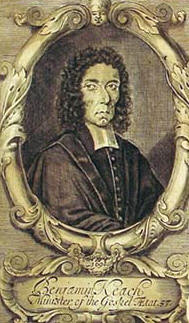
by Benjamin Keach
What can render the state of a person worse than to be an enemy of God, Jesus Christ, and the power of godliness; and yet to think he is holy and a good Christian? Nay, because his conscience is blind in the matter, it acquits him since it lacks saving light, while he keeps up in a zealous performance of the external acts of duty and religion; by which means he is deprived of that help which some openly profane gain from the rebukes and lashes of their own consciences, which often proves a means of their conversion. But the hypocritical professor, not knowing he lacks a changed heart, nor understanding that he is without those Sacred Principles from whence should flow all he acts and does, but contrariwise he is stirred up by false Principles, and acts only by the power of natural conscience and affections, having no clear judgment to discern his own danger, nor what a state he is still in. His condition is deplorable, and this unclean spirit is worse and more dangerous than that which he was in before.
Their blindness and ignorance consists in that they cannot discern nor distinguish between a changed heart and a changed life, or between legal reformation and true regeneration. They think, because their behavior seems so much better than it was before, in their own apprehension, and in the apprehension of others also, their condition is good enough. They comparing themselves with themselves, beholding what a vast difference there is, or seems to be in respect of what they once were, when swearers, drunkards, whoremongers, etc., cannot but commend themselves to themselves. Once they saw themselves sinners, and called themselves so, and were ashamed of their own sinful and wicked lives; but now they are righteous in their own eyes, and so have no need of any further work, being arrived to that state of holiness (so they think) to that degree of piety, to that change, to that conversion, that they conclude they need not seek for further change and yet they are deceived…
The state of the self-righteous and Pharisaical persons is far worse than the state of gross and profane sinners. These are sick and know it not; wounded, but see no need of a physician… They may conclude they are converted, and therefore seek not after conversion.
It is a hard and difficult thing to bring a Pharisaical person, one that looks upon himself to be a religious man, to see his woeful state and condition.
Men may be civilized, and make a great profession of religion, and pass for saints on the earth, that are not such in the sight of God in heaven.
It is a most dangerous thing to make a profession of religion without true regeneration being first wrought in the soul; better to be no professors at all, than not so as to be sincere…
This may inform us of the cause and reason there is so great reproach brought upon religion, and on the ways of God, and on the people of God, by some who profess the gospel. Alas, many of them who are called saints, we may fear are but counterfeit Christians, such as who never experienced a true work of grace; they may have knowing heads, but unsanctified hearts…
Moreover, it sharply reproves those preachers whose great business is to bring men into visible profession, and make them members of churches, whose preaching tends more to bring persons to baptism, and to subject to external ordinances, than to show them the necessity of regeneration, faith, or a changed heart. For the Lord’s sake take heed what you do, if you would be pure from the blood of all men. We too often see when people are got into churches, they conclude all is well; and when conversion is preached, they do not think it concerns them, but other people who are openly profane: and thus they come to be blinded, maybe to their own destruction…
It may also put us all upon a strict examination of our own hearts, lest we should be found to be some of these false and counterfeit Christians. And that we may clear ourselves in this matter; consider:
1. Were you ever thoroughly convinced of your sinful and lost condition by nature, and of that horrid evil there is in sin? Did you ever see sin as the greatest evil, most hateful to God, not only of the evil effects of sin, but also of the evil nature of sin, not only as it has made a breach between God and man, but has also defaced the Image of God in man, and made us like the devil, filling our minds with enmity against God, godliness, and good men?
2. Is there no secret sin lived in and favored, the evil habit never being broke? Is not the world more in your affections, desires, and thoughts, than Jesus Christ?
3. Are you willing to suffer and part with all that you have, rather than sin against God? Do you see more evil in the least sin, than in the greatest suffering?
4. Do you as much desire to have your sins mortified as pardoned, to be made holy as well as to be made happy? Do you love the work of holiness as well as the reward of holiness? Do you love the Word of God for that purity which is in it, as well as the advantage that comes by it?
5. Have you seen your own righteousness as filthy rags, and have you been made poor in spirit?
6. Have you received a whole Christ with a whole heart? A whole Christ comprehends all His offices (prophet, priest, and king), and a whole heart includes all our faculties. Is not your heart divided?
7. Is Christ precious to you, even the chiefest among ten thousand? Are you the same in private as in public? Do you love Christ above son or daughter? Do you love the Person of Christ?
8. Can you bear reproof kindly to your faults, and look upon him your best friend, that deals most plainly with you?
9. Do you more pry into your own faults, than the miscarriages of others? Are you universal in your obedience? Do you obey Christ’s Word, His commands, because you love Him?
10. Have you been the same in a day of adversity, as now you are in a day of prosperity?
11. Can you say you hate sin as sin? Is your mind spiritual, and set upon heavenly things? Do you love the saints, all the saints, though some of them are not of your sentiments in some points of religion?
12. Can you go comfortably on in the ways of Christ, though you meet with little esteem among the saints? Can you stay your souls upon God, though in darkness, having no light? Is all the stress of your justification and salvation built upon Jesus Christ?
Consider these few questions, and do not doubt but that your hearts are sincere, when you can give a comfortable answer to them, though it be with some fear and doubts that still may arise in you. A true Christian is ready to mistake what belongs to him, and take that to be his, that belongs to an hypocrite; while, on the other hand, an hypocrite mistakes that which belongs to him, and applies that to himself, which is the portion of sincere Christians. – Benjamin Keach
Taken from The Counterfeit Christian or the Danger of Hypocrisy by Benjamin Keach, (London: John Pike, 1691). Some archaic words have been modernized.
Do not quickly read these questions and forget about them. Many professing Christians today are simply outwardly religious, but their hearts have not been changed by the regenerating power of God. Christ demands the supreme place in your heart and affections. If you love anything more than Christ; if you love anything equal to Christ (though you may have a wealth of biblical knowledge); you are not a child of God. “Do not be deceived” (Galatians 6:7).
The Trouble with the Tribulation
When Christians aren’t Afraid
Reposted by permission from Stephanie, who is a friend of DefCon. Her words accurately reflect where we should be when addressing what is taking place around us. You can follow her blog Memoirs of a Blogger Saved By Grace.
********
I am not a fan of Duck Dynasty. I have no hidden motive for going to bat for a man I have never met. All I know is what I’ve seen buzzing on my news feed all day and from what I can tell, it’s only further evidence of just how mad this world has truly become.
I live in a country where it’s okay to be a hate-filled, raging bigot as long as you’re not a Christian. It’s okay to sling false accusations, apply false labels, and vilify anyone who doesn’t say what you want them to say. Especially if that statement involves the word “homosexual”.

God isn’t sacred anymore but apparently same-sexual attraction is. Anyone else see something wrong with this picture?
Remember when Chick-Fil-A was put on the spot and forced to make a statement that the media knew well beforehand would turn into a frenzy? It’s called “ambush journalism” and the media loves to use this very topic to stir up hostility between people by demanding that someone they know is a devout Christian admit they don’t support homosexuality and then crucify them mercilessly for it.
Remember all those people who showed up outside Chick-Fil-A’s restaurants to picket, make out, yell at, curse at, and otherwise harass anyone who walked into their doors looking for a good meal to eat? Remember how those people were treated by the Chick-Fil-A employees they were blatantly showing religious discrimination against?
The dissenters were offered free lemonade to cool them off as they picketed in the hot sun and even though these repeated peace offerings were rejected, the Chick-Fil-A staff simply turned the other cheek and went on serving delicious food and providing the same excellent customer service they always had.
Dear LGTB community — meet honor.
I want to be clear. I have absolutely no lack of love for homosexuals even though I don’t bare a shred of approval for the act of homosexuality. People should not define themselves by what they do in the bedroom to the point that they call that thing so hallowed and wonderful that if anyone so much as breathes a word in opposition to it, they are viciously attacked and publicly humiliated. That is not what freedom was meant to do to my country.
To believers:
If you are a Christian who doesn’t know how to love people — all people — then you have no right to speak about sin. Any sin. But if you are a person who resents and attacks a Christian who even respectfully disagrees with your choices based on the God-given right to their religious and moral beliefs, then you are absolutely no better than a loveless Christian and should not expect to be taken seriously.

Tolerance is not a one-way street. If you cannot show tolerance to those you disagree with, then you are in no position to demand tolerance from those who disagree with you. It’s not a religious thing. It’s not even a moral thing. It’s a common sense thing and a respect thing — those two — and you either have them, or you don’t.
I defy any person of any “orientation” who deigns to demand respect and tolerance from others, regardless of their religious convictions, if they cannot themselves show equal respect and tolerance.
Many, many Christians have succumbed to the peer pressure. They’ve allowed themselves to be bullied, filled with guilt and media-brainwashed into silence to the point that they actually have developed a form of Stockholm Syndrome with popular opinion. They identify with it now, even condemning those who aren’t afraid to stand by the Word of God on matters of morality.
Despite what you’ve heard, homosexuality is not special. It is not a special occurrence and it’s is not even a special sin. It’s simply one more reason that Jesus had to died in order to rescue fallen men and a thing that He is most assuredly mighty to save them from.
If they choose not to accept that gift, it’s not a Christian’s place to force it on them. If they choose not to believe that what they do is sin, it is not a Christian’s place to convince them of it. The Holy Spirit is the only One who can convict a heart of its sin but if you ask a true believer what their position is on any matter of morality, you will hear exactly the same thing, every single time so let me save any future public “outrage” right now and tell you what their statement will basically be:
“If God’s Word calls it a sin, I also call it a sin.”
My dear brothers and sisters in Christ. Never be afraid of being called a bad name for speaking the truth. Take your stand with the Word of God, let the world reject you for it and do something that they will most assuredly never do for you in return.
.. Love them anyway!
 Christ Alone Wyoming