The Pastor – Chapter 5, Four NT Words Misused

Note from the author:  Sola

I closed the previous chapter by saying that the widespread corruption of the New Testament system of church care and government has come about, in part at least, because believers have taken four New Testament words and changed – warped – their meaning. The words in question are pastor, minister, clergy and ordain. I realise several other words have been contaminated beyond recognition – ‘bishop’ among them – but I am trying to get to the root of the problem as it exists among Reformed and evangelical churches – dissenters in the main; in other words, nonepiscopalians. ‘Bishop’ does not seem to be a problem in such churches. But ‘pastor’, ‘minister’, ‘clergy ’ and ‘ordain’ are.

Chapter 5 is found here: http://www.sermonaudio.com/sermoninfo.asp?SID=11614140241

Chapter 4 is here: http://defendingcontending.com/2015/12/06/the-pastor-chapter-4-attempted-recovery/

The Pastor – Chapter 4, Attempted Recovery

From the author:

We take up the story at the start of the 16th century with Martin Luther. But before we do, let us remember that protest against the mutilation of Christ’s church was not unknown during the dark ages. Men and, no doubt, women – men like Claude of Turin (died 827), Tanchelm (died 1115), Peter of Bruy s (flourished c1117- c1131), Henry of Lausanne (flourished c1116-1148), Arnold of Brescia (1110-1155), John Tauler (c1300-1361), John Wycliffe (c1328-1384), John Hus(c1369-1415), the Lollards and their like, should never be forgotten.

They all made their protest against Rome, and in one way or another called for a return to the New Testament. I am not pretending that they had full gospel light. But, in their various way s, they all prepared the ground for the approaching Reformation.

This chapter is here: http://www.sermonaudio.com/sermoninfo.asp?SID=116141234374

Chapter 3 is here: http://defendingcontending.com/2015/11/27/the-pastor-chapter-3-the-system-corrupted/

The Dangers of Drifting

A review by Stuart Brogden   Evangelicals-Adrift-94x150

We must, therefore, pay even more attention to what we have heard, so that we will not drift away. – Hebrews 2:1 (HCSB)

Matthew E. Ferris’ book, Evangelicals Adrift – Supplanting Scripture with Sacramentalism, is a fairly comprehensive examination of the differences between biblical Christianity and that which is based on sacramental rituals. He also provides examples of people who have crossed the Tiber River from both sides. For the evangelical who drifts into sacramentalism, the dangers are pointed out with the concern of one manning a lighthouse in treacherous waters, where sailing vessels are bound to be broken on the rocks if they drift away from the narrow channel.

In ten concise chapters, our author covers the theological crises in evangelicalism, the nature and authority of the church and Scripture, and the various departures from biblical truth posed by sacramentalism. In the first chapter, Ferris tells us, “My task is to the show that the definition of the bride of Christ put forth by sacramentalism is an erroneous one, and that Scripture is the only sure guide for the way forward in the Christian life. … I am not writing as “anti-Catholic” or “anti-Orthodox”, but rather as pro-Scripture.” (page 25) This is an important point that evangelicals need to keep in mind, as it is far too easy to drift into being against error instead of in favor of truth; and our mission is to be ambassadors of reconciliation (2 Cor 5:20).

In his discussion about the nature of the church, Ferris contrasts the Apostles’ teaching found in God’s Word with the progressively developed extra-biblical traditions of the sacramental church, concluding, “The final arbiter for sacramentalism returns once more, not to the Scriptures, but to the church.” (page 35), giving us quotes from Roman Catholics that explicitly confirm this. He then asks, “in what sense can the Church be apostolic if it runs counter to the model the apostles themselves left us?” (page 37) Ferris supports the plurality and equality of elders and the priesthood of all believers in the local church, pointing out the word “clergy” is applied in Scripture to the entire church, not only the elders (page 42). Anticipating the claim that there is unanimity amongst the Church Fathers, our author provides a few quotes to show they had as much variation on issues as do any group of Christians, observing that anyone who wants a clean and supporting historical record to support their view must pick and choose which bits of history to rest on, ignoring those which do not line up with their case. “The Church is the pillar and ground of the truth only in that she upholds and defends it; she does not originate truth.” (page 74)

One way that Christians fail to stay on the narrow road is to neglect church history and conclude that their traditions are biblical. Ferris bemoans the fact that many research or know church history only as far back as the Reformation (page 84), leaving them adrift in the historical influences left unexamined. In commenting on how tradition overshadows Scripture in sacramental churches, he sums up a good quote from Oscar Cullman by saying, “there is no need for a canon at all if the ultimate arbiter of truth is the Church and its magisterium.” (page 86) “Roman Catholic doctrine claims to affirm the inspiration of Scripture and that the Bible is authored by God, yet in practice it severely undermines both of these positions.” (page 102) The Roman Catholic Church demands its dogma be accepted as authoritative, while denying the self-attestation of Scripture. Rather than holding to a proper understanding of Sola Scriptura, the Roman Catholic Church is shown to truly hold to sola ecclesia (page 103). This is compounded by the long-standing position of Rome that only its select clergy can interpret the Scripture, which undermines the authority of the Bible. If the Bible is God’s Word to His people, all of whom are indwelt by His Spirit, does it make sense that only a small number of people selected by a small number of religious leaders would be able to rightly comprehend the essentials of the Christian faith? History records that these select leaders, charged with interpreting the Scriptures for the common folk often disagreed with one another and many changed their minds on topics over time. Heretics and false sons have been in the temporal church since the apostolic era and it flies in the face of history, human nature, and the Bible for Rome to claim immunity from the frailties that each son of Adam faces.

Ferris also discusses how the various sacraments within many churches claim to impart grace, robbing the gift YHWH gives of its meaning. Baptism is one of these, with infant “baptism” having its basis in the false belief that it is needed for salvation. “Sacramentalism practices infant baptism as both an entrance into the new covenant with God and as that which cleanses from sin.” (page 160). If this were true, why was the Apostle Paul’s priority on gospel proclamation (1 Cor 1:14 – 17 & 9:22)? Further, he asks, “If baptism is indeed effective in imparting new life, in washing away sin, in putting one into the church, how is it that so many people who have undergone infant baptism manifest no signs of divine life whatsoever?” (page 166)

Chapters 7 and 8 are excellent reviews of the unbiblical view that sacraments convey grace and that mystical doctrine of Mary worship and veneration. Chapter 9 explores the spurious notion that there is theological and doctrinal unity within the Roman Catholic Church – pointing out there is as much variety within that religion as they claim there is amongst evangelicals.

The final chapter asks, “To Whom Shall We Go?” – and points out that “By insisting on the mediation of the Church in every aspect of the believer’s interaction with God, sacramentalism replaces the role of the Holy Spirit in the life of a Christian.” (page 223) Ferris gives the reader an excellent, concise review of the difference between the Roman view of infused grace and the biblical view of imputed grace as the means of saving sinners. The catechism of the Roman Catholic Church declares that the sacraments are necessary for salvation. Our author observes, “There is no experience of God, no conversion, and indeed no final salvation apart from engaging in the ritual acts defined by the Church. This is diametrically opposed to justification by faith in Christ alone. It is the system, rather than the Savior that assumes the importance in sacramentalism.” (page 225) In light of these dangers that we can drift into, to whom shall we go? As Peter rightly understood, we must flee to Christ Jesus – He has the words of eternal life (John 6:68). And so our faithful author points us to the Word Himself. “Every problem, every shortcoming, every doctrinal aberration with evangelicalism, and indeed with any branch of the church, is solved only by an intentional and sustained engagement with scripture. … Embracing sacramentalism will only lead believers further away from the truth that a relationship, not a ritual, is the scripturally ordained way of growth in Christ. Those who drift away can only regain their moorings by once again submitting to the Bible for everything in their Christian live.” (pages 228 & 229)

This book is a most excellent encouragement to the saints of God and, I pray, a wakeup call to those who are drifting into dangerous waters in the Tiber River. To God alone be the glory and honor and dominion and power – now and forever!

The Pastor – Chapter 3; The System Corrupted

A note from the author:

Sadly, after the death of the apostles, the church began to leave Christ’s revealed will Solaby inventing for itself a system of church care. Take that word ‘hierarchy ’, which we have already met, and which will come up again and again. There is, of course, a New Testament hierarchy in the churches of Christ. Within clearly defined limits, as long as the apostles were alive, they were over the entire people of God, over all the churches of Christ, with elders, overseers, bishops, leaders (as I have explained, the names are virtually synonymous), rulers over local churches.

Paul, writing to believers, spoke clearly about those ‘who are over you in the Lord’ (1 Thess. 5:12; see also Heb. 13:17). So there is, in this sense, a New Testament hierarchy. But in this chapter I am going to look at the Fathers’ corruption of the New Testament pattern, and one of the cardinal marks of their defection was the introduction of an unbiblical hierarchy, a worldly hierarchy. This was, and remains, abhorrent in the churches of Christ. So, when the word ‘hierarchy ’ appears in the rest of this book, the context must decide whether or not we are talking about its proper New Testament use, or the deformed – abominable – idea which has done so much harm to the church of Christ these past two millennia.

Chapter 3 is here: http://www.sermonaudio.com/sermoninfo.asp?SID=116141043204

Chapter 2 is found here: http://defendingcontending.com/2015/11/19/the-pastor-chapter-2/

The Pastor – Chapter 2


The New Testament Pattern of Church Life and Rule Sola

From the author:

Christ is the King of his church. He is her Master, Lawgiver, Ruler, Sovereign, Lord. He is her only Master, Lawgiver, Ruler, Sovereign, Lord. I deliberately use capitals to stress the point.
Christ is the Head of his church. He is the only Head of his church. No man is, no man ever was, no man ever can be, Head of the church – other than the God-Man Christ Jesus, the Lord Jesus Christ. I do not think I could express my self more clearly. Christ is the Head of his church.

Chapter 2 is here: http://www.sermonaudio.com/sermoninfo.asp?SID=115141029110

Chapter 1 can be found here: http://defendingcontending.com/2015/11/14/the-pastor-an-audio-book/

The Trouble with Trivial Faith

A review by Stuart Brogden     Tinker


The title of Melvin Tinker’s book is designed to catch your attention: A Lost GOD in a LOST WORLD, subtitled From deception to deliverance; a plea for authentic Christianity. That lengthy title conveys the idea that something is terribly wrong and change is desperately needed. If we survey the current offering from professing Christians, we cannot but agree that something is not right. While not addressing everything one might want changed, Tinker’s book is a welcome work that should cause every child of God to examine his own church and life, seeking to be biblical and honorable in the sight of YHWH. Tinker says, “The modest aim of this book is to present those key truths about the lostless of man, the greatness of God and the glory of the future which will correct much wrong thinking and behavior within the church and so enable the church to effectively confront the world by holding out the Gospel.” (page 22) He explores these issues in good measure over nine very readable chapters.

In this short book our author examines the weightlessness of God in our culture and what happens when people turn to idols. In these first two chapters Tinker observes “the West is made up of believers alright, but not Christian believers. It is composed of what the Bible calls idolaters” (page 26), further noting idolatry as “the besetting sin of the human race” (page 27). He describes what he means by God being lost: “Not that God has been lost as when we misplace a set of keys, but rather that the truth about the real God is disappearing fast.” (page29) When professing Christians take God for granted, being thoughtless in how He is worshiped (is celebrating birthdays and wedding anniversaries worshipful?), with shallow prayers (are physical healing and income our most pressing needs?), and absent from our daily conversations He has lost weight in our lives. And something has filled that space, weighing heavily on our minds and our prayers. That something, no matter what it is or where it came from, is an idol. Two short paragraphs sum up the cause and danger of this condition (pages 51 & 52):

The predominate view abroad is that with the right knowledge, the right resources, and the right will, crime on our streets will be reduced, terrorists will be hunted down and brought to account, poverty will be abolished and our environment made safe.

Undoubtedly as human beings we have achieved so much. But herein lies the danger, namely, that of being seduced into thinking that it is by our achievements that we measure our self-worth and thus bolster our self-confidence.

It is the myth of self-achievement, self-sufficiency, and self-aggrandizement. The trap is that such thinking invariably excludes God because our focus is on self.

Do you find these thoughts dominating your mind? Christian – examine yourself to see if you be in the faith! “We cannot really understand why the world is in such a mess, together with the mess of our individual lives, unless we see it as part of the bigger and much more tragic picture of humankind’s devastating fall away from its Maker.” (page 61)

From examining the train-wreck of our natural condition, our author takes the rest of this short book explaining the necessity of various aspects of biblical Christianity (‘tis a pity one needs to use that adjective, but there are so many professing Christian who are not biblical) and how they impact our lives. Chapter 3 addresses The need for the grandeur of God, based on Isaiah 40:1 – 31. Christians know God, but often we hang around the milk cooler rather than spend time and effort at the grill for juicy meats (Hebrews 5:11 – 14). “The highest science, the mightiest philosophy, which can ever engage the attention of a child of God, is the name, nature, the person, the work, the doings, and the existence of the great God whom he calls his Father.” (page 65) “And it is the smallness of man set against the grandeur of God which makes God’s tender kindness towards us all the more remarkable and moving.” (page 81) Chapter 4 brings us to The necessity of the Cross, based on Philippians 2:5 – 11. In becoming a man, creator God revealed part of His character; “this God, the true God, chooses not to exploit his divinity, but to display it differently … he exercise a different divine right – the right to be humble, the right to change his form whilst not ceasing to be God.” (page 86) Augustine wrote of this wonder:

He emptied himself, taking the form of a servant, not losing the form of God. The form of a servant was added; the form of God did not pass away. He lies in a manger, but contains the world. He feeds at the breast, but also feeds the angels. He is wrapped in swaddling clothes, but vests us with immortality. He found no place in the inn, but made for Himself a temple in the hearts of believers. In order that weakness might become strong, strength become weak. (page 90)

The mystery of God in Christ – who gave Himself to save sinners. How can a mere mortal truly comprehend this? The cross, an inhumane tool for the torture of humans, stands as the narrow gate to the path that leads to eternal life. Contrary to men pleasers who care not for the Gospel, we who have been bought with the blood of Christ must line up with Paul, whose “primary concern is not with the niceties of literature (or fancy words, my addition) but with the wonder of the Gospel.” (page 91) One of the wonders that Philippians presses on us is the truth that the eternal and divine Son of God put on flesh and became a human. He kept this form of a human (one of His created beings) after His resurrection, forever identifying with those ransomed sinners. Tinker tells us, “it would be a mistake to so emphasize the divinity of Jesus at this point that we neglect his humanity. In ascending back to the Father he did not shed his human flash as a butterfly might shed its chrysalis. The person of the Son of God is forever united to our human nature.” (page 98) Our high priest intercedes for us in this age, the God-man who reconciled sinful men to holy God. Jesus will walk among us in the age to come, His body then perfected as the eternal temple in which He is pleased to dwell. Brothers and sister – do you wonder at Christ? Is He not marvelous beyond words?

Buy the book and read about the work of the Holy Spirit, the necessity of the Gospel, the need for effective grace, the necessity of the second coming, and the need to be heavenly minded. It’s less than 200 pages and, aside from unqualified quotes from some questionable men, a solid work that will cause the child of God to humble himself before his Savior and King. And that’s about all we can expect from a book – a reminder of who YHWH is and who we are.

“The Pastor” – an audio book

From the author:      Sola

In this book, I draw attention to an aspect of church life which, I admit, at first glance seems small. Many would say I am try ing to ‘strain out a gnat’ (Matt. 23:24). I disagree. Appearances can be deceiving. ‘A great work’, as Andrew Fuller rightly said, ‘may be hindered and stopped by little things. Little follies will spoil the whole (Eccles. 10:1)’

If we are honest, all of us would have to admit we believe and practice things in our churches that cannot be found commanded or recommended to us in the Word of God. This book aims to provoke us Christians to consider myriad issues and see if they be of man or God.

There are 8 chapters in this book – I will post one per week. I highly encourage those who name Christ to listen with an eager mind to be drawn closer to YHWH. Have your Bible at the ready.

The first chapter can be found here: http://www.sermonaudio.com/sermoninfo.asp?SID=11514104433

Titus – a Fresh Look at an Old Letter

A review by Stuart Brogden

Aldred Genade has written a very thought provoking guide to Titus (The Letter To Titus: TitusBecoming a Persuasive Leader and Preacher), with the aim of showing how the Apostle intended Christian leaders to be persuasive. Which preacher does not want to be persuasive? The first chapter provides us a review of the various ways pastoral epistles and Titus in particular have been addressed by theologians and gives us this author’s thesis: “This book is an attempt to advance the dialogue concerning the macrostructural coherence of Titus in a meaningful way. The instrument that will be employed toward this end is a modified rhetorical critical method.” 1 He explains that rhetorical reading entails seeking to truly understand the meaning intended by the author by exploring the bits of the letter and the letter as a whole. This intentional endeavor to grab hold of the author’s intended meaning is a wonderful alternative to the inherent post-modernist view so pervasive and unexamined in our world.

In discussing the salutation found in Titus, Genade observes it is meant “to emphasize the divine basis of legitimate ministry.” 2 (emphasis in original) We see in several places in his letters how Paul emphasized his appointment as Christ’s Apostle as a means of impressing on Christians the truth of his message (Romans 1:1; 1 Corinthians 1:1; 2 Corinthians 1:1; Galatians 1:1; Ephesians 1:1; Colossians 1:1; 1 Timothy 1:1; and 2 Timothy 1:1). I think this is an example of being unashamed of the calling; something we could all learn from. Staking our identity in Christ (not as an Apostle, but as an ambassador of the gospel – 2 Corinthians 5:20) is the proper way for every one of us to establish authority; not our own, which every man can claim, but that which comes from the Creator and Judge of all people. This is the basis of Paul’s authority and that’s what makes his – and ours – legitimate ministry. False teachers and false converts have no such solid foundation (Matthew 7:24 – 27). Our author points out the focus of Paul’s ministry (and, by extension, that of the local church) is with the elect of God: Titus, his true son in the faith in Christ they have in common. As we will see later in this book, much of Paul’s message to Titus is meant for the entire church located in Crete.

So as not write a book about this book, I will highlight a few points that I think will serve the reader best. Genade’s book is heavily end-noted; this is good news as a careful writer will always let his readers know his sources. He also uses Greek words “in the open” as part of his dialogue with the reader. If you are like me, ignorant of Greek, the letters and words will make no sense; but the paragraphs in which these appear give us excellent context and explanation so as not to left in the dark. Our author also provides a brief summary and some excellent questions at the end of each chapter. If you have ever tried to formulate questions that require some thought and more than a one-word answer, you will recognize hard work here; and it pays off for those who pay attention.

Each of the twelve chapters covers a different aspect of persuasion, as Genade works through the epistle. Chapter 4 is Persuade by Exposing the Opposition, 5 is by Affirming the ministry of Others. Chapter 7 is Knowing Why You Obey, and is where we will dig in a bit before I sum up. In the previous chapter the lesson was on right behavior, based on Titus 2:5 & 10. This brings us to chapter 7 (Titus 2:11 – 15) and the importance of knowing why we obey. To do good one must have the right goal, the right method, and the right motive. Saints want to do good and we know obedience is better than sacrifice, so know our motives is critical! Genade claims, “Paul is now arguing that God is the one teaching the doctrine, making the doctrine and the behavior inseparable. The teaching as well as the Teacher are transcendent and must therefore be obeyed because they are not of human origin. This line of reasoning stresses the obligatory nature of sound doctrine upon the minds of the Cretans. In other words, sound doctrine must be obeyed because it is the exact opposite of “the commandments of men” (1: 14). Not to obey the doctrine and therefore not to manifest these particular behavioral characteristics is tantamount to disobedience to God.”3 The Christian who cares not about obeying God is testing God: a double bad place to be.

We are further instructed, “Obedience to the instruction becomes obedience to “someone,” rather than something. This is a very persuasive angle. Grace offers the complete opposite of what the false teachers have to offer. By formulating the proposition in this way, the appeal of sound doctrine is highlighted, making the argument for compliance to it even more persuasive. Furthermore, the personification of grace reinforces the notion of accountability.”4 This builds on the same foundation as noted in the opening chapter – Christ Jesus is our righteousness and if one has been made a new creature (2 Corinthians 5:17), he will be humbled to be so clothed, knowing how filthy his own righteousness is apart from Christ (Isaiah 64:6) and this makes each of us who have been born again willing and able to obey our Lord. Again, the false teachers have no foundation and the false convert has no clothes (Matthew 22:11 – 14). As our author tells us a bit later,

They have become in Jesus Christ the objects of divine interest, when he gave himself for them (ὃς ἔδωκεν ἐαυτὸν ὑπὲρ ἡμῶν). The inclusive language in this part is also emphatic. They are no longer mere Cretans, but the people of God— God’s own peculiar people (ἑαυτῷ λαός περιούσιος). Their identity and consequently their natures have been changed. They have been made God’s own “unique people.” This expression reinforces the communal sense prevalent in this section. Thus, when Cretan believers perform good deeds, in other words, when they obey the instructions of divine grace, they are acting consistently with their new character.5

So it ought to be in each local church, this sense of unity in Christ and the desire to honor Him and encourage one another to do so. A church that does not embrace this “communal sense” nor recognize their identity as God’s “peculiar people” is adrift in humanism and the Lord Jesus bids them to return to their first love.

While this book is mostly academic in style and content, it is engaging and provocative, a book I intend to return to time and again when the Lord brings this epistle to mind. We need such books if we are to renew our minds and test what we believe to see if these things be so. For the child of God will seek to be aligned with Holy Writ, not content with the mere words of men. Our brother has written a book that will help us examine our thoughts and God’s Word, and submit the former to the latter.

Footnotes:

1 Genade, Aldred (2015-09-21). The Letter To Titus: Becoming a Persuasive Leader and Preacher (Rhetorical Bible Commentary Book 1) (Kindle Locations 126-128). Africa Scholars Press. Kindle Edition.

2 ibid; Kindle Locations 267-268

3 ibid; Kindle Locations 1057-1061

4 ibid; Kindle Locations 1106-1109

5 ibid; Kindle Locations 1205-1210

Christ and the Gospel

A review by Stuart Brogden. Book available on Amazon.

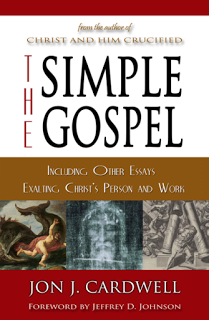
The subtitles of Jon Cardwell’s book must not be overlooked or you will be confused. The focus Screen Shot 2015-10-27 at 9.43.03 AMof this book is the proper understanding of the biblical gospel – that is the title: The Simple Gospel. What our brother rightly understands is that one cannot have a true understanding of the gospel if one does not have a true understanding of the person and work of the Lord Jesus. Without a biblical Jesus, faithfully fulfilling the requirements of the Law and the Prophets and taking our place in facing God the Father’s wrath for our sins (Him being without sin), we do not have the biblical gospel. The subtitle, Including Other Essays Exalting Christ’s Person and Work, gives us advance notice that we will spend some time reading about essentials that provide the foundation of the true gospel.

In this title chapter our author gives us his summary of what the Bible presents as the gospel:

The gospel of Jesus Christ is the revelation of God, according to the scriptures of the Old and New Testaments, which focuses on the Person and work of Jesus Christ in His incarnation, crucifixion, resurrection, ascension, and restitution of all things in His bodily return. 1

Note this: the gospel is about the redemptive work of Christ and our need of Him; the gospel is not the entire Bible, although all Scripture has this meta-plan as its ultimate purpose. A little later in this chapter, while reviewing the meaning and significance of the crucifixion, Jon pleads the sufficiency of Christ’s blood, saying, “The power of the purity of Christ’s blood is sufficient to cleanse the redeemed soul from every confessed sin he has committed after he has been saved by God’s grace (1 John 1: 7-10).” 2 While I agree with the intent, I think this idea would be better stated as “The power of the purity of Christ’s blood is sufficient to cleanse the redeemed soul from every sin he has committed or will commit, and is applied when he is saved by God’s grace (1 John 1: 7-10).” For we are commanded to confess our sins, all the sins of the redeemed are forgiven when he raised from spiritual death to new life, not just those committed after salvation and not only those confessed.

Still in this section, Jon brings to our mind the picture of Christ suffering God the Father’s wrath for our sins – a much more horrifying punishment than physical death on the cross, as painful and horrible as that is. If we don’t see Jesus being punished spiritually for the sins you and I committed, we are taking His sacrifice too lightly. This is closely tied to this statement: “The shame that comes to our souls in the light of the revelation of the offense our very lives bring to God, far exceeds the shame of Adam and Eve when their nakedness was revealed to them.”3 Far more powerful than our shortcomings in our foolhardy attempts to keep the law or earn God’s favor by our own strength, seeing the glory of God in Christ will undo us as it did Isaiah and the Apostle John and others who were privileged to see Him clearly. This is the power of the cross!

When he quickly reviews the resurrection’s part in the biblical gospel, our brother tells us two dear truths: “The resurrection of Christ is God’s open display to the entire creation of His seal and acceptance of Christ’s sacrifice.” 4 and “When we speak of the resurrection of Christ we also speak of God’s assurance of a resurrection to come. God promises to all whom He has saved in Christ will one day be resurrected from the dead. The importance of the resurrection is such that a denial of the bodily resurrection of Christ means a denial of the faith altogether (1 Corinthians 15:12-19).” 5 Let no one who claims Christ forget the import of the resurrection – if Christ be not raised from the dead, we are to be most pitied.

His last section on The Simply Gospel is about the restitution or restoration of all things. We cannot, Jon tells us, fully comprehend the recreation of heaven and earth and the Lord’s glorious return without understanding the biblical doctrine of hell. And, he goes on, we cannot rightly comprehend either the new earth or hell if we do not rightly comprehend God! “The same presence of God that is a consuming fire for the wicked dead, Christ’s presence is peace and comfort (2 Corinthians 1: 3), and fullness of joy with pleasures forever more at His right hand (Psalm 16: 11).” 6 This oft-repeated exhortation to see the Lord as He is in His glory and power is a welcome one that does the souls of the saints much good.

Chapter 2 – Propitiation through Faith is an enlightening walk through Romans 3:23 – 27. Our faithful author tells us, “Romans 1: 17 is the key to this epistle, Romans 3: 23-27 is most certainly the door the key unlocks.”7 and “It is through this door one must pass in order to enter life eternal. In one way, it may be here that the Lord’s cryptic words become especially insightful: “I am the door: by me if any man enter in, he shall be saved, and shall go in and out, and find pasture” (John 10: 9; cf. 10: 7). The door of this passage is that wicket gate Mr. Bunyan’s allegory refers. Jesus Christ is that door, that wicket gate, and His cross, His propitiation, is eternal treasure.”8 Such exegesis is welcomed in this day of shallow, superficial reading, as is this: “To sum it up, God’s righteousness was openly displayed and manifested in the… Person of Christ Presentation at the Cross Power of Christ’s resurrection Perfection in Christ’s ascension.”9 As the Apostle Peter told us (2 Peter 1:12), we need to be reminded of the essential things even though we already know them. Cardwell does well in this regard, as he desires to stir up the saints of God to dig into the Word and walk as those who have been raised from the dead. I do wish Jon had spent some time on exploring what Paul meant by the phrase, “the law of faith” in verse 27. I think it is tied to what he elsewhere calls “the law of Christ,” which (I believe) is defined by the Lord’s answer to the Pharisee in Matthew 22:37 – 40 (I highly recommend Charles Leiter’s excellent book, The Law of Christ).

Cardwell emphasizes the fact that the life of a person who has been raised from spiritual death will be evident: “the result of the saved life will be evidenced by, but not limited to these things: a growing resemblance to the life of Christ in sanctification (1 John 1: 7); repentance of sins as the illumination of His light reveals them (1 John 1: 8-10); a love for God’s Word (1 John 2: 3-5); abiding in the Holy Spirit-led life (1 John 2: 6); exhibiting a sacrificial love for fellow-believers (1 John 2: 9-11); a hatred for the things of this world and hatred for the lusts of the flesh because those things are at enmity with the Father (1 John 2: 13-17); and a love for and discernment of the truth (1 John 2: 20-21).” 10 Let no one go easily on with the lie that one can be saved yet unchanged.

I will only touch on the topics of the balance of the book, each chapter will challenge the reader to examine his belief in the Word and the meaning of specific passages and traditions as Cardwell examines the meaning of the sign of Jonah, the Shroud of Turin, traditions of men, and a few other topics.

The fifth chapter examines the Chief End of Man, and Jon does well to debunk the seeker sensitive madness Rick Warren is famous for, but he also takes the Westminster Shorter Catechism without question to answer the question. The problem with the catechism and its answer is the lack of defining the audience. About which man is it asking about the chief end – fallen man or redeemed man? In the context of the catechism, the very beginning, the catechism must be talking about man in general, not the redeemed. And because of this, their answer fails – because those who are bound for eternal torment do not have, as their chief aim “enjoying God.” Further, I find no support in Scripture that our benefit (the redeemed enjoying God forever) is our chief end. All of creation has as its chief end the glory of God. They should have put a period after the first phrase and worked out the latter portion in a later part of the catechism, making it clear enjoying God is a blessed benefit the redeemed will reap. Jon does point out that, to “enjoy God forever did not mean that man’s ultimate happiness comes as the result of what we receive from God. Following this thought toward its logical conclusion would ultimately suggest that God exists for man’s good pleasure and not the other way around.”11 Amen!

Christian – are you satisfied with your understanding of God’s Word and how it applies to you? I trust that is not the case. This short book is a good one to provoke any believer to dig deeper into the Scriptures, to pray for God’s wisdom, and examine some of those things we have been taught but never have thought about. Take and read!


Footnotes:

1 Cardwell, Jon J. (2014-11-15). The Simple Gospel – Including Other Essays Exalting Jesus Christ’s Person and Work: The Gospel Truth of Jesus Christ According to Scripture (The Biblical Gospel of Jesus Christ Book 2) (Kindle Locations 172-174). Vayahiy Press. Kindle Edition.

2 ibid; Kindle Locations 210-211

3 ibid; Kindle Locations 241-242

4 ibid; Kindle Locations 252-253

5 ibid; Kindle Locations 259-262

6 ibid; Kindle Locations 299-301

7 ibid Kindle Location 332

8 ibid Kindle Locations 339-342

9 ibid Kindle Locations 361-365

10 ibid Kindle Locations 504-509

11 ibid Kindle Locations 915-917

The Pilgrim’s Journey

The Pilgrim’s Journey  9781601783875

A review by Stuart Brogden

I first heard of Jeremy Walker a few years ago when I happened upon a most wonderful book he co-authored with Rob Ventura – A Portrait of Paul: Identifying a True Minister of Christ. That book confirmed in my desire to serve the Lord’s people as a pastor and also put the fear of that responsibility in me. This new book by Walker, Passing Through, is subtitled Pilgrim Life in the Wilderness and has vignettes from John Bunyan’s Pilgrim’s Progress throughout as our author makes compelling case that our Creator sees us as aliens, sojourners – pilgrims. I confess reading this book convicted me on several points and I think any honest Christian will be able to admit the same as we all tend to seek comfort in this world, though it is not our home, living in practical forgetfulness of where our citizenship lies.

This book is divided into 12 chapters, each of which provides Scriptural Framework and Specific Counsels for the topic. I grew a little weary of this format by the end of the book, but thank the Lord for it – it is a wonderful exposition of many truths and useful counsel and encouragements we each have need of. He starts off (page 1) asking “Who are you? What are you?” and tells us on the next page that we “need, therefore, to consider our identity and our activity in the light of Scripture.” If you are in a solid church, you will be reminded of the dangers of worldliness. But if your church is shallow, it may look more like the world than one of God’s outposts in this hostile arena. He concludes chapter 2 –Strangers and Pilgrims, with this: “We like to speak of death as “going home,” and so it is to every child of God, but why do we then live as if we are already home? Such confusion betrays us.” (page 36)

I will highlight chapter 7 – Respect the Authorities, as I see all too often Christians demanding the church do “this” or other Christians do “that” in response to cultural or political events. Also, the proper respect for authorities – each in its own arena of influence – is something we all need to understand better. “The church, by divine design, is a spiritual force, a gospel organism. Her involvement in and impact upon the world socially, politically, and economically may not be insignificant, but it will be substantially incidental. The church does not exist to have a political life or role.” (page 125) The scriptural framework consists of understanding proper subjection to governing authorities (citing Romans 13:1-7), parental authority (Exodus 20:12) as earthly authorities that He established and which answer to Him – not us or the church. And while Walker agrees that role of governments is to do good as God’s ministers, he admits that they often don’t; and their failure to be good does not give us excuse to rebel. When we must disobey earthly authorities (when they command us to sin or forbid from obeying our God), we must be respectful as were Daniel and his colleagues and the disciples written about in Acts 5 were. “There language is polite and eminently respectful. Their recognition of the king’s authority is sincere and humble. Their refusal to obey is absolute. Their faithfulness to God is complete.” (page 131)


We are commanded to pray for our government (1 Tim 2) – who among us lives in such a hateful environment for Christians as did Paul when he penned God’s instructions on this topic? We are to live in such a way so that evil men would see the way we live, rather than speak evil of us they would glorify God (1 Pet 2). We will find ourselves disinterested and unable to have this focus if we don’t have our identity and activity lined up with Scripture. As to the proper focus of the church in the face of God-hating government, Walker brings us to Acts 4:24-31. The Jewish leaders are organized and determined to put an end to this Way that has popped up and is turning the world upside down. Peter and John were commanded to not speak or teach in the name of Jesus; But Peter and John answered them, “Whether it is right in the sight of God to listen to you rather than to God, you must judge, for we cannot but speak of what we have seen and heard.” They were respectful but uncompromising. What happened next is instructive and directly on topic with this chapter.

Acts 4:23-31 (ESV) When they were released, they went to their friends and reported what the chief priests and the elders had said to them. And when they heard it, they lifted their voices together to God and said, “Sovereign Lord, who made the heaven and the earth and the sea and everything in them, who through the mouth of our father David, your servant, said by the Holy Spirit, “‘Why did the Gentiles rage, and the peoples plot in vain? The kings of the earth set themselves, and the rulers were gathered together, against the Lord and against his Anointed’ — for truly in this city there were gathered together against your holy servant Jesus, whom you anointed, both Herod and Pontius Pilate, along with the Gentiles and the peoples of Israel, to do whatever your hand and your plan had predestined to take place. And now, Lord, look upon their threats and grant to your servants to continue to speak your word with all boldness, while you stretch out your hand to heal, and signs and wonders are performed through the name of your holy servant Jesus.”  And when they had prayed, the place in which they were gathered together was shaken, and they were all filled with the Holy Spirit and continued to speak the word of God with boldness.

Notice this: they did not plot a protest or overthrow of the corrupt government of Israel. They praised God, thanked Him for being faithful, recognized He had appointed the evil men to rule over them, and prayed for the name of Jesus to be glorified through the service He had called them to. This is the proper posture for the church in the midst of political turmoil and persecution. “The church’s response to the assaults made on her is not a rallying cry to civic resistance or even civic engagement, but to get on their knees before the living Lord and to seek His face, crying for heavenly power to declare divine truth faithfully and fruitfully even in the face of opposition and persecution.” (page 136)

“The governing power of the saints is a heavenly one. The church takes her identity, her sense of privilege and priority, her direction for behavior, and her enduring hope from her heavenly King and the realities of citizenship in His kingdom. This conditions all our relationships with the authorities here. The men of the world set their minds on earthly things, but the citizens of Zion set their minds on heavenly things.” (page 137) Yet the saints say, Amen!

“Here is the key point: though the citizens of the two kingdoms necessarily mingle as they make their way through this world, God’s people cannot be finally identified with any nation, party, society, or institution in the earth. … It is only when the Christian understands himself to be unequivocally and distinctly a citizen of heaven that he knows how to relate to the kingdoms of the world.” (page 141)

If we want to live in accordance with God’s plan, we must have our identity and activity aligned with His Word. We must ever be growing in grace and knowledge, seeking to be renewed in our minds as we cooperate with His Spirit’s work to sanctify us and conform us to Christ. We must be heavenly minded if we are to be of any earthly good. We must embrace our identity as a pilgrim of God, an alien on planet earth. This is wonderful book to help us figure that out and live accordingly.

A Commentary on Acts

A Commentary on Acts 415ueiiJyrL._SS300_

A review by Stuart Brogden

Writing a commentary on any book of the Bible is a daunting task. Especially, I think, a New Testament book. We tend to be more familiar with the New Testament and the theological divisions within the realm of Christianity are daunting. And we have much less commentary and interpretation by the Apostles of the New Testament than we have of the Old. And, as with any study of God’s Word, we all bring our presuppositions with us and have to conscientiously focus to seek the true meaning of Scripture rather than merely defend what we’ve been taught by others. Guy Prentiss Waters has spent untold hours to provide us a study commentary on the book of Acts.

Right up front, Mr. Waters makes it clear the perspective from which he views Scripture, which will delight his fellow paedobaptists but ought to give Baptists a bit of caution. Here, from the Introduction, page 9: “This commentary is Reformed in its orientation. It proceeds from the conviction that the Westminster Standards are the best summary of the Bible’s teaching in the church’s possession. It believes that Reformed theology and sound exegesis are not mutually exclusive alternatives, but the very best of friends.”

Many Baptists claim to be Reformed, but do not hold to the Westminster Confession. And putting any man-authored document as the lens through which to read Scripture is contrary to the very essence of being Reformed, which relies on the never-ending journey of Semper Reformanda, Always Reforming to Scripture for the glory of God. Some Baptists are just as guilty as some of our Presbyterian brothers.

That said, I think that Mr. Waters has written a very good commentary, focused on the redemptive story that holds all of Scripture together. This being a 600 page book, it’s not possible to give you a comprehensive review; so I’ve chosen to focus on a couple of passages in Acts chapter 2.

In a section titled, Promise Explained (page 84), our author does an excellent job explaining why Peter’s sermon (which Luke summarized for his account) points to Jesus as the promised son of David, pointing out: “First, David had ‘both died and was buried’ in Jerusalem. Second, David was a ‘prophet.’ Third, David had received the promise of God, on oath, ‘to seat one from the fruit of his loins upon his throne’ (Ps 132:11, cf 2 Sam 7:1; 1 Chr 17).” And just a few pages later, Waters leans (in a footnote) on the Westminster Longer Catechism to claim baptism as “a sign and seal of the forgiveness of sins that is granted alone through faith in Christ.” (page 89) There is no Scripture referenced and there is no Scripture that can be brought to defend this idea. It is conjecture conjured up by paedobaptists to support paedobaptism. One can argue from Scripture that circumcision of the heart or the Lord’s Supper or both are signs and/or seals of the New Covenant – which is what provides that forgiveness of sins (Luke 22:20 and Rom 2:29, respectively). Later on page 89 and onto page 90, Waters refers to Acts 2:39 and again allows his confessional tradition to influence his understanding of Scripture:

In Acts 2:39, Peter makes an important statement concerning the reach or scope of the promise of which he has been speaking. The promise pertains to three groups of people. First, it is ‘for you’, that is, the Jews – not simply these particular Jews gathered in Jerusalem, but for all Jews within reach of the gospel. Second, it is ‘for your children’. God had specially extended his promises to the offspring of believers under the Old Covenant, and will continue to do so under the New Covenant (Gen 17:7). Third, it is ‘for all who are afar off.’” Waters’ second point is one of the key areas that paedobaptists must not honestly examine, because the actual meaning of this Scripture undermines the foundation of their system. The promise given to Abraham in Gen 17:7 was not one that brought the offspring of Jewish children into the New Covenant. The other side of this covenant given to Abraham, described in Gen 17:9 -14, is what brought Jewish offspring into the Mosaic Covenant community – not the New Covenant. Most importantly, God’s Word tells us the proper interpretation of the promise in Gen 17:7: Galatians 3:16 (ESV) Now the promises were made to Abraham and to his offspring. It does not say, “And to offsprings,” referring to many, but referring to one, “And to your offspring,” who is Christ. The promises were to Abraham and his seed – not seeds; to include Christ and His body in the New Covenant, not unregenerate Jewish or Presbyterian children.

But, the paedobaptist says, Scripture clearly says “the promise is for you and your children!” Two things must be observed from this passage in God’s Word. First, this verse cited in part by Waters and most paedobaptist defenders – For the promise is for you and for your children and for all who are far off, everyone whom the Lord our God calls to himself. That little phrase at the end qualifies everything that precedes it in this sentence. Only those children that are called by the Lord our God to himself will be saved and, therefore, included in the New Covenant. Secondly, the promise mentioned in verse 29 does not refer to the Abrahamic covenant, as paedobaptists claim in their effort include their biological seed in the New Covenant. Context reveal no mention of Abraham in Peter’s sermon. Starting in verse 22 and continuing to verse 36, Peter describes how Christ Jesus is the heir to God’s covenant with David as fulfillment of God’s promise to David to raise up your offspring after you, who shall come from your body, and I will establish his kingdom. He shall build a house for my name, and I will establish the throne of his kingdom forever. (2 Samuel 7:12-13)

No matter how you slice Acts 2, you will not find Abraham’s covenant nor a promise by God to include all the children of a group of people in the New Covenant.

As with all things written by man, there is error in this book of which the reader must be wary. But there is much good, as well. Many Baptists and Presbyterians agree vigorously on how sinners are saved – it is a monergistic work of God. This view of soteriology shines brightly throughout this commentary and ought to be an encouragement to many.

If you are a fan of the Westminster system of theology, you will enjoy this book more than us Baptists. But we can all learn and benefit from it as it will cause the serious reader to dig into Scripture to see if these things be so.

The Glory of a True Church

Now available! A book by Benjamin Keach that has been out of print for more than 100 1425078955676-1024x1024years. Brought to you by Free Grace Press. Check it out, see who recommends it – for pastors and all saints.

Benjamin Keach was one of the best and most well-known baptist, puritan theologians of the 1600s. He was instrumental in introducing hymns into the church’s worship, and also was one of the framers of the 1689 London Baptist Confession. He also had a profound love for the church. He began preaching at 18, and pastoring at 28 and his ministry was tremendously blessed by God with growth in truth and defense against error. He was despised by the authorities of the Church of England and often persecuted for his faith. – See more at: http://www.freegracepress.org/products/the-glory-of-a-true-church-by-benjamin-keach/#sthash.7vwpKTyb.dpuf

Battle Plans

Battle Plan Battle Plan

A review by Stuart Brogden

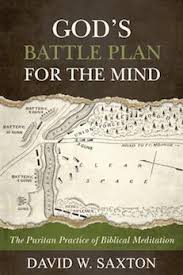
David W. Saxton’s God’s Battle Plan for the Mind is a tightly-packed synthesis of Puritan thoughts on biblical meditation from more than 3 dozen books. In twelve chapters, he covers several important topics, such as defining the difference between biblical mediation and unbiblical meditation. But first, he wants to show us the joy of developing the habit of meditating on the Word of God and throughout the book he shows the pitfalls of being negligent and the nourishment to our souls we gain by persisting in getting the most of our relationship with our Lord and Savior.

What does it mean to meditate? It means to think personally, practically, seriously, and earnestly on how the truth of God’s Word should look like in life.” (page 2) That is helpful in our world in which so many endorse and practice pagan meditation. Saxton reminds us that God has designed us and ordained His Word to be compatible – we find comfort and relief when we are close to Him; we find our Who He is and how we draw close in His Word. “God has chosen primarily to help us deal with discouragements and sin by applying divines truth to our minds. … Biblical meditation on Scripture acts as a believer’s medicine because God’s Spirit always uses the balm of His truth to provide lasting comfort and help.” (page 3) If believers do not spend time and effort in the Word of God, contemplating its truth and application to him, he will be drawn aside to lesser things and be weakened rather than strengthened.

On page 8, our author quotes Philippians 4:8-9 as an example of how God shows proper biblical meditation. Finally, brothers, whatever is true, whatever is honorable, whatever is just, whatever is pure, whatever is lovely, whatever is commendable, if there is any excellence, if there is anything worthy of praise, think about these things. What you have learned and received and heard and seen in me — practice these things, and the God of peace will be with you. (ESV) He then tells us (page 9), “This passage pronounces a blessing not on those who merely know God’s will, but rather on those who have put His will into everyday practice by dwelling on God’s truth.”

One aspect of this book that grew somewhat tedious for me is the sheer quantity and concentration of quotes from the Puritans. Many pages have 6 to 8 quotes, with sentences and paragraphs peppered with footnotes; often taking more space than Saxton uses. While it is good to read the thoughts of these long-gone saints, it is a bit distracting for so many quotes to be used in short space. But let’s get on with the book!

In advocating biblical mediation, Saxton (pages 28 & 29) tells us that the Bible is full of admonitions for God’s people to remember – as a form of mediation. “Revelation 2:5 demonstrates that this kind of meditation is actually the first step towards evangelical repentance: “Remember therefore from when thou art fallen, and repent, and do the first works; or else I will come unto thee quickly, and will remove they candlestick out of his place – unless thou repent.” “Remember” is the word mnamoneuo, which means “to recall information from memory.” The word does not suggest that a person has actually forgotten. Rather, it commands the believer to recall or to think about again.” I would add that this word also conveys the notion of being told to not forget something, to bear in mind – as when your mother would you to remember to bring your coat home from school. Still on page 29, we are given Thomas Hooker’s definition of biblical meditation, one I think worth meditating on: “Meditation is a serious intention of the mind whereby we come to search out the truth, and settle it upon the heart.” While I think this is an excellent definition, I am weary of present day duality of heart and mind – as if one’s heart (pointing to the chest) is what the Bible means by this term, rather than “heart” being a Hebrew metaphor for the seat of one’s being – the soul, which includes our mind.

In chapters 4 and 5, Saxton explores “occasional meditation” and “deliberate meditation”, showing from the Puritans and the Word of God how unplanned, near-spontaneous contemplation of some attribute of God is as valuable as planned study and prayer and pondering the Word. Occasional meditation ought to fill our minds during the day, rather than our routine absorption of cultural media and the attending thoughts it stimulates. We are cautioned to be on guard against the mystical practice of Rome and others with regards to occasional meditation, but also to persist in training ourselves to think on and ponder the Word of God and how it applies to our daily lives throughout our days. We are urged to memorize Scripture as a safe guard for our thought-life. That’s good advice – I dare most of us are not taking it! Deliberate meditation is pressed on us as necessary for spiritual life – if we do not make plans to read, study, pray over, and ponder God’s Word, our sinful minds will fill us with fleshly desires. I am an advocate of making time early in the day, the calibrate my thinking with the Scriptures before I engage the world. Many of the Puritans agree with me, but they also recognize the danger of dictating specifics to others – some may function better later in the day. So each man must be convinced in his own mind.

William Bridge taught that meditation on the Word should be divided into four parts. The believer must consider the exactness of the commandment, the faithfulness of the promise, the terror of the threatening, and the weightiness of the examples.” (page 62) This I see as excellent counsel. Far too many Christians have a casual attitude towards the Word of God, actually caring not for various passages that do not conform to their presuppositions. Encouraging Christians to ever trust God, Saxton sums up a Puritan view: “In His wise and perfect dealings, the Lord sometimes causes His people to experience unusual times of joy, sorrow, decision, or change. These are all His divine gifts to turn the believer’s heart to seriously consider God’s dealings to gain His perspective from His Word.” If we grasp the truth of the sovereignty of God, we will embrace this idea – nothing we encounter is “happenstance”; all is God’s providential care, an expression of His kindness towards us. There is excellent teaching on choosing subjects to meditate upon – from sin and death to eternity to hell, and God’s rescue of His people. Our author quotes Thomas Watson (page 93): “Meditation on hell would rejoicing in a child of God … Christ Himself has felt the pain of hell for you. The Lamb of God being roasted in the fire of God’s wrath, by this burnt-offering the Lord is now appeased toward His people. Oh how may the godly rejoice!” Do we see the Lord in this light? Do we begin to comprehend how blessed we are by NOT having to face God’s wrath?

As with all things, Saxton and the Puritans see the main focus of meditation being to bring glory to God. How much of our prayer life is fleshly? Physical healing is always needed – but how often at church prayer meetings do we hear moans and weeping over spiritual matters? Is the eternal destiny of our family and friends as important as losing 10 pounds or getting a higher paying job? Do we recognize how desperately we need God’s grace this day? He quotes Henry Scudder (page 100) – “when you arise and dress yourself, lose not that precious time (when your mind is freshest) with impertinent and fruitless thoughts…. This is a fit time to think about why you have need of apparel.” The Fall affects everything in this age. I heard a pastor remark that every time a dog barks, he is reminding us that our race caused him and all creation to be cursed. We messed it up – not the dogs that God was kind enough to give us as companions. Do we admit to being Adam’s offspring, in need of the last Adam’s righteousness and thankful for His submission to the Father in all things? That is a good thing to meditate upon!

In chapter 10 we are given the benefits of meditation: it deepens repentance; increase resolve to fight sin; inflames heart affection for the Lord; increase growth in grace; provides comfort and assurance to the soul; creates a life of joy, thankfulness, and contentment; deepens and matures a Christian’s experience; and improves the knowledge and retention of God’s Word. That’s quite a list! Any one of these benefits is more than enough to show any child of God that he should spend more time and mental energy consuming and pondering the Word of God and how, now, he should live. None of us has “arrived” nor will any of us do so in this age. Brothers and sisters – we need these benefits and others who have gone before us bid us drink deeply from the fount of God’s Word to gain them. If you and I are honest, we admit we have no excuse for our negligence in pursuing godliness. Saxton calls upon the Puritans to speak to this in chapter 11 – Enemies of Meditation.

But there are a couple things in chapter 10 that must be highlighted, showing us that neither Saxton nor his beloved Puritans had it all together, either. First up, a short quote from Thomas Watson, a very credible witness for the Lord – but not perfect. Saxton quotes Watson from Heaven Taken by Storm (pages 106 – 107): “If only people meditated on the damnableness of sin … they would break off … sinning and become new creatures.” This is cobbled together from a short paragraph from Watson’s pen:

Meditation produceth reformation, Psalm cxix. 59. ‘I thought on my ways, and turned my feet unto thy testimonies.’ Did but people meditated on the damnableness of sin; did but they meddled with it, there is a rope at the end of it, which will hang them eternally in hell, they would break off a course of sinning, and become new creatures. Let all this persuade us to holy meditation. I dare be bold to say that if men would spend but one quarter of an hour every day in contemplating heavenly objects, it would leave a mighty impression upon them, and, through the blessing of God might prove the beginning of a happy conversion.

First, let’s all agree that spending time humbly before God as revealed in Scripture will cause reformation within the Christian. But can pondering sin and stopping any one or several of them actually cause a child of wrath to be born again and adopted by God? Mr. Watson had this backwards! God is the One who works transformation by raising a spiritually dead person to new life, becoming a new creature in Christ – not by any works on the part of the creature, for then we would have cause to boast in our flesh! God works reformation in the lives of His people, as we all are on a journey of becoming more conformed to Christ and need His Spirit working within us to make it so. These two things are not the same. From other things written by Watson, I think he knew this – but his writing and thinking (like mine) is not perfect. And he errs in this instance.

Secondly, after quoting Jonathan Edwards (page 110), Saxton says, “Meditation causes believers to grow in grace because it allows the word of His grace to minister a genuine building up of the soul.” (emphasis mine) We must always be on guard with how we characterize the Creator. He does not need our permission or cooperation to work His grace in our lives. He does instruct and equip us to cooperate with Him in this endeavor, but we do not allow Him to work His grace in our lives. Our brother would serve us better by saying that meditation promotes the Word of His grace to build up our soul.

Sanctification (which all of what this book discusses fit within) is a curious process. Unlike justification, sanctification is not monolithic. And while we are encouraged to cooperate with the Holy Spirit in our ongoing sanctification, there are times in each believer’s life that He sanctifies us without our cooperation. Praise the Lord that He does not grow weary or negligent in His work, though we may be from time-to-time! But note this – apart from the Spirit working in us, we cannot sanctify ourselves. Jesus said, “apart from me you can do nothing.” Game, point, match.

Last gripe – in the last chapter, careless language once again inserts an unbiblical image that has been promoted and abused by many, though I do not think this is Saxton’s intention. On page 130, Saxton tells us: “Our deceitful hearts seek to convince us that we have the innate ability to live the Christian life in our own power. Only humble prayer can drive out that evil spirit.” Two things are evident in this short quote: He contradicts himself, telling us rightly we cannot live the Christian life in our power, then telling us how to do so! Then he tells us that sin in us is an evil spirit. Accepting this image without realizing God’s truth leaves us open to being misled. Bob Larson has made untold sums of money playing on the fears of those who do not know the Lord or who are ignorant of the fact that if the Spirit of the living God indwells us, no evil spirit can therein abide. Though our flesh is affected and afflicted by indwelling sin, our soul is perfectly righteous and “possessed” by the Spirit of God. Only lost persons can have an evil spirit within them. That should make us thankful yet again to be found in Christ!

To conclude (lest I go on too long, as is my wont), this is a most excellent book, much needed in every church and by every child of God – for who does not need more grace and closeness with our Lord? Saxton tells us (page 131), “normal Christian growth can be a messy, painful, and imperfect struggle. Yet, just the same, it is a struggle worth fighting.” In his conclusion, he tells us, “The believer’s ultimate purpose is to glorify God through becoming more life Jesus Christ (Rom 8:28-30; 2 Cor 3:18). … This process of progressive sanctification is all of the Lord’s grace, yet it is a duty in which God’s people are responsible to participate.” “Find your greatest delight in life in the presence of Christ though His Word.” (page 137)

Man of Sorrows

Spurgeon’s Sorrows Sorrows

A review by Stuart Brogden

Zack Eswine has written an easy-to-grasp overview of a condition many Christians and pastors spend too little time understanding. Some because they’ve bought into the lie that being healed by the stripes of Christ is a temporal healing, and we should have no sickness if our faith is strong enough. Some because they do not understand mental problems and do not trust psychiatrists. Eswine studied Charles Spurgeon, who suffered with depression and wrote about it, and he brings the Word of God and the words of men to bear to clear the air and give us hope. My hope is to bring to light a few of the good insights this book has to offer and help my fellow Christians better understand this issue so that we might be used to do good to our brothers and sisters who are suffering with depression.

So let’s sample this book, see how Spurgeon dealt with it, and how our Creator advises us.

Chapter 3

Conversion to Jesus isn’t heaven, but its foretaste. This side of heaven, grace secures us but doesn’t cure us.

“Though substantial healing can come, Charles reminds us that often it waits till heaven to complete its full work.

“We do not profess that the religion of Christ will so thoroughly change a man as to take away from him all his natural tendencies; it will give the despairing something that will alleviate that despondency, but as long as that is caused by a low state of body, or a diseased mind, we do not profess that the religion of Christ will totally remove it. No, rather, we do see every day that amongst the best of God’s servants, there are those who are always doubting, always looking to the dark side of every providence, who look at the threatening more than at the promise, who are ready to write bitter things against themselves …

“Therefore we sufferers of depression in Christ may grow terribly weak, even in faith, but we are not lost to God.

“It is Christ and not the absence of depression that saves us. So, we declare this truth. Our sense of God’s absence does not mean that He is so.”

This is critical for us to grab hold of – our position as children of God, His redemption and righteousness is not based on or determined by how we feel. It is based on His work to earn His place as the Lamb of God, taking our sin upon Himself, and imputing His righteousness to us. These facts and the promises of God are what determine our standing before Him. Our emotions are given to us by God but we are prone to being dragged away from Truth by them.

Chapter 4

“Religion offers both a challenge and a help to those who suffer mental disorders. This challenge surfaces when preachers assume that depression is always and only a sin.”

The author goes on to identify the hope is, as studies which indicate people who are part of a religious community do better with mental health (citing Lauren Cahoon, “Will God Get You Out of Your Depression?” (ABC News, March 19, 2008))

Depression for the Christian is often based on the perception that God has abandoned him. This is a very tangible example of how our theology matters and how our faith must rest in Christ and not our perceptions of His love for us. No doubt, this is easy to say and terribly hard to find comfort in when one is captured by his emotions. Our author quotes saints of old often and here, he shows us they did not neglect Satan. The devil doesn’t cause depression but he certainly is eager to encourage it! At this point, the Christian must fight.

“We plead not ourselves, but the promises of Jesus; not our strengths but His; our weaknesses yes, but His mercies. Our way of fighting is to hide behind Jesus who fights for us. Our hope is not the absence of our regret, or misery or doubt or lament, but the presence of Jesus. “Doubting Castle may be very strong, but he who comes to fight with Giant Despair is stronger still!”” (a quote from Charles Spurgeon, “Christ Looseth From Infirmities,”)

He goes on to cite “three tough words” from Spurgeon. First, he defends those who suffer by pointing them to Christ. Secondly, he cautions them not to haunt themselves on purpose with the dreaded notion that somebody somewhere might be happy. Thirdly, Spurgeon would – when he thought it necessary, be direct with those who refused to fight their depression. His sermon, A Call to the Depressed, is cited as a prime example of this tactic. “Perhaps in this sermon, we see Charles the human being trying imperfectly to administer help to sorrows not easily diagnosed. In his earnest and fragile attempts to help, we see our own.”

Chapter 6

“Jane Kenyon’s remarkable poem, “Having it out with Melancholy,” poses two “God” problems associated with depression and our attempts at care. First, depression ruins our “manners toward God” because it teaches us “to exist without gratitude,” and tempts us to answer the purpose of our existence as “simply to wait for death,” since “the pleasures of earth are overrated.” Second, depression tempts our friends to offer the following advice: “You wouldn’t be so depressed if you really believed in God.””

This chapter provides the reader with biblical counsel for those who are depressed, who, our author points out, “lean on metaphors” to describe how they are feeling. Mental problems are hard to convey to those who have not experienced them, so abstract descriptions rarely suffice. The Bible communicates mental anguish via metaphor: Ps 88:3-7, 69:15, Job 13:25, Prov 18:14, et. al.

Three ways metaphors are sufficient to communicate to those in depression:

“(1) Metaphor leaves room. It does not propose to cover every angle, understand every possibility or to explain every detail. It does not require only one possible explanation. Language that proposes to do this with depression exposes its ignorance of the situation at hand.

“(2) Metaphor allows for nuance and difference. Since each person’s experience with depression differs, metaphor allows for diverse expression. Formulaic prose or platitudes immediately reveal their lack of realism regarding how depression damages someone.

“(3) Metaphor requires further thought and exploration. It is a word of invitation more than destination which, we observed earlier, is crucial for gathering up the debris of depression.”

The Bible communicates a creator God Who completely understands His creatures and the plights we face.

“A larger story about God exists that possesses within it a language of sorrows so that the gloomy, the anguished, the dark-pathed, and the inhabitants of deep night are given voice. Such a god-story is neither cruel nor trite. Such a story begins to reveal the sympathy of God.”

Divine sympathy is your teacher, dear caregiver; your ally and friend, dear sufferer. Let His sorrow’s language help you.

Chapter 7

Four ways we can make things worse:

“1. We judge others according to our circumstances rather than theirs. “There are a great many of you who appear to have a large stock of faith, but it is only because you are in very good health and your business is prospering. If you happened to get a disordered liver, or your business should fail, I should not be surprised if nine parts out of ten of your wonderful faith should evaporate.” Jesus teaches us about those who lay up heavy burdens on others but do not lift a finger to help (Matt. 23:4).

“2. We still think that trite sayings or a raised voice can heal deep wounds. A person “may have a great spiritual sorrow, and someone who does not at all understand his grief, may proffer to him a consolation which is far too slight.” Like a physician who offers a common ointment for a deep wound, we “say to a person in deep distress things which have really aggravated him and his malady too.” In this regard, Charles teaches us the Scriptures, “Whoever sings songs to a heavy heart is like one who takes off a garment on a cold day, and like vinegar on soda” (Prov. 25:20).

“3. We try to control what should be rather than surrender to what is. We must not “judge harshly, as if things were as we would theoretically arrange them, but we must deal with things as they are, and it cannot be questioned that some of the best believers are at times sorely put to it,” even “to know whether they are believers at all.” The Scriptures teach us about Job’s friends who struggled at this very point.

“4. We resist humility regarding our own lack of experience. “There are some people who cannot comfort others, even though they try to do so, because they never had any troubles themselves. It is a difficult thing for a man who has had a life of uninterrupted prosperity to sympathize with another whose path has been exceedingly rough.” The Apostle Paul teaches us to comfort others out of the comfort that we ourselves have needed and received (2 Cor. 1:4).

“According to the Bible, when we encounter someone who weeps, we too are meant to weep (Rom. 12:15). When someone encounters adversity they are meant to reflect and meditate, and we with them (Eccles. 7:14). Without this together-sympathy our attempts to help others can lose the sound of reality. The loss of this sound of reality forges the larger reason for our harshness.”

Chapter 8

I wrap up with the author’s review of how our Savior relates to us. The common passage, Hebrews 4:14-16 (Since then we have a great high priest who has passed through the heavens, Jesus, the Son of God, let us hold fast our confession. For we do not have a high priest who is unable to sympathize with our weaknesses, but one who in every respect has been tempted as we are, yet without sin. Let us then with confidence draw near to the throne of grace, that we may receive mercy and find grace to help in time of need.) emphatically tells us that Jesus has suffered temptation and is able to sympathize with us – and He bids us come to Him! He is the cure what ails our souls and minds. This is not, as we are told, only in the here-after – the Lord is our comfort in this age. For in this age we are hated by the world, attacked by our flesh, and wearied by all the effects of sin that inhabit us and our environment. Jesus is our ever present helper and that’s where I want to end.

What Does God say about Bioethics?

Christian Bioethics 517UykgR7dL._BO2,204,203,200_PIsitb-sticker-v3-big,TopRight,0,-55_SX278_SY278_PIkin4,BottomRight,1,22_AA300_SH20_OU01_

A review by Stuart Brogden

This book, subtitled A Guide for Pastors, Health Care Professional, and Families, is part of a series on Christian ethics published by B&H Publishing Group. I dare say anyone within each of those groups would be challenged to think more biblically about the relevant issues as well as being better informed by reading this book. In the preface, the series editor tells us the thesis of this book by asking this question: “How do we move from an ancient text like the Bible to twenty-first-century questions about organ transplants, stem-cell research, and human cloning?” This book, written by an ordained minister of the gospel (C. Ben Mitchell) and a physician (D. Joy Riley), gives solid counsel and these emotionally charged issues in 9 chapters, and is broken up into four parts: Christian Bioethics, Taking Life, Making Life, and Remaking/Faking Life. The format of each chapter is a look into a real life situation immersed in the subject, followed by questions for reflection, and Q & A between the authors. Other than a too frequent quoting of Roman Catholics as though that Church is Christian institution, this team provides solid insight from God’s Word on each of these topics.

Chapter 1 gives the reader an overview of the Hippocratic Oath which opened my eyes to the ancient context and false gods the oath was originally made to and the awareness that most doctors today do not subscribe to this oath, which we mostly know as the pledge to, First, do no harm. This was spelled out in explicit language that forbid euthanasia and abortion. The absence of a doctor’s oath to “do no harm” may cause a patient to wonder how much he can trust his doctor. In summing up this topic our physician author observes (page 22, italics in original) “Doctors should work hard to be trust-worthy and humble.” A few pages later (page 28), as they address stem-cell research, our minister reminds us, after quoting 2 Peter 1:3, “God has not left his people without guidance in every area of life. Although the Bible is not a science textbook, its message speaks to the deep underlying values that can guide decisions about scientific matters. Although the Bible is not manual of medicine, its truths may be applied to medical decision making.” This is a key perspective for every child of God to properly understand how to walk in the light of God’s Word. Much of the rest of chapter 2 is good advice for properly reading and understanding the Scriptures, taking into account literary, historical, and cultural context as well the genre of what is being read.

The chapter addressing abortion is sobering and probably eye-opening for most. The authors make a full-court press to establish the humanity of every life, starting from conception. Mitchell makes the essential connection between our view of Jesus and our view of humanity, developing the humanity of our Lord to show how every mortal is given value by the Creator – above all other life forms – from the time the egg is joined with a sperm. At the end of chapter 3, the authors exhort Christians to be active in opposing abortion and supporting life, but they draw no lines of getting involved with pro-life Roman Catholics. Christians must be deliberate and biblically thoughtful in deciding who to get cozy with in the public arena. The next chapter covers death and dying, providing thought-provoking observations about the details of pain and suffering and how one’s Christian world view informs us. A key element in handling the death of any person, they tell us, is to remember the patient (perhaps a close relative) is a human being, not merely a patient to be treated. “Much of the suffering of dying persons comes from being subtly treated as nonpersons.” (page 85) There is discussion of the efforts to extend life, even at the expense of that life being human. It is a long-held desire of fleshly human beings to grasp eternal life in our present form, without submitting to God’s revealed plan of redemption – which includes our death and resurrection. Being a faithful child of God includes how we approach death – do we trust our heavenly Father in our dying as did our Savior? Again, we get faithful advice (pages 100 & 101): “Through the resurrection of Christ, God has given us grounds to hope that death, however awful, will not have the last word.” Amen!

As they move from taking life to making life, the reader is presented with a biology lesson on how babies come into the world. They take this opportunity to reinforce the Christians view of anthropology (page 113): “Knowing that pregnancy occurs at fertilization rather than at implantation will help us make several important distinctions later.” They then cover several options medicine has provided for artificial this or that, discussing the line we cross regarding family integrity and God’s authority, observing (page 123), “When a third party intrudes on the procreative relationship, the divinely instituted structure of the family is altered. Trouble is bound to follow.” This may be unwelcome by some, who have such a great desire for a child that their love for the Word of God is overshadowed. All of us fall into this pit on one issue or another from time-to-time, so let us not rush to judgment.

The last part of this fine book covers the definition of death and the forces behind the changes we’ve seen in the last 50 years; organ donation and transplants; cloning and human/animal hybrids; and life extension practices. In this last category, we are introduced to trans-humanists, a group that wants to extent life in the human body and beyond. This was the topic of recent movie, Transcendence, which traced the consequences of a computer scientist whose “essence” was transferred into a powerful computer he had built. It gets very ugly before it ends. In summing up how we who profess Christ ought to look at aging, Mitchell provides a contrast between Christians and Trans-humanists (page 181): “Interestingly, the trans-humanists and Christians seem to have some common concerns. We share:

  • The quest for the good life.
  • Longing for immortality
  • Pursuit of the relief of human suffering
  • Appreciation for technology’s benefits.

Where we differ is in the mean to achieve these aims. For Christians the good life and the goods of life are found in God and his presence in our lives. The good life is not defined by the number of years one lives but the reality of God’s presence in however many years one lives. While we, like the apostle Paul, long for immortality, Christians understand that they already possess it. … Another place we differ with the trans-humanist is in loathing every human limitation. Because we are creatures and nor creators, we accept most limitations as gifts from the One who made us.”

And while there is much more in this book that will do the reader much good, I think that is a wonderful point on which to end this review. Christian – are you content with our God’s provision in your life? Do we think we deserve better than YHWH has given us? To quote the Apostle, “Who are you, oh man, to answer back to the One who made you thus?” Let us, as did the Lord Jesus, trust ourselves to the One who judges justly. Trust God, rejoice always, pray without ceasing, give thanks in all circumstances, for this is the will of God for you in Christ Jesus. In living and dying – and all that comes between those two finite points.

Persuasive Preaching

Persuasive Preaching Overstreet revised3 (7-19-14)

A review by Stuart Brogden

R. Larry Overstreet has subtitled this book, A Biblical and Practical Guide to the Effective Use of Persuasion, and in his prologue (page 4) makes the case that in order for preaching to be persuasive it must include a public invitation. We will see, in chapter 12, that Overstreet is not a disciple of Charles Finney – he warns about the abuse that has followed after Finney’s “new methods”, comparing persuasion with manipulation. What, then, does our author mean by the term “persuasive preaching?” He defines it at the end of chapter 1, page 14:

“(a) the process of preparing biblical, expository message using a persuasive pattern, and

(b) presenting them through verbal and nonverbal communication means

(c) to autonomous individuals who can be convicted and/or taught by God’s Holy Spirit,

(d) in order to alter or strengthen

(e) their attitudes and beliefs towards God, His Word, and other individuals,

(f) resulting in their lives being transformed into the image of Christ.”

While I would combine (c) with (b) and (e) with (d), the overall point he is making is one I think any pastor could embrace. What pastor would not want his people to be transformed by the renewing of their minds as a result of the Spirit working through his preaching?

The bulk of this book, chapters 3 – 11, is an extensive, technical argument in favor of persuasive speech, from the Bible and pagan perspectives – heavily footnoted. I found this part of the book ponderous and laborious; perhaps because I am already convinced that the Lord has shown us we are to be persuasive in our presentation of His Word, while not trusting in our ability to persuade men as an effective means of building His people up.

I think chapter 13, “The Holy Spirit in Preaching”, is the most important part of the book. Overstreet rightly points out that He is the originator of God’s Word (page 172), the revealer of God’s Word (page 172), the communicator (page 175), and the propagator of God’s Word (page 177). We are reminded that the Holy Spirit equips the preacher (180) and the listeners (181). These are excellent reminders and much needed in these days, as so many people have apparently latched on to the notion that preachers are the ones who do these things! Our author instructs us to not grieve or quench the Spirit, but walk in the Spirit, be filled with the Spirit, and in prayer to the Spirit (pages 184 – 191). If the book had ended here, it would have been fine. But Overstreet told us in the prologue that persuasive preaching must include an invitation – so the last chapter, 14, is on that topic.

Much of this last chapter presents the reader with the notion that chapter 13 was not for real – as men are presented as the change agents for “receiving Christ” and “committing themselves to full-time Christian service” (page 194). Overstreet acknowledges (195) that decisions are sometimes known only to God but tries to make the case for public invitations in order make them known to men. He quotes Faris D. Whitesell, who comes across as a Finney disciple: “Anything that helps us to carry out the principles and teaching of the Scriptures in a more effective and practical way is scriptural.” I cannot help but think of Eli’s children and wonder of Whitesell and Overstreet recall their doom.

As he pulls together his arguments in favor of public invitations within the local church, he draws on myriad passages of Scripture that show public invitations and exhortations being made without the local church. The invitations in the Bible are consistently “repent and believe!”, called out all men everywhere. Within the church, we see an intense struggle to stay faithful to the Word to equip the saints. Only once that I am aware of do we see unbelievers in the church – and they are not invited to the front. The focus from Paul is to be clear in the presentation of the Word of God, that the unbeliever might be convicted of truth (1 Cor 14:22 – 25).

While I am not in agreement with Overstreet’s premise – persuasive preaching does not have to end with a public invitation – I am encouraged by his counsel on the use and construction of the invitation:

Be Sensitive to Length

Be Clear in Appeal

Be Exact in Action

Be Loving in Presentation

Be Consistent with Message

Be Positive in Expectation

Be Earnest in Delivery

And he is wise in his warnings the problems one might face with the use of public invitations:

The Liability of Confusion

The Liability of Narrowness

The Liability of Weariness

The Liability of a “Canned” Invitation

The Liability of Unethical Behavior


The focus of this book is good – preachers ought to be persuasive in their preaching! Preachers ought to call men to repent and believe, to cast aside sin and press on with our eyes fixed on the Lord. But we find no biblical warrant for having a public invitation at the end of our sermons. I am thankful for men who understand the dangers of abusing the invitation system – though that abuse tends to be the model followed by most who use it. My prayer is that those who think it important would find in this book a sound argument for being sober and restrained in its practice, lest men think it’s the preacher upon whom all things depend.

God’s Story

God’s Story  Gods Story

A review by Stuart Brogden


This book is subtitled, A Student’s Guide to Church History. As one who has greatly benefited from studying church history, I was most eager to read this book as I think all Christians would learn much that is helpful by such a study. In the introduction, Brian Cosby says “knowing church history helps explain our identity … helps explain the present … guards us from repeating mistakes … testifies to God’s powerful working as HIS STORY.” Studying church history done well will have much in common with the historical narratives in Scripture – showing the brute truth about God’s people: redeemed sinners who still struggle with sin and obey with less than perfection.


In chapters 2 – 10, our author provides a quick overview of the history of God’s people from Genesis through the Great Awakening, giving details that should whet the appetite of any young – or older Christian – to discover more about the providential care for His people in all ages.


The last couple of chapters provide a warning to all who might be drawn aside from the study of the Scriptures. Church history shows that those who do not cling to the Bible as the Word of God inevitably drift to using human wisdom to determine eternal outcomes. In the 11th chapter (they are not numbered), Cosby details four categories of abandonment of Scriptures as the rule for life and godliness, with shipwrecks of faith being the inevitable outcome. First, he describes revivalism, headlined by Charles Finney – who gave us altar calls and myriad “new measures”. Dispensationalism arrived at about the same time. Second, Cosby tells us about liberalism – which denies the inerrancy and inspiration of Scripture. This leads professing Christians to deny the virgin birth, the creation account, and pretty much anything essential to the Christian faith. He names people so we will recognize them when we read other documents, so we are properly warned. Friedrich Schleiermacher (1768-1834) is known as the “Father of Modern Liberal Theology” and had many followers, including Henry Ward Beecher, Adolf von Harnack, Albrecht Ritschl, Harry Emerson Fosdick, Rudolf Bultmann, Paul Tillich, John Hick, and John Shelby Spong.


The third abandonment of Scripture is cults, which are typified by the Latter Day Saints and Jehovah’s Witnesses. Both of these cults have a heretical view of Jesus and the trinity, each has their own twisted version of the Bible. These factual departures from the Word of God does not stop millions of people from following these cults and leading many to a certain doom apart from Christ. The fourth and last category is evolution. I was happy to see this listed, as I have come to see this view as particularly incompatible with Christianity, yet accepted by many Christians who are too impressed by what men call science. There is no evidence of any evolutionary change in kinds – from non-dog to dog, etc. All the “proof experiments” document that environmental adaptation (known as micro-evolution) is common. Change in kind (macro-evolution) has never been documented, much less has evolution been shown to be the cause for the origin of any species.


The last chapter is a review of four influences in the 20th century that have encouraged or derailed many Christians: fundamentalism (reaffirming the essentials of the Christian faith), neo-orthodoxy (the Bible becomes the Word of God when used by God to draw a sinner to faith), Pentecostalism (a focus on experience rather than Truth), and evangelicalism (emphasizing the historic Protestant theological convictions). This last also brought a mixture of revivalism and new measures as churches experimented with different forms of entertainment worship.


This excellent book finishes with an exhortation from the author that should encourage every Christian, young or old:


As we look back through the history of the Christian church, we see God’s faithfulness to preserve his people in spite of their sin and rebellion against his truth. We see a great cloud of witnesses, generations of those who have embraced Christ by faith, beckoning us onward as we will one day be translated from the Church Militant to the Church Triumphant. And until that day comes, we pray, “Come quickly, Lord Jesus!”


I say amen!


This is a very good book, easy to grab hold of. Parents should put this in front of their children, read it with them and discuss the attributes of God and the sinfulness of man that are always on display. This latter ought remind that none but Jesus does helpless sinners good. Flee to Him. This book shows us the way.

Active Spirituality

Active Spirituality  Active-Spirituality

A review by Stuart Brogden

This is an uncommon book – the format is that of personal letters from the author, intended to provide pastoral guidance to the issue of sanctification. I was reminded of a couple of books I read in high school that were letters from a father, one to his son and the other to his daughter. I passed these along to my son and daughter as they grew into young adults. Brian Hedges’ belief is that this format will be more personal and effective – as our spiritual journey is not linear, but (as was the Exodus) “circuitous and roundabout, with lots of detours and obstacles, punctuated by backtracking, rest stops, and significant delays on the side of the road.” (page 14) I think the author succeeds in this regard, as each letter reads as a warm personal communication. I appreciated the author’s repeated reference to various works by John Bunyan, but was less enthused by his somewhat frequent use of quotes from C.S. Lewis and references to “the seven deadly sins” – a concept the Bible knows nothing about (sex outside of marriage and blasphemy of the Holy Spirit are more serious than other sins), taught by the Roman Catholic Church, based primarily on the list in Proverbs 6:16-19 but not taught therein as a special list of “deadly sins”. That being said, this book is a most excellent look at various aspects of everyone’s spiritual journey, with solid biblical counsel we can all benefit from.

Throughout this easy-to-read but thought provoking book, Hedges gives the reader biblical exhortations to walk in the light, to examine one’s self, to stay focused on Christ. He puts good works in their place (post-redemption works empowered by the Holy Spirit) and presses the doctrine of justification by grace alone through faith alone in Christ alone. Late in the book (page 94), he gives us a word picture of a stool with four legs, each leg being an essential part of what God gives as assurance of our standing with Him.

  1. Faith in the gospel promises of salvation
  2. Evidences of God’s grace in the transformation of the heart and life
  3. The testimony of the Holy Spirit
  4. The fruit of love in relationship with other believers

He cites the Westminster Confession of Faith, which is accurate in the doctrine of salvation, for the first three of these legs; pointing us to 1 John 3:14 for the fourth. Our author provides a concise paragraph for each leg, demonstrating from Scripture each one and urging us to know the Word of God that we be not deceived by emotions or lies or, as the next chapter puts it – self-trust.

I will leave you with a short excerpt from the last letter in this book. Throughout, Hedges has given us solid biblical counsel, with many examples from Scripture and theological tomes. He contrasts grace and law, justification and sanctification, lawlessness and true trust in Christ. And in this last letter, we are given a solid comparison between the perseverance of the saints and the preservation of the saints. Often, reformed folk are accused of relying on works for salvation or for perseverance. This is a contentious issue, but is helpfully summed up by the phrase, “We are saved by faith alone, but by faith that is alone.” One who has been spiritually raised from the dead by the same power (the Holy Spirit) that raised Christ from the tomb will exhibit signs of life. He has no life before being made alive by God, so there’s no way his works can contribute to his redemption. Yet once made alive, the child of God will naturally grow in grace and the fruit of the Spirit as He works in us.

And this leads to the right understanding of the perseverance of the saints. Hedges tells us that perseverance and preservation are “really talking about the same doctrine, but from two different perspectives. If perseverance has to do with our responsibility to continue in faith and holiness, preservation highlights God’s work in strengthening and sustaining our faith.” Scripture tells us the Christ intercedes for us with the Father and the Holy Spirit prays for us when we know not how to pray. We will persevere because God is faithful! Our Lord declared He would lose none of the sheep given to Him by the Father. We are told that His Spirit is at work in us to will and to do His good pleasure. Our author points us to Hebrews 7 to see how the Lord Jesus provides for us in His sacrifice and His intercession.

In His sacrifice, Christ our High Priest offered himself for us once and for all (Hebrews 7:27. This is his finished and completed work. But now, he continues to apply this work to us through his ongoing intercessory prayer. And this guarantees complete salvation!” (See Hebrews 7:24-25)

Dear saints, know this: you have died with Christ and are seated in the heavenly realm with him. How we can we go on living for the flesh, knowing it will perish like the grass? Our Lord is the faithful witness who has gone to prepare a place for us – where Abraham lives, in the city whose builder is God. Jesus will return to gather His sheep to Himself. Have faith in Christ! This book is a great help in reminding us He is sufficient.

The Roman Catholic Eucharist

Why the Catholic (and Emerging Church) “Eucharist” Does Not Line Up With Scripture

By Roger Oakland    Pope
The Catholic Church teaches that once a Catholic priest has consecrated the wafer of bread during Communion, the wafer turns into the literal and real body, blood, soul, and divinity of Jesus Christ.1 Therefore, the Communion Host is no longer bread but Jesus, under the appearance of bread and is therefore worthy of adoration and worship. The Catholic Catechism states succinctly:

In the most blessed sacrament of the Eucharist “the body and blood, together with the soul and divinity, of our Lord Jesus Christ and, therefore, the whole Christ is truly, really, and substantially contained.”2

The Church and the world have a great need for Eucharistic worship. Jesus awaits us in this sacrament of love. Let us not refuse the time to go to meet him in adoration, in contemplation full of faith, and open to making amends for the serious offenses and crimes of the world. Let our adoration never cease.3


What Does the Bible Teach About the Lord’s Supper?

We have documented [in Another Jesus] what the Catholic Church teaches concerning the Eucharist. But what does the Bible teach? The Bible encourages believers to study “all the counsel of God”(Acts 20:27) and to “[p]rove all things; hold fast that which is good” (I Thessalonians 5:21). And as believers, we are admonished to:

Study to shew thyself approved unto God, a workman that needeth not to be ashamed, rightly dividing the word of truth. (II Timothy 2:15)

With these instructions in mind, let us search the Scriptures to determine what the Bible teaches concerning the Lord’s supper.

The Last Supper was celebrated by first century Christians in obedience to Jesus’ words “this do in remembrance of me” (Luke 22:19). This observance was established by the Lord at the Last Supper when He symbolically offered Himself as the Paschal Lamb of atonement. His actual death the next day fulfilled the prophecy. Only Paul uses the phrase “Lord’s supper” (I Corinthians 11:20), while the Church fathers began to call the occasion the Eucharist meaning thanksgiving from the blessing pronounced over the bread and wine after about A.D. 100. Christians have celebrated the Lord’s Supper regularly as a sign of the new covenant sealed by Christ’s death and resurrection.4 Today, the Eucharist means far more than simply thanksgiving.


This is My Body

To what exactly did Jesus ordain during the Last Supper? The Bible states:

[Jesus] took bread, and gave thanks, and brake it, and gave unto them, saying, This is my body which is given for you: this do in remembrance of me. Likewise also the cup after supper, saying, This cup is the new testament in my blood, which is shed for you. (Luke 22: 19-20)

Proponents of the Catholic Eucharist point to Jesus’ words recorded in John 6. Though this chapter does not deal with the Last Supper, Jesus’ words, which are taken to relate to the Communion meal, are as follows:

I am the living bread which came down from heaven: if any man eat of this bread, he shall live for ever: and the bread that I will give is my flesh, which I will give for the life of the world. The Jews therefore strove among themselves, saying, How can this man give us his flesh to eat? Then Jesus said unto them, Verily, verily, I say unto you, Except ye eat the flesh of the Son of man, and drink his blood, ye have no life in you. Whoso eateth my flesh, and drinketh my blood, hath eternal life; and I will raise him up at the last day. For my flesh is meat indeed, and my blood is drink indeed. (John 6:51-55)

Just what do these Scriptures mean? The answer to that can be found in our examination of the Word of God itself.5


Metaphors and Similes

Throughout the Bible, context determines meaning. Bible-believing Christians know to take the Bible literally, unless the context demands a figurative or symbolic interpretation. Before exploring Jesus’ words in John chapter 6 and elsewhere, let’s review a few examples of symbolism in the Scriptures. All scholars would agree that the following verses are metaphorical. An explanation follows each verse:

O taste and see that the LORD is good. (Psalm 34:8; Try to experience God’s promises to find if they are true.)

But whosoever drinketh of the water that I shall give him shall never thirst; but the water that I shall give him shall be in him a well of water springing up into everlasting life. (John 4:14; For those who receive the gift of salvation, Christ’s Spirit shall dwell in their souls assuring them of everlasting life.)

Moreover he said unto me, Son of man, eat that thou findest; eat this roll, and go speak unto the house of Israel. So I opened my mouth, and he caused me to eat that roll. (Ezekiel 3:1, 2; Receive into your heart, internalize, and obey God’s Word.)

And I could go on and on with one example after the next. At one point Jesus said, “Destroy this temple, and in three days I will raise it up” (John 2:19). The Jews thought He spoke of the literal temple in Jerusalem, but if we keep reading, we find that Jesus was referring to His body (John 2:20-21). On another occasion, Jesus said, “I am the true vine” (John 15:1). Of course, we know that Jesus did not mean that He was a literal grape vine twisting around a post. When the Bible says God hides us under His wings (Psalm 91:4), we know that God is not a bird with feathers. God is the source of all life and our provider and protector, and these figures vividly illustrate this.

Throughout the Bible, figurative language is used to compare one thing to another so that the listeners can easily understand. In fact, the Bible tells us that Jesus regularly used parables to figuratively describe one thing as something else (Matthew 13:34).Jesus Himself stated, “These things have I spoken unto you in proverbs” (John 16:25). The Bible should always be interpreted literally unless the context demands a symbolic explanation. So what does the context of John’s Gospel and the other Gospels demand?


John Chapter 6: The Bread of Heaven

If we read the entire sixth chapter of John’s Gospel, we not only get the context, but also some startling insights into what Jesus meant when He said we must eat His flesh and drink His blood. John 6 begins with the account of Jesus feeding five thousand, followed by the account of Jesus walking on water. On the following day, people were seeking Jesus for the wrong reasons, which we understand from Jesus’ words in verses 26 and 27:

Ye seek me, not because ye saw the miracles, but because ye did eat of the loaves, and were filled. Labour not for the meat which perisheth, but for that meat which endureth unto everlasting life.

These verses begin to frame the context of the verses that follow, specifically, that Jesus emphasized the need for them to seek eternal life. Jesus goes on to explain to them how to obtain eternal life. And in verse 28, when the people ask Jesus, “What shall we do, that we might work the works of God?” Jesus replies, “This is the work of God, that ye believe on him whom he hath sent” (vs. 29).

Here Jesus specifies only one work that pleases God, namely, belief in Jesus. Jesus reemphasizes this in verse 35 when he states: “I am the bread of life: he that cometh to me shall never hunger; and he that believeth on me shall never thirst.” Notice the imperative is to “cometh to me” and “believeth on me.” Jesus repeats the thrust of His message in verse 40 where He states:

And this is the will of him that sent me, that every one which seeth the Son, and believeth on him, may have everlasting life: and I will raise him up at the last day.

Jesus could not be clearer—by coming to Him and trusting in Him, we will receive eternal life. At this point in the narrative, the Jews complained about Him because He said: “I am the bread which came down from heaven” (vs. 41). Jesus responds to their murmuring when He states that He is indeed the “living bread” and that they must eat His flesh and drink His blood to obtain eternal life (vs. 42-58). However, let’s remember the context of this statement. First, Jesus contrasts Himself with the manna that rained down on their fathers and sustained them for their journey. But their fathers have since died. But Jesus now offers Himself as the living, heavenly bread, causing those who eat of Him to live forever.

Jesus is not the perishable manna that their descendants ate in the wilderness—He is the eternal bread of life that lives forever. Only by partaking in His everlasting life can we hope to live with Him forever. This contrast strengthens His main message, where Jesus says, “Verily, verily, I say unto you, He that believeth on me hath everlasting life” (vs. 47). Notice, Jesus said that as soon as we believe in Him we have—present tense—eternal life. It is not something we aim at or hope we might attain in the future, but rather, something we receive immediately upon accepting Him by faith.

When Jesus said these words, He was in the synagogue in Capernaum, and He had neither bread nor wine. Therefore Jesus was either commanding cannibalism, or He was speaking figuratively. If He was speaking literally, then He would be directly contradicting God the Father: “But flesh with the life thereof, which is the blood thereof, shall ye not eat”(Genesis 9:4). Therefore, because Jesus Himself said, “[T]he scripture cannot be broken”(John 10:35), He must be speaking metaphorically. And that is exactly how He explains His own words in the subsequent verses.


The Flesh Profits Nothing

After this, in verse 60 (of John 6), we find that many of His disciples said: “This is an hard saying; who can hear it?” Jesus was aware of their complaints and He responded saying:

Doth this offend you? What and if ye shall see the Son of man ascend up where he was before? It is the spirit that quickeneth; the flesh profiteth nothing: the words that I speak unto you, they are spirit, and they are life. But there are some of you that believe not. (vs. 61-64)

Wait a minute, the flesh profits nothing! I thought Jesus said we must eat His flesh? Yet, if the flesh profits nothing, Jesus must be speaking in spiritual terms. And that is what He says: “[T]he words that I speak unto you, they are spirit.

Jesus uses the exact same Greek word for flesh (sarx) as He did in the preceding verses. Therefore, He is emphatically stating that eating His literal flesh profits nothing! If the Lord Himself sets the context of the dialogue, we would do well to hear Him. He said that the words He speaks are spirit and that the flesh profits nothing. In other words, Jesus has just told us He has spoken in a metaphor, so we need not guess at it.

If that isn’t clear enough, Peter’s words add further clarity. Immediately following the dialogue with the Jews, in which some disciples left, Jesus said to the remaining twelve apostles, “Will ye also go away?” (vs. 67). Peter’s response is profound:

Lord, to whom shall we go? thou hast the words of eternal life. And we believe and are sure that thou art that Christ, the Son of the living God. (vs. 68-69)

Amazing! Peter did not say we have come to believe that we must eat Your flesh to live. He said that we know You are the Christ, and we have come to believe in You as the Christ. This is the confession of faith that leads to eternal life, not eating Jesus’ flesh and drinking His blood. It also agrees with the totality of Scripture.

That if thou shalt confess with thy mouth the Lord Jesus, and shalt believe in thine heart that God hath raised him from the dead, thou shalt be saved. (Romans 10:9)

[W]hat must I do to be saved? And they said, Believe on the Lord Jesus Christ, and thou shalt be saved. (Acts 16:30, 31)

He that believeth on the Son hath everlasting life. (John 3:36)

To understand more fully the Catholic Eucharist versus biblical communion and salvation, read Roger Oakland’s book, Another Jesus.

Solid Food for God’s Children

Bible Revival

A review by Stuart Brogden41UQyMEDWAL._SY344_BO1,204,203,200_

There are so many bad Christian books on the market these days that there is a good reason to shout PRAISE THE LORD! when one comes across a good Christian book. Such is the case with Kenneth Berding’s very good book, Bible Revival. This is a small book, in format and length – coming in at just over 100 pages. The premise of Berding’s jewel of a book is that we have a plethora of Bibles, with multiple good translations and formats in paper and digital so that we can have God’s Word with us virtually everywhere, all the time. And yet so many professing Christians are ignorant of and apathetic towards the Scriptures. Poor substitutes (there can be no other kind of substitute for the very Word of God) are things easily assimilated, such as mystical experience or religious video; not much thought or personal discipline required.

This too-short book is divided up into 6 chapters:


  1. A Revival of Learning the Word
  2. A Revival of Valuing the Word
  3. A Revival of Understanding the Word
  4. A Revival of Applying the Word
  5. A Revival of Obeying the Word
  6. A Revival of Speaking the Word


Each of these chapters does a very good job of stepping on the toes of the reader – for whom of us has any one of these critical traits properly developed and practiced? Each chapter has a section for digging deeper; this is where we are led to drink deeply of the Word.


In the opening chapter, Berding tells us what we know but would rather not acknowledge – we don’t learn the Word of God because we have other stuff we would rather learn. In days gone by, before the Internet and cheap books, people of God knew the Bible. Schools used it to teach children how to read and churches used it as teaching material as well as preaching material – long before programs replaced both in too many churches. Our author tells us of a time when Israel was under God’s judgment and His written word was withheld from them (Amos 8:11-12). He says, “In Amos they want it, but are not permitted it. In our case, although we have unlimited access, we often don’t want it. The irony is intense.” Massive understatement! He rebukes those who say since we don’t practice all we currently understand of the Bible that we should not read and study the Scriptures until we are fully in line. This pathetic perspective fails from the start because it assumes a perfection that we will be able to attain during this age. Our minds and our bodies are unable to practice all we know and the insight into the character of both God and ourselves contained in the Bible are beyond our finding out completely. And we commanded in Scripture to never stop growing in grace and knowledge of our Lord Jesus (2 Peter 3:18 is on-going process, not a one-time academic accomplishment). When we read and regard the Bible in the same way we do a newspaper (are those still printed?) or novel, we reveal something ugly of our priorities. We reveal that God’s Word is no more valuable than a cheap novel and His wisdom is no more useful than Doctor Phil’s – and that speaks louder than Oprah. Contrary to this common, unspoken perspective, the Bible is the revelation from Creator God about His redemptive plan for sinners – what is more important?


In the 4th chapter, about applying the Word of God, our author gives us a short list of questions to guide us in applying Scripture rightly.


  1. What does this passage illustrate about the character of God? (Rom 15:4-6)
  2. How does this passage point out sin? (Rom 3:20; 7:7)
  3. How does this passage lead to Christ? (Gal 3:24)
  4. Are there any other biblical themes this passage illustrates? (Matt 23:23)


In the “digging deeper” of this chapter, Berding advises, “The Bible itself holds out hope that there will be a transformation and renewal of our minds as we saturate ourselves in the things of God (Rom 8:5-8; 12:2). It is true that our interests affect how we approach the Bible, but we need to allow the Scripture itself to renovate our concerns so that our special interests become more and more like the interests found in the Bible.” (Italics mine) This insightful idea warrants our close attention – our “special interests” ought to reflect the Word of God, not the system of the world. This is a prime battleground for every Christian, for as the Spirit of God Who dwells within each of us never sleeps nor rests, neither does the evil trinity of our flesh, Satan, and the system of this world. We do not battle against flesh and blood but against the rulers, authorities, and cosmic powers and spiritual forces of evil. The Word of God, with illumination by its Author is our only defense. While men will mislead us and lie to us, the Spirit of the Living God will never guide us contrary to God’s will or His special revelation given to us in the Scriptures. We are limited and warped by sin – the Bible is not nor is its Author!


In discussing our obedience to the Bible, we read, “If no evidence exists in your life that your faith is showing itself in your actions – that unforgiveness is increasingly being displaced by forgiveness, that anger is being out by love, that passivity toward the Scriptures is being replaced by a love and commitment to the Scripture – then you probably don’t know Him.” And He likely “never knew you.” Ouch! He goes on – “Passivity toward the Word of God is a serious spiritual matter.” Amen! Let us comfort no professing Christian who displays a greater love for the world than for the Word of God, even if that person is loved one, even if it that person is self.


Lastly, we are encouraged to teach the Bible. “Don’t worry if you don’t feel like you know the Bible very well. … Besides, there is no quicker way to learn the Bible than to teach it to someone else!” (This is in the context of parents teaching their children.) In talking about our conversation in the world, Berding encourages us to be purposeful in talking to other about Jesus rather than trusting our behavior to draw them into asking us. Further, our public walk must line up (with the inevitable failures to be acknowledged humbly and contritely) with the Gospel we are proclaiming. He debunks the apocryphal notion attributed to Francis of Assisi, that one should witness at times, using words when required. This is an unbiblical perspective because the Gospel is a verbal proclamation of what Jesus has done to redeem sinners – it cannot be communicated by our actions. But our actions (and speech) must not contradict the godly message we should be telling to people who are perishing.


This book started its life as sermon series on the need to have a Bible revival. While only the Lord can bring revival, our dear brother Kenneth Berding has done us good by bringing this volume into our hands. It can be grasped by people of all ages and reading abilities. It is solid food for God’s people. And we should thank Him.