Source: OverruledMovie.com and ParentalRights.org

 In the recent past I’ve attempted to address some of the concerns I’ve had with those who use defending the faith as a conduit to unleash a torrent of scathing attacks in harsh-toned debates and disagreements with those whom they’re in disagreement with. I posted two such admonitions this past year: One was a sermon on combative Calvinists and the other was a short video on pride and defensiveness.
One of the biggest challenges for those engaging in online discussions and debates while defending the Christian faith (and the Doctrines of Grace) is the temptation to be harsh and snarky, and how easy it is to fall into that mindset without even trying.
Thankfully, this detriment-to-the-gospel type of blogging is the exception and not the norm, but even so, it still needs to be addressed.
I am publishing this post as a check for all of us who engage in online apologetics, and pray that this will help to refocus us on the purpose of our blogging.
It would also be of great benefit if we ask others to critically review what we’re writing in posts and in comment threads, and be willing to take their opinions and criticisms with an open and graceful heart.
I seriously want you to take a moment to reflect on whether or not you are one of these venomous bloggers. We must all examine ourselves, our spirit, and our motivations, and the following questions may be a good start:
– Is the vast majority of what you are producing coming from a negative attitude, inciting unnecessary argumentative debates when kinder words would have sufficed and been more effective?
– Is your writing known more for its condescending tone than its content?
– Are your words bitter and acidic, or are they kind and salted with grace?
– Is your response to people who disagree with you snarky and vitriolic, or graceful and from a heart of love?
– Do you write for the sole purpose of seeking out someone who doesn’t hold to your views so you can have an opportunity to publicly disembowel them with your superior intellect, or do you put material out there to educate, encourage, help, and edify others while simultaneously contending for the faith?
– Do you look at those deceived by false doctrine with contempt, or do you grieve for them and seek to lovingly correct them lest they should eternally perish?
If you are taking pleasure in your abrasive monologues and predictably harsh dialogues, I beg you to check your spirit and reevaluate why you do what you’re doing.
For those of you who are not sure of what I am talking about, I offer the following samples from the blogging world, including the unnecessary practice of name calling (e.g. referring to Arminians as “Armidiots”):
“Took this illiterate Armidiot flunky a full week to devise this moronic non sequitur of a ‘comeback.’ . . . ‘a 2-ton jumping, screaming elephant in a tool shed is all but invisible to an Armidiot like yourself . . .’. God help me, I really, truly DISLIKE Armidiots, and would hate to think they are bound for the same Heaven as are Bible-believers. Let them simmer evermore in their infernal ‘Freewill Paradise.'”
And
“Not sure what, if anything, he is ‘smoking,’ but Roger Olson is a loose, slutty whore (spiritually speaking).”
And
“. . . your obstinate BLINDNESS to the most BASIC and ESSENTIAL facts is nothing short of wicked perversion. And it’s exactly what one expects from today’s Armidiot. I’m curious to know, ol’ scholar, which ‘strong Calvinist Bible College’ you slept through, and how in HELL you managed to pilfer a diploma from the stack before your expulsion.”
There truly is no place for name calling in our defense of the faith. As far as I’m concerned this is completely unacceptable behavior and has gone far beyond the scope of how a Christian apologist should be corresponding with believers and unbelievers alike.
This type of exchange is in no way beneficial or instructive to the target of these angry words nor is it edifying to anyone else who happens to read it. This kind of discourse in the name of Christ and sound theology is grieving and should rightly be condemned.
I appeal to the coarse and caustic Calvinistic Christians to quit bringing reproach on the gospel with such inflammatory and pungent speech.
I recently wrote about how Christians’ behavior breeds atheism, but is your caustic Calvinism breeding Arminianism? Is it repelling people from ever considering the Doctrines of Grace?
 Do you pray as a benefactor or a beggar? Do you pray at all?
You won’t want to miss this Thursday’s sermon of the week by Akash Sant Singh, A Praying Family.
Pastor Akash tears down the false notion of God being our cosmic vending machine, and he cuts to the quick regarding our prayer life and the many excuses we make for the lack thereof. As always, Pastor Akash steps on toes but with love and grace, and all for the glory of the Lord.
 Your sermon of the week is Brokenness by Voddie Baucham. This is a powerful message on King David’s brokenness that you won’t want to miss (unless of course you’re a Rob Bell fan or like the book The Shack since Baucham pulls no punches on these conduits of false doctrine). This is one of Baucham’s best messages and I encourage all DefCon readers to download this one.
As a follow-up to last week’s two-part message on Christian work ethic by Brian Borgman (found here), DefCon is pleased to present another two-part message on this same subject by Akash Sant Singh entitled The Gospel Revolution in Work. This is a great message that every Christian should listen to whether they work in the home or outside of the home.
The Sola Sisters have posted a doozey about Mark Driscoll talking to demons and giving extra-biblical advice on how to perform exorcisms.
Had I only read the transcript from the following video–not knowing who it came from–I would have never guessed it came from Mark Driscoll. I would have been sure it came from someone who frequents TBN.
Be sure to visit the Sola Sisters article (linked above) for more on this latest movement away from biblical Christianity by Mark Driscoll.

A lesson for all of us to consider from the puritan Joseph Meade:
I once walked into a garden with a lady to gather some flowers. There was one large bush whose branches were bending under the weight of the most beautiful roses. We both gazed upon it with admiration. There was one flower on it which seemed to outshine all the rest in beauty. This lady pressed forward into the thick bush, and reached far over to pluck it. As she did this, a black snake, which was hid in the bush, wrapped itself round her arm. She was alarmed beyond all description; she ran from the garden, screaming, and almost in convulsions. During all that day she suffered very much with fear. Her whole body trembled, and it was a long time before she could be calmed. That lady is still alive. Such is her hatred now of the whole serpent race, that she has never since been able to look at a snake, even a dead one. No one could ever persuade her to venture again into a cluster of bushes, even to pluck a beautiful rose.
Now this is the way the sinner acts who truly repents of his sins. He thinks of sin as the serpent that once coiled itself around him. He hates it. He dreads it. He flees from it. He fears the places where it inhabits. He does not willingly go into the haunts. He will no more play with sin than this lady would afterwards have fondled snakes.
You’ve enjoyed Ten (very) quick questions for Mormons, Ten more (very) quick questions for Mormons, and Another ten (very) quick questions for Mormons. DefCon now brings you ten more questions from Keith Walker of Evidence Ministries.
1.
2.
3.
4.
5.
6.
7.
8.
9.
10.
 I just read an excellent article from NCR on Chuck Colson’s position on the issue of Mitt Romney’s Mormonism and its pertinence in American politics. Although the author of the article is Roman Catholic (which leads him to some erroneous conclusions like suggesting that Romanism is Christian), he does make some great points about this issue that Evangelical Christians should be cognizant of, while simultaneously pinpointing some of Chuck Colson’s poor misuse of Scripture.
Here’s an excerpt from the article:
Mormons are polytheists. They believe that the Father, the Son and the Holy Spirit are three different gods,that there are countless other gods besides, and that somewhere there is a “God the Mother” with whom the Father celestio-biologically reproduced Jesus.
Further, they believe that we are the same species as the gods and that by being a good Mormon you can grow up to be a divinity with your own planet of billions of people worshipping you.
Worse, they claim that actual Christianity is a false and degraded, apostate Christianity. That they are the true, restored Christianity.
They are therefore polytheists of a type that goes way beyond ancient paganism. Back then apotheosis was reserved for the emperor or the pharaoh, but more importantly polytheists did not claim to be Christians, much less to be the only true expression of Christianity with actual Christianity being a theological perversion.
Mormonism thus subverts the core doctrine of Christianity (the doctrine of God), passes off true Christianity as a counterfeit, and holds itself out to the public to be the genuine article.
You can read the entire article here, and as usual, the Mormons have flooded the comment section of the article.
______________________________________________
See also:
Should a Christian vote for Mitt Romney?
Should Christians vote for the lesser of two evils?
A shocking realization if a Mormon becomes president of the United States.
 I recently read this wonderful story to my kids. The White Dove is another great book from Christoph Von Schmid, the author of The Basket of Flowers.
And although I believe Von Scmid’s The Basket of Flowers was better than The White Dove (in fact I consider The Basket of Flowers my favorite piece of Christian literature, even above that of John Bunyan’s Pilgrim’s Progress), Von Schmid did not fail to deliver another great tale steeped in Christian truths.
This book, written in 1841, is filled with Scripture, and is a testament to God’s sovereignty (both of which is rare to find in today’s modern Christian literature market).
You can find The White Dove here at Lamplighter Publishing where they describe the book as:
“Filled with the intrigue of knights and nobles, thieves and robbers, this is a story of friendship and sacrifice. A little girl agrees to give up her precious white dove to prove her friendship, and lives are miraculously saved.”
And here are some reviews:
 |
White Dove |
| I just wish the book was longer. Thats how good it is. | |
| – Deborah Ong, CA | |
|
We read it in one sitting! |
| I wondered that my eight-year-old wasnt understanding the plot with the rich language of the writing, but she could recite it all back to me. We both loved this book! It was so full of Gods love and promises to us. I highly recommend it! | |
| – Daphene, NC | |
|
Friendship and Love |
| This is a tender story of love, friendship, and Gods faithful provisions. My children begged for another chapter. A beautiful story. | |
| – Becky Emerick, IN | |
|
Gods Great Providence |
| When Agnes finds a dove she mercifully spares its life and in turn it saves her and her entire family. This is a book about sacrifice, mercy, compassion, selflessness, love, and adventure. | |
| – A. Ray, NC | |
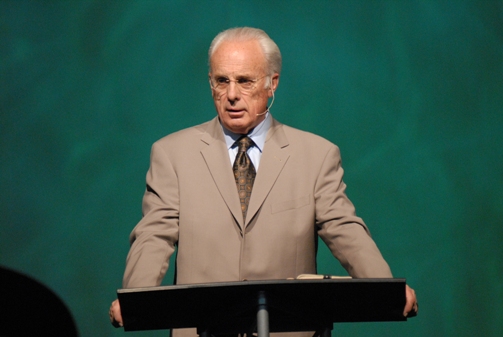 Your sermon of the week is Atonement and Justification: The Pharisee and the Tax Collector by John MacArthur.
A great message from a great portion of Scripture.
 The following is a great chart from 20 Truths About Mormonism showing the “similarities between the Book of Mormon and View of the Hebrews as summarized by [Mormon] Elder B. H. Roberts.”
This is a followup to Where Have I Read that Before?
| Book of Mormon | View of the Hebrews |
| Gives an Israelitish origin of the American Indian. | Pleads for an Israelitish origin of the American Indian on every page. |
| Deals with the destruction of Jerusalem and the scattering of Israel. | Deals with the destruction of Jerusalem and the scattering of Israel. |
| Deals with the future gathering of Israel and the restoration of the ten tribes. | Deals with the future gathering of Israel and the restoration of the ten tribes. |
| Emphasizes and uses much of the material from the prophecies of Isaiah, including whole chapters. | Emphasizes and uses much of the material from the prophecies of Isaiah, including whole chapters. |
| Makes a special appeal to the Gentiles of the New World–esp. the people of the United States to become nursing fathers and mothers unto Israel in the New World, holding out great promises to the great Gentile nation that shall occupy America, if it acquiesces in the divine program. | Makes a special appeal to the Gentiles of the New World–esp. the people of the United States to become nursing fathers and mothers unto Israel in the New World, holding out great promises to the great Gentile nation that shall occupy America, if it acquiesces in the divine program. |
| The peopling of the New World was by migrations from the Old World. | The peopling of the New World was by migrations from the Old World. |
| Migrating Jaredites are taken into “that quarter where there never had man been”. | Its migrating people are taken into a country where “never man dwelt”. |
| The colony enters into a valley of a great river. Peoples journeyed northward and encountered “seas” of “many waters” in the course of their long journey. The motive of their journey was religious. Ether is prominently connected with recording the matter. | The colony enters into a valley of a great river. Peoples journeyed northward and encountered “seas of many waters” in the course of their long journey. The motive of their journey was religious. Ethan is prominently connected with recording the matter. |
| Nephites divide into two classes, the one civilized, the other followed a wild hunting and indolent lifestyle that ultimately led to barbarism. | The lost tribes divide into two classes, the one fostering the arts that make for civilization, the other followed a wild hunting and indolent lifestyle that ultimately led to barbarism. |
| Long and dismal wars break out between the Nephites and Lamanites. | Long and dismal wars break out between the civilized and barbarous divisions of people. |
| The Lamanites utterly exterminate the Nephites. (The same thing occurs with the Jaredite peoples in the exact place the Nephites would later be exterminated). | The savage division utterly exterminates the civilized one. |
| Civilized people develop a culture of mechanic arts; of written language; of the knowledge and use of iron and other metals; and of navigation. | Civilized people develop a culture of mechanic arts; of written language; of the knowledge and use of iron and other metals; and of navigation. |
| Unity of race–the Hebrew race and no other is assumed for the inhabitants of ancient America. | Unity of race–the Hebrew race, and no other is assumed for the inhabitants of ancient America. |
| Book of Mormon peoples are assumed to occupy the whole extent of the American continents. | With the possible exception of the Eskimos of the extreme north, this race of Hebrew peoples occupied the whole extent of the American continents. |
| The original language of the people was Hebrew. | The Indian tongue had one source–the Hebrew. |
| Joseph Smith used an instrument in translating the Book of Mormon called Urim and Thummim which he described as two stones and a breastplate. | View of the Hebrews describes an instrument among the mound finds comprising a breast plate with two white buckhorn buttons attached, “in imitation of the precious stones of the Urim.” |
| Admits the existence of idolatry and human sacrifice. | Admits the existence of idolatry and human sacrifice. |
| Prophets extol generosity to the poor and denounce pride as a trait of the people. Polygamy is denounced under certain conditions as in the practices of David and Solomon. | Generosity to the poor is extolled and pride is denounced as a trait of the American Indian. Polygamy is denounced |
| Lost sacred records would be restored to the Lamanites along with the return of their lost favor with God in the last days. | Indian traditions of a “Lost Book of God” and the promise of its restoration to the Indians, with a return of their lost favor with the Great Spirit are quoted. |
| Sacred records were hidden or buried by Moroni, a character that corresponds to this Indian tradition in the Hill Cumorah. | Ethan Smith’s sacred book was buried with some “high priest,” “keeper of the sacred tradition.” |
| Reports of extensive military fortifications erected throughout large areas with military “watch towers” here and there overlooking them. | Reports of extensive military fortifications linking cities together over wide areas of Ohio and Mississippi valleys, with military “watch towers” overlooking them. |
| Reports of prayer or sacred towers. | Describes sacred towers or “high places,” in some instances devoted to true worship, in other cases to idolatrous practices. |
| Some Book of Mormon people effect a change from monarchial governments to republican forms of government. | Part of Ethan Smith’s ancient inhabitants effect a change from monarchial governments to republican forms of government. |
| Civil and ecclesiastical powers are united in the same person in Book of Mormon republican people. | Civil and ecclesiastical powers are united in the same person in Ethan Smith’s republics. |
| Lehi, first of Nephite prophets taught the existence of a necessary opposition in all things–righteousness opposed to wickedness–good to bad; life to death, and so following. | Some of Ethan Smith’s peoples believed in the constant struggle between the good and the bad principle by which the world is governed. |
| The gospel was clearly preached among the ancient inhabitants of Americas. | Ethan Smith’s book speaks of the gospel having been preached in the ancient America. |
| The Book of Mormon brings the risen Messiah to the New World, gives him a ministry, disciples and a church | Ethan Smith’s book gives, in considerable detail, the story of the Mexican culture-hero Quetzalcoatl–who in so many things is reminiscent of the Christ. |
They conclude this list with the following quote from Mormon apologist, historian, and member of the LDS general authority, B.H. Roberts, from his work Studies of the Book of Mormon, (University of Illinois Press, 1985, p. 242):
“Can such numerous and startling points of resemblance and suggestive contact be merely coincidence?”
And 20 Truths About Mormonism also reveals:
“Joseph even appears to have plagiarized his father. For many years his mother cherished the details of several of her husband’s dreams, and one of these was incorporated wholesale into the Book of Mormon as a vision by Lehi, the father of Nephi.”
| The Vision of Lehi (Book of Mormon (1830), pp. 18-20) |
Dream of Joseph Smith, Sr. (Lucy Smith: Biographical Sketches, pp. 58-59) |
| …me thought I saw a dark and dreary wilderness… | I thought I was traveling in an open and desolate field, which appeared very barren… |
| I beheld a tree, whose fruit was desirable, to make one happy…most sweet, above all that I ever had before tasted…I began to be desirous that my family should partake of it also… | …a tree, such as I had never seen before…I found it delicious beyond description. As I was eating, I said in my heart, “I cannot eat this alone, I must bring my wife and children.”… |
| And I beheld a rod of iron; and it extended along the bank of the river, and led to the tree… | I beheld a beautiful stream of water, which ran from the east to the west…I could see a rope running along the bank of it… |
| …a great and spacious building…filled with people, both old and young, both male and female; and their manner of dress was exceeding fine, and they were in the attitude of mocking and pointing their fingers towards those which had come at, and were partaking of the fruit. | I beheld a spacious building…filled with people, who were very finely dressed. When these people observed us in the low valley, under the tree, they pointed the finger of scorn at us. |
 I recently finished the book Deceived on Purpose by Warren Smith. Smith, a former New Ager turned Christian, wrote this heavily footnoted book after reading Rick Warren’s Purpose Driven Life and seeing the many New Age parallels throughout Rick Warren’s bestseller.
Warren Smith chronicles these familiar New Age teachings found in The Purpose Driven Life in his book Deceived on Purpose.
Warren Smith also goes into detail about Rick Warren’s ties to Robert Schuller. And once Warren Smith begins connecting the dots between Rick Warren, Robert Schuller, Bruce Wilkinson, Eugene Peterson and many well known New Agers like Neale Donald Walsch, Bernie Siegel, Benjamin Creme, and others, you will never look at Rick Warren the same way again and you will be even more disturbed as to why John Piper is willing to link arms with Rick Warren.
You can purchase the paperback version of the book here, or the e-book version here.
“As a self-proclaimed ‘change agent,’ it seemed that one of Rick Warren’s unstated purposes was to mainstream Robert Schuller’s teachings into the more traditional ‘Bible-based’ wing of the Church. Many believers who seem to trust Rick Warren, ironically, do not trust Robert Schuller. Rick Warren’s ‘magic’ seems to be able to make the teachings of Robert Schuller palatable to believers who would have otherwise never accepted these same teachings had they come directly from Schuller himself.” Deceived on Purpose Page 113
 For those who have been praying for Liberia, I wanted to bring your attention to some news coming out just before the election coming up this Tuesday in the West African country. Less than a week before the election the current president, Ellen Johnson Sirleaf, was just awarded the Nobel Peace Prize. This could only be in her favor for reelection.
Liberia has been slowing rebuilding its infrastructure after emerging from the civil war a few years ago and the Liberian Christians I spoke with seemed to be happy with the peace and progress they’ve experienced under President Sirleaf.
There is fear, however, that if Sirleaf’s opponent is elected, the religious freedom that Liberia is now enjoying may very well be stifled and the country could be cast into more civil unrest. This, obviously, would affect missionary efforts on the ground in that country.
Please commit this matter to prayer and pray that God’s will to be done in this upcoming election and continue to pray for the work being done in Liberia.
 Not able to leave people well enough alone, anti-theists are at it again.
This time a national anti-theist organization is targeting a dot-on-the-map town in Tennessee for having the audacity to display a cross atop their water tower.
Now there’s nothing overtly newsworthy about this story, as Atheists have been bullying their way into building a godless utopia for years one litigious threat at a time. But what makes this particular instance intriguing, as reported by Fox News, is what celebrity anti-theist Dan Barker said. In this article Barker is actually quoted accusing the town’s mayor (who is in favor of the cross remaining) of being the one that’s “against religious freedom.”
Your sermon of the week is A Discerning Family by Akash Sant Singh. This is another fantastic sermon as Akash delves into 1 Thessalonians 5:19-22, covering such subjects as:
– Do not despise prophecies.
– Test everything.
– Hold fast to what is good.
– Abstain from every form of evil.
Akash covers such topics as what prophecy is and who prophets are, and what the ultimate goal is for those exercising discernment.
This is a message I recommend to DefCon readers and contributors.
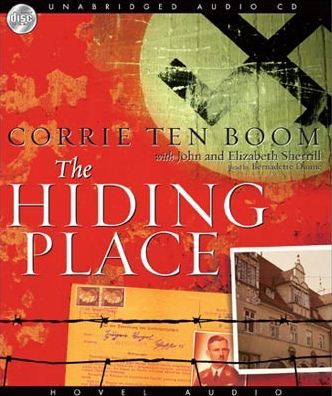
I recently finished Corrie Ten Boom’s The Hiding Place (the audiobook version) and was left shaken.
From the depths of human depravity to the heights of human compassion, the love of God and the gospel of Christ permeates our fallen world but we oftentimes fail to see it until we are under intense suffering (and even then we often miss it).
This book is bursting at the seams with biblical truths. One example is when Corrie refuses to accept her sister Betsie’s admonition from 1 Thessalonians 5 (to give thanks in all things) when it came to the fleas infesting their prison camp barracks. Corrie simply could find no reason to be thankful to God for the biting insects. That was until she discovered that the Nazi guards refused to step into their barracks because of the fleas, providing them the ability to hold daily Bible studies with the other prisoners without fear of being discovered.
The fact that this book is a true story makes it even more powerful. I was moved by it and enjoyed it even more than The Diary of Anne Frank. I highly recommend The Hiding Place and it is now on my required reading list for my children.
My only regret is that I never read this book earlier in my life.
 How does a mother build biblical truth into her daughter’s life, nurture her, guard her, and encourage her toward the application of that truth, then send her into an environment that will oftentimes by its very nature be hostile or at least ambivalent toward that truth? How does a father raise his son to respect young women and protect their purity only to send them off to the youth building with exposed midriffs, low-cut tops, and skin-tight jeans?
– Voddie Baucham
Why is it that today’s “prophets” always tell you about their visions after the events occur and never before? In the following case, Jim Bakker tells viewers on August 12, 2011, that he predicted 9/11.
He was only a decade late in mentioning it.
 Christ’s death is the Christian’s life. Christ’s cross is the Christian’s title to heaven. Christ “lifted up” and put to shame on Calvary is the ladder by which Christians “enter into the holiest,” and are at length landed in glory. It is true that we are sinners–but Christ has suffered for us. It is true that we deserve death–but Christ has died for us. It is true that we are guilty debtors–but Christ has paid our debts with His own blood. This is the real Gospel! This is the good news! On this let us lean while we live. To this let us cling when we die. Christ has been “lifted up” on the cross, and has thrown open the gates of heaven to all believers.
– J. C. Ryle
1816 – 1900
HT: JC Ryle Quotes

 Christ Alone Wyoming