Christian Libertarians Need to Stop Ignoring the Persuasive Influence of Fiction

Why Fiction Should Be Taken More Seriously Among Christian Libertarians

“There is a time for stories, and there is a time for rational arguments, and the skill we need lies in knowing which to use, and when.” — Os Guinnesse

Image Courtesy of Patrick Fore via Unsplash

I recently came across an article by Mark Tapson who wrote:

“The most compelling science fiction is that in which the core of the story is not the threat of hostile aliens or Death Stars, but the dangers posed by our own humanity.”

And there are few better examples of such compelling science fiction than the old Twilight Zone series where Rod Serling often used fictional threats—like aliens—to shine a penetrating light on real-life threats. Serling even conceded:

“I found that it was all right to have Martians saying things Democrats and Republicans could never say.”

But where are those storytellers like Serling today? Where are those men and women who are cleverly adept at using the vehicle of fiction to share far deeper truths to a much wider audience who would otherwise not be interested in seeking out those truths?

Dare I suggest, they’re all around us?

They’re the lesser-known Christian and libertarian authors whose books we give little regard to, but whom we should familiarize ourselves with because — after all — who better understands “the dangers posed by our own humanity” than Christians and libertarians?

THE POWER OF FICTION

Non-Christian readers who would never read books such as John Calvin’s Institutes of the Christian Religion, JC Ryle’s Holiness, or John Owens’ Mortification of Sin, have thoroughly enjoyed CS Lewis’ entire Chronicles of Narnia series. Likewise, many professing Christians who would never read a book on practical witchcraft, happily own the entire Harry Potter series.

So, what’s the common denominator? What would persuade an agnostic to read books with religious themes, and what would attract a Christian to read books with occultic themes? The answer is remarkably simple: a compelling story, well told.

Humans love stories. We’re drawn to them — enchanted by them actually — and although non-fiction books are great, there’s something deeply intoxicating about a well-crafted fictional tale.

And when it comes to changing the world around us, it could be argued that fiction has been more successful at influencing readers than most non-fiction.

Image Courtesy of Tom Hermans via Unsplash

The use of storytelling, be it in books, movies, television, art, or music, has long been a catalyst for change in our culture, because, as Francis Schaefer once observed:

“For many, what they see on television is more true than what they see with their eyes in the external world.”

But why is this true?

Nancy Pearcey, in her book Saving Leonardo, attempts to answer this question:

“T.S. Elliot once noted that the serious books we read do not influence us nearly as much as the books we read for fun (or the movies we watch for entertainment). Why? Because when we are relaxing, our guard is down and we engage in the ‘suspension of disbelief’ that allows us to enter imaginatively into the story. As a result, the assumptions of the author or screenwriter may go unnoticed and seep all the more deeply into our consciousness.”

It’s through the age old art of storytelling that authors possess the power to shape the hearts and minds of others, yet today, this medium is most often neglected by Christian libertarians—if not outright ignored.

EXAMPLES OF FICTION’S INFLUENCE

Consider that two exceedingly popular, best-selling books written in the last hundred years is George Orwell’s 1984 (warning of the evils of communism) and Ayn Rand’s Atlas Shrugged (often credited as a gateway drug to libertarianism for those who make it through its voluminous pages). And then consider that one of the most widely read and enduring books in the world for over 300 years has been John Bunyan’s beloved Christian classic, Pilgrim’s Progress which has sold over 200 million copies and has never been out of print since its first publication in 1678.

What do these three books have in common? They’re all works of fiction. And the truth is, as much as we may not want to admit it, they’ve all reached a broader audience than the likes of F.A Hayek, Murray Rothbard, and Frédéric Bastiat, or R.C. Sproul, Charles Spurgeon, and John MacArthur.

These three novels alone did more to introduce the world to libertarianism and the Christian faith (respectively) than most non-fiction books advocating the same ideals.

Image Courtesy of Sergio Andre via Unsplash

But why are authors who promote libertarianism and the Christian faith — through the conduit of fiction — so often ignored by those who share these same beliefs? Perhaps it’s because the allure of intellectualism is so great that most don’t feel there’s any value in trifling with fiction, even though an appeal to the likes of the aforementioned Orwell, Rand, and Bunyan would prove otherwise.

Conversely, however, our adversaries have not neglected the persuasive power of fiction, art, film, and music — they’ve actually been exploiting these areas to advance their agenda for decades. In fact, hijacking the arts was just one of their many steps designed to bring America to its knees in subjection to a Marxist dystopia.

This article is continued here.

You can’t always trust “Christian Authors.”

Below is an excerpt from the opening of the article “10 Signs The Christian Authors You’re Following Are (Subtly) Teaching Unbiblical Ideas” by Natasha Crain.

I highly recommend you visit her blog and read the whole article.

My friend, Alisa Childers, recently wrote a review of the bestselling book, Girl, Wash Your Face, by Rachel Hollis. It started a firestorm of online discussion about what makes someone a “Christian” author, what responsibility a self-identified Christian author has in promoting ideas consistent with biblical faith, and what harm there can be for Christians reading books that contain nonbiblical ideas.

I personally haven’t read the book, so I’m not going to comment on it specifically. But I will say I was extremely disappointed and saddened to see the kinds of comments supporters of the book wrote:

“It wasn’t meant to be a devotional.”

“She’s not teaching theology.”

“Our job is not to seek people out and hate them.”

“Stop competing! Just imagine what the non-Christians think about the McJudgies! We need to focus inward because the project within ourself is the most important work we will accomplish. Don’t use your blog to bring someone down.”

Unfortunately, such comments are representative of the lack of discernment common in the church today. If Alisa fairly characterized the claims of Hollis’s book, Hollis is promoting ideas that conflict with a biblical worldview. And when there is a concern that millions of women are consuming content from a Christian author that can lead them to embrace unbiblical ideas, we should be raising a warning flag and calling out for discernment in the body of Christ.

It’s not about being a “McJudgey.”

It’s about discerning biblical truth from non-truth…something the Bible consistently tells us to do.

Continue reading here.

The Best and Worst of Times

“It was the best of times, it was the worst of times, it was the age of wisdom, it was the age of foolishness, it was the epoch of belief, it was the epoch of incredulity…”

The words of Charles Dickens, in A Tale of Two Cities, were written in 1859. This well-known start to a fiction book was 160 years ahead of its time, and should be republished as a work of non-fiction.

Each generation can only imagine what life was like to previous generations or centuries of human life and culture. The statement “in the good ol’ days” is trite at best and disingenuous at worst.

I highly doubt that many would really desire to go back to the days of sharecropping, or child labor, or segregation, or lack of human rights. So, what is it that is actually meant when people speak of those days of yesteryear?

Too often, the “good ol’ days” are helped along with whimsical movies like Bing Crosby in “White Christmas”, Judy Garland in “Meet Me in St. Louis,” or Michael J Fox in “Back to the Future” or a host of other movies portraying a false reality of what life was like. Life was not easy and EVERY generation has faced difficult times.

For example, my British grandparents easily remembered what life was like during World War II and the years of food rationing. Years of being forced to plant your own garden, or raise rabbits for meat, or riding a bike to work because there was no gas/petrol for average civilians. I never heard either of them wish they could return to those days.

My parents were born in two different countries and raised on two different continents. Their lives were not easy and I rarely ever heard stories from their growing up years. They met during the days of the Vietnam War, married, and started a family. Segregation was still a reality, war demonstrations were an every week occurrence, governments were in a shambles, and troops were dying by the hundreds. I never heard either of them wish they could return to those days.

During my early years, I remember eating the same meal over and over because we did not have much. Going to a restaurant was a once-a-year treat on your birthday and gifts around the Christmas tree were normally slim pickings until the box arrived from a grandmother who always added a book, British chocolates, a hand-knitted sweater, and a few other items. Both parents had to work doing something in order to feed and clothe us, but they never complained.

Today, I have five children. Three are adults, while two are still at home. I also have a grandson. I do not want them to have to go through what my wife and I faced in our growing up years, or even in the early years of our marriage, but that does not mean that I fear what the future holds.

classic-quote

The news media hourly projects the stark naked truth of Dicken’s words. 2018 is the best of times, but it is also the worst of times. 2018 is the age of wisdom, but it is also the age of great foolishness. 2018 is the epoch of belief, but it is sadly also the epoch of incredulity.

How have we arrived at this juncture in human history? It is certain that we cannot go back to the “good ol’ days” and even if we could we would have a harsh lesson to learn. We are exactly where we are supposed to be. We must take the opportunity to face the times we are in with an equal measure of faith and understanding.

The Bible reminds us “faith is the substance of things hoped for and the evidence of things not seen (Hebrews 11:1).” My faith gives me courage to face each new day. I cannot fear what I do not know will happen for there is no certainty of a new day. Tomorrow, my family could be planning my funeral and I will have given my day over to fears that did not come to fruition. My faith reminds me that there is only One Person who knows the future and how all things will transpire. This is where understanding comes into the picture.

My understanding of human history is predicated on the truth that all that mankind has accomplished is built on the back of all who have gone before. I recognize that there have been some very dismal times in human history where murder, mayhem, war, and disease were a daily part of one’s existence. I am thankful I do not live in one of those eras. I also understand that we can learn from our mistakes and we can teach our children to rise up and strive to do better than we did. We cannot make them do this, but the way history will play out for them can be changed for it has not yet arrived. The 21st century is not certain as to how politics, society, or culture will be represented in the history books of the future.

What we see today is a reflection of what Dickens saw as he continued, “It was the spring of hope, it was the winter of despair, we had everything before us, we had nothing before us…”

My prayer is that we will not give up hope, for we know the God who holds the future. That hope gives me encouragement and does not leave me in the winter of despair. With that hope, I know that I yet have everything before me as compared to those who have nothing before them.

“Only one life. It will soon be past. Only what’s done for Christ will last.”

Rare Jewel of Christian Contentment 2

February 9, 2017

B. What contentment is opposed to

But what, then, it will be asked, is this quietness of spirit opposed to?

1. It is opposed to murmuring and repining at the hand of God, as the discontented Israelites often did. If we cannot bear this either in our children or servants, much less can God bear it in us.

2. To vexing and fretting, which is a degree beyond murmuring.

3. To tumultuousness of spirit, when the thoughts run distractingly and work in a confused manner, so that the affections are like the unruly multitude in the Acts, who did not know for what purpose they had come together. The Lord expects you to be silent under His rod, and, as was said in Acts 19: 36, “Ye ought to be quiet and to do nothing rashly.”

4. It is opposed to an unsettled and unstable spirit, whereby the heart is distracted from the present duty that God requires in our several relationships—towards God, others, and ourselves. We should prize duty more highly than to be distracted by every trivial occasion.

the-rare-jewel-of-christian-contentment-by-jeremiah-burroughs

5. It is opposed to distracting, heart-consuming cares. A gracious heart so esteems its union with Christ and the work that God sets it about, that it will not willingly suffer anything to come in to choke it or deaden it. A Christian is desirous that the Word of God should take such full possession as to divide between soul and spirit (Heb 4: 12), but he would not allow the fear and noise of evil tidings to take such a hold in his soul as to make a division and struggling there, like the twins in Rebekah’s womb (Gen 25:22).

– by Jeremiah Burroughs

The Visitor is available to download for free today.

imageWhat happens when someone travels into the past to deliver an urgent message about the future, but ends up in the wrong place at the wrong time?

Would those unintended recipients of the future warning be able to stop any of the atrocities of the 20th Century (including the assassination of President Kennedy)? Or, in spite of man’s ability to travel through time, would God’s sovereignty demand that the horrible events of history’s past can never be changed?

The Visitor, by J.L. Pattison, is a short story best described as part science fiction, part history, part time travel, and part mystery. With a tablespoon of politics, a pinch of dystopia, and a dash of conspiracy, this tale will take you on an entertaining ride with a climactic ending that will leave you in contemplation long after you’ve put it down.

Here’s what others are saying about The Visitor:

– “I appreciated the conflict between the sovereignty of God and time travel. I have often wondered what would happen if time travel were possible. This story reminded [me] of the rich man and Lazarus from the Gospel of Luke, especially Father Abraham’s words ‘If they hear not Moses and the prophets, neither will they be persuaded, though one rose from the dead.’ Or in this case, traveled back through time.”  Javier L. Taylor (5 Stars)

– “A new talent to watch. . . . If the Twilight Zone still existed, this short story would be an episode, it is that good. . . . Rod Serling himself would be proud.” PapaPhilly (5 Stars)

– “Possibly the best short story I have [ever] read!” Anne (5 Stars)

– “I guarantee you will be old before you forget this book.” Mark Escalera (5 Stars)

– “Very thought provoking.” Laura McGowen (4 Stars)

– “The author has crafted an excellent short story that captures your imagination and draws you in with its characters. . . . Well done.” Chris Hohnholz (5 Stars)

– “Reads like a suspenseful Twilight Zone episode . . . . If you are a fan of the Twilight Zone this book is for you.” John Cavallone (5 Stars)

– “There is an allusion to the tension between the sovereignty of God and the outworking of history in relation to time travel. I find that to be an interesting thought experiment. Finally, there’s a big nod given to Neil Postman and his vision of the American future given in Amusing Ourselves to Death . . . . The weaving of an interesting fictional narrative with theology, history, political commentary, media ecology, science fiction . . . in such a short space is impressive.” Heath Cross (5 Stars)

– “I love that it moved quickly and touched on so many interesting points and . . . had such an unpredictable ending.” Bernard Ruiz (5 Stars)

– “It was amazing and scary at the same time. The Vistor left me breathless.” Michelle Bledsoe (5 Stars)

– ” I found this to be a new concept for this genre and actually left me pondering what I would change if I could go back and warn others. Overall, a very thoughtful and entertaining read. The writing and pace was perfect . . . . I found this very enjoyable and thought provoking . . . .” Jenaca (5 Stars)

– “The plot is compelling – I imagine Rod Sterling could adapt it quite nicely for an episode of the Twilight Zone.” Jay Eldred (4 Stars)

– “The Visitor . . . [is] . . . a truism that big things come in small packages.” Chad (5 Stars)

– “Very well written in a manner that kept me riveted to the end.” Paul Bayne (5 Stars)

“This story left me with so many questions, and theories. Not about the plot or the characters, but about humans and their choice of not seeing what’s right in front of their eyes.” Laura (5 Stars)

“I really enjoyed this book! . . . I didn’t want the story to be over. It had great depth and character development for such a short story. There were several thought provoking themes woven into the story line that hung in my head for several days after reading [it]. . . . I look forward to reading more from this author.” Kayci (4 Stars)

___________________

If you’re ready to read a unique tale that is also family friendly, then download The Visitor today at Amazon.com.

Even if you don’t own a Kindle, you can still read The Visitor by downloading the free Kindle reading app to your tablet, phone or PC here

Book recommendation: “Escape from the World Trade Center” by Leslie Haskin.

I fully understand that this will be a very controversial post (perhaps the most controversial post in DefCon’s history) and I’ve even been reluctant to post it (opting to leave it sitting in pending drafts for quite awhile). But even if it causes some to cease their readership of this blog, the truth needs to be told.

For almost a year now I’ve been revisiting the events of 9/11/01, without prejudice or preconceived notions, and I have come away shocked with what I have discovered. The more I look into the events of that day the more I am convinced that we have not been told everything about what occurred on that September morning almost eleven years ago.

So when this short book written by  professing Christian Leslie Haskin (detailing her escape from one of the three WTC towers that fell on September 11, 2001) became available for free on Kindle (from the longer book Between Heaven and Ground Zero), I download it. I was curious to read a survivor’s account of that day to see if it corroborated more with the government’s official version of the events of that day, or instead, with that of the mounting evidence pointing to a conspiracy of the magnitude never before seen in this country.

In this book, Haskin tells of her upbringing in a Christian home, her eventual turning from the faith, and how the events of September 11, 2001 brought her back to her faith in God. Haskin has written a few other books and she’s been a guest speaker around the country (and has even appeared on The 700 Club). But it was the details of her escape from WTC Tower One that I was most interested in and she did not fail to deliver. What I read in her account contradicts the official version of what happened on that day, and corroborates the evidence pointed to by conspiracy theorist’s (term not used pejoratively) to prove that not everything we’ve been told to believe about 9/11 is true.

As for the book itself, I found that the placement of Scripture throughout it seemed to be sporadic and random and it became somewhat distracting. Oftentimes the verses cited were completely out of context with the storyline. I also did not find the writing to be as polished as it could have been, as the jumping back and forth between 9/11 and other events in her past didn’t flow well to me and seemed somewhat disjointed. And the overuse of ellipses was very taxing, offering an unprofessional appearance and tone to her writing.

I also wouldn’t recommend this book on the grounds of theological meatiness as it is weak on doctrinal distinctions. I understand that this book is not meant to be a theological tome, but with the profuse employment of Scripture throughout it I would have hoped for a little more solidness in the biblical message she was trying to convey, instead of the man-centered, Hallmark card flavor it carried.

You can read more reviews of the book here where others had similar criticisms about the book.

But in spite of my above cited dissatisfaction, I still highly recommend this book because of the valuable information contained within it as the author details the things she saw, smelled, heard, and felt during her escape from the terror in her tower; things that should cause every American to ask questions without fear of being marginalized with ad hominen attacks pejorative labels like “crazy conspiracy theorists.”

So what is it in Haskin’s book that contradicts the official governmental 9/11 conspiracy theory and instead supports an alternative 9/11 conspiracy theory?

Continue reading

Book recommendation: “How Do You Kill 11 Million People?” by Andy Andrews.

So exactly how did the Nazis get so many people to cooperate with them in marching toward their deaths without resistance?

This book tells you.

This was an eye-opening read and my only criticism is that its extremely short in length. I felt the author could have gone on and provided more examples and more insight, but even for its short length (you can read it in less than an hour), I was still hit by the truths presented in it. 

Watching current events unfold, this book may not only be about history, but it may very well be a warning for what’s about to come to America; and the author does not hold back from suggesting that grave possibility.

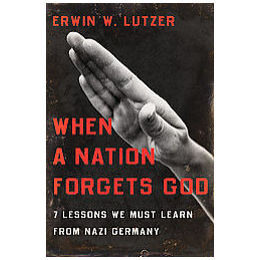
Book recommendation: “When a Nation Forgets God: 7 Lessons We Must Learn from Nazi Germany” by Erwin W. Lutzer

This is a fantastic book on the parallels between today’s society in America and that of Nazi Germany.

The author takes a chilling look into the similarities between the life, culture, politics, and mindset of the populace in Nazi Germany and how we are seeing history begin to repeat itself (as it often does) today. 

Here’s the book’s description:

“According to Dr. Lutzer, the German people’s progression from civility to barbarity was not extraordinary yet the Nazi regime will forever serve as an example of brutality and extreme racism run amok. More than a few benchmarks from their transition can be observed in present day American society. This book does not suggest the United States is definitely marching toward authoritarian oblivion, but that we — especially we believers — must take note of these lessons from history and be vigilant in our stand for truth, justice, and righteousness.”

This book serves as not only a history lesson, but as a warning for where we’re headed. Here is a quote from the book:

. . . [L]aws making education in public schools compulsory have historically been found in the most totalitarian of governments where state-sponsored indoctrination was a major goal of the educational system. Although it is still legal to homeschool children in America, we can’t assume that freedom will continue. . . . The children in [Nazi] Germany were subjected to films that presented the Nazis’ view that the Jews were subhuman and that they were an unnecessary burden on society. Darwin’s evolutionary notions were also presented in the classroom to extol the virtues of the Aryan race (the Germans) and that the evolutionary idea of survival of the fittest could be hurried along by the extermination of the weak. Since only the fittest survive it makes good sense that “might makes right.” Hitler asked, “Why can’t we be as cruel as nature?”

And here is another quote from the book:

When Hitler starved children, he called it putting them on a “low-calorie diet.” And the extermination of Jews was called “cleansing the land.” Euthanasia was referred to as “the best of modern therapy.” Children were put to death in “Children’s Specialty Centers.”

Hitler’s cronies seldom said they were going to kill people; even when plans were made to exterminate millions, the leaders spoke only in abstract slogans such as “the final solution.” Sanitized terms were used to camouflage unspeakable crimes. Planned massacres were spoken of in clinical terms to mislead the naïve and to assuage the conscience of the perpetrators.

We do the same, of course. No one speaks of killing preborn infants. Rather, pregnant women are only removing “a product of conception” or a woman is simply “terminating a pregnancy.” Politicians speak of being in favor of “a woman’s right to choose . . .” but they seldom complete the sentence. Somehow to say they are in favor of a woman’s right to choose to kill her preborn infant, is too honest, too clear—we might add, and too chilling.

Homosexual behavior turns out to be nothing more than “an alternate lifestyle.” And adultery is reduced to the more innocuous word: affair. Schools that demean religion and promote immorality are said to be “value free” and laws which deny religious speech are promoted as “the fairness doctrine” or simply promoting “localism.” Historically, horrendous crimes have been committed in the name of liberty.

After reading this book (and previously posting a quote from it), I was informed that the author holds to the idea of easy believeism. I did not see this presented in the book as the author dealt mostly with how history is repeating itself in politics and culture, so the book is safe for consumption in that regard.

Planned Parenthood’s propaganda machine would make Goebbels jealous.

This very disturbing cartoon churned out by Planned Parenthood of San Francisco is the type of propaganda that’s reminiscent of Nazi Germany (not counting their similar goals of the mass killing of innocent, defenseless human beings).

Hitler would be so proud of what Planned Parenthood has accomplished, after all, they’ve picked up where he left off and they’ve exterminated more human beings (specifically minorities) than he ever could have ever dreamed of doing.


Book recommendation: “The Giant Killer” by A.L.O.E.

I recently finished reading an intriguing story by ALOE (A Lady Of England) to my children entitled, The Giant Killer (1856).

This allegorical tale (told in a fashion similar to Bunyan’s Pilgrim’s Progress) is about a noble knight named Fides who battles giant sins such as Giant Untruth, Giant Hate, and Giant Pride. Reading this to my children gave us much to talk about and helped them understand the battles with sin that we all face.

Lamplighter Publishing describes the book as follows:

The battle continues to rage, day by day and moment by moment. But must we meet the enemy blindfolded? In order to subdue, we must see the real foe; in order to conquer, we must face the true enemy. Through this allegorical tale, we will be better equipped to recognize, then to effectively slay, the many Giants who confront us. We will break through the web of Sloth, struggle out of the pit of Selfishness, choke up the fount of Anger, flee the secret lurking-place of Untruth, and triumph over our most malicious enemy—Pride. The Giant Killer is the tool to reach for if you or your loved ones need encouragement or confidence to enter into the battlefield once again. If you feel that you have nothing firm upon which to lay hold, this book will help you to grasp the strong cord of Love as your means of safety and deliverance.

And here is a reader’s review:

Another wonderful book from Lamplighter Publishing, The Giant Killer is an allegorical story of Christian warfare. Constantine and Adolphus, twin brothers, are sent to live with the Roby family to have Mr. Roby educate them. The spoiled 10-year-olds have much to learn about kindness, thankfulness, and manners. Mrs. Roby teaches these children and her own about godly character traits through stories about “The Giant Killer.” The Giant Killer must fight and conquer the Giants of Sloth, Selfishness, Untruth, Hate and Pride with the sword and armor given to him by his King. Your children will learn as these fictional children did to fight the enemies of the King that are in their own hearts.

Although this is not the best Lamplighter book I’ve ever read (The Basket of Flowers still holds the position of number one for me), it is still a good book that I recommend, and espeically for Christian parents to read to their children.

Book recommendation: “The White Dove” by Christoph Von Schmid

I recently read this wonderful story to my kids. The White Dove is another great book from Christoph Von Schmid, the author of The Basket of Flowers

And although I believe Von Scmid’s The Basket of Flowers was better than The White Dove (in fact I consider The Basket of Flowers my favorite piece of Christian literature, even above that of  John Bunyan’s Pilgrim’s Progress), Von Schmid did not fail to deliver another great tale steeped in Christian truths.

This book, written in 1841, is filled with Scripture, and is a testament to God’s sovereignty (both of which is rare to find in today’s modern Christian literature market).

You can find The White Dove here at Lamplighter Publishing where they describe the book as:

“Filled with the intrigue of knights and nobles, thieves and robbers, this is a story of friendship and sacrifice. A little girl agrees to give up her precious white dove to prove her friendship, and lives are miraculously saved.”

And here are some reviews:

White Dove
I just wish the book was longer. Thats how good it is.
– Deborah Ong, CA
We read it in one sitting!
I wondered that my eight-year-old wasnt understanding the plot with the rich language of the writing, but she could recite it all back to me. We both loved this book! It was so full of Gods love and promises to us. I highly recommend it!
– Daphene, NC
Friendship and Love
This is a tender story of love, friendship, and Gods faithful provisions. My children begged for another chapter. A beautiful story.
– Becky Emerick, IN
Gods Great Providence
When Agnes finds a dove she mercifully spares its life and in turn it saves her and her entire family. This is a book about sacrifice, mercy, compassion, selflessness, love, and adventure.
– A. Ray, NC

Book recommendation: “Deceived on Purpose” by Warren Smith.

I recently finished the book Deceived on Purpose by Warren Smith. Smith, a former New Ager turned Christian, wrote this heavily footnoted book after reading Rick Warren’s Purpose Driven Life and seeing the many New Age parallels throughout Rick Warren’s bestseller.

Warren Smith chronicles these familiar New Age teachings found in The Purpose Driven Life in his book Deceived on Purpose.  

Warren Smith also goes into detail about Rick Warren’s ties to Robert Schuller. And once Warren Smith begins connecting the dots between Rick Warren, Robert Schuller, Bruce Wilkinson, Eugene Peterson and many well known New Agers like Neale Donald Walsch, Bernie Siegel, Benjamin Creme, and others, you will never look at Rick Warren the same way again and you will be even more disturbed as to why John Piper is willing to link arms with Rick Warren.

You can purchase the paperback version of the book here, or the e-book version here.

“As a self-proclaimed ‘change agent,’ it seemed that one of Rick Warren’s unstated purposes was to mainstream Robert Schuller’s teachings into the more traditional ‘Bible-based’ wing of the Church. Many believers who seem to trust Rick Warren, ironically, do not trust Robert Schuller. Rick Warren’s ‘magic’ seems to be able to make the teachings of Robert Schuller palatable to believers who would have otherwise never accepted these same teachings had they come directly from Schuller himself.”  Deceived on Purpose Page 113

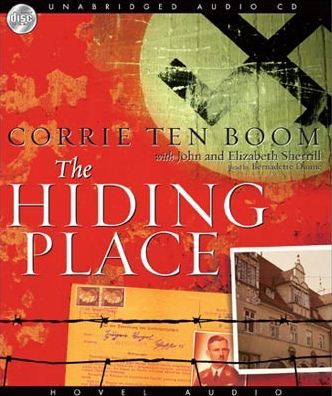
Book recommendation: “The Hiding Place” by Corrie Ten Boom.

I recently finished Corrie Ten Boom’s The Hiding Place (the audiobook version) and was left shaken.

From the depths of human depravity to the heights of human compassion, the love of God and the gospel of Christ permeates our fallen world but we oftentimes fail to see it until we are under intense suffering (and even then we often miss it).

This book is bursting at the seams with biblical truths. One example is when Corrie refuses to accept her sister Betsie’s admonition from 1 Thessalonians 5 (to give thanks in all things) when it came to the fleas infesting their prison camp barracks. Corrie simply could find no reason to be thankful to God for the biting insects. That was until she discovered that the Nazi guards refused to step into their barracks because of the fleas, providing them the ability to hold daily Bible studies with the other prisoners without fear of being discovered.

The fact that this book is a true story makes it even more powerful. I was moved by it and enjoyed it even more than The Diary of Anne Frank. I highly recommend The Hiding Place and it is now on my required reading list for my children.

My only regret is that I never read this book earlier in my life.

It’s the same thing.

Not one to shy away from controversy, I present the following short video that I can only describe as sobering, shocking, and disturbing. This video depicts one of the arguments I’ve made for years in the abortion debate, and now that argument is effectively visual.

I wholeheartedly believe this video needs to be seen (truth should never be hidden), but I strongly urge caution for younger viewers. It’s one of the most powerful videos I’ve seen in quite a while (first viewing left me speechless, second viewing brought me to tears). Its impact will leave you shaken.

Viewer Discretion is Advised

HT: Hope For the Helpless

Quotes (902)

The average American family devotes one-fourth of its spendable income to outside debts. Since 1945, consumer debt in the United States has multiplied thirty-one times. The IRS calculates that the average filer spends ten times more paying off interest on debts than he gives to charitable causes. If all evangelical Christians were out of debt, hundreds of millions of dollars would be freed up for God’s kingdom. Our families would be stronger, because financial pressures caused by indebtedness are major factors in more than half of divorces.

– Randy Alcorn

Quotes (896)

Many churches spend more on interest payments than on world missions. Debt ties the church’s hands. If attendance drops, the economy suffers, or giving dips, then pastors or missionaries must go unpaid. The building completed eight years ago, already needing repairs, keeps demanding those monthly payments, mostly going to interest. . . . When a church overextends itself financially, it inevitably spends time during services trying to persuade people to give to the building fund. This changes the focus from worshiping Christ, studying the Scriptures, and meeting the needs of the community to concerns about buildings, mortgages, and money.

– Randy Alcorn

Glenn Beck’s Trojan Horse.

Last year, Mormon radio host Glenn Beck swept the conservative political movement off its feet (and many Evangelical Christians as well) with his Divine Destiny rally.

At that time (and since) many non-discerning Christians have embraced Glenn Beck as a brother in Christ and have even made excuses and justifications for his Mormon theology (a theology that’s antithetical to biblical Christianity).

But now, while Beck’s Trojan Horse sits benevolently within the walls of Evangelicalism, the trapdoor on the underbelly of the wooden horse is opening to reveal its contents . . . and it isn’t pretty.

Brannon Howse has written an article on Beck’s new book (co-authored by Keith Ablow).  The book, entitled The 7 Wonders That Will Change Your Life, has revealed Beck’s New Age leanings. And judging by the quotes cited from Beck’s book, it makes Joel Osteen’s Your Best Life Now look like a doctrinally sound tome of deep Christian theology.

Below are some of the quotes from Beck’s book that I obtained from Brannon Howse’s article (you can read the entire exposé here.)

I can’t help but wonder if the Mormon organization is going to publicly renounce the New Age teachings in Beck’s book (and discipline Beck), and I wonder if the Christians who supported Beck–claiming that he was indeed a Christian–are going to retract their support (or at least distance themselves).

Page 154:

“As Keith likes to say, ‘There’s no original sin left in the world. Everyone’s just recycling pain now.'”

Page 165:

“People are inherently good.”

Page 157:

“Finding what worked for me made all the difference. Finding what works for you will do the same.”

Page 162:

“There is no infant delivered evil, out of the womb. There never has been. Not even one…Charles Manson was not born evil. Ted Bundy wasn’t. The BTK killer wasn’t. Hitler wasn’t.”

Page 149:

“Latter-day Saints do not believe that your chances ever cease, even with death. They end only with the full understanding and denial of truth by your own exercise of real free will. And even then there is no ‘lake of fire.'”

Page 149-150:

“I questioned everything I could think to question about the faith. I went over my doubts again and again with the church bishop. I read everything there was to read on their website and every word of Mormon Doctrine…I went to anti-Mormon literature for hints, but I found most of it to be unfair or just plain wrong. I tried every trick I could think of to find a contradiction. The problem was that I couldn’t. Mormonism seemed to explain the world and my place in it better than any other faith I had looked at.”

Page 132:

“Pray to whatever higher power you believe in…Praying that God or Nature or the Cosmos or your own internal, immeasurable reservoir of spirit allows you the courage and faith to find and then face the truth…”

Page 74:

“Just be sure you visit with a minister or therapist from a religion or healing discipline you actually have affinity for, or suspect you might.”

Page 57:

“The third chapter of Exodus helped me start to understand how crucial it was that my focus be on finding God not just in the seas or the cosmos, but in myself.”

Page 58:

“If God is everything and everywhere and inside everyone, then I figured He had to be inside me, too…”

Page 71:

“Divine power is still inside you.”

Page 283:

“Reach out to people to steady them and enrich them and reflect back to them the light that comes from God inside them.”

Page 254:

“You won’t doubt your ability to achieve what you want to achieve in this life because you won’t doubt that God is not only by your side, but inside you.”

Page 79:

“You have a polestar inside you. It is connected with all the energy in the universe. When you begin to follow that star you align yourself with immeasurable, inexplicable forces that will actually help you manifest your best intentions.”

Page 85:

“As you commit to unlocking and bringing forth the truth inside you, don’t be afraid to pray for help. Don’t be reticent to sit with yourself in silence and meditate. Connect with the miracle of spirit, of God, that has lived inside you from long before you were born.”

Brannon Howse also aptly observes Beck and Ablow’s common application of terms of subjective truth:

Beck’s book uses the phrase “Your truth” or “your true path” or “my truth” at least 23 times. Here are a few examples:

“It is never too late to embrace your truth.” (Page 124)

“What is your truth whispering?” (Page 130)

“Use compassion to stay on the path to your own truth… (Page 161)

“…determination to unearth and embrace my truth.” (Page 215)

“The fact that I am always attempting to honor my truth… (Page 216)

“There is only your truth.” (Page 220)

“You must use courage and faith to empty the hard drive of your soul and then fill it with your truth.” (Page 288)


It’s better for Timmy.

Thanks to Revival And Reformation for posting this sobering piece:

This fictitious “letter” was taken from the book ‘Facts of the Matter, Daily Devotions for the Marketplace‘, by Dwight Hill.

“‘Dear Mom:

‘Gosh, can you believe it’s 2023 already?…It seems just yesterday I was sitting in first grade celebrating the century change. I know we really haven’t chatted since Christmas. Sorry. Anyway, I have some difficult news and I really didn’t want to call and talk face-to-face. Ted’s had a promotion and I should be up for a hefty raise this year if I keep putting in those crazy hours. You know how I work at it. Yes, we’re still struggling with the bills.

‘Timmy’s been ‘okay’ at kindergarten although he complains about going. But then, he wasn’t happy about daycare either, so what I can I do? He’s been a real problem, Mom. He’s a good kid, but quite honestly, he’s an unfair burden at this time in our lives. Ted and I have talked this through and through and finally made a choice. Plenty of other families have made it and are much better off.

‘Our pastor is supportive and says hard decisions are necessary. The family is a ‘system’, and the demands of one member shouldn’t be allowed to ruin the whole. he told us to be prayerful, consider all the factors, and do what is right to make the family work. He says that even though he probably wouldn’t do it himself, the decision is really ours. He was kind enough to refer us to a children’s clinic near here, so at least that part’s easy.

‘I’m not an uncaring mother. I do fell sorry for the little guy. I think he overheard Ted and me talking about ‘it’ the other night. I turned around and saw him standing at the bottom of the steps in his PJ’s with the little bear you gave him under his arm and his eyes sort of welling up. Mom, the way he looked at me just about broke my heart. But honestly, I believe this is better for Timmy, too.

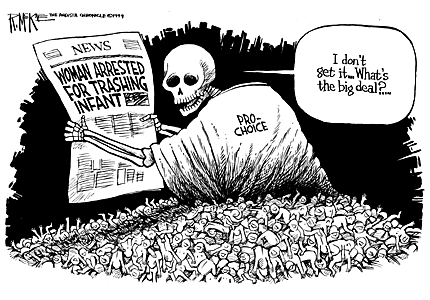
‘It’s not fair to force him to live in a family that can’t give him the time and attention he deserves. And please don’t give me the kind of grief Grandma gave you over your abortions. It is the same thing, you know. We’ve told him he’s just going in for a vaccination. Anyway, they say it’s painless. I guess it’s just as well you haven’t seen that much of him.

Love to Dad:

Jane’”

You shall not murder.” (Exodus 20.13)