Question
Please explain James 2:20, “…that faith without works is dead.”
Answer
“But wilt thou know, O vain man, that faith without works is dead?” What does this mean: “Faith without works is dead”? Does this mean that to be saved we have to do works? Well let’s find out.
Back up, verse 14. We have got to get the context. “What doth it profit, my brethren, though a man say he hath faith, and have not works? Can faith save him?”
Now what he is saying, James, that’s why Marten Luther said that the Book of James was a right strawy [something of little value] epistle, he didn’t like it, because it kind of fouled up his doctrine of justification by faith. But that is only because he didn’t study it in deep detail to see what was really being said.
What does the Bible teach about salvation? Abraham was justified by works? Romans four, is that what it says? “Abraham was justified by what…? “Faith.” Abraham was not justified by works. Romans chapter three says, “No man is justified by works. By the deeds of the law shall…” what? “No flesh be justified,” none. There is no way that we can be justified. In Romans 3:28, “Therefore we conclude that a man is justified by faith apart from the deeds of the law.” Salvation is by faith, not by works. Galatians chapter three tells us the same thing, that you cannot be justified by works, you cannot be saved by what you do, in terms of deeds. He says, “…they that are of faith,” Galatians 3:9, “are blessed with faithful Abraham.” It’s all a matter of faith. The man that is justified, he says in verse 11, “But no man is justified by the law in the sight of God, … The just shall live by faith.” Now the Bible teaches that you are saved by faith, well you say that what in the world is James saying?
Can faith save him? James is looking at this from the stand point of evaluation. He is looking at a man who says, “I have faith!” And he is saying, all right if you have true saving faith then I ought to see some evidence of it, right? “By their fruits you shall…” what? “…know them.”
He is simply saying, if your faith is genuine then it’s going to manifest itself. “If any man be in Christ he is a new creation, old thing are passed away and behold all things become…” what? “…new.” There is going to be a manifestation. And so he says, what kind of faith have you got my friend, I don’t see any evidence?
For example, he says, “If a brother or sister be naked and destitute of daily food and one of you who claims to have saving faith says depart in peace be warm and filled.” Just what he needs. Condolence. Hope you feel better, hope you find some food. But you don’t give him the things needful to the body, what kind of faith is that? If you’re really saved it’s going to be a working kind of salvation that will bear fruit. That’s all he’s saying. So, in verse seventeen, “…so faith, if it doesn’t have works, is dead, because it’s alone.” So it’s a dead faith not a living faith. If “a man may say, thou hast faith, and I have works; show me your faith without your works, and I’ll show you my faith by my works.” And he contrasts two kinds of faith.
One kind of faith is the faith that doesn’t have any works and it is dead faith and the other faith is the faith that produces something and its living faith. One saves and one doesn’t. That’s what he is saying, “Oh,” but he says “I believe, I believe,” “Yeah,” he says, “The devils believe and they tremble.” It’s not enough to believe unless that believing results in an act of commitment to Christ that results in a changed life that bears fruit. That’s his whole point.

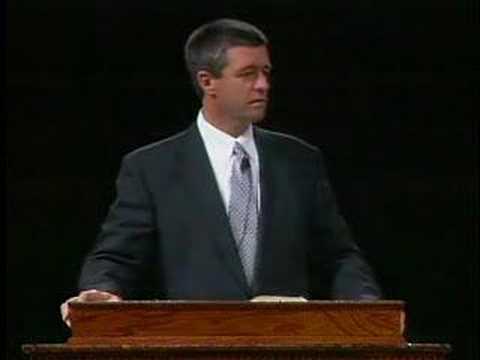 Your sermon of the week is–without a doubt–going to step on some toes, but it is one that needs to be heard. Paul washer pulls no punches in his message simply entitled: Dating.
  If you take away God, you take away conscience, and thereby all measures and rules of good and evil. And how can any law be made when the measure and standard of them are removed? All good laws are founded upon the dictates of conscience and reason, upon common sentiments in human nature, which spring from a sense of God; so that as the foundation is demolished, the whole superstructure must tumble down. A man then could be a thief, a murderer, an adulterer, and could not in a strict sense be considered an offender. The worst actions could not be evil, if a man were a god to himself, a law to himself.
 Your sermon of the week is the final installment from John MacArthur’s series The Battle for the Beginning, entitled
  How blessed is the man who does not walk in the counsel of the wicked, Nor stand in the path of sinners, Nor sit in the seat of scoffers! But his delight is in the law of the LORD, And in His law he meditates day and night.
 Our primary mission field today is within the church. The latest survey reveals that 86% of Americans say they believe in Jesus. Yet, a much smaller percentage of people say they are born-again Christians. How can so many people be deceived or deluded? Many of them have been told by misguided pastors or evangelists that repeating a prayer, signing a card, being baptized, joining a church or coming forward in an alter call has made them a Christian. Others have been asked to “accept” a Jesus they don’t even know. It is no wonder the Apostle Paul exhorted his readers to “examine yourselves as to whether you are in the faith” (2 Cor. 13:5). We are to test ourselves and encourage others to do the same. The test: have we believed the true Jesus as he is revealed in the Scriptures or



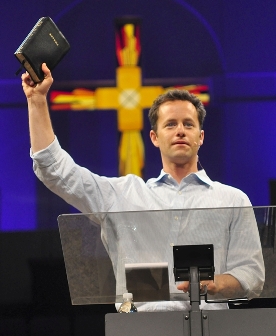

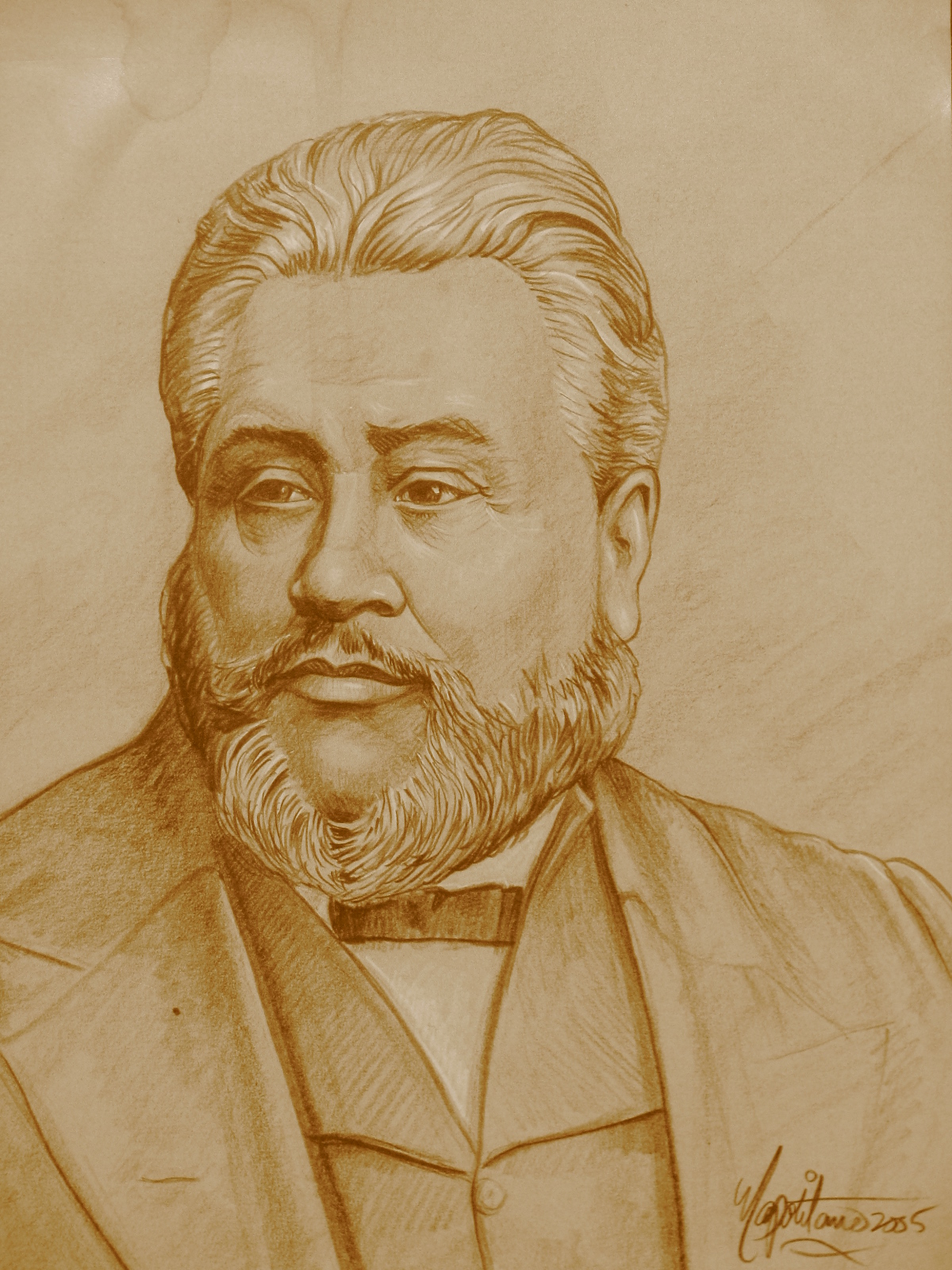
 Before the mountains were brought forth – or the earth and world were formed, from everlasting Jesus Christ was, like the Father, very God. From the beginning He was foreordained to be the Savior of sinners. He was always the Lamb slain from the foundation of the world, without whose blood there could be no remission. The same Jesus, to whom alone we may look for salvation, that same Jesus was the only hope of Abel and Enoch and Noah and Abraham and all the patriarchs; what we are privileged to see distinctly they doubtless saw indistinctly – but the Savior both we and they rest upon is one. It was Christ Jesus who was foretold in all the prophets, and foreshadowed and represented in all the law – the daily sacrifice of the lamb, the cities of refuge, the brazen serpent, all these were so many emblems to Israel of that Redeemer who was yet to come, and without whom no man could be saved. There never was but one road to heaven: Jesus Christ was the way, the truth and the life yesterday as well as today.

 Christ Alone Wyoming