LDS: “But that was just his opinion.”

If you’ve ever been in a discussion with a Mormon and you’ve quoted one of their prophets or church leaders (and that quote was not favorable to their organization’s current position on any given matter), then you no doubt have received the following response:

“But that was just his opinion.”

So, is this a valid response or is this simply a dishonest retort which completely evades the issue?

Using only Mormon published materials, I will prove to you in this post that it’s the latter.

Please read the following 23 quotes very carefully.

01

We do not wish incorrect and unsound doctrines be handed down to posterity under the sanction of great names, to be received and valued by future generations as authentic and reliable . . . .  Errors in history and in doctrine, if left uncorrected by us who are conversant with the events, and who are in a position to judge of the truth or falsity of the doctrines, would go to our children as though we had sanctioned and endorsed them.– Brigham Young, Millennial Star, Volume 27, Page 659, 1865

02

I have never yet preached a sermon and sent it out to the children of men, that they may not call scripture. Let me have the privilege of correcting a sermon, and it is as good Scripture as they deserve.  The people have the oracles of God continually. – Brigham Young, Journal of Discourses, Volume 13, Page 95

03

I will commence by saying to the Latter-day Saints and to all the inhabitants of the earth that I am responsible for the doctrine I teach; but I am not responsible for the obedience of the people to that doctrine. – Brigham Young, Journal of Discourses, Volume 13, Page 1, 1869

04

I will take up my text again—I am responsible for the doctrine I teach. – Brigham Young Journal of Discourses, Volume 13, Page 4, 1869

05

Brigham Young has said “when he sends forth his discourses to the world they may call them Scripture.”  I say now, when they are copied and approved by me they are as good Scripture as is couched in this Bible, and if you want to read revelation read the sayings of him who knows the mind of God. – Brigham Young, Journal of Discourses, Volume 13, Page 264, 1870

06

What man or woman on the earth, what spirit in the spirit-world can say truthfully that I ever gave a wrong word of counsel, or a word of advice that could not be sanctioned by the heavens?  – Brigham Young, Journal of Discourses, Volume 12, Page 127, 1867

Continue reading

The infamous Book of Abraham.

To learn more about this subject, watch the one hour documentary The Lost Book of Abraham here for free.

Was Jonah a false prophet?

What’s one of the first things a Mormon or Jehovah’s Witness says when you point out the plethora of false prophecies uttered by their leaders?

Well, Jonah was a false prophet!”

As if Jonah being a false prophet would somehow  give their leaders license to make as many false prophecies as they desire.

But did Jonah prophesy falsely? Or is this just one more example of an attack on God’s word by those lacking even the basic understanding of proper biblical hermeneutics in an effort to drive your attention away from their respective men behind the curtains?

The following piece by Hank Hanegraaf (regardless how you feel about him) quickly, succinctly, and conclusively destroys the shallow argument that Jonah was a false prophet, and it sends those wishing to trample on Scripture (in their pursuit to justify their false leaders) back to the drawing board to search for better proof texts.

From CRI:

THE PROPHET JONAH- Introduction
You wouldn’t normally expect Jehovah’s Witnesses, Mormons, and skeptics to agree on much of anything. Yet all three share a similar opinion regarding, of all things, the Book of Jonah. Can you guess what it is? The CRI Perspective in a moment.

THE PROPHET JONAH- False Prophet?
Jehovah’s Witnesses, Mormons, and skeptics all agree that Jonah uttered a false prophecy when he proclaimed, “Yet forty days and Nineveh will be overthrown” (Jonah 3:4). But, of course, Nineveh repented and was therefore not overthrown. Skeptics often refer to this as a clear example of false prophecy in the Bible. Jehovah’s Witnesses and Mormons claim this unfulfilled prophecy provides biblical precedent for the unfulfilled predictions of their own religious leaders. These arguments, however, are seriously flawed. Let me tell you why.

THE PROPHET JONAH- First…
First of all, Jonah did not make a mistake; he said exactly what God told him to say (Jonah 3:1). The Jehovah’s Witnesses and Mormons, on the other hand, do not claim that their predictions were exactly what God wanted said. Even they agree that any error is the fault of men, and not God. Therefore, Jonah is irrelevant to their case. Yet they want their teachings to be regarded with the same authority as that of biblical prophets!

THE PROPHET JONAH- Second…
Second, Jonah’s prophecy was not in error, because implied in the prophecy was a condition under which the predicted judgment would not take place. The Ninevites clearly understood what Jonah meant — namely, that their city would be overthrown unless they repented (Jonah 3:5-9). Since God spared Nineveh, obviously He meant the prophecy to be understood that way (Jonah 3:10). Even Jonah understood it that way, since he admitted in prayer that he knew God wanted to show mercy to the Ninevites (Jonah 4:1-2). So all of the parties involved — God, Jonah, and the Ninevites — understood that the prophecy was conditional.

THE PROPHET JONAH- Finally…
The same cannot be said for the erroneous predictions made by the Jehovah’s Witnesses or by the Mormon prophets. Their predictions were never understood to be conditional at all. Thus, Jonah’s prophecy gives no comfort to the false prophets of today. Nor was it a false prediction, as the skeptics wrongly claim. In fact, I like what the Bible says: “No prophecy of Scripture came about by the prophet’s own interpretation. For prophecy never had its origin in the will of man, but men spoke from God as they were carried along by the Holy Spirit” (2 Pet. 1:21 NIV).

On Jonah’s prophecy, that’s the CRI Perspective. I’m Hank Hanegraaff.

Does the Book of Mormon really contain the “fullness of the gospel?”

The following is from Rocky of Mormon Outreach as found on Facebook:

If the Book of Mormon contains the “Fulness [sic] of the Gospel” why aren’t these Mormon Doctrine essentials listed in the Book of Mormon?

1. Church organization
2. Plurality of Gods
3. Plurality of wives doctrine
4. Word of Wisdom
5. God is an exalted man
6. Celestial marriage
7. Men may become Gods
8. Three degrees of glory
9. Baptism for the dead
10. Eternal progression
11. The Aaronic Priesthood
12. Temple works of washings, anointing, endowments, sealing.

If I took these 12 Mormon doctrinal points away, would I have Mormonism? Answer: No!

So, answer the question: “If the Book of Mormon contains the ‘Fulness [sic] of the Gospel’ where are these Mormon Doctrine Essentials?”

Mormon missionaries caught (once again) revealing their disdain for other beliefs.

If you’ve ever tried sharing the truth of the Gospel with a Mormon, if you’ve ever challenged them on their doctrine, or if you’ve ever quoted one of their prophets on such morsels as the Adam is God doctrine, the Blood Atonement doctrine, the racism issues, the false prophecies of their prophets, etc., then it’s inevitable that you’ve been responded to with some canned retort similar to this:

“Why spend so much time attacking other people’s religion? Mormonism never does that.”

At first glance it appears that the Mormon who says this is taking the morally superior high ground, but in reality, anyone who knows anything about Mormon history knows that this regurgitated platitude is tantamount to a bald-faced lie.

The very idea that a Mormon will flat out lie about such a disprovable notion is astounding when you consider that the very origin of their organization is based on the ideal that all other religions are false and that they’re the one true church.

You can’t claim to represent a religion that was founded on attacking all other religions while simultaneously claiming that neither you nor your organization ever attack or speak critically of other religions.

In the past Defcon has chronicled Mormon Missionaries mocking a black Baptist preacher (the video has since been removed from Youtube), as well as posting quotes from their own materials of Mormon founders, leaders, and prophets attacking Christians and Roman Catholics.

Then there’s even the controversy of Mormon Elder Nate T. Nelson who even mocked those without a clear religious persuasion as seen in here and here.

The latest example of Mormons showing their true colors about other religions can be seen in their damaging and defacing of the property of a Romish church as reported in this news video.

Compromising with a cult.

Many false prophets will arise and will mislead many. Matthew 24:11

Here is a brief but shocking article from Presbyterian Pastor Jay Moses (whose profile says that he “comes from an ecumenical past“) that you must read to believe:

Reflections from Nauvoo by Pastor Jay

I have always found two things in life to be true:  God plants good people in every race or religion, and I’ve never met a Mormon I didn’t like.  I found both of these convictions confirmed in my experience with the Red Carpet trip, with First Pres and LDS Wheaton Ward, to Nauvoo last May 22nd-23rd.

A joint group of over 80 participants from each community boarded a bus and headed South/West to the historic town of Mormon Nauvoo.  We were given the hospitality of the LDS and Church of Christ churches as we learned more about one of the fastest growing religions in the world and the largest religion born on post-pilgrim American soil.  People are more than intellectual dogmas and beliefs … these beliefs are lived and embodied in our families and communities; it is imperative that we enter into each other’s sacred spaces and places, into each other’s tragedies and joys, if we truly seek to know each other as we seek to be known:  that is as children of God.

Nauvoo is a symbol for the intersection of both of these occurrences in a community’s life; joy and tragedy. I was especially moved by being invited to preach at the place (70’s Hall) and pulpit that Joseph Smith occupied so long ago. The fact that a community who experienced so much pain and estrangement from mine, both historically and theologically, would extend such grace to me was an experience of reconciliation and love that I will never forget and will continue to grow into.

As Joseph Smith left the common road of his day, he was plagued by a question that is as relevant now as it was 150 years ago: “What church is the right one?”  From this trip a powerful reply could be formulated:  the one that loves the other as themselves.

Also check out the pictures of this church’s “interfaith fellowship trip” on the church’s website here, which includes: posing in front of an LDS temple, a photo of the statue of Moroni, and an interfaith worship service described as follows:

. . . everyone attended an interfaith worshop [sic] service together on Sunday morning, May 23, 2010, with both Dr. Jay Moses from First Presbyterian . . . and LDS Bishop Reed Nuttal . . . preaching.

This event was even featured in a recent Mormon Times article (found here).

The problem isn’t so much that Jay Moses wants to compromise with the cult of Mormonism (he’s entitled to shipwreck his own soul if he wants to). The problem is that he’s leading his congregation (including children) down that broad path with him. I wonder, was there anyone–even one–in that  church that stood up and protested?

I know that after my departure savage wolves will come in among you, not sparing the flock; and from among your own selves men will arise, speaking perverse things, to draw away the disciples after them. Acts 20:29-30

This level of error, compromise, and downright apostasy is nothing new in the church; even the disciples in the first century dealt with those who crept in unnoticed with the goal of harming the sheep (see all the epistles).

What is ironic, however, is that the LDS organization is willing to compromise with Christians (even if the Christians are in name only). The current Mormon hierarchy has been relentless in their insatiable quest to appear more like Christians. And what makes this so intriguing is that Mormonism’s founders were rabidly anti-Christian. See some of the lovely things that founding Mormon leaders taught and believed about Christians and Christianity here.

Truth is, if Mormonism’s founders knew what has become of Mormonism, they’d be rolling in their graves.

It’s apparent why modern day Mormonism is trying to assimilate in its endeavor to appear Christian, but it’s not so clear why a man, charged with the shepherding of his flock in a little Presbyterian church, would deliberately lead those in his congregation into the arms of a cult rife with damnable doctrines of demons.

It’s also very sad that so many in his church followed him in this seduction when anyone with even a shred of discernment knows Mormonism worships a different god than the God who has reveled Himself in Scripture. Even Mormonism’s late prophet Gordon B. Hinckley conceded that Mormons and Christians don’t believe in the same Jesus when he said in June of 1998 in LDS Church News:

In bearing testimony of Jesus Christ, President Hinckley spoke of those outside the Church who say Latter-day Saints ‘do not believe in the traditional Christ.’  “No, I don’t.  The traditional Christ of whom they speak is not the Christ of whom I speak.  For the Christ of whom I speak has been revealed in this Dispensation of the Fullness of Times.”

This axiom renders the very idea of Christians (monotheists) and Mormons (polytheists) worshiping together as impossible.

Bernard P. Brockbank said in the Mormon publication The Ensign in May 0f 1977 (page 26):

It is true that many Christian churches worship a different Jesus Christ than is worshiped by the Mormons or The Church of Latter-day Saints.

Even a cursory perusal of Mormon doctrine corroborates the fact that the Jesus of the Bible and the Jesus of Mormonism are starkly different, and since the Jesus of Scripture said that He was the Way, the Truth, and the Life, and that no one gets to the Father except through Him (John 14:6), then those trusting in the Mormon “Jesus” have placed their hope and faith in a counterfeit Christ, and counterfeit Christ’s cannot save.

I am amazed that you are so quickly deserting Him who called you by the grace of Christ, for a different gospel; which is really not another; only there are some who are disturbing you and want to distort the gospel of Christ. But even if we, or an angel from heaven, should preach to you a gospel contrary to what we have preached to you, he is to be accursed! As we have said before, so I say again now, if any man is preaching to you a gospel contrary to what you received, he is to be accursed! Galatians 1:6-9

HT: Mormon Outreach via facebook

Old Mormon vs New Mormon: The Missouri Prophecies

Another DefCon exclusive:

What happens when a 19th century Mormon meets a 21st century Mormon? Find out in the first installment of the new series: “Old Mormon vs New Mormon.”

And when we get into Jackson county to walk in the courts of that house, we can say we built this temple; for as the Lord lives we will build up Jackson county in this generation.

Brigham Young

Times & Seasons

Volume 6 Page 956

April 06, 1845

To be in readiness to move into Jackson county in two years from the eleventh of September next, which is the appointed time for the redemption of Zion.

Joseph Smith

History of the Church

Volume 2 Page 145

August 16, 1834

The day is near when a Temple shall be reared in the Center Stake of Zion, and the Lord has said his glory shall rest on that House in this generation, that is in the generation in which the revelation was given, which is upwards of thirty years ago.

George Q. Cannon

Journal of Discourses

Volume 10 Page 344

October 23, 1864

Continue reading

Glenn Beck: “Laying the goundwork for a false gospel.”

The following quote comes from a great article by Randy Lovegreen regarding a recent episode of Glenn Beck’s T.V. program in which Beck brazenly advanced a Mormon fallacy:

Beck is using his show to break the ice for Mormon theology, and promoting a worldview that supports the beliefs of his church. His hour long infomercial for Mormon history only makes it easier for those well groomed young men on bicycles to strike up a conversation, and lead folks astray. . . . As Christians, we must constantly be on guard against anything which may seek to corrupt our faith. This includes charming conservative talk show hosts, even if they are on Fox News.

Read the whole article, Glenn Beck’s Mormon Infomercial, here.

How Mormons “attain salvation.”

A Mormon named Chris left the following comment, on a previous DefCon post:

Regardless of how it is interpreted, I have NEVER in 40 years of being a Mormon, met another Mormon who believes we can “earn” our way into Heaven. For you and others to continue to portray us in that light is dishonest. Dishonesty is NOT a Christian attribute.

Apparently Chris never met this Mormon:

This young girl has a better grasp of Mormon theology in regards to their view of justification and salvation than most Mormons I speak with.

I guess, according to Chris, this Mormon girl is just being “dishonest,” but I think she’s been reading her 1997 edition of the LDS published Gospel Principles (pages 303-304). It’s so refreshing to find a Mormon willing to be honest about what Mormonism teaches.

Glenn Beck’s “Divine [Mormon] Destiny.”

Below is a fantastic article by Brannon Howse on Glenn Beck’s upcoming “Divine Destiny” gathering. This article is definitely a must-read, especially for those Christians who still mix politics (the affairs of this world) with the church (the affairs of God).

Following Glenn Beck’s Divine Destiny or God’s Word
By Brannon S. Howse

Would you approve or disapprove if some of America’s evangelical pastors and religious leaders announced they were going to show up at “Oprah’s Divine Destiny” meeting at the Kennedy Center for an evening that would include uplifting music and nationally-known religious figures from all faiths as they unite in prayer and recite historical speeches? Would it concern you if you knew that on her radio program Oprah has taught the book called A Course in Miracles written by Helen Schucman? This book and the workbook include such quotes as:

“A slain Christ has no meaning.”
“The recognition of God is the recognition of yourself.”
“Do not make the pathetic error of ‘clinging to the old rugged cross’.”
“My salvation comes from me.”

True Bible-believing Christians would not approve of evangelical pastors and leaders uniting with Oprah in a self-described, religious and spiritual meeting. Why? Because most Biblically thinking Christians do not agree with Oprah’s liberal politics and they know that the truth of God’s Word and Oprah’s pagan spirituality do not mix.

However, many of these same Christians will have no problem when some of America’s evangelical pastors join radio personality and television host Glenn Beck for a spiritual program, because unlike Oprah, they share Beck’s conservative, political views. To many it makes no matter that Beck is a self-described Mormon because his political views trump his religious views and for this reason many will justify taking part in “Glenn Becks Divine Destiny” program at the Kennedy Center on August 27th.

Continue reading

Mormon sues LDS organization for injury he received while performing an unbiblical task.

A Las Vegas man is suing The Church of Jesus Christ of Latter-day Saints for medical expenses after he injured his back in 2007 performing baptisms for the dead.

In a civil suit filed in 3rd District Court on Wednesday, Daniel Dastrup claims he suffered a severe herniated disk in his lumbar spine after performing about 200 baptisms on Aug. 25, 2007. The then 25-year-old claims some of the young men and women he completely immersed in water in the name of the dead weighed as much as 250 pounds.

Read the entire article here.

Reinventing themselves . . . once again.

Ever-reinventing and re-polishing themselves till they get it right, the LDS church is back at the drawing board once again. This news article from BNet highlights the latest product of the LDS propaganda machine: Pathetic pandering to the culture.

Notice how he claims the LDS church “teaches good principles?” Since when do “good principles” save a man? Did you also notice how he said the LDS church makes a bad person good and a good person better? This is just further proof that this organization doesn’t preach the Gospel, nor even remotely understands it. True Biblical Christianity does not make a bad person good and a good person better, it takes a dead man and makes him alive; it takes an enemy of God and makes him an heir.

But being a cult does have its benefits though, because since truth to a Mormon is subjective and ever-changing, what was “truth” yesterday, is now relegated to:

We have new revelation.

We don’t teach that anymore.

We don’t believe that anymore.

That was just that prophet’s personal opinion.

You’ve taken that LDS teaching out of context.

A new prophet supersedes anything a previous prophet says.

You misunderstood what the LDS church was trying to say back then.

Just try to nail us down on something, you’d have better results trying to nail Jello-O to the wall.

In other words, “forget what our history and our doctrine say, this is what we want you to think of us now.”

HT: UTLM.org via Facebook

Cultoons: A dying man on a Mormon’s doorstep.

DefCon is pleased to introduce its first ever Cultoon. If the dialogue in this Cultoon sounds familiar, it was loosely derived from an actual debate featured on this previous post. Enjoy.

Dangerous pragmatism.

I just read a great article on why a transformed life is not proof of salvation that I highly recommend to all DefCon readers. It is well thought-out, well-written, and can be found here at Better Than Sacrifice.

Here’s an excerpt:

The seed which fell upon stony ground appeared to burst into life – it ‘immediately sprang up’. Why? ‘Because there was no depth’. Far from the immediate flourishing of growth being an indicator of eventual fruit, that growth was caused by the seed falling upon unprepared ground. This is sobering; the implication is that a quick conversion – an abundance of early growth – might very well prove to be ill-grounded. . . .  The seed which fell on stony ground is likened to one who hears the Word and immediately receives it with joy. Yet there is no depth there, no true understanding of what has been declared.

If this is sometimes the case with those who hear the true Word of the Kingdom, properly proclaimed, how plainly this exposes the dangers of our modern watered-down presentations of man’s sinful state. Rather than risk offending people by telling them of the wrath of a holy and just God toward sinners, we instead talk of having ‘made mistakes’ and ‘messed up our lives’. Instead of warning of the coming judgement, we tell people that God loves them, omitting any mention of His holiness and justice. Rather than call sinners to repent, we entice them with the offer of a better, more abundant life.

And thus we emasculate the Gospel, robbing it of its majesty and power. For if God is not angry with sinners, the punishment of His Son in their place on the cross can make no sense. Truly, it is this kind of diluted evangelism that results in false converts, lacking depth and with no understanding of the amazing grace that has been poured out upon sinners through the cross of Jesus Christ.

The Church’s task is not to make the Gospel palatable to unbelievers. It is to preach repentance and the forgiveness of sins in Christ so clearly that the offence of the Gospel – Christ crucified in our place, the just suffering for the unjust – is plain to everyone who hears.

Our message should be such that it is impossible for anyone to accept, except the Holy Spirit be at work supernaturally in people’s lives. The Church is charged with preaching the Law in all its severity to frighten comfortable sinners, and then to comfort frightened sinners with the Gospel.

HT: CrossTalkBlog

A Mormon explains the LDS gospel (or the lack thereof).

It was two years ago (July 2008) that a Mormon named Keith visited us on a post regarding Faith and Works. During this discussion I tried to get Keith to explain how I could be saved if I only had a few minutes to live. Keith did a lot of talking (including changing the conversation, accusing me of trying to manipulate him, and accusing me of asking a trick question), but he never answered the question.

I decided to publish this discussion (with all of our typos) in this post to show you exactly how Mormonism advances “another” gospel; one that gives false hope to a dying man, if any hope at all.

You can check out the entire conversation (and how it began) by checking on the comments section of this post from December of 2007.

When you get to the end of the discussion, if you are still perplexed as to what one has to do to “be right with God” according to Mormonism, the answers are actually listed here: Requirements for Mormon salvation.

Enjoy the conversation.

_________________________________

Ok, Keith, here it goes:

It’s late at night.

You hear something at your front door.

You investigate.

You find me laying on your porch step covered in blood.

You see a blood trail where I dragged myself which leads to the street where fresh skid marks are present on the asphalt.

I was just hit by a car that sped off.

You call to your wife to dial 911 and you kneel down to offer any assistance that you can.

I only have a few minutes left to live (and by your estimation of my condition you know it’s true).

I’m in fear of facing God and I ask you one simple question.

How do I get saved?

You’ve got five minutes.

The clock is ticking . . .

– The Pilgrim

Keith says:

Ok, this is a trick question for members of the Church of Jesus Christ of Latter-day Saints but this is what I will say. My dear friend you are not lost because God in his wisdom has made a plan for every one of his children. Your acceptance of Jesus Christ at this time will be to your great advantage and your sorrow and asking for forgiveness for your sins will be of merit for you. When you get to other side you will find that you still have an opportunity to learn of his work. Through the miracle of the restoration of the Gospel the Lord has made it possible that your baptism can still be done and you can upon meeting the requirements have the blessings of the Gospel in your life. Now Pilgrim, rejoice in the Atonement of the Lord Jesus Christ because it is through him that you will live again and receive his great blessings. I love him and I want you to know that I know that he lives and that through him you will be resurrected and can receive forgiveness of your sins and be accepted into his presence. Now should we pray together and ask for God to hear your plea.

As you know Pilgrim your understanding of the term of salvation and mine are different and just because we understand the same scriptures differently does not make me wrong and you right. I am interested in your reply.

Continue reading

Mormon church releases statement on Blood Atonement.

The ever-changing mainstream Mormon church has taken yet one more step to distance themselves from the original teachings of their church. This is just another step to appear more “Christian” as they reject the doctrinal roots of their founders. Can anyone recognize Mormonism anymore?

Here’s the very brief article:

The Church of Jesus Christ of Latter-day Saints released this statement Wednesday:

In the mid-19th century, when rhetorical, emotional oratory was common, some church members and leaders used strong language that included notions of people making restitution for their sins by giving up their own lives.

However, so-called “blood atonement,” by which individuals would be required to shed their own blood to pay for their sins, is not a doctrine of The Church of Jesus Christ of Latter-day Saints. We believe in and teach the infinite and all-encompassing atonement of Jesus Christ, which makes forgiveness of sin and salvation possible for all people.

Source: Deseret News

Could the timing of this press release have anything to do with this week’s execution by firing squad of Ronnie Lee Gardner in Utah?

<~~~~~~~~~~~~~~~~~~~~~~~~~~~~~~~~~~~~~~~~~~~~>


Find out more about the truth of Mormonism’s doctrine of Blood Atonement from these previous DefCon posts:

The Mormon doctrine of Blood Atonement as taught from the mouth of (Mormon Prophet) Brigham Young.

The Doctrine of Blood Atonement as taught by the Mormon organization.

Film review: The Bible vs. Joseph Smith.

Joel Kramer and Sourceflix have hit another home run with their latest release, The Bible vs. Joseph Smith.

DefCon has been pleased to feature Joel Kramer’s past documentaries DNA vs. the Book of Mormon, The Bible vs. the Book of Mormon, and Lifting the Veil on Polygamy, and now The Bible vs. Joseph Smith continues in the excellence of quality, production, and product.

Joel Kramer sits down with a lifelong Mormon and puts Bible prophets and Mormon prophets to the Deuteronomy 18 test “to see which prophets are truly speaking for God.”

This video not only deals with such problems as the Book of Mormon error of stating that Jesus was born in Jerusalem, but it also deals with Joseph Smith’s problems of false prophecy, so clearly in fact, that I suggest to you that this video conclusively proves that Joseph Smith was a false prophet.

“In a conversation between a Christian and a Mormon, the prophets of both the Bible and the Book of Mormon are put head to head in a test to see which prophets are truly speaking for God. If even one prophecy fails to come true, that prophet is a false prophet, and must be put to death.”

Bruce McConkie’s “Mormon Doctrine” out of print due to low sales.

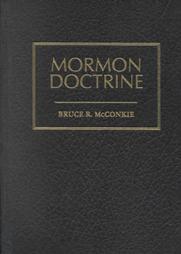
For those dealing in counter-cult apologetics, if you do not have Bruce R. McConkie’s Mormon Doctrine you better get your hands on it soon, as it’s about to get harder to find and possibly more expensive to purchase. Anyone dealing with Mormons knows the value of this book, and now it will no longer be in print due to a decreased demand. I procured my copy a few years back and I won’t be selling it anytime soon.

Part of me wonders if the decision to stop printing it has anything to do with how much of the real Mormonism it reveals: God was once a man; you can become a God; the black race is cursed; Christ couldn’t atone for all sins and you yourself must atone for some of your own sins by your own shed blood just to name a few.

None of these teachings, I might add, were of McConkie’s own imagination; he merely expounded on already established LDS teachings and doctrines, even though the mainstream LDS organization has been back-peddling from many of these core Mormon doctrines in recent years as they’ve done a phenomenal job at PR in their attempt to look just like Christians. This, of course, is perplexing when you consider that the genesis of their very existence was precipitated on the idea that Christians are apostate.

Oftentimes when a non-Mormon quotes from Mormon Doctrine he is met with the typical Mormon responses that it is not authoritative, it is not scripture, it is not part of LDS canon, and it was only McConkie’s opinions. Ironically these excuses are never appealed to whenever they quote from the Mormon apostle’s work.

This selective use of LDS teachings by Mormons makes the following article from the Salt Lake Tribune even more revealing as they admit:

Although McConkie, an LDS apostle who died in 1985, took sole responsibility from the start for Mormon Doctrine ‘s content, it often was quoted over the pulpit and treated by members as quasi-official. The book, with its presumptive title, seemed to provide an answer to every question and left little room for ambiguity.

Mormon Doctrine served two generations of the Mormon rank and file as the main authoritative source of LDS teachings,” said LDS sociologist Armand Mauss. “With its authoritative tone and constant promotion from high places, it came to be regularly cited in the church curriculum, especially in [Church Educational System] materials, and soon took on almost a scriptural stature.

You can read the entire article of the demise of McConkie’s tome on the Salt lake Tribune website by clicking here or below by clicking the following link:

Continue reading

Another ten (very) quick questions for Mormons.

In the past you’ve enjoyed Ten (very) quick questions for Mormons and Ten more (very) quick questions for Mormons. Now DefCon brings you Another ten (very) quick questions for Mormons.

Enjoy!

1.

2.

3.

4.

5.

6.

7.

8.

9.

10.

What do D.B. Cooper, Jimmy Hoffa, the Fountain of Youth, and Mormon archaeological evidence have in common?

None of them have ever been found!