
 Your sermon of the week is Brokenness by Voddie Baucham. This is a powerful message on King David’s brokenness that you won’t want to miss (unless of course you’re a Rob Bell fan or like the book The Shack since Baucham pulls no punches on these conduits of false doctrine). This is one of Baucham’s best messages and I encourage all DefCon readers to download this one.
Religion
And the crowd goes wild!
Joel Osteen introduces his audience to someone he describes as a “world changer,” a “history maker,” and “one of the great voices of our generation.”
And the crowd goes wild!
Yet another ten (very) quick questions for Jehovah’s Witnesses.
You’ve enjoyed Ten (very) quick questions for Jehovah’s Witnesses, Ten more (very) quick questions for Jehovah’s Witnesses and Another ten (very) quick questions for Jehovah’s Witnesses. DefCon presents ten more questions from Keith Walker of Evidence Ministries. Viewer discretion advised on the fourth video below.
1.
2.
3.
4.
5.
6.
7.
8.
9.
10.
What’s your top ten?
 If you were to be stranded on a deserted island and could only have five Old Testament Books and five New Testament books, which would you choose?
My ten (in order of appearance) would be:
OLD TESTAMENT
Genesis
Exodus
Proverbs
Ecclesiastes
Jonah
NEW TESTAMENT
John
Romans
Galatians
Hebrews
1 John
Saturday sermon series: “What the Gospel Demands” by David Platt.
 Yes, I’m going to do it. Starting today I am going to post a series of sermons so weighty and so sobering that I dare say they rival any other sermon ever presented on DefCon in the area of depth of conviction. If you don’t believe me, I dare you to listen to today’s message (part one in the series) entitled What the Gospel Demands.
For the next eight Saturdays I challenge all the readers of DefCon to listen to this series. Some of you will be glad you did, but some of you may be angry with what you hear and refuse to listen to any more after today.
I expect some to be repentant due to deep conviction after listening to this message. And I even expect some to be very angry due to that same conviction after listening to this message. But I can’t fathom anyone being indifferent to this message.
I warn you, though, this series will end on Saturday, December 24th, and more than likely it will damper your current view of the upcoming self-indulgent Christmas festivities.
Sermon of the week: “The Gospel Revolution in Work” by Akash Sant Singh.
 As a follow-up to last week’s two-part message on Christian work ethic by Brian Borgman (found here), DefCon is pleased to present another two-part message on this same subject by Akash Sant Singh entitled The Gospel Revolution in Work. This is a great message that every Christian should listen to whether they work in the home or outside of the home.
Has Mark Driscoll gone Charismatic?
The Sola Sisters have posted a doozey about Mark Driscoll talking to demons and giving extra-biblical advice on how to perform exorcisms.
Had I only read the transcript from the following video–not knowing who it came from–I would have never guessed it came from Mark Driscoll. I would have been sure it came from someone who frequents TBN.
Be sure to visit the Sola Sisters article (linked above) for more on this latest movement away from biblical Christianity by Mark Driscoll.
Quotes (912)
 The gospel reveals eternal realities about God that we would sometimes rather not face. We prefer to sit back, enjoy our clichés, and picture God as a Father who might help us, all the while ignoring God as a Judge who might damn us. Maybe this is why we fill our lives with the constant drivel of entertainment in our culture—and in the church. We are afraid that if we stop and really look at God in His Word, we might discover that He evokes greater awe and demands deeper worship than we are ready to give Him.
– David Platt
The lady in the rose garden.

A lesson for all of us to consider from the puritan Joseph Meade:
I once walked into a garden with a lady to gather some flowers. There was one large bush whose branches were bending under the weight of the most beautiful roses. We both gazed upon it with admiration. There was one flower on it which seemed to outshine all the rest in beauty. This lady pressed forward into the thick bush, and reached far over to pluck it. As she did this, a black snake, which was hid in the bush, wrapped itself round her arm. She was alarmed beyond all description; she ran from the garden, screaming, and almost in convulsions. During all that day she suffered very much with fear. Her whole body trembled, and it was a long time before she could be calmed. That lady is still alive. Such is her hatred now of the whole serpent race, that she has never since been able to look at a snake, even a dead one. No one could ever persuade her to venture again into a cluster of bushes, even to pluck a beautiful rose.
Now this is the way the sinner acts who truly repents of his sins. He thinks of sin as the serpent that once coiled itself around him. He hates it. He dreads it. He flees from it. He fears the places where it inhabits. He does not willingly go into the haunts. He will no more play with sin than this lady would afterwards have fondled snakes.
Sermon of the week: “The Christian Work Ethic” by Brian Borgman.
 For the next two weeks DefCon will be bringing you sermons on the subject of Christian work ethic and how the gospel plays out in our vocations.Whether you work outside the home, from home, are a homemaker, a boss, an employee, a student, a husband, a wife, or a child, the next two weeks are for you.
This week we present Brian Borgman’s message entitled The Christian Work Ethic, and next week we’ll present a different message from a different pastor dealing with the same topic.
I trust that the convicting admonishments of the next two weeks will ultimately be an encouragement to you in whatever vocation God currently has you.
(See also the follow-up to Borgman’s message: The Gospel Revolution in Work by Akash Sant Singh.)
The great lie: Arbeit Macht Frei.

The sign that greeted the doomed souls who entered the Auschwitz prison camp in Poland during WWII read: Arbeit Macht Frei. Translated into English it simply said, “Work Brings Freedom.”
It was a lie.
The “work” that was done by the prisoners in the infamous Nazi concentration camp only led to death. There was never a legitimate expectation of freedom even though many of them probably clung to the hope of liberation thanks to the sign that told them so. In reality, the only fate the multitudes who entered the camp faced–passing under the sign that whispered the lie–was abuse, torture, starvation, and death . . . anything but freedom.
Just as this lie preceded the physical death of thousands of Adolf Hitler’s victims, this same lie precedes the spiritual death of billions of Romanism’s victims, Joseph Smith’s victims, Charles Taze Russell’s victims, Buddha’s victims, Mary Bakker Eddy’s victims, Ellen G. White’s victims, Mohammed’s victims (and the list goes on and on).
The lie Arbeit Macht Frei was not only found displayed on a metal sign above the entrance to the death camp, this lie is also found in the pages of religious books and on the tongues of religious leaders who bid you come as they crowd the entrance to the broad path that leads to Hell.
Most people on this earth trust their eternal destiny to a religion that could rightly post this same sign above the door where they worship. Just as Work Brings Freedom was a lie to those entering Auschwitz, so it is also a lie to those entering countless churches, mosques, temples, and synagogues around the world. Just as this lie assisted in facilitating the Nazi prisoners’ temporal extermination on earth, this same lie results in man’s eternal destruction in the Lake of Fire.
And this is what sets biblical Christianity apart from all other faiths in the world that are vying for your affections, all of which promise you something they can never deliver.
What they claim you can achieve by your diligence to codes, laws, and much hard work in their respective religious systems, Jesus Christ offers as a free gift (Ephesians 2:8-9)!
In fact, Christianity is the only faith in the world that promises forgiveness of sins and right standing before God based solely on what Jesus Christ accomplished on the cross for us (1 Peter 2:24) and not what we have done for Him (Isaiah 64:6).
And Christianity is not neutral about those who try to work for their righteousness. The Bible makes it very clear that if you try to earn your salvation and God’s forgiveness by your work (following the law and performing good deeds), then you don’t have God’s grace, you are under a curse, and you are cut off from Jesus Christ (Galatians 3:10, Galatians 5:4) who is the only One who can save you (John 14:6, Acts 4:12).
If you’re going to attempt to earn your salvation then you must first believe that Christ’s sacrifice was insufficient to fully and completely save you without your contribution; otherwise you would be resting solely in His accomplished work, not His work and yours. To believe that you can become righteous, by working toward your liberation from sin and the wrath to come, is to suggest that Christ died in vain (Galatians 2:21).
It’s as if there was a man in the death camp offering a key to the gate to any of the prisoners, yet they ignored him, electing to instead work harder and harder for their own freedom (as the sign suggested). In the end the man with the key was their only hope, but they chose to attempt liberation on their own, foregoing their only means of escaping the horror to come.
There is another sign that could be hung over the doorway of Hell that would greet all those entering its abyss from the various paths of false religion: Vernichtung Durch Arbeit. In English it simply means “Destruction Through Work.”
“You have been severed from Christ, you who are seeking to be justified by law; you have fallen from grace.” Galatians 5:4
Yet another ten quick questions for Mormons.
You’ve enjoyed Ten (very) quick questions for Mormons, Ten more (very) quick questions for Mormons, and Another ten (very) quick questions for Mormons. DefCon now brings you ten more questions from Keith Walker of Evidence Ministries.
1.
2.
3.
4.
5.
6.
7.
8.
9.
10.
Quotes (911)
 Children are seen as complications, or even obstacles, in the perpetual quest for fun, excitement, and fulfillment. To see this attitude among the ungodly is to be expected. . . . What should alarm us, however, is that Christians are making the same complaint. In reality, these complaints by frazzled mothers worn out by “hyperactive” or “strong-willed” children (an earlier generation would have called them unruly) are merely symptoms of a disease. The root cause of this disease is the rejection of the commands of God: Christian families have brought this affliction upon themselves by following the “empty and deceitful” philosophies of the world. Although most evangelicals pride themselves that they are–unlike the “liberal churches”–true to the Bible, many of these evangelical leaders and authors adhere to the same philosophy of child training as the non-Christian educators and psychologists.
– William & Colleen Dedrick
From: The Little Book of Christian Character & Manners
A Roman Catholic on Chuck Colson on Mitt Romney on Mormonism.
 I just read an excellent article from NCR on Chuck Colson’s position on the issue of Mitt Romney’s Mormonism and its pertinence in American politics. Although the author of the article is Roman Catholic (which leads him to some erroneous conclusions like suggesting that Romanism is Christian), he does make some great points about this issue that Evangelical Christians should be cognizant of, while simultaneously pinpointing some of Chuck Colson’s poor misuse of Scripture.
Here’s an excerpt from the article:
Mormons are polytheists. They believe that the Father, the Son and the Holy Spirit are three different gods,that there are countless other gods besides, and that somewhere there is a “God the Mother” with whom the Father celestio-biologically reproduced Jesus.
Further, they believe that we are the same species as the gods and that by being a good Mormon you can grow up to be a divinity with your own planet of billions of people worshipping you.
Worse, they claim that actual Christianity is a false and degraded, apostate Christianity. That they are the true, restored Christianity.
They are therefore polytheists of a type that goes way beyond ancient paganism. Back then apotheosis was reserved for the emperor or the pharaoh, but more importantly polytheists did not claim to be Christians, much less to be the only true expression of Christianity with actual Christianity being a theological perversion.
Mormonism thus subverts the core doctrine of Christianity (the doctrine of God), passes off true Christianity as a counterfeit, and holds itself out to the public to be the genuine article.

You can read the entire article here, and as usual, the Mormons have flooded the comment section of the article.
______________________________________________
See also:
Should a Christian vote for Mitt Romney?
Should Christians vote for the lesser of two evils?
A shocking realization if a Mormon becomes president of the United States.
Sola Scriptura (70)
 But when Christ appeared as a high priest of the good things to come, He entered through the greater and more perfect tabernacle, not made with hands, that is to say, not of this creation; and not through the blood of goats and calves, but through His own blood, He entered the holy place once for all, having obtained eternal redemption. For if the blood of goats and bulls and the ashes of a heifer sprinkling those who have been defiled sanctify for the cleansing of the flesh, how much more will the blood of Christ, who through the eternal Spirit offered Himself without blemish to God, cleanse your conscience from dead works to serve the living God?
– Hebrews 9:11-14
Quotes (910)
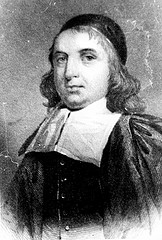 Those who sweat in worldly pursuits are commonly cold in godly pursuits.
– William Jenkyn
1613–1685
Sermon of the week: “Family Worship and the use of TV” by Albert Martin.
 Albert Martin gives us encouragement and admonition in this decades-old message entitled Family Worship and the Use of TV.
Sermon of the week: “Atonement and Justification – The Pharisee and the Tax Collector” by John MacArthur.
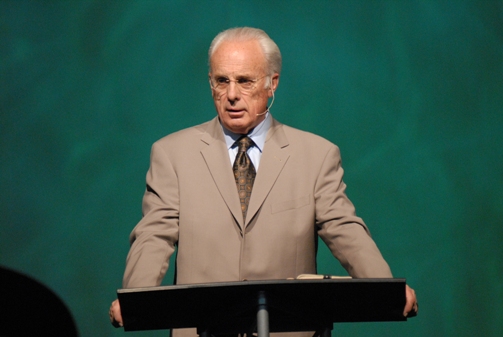 Your sermon of the week is Atonement and Justification: The Pharisee and the Tax Collector by John MacArthur.
A great message from a great portion of Scripture.
Quotes (909)
We are giving in to the dangerous temptation to take the Jesus of the Bible and twist him into a version of Jesus we are more comfortable with. A nice, middle-class, American Jesus. A Jesus who doesn’t mind materialism and who would never call us to give away everything we have. A Jesus who would not expect us to forsake our closest relationships so that he receives all our affection. A Jesus who is fine with nominal devotion that does not infringe on our comforts, because, after all, he loves us just the way we are. A Jesus who wants us to be balanced, who wants us to avoid dangerous extremes, and who, for that matter, wants us to avoid danger altogether. A Jesus who brings us comfort and prosperity as we live out our Christian spin on the American dream. But do you and I realize what we are doing at this point? We are molding Jesus into our own image. He is beginning to look a lot like us because, after all, that is whom we are most comfortable with. And the danger now is that when we gather together in our church buildings to sing and lift up our hands in worship, we may not actually be worshiping the Jesus of the Bible. Instead we may be worshiping ourselves.
– David Platt
That’s where I’ve read that before!
 The following is a great chart from 20 Truths About Mormonism showing the “similarities between the Book of Mormon and View of the Hebrews as summarized by [Mormon] Elder B. H. Roberts.”
This is a followup to Where Have I Read that Before?
| Book of Mormon | View of the Hebrews |
| Gives an Israelitish origin of the American Indian. | Pleads for an Israelitish origin of the American Indian on every page. |
| Deals with the destruction of Jerusalem and the scattering of Israel. | Deals with the destruction of Jerusalem and the scattering of Israel. |
| Deals with the future gathering of Israel and the restoration of the ten tribes. | Deals with the future gathering of Israel and the restoration of the ten tribes. |
| Emphasizes and uses much of the material from the prophecies of Isaiah, including whole chapters. | Emphasizes and uses much of the material from the prophecies of Isaiah, including whole chapters. |
| Makes a special appeal to the Gentiles of the New World–esp. the people of the United States to become nursing fathers and mothers unto Israel in the New World, holding out great promises to the great Gentile nation that shall occupy America, if it acquiesces in the divine program. | Makes a special appeal to the Gentiles of the New World–esp. the people of the United States to become nursing fathers and mothers unto Israel in the New World, holding out great promises to the great Gentile nation that shall occupy America, if it acquiesces in the divine program. |
| The peopling of the New World was by migrations from the Old World. | The peopling of the New World was by migrations from the Old World. |
| Migrating Jaredites are taken into “that quarter where there never had man been”. | Its migrating people are taken into a country where “never man dwelt”. |
| The colony enters into a valley of a great river. Peoples journeyed northward and encountered “seas” of “many waters” in the course of their long journey. The motive of their journey was religious. Ether is prominently connected with recording the matter. | The colony enters into a valley of a great river. Peoples journeyed northward and encountered “seas of many waters” in the course of their long journey. The motive of their journey was religious. Ethan is prominently connected with recording the matter. |
| Nephites divide into two classes, the one civilized, the other followed a wild hunting and indolent lifestyle that ultimately led to barbarism. | The lost tribes divide into two classes, the one fostering the arts that make for civilization, the other followed a wild hunting and indolent lifestyle that ultimately led to barbarism. |
| Long and dismal wars break out between the Nephites and Lamanites. | Long and dismal wars break out between the civilized and barbarous divisions of people. |
| The Lamanites utterly exterminate the Nephites. (The same thing occurs with the Jaredite peoples in the exact place the Nephites would later be exterminated). | The savage division utterly exterminates the civilized one. |
| Civilized people develop a culture of mechanic arts; of written language; of the knowledge and use of iron and other metals; and of navigation. | Civilized people develop a culture of mechanic arts; of written language; of the knowledge and use of iron and other metals; and of navigation. |
| Unity of race–the Hebrew race and no other is assumed for the inhabitants of ancient America. | Unity of race–the Hebrew race, and no other is assumed for the inhabitants of ancient America. |
| Book of Mormon peoples are assumed to occupy the whole extent of the American continents. | With the possible exception of the Eskimos of the extreme north, this race of Hebrew peoples occupied the whole extent of the American continents. |
| The original language of the people was Hebrew. | The Indian tongue had one source–the Hebrew. |
| Joseph Smith used an instrument in translating the Book of Mormon called Urim and Thummim which he described as two stones and a breastplate. | View of the Hebrews describes an instrument among the mound finds comprising a breast plate with two white buckhorn buttons attached, “in imitation of the precious stones of the Urim.” |
| Admits the existence of idolatry and human sacrifice. | Admits the existence of idolatry and human sacrifice. |
| Prophets extol generosity to the poor and denounce pride as a trait of the people. Polygamy is denounced under certain conditions as in the practices of David and Solomon. | Generosity to the poor is extolled and pride is denounced as a trait of the American Indian. Polygamy is denounced |
| Lost sacred records would be restored to the Lamanites along with the return of their lost favor with God in the last days. | Indian traditions of a “Lost Book of God” and the promise of its restoration to the Indians, with a return of their lost favor with the Great Spirit are quoted. |
| Sacred records were hidden or buried by Moroni, a character that corresponds to this Indian tradition in the Hill Cumorah. | Ethan Smith’s sacred book was buried with some “high priest,” “keeper of the sacred tradition.” |
| Reports of extensive military fortifications erected throughout large areas with military “watch towers” here and there overlooking them. | Reports of extensive military fortifications linking cities together over wide areas of Ohio and Mississippi valleys, with military “watch towers” overlooking them. |
| Reports of prayer or sacred towers. | Describes sacred towers or “high places,” in some instances devoted to true worship, in other cases to idolatrous practices. |
| Some Book of Mormon people effect a change from monarchial governments to republican forms of government. | Part of Ethan Smith’s ancient inhabitants effect a change from monarchial governments to republican forms of government. |
| Civil and ecclesiastical powers are united in the same person in Book of Mormon republican people. | Civil and ecclesiastical powers are united in the same person in Ethan Smith’s republics. |
| Lehi, first of Nephite prophets taught the existence of a necessary opposition in all things–righteousness opposed to wickedness–good to bad; life to death, and so following. | Some of Ethan Smith’s peoples believed in the constant struggle between the good and the bad principle by which the world is governed. |
| The gospel was clearly preached among the ancient inhabitants of Americas. | Ethan Smith’s book speaks of the gospel having been preached in the ancient America. |
| The Book of Mormon brings the risen Messiah to the New World, gives him a ministry, disciples and a church | Ethan Smith’s book gives, in considerable detail, the story of the Mexican culture-hero Quetzalcoatl–who in so many things is reminiscent of the Christ. |
They conclude this list with the following quote from Mormon apologist, historian, and member of the LDS general authority, B.H. Roberts, from his work Studies of the Book of Mormon, (University of Illinois Press, 1985, p. 242):
“Can such numerous and startling points of resemblance and suggestive contact be merely coincidence?”
And 20 Truths About Mormonism also reveals:
“Joseph even appears to have plagiarized his father. For many years his mother cherished the details of several of her husband’s dreams, and one of these was incorporated wholesale into the Book of Mormon as a vision by Lehi, the father of Nephi.”
| The Vision of Lehi (Book of Mormon (1830), pp. 18-20) |
Dream of Joseph Smith, Sr. (Lucy Smith: Biographical Sketches, pp. 58-59) |
| …me thought I saw a dark and dreary wilderness… | I thought I was traveling in an open and desolate field, which appeared very barren… |
| I beheld a tree, whose fruit was desirable, to make one happy…most sweet, above all that I ever had before tasted…I began to be desirous that my family should partake of it also… | …a tree, such as I had never seen before…I found it delicious beyond description. As I was eating, I said in my heart, “I cannot eat this alone, I must bring my wife and children.”… |
| And I beheld a rod of iron; and it extended along the bank of the river, and led to the tree… | I beheld a beautiful stream of water, which ran from the east to the west…I could see a rope running along the bank of it… |
| …a great and spacious building…filled with people, both old and young, both male and female; and their manner of dress was exceeding fine, and they were in the attitude of mocking and pointing their fingers towards those which had come at, and were partaking of the fruit. | I beheld a spacious building…filled with people, who were very finely dressed. When these people observed us in the low valley, under the tree, they pointed the finger of scorn at us. |
 Christ Alone Wyoming