What does the Bible say about OMG?

The following is from Growing 4 Life:

“I was sitting at a sporting event, when the lovely, Christian lady beside me shouted, “Oh, my God!” as her child made a mistake.  I cringed inside.  And then I wondered, “does she know?”  Does she know that the Bible tells us not to use God’s name in vain? And honestly, this is not unusual.  I hear Christians do this all of the time.  Many are wonderful people who obviously love the Lord.  Is it because we just don’t hear this called sin anymore?  Are we so hardened to the use of His name due to the company we keep and the entertainment that we fill our minds with, that we just didn’t notice when we started doing it, too?”

You can read the whole piece here.

Sermon of the Week: “The Bible’s View on Missions – Part 3” by Akash Sant Singh

We are pleased to offer the third of a series of messages on biblical missions from Pastor Akash Sant Singh, pastor of Community Bible Church in Reno, Nevada. As a missionary to West Africa, this sermon has spoken to my heart and it will be a blessing to you as well.

It is important to remember that every true believer is actually called to be on a mission for the Most High Sovereign Creator of heaven and earth. May Christ be exalted through the proclamation of His word and to each listening ear.

Church description – “The Bible’s view on missions – part 3 a Sunday school message by Pastor Akash – 1. God is self-centered – 2. God displays His glory through our sin – 3. The church is the goal – 4. The church is missionary – 5. We display God’s glory in everything we do.”

The Bible’s View of Missions – Part 3

Daddies and daughters.

Ingrid Schlueter has hit the nail on the head with her article Daddies and Daughters.

Her piece should serve as a reminder to all fathers that even success in something as important as ministry should not come at the expense of your children. What endeavor, career, or goal in life could be more important than capturing your daughter’s heart?

Here’s an excerpt from Ingrid’s article:

“Buried under the eye-liner, body-piercings, provocative clothing and exhibitionist behavior of so many girls today are sad hearts and souls, weeping for a daddy who never cared.”

You can read the entire article (which I highly encourage you to do) here.

Sermon of the Week: “The Bible’s View on Missions – Part 2” by Akash Sant Singh

We are pleased to offer the second of a series of messages on biblical missions from Pastor Akash Sant Singh, pastor of Community Bible Church in Reno, Nevada. As a missionary to West Africa, this sermon has spoken to my heart and it will be a blessing to you as well.

It is important to remember that every true believer is actually called to be on a mission for the Most High Sovereign Creator of heaven and earth. May Christ be exalted through the proclamation of His word and to each listening ear.

Church description – “The Bible’s View of Missions – A Sunday School message by Pastor Akash – 1. Your missions field is wherever you are.”

The Bible’s View of Missions – Part 2

Finding Faithful Edlers and Deacons

This is an astounding little book! Everyone in the church would benefit from reading it. Those men who desire to serve or are currently serving in either of the offices of the church will benefit as they gain insight on how to examine themselves and pursue godliness – keeping Christ and His completed work forefront in their lives, for the good of the people they serve. Christians are given insight and questions to ask of men who desire to serve or are currently serving – to help them better understand each man’s qualifications and suitability for service. Easy to read, with 28 short chapters – each full of encouragement to never stop growing in the grace and knowledge of our Lord Jesus.

About the Author

THABITI ANYABWILE is senior pastor of First Baptist Church of Grand Cayman in the Cayman Islands. He served previously as an elder and assistant pastor at Capitol Hill Baptist Church in Washington, DC, and as an elder at Church on the Rock in Raleigh, North Carolina. His other works include What is a Healthy Church Member, The Faithful Pastor, and The Decline of African-American Theology.

Sermon of the Week: “The Bible’s View on Missions – Part 1” by Akash Sant Singh

We are pleased to offer the first of a series of messages on biblical missions from Pastor Akash Sant Singh, pastor of Community Bible Church in Reno, Nevada. As a missionary to West Africa, this sermon has spoken to my heart and it will be a blessing to you as well.

It is important to remember that every true believer is actually called to be on a mission for the Most High Sovereign Creator of heaven and earth. May Christ be exalted through the proclamation of His word and to each listening ear.

Church description – “A 20,000 ft high survey of missions – 1. It is all about God through Jesus Christ – 2. Jesus then gives it back to God the Father – 3. Missions=the entire creation we rule over – 4. It is all about bringing everyone together under Jesus.”

The Bible’s View of Missions – Part 1

What’s in a list of names?

If you are like me, you tend to not pay close attention to lists of names when you come across them in your Bible reading. Yes, those people are important to God, some lists demonstrate important lineages. There is a list which is not an important lineage – in Romans 16. This was the text for the sermon in my church yesterday, and I was (and still am) amazed at the richness of the Bible and the amazing grace and love Christ poured out for His people. May the Word of God dwell richly in you and may you love His people – because of His great love for you. That is the message of Romans 16:3-16.

For the glory of God and the good of His people.


What if…?

What if life really evolved over millions and billions of years? If it did, then the Word of God is not actually infallible and inerrant. If it did, then God Himself is proclaimed to be a liar, and further, a god who is a liar would be a non-existent entity.

What if humans are merely another species of animal that has evolved? If we are, again, God’s Word could no longer be trusted. If we are, then we should have no reason to fear death and “the great circle of life.” If we are, then Charles Darwin should be feted with great honor and even worshipped for revealing the truth of who we are to a poor world who for millennium had the audacity to believe God’s Word was true.

What if the Great Flood was actually only something copied from the myths and fables already found in other ancient cultures? If it was, then again, God’s Word is with error for it could not have come from the Holy Spirit. If it was, then mankind need have no fear of the judgment of a God who cannot keep His promise to destroy the wicked. If it was, then the rainbow is merely a quirk of nature, not something given by God as a promise.

What if the children of Israel really are not a people sovereignly protected by the God of Abraham, Isaac, and Jacob? If they are not, they have to be some of the luckiest people in the world. If they are not, their should not be any real outcry if a more highly evolved society determines that a lower society in the chain should be exterminated. After all, isn’t the reality of life that is should be based on the survival of the fittest? If they are not, then the promises and covenants established by an everlasting God hold no value, and if they hold no value, then NO promise and NO covenant is to be held in reverence.

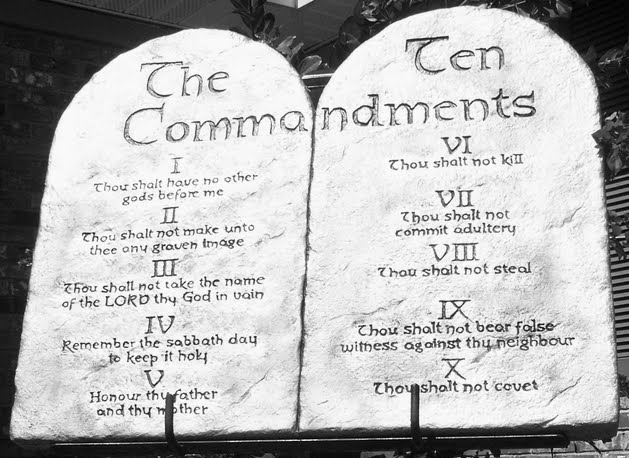
What if the Ten Commandments are merely suggestions dreamed up as society has evolved? If they are, the Ten Commandments would have no true value because they define a morality that did not come from a just and holy God. Killing, stealing, and adultery merely become defined by what each society considers them to be for their people. If they are, then there are no absolutes to control the world in which we live.

What if the Word of God really is just a book compiled by men through the ages instead of a book divinely inspired by a holy and righteous God? If it is, then centuries have been wasted studying a book that should hold no more value than the works of Plato, Homer, or Shakespeare. If it is, then it is full of lies that drive men to worship what they cannot see, to believe what they can never truly know, and to trust in a God that is untrustable.

What if Jesus Christ was merely a good man as taught by many religions?

What if Jesus Christ was merely a good teacher and prophet as taught by the Muslims?

What if Jesus Christ did not provide full atonement on the Cross as taught by the Mormons?

What if Jesus Christ was not the Saviour of mankind?

What if Jesus Christ is not coming again one day in the clouds of glory?

What if Jesus Christ is not the eternal, only begotten Son of God as taught by the JW’s?

What if Jesus Christ must be sacrificed over and over again as taught by the Catholics?

What if Jesus Christ is not the ONLY Way, the ONLY Truth, and the ONLY Life?

What if Jesus Christ never really died and rose again on the third day?

If He did not do these things, if He was not all these things, if He will not perform what the Word of God promises He will, if He is not the ONLY Way to heaven, if He really did not die and rise again the third day, if we truly can have no hope in Christ….

Then…

“WE ARE OF ALL MEN MOST MISERABLE!” – 1 Cor. 15:19


1 Cor. 1:18, “For the preaching of the cross is to them that perish foolishness; but unto us which are saved it is the power of God.”

A New Year for God or Another Year for Me?

When I was a young child in gradeschool, I can remember that every New Year’s Day, our parents required us to sit down and write out a brand new list of resolutions. I can distinctly remember putting down things like: 1) I resolve to read all the way through the Bible, 2) I resolve to be nicer to my siblings, 3) I resolve to obey my parents more than I did last year, etc., etc.

High school was quickly followed by college where I first began training for the ministry. I continued to make my new year’s resolutions but along with the read through the Bible resolution, now they seemed much more substantial. They included things like: 1) I resolve to keep myself pure, 2) I resolve to serve the Lord and give Him my whole life, 3) I resolve to spend more time learning to love God than I do in pleasing myself, etc., etc. Of course, now that I was in Bible college, I had to include some resolutions that would show to others that I was fully resolved to do better than I did last year.

Whether it was grade school, high school, or college, the truth still remained. Within two or three weeks after the 1st of January, I was normally back to where I was before. My “new” resolutions were but a distant memory and very little, if anything, ever really changed. I convinced myself that I was not a bad guy and that there were plenty of others who did not keep their resolutions so I was in good company.

Continue reading

DefCon reaches 2 million visits.

On December 31, 2011, at approximately 10:00 pm (EST), DefCon received its two-millionth hit.

In the four years and four months that this blog has been active, we’ve published 3,768 posts (counting this one) and accumulated 22,220 comments.

I wanted to thank our writers as well as our many loyal readers, some of whom have been with us for years and some of which are newcomers. I am truly grateful for all that the writers and commenters have contributed to this work, and I am thankful that God has allowed us to do this for so long.

Thank you all, and Happy New year.

Pilgrim

Great Heresies – and the Worldviews that Spawn Them

1 But false prophets also arose among the people, just as there will be false teachers among you, who will secretly bring in destructive heresies, even denying the Master who bought them, bringing upon themselves swift destruction. 2 And many will follow their sensuality, and because of them the way of truth will be blasphemed. 3 And in their greed they will exploit you with false words. Their condemnation from long ago is not idle, and their destruction is not asleep.” – 2 Peter 2:1-3

Lack of clear thinking – which is impossible for the unregenerate mind – will lead one to hold to an unbiblical worldview.

And the five major heresies that have been around since man grew too big for his britches keep popping up with different clothes on the same old bag of lies from Satan.3 His divine power has granted to us all things that pertain to life and godliness, through the knowledge of him who called us to his own glory and excellence, 4 by which he has granted to us his precious and very great promises, so that through them you may become partakers of the divine nature, having escaped from the corruption that is in the world because of sinful desire. 5 For this very reason, make every effort to supplement your faith with virtue, and virtue with knowledge, 6 and knowledge with self-control, and self-control with steadfastness, and steadfastness with godliness, 7 and godliness with brotherly affection, and brotherly affection with love. 8 For if these qualities are yours and are increasing, they keep you from being ineffective or unfruitful in the knowledge of our Lord Jesus Christ. 9 For whoever lacks these qualities is so nearsighted that he is blind, having forgotten that he was cleansed from his former sins. 10 Therefore, brothers, be all the more diligent to make your calling and election sure, for if you practice these qualities you will never fall. 11 For in this way there will be richly provided for you an entrance into the eternal kingdom of our Lord and Savior Jesus Christ. 12 Therefore I intend always to remind you of these qualities, though you know them and are established in the truth that you have.” 2 Peter 1:3-12

New Age vs Christianity

New Age vs Christianity


Naturalism

New Age

Christianity

God God does not exist; belief in God results from superstition Pantheism: God is impersonal; is above good and evil; everything is God God is the triune, eternal, personal, almighty, sovereign, all-knowing, loving, just and holy Creator
Metaphysics The natural order is eternal, self-sufficient and uncreated. It is ultimately matter/energy The world is divine The world was created by God
Epistemology Human sense experience; the scientific method Truth lies within every human; it is attained through states and mystical consciousness Truth has objective standing; it is independent of human desire; functional view of truth is false. Humans can know because God created them as rational creatures
Ethics Ethics is relative Ethics is relative Ethics is not relative. The moral law grounded in the being of God
Humans Humans are highly evolved animals Humans are spiritual beings who are gods Humans are creatures made in the image of God
Basic Human Problems Superstition and ignorance Ignorance of our true human potential Sinners in rebellion against God
Solution to the Human Problem Scientific advancement and technology Transformation of consciousness Salvation by faith in the finished work of Christ
Death The end of human existence An illusion; the entrance to the next life The end of our earthly life; eternal life for the believer and eternal wrath for the unbeliever
Jesus Christ A merely human teacher One of many gurus or master teachers from history The unique incarnation of God; the only Lord and Savior


Taken from Worldviews in Conflict by Ronald H., Nash, pages 139 & 140; slightly modified.

The Way of Salvation

The Way of Salvation


At the heart of the controversy between Rome and historic Protestants is a dispute over the way of salvation. In speaking of salvation, we note that the term “salvation” encompasses a wide range of important topics, and it is important to distinguish between various aspects of redemption. 

Since the fall of mankind, the human race stands in need of salvation (or deliverance): deliverance from the guilt of sin, and also deliverance from the power of sin. From the biblical doctrine of justification, we learn the divine provision whereby sinners are delivered from the punishment due to the guilt of their sins. From the doctrine of sanctification, we learn the means whereby God delivers sinners from the reigning power of sin.

Of course, there are other facets of redemption, such as election, effectual calling, glorification, etc. Obviously the subjects of redemption are interrelated to one another; but they are not identical, and should not be confounded. Even though the various aspects of salvation bear a close relationship to one another, the scriptures clearly distinguish between them. In several places within Paul’s epistles, the apostle maintains a clear distinction between justification and sanctification. For example: “But ye are washed, but ye are sanctified, but ye are justified in the name of the Lord Jesus, and by the Spirit of our God” (1 Cor. 6:11; cf. Rom. 8:30; 1 Cor. 1:30). [1]

Another closely related topic is the nature of regeneration, or the new birth. Those whom God regenerates are given repentance, faith, and inward renewal so that they strive for godliness.

With the foregoing considerations in view, we wish to assert several important truths which bear on the state of Roman Catholicism and modern evangelicalism.

Read the rest here: http://www.swrb.com/newslett/actualNLs/2_shipwr.htm

Tebow makes us uncomfortable.

Regardless of whether or not you like football, you will still like the clarity and keen observations presented in this USA Today article.

Columnist Larry Taunton does a great job revealing that even in sports, the media’s bias propaganda machine against Christians is alive and well.

Here’s an excerpt:

“When it comes right down to it, we don’t want heroes who are truly good. We want them to fail the occasional drug test or start a bar fight from time to time. It makes us feel better about ourselves. Tebow, however, doesn’t make us feel better about ourselves. People like him make us feel a little convicted about the things we say and do. So we find a reason to dislike them.”

The Tragedy of American Compassion

The Tragedy of American Compassion – Marvin Olasky

Reviewed by Stuart Brogden, 30 Oct 2011

Tragedy and Compassion – two words that we don’t normally associate together. How could compassion be tragic? While we likely have different levels of bad news in mind when think of tragedy, we are all in agreement that tragedy is bad and something ought to be done. Although I think the TV news industry is working hard to widen the definition to include hangnails.

Compassion is a bit more complicated. We tend to think of compassion from the ame perspective that we think of love – the unbiblical, Greco-Roman emotional view. Americans view compassion today differently than we did 250 years ago. We want to “relieve suffering” but don’t stop to think about the proper way of doing this, or even if there is such a thing. There are some issues – life threatening, for example – for which rapid elimination of the threat is proper. But there are many life issues that are the accumulation of bad decisions for which there is no proper quick relief. We can look at G.W. Bush’s policy in the Middle East, thinking the solution there was to quickly implant democratic governments. People will not value the liberty a representative government of laws brings until they realize their need of it. Small children will not realize the value of math if mom tells them the answers rather than teaches and asks diagnostic questions.

Biblical compassion is based on biblical love – wanting the best (as God defines it) for the person and to honor God. As we’ve been taught, good deeds must incorporate right motive, right method, right attitude, and right objective. So biblical compassion must be based on a biblical view of God and of man. Our goal is not to bail a man out – it is to set him on his feet, exposed to the gospel, equipped to provide for his family.

It is this framework that Olasky has done a masterful work outlining in this book. The Puritans had a reformed view of man: he is depraved and will avoid that which is unpleasant (work) if at all possible. This perspective, encoded in the laws of the late 17th century, was evidenced by giving time rather than treasure, requiring “decent living” of those being helped, punishment for wrongdoing – which included slothfulness. A key attribute of this perspective was the personal knowledge and connection between the better-off and the poor. Works-testing was required, so that a man or woman who was able to work would be put to work in order to secure food and shelter. “This social policy was based upon the theological view that stressed man’s sinfulness, which only God’s grace could change.” (pg 10) Further, “nothing that could contribute to the breakup of families, or to the loss of the family’s central role as support of its members was encouraged.” (pg 11) So a three-legged stool of family, church, and neighborhood was in place. The goal was not equal treatment of all who were in need, but personal attention to each with the aim of building responsibility and morality.

Poverty – caused by circumstances such a illness or death – was seen differently than pauperism, a lifestyle of living off others with no regard for personal responsibility. Ten causes of pauperism were identified: ignorance, idleness, intemperance (personal character), “want of economy”, imprudent and hasty marriages (circumstances), lotteries, pawnbrokers, brothels, and gambling houses (institutions). Last on the list were charities that gave away money too freely.

A key aspect of being responsible toward the poor was trying to discern between those stricken by poverty and those trying to “game the system”. “Their goal was not to weed out people – for they saw all as created after God’s image, and thus very different from weeds – but to require self-confrontation” and admission of their need. “The poverty which proceeds from improvidence and vice ought to feel the consequences and penalties which God annexed.” No one, however, was left to starve. “Tough love”, as it was called not too long ago. “When anyone asked for relief, the appropriate deacon investigated in order to discriminate and beneficially assist the really necessitous and deserving poor.” Your deacons have studied this aspect of benevolence, and have been encouraged by Job’s view of this activity: Job 29:15 – 16: I was eyes to the blind and feet to the lame. I was a father to the needy, and I searched out the cause of him whom I did not know.

These methods, motives, means, and aims resulted in changed lives. Those predestined by God to new life were saved, others found meaning in the moral goodness of working for their food. As cities grew and problems more evident, agencies emerged to take advantage of economies of scale. Yet “charity leaders believed that few would volunteer many hours each week of they did not see themselves as soul-savers and not just bread-providers.” (pg 30) In the mid 19th century, Charles Brace, who had hoped for political change to help poor folk, quickly realized that “high taxes that supported a corrupt city administration were part of the problem, not a road to solution.” (pg 31) Brace tried direct material distribution to needy children (bypassing families and churches) but learned “if you put a comfortable coat on the first idle and ragged lad who applies, you will have fifty half-clad lads, many of who possess hidden away a comfortable outfit leaving their business next day, to get jackets for nothing”. He learned that spiritual reform must go hand-in-hand with material reform. This Christian view of man and compassion took care of what modern folk have called “human debris” – those folk without normal capacities of thought or emotional relationships, which governments tend to put away.

And while this country was in pursuit of this God-honoring perspective, Benjamin Franklin saw in London, in 1766, the destruction wrought by the British welfare act: “There is no country in the world in which poor are more idle, dissolute, drunken and insolent. The day you passed that act you took away before their very eyes the greatest of all inducements to industry, frugality and sobriety, by giving them a dependence on somewhat else than a careful accumulation during youth and health for support in age and sickness … Repeal that law and you will soon see a change in their manners. St. Monday and St. Tuesday will cease to be holidays. In this country, such welfare was widely hated and seen for the danger it was. Charities continued to see two categories of deserving poor people – the impotent poor, who could not help themselves (due to age, illness, etc.) and the able poor, who could work and would be required to do so. Being poor carried some measure of shame, seen as a deterrent to the attraction of pauperism.

Continue reading

For Whom Did Christ Die? The Simple Logic of Limited Atonement

Did Christ Die for All Men? Or Did He Die for Only Some Men?

“The simple logic of  Limited Atonement or particular redemption

At some point in our Christian walk we must ask ourselves this vital question: “Who did Christ die for?” A huge portion of our theology is wrapped up in this little question, which has been a hotly debated issue for centuries. I want to offer the answer as I see it by using the simple logic that led to me changing my entire view of scripture several years ago. I believe that most Christians actually believe in Limited Atonement, but disagree on free will or election of the believer.

Assumptions:

  1. I am assuming in this post that you believe that the Bible is the inerrant, eternal, Word of God
  2. I am also assuming that you, the reader, agrees that there is a literal Heaven and a literal Hell as defined in the Bible.
  3. I assume that you agree that our salvation is connected to our belief that Jesus Christ is God, lived a perfect life, and died on the cross in our place, and rose again on the third day securing eternal life for all who believe in Him.

Let’s Agree on One Point at the outset:

These 3 questions are the basis of this discussion. Read these and consider them very carefully:

1. Do all men/women go to Heaven?

I believe that all Christians who stand by the assumptions above would answer NO to this question. If your answer to this question is yes, then you believe in universalism, which is not Biblical and you are not a Christian.

2. Do all men/women go to Hell?

Again I believe that all Christians answer NO to this question. If your answer to this is yes, you are not a Christian because you don’t believe in the atoning work of Christ on the cross, forgiveness of sins, and eternal life with Christ in Glory for the believers.

3. Do only some men/women go to Heaven?

All Christians must answer YES to this question. Because both questions 1) and 2) must be answered NO and it is non-negotiable…for Biblical Christians this is the only option.

The answer to these simple questions gives us one simple point to agree upon as our starting point: Some people go to Heaven and some people go to Hell. All Christians will agree on this point.

How Does Someone Get to Heaven?

Ok, let’s take one more step together, so if some people go to Heaven and some people go to Hell, what is the deciding factor? How does one avoid eternal damnation in the fires of Hell and inherit the eternal life and glory with Christ for all eternity in Heaven? This is answered with the Gospel of course.

There is only one way…believe the following list and become a disciple of Christ (how this belief comes about is a different topic…i.e. free will/election):

  • Christ, the Son, is the second person of the Godhead eternal and holy
  • The Son condescended from Heaven to earth as 100% man and 100% God born as a baby
  • Christ lived a perfect sinless life full of miracles, signs, and wonders
  • Christ was tried for heresy and sentenced to crucifixion, and died on the cross.
  • On the cross Christ became sin and received the infinite wrath of God the Father as a substitute in our place
  • Christ’s death on the cross secured redemption, reconciliation, justification, and adoption as sons of God for those who believe, die to self, and follow Him
  • Christ, on the third day, was resurrected, thus defeating death and appearing to many.
  • After a short time in his resurrected form Christ ascended to heaven to sit at the right hand of the Father where He intercedes on our behalf as an advocate.
  • Review John 18-21, Luke 22-24, Acts 2, 2 Corinthians 5:10-21, Colossians 1:10-23, 2:12-15, Romans 1-8

This is what we must believe to be saved from the eternal punishment due for our sins. All sin, all must face judgment (Romans 3). We are saved by our faith in Christ.

Romans 1:17 – For in it the righteousness of God is revealed from faith for faith, as it is written, “The righteous shall live by faith.”

John 3:16 – “For God so loved the world, that he gave his only Son, that whoever believes in him should not perish but have eternal life.

Galatians 2:16 – “nevertheless knowing that a man is not justified by the works of the Law but through faith in Christ Jesus, even we have believed in Christ Jesus, that we may be justified by faith in Christ, and not by the works of the Law; since by the works of the Law shall no flesh be justified.”

We should be good so far and all Christians should be in full agreement at this point.

Salvation (Justification) by Faith in the Cross Work of Christ

We know and agree that we are saved by faith in Christ’s death on the cross and we know and believe that He died in our place as a substitute and through our faith our sins are forgiven. So, this is where the controversy starts to kick in.

Let’s go deeper still with more questions:

1)  Did Christ’s death on the cross secure eternal life through forgiveness of sins for God’s Elect? This means that every sin through all of history for THE ELECT (the children of God) only was paid for on the cross. Otherwise stated as: “All of some people’s sins paid for”.

** OR **

2)  Did Christ’s death on the cross secure the potential of eternal life for forgiveness of sins to those who chose to believe? This means that every sin for every person throughout all of time was paid for on the cross. Otherwise states as: “All sins for all people”.

Which is it? This isn’t an easy question because both answers have HUGE implications on our entire theological position and it must be considered carefully. Did Christ’s death actually secure eternal life for the children of God or did it only give the potential for eternal life for those who believe?

What then does John 19:30 mean and what theological impact does it have?

John 19:30 – “When Jesus had received the sour wine, he said, “It is finished,” and he bowed his head and gave up his spirit.”

What does “it is finished” mean? – We’ll return to this soon.

Very Important Logic Question:

Can someone go to hell whose sins were paid for on the cross? This is the implication from answer 2) above. In addition it would mean that Hell is full of people who had the potential of salvation because their sins were paid for, but they chose not to believe? This also means that Christ’s death on the cross was not actually effective.

Can this really be?  Or is it bad logic? Let’s look at it from a different angle…scripture:

Ephesians 1:4-5 “4…even as he chose us in him before the foundation of the world, that we should be holy and blameless before him. In love 5 he predestined us for adoption as sons through Jesus Christ, according to the purpose of his will,”

This passage is pretty clear that he (the Father) chose us in him (Jesus) before the foundation of the world. We were predestined for adoption. We were not predestined for the potential of adoption, but for adoption, which is to be an heir to the kingdom of God and to receive eternal life through faith in Christ.

Ephesians 2:4-6 But God, being rich in mercy, because of the great love with which he loved us, 5 even when we were dead in our trespasses, made us alive together with Christ—by grace you have been saved— 6 and raised us up with him and seated us with him in the heavenly places in Christ Jesus,

How can we have the potential for salvation through choosing to believe in Christ if the Bible says that “even when we were dead in our trespasses (sins), God made us alive together with Christ”? God did it while we were still dead in our sins…before we believed.

Romans 5:6, 8, 10 “6 For while we were still weak, at the right time Christ died for the ungodly… 8 but God shows his love for us in that while we were still sinners, Christ died for us…10 For if while we were enemies we were reconciled to God by the death of his Son…”

Again, we see that Christ’s death and the reconciliation to God occurred while we were sinners, while we were enemies with God. How could our choice to believe in Christ apply the forgiveness of sins through belief when it has already occurred? There doesn’t seem to be any potential. Scripture reads as if it is a done deal. Return now to John 19:30

It is Finished

John 19:30, as we looked at reads simply: “…It is finished…”

The Word of God, God himself states on the cross: “it is finished.” There is no ambiguity in this statement. What was finished? Christ’s mission described in Philippians 2:5-8 to come to Earth humble and in the form of nothing (human) and to obey to the point of death. It was also to transfer us from the kingdom of darkness to the kingdom of light (Colossians 1:12-14) and to defeat the enemy by nailing our sins to the cross (Colossians 2:13-15). I could continue, but I think you get the point. His work for securing our redemption was finished by dying on the cross.

So, was it finished or was it not? Did Christ’s death ACTUALLY complete the work? Was the forgiveness of sins ACTUALLY finished for those that are predestined to be adopted as children of God? Was redemption actually finished? Justification actually finished?

In this short phrase, “it is finished”, we see several important aspects in the original language. First the word actually means to bring to a close, to end, to perform, execute, or complete. It also means to carry out the content of a command by fulfilling it. This word, which is a verb is a the Perfect, Passive, Indicative, which means that it was completed without need of repeating and it is a statement of fact. John is telling us that it is finished. The atoning work is finished, Christ did it a long time ago.

The Propitiation for Our Sins

Think about this logic for a minute. We agreed at the outset that not all go to Hell or Heaven in our basic assumptions. So, how could Christ be the propitiation of our sins (and every single person in the world) if all people are not saved? Propitiation (defined as: to appease or satisfy) means that those whom Christ was the propitiation for have not condemnation sin Christ has appeased and satisfied the penalty of wrath in our place as our substitute.

1 John 2:2 He is the propitiation for our sins, and not for ours only but also for the sins of the whole world.

  • Important to note here: “World” is the Greek word “Kosmos”, which has 8 definitions in the Greek lexicon and none of the 8 definitions means “all people for all time”. Kosmos in this verse simply means that salvation is not restricted to just the Jews, but the whole world beyond Israel…God will save people from all over the world, all nations, and all people groups.

1 John 4:10 In this is love, not that we have loved God but that he loved us and sent his Son to be the propitiation for our sins.

 Romans 3:25 whom God put forward as a propitiation by his blood, to be received by faith. This was to show God’s righteousness, because in his divine forbearance he had passed over former sins.

But What of Our Faith?

Those who have faith in Christ are saved from Hell and receive the inheritance of Heaven as adopted sons, so doesn’t everyone who believes have an equal chance at salvation? YES! Of course they do. All who believe in Christ will be saved, the Bible tells us so. Look at these passages relating to our faith:

 John 6:37-40, 44  37 All that the Father gives me will come to me, and whoever comes to me I will never cast out. 38 For I have come down from heaven, not to do my own will but the will of him who sent me. 39 And this is the will of him who sent me, that I should lose nothing of all that he has given me, but raise it up on the last day. 40 For this is the will of my Father, that everyone who looks on the Son and believes in him should have eternal life, and I will raise him up on the last day.”… 44 No one can come to me unless the Father who sent me draws him. And I will raise him up on the last day.”

Only those given by the Father to the Son will come to the Son, which is faith. Only those who are given by the Father to the Son will look on the Son and believe.

Ephesians 2:8 “For by grace you have been saved through faith. And this is not your own doing; it is the gift of God”

Hebrews 12:2 “…looking to Jesus, the founder and perfecter of our faith,…”

The Father gives the disciples to the Son, our faith is a gift from the Father, and Christ is the perfecter of our Faith. It is finished. Every child of God, predestined for adoption (Ephesians passage above) will have faith and will be saved. There has never been a person who cries out to God for salvation through faith in Christ who hasn’t been saved.

Conclusion:

In conclusion, I want to return to the question above. Did Christ death on the cross actually secure eternal life for the Elect children of God? Or, did Christ’s death just secure the potential for all mankind depending on who believes?

Implications are everything with this question.

  1. If we say that Christ death actually secured eternal life for the Elect, we must then accept that God predestined every believer before time began and HE gives the faith to those. Then every single child of God is saved and the atoning sacrifice on the cross is perfect and complete and every single person whom God did not elect is punished in Hell for their sins which were NOT atoned for. I am very comfortable with this.
  • Believers elect? – YES
  • Sins of all mankind atoned for? – NO
  • Sins of the believer atoned for? – YES
  • Believers go to Heaven? – YES
  • Sins of the non-believer atoned for? – NO
  • Non-believers in Hell with sins atoned for? – NO

2. If we say that God doesn’t elect believers and that Christ’s death on the cross gives the potential for every single person for all time to be saved depending on their faith because of Christ’s atoning sacrifice then you are left with some people being saved based on their belief and their sins are atoned for and others who don’t believe and go to Hell, but their sins are atoned for. This I cannot accept under any circumstance.

  • Believers elect? – NO
  • Sins of all mankind atoned for? – YES
  • Sins of the believer atoned for? – YES
  • Believers go to Heaven? – YES
  • Sins of the non-believer atoned for? – YES
  • Non-believers in Hell with sins atoned for? – YES

Please consider this simple logic and the Bible verses above that support these two options. It was either finished on the cross or not. I personally chose to believe it was finished. To not agree with limited atonement means that you believe that there are people in Hell who have had their sins atoned for and the cross work of Christ was not perfect and effectual.

Ultimately the question in the title, for whom did Christ die? We could answer with, “He died for the elect.” However, even that is too shallow. For whom did Christ die? He died for God the Father who predestined before time began that the climax of Plan A would be Christ dying in an atoning sacrifice for the children of God.

This bottom piece is more simple logic that influenced me from John Owen:

FOR WHO DID CHRIST DIE?

John Owen


The Father imposed His wrath due unto, and the Son underwent punishment for, either:

  1. All the sins of all men.
  2. All the sins of some men, or
  3. Some of the sins of all men.

In which case it may be said:

  1. That if the last be true, all men have some sins to answer for, and so, none are saved.
  2. That if the second be true, then Christ, in their stead suffered for all the sins of all the elect in the whole world, and this is the truth.
  3. But if the first be the case, why are not all men free from the punishment due unto their sins?

Pharisees, leprous Samaritans, and other bloggers.

This post may not win me friends, and it may only make the sport of loathing me (and this blog) all the more attractive, but I am compelled to address a problem within the Christian internet community; a problem that doesn’t appear to show signs of ending anytime soon.

The problem I am speaking of is the increasing (and unnecessary) condescension and personal attacks from upper class Christians of the blogging world directed toward their lower class brothers and sisters.

This unsightly pock mark on the face of the Christian blogging world has risen to an alarming level and ignoring it –or hoping that it will soon run its course—simply won’t alleviate the problem. In this post I will be brutally honest (risking possible verbal retaliation and smears) but I hope and pray my words will be received in the spirit in which they are intended and will not actually contribute to the already inflamed derision among the caste system of Christian bloggers.

If anyone is offended by what may appear as an overly harsh rebuke or admonition (or some tongue-in-cheek), I apologize in advance, as my intent is not to offend, but the situation has boiled to such a level that pulling punches will serve no good in my appeal to see an end to this disadvantageous behavior.

I am also not deluded into believing my words will persuade all parties involved, but I do pray that it will cause at least a few of the combatants to pause and reflect on just how poorly attitudes and behaviors have gotten lately. I also pray that those involved will repent for the damage already done and then join me in calling a truce in this war among brethren.

To be fair.

I must begin by conceding that there are in fact some very angry, argumentative, and combative Christian bloggers out there who really need to reconsider the reason they blog. These bloggers (which comprise a very small minority) would do the cause of Christ and the gospel a service if they would consider taking a sabbatical to reevaluate their current spiritual state. (I have already addressed this issue in my previous post Caustic Calvinists.)

The fact is, these acidic bloggers are not representative of every Christian blogger out there who happens to find themselves outside the gates of the upper echelons of the blogging food chain, and I reject the efforts by some to lump all lower class apologist bloggers together as part of the seething minority.

But this post is not about them. This post is about the elitists who paint all inferior bloggers in cyberspace with the same broad brush as the few caustic bloggers.

My observations.

In my estimation most Christian bloggers fall into two main categories:

1). The hierarchical internet popes who see themselves as the only class of bloggers that are worthy, able, and enlightened enough to defend the faith and address the problems within the church.

To be analogous, I liken this growing elitist mentality to the Pharisees–not in the malicious way that critics apply the term as a way to stifle their opponents in a debate–but in the sense that, like the Pharisees, these bloggers strongly present themselves as the only ones worthy to deal with religious matters. All other bloggers are just not at the spiritual, educational, and intellectual level necessary to blog as the elites are, and thus, all other Christian bloggers would do best to leave the temple grounds and take their laptops with them.

2). The rest of the Christian aplogetics blogging world falls into the other category. These low-level mavens of the blogging world are what I analogously (and affectionately) refer to as the dreaded leprous Samaritans, those unclean pariahs not even worthy to blog alongside their premier blogging counterparts.

These oftentimes sincere and faithful bloggers are commonly referred to by their elitist superiors by the pejorative terms “watchbloggers” and “ODMs” (online discernment ministries), names strategically employed to marginalize them and their worthless contributions. The professionals view these gentile bloggers with utter contempt and–given the opportunity–would likely have those unkempt, vile dogs of cyberspace censured (if not tarred, feathered, flogged, and burned at the stake).

Friendly fire.

It’s true that not every menial blogger has been to seminary; it’s true that not every blogging serf has a master’s degree; it’s true that not every lower class blogger has had a book published; it’s true that not every peasant blogger has the greatest of depth in theological understanding; it’s true that not every amateur blogger has the following year booked up with speaking engagements around the nation, but does this mean that these grunts in the trenches of the battlefield have no right to exercise their freedom of speech as they write about the gospel, the faith, and their convictions, simply because they don’t say it exactly in the manner that the upper crust in the blogging world would?

Do these amateur bloggers really deserve all the loathing, condescension, and rancid vitriol that they’ve been increasingly receiving from these elites?

If we’re all truly in Christ then we’re all in this truth war together, but when the generals begin turning their cannons on the ground troops, the cause of Christ is sullied.

When the world gazes upon the bloody and battered mass of wounded warriors (many of which eventually succumb to the injuries inflicted on them by their comrades), the unbelieving snicker at us as they slip deeper into their self-assurance that all this friendly fire is simply more “proof” of the utter failure and futility of Christianity. Because, after all, Jesus said that the world would know that we are His disciples by the love we have for one another. Unfortunately the world sees anything but this type of evidence when they visit some Christian blogs.

Ironically, oftentimes the subpar bloggers that the elite loathe the most are the ones who are linking to their sites, recommending their books, and posting their sermons.

The common goals of those in the truth war.

Aren’t we all unified under the same Lord with the same shared purpose of  glorifying God, spreading the gospel, and defending the faith from those who have crept in unnoticed?

All Christians are undeniably in this truth war (even if most professing Christians prefer to avoid controversies). And in spite of the seemingly vast chasm affixed between the upper-crust bloggers and their inferiorly-viewed lower-crust bloggers, they share much in common. Here, for your consideration, are just some of the commonalities that these two tiers of bloggers share:

– Both camps believe in the essentials of the Christian faith.

– Both camps believe in defending these essentials from the wolves who seek to subvert them.

– Both camps have a righteous indignation for false teachers that lead the sheep astray.

– Both camps have a passion to share the gospel of Jesus Christ (the only means of salvation) to a lost and dying world.

– Both camps adhere to the God-glorifying Doctrines of Grace.

– Both camps rejoice, take comfort in, and proclaim the sovereignty of God over His creation.

– Both camps believe in the perspicuity and divine origin of the Scriptures.

– Both camps believe the Bible doesn’t contain the Word of God but is the Word of God.

– Both camps proclaim the Solas of the Reformation.

– Both camps have placed their trust in the Lord Jesus Christ as the propitiation for their sins.

In other words, both camps are comprised of actual, literal brothers and sisters in the Lord, members of Christ’s body, fellow Christians. And each of these bottom dwelling Christian bloggers that are loathed, smeared, dragged through the mud, and demeaned by other Christian bloggers are dear souls that have been redeemed by the precious shed blood of the Lord Jesus Christ. Forget not that those you deride are the Lord’s beloved bride, and will be sharing a seat at the table of the Lord’s marriage feast with you.

Enough is enough.

To the ostentatious bloggers of grandiose superiority, I am calling for a stop to this madness of public ridicule of fellow Christians who are in the same war fighting the same battles. Quit viewing them as too unsophisticated and unworthy to blog because their polemic is not to the same degree of eloquence or level of loftiness that you possess. I urge the generals to bear this in mind before their next public evisceration of a foot soldier on their theological bayonets of contempt.

Jehovah’s Witnesses are quietly opening new Kingdom Halls, Rome is quietly baptizing new converts, Mormons are quietly gaining more approval and legitimacy in the arena of public opinion, Emergents and liberals are quietly subverting the gospel, the anti-theists are quietly publishing more books questioning the existence of God, and Muslims are quietly planning their next mass-casualty attack in the name of Allah. And all of this is happening while the ones who hold the saving knowledge of Jesus Christ—the very gospel these souls trapped in their growing false religions so desperately need to hear—are  preoccupied in a pretentious battle of who’s allowed to blog or not.

Oh, how this is all to our shame!

The beginning of strife is like letting out water,
so abandon the quarrel before it breaks out.

Proverbs 17:14

Caustic Calvinists.

In the recent past I’ve attempted to address some of the concerns I’ve had with those who use defending the faith as a conduit to unleash a torrent of scathing attacks in harsh-toned debates and disagreements with those whom they’re in disagreement with.  I posted two such admonitions this past year: One was a sermon on combative Calvinists and the other was a short video on pride and defensiveness.

One of the biggest challenges for those engaging in online discussions and debates while defending the Christian faith (and the Doctrines of Grace) is the temptation to be harsh and snarky, and how easy it is to fall into that mindset without even trying.

Thankfully, this detriment-to-the-gospel type of blogging is the exception and not the norm, but even so, it still needs to be addressed.  

I am publishing this post as a check for all of us who engage in online apologetics, and pray that this will help to refocus us on the purpose of our blogging.

It would also be of great benefit if we ask others to critically review what we’re writing in posts and in comment threads, and be willing to take their opinions and criticisms with an open and graceful heart.

I seriously want you to take a moment to reflect on whether or not you are one of these venomous bloggers. We must all examine ourselves, our spirit, and our motivations, and the following questions may be a good start:

– Is the vast majority of what you are producing coming from a negative attitude, inciting unnecessary argumentative debates when kinder words would have sufficed and been more effective?

– Is your writing known more for its condescending tone than its content?

– Are your words bitter and acidic, or are they kind and salted with grace?

– Is your response to people who disagree with you snarky and vitriolic, or graceful and from a heart of love?

– Do you write for the sole purpose of seeking out someone who doesn’t hold to your views so you can have an opportunity to publicly disembowel them with your superior intellect, or do you put material out there to educate, encourage, help, and edify others while simultaneously contending for the faith?

– Do you look at those deceived by false doctrine with contempt, or do you grieve for them and seek to lovingly correct them lest they should eternally perish?

If you are taking pleasure in your abrasive monologues and predictably harsh dialogues, I beg you to check your spirit and reevaluate why you do what you’re doing.

For those of you who are not sure of what I am talking about, I offer the following samples from the blogging world, including the unnecessary practice of name calling (e.g. referring to Arminians as “Armidiots”):

“Took this illiterate Armidiot flunky a full week to devise this moronic non sequitur of a ‘comeback.’ . . . ‘a 2-ton jumping, screaming elephant in a tool shed is all but invisible to an Armidiot like yourself . . .’. God help me, I really, truly DISLIKE Armidiots, and would hate to think they are bound for the same Heaven as are Bible-believers. Let them simmer evermore in their infernal ‘Freewill Paradise.'”

And

“Not sure what, if anything, he is ‘smoking,’ but Roger Olson is a loose, slutty whore (spiritually speaking).”

And

“. . . your obstinate BLINDNESS to the most BASIC and ESSENTIAL facts is nothing short of wicked perversion. And it’s exactly what one expects from today’s Armidiot. I’m curious to know, ol’ scholar, which ‘strong Calvinist Bible College’ you slept through, and how in HELL you managed to pilfer a diploma from the stack before your expulsion.”

There truly is no place for name calling in our defense of the faith. As far as I’m concerned this is completely unacceptable behavior and has gone far beyond the scope of how a Christian apologist should be corresponding with believers and unbelievers alike.

This type of exchange is in no way beneficial or instructive to the target of these angry words nor is it edifying to anyone else who happens to read it. This kind of discourse in the name of Christ and sound theology is grieving and should rightly be condemned.

I appeal to the coarse and caustic Calvinistic Christians to quit bringing reproach on the gospel with such inflammatory and pungent speech.

I recently wrote about how Christians’ behavior breeds atheism, but is your caustic Calvinism breeding Arminianism? Is it repelling people from ever considering the Doctrines of Grace?  


The Balance of Marriage and Ministry

Below is a link to an article I read that, along with the counsel of godly brethren, I have found very helpful at this stage in my Christian walk. For weeks, I have struggled with how to balance the various ministries I am part of with my duties as a husband and father. The author of this article really strikes to the heart of the matter. I pray that you find this as helpful as I have.

The Balance of Marriage and Ministry