“Not One Iote or One Title…”

“Not One Iote or One Title…”: A Plea for Original Spelling by John Bookman [Pseudo.]

[Attention–this is a SATIRE] KING-JAMES-ONLY-115396838242

by Doug Kutilek

www.kjv-only.com/doug/spelling.html

Just days ago, I realized that we have not gone far enough in insisting that the Bible be preserved unchanged “in the form God intended for us to have.” Of course, I speak of the infallible, inerrant, verbally-inspired and unalterably preserved English Bible, the Authorized Version (AV 1611), “the Bible God uses and Satan hates.” Sure, there are lots of zealous defenders who have shielded it from the corruptions of such heinous translations as the NIV, the NASB and that most sinister NKJB, and have kept us from returning to the now-completely-unnecessary Hebrew and Greek. But while they kept their watch on one front, the Enemy has come in unawares by another route and sown seeds of corruption that have, I fear, already yielded a corrupt harvest.

What am I getting at? Simply this: we have insisted on the verbal inspiration of the English, that is, that the very English words were divinely chosen and given to the Learned Men. But simply insisting on the perfection of the English words and preserving the words is not enough. A careful consideration of the true intent and meaning of the words of Matthew 5:18 is necessary: “Till heauen and earth passe, one iote or one title, shall in no wise passe from the law, till all be fulfilled.” (I have made no mistake in my spelling, as I shall shortly explain). Notice how Jesus insisted on the verbal inspiration, not just of the words, but also of the very letters of the words of Scripture. And since this verse is a specific promise of the preservation of Scripture in our infallible English Bible, we must insist on following, not just the original KJV words but also their very spelling. What other meaning can we draw out of the words “one iote or one title”? Every letter–the very spelling–is certainly inspired, and to alter the spelling of a single word, to alter even a single letter in a single word, is to deny and reject the inspiration of the AV 1611. If God had wanted us to spell the words in the AV 1611 different in our Bibles, He would have given them to us in that form originally. Modern spelling is as hideous and hateful a thing as modern translations. Its new age corruption, pure and simple. No one was ever authorized to corrupt, to “modernize” the infallible original spelling. There are eight spelling corruptions in John 3:16 alone!!!

I’m sure some “liberal” soul will say, “What difference does spelling make?” Argue it out with Jesus, brother! Didn’t He say that inspiration of the words included the very spelling, every iote, not just the words? Will you reject the teaching of Matthew 5:18 of letter/spelling inspiration of our preserved AV 1611? To stop at “word inspiration” and not insist on spelling inspiration is to be second cousin to mere “thought inspiration.” It is creeping apostasy, through and through. Next someone will deny the inspiration of the chapter and verse numberings in the AV 1611. Where will it stop?

And I think we must recognize that Jesus’ infallible English word was “title” and not the now-corrupted “tittle.” A tittle is part of the ornamentation of a Hebrew letter (at least that’s what I’ve heard at Fellowship meetings, so I have assurance that it’s right). But a title is something else. I have complete confidence that this promise of Jesus was a specific reference to the preservation of the chapter and page headings, the titles found in the original AV 1611. Sadly, those infallible titles, attached by the Learned Men under divine inspiration at the top of each page and at the beginning of each chapter have been removed from our modern editions. Without them, we cannot claim that we have a perfectly preserved Bible, and by allowing them to be removed, we have called God a liar, and denied that He is able to preserve the inspired English Bible He has given us.

It is no secret that none of the commonly used English Bibles published in our day have the original AV 1611 spelling, or punctuation (that, too, is part of our directly inspired, infallible English Bible) or titles of which Jesus spoke, so in reality, these Bibles, even though they say “King James Version” or “Authorized Version” are really not Bibles at all. Only the Nelson reprint of the original 1611 AV is a real Bible; all the others are sinister corruptions.

And there is growing upon me the deep conviction, as deep as anything I’ve written in this article, that no English-speaking person can be saved if he was not saved by an original, unaltered AV 1611, with original spelling, original punctuation, and original chapter and page titles. This simply means that anyone who thought he was saved by reading a revised “KJV” or by hearing a sermon from such a “Bible” or by reading a Gospel tract that quoted the words in a revised spelling form, even if it was labelled “KJV” is not really saved, has never been saved, and never will be saved until he gets a true, fully-preserved AV 1611. That will mean that virtually all those who thought they were saved–preachers, deacons and all–will have to go back and get truly saved through a real AV 1611, then get rebaptized. Verbal inspiration of the English requires inspiration of the very spelling as well. Anything less is rank modernism.

I will confess to one further worry: original type style. The real AV 1611 was printed in what printers call “black letter,” a very ornate type style much like Gothic script, which is still used many times for the banner at the top of the front page of newspapers. This original type style was replaced with “Roman” type sometime in the 18th century. Note that name: Roman. I fear that once again, the Jesuits have conspired to corrupt the pure word in English. They have taken away the original Gothic (and as everyone knows, the Gothic Bible used the textus receptus for its foundation which proves with certainty that the Gothic was the correct script for a real Bible), and have substituted the corrupt Roman script. In a real sense, even the KJV has become a Roman Bible, since its modern editions use Roman script and not the original black letter. As further proof that Roman type is a corruption, notice that all these apostate Bibles–the ERV, ASV, NASB, NIV, NKJB, and the rest, have always been printed in Roman type. That’s proof enough to me that any Bible in Roman type is no Bible at all, and that only a Bible with the original script, the black letter, given to us in the form we should have it by the Learned Men, is a true Bible. Perhaps even those saved by the true original spelling KJV are not saved at all, and must locate a black letter edition. The Roman script Nelson reprint may not be enough (it’s just like those Bible corrupters at Thomas Nelson to pass off a Roman script KJV as though it were a real Bible!). Fortunately for me, my brother has a facsimile reprint in the original black letter of the AV 1611, and I’m secure since I’ve studied out of it several times.

It is a desperate situation. The shortage of black letter, original spelling AV 1611 Bibles is severe. There is truly a famine of the preserved word of God in the land. And all our efforts at preaching, teaching, Bible study, and soul winning are completely futile until we return to the real, unaltered, perfectly preserved bonafide AV 1611. Perhaps the best thing to do for the present is to send off and buy one of those pages from an original KJV, and if you can get a page that has a salvation verse, or part of the “Romans road,” perhaps there will be enough of the Gospel in the true preserved English to rescue your soul.

[As a service to the reader, so he can be saved through a real AV 1611, I will quote John 3:16; unfortunately, I have no capacity to reproduce the original black letter script, so even believing the unrevised spelling may not be enough, but we can hope for the best:

For God so loued ye world, that he gaue his only begotten Sonne: that whosoeuer beleeueth in him, should not perish, but haue euerlasting life.

And just today, I came to understand that the only proper format for any Bible is in scroll form (or at least loose-leaf), since the Apostle assures us that “the word of God is not bound.” Therefore any book that is bound, regardless of its printed contents, cannot honestly be said to be the word of God. I’m sure the inspired 1611 translators never intended for their translation to come sown and within leather covers. Such would be a travesty, in light of the Apostle’s clear and plain teaching.

I’ve begun the systematic unstitching of all my sewn Bibles so that they can qualify, according to Paul’s definition, as the word of God. I urge you to do the same.

Marriage – what’s the Big Deal?

MarriageMarriage

There’s something more basic than homosexual activism and the resulting ruling by black-robed oligarchy declaring marriage a basic right that must include two (will it soon be three or more?) men or women.  States must offer and recognize marriage licenses for these couples. This is interesting because there are myriad licenses issued by the states that are not honored automatically by other states (concealed handguns, medical, law, plumbing, hair dressing) and there is no out-cry that basic human rights are being violated or that the national government has an obligation to “level the playing field.”

Search the U.S. Constitution and copy down every phrase that touches on marriage. …


I’ve printed them above for handy reference: there aren’t any!

How the national government determined it has a role in marriage (beyond tax policy) is another mystery. Post-modernism runs rampant in the court system, leading me to call the chief justice Humpty Dumpty – who told Alice words had whatever meaning he wanted them have whenever he used them. We are no longer a country ruled by law – we are ruled over by an oligarchy of folks in black robes who think they know better than anyone else what truth is, while denying the very truth found in the charter document of this country. They are to interpret laws and lower court cases, not make law up or imagine what the legislature meant nor be the country’s “Dr. Phil.”

Now we who know and belong to the Creator see the battle lines. The system of this world is at war with the creator of this world. Because they cannot see the One Who created this world, or them, they conclude He is imaginary. The Bible says people like this have become futile in the understanding (Rom 1:21 & Eph 4:18).

The Word of God tells He created marriage – giving Moses the reason and composition for this relationship that was announced to the creature before the Fall (Gen 2:24). Jesus confirmed this as YHWH’s plan in Matt 19, adding “So they are no longer two but one flesh. What therefore God has joined together, let not man separate.” Notice this – “what God has joined together”; marriage is a covenant (Mal 2:14) that God created and that He calls each couple into when He joins them together. This is made clear even when man doesn’t consider a relationship marriage, as Paul teaches (1Cor 6:16) that that he who is joined to a prostitute becomes one body with her. For, as it is written, “The two will become one flesh.”

We can observe two things regarding the recent Supreme Court ruling: when two or three men get a marriage license, they are not married. The creator of marriage defined it as between a man and a woman. Man is by nature a liar and when the one known as Obama celebrates this ruling and when the oligarchy declares marriage to be a right for anyone and all combinations of people they are all defying God and heaping up judgment on themselves. Those who claim Christ yet join with the reprobates celebrating this latest abominable ruling are revealing themselves as enemies of Christ, not brothers and sister of Him.

Marriage is the only place given where sex can be enjoying as a gift from God – Hebrews 13:4 (KJV) Marriage is honourable in all, and the bed undefiled: but whoremongers and adulterers God will judge. YHWH declares He will judge adulterers and sexually immoral (the phrase used in other translation where the KJV has whoremongers). Man is a fool in thinking he can contrive myriad relationships that will be fun (for a season), for he soon thinks something is not right for he tries to get society to approve of his sin (Rom 1:18, 32; 1 Pet 4:1 – 5). Judgment for violating the marriage covenant called for death in the Old Covenant (Gen 38:24; Leviticus 20:10-16) and calls for excommunicating a church member (1 Corinthians 5:1, 9 – 11). Paul teaches us “The body is not meant for sexual immorality, but for the Lord, and the Lord for the body.” (1 Corinthians 6:13) and tells Christians to “Put to death therefore what is earthly in you: sexual immorality, impurity, passion, evil desire, and covetousness, which is idolatry.  On account of these the wrath of God is coming.” (Galatians 5:19-21) He also tells us (1 Thess 4:3) that it is God’s will that Christians abstain from sexual immorality.

Another aspect of marriage that makes it unacceptable for man to redefine: YHWH uses it as a metaphor to describe the relationship between the church and Jesus (Eph 5:31, 32). This is why the attempted deconstruction of marriage by our political leaders is so seriously evil. Judgment is coming for those who celebrate such wickedness – Rev 2:14, 20; 14:8; 19:1 & 2. Read those passages and see how those evil persons will end.

God has given us marriage as the only release for our sexual desires: (1Cor 7:2) — But because of the temptation to sexual immorality, each man should have his own wife and each woman her own husband. There is no provision for a man to have a man or woman to have a woman – those desires are sinful and God will not honor them.

And man, as much as he tries to cover it up and talk louder about how sin is not sin, will not escape God’s judgment.

Romans 1:18-25 (ESV) For the wrath of God is revealed from heaven against all ungodliness and unrighteousness of men, who by their unrighteousness suppress the truth. For what can be known about God is plain to them, because God has shown it to them. For his invisible attributes, namely, his eternal power and divine nature, have been clearly perceived, ever since the creation of the world, in the things that have been made. So they are without excuse. For although they knew God, they did not honor him as God or give thanks to him, but they became futile in their thinking, and their foolish hearts were darkened. Claiming to be wise, they became fools, and exchanged the glory of the immortal God for images resembling mortal man and birds and animals and creeping things. Therefore God gave them up in the lusts of their hearts to impurity, to the dishonoring of their bodies among themselves, because they exchanged the truth about God for a lie and worshiped and served the creature rather than the Creator, who is blessed forever! Amen.

Romans 1:26-32 (ESV) For this reason God gave them up to dishonorable passions. For their women exchanged natural relations for those that are contrary to nature; and the men likewise gave up natural relations with women and were consumed with passion for one another, men committing shameless acts with men and receiving in themselves the due penalty for their error. And since they did not see fit to acknowledge God, God gave them up to a debased mind to do what ought not to be done. They were filled with all manner of unrighteousness, evil, covetousness, malice. They are full of envy, murder, strife, deceit, maliciousness. They are gossips, slanderers, haters of God, insolent, haughty, boastful, inventors of evil, disobedient to parents, foolish, faithless, heartless, ruthless. Though they know God’s righteous decree that those who practice such things deserve to die, they not only do them but give approval to those who practice them.

May God have mercy! Even so, come quickly Lord Jesus.

The Danger of Presuppositions

The Danger of Presuppositions

The Sabbath before the command, a sermon by Voddie Baucham

reviewed and analyzed by Stuart Brogden

This review is not intended to malign or condemn my dear brother and friend, Voddie thBaucham; it is to expose the errors one can be led to if presuppositions are left unexamined, if documents other than Scripture are held too tightly. This sermon sums up much of what caused me to withdraw from Grace family Baptist Church; it violates many of the basic rules of hermeneutics that Voddie taught me, apparently having his view distorted by his “confessionally colored glasses” as Bob Gonzales put it.
To the sermon, which can be listened to here: http://www.sermonaudio.com/sermoninfo.asp?SID=410151353280

Early in this sermon, Voddie asserts “Israel mirrors New Covenant people.” This is fundamental to the message of this sermon, but is it true? A mirror is intended to give an accurate image of the object, as when Scripture says Jesus Christ is the visible image of the invisible God (Col 1:15) and He is the radiance of the glory of God and the exact imprint of his nature (Heb 1:3). Israel, however, is NOT a mirror image of the church which was purchased by the blood of Christ Jesus. Israel was a type, a shadow – providing a useful but imperfect image of the antitype, the church (Hebrews 8:1 – 6). They were a mixed seed of mostly unregenerate people. While the local church will have wheat and chaff growing side-by-side until the reaping (Matt 34:31; Rev 14:15), the universal church is pure and undefiled in any way (Eph 5:27). This cannot be said about Israel; it is NOT a mirror of God’s redeemed people. But it’s important for Voddie’s entire message that we agree that we are Israel (as he points out later), because the Scriptures tell us that the covenant was made with Israel and the words written on the stone tablets testify of that covenant (Ex 34:27 & 28). Moses emphasizes (Deut 5:2 & 3) this covenant was made with national Israel, not the patriarchs. And not – by implication – with Adam or the redeemed. As we will see, if Israel is not a mirror of the church, this message fails.

Still early in the sermon we are told, “Understanding the Sabbath is one of the most important junctures in our theology.” I agree with him on this. It will be apparent, however, I do not agree with his understanding of the Sabbath. Then he says, “Is it 8 of 10 or 9 of 10 who deny a Sabbath commandment?” It’s clear he simply made up this number, apparently to demonstrate the pitiable condition of the apathetic saints who disagree with him. Before getting into the substance of his argument, I am compelled to point out a subtle but glaring aspect of his repeated description of non-Sabbatarian Christians as those who deny or do not believe in a Sabbath command. Speaking for myself, I do not deny that the Bible has a Sabbath command. I believe in the Sabbath command. I simply look to the Scripture to inform me as to the subjects of this – and other commands. I deny that the Sabbath Command is binding for people in the New Covenant. I openly agree that it IS binding on those in the Mosaic Covenant, but not all men universally. By phrasing it as if we deny that the Bible commands some people to keep the Sabbath, Voddie implies though we cut objectionable parts from our Bibles. It is more likely, as we will see, that sabbatarians add parts to the Bible – reminding me of an author who describes dispensationalists as people of the invisible Scripture. Voddie taught me to tackle the best argument of those I disagreed with, as any victory over a weak argument would be meaningless. He appears to have forgotten this counsel, as this sermon engages only weak (or made up) positions.

One of the main tenents of his argument is that the Decalogue, as a unit, is equal to God’s moral law. This is not explained or defended from Scripture. As his beloved Second London Baptist Confession states in chapter 19, paragraph 3 (referring to the tablets of stone mentioned in paragraph 2), “Besides this law, commonly called moral …” and not one single verse is referenced. As one author I recently ran across observed, when theologians don’t have a biblical defense for something they assert, they use phrases such as “commonly called”. This is an appeal to a false authority – a logical fallacy. This is another aspect of preaching Voddie taught me – do not fall into the use of logical fallacies to make your point. Doing so lessens the authority of the message.

Therefore, he concludes, as a moral law, the Sabbath is binding on all people. From this position, He mocks 7th day Sabbatarians, whom he describes as 1 of the 10 who don’t get “truth” as he defines it. Another 10 percent hold to the idea of a “Christian Sabbath”; the remaining 8 of 10, a huge majority of Christians, deny the “Christian Sabbath” and are unable to explain why. Voddie is well aware of scholarly works by credible Christians who provide solid biblical defense for why the Sabbath is for Israel and not the Christian. D.A. Carson’s From Sabbath to Lord’s Day and Terrence O’Hare’s The Sabbath Complete are two such books that I know he is aware of. Is it sophistry to assert that, in general, all those Christians who deny the “Christian Sabbath” cannot explain why they hold that position. I betcha 9 of 10, or maybe 10 of 10 people who believe the Decalogue equals God’s moral law cannot explain it from Scripture. This is because Scripture does not define “moral law” nor does it equate that concept to the Decalogue. That correlation is simply not found there. That’s why the Westminster and Second London Baptist Confessions say the Law given Moses is “commonly called” the moral law. This is a concept originally put down on paper by Thomas Aquinas, the same one who developed the triad view of the Mosaic Law.

Baucham makes the interesting observation that since the Sabbath command was introduced in Exodus 16, chronologically before the law was given to Moses, and because it is allegedly rooted and grounded in a creation ordinance, it transcends the Decalogue. This is a double assertion based on his confessional presuppositions, not found in Scripture. When YHWH instructs the infant Hebrew nation about the Sabbath, using manna as the object, it is clear they were not familiar with the Sabbath, it was something new to them. This is the first record of the Sabbath in Scripture. It is another argument from silence to claim the Sabbath was known, kept and enforced from creation. The mention of the 7th day in the Decalogue does not establish a creation ordinance; it is given by God as an example for Israel to help them understand His command to rest from their work. John Calvin, John Gill, and John Bunyan each held a high view of the Lord’s Day, but dismissed and argued against the idea of a Sabbath creation ordinance. Circumcision was part of the Mosaic Covenant given before the Decalogue – does it also transcend the Decalogue and bind all people?

Voddie asserts that the 7th day of creation sets the pattern for work and worship. He later calls this God’s rhythm for life. I completely agree that YHWH was demonstrating for us our need for rest from work in sanctifying the 7th day of creation to Himself, as a minimum. Since all creation and the gift of work were soon to be cursed by the Fall, I also see the 7th day rest pointing to the One Who will do away with the ravages of sin and provide true and eternal rest for weary souls. Scripture tells us that God gave the Sabbath to the Hebrew people through Moses:

You came down on Mount Sinai, and spoke to them from heaven. You gave them impartial ordinances, reliable instructions, and good statutes and commands.  You revealed Your holy Sabbath to them, and gave them commands, statutes, and instruction through Your servant Moses.  You provided bread from heaven for their hunger; You brought them water from the rock for their thirst. You told them to go in and possess the land You had sworn to give them. Nehemiah 9:13-15 (HCSB)

YHWH gave the Sabbath to Israel as part of the ordinances, instructions, statutes, and commands, through His servant Moses. When Nehemiah continues on to describe YHWH’s kind provision in the desert, giving the Sabbath command to them is not listed. But taking the command in Exodus 16 into account, we can be sure YHWH taught and revealed His Sabbath to Israel at that time – but it was not given as the sign of the Mosaic Covenant until Sinai. There was a Sabbath before the commandment. It began as a teaching of the concept to the Hebrew people, not as a continuation of something they knew for generations since Adam taught Seth. In Exodus 16, when Israel is rebuked for trying to gather manna on the Sabbath, God tells them the Sabbath is to be kept by the families staying in their homes. There is no corporate worship, nothing standing as a type for the “Christian Sabbath”.

Voddie tells us, “Whenever you see Israel messin’ up – stop and insert yourself. That is you and me before we came to God. Forget generalities – this is you and me.” Again, the notion that Israel is a mirror of New Covenant saints shows up and seems innocuous. Voddie also taught me to be careful about inserting self into a Scripture passage, often using Jeremiah 29:11 to teach this. It appears he forgot this lesson. While all Scripture, including Exodus 16, is for our edification (1 Cor 10:6; Rom 15:4), not all Scripture can be applied directly to us. Israel is typological of all sinners, but that is NOT the same as saying you and I are Israel in this passage. Being less than careful in this matter can lead to serious errors – as when people drink poison and handle snakes by inserting themselves into Mark 16:17 & 18.

He quotes Ian Campbell from Why Easter makes me a Sabbatarian. This is an interesting article, easily found on the Internet, providing a defense of the Westminster Confession’s view of the “Christian Sabbath”. Despite Campbell’s assertion to the contrary, the pre-command for Sabbath-keeping in Exodus 16 is given only to Israel, not all people; same as the Decalogue. Nothing in the context of either scene comes remotely close to including Gentiles. Voddie admits the Decalogue summarizes the Mosaic Covenant, yet declares “the Sabbath was not just for Israel.” His continued conflating God’s moral law with the Decalogue leads him to impose the Decalogue universally. “If the Decalogue is a communication of God’s righteousness, then everyone is responsible for upholding it.” If by upholding it Voddie means we are bound by it (as the 1689 says), then he will run into myriad problems throughout the Bible as God’s righteousness is revealed and communicated in ways that even Christian Sabbatarians would not claim. The crime and punishment of Achan in Judges 7 comes to mind.

If everyone is required by God to keep His Sabbath, why is the only record of the Decalogue we have contained in the monologues by Moses, communicating this law (the summary of the Mosaic Covenant) to that people? If it was commonly practiced from creation, why is there no Biblical record of anyone other than Israelites being instructed about the Sabbath or punished for violating it? There is plenty of punishment meted out on people for murder, theft, idolatry, etc., before the Decalogue is published, giving warrant to the notion that there is a moral law at work in all humanity. Yet nowhere in Scripture is the Sabbath held up in this light; it is a sign of the covenant between God and Israel. The tripartite view of Mosaic Law is difficult to demonstrate, as when we try to separate moral law from ceremonial in Leviticus we see they are interwoven everywhere one looks. Principals of moral law and ceremonial and civil law are there to learn from; but they are not neatly defined and set aside (sanctified) as separate records.

Voddie claims Sabbatarians are the only people who see all men responsible before God for keeping His law. Others say man must voluntarily enter into covenant with God to be held accountable. This is another logical fallacy – the Excluded Middle: assuming there are only two alternatives when in fact there are more. Are Sabbatarians the only ones who embrace God’s sovereignty and monergistic work of justification, and the Christian’s responsibility to pursue godliness? Reading from Luke 6, wherein Jesus makes the claim He is the Lord of the Sabbath, Voddie asks, “would Jesus claim to be Lord of something that was abolished?” What if the Sabbath is by design a type of the rest we find in Christ as He redeems us? We are told to rest in the Lord (Psalm 37:7) and are invited by the Lord Jesus to find rest in Him (Matthew 11:28 – 29). If He gives us spiritual rest when we come to Him in faith (which He graciously gives His elect), is He not, in this way, continuing as Lord of the Sabbath? No one enters into His rest unbidden by Him – He is Lord of the Sabbath! Jesus does not promise the pale imitation of the rest provided for by temporal respite; He gives the eternal rest that can be found nowhere else. Baucham then runs to Hebrews 4:9 to claim THAT as a Sabbath – the weekly “Christian Sabbath.” For each of the types spoken of in Hebrews 3 & 4, the Spirit recounts how the infant nation of Israel failed to enter His rest in Canaan because of unbelief (Heb 3:7 – 19), how we who do believe enter that rest (not in Canaan, but in Christ; Heb 4:3), and He speaks, again, how Creator God rested from that work on the seventh day (Greek word hebdomos, #G1442; Heb 4:4), and how the (spiritual) rest promised to those who believe is different than the (temporal) rest Joshua promised (Heb 4:8). Therefore, a Sabbath rest remains for God’s people.  For the person who has entered His rest has rested from his own works, just as God did from His. (Hebrews 4:9-10 (HCSB)) This rest, sabbatismos (Greek word G4520) is used nowhere else; it is found only in verse 9. If it were to be a weekly Sabbath, we would expect to see sabbaton (Greek word G4521) which is used 68 times in the New Testament, overwhelmingly to describe the Jewish Sabbath. If the temporal rest Joshua sought was singular occurrence and the rest from creation was a singular occurrence, why would the rest believers gain when we are adopted by God be a weekly event, rather than a singular, ongoing rest in the finished redemptive work of Christ Jesus? The Jewish Sabbath was a pale ceremonial rest from work to demonstrate their trust in YHWH, not an instruction to develop corporate worship. As a command to rest from that work which provided food for themselves and their families, the Jewish Sabbath serves a wonderful type for Christians – to rest from that work which seems to earn God’s favor and find true rest in the finished work of Jesus, the antitype; not a weekly spiritual respite.

Where does the Sabbath command include worship? This question is never asked nor answered in this sermon. One might think it central to the idea that the command to rest from work had been changed not only in the day in which it is to be observed, but as to its practice. We are to assume worship is commanded; Voddie does, and then strains to accommodate the change in day: “The commandment is 1 day in 7, not the 7th day.” This is simply not true. If it were true, each tribe of Israel could have established their own day of the week to honor the Sabbath given by God as a sign of the covenant. We know they did not do so. The commandment is “the 7th day”; the example from creation is “the 7th day.” Exodus 20:9-10 (HCSB) You are to labor six days and do all your work, but the seventh day is a Sabbath to the LORD your God. You must not do any work—you, your son or daughter, your male or female slave, your livestock, or the foreigner who is within your gates. From Strong’s Hebrew dictionary: Number 7637, shebîʿâ, is found 98 times in the KJV and means “seventh” 96 times, “seventh time” once, and “seven” once. Since this word is used myriad times to describe the Jewish Sabbath (there being no other kind in Scripture), how could it mean any day in a given week? Our English translations (NIV, NASB, ESV, HCSB, KJV, and many others) all say “the seventh day.” I didn’t find a commentary written by men in either camp who interpret this word as “one day in seven;” they universally interpret it “the seventh day.” And as with creation, the day after the sixth day is specified as the day of rest, not worship. But Voddie says “8 out 10 Christians do not believe that there is a Sabbath command … this means that going to church is optional.”

In truth, we see clearly a Sabbath command; we don’t see it given to anyone other than national Israel and we don’t see it commanding worship. There’s a HUGE difference! Voddie continues to portray only two extremes – you believe in the “Christian Sabbath” or you believe worshiping God with His people is not important. This is another example of the Excluded Middle fallacy. There are many Christians who understand the Sabbath command to be a sign of the Mosaic Covenant and yet eagerly and willingly participate in regular corporate worship with the saints. People indwelt by the Spirit of God will increasingly desire to please Him and will not degrade into the slouches Voddie posits as the end of all who neglect his idea of Sabbath keeping. Being burdened by a law from the Mosaic Covenant will not transform them. The Jerusalem Council (Acts 15) was emphatic on this point:

some of the believers from the party of the Pharisees stood up and said, “It is necessary to circumcise them and to command them to keep the law of Moses!” (verse 5) … Now then, why are you testing God by putting a yoke on the disciples’ necks that neither our ancestors nor we have been able to bear? (verse 10)

In this comparison between the Christian Sabbatarian position and those who do not agree with it, Voddie lumps all non-sabbatarians in with Ed Young’s horrible Easter Sunday extravaganza. “This command, which has been place since the creation of the world…” Again, there is no record of any Sabbath command or Sabbath keeping until Israel was instructed in Exodus 16. Law against murder is clearly in view, for example – yet NOTHING about Sabbath until the Exodus. There is no command or instruction to move the Sabbath to the 8th day. Christian gatherings on the 8th day (prayer, praise, preaching, and fellowship of the saints) have no connection to the commandment – which was to stay in your house and rest from your work. The false contrasts continues.  He states that only Sabbatarians give the Lord every Sunday, and everyone else only Easter. Voddie heavily expounds, “the timeless command observed by us on this day speaks volumes.” And “As God’s people, this is what God commands of us” – to gather twice as much manna on Friday so we won’t gather on the Sabbath. “But if you believe there is an obligation for God to be worshiped on this day, ‘but you do whatever to rid yourself of the guilt of playing sports on Sunday’ … is the day His or is it not?” “That’s the question – is the day His or is it not? We cannot embrace the blessing of the Sabbath without embracing the fact that it is a command.” He implies the “Christian Sabbath” is the only means by which saints can gather and participate in the ordinary means of grace our Lord has given us.

A long quote from B.B. Warfield’s sermon on the “Christian Sabbath”, pressing the command and obligation of the Sabbath, with no exegesis to show how this command is binding on Christians as is claimed. Voddie touts the notion that we must be commanded to worship each week because the world does not see its need to worship God – sounding just like Walter Chantry’s pragmatic plea to keep the Sabbath as a means of redeeming the culture (Call the Sabbath a Delight). Paraphrase: ‘Only if you get the “Christian Sabbath” as a command do you get the blessing God intends for you in this day.’ How ‘bout this, as an alternative: Jesus kept the law of Moses and the prophets, not just the Decalogue. He earned the right to be our lamb who takes away sin. We find the blessing of our rest in Him and His finished work.

He laments, ‘Failure to attend church regularly will cause your soul to shrivel. Failure to give God this day is to your great harm and detriment.’ Again – Christians want to gather and worship our Lord; the command does not command worship.

‘What does the Sabbath teaching in Exodus 16 tell us about Israel and us? First, it was commanded and very specific. Gather twice the bread on the 6th day … As the people of God, this is what God commands us. Again, 8 of 10 Christians do not believe the Sabbath command means they think going to church is optional.’ I agree with Voddie that we who claim Christ must trust Him to provide for us and not view work as an ends to be pursued to the detriment of our souls. This principle is taught us by the Sabbath command given the Hebrews. This is how types are interpreted, discerning the way they apply to us, rather than assuming equivalence.

“Ancient writers wrote about how extraordinary Israel was where in 1 day out of 7 everything stopped.” He doesn’t tell us the name of one of these ancient writers, but the official record of Israel’s history, the Scriptures, tell us Israel routinely profaned God’s Sabbath command and were punished many times (Ezek 20 & 22 for example). “This 1 day in 7 set them apart inwardly.” FAIL! Only the Spirit of God can do this! He presumes equivalence between “the Lord’s Day” and the “Christian Sabbath” and assigns spiritual blessings to Christians for keeping of the Law of Moses – which the Apostles declared a burden no man could bear.

“This is the day when we let everything else stop!” And yet – Voddie has repeatedly taught that it’s OK for people to enjoy sports and recreation on Sunday as long as it does not conflict with church. The Christian values the community of faith on Sunday, but meets with God every day. It’s not just the 8th day that is God’s – every day is. Our Sabbath rest is found in our Savior, not in a shadowy ceremonial type that was fulfilled in the person and work of our Lord.

FINALLY he tells us our day of rest is the rest we find in Christ (IAW Heb 4:9, perhaps?); but it’s still only a weakly (no misspelling!) rest for Voddie, rather than the ever increasing rest we enjoy as He sanctifies us. “He gives you six days – do you not believe He can multiply your bread on the 6th?” We mostly work 5 days in this country and ought to trust in our provider more than our employer – but that work is as much as ordinary means of grace as any other provided for us.

Voddie condescendingly dismisses rules for Sabbath keeping, pointing to Exodus 16:23 – claiming they were permitted to cook the manna on the 7th day, just not permitted to gather (the text does not say they were permitted to cook manna on the 7th day). Therefore, he declares, there are no lists for what it means to keep the Sabbath! But what says the Scripture? There we find many rules for Sabbath keeping – not only those made up by the religious rulers.  Exodus 31:15 (death for working); 35:1 – 3 (which forbids kindling a fire); Numbers 15:32 – 36 (death for picking up wood); Leviticus 25 (describes the Sabbath Year – why do Christian Sabbatarians not practice this?); Numbers 28:9 – 10 (burnt offerings); 1 Chron 9:32 (bread of the presence); 2 Chron 23:8 (military guard); Neh 10:31 (showing the Sabbath applying to Israel, not others); Neh 13 (God’s wrath promised to come on Israel for their profaning the Sabbath); Jer 17(prohibition of bearing burdens). No rules for Sabbath keeping, no penalties for breaking those rules? No lists for what God means to keep His Sabbath? Contrary to what Voddie says, the biblical Sabbath has rules, penalties, and lists. If the “Christian Sabbath” he holds to does not, it does not bear witness to the Sabbath in Exodus 16 he is pressing upon his flock.

Voddie claims the typological aspect of the Sabbath comes into play after the first resurrection. It’s only a weak weekly observance until you die. He declares that the work of ministry is permitted on the Sabbath and then says his Sunday ministry (preaching) is not work – it’s worship. Preparation for preaching is work. Why, then, defend the work of ministry on the Sabbath if that is not work? A day off to rest his body is fine, but he will not dare call it a Sabbath, “because the Sabbath is the Lord’s Day, not mine.” Every day we live is the Lord’s Day, not ours – just as every good thing we have is a gift of God and not our own (1 Cor 4:7).

My dear brother gives us many good reminders about the value of Christians gathering for corporate worship – yet no exegesis showing how the 8th day is defined by the 4th word. He simply gives a naked assertion that the 4th word “goes all the way back to creation.” The Scriptures are silent on this topic in that era; it violates Sola Scriptura to teach that it does. No argument from me that to work six days and rest one is a God-given rhythm for life. The Sabbath command teaches this – it does not teach nor require worship. “This is what we must learn, saints – that God will give us 7 days of provision in 6 days of work.” IS THIS THE APPLICATION OF THE 4th WORD FOR CHRISTIANS? I rather treasure the surety of my soul! Just as God rested from His work of creation to show us a pattern for life and point us to the promised seed, Christ rested from His work of redemption to provide us an eternity of rest – rest that starts as soon as He redeems us and gets better every day until He returns to bring the ultimate glory to His name by recreating the heavens and earth and putting a final end to sin for His saints. That’s my Sabbath – the God-man who is Lord of the Sabbath, He bids me find my rest in Him.

To borrow from Kim Riddlebarger’s Reply to John MacArthur (located here: http://kimriddlebarger.squarespace.com/a-reply-to-john-macarthur/), This is hard to say, but in his sermon Pastor Baucham set up and repeatedly attacked a straw man.  His was a pyrrhic victory over a phantom foe.

5 Indicators of an Evil and Wicked Heart

This blog was posted at Association of Biblical Counselors and was written by Leslie Vernick. I believe the words are very appropriate for what we are seeing, sadly, in many evangelical churches today. While it is important that we call sin what it is, we should be doing so with much love and grace. Ignoring the sin that is present in a congregation and not addressing both forgiving the offender as well as seeking forgiveness when the one offending is a recipe for disaster. The post below is in its entirety as found on the Association of Biblical Counselors website complete with links.

**********************

11953-woman-closeup.1200w.tn

As Christian counselors, pastors and people helpers we often have a hard time discerning between an evil heart and an ordinary sinner who messes up, who isn’t perfect, and full of weakness and sin.

I think one of the reasons we don’t “see” evil is because we find it so difficult to believe that evil individuals actually exist. We can’t imagine someone deceiving us with no conscience, hurting others with no remorse, spinning outrageous fabrications to ruin someone’s reputation, or pretending he or she is spiritually committed yet has no fear of God before his or her eyes.

The Bible clearly tells us that among God’s people there are wolves that wear sheep’s clothing (Jeremiah 23:14; Titus 1:10; Revelations 2:2). It’s true that every human heart is inclined toward sin (Romans 3:23), and that includes evil (Genesis 8:21; James 1:4). We all miss God’ mark of moral perfection. However, most ordinary sinners do not happily indulge evil urges, nor do we feel good about having them. We feel ashamed and guilty, rightly so (Romans 7:19–21). These things are not true of the evil heart.

Below are five indicators that you may be dealing with an evil heart rather than an ordinary sinful heart.  If so, it requires a radically different treatment approach.

1. Evil hearts are experts at creating confusion and contention.

They twist the facts, mislead, lie, avoid taking responsibility, deny reality, make up stories, and withhold information. (Psalms 5:8; 10:7; 58:3; 109:2–5; 140:2; Proverbs 6:13,14; 6:18,19; 12:13; 16:20; 16:27, 28; 30:14; Job 15:35; Jeremiah 18:18; Nehemiah 6:8; Micah 2:1; Matthew 12:34,35; Acts 6:11–13; 2 Peter 3:16)

2. Evil hearts are experts at fooling others with their smooth speech and flattering words.

But if you look at the fruit of their lives or the follow through of their words, you will find no real evidence of godly growth or change. It’s all smoke and mirrors. (Psalms 50:19; 52:2,3; 57:4; 59:7; 101:7; Proverbs 12:5; 26:23–26; 26:28; Job 20:12; Jeremiah 12:6; Matthew 26:59; Acts 6:11–13; Romans 16:17,18; 2 Corinthians 11:13,14; 2 Timothy 3:2–5; 3:13; Titus 1:10,16).

3. Evil hearts crave and demand control, and their highest authority is their own self-reference.

They reject feedback, real accountability, and make up their own rules to live by. They use Scripture to their own advantage but ignore and reject passages that might require self-correction and repentance. (Romans 2:8; Psalms 10; 36:1–4; 50:16–22; 54:5,6; 73:6–9; Proverbs 21:24; Jude 1:8–16).

4. Evil hearts play on the sympathies of good-willed people, often trumping the grace card.

They demand mercy but give none themselves. They demand warmth, forgiveness, and intimacy from those they have harmed with no empathy for the pain they have caused and no real intention of making amends or working hard to rebuild broken trust. (Proverbs 21:10; 1 Peter 2:16; Jude 1:4).

5. Evil hearts have no conscience, no remorse.

They do not struggle against sin or evil—they delight in it—all the while masquerading as someone of noble character. (Proverbs 2:14–15; 10:23; 12:10; 21:27,29; Isaiah 32:6; Romans 1:30; 2 Corinthians 11:13–15)

If you are working with someone who exhibits these characteristics, it’s important that you confront them head on. You must name evil for what it is. The longer you try to reason with them or show mercy towards them, the more you, as the Christian counselor, will become a pawn in his or her game.

They want you to believe that:

1. Their horrible actions should have no serious or painful consequences.

When they say “I’m sorry,” they look to you as the pastor or Christian counselor to be their advocate for amnesty with the person he or she has harmed. They believe grace means they are immediately granted immunity from the relational fallout of their serious sin. They believe forgiveness entitles them to full reconciliation and will pressure you and their victim to comply.

The Bible warns us saying, “But when grace is shown to the wicked, they do not learn righteousness; even in a land of uprightness they go on doing evil and do not regard the majesty of the Lord (Isaiah 26:10).

The Bible tells us that talking doesn’t wake up evil people, but painful consequences might. Jesus didn’t wake up the Pharisee’s with his talk nor did God’s counsel impact Cain (Genesis 4). In addition, the Bible shows us that when someone is truly sorry for the pain they have caused, he or she is eager to make amends to those they have harmed by their sin (see Zacchaeus’ response when he repented of his greed in Luke 19).

Tim Keller writes, “If you have been the victim of a heinous crime. If you have suffered violence, and the perpetrator (or even the judge) says, ‘Sorry, can’t we just let it go?’ You would say, ‘No, that would be an injustice.’ Your refusal would rightly have nothing to do with bitterness or vengeance. If you have been badly wronged, you know that saying sorry is never enough. Something else is required—some kind of costly payment must be made to put things right.”1

As Biblical counselors let’s not collude with the evil one by turning our attention to the victim, requiring her to forgive, to forget, to trust again when there has been no evidence of inner change. Proverbs says, “Trusting in a treacherous man in time of trouble is like a bad tooth or a foot that slips” (Proverbs. 25:19). It’s foolishness.

The evil person will also try to get you to believe

2. That if I talk like a gospel-believing Christian I am one, even if my actions don’t line up with my talk.

Remember, Satan masquerades as an angel of light (2 Corinthians 11:13–15). He knows more true doctrine than you or I will ever know, but his heart is wicked. Why? Because although he knows the truth, he does not believe it or live it.

The Bible has some strong words for those whose actions do not match their talk (1 John 3:17,18; Jeremiah 7:8,10; James 1:22, 26). John the Baptist said it best when he admonished the religious leaders, “Prove by the way you live that you have repented of your sins and turned to God” (Luke 3:8).

If week after week you hear the talk but there is no change in the walk, you have every reason to question someone’s relationship with God.

Part of our maturity as spiritual leaders is that we have been trained to discern between good and evil. Why is that so important? It’s important because evil usually pretends to be good, and without discernment we can be easily fooled (Hebrews 5:14).

When you confront evil, chances are good that the evil heart will stop counseling with you because the darkness hates the light (John 3:20) and the foolish and evil heart reject correction (Proverbs 9:7,8). But that outcome is far better than allowing the evil heart to believe you are on his or her side, or that “he’s not that bad” or “that he’s really sorry” or “that he’s changing” when, in fact, he is not.

Daniel says, “[T]he wicked will continue to be wicked” (Daniel 12:10), which begs the question, do you think an evil person can really change?


[1] Tim Keller, Jesus the King, page 172

Evidence that Cannot Save

Evidence that Cannot Save Law

A review by Stuart Brogden

John Warwick Montgomery has an impressive resume – author of more than 60 books in in 6 languages; he holds eleven earned degrees; is admitted as a lawyer to practice before the U.S. Supreme Court; and is a Distinguished Research Professor at Concordia University Wisconsin. That’s something of note. He has written a short book, History, Law, and Christianity, which is divided into two parts that examine the historical and legal evidence for Christianity. One of his colleagues at the university, Rod Rosenbladt, endorses this book and encourages readers to buy several copies, “because you will end up doing what I do. You will give copies to non-Christians!”

And this perspective reveals the faulty foundation of this work – it is presented as a compelling argument for the biblical account of Jesus that can bring lost people into the kingdom of God. We should not overlook the excellent examination of historical and legal evidence that does support the biblical accounts – but we cannot fall into the trap of thinking evidence or philosophical arguments will save anyone. This faulty foundation shows up early in the book – page 4, as the author declares, “Like Cambridge professor C.S. Lewis, I was brought ‘kicking and struggling’ into the kingdom of God by the historical evidence on behalf of Jesus’ claims.” On page 31, Montgomery serves up a short quote by Pliny the Younger, circa 122, showing how early Christians met for worship, and he then comments, “From that day to this all Christians – Eastern Orthodox, Roman Catholic and Protestant – have worshiped Christ as God on the basis of the historically impeccable testimony of Jesus’ own followers and of those who knew them intimately.”  Let’s leave aside the issue of which Jesus is embraced by Eastern Orthodox and Roman Catholics and just focus on the thrust of Montgomery’s statement. It is another declaration that people come to saving knowledge of Christ on the basis of evidence and confidence of arguments based on that evidence.

This cannot be allowed to go unchallenged. If the author’s perspective is true, we need to witness with an eye towards saving people contrary to the Apostle Paul – And I, when I came to you, brothers, did not come proclaiming to you the testimony of God with lofty speech or wisdom. For I decided to know nothing among you except Jesus Christ and him crucified. And I was with you in weakness and in fear and much trembling, and my speech and my message were not in plausible words of wisdom, but in demonstration of the Spirit and of power, so that your faith might not rest in the wisdom of men but in the power of God. (1 Corinthians 2:1-5, ESV)

As with other books that have been written in this vein, this book can be quite useful for Christians who want to grow in their confidence of the biblical record, but is dangerous as a witnessing tool. People convinced by such evidence and sound arguments may very well end up having a faith that rests in the wisdom of men. We are ambassadors of the cross, not of historical evidence. People are brought into a saving knowledge of Christ Jesus by the work of His Spirit, as we proclaim His gospel. The flip side of the coin offered up by Montgomery is the attractive but just as faulty view that we can save Mormons (or others) by showing them factual errors in their religious books and doctrines. We cannot argue anyone into the kingdom of God.

That being said, this book has much encouragement for the saints. Montgomery rightly refutes post-modernism, false philosophical arguments, and liberal theology. He provides a very credible and readable defense of the person and deity of Christ Jesus from the historical record and the legal perspective, starting off (page 8) reminding us our faith is not blind or without evidentiary support: “Christian theology cannot be divorced from logic and history.” Since the gospel is centered on the work and person of Christ Jesus, we must accept the biblical record as factual – not something merely mystical – just as Jesus did when He talked about Adam, Jonah, Abraham, and other ancients from Moses’ account. Montgomery reminds us that while we can gain much from reading books written by other Christians, our faith and our truth are founded on the “primary documents” – the word of God. This is good stuff!

On page 11 and following, our author examines the historical credibility of the Bible, looking at biographical evidence, internal evidence, and external evidence. In each of these areas, the Scriptures excel in comparison to other historical persons and events accepted by all with far less support in all of these areas. Does this not reinforce the fact that such evidence cannot bring about the change that happens when one is born by again by the will of the Creator? But to see how blind lost people are to truth and willing they are to believe anything else, Montgomery observes: “To express skepticism concerning the resultant text of the New Testament books (as represented, for example, by Nestle’s Novem Testamentum Graece) is to allow all of classical antiquity to slip into obscurity, for no documents of the ancient period are as well attested bibliographically as the New Testament.” We can have confidence in our God because His Word is reliable. But we believe His Word because He opened our mind to His Truth when He made new creatures in Christ.

The second part of this short book focuses on the legal defense of the faith. He begins (page 47) by pointing out that every false religion is self-validating, a standard that very post-modern would embrace. “Christianity, on the other hand, declares that the truth of its absolute claims rests squarely on certain historical facts open to ordinary investigation.” The edge of the knife – our faith is fact-based, historically, archeologically, and philosophically; but can only be embraced if we are raised from spiritual death by the Author of all Truth. By nature, men suppress the Truth (Roman 1:18) and cannot will or desire to see it (Isaiah 64:7). Beginning on page 51, Montgomery addresses “four overarching questions” that “need to be addressed: (1) Are the historical records of Jesus solid enough to rely upon? (2) Is the testimony in these records concerning his life and ministry sufficiently reliable to know what he claimed about himself? (3) Do the accounts of his resurrection from the dead, offered as proof of his divine claims, in fact establish those claims? (4) If Jesus’ deity is established in the foregoing manner, does he place a divine stamp of approval on the Bible so as render it pronouncements apodictically certain?” Then he uses classical legal reasoning to examine each of these.

Our author examines motives for false testimony and the complexities of deception, providing nifty charts to show the various points of tension in each false presentation. Telling lies requires excellent memory and collaboration – and falls apart rather easily under competent cross-examination. The culture of disciples provided a cross-examination of sorts, making it impossible for them to carry on a life based on lies when so many Jews and Romans, who were hostile to their claims, walked among them day by day.

His last paragraph is worth a close read: “To meet man’s desperate need for apodictic (clearly established or beyond dispute) principles of human conduct, an incarnate God must not speak with a forked tongue. And, as we have seen, no divine stuttering has occurred. To the contrary, his message can be relied upon as evidentially established, a sure light shining in a dark world, illuminating the path to eternity.” Note this clearly – “His message can be relied upon.” We have been entrusted with His message, not our own. His message is the simple, foolish message of the cross, the story of the fall of man, the perfect life of the solitary God-man who earned the right to take the punishment for our sins and make a way for sinners to be reconciled to holy God. That is the life-giving message that He has given us – and we have nothing to be ashamed of when we proclaim it. The message is credible because the Author is credible. Once He gives new life, we can appreciate and embrace the trustworthiness of the message.

A Commentary on Acts

A Commentary on Acts 415ueiiJyrL._SS300_

A review by Stuart Brogden

Writing a commentary on any book of the Bible is a daunting task. Especially, I think, a New Testament book. We tend to be more familiar with the New Testament and the theological divisions within the realm of Christianity are daunting. And we have much less commentary and interpretation by the Apostles of the New Testament than we have of the Old. And, as with any study of God’s Word, we all bring our presuppositions with us and have to conscientiously focus to seek the true meaning of Scripture rather than merely defend what we’ve been taught by others. Guy Prentiss Waters has spent untold hours to provide us a study commentary on the book of Acts.

Right up front, Mr. Waters makes it clear the perspective from which he views Scripture, which will delight his fellow paedobaptists but ought to give Baptists a bit of caution. Here, from the Introduction, page 9: “This commentary is Reformed in its orientation. It proceeds from the conviction that the Westminster Standards are the best summary of the Bible’s teaching in the church’s possession. It believes that Reformed theology and sound exegesis are not mutually exclusive alternatives, but the very best of friends.”

Many Baptists claim to be Reformed, but do not hold to the Westminster Confession. And putting any man-authored document as the lens through which to read Scripture is contrary to the very essence of being Reformed, which relies on the never-ending journey of Semper Reformanda, Always Reforming to Scripture for the glory of God. Some Baptists are just as guilty as some of our Presbyterian brothers.

That said, I think that Mr. Waters has written a very good commentary, focused on the redemptive story that holds all of Scripture together. This being a 600 page book, it’s not possible to give you a comprehensive review; so I’ve chosen to focus on a couple of passages in Acts chapter 2.

In a section titled, Promise Explained (page 84), our author does an excellent job explaining why Peter’s sermon (which Luke summarized for his account) points to Jesus as the promised son of David, pointing out: “First, David had ‘both died and was buried’ in Jerusalem. Second, David was a ‘prophet.’ Third, David had received the promise of God, on oath, ‘to seat one from the fruit of his loins upon his throne’ (Ps 132:11, cf 2 Sam 7:1; 1 Chr 17).” And just a few pages later, Waters leans (in a footnote) on the Westminster Longer Catechism to claim baptism as “a sign and seal of the forgiveness of sins that is granted alone through faith in Christ.” (page 89) There is no Scripture referenced and there is no Scripture that can be brought to defend this idea. It is conjecture conjured up by paedobaptists to support paedobaptism. One can argue from Scripture that circumcision of the heart or the Lord’s Supper or both are signs and/or seals of the New Covenant – which is what provides that forgiveness of sins (Luke 22:20 and Rom 2:29, respectively). Later on page 89 and onto page 90, Waters refers to Acts 2:39 and again allows his confessional tradition to influence his understanding of Scripture:

In Acts 2:39, Peter makes an important statement concerning the reach or scope of the promise of which he has been speaking. The promise pertains to three groups of people. First, it is ‘for you’, that is, the Jews – not simply these particular Jews gathered in Jerusalem, but for all Jews within reach of the gospel. Second, it is ‘for your children’. God had specially extended his promises to the offspring of believers under the Old Covenant, and will continue to do so under the New Covenant (Gen 17:7). Third, it is ‘for all who are afar off.’” Waters’ second point is one of the key areas that paedobaptists must not honestly examine, because the actual meaning of this Scripture undermines the foundation of their system. The promise given to Abraham in Gen 17:7 was not one that brought the offspring of Jewish children into the New Covenant. The other side of this covenant given to Abraham, described in Gen 17:9 -14, is what brought Jewish offspring into the Mosaic Covenant community – not the New Covenant. Most importantly, God’s Word tells us the proper interpretation of the promise in Gen 17:7: Galatians 3:16 (ESV) Now the promises were made to Abraham and to his offspring. It does not say, “And to offsprings,” referring to many, but referring to one, “And to your offspring,” who is Christ. The promises were to Abraham and his seed – not seeds; to include Christ and His body in the New Covenant, not unregenerate Jewish or Presbyterian children.

But, the paedobaptist says, Scripture clearly says “the promise is for you and your children!” Two things must be observed from this passage in God’s Word. First, this verse cited in part by Waters and most paedobaptist defenders – For the promise is for you and for your children and for all who are far off, everyone whom the Lord our God calls to himself. That little phrase at the end qualifies everything that precedes it in this sentence. Only those children that are called by the Lord our God to himself will be saved and, therefore, included in the New Covenant. Secondly, the promise mentioned in verse 29 does not refer to the Abrahamic covenant, as paedobaptists claim in their effort include their biological seed in the New Covenant. Context reveal no mention of Abraham in Peter’s sermon. Starting in verse 22 and continuing to verse 36, Peter describes how Christ Jesus is the heir to God’s covenant with David as fulfillment of God’s promise to David to raise up your offspring after you, who shall come from your body, and I will establish his kingdom. He shall build a house for my name, and I will establish the throne of his kingdom forever. (2 Samuel 7:12-13)

No matter how you slice Acts 2, you will not find Abraham’s covenant nor a promise by God to include all the children of a group of people in the New Covenant.

As with all things written by man, there is error in this book of which the reader must be wary. But there is much good, as well. Many Baptists and Presbyterians agree vigorously on how sinners are saved – it is a monergistic work of God. This view of soteriology shines brightly throughout this commentary and ought to be an encouragement to many.

If you are a fan of the Westminster system of theology, you will enjoy this book more than us Baptists. But we can all learn and benefit from it as it will cause the serious reader to dig into Scripture to see if these things be so.

The Glory of a True Church

Now available! A book by Benjamin Keach that has been out of print for more than 100 1425078955676-1024x1024years. Brought to you by Free Grace Press. Check it out, see who recommends it – for pastors and all saints.

Benjamin Keach was one of the best and most well-known baptist, puritan theologians of the 1600s. He was instrumental in introducing hymns into the church’s worship, and also was one of the framers of the 1689 London Baptist Confession. He also had a profound love for the church. He began preaching at 18, and pastoring at 28 and his ministry was tremendously blessed by God with growth in truth and defense against error. He was despised by the authorities of the Church of England and often persecuted for his faith. – See more at: http://www.freegracepress.org/products/the-glory-of-a-true-church-by-benjamin-keach/#sthash.7vwpKTyb.dpuf

Battle Plans

Battle Plan Battle Plan

A review by Stuart Brogden

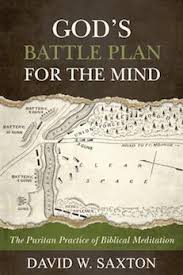
David W. Saxton’s God’s Battle Plan for the Mind is a tightly-packed synthesis of Puritan thoughts on biblical meditation from more than 3 dozen books. In twelve chapters, he covers several important topics, such as defining the difference between biblical mediation and unbiblical meditation. But first, he wants to show us the joy of developing the habit of meditating on the Word of God and throughout the book he shows the pitfalls of being negligent and the nourishment to our souls we gain by persisting in getting the most of our relationship with our Lord and Savior.

What does it mean to meditate? It means to think personally, practically, seriously, and earnestly on how the truth of God’s Word should look like in life.” (page 2) That is helpful in our world in which so many endorse and practice pagan meditation. Saxton reminds us that God has designed us and ordained His Word to be compatible – we find comfort and relief when we are close to Him; we find our Who He is and how we draw close in His Word. “God has chosen primarily to help us deal with discouragements and sin by applying divines truth to our minds. … Biblical meditation on Scripture acts as a believer’s medicine because God’s Spirit always uses the balm of His truth to provide lasting comfort and help.” (page 3) If believers do not spend time and effort in the Word of God, contemplating its truth and application to him, he will be drawn aside to lesser things and be weakened rather than strengthened.

On page 8, our author quotes Philippians 4:8-9 as an example of how God shows proper biblical meditation. Finally, brothers, whatever is true, whatever is honorable, whatever is just, whatever is pure, whatever is lovely, whatever is commendable, if there is any excellence, if there is anything worthy of praise, think about these things. What you have learned and received and heard and seen in me — practice these things, and the God of peace will be with you. (ESV) He then tells us (page 9), “This passage pronounces a blessing not on those who merely know God’s will, but rather on those who have put His will into everyday practice by dwelling on God’s truth.”

One aspect of this book that grew somewhat tedious for me is the sheer quantity and concentration of quotes from the Puritans. Many pages have 6 to 8 quotes, with sentences and paragraphs peppered with footnotes; often taking more space than Saxton uses. While it is good to read the thoughts of these long-gone saints, it is a bit distracting for so many quotes to be used in short space. But let’s get on with the book!

In advocating biblical mediation, Saxton (pages 28 & 29) tells us that the Bible is full of admonitions for God’s people to remember – as a form of mediation. “Revelation 2:5 demonstrates that this kind of meditation is actually the first step towards evangelical repentance: “Remember therefore from when thou art fallen, and repent, and do the first works; or else I will come unto thee quickly, and will remove they candlestick out of his place – unless thou repent.” “Remember” is the word mnamoneuo, which means “to recall information from memory.” The word does not suggest that a person has actually forgotten. Rather, it commands the believer to recall or to think about again.” I would add that this word also conveys the notion of being told to not forget something, to bear in mind – as when your mother would you to remember to bring your coat home from school. Still on page 29, we are given Thomas Hooker’s definition of biblical meditation, one I think worth meditating on: “Meditation is a serious intention of the mind whereby we come to search out the truth, and settle it upon the heart.” While I think this is an excellent definition, I am weary of present day duality of heart and mind – as if one’s heart (pointing to the chest) is what the Bible means by this term, rather than “heart” being a Hebrew metaphor for the seat of one’s being – the soul, which includes our mind.

In chapters 4 and 5, Saxton explores “occasional meditation” and “deliberate meditation”, showing from the Puritans and the Word of God how unplanned, near-spontaneous contemplation of some attribute of God is as valuable as planned study and prayer and pondering the Word. Occasional meditation ought to fill our minds during the day, rather than our routine absorption of cultural media and the attending thoughts it stimulates. We are cautioned to be on guard against the mystical practice of Rome and others with regards to occasional meditation, but also to persist in training ourselves to think on and ponder the Word of God and how it applies to our daily lives throughout our days. We are urged to memorize Scripture as a safe guard for our thought-life. That’s good advice – I dare most of us are not taking it! Deliberate meditation is pressed on us as necessary for spiritual life – if we do not make plans to read, study, pray over, and ponder God’s Word, our sinful minds will fill us with fleshly desires. I am an advocate of making time early in the day, the calibrate my thinking with the Scriptures before I engage the world. Many of the Puritans agree with me, but they also recognize the danger of dictating specifics to others – some may function better later in the day. So each man must be convinced in his own mind.

William Bridge taught that meditation on the Word should be divided into four parts. The believer must consider the exactness of the commandment, the faithfulness of the promise, the terror of the threatening, and the weightiness of the examples.” (page 62) This I see as excellent counsel. Far too many Christians have a casual attitude towards the Word of God, actually caring not for various passages that do not conform to their presuppositions. Encouraging Christians to ever trust God, Saxton sums up a Puritan view: “In His wise and perfect dealings, the Lord sometimes causes His people to experience unusual times of joy, sorrow, decision, or change. These are all His divine gifts to turn the believer’s heart to seriously consider God’s dealings to gain His perspective from His Word.” If we grasp the truth of the sovereignty of God, we will embrace this idea – nothing we encounter is “happenstance”; all is God’s providential care, an expression of His kindness towards us. There is excellent teaching on choosing subjects to meditate upon – from sin and death to eternity to hell, and God’s rescue of His people. Our author quotes Thomas Watson (page 93): “Meditation on hell would rejoicing in a child of God … Christ Himself has felt the pain of hell for you. The Lamb of God being roasted in the fire of God’s wrath, by this burnt-offering the Lord is now appeased toward His people. Oh how may the godly rejoice!” Do we see the Lord in this light? Do we begin to comprehend how blessed we are by NOT having to face God’s wrath?

As with all things, Saxton and the Puritans see the main focus of meditation being to bring glory to God. How much of our prayer life is fleshly? Physical healing is always needed – but how often at church prayer meetings do we hear moans and weeping over spiritual matters? Is the eternal destiny of our family and friends as important as losing 10 pounds or getting a higher paying job? Do we recognize how desperately we need God’s grace this day? He quotes Henry Scudder (page 100) – “when you arise and dress yourself, lose not that precious time (when your mind is freshest) with impertinent and fruitless thoughts…. This is a fit time to think about why you have need of apparel.” The Fall affects everything in this age. I heard a pastor remark that every time a dog barks, he is reminding us that our race caused him and all creation to be cursed. We messed it up – not the dogs that God was kind enough to give us as companions. Do we admit to being Adam’s offspring, in need of the last Adam’s righteousness and thankful for His submission to the Father in all things? That is a good thing to meditate upon!

In chapter 10 we are given the benefits of meditation: it deepens repentance; increase resolve to fight sin; inflames heart affection for the Lord; increase growth in grace; provides comfort and assurance to the soul; creates a life of joy, thankfulness, and contentment; deepens and matures a Christian’s experience; and improves the knowledge and retention of God’s Word. That’s quite a list! Any one of these benefits is more than enough to show any child of God that he should spend more time and mental energy consuming and pondering the Word of God and how, now, he should live. None of us has “arrived” nor will any of us do so in this age. Brothers and sisters – we need these benefits and others who have gone before us bid us drink deeply from the fount of God’s Word to gain them. If you and I are honest, we admit we have no excuse for our negligence in pursuing godliness. Saxton calls upon the Puritans to speak to this in chapter 11 – Enemies of Meditation.

But there are a couple things in chapter 10 that must be highlighted, showing us that neither Saxton nor his beloved Puritans had it all together, either. First up, a short quote from Thomas Watson, a very credible witness for the Lord – but not perfect. Saxton quotes Watson from Heaven Taken by Storm (pages 106 – 107): “If only people meditated on the damnableness of sin … they would break off … sinning and become new creatures.” This is cobbled together from a short paragraph from Watson’s pen:

Meditation produceth reformation, Psalm cxix. 59. ‘I thought on my ways, and turned my feet unto thy testimonies.’ Did but people meditated on the damnableness of sin; did but they meddled with it, there is a rope at the end of it, which will hang them eternally in hell, they would break off a course of sinning, and become new creatures. Let all this persuade us to holy meditation. I dare be bold to say that if men would spend but one quarter of an hour every day in contemplating heavenly objects, it would leave a mighty impression upon them, and, through the blessing of God might prove the beginning of a happy conversion.

First, let’s all agree that spending time humbly before God as revealed in Scripture will cause reformation within the Christian. But can pondering sin and stopping any one or several of them actually cause a child of wrath to be born again and adopted by God? Mr. Watson had this backwards! God is the One who works transformation by raising a spiritually dead person to new life, becoming a new creature in Christ – not by any works on the part of the creature, for then we would have cause to boast in our flesh! God works reformation in the lives of His people, as we all are on a journey of becoming more conformed to Christ and need His Spirit working within us to make it so. These two things are not the same. From other things written by Watson, I think he knew this – but his writing and thinking (like mine) is not perfect. And he errs in this instance.

Secondly, after quoting Jonathan Edwards (page 110), Saxton says, “Meditation causes believers to grow in grace because it allows the word of His grace to minister a genuine building up of the soul.” (emphasis mine) We must always be on guard with how we characterize the Creator. He does not need our permission or cooperation to work His grace in our lives. He does instruct and equip us to cooperate with Him in this endeavor, but we do not allow Him to work His grace in our lives. Our brother would serve us better by saying that meditation promotes the Word of His grace to build up our soul.

Sanctification (which all of what this book discusses fit within) is a curious process. Unlike justification, sanctification is not monolithic. And while we are encouraged to cooperate with the Holy Spirit in our ongoing sanctification, there are times in each believer’s life that He sanctifies us without our cooperation. Praise the Lord that He does not grow weary or negligent in His work, though we may be from time-to-time! But note this – apart from the Spirit working in us, we cannot sanctify ourselves. Jesus said, “apart from me you can do nothing.” Game, point, match.

Last gripe – in the last chapter, careless language once again inserts an unbiblical image that has been promoted and abused by many, though I do not think this is Saxton’s intention. On page 130, Saxton tells us: “Our deceitful hearts seek to convince us that we have the innate ability to live the Christian life in our own power. Only humble prayer can drive out that evil spirit.” Two things are evident in this short quote: He contradicts himself, telling us rightly we cannot live the Christian life in our power, then telling us how to do so! Then he tells us that sin in us is an evil spirit. Accepting this image without realizing God’s truth leaves us open to being misled. Bob Larson has made untold sums of money playing on the fears of those who do not know the Lord or who are ignorant of the fact that if the Spirit of the living God indwells us, no evil spirit can therein abide. Though our flesh is affected and afflicted by indwelling sin, our soul is perfectly righteous and “possessed” by the Spirit of God. Only lost persons can have an evil spirit within them. That should make us thankful yet again to be found in Christ!

To conclude (lest I go on too long, as is my wont), this is a most excellent book, much needed in every church and by every child of God – for who does not need more grace and closeness with our Lord? Saxton tells us (page 131), “normal Christian growth can be a messy, painful, and imperfect struggle. Yet, just the same, it is a struggle worth fighting.” In his conclusion, he tells us, “The believer’s ultimate purpose is to glorify God through becoming more life Jesus Christ (Rom 8:28-30; 2 Cor 3:18). … This process of progressive sanctification is all of the Lord’s grace, yet it is a duty in which God’s people are responsible to participate.” “Find your greatest delight in life in the presence of Christ though His Word.” (page 137)

Man of Sorrows

Spurgeon’s Sorrows Sorrows

A review by Stuart Brogden

Zack Eswine has written an easy-to-grasp overview of a condition many Christians and pastors spend too little time understanding. Some because they’ve bought into the lie that being healed by the stripes of Christ is a temporal healing, and we should have no sickness if our faith is strong enough. Some because they do not understand mental problems and do not trust psychiatrists. Eswine studied Charles Spurgeon, who suffered with depression and wrote about it, and he brings the Word of God and the words of men to bear to clear the air and give us hope. My hope is to bring to light a few of the good insights this book has to offer and help my fellow Christians better understand this issue so that we might be used to do good to our brothers and sisters who are suffering with depression.

So let’s sample this book, see how Spurgeon dealt with it, and how our Creator advises us.

Chapter 3

Conversion to Jesus isn’t heaven, but its foretaste. This side of heaven, grace secures us but doesn’t cure us.

“Though substantial healing can come, Charles reminds us that often it waits till heaven to complete its full work.

“We do not profess that the religion of Christ will so thoroughly change a man as to take away from him all his natural tendencies; it will give the despairing something that will alleviate that despondency, but as long as that is caused by a low state of body, or a diseased mind, we do not profess that the religion of Christ will totally remove it. No, rather, we do see every day that amongst the best of God’s servants, there are those who are always doubting, always looking to the dark side of every providence, who look at the threatening more than at the promise, who are ready to write bitter things against themselves …

“Therefore we sufferers of depression in Christ may grow terribly weak, even in faith, but we are not lost to God.

“It is Christ and not the absence of depression that saves us. So, we declare this truth. Our sense of God’s absence does not mean that He is so.”

This is critical for us to grab hold of – our position as children of God, His redemption and righteousness is not based on or determined by how we feel. It is based on His work to earn His place as the Lamb of God, taking our sin upon Himself, and imputing His righteousness to us. These facts and the promises of God are what determine our standing before Him. Our emotions are given to us by God but we are prone to being dragged away from Truth by them.

Chapter 4

“Religion offers both a challenge and a help to those who suffer mental disorders. This challenge surfaces when preachers assume that depression is always and only a sin.”

The author goes on to identify the hope is, as studies which indicate people who are part of a religious community do better with mental health (citing Lauren Cahoon, “Will God Get You Out of Your Depression?” (ABC News, March 19, 2008))

Depression for the Christian is often based on the perception that God has abandoned him. This is a very tangible example of how our theology matters and how our faith must rest in Christ and not our perceptions of His love for us. No doubt, this is easy to say and terribly hard to find comfort in when one is captured by his emotions. Our author quotes saints of old often and here, he shows us they did not neglect Satan. The devil doesn’t cause depression but he certainly is eager to encourage it! At this point, the Christian must fight.

“We plead not ourselves, but the promises of Jesus; not our strengths but His; our weaknesses yes, but His mercies. Our way of fighting is to hide behind Jesus who fights for us. Our hope is not the absence of our regret, or misery or doubt or lament, but the presence of Jesus. “Doubting Castle may be very strong, but he who comes to fight with Giant Despair is stronger still!”” (a quote from Charles Spurgeon, “Christ Looseth From Infirmities,”)

He goes on to cite “three tough words” from Spurgeon. First, he defends those who suffer by pointing them to Christ. Secondly, he cautions them not to haunt themselves on purpose with the dreaded notion that somebody somewhere might be happy. Thirdly, Spurgeon would – when he thought it necessary, be direct with those who refused to fight their depression. His sermon, A Call to the Depressed, is cited as a prime example of this tactic. “Perhaps in this sermon, we see Charles the human being trying imperfectly to administer help to sorrows not easily diagnosed. In his earnest and fragile attempts to help, we see our own.”

Chapter 6

“Jane Kenyon’s remarkable poem, “Having it out with Melancholy,” poses two “God” problems associated with depression and our attempts at care. First, depression ruins our “manners toward God” because it teaches us “to exist without gratitude,” and tempts us to answer the purpose of our existence as “simply to wait for death,” since “the pleasures of earth are overrated.” Second, depression tempts our friends to offer the following advice: “You wouldn’t be so depressed if you really believed in God.””

This chapter provides the reader with biblical counsel for those who are depressed, who, our author points out, “lean on metaphors” to describe how they are feeling. Mental problems are hard to convey to those who have not experienced them, so abstract descriptions rarely suffice. The Bible communicates mental anguish via metaphor: Ps 88:3-7, 69:15, Job 13:25, Prov 18:14, et. al.

Three ways metaphors are sufficient to communicate to those in depression:

“(1) Metaphor leaves room. It does not propose to cover every angle, understand every possibility or to explain every detail. It does not require only one possible explanation. Language that proposes to do this with depression exposes its ignorance of the situation at hand.

“(2) Metaphor allows for nuance and difference. Since each person’s experience with depression differs, metaphor allows for diverse expression. Formulaic prose or platitudes immediately reveal their lack of realism regarding how depression damages someone.

“(3) Metaphor requires further thought and exploration. It is a word of invitation more than destination which, we observed earlier, is crucial for gathering up the debris of depression.”

The Bible communicates a creator God Who completely understands His creatures and the plights we face.

“A larger story about God exists that possesses within it a language of sorrows so that the gloomy, the anguished, the dark-pathed, and the inhabitants of deep night are given voice. Such a god-story is neither cruel nor trite. Such a story begins to reveal the sympathy of God.”

Divine sympathy is your teacher, dear caregiver; your ally and friend, dear sufferer. Let His sorrow’s language help you.

Chapter 7

Four ways we can make things worse:

“1. We judge others according to our circumstances rather than theirs. “There are a great many of you who appear to have a large stock of faith, but it is only because you are in very good health and your business is prospering. If you happened to get a disordered liver, or your business should fail, I should not be surprised if nine parts out of ten of your wonderful faith should evaporate.” Jesus teaches us about those who lay up heavy burdens on others but do not lift a finger to help (Matt. 23:4).

“2. We still think that trite sayings or a raised voice can heal deep wounds. A person “may have a great spiritual sorrow, and someone who does not at all understand his grief, may proffer to him a consolation which is far too slight.” Like a physician who offers a common ointment for a deep wound, we “say to a person in deep distress things which have really aggravated him and his malady too.” In this regard, Charles teaches us the Scriptures, “Whoever sings songs to a heavy heart is like one who takes off a garment on a cold day, and like vinegar on soda” (Prov. 25:20).

“3. We try to control what should be rather than surrender to what is. We must not “judge harshly, as if things were as we would theoretically arrange them, but we must deal with things as they are, and it cannot be questioned that some of the best believers are at times sorely put to it,” even “to know whether they are believers at all.” The Scriptures teach us about Job’s friends who struggled at this very point.

“4. We resist humility regarding our own lack of experience. “There are some people who cannot comfort others, even though they try to do so, because they never had any troubles themselves. It is a difficult thing for a man who has had a life of uninterrupted prosperity to sympathize with another whose path has been exceedingly rough.” The Apostle Paul teaches us to comfort others out of the comfort that we ourselves have needed and received (2 Cor. 1:4).

“According to the Bible, when we encounter someone who weeps, we too are meant to weep (Rom. 12:15). When someone encounters adversity they are meant to reflect and meditate, and we with them (Eccles. 7:14). Without this together-sympathy our attempts to help others can lose the sound of reality. The loss of this sound of reality forges the larger reason for our harshness.”

Chapter 8

I wrap up with the author’s review of how our Savior relates to us. The common passage, Hebrews 4:14-16 (Since then we have a great high priest who has passed through the heavens, Jesus, the Son of God, let us hold fast our confession. For we do not have a high priest who is unable to sympathize with our weaknesses, but one who in every respect has been tempted as we are, yet without sin. Let us then with confidence draw near to the throne of grace, that we may receive mercy and find grace to help in time of need.) emphatically tells us that Jesus has suffered temptation and is able to sympathize with us – and He bids us come to Him! He is the cure what ails our souls and minds. This is not, as we are told, only in the here-after – the Lord is our comfort in this age. For in this age we are hated by the world, attacked by our flesh, and wearied by all the effects of sin that inhabit us and our environment. Jesus is our ever present helper and that’s where I want to end.

Yet Still Stinking

Dear readers,

We live in a day and age where false doctrine and heresy becomes more and more rampant within the church of the Lord Jesus Christ. In any and every way possible, the evil one seeks to undermine the Scriptures with the oldest question in all of history spoken to the minds of people of all walks of life, but particularly to those who claim the name of Christ.

“Yea, has God really said?”

sinlessperfection

In this excellent video by Pastor John MacArthur, he deals with the false teaching propagated by many in mainline evangelical denominations and by those who in the Charismatic movements. This message entitled, “Spiritually Living, Yet Still Stinking” he deals with the false teaching of sinless perfectionism and that we can live a fully sanctified life before being redeemed from this corrupt flesh. This form of Arminianism was taught and spread by false teachers such as Charles G. Finney, who is considered the father of modern-day revivalism.

From MacArthur’s message found in the video below:

It was J.C. Ryle in his marvelous epic book written in 1879 by the title of Holiness who said, “Sudden instantaneous leaps from conversion to consecration I fail to see anywhere in the Bible.” And the reason J.C. Ryle didn’t see them is because they’re not there. That was an utterly unbiblical concept. He knew what all accurate theologians know, that justification and sanctification are inseparable. They both come at the instant of salvation. Justification is immediate and sanctification is progressive, but they cannot be separated. And sanctification is not some experience subsequent to salvation.

Paul claimed to be the chiefest of all sinners, and 1 John is clear that if anybody says he or she is not a sinner, then they are calling God a liar.  We will never achieve sinless perfection in this life. However, we can give thanks to our Lord and Savior Jesus Christ that one day He is coming back and He will change our corruptible bodies into that which is incorruptible. What a glorious day that will be.

Arminianism: The Road to Rome

Arminianism: The Road to Rome

Augustus Toplady (1740-1778)

hymnwriter and theologian

Whose Voice Do You Hear? toplady3

“My sheep, saith Christ, hear my voice, and I know them, and they follow me; and I give unto them eternal life, and they shall never perish. O, most worthy Scriptures! which ought to compel us to have a faithful remembrance, and to note the tenor thereof; which is, the sheep of Christ shall never perish.”Doth Christ mean part of his elect, or all, think you? I do hold, and affirm, and also faithfully believe, that he meant all his elect, and not part, as some do full ungodly affirm. I confess and believe assuredly, that there shall never any of them perish: for I have good authority so to say; be- cause Christ is my author, and saith, if it were possible, the very elect should be deceived. Ergo, it is not possible that they can be so deceived, that they shall ever finally perish, or be damned: wherefore, whosoever doth affirm that there may be any (i.e. any of the elect) lost, doth affirm that Christ hath a torn body.”1

The above valuable letter of recantation is thus inscribed: “A Letter to the Congregation of Free-willers, by One that had been of that Persuasion, but come off, and now a Prisoner for Religion:” which superscription will hereafter, in its due place, supply us with a remark of more than slight importance.


John Wesley, A Friend of Rome?

To occupy the place of argument, it has been alleged that “Mr. Wesley is an old man;” and the Church of Rome is still older than he. Is that any reason why the enormities, either of the mother or the son, should pass unchastised?

It has also been suggested, that “Mr. Wesley is a very laborious man:” not more laborious, I presume, than a certain active being, who is said to go to and fro in the earth, and walk up and down in it:2 nor yet more laborious, I should imagine, than certain ancient Sectarians, concerning whom it was long ago said, “Woe unto you Scribes, hypocrites; for ye compass sea and land to make one proselyte:”3 nor, by any means, so usefully laborious, as a certain diligent member of the community, respecting whose variety of occupations the public have lately received the following intelligence: “The truth of the following instance of industry may be depended on: a poor man with a large family, now cries milk, every morning, in Lothbury, and the neighbourhood of the Royal Exchange; at eleven, he wheels about a barrow of potatoes; at one, he cleans shoes at the Change; after dinner, cries milk again; in the evening, sells sprats; and at night, finishes the measure of his labour as a watchman.”4


The Quarrel is With the Wolf

Mr. Sellon, moreover, reminds me (p. 128.) that, “while the shepherds are quarrelling, the wolf gets into the sheep fold;” not impossible: but it so happens, that the present quarrel is not among “the shepherds,” but with the “wolf” himself; which “quarrel” is warranted by every maxim of pastoral meekness and fidelity.

I am further told, that, while I am “berating the Arminians, Rome and the devil laugh in their sleeves.” Admitting that Mr. Sellon might derive this anecdote from the fountain head, the parties themselves, yet, as neither they nor he are very conspicuous for veracity, I construe the intelligence by the rule of reverse, though authenticated by the deposition of their right trusty and well-beloved cousin and counsellor.

Once more: I am charged with “excessive superciliousness, and majesty of pride:” and why not charged with having seven heads and ten horns, and a tail as long as a bell-rope? After all, what has my pride, or my humility, to do with the argument in hand? Whether I am haughty, or meek, is of no more consequence either to that, or to the public, than whether I am tall or short: however, I am, at this very time, giving one proof, that my “majesty of pride” can stoop; that even to ventilate the impertinences of Mr. Sellon.


Arminianism at Home in Rome

But, however frivolous his cavils, the principles for which he contends are of the most pernicious nature and tendency. I must repeat, what already seems to have given him so much offence, that Arminianism “came from Rome, and leads thither again.” Julian, bishop of Eclana a contemporary and disciple of Pelagius, was one of those who endeavoured, with much art, to gild the doctrines of that heresiarch, in order to render them more sightly and palatable. The Pelagian system, thus varnished and paliated, soon began to acquire the softer name of Semipelagianism. Let us take a view of it, as drawn to our hands by the celebrated Mr. Bower, who himself, in the main, a professed Pelagian, and therefore less likely to present us with an unfavourable portrait of the system he generally approved. Among the principles of that sect, this learned writer enumerates the following:

“The notion of election and reprobation, independent on our merits or demerits, is maintaining a fatal necessity, is the bane of all virtue, and serves only to render good men remiss in working out their salvation, and to drive sinners to despair.   “The decrees of election and reprobation are posterior to, and in consequence of, our good or evil works, as foreseen by God from all eternity.”5

Is not this too the very language of modern Arminianism? Do not the partizans of that scheme argue on the same identical terms? Should it be said, “True, this proves that Arminianism is Pelagianism revived; but it does not prove, that the doctrines of Arminianism are originally Popish:” a moment’s cool attention will make it plain that they are. Let us again hear Mr. Bower, who, after the passage just quoted, immediately adds, “on these two last propositions, the Jesuits found their whole system of grace and free-will; agreeing therein with the Semipelagians, against the Jansenists and St. Augustine.”6 The Jesuits were moulded into a regular body, towards the middle of the sixteenth century: toward the close of the same century, Arminius began to infest the Protestant churches. It needs therefore no great penetration, to discern from what source he drew his poison. His journey to Rome (though Monsicur Bayle affects to make light of the inferences which were at that very time deduced from it) was not for nothing. If, however, any are disposed to believe, that Arminius imbibed his doctrines from the Socinians in Poland, with whom, it is certain, he was on terms of intimate friendship, I have no objection to splitting the difference: he might import some of his tenets from the Racovian brethren, and yet be indebted, for others, to the disciples of Loyola.


Papists and Predestination

Certain it is, that Arminius himself was sensible, how greatly the doctrine of predestination widens the distance between Protestantism and Popery. “There is no point of doctrines (says he) which the Papists, the Anabaptists, and the (new) Lutherans more fiercely oppose, nor by means of which they heap more discredit on the reformed churches, and bring the reformed system itself into more odium; for they (i.e. the Papists, & etc.) assert, that no fouler blasphemy against God can be thought or expressed, than is contained in the doctrine of predestination.”7 For which reason, he advises the reformed world to discard predestination from their creed, in order that they may live on more brotherly terms with the Papists, the Anabaptists, and such like.

The Arminian writers make no scruple to seize and retail each other’s arguments, as common property. Hence, Samuel Hoord copies from Van Harmin the self same observation which I have now cited. “Predestination (says Samuel) is an opinion odious to the Papists, opening their foul mouths, against our Church and religion:”8 consequently, our adopting the opposite doctrines of universal grace and freewill, would, by bringing us so many degrees nearer to the Papists, conduce to shut their mouths, and make them regard us, so far at least, as their own orthodox and dearly beloved brethren: whence it follows, that, as Arminianism came from Rome, so “it leads thither again.”


The Jesuits and Predestination

If the joint verdict of Arminius himself, and of his English proselyte Hoord, will not turn the scale, let us add the testimony of a professed Jesuit, by way of making up full weight. When archbishop Laud’s papers were exam- ined, a letter was found among them, thus endorsed with that prelate’s own hand: “March, 1628. A Jesuit’s Letter, sent to the Rector at Bruxels, about the ensuing Parliament.” The design of this letter was to give the Superior of the Jesuits, then resident at Brussels, an account of the posture of civil and ecclesiastical affairs in England; an extract from it I shall here subjoin: “Father Rector, let not the damp of astonishment seize upon your ardent and zealous soul, in apprehending the sodaine and unexpected calling of a Parliament. We have now many strings to our bow. We have planted that soveraigne drugge Arminianisme, which we hope will purge the Protestants from their heresie; and it flourisheth and beares fruit in due season. For the better prevention of the Puritanes, the Arminians have already locked up the Duke’s (of Buckingham) eares; and we have those of our owne religion, which stand continually at the Duke’s chamber, to see who goes in and out: we cannot be too circumspect and carefull in this regard. I am, at this time, transported with joy, to see how happily all instruments and means, as well great as lesser, co-operate unto our purposes. But, to return unto the maine fabricke:–OUR FOUNDATION IS ARMINIANISME. The Arminians and projectors, as it appeares in the premises, affect mutation. This we second and enforce by probable arguments.”9


The Sovereign Drug Arminianism

The “Sovereign drug, Arminianism,” which said the Jesuit, “we (i.e. we Papists) have planted” in England, did indeed bid fair “to purge our Protestant Church effectually. How merrily Popery and Arminianism, at that time, danced hand in hand, may be learned from Tindal: “The churches were adorned with paintings, images, altar-pieces, & etc. and, instead of communion tables, alters were set up, and bowings to them and the sacramental elements enjoined. The predestinarian doctrines were forbid, not only to be preached, but to be printed; and the Arminian sense of the Articles was encouraged and propagated.”10 The Jesuit, therefore, did not exult without cause. The “sovereign drug,” so lately “planted,” did indeed take deep root downward, and bring forth fruit upward, under the cherishing auspices of Charles and Laud. Heylyn, too, acknowledges, that the state of things was truly described by another Jesuit of that age, who wrote: “Protestantism waxeth weary of itself. The doctrine (by the Arminians, who then sat at the helm) is altered in many things, for which their progenitors forsook the Church of Rome: as limbus patrum; prayer for the dead, and possibility of keeping God’s com- mandments; and the accounting of Calvinism to be heresy at least, if not treason.”11


Arminianism From the Pit

The maintaining of these positions, by the Court divines, was an “alteration” indeed; which the abandoned Heylyn ascribes to “the ingenuity and moderation found in some professors of our religion.” If we sum up the evidence that has been given, we shall find its amount to be, that Arminianism came from the Church of Rome, and leads back again to the pit whence it was digged.


ENDNOTES:

1. Strype, u.s.
2. Job 1:7 with 1 Peter 5:8.
3. Matt. 23:15.
4. Bath Chronicle, for Feb. 6, 1772.
5. Bower’s Hist. of the Popes, vol. 1, p. 350.
6. Bower ibid.
7. Arminius, in Oper. P.115. Ludg. 1629. (See book for Latin.)
8. Hoord, In Bishop Davenant’s Animadversions, Camb. 1641.
9. Hidden works of darkness, p. 89, 90. Edit. 1645.
10. Tindal’s Contin. of Rapin, vol. 3 octavo, 1758.
11. Life of Laud, p. 238.

Accidental Discipleship

Change. All of us want to – need to – change in some way. We try all sorts of tactics, theories, imagesand drugs. All of which are shortcuts, focused on defeating the desires of our flesh. Too seldom do we seek God’s wisdom, thinking His way takes too long, requires too much effort.

But change is the wrong goal. It’s what the flesh wants and it’s a shortcut that will lead to disappointment or destruction. Knowing Jesus is the correct goal. In Him we are complete (Colossians 2:10). Whatever change is truly needed in our lives will be wrought by the Spirit of God if we abandon our plans for self-justification and pursue Christ. Not improvement, not change for the better, not relief from our pain; just Jesus.

Pursuing the wrong objective – a better life, defeating a habitual sin – is like attacking a heavily defended fortress (a stronghold) with toy weapons. We will be defeated. When we focus on the enemy, the sin, the stronghold that assails you – you are drawn away from the narrow path that Christ calls His brothers to walk. Only by keeping your eyes focused on your Guide can you keep from straying from the narrow way.

Christ is more than our goal. He is our creator, example, savior, teacher, brother, and King. All battles against sin will be – and can only be – won by making a determined, get-up-when-you-fall, faith-based pursuit of Jesus the Christ. When you or I fail to pursue Him, we grow complacent and disenchanted with Him. The allure of the flesh entices (James 1:14 & 15) and we fall – or jump – into sin. Why didn’t God stop us? Why didn’t He prevent it? He gave us His Spirit and His Son – and the choice to walk in Him or walk in the desires of our flesh. He gives us the promise that if we walk in Him, we will not fulfill the desires of the flesh (Gal 5:16). The flip side of that coin is also true: if we walk in the flesh we will not fulfill the desires of His spirit, but of our flesh.

Seek to know Him. Paul told the church at Corinth, “I determined not to know anything among you, except Jesus Christ, and Him crucified.” (1 Corinthians 2:2) Christ alone – good enough for the Apostle Paul. Is He enough for you? If not, it’s not because He is lacking – it’s because you and I choose wrong and fail to be thankful for Him. Choose Christ – above all else – regardless of your emotions.

As Jesus was deliberate in coming to Earth (Philippians 2:5 – 11) to seek and save you and me, we who are redeemed by His blood must be deliberate in seeking His will, His Word – Him.

If a man expects to drift into spiritual obedience or maturity, he is mightily deceived. This is what Satan would have God’s children believe – that we can mature to Christ-likeness by going with the flow.

Remember: The path of least resistance makes both men and rivers crooked. Choose to pursue Christ and he we will make your path straight. (Psalms 27:11)

Indicatives and Imperatives

The Bible is full of commands, Old Testament and New. Perhaps no issue confuses people as much as rightly determining which commands are for New Covenant people and how they are to obeyed.  Early in the history of our religion, an argument arose that continues still today: does almighty God command man to do that which he is unable to do? When Augustine wrote a prayer asking the Lord to command what He would and grant what He commanded, Pelagius went bonkers over the thought that God must grant the creature the ability to obey what God commanded. His view was that man must inherently be able to do what God commands him to do, as it violated his sense of “fairness” for God to command man to do what man could not.

In our day, many people think Matt 5:48 (be ye perfect as your Father in heaven is perfect) is a command we can perform. This perspective is fraught with an unreasonably high opinion of man, missing the point that Christ alone is perfect and we can only be acceptable in the Father’s sight by being found in Him – not by working real hard trying to be perfect.

To properly interpret and apply commands from God, one must understand the context (historical and theological) and getting things in their proper order – commands follow and are applied according to identity; imperatives follow indicatives. The command to repent and believe on Christ can only apply to and be obeyed by one who has been regenerated and raised from spiritual death by the Spirit of God.

While not anywhere close to a comprehensive lesson on this topic, it’s important to grasp it in order to see why what the preacher in the following sermon did was so wrong. This is not an uncommon error, but it’s one we must be on guard against – no matter who is preaching.

The title of this problematic sermon is good (available here): 4 Marks of a Hell-Bound Man. It sounds like a message about indicatives that reveal one bound for hell. But the way John MacArthur preaches this sermon is to present each of the 4 marks as something you can choose to do if you want to go to hell – “How is it that people die in their sins unforgiven? How does that happen? Unjustified, unconverted, unregenerated, unredeemed and bound for everlasting hell. Well, there are four attitudes that guarantee you will die in your sin, four attitudes. If you want to die in your sin then these four things will make that a reality.”  These four attitudes, self-righteousness, worldliness, ignorance, and unbelief are each presented with this assessment: “You want to die in your sin? Be selfrighteous, worldly, unbelieving and willfully ignorant.” Continue reading

Responsibility, Inability and Grace

A great review of important issues that bear on the essential doctrine of soteriology – how is one saved? By John Hendrix. accounted-as-righteousness_t_nv

Responsibility, Inability and Grace

“All that the Father gives Me will come to Me…” – John 6:37

The truth of God’s word is honored not in holding exclusively to one truth to the exclusion of another truth, but in believing the whole counsel of God. The Bible plainly teaches that man is responsible to obey the summons of God to repent and believe the gospel just as it plainly teaches that he is morally unwilling and unable to do so. These two seemingly contradictory assertions can be reconciled when we understand that, after the fall, God’s perfect standard for holiness for man does not change … so even the very desire for faith, by which we believe in Christ who justifies sinners, can only belong to us, not by nature but by a gift of grace, that is, by the inspiration of the Holy Spirit amending our will and turning it from unbelief to faith and from godlessness to godliness. Jesus says, “no one can come to me [i.e. believe in me] unless the Father who sent me grants it.” (John 6:54) Again, the Apostle Paul says, “And I am sure that he who began a good work in you will bring it to completion at the day of Jesus Christ” (Phil. 1:6). And again, “For by grace you have been saved through faith; and this is not of yourselves, it is the gift of God” (Eph. 2:8).

Furthermore some teach that God has mercy upon us when, apart from his regenerative grace, we believe, will and desire to believe, but do not confess that it is by the work of renewal by the Holy Spirit within us that we even have the faith, the will, or the desire to do all these things; If we make the assistance of grace depend on our own wisdom, humility, prudence, obedience, sound judgment or good sense, but don’t agree that it is a gift of grace itself that we are obedient and humble, we then directly contradict the Scripture which says, “What have you that you did not receive?” (1 Cor. 4:7), and, “But by the grace of God I am what I am” (1 Cor. 15:10).

The following chart shows that the Bible clearly teaches both man’s responsibility to believe the gospel and his inability to do so. The third column helps us to understand how those whom God has set his affection on infallibly come to faith, in spite of this inability and, most of all, how this gives all glory to God in the work of salvation: Augustine once said, “God bids us do what we cannot, that we may know what we ought to seek from him.”

(This chart is loosely based on a chart by Lamar McKinney)

The Responsibility of Man

The Inability of Man

Monergistic Grace of God

Come unto me, all ye that labour and are heavy laden, and I will give you rest.

Matt. 11:28

No man can come to me, . . .

John 6:44a

. . . except the Father which hath sent me draw him: and I will raise him up at the last day.

John 6:44b

…whoever believes in Him shall not perish, but have eternal life.

John 3:16

…men loved the darkness rather than the Light…and will not come into the light…

John 3:20, 21

..”But he who practices the truth comes to the Light, so that his deeds may be manifested as having been wrought in God.”

John 3:21

Note: there are, indeed, those who come to the light — namely those whose deeds are the work of God. “Wrought in God” means worked by God. Apart from this gracious work of God all men hate the light of God and will not come to him lest their evil be exposed.

Seek ye the LORD while he may be found, call ye upon him while he is near:

Isa 55:6

There is none that understandeth, there is none that seeketh after God.

Rom 3:11

. . . I was found of them that sought me not; I was made manifest unto them that asked not after me.

Rom 10:20b

This is His commandment, that we believe in the name of His Son Jesus Christ…

1 John 3:23

“…the sinful mind is hostile to God. It does not submit to God’s law, nor can it do so.

Romans 8:7

you do not hear, because you are not of God.

John 8:47

“…and these whom He called, He also justified;

Rom 8:30

…and as many as were ordained to eternal life believed.

Acts 13:48

God…commandeth all men every where to repent.

Acts 17:30

…the Spirit of truth, whom the world cannot receive, because it neither sees Him nor knows Him

John 14:7

“…if perhaps God may grant them repentance leading to the knowledge of the truth.”

2 Tim 2:25

. . . whosoever will, let him take the water of life freely.

Rev 22:17b

So then it is not of him that willeth, . . .

Rom 9:16a

“…but on God, who has mercy.” – Rom 9:16b

…Thy people shall be willing in the day of thy power,. . .

Ps 110:3a

Look unto me, and be ye saved, all the ends of the earth: for I am God, and there is none else.

Isa 45:22

. . . Except a man be born again, he cannot see the kingdom of God.

John 3:3a

. . . The God of our fathers hath chosen thee, that thou shouldest . . . see that Just One, . . ..

Acts 22:14

But as many as received him, to them gave he power to become the sons of God, even to them that believe on his name:

John 1:12

But the natural man receiveth not the things of the Spirit of God: for they are foolishness unto him: neither can he know them, because they are spiritually discerned.

1 Cor 2:14

But as many as received him, . . . were born, not of . . the will of the flesh, nor of the will of man, but of God.

John 1:12-13

. . . if thou shalt confess with thy mouth the Lord Jesus, . . .

ROM 10:9

. . . no man can say that Jesus is Lord . . .

1 Cor 12:3b

. . . but by the Holy Ghost.

1 Cor 12:3b

. . . make you a new heart and a new spirit: for why will ye die, . . ?

Ezek 18:31

The heart is deceitful above all things, and desperately wicked: . . .

Jer 17:9

A new heart also will I give you, . . . and I will take away the stony heart . . .

Ezek 36:26

“If you wish to be complete, go and sell your possessions and give to the poor, and you will have treasure in heaven; and come, follow Me.”

Matt 19:21

“Again I say to you, it is easier for a camel to go through the eye of a needle, than for a rich man to enter the kingdom of God.”


Matt 19:23

“Then who can be saved?” And looking at them Jesus said to them, “With people this is impossible, but with God all things are possible.”

Matt 25b-26

God knoweth we have nothing of ourselves, therefore in the covenant of grace he requireth no more than he giveth, and giveth what he requireth, and accepteth what he giveth.” – Richard Sibbes

John Hendryx
Monergism

It Was a LIE!

Any Christian with basic knowledge of the Bible knew it was a false tale – a lie – from the very Heaven

beginning. But how many professing Christians were taken in? We who claim Christ should not be such easy targets for deceptive tales that rail against the Word of God given to us.

Now, the publisher, author, his parents, and who all else who was involved in allowing this take the country by storm admit is was a lie! Of course, the Washington Post has the story – when has that paper not delighted in trying to bring disgrace to the body and name of Christ.

Read it before they take it down – click this sentence to open the story on the Washington Post web site.

Here’s how it opens:

Tyndale House, a major Christian publisher, has announced that it will stop selling “The Boy Who Came Back From Heaven,” by Alex Malarkey and his father, Kevin Malarkey.

The best-selling book, first published in 2010, purports to describe what Alex experienced while he lay in a coma after a car accident when he was 6 years old. The coma lasted two months, and his injuries left him paralyzed, but the subsequent spiritual memoir – with its assuring description of “miracles, angels, and life beyond This World” – became part of a popular genre of “heavenly tourism.”

Earlier this week, Alex recanted his testimony about the afterlife. In an open letter to Christian bookstores posted on the Pulpit and Pen Web site, Alex states flatly: “I did not die. I did not go to Heaven.”

A CHRISTOTELIC VIEW OF DANIEL 9:24-27

What follows is an excellent approach to an optimum understanding of this famous but often Disp
misunderstood passage from God’s Word, written by Zachary Maxcey who blogs at Providence Theological Seminary Blog (http://nct-blog.ptsco.org/)

A Preliminary Plea for Tolerance in Non-Essential Eschatological Matters

Few areas of theological study ignite such heated controversy as eschatology. Sadly, on account of eschatological differences, Christians all too often hurl harsh, bitter invectives against those whom they would claim as their fellow brothers and sisters in Christ. Such behavior, not to mention the doctrinal divisions, both damages the public witness of the Body of Christ and significantly hinders the proclamation of the Gospel. In the words of the Apostle James, My brothers, this should not be  (James 3:10).[1] As believers in Christ, we must be able to lock arms together on all essential matters of the Christian faith, while agreeing to disagree in non-essential or disputable matters. We must remember that famous statement of Rupertus Meldenius, In essentials unity, in non-essentials liberty, in all things charity. [2] When we fail to do so, we stand in violation of Christ’s command to love one another as He loved us, an outworking of the second greatest commandment (John 13:34; Matt 22:39). As long as we accept the absolute essentials[3] of orthodox Christian eschatology, we can agree to disagree with fellow believers on such eschatological questions as the timing of the rapture, the issue of the millennium, or the Seventy Weeks prophecy. If we are unable to respectfully[4] differ in Christian love with fellow believers on these (and other) disputable matters, we, including this author, have absolutely no business communicating our eschatological opinions.

Download the 56 page document here: https://app.box.com/s/fmyp05zgs8t1b112nz52

Jeremiah’s Lament

Jeremiah’s Lament Jeremiah

What In The World Is Going On? – Reviewed by Stuart L. Brogden`

Once more, a “Christian” book touts its status on the New York Times and USA Today Best Seller’s list. Each time I read such a book, I try to find out why worldings would find the book so interesting. This book is a sensational fable presented as fact, based on a theology birthed by Roman Catholic Jesuit priests in the 16th century and a mystic young woman of the 19th century who belonged to the Plymouth Brethren. The priests developed the future-based Anti-Christ and Mary McDonald was given the pre-trib secret rapture in a dream, which she told to John Darby (details on this background here: http://www.dispensationalism.org.uk/). This is not the faith that was once for all delivered to the saints. While some Christians have accepted premillenialism since the first century A.D., the dispensational twists (pre-trib rapture, fixation on the Anti-Christ, and focus on national Israel) are new fabrications. If dispensationalism is true, why would Sovereign God keep it a secret from His people for 1800 years?

David Jeremiah starts each chapter with a story from culture or history that sets the stage for his “prophetic clues”. None of these 10 prophetic clues make any sense unless one accepts the fable that dispensationalism is biblically sound. But there is not a single verse in the Bible that supports the pre-trib rapture, not one. Please watch this short video to gain a better understanding of this issue: http://www.youtube.com/watch?v=uQgrJ-pYhCM

I will not comment on each chapter – to do justice on such an effort would take a book. One more preface to specific comments: Dispensationalists tend to be guilty of paying heed to current events and finding some prophetic Scriptures that can be wrapped around them, sounding biblical to those who are not disciplined in studying Scripture. To facilitate this, Jeremiah starts each chapter with a tale from recent history or current events. He claims (page xv) to be “viewing current events from the perspective of God’s wonderful Word” but a careful review of his book and of Scripture discloses that he is reading the Word of God through the lens of current events. This leads into his “prophetic clue” of each chapter, as he acts as a pied piper of dispensational error.

The dispensational error of being focused on Israel shows up in a classic way on page 3: “Apparently God finds Abraham and his descendants to be of enormous importance.” This tendency of assigning value to the creation rather than seeing God using sinful, rebellious people for His purposes is a common affliction. Further in this opening chapter, pages 4 & 5, the author brags on the Jews throughout history – as if they, rather than Almighty God were responsible for their success and influence. Yet he admits on page 7 that “The Bible tells us His choice of Israel had nothing to do with merit.” Back a page, Jeremiah proclaims his belief that God’s promise of land was the most important covenant promise made to Abraham and on pages 9 – 11 he tells us it is not yet fulfilled. Yet Hebrews 11:8-10 show that Abraham “was looking forward to the city that has foundations, whose designer and builder is God.” In John 8:56, the Lord declared to the Jews, “Your father Abraham rejoiced that he would see my day. He saw it and was glad.” Abraham knew the terrestrial property which Israel fully claimed all that was promised by God (read Joshua 21:41 – 45), contrary to the dispensational claim that this promise is yet to be fulfilled. The promised land on Earth was a type and shadow of the Promised Land that Christ will bring all that the Father has given Him unto. Not some dusty bit of the mid-east. Still in the opening chapter, on page 18, we are told that the promise given in Jeremiah 32:37 – 38 is yet to be fulfilled. This promise, however, was fulfilled at Calvary, when Christ ended the Jewish religion and delivered on His promise to pay the debt for all God’s chosen people, giving each new-born Christian a safe refuge and identity as His people.

Chapter two shows a man who knows or cares so little about spiritual realities that he bases a sermon or two on crude oil (page 35), calling it “the stuff of life” (page 27) and a “sign” (the inference I drew is that he considers this a biblical sign). On page 30, the author reveals that he disbelieves the biblical account of creation, believing oil took “eons of time” to create. On page 38, Doctor Jeremiah tells us that Deuteronomy 33:24 (And of Asher he said, “Most blessed of sons be Asher; let him be the favorite of his brothers, and let him dip his foot in oil.) and Genesis 49:22 – 26 indicate there is oil beneath the dirt occupied by the modern nation of Israel. The oil mentioned in Deuteronomy is olive oil, used in medicine and religious anointing. The passage from Genesis simply refers to blessings directly from God in Heaven and indirectly from God here below. To derive a promise of crude oil from these passages is perhaps the worst example of eisegesis (reading assumptions into Scripture) that I’ve seen.

Let me say that I agree with parts of this book. The author’s warning (page 42) that we who profess Christ remain vigilant and focused on the Lord and his admonitions #2 –10 (pages 233 – 234) on how to live until the Lord returns are both spot-on. Likewise, chapter 4 – his warning about Islam – is a bold statement that many soft-hearted, fuzzy-thinking people need to read.

But the balance of the book is in the same vein as the first two – based on faulty presuppositions rather than on Scripture. On page 69, Doctor Jeremiah tells us that Romans 13:11 is a warning about the end of the age, but the context clearly is that of instructing Christians how to live in the world, in light of our firm hope of eternal life. On the same page, we see another common aspect of dispensational teaching – a works-based view of salvation, wherein one is told to “accept His offer of salvation”. The Bible tells us we are drawn to Christ and salvation is “not of blood nor of the will of the flesh nor of the will of man, but of God.” (John 1:12 & 13). This Arminian error shows up in a couple places throughout this book and is deceptive and man pleasing – but has more in common with heresy than with biblical truth.

Compounding his error in teaching a pre-trib rapture, Jeremiah devotes a chapter (#5) to digging a deeper hole. He claims 1 Thessalonians 4:13 – 18 describes the pre-trib rapture (page 102) and he calls this a “stealth event” (page 100) which only Christians are aware of (page 206). A stealth event which only Christians witness, characterized by “a cry of command, with the voice of an archangel, and with the sound of the trumpet of God”. Reads like something everybody will know about – like the resurrection of every soul on Judgment Day.

In chapter 6, we are told that the Bible prophecies a role in the end times for the United States of America and foretells Russia invading Israel. This is in your Bible to same degree as his crude oil find in chapter 2. He relies much on his country, calling our way of life “our lifeline” (page 129). Perhaps he ought to look unto Christ as his lifeline! On the next page, he quotes the “high priest” of pre-trib rapture, Tim LaHaye, who asks, “Why would the God of prophecy not refer to the supreme nation in the end times in preparation for the one-world government of the Antichrist?” I suggest LaHaye and Jeremiah reacquaint themselves with the lesson of Judges 7:2 and Psalms chapter 20. God does not need nor does He depend on horses, chariots, or superpowers.

Chapter 7 is devoted to propping up the fable from Rome that there is a future Antichrist who will rule the world. Remember – this doctrine did not exist until the 16th century and appears to be a Roman Catholic response to The Reformation, which taught that the office of pope was the AntiChrist. In this chapter, Jeremiah quotes A.W. Pink as a supporter of this view. This was true, but Pink later repented and had unkind things to say about dispensationalism, in the same way a former smoker hates cigarette smoke. Read Pink’s later statement, in four chapters, here: http://www.pbministries.org/books/pink/Dispensationalism/dispensationalism.htm

My suggestion to the reader who wants to know what will happen is to read the Gospel of John and cry out to God for repentance and faith. Christians do not fear tribulation, for our God is a strong tower and a secure refuge. Out God knows how to save His people from harm, in the midst of trouble. We are promised safety from the wrath of God’s judgment (Romans 8:1) but we are promised trouble and tribulation while we live on planet earth: Matthew 24 describes significant tribulation that His people will face; John 16:33 informs us we will have tribulation in this world; Romans 8:35 tells us tribulation will not separate us from Christ; Romans 12:12 tells us to rejoice in tribulation. Rather than being raptured before tribulation, the Bible tells us we will be preserved in and through tribulation! This is more to the glory of God – shielding and protecting His own – than a pre-trib rapture, where He snatches them up before trough times hit. It takes a mighty God to protect His people through the midst of tribulation. Have faith in God!

Rick Warren has a pope!

James White continues to stand firm, praise the Lord! I do wish, however, that he would not run to the Reformation as his first line of defense as he often does. While I agree with and thank God for the Reformation, our first line and only line of defense is the Bible – as White came back to later in the video. Also, nowhere in the Bible do we see or get instruction on “living out the gospel”. The gospel is a report of the news of Christ’s redemptive work – it’s not something we live out. Because of the work of the Holy Spirit in conjunction with the gospel, we are raised to new life and live for the glory of God, proclaiming the gospel to dead men everywhere. But we do not and cannot live the gospel

None the less, may the Lord protect and hold up our dear brother as he continues to press on!

Religion vs. God – LGBT issues

A recent article by the Huffington Post is doing its part to undermine the truth of Scripture. Entitled, “The Gender You Associate to God May Indicate How You Feel About Gay Marriage.”

The truth is that we have no right to assign a gender to God. He is God and the Father of our Lord Jesus Christ, who was equally God and equally man. If one wrongly assumes that God may be a woman to pacify the liberal and LGBT communities, then we have to wonder how long it will be before somebody rewrites the Bible to show that Jesus was actually a woman. You can take every page of Scripture and rewrite it to satisfy the lusts of the world, but it will never become truth. EVER!

LGBTBible

Read the differences between what leaders within major world religions have to say versus what God says.

Desmond Tutu, Anglican Archbishop Emeritus of South Africa – “I would not worship a God who is homophobic and that is how deeply I feel about this. I would refuse to go to a homophobic heaven. No, I would say sorry, I mean I would much rather go to the other place.”

Francis, Pope of the Roman Catholic Church – “Who am I to judge a gay person of goodwill who seeks the Lord? You can’t marginalize these people.”

Laura Geller, Jewish Rabbi – “Now I can invoke the power vested in me by the State of California and declare them married in accordance with the laws of the State of California and our Jewish faith. Now we are so much closer to the truth of their experience: a gay or lesbian Jewish wedding, like a Jewish heterosexual wedding, is a Jewish wedding pure and simple, the inheritance of every loving Jewish couple.”

Dalai Lama – Head Monk of Tibetan Buddhism – “If someone comes to me and asks whether it is okay or not, I will first ask if you have some religious vows to uphold. Then my next question is, What is your companion’s opinion? If you both agree, then I think I would say, if two males or two females voluntarily agree to have mutual satisfaction without further implication of harming others, then it is okay.”

Rev. Jesse Jackson – Religion of Civil Rights – Supports gay marriage and would perform a marriage of gay couples “if I was asked to.”

Justin Welby, Archbishop of Canterbury, Anglican Church – “I mean I know plenty of gay couples whose relationships are an example to plenty of other people and that’s something that’s very important, I’m not saying that gay relationships are in some way, you know that the love that there is less than the love there is between straight couples, that would be a completely absurd thing to say.”

Well, that should be enough to show the apostasy and the lack of Biblical truth within every one of these religions. Now, what does God say about LGBT issues. Here are a few thoughts from GotQuestions.org.

“Or do you not know that the unrighteous will not inherit the kingdom of God? Do not be deceived; neither fornicators, nor idolaters, nor adulterers, nor effeminate, nor homosexuals, nor thieves, nor the covetous, nor drunkards, nor revilers, nor swindlers, will inherit the kingdom of God” (1 Cor. 6:9-10).

romans1

“In summary, Romans 1:18-31 deals with the fact that God has innately made Himself known to humanity, but He has been rejected and replaced by other objects of worship. Because of this, God has delivered two judgments: one of homosexual behavior and another of an immoral mind, each of which demonstrates His ‘abandonment’ wrath toward humanity’s rebellion.”

The truth is that ALL those who willfully remain in their sin stand condemned before God. It does not matter what kind of sin – homosexuality, lying, murder, lesbianism, cheating, pedophilia, hating, idolatry, bestiality. What matters is how far each person is from a holy, righteous God. When God saves the sinner, He CHANGES them and makes them a brand new creation in Christ. If you are a true believer, you will NOT go back with pleasure to your sin. To say God saved you to continue in your sin is to grossly misunderstand the Scriptures.

Final Score = God Wins, Religion Fails.

Persuasive Preaching

Persuasive Preaching Overstreet revised3 (7-19-14)

A review by Stuart Brogden

R. Larry Overstreet has subtitled this book, A Biblical and Practical Guide to the Effective Use of Persuasion, and in his prologue (page 4) makes the case that in order for preaching to be persuasive it must include a public invitation. We will see, in chapter 12, that Overstreet is not a disciple of Charles Finney – he warns about the abuse that has followed after Finney’s “new methods”, comparing persuasion with manipulation. What, then, does our author mean by the term “persuasive preaching?” He defines it at the end of chapter 1, page 14:

“(a) the process of preparing biblical, expository message using a persuasive pattern, and

(b) presenting them through verbal and nonverbal communication means

(c) to autonomous individuals who can be convicted and/or taught by God’s Holy Spirit,

(d) in order to alter or strengthen

(e) their attitudes and beliefs towards God, His Word, and other individuals,

(f) resulting in their lives being transformed into the image of Christ.”

While I would combine (c) with (b) and (e) with (d), the overall point he is making is one I think any pastor could embrace. What pastor would not want his people to be transformed by the renewing of their minds as a result of the Spirit working through his preaching?

The bulk of this book, chapters 3 – 11, is an extensive, technical argument in favor of persuasive speech, from the Bible and pagan perspectives – heavily footnoted. I found this part of the book ponderous and laborious; perhaps because I am already convinced that the Lord has shown us we are to be persuasive in our presentation of His Word, while not trusting in our ability to persuade men as an effective means of building His people up.

I think chapter 13, “The Holy Spirit in Preaching”, is the most important part of the book. Overstreet rightly points out that He is the originator of God’s Word (page 172), the revealer of God’s Word (page 172), the communicator (page 175), and the propagator of God’s Word (page 177). We are reminded that the Holy Spirit equips the preacher (180) and the listeners (181). These are excellent reminders and much needed in these days, as so many people have apparently latched on to the notion that preachers are the ones who do these things! Our author instructs us to not grieve or quench the Spirit, but walk in the Spirit, be filled with the Spirit, and in prayer to the Spirit (pages 184 – 191). If the book had ended here, it would have been fine. But Overstreet told us in the prologue that persuasive preaching must include an invitation – so the last chapter, 14, is on that topic.

Much of this last chapter presents the reader with the notion that chapter 13 was not for real – as men are presented as the change agents for “receiving Christ” and “committing themselves to full-time Christian service” (page 194). Overstreet acknowledges (195) that decisions are sometimes known only to God but tries to make the case for public invitations in order make them known to men. He quotes Faris D. Whitesell, who comes across as a Finney disciple: “Anything that helps us to carry out the principles and teaching of the Scriptures in a more effective and practical way is scriptural.” I cannot help but think of Eli’s children and wonder of Whitesell and Overstreet recall their doom.

As he pulls together his arguments in favor of public invitations within the local church, he draws on myriad passages of Scripture that show public invitations and exhortations being made without the local church. The invitations in the Bible are consistently “repent and believe!”, called out all men everywhere. Within the church, we see an intense struggle to stay faithful to the Word to equip the saints. Only once that I am aware of do we see unbelievers in the church – and they are not invited to the front. The focus from Paul is to be clear in the presentation of the Word of God, that the unbeliever might be convicted of truth (1 Cor 14:22 – 25).

While I am not in agreement with Overstreet’s premise – persuasive preaching does not have to end with a public invitation – I am encouraged by his counsel on the use and construction of the invitation:

Be Sensitive to Length

Be Clear in Appeal

Be Exact in Action

Be Loving in Presentation

Be Consistent with Message

Be Positive in Expectation

Be Earnest in Delivery

And he is wise in his warnings the problems one might face with the use of public invitations:

The Liability of Confusion

The Liability of Narrowness

The Liability of Weariness

The Liability of a “Canned” Invitation

The Liability of Unethical Behavior


The focus of this book is good – preachers ought to be persuasive in their preaching! Preachers ought to call men to repent and believe, to cast aside sin and press on with our eyes fixed on the Lord. But we find no biblical warrant for having a public invitation at the end of our sermons. I am thankful for men who understand the dangers of abusing the invitation system – though that abuse tends to be the model followed by most who use it. My prayer is that those who think it important would find in this book a sound argument for being sober and restrained in its practice, lest men think it’s the preacher upon whom all things depend.