
Apologetics
Quotes (847)
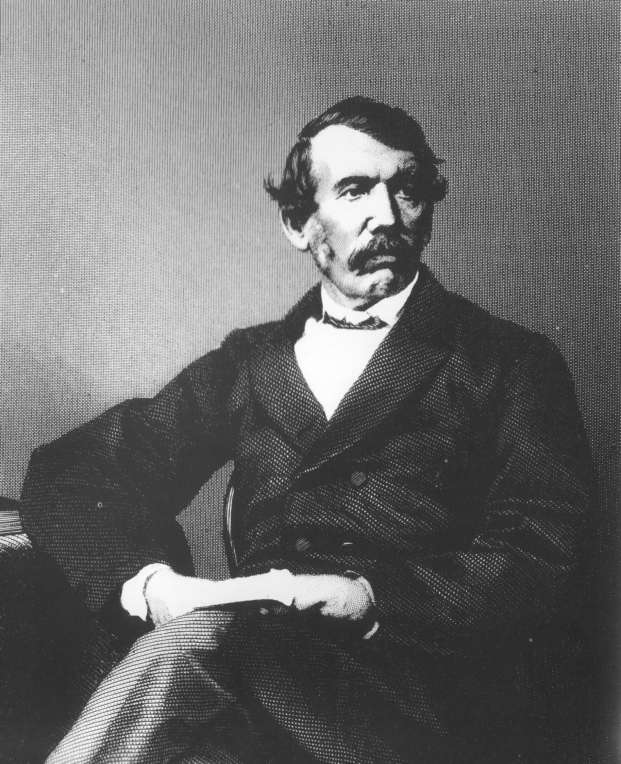 If a commission by an earthly king is considered an honor, how can a commission by a Heavenly King be considered a sacrifice?
– David Livingstone
1813 – 1873
Sermon of the week: “The Breadth of God’s Moral Law” by Phil Johnson.
 Your sermon of the week is The Breadth of God’s Moral Law by Phil Johnson. This is the second installment on Johnson’s series on the Ten Commandments that will be featured every other week as your Sermon of the Week (on Thursdays).
This sermon (like the first one in this series) is a prelude to getting into the study on the Ten Commandments themselves. In two weeks Johnson will get into the first commandment.
If James contradicts Paul, then James also contradicted himself.
 For a long time I struggled with the second chapter of the letter of James. I had great difficulty reconciling what James was saying with the rest of Scripture. I would listen intently to any preacher who was expositing this chapter of James for an explanation but their answers never seemed to satisfy me regarding the seemingly irreconcilable views James taught.
I know that I was not alone in this quandary as I’ve often heard the declaration that when it comes to the issue of justification, “James contradicts Paul.”
The most vocal proponents of James’ alleged doctrine that faith and works are required for justification are known as the works-righteousness crowd. (Think: Jehovah’s Witnesses, Mormons, and Roman Catholics.)
Whenever the subject of justification by grace alone through faith alone in Christ alone comes up, these groups immediately run to James chapter two as their proof-text that you must do your part in conjunction with God’s part in order to bring about your redemption.
And granted, they do make a convincing argument, for it appears that’s precisely what James is saying. However, the opposing argument (faith alone through grace alone) can be made with equal tenacity based on a plethora of Paul’s teaching.
In relation to the totality of all of Scripture, this polemic goes beyond just Paul and James, but the gist of the debate can be summed up most succinctly by the following two verses:
James:
“You see that a man is justified by works and not by faith alone.” – James 2:24
Paul:
“For we maintain that a man is justified by faith apart from works of the Law.” – Romans 3:28
These two axioms really only leave us with three possible options:
A). James is teaching that salvation is by faith and works (and conversely, so is Paul).
B). Paul is teaching salvation is by faith apart from works (and conversely, so is James).
C). The two men contradict one another and thus, the Bible contradicts itself.
 If “C” is the answer to this dilemma, then the Bible is worthy of the trash heap and we should all get together to eat, drink, and be merry, for tomorrow we die.
For those of us who understand that “C” is not a viable option, we’re only left with options “A” and “B.” So, to determine which is the correct interpretation we must resort to the old practice of letting Scripture interpret Scripture.
In this post I will attempt to prove—in eight points—that not only do James and Paul agree that salvation is by faith apart from works (i.e. alone), but that if James is actually teaching that your obedience to the law and/or your practicing of good works contributes to your salvation, then he would not only be contradicting Paul, but he would also be contradicting himself!
Let’s begin.
Quotes (846)
Seminars for God’s people are big these days. There are church growth seminars, counseling seminars, and things like the Institute of Basic Youth Conflicts. Most of these seminars multiply registrations by appealing to a broad clientele. They take no stand on separation from apostasy and compromise. As a result, the fundamentalist enticed to the seminary may have a Methodist on the right, a Catholic priest on the left, and new evangelical’s for and aft.
– John Ashbrook
Mark Hofmann’s parole board letter released.
 The handwritten letter by Mormon forger and bomber, Mark Hofmann, to his parole board in 1988 has finally been released.
For those not familiar with Hofmann and the great Salamander Letter controversy, here’s a synopsis:
Mark Hofmann fooled the prophets and leaders of his church in the 1980s when he began making a lucrative living by selling them forged (fake) documents that were damaging to Mormonism. These documents were purchased by the Mormon church and archived away (or destroyed) so that no one would ever see them.
(The fact that LDS prophets were so easily fooled by forgeries is telling, as well as the fact that the LDS leadership–thinking the documents were genuine–were willing to pay a lot of money to procure them from Hofmann to keep the world from seeing them. These two facts alone speak volumes about Mormonism . . . but I digress.)
Once Hofmann’s scam began to unravel he resorted to bombs. In the end, two people were killed and Hofmann was seriously injured when one of the bombs detonated prematurely.
For a more detailed examination of the incident, I highly recommend the book The Mormon Murders. It is a riveting page-turner investigated and written by two secular (non-Mormon, non-Christian) authors.
 Hofmann opened his letter to the Utah parole board with this amazing statement:
“These are some of my thoughts concerning my crimes and how I became what I am. As far back as I can remember I have liked to impress people through my deceptions. In fact, some of my earliest memories are of doing magic and card tricks. Fooling people gave me a sense of power and superiority. I believe this is what led to my forging activities.”
You can read the whole letter (in PDF format) here.
For those of you who have studied early Mormon history (pre-revisionism), I am certain that you find the same irony in this quote as I did: This quote could easily be ascribed to Mormonism’s founder, Joseph Smith, and it would be just as accurate and apropos.
It’s true that the fruit never falls far from the tree.
(FILE | The Salt Lake Tribune) Mark W. Hofmann, left, and LDS Church leaders N. Eldon Tanner, Spencer W. Kimball, Marion G. Romney, Boyd K. Packer and Gordon B. Hinckley examine the Anthon transcript April 22, 1980.
Sermon of the week: “The Sufficiency of Scripture” by John MacArthur.
 Your sermon of the week is The Sufficiency of Scripture by John MacArthur. In this message MacArthur defends the perspicuity of the Bible starting from the very first attack against God’s Word in the Garden of Eden all the way up to the current attack on God’s Word by the Emergent movement. This is one you won’t want to miss.
The sea is His, for it was He who made it. (Psalm 95:5)
Let all the earth fear the LORD; Let all the inhabitants of the world stand in awe of Him. – Psalm 33:8
Quotes (844)
 He that desires to read his Bible with profit, must first ask the Lord Jesus to open the eyes of his understanding by the Holy Spirit. Human commentaries are useful in their way. The help of good and learned men is not to be despised. But there is no commentary to be compared with the teaching of Christ. A humble and prayerful spirit will find a thousand things in the Bible, which the proud, self-conceited student will utterly fail to discern.
– J.C. Ryle
1816 – 1900
Sermon of the week: “The Preeminence of God’s Moral Law” by Phil Johnson.
DefCon begins our 2011 weekly sermons with a new series by Phil Johnson on the subject of the Ten Commandments.
We begin with one of two preludes to the Ten Commandments entitled The Preeminence of God’s Moral Law. We will continue with this series every other week.
Derek meets a false apostle and Shelly confronts her pastor.
These two videos hit the proverbial nail on the head on every over-used cliche and every platitude I’ve hear ad nauseum in my time in charismatic circles. (You’ll have to watch each video over at YouTube since embedding has been enabled.)
Derek’s encounter:
Shelly’s encounter:
Quotes (842)
The work of the preacher resembles that of the sower. Like the sower, the preacher must sow good seed, if he wants to see fruit. He must sow the pure word of God, and not the traditions of the church, or the doctrines of men. Without this, his labor will be in vain. He may go to and fro, and seem to say much, and to work much in his weekly round of ministerial duty. But there will be no harvest of souls for heaven, no living results, and no conversions.
– J.C. Ryle
1816 – 1900
Sermon of the week: “You Must Attend” by Todd Musser.
 Your sermon of the week is a gem by Todd Musser entitled You Must Attend.
This is a great message on the four figures found in Psalm 107: The wanderer, the prisoner, the fool, and the laborer.
Every single one of us falls into one of those four categories and Musser eloquently examines how God reaches each of these people, how each of them responds to God, and how each of them react to His offer of redemption, and all to God’s glory.
You’ll want to take notes on this one and you’ll never just breeze through Psalm 107 again.
Quotes (840)
 Consider the call of the Throne above, “Go ye,” and from round about, “Come over and help us,” and even the call from the damned souls below, “Send Lazarus to my brothers, that they come not to this place.”
Impelled, then, by these voices, I dare not stay home while Quichuas perish. So what if the well-fed church in the homeland needs stirring? They have the Scriptures, Moses, and the Prophets, and a whole lot more. Their condemnation is written on their bank books and in the dust on their Bible covers.
American believers have sold their lives to the service of Mammon, and God has His rightful way of dealing with those who succumb to the spirit of Laodicea.
– Jim Elliot
1927 – 1956
In conclusion: My final post on Christmas.
 In this, my last post on the subject of Christmas, I wanted to share some final thoughts.
When I first posted my reasons for not celebrating Christmas (found here) I never imagined the furor it would cause. Although I was grateful to see much healthy dialogue on the subject, and equally grateful for those readers who are beginning to examine this matter for themselves, that gratefulness was eclipsed by how the discussion disintegrated into vitriolic arguments, including threats of violence (as seen in the comments section of this post on the origins of Christmas).
Watching the exchanges deteriorate as they did grieved me. I simply wanted to present my thoughts to the readers in the hopes that they too would begin to wrestle with the subject: Not to debate about whether or not we have liberty to celebrate the holiday, but “why as Christians do we celebrate it?”
It was certainly never my intent to cause discord or division among the saints. And because of that I want to apologize to those who witnessed the graceless exchange.
In my original post on Christmas I provided two primary reasons for choosing to no longer celebrate the holiday. I spent only 305 words mentioning the Romish and pagan origins of the holiday and 1,143 words (not counting the conclusion) discussing the other reason–namely the greed, covetousness, and the massive amount of money spent on ourselves while much of the world is starving for food, water, and the gospel. Unfortunately the overwhelming majority of the comments on DefCon over the past month has focused on the 305 words and not much was mentioned regarding the other 1,143 words. The latter reason, I feel, is just as important to consider as the former.
Where words fail in communicating a point sometimes images can help. For this reason I have chosen to share the following video as an illustration of why I have such a hard time with me–as a Christian–partaking in the festival of Christmas. How can I justify to myself, my children, my family, and ultimately God, that spending more money on vain material items under the guise of celebrating the birth of the One who gave up so much for us, is actually a good thing?
When I consider how the family in this video (one of countless families throughout the world) spends their Christmas–and every other day of the year–it makes a pile of needless presents sitting under a pretty tree seem rather pointless, selfish, and almost . . . sinful.
On this Christmas I want to introduce you to Sam, Esther, and Jane of Uganda:
It has been (and continues to be) my hope and prayer that we each examine our reasons for celebrating Christmas. It is also my hope and prayer that this issue will not divide us and that I will never develop a judgmental or better-than attitude toward those who choose to continue marking the holiday.
In conclusion I ask that you ponder with me this final thought: What would you and I prefer to be caught doing if the Lord came back during next year’s Christmas season?
1). Standing in a long line at Wal-Mart purchasing a large pile of soon-to-be-forgotten presents placing us further in debt in order to celebrate a holiday birthed from an unholy union between Rome and pagans celebrated by much of the unbelieving world in which–no matter how hard we try to avoid it–Jesus gets relegated to a sentimental byline–crowded out by the hectic activities, gluttonous parties, and greed of the season, all (supposedly) in honor of Jesus Christ’s incarnation?
2). Or would you and I prefer to be found using our time, money, and resources to help those like Sam, Esther, and Jane (not just at Christmas but all year long) by putting food and water in their bellies, a Bible in their hand, and a faithful missionary preacher in their midst?
You all know where I stand on the issue . . . I just ask, will you join me?
May the Lord receive the reward for His suffering.
– Pilgrim
Quotes (839)
 We look back on slave-owning churchgoers of 150 years ago and ask, “How could they have treated their fellow human beings that way?” I wonder if followers of Christ 150 years from now will look back at Christians in America today and ask, “How could they live in such big houses? How could they drive such nice cars and wear such nice clothes? How could they live in such affluence while thousands of children were dying because they didn’t have food and water? How could they go on with their lives as though the billions of poor didn’t exist?”
– David Platt
Sermon of the week: “Why I Choose to Believe the Bible” by Voddie Baucham.
 Your sermon of the week is Why I Choose to Believe the Bible by Voddie Baucham. This short message (less than 25 minutes in duration) is one you won’t want to miss.
Quotes (838)
 The Bible is God-centered. Psychology is man-centered. The Bible teaches that our purpose in life is to glorify God. Therefore, everything else is subject to that purpose. Psychology, being man-centered, has as its highest goal the happiness of the individual. This is the foundation for the current emphasis on felt need. If mankind’s greatest goal is his own happiness, then all other things in life, including God, become means to secure that happiness. . . . This worldview is completely at odds with the biblical worldview. Since this is true, to offer God or salvation as the means whereby our felt needs are satisfied is a perversion of biblical teaching at best, and more likely a false gospel.
– Gary Gilley
Seasonal priorities.
HT: DefCon reader Julie
Quotes (837)
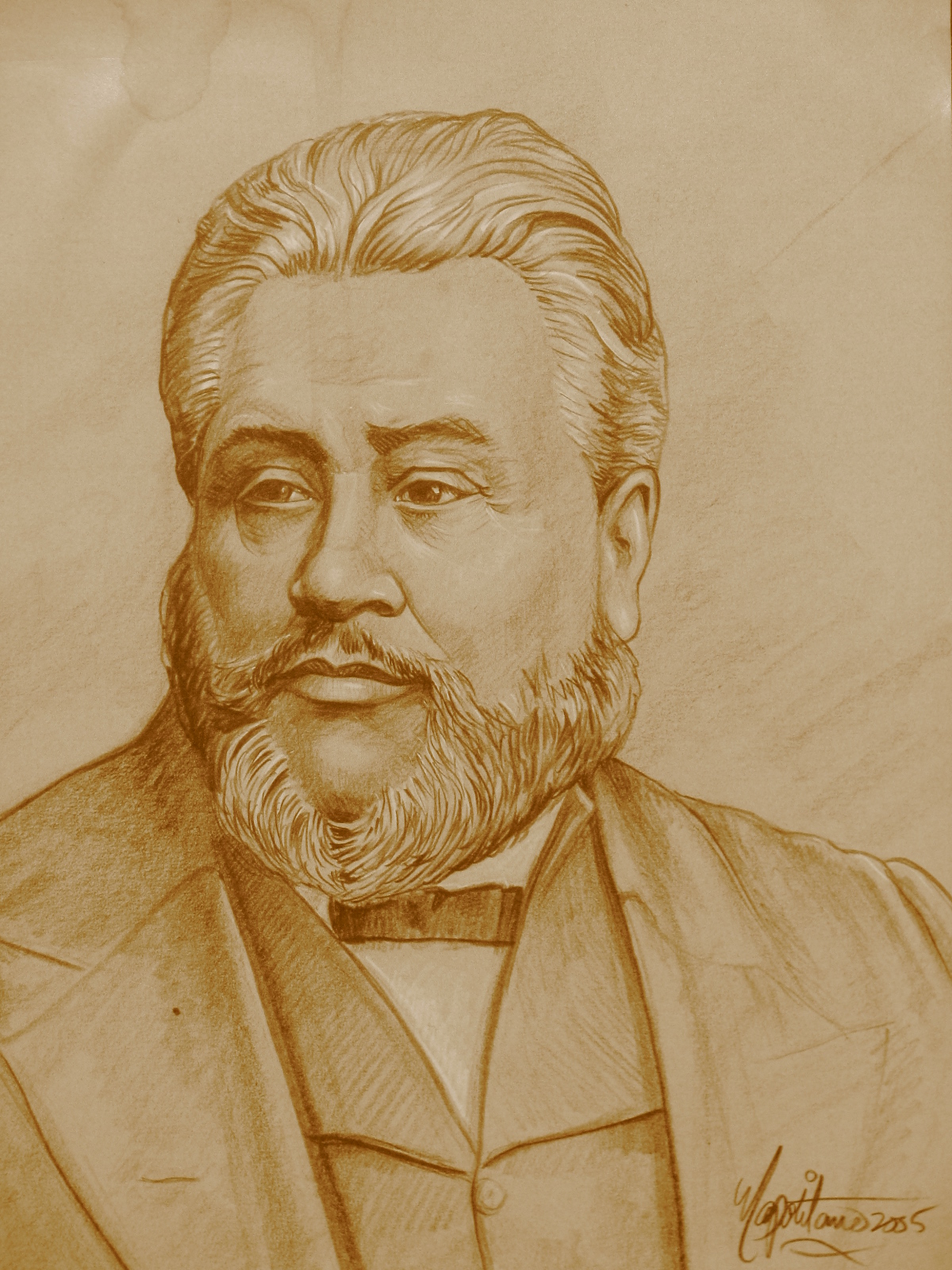 The knowledge of God is the great hope of sinners. Oh, if you knew him better, you would fly to him! If you understood how gracious he is, you would seek him. If you could have any idea of his holiness, you would loathe your self-righteousness. If you knew anything of his power, you would not venture to contend with him. If you knew anything of his grace, you would not hesitate to yield yourself to him.
– C. H. Spurgeon
1834 – 1892
 Christ Alone Wyoming