Comparing Adam and Israel

Scripture records Christ as “the last Adam” in 1 Cor 15:45. Were there others who stood in as an “Adam” in the course of redemptive history? I think the Bible shows this to be the case, with Noah, Abraham, David, and the nation of Israel (summed up in Abraham, Isaac, and Jacob) being the “interim Adams” before the last One appeared.

This chart shows my view on how Israel fulfilled this role.

Comparing Adam and Israel

ADAM ISRAEL
Formed by God from the dust of the earth.

(Gen 2:7; 1 Cor 15:47)

Formed by God from the dust of the people of the world. (Gen 11:10 – 11:3; Deut 7:7)
Was brought to life by the word and breath of God. (Gen 1:26 & 27; 2:7) Was brought into being by the word of God. (Gen 12:2 & 3; 15:1; Ex 3)
Had close fellowship with God. (Gen 2:15ff; 3:8a) Had close fellowship with God. (Gen 15; Ex 15; 2 Kings 23:1 – 27)
Was given a covenant within which to live and prosper. (Gen 2:16 & 17; Hosea 6:7) Was given a covenant within which to live and prosper. (Gen 17:14; Ex 19:3 – 6; 24:3 – 8; Neh 9 & 10)
Broke the covenant and received the penalty of death, which was carried out in due time. (Gen 3:6 & 7; 22 – 24; 5:5) Broke the covenant and received the penalty of death, which was carried out in the fullness of time. (Deut 31:16 – 18; Judges 2:11 – 15; Jer 11:10 – 13; 1 Kings 11:9 – 11; Ezek 44:1 – 7; Hosea 6:7)
Was cast out of the garden, cursed to walk and work in the world which was wrecked by The Fall. (Gen 3:23 & 24; 3:17 – 19) Was divorced by God, left desolate, cursed to walk and work in darkness until the light of Christ. (Jer 3:6 – 10; Matt 15:12 – 14; 23:37 & 38; 2 Cor 3:12 – 17)
As a type of Christ, Adam points us to the anti-type, Christ Jesus, in whom there is life for Adam’s children who are secure in the Last Adam. (1 Cor 15:45) As an echo of Adam, Israel points us to the anti-type, Christ Jesus, in whom there is life for Abraham’s children of promise. (Gal 4:21 – 31)

Jesus is our Hiding Place

Matthew Smith is a young musician who takes lyrics from old folk songs and hymns, modifies them if need be, and a0375493876_2puts them to his music. Here is a wonderful hymn from a Baptist hymnal printed in 1776.

Listen to this song, free, here. Then buy lots of his work.

Hiding Place

Against the God who rules the sky
I fought with hand uplifted high
Despised the mention of His grace
Much too proud to seek a hiding place

Wrapped in shadows of the night
Fond of darkness more than light
Blind, I ran the sinful race
I felt no need for a hiding place

But then the eternal council ran
“Almighty love, arrest this man!”
I felt the arrows of distress
And found I had no shield, no hiding place

Holy justice stood in view
To Sinai’s fiery mount I flew
But justice cried with frowning face
“This mountain is no hiding place”

But then a heavenly voice I heard
And mercy for my soul appeared
She led me on with gentle pace
To Jesus as my hiding place

Should seven storms of vengeance roll
And shake this earth from pole to pole
No thunderbolt shall daunt my face
While Jesus is my hiding place

On Him almighty vengeance fell
Which would have sunk this world to Hell
He bore it for a sinful race
To make Himself our hiding place

Quotes on the Gospel – JC Ryle

Dangersign

1. Substitute anything for Christ, and the Gospel is totally spoiled!

2. Add anything to Christ, and the Gospel ceases to be a pure Gospel!

3. Put anything between a person and Christ, and that person will neglect Christ for that very thing!

4. Spoil the proportions of Christ’s Gospel, and you spoil its effectiveness!

5. Evangelical religion must be the Gospel, the whole Gospel and nothing but the Gospel!

~ J.C. Ryle

Quotes from J.C. Ryle

Are You Resisting Sanctification?

sadness-man-in-the-shadow-1368461366ES7 I have been noticing a pattern of sin in my life that I know has always been there, but I never really recognized it for what it was. When God redeemed and made me a new creation almost 13 years ago, He gave me a new nature. As part of that nature, God made me aware of my sin, not in a generic sense, but in a very specific one. No longer did I feel bad about coveting, lusting, lying or hating just because bad consequences occurred. I actually began to hate my sin because I saw it for what it was, a rebellious act toward a kind and loving God. A God who mercifully redeemed me by the shed blood of Jesus Christ. And instead of just trying to find someway to justify my sin, I now wanted to repent of those things because I loved my Savior.

That battle to repent from my sins and to live a life that is pleasing to God has never been an easy one. In fact, one besetting sin stuck with me for over three years before God helped me to see just how wicked it was. Today I struggle with that sin, but I no longer dive head long into it. I make great efforts to never again set my feet anywhere near the path that leads me there. I rejoice when God gives me victory over sin, but I am ever aware that this wicked flesh is always waiting to find reason to transgress God’s law for its own satisfaction.

However, as of lately, I have become aware of multiple areas of sin in my life. Perhaps it is because my family and I have been going through many trials that I am more sensitive to His working in me. We certainly have had to rely on the Lord far more than ever before. As a result of that, I am becoming more aware of His working in our lives. And perhaps that is what has opened my own eyes to the sins I had previously ignored. Yet, it is my reaction to these areas of sin that is an even greater problem than the sins themselves. It is this area that I desire to share with you in hopes you can be edified and strengthened.

I have noticed that whenever I have begun to see an area of sin in my life that God is exposing, my first reaction, almost without fail, is to become upset, despondent, sad or depressed. I will practically shut down and begin to focus solely on myself and my failure to live up to the perceived standard I am supposed to live up to. I then complain about what a terrible Christian I am. I begin to seek comfort with family and friends, telling them about how bad I realize I am in the eyes of God. When they console me and tell me I am being too hard on myself, I feel refreshed, thinking I clearly have misunderstood what God was showing me. I then proceed on with my life as if nothing had ever happened.

Did you catch the sin? I see that God is showing me an area, or even areas, of sin, but rather than admit it and repent, I become introspective and complain to others. That is the sin. As a Christian, I am one time sanctified, made righteous in the eyes of God through the propitiatory sacrifice of Jesus Christ. In other words, my rebellion and wickedness is placed on Jesus at the cross, His perfect righteousness is accounted to me through repentance and faith. From that moment on, I am seen in God’s eyes as perfect, because all my sin – past, present and future – was punished at the cross. So no matter how often I stumble into sin, I am secure in the Father because I was purchased by the Son.

However, it does not stop there. Throughout my walk as a Christian, I am sanctified by God. That means that He is continually working to make me more like His Son. He is ever growing me through the reading of His word, expanding my understanding of the richness of His grace. He leads me in deeper prayer and worship, causing me to love Him more, and in turn, loving others around me. He causes me to care less about myself and to desire to serve Him alone. And He is also constantly exposing areas of sin in my life, leading me to repentance. God is purging me of my sins so that I may reflect my Savior in my thoughts, words and deeds. This process of sanctification is ongoing, never ending, right up until the day God calls me home. On that day, I will be glorified. I will be made perfect and will sin no more. But until that day, God sanctifies me and every other Christian He has redeemed in Christ. So the process of sanctification should be welcome in the life of every Christian. After all, God is refining us in the fire, removing the dross which is the sin for which Christ died. Yet, I find that rather than embrace sanctification, I am actually resisting it.

When I become morose over an area of sin in my life I am actually doing a couple of things. First, I am actually denying my own sinfulness. By acting shocked that God has revealed more sin in my life, I am claiming I should be able to not sin. If I am in fact, as the Bible describes me, a wretched sinner deserving nothing but judgment from God, then I should not be surprised that everything I do is tainted by sin. I should expect, daily, God to be showing me areas from which I need to repent. I should express concern over sin in my life, because sin is wickedness against God; however, I should not become distraught over it. By succumbing to emotional turmoil, I am actually stating that I believe I am capable of not sinning. I am ascribing to myself a kind of sinless perfection that exists only in God Himself.

Secondly, when I become this despondent over my sin, my inclination is to seek comfort in the eyes of others. By seeking their comfort, rather than repenting before God, I am actually trying to deny that sin which God has revealed. As I described above, I have personally complained to family and friends when I start seeing new sins in my life. I seek their comfort because I secretly believe that they will dull the edge of the sword which God used to expose me. When we run to others, asking them to reaffirm our personal image of ourselves, we are asking them to actually act in God’s stead as our judge. We value their opinion over God’s word because we believe their personal relationship with us will prevent them from saying anything too harsh about us, even if it is true. We are further sinning because we are setting up men in the place of God to judge us. And if you doubt this, check your reaction when a loved one doesn’t affirm you, but rather points out that sin God is revealing. If you are even more hurt by what they say, then you know that you were not asking for the truth from them, but a lie which would make you feel better.

So by ascribing to ourselves a kind of pseudo-perfectionism and getting others to affirm it, we are actively resisting God’s work of sanctification. We are denying that we need to repent before the Lord and submit to His holy work in us. This is utterly sinful, yet we can submit to it so easily. We can justify this mindset because we know that we should not sin, especially because we have a new understanding of how evil sin is. So we make the mistake of setting up personal, legalistic standards that we can then judge the progress of our Christian growth by. In doing so, we actually are falling back on idolatry because we become the judges of ourselves rather than God. In God’s eyes we are completely sinful and only the blood of Christ makes us righteous. In our own eyes, if we can reach certain benchmarks, we can declare we are righteous by what we do. When God exposes sins that we were previously unaware of, it deals a serious blow to the idolatrous view of ourselves. Wanting to reassert that view, we can easily fall into the trap of resisting God’s work of sanctification.

So what are we to do? The first thing is to remember who we are in Christ. Before we were redeemed, we were rebellious and wicked sinners bound for Hell. There was absolutely nothing good about us. By recognizing this, we can do away with the absurd notion that we are capable of not sinning at all. We will sin, even as new creations in Christ. But because we have been bought by His precious blood and have been made new by the Holy Spirit, we have been set free from the bondage of sin. We no longer have to sin. We will be tempted because our flesh is weak and longs to be satisfied. Because of that, we will fall into sin. Yet, because the power of the Holy Spirit resides in us, we can trust in God, being slaves to Him, to give us a way of escape when temptation comes. So we recognize that we are not capable of perfection of our own accord, but only in the power of Christ can we resist temptation and sin.

The other thing we can do is embrace sanctification. Rather than retreating into ourselves and grumbling over newly discovered sins (or the discovery that we are still struggling with the same ones) we should rejoice that our heavenly Father is at work in us. By revealing this area of wickedness, God is seeking to make us more like His Son. He is refining us into a tool fit for His use. If I am overly concerned that I am still sinning, yet I do not repent, it is like I am refusing to sharpen the blade on a dull axe. Instead of making the tool fit for use, I am demanding that God use the tool in its busted condition. It is a ridiculous notion to think that I am already a tool that is perfect in design and will never fail. But if I yield to the sanctification of God, He takes me as that busted and worthless tool and makes me into one that is perfectly designed for the job He has in store.

My encouragement to my brethren is to examine your own heart when it comes to sanctification. If you are angry at your sins, depressed and begging for affirmation, then you are denying the need for God’s perfect work in your life. If this is happening, repent, turn from that wickedness and yield to God. It is part of His perfect plan and will that you be made into a tool fit for His use and His glory. Therefore, I urge you to submit to and rejoice in His sanctifying work in you.

Can We Reason With a World that Hates Christ?

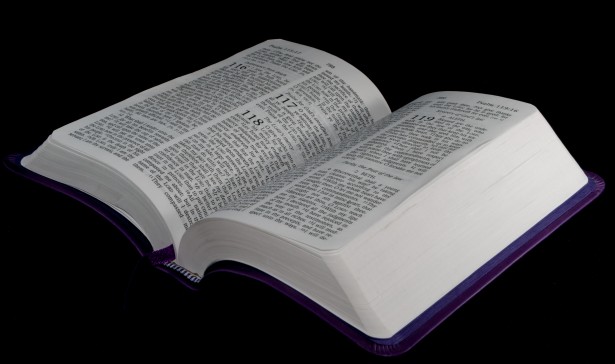
bible-open-to-psalm-118 Can we actually reason with a world that hates Jesus Christ? It’s a strange question, but one that I feel is very important. As Christians, we understand that, under the moral law of God, we stood as convicted criminals before Him. Every thought, word and deed in our lives was contaminated by our sin nature. That means that nothing about us was good in the eyes of God. In fact, on our very best day, where we did everything “right,” God saw us as rebel sinners who were only motivated by our most selfish desires. We were destined for the fires of Hell and rightfully so.

Yet, in His mercy, God sent His Son, Jesus Christ, to live the life of perfection we could never achieve. Everything He ever did was in complete obedience to God, with no motivation other than glorifying the Father. Then Jesus willing allowed Himself to be placed on the cross so that the righteous wrath of God could be poured on Him in our place. He readily took the punishment we deserved and became the substitutionary sacrifice in our place. Then Christ rose Himself from the grave three days later, proving His power over death. Through the preaching of the gospel, God miraculously and mercifully granted us repentance and faith in Christ. He redeemed us through the shed blood of His Son and adopted us as His children.

Before God redeemed us and made us into new creations, such concepts were completely foreign to us. Sin, judgment, hell, sacrifice and redemption were concepts we may have heard of at some point; however, our minds were hardwired, due to our sinful nature, to see ourselves as good. If we even believed we were capable of being bad, then we believed we could do enough good to make up for it. The idea that Someone had to be punished in our place was ludicrous to us. Yet, God broke through that sin hardened heart with the gospel message which caused us to be broken over our sin and saved us from His wrath.

The reason I write this is that I need to establish a foundation for the rest of the article. It was only through the precious message of the gospel that Christians now understand the evil that resides in their hearts. Prior to that, sin was a foreign concept that could either be rationalized away or personally atoned for. The world is made up of billions of sinners whose hearts are hardened against God and His commandments. While they have knowledge of His existence according to Romans 1, they suppress that truth in unrighteousness. The law of God is written on men’s hearts, but they reject the authority God has over them, making themselves gods over their own lives. Consequently, the rampant sin we see in our world – sexual promiscuity, homosexuality, abortion, hatred, lust, covetousness – is the byproduct of a world governed by sin.

I now come back to my original question. Can the church reason with a world that hates Jesus Christ? Today, we see a lot of churches and Christian groups lobbying and protesting against the widespread debauchery of our day. Many are willing to link arms with co-belligerents (be they political, secular or religious) in an effort to bring “morality” back into the world. Often times, such groups will state that arguments of a philosophical or sociological nature are the means by which to achieve moral victory because the world rejects the Bible. The claim is that, because the world doesn’t understand the scriptures, it rejects them. Therefore, we cannot use the Bible as our source material. We must, they say, speak to them on their level and prove to them, without God’s word, that God’s morality is superior. In the end, if we can legislate a Christian worldview into existence, the world will be in a much better place.

Such an argument, on its surface can seem to have merit. After all, as stated above, mankind is utterly sinful and rebellious against God. Since that is the case, by bringing the Bible into the discussion seems to guarantee that they will reject what we have to say. However, that argument assumes that the purpose of the church is to somehow redeem culture. In other words, the job of Christians is to make the world a more moral and pleasant place to live. That by changing the standards of the laws and morality to a Christian worldview, life will be better. But is that really the mission of the church? I would argue that it is not.

When a person is redeemed in Christ, he is to live his life in such a way as to glorify the One who purchased him. A Christian does not exist to make the world a better place to live, but to serve as a beacon, a sign post pointing to Jesus Christ, the Savior. By living a life of obedience to God, and acknowledging Him in all that one does, the Christian testifies to the world that his allegiance is not to the fallen, sinful system of mankind, but to the One who will one day judge all men. Thus, his job is not to necessarily fix a broken system. Short of all mankind being saved in Christ, no system established in this world will ever be fixed. It will always be tainted by the sinfulness of the human heart.

The Christian’s calling then is to proclaim the gospel of Jesus Christ, the One who came to save sinners. Any attempt to cure societal ills (which is not the specific calling of the Christian) by arguing with worldly philosophies, allows people to believe that they, not God, are the chief authority in this world. We are allowing them to deny the power and lordship of Christ. They will continue to operate in the delusion that they are the ones who decide right and wrong, good and evil. Thus, without the Bible and the power of the gospel, the unregenerate world will continue to operate in its sin tainted worldview. Any changes that occur, moral or immoral, will still result in billions of souls condemned to hell, despising the God whom they have denied and rejected.

Therefore, the duty of the Christian is to always – not sometimes, but always – preach the gospel in any discussion we have with those in the world. If we are discussing homosexual marriage, the gospel teaches that sex was created by God for a man and a woman in the confines of a lifelong, monogamous marriage (which reflects Christ and the church). Any other act of sexual intimacy is a sin and rebellion against God and will result in the judgment of God. Thus, we stand against it and we proclaim that good news that Christ came to save homosexuals. If the issue at hand is abortion, the gospel says that all life is created in the image of God and that abortion is the murder of life created by God. Thus we stand against it and we proclaim that Jesus Christ came to save women who want to murder children and the abortionists who commit the detestable act. If the matter is a tyrannical government, the gospel teaches that God appoints leaders over people for the good of the people, that those under the government are to obey the leaders, and that God will hold those in account who abuse its citizens for their personal gain. Then we preach the good news that Jesus Christ can save even tyrannical leaders if they will but repent and trust in Christ alone.

Christians, we cannot reason with the unregenerate, Christ hating world on their terms. They have no reasoning outside of God and we only will feed their insatiable appetite for sin. We must always preach the gospel, regardless of whether the world agrees with it or not. The gospel is the power of God to salvation. Only the gospel can change sin hardened heart. Only the gospel can bring a dead man to new life. Let us be less about the winning of culture and be more about the winning of souls condemned to Hell. If we commit to be obedient in this calling, then the Lord will save whom He will save. And if scores of untold souls are saved, then the consequence may just be a society that desires to live morally because it loves the Lord who established true morality to begin with.

We Are Justified by Faith

“Then what becomes of our boasting? It is excluded. By what kind of law? By a law of works? No, but by the law of faith. For we hold that one is justified by faith apart from the works of the law,” (Romans 3: 27, 28)

As I began my morning devotions today, this passage in the book of Romans jumped out at me. Have you ever really stopped to consider it’s meaning? We are justified, not by our works, but by faith. Faith in what? In the finished work of Jesus Christ on the cross. It is this very principle that is the heart and soul of the Christian faith. Where every other man-made religious system determines your justification on what you can do, Christianity bases it solely on what has been done by God. This is where out assurance lies, it is where our guarantee of salvation lies. The shed blood of Christ on the cross, His work on our behalf. Christ gave everything, we can contribute nothing. And it is the faith that Christ has completed that work on our behalf through which God justifies us. Our complete and total trust that Christ’s work is sufficient to satisfy the righteous wrath of God. Our surrender to His transforming our hearts of stone into hearts of flesh. That alone makes us right before God and nothing else.

I believe that one of the most challenging walks of the Christians life is struggling with the assurance that we are saved. We so often look at our lives, the constant struggle that we have with our sinful flesh, and we are tempted to believe that we cannot possibly be saved because of those sins. We see that we are supposed to be new creations, yet we continually fall into sin. As a result, we cannot believe we really are new creations because we are not doing what we are supposed to be doing. In the end, we actually evaluate our new birth in the same way that the false religions of this world do, through our works.

Yet, as we read the passage penned by Paul to the Romans, what is he challenging them with? He asks “what becomes of our boasting?” Think about that for a moment. When we actually accomplish something in our lives, what is inevitable result? We are proud of what we have accomplished. Pride swells up in our hearts and we can’t wait to tell someone all about it. But through the law of faith, such prideful boasting is “excluded.” Why? Because our faith is in the accomplished work of someone else! We cannot tell people how we did something great because the things we have done sent Christ to the cross! Jesus alone accomplished salvation through His death and resurrection. Jesus alone was completely obedient to His Father and fulfilled all the righteous requirements of the law. The only boasting we can do is to say we were so wicked and vile that He had to save us through His work. We can rejoice because we don’t have to boast! We don’t have to rely on our sinful works to accomplish righteousness! We can rest because all the work of justification was accomplished at the cross!

If you struggle with your assurance in your faith, look to this passage and remember that it is God who alone is the just and the justifier. It is He who has made you a new creation and it is His work that is progessively sanctifying you. If you are one who has truly repented and placed their faith in Christ, then God’s work in your life will reveal itself in your hatred for your sin, your desire to walk and grow in faith, in your love for God’s Word, and in your desire to be more like your Savior. But these are the result of your justification, not the cause of it. You are justified by the One who said “It is finished.” Look to His finished work and rest.

Book Recommendation – Convert: From Adam to Christ

I was recently given the opportunity to read a copy of the book “Convert: From Adam to Christ” by Pastor Emilio Ramos with the request that I post a review online at Amazon.com. After spending a weekend pouring through this text, I must highly recommend this book to anyone who is striving to understand just what it means to become a born again follower of Jesus Christ. Pastor Ramos does a wonderful job of explaining what it means to be a child of Adam, born into a life of sin and why we can never escape the grip of it on our own accord. Additionally, he takes the reader through the theology of what it means to be born again by the sovereign hand of God into Christ. Through all of this, Pastor Ramos continually reinforces everything he writes with sound and contextual citations from scripture.

What truly surprised me with this book, was how much time and effort Pastor Ramos put into explaining throughout the chapters of just what it means to be “in Christ.” This was not just a theological treatise on how a person gets saved, but what being saved means in the life of a Christian. Not only does he address how we enter the new life through a new birth by the hand of God, but he expounds upon the changed heart and mind of one who has been made into a new creation. He takes the Christian through the theology of our separation from the world, our mission while we still live in this world, our responsibility to the local church and our command from Christ to make disciples throughout the nations.

It is my sincere desire that every Christian take the time to pour through this book and really learn what it means to go from being a wretched, foul sinner in Adam, to being a redeemed and new creation in Christ.

Quotes (927)

It is not your hold on Christ that saves you; it is Christ. It is not your joy in Christ that saves you; it is Christ. It is not even your faith in Christ, though that be the instrument; it is Christ’s blood and merit.

– Charles Spurgeon

1834 – 1892

A Case for the Pre-Existence of the Son of God

A Case for the Pre-Existence of the Son of God

Defining Who is the Son of God and Proving His Eternal Existence

INTRODUCTION

            Over two-thousand years ago in the small village of Bethlehem, made famous as the boyhood home of King David (1 Sam 16:1, 17:12, Luke 2:4), a baby was born. Only a few miles from Jerusalem, the epicenter of the Jewish religious culture of the time, this baby would grow up amidst swirling controversy regarding who he was. Who is this child? He would be called many things, however, one title condemned him for blasphemy by the High Priest Caiaphas and the Council of scribes and elders who arrested and tried him and led to his execution (Mt 26:37, Mt 26:62-66, Jn 19:7). The question came from Caiaphas, “I adjure you by the living God, tell us if you are the Christ, the Son of God.” Jesus answered directly, “You have said so.”You have stated the truth. Caiaphas tore his clothes[1] – a forbidden act by the High Priest – as a display of extreme grief for blasphemy.[2] Jesus claimed to be the Son of God and he was executed for it.

            We have the advantage on this side of the cross, two-thousand years later, with the aid of Holy Scripture to see that Jesus was in fact the Son of God (Jn 1:1-14) and was wrongly executed by the council in a purely legal point of view. However, Jesus is God and his mission was to come to earth and be executed as a sacrifice for the sins of the children of God (Ephesians 1-2, Phil 2:5-8, Col 1:11-22, 1 Pet 1:2). Although we now have great hope in Christ, the Son of God, controversy still swirls around who he is. Several religions that claim the name of Jesus do not consider him to be God, such as the LDS and Jehovah Witnesses, but they consider Him to be a created being. Within the orthodox Christian circles Jesus is known to be God, but there is disagreement on whether or not he has been God for all eternity. Did the Son of God exist eternally, outside time and space, as the Son before he was born in the form of man before born as the baby Jesus, born of Mary? Or was it at the incarnation that Jesus came into being by becoming man generated by the Father?

            I propose that the evidence proving the Son of God’s pre-existence before the incarnation is overwhelming and inarguable for not only LDS and Jehovah Witnesses[3], but also for all within the Christian faith. Before proposing the evidence supporting the pre-existence of the Son of God, a brief description of the opposition is in order.


OPPOSITION TO THE PRE-EXISTENCE OF THE SON OF GOD

            The opposition to who Jesus is and what it means for Him to be the Son of God has been argued since Jesus was born in Bethlehem. Many false doctrines were found in the early church, towards which Jesus’ beloved disciple John wrote his entire Gospel and epistles to refute (John 20:31), the Apostle Paul worked diligently to correct through his many epistles and missionary journeys (Rom 8:1-4, Col 1:15-20), as well as Peter and the writer of Hebrews (1 Peter 1:20, 2 Peter 1:16-21, Heb 1:1-3). The eternality of the Son, as the second person of the Trinity was so hotly contested a few hundred years after the incarnation that the Nicene Council developed the Nicene Creed to establish a proper view on the Son and to distance themselves from the modalistic theology of Sabellianism[4] and the argument by the Arians[5] of the day that insisted that the Son of God was a created being.

            Centuries later new religions arose which claimed the name of Jesus Christ, yet they did not attribute deity or pre-existence to him. In the early 1800’s, Joseph Smith founded the Church of Jesus Christ and the Latter Day Saints, claiming that the Son of God was merely a created being and Lucifer’s brother.[6] In the 1870’s Jehovah Witnesses arose who teach Jesus is no more than the archangel Michael[7], another created being. The LDS and the Jehovah Witness religions are rightly consider by professing Christians to be cultic and not a denomination within the protestant faith.

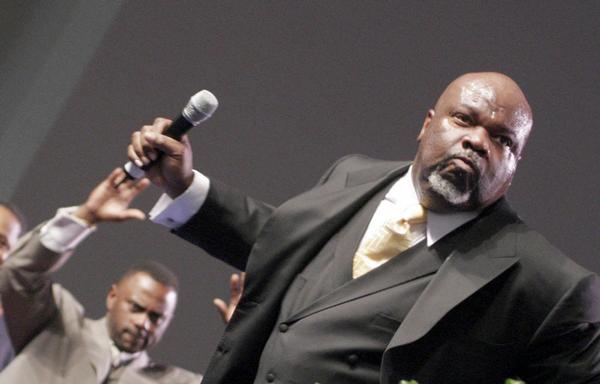
Another high profile stream of incorrect teaching regarding the Son of God has invaded the charismatic denominations. In particular, the televangelist T.D. Jakes with his “oneness” Pentecostal faith, author of over 30 books many of which have been on the NY Times Bestseller List, has had a worldwide stage for many years and teaches that Jesus is the Father, Jesus is the Son, and Jesus is the Holy Spirit and that the doctrine of the Trinity is in fact a polytheistic heresy[8]. Although no credible theologian would give Jakes theology thirty seconds of consideration, the average Christian is easily fooled by the TV shows, bestselling books, and charismatic personality. These fallacies are as important to refute as what the Fathers of the Nicene Creed were fighting against 1700 years ago.

            More interesting even yet, and much closer to home, is the change that John MacArthur has transitioned through only a decade ago. MacArthur, one of America’s greatest teachers and preachers, released an article in 2001 stating:

“…I want to state publicly that I have abandoned the doctrine of ‘incarnational sonship.’ Careful study and reflection have brought me to understand that Scripture does indeed present the relationship between God the Father and Christ the Son as an eternal Father-Son Relationship. I know longer regard Christ’s sonship as a role He assumed in His incarnation.”[9]

MacArthur’s abandonment of this doctrine through careful study of the Scriptures signals to us that there is a vital need for careful study and reflection on the Scriptures by every believer, even for every respected teacher, preacher, and theologian. Let us now turn to carefully considering what the Bible says about the relationship between God the Father and God the Son.

EVIDENCE OF THE PRE-EXISTENCE OF THE SON OF GOD

            Ten proofs regarding the pre-existence of Jesus Christ as the Son of God and second person in the Trinity need careful consideration.

Proof (1): I Am. The most basic proof of Jesus Christ’s pre-existence as the Son of God, and an assumption that must be made at the outset, is his divinity. Jesus being fully God implies his eternality. We see from the “I am” (egō eimi) statements found in Jesus’ own words, that He is claiming to be equal to God, the Father. In chapter 8 of John’s gospel, Jesus provides a direct claim to deity and pre-existence through the most notable “I am” statement.  Jesus tells the Jews, “If anyone who keeps my word, he will never taste death,” (Jn 8:52, ESV). The Jews fire back at Jesus by asking if he is greater than Abraham. After all, Abraham died and so did all the other prophets of God. So how can this man claim to have power over death? How can he speak with authority regarding Abraham as if he knows him? Jesus, they argue isn’t even fifty years old, how can he have seen Abraham?[10] Jesus then makes the claim to deity and pre-existence: “Truly, truly, I say to you, before Abraham was, I am,” (Jn 8:58, ESV). Continue reading

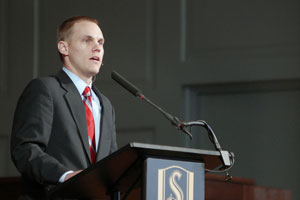
Saturday sermon series: “The Gospel Demands Radical Abandonment (C)” by David Platt.

We conclude our eight-week series on the radical demands of the gospel by David Platt with the final message, The Gospel Demands Radical Abandonment (C).

To obtain the entire series (or watch the videos of these sermons) visit Disciple Making International.

Modern family.

A sobering examination into what the technology age has wrought on our families in this article from the New York Times.

Excerpt:

Sometimes they hold hands while looking at their screens. But failing that, the couple has developed a form of physical shorthand, an “ ‘I’m still here’ signal” in which “one of us will tap the other one a couple of times with an index finger.”

Saturday sermon series: “The Gospel Demands Radical Giving” by David Platt.

We are in week five of our eight-week series on Radical. What makes today’s message, The Gospel Demands Radical Giving, so important is that in it David Platt answers many of the criticisms levied against him.

If you dislike the message Platt is delivering in this series and you refuse to listen to it because you think Platt  believes that Christians who give away more are better than those who don’t; you think Platt “guilts “people into giving to the poor (and keeping less for ourselves); you think Platt believes the rich man was in Hell because he had money and Lazarus was in Heaven because he was poor; you think Platt is advancing a works-righteousness gospel; or any of the other baseless judgments that have been levied against him for daring to touch American Christianity’s golden calf of affluence, then please listen to this message so you can better understand his heart and his message.

I don’t wish for the “controversy” surrounding Radical to overshadow the message Platt is giving, but the criticisms must be answered and in this particular message Platt does just that (most of which is done in the first 14 1/2 minutes of this message).

No need for commentary.

From the NY Post:

It’s Our Lady of Spin the Bottle.

Pastor Maurice Johnson of the Winners Church in Queens delivers the sexiest Sunday sermon in town, preaching on how to keep romance alive in marriage — and then asking congregants to make out in a passionate, public kissing contest during the service.

The parishioners with the most passion — and tongue-wagging — win $50 to spend on date night.

“Your bedroom and your love life are fires that must be nurtured and fought for,” Johnson preaches in a booming voice that reverberates through the makeshift church in the PS 38 gym in Rosedale, Queens.

“Use the power of touch to ignite passion in your marriage,” Johnson tells his giggling, nondenominational congregation of 75.

He adds, “You should be visually stimulated for your husband or your wife. It is your biblical responsibility to look good for your spouse.”

Johnson then calls upon four married couples to rise and approach the pulpit.

As a keyboardist and a drummer ooze R&B tunes such as “I Like It” by DeBarge, the couples demonstrate their passion — by locking lips, hips and tongues for a seemingly endless five minutes.

When they come up for air, the rest of the churchgoers choose a winner by clapping for the most amorous couple.

Johnson, 39, told The Post he chose to deliver a series of sermons, titled “The Power and Pleasure of Romance,” to underscore the importance of marriage in the African-American community.

“Some people were like, ‘It seems strange to do at church,’ ” he said, “but they thought it was very creative.”

Keeping a romantic partnership ticking, he said, depends on showering your spouse with physical affection.

“God created a desire for love and romance,” Johnson said.

The face-sucking had some churchgoers blushing.

“You see kissing in all kinds of contexts, but you don’t necessarily see it in a marriage context,” said Frantz Cochy, 39, who won the contest when he seemed to forget that he was in front of a crowded room and hungrily embraced his wife of 13 years, Makeetah, 36.

“I wasn’t embarrassed, but I guess I felt a little awkward,” he said.

Olaiya Ayani, 33, had to cajole his wife, Ayanna, to stand up and play tonsil hockey in front of the packed room. But once on stage, the couple wrapped their arms around each other and didn’t hold back.

“My father and my mother never showed affection in public,” said Ayani, who met his wife two years ago on Craigslist. “I told myself, ‘I’m going to be more affectionate to my wife.’ ”

The pastor said he encourages married couples to drop their guard and experiment with each other in public.

“Any society that celebrates marriage, romance and love is going to be a free society,” Johnson said. “Public displays of affection aren’t wrong. Adam and Eve were naked, and they were not ashamed.”

The bachelor pastor says he’ll practice what he preaches next year, when he expects to marry.

HT: ExMinistries via Witnessing Encouragement

Saturday sermon series: “The Gospel Demands Radical Compassion” by David Platt.

We continue our Saturday sermon series from David Platt.  The Gospel Demands Radical Compassion is part three in this eight-part series. 

This series was the inspiration for Platt’s book, Radical.  

Here is the description of the series:

“In the same way, any of you who does not give up everything he has cannot be my disciple.” With these words, Jesus turned away large crowds who were following Him. With grace and authority, He beckoned potential followers to consider the demands of discipleship. For most, the price was too high and the cost was too great. In the 2000 years since Jesus spoke these words, it begs the question: Do we in contemporary Christianity realize the high price of following Jesus? Do we understand the great cost for all who call themselves followers of Christ? Take a closer look at the words of Jesus that require us to consider the implications of the Gospel for every facet of our lives.

Saturday sermon series: “The Gospel Demands Radical Sacrifice” by David Platt.

We continue our Saturday sermon series with the second installment from David Platt’s series Radical which inspired the book by the same name.

This week’s message is The Gospel Demands Radical Sacrifice (you can find last week’s message here).

This sermon series is one of the most sobering and deeply challenging that I’ve ever listened to. I have found it to be incredibly convicting and trust that you will too.