Don’t Stop Growing!

I love meeting new Believers. They are so eager to learn about God and His Word. If the Bible says it, they believe it and desire to do what it says. They are often looking for opportunities to share their new-found faith with others. After what God has done for them, they don’t want to just keep it to themselves.

As excited as I get when I meet people like this, I am extremely burdened for those who have gone to church their whole lives. Many of them do not exhibit the joy of the Lord, they are not in the Word asking Him to try them and know them and show them the things that displease Him, and they are not being the Light that God calls us to be. Instead, they show up at church Sunday morning, looking like they would rather be anywhere else.

what-does-your-garden-grow

The Bible is a big book with lots of guidelines for how God wants His children to live, but a great starting point would be Galatians 5:22 and 23: the fruit of the Spirit (love, joy, peace, longsuffering, gentleness, goodness, faith, meekness, temperance which is self-control). Jesus said we would know those who are His by their fruit. Does this list describe you?

When I came to know the Lord in my late teens, there were certain negative character traits He took away from me. Some things, however, I still struggle with. As much as I would like to not struggle (I even hate it at times), I realize that it is in these struggles that growth comes. If everything were easy, I would not see the need to rely on Him. As it is, I call on Him daily to help me walk in a way that pleases Him. I pray that I never become content but will constantly seek to grow and follow Him wholeheartedly. I want to be a vessel He can use until my dying day. I pray that is your prayer as well.

Enduring Heartbreak

The last few months in the lives of our family have brought great pain and heartbreak, but God has been so faithful. Apart from the time we spent in the jungles of Liberia, West Africa, I cannot remember a period where we have been so broken and spent emotionally, physically, and even spiritually.

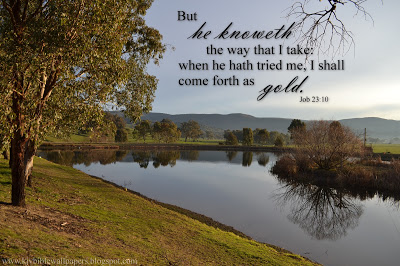
Looking at YouTube, Vimeo, or other similar sites will reveal a large amount of messages on various aspects of encouragement. However, as a pastor, I have had to learn that sometimes it is easier to stand in front of a congregation of believers and preach than it is to have to learn the hard lessons of life. It is easier to preach from Job 23:10 than it is to sit in sackcloth and ashes with Job when it seems like you have lost much of what is special to you.

mis-comfort

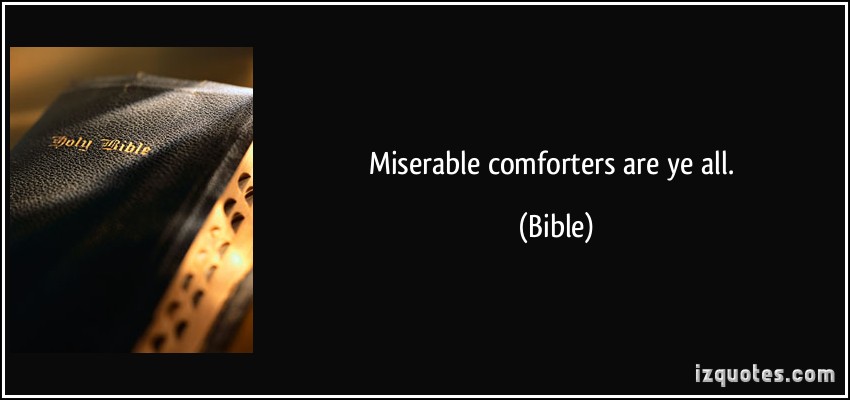
Looking back through tears, I have to wonder what Job would have thought of my attempts to provide encouragement. In Job 16:2, he tells his fair-weather friends that they are nothing more than miserable comforters. He was in the middle of learning what they could not know. The truth was and is that you cannot fully understand what you have never experienced. Sympathy is feeling sorrow for your hurt, but empathy is knowing your hurt in my heart.

Job_23_10_blog

I know what it means to lose a position as shepherd because the majority of the leaders were not saved and had no true testimony. I know what it now means to come home broken from leadership meetings have been told over and over again that if I do not stop preaching the gospel of Christ alone by grace through faith alone that I would lose everything. I know what it means to have leaders tell you that there is more than one way to heaven, “if we are even good enough to get there.” I know what it is like to come home and there is nothing you can do but hold your wife as she weeps uncontrollably and knowing that she bears as much of the pain as you do, but somehow she believes she is supposed to be strong for those who are watching. I know what it is like to see the vitriol and anger spewed at a meeting because I took a stand against homosexuality, and this from people who were nothing more than “casual Christians.” I know what it is like to see those who claim the name of Christ tell you that they want to do what is right, but yet remain in bondage to false leaders who live in rebellion against God.

My wife and I now know what it means to have to pick up the pieces of the lives of some of our family members. It seemed a lot easier to provide “comfort” and “counseling” to others from a Biblical perspective than it actually is to live through the heartbreak of watching those you have sought to love lie repeatedly and even throw out threats about what they will do if they don’t get their way. We now know the pain of being deliberately kept from seeing somebody that means the world to us.

Psalm 59:16-17, “But I will sing of thy power; yea, I will sing aloud of thy mercy in the morning: for thou hast been my defence and refuge in the day of my trouble. Unto thee, O my strength, will I sing: for God is my defence, and the God of my mercy.”

However, like Job, my family and I are learning. The details of what has caused the pain actually pales in comparison to the details of the education being afforded us through these trials. We are learning more and more of what it means to live in grace, but to show grace. Some would define grace as being non-judgmental and allowing people to live any way they desire. But that is not grace.

Grace is understanding what Christ did for us on our behalf. Grace means that I remember that what others meant for evil – God means for good. Grace means that I recognize that my own sin is no less and no greater than the sins of others and that forgiveness was granted to me by Christ just as I must do to others who have deliberately hurt us. Showing grace means offering to others what I cannot humanly manufacture. Grace does not come from praying through the Imprecatory Psalms against others. Grace means I have to be reminded that those who cause the hurt are not the real enemy. The real enemy is the evil one, Satan himself.

We have learned much this year and I expect the trials are far from over. However, the pain we have endured was obviously a necessary part of God’s perfect plan for our lives. Shall we take good at the hands of a sovereign God and not also the bad? Who am I to question what God deems is right and necessary in order to conform me into the beautiful image of His Son? I have no more right than the clay does to tell the Potter what vessel to make.

Enduring heartbreak is never easy. What you will go through is ultimately designed to bring honor and glory to the Lamb who was slain from before the foundations of the world. My prayer though is that whatever you are suffering, whoever may have hurt you, or however you have arrived at your present situation, than you and I will each be able to come to the point where we can stand triumphantly and say, “He has tried me, and I have come forth as gold!”

If you have never experienced great pain, you can still be there for friends and family. Trust God to give you the words that will bring comfort and encouragement. For those who have gone through pain and heartbreak, you are in a unique position to give glory to Christ for the work done in your own life and how you can come through the other end as a victor because of Christ alone. Each of us have people who have been there and cared for us through our tears. For those friends, we each give thanks to God.

In conclusion, I want to leave you with a beautiful hymn by William Cowper, a colleague of John Newton, who wrote “Amazing Grace.”

Jesus is our Hiding Place

Matthew Smith is a young musician who takes lyrics from old folk songs and hymns, modifies them if need be, and a0375493876_2puts them to his music. Here is a wonderful hymn from a Baptist hymnal printed in 1776.

Listen to this song, free, here. Then buy lots of his work.

Hiding Place

Against the God who rules the sky
I fought with hand uplifted high
Despised the mention of His grace
Much too proud to seek a hiding place

Wrapped in shadows of the night
Fond of darkness more than light
Blind, I ran the sinful race
I felt no need for a hiding place

But then the eternal council ran
“Almighty love, arrest this man!”
I felt the arrows of distress
And found I had no shield, no hiding place

Holy justice stood in view
To Sinai’s fiery mount I flew
But justice cried with frowning face
“This mountain is no hiding place”

But then a heavenly voice I heard
And mercy for my soul appeared
She led me on with gentle pace
To Jesus as my hiding place

Should seven storms of vengeance roll
And shake this earth from pole to pole
No thunderbolt shall daunt my face
While Jesus is my hiding place

On Him almighty vengeance fell
Which would have sunk this world to Hell
He bore it for a sinful race
To make Himself our hiding place

ABSOLUTE Predestination

ABSOLUTE Predestination

I just finished reading Jerome Zanchius’ book that a dear brother was so kind to give me. Wow! I Clipboard01wept and rejoiced and thanked the Lord for faithful men who have gone before. Thanks be unto God for the dear brother who worked to bring this book back to life. Absolute Predestination is an awesome work explaining systematically and biblically why this doctrine is true, what it means, and why it must be preached. I will treasure this book until the Lord deems my days are done. What follows is a short review and exhortation for my brothers and sisters to take this book and read. You can buy it here: http://www.heritagebooks.org/absolute-predestination-introduction-by-joel-beeke/

This current publication is from Free Grace Press and includes a very informative introduction by Joel Beeke. Zanchius was an Italian who lived in the early to mid 16th century, grew up as a Roman Catholic and served as a monk. It was during this time he read some Martin Luther, Martin Bucer, and John Calvin and was soon converted into a Christian. He lived the balance of his life studying, teaching, and writing and was widely considered a highly valued author of Reformed theological studies – all of which were in Latin. Nearly 200 years later, an Englishman ran across his Latin writings on predestination. Augustus Toplady was converted in his teen years and held to the free will teachings of his contemporary, John Wesley; until “an old man challenged him to stop arguing long enough to ask himself: Did he have any part in obtaining God’s grace? Wouldn’t he have resisted God’s grace if the Spirit left him to his own will? These questions from a Wesleyan brother stabbed him to the quick.” And so Toplady began a study on the sovereign grace of God, learned Hebrew and Greek, and embraced the sweet doctrines of grace commonly called Calvinism.

Toplady served in many churches as pastor, but initially held back from preaching on sovereign grace – focusing his sermons on justification by faith and holiness of life, as was taught by Wesley. “People liked his preaching, but few were converted. When he began preaching predestination as the eternal source of our salvation in Christ, many were angry with him, but many other were truly converted to Christ.” Amen! This is how the true gospel works – it was how the Apostle Paul experienced it. The true gospel (for there is no other gospel) is preached. Some will hate you for it, others will rejoice and beg to hear more. Those who have been given ears to hear will hear! Praise God!

As time went by, Toplady conversed with Wesley and denounced his old teacher. As A.W. Pink turned a bit sharp in his criticism of dispensationalism once he left that theological train wreck, so did Augustus Toplady in his critique of the spiritual ship wreck of Arminianism.

Toplady translated Zanchius’ book into English and, by his own admission, heavily edited it in places to as to provide a more complete treatise on the topic. It is hard to tell where one writer hands off to the other, as the reader works his way through this book. With that, here’s a brief review of this most excellent little book. Zanchius lays out each chapter as a progressive argument, moving through myriad positions as he documents six key areas that help us comprehend the sovereignty of God and our need of Him.

The Preface is written by Toplady and titled Observations on the Divine Attributes. We are quickly introduced to this author and this work by two stark statements. “I cannot help standing astonished at the pride of impotent, degenerate man. … The Scripture doctrine of predetermination lays the axe to the very root of this potent delusion.” Having personally left Wesley’s doctrine behind, Toplady declares that this book is needed because “Arminianism is the grand religious evil of this age and country.” We can only imagine what he might have said in response to Charles Finney! In bringing his preface to a close, Toplady reminds us that words have meaning, or else they are worthless, and then defines predestination as “God’s determinate plan of action.” And then he reservedly reveals his opinion on the theological construct he had left behind – “He that made all things either directs all things he has made, or has consigned them over to chance. But what is chance, but a name for nothing. Arminianism, therefore, is Atheism.”

Zanchius’ first chapter has the same name as Toplady’s Preface – they are not the same! In this opening chapter, our servant of God desires us to know more about the Lord, acknowledging He is beyond our comprehension, but not entirely; and that He wants us to know Him as He has revealed Himself in Scripture. Zanchius’ pen will help us better understand: (1) God’s eternal wisdom and foreknowledge; (2) The absolute freedom and liberty of His will; (3) The perpetuity and unchangeableness both of Himself and His decrees; (4) His omnipotence; (5) His justice; and (6) His mercy. Without these attributes explained, Zanchius claims the doctrine of predestination cannot be properly grasped. While every argument in this chapter is worth careful reading, the series of statements and expositions under (2) cannot go without special mention. Here is the summary paragraph from the end of that section:

“From the whole of what has been delivered under this section head, I would observe that the genuine tendency of these truths are not to make men more indolent and careless, or lull them to sleep on the lap of presumption and carnal security, but (1) to fortify the people of Christ against the attacks of unbelief and the insults of their spiritual enemies. And what it so fit, to guard them against these, as the comfortable persuasion of God’s unalterable will to save them, and of their unalienable interest in the sure mercies of David? (2) To withdraw them entirely from all dependence whether on themselves or to any creature whatever; to make them renounce their own righteousness, no less than their sins, in point of reliance,and to acquiesce sweetly and safely in the certain perpetuity of His rich favor. (3) To excite them, from a trust of His goodwill toward them, to love God who has given such great and numberless proofs of His love to men, and, in all their thoughts, words, and works, to aim, as much as possible, at His honour and glory.”

Is this not the goal of Christian exhortation and life? What Christian would be opposed to this?

In chapter 2, titled Defining Terms, we are given biblically based expositions on The Love of God, The Hatred of God, Election, Reprobation, The Purpose of God, Foreknowledge, and Predestination. This last is presented with a four-fold definition. (1) God did from before time determine and ordain to create and dispose of all creation with the over-arching reason to bring glory to Himself. (2) As relates to mankind, God created Adam in His image and allowed him to fall and take all humanity (and creation) with him as the federal head. (3) As relates to the elect, God chose before time to redeem some in time by faith in Christ. Such are justified, adopted, sanctified, and preserved safely to the end of this age. (4) As regards the reprobate, it is God’s eternal sovereign and immutable will whereby He has determined to leave some men in their sin to be justly punished.

Chapters 3, 4, and 5 discuss predestination as it relates to All Men, to the Saints, and the Ungodly. It is most useful to see this doctrine discussed in detail in these three distinct applications, as much confusion reigns among men when important terms are not defined and applied properly. In the 3rd chapter, Zanchius shows from Scripture that God has predestined the ends of men, that He decreed The Fall, that the elect will be saved, the reprobate damned. Each of these is explored in detail after a brief introduction. The chapter closes with a wonderful quote from Augustine: “Brethren, let us not imagine that God puts down any man in His book and then erases him, for if Pilate could say, ‘What I have written, I have written,’ how can it be thought that the great God would write a person’s name in the book of life and then blot it out again?”

Predestination of the Saints, chapter 4, ought to give everyone born of the Spirit joy and supreme assurance of being safe in the refuge of Christ – it is full of Scriptural support for the monergistic saving act of God in the life of every saint. Zanchius includes two excellent bits of counsel as he wraps us this most important chapter – Christians ought to believe the redeemed standing of other Christians (based on sober reflection of evidences that bear witness to same). For how, he asks, can we love one another rightly if we do not believe they, also, are loved with same everlasting love as we? Then he remands us to never judge any man to be a reprobate. He says that we may infer the election of some by the marks and appearances of grace in their lives, but we cannot know sure enough to claim that any person is damned while he yet breathes – because a man who is a reprobate today may have been chosen before time and decreed to repent and believe upon Christ tomorrow! Presumption is sinful and we ought not walk in it; we are, rather, to walk in humility and love – proclaiming the saving gospel to dead men everywhere.

Chapter 5 presents Predestination as it relates to the Ungodly – something I dare say most of us have not thought of. But just as there will be those on the Lord’s right hand on that great day of judgment, there will also be those on His left hand (Matt 7). In explaining predestination to the Romans, Paul reminds us what God had said – “Jacob I loved, but Esau I hated”. So in Matt 7, when Jesus is telling those on His left hand that He never knew them, He is saying, “I have always hated you.” How differently we tend to discuss the enemies of God in our day! Our mantra is, “God loves everybody” or “God is love”, as if He had but one dimension. There can be no true, biblical love from God if He is compelled to love everyone. He cannot be holy if He accepts those who are not justified. God does not “hate the sin but loves the sinner.” He is angry with sinners all day long! While some will hate this talk, it is the revelation from God Himself – and redeemed saints ought not to shy away from uncomfortable truths.

The last chapter is Predestination as it Relates to the Preacher. In this surprising (to me) chapter, the author makes the case that preaching this doctrine is necessary for the spiritual health of God’s people that He has gathered in each local church. He warns, “Let it, however, be preached with judgment and discretion, i.e., delivered by the preacher as it is delivered in Scripture, and no otherwise.” This doctrine is such that men twist it and deny it – meaning that the wisdom of man is totally insufficient to explain or defend it. So Scripture alone is the rule. Further, since “Election is the golden thread that runs through the whole Christian system,” any gospel preached without it is not the gospel!

Zancius invites us ponder Matt 11:25 & 26, in which he declares that “Christ thanks the Father for doing that very thing which Arminians exclaim against us is unjust, and censure us as partial.” And in Matt 24:22 – 24 the Lord “teaches (1) that there is a certain number of persons who are elected to grace and glory, and (2) that it is absolutely impossible for these to be deceived into total or final apostasy.” Preachers must preach predestination and the sovereignty of God because “Whilst a man is persuaded that he has it in his power to contribute anything, be it ever so little, to his own salvation, he remains in carnal confidence.” This may be the biggest concern in churches in our day – so many men convinced they are “OK with God” because they chose Him! They think God did His share and they must do theirs – not realizing that this system leaves them on the wrong side of the Tiber river. Predestination gives sinners a more accurate picture of both God and man, showing the grace of God – which stands against human worthiness. A footnote shows from Scripture why this doctrine must be preached, for the good of the saints – “do not my words do good to him that walks uprightly?” (Mic 2:7)

There truly is too much good and godly counsel in this book for me to comment on it all. But let this review close out with this glorious exhortation from this dear brother from another century.

“How sweet must the following considerations be to a distressed believer! (1) There most certainly exists an almighty, all-wise and infinitely gracious God. (2) He has given me in times past, and is giving me at present (if I had but eyes to see it), many and signal intimations of His love to me, both in a way of providence and grace. (3) This love of His is immutable; He never repents of it nor withdraws it. (4) Whatever comes to pass in time is the result of His will from everlasting, consequently (5) my afflictions were a part of His original plan, and are all ordered in number, weight and measure, (6) The very hairs of my head are (every one) counted by Him, nor can a single hair fall to the ground but in consequence of His determination. Hence (7) my distresses are not the result of chance, accident or a fortuitous combination of circumstances, nor of Satan getting ahead of God, but (8) the providential accomplishment of God’s purpose, and (9) designed to answer some wise and gracious ends, nor (10) shall my affliction continue a moment longer than God sees meet. (11) He who brought me to it has promised to support me under it and to carry me through it. (12) All shall, most assuredly, work together for His glory and my good, therefore (13) “The cup which my heavenly Father hath given me to drink, shall I not drink it?” Yes, I will, in the strength He imparts, even rejoice in tribulation; and using the means of possible redress, which He has or may hereafter put into my hands, I will commit myself and the event to Him, whose purpose cannot be overthrown, whose plan cannot be disconcerted, and who, whether I am resigned or not, will still go on to work all things after the counsel of His own will.”

At the end of this book, I was left undone by the glorious mercies of God, in choosing to save His enemies – and me being counted among the redeemed. If that last paragraph does not cause your soul to rejoice in wonder and praise and adoration – you need to examine yourself to see if you be in the faith. Christ is all glorious, all powerful, and victorious. By His blood he has purchased a people to be trophies of grace that He will present to our Father on that great and terrible day when all the deeds of men will be judged. The earth and sky will try to flee from the face of God and the wrath of the Lamb, but there will be no place to hide. But ALL whose names were written in the Lamb’s book of Life before the foundation of the world shall be welcomed to the wedding feast when the Lord consummates His eternal plan of redemption! Christ is our refuge and strong tower – He is sufficient! We need no other plea. Run to Christ, cry out for mercy. Seek Him while it is yet today.

Shepherding the Flock – Bob Selph Video

Here is the fifth in a series on Pastoral Theology from Reformed Baptist Seminary. This is the third message from Bob Selph and deals with shepherding the flock and starts with 2 Timothy 4. This is an epistle that was written to be an encouragement from Paul to Timothy, and serves to encourage elders and leaders within the church today.

1 Peter 5 reminds us, “The elders which are among you I exhort, who am also an elder, and a witness of the sufferings of Christ, and also a partaker of the glory that shall be revealed: Feed the flock of God which is among you, taking the oversight thereof, not by constraint, but willingly; not for filthy lucre, but of a ready mind; Neither as being lords over [God’s] heritage, but being ensamples to the flock.”

Our prayer is that it will be both an encouragement to pastors or future pastors and even to those who serve in other aspects of ministry but not necessarily leadership roles.

A Word of Encouragement

“I thank him who has given me strength, Christ Jesus our Lord, because he judged me faithful, appointing me to his service, though formerly I was a blasphemer, persecutor, and insolent opponent. But I received mercy because I had acted ignorantly in unbelief, and the grace of our Lord overflowed for me with the faith and love that are in Christ Jesus. The saying is trustworthy and deserving of full acceptance, that Christ Jesus came into the world to save sinners, of whom I am the foremost. But I received mercy for this reason, that in me, as the foremost, Jesus Christ might display his perfect patience as an example to those who were to believe in him for eternal life. To the King of ages, immortal, invisible, the only God, be honor and glory forever and ever. Amen (1 Timothy 1:12-17 ESV)

The words of the Apostle Paul written to Timothy should serve as great encouragement to those of us who have been saved by the shed blood of Jesus Christ. As I read those words, I was reminded that, despite my wretched sinfulness, despite having no good thing in me that would cause God to desire me, He demonstrated His love for me in that He sent Jesus Christ to redeem me.

Like Paul, we should see ourselves as the chief of sinners. Daily we should remind ourselves that our very sins put Jesus on the cross. That it took the shed blood of the Son of God Himself to pay the price we owe to God. Yet He did so willingly, of His own accord, so that He might bring glory to the Father. That in doing so, He might demonstrate His mercy by redeeming vile, wretched, rebellious sinners for His use.

In fact, it is Paul’s statement that “…Jesus Christ might display his perfect patience as an example…” really caused me to stop and think. Jesus Christ saved us to be examples of His perfect patience to those He will save. In other words, when we are saved by God, we are cleaned up for His usefulness and put on display as His craftmanship. When God saved me, I was a rebellious sinner, even though some thought I was a “nice guy.” Yet, I lied, cheated, blasphemed and other sins I do not wish to mention. Those that knew me then would know I was not really all that “nice.” Yet, today, God’s sanctifying work in me is put on display by Him for one reason, to show the perfect patience in transforming a vile sinner into a tool useful for His work.

That is what God does when He saves us, He transforms us for His use! If you are anything like me, it is very easy to see all the faults, failings and sins that we still struggle with while we are in this flesh. We may even begin to wonder if we are truly saved because of that. Yet, here in Paul’s pastoral epistle, we see that the issue is not about us and what we can do, but in God’s finished work of salvation and his ongoing work of sanctification. It is not about us being able to say what we have conquered in our flesh, it is about God being able to boast in his sanctifying work alone! We weren’t saved so we could claim there was something just awesome about ourselves, which there never was, but so that we could be a light, a signpost pointing others to the very Savior they didn’t even know they needed, Jesus Christ.

I encourage my brothers and sisters in Christ, if you struggle with your walk, if you have trouble in finding assurance, look the this passage by Paul. You were saved and are being sanctified for one reason, to be evidence of the amazing work of your Savior. Find peace and comfort in knowing that “…he who began a good work in you will bring it to completion at the day of Jesus Christ.” (Philippians 1:6 ESV)

Letter from a Recent West African Convert

Dear Friends,

I would like to share a very special letter that I received this past Sunday. By brief word of explanation, this came from a young man around 28 years old who was recently converted out of Is1am. His entire family, with the exception of one brother, all remain Mus1ims at this time.

Because of the war and the education system here in Liberia, people can actually take several years to get through high school. Many are in their 20’s and 30’s before they can afford to complete and gain their high school diploma.

Because of the sensitivity of those who minister in predominatly Is1amic areas, we will refrain from using his name. This young man is growing every week in his understanding of the Scriptures and is…well, I’ll let you read his letter to me which I have transposed just as he wrote it.

Thanks for praying.

*************

Dear Borther Mark,

How are you doing: hope all is Well with you and your family.

You may not understand why I writting you this letter, but if you do not understand, remember me. (He is reminding me who he is again because this was passed to me through one of the other men I am training. This is one aspect of Liberian culture to deal with another through somebody you respect.)

I am using this opportunity to inform you about the hard work you have done for me. I was in darkness, but now am walking in light. Through you my life will improve because of the bible class.

I understand that you want to open bible school in Gbarnga.

I will be going back to school in Gbarnga to complet my high School and I want to be part of this bible school in Gbarnga, because one day I want to become a missionary in my country Sierra Leone.

God bless you.

Signed,

Gin and juice missionaries.

Here’s the opening to a great little article on a matter we’ve been lamenting for years:

Many Christians tend to hang out a lot with unsaved friends for the sake of  “winning” them to Christ. (Unsaved girlfriends, boyfriends, club-buddies, former smokin’-buddies, co-workers, etc.) They often say that their plan is to “let their light shine”.

They say that’s the reason why they meet co-workers at the sports bar; That’s the reason why they share shots.

I sincerely doubt that.

In all honesty,  I’ve seen very little gospel sharing. Just a whole lot of chillin’ and jokin’ around. But, if you ask a “gin & juice missionary” to  reconsider their approach, they’ll quickly quip:

Stop being religious! Didn’t Christ eat with tax-collectors and sinners??

Read the entire article here.

Perpetual spiritual infancy.

The Christian life is supposed to be one marked by sanctification and spiritual growth, but far too many in church–after years of being a Christian–are no further along in their faith than day one. Essentially they are still nursing on milk when they should be eating meat.

Churches too often make excuses for this lack of fruit in the lives of the masses of professing believers that fill pews on any given Sunday. Others simply pronounce “Judge not” if anyone dares to point out the problem.
But what if we could capture a glimpse of what this would look like in the physical realm? What if we could see with our eyes what this perpetual spiritual infancy looks like?

Wonder mo more. The man in this video could be the poster child for the average American churchgoer.

See related post: Gerber’s New Christian Baby Food

Samaritan Ministries endorsement.

I wanted to share with the readers of DefCon how thoroughly thrilled my wife and I are about Samaritan Ministries. As an alternative to the high cost of secular insurance companies (many of which fund practices opposed to Christianity), Samaritan Ministries helps Christian families cover medical expenses by use of a network of contributors (members).

Instead of paying a monthly insurance fee, your monthly contribution goes directly to an actual family in need. You receive the name, address, and need of the family assigned to you, then you send your designated share amount directly to that family (along with a card or note of encouragement if you wish). Other needs that are not publishable (meaning they are not covered by Samaritan Ministries) are advertised in the monthly newsletter and members can give to those needs if they choose.

In the event that you incur a medical expense, you simply submit your need to Samaritan Ministries and you receive checks (along with cards or notes of encouragement) from other members to cover your medical expenses. 

I wholeheartedly endorse this ministry and can speak first hand about the value and effectiveness of it. We’ve been members for over a year and have benefited twice: once when one of our children was having breathing problems requiring two separate trips to the E.R. and most recently when our youngest was born, Samaritan Ministries covered the entire cost of the midwifery services and all associated tests and bloodwork. It is virtually impossible to find an insurance company willing to cover maternity unless it is through an employer. Samaritan Ministries recognizes that children are a blessing and by covering maternity needs they don’t perpetuate the idea (directly or indirectly) that children are a burden (financially or otherwise).

Notable members of Samaritan Ministries include Doug Phillips and Voddie Baucham. Baucham offered this endorsement:

Coming into the whole Samaritan Ministries thing and not knowing how it worked, not understanding anything about it, and just really wondering…was terrifying. Then I turned around and watched how Samaritan took care of that whole need [for a fellow pastor’s son]. Samaritan members came along, helped them…the doctors were happy to work with them…it was after that I signed up.

I understand better now than I did before how corrupted medicine has become because of the insurance industry. We walk in and say we’re self-pay, and immediately they take 30, 40, 50 percent off the top. That’s just because all the markup that exists because of insurance and also because of Medicare. These doctors are so happy to not have to deal with all that stuff, that they pass those savings on to you.

When you’re going to the doctor’s office and all you have to do is pay the $10 co-pay, you’ll go for any little thing. Your sense of independence, your sense of trusting in the Lord, your sense of trying to take care of things and do preventative medicine-that goes out the window if the only thing you have to think about is that $10 co-pay, not realizing at all that by participating in that system, you’re actually contributing to these escalating prices.

We love it. I enjoy sitting down, writing my check to a family, feeling that I’m just directly partnering with them, partnering with that need, praying for them. It’s wonderful, and that has been helpful to us.

I encourage readers to check out this wonderful ministry of Christians helping Christians. You can learn more by going to their website:

http://www.samaritanministries.org/

Also check out their blog:

http://www.samaritanministries.org/blog/

And you can even find them on Facebook:

http://www.facebook.com/samaritanministries

You can also learn more about this incredible ministry for Believers by Believers by viewing this video:

Jesus Our High Priest – Part 20 (Conclusion)

We are pleased to continue the Saturday Sermon Series again. This is the final (part 20) in a series of twenty messages from John 17. It was sovereignly delivered by Akash Sant Singh, who is one of the elders at Community Bible Church in Reno, Nevada. May it bring conviction to each of us as we realize our deep lack of prayer, which should be elemental to our Christian faith. Sadly, our prayer lives tend to reveal more about our self-sufficiency than of our utter dependency on the Saviour of our souls.

Jesus Our High Priest – Part 20

Jesus Our High Priest – Part 19

We are pleased to continue the Saturday Sermon Series again. This is the nineteenth in a series of twenty messages from John 17. It was sovereignly delivered by Akash Sant Singh, who is one of the elders at Community Bible Church in Reno, Nevada. May it bring conviction to each of us as we realize our deep lack of prayer, which should be elemental to our Christian faith. Sadly, our prayer lives tend to reveal more about our self-sufficiency than of our utter dependency on the Saviour of our souls.

Jesus Our High Priest – Part 19

Jesus Our High Priest – Part 18

We are pleased to continue the Saturday Sermon Series again. This is the eighteenth in a series of twenty messages from John 17. It was sovereignly delivered by Akash Sant Singh, who is one of the elders at Community Bible Church in Reno, Nevada. May it bring conviction to each of us as we realize our deep lack of prayer, which should be elemental to our Christian faith. Sadly, our prayer lives tend to reveal more about our self-sufficiency than of our utter dependency on the Saviour of our souls.

Jesus Our High Priest – Part 18

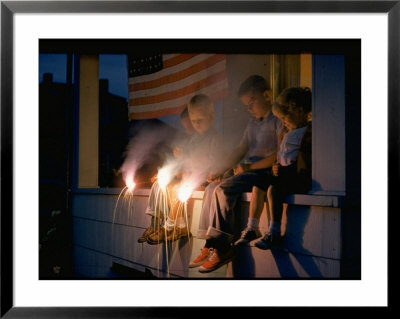
Independence Day and the state of the church in America.

Today marks the 234th anniversary of our nation’s birth, but this occasion brings to mind two problems that I see within Christendom; both of which have the same solution.

Firstly, why do we (every year at this time) feel the need to mix nationalism with the church? On this Sunday, Christians will be running from church to BBQs and parties; some won’t even need to leave the church property as all the festivities will be rolled into one like a church in my local area advertising the events they’re having at their “community freedom festival” which include:

Pony rides / Face painting / Food and drinks / Sno-cones, popcorn, cotton candy / Games and prizes / Bounce houses / Giant slide / Dunk tank / Crafts for the kids / Live music / And much more.

Remember, dear readers, this is a “church.” The only reference on their advertisement that has anything to do with Christianity (not even the name of the church indicates it’s a church) is the slogan “Christian Fellowship” under the church name. If you miss that, you won’t even know it’s a church.

Then there’sthis church’s 4th of July baptism fiasco:

“You don’t want to miss this weekend at NPC. There will be a special dueling guitar performance, spectacular pyrotechnics and hundreds of people getting dunked at Freedom Splash. It’s a great way to begin your Independence Day festivities! . . . Freedom Splash is a weekend designed for hundreds of families, adults, teenagers, and kids to get baptized. We invite you to take this step this weekend! We will have 2 giant swimming pools set up outside the main entrance. After attending service make your way out to the pools, sign in, and get baptized. . . . Jesus asked us to make our faith public by being baptized, so invite your family and friends to come and witness this step in your faith journey. You will receive an awesome Freedom Splash t-shirt to wear the day of the event (there is a $5 donation for the t-shirt, if you can’t pay still come and sign up).”

I am not opposed to celebrating Independence Day, but I am opposed to the mixture of the things of this world with the things of God, even if the thing being mixed is commendable, like patriotism.

The inescapable fact of the matter is that our nation today bears very little resemblance to that which was birthed in 1776, and I seriously doubt we will ever recover from its current state of moral and spiritual decay to return to what it once was.

Yet today, many of the messages in churches will have an Americana theme, and “God bless America” will be peppered throughout numerous sermons, as if God somehow overlooks the sin of this nation and its people because, after all, we’re Americans.

Today is the Lord’s Day, but what will be the main theme in many churches in America? I ask you to examine for yourselves what the emphasis will be on. Will it be on Christ or the country? What should the emphasis in church be on?

This leads me to my second concern: This independence day, should we be celebrating or mourning, partying or repenting? There’s an elephant in the room that no one seems to be talking about.

This, I know, will ruffle some feathers (even amongst the faithful readership of DefCon) but it needs to be said: Since when did Christianity become a political wing or special interest group?

As the masses in Christendom still seriously think they can ask God to bless this nation, they continue to hold out hope for America by means of political action. So many professing Christians I know of can spend countless hours talking politics, and countless hours working toward obtaining the desired results of the next election, yet how many of them talk about the Gospel with those same family members, neighbors, and friends?

I’ve bullet-pointed a few more of my concerns:

–  How much time and effort do Christians spend on politics compared to Bible reading, prayer, family devotions, evangelism, etc?

– Are there any politicians who—if they win—would really make a difference? Look at how many elections we’ve had since Roe v. Wade (many of which put pro-life Republicans into power), yet the genocide of the most innocent and defenseless class in our society rages on as we “legally” put more children to death daily than the terrorists had killed on 9/11.

– Are there any politicians who—like many who founded this country—are selfless in their political endeavors? Can you (honestly) name one politician who is involved in politics for the people and not for their own greed and self-interests? If you can, then I ask you, “Do they have a chance of winning?”

– What are Christians fighting in the political arena for? If they elected every person on the ballot that they thought was the best for our country, would it really change anything? Would they be capable of renewing the hearts of the people?

– Be careful what you wish for: You want to elect people who will re-institute school prayer? If they reversed the ban today, I fear your children in the government schools would be bowing to Mecca tomorrow.

– What is more important and has greater eternal consequences? The spreading of your politics views, or the preaching of Christ and Him crucified?

– How do you ever expect to reach your unsaved neighbor or coworker (the one who happens to be a staunch liberal democrat) when they see your car plastered with political bumper stickers and your front lawn littered with campaign signs, all of which advance a political worldview that is in complete opposition to their political world view? Have you not already polarized them before they meet you and have you not already turned them off to any other message you may bring before you even open your mouth?

– Is it politics and social issues that are the power unto salvation, or is it the Gospel?

– How much does evangelism suffer because politics reigns supreme in the lives of so many Christians?

My plea is that we will remove our heads out of the political sand. We will not change the inevitable course this country is on (if you can’t see the handwriting on the wall, you’re not paying attention).

In just my generation alone, homosexuality went from a taboo, to being embraced, to being celebrated, to being a morally virtuous lifestyle, to laws being passed that make those who oppose it fit to be charged criminally for “hate crimes” (as if there’s such a thing as a “love crime”). Mark my words, you will not stop the current tide no matter how politically active you are. Homosexual marriage will become a reality in this country; abortion will continue in this country; spiritual decline and carnal decadence will continue in this country, no matter who gets elected.

History shows that when a nation gets to where we are, it crumbles from the inside and is soon taken over by other nations that only had to sit back and wait for the moral rot to hollow out our foundations. (There’s even suggestions that this nation has already been abandoned by God, in spite of our plethora of “God bless America” bumper stickers, hats, and t-shirts.)

Jesus, the Disciples, and even the Apostle Paul never tried to change hearts by political action, nor did they try to legislate morality in the Roman world. They were too busy preaching “Repent, for the Kingdom of Heaven is at hand.” Yet American Christianity is too busy to preach the Gospel because they are so enamored and preoccupied with worldly politics.

Let me ask you, how many people do you expect to see in heaven because of your political efforts? Is God more glorified through the preaching of His Son, or through the preaching of the benefits and virtues of the latest political flavor of the month?

I’d like to conclude by clarifying what this missive is NOT about. Unfortunately I must do this because blogging experience has taught me that my words will be misunderstood and even twisted to create arguments that I never advanced:

– I am NOT against attending (or even hosting) Independence Day parties and BBQs; I’m simply saying that worldly celebrations should not be mingled (and ultimately eclipse) Jesus Christ on the Lord’s Day (or any other day for that matter).

– I do NOT rejoice at seeing what America has come to. I do NOT like when bad things happen to it. I am terribly sad to see what it has become and am angered when it is attacked. It still hurts to ponder the events of 9/11.

– I do NOT hate this country. This is the country of my birth and I have always been happy to live here. I still get teary-eyed during the playing of the Star Spangled Banner and Lee Greenwood’s God Bless the USA.

I love what this country was, but am grieved by what it’s become. The country we have today is not the country that was founded by this nation’s forefathers, and there’s nothing you or I can do to stop or reverse the condition we find ourselves in. Instead, I urge you to return to your first love, the Lord Jesus Christ. Turn your affections once again to Him, His Church, and to the work of building up His kingdom—not by worldly Dominionst means—but by making disciples.

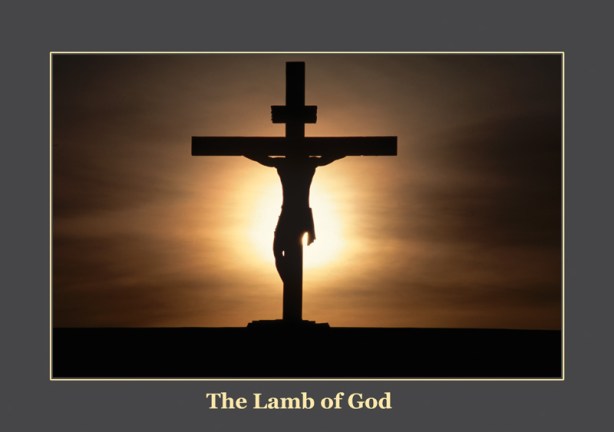
We should be identified first and foremost by our religion, not our politics. And our ultimate allegiance should not be to a political party, a flag, or a nation, but to the Lamb of God who is worthy to receive honor, and glory, and power, forever and ever, Amen.
See also: Has the Religious Right lost its voice in American politics?

_______________________________________________________

Quotes (757)

“For, lo, I will command, and I will sift the house of Israel among the nations, like as corn is sifted in a sieve, yet shall not the least grain fall upon the earth.” – Amos 9:9

Every sifting comes by divine command and permission.  Satan must ask leave before he can lay a finger upon Job.  Nay, more, in some sense our siftings are directly the work of heaven, for the text says, “I will sift the house of Israel”.  Satan, like a drudge, may hold the sieve, hoping to destroy the corn; but the overruling hand of the Master is accomplishing the purity of the grain by the very process which the enemy intended to be destructive.  Precious, but much sifted corn of the Lord’s floor, be comforted by the blessed fact that the Lord directeth both flail and sieve to His own glory, and to thine eternal profit. 

The Lord Jesus will surely use the fan which is in His hand, and will divide the precious from the vile.  All are not Israel that are of Israel; the heap on the barn floor is not clean provender, and hence the winnowing process must be performed.  In the sieve true weight alone has power.  Husks and chaff being devoid of substance must fly before the wind, and only solid corn will remain.

Observe the complete safety of the Lord’s wheat; even the least grain has a promise of preservation.  God Himself sifts, and therefore it is stern and terrible work; He sifts them in all places, “among the nations”; He sifts them in the most effectual manner, “like corn is sifted in a sieve”; and yet for all this, not the smallest, lightest, or most shrivelled grain, is permitted to fall to the ground.  Every individual believer is precious in the sight of the Lord, a shepherd would not lose one sheep, nor a jeweller one diamond, nor a mother one child, nor a man one limb of his body, nor will the Lord lose one of His redeemed people.  However little we may be, if we are the Lord’s, we may rejoice that we are preserved in Christ Jesus.

– Charles Spurgeon

1834 – 1892

O Come, O Come, Emmanuel.

I suppose I’ll be the first to start this season’s music off with my all-time favorite Christmas song. This is a beautiful rendition by Christina Sonnemann.

O come, O come, Emmanuel
And ransom captive Israel
That mourns in lonely exile here
Until the Son of God appear
Rejoice! Rejoice! Emmanuel
Shall come to thee, O Israel

O come, O come, Emmanuel
And ransom captive Israel
That mourns in lonely exile here
Until the Son of God appear
Rejoice! Rejoice! Emmanuel
Shall come to thee, O Israel

O come, Thou Key of David, come
And open wide our heavenly home
Make safe the way that leads on high
And close the path to misery
Rejoice! Rejoice! Emmanuel
Shall come to thee, O Israel

God is severely and inflexibly just.

Nate’s back with another powerful, must-see video.

You can also download the audio version of this video by right-clicking here.

_____________________________________________________________________

See Nate’s other warning for the church here.

See also A Test: Are you Loving or Unloving?