
In the desire to keep Christ the center of what we do here at DefCon, the Sermon of the week has been retracted by the Author due to concerns regarding the character of the man who preached it.
Evangelism
What Do You Do When You Ask Jesus Into Your Heart But He Doesn’t Stick Around?
 I have heard this story before. A young boy or girl attends VBS and at the end of the week, they raised their hand and said the prayer. Or maybe, when they were older they came forward at the altar call at church or at the local evangelist crusade. No matter the venue, they were told to “ask Jesus into their heart,” and assured that once He came in, life would get better. They were assured they were a Christian now, and were told to never question it, no matter what. The initial spiritual high carried them for a time. They read their Bibles, went to church, talked about how great it was to be a Christian. But in time, the buzz wore off. The feeling just wasn’t there anymore. Other things, people or events just seemed more interesting. Or they began to be ostracized by their peers, so the compromises began. Before long, life was like it was before, or maybe worse because they began to look for other things to fill the void. But no matter how bad it might be, they were still a Christian…weren’t they?
When it comes to the modern day evangelism of “asking Jesus into your heart” there is a very big problem in that it rarely, if ever, addresses the issue that a person is a wretched, vile sinner. A spiritual criminal deserving of God’s righteous judgment. It avoids examining the life of the person under God’s law. It fails to show that when we lie, steal, lust, hate, blaspheme God, or any other sin, we are committing crimes against our Lord. It fails to reveal that on the day that we stand before God, every sin, every thought, word and deed is called into account. And because God is a good and just Judge, He will condemn us to Hell for eternity. It does not explain that the punishment is infinite because we have sinned against an infinite God.
When the church tells a person to, “just ask Jesus into your heart” there is very little weighing of the issue. Very little understanding of the severity of their sins. Consequently, many people will experimentally ask Jesus to become part of their lives without ever turning away from the sinful life they have lead. In other words, because they didn’t understand how wicked they were, they never obeyed the command to repent. They simply saw Jesus as a way to make their life better, or as some sort of “fire insurance.” There was no genuine commitment or surrender of their lives. If that happens, that person is not genuinely born again. And if they are not born again, they are still slaves to their sinful nature.
Often times, churches today will ask people to repeat a prayer, sign a card and get them baptized. Once that is done, they absolutely assure them they are saved and tell them to never doubt it. And if they see that person returning back to worldly pursuits, they claim they are backslidden, a person who is a Christian, but is actively sinning.
Such an evangelistic program, while certainly adding numbers to church roles, actually does more damage than good. The problem is twofold. First, the Bible tells us to examine ourselves to see if we are truly in the faith. Both the books of James and 1 John help us examine our walk to see if we are actually producing fruit that is consistent with a born again Christian. That doesn’t mean that once a Christian gets saved he is suddenly perfect, but what is the course of his life. If a person can look at their life and see that it is, bit by bit, growing in a God honoring direction, then they can see true spiritual fruit that is consistent with being born again. But if they look like the rest of the world day to day, if there is no brokenness, no desire for true repentance, then it would become prudent to ask if they were ever actually born again.
The second problem with the modern day gospel presentation is that it ignores the truth of false converts. In the parable of the soils, Jesus taught of two groups of people who spring up as apparent converts upon hearing the gospel. However, in due time, they fall away either because of the cares of the world or from persecution. The falling away demonstrates that they never were in the faith to begin with. So when the church baptizes someone and assures them they are saved without ever looking at the fruit of their walk, it can actually add numbers of false converts to the list.
So what does all this mean for you the reader? Well, the first question would be to ask yourself if you are truly saved. Examine your walk in the light of the Bible. Do you truly love the Lord? Do you desire to obey His commandments above all else? Do you hate your sin because you love Lord and don’t wish to sin against Him? Or do you care more about the things of this world? Is the only time you feel bad about sin is when you have to suffer the consequences?
If it is the former, I would encourage you to dig into the gospels again. Learn what it is that Christ did for you because He loves you. Gain assurance by preaching the gospel to yourself daily. But if it is the latter, then you need to repent of your sins and trust in Christ now. You need to get saved for the first time. What happened before may have only been an experimental attempt, but one where, like so many others, you never truly repented and trusted in the Savior. If that is so, then examine your life, understand that your sins are an offense to God deserving of judgment. Yet know that His Son died to pay the price that you deserved. Turn away from those sins and trust in the Savior today.
(Note: this article is also published on my personal blog at fernleycrossguy.wordpress.com)
What the gospel is NOT.
Meet James Lyman. He is the man in the below video street preaching (I use the term very loosely as to not bring reproach upon those men out there who actually preach Christ and Him crucified on street corners).
As you’ll see in the video, exactly what Mr. Lyman is preaching is a little hard to pin down, as there seems to be no gospel message. It seems that Law and gospel have taken a backseat to just plain condemnation and ridicule.
If you recall, Mr. Lyman is the man who mocked, ridiculed, and called Rosie O’Donnell names while street preaching at this past year’s Superbowl. He then defended his actions here on DefCon.
How Mr. Lyman treats this woman is heartbreaking, for the message of the gospel is supposed to be the offense, not those who carry the message of the gospel.
For those who are not familiar with the preaching of the gospel, rest assured, this is not it.
Quiz: Are you loving or unloving?
Here’s a quick and simple six-question quiz to determine whether you’re loving (“tolerant”) or unloving (close minded and “intolerant”).
 1). You’re sitting in a coffee shop when a woman at another table gets up–leaving her coffee unattended–to get a napkin. As she does, a man walks by her table, pours a powdered substance into the woman’s coffee and quickly exits the shop. You immediately warn this woman of what just happened. Your reaction is:
A. Loving
B. Unloving. This is none of your business. Quit interfering with other people’s lives.
 2). A small child runs toward a bush to retrieve his ball that rolled into it. You know that the bush contains a rattlesnake nest. You yell out for the kid to stop. Your yelling at this child is:
A. Loving
B. Unloving. Who are you to impose your beliefs onto this kid. His parents have a right to raise him how they see fit without your close-minded “snakes are bad” views being forced down his throat.
 3). You are woken to the sounds of fire alarms and the smell of smoke in your apartment complex. As you hastily exit your apartment you notice that no one has alerted your elderly neighbors who are deaf. You bang on their door (and even kick it in if necessary) to alert them of the pending doom. This action that you’re taking is:
A. Loving.
B. Unloving. Have you considered that perhaps this couple is happy where they are? Why wake them from their slumber? If they’re happy, then leave them be.
 4). On a dark and rainy night you observe a family in a car heading home in the direction of a washed-out bridge. You holler and flail your arms, making every effort you can to get their attention to warn them. Your behavior is:
A. Loving
B. Unloving. All roads lead to their house. Who are you to tell them that the road that they’ve chosen to go home will lead to their deaths?
 5). While sitting in your car waiting for your friend in a bank, you observe a man walk into the bank wearing a stocking on his face and carrying a gun. You call 911.This judgment of the man’s intentions is:
A. Loving
B. Unloving. “Judge not lest ye be judged!” Who are you to judge this man’s heart. Maybe his intentions are good and he will do no harm to those inside. You’re always so negative and have no faith in other people. You’ve condemned this man already. Jesus would have never done that, He would have befriended him. You need to be more like Jesus.
 6). Your friend is going to die in his sins, and when he wakes up on the other side of eternity, will find himself in Hell. You share with him the fact that his unrepentant sin will condemn him before a holy God and that he deserves God’s wrath (just like everyone else) because he’s transgressed God’s laws. You further explain that any of his attempts to purchase God’s forgiveness by his own obedience to the Law or good works is futile because not only are we saved by faith apart from the works and the Law, but God’s grace is not earned, it is a gift. You share with your friend that through the death of one Man, God has provided forgiveness to sinners, but this unmerited favor for sinners is only found in God’s Son, Jesus Christ, who ransomed us with His own blood. God’s only Son took our sin upon Himself on the cross and, in turn, imputed his perfect righteousness to us. You tell your friend that Jesus became a propitiation for him in order to absorb the wrath of God that he deserves. You urge your friend to repent and put his trust in Jesus Christ alone for salvation. This discussion with your friend is:
A. Loving.
B. Unloving. Insert any of the above “B” answers (or all of them) here: __________.
Joel Osteen and (Mormon) Mitt Romney believe in the same Jesus?
Toward the end of this video Joel Osteen says that he’s heard that Mormon presidential candidate Mitt Romney “believes in Jesus as his savior just like I do.”
This is inevitable result of having absolutely no doctrinal foundation other than “God loves you and has a wonderful plan for your life.”
When you place so little value on understanding doctrine (the very thing that defines who Jesus is) and instead spend so much time trying to live your best life now and becoming a better you, the line between truth and error become so blurred that black and white becomes gray, and countless souls perish because of it.
Behold, the Lamb of God!
 The Lamb of God foreshadowed:
Then Moses called for all the elders of Israel and said to them, “Go and take for yourselves lambs according to your families, and slay the Passover lamb. You shall take a bunch of hyssop and dip it in the blood which is in the basin, and apply some of the blood that is in the basin to the lintel and the two doorposts; and none of you shall go outside the door of his house until morning. For the LORD will pass through to smite the Egyptians; and when He sees the blood on the lintel and on the two doorposts, the LORD will pass over the door and will not allow the destroyer to come in to your houses to smite you.
Exodus 12:21-23
The Lamb of God foretold:
He was oppressed and He was afflicted, Yet He did not open His mouth;
Like a lamb that is led to slaughter,
And like a sheep that is silent before its shearers, So He did not open His mouth.
Isaiah 53:7
The Lamb of God arrives:
The next day he saw Jesus coming to him and *said, “Behold, the Lamb of God who takes away the sin of the world! . . . and he looked at Jesus as He walked, and *said, “Behold, the Lamb of God!”
John 1:29 & John 1:36
The Lamb of God purchases His people:
Knowing that you were not redeemed with perishable things like silver or gold from your futile way of life inherited from your forefathers.
1 Peter 1:18
The Lamb of God on His throne:
I saw in the right hand of Him who sat on the throne a book written inside and on the back, sealed up with seven seals. And I saw a strong angel proclaiming with a loud voice, “Who is worthy to open the book and to break its seals?” And no one in heaven or on the earth or under the earth was able to open the book or to look into it. Then I began to weep greatly because no one was found worthy to open the book or to look into it; 5 and one of the elders *said to me, “Stop weeping; behold, the Lion that is from the tribe of Judah, the Root of David, has overcome so as to open the book and its seven seals.”
And I saw between the throne (with the four living creatures) and the elders a Lamb standing, as if slain, having seven horns and seven eyes, which are the seven Spirits of God, sent out into all the earth. And He came and took the book out of the right hand of Him who sat on the throne. When He had taken the book, the four living creatures and the twenty-four elders fell down before the Lamb, each one holding a harp and golden bowls full of incense, which are the prayers of the saints. And they sang a new song, saying,
“Worthy are You to take the book and to break its seals; for You were slain, and purchased for God with Your blood men from every tribe and tongue and people and nation.
“You have made them to be a kingdom and priests to our God; and they will reign upon the earth.”
Then I looked, and I heard the voice of many angels around the throne and the living creatures and the elders; and the number of them was myriads of myriads, and thousands of thousands, saying with a loud voice,
“Worthy is the Lamb that was slain to receive power and riches and wisdom and might and honor and glory and blessing.”
And every created thing which is in heaven and on the earth and under the earth and on the sea, and all things in them, I heard saying,
“To Him who sits on the throne, and to the Lamb, be blessing and honor and glory and dominion forever and ever.”
And the four living creatures kept saying, “Amen.” And the elders fell down and worshiped.
Revelation 5:1-14
The most terrifying truth in Scripture.
The first vision.
Two brief videos on Joseph Smith’s varied first vision accounts by LDSvideo.org.
See also:
The various first visions of Joseph Smith
and
Dear Mormon: Which version of the first vision do you believe?
An open letter to Rosie O’Donnell.
Dear Rosie:
After watching the exchange between you and the street preacher in the brief video clip below, I felt compelled to respond.
I am not privy to the conversation between you and the men before the video began rolling so I do not know what was said, but honestly, what took place beforehand is irrelevant and does not justify what was said to you by the one with the microphone. How you were treated was appalling, despicable, and reprehensible.
It is obvious that the man insulting you and calling you names was speaking from a position of prideful arrogance and as one who does not fully understand the pit from which God saved him from (although his behavior would lead me to seriously question if he truly has been saved from anything).
On behalf of Christians, I want to publicly apologize for how you were treated. This man does not speak for, nor did his actions represent genuine, biblical Christianity. Instead, he displayed a sinfully self-righteous attitude reminiscent of that of the Pharisees.
I see very little difference between his behavior and that of the clan from the Westboro “Baptist Church.” Both come from a position of I’m superior to you because you’re a sinner, instead of coming from a position of I am a sinner saved by God’s undeserved grace and was facing God’s justly deserved wrath until He saved me for His glory.
God is opposed to the proud but gives grace to the humble (1 Peter 5:5). The man insulting you showed absolutely no humbleness nor concern for your soul, but instead displayed an abundantly self-righteous attitude revealing that the impetus behind his behavior was nothing but sheer pride. His harsh and demeaning words to you exposed not only his utter lack of understanding of God’s grace and God’s mercy, but it also revealed what was in his heart (Luke 6:45) as well as his astounding ignorance of the very gospel of Jesus Christ that he claims to represent.
I seriously have to question the salvation of any professing Christian who revels and delights in the prospect of someone facing Hell–ridiculing and insulting them–instead of grieving for that perishing soul. For not even God takes pleasure in the death of the wicked, but prefers for the sinner to turn from their ways (Ezekiel 18:23).
The Great Exchange.

Life is filled with unanswered questions. The most troubling of which are questions surrounding the afterlife. For example: What happens to us after we die? Who will find themselves in Hell? How does someone get to Heaven?
We hear many opinions about these mysteries from family, friends, co-workers, churches, religious leaders, psychics, and even television talk show hosts. But the one issue that needs to be dealt with before we die is the one problem that people rarely—if ever—mention. It’s the dilemma they cannot account for, remedy or fix, yet it is the one thing that will determine where each and every one of us will spend eternity. This problem that I am speaking of is sin.
We all do it.
Every person who has ever lived or is living now has sinned (Romans 3:9, 3:23), and as long as we live we continue to indulge in sin (Genesis 6:5). None of us are free of sin (1 John 1:8), and God will judge us for every one of our sins, including the secret ones we thought were hidden (1 Samuel 16:7, Ecclesiastes 12:14, Romans 2:16, Romans 8:27).
Sin results in two deaths.
The sin that we inherited from Adam and the sin we willingly commit every day will result in our physical death (Romans 5:12-17, 6:23), but of greater peril than our physical death is that our sin will result in what’s called the “second death” (Revelation 21:8). This “second death” is better known as Hell, a very real and horrifying place consisting of eternal punishment, darkness, weeping, gnashing of teeth, and an unquenchable fire (Matthew 8:12, Luke 3:17, Jude 7).
Our common denial.
We are all guilty before God, condemned by a lifetime of accumulated sin, but some people aren’t convinced that they’re sinners until they face these four questions:
– 1) Have you ever told a lie, even a little white lie? (Proverbs 6:16-17, Revelation 21:8)
– 2) Have you ever taken something that did not belong to you? (Leviticus 19:11)
– 3) Have you ever lusted after someone? (Matthew 5:27-28)
– 4) Have you ever used God’s name in vain? (Exodus 20:7)
If you answered “Yes” to these four questions then you’ve admitted to being a lying, thieving, adulterous blasphemer. On the great and dreadful day of God’s final judgment, will you be found guilty or innocent? Based on God’s standards (not ours), the answer is obvious: you, like the rest of mankind, will stand condemned.
We’re already under God’s judgment.
Contrary to popular opinion, we do not have to wait until the day of God’s judgment to find out whether or not we’re in right standing with God. It’s not a question of if upon your death you’ll be condemned to God’s eternal, fierce, and terrifying judgment; it’s already your current condition. Because we’ve all sinned, we are already under His judgment and consigned to His wrath (John 3:18, 3:36).
Our obedience and good works are useless.
If you try to pay your sin-debt to God and earn His favor by being a good person and following the Law, then you must follow all of God’s Laws perfectly your entire life without ever failing in one area or you’ll be charged with breaking all of His Laws (Galatians 3:10, James 2:10). If you’ve already sinned in your life—even once—then perfect obedience to the Law for salvation is not even an option for you.
Not only are you under a curse if you sin in just one area of the Law, but you’re incapable of completely obeying the Law even if you wanted to (Romans 8:6-8). And—as if it couldn’t get any worse—the Bible tells us that those who try to earn their salvation by following the Law have fallen from grace and are cut off from Christ (Galatians 5:4).
God expects absolute moral perfection.
Not only does God require us to be holy (Leviticus 11:44, 1 Peter 1:16), but Jesus said that our righteousness must surpasses that of the Pharisees (Matthew 5:20) and we must be perfect just as God is perfect (Matthew 5:48).
God cannot forgive you and still remain holy.
God cannot simply forgive us of our sin without becoming an abomination unto Himself (Proverbs 17:15, 18:5, 24:24). It would be unjust and corrupt of Him to merely overlook our sin-debt just as it would be for an earthly judge to overlook the transgressions of a criminal in his courtroom. We shouldn’t expect God to forgive our offense to Him any more than we should expect an earthly judge to simply forgive the man who was guilty of murder. If the court judge let the criminal go free because he’s a tolerant, forgiving, and loving judge, then that judge would be as wicked as the murderer who committed the crime. Such a pardon would be the epitome of corruption and injustice, yet this is exactly what most people expect God will do for them when they stand before Him on Judgment Day.
God cannot simply ignore your sin and still remain a righteous and just Judge because justice demands that punishment be carried out. Based on the moral standard required of our holy, perfect, and righteous final Judge, you and I must be eternally punished under God’s relentless, unmitigated wrath because we have sinned against an eternal and infinitely holy God.
What hope is there?
So, what hope is there? How can we be forgiven for our multitude of sins that require punishment? How can God justify the sinner and still remain just (Romans 3:26)?
But God . . .
But God, our Judge, being merciful and because of His great love toward us (even while we were still sinners and dead in our transgressions), provided the means of salvation by brutally sacrificing His own Son so that we may be forgiven and reconciled to Him (Romans 5:8, Ephesians 2:4).
Without the shedding of blood there is no remission of sins (Leviticus 17:11, Hebrews 9:22). The only way for us to be forgiven of our transgressions is for someone to die in our place (a propitiatory substitute) in order to bear the wrath of God that our sins justly deserve. Only a sinless sacrifice could redeem us and bridge the gap between a holy and righteous God and a depraved and sinful people. The sacrifice had to be fully human and fully God in order to qualify to be an adequate mediator to reconcile us to God.
God crushed His own Son (Isaiah 53:10) as He placed our sins upon Him (Isaiah 53:6). Jesus bore our sins on the cross (Psalm 22:16, Isaiah 53:12, 1 Peter 2:24), and He redeemed us from the curse of the Law by becoming a curse for us (Galatians 3:13).The Father placed the wretched, filthy, and vile sins of His people upon His beloved, sinless Son so that Jesus would become sin on our behalf (our substitute) while simultaneously giving (imputing) Christ’s righteousness to us (Romans 4:22-24, 2 Corinthians 5:21, Philippians 3:9). Jesus Christ not only paid our insurmountable debt of sin with His own life (a debt we could never pay), but He also credited His own perfect righteousness to our account—the very righteousness that God requires of us but that we could never obtain on our own. This judicial transfer or great exchange meets the requirements of God’s Law and satisfies the demands of God’s justice.
Jesus Christ is the one and only means God provided to reconcile us to Himself. The Son is the only way to the Father (John 14:6), and salvation is found in no one but Jesus (Acts 4:12). No matter how “good” we think we are or how hard we strive to follow God’s Laws, no one (not even you or me) is justified by the Law (Galatians 2:16, 3:11) but by faith in Christ alone because, if righteousness could be obtained by following the Law, then Jesus Christ died needlessly (Galatians 2:21).
Once upon a cross . . .
Either Jesus paid for your sins and absorbed God’s wrath for you by His substitutionary death on the cross, and conversely His righteousness has been merited to you, or you will pay for your own sins and endure God’s unrelenting wrath for eternity in Hell. God declares that we should repent because He has appointed a day in which He will judge the world (Acts 17:30-31). It will be a terrifying day for you (Proverbs 21:15, Hebrews 10:31) if you haven’t repented (Luke 13:3) and believed/trusted (Mark 1:15) in Christ alone as your perfect sacrificial substitute, Savior, and Lord.

Quotes (931)
 Mormons do not take criticism of their faith lightly; sadly, many [of them] have followed the path of our culture in assuming that disagreement is akin to bigotry.
– Bill McKeever
The source of LDS lunar life discovered?
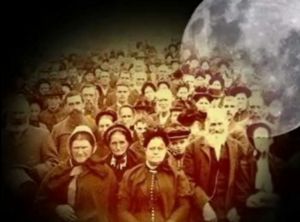 Those who have studied Mormonism’s history have seen that much of the Book of Mormon was written largely in part thanks to other sources that were available to Joseph Smith at the time he lived.
The two most notable examples are Joseph Smith’s plagiarism of the King James Bible, and Joseph Smith’s not-so-unique tales of native American Indians being ancestors of Israelites. The former was the standard translation of the Bible used in America at that time, and the latter was a popular notion advanced in numerous books during Joseph Smith’s time.
Even Mormons (including LDS general authority member and apologist B.H. Roberts) have had to concede the uncanny similarities between the Book of Mormon and other works of men available to Joseph Smith at the time.
In fact, there’s been much discussion about writings by Solomon Spaulding and Ethan Smith which are eerily similar to that of the Book of Mormon and predate the Book of Mormon.
You can read more on Solomon Spaulding’s manuscript here, and view the numerous similarities between Ethan Smith’s work and Joseph Smith’s Book of Mormon here.

But the Indians-are-Hebrews stories aren’t the only tales that were circulating during Joseph Smith’s time
There is another Mormon teaching that was espoused by early Mormon leaders that–like the Indian/Hebrew theory–was also not original to Mormonism. I’m speaking of the Mormon teaching that the moon was inhabited by men.
Oliver B. Huntington, who was a close associate of Joseph Smith and remained a faithful Mormon his whole life, said:
Astronomers and philosophers have, from time almost immemorial until very recently, asserted that the moon was uninhabited, that it had no atmosphere, etc. But recent discoveries, through the means of powerful telescopes, have given scientists a doubt or two upon the old theory. Nearly all the great discoveries of men in the last half century have, in one way or another, either directly or indirectly, contributed to prove Joseph Smith to be a prophet. As far back as 1837, I know that he said the moon was inhabited by men and women the same as this earth, and that they lived to a greater age than we do, that they live generally to near the age of a 1000 years. He described the men as averaging near six feet in height, and dressing quite uniformly in something near the Quaker style. In my Patriarchal blessing, given by the father of Joseph the Prophet, in Kirtland, 1837, I was told that I should preach the gospel before I was 21 years of age; that I should preach the gospel to the inhabitants upon the islands of the sea, and–to the inhabitants of the moon, even the planet you can now behold with your eyes. Young Woman’s Journal, Volume 3, pages 263-264, 1892
Huntington also said the following of Joseph Smith’s teaching regarding moon people:
The inhabitants of the moon are more of a uniform size than the inhabitants of the earth, being about 6 feet in height. They dress very much like the quaker style and are quite general in style, or fashion of dress. They live to be very old; coming generally, near a thousand years.” This is the description of them as given by Joseph the Seer, and he could “see” whatever he asked the father in the name of Jesus to see. The Journal of Oliver B. Huntington, Volume 3, Page 166
William A. Linn had this to say about Martin Harris, one of the three Witnesses to the Book of Mormon:
Daniel Hendrix relates that as he and [Martin] Harris were riding to the village one evening, and he remarked on the beauty of the moon, Harris replied that if his companion could only see it as he had, he might well call it beautiful, explaining that he had actually visited the moon, and added that it “was only the faithful who were permitted to visit celestial regions.” William A. Linn, The Story of the Mormons, Page 35, 1902
Of, course, not to be outdone by all the grandiose claims, Mormon Prophet Brigham Young went even farther by alleging that there are solar inhabitants as well:
We are called ignorant; so we are: but what of it? Are not all ignorant? I rather think so. Who can tell us of the inhabitants of this little planet that shines of an evening, called the moon? When we view its face we may see what is termed “the man in the moon,” and what some philosophers declare are the shadows of mountains. But these sayings are very vague, and amount to nothing; and when you inquire about the inhabitants of that sphere you find that the most learned are as ignorant in regard to them as the most ignorant of their fellows. So it is with regard to the inhabitants of the sun. Do you think it is inhabited? I rather think it is. Do you think there is any life there? No question of it; it was not made in vain. It was made to give light to those who dwell upon it, and to other planets; and so will this earth when it is celestialized. Journal of Discourses, Volume 13, Page 271, 1870
 So where did early Mormon leaders devise such tall tales about moon people and sun dwellers?
Well, all of the above quotes from Mormonism arose after 1835, the year when a tale of lunar habitation by humans was being spun by a paper called the New York Sun. A tale that later became known as The Great Moon Hoax.
In August of 1835 (just two years before Oliver B. Huntington said Joseph Smith began talking about inhabitants of the moon) the New York Sun (a paper from Joseph Smith’s own home state) reported that British astronomer Sir John Herschel discovered people living on the moon (as well as unicorns and hut-dwelling, fire-wielding bi-ped beavers).
Of course, thanks to advancements in astronomy, we now know for certain that men do not live on the moon (or the sun) and modern Mormons have since back-peddled from these teachings (painting over them with a veneer that these were only their leaders’ “opinion”). But even though they recognized the foolishness of these teachings, they still believe in extra-terrestrial habitation on other planets . . . just not on our moon or sun.
Mormon prophet Brigham Young said:
Mankind are here because they are the offspring of parents who were first brought here from another planet, and power was given them to propagate their species. Journal of Discourses, Volume 7, Page 285, 1859
Joseph Fielding Smith, tenth prophet/president of the Mormon organization, said:
We are not the only people that the Lord has created. We have brothers and sisters on other earths. They look like us because they, too, are the children of God and were created in his image, for they are also his offspring. Doctrines of Salvation, Volume 1, Page 62
Recognizing the prophets’ errors of claiming the moon and sun are inhabited is honest and the right thing to do, but why still cling to the idea that other planets are inhabited?
I’m still waiting for LDS apologists to finally concede that the Book of Mormon was just Joseph Smith’s “opinion” as well since advancements in archeology have not revealed one city, town, sword, shield, coin or other artifact or location in Book of Mormon history; advancements in DNA science have proven that American Indians are not descendants of ancient Hebrews as the Book of Mormon claims; that there is not one ancient manuscript to support the authenticity of the Book of Mormon; that the “Reformed Egyptian” language Joseph Smith supposedly translated the Book of Mormon from has never existed; and that the Book of Mormon (called “the most correct of any book on earth”), has undergone 3,913 documented changes, corrections, and alterations since it’s original 1830 publication.
But I suppose, even in the face of all that evidence, the odds of Mormons admitting that the Book of Mormon was a fabrication is as slim as finding Quakers living on the moon.
A Roman Catholic on Chuck Colson on Mitt Romney on Mormonism.
 I just read an excellent article from NCR on Chuck Colson’s position on the issue of Mitt Romney’s Mormonism and its pertinence in American politics. Although the author of the article is Roman Catholic (which leads him to some erroneous conclusions like suggesting that Romanism is Christian), he does make some great points about this issue that Evangelical Christians should be cognizant of, while simultaneously pinpointing some of Chuck Colson’s poor misuse of Scripture.
Here’s an excerpt from the article:
Mormons are polytheists. They believe that the Father, the Son and the Holy Spirit are three different gods,that there are countless other gods besides, and that somewhere there is a “God the Mother” with whom the Father celestio-biologically reproduced Jesus.
Further, they believe that we are the same species as the gods and that by being a good Mormon you can grow up to be a divinity with your own planet of billions of people worshipping you.
Worse, they claim that actual Christianity is a false and degraded, apostate Christianity. That they are the true, restored Christianity.
They are therefore polytheists of a type that goes way beyond ancient paganism. Back then apotheosis was reserved for the emperor or the pharaoh, but more importantly polytheists did not claim to be Christians, much less to be the only true expression of Christianity with actual Christianity being a theological perversion.
Mormonism thus subverts the core doctrine of Christianity (the doctrine of God), passes off true Christianity as a counterfeit, and holds itself out to the public to be the genuine article.

You can read the entire article here, and as usual, the Mormons have flooded the comment section of the article.
______________________________________________
See also:
Should a Christian vote for Mitt Romney?
Should Christians vote for the lesser of two evils?
A shocking realization if a Mormon becomes president of the United States.
Order of Salvation (Ordo Salutis)
What really happens when one is born again? If all one does is consider what is seen and felt, one will conclude that one is born again by choosing Christ or accepting Him. 
But there is an unseen, spiritual reality described in the Bible – that man is born of the flesh dead spiritually, unable to do anything good and unable to desire to do anything good – as defined by God.
The humble creature who desires to know the Truth will – as best a man can do – set aside his presuppositions and preconceived conclusions that are based on what he sees and feels, and he will inquire humbly of the Lord, seeking wisdom from His Spirit, as he reads His word.
This that follows is an outline showing the spiritual reality – God predestined those He would save, in time, through faith (a gift given the elect) in Christ; who saves by grace alone and not through the deeds of the flesh or will of man, but by the will of God (John 1:12 – 13).
Order of Salvation (Ordo Salutis)
Predestination:
Rom. 8:29, 30; 9:1-25;
Eph. 1:3-14; 2 Thess 2:12,13
Effectual Calling (Regeneration)
John 1:12,13; 3:1-10; 6:44,45, 63-65
Eph. 2:1-5; Titus 3:3-6, Rom. 8:30
Faith/Repentance
Acts 20:21
(Faith)
Eph. 2:8,9; Phil. 1:29; Acts 13:48; 16:14;
18:27; James 2:14
(Repentance)
Acts 5:31; 11:18; 2 Cor. 7:10-11
Justification (Legal Declaration)
Deut. 25:1; Acts 10:43; Prov. 17:15
Rom. 3:21; 4:8; 5:1,2, 12-18; 8:32;
Gal. 2:16; 3:1-13; 2 Cor. 5:21; Phil. 3:9
Adoption
Rom. 8:15-17, 23-25; Gal. 4:1-5
John 1:12-13; 8:40 to end
I John 3:1,2
Definitive Sanctification
John 10:26-30; Rom. 6; I Cor. 1:2; 6:9-12
Progressive Sanctification
Lev. 11:44; Matt. 5-7; Rom. 13; Eph. 4-5;
Phil 2:1-13; I Cor. 13; Gal. 5:16-23;
I Peter 1:15,16; 2 Peter 1:1-10; 3:18
(Preservation of the Saints)
Jer. 32:40; John 6:37-40; 10:26-30
Rom. 8:30-end; Phil. 1:6; I John 3:9
Glorification
Matt 25; I Thess 4:13-end; 2 Cor. 5:1-8
Phil. 1:23; 3:20,21; I John 3:1-3
Rev. 6:9-10
Starbucks at the Expense of Gospel Outreach?
 As our family continues down the road, I never cease to be amazed at those who tell us, “Oh, I could never do what you are doing!” Or, they may comment, “Lord bless you, but that type of work is definitely not for me!”
Similar phrases normally revolve around the lack of amenities that are available in Liberia such as no electricity, little to no running water except in Monrovia, very poor roads, and an infrastructure that is probably 100 years behind America.
Yet, each time I hear these type of comments, I remember a quote I once heard that says,
“How much is too much for something or someone you love?”
The reference, as I recall, was John 3:16, “For God so loved the world, that he gave his only begotten Son, that whosoever believeth in him should not perish, but have everlasting life.”
The Lord Jesus Christ, who had need of nothing, laid aside the splendors of glory to come down to a sin-cursed world, took upon Himself human flesh, and became a servant, obedient even to the death of the cross. This was NOT too much for our Savior to do in order that He might redeem to Himself His elect from every tongue, people, and nation.
2000 years have passed since the Lord Jesus Christ came to this earth and there are billions who have never heard the gospel even once. Here in the west, we hear it on the radio, see it preached on the television, sit through brief sermonettes supposedly proclaiming the gospel and the glory of Christ, but rarely does anything change either in our hearts or in our lives.
Little more than 100 years ago, here in America, most did not have electricity, and very little running water unless it was hand-pumped. Trains were slow and travel to many parts of the USA was difficult. There was no Starbucks, no Wal-Mart, and no grocery stores lined with enough merchandise valued at what some small countries spend in an entire year on their own economy.
Let me put a little perspective into this last statement. The US Central Intelligence Agency puts Liberia’s GDP at $3.6 billion per year. Wal-Mart has annual sales of more than $370 billion. In other words, the total income of Liberia is just 1/10th of what Americans spend at Wal-Mart alone! This does not include the next top 5: Home Depot, Kroger, Target, Sears, and Costco. These last five stores account for another $340 billion in annual sales.
Does this not startle us? Does it not shock us? What about Starbucks? Annual sales for Starbucks in 2010 was $8.96 billion, which is 2 1/2 times the size of Liberia’s entire GDP!
Now it is no secret to family and friends that I do not like Wal-Mart for a variety of reasons, but I will admit to having had my share of Starbucks $4-5 cup of coffee. The more I consider the poverty around the world, the more it hurts when I take money the Lord has entrusted to my stewardship to buy a drink that is the equivalent of 2-3 days of work for a Liberian brother or sister. Yet I wonder how often our conscience is often soothed while we drink our lattes and iced cappuccinos and maybe even offer a quick prayer that the Lord will bless our Christian brothers overseas.
With this post, I am not advocating the boycott of Wal-Mart or Starbucks. What I am seeking to do is put a little perspective into what is often a mundane existence for us in the West. When our brothers and sisters are in need, I grow more and more convinced that we will give account for what we do with our finances.
So, we go back to the question of “How much is too much for someone or something you love?” Do we easily and glibly rattle off “For God so loved the world” and proclaim that while the gospel is for the world, we cannot be bothered to reach out because we are more interested in spending our funds on that which will gather moth and rust and will eventually decay?
Sundays in many evangelical circles even take this to an additional level. We gather around bagels, donuts, and lattes because without them we won’t draw the same size crowd. While everyone sips their drinks and proclaims how good and awesome God is, souls are slipping into eternity while we ease into Sunday barcoloungers and absent-mindedly throw a few crumpled dollars into the offering plate. As it slips from our fingers, we may even ask the Lord to “bless” our humble offerings and cause the gospel to be spread around the world.
Who are we fooling? What is wrong with us in the West that we can be blessed with so much and yet think that we have a responsibility to give so little? Jesus Christ came and gave of Himself in death – the ultimate sacrifice – so that we might be free from the penalty of death. How much is too much for us to give? Are we willing to do more than give of our finances? Will we give of ourselves?
The phrases often quoted to us are not just fair pictures of the malaise in evangelical churches when it comes to true sacrifice and the cause of missions. It is actually a reflection that maybe even at the base level – sometimes even a Starbucks White Chocolate Raspberry Mocha is too much for the Someone we claim to love.
Mormonism’s Bigfoot.
 I recently published an article on one of Mormonism’s wild claims about big, black, hairy Cain still roaming the earth in the post Mormon Prophet Lends Credibility to a Wild Claim. And, of course, the first response that post received from a Mormon apologist was:
The real shame is that it is simply a waste of time as no self-respecting person would really care enough to take the time to right [sic] about such meaningless prattle. Such a pity.
This was an interesting response considering the fact that it was important enough to Mormon President Spencer W. Kimball to write about it in his book The Miracle of Forgiveness. Evidently it’s only prattle when a non-Mormon discusses the matter.
And apparently one Mormon didn’t get the memo because he’s still talking (and writing) about the Cain/Bigfoot (and racism) matter. Blogger Doug Gibson has risked not being self-respecting because he’s been wasting his time by writing about such prattle when he recently published the post Awareness of Racism Eased Mormon Folk Tales Regarding Cain, Bigfoot. According to Gibson’s article, President Kimball wasn’t the only one in Mormon history to report claims of Cain/Bigfoot sightings.
Although some Mormon apologists would have you ignore such “prattle,” I highly encourage you to read Gibson’s article. And be sure to read all the enlightening comments afterward, like this sample from a commenter named Mikeasell:
Here is the deal: the church likes to teach what they call unchanged, revealed doctrine. When said doctrine becomes unpopular and threatens the church financially, the doctrine gets downgraded quickly to a “teaching” or a “guideline”, then a further downgrade to a “practice”, it is then removed from manuals and books (hence why people of different generations heard or did not hear the stories). Then the practice can simply be “discontinued”. They begin with the Lord has said X because Y is a true principle, live by it or go to hell, then they begin saying well we have been taught in the past that X=Y, then they begin with the “we don’t understand, but we are sure there is a mysterious purpose as to X is somewhat related to Y, but it is not for us to question the Lord”, then the blatant downgrade: we no longer “practice X, X practice has been discontinued, it is not really tied with Y”.
The reality is that the LDS church had inclusion criteria based on race. When it became apparent that the NCAA would allow teams like Stanford to avoid playing BYU and therefore the Church was having their non-profit status reviewed by the IRS, then suddenly (within a month) God changed his mind. Same with polygamy, it went from we will die before we give it up, we will break the law cuz God is a higher law, to sending ppl to Mexico to practice it to eventually pretending it really did not happen for that long or that it was because it was just a trial, there were too many men, etc. . . . .It is amazing to me, shocking really, that people are gullible enough to believe that a never changing restored gospel needs changing all the time, and surprisingly to accommodate cultural pressures. I cannot believe that people that believe in prophets can also believe that those prophets can not agree on basic doctrine, to the point that Joseph Smith, if he were to come back, would be excommunicated from the church he founded because of his beliefs and practices.
If Mormonism were true.
 An article from Mormon Coffee offers the following six things you’d expect to see if Mormonism were true. You can read the entire article here.
____________________________________
If Mormonism were true…
1. … Joseph Smith would have been able to consistently, accurately, remember his visit from two separate supernatural beings, God the Father and Jesus the Son. We now know that is not the case (for more info, see here, here, and here).
2. …the LDS “truth” that there are at least two gods, our Heavenly (spirit) Father, whose name is Elohim, and Jesus (Elohim’s son), whose spirit-name is Jehovah, would have been consistent since Mormonism’s beginnings. Instead, the Book of Mormon, Joseph Smith’s first work, preaches that there is only one (modal) God (see Alma 11:26-31, 2 Nephi 31:21, Mosiah 15:1-5 for example). Joseph Smith originally taught that Jesus’ father’s name was Jehovah, and Brigham Young, Mormonism’s second prophet, taught that Heavenly Father was actually Adam, the first man on earth. Joseph also originally taught that of the three members of the “Godhead,” only Jesus had a body. That of course is no longer Mormon belief.
3. …the Book of Mormon, a book that is supposed to contain the “fulness of the gospel,” would teach on the plurality of gods, man’s potential for godhood, eternal marriage in Mormon temples, baptism for the dead, three degrees of heaven, and the other beliefs that separate Mormonism from orthodox Christianity. Not only does the Book of Mormon not teach these things, it and the other LDS scriptures frequently contradict current Mormon truths, and each other.
4. …there would be evidence of a large battle on or around the Hill Cumorah in New York, and other archeological evidence to support the notion of Book of Mormon life on this continent. Instead, LDS apologists are still struggling to locate and identify possible Book of Mormon geography sites (see also here and here).
5. …the Book of Mormon would not contain Greek and French words like “adieu” and “Jesus” and “Alpha” and “Omega.” It would not speak of things that had not yet been invented. It would not contain quotes from the KJV Bible, including KJV mistakes. It would not abuse the phrase “it came to pass” in all of its books but two. It would not contain country-boy vernacular. But it does.
6. …when portions of the papyri used to create the Book of Abraham were recovered and translated, the text would be very similar to what Joseph had written. Instead, just as you would expect if Joseph Smith had bought merely a couple of random mummies that had been found in an ordinary catacomb from a man with many mummies and scraps to sell, the papyri has been discovered to be common Egyptian funerary documents.
Falling off yet another slippery slope.
 Those who warn others about impending issues, problems, doom, or calamities are often chided and ridiculed for being alarmists, and are often told that mentioning the “slippery slope” is nothing more than a scare tactic. It seems that to some, mentioning the “slippery slope” is a debate-killer much like when someone uses “Hitler” or “Nazis” as a comparative in their argument.
But don’t be fooled. Current facts, observable trends in a particular direction, and historical precedent are all valid indicators and can be properly used as predictors of what is likely to come.
It’s for this same reason that people can conclude that there’s a fire based on the presence and smell of smoke, and others surmise that a storm is coming based on dark clouds and the smell of rain in the air. But for some reason when the warnings are of a concern like the advent of socialism in a currently capitalistic nation or the falling away from truth in once well-grounded preachers (Ravi Zacharias and John Piper come to mind), then all of a sudden the facts, observable trends, and historical precedent are ignored and the “slippery slope” is considered a knee-jerk rant of an overzealous alarmist.
Remember those “crazy” pro-lifers from years ago that warned if abortion is made legal it would result in the death of millions of children as the barbaric act would become a form of birth control? “Nah,” retorted the abortion proponents, “It will only be done in the rare case of rape or incest, or if the mother’s life is at risk.” And remember how the pro-lifers with foresight argued that it was a “slippery slope” but were subsequently ridiculed by pro-abortionists for being extremists?
Forty million dismembered corpses later, the truth is obvious: We fell long and hard from that “slippery slope.”
And remember how Christians argued that granting special rights to those who practice a homosexual lifestyle was wrong, were labeled crazy and close minded because homosexuals only wanted to be protected from persecution and discrimination? And remember when Christians who claimed that normalizing homosexuality was a “slippery slope” toward normalizing other deviant behaviors like incest and pedophilia, were called oppressive bigots by vitriolic pro-homosexual activists?
Behold the first steps of legitimizing pedophilia:
Academic Conference Seeks to Normalize Pedophilia
Do not be shocked. We will continue to witness the downward spiral of the Evolution of Sin while we continue down the Roman Road to Wrath because we truly are in the Days of Noah. And don’t be discouraged because as the dark gets darker, the light of the Gospel shines brighter.
Look up, for our redemption draws near.
Sermonof the week: “Preaching the Gospel Message” by John MacArthur
 Your sermon of the week is Preaching the Gospel Message by John MacArthur. This sermon delivered at the 2007 Resolved conference outlines how God sovereignly uses weak and foolish messengers to employ the foolish means of preaching about the foolishness of the cross all to accomplish God’s sovereign will in His plan of salvation.
Evangelism, Facebook, and modesty.
 What does evangelism, Facebook, and modesty have in common? More than you may think.
Thanks to Trish Ramos for daring to touch this taboo issue affecting the church. I wish more women like Trish would take a stand with the few men who have already dared to address this problem. Together we’d still comprise only a minuscule minority, but that should not discourage us from encouraging the church to let the gospel revolutionize this area of our lives. We’ve been quietly stumbling over this elephant in the room for far too long.
Source: Fish With Trish
No doubt our Facebook pages can be a witnessing tool for the Gospel and with the advancement of modern technology and all the various social media venues, we don’t even have to leave the house to be a witness for the Lord. In fact, why else have a Facebook, but to tell of the Lord’s wondrous deeds and call others to turn from their sins and trust in the Savior, Jesus Christ. I’m sure there are many other reasons why we have Facebook pages but in the midst of it all, proclaiming the gospel should be the chief aim for any follower of Christ.
To show this more clearly, when you accept a friend on Facebook, typically the very first thing they do is view your pictures. In fact, sometimes that’s all they may do. They quickly skim through them to see how you look and what you’ve been up to for the past decade or two and then off they go, onto the next person’s page. It reminds me of the ol’ adage, “a picture is worth a thousand words.” This saying refers to the idea that a picture communicates something. Sometimes it communicates too much. So with that in mind, when was the last time you went through your Facebook pictures and asked yourself, “Is this modest?” or “What am I communicating to my ‘friends’?” and “Would I want my brothers and sisters in Christ looking at theses pictures?”
Ladies, this is especially for us. If you are a professing Christian and if you haven’t done this already, here’s something practical that you can do: Go through every picture on your Facebook (This may take time depending upon how many pictures you have, but it will be worth it since on Judgment Day you will give an account to the Lord for all of these things) and if you are dressed in an immodest manner, hit ‘Delete!’
If you need help with deciphering what is modest and what is immodest, ask a modest sister in your local church for help, or a godly older women who can give you wise counsel, or ask your husband (assuming that he has biblical standards for modesty). And if all else fails and you have no one else to go to, well then, there’s always me and I’ll be quick to toot my modesty horn.
For starters, here’s a few specific areas that might help you out, let’s begin with cleavage. Ladies, if you are showing cleavage, hit ‘Delete’ as fast as you can! I don’t care how “cute” you look or if someone else posts to pic of you or if it was way back in your BC (before Christ) days. This is not acceptable in any circumstances for a woman who professes to follow Christ. Simply delete the picture or ‘Un-tag’ yourself.
If you have photos of you or your friends in bikinis, hit ‘Delete’ as quickly as you can and don’t look back. Or if your mid (midriff) section is showing hit ‘Delete’ please. And short shorts are a no no, so you know what to do with that, ‘Delete, delete, delete’. And then check your heart and ask yourself, “What is it within me that desires to present myself in this manner?” and “What does this speak of the condition of my heart?”
“In like manner also, that women adorn themselves in modest apparel…” 1 Timothy 2.9a
For more great resources on this subject, please go to these past two posts to download the following sermons:
Validating the Gospel in Modesty by Albert N. Martin
The Soul of Modesty by C. J. Mahaney
I also recommend the following reads:
The Disrobing of Society and the Church by DefCon contributor Brother Michael
Modesty, Morality, and Miss America by DefCon contributor Coram Deo
 Christ Alone Wyoming