Book Review: “Life in the Grey Nunnery at Montreal” by Sarah J. Richardson

 lifegreynunneryWhen one gets a glimpse into the evils of Romanism perpetuated in the name of Jesus throughout history, words are hard to find to express the tempest of emotions roiling within.  Here, the account of Sarah J. Richardson and her years spent in the Grey Nunnery at Montreal are no exception.  Incredulity, shock, grief, loathing and more will flood your heart as you read the incredible account of her years spent imprisoned in this whitewashed sepulcher, which indeed appeared outwardly beautiful, but inwardly was full of all manner of dead men’s bones and uncleanness.

The book starts by providing a little background on Sarah’s earliest years and how her partially intoxicated father, in an act he thought for her best interests, gave his daughter away to the nunnery.  Sarah recalls this painful time of parting from her father by writing:

I am sure my father did not realize what he was doing. Had he waited for a little reflection, he would never have consented to such an arrangement, and my fate would have been quite different. But as it was, he immediately sent for the priest, and gave me to him, to be provided for, as his own child, until I was of age. I was then to be allowed to go out into the world if I chose. To this, Priest Dow consented. … Though I was at that time but six years old, I remember perfectly, all that passed upon that memorable occasion. I did not then comprehend the full meaning of what was said, but I understood enough to fill my heart with sorrow and apprehension.

But reflect on what he was doing was not to be for Sarah’s father, for his mind was made up and for his rashness he would never again see his daughter.  And so Sarah was torn away from her family and the world at large and carried away unto the world of the convent from which the eyes of most are prevented from venturing too deep into its hidden recesses.

From here Sarah begins the recollection of her life and the strict discipline and monastic life she was subjected to.  Something for which Roman Catholics are well known for where self-denial and beating of the body are held in high esteem.  As far as discipline is concerned, the nunnery was marked by it where the slightest infringement of the law of the land could yield the harshest of penalties.  One such law was that the children were not to speak, nay not even to groan or turn on their sides at night lest they cause the least bit of disturbance to the “holy” silence so cherished in convents.

This “holy” silence was to be observed throughout the convent where the nuns had to walk on their tip toes, and upon opening and closing a door had to do so with the utmost of care so as to not disturb the “peace.”  A rule which Sarah found herself mistakenly breaking when one morning in haste, she closed the door much to quickly where “it came together with a loud crash.”  We pick up her story where she writes about what happened next.

On entering the room, I found the Superior waiting for me; in her hand she held a stick about a foot long, to the end of which was attached nine leather strings, some twelve or fifteen inches long, and about the size of a man’s little finger. She bade me come to her, in a voice so cold and stern it sent a thrill of terror through my frame, and I trembled with the apprehension of some impending evil. I had no idea that she was about to punish me, for I was not aware that I had done anything to deserve it; but her looks frightened me, and I feared,–I know not what. She took hold of my arm, and without saying a word, gave me ten or twelve strokes over the head and shoulders with this miniature cat-o’-nine-tails. … But when I began to cry, and beg to go to my father, she sternly bade me stop crying at once, for I could not go to my father. I must stay there, she said, and learn to remember all her commands and obey then. She then taught me the following verse:

   I am a little nun,
The sisters I will mind;
When I am pretty and learn,
Then they will use me kind.
I must not be so noisy
When I go about the house,
I’ll close the doors so softly
They’ll think I am a mouse.

And so began the life of Sarah in the convent.  A life which would be filled with torments and griefs that far surpassed her beating for closing the door too loudly.  Beatings not for her alone though but for all within its walls who dared to violate the orders of the Superior and priests, not matter how inane or petty they were.

More can be said but the reader of this post is encouraged to take the time and read this book for themselves.  In posting this I know many will outright dismiss Sarah’s account as the ravings of a lunatic or the ramblings of yet another anti-Catholic conspirator. To this charge the reader would be well advised to study the history of Rome before making such a hasty verdict.  For we only need to look back a few years to recall the horrors and abject wickedness of Romanism brought into the light as the “sex scandal” became headline news.  Horrors that if protested against before this story broke, would have met with the same denial, incredulity and ridicule.

Or, one should peer back a little into history at the time of the inquisitions to find that men were of such hardened hearts that they could inflict the most horrible of terrors upon those who would not submit to the Papacy.  All of which that Rome would assiduously deny until there was so much proof she could do nothing but slink back into her corner.

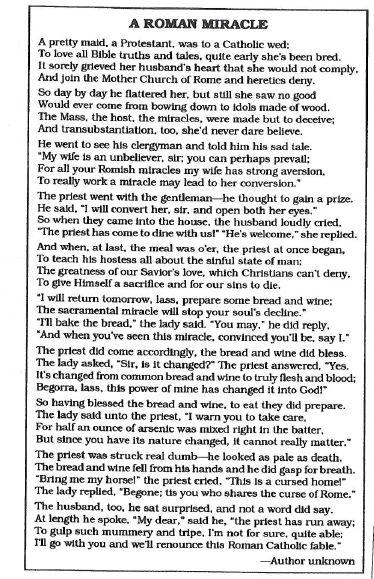
A True Roman Catholic Miracle!

I ran across this poem while reading about the difference between the biblical gospel and the false gospel of the cult of Rome, revealing a bonafide miracle! Don’t discount miracles within the Roman cult until you read this, taken from a pamphlet written by Richard Bennett. You can read more from this kind gentleman here: http://www.bereanbeacon.org/

A letter to the pope.

Thanks to Banner of Truth for reprinting this letter from Charles Hodge to Pope Pius the Ninth. In today’s atmosphere of blur-the-lines doctrinal positions it’s refreshing to see how men of old stood their ground on principles and refused to compromise truth on the alter of ecumenicalism.

~~~~~~~~~~~~~~~~~~~~~~~~~~~~~~~~~~~~~~~~~~~~~~

The text of a letter written by Charles Hodge of Princeton Theological Seminary on behalf of the two General Assemblies of the Presbyterian Church in the USA, explaining why the Pope’s invitation to Protestants to send delegates to the first Vatican Council of 1869-70 was being declined.

To Pius the Ninth, Bishop of Rome,

By your encyclical letter dated 1869 you invite Protestants to send delegates to the Council called to meet at Rome during the month of December of the current year. That letter has been brought to the attention of the two General Assemblies of the Presbyterian Church in the United States of America. Those Assemblies represent about five thousand ministers and a still larger number of Christian congregations.

Believing as we do, that it is the will of Christ that his Church on earth should be united, and recognizing the duty of doing all we consistently can to promote Christian charity and fellowship, we deem it right briefly to present the reasons which forbid our participation in the deliberations of the approaching Council.

Continue reading

Oh anathema, my anathema.

How many anathemas are you under?

Mark, from Here I Blog, decided to count his:

“I decided to count the number of anathemas that I am under from the 33 canons on justification. My count is 23 anathemas as I understand the canons. I tried to consider any nuances. Keep in mind that this is only 1 of 25 sessions of Trent.”

Read his post and see how many anathemas Romanism has you under here.


How to think like a Roman Catholic.

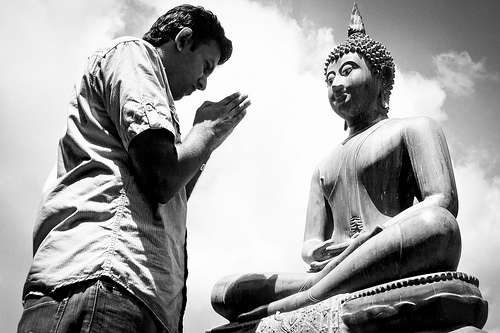
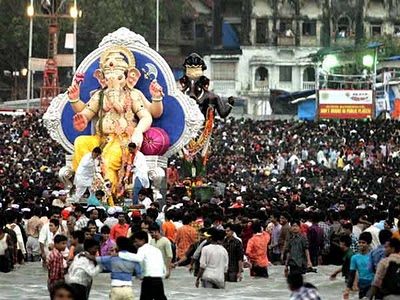
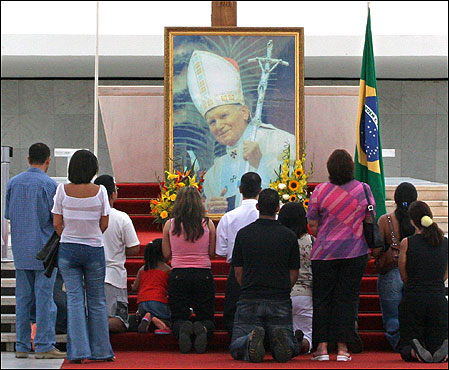
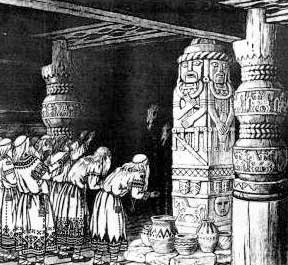
The following is an illustrated lesson to help you understand how the average Roman Catholic thinks on the matter of idolatry. I have provided several images which will allow you to better understand how a Romanist processes information.

But before we begin, and so you can fully grasp this lesson, you must carefully read the following passages from Leviticus 26:1 and Exodus 20:4-5 (respectively):

“You shall not make for yourselves idols, nor shall you set up for yourselves an image or a sacred pillar, nor shall you place a figured stone in your land to bow down to it; for I am the LORD your God.

“You shall not make for yourself an idol, or any likeness of what is in heaven above or on the earth beneath or in the water under the earth. You shall not worship them or serve them; for I, the LORD your God, am a jealous God, visiting the iniquity of the fathers on the children, on the third and the fourth generations of those who hate Me,”

Now, let’s begin.

To see if you think like a Roman Catholic, what is your response to each of the the following pictures (the “proper” Romanist responses are indicated below each image).

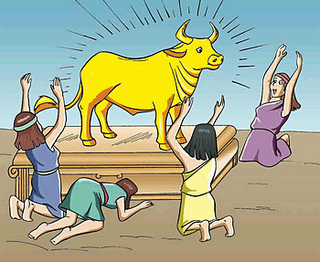
Pagan idol worship condemned by scripture.

_______________________________

Veneration.

_______________________________

Pagan idol worship condemned by scripture.

_______________________________

Veneration.

_______________________________

Pagan idol worship condemned by scripture.

_______________________________

Veneration.

_______________________________

Pagan idol worship condemned by scripture.

_______________________________

Veneration.

_______________________________

Pagan idol worship condemned by scripture.

_______________________________

Veneration.

_______________________________

Pagan idol worship condemned by scripture.

_______________________________

Veneration.

_______________________________

Pagan idol worship condemned by scripture.

_______________________________

Veneration.

_______________________________

Pagan idol worship condemned by scripture.

_______________________________

Veneration.

_______________________________

Pagan idol worship condemned by scripture.

_______________________________

Veneration.

_______________________________

Pagan idol worship condemned by scripture.

_______________________________

Veneration.

_______________________________

Pagan idol worship condemned by scripture.

_______________________________

Veneration.

_______________________________

To see if you’ve been successfully conditioned to think like a Roman Catholic, we’ll conclude with one last picture.

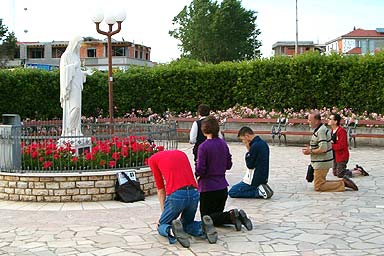
Examine the following photograph carefully. The worshipers in the picture are from India, a country dominated with the worship of countless idols of Hindu gods made from stone and wood. So, are the people in this picture merely offering veneration, or are they pagan idol worshipers violating God’s prohibition of such activity found in Leviticus 26:1 and Exodus 20:4-5?

The answer: They are Roman Catholics, so therefore, their actions are only that of veneration.

If you answered this correctly, you are thinking like a Romanist, if you answered incorrectly you either need to start again at the beginning of this post, or you’re simply one of those fundamentalists who takes God’s prohibition against idolatry literally and seriously.

But for the cowardly and unbelieving and abominable and murderers and immoral persons and sorcerers and idolaters and all liars, their part will be in the lake that burns with fire and brimstone, which is the second death. Revelation 21:8

Or do you not know that the unrighteous will not inherit the kingdom of God? Do not be deceived; neither fornicators, nor idolaters, nor adulterers, nor effeminate, nor homosexuals, nor thieves, nor the covetous, nor drunkards, nor revilers, nor swindlers, will inherit the kingdom of God. Such were some of you; but you were washed, but you were sanctified, but you were justified in the name of the Lord Jesus Christ and in the Spirit of our God. 1 Corinthians 6:9-11

The blasphemy of Rome’s priesthood.

Reminiscent of The Pharisees

“The priest speaks, and Christ, the eternal and omnipotent God, bows his head in humble obedience to the priest’s command.”

– “Father” John O’Brien

The Faith of Millions

“Jesus died to institute the priesthood. Had he not died, where should we find the victim that the priests now offer? It was not necessary for the Redeemer to die in order to save the world; a drop of his blood, a single tear, or prayer, was sufficient to procure salvation for all . . . but to institute the priesthood, the death of Jesus Christ was necessary.”

– Alphonsus Ligouri

The Dignity and Duties of the Priest

Pagan Christianity?

I was given the task of reading and reviewing this book as part of a project at my church. Frank Viola is aggressive in defending his perspective; if you want his view you can easily find one or more of his blogs. With that short introduction, here’s my lengthy review.

Pagan Christianty?

By Frank Viola and George Barna

Reviewed by Stuart L. Brogden

The thesis statement of this book is found in the Preface, written by Viola, on page xix: “we intend to show how that organism (the first century church) was devoid of so many things we embrace today” and on page xx: “We are seeking to remove a great deal of debris in order to make room for the Lord Jesus Christ to be the fully functioning head of His church.”

In the Preface, he repeatedly refers to “the contemporary church” as their foil – no doubt most reformed Christians would also take issue with many things done in that name. Reinforcing what I infer as a mystical view of God and Truth revealed in the thesis, Viola tells us, “the New Testament vision of church best represents the dream of God.” and “The normative practices of the first-century church were the natural and spontaneous expression of the divine life that indwelt the early Christians.” (page xix) Their mystical view of the body of Christ is fully spelled out later in the book. Also on page xix, the author’s beloved “organic church” is described thusly: “An organic church is simply a church that is born out of spiritual life instead of constructed by human institutions and held together by religious programs. Organic churches are characterized by Spirit-led, open-participatory meetings and nonhierarchical leadership.” We will see that “Spirit-led” means “everyone doing what seems right in their own eyes”. In the delving Deeper section on page xxxi we are told that their “goal is not to develop a full description of the organic church but only touch on it when necessary.” See – we get explicit wrong-doings by the contemporary and institutional church but only vague and partial descriptions of the proposed answer to those evils.

Viola shows his misunderstanding of the work of the Holy Spirit of God, ascribing (page xix) His actions as “the natural and spontaneous expression of the divine life that indwelt the early Christians”. The Bible is clear that God is a God of order, not chaos; He is not a natural expression of what is in man (Psalms 50:21). He is not “spontaneous” – acting on whimsy; He has planned and has ordered all things to the fulfillment of His plans (Psalms 135:6 and Ephesians 1:11).

In Barna’s Introduction, we discover the authors see themselves – and the Lord Jesus – as Revolutionaries, working to correct the centuries-long trial of errors foisted upon us by religious men. He rightly identifies legitimate problems in many churches (mega-churches, satellite campuses, affinity and age segregated groups, etc.) on page xxvii – and then reveals that this book is our trustworthy guide to find out God’s will for the church. He concludes by telling us that he wants the reader “to think carefully and biblically about how you practice your faith with other Christians.” Barna concludes with, “We pray that this book will help you to do your part in straightening out the crooked path of the contemporary church.” We shall see.

The “Jesus” of the OC is manifested by “open sharing” in all church meetings – this is the normative method that “is completely scriptural”, especially if the only scripture one reads is 1 Corinthians 14:26 – 29. They have an unbiblical view of Jesus Christ and an unbiblical view of the church – which they consider (page xxviii) to be “Himself in a different form. This is the meaning of the phrase “the body of Christ”.” Deep in the appendix, on page 268, we read, “When each member of His body shares his or her portion of Christ, then Christ is assembled.”

Wayne Grudem sheds a better light on this concept on page 858 of his Systematic Theology: “In 1 Corinthians 12 the whole body is taken as a metaphor for the church, because Paul speaks of the “ear” and the “eye” and the “sense of smell” (1 Cor 12:16 – 17). In this metaphor, Christ is not viewed as the head joined to the body, because the individual members are themselves the individual parts of the head. Christ is in the metaphor the Lord who is “outside” of that body that represents the church and is the one whom the church serves and worships.” There are, as Grudem goes to point out, different uses of the word “body” as a metaphor for the church – the context in which each metaphor is used reveals its meaning. Barna and Viola appear to hold to the Roman Catholic view of the church as the “continuing incarnation” of Christ rather than properly viewing Christ as reigning in heaven in addition to dwelling among us. As for the biblical view of the church, one cannot comprehend that unless one studies the Pastoral Epistles – and there’s no indication the authors have even read them.

Consistently in this book, the method of “proving” their case builds on setting up a straw man they call the “institutional church” (IC) – a seemingly equivalent term for the “contemporary church” – and presenting an ill-defined “organic church” (OC) as the only Christ-honoring alternative. This IC straw man is constructed from mostly undocumented sources of history, which reflect the main line record of the Roman Catholic Church. There is no evidence that the remnant of God which did not follow Rome (as in Andrew Miller’s Church History) was ever considered by the authors – for therein one would find local churches without many of the errors that have crept into most churches since ~ 400AD. Too many reformed churches have forgotten “Semper Reformda!”, stagnating in partial reform that still has a lot in common with Rome. These present day vestiges of Rome ought to be critiqued and Protestants should repent and reform to the Biblical model. Some of this book’s critique rightly applies to some churches, but does not warrant the radical, semi-biblical approach advocated.

Continue reading

The more things change, the more they stay the same at the Crystal Cathedral.

From the Christian Post:

The Rev. Robert H. Schuller, founder of the historic Crystal Cathedral Ministries in Garden Grove, Calif., has spoken out about the sale of the church to a Roman Catholic diocese, reassuring concerned observers that the church’s beliefs are not going to suddenly change.

“The Roman Catholic Church isn’t going to change its theologies,” Schuller said in an interview with the Los Angeles Times published Sunday. “I trust them.”

The ministry’s decision to sell the famous building to the Roman Catholic Diocese of Orange County raised some controversy at first. In the Sunday interview, the 85-year-old minister said he has always respected the Roman Catholic faith and considers it the “mother church.”

Read the rest of the article, Robert Schuller Trusts Catholic Church With Crystal Cathedral, here.

Quotes (923).

The Roman Catholic Church teaches that infants are forgiven of original sin when a priest pours water over the baby in the sacrament of baptism. There are two serious problems with this practice. First, there is no occurrence of infant baptism in the New Testament, and second, one must believe in Jesus in order to be forgiven. Clearly a baby cannot respond in faith to the Gospel and thus be forgiven.

–          Mike Gendron

BETH MOORE AND JOHN PIPER LEAD LECTIO DIVINA-LITE AT PASSION 2012

BETH MOORE AND JOHN PIPER LEAD LECTIO DIVINA-LITE AT PASSION 2012

By on Jan 6, 2012 in AM Missives, Current Issues, Features, Southern Baptist Convention Note: videos that should make you weep are on Ken’s web site at the link above.

Apprising Ministries has been warning for years concerning the evil effects of the neo-liberal in the Emerging Church aka the Emergent Church.

It’s an incontrovertible fact that right from its hatching in hell corrupt Contemplative Spirituality/Mysticism (CSM), such as that taught by Living Spiritual Teacher and Quaker mystic Richard Foster along with his spiritual twin and Southern Baptist minister Dallas Willard, was a core doctrine.

Spreading as a spiritual cancer throughout apostatizing evangelicalism, we even see that it’s slithered all the way into the New Calvinst neo-reformed camp e.g. as in Acts 29 Network And Reformed Counter Reformation Spirituality? One of the fruits of CSM is a blurring of doctrinal lines, which is particularly dangerous in this time of postmodernism and growing spiritual blindness.

It’s also giving rise to a rebirth of Pietism; this isn’t surprising when you consider that CSM flowered in the antibiblical monastic traditions of apostate Roman Catholicism. As the evangelical fad of CSM expands there’s a decided charismania also developing, which is producing a syncretism where Word Faith heretics like Joel Osteen and T.D. Jakes are essentially considered mainstream now. With all of this has come more and more people claiming to have direct experience with God.

The end result is making the climate more condusive for things like Beth Moore Recommending “Jesus Calling” Book Claiming Direct Divine Revelation. This is the backdrop upon which to better see what’s happening as you watch the video clips to follow below from the Passion 2012 Conference. This conference has been going on in Atlanta, and was largely aimed at young adults and students.

Hosted by Louis Giglio, pastor of Passion City Church in Atlanta, Passion featured an interesting lineup of speakers such Francis Chan, Beth Moore and New Calvinist mentor John Piper. Not surpisingly the conference had a distinctive charismatic and even contemplative flair; e.g. prayer walking. After one session the crowd was urged to break into “love groups” and go out to pray and “take back the city of Atlanta.”

Years of emerging bombardment of pro-CSM propaganda aimed at younger sectors of the Christian community fired right out of evangelical publishing houses has also had much effect upon the broader culture of the more charismatic/emotion-driven side of the church visible as well. To serve as an illustration, below we have SBC Lifeway-sponsored Beth Moore praising an apostate (at best) Roman Catholic mystic and the crown jewel of CSM.

If you didn’t know, this is a form of meditation in an altered state of consciousness commonly known as Contemplative/Centering Prayer (CCP):

Moore’s admitted practice of some form of CCP, which is actually divination, has opened her up to even receive direct revelation and visions from God. Below from a 2002 series called Believing God, available right now at Lifeway’s website, Moore describes a vision God gave her concerning His Church.

Sounding not too unlike Word Faith wingnuts she tells us God took her into some kind of dimension where she was able to see the Body of Christ as Jesus sees it:

Apparently the Protestant Reformation was really some sort of horrible mistake because Moore’s Jesus sees the Roman Catholic Church as another Christian denomination. This becomes clear below as Moore demonstrates what she saw in her vision from God:

Yet despite this obviously false vision ten years ago, there was Beth Moore preaching to thousands alongside New Calvinists John Piper and Francis Chan. I guess we really should expect this because Piper has told us before: “I’m Happy To Learn From Beth Moore.”

Who knows, perhaps he even shares Moore’s view that men like John MacArthur are guilty of teaching extreme error in the Body of Christ:

By the way, the other extreme teaching in the Body of Christ that Beth Moore sees is what she calls “sensationalism.” Something I personally think she’s now become involved in. The CSM being dabbled with now in mainstream evangelicalism is producing a rebirth of Pietism; an emotional, sentimental, emotion-driven form of worship. What you saw at Passion 2012.

Christian apologist Bob DeWaay is dead-on-target as he explains:

Pietism is difficult to define because it can be taught and practiced in an unlimited number of ways. Some versions appear to be innocuous while others are so radical that most people would see that something is wrong. I now know that no version of pietism is actually innocuous. If a teaching is called pietism but teaches no more than what God has always used to sanctify Christians, then it is not really pietism. Real pietism always harms those who embrace it.

The essence of pietism is this: It is a practice designed to lead to an experience that purports to give one an elite or special status compared to ordinary Christians. The Bible addresses this error in the book of Colossians. The false teachers in Colossae claimed to have the secret to a superior Christian experience that would cause people to rise above the bad “fate” they feared. Paul went on to explain that they already had everything they needed through Christ and His work on the cross. Another way of stating this is: If after having fully trusted Christ’s finished work on the cross, you are told that you are still lacking something, you are being taught pietism.

Church history is littered with misguided pietistic movements. Many of them are linked with mysticism… Pietism can be practiced many ways including enforced solitude, asceticism of various forms, man made religious practices, legalism, submission to human authorities who claim special status, and many other practices and teachings.
(Online source)

In closing this, for now, I’ll show you something that gives us real cause for concern in the seeming dangerous drift of Beth Moore and John Piper. Following are clips from Session 5 of Passion 2012 where we were to enter into the silence to let God speak to us, not only through Scripture, but directly inside of us as well. However, this is language actually straight out of CSM and can also refer to the TM-lite of CCP.

Beth Moore, John Piper et al each took turns reading from the Book of Ephesians; then they each would ask for silence and say something along the lines of: “Be still and let Jesus speak to you.” This is Beth Moore:

Now John Piper:

Finally, here’s Louis Giglio closing out Session 5. Any doubt about what’s been going on in the silence is dispelled at :20 below. To all but the most naive it will become clear to you that, contra the proper Christian spirituality of sola Scriptura, Giglio is talking about direct encounters with God in addition to Holy Scriptura:

“How many of you heard the voice of God speak specifically, clearly, directly, and personally, to you? Can you just put a hand up? I’d like you to share it. Can you put a hand up for a minute?

Just want you to look around; that’s people saying, “God Almighty (pause) the Maker of heaven (pause) the one Who’s sitting on the only throne (pause) that’s not under threat (long pause, audience cheers)—He spoke to me. He spoke to me.”

“God spoke to me.” (long pause) Don’t let the voice of the darkness, tell you that you are not (pause) worth (pause) that God would not speak to you. (pause) Don’t let him tell you, you don’t matter. (pause) God spoke to you.

Perhaps this is why more and more in the charismatic camp have been embracing the Roman Catholic Church as another Christian denomination; like Rome, they now also have the Bible…plus…


See also:

THE PUSH FOR A ROMAN CATHOLIC DENOMINATION AND THE SBC’S RUSSELL MOORE

CHARLES SPURGEON: THE ROMAN CATHOLIC CHURCH IS THE MASTERPIECE OF SATAN AND THE QUEEN OF INIQUITY

LET’S LOOK AT THE GOSPEL

The Way of Salvation

The Way of Salvation


At the heart of the controversy between Rome and historic Protestants is a dispute over the way of salvation. In speaking of salvation, we note that the term “salvation” encompasses a wide range of important topics, and it is important to distinguish between various aspects of redemption. 

Since the fall of mankind, the human race stands in need of salvation (or deliverance): deliverance from the guilt of sin, and also deliverance from the power of sin. From the biblical doctrine of justification, we learn the divine provision whereby sinners are delivered from the punishment due to the guilt of their sins. From the doctrine of sanctification, we learn the means whereby God delivers sinners from the reigning power of sin.

Of course, there are other facets of redemption, such as election, effectual calling, glorification, etc. Obviously the subjects of redemption are interrelated to one another; but they are not identical, and should not be confounded. Even though the various aspects of salvation bear a close relationship to one another, the scriptures clearly distinguish between them. In several places within Paul’s epistles, the apostle maintains a clear distinction between justification and sanctification. For example: “But ye are washed, but ye are sanctified, but ye are justified in the name of the Lord Jesus, and by the Spirit of our God” (1 Cor. 6:11; cf. Rom. 8:30; 1 Cor. 1:30). [1]

Another closely related topic is the nature of regeneration, or the new birth. Those whom God regenerates are given repentance, faith, and inward renewal so that they strive for godliness.

With the foregoing considerations in view, we wish to assert several important truths which bear on the state of Roman Catholicism and modern evangelicalism.

Read the rest here: http://www.swrb.com/newslett/actualNLs/2_shipwr.htm

Who is the Anti-Christ?

“Let no man deceive you by any means: for that day shall not come, except there come a falling away first, and that man of sin be revealed, the son of perdition; who opposeth and exalteth himself above all that is called God, or that is worshiped; so that he as God sitteth in the temple of God, showing himself that he is God.” II Thessalonians 2:3 & 4

“The Pope is of so great dignity, and so exalted that he is not a mere man, but as it were God, and the vicar of God.” Ferraris Ecclesiastical dictionary 

“All names which in the Scriptures are applied to Christ, by virtue of which it is established that He is over the church, all the same names are applied to the Pope.”
On the Authority of the Councils, book 2, chapter 17

“The Pope and God are the same, so he has all power in Heaven and earth.” Pope Pius V, quoted in Barclay, Chapter XXVII, p. 218, “Cities Petrus Bertanous”.

“…the Pope is as it were God on earth, sole sovereign of the faithful of Christ, chief of kings, having plenitude of power.” Lucius Ferraris

“For such are false apostles, deceitful workers, transforming themselves into the apostles of Christ. And no marvel; for Satan himself is transformed into an angel of light. Therefore it is no great thing if his ministers also be transformed as the ministers of righteousness; whose end shall be according to their works.” II Corinthians 11:13-15

“The Pope takes the place of Jesus Christ on earth…by divine right the Pope has supreme and full power in faith, in morals over each and every pastor and his flock. He is the true vicar, the head of the entire church, the father and teacher of all Christians. He is the infallible ruler, the founder of dogmas, the author of and the judge of councils; the universal ruler of truth, the arbiter of the world, the supreme judge of heaven and earth, the judge of all, being judged by no one, God himself on earth.” Quoted in the New York Catechism.

But though we, or an angel from heaven, preach any other gospel unto you than that which we have preached unto you, let him be accursed.” Galatians 1:8

These words are written in the Roman Canon Law 1685: “To believe that our Lord God the Pope has not the power to decree as he is decreed, is to be deemed heretical.”

‘Father’ A. Pereira says: “It is quite certain that Popes have never approved or rejected this title ‘Lord God the Pope,’ for the passage in the gloss referred to appears in the edition of the Canon Law published in Rome in 1580 by Gregory XIII.”

And he opened his mouth in blasphemy against God, to blaspheme His name, and His tabernacle, and them that dwell in heaven.” Revelation 13:6

Writers on the Canon Law say, “The Pope and God are the same, so he has all power in heaven and earth.”

“The Pope is not only the representative of Jesus Christ, he is Jesus Christ himself, hidden under the veil of flesh.” Catholic National, July 1895

This is but a ‘drop in the bucket’ as to what information is out there that confirms the prophetic scriptures, that the ‘little horn’, the ‘beast’, the ‘man of sin’, the ‘son of perdition’ and the ‘Antichrist’ are none other than the Pope of Rome (a successive reign) throughout history.

Behold the ‘mystery of iniquity’ which has clouded the minds of the entire world, that Almighty God’s worst enemy upon the earth is lauded, praised and venerated [worshipped] by secular and ‘Christian’ leaders alike!

(posted by Bill Hoffmann, Belize, Central America on an Arminian blog)

Quotes (916)

The tragedy is often that the “one-hundred-per-cent god” is introduced into the life of the sensitive by the comparatively insensitive, who literally cannot imagine the harm they are doing. What is the way out? The words of Christ, “Learn of Me,” provide the best clue. Some of our modern enthusiastic Christians of the hearty type tend to regard Christianity as a performance. But it still is, as it was originally, a way of living, and in no sense a performance acted for the benefit of the surrounding world. To “learn” implies growth; implies the making and correcting of mistakes; implies a steady upward progress toward an ideal. The “perfection” to which Christ commands men to progress is this ideal.

The modern high-pressure Christian of certain circles would like to impose perfection of one hundred per cent as a set of rules to be immediately enforced, instead of as a shining ideal to be faithfully pursued…Such a distortion of Christian truth could not possibly originate from the One who said His “yoke was easy” and His “burden light,” nor by His follower St. Paul, who declared after many years’ experience that he “pressed toward the mark, not as though he had already attained or were already perfect.”

J.B. Phillips
“Your god is too Small”

Pictures of Christ–right or wrong?

In the comment thread of a recent post (which has since been removed), some comments were posted concerning the varied exegeses of Exodus 20:4-6 that have been offered over the years. One such interpretation says that the passage should be read (to paraphrase),

Do not make images. Do not bow down to them or serve them.

The other position says the passage should be read (again, to paraphrase),

Do not make images in order to bow down and serve them.

Having just completed a survey of the book of Exodus (which I may be posting here in a short while), here is the conclusion I have come to. I believe the second interpretation (Do not make images of God in order to worship the images.) to be the proper one. I hope to show, by way of Scripture, why I feel this to be so.

I will say, however, at the outset (and will expound on this in due time) that one must be careful with said pictures. One can fall into one of many errors:

  • They can wind up worshipping the image (as the Romanists do).
  • They can wind up thinking that having a picture of Christ on their wall makes them a Christian, even though their hearts are far from Him (as many Americans do today).
  • They can wind up thinking that said depiction of Christ is what He actually looked like (as the Mormons believe that He had milky white skin, rather than being [more likely] a darker-skinned Semite, He being a Jew of that time. We will also leave aside the brown-haired, blue-eyed Jew of the Jesus of Nazareth TV-movie).
  • Or they may simply see Him as being a man, and not God in the flesh (as the Emergents and liberals do).

While we cannot depict the glory of God (for it was always hidden, either within a cloud, or a pillar of fire, or within the bush that burned), we can depict the humanity of Christ. Treated carefully enough, and used in the proper context, I believe that pictures of Christ in the flesh are not necessarily sinful.

First, let’s begin with the idolatry committed by the Israelites at the foot of Mount Sinai, in Exodus 32:1-61 Now when the people saw that Moses delayed coming down from the mountain, the people gathered together to Aaron, and said to him, “Come, make us gods that shall go before us; for as for this Moses, the man who brought us up out of the land of Egypt, we do not know what has become of him.” 2 And Aaron said to them, “Break off the golden earrings which are in the ears of your wives, your sons, and your daughters, and bring them to me.” 3 So all the people broke off the golden earrings which were in their ears, and brought them to Aaron. 4 And he received the gold from their hand, and he fashioned it with an engraving tool, and made a molded calf. Then they said, “This is your god, O Israel, that brought you out of the land of Egypt!” 5 So when Aaron saw it, he built an altar before it. And Aaron made a proclamation and said, “Tomorrow is a feast to the LORD.” 6 Then they rose early on the next day, offered burnt offerings, and brought peace offerings; and the people sat down to eat and drink, and rose up to play.

The people wanted gods to worship–“gods” that they could see with their eyes and touch with their hands; “gods” who would let them unleash the sin that burned within them. And rather than serve the true YHVH, they created a false “yhvh” that was more to their liking. So, when Moses returned to the foot of the mountain, God commanded that the calf be ground to powder and the people drink down their iniquity. Then, God commanded that the sons of Levi take their swords, go through the camp, and slay all those who did not repent of their idolatry (Exodus 32:25-28). (The many blatant inaccuracies in Cecil B. DeMille’s landmark film may be addressed in another post). Paul uses this event to call the Corinthians away from their own idolatry (1st Corinthians 10:5-7).

Now, here’s the question: if the people had simply fashioned a calf out of gold, would God have commanded them to be killed? No. What was their sin? They made this calf in order to worship it. “Come, make us gods that shall go before us…This is your god, O Israel, that brought you out of the land of Egypt!” They had fashioned a figure of an animal, yes–but the real sin was ascribing to that statue the name of YHVH and dancing around and calling it “our god.” This was the force of the Second Commandment–making a graven image in order to worship it.

We see another example in Judges 17:1-6. The mother of Micah (not to be confused with the prophet Micah, which book bears his name) had statues made for him to put in his house to reside with the other idols. Again, is the sin the making of the statue–or the ascription of deity to that statue?

I say all this by way of introduction, since it seems that the crux of the debate resides in whether or not the picturing of Jesus by painter or sculptor is sinful. On this, the prophet Moses said, from the LORD–

Deuteronomy 4:15-1915 Take careful heed to yourselves, for you saw no form when the LORD spoke to you at Horeb out of the midst of the fire, 16 lest you act corruptly and make for yourselves a carved image in the form of any figure: the likeness of male or female, 17 the likeness of any animal that is on the earth or the likeness of any winged bird that flies in the air, 18 the likeness of anything that creeps on the ground or the likeness of any fish that is in the water beneath the earth. 19 And take heed, lest you lift your eyes to heaven, and when you see the sun, the moon, and the stars, all the host of heaven, you feel driven to worship them and serve them, which the LORD your God has given to all the peoples under the whole heaven as a heritage.”

In Deuteronomy we find, as it were, sermons (expositions and applications) of the various commands found in that first covenant. This passage is an exposition and application on the Second Commandment in the Decalogue. Now, in this passage, is this–

  1. A command from God to not carve images of animals or bugs or birds or or fish or humans? Or…
  2. A command about carving images of animals or bugs or birds or fish or humans in order to worship them?

There is a difference. If this is a command to not carve images of animals or bugs or birds or fish or humans–and if you feel that making pictures of Christ is idolatry–then, to be consistent, you must remove any figures and pictures of any animals or bugs or birds or fish or humans from your house, because you are guilty of idolatry. If you wear a shirt or a hat or any article of clothing that contains any picture of any “likeness of male or female, the likeness of any animal that is on the earth or the likeness of any winged bird that flies in the air, the likeness of anything that creeps on the ground or the likeness of any fish that is in the water beneath the earth” then you must get rid of it to be consistent in your beliefs. Take down any paintings of any animals you have on your walls, for it is idolatry. Don’t watch sports–ANY sports–for every sport has teams that are depicted by some kind of animals or bugs or birds or fish or humans. If you are in the Army, don’t become a colonel, since they wear an eagle as their insignia.

If your children have dolls, or action figures, you must get rid of them. We must also condemn any statues or pictures of any human being. If you live in St. Louis, and your kids have posters of Albert Pujols on their wall, take them down. Go to Philadelphia, PA, and petition the city to get rid of the statues of George Washington and Ben Franklin and Thomas Jefferson. Go to your local city council and beseech them to take down any statues of any significant figure of that city’s history, for it is idolatry.

  • That scrapbook filled with pictures from your wedding? Get rid of it.
  • The paintings of your grandparents or great-grandparents? Gone.
  • Got pictures of your children in your wallet? Goodbye.
  • Get rid of any books or magazines or any other publication that has any picture of any human being.
  • Lose the camera.
  • Don’t buy your children pens, pencils, markers, paint, or any other thing by which they may make a picture of any living creature lest they commit the sin of idolatry.

These are the things one must do to be consistent. For all of these–images of animals or bugs or birds or or fish or humans–are grouped together with images of “things in heaven”.

So then, the sin is not in depicting the “likeness of male or female, the likeness of any animal that is on the earth or the likeness of any winged bird that flies in the air, the likeness of anything that creeps on the ground or the likeness of any fish that is in the water beneath the earth”. The sin is in in depicting the “likeness of male or female, the likeness of any animal that is on the earth or the likeness of any winged bird that flies in the air, the likeness of anything that creeps on the ground or the likeness of any fish that is in the water beneath the earth” in order to worship it. Ascribing some power to it that belongs to God and God alone.

Just as the mere act of looking up at the stars in the sky is not idolatry. For God also commanded Moses to tell the people, “And take heed, lest you lift your eyes to heaven, and when you see the sun, the moon, and the stars, all the host of heaven, you feel driven to worship them and serve them…” If looking up at the stars is a sin, then God commanded Abram to sin, since He told him to “Look now toward heaven, and count the stars if you are able to number them” (Genesis 15:5). To be consistent, never look at the stars or you are guilty of idolatry.

In both of these, the sin is not carving images of animals or birds or bugs or even humans; nor is the sin in simply looking up into the starry skies. The sin is ascribing to animals, bugs, birds, stars, moon, etc the attributes and power that belongs to God and God alone.

Now, I know the counter-argument. “OK, fourpointer, you’re saying it’s OK to have pictures of Christ, are you then saying it’s OK to make images of God the Father or God the Holy Spirit?” No, I’m not saying that at all. Did God the Father take on human flesh? Did God the Holy Spirit take on human flesh? Obviously, the answer to both questions is “No” (leaving the arguments of the Sabellians and Modalists for another day). Christ, however, did take on human flesh. He did take on the nature of man and was, in fact, a man. He did not simply look like a man; He did not simply appear as though He was a man. He was–A MAN. Philippians 2:8And being found in appearance as a man… 1st timothy 2:5For there is…one Mediator between God and men, the Man Christ Jesus. And it is that humanity that is is captured in pictures.

But is simply having a picture of Christ idolatry? Is having a picture of any human being idolatry? In order to be consistent, one must answer each of those questions in the same manner as the other. And if having pictures of human beings is not a sin, then to be consistent, having pictures of Christ–who was Himself of two natures, one of those natures being a man, being  human (albeit without sin)–should not be considered idolatry. Unless one ascribes to the picture itself some power or attribute that belongs to Christ alone. Such as the Romanist who believes that bowing before a statue of Christ (or, even worse, Mary His mother) can bring them some benefit–as though the statue itself possessed the power to grant forgiveness or heal infirmities.

In conclusion, allow me to summarize these many words with an illustration. If I pull a piece of paper out of my wallet–a piece of paper with ink of varying colors and hues and shades–and I tell you “This is my wife.” Am I trying to say that I am married to that piece of paper and those inks and hues? Or am I saying “This is a depiction of my wife”? If I mean to say that I am married to a piece of paper, then something’s wrong with my thinker. But if I mean to say “This is a depiction of the woman I am married to” then I have a proper sense of things and I am speaking correctly. Much the same thing is involved with depicting scenes from the ministry of Christ while He walked the earth. Is one in sin if they do so? Only if they carry the depiction too far and ascribe power and deity to the depiction. (If, when they say, “this is Christ”, they are actually saying that the picture or statue is, indeed and in fact, Christ). Or if they value the humanity of Christ at the expense of giving Him the worship he deserves. Or if they declare “this is what Christ looked like.” We do not know what He looked like.

But we can say “This is a depiction of The Sermon on the Mount” or “This is a depiction of what it might have looked like when Christ called Zacchaeus” without crossing the line into full-fledged idolatry. (I will say this: The vast, overwhelming majority of pictures/paintings/sculptures depicting the crucifixion deserve to be thrown in the fire for the fact that they do not come close to giving an accurate description of what it looked like. But that’s for another day).

Thus Moses said in Deuteronomy 4:23-28“23 Take heed to yourselves, lest you forget the covenant of the LORD your God which He made with you, and make for yourselves a carved image in the form of anything which the LORD your God has forbidden you…25 When you beget children and grandchildren and have grown old in the land, and act corruptly and make a carved image in the form of anything, and do evil in the sight of the LORD your God to provoke Him to anger, 26 I call heaven and earth to witness against you this day, that you will soon utterly perish from the land which you cross over the Jordan to possess; you will not prolong your days in it, but will be utterly destroyed…28 And there you will serve gods, the work of men’s hands, wood and stone, which neither see nor hear nor eat nor smell.” If a person makes for themselves “a carved image in the form of anything which the LORD your God has forbidden”–that is, an image of something made for the purpose of worshipping the image–then God will indeed give that person over to that idolatry (see Romans 1:22-32). And in fact, by depicting the humanity of Christ, we rebuke the heresies of the Docetists, the Gnostics, and the Valentinians who all denied the humanity of Christ, refusing to believe that He actually had flesh and bone.

They just don’t get it.

For I testify about them that they have a zeal for God, but not in accordance with knowledge. For not knowing about God’s righteousness and seeking to establish their own, they did not subject themselves to the righteousness of God. For Christ is the end of the law for righteousness to everyone who believes. Romans 10:2-4

They just don’t get it.

The false religions and cults simply cannot grasp the simplicity of the gospel message. This is evidenced anytime you have a conversation with one of them about sin, grace, faith, and justification.

You can go round and round in debate with a member of one of these organizations and you often walk away with a headache because they can’t see the forest for the trees.

They have been so indoctrinated to believe their respective organization’s interpretations of biblical texts that when someone presents them with the proper interpretation of biblical texts (using Scripture to interpret Scripture) they simply reject it.

It is so sad to watch the deceived continue in their deception, especially when they are leading others down the same broad path.

It’s like trying to convince a fish that it’s wet; the fish has known nothing but wet, so it cannot even fathom what dry is.

Recently the Jehovah’s Witnesses stopped by my home and dropped off an advertisement with my wife for an upcoming event. They won’t stay to talk (our house has been flagged for almost five years now) but they will occasionally still drop off literature . . . and run.

In their latest dump-and-run literature drop they gave my wife a flier for their upcoming commemoration of the anniversary of Jesus’ death. Here’s the opening line from that advertisement:

“John the Baptizer stated that Jesus ‘takes away the sin of the world.’ (John 1:29) This drew attention to Jesus’ role in saving obedient mankind.”

Jesus saved the obedient? 

See how subtle their deception is?

The obedient don’t need a Savior. Jesus Himself said He came for the sinner, not the righteous (Matthew 9:13, Mark 2:17).

This declaration by the Jehovah’s Witnesses is predicated on the erroneous assumption that our obedience is a prerequisite for Christ to be able save us. This is classic Watchtower Organization rhetoric and is essentially the doctrine of all cults and false religions: Believing you must do your part and cooperate with God to help Him or enable Him to save you.

They just don’t get it.

If the Jehovah’s Witnesses believe obedience is required as a means or requirement of salvation (which anyone who knows Watchtower doctrine can attest that this is indeed their position) then they better be obedient to all the Law without ever sinning once from cradle to grave, otherwise they will be found guilty of breaking all the Law (James 2:10):

For whoever keeps the whole law and yet stumbles in one point, he has become guilty of all.

But what’s even more damning to those seeking salvation via the conduit of obedience is the fact that they are under a curse for doing the very thing they think will save them (Galatians 3:10):

For as many as are of the works of the Law are under a curse; for it is written, “CURSED IS EVERYONE WHO DOES NOT ABIDE BY ALL THINGS WRITTEN IN THE BOOK OF THE LAW, TO PERFORM THEM.”

What Jehovah’s Witnesses (and Mormons, and Roman Catholics, and Muslims, etc.) fail to understand is that regeneration comes before obedience, not the other way around. Romans 8:6-8 makes our inability very clear:

For the mind set on the flesh is death, but the mind set on the Spirit is life and peace, because the mind set on the flesh is hostile toward God; for it does not subject itself to the law of God, for it is not even able to do so, and those who are in the flesh cannot please God.

It’s a classic case of putting of the cart before the horse.

They just don’t get it.

It’s only after we’ve been saved, regenerated, made alive in Christ, been born again, that our works and obedience are pleasing and acceptable to God 

Our obedience is borne out of a love and desire to please the One who purchased us with His own blood, not out of us trying to appease Him and merit His favor like the pagans try do for their idols.

Our obedience, and the good works we do after being saved, come from God and are prepared beforehand for us to walk in (Ephesians 2:10). This is why our behavior should reflect our conversion (Matthew 3:8, Luke 3:8, Acts 26:20, Ephesians 4:1) and why the absence of which should cause us to question whether or not we’ve been genuinely converted.

Test yourselves to see if you are in the faith; examine yourselves! Or do you not recognize this about yourselves, that Jesus Christ is in you– unless indeed you fail the test?  2 Corinthians 13:5

Simply put, regeneration precedes obedience (John 14:15, John 14:21-24, 1 John 3:24).

What obedience did Abraham offer to become righteous before God (Genesis 15:6, Romans 4:3)? What obedience did John the Baptist declare to those coming to be baptized (Matthew 3:2)? What obedience did Christ declare upon the start of His earthly ministry (Matthew 4:17) or later in His ministry (Luke 13:5)? What obedience did the thief on the cross exhibit to be with Jesus that very day in paradise (Luke 23:39-43)? What obedience did Paul tell the Philippian jailer he needed to perform to be saved (Acts 16:30-31)?

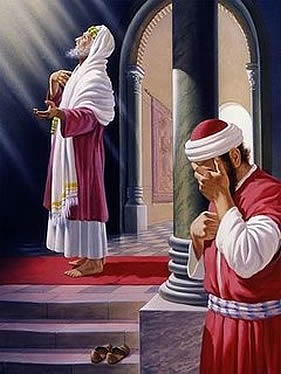
The false faiths that dot the landscape of Christianity like pock marks all invalidate the word of God for the sake of their traditions (Matthew 15:6), and their works-righteousness gospel is in complete contradiction to Jesus’ teaching of the means of the free gift of God’s grace and mercy as cited in His example of the Pharisee and the tax collector in Luke 18:9-14. You cannot read those words of our Lord and still believe that your obedience (or anything for that matter) merits you any favor in God’s eyes. If you still believe otherwise, then you make Christ’s brutal, bloody, and barbaric sacrifice null and void because it was all done in vain. 

I do not nullify the grace of God, for if righteousness comes through the Law, then Christ died needlessly. Galatians 2:21

See also: Why Don’t They Get it?

Roman Catholicism’s competition in Mexico.

I recently read an article about cults in Mexico that I found absolutely fascinating. It seems that the Roman Catholic organization is experiencing some competition in one of their stronghold nations.

Here’s a quote from the article about the growing worship of fictional drug-trafficking saint, Jesús Malverde:

“The emotional pressures, the tensions of living in a time of crisis lead people to look for symbolic figures that can help them face danger,” says José Luis González, a professor at Mexico’s National School of Anthropology and History who specializes in popular religions. Among the helper figures are Afro-Cuban deities that have recently found their way to new shores and outlaws that have been transformed into miracle workers, like a mythical bandit from northern Mexico called Jesús Malverde. There are even saints from the New Testament repurposed for achieving not salvation but success. In this expanding spiritual universe, the worship of a skeleton dressed in long robes and carrying a scythe—La Santa Muerte—is possibly the fastest growing and, at first glance at least, the most extravagant of the new cults.

There’s a reason for God’s prohibition against graven images and the bowing down to them. Our hearts are truly idol factories and here’s an example of how one such idol was created:
Eligio had been working as a driver in 1976 when he was knifed and shot in a holdup and left for dead. He prayed to Malverde, whose only monument at the time was a pile of rocks where his grave was said to be, promising to erect a proper shrine in Malverde’s honor if the saintly bandit saved his life. When he survived, he kept his word. González appears to have understood that people would grasp Malverde’s real importance only if there were an image of him they could worship, but unfortunately no photograph of Malverde existed—and, in fact, no evidence at all that he’d ever lived. In the 1980s González asked an artisan in the neighborhood to create a plaster bust: “Make him sort of like Pedro Infante and sort of like Carlos Mariscal,” Infante being a famous movie star from Sinaloa and Mariscal a local politician.

And then there’s the skeletal idol of death known as La Santa Muerte reminiscent of the Grim Reaper:

Antonio explains what gives La Santa Muerte her powerful attraction: “La Muerte is always beside you—even if it’s just a little postage stamp that you put up above your cot, you know that she’s not going to move, that she’ll never leave.” . . . El Niño and Antonio say just that La Santa Muerte will grant your prayers—but only in exchange for payment, and that payment must be proportional to the size of the miracle requested, and the punishment for not meeting one’s debt to her is terrible.

I find it ironic that the official position of the Roman Catholic organization is in opposition to the worship of Jesús Malverde and La Santa Muerte when they are one of the worst offenders of idol worship around and seem to have no problem when the idol being worshiped is one that they’ve created.

Mexicans who retain a strong connection to the Roman Catholic faith might turn instead to St. Jude Thaddeus. At a time when no-win situations abound, he is experiencing a rise in popularity comparable only to that of La Santa Muerte, perhaps because he is known in the Catholic Church as the patron saint of desperate causes. . . . St. Jude’s official feast day is October 28, and thousands of his followers feel inspired to come and pray to him on that day every month. Sixteen Masses are celebrated in the parish from dawn to evening, and worshippers crawl to the statue of the saint on their knees, praying for help, protection, and survival.

But let me caution you, before we look down on these souls in Mexico who are steeped in idol worship, let us not forget that we in America are equally as guilty of this sin; our idols just come in different forms (cars, sports, money, status, possessions, self, etc.).

To read the entire National Geographic article (and to view more pictures) visit National Geographic online.

Quotes (845)

Catholics are taught to believe a miracle has occurred when the inner essence of the host (wafer) is changed into the body and blood of Christ even though it still looks and tastes like a wafer. Can you think of any miracle in the Bible that never appeared to happen?

– Mike Gendron

Quotes (831)

The Apostle Paul commended the Berean Church for using Scriptures to verify the truthfulness of his teaching. It is clear that since an apostle, who penned over half the New Testament was tested by the Bible, all religious teachers must come under the same scrutiny. Have you checked the teachings of your religious leaders with the Bible?

–          Mike Gendron

Quotes (824)

Catholics who believe the literal interpretation of John 6 face a serious dilemma. Both the “eating and drinking” and “believing in Jesus” produce the same result—eternal life. What if a person “believes” but does not “eat or drink?” Or what if a person “eats and drinks” but does not “believe?” Does this person have eternal life because he met one of the requirements but not the other? . . . God forbids anyone from consuming the blood of a sacrifice. If Jesus were teaching the multitudes to literally drink His blood, He would be teaching them to disobey God.

–          Mike Gendron

Quotes (819)

It is impossible to measure the harm done to the Protestant cause through the retention of paedobaptism. The Reformed churches profess to be governed solely by Scripture, but so long as they continue baptizing babies, so long will they be taunted by Roman Catholics (and others) for their manifest inconsistency. . . . . Baby baptism is ruinous to the souls of thousands. Strictly speaking, it is not baby baptism but mistaken views regarding its efficacy and significance which leads multitudes down the broad way to destruction.

–          T.E. Watson