The Reformation We Need

BibleNone of us, as individuals or as local churches, has arrived. We all have need of continual repentance and reformation, knowing that sin easily entangles us and we all have different blind spot and unexamined presuppositions.

This sermon addresses three basic areas where men tend to go astray and exhorts all to repent and follow after Christ as revealed in the Scripture.

Voddie Baucham presents “The Reformation We Need” at the 2013 Founders Breakfast in Houston last month.

God’s Wonderful Plan for Your Life!

Does God love you and have a wonderful plan for your life? Have you heard preachers declare this and then leave you  191324132_640wondering how on Earth are you supposed to determine what that wonderful plan is? Does the almighty creator and ruler of all things have one person you are to fall in love with and marry? Is there one job and place you are seek and find? I submit that God does have a wonderful plan for your life – and it’s the same as His plan for me and every other Christian: to conform us ever more to the image of Christ. As for these other pieces of life on this temporary planet which is not our home, we’ll discuss a little, later, to see how they fit in.

Listen to the message here.

I’ve Got Your Back

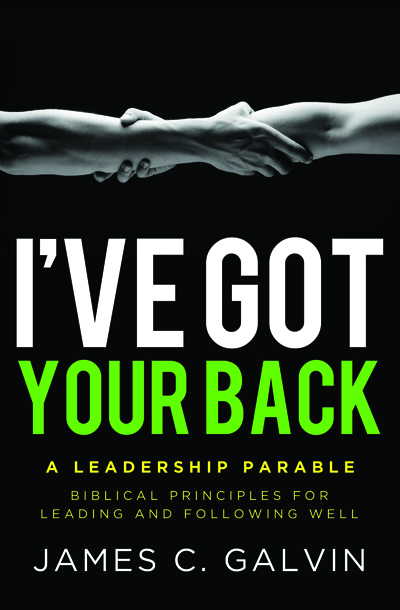
Jim Galvin, co-creator and co-editor of the Life Application Study Bible, advertises himself as an organizational consultant specializing in strategy, effectiveness, and change who is relentlessly focused on releasing the potential of IveGotYourBack-400pxleaders and organizations. He has written a book on biblical principles for leading and following well, titled I’ve Got Your Back. I was provided a copy of this book free of charge provided I review it. So here ya go!

I’ve Got Your Back by Jim Galvin

a review by Stuart Brogden

This book is subtitled, A Leadership Parable – biblical principles for leading and following well, and indeed most of this small volume is a story about common folk who are professing Christians struggling with life’s challenges and being gently educated by someone older and wiser. The second part of the book, one chapter, boils down the biblical principles contained in the 11 chapters of the parable and puts them squarely into their proper theological context.

Throughout the book, Galvin shows us application of biblical leadership principles, not so different from many books that do so, but leave out the person and the work of Jesus Christ – without Whom none of us can do anything good! This focus is made clear in the theological wrap up, but not so much in the parable. The author provides good counsel through his mentor, Jack, structuring three categories of leadership with 5 ways of following. Applying these in accordance with proper interpretation of the Bible, Galvin fails to press on the characters – and his readers – that all good we are able to do is by the grace of God in His Son. There is much talk about God and the Lord, along with much self-talk about making choices and facing fears – none of this is bad. It simply does not bring in the One in Whom we are able to do all things. This dawned on me as I was reading the last chapter – it’s subtle enough that one might not notice the absence of Christ from the parable, at least in a meaningful way. Chapter 5 is a prime example: quite a bit of Scripture presented showing how one is to live. Not a hint of the only provision we have for living right – only advice to “work harder”. Here’s the fine point – we are to work hard, but never thinking we are sufficient apart from Christ; not a one-time decision to follow Him, but a daily recognition that He is our strength and wisdom and strong tower.

Our author makes clear the monergistic aspect of our salvation, calling us passive in our justification, and he goes on to say that our sanctification is very much a cooperative effort in which we work hard and strive for godliness – “while remaining utterly dependent on his (the Holy Spirit) power.” Amen, hallelujah, praise the Lord! The first 9 pages of part 2 are very good and have a proper focus on our eternal dependence on God. Some of the content on pages 148 & 149 need to be woven into the parable; if the author thinks he put it there, it did not work for me, Christ is hidden.

I think Galvin’s categories of leadership and followship are mostly on target and will be valuable to the reader. The danger for all of us is to follow Jack’s lead in the parable and teach biblical principles apart from the person and the work of Christ Jesus, leading people to think they can do what the author tells us (in part 2) we cannot do – manage life with others in work and church without being a new creature in Christ and trusting in Him alone for strength and wisdom to live rightly in this evil age.

Read the book – but by all means do not fail to read part 2. The parable alone is not what the body of Christ needs. We need to be reminded to fix our eyes on the unseen, trusting in the Lord of Heaven for protection and provision now and for eternity. To Him be honor and glory and dominion forever!

The Necessity and Sufficiency of Scripture

Scripture: Necessity and Sufficiency 

Last week, we studied the authority and clarity of Scripture. Anyone recall anything about those subjects and why they’re important?  images

Today, we examine the necessity and sufficiency of Scripture. Again, two tightly connected attributes of God’s Word that are closely tied to the two we looked at last week. If any of these 4 attributes were to be determined false, it would call into question the entire cannon of Scripture. We study these attributes because they are important reminders of the character of our God and because it will equip us to stand against the wily schemes of Satan and countless minions.

Listen to this message here.

Scripture: Authority and Clarity

Why is it important for us to study the authority and clarity of Scripture – anyone have any ideas? images

Does The Fall reveal anything of the importance of these two issues?

Let’s take a look at Genesis, but bear in mind the nature of Scripture – the Word of God. Now the serpent was more crafty than any other beast of the field that the Lord God had made. He said to the woman, “Did God actually say, ‘You shall not eat of any tree in the garden’?” (Gen 3:1) The first and primary point of attack of Satan and all his allies is to cause people – both, God’s redeemed and those who are lost – to doubt God; to doubt what He said, to doubt that He said anything; to doubt that He matters. Seeking to cloud what was clearly revealed by God to man is of utmost importance to the enemies of God. Often times, false teachers put false words in the mouth of God – But the serpent said to the woman, “You will not surely die.5 For God knows that when you eat of it your eyes will be opened, and you will be like God, knowing good and evil.” (Gen 3:4-5) Falling for the wiles of Satan or the siren call of our own sinful desires will lead us away from the Truth of God’s Word, and displays a lack of contentment with what the Creator and Ruler of all things has decided was adequate to provide and reveal to us.

Listen to this message here.

ABSOLUTE Predestination

ABSOLUTE Predestination

I just finished reading Jerome Zanchius’ book that a dear brother was so kind to give me. Wow! I Clipboard01wept and rejoiced and thanked the Lord for faithful men who have gone before. Thanks be unto God for the dear brother who worked to bring this book back to life. Absolute Predestination is an awesome work explaining systematically and biblically why this doctrine is true, what it means, and why it must be preached. I will treasure this book until the Lord deems my days are done. What follows is a short review and exhortation for my brothers and sisters to take this book and read. You can buy it here: http://www.heritagebooks.org/absolute-predestination-introduction-by-joel-beeke/

This current publication is from Free Grace Press and includes a very informative introduction by Joel Beeke. Zanchius was an Italian who lived in the early to mid 16th century, grew up as a Roman Catholic and served as a monk. It was during this time he read some Martin Luther, Martin Bucer, and John Calvin and was soon converted into a Christian. He lived the balance of his life studying, teaching, and writing and was widely considered a highly valued author of Reformed theological studies – all of which were in Latin. Nearly 200 years later, an Englishman ran across his Latin writings on predestination. Augustus Toplady was converted in his teen years and held to the free will teachings of his contemporary, John Wesley; until “an old man challenged him to stop arguing long enough to ask himself: Did he have any part in obtaining God’s grace? Wouldn’t he have resisted God’s grace if the Spirit left him to his own will? These questions from a Wesleyan brother stabbed him to the quick.” And so Toplady began a study on the sovereign grace of God, learned Hebrew and Greek, and embraced the sweet doctrines of grace commonly called Calvinism.

Toplady served in many churches as pastor, but initially held back from preaching on sovereign grace – focusing his sermons on justification by faith and holiness of life, as was taught by Wesley. “People liked his preaching, but few were converted. When he began preaching predestination as the eternal source of our salvation in Christ, many were angry with him, but many other were truly converted to Christ.” Amen! This is how the true gospel works – it was how the Apostle Paul experienced it. The true gospel (for there is no other gospel) is preached. Some will hate you for it, others will rejoice and beg to hear more. Those who have been given ears to hear will hear! Praise God!

As time went by, Toplady conversed with Wesley and denounced his old teacher. As A.W. Pink turned a bit sharp in his criticism of dispensationalism once he left that theological train wreck, so did Augustus Toplady in his critique of the spiritual ship wreck of Arminianism.

Toplady translated Zanchius’ book into English and, by his own admission, heavily edited it in places to as to provide a more complete treatise on the topic. It is hard to tell where one writer hands off to the other, as the reader works his way through this book. With that, here’s a brief review of this most excellent little book. Zanchius lays out each chapter as a progressive argument, moving through myriad positions as he documents six key areas that help us comprehend the sovereignty of God and our need of Him.

The Preface is written by Toplady and titled Observations on the Divine Attributes. We are quickly introduced to this author and this work by two stark statements. “I cannot help standing astonished at the pride of impotent, degenerate man. … The Scripture doctrine of predetermination lays the axe to the very root of this potent delusion.” Having personally left Wesley’s doctrine behind, Toplady declares that this book is needed because “Arminianism is the grand religious evil of this age and country.” We can only imagine what he might have said in response to Charles Finney! In bringing his preface to a close, Toplady reminds us that words have meaning, or else they are worthless, and then defines predestination as “God’s determinate plan of action.” And then he reservedly reveals his opinion on the theological construct he had left behind – “He that made all things either directs all things he has made, or has consigned them over to chance. But what is chance, but a name for nothing. Arminianism, therefore, is Atheism.”

Zanchius’ first chapter has the same name as Toplady’s Preface – they are not the same! In this opening chapter, our servant of God desires us to know more about the Lord, acknowledging He is beyond our comprehension, but not entirely; and that He wants us to know Him as He has revealed Himself in Scripture. Zanchius’ pen will help us better understand: (1) God’s eternal wisdom and foreknowledge; (2) The absolute freedom and liberty of His will; (3) The perpetuity and unchangeableness both of Himself and His decrees; (4) His omnipotence; (5) His justice; and (6) His mercy. Without these attributes explained, Zanchius claims the doctrine of predestination cannot be properly grasped. While every argument in this chapter is worth careful reading, the series of statements and expositions under (2) cannot go without special mention. Here is the summary paragraph from the end of that section:

“From the whole of what has been delivered under this section head, I would observe that the genuine tendency of these truths are not to make men more indolent and careless, or lull them to sleep on the lap of presumption and carnal security, but (1) to fortify the people of Christ against the attacks of unbelief and the insults of their spiritual enemies. And what it so fit, to guard them against these, as the comfortable persuasion of God’s unalterable will to save them, and of their unalienable interest in the sure mercies of David? (2) To withdraw them entirely from all dependence whether on themselves or to any creature whatever; to make them renounce their own righteousness, no less than their sins, in point of reliance,and to acquiesce sweetly and safely in the certain perpetuity of His rich favor. (3) To excite them, from a trust of His goodwill toward them, to love God who has given such great and numberless proofs of His love to men, and, in all their thoughts, words, and works, to aim, as much as possible, at His honour and glory.”

Is this not the goal of Christian exhortation and life? What Christian would be opposed to this?

In chapter 2, titled Defining Terms, we are given biblically based expositions on The Love of God, The Hatred of God, Election, Reprobation, The Purpose of God, Foreknowledge, and Predestination. This last is presented with a four-fold definition. (1) God did from before time determine and ordain to create and dispose of all creation with the over-arching reason to bring glory to Himself. (2) As relates to mankind, God created Adam in His image and allowed him to fall and take all humanity (and creation) with him as the federal head. (3) As relates to the elect, God chose before time to redeem some in time by faith in Christ. Such are justified, adopted, sanctified, and preserved safely to the end of this age. (4) As regards the reprobate, it is God’s eternal sovereign and immutable will whereby He has determined to leave some men in their sin to be justly punished.

Chapters 3, 4, and 5 discuss predestination as it relates to All Men, to the Saints, and the Ungodly. It is most useful to see this doctrine discussed in detail in these three distinct applications, as much confusion reigns among men when important terms are not defined and applied properly. In the 3rd chapter, Zanchius shows from Scripture that God has predestined the ends of men, that He decreed The Fall, that the elect will be saved, the reprobate damned. Each of these is explored in detail after a brief introduction. The chapter closes with a wonderful quote from Augustine: “Brethren, let us not imagine that God puts down any man in His book and then erases him, for if Pilate could say, ‘What I have written, I have written,’ how can it be thought that the great God would write a person’s name in the book of life and then blot it out again?”

Predestination of the Saints, chapter 4, ought to give everyone born of the Spirit joy and supreme assurance of being safe in the refuge of Christ – it is full of Scriptural support for the monergistic saving act of God in the life of every saint. Zanchius includes two excellent bits of counsel as he wraps us this most important chapter – Christians ought to believe the redeemed standing of other Christians (based on sober reflection of evidences that bear witness to same). For how, he asks, can we love one another rightly if we do not believe they, also, are loved with same everlasting love as we? Then he remands us to never judge any man to be a reprobate. He says that we may infer the election of some by the marks and appearances of grace in their lives, but we cannot know sure enough to claim that any person is damned while he yet breathes – because a man who is a reprobate today may have been chosen before time and decreed to repent and believe upon Christ tomorrow! Presumption is sinful and we ought not walk in it; we are, rather, to walk in humility and love – proclaiming the saving gospel to dead men everywhere.

Chapter 5 presents Predestination as it relates to the Ungodly – something I dare say most of us have not thought of. But just as there will be those on the Lord’s right hand on that great day of judgment, there will also be those on His left hand (Matt 7). In explaining predestination to the Romans, Paul reminds us what God had said – “Jacob I loved, but Esau I hated”. So in Matt 7, when Jesus is telling those on His left hand that He never knew them, He is saying, “I have always hated you.” How differently we tend to discuss the enemies of God in our day! Our mantra is, “God loves everybody” or “God is love”, as if He had but one dimension. There can be no true, biblical love from God if He is compelled to love everyone. He cannot be holy if He accepts those who are not justified. God does not “hate the sin but loves the sinner.” He is angry with sinners all day long! While some will hate this talk, it is the revelation from God Himself – and redeemed saints ought not to shy away from uncomfortable truths.

The last chapter is Predestination as it Relates to the Preacher. In this surprising (to me) chapter, the author makes the case that preaching this doctrine is necessary for the spiritual health of God’s people that He has gathered in each local church. He warns, “Let it, however, be preached with judgment and discretion, i.e., delivered by the preacher as it is delivered in Scripture, and no otherwise.” This doctrine is such that men twist it and deny it – meaning that the wisdom of man is totally insufficient to explain or defend it. So Scripture alone is the rule. Further, since “Election is the golden thread that runs through the whole Christian system,” any gospel preached without it is not the gospel!

Zancius invites us ponder Matt 11:25 & 26, in which he declares that “Christ thanks the Father for doing that very thing which Arminians exclaim against us is unjust, and censure us as partial.” And in Matt 24:22 – 24 the Lord “teaches (1) that there is a certain number of persons who are elected to grace and glory, and (2) that it is absolutely impossible for these to be deceived into total or final apostasy.” Preachers must preach predestination and the sovereignty of God because “Whilst a man is persuaded that he has it in his power to contribute anything, be it ever so little, to his own salvation, he remains in carnal confidence.” This may be the biggest concern in churches in our day – so many men convinced they are “OK with God” because they chose Him! They think God did His share and they must do theirs – not realizing that this system leaves them on the wrong side of the Tiber river. Predestination gives sinners a more accurate picture of both God and man, showing the grace of God – which stands against human worthiness. A footnote shows from Scripture why this doctrine must be preached, for the good of the saints – “do not my words do good to him that walks uprightly?” (Mic 2:7)

There truly is too much good and godly counsel in this book for me to comment on it all. But let this review close out with this glorious exhortation from this dear brother from another century.

“How sweet must the following considerations be to a distressed believer! (1) There most certainly exists an almighty, all-wise and infinitely gracious God. (2) He has given me in times past, and is giving me at present (if I had but eyes to see it), many and signal intimations of His love to me, both in a way of providence and grace. (3) This love of His is immutable; He never repents of it nor withdraws it. (4) Whatever comes to pass in time is the result of His will from everlasting, consequently (5) my afflictions were a part of His original plan, and are all ordered in number, weight and measure, (6) The very hairs of my head are (every one) counted by Him, nor can a single hair fall to the ground but in consequence of His determination. Hence (7) my distresses are not the result of chance, accident or a fortuitous combination of circumstances, nor of Satan getting ahead of God, but (8) the providential accomplishment of God’s purpose, and (9) designed to answer some wise and gracious ends, nor (10) shall my affliction continue a moment longer than God sees meet. (11) He who brought me to it has promised to support me under it and to carry me through it. (12) All shall, most assuredly, work together for His glory and my good, therefore (13) “The cup which my heavenly Father hath given me to drink, shall I not drink it?” Yes, I will, in the strength He imparts, even rejoice in tribulation; and using the means of possible redress, which He has or may hereafter put into my hands, I will commit myself and the event to Him, whose purpose cannot be overthrown, whose plan cannot be disconcerted, and who, whether I am resigned or not, will still go on to work all things after the counsel of His own will.”

At the end of this book, I was left undone by the glorious mercies of God, in choosing to save His enemies – and me being counted among the redeemed. If that last paragraph does not cause your soul to rejoice in wonder and praise and adoration – you need to examine yourself to see if you be in the faith. Christ is all glorious, all powerful, and victorious. By His blood he has purchased a people to be trophies of grace that He will present to our Father on that great and terrible day when all the deeds of men will be judged. The earth and sky will try to flee from the face of God and the wrath of the Lamb, but there will be no place to hide. But ALL whose names were written in the Lamb’s book of Life before the foundation of the world shall be welcomed to the wedding feast when the Lord consummates His eternal plan of redemption! Christ is our refuge and strong tower – He is sufficient! We need no other plea. Run to Christ, cry out for mercy. Seek Him while it is yet today.

Blood Work

Blood work – this is a common phrase used in the medical industry. Every critical medical procedure must be based on BLO01BH_200x1000accurate blood work – the chemistry demanded by the body relies on the right delicate balance and the blood work reveals what that chemistry mix is, so the doctors can proceed safely. The body depends on blood work.

In a recently released book, Anthony Carter documents in thirteen short but deep chapters how blood work is crucial to the health of the body of Christ. The book, Blood Work – How the Blood of Christ Accomplishes our Salvation, takes a refreshing and humbling look at the death of Christ and how His blood avails for us. The body of Christ depends on the blood work of the cross.

The Bible has more to say about the blood of Christ than the cross and the death of Christ. Though all three of these are intrinsically linked, it is the blood of Christ that is most often mentioned as being critical to our spiritual health, such as in Rev 12:11 – And they have conquered him by the blood of the Lamb and by the word of their testimony, for they loved not their lives even unto death.

The blood work of Jesus Christ reconciles sinners to Holy God. Our eternal safety and security depend on His blood work.

Carter tells us that our religion is a bloody one – not because of the renegades who wrongly shed the blood of men in the Crusades, the Great Inquisition, and other sinful actions by professing Christians. Christianity is a bloody religion because the perfect Lamb of God was predestined to be slain to take away the sins of people throughout the world – as many were called and believed on Christ.

In his book, Carter reminds us that we are purchased by the blood of Christ; cleansed by the blood of Christ; ransomed, justified, redeemed, sanctified – and more! – all by the blood of the Lord Jesus, who is the Christ. Rather than shrinking back from talking about the bloody cross of the Lord, we are encouraged to embrace and proclaim it! His blood avails for each of His chosen ones and without it none of us can be reconciled or brought near to God. It is foolishness to the world and all who are perishing – but the cross of Christ is the power of salvation to those who are being saved.

This book reminds us of what is essential for the body of Christ – we need good blood work. And there is none better than that of Jesus Christ. It is a bloody cross to which we cling, it is that blood spilt on Calvary that cleanses us from sin – all other blood stains us. Proclaim the blood of Christ – without His blood work none will be justified or reconciled to Holy God.

O precious is the flow

That makes us white as snow.

No other fount I know,

Nothing but the blood of Jesus.

This book available here in several formats.

Comparison Between Particular and General Baptists

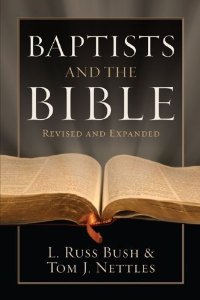
I recently read this book which documents how Baptists throughout the past few centuries have been known as men of the 41HUukthTrL._SY300_book. Whether a man was a general or particular Baptist, a common thread through them was a high and proper regard for the Word of God. This is, one hand, a most encouraging book, as it shows how Baptists have been faithful to the Word of God in face of opposition from within and without the camp of Christ. On the other hand, it is a reminder that sin yet inhabits the saints of God and some will be led astray – and worse: there are false brothers within the camp and some will be shown by their works and doctrine to be no child of God. Heart-breaking as it is, such false ones must be treated as such and not as brothers. Perhaps God will yet bring them to repentance and faith. Our call is to be faithful to the message He has given us and not curry favor with men.

It is a very good book – I was surprised by it. One excellent tool in this book is the chart below, documenting the differences between these two main groups of Baptists: those who hold to the particular redemption that Christ applies only to the elect and those who hold to a general redemption in which Christ died for all men.

Comparison Between Particular and Genera – L. Russ Bush

Operation Nehemiah

A few weeks back, Voddie and I were at a conference where he was speaking. We met a man from South Sudan who was on fire for the Lord, biblically sound, and earnestly seeking to spread the imag001Gospel in a country ravaged by war – both political and spiritual.

In cleaning out my briefcase, I found his newsletter and took a look at the web site. I recall his plan and burning desire to use a transportable radio station (less susceptible to gorilla attacks and economical, thanks for some smart engineers). Here’s a look at their “What We Do” page.

What We Do
Our Mission
      The primary Mission of Operation Nehemiah is to rebuild & restore the Biblical family and the Church in the republic of the South Sudan which is recovering from the ashes of war & Islamic persecution through the preaching of the Gospel, promoting sustainable & Biblical stewardship. As Nehemiah 2: 18 Says. ” “let us rise and build, so they join their hands together for this good work.

Our Values
The compelling force driving our work is promoting the Gospel of Jesus Christ, which brings people to repentance and eternal salvation. This serves as the criteria for the success of any of our efforts. We believe that a person’s dignity is enhanced through meaningful work, education and discipleship. The main focus of Operation Nehemiah Missions is to promote the Gospel of Yeshua that brings people to repentance and Eternal Salvation. We stand on this scripture “For other foundation can no man lay than that is laid, which is Yeshua Hamashiach. We are ministering to the body, soul, and spirit. Jesus said “It is written: ‘Man shall not live on bread alone, but on every word that comes from the mouth of God.’” (Matt. 4:4) We believe that the Bible is the only infallible and authoritative Word of God. We recognize its divine inspiration and accept its teachings as our final authority in all matters of faith and practice.
We are disciplining men, women and children in the South Sudan to have a loving relationship with Aba God, and Savior Yeshua the Messiah. This is our Eternal hope & destiny:we disciple new believers to “Seek ye first the kingdom of God and his righteousness, and all these things will be added unto you.” All these things integrate together: God, family, work, and ministry—and do everything as unto the Lord.
Our Distinctive
We are primarily an indigenous mission. 98% of our staff is South Sudanese Christian nationals. Our staff has a burning desire to take an active role in the rebuilding of their nation and to establish a “City on a Hill” in the New Sudan. We believe that self reliance is best promoted through indigenous leadership. We trained and established skilled and transparent indigenous Field Management Team with a shared long term vision and commitment. Our vision is to equip and empower the indigenous Christians to manage and account for the investment which God has entrusted to them with and through the benevolent gifts of the fellow Christians in USA. Our goal is to build trust and faithfulness with the leadership on the ground to deal with UN incursion and the remaining element of Islamic encroachment.  Nehemiah strives to archive genuinely sustainable indigenous operation. Our objective is to reduce the resources coming from outside by increasing the resources generated from within South Sudan.
Our Focus
Our primary focus is to prepare Beth Israel, a village in Magwi County, Eastern Equatoria State, and South Sudan for the return of people who were displaced by the war. We are taking one village and one family at a time. We are intent upon establishing a community that will provide people with the opportunity to rebuild their communities, their families, and to grow in their fait and to build a Godly  city upon the Hill that can not be hidden. We train  and  disciple women to embrace God,  family & motherhood. We train and disciple  fathers to demonstrate the impact of a gospel-centered home.  In  Genesis 18:19,  God approved of Abraham, because he commanded his children to keep the way of the Lord. God does not entrust the raising of children to the institutions of the state nor to the church, but to the family. Therefore it is incumbent upon us to disciple parents to teach and disciple their own children in the word of God. Homeschooling is the only means by which we can hope to do this.
Our Outreach
We endeavor to implement our vision and mission through indigenous church planting, Pastoral discipleship training, medical relief clinics, gospel radio broadcast, agricultural development, micro business start-up, polytechnic training, and repatriation assistance to families returning from exile. Our goal is to reduce dependence upon imported food and U.N. feeding programs by encouraging the local farmers in entrepreneurial organic farming, producing both healthy food and a stable local economy, thus raising the overall standard of living.

More information here, on their web site. http://operationsnehemiah.org/

What Does it Mean to be Reformed?

What Does it Mean to be Reformed?

The hallmark cry of The Reformation centered on 5 solas – 5 statements on core Christian doctrines that define the Christian faith from the Scriptures:

Sola Scriptura -The Scripture Alone is the Standard5 Solas

Soli Deo Gloria! – For the Glory of God Alone

Solo Christo! – By Christ’s Work Alone are We Saved

Sola Gratia – Salvation by Grace Alone

Sola Fide -Justification by Faith Alone

Apart from these truths, many will be led astray from the narrow path of God’s Truth. Many reformed Christians add a reminder that we, as sinful creatures, will never stop learning about the Lord – and ourselves – in this age. This reminder was summed up in the phrase, Sempre Reformanda – Always Reforming; lest anyone think he has “arrived”.

To remind us of these biblical truths and provide a clear understanding of what those within a local church have in common faith, Reformed Churches are confessional – they hold to a written confession about how key Scriptures are interpreted and applied to life. Presbyterians have the Westminster Confession; paedobaptist congregationalists have the Savoy; Baptists have two London Baptist Confessions, the 1644/46 LBC and the 1689 LBC. There are others, but one gets the idea that confessions are useful and common, at least among certain churches.

This brings me to a sticky wicket, so to speak, of holding to a confession and to the higher principles of The Reformation. Confessions are good and useful tools to codify core doctrines around which a local church can grow and have close fellowship. They are subordinate to the Scriptures, not a tool by which to interpret the Scriptures. They are documents written in a particular historical context by men who were limited in their comprehension of Scripture and somewhat blind to their own presuppositions – as are all men. Standing on and under the Word of God, resisting the siren call to rely on the traditions of men (men we love and thank God for), and ever growing in our love and knowledge of God and His Word means we may discover errors in our confessions, wording that is no longer clear, or conclusions that don’t appear as evident as they must have to those brothers 400 years ago. Our confessions as well as our personal presuppositions need to be tested in light of Scripture, always reforming for the glory of our God. Not seeking change for cultural convenience, but in response to the command that we grow as Christians and churches and hold only to that which is good – Truth as God has revealed.

How does a Reformed church or Christian keep from allowing the confession to dictate beliefs on secondary issues, as if it were the ruling document? Is this not evident in many Reformed churches – people defend their confession first, or only? Brothers, this should not be so! To cling to one’s confession of faith, no matter how sound it may be, as one’s first priority is not Reformed. Such a priority reflects the carnal priorities of all false religions, and turns a good confession into another golden calf.

As Baptists learn more about the covenants of Scripture, apart from the Presbyterian hermeneutic so prevalent in Reformed publications, will we be willing to examine what our confession says about the secondary doctrines that flow out from one’s view of the covenants? If we are to be true to our calls of Sola Scriptura and Sempre Reformanda we will. And we will also not be willing to defend our confession by mere argument, but with a clear conscience led by the teaching from the Word of God.

This does not mean that aggressive “inquiries” that appear to be meant only for tearing down confessional doctrines should be entertained. It does mean that honest inquiries from saints who want to sincerely understand how a given doctrine is defended from Scripture should be welcomed. A clear indication of trouble is when secondary documents are not allowed to be questioned, this is a sign of cultish behavior.

Change for its own sake is rarely a good thing. But change when we see more clearly from the Word of God is always a good thing. And we mustn’t allow our own wisdom or that of men who went before us to stand in the way. How can we claim to be Reformed if our confession is unchangeable? While our confessions are good and useful, they must always submit to the Word of God and we must be willing to entertain honest questions from saints wishing to understand them better or examine them in light of Scripture, with the aim of being more accurate and, therefore, honorable to our God and useful to His children.

With much love for the brotherhood and malice toward none,

The Primacy of the Abrahamic Covenant

Why does it matter how one views the covenant with Abraham? Are there actually different views Covenant Viewon it? My experience leads me to believe that most folks don’t really think too much about such things. Yet this singular item is, in fact, the biggest wedge between Reformed Baptists and our Presbyterian brothers.

As pointed out in this book review, the matter of covenants in the Bible and how one looks at and considers them makes a huge difference in myriad other doctrines that sprout forth. To help understand this issue further, I commend this sermon by Jeffrey Johnson, on the topic of the Abrahamic Covenant.

In addition to Johnson’s wonderful book, I recommend this new addition to anyone’s library.

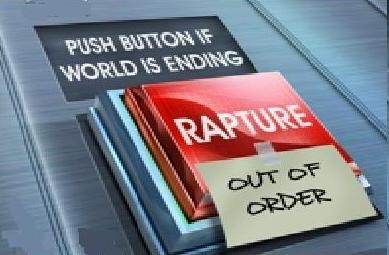
Is the Pretribulation Rapture Biblical?

Is the Pretribulation Rapture Biblical?

Brian M. Schwertley

One of the most popular teachings today in Evangelical and Charismatic pretribchurches is the doctrine of the pretribulation rapture. The pretribulation rapture teaching is that there are two separate comings of Christ. The first coming is secret and occurs before the future seven year tribulation. At this coming Jesus comes for the saints (i.e., all genuine believers) both living and dead. These saints meet the Lord in the air and then are taken to heaven to escape the horrible judgments that take place during the seven year tribulation. At the end of the great tribulation Jesus returns to the earth with the saints. This coming is not secret but is observed by all. At this coming Christ crushes His opposition, judges mankind and sets up a one thousand year reign of saints upon the earth (the millennium). Some pretribulation advocates speak of two separate comings while others prefer to speak of one coming in two separate stages or phases (phase one is the secret rapture and phase two is the visible coming in judgment). Hal Lindsey likes to refer to the rapture as “the great snatch.” He writes: “The word for ‘caught up’ actually means to ‘snatch up,’ and that’s why I like to call this marvelous coming event ‘The Great Snatch’! It’s usually referred to as the ‘Rapture,’ from the Latin word rapere, which means to ‘take away’ or ‘snatch out.’”1
     Although the pretribulation rapture doctrine is very popular and is even considered so crucial to Christianity that it is made a test of a person’s orthodoxy in some denominations, Bible colleges and seminaries, the exegetical and theological arguments used by its advocates are all classic cases of forcing one’s theological presuppositions onto particular texts (eisegesis). The purpose of this brief study is to show that the pretribulation rapture theory is not plainly taught or directly stated in any place in Scripture, cannot be deduced from biblical teaching, contradicts the general teaching of the Bible regarding Christ’s second coming and was never taught in any branch of the church prior to 1830.


The Origin of the Pretribulation Rapture Teaching

Whenever a Christian encounters a doctrine that has not been taught by anyone in any branch of Christ’s church for over eighteen centuries, one should be very suspect of that teaching. This fact in and of itself does not prove that the new teaching is false. But, it should definitely raise one’s suspicions, for if something is taught in Scripture, it is not unreasonable to expect at least a few theologians and exegetes to have discovered it before. The teaching of a secret pretribulation rapture is a doctrine that never existed before 1830. Did the pretribulation rapture come into existence by a careful exegesis of Scripture? No. The first person to teach the doctrine was a young woman named Margaret Macdonald. Margaret was not a theologian or Bible expositor but was a prophetess in the Irvingite sect (the Catholic Apostolic Church). Christian journalist Dave MacPherson has written a book on the subject of the origin of the pre-tribulation rapture. He writes: “We have seen that a young Scottish lassie named Margaret Macdonald had a private revelation in Port Glasgow, Scotland, in the early part of 1830 that a select group of Christians would be caught up to meet Christ in the air before the days of Antichrist. An eye-and-ear witness, Robert Norton M.D., preserved her handwritten account of her pre-trib rapture revelation in two of his books, and said it was the first time anyone ever split the second coming into two distinct parts or stages. His writings, along with much other Catholic Apostolic Church literature, have been hidden many decades from the mainstream of Evangelical thought and only recently surfaced. Margaret’s views were well-known to those who visited her home, among them John Darby of the Brethren. Within a few months her distinctive prophetic outlook was mirrored in the September, 1830 issue of The Morning Watch and the early Brethren assembly at Plymouth, England. Early disciples of the pre-trib interpretation often called it a new doctrine.”2
 Read the rest of this article here.

Responsibility of Elders

My church held a conference on church membership last fall. We had several well known speakers, Captureincluding Michael Horton, our own Voddie Baucham, Ken Jones, and Thabiti Anyabwile from Grand Cayman.

Here is Thabiti’s most excellent message on the responsibilities of those who serve the local church as elders: Responsiblity of elders

When Will Christ Return?

When Will Christ Return?

A defense of Reformed A-millennialism

by Dan Harrisimages

Taken from http://www.mountainretreatorg.net in compliance with their copyright.

Introduction

When will Christ return? Will He return before or after the Great Tribulation? This is a question that has baffled many, and has been the source of much debate among Christian groups. Historically, there were as many, or more who believed in a post-tribulation return of Christ as believed in a pre-tribulation return of Christ. Today, with the tele-popularization of dispensational pre-millennialism by tele-evangelistic groups, including those of Pat Robertson, Billy Graham, Jerry Falwell, Ed Dobson, Jack Van Impe and John MacArthur, by the growth of the charismatic movement, by the popularity of the Scofield, and the Ryrie reference Bibles, and of late with the popularity of the Left Behind series of novels, little more is heard of the historic teaching of a-millennialism. Many would give a strange look to a Christian who would say that he does not believe in a Pre-tribulation rapture, nor in the future re-establishment of Israel as the people of God. Yet such was the doctrine of most of the great reformers, including Martin Luther, John Calvin, and William Tyndale, is presented in the Westminster Confession, and is the position held by most Reformed, Presbyterian, Reformed Baptist, and Lutheran churches.

Very few people today question the teachings of their churches or of their educators. People on the most part have a blind-faith in what they have been taught. Yet the Bible forbids that we should trust in what we are taught, especially when it comes to the Bible. Rather we’re to be as the Bereans and search the scriptures to see if the doctrines are true (Acts 17:11). “Study to show thyself approved unto God”( 2 Timothy 2:15 ).

Certainly the author would not suggest that all who adhere to the Pre-Tribulation, pre-millennial return of Christ fail to diligently search the scriptures. Certainly there are also those among the reformed groups that have accepted a-millennialism because their church teaches it. Yet pre-tribulation, pre-millennialism is gaining much ground among those who do not search the scriptures because of the tele-popularization of this teaching.

What are the differences between Pre-tribulation-Pre-millennialism and A-millennialism?

The main difference between Pre-millennialist (whether Pre-trib, Mid-trib, or Post-trib) and a-millennialist is their interpretation of Revelation chapter twenty.

In Revelation 20, there is a period of 1000 years (a millennium) in which Satan is bound, and in which the believers reign with Christ. The pre-millennialist believe that this era follows the return of Christ. Hence they believe Christ will return pre-millennially. The a-millennialist believe that the millennium is symbolic of the whole New Testament era. Hence they believe that Christ will return a-millennially, that is, there will be no future millennium era.

Which view does the Bible teach? Both of these groups will say that the Bible clearly teaches its view. How can both of these groups be totally convinced that they are correct? Certainly we cannot say that one of these groups is not composed of diligent Bible students. Certainly both of these groups have those among them that do diligently study the scriptures. The main difference between these groups is how they go about interpreting the scriptures.

The one group primarily interprets prophesy by looking at the New Testament as a parenthesis within the Old Testament prophesies, (hence the Old Testament prophesies are complete in themselves, and the New Testament is a separate plan of God that was not revealed in the Old Testament. [This is what they call the “mystery” of Ephesians 3:3-6 and Revelation 10:7] ). While the other group uses the New Testament in its interpretation of the Old Testament. This group believes that the key to interpreting Old Testament Prophesy is found in the New Testament. The first group is the Pre-tribulation Pre-millennialist, the second is the A-millennialist.

In this essay the author will show why he believes that the second group is preferable to the first. This will require a diligent survey of the scriptures. For this, one must put aside what he has been taught and search the scriptures for himself and see what the Bible teaches.

Certainly the author of this essay is not infallible. Hence one should not put trust in what is written herein, but should diligently check to see if this is supported by the scriptures. If it is not faithful to the scriptures, then it, along with anything that one has been taught which may not be faithful to the scriptures must be disregarded.

Here are reasons why the author believes in a Post-tribulation, a-millennial return of Christ:

Read the entire 24 page article here

THE POWER OF THE CHURCH

He is the radiance of the glory of God and the exact imprint of his nature, and he upholds the universe by the word of his power. (Hebrews 1:30000023

The true power of the church lies in Christ personally. You may have all the stars that ever made bright the Milky Way with their combined sheen, but there is no power in them to kill evil or conquer sin

The stars of the church shine because God makes them shine. Their shining is not their own: it is a borrowed light with which they are radiant. But the power that overcomes evil, wounds the heart, pierces the conscience, and kills reigning sin is of the Lord alone.

“Out of his mouth went a sharp two-edged sword” (Revelation 1:16). Glory not, therefore, in men; for power belongs unto God. The power lies in Christ’s Word. “Out of his mouth went a sharp two-edged sword.”

“He that hath my word, let him speak my word faithfully…saith the LORD” (Jeremiah 23:28). People are disturbed and troubled by the real gospel: under the false gospel they can sleep unto destruction. Bring out the sword: it is made to wound; let it exercise its salutary sharpness.

The gospel has two edges so that none may play with it. When they think to run their fingers along the back of it, they will find themselves cut to the bone. Whether we regard its threats or its promises, it cuts at sin.

Let us therefore know that the power of the church does not lie anywhere but in the Word as Jesus himself speaks it. Let us keep to his own pure, unadulterated, unblunted Word, and let us pray him to send it forth with power out of his own mouth into the hearts and consciences of men.1

Charles Spurgeon

[1] Charles Spurgeon, At the Master’s Feet [Grand Rapids: Zondervan, 2005], January 27.

Hat tip to http://apprising.org/

What was Mohler Thinking?

Nearly 4 years ago, Albert Mohler and Danny Akins co-authored an article that never should have 1614332826_Do_Babies_go_to_Heaven_300x245_xlargebeen written. The Bible does not give enough information to be dogmatic about the eternal destiny of infants. It’s bad enough that Doug Wilson (of Federal Vision infamy) believes that a trinitarian baptism make babies (including Roman Catholic babies) Christian, we have otherwise sober Calvinist Baptists telling us ALL babies are saved – if they die before they sin. The hinge pin of Scripture they base this upon is 2 Cor 5:10, which, if taken as a solitary proof text, says one is judged for the deeds he has done in the body, whether good or evil. Their argument is that a baby is unable to do any evil deeds – yet they do not tell concerned parents at what age a baby is able to sin.

God chose before the foundation of the world those whom He would save. It is possible that omniscient God knew/ordained the early death of each infant who dies and sovereignly elected each one. But the Bible must be tortured to pull this doctrine out of it.

Mohler and Akins admit that every infant has the stain of original sin. They spend a few short paragraphs explaining the wretched state of unredeemed humanity – which includes infants. Then they have this:

What, then is our basis for claiming that all those who die in infancy are among the elect? First, the Bible teaches that we are to be judged on the basis of our deeds committed “in the body.”(2) That is, we will face the judgment seat of Christ and be judged, not on the basis of original sin, but for our sins committed during our own lifetimes. Each will answer “according to what he has done,”(3) and not for the sin of Adam. The imputation of Adam’s sin and guilt explains our inability to respond to God without regeneration, but the Bible does not teach that we will answer for Adam’s sin. We will answer for our own. But what about infants? Have those who die in infancy committed such sins in the body? We believe not.

They claim that since the children of the Exodus were not killed, but allowed to go into the promised land – babies go to heaven. This interpretation is not found anywhere the Bible that I am aware of. They claim that since Jesus said “Permit the children to come to Me; do not hinder them; for the Kingdom of God belongs to such as these” that actual children go to heaven. Child-like faith is what the Lord was talking about – not having any guile. Yet though Mohler and Akins repeatedly state that infants go to heaven they do not address the question of age of accountability. For IF one teaches the salvation of infants who die, one MUST be able to tell parents how old the baby must be in order to be accountable – how else can this false comfort be provided? It is reasonable that man wants to comfort fellow man. Christian man must not make up doctrines to provide false comfort. The entire Bible tells us Christ is our refuge and in Him alone we are safe. He is our protector, provider, and shepherd. Tenuous “promises” taken from muddied waters into which Scripture was stirred is not how we are to seek understanding or comfort.

We must be content to trust God, rather than make up doctrines that our natural minds embrace. It is reasonable to infer than God puts children in Christian homes because children are a blessing from God and Christians will be able to train the children as God commands. It is a stretch beyond the snapping point to say that children of Christians are New Covenant members – yet this is what Mohler and Akins are saying, for none outside the New Covenant can be saved. But the authors go beyond that and claim that ALL infants who die as such (again – with no line drawn as to how old one can be and claim this promise) were elect.

I am not going to recap the entire article – please read it and decide for yourself. But it is not helpful at all, consisting of man’s reason in an area God has not spoken clearly on.

Civil Disobedience and the Christian

The concept of civil disobedience is not new. Neither is the question of how far a government imagescan go before the Christian is permitted to disobey. This concept of civil disobedience is/ought to be an escalation from the peaceful petition that ought to be the Christian’s first response to objectionable laws. Was Rosa Parks right in her act of civil disobedience? How do we answer such questions?

We must be informed by the Word of God – not our personal preferences and presuppositions.

World Magazine recently published an article focused on this question, you can read it here. Here’s a small excerpt:

Does submitting to civil authorities mean obeying laws that are immoral? We are commanded by God to share the gospel. What if a law barred us from doing so, even privately? We see that obeying government authorities isn’t absolute. It should be clear to Christians that unless there is legal recourse against obeying a law that compels us to sin, we are justified in disobeying it. Is it a sin to offer employees “mini-abortion drugs”?

It is clear from Scripture that Christians are able (obligated, I contend) to disobey the governing authorities if proclamation of the Gospel is outlawed – see Acts chapter 4. Is that the right standard to compare other issues to, as if they become justifiable since Gospel proclamation is?

This question of submitting to political authority has been addressed here at Def Con in the past – see this post as brother Conrad Mbewe examines part of 1 Peter.

The question of disobedience to the governing authorities must be anchored in Scripture – as with anything of import. If God has given us instructions, we who claim to be His must submit to what He was revealed to us! Do you have a pet issue (perhaps home schooling) that would cause you to reflexively rebel against the governing authorities without seeking wisdom from God in humility?  We must be on guard against these issues that are close to us – for it in these that we are most vulnerable to slip into disobedience to God, thinking we are merely exercising our rights – forgetting that we are aliens in this present age, with our citizenship and home in a city whose builder is God.

Since I mentioned home schooling, let me briefly comment on that. In the US of A, it is not now and never has been against the law to home school your own children. Read that carefully. It is not now and never has been against the law to home school your own children. It has been and still is in many places in this country against the law to home school your children in lieu of sending them off the approved institution, but never illegal to home school in addition to the approved educational process. The Bible clearly holds parents responsible for training (educating) their children in the things of God. Rightly done, this covers all academic areas. But the Bible also records for us humble servants of YHWH who submit to pagan education and work diligently to prosper their pagan rulers (Joseph and Daniel come to mind). We must seek wisdom from God’s Word before we decide to go against the governing authorities – for there is no governing authority except those that have been established by God.

So – is it right and honorable to refuse to provide medical insurance that covers abortion? Certainly! The law is set up to allow people to pay for non-compliance. It is a very high price tag for businesses that might cause them to completely change their business model (contractors or part time employees) or liquidation. But think on this: the Bible does not reveal God’s will for man-made institutions. He has created government, family, and the church. Those institutions have responsibility before God as does each individual. A Christian who owns a company has a responsibility before God and he has the same obligation to seek wisdom from God’s Word on this as with personal issues. (Not being addressed in this article are those hell-bound folk who will also answer to God and have no grace to cover them on Judgment Day.)

The Christian that wants to participate in civil disobedience ought to step back and think. Rebellion is as witchcraft. Failure to rightly submit to the governing authorities is rebellion, is as witchcraft. Is that something we want to play games with? 1 Peter 2 gives a “Reader’s Digest” version of God’s commandment:

    Be subject for the Lord’s sake to every human institution, whether it be to the emperor as supreme, or to governors as sent by him to punish those who do evil and to praise those who do good. For this is the will of God, that by doing good you should put to silence the ignorance of foolish people. Live as people who are free, not using your freedom as a cover-up for evil, but living as servants of God. Honor everyone. Love the brotherhood. Fear God. Honor the emperor.

Let’s wrap up with the obvious text, Romans 13, which includes this nugget: “whoever resists the authorities resists what God has appointed, and those who resist will incur judgment.” Read the whole chapter, with a humble attitude. I know it’s easy to despise a government that does not rule the way I want it to. I like my elected officials to have an affection for and submission to the Constitution (at the national level) just like I like my church elders to have an affection for and submission to the Scriptures. But civil governments are mostly occupied by folks not reconciled to God, while church leaders ought to be – and therefore, subject to stricter standards. Most of the things that cause me to consider civil disobedience do not meet the biblical test – they reflect my fleshly desires or my innate sense of self-righteousness. How do you see yourself?

Okay. Your assignment. Voddie Baucham preaching on Romans 13 in two sermons. Listen to part one and part two before commenting. It wouldn’t hurt to listen to Conrad Mbewe’s message from 1 Peter (at the link early in this article). Then let’s discuss like mature, humble blood-bought children of the Creator God and Ruler of the universe.

Unity in Truth

A dear friend and brother in Christ, who used to host a Christian talk show on radio many years ago handed this me during the growing conflict I was experiencing in the seeker sensitive church we were in at the time. While it is likely this counsel could be improved upon (as is the case with all works of man), I think it good and godly counsel.

Having Harmony in Your Church Through Humility in Handling Doctrine

Discord in most churches is caused primarily by the straining out of gnats and swallowing of camels, If a church does not have agreement on the essentials, it is not a church of Jesus Christ, On the other hand, members of the church who think that every little pet opinion or “favorite” emphasis is worthy of debate (and the risk of unity), dishonor Christ also, Too few Christians can distinguish and discern which doctrines have what degree of gravity, Thus, we end up with either large congregations that ignore doctrine for the sake of gladhanded surface hospitality or small fortresses of “defenders of the only way” where you feel like you’re on trial whenever you speak!

Here are four broad areas of doctrine. If you will attempt to distinguish which area a given issue belongs to, you will have an easier time dealing with that issue. Thus, less chance of getting personally uptight and less chance of offending another. This material will help when used correctly, Two cautions before we start:

1.Truth offends. The assumption in this material is that we are dealing to some degree with lovers of truth. Unfortunately, our churches are not full of such people, You will encounter that problem.

2.Some doctrines overlap. This material and chart are convenient general categories, not rigid compartmentalizations, There is especially some blurry areas between II and 111 and between 111 and IV, Not only that, but when you are in a lively discussion of some issue, other issues come up which could put you in several categories at once.

You might be talking about some doctrine where you are aware that you are building a case from a very thorough connection of Scripture. The person you are trying to convince may refuse to yield to a passage of God’s Word.

All of a sudden, you are into the IMPERATIVE of the authority of Scripture as well as an open discussion of your original issue. These situations will require more wisdom yet.

Nonetheless, despite these two cautions, working with this material can revolutionize your spiritual walk with regard to harmony, discernment, unity and pride,

EXPLANATION OF CHART COLUMN 1

The first column is the type of truth you are dealing with, A BIBLICAL IMPERATIVE, BIBLICAL IMPLICATION or BIBICAL INTERPRETATION, Notice the first three deal with items directly from Scripture, but Item IV concerns things created in you by the Holy Spirit through your own context, your own understanding of principles and your own application to various areas of life,

COLUMN 2,

The second column explains how to recognize these areas, This column gives the definition of the first column, BIBLICAL IMPERATIVES are the foundational truths such as the Deity of Christ, the Authority of Scripture, the Trinity and the Substitutionary Atonement. People who deny these truths are not Christians.

A BIBLICAL IMPLICATION also has no room for denial because it is an area where the Bible cannot teach but one thing. However, misunderstanding is possible because the truth is not stated in so many words. Rather it is woven through the fabric of Scripture. Even if you have a few passages where you are thoroughly convinced that your conclusion is obvious, you are humble enough to admit not only that a different view could be held by true Christians, but lo and behold, great people of God through the centuries have not been as certain as you are.

Thus, you become willing to patiently learn how to present your case and give folks lots of room to discover the conviction you have. For example, should Christians send their kids to government schools? For example, how fallen is man’s will? For example, Covenant vs Believers Baptism,

I believe firmly and staunchly in what I’ve concluded the Bible teaches on each of these. But, 1 view you as a Christian, and will not doubt the genuineness of your salvation for having not yet come to the same conclusions.

A BIBLICAL INTERPRETATION hinges on one passage or the interpretation techniques used for several passages, For example, Daniel 9,..where does the countdown of the 490 years start? Your answer from Isaiah and Ezra will influence your entire view of eschatology. So why should we argue about the interpretation of Revelation 5 if we already know our impasse is in the middle of Isaiah? Or perhaps the interpretation of the words °a cause” in the sin of being angry at a brother without cause! It comes down to an understanding of a particular, If we view it differently—and we both honestly can view it differently—that’s it! Fortunately, God has seen to it that no essential matter of faith or life is in this category,

Finally the DAILY WALK INDIVIDUALIZATION, Friends, if we haven’t got chapter and verse—even if we believe we have the mind of Christ on the matter—we must humbly avoid playing God over another conscience, Does Walt Disney promote the occult in Fantasia? Are certain beats of music admissable? Should you pray before, or after, your morning shower? Come on, folks! Romans 14 insists that we acknowledge liberty and conscience in these areas,

COLUMN 3 & 4

Columns 3 and 4 prescribe the limits of what we do with these doctrines. This will be as helpful as the recognition,

A BIBLICAL IMPERATIVE is not compromised or glossed over with anyone. Earnestly contend!! Don’t get off on blood transfusions, time travel and other things with cults and secularists, The only questions between you and them are: Who is God? Who is man? Who is Christ? What is truth? Stay on the subject with them,

BIBLICAL IMPLICATIONS are to be worked out carefully among believers, You have an obligation to the brethren on both sides. Be able to articulate what you believe and love them in what you consider their “future maturity”,

BIBLICAL INTERPRETATION makes for “iron sharpens iron” discussions with friends, but the church today should not be divided on predictive prophecy,

On DAILY WALK INDIVIDUALIZATION you may set an example, if you wish, but you are confusing your own authority with the Bibles if you command something that it doesn’t.

Clipboard01