
Expository Moments
Is it NOTHING to YOU?
A popular song written by a godless man named John Lennon includes the following lyrics:
“Imagine there’s no heaven
It’s easy if you try
No hell below us
Above us only sky
Imagine all the people
Living for today…Imagine”
Tragically for Lennon, he was wrong. Thankfully for those still living, he was wrong.

There are many who try to imagine there is no heaven and no hell. They think that if they merely use the power of positive thinking that eventually everybody in the world will simply “live for today.” Yet, Lennon wrote in a world where depravity abounds more and more. He wrote of a world that knows war, famine, and disease. His words struck a chord of hope, although a false hope, with millions though and still do today with people who are just living for today. These individuals think that they live in some kind of utopic stupor, and if they only imagine hard enough things will change.
King Solomon wrote in Ecclesiastes 1:9 that “there is nothing new under the sun.” Less than 350 years later, we find a prophet who is sits weeping and wailing before God facing this same challenge that we see today.
The remaining inhabitants of Judah and Jerusalem are living in a utopic stupor. They believe their problems are going to get better. The people approach Jeremiah and even ask him to pray and seek the face of God in Jeremiah 42 on their behalf. Then, they promise him that whatever the Lord says whether good or bad, they will be willing to follow. God speaks with Jeremiah and receives word that destruction and devastation will fall upon the land from the king of Babylon.
Immediately, the people seek forgiveness from God, turn from their wicked ways, and God relents and grants pardon! Praise be to the everlasting God for His abundant mercy! This is the way the story SHOULD have ended.
However, that is NOT what happened. Just one chapter later in Jeremiah 43, they immediately turned on the prophet and called him a liar. They told him and sought to influence others that God would not really send judgment to the land. Their words implicated them in their own sin as they tried to convince themselves that not only did Jeremiah not have a message from God, but that he was not a true messenger. The people’s imaginations were vain and their hearts were hardened.
Now destruction has befallen the land. War has arrived and the land has been besieged and then plundered. The physical, mental, and emotional wellbeing of the people left has been destroyed by the wanton rape, murder, and assault by the foreign soldiers of Nebuchadnezzar’s army. Further, Jerusalem is in ruins. The glorious city that graced the hills of Judea, along with the magnificent temple built by Solomon, has been destroyed BECAUSE OF SIN! The sin probably did not even start out very big, but little by little they gave in to the lusts of their heart and God was quickly forgotten.

Now, Jeremiah weeps and wails his heart-rending laments and cries aloud in Lamentations 1:12 – “Is it nothing to you, all you who pass by? Look and see if there is any sorrow like my sorrow, which was brought upon me, which the LORD afflicted on the day of his fierce anger.”
Can you see him sitting with sackcloth covering his body, throwing dust into the air over his head, his eyes swollen red and grotesque in shape, and his entire body racked with sobs as he ponders what has taken place? He is not denying the sin that took place either in his own heart and life, nor the sin that befell the nation of Israel and Judah. He wails because he has lived to see the results of what sin will do if left unchecked and unrestrained and then allowed to continue until judgment falls from God.
He is willing even for strangers to stop and lament with him. He wants somebody, anybody, to mourn and lament with him over the desecration of the temple and of Jerusalem. However, nobody is stopping. They do not care. Destruction arrived and even in the middle of its arrival, there are still some who are living in a dream world just “knowing” that things will get better soon. The problem is that “soon” will not arrive.
In Lamentations 1:10, we hear the prophet’s lament and like Nehemiah who would come approximately 70 years later, we understand part of what his concern is. “The enemy has stretched out his hands over all her precious things; for she has seen the nations enter her sanctuary, those whom you forbade to enter your congregation.”
His heartbreak is real. The glory of God rested upon the Holy of Holies in the Temple. It was such a terrible place to be if you were not the high priest who was allowed to enter just once per year. It was a terrible place even if you were the chosen high priest to go in where you would face God. I can imagine that more than one high priest must have trembled when he entered that sacred realm to offer the blood of the sacrifices as an atonement. Sadly, the trembling had ceased a long time ago. Worship was no longer present, and it was little more than a frivolous atmosphere that greeted those who still bothered to go and give worship and praise to God.
Now, the prophet has watched as foreign troops not only invaded the land, but completely desecrated that which was to remain holy. The soldiers trampled under foot the holy items and the holy place because they had no appreciation for the God that rules over all. Their only concern was in looting whatever they wanted and assaulting whoever they chose.
What a great tragedy that befell Israel, and the messenger of God is as devastated in heart, mind, and soul as the devastation that has even overturned the gates and stones of the city and temple.
Can you see the connection between what took place in Jeremiah’s day and today? Sin abounds more and more. The world is NOT getting better. The true believer in the Lord Jesus Christ cannot imagine a better world in this life because they are fully aware that the only way a better world will come is when the Prince of Peace appears.
But my concern today is not just in reading the laments of Jeremiah over the city. The concern that grows on me daily is that destruction is coming and few seem to really care. I am not concerned about those who belong to Satan and are under his control. My heartache comes from knowing that those who are claiming the name of Christ, those who are supposed to be working to make themselves pure before the return of the Lord, those who are to be different from the world, those who have been made a new creation in Christ Jesus and are clothed with the garments of His righteousness. These are the people to whom I write.

“Is it nothing to you, all you who pass by?”
The buildings, in which we worship, have been desecrated underfoot by the feet of those who do not belong. God, long ago, laid out the demands for what He expects in worship from His people but these have been ignored.
“Is it nothing to you, all you who pass by?”
Pastors fail to preach truth because they are afraid of what they may lose, and prefer earthly treasures over heavenly ones.
“Is it nothing to you, all you who pass by?”
Leadership teams fail to hold one another accountable based on the standards of Scripture, and instead, seek to govern from business perspectives that are modeled after worldly psychological methods.
“Is it nothing to you, all you who pass by?”
Marriages in our churches are falling apart at the same rate as those in the world. Parents have little respect from their children. Fathers have failed to be spiritual leaders in the church and in their home. Mothers are taking on responsibilities that do not belong to them both in the church and in the home.
“Is it nothing to you, all you who pass by?”
Children are following hard after drugs, alcohol, and premarital sex. They are running away from the church because all they see is hypocrisy. Dad and Mom live during the week something different than what they portray in their once or twice a month church appearance.
“Is it nothing to you, all you who pass by?”
Parents want to come and cry out for prayer that God will bring their children back to the church. Their prayer should be first that God would break their own hearts and seek repentance for their sin and duplicity before God and before their children. Then, God will hear the prayer of the righteous person and may in turn be gracious in His mercy and longsuffering to bring salvation to the children.
“Is it nothing to you, all you who pass by?”
The unsaved are being permitted to become members of local body of believers without ever having made a true profession of faith in Christ Jesus. So, the churches are being taken over by those who care not one bit for the things of Christ. The buildings are filled with people who are man-centered, and not God-centered, and in so doing, they have become little more than social clubs.
“Is it nothing to you, all you who pass by?”
The gospel has been watered down so much that it is no longer recognizable as Scripture. It has become a little feel-good message that seeks to allow into heaven all who do not belong there. The message is so smooth and culturally relevant that myriads gather every Sunday and they are rarely, if ever, convicted over the depravity of their own hearts.
“Is it nothing to you, all you who pass by?”
Entertainment and programs are the order of the day because we are concerned that the goats may leave if they are not made to feel happy or good about themselves. Our worship does not reflect praise of God because we come to hear about God instead of coming to learn from Him and to offer the worship that is due His name alone.
“Is it nothing to you, all you who pass by?”
Our churches care little for true missions because we are rarely concerned about what we cannot see. More times than not, missions has been reduced to feeding the poor, building nice buildings, clothing the ragged, and educated the uneducated. Churches pat themselves on the back for having done something great for God while these same people head straight for hell because many so-called “mission societies and organizations” only preach a social gospel message.
“Is it nothing to you, all you who pass by?”
Prayer is mostly absent, if not, almost extinct. Prayer meetings and Bible studies are often attended by less than 5% of the total membership. And we wonder why there is NO POWER in our gathering together. We talk about it every now and then, but few are willing to give up some comforts in order to see something changed.
“Is it nothing to you, all you who pass by?”
Friends, we need more like Jeremiah who will weep and wail at sin, at the coming destruction, at the reality of hell and judgment from a holy, righteous God, at the sad state of affairs where people wink at sin and refuse to stand for truth, and also because of what is taking over in many parts of evangelical Christianity.
I am tired of worrying about what other people may think of me. My heart is heavy because I am afraid for too long in my Christian life that I have not been concerned enough about what God KNOWS of me.
My challenge with this post is to point out the reality of what is around us. The Scriptures are clear that if we forget God, we will face judgment. We need to get back to a standard that speaks of Holiness to the LORD. We need to pray, repent and confess our sins, turn from our wicked ways, and seek the face of the Almighty God. We need to pray that God does not allow such destruction among His people that somebody in the future will look back and lament about what happened to the church of the living God.
“Is it nothing to you, all you who pass by?”
Give us Love – Not Doctrine!
This is the mantra that is being proclaimed loud and long across this nation. Love and unity at the expense of doctrine has watered down the message so as to try and make it palatable to the goats, and it no longer feeds sheep. Yes, we must share the truth in love, but we dare not state that the only truth is love minus doctrine. Sound biblical doctrine will always produce godly results in that the church will be edified, believers will learn what it truly means to love one another and the world, and most importantly, Jesus Christ will be exalted and glorified – not man!
Feeding Sheep or Amusing Goats?
An excerpt from a message preached by Charles Spurgeon – this kind of preaching is rare in the world of the 21st century. Too many think we can amuse goats instead of feed sheep. In the end, the minister loses because he has failed in his commission. The sheep are not being fed and will drift away, and the goats for which the services were catered have moved on to the next best thing – but still lost!
What’s the Significance of the Lord’s Supper?
As with baptism, there is much more meaning in this ordinance than what meets the eye. Every time we are given the blessed opportunity to be nourished spiritually with this ordinance, how it represents the broken body and shed blood of Christ, which cut the New Covenant and in which we have our adoption as sons of the Living God. This description is right and it is a main point we supposed to gain from observing this ordinance. We will examine these truths – but there is another aspect that I think will add a deeper appreciation and greater holy awe of our Lord and Savior. We read from 1 Cor 11 each week, but the establishment of this ordinance is also found in Matthew 26, Mark 14, and Luke 22. This is an important means God has given us, we must diligently inquire of His Word what it means and how we are to practice it.
Sissified Needy Jesus?
Pastor Voddie Baucham preaches the truth firmly and solidly from the Scriptures. His message is loving but it is a warning to those that think Jesus Christ is just some mamby-pamby God who has to have us in order to justify His own existence. He needs nothing from us.
Making Your Calling and Election Sure
This is a wonderful post by Mike Ratcliff. It is most important for every professing Christian to strive for holiness and not take the grace of Christ for granted. Here’s the introduction, make sure you head over to Mike’s blog to read the whole article. It will convict you if you are a child of the living God, for none of us walk entirely as we ought.
How can we know if we are truly in Christ? Or you may ask, “What is the fruit which genuine believers bear?” If true salvation is as impacting on a believers life as we contend then there should be verifiable evidence or fruit manifested in that life. The problem is in knowing what evidences really prove the presence of God in a person’s life and those that do not. I have noticed most professing Christians look at the wrong things in their self-evaluations to determine if they are in Christ. Real evidence of the presence of God in a person’s life will be the fruits of salvation. These fruits will in turn lead to outward manifestations of “goodness” or “religiosity” which, unfortunately, can be counterfeited. These outward manifestations are often what we look at to determine if we are a “good Christian” or not. My brethren, this is a fallacy. Any activity or attitude that can be counterfeited by a false believer cannot be used to verify ones salvation.
Let’s take a close look at these evidences that should never be used to verify our salvation.
Baptism – What’s the BIG DEAL?
One area Baptists and paedobaptists commonly agree is that there are only two ordinances given to the 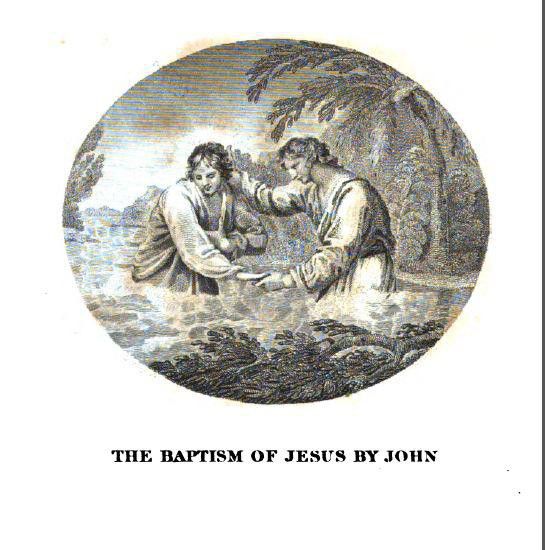 church, contrasted with the seven claimed by the Roman Catholics. While we agree on what these two ordinances are – baptism and the Lord’s Supper – we do not agree on some of the details, particularly as regards baptism. We baptize believers – by submersion. We’re in the minority. Denominations that practice infant baptism include Roman Catholics, Eastern and Oriental Orthodox, Anglicans, Lutherans, Presbyterians, Methodists, some Nazarenes, the United Church of Christ (UCC), Moravian Church, Metropolitan Community Church, Wesleyans, and Episcopalians. There are those who believe baptism is salvific – Church of Christ, Disciples of Christ, and those who hold to Federal Vision. I will not go into that discussion, just know they are out there.
Baptists have long loved to call themselves – ourselves – “people of the book”, denoting our claim to being among those who stand on the sure foundation of Scripture and under the authority of Scripture. May this be true of us, as many wise and solid sounding arguments have been marshaled in support of the opposing view of baptism – the sprinkling of little ones. I do not want to spend much time explaining why the paedobaptist view on baptism is wrong, I will appeal to a few of their finest theologians to tell us they are wrong.
Few Will Find It – The Rest Will Be Damned!
Today is the first day of the last month of 2013, and while for some it is a day of worship in church, for many thousands, it will be their final day on earth. For them, the day of judgment will arrive whether they believe it or not, and whether they like it or not will not matter one iota.
Today is the day of salvation for those who have never placed their faith in Jesus Christ. Flee to him and plead for mercy before it is too late.
A Defense of Credo-Baptism
I testify that baptism or dipping in water is one of the commandment of this Lord
Jesus Christ.
By John Clark, Physician of Rhode Island in America, 1652
That this commandment of Jesus is by way of dipping, and, as it were by drowning, overwhelming or burying in water and not by sprinkling with water, appears many ways.
1. In that although there be frequent mention made of that appointment of Christ in His last will and testament, yet is it never expresses by the word that may be rendered rantism, or sprinkling, but by the word that is rendered baptism, or dipping.
2. In that the word by which it is so frequently expressed doth in proper English signify to dip, to plunge under water, and as it were, to drown, but yet so as with safety so that the party (as to the manner) may be drowned again and again, see the instance of Naaman. He dipped himself seven times in Jordan (2 King5:14) and to this sense of the word (at least in that place) both the Greek, Latin and English Churches agree.
3. In that the phrase (in which there is mention made of such an appointment of Christ) doth necessarily import such a thing, and, therefore, when mention is made of baptizing, there generally followeth that word the preposition (iv) which is commonly translated in or into which suits the dipping, and not the preposition (sun) which signifies with and so suit with sprinkling. It may as well be rendered I baptize you in water and he shall baptize in the Holy Spirit (Mar 1:8) as it is rendered John did baptize in the wilderness and in the river of Jordan (vs 4, 5) or that John was in the Spirit on the Lord’s day (Rev 1:10) and they were baptized in the cloud and in the Sea (1 Cor 10:2). Yea, it might as well be rendered I baptize, or dip you, into water as it is rendered they were casting a net into the Sea (Mar 1:16) for the words are the same and it would be an improper speech to say John did baptize with the wilderness and they were casting a net with the Sea.
4. That this appointment of Christ is by way of dipping, and not sprinkling, appears in that for the resemblance and likeness hereunto. The Israelites passing under the cloud and through the Sea where the Egyptians that were their lords and commanders, their pursuers and enemies, that sought their destruction were drowned, left behind and seen no more, is by the Holy Spirit called a baptism (1 Cor 10:1,2) They were baptized in the cloud etc. Observe, it is not here rendered with the cloud and with the Sea, as in the other place (Mar 1:8) with water, because it suits with sprinkling although the word be the same, but in the cloud and in the Sea which suits with dipping or overwhelming. So, with the appointment of Christ, they passing through the midst of the red or bloody Sea on dry land which stood on both sides as a wall, and being under the Cloud, were as men, in a carnal eye, overwhelmed and drowned and yet truly saved and safe from their enemies.
5. That this appointment of Christ was not by sprinkling, but by dipping, or putting the person into or under the water appears by Phillip’s baptizing the Eunuch. It is said They went down into the water, both Philip the baptizer and the Eunuch that was the person to be baptized, and being there in the water, Philip baptized, or dipped him in that water as John did Jesus in the river of Jordan. Then it is said as they descended, or went down into the water, so they ascended or went straight way up out of the water. See Acts 8:38, 39; Matt 3:16. Mark the expression: “And Jesus, when He was baptized, went up straightway out of the water..”, therefore had he been down in the water.
6. That this appointment of Christ was not by sprinkling, but by dipping, or , as it were a drowning, appears in that John the Baptizer, his work being to baptize, remains in the wilderness by the river of Jordan and afterward in Aenon. The reason that this is rendered by the Spirit of God why there he abode, was, because there was much water there, which need not have been if that appointment could have been performed by sprinkling and not by dipping. See Luke 3:2,3 John 3:23.
7. That this appointment of Christ was not to be performed by sprinkling, but by dipping etc. Appears from the nature of the Ordinance itself. It is such an Ordinance as whereby the person that submitteth thereto doth visibly put on Christ Jesus the Lord and is hereby visibly planted into His death, holding forth therein a lively similitude and likeness unto His death. Whereby only through faith he now professeth he hath escaped death and is in hope to obtain life and peace everlasting and so to have fellowship with Him in His death as to be dead with Him and thereupon to reckon himself to be dead indeed unto sin, Satan, the law and the curse. See Gal 3:27; Rom 8:2,3; 5:7,8,11; 1 Cor 15:29. But the planting of a person into the likeness of death is no ways resembled by sprinkling. But by dipping it is lively set forth and demonstrated.
8. This appointment of Christ, Baptism, is an ordinance whereby the person that submitteth thereto, doth visibly and clearly resemble the burial of Christ, and his being buried with Him. So, as in respect of the old man, the former lusts and conversation, like the Egyptians, to be taken out of the way and seen no more. See Romans 6:4,6; Col 2:12. But sprinkling doth no way lively resemble the burial of Christ, or the persons being buried with Him as dipping doth.
9. This appointment of Christ, Baptism, is an ordinance whereby the person that submitteth thereto doth visibly and lively hold forth herein the resurrection of Christ, declares Him Whose life was taken from the Earth to be alive again, Who although he died and was buried, yet was He not left in the grave to see corruption, but was raised again and behold He liveth for evermore. As hereby he holds forth the resurrection of Christ, so doth he also his own being planted in the likeness thereof so as to reckon himself to be in his soul and spirit quickened and risen with Christ from henceforth to live unto God the fountain of life and to Christ Jesus the Lord Who died for him, and rose again and so to walk in newness of life in this present evil world, being also begotten unto a lively hope that in the world to come, he shall be raised and quickened both in should and body to a life everlasting. See (Rom 6:4,5,8,11; Acts 8:33,35,36; Col 2:12; Rom 8:11; 1 Cor 15:29; 1 Pet 1:3. Sprinkling doth no way lively resemble the resurrection of Christ, or the souls or bodies rising, or being raised by Him, as the way of dipping doth. Therefore, this appointment of Christ was, and still is, to be performed by way of dipping or putting the person into or under the water and not by sprinkling.
That this dipping in or into water in the name of Jesus is one of the commandments of this Lord Jesus Christ doth evidently appear Matt 28:19; Mark 16:15, 16 compared with Acts 2:38, 41; 8:36, 38 and 10:47, 48. And that it is also to be observed by all that trust in Christ, as other of is commands, as He is Lord, until He come again, is likewise expressly manifested to be His will: Matt 28:20; Gal 1:7, 8; Jude 3; 2 Tim 2:2; Col 2:5, 6; Rev 2:25; 3:11 Hold fast till I come. Rev 22:14, 19; Heb 12:25
A visible believer or disciple of Christ Jesus (that is, one that manifesteth repentance towards God and faith in Jesus Christ) is the only person that is to be baptized with that visible baptism or dipping of Jesus Christ in water
That a visible disciple or scholar of Christ, one that manifesteth himself to have heard Him, to have been taught by Him and to have yielded himself to Him as his teacher, is the only person, etc. Will be made manifest:
1. By the commission itself and the argument stands thus-they and they only have right t this ordinance and appointment of Jesus Christ, whom the Ordainer Himself, Christ Jesus the Lord, hath appointed it to disciples and to believers and to such only. The first proposition cannot be denied and the second will easily be roved. See the commission by which the apostles were warranted to administer this ordinance. So must all baptize or they will appear but usurpers (Mat 28:18, 19). All power is given to me in heaven and in earth, saith the Lord, Go ye therefore and disciplize or make disciples not among the Jews only, but among the Gentiles and Nations and baptize them. If the question should have been made, Lord whom shall we baptize of the Nations among the Jews and Gentiles? His answer was given in the words before. He would have given no other. You shall baptize amongst the Nations Jews and Gentiles, such as first been taught, and by teaching have been made my disciples. Mar 16:16 go ye into all the World, saith the Lord, and preach the gospel to every creature-to the Gentiles as well as the Jews. He that believeth and is baptized shall be saved etc. If the question should be here propounded again who among the religious and strict Jews and the loose and profane Gentiles should be baptized, the answer is plain-those to whom the Gospel first hath been preached and they through that Gospel have also believed.
2. By the practice of the commissioners of Christ who were faithful unto their Lord and to the charge which He gave them. The argument stands thus: Such as faithful Apostles, and first commissioners of Christ Jesus the Lord administered this ordinance of baptism unto such and only such ought to be made partakers thereof. But the Apostles and first commissioners of Christ administered not this ordinance unto carnal babes, infants of days(these are by the scriptures declared to be conceived in sin to be brought forth in iniquity, and in being born of the flesh to be but flesh, and so by nature the Children of wrath, one as well as another, being also untaught), but to such as first were taught and were ordained by the immortal seed of the world to be born again and as new born babes in Christ, having tasted of the sincere milk of the word, desire still more of the same that they might grow up thereby and such as appeared to be converted and to become as little ones, such little ones as believed in Jesus.
The first proposition I suppose none that own Christ and his Apostles will dare to deny. And the second which is more questionable will also be proved. See Acts 2:38, etc. Although Peter with the 11 calls upon the convicted Jews to repent and to be baptized every one in the name of the Lord Jesus for the remission of sins, and tells them that then they shall be made partakers of the Holy Spirit, and that they should not need to distrust it, he shows them the largeness of the promise that was made concerning the pouring forth of the Holy Spirit, it being promised to be poured forth upon all flesh as they had expressed in the beginning of their discourse out of Joel 5:16, 17 and therefore saith ‘tis to you and to your children and to all that are a far off even as many(of you, your children and such as are a far off) as the Lord our God shall call. Yet, he baptized none, but such as were called by the holding forth the word of salvation by Jesus Christ as appears in the words. For they that gladly received his word were baptized and they only, for they that were baptized were added and continued together in the disciples’ doctrine and in fellowship and in breaking of bread and in prayer and continued daily with one accord in the Temple, and breaking bread from house to house, did eat their meat with gladness and singleness of heart. This place, therefore, if rightly considered, will be so far from affording a ground for the baptizing of the children of believing parents, because here it is said the promise is to you and your children, that it will sufficiently evince the contrary. Such an apprehension is accompanied with 2 or 3 evident mistakes. There is a mistake in the promise, in the parties to whom the promise belongs and the manner how it is to them and their children.
1. There is a mistake if the promise in that it is looked at as the covenant of Grace which doth ingratiate the soul into and gives it an interest in all the privileges of the Gospel of Christ. So in order doth go before baptism or any other visible ordinance and appointment of His whereas is very truth by promise there, is meant that Holy Spirit of promise which they which believed in Christ, and obeyed Him, should, according to promise, receive after He was ascended unto the right hand of the Father as appears John 7:39; 14:16; 16:7. That which He had here shed abroad in a powerful manner upon the Apostles, and that which these Jews also believing and obeying the Gospel of Christ should also receive and therefore saith Peter, Repent and be baptized and ye shall receive etc. And was no other than that which was of old prophesied of by Joel as is declared in v.16 and so is a promise that follows faith and obedience and not such as goes before to give right to this appointment of Christ.
2. There is a mistake in the parties to whom the promise belongs. For whereas it is said to you and to your children, and thereupon it is conceived to be meant believers, and their infants of days which upon that account are to be baptized, it is plain and evident when the apostle spoke these words to them, they could not be looked upon as believers, forasmuch as they being pricked at the heart and only convinced of their evil in murdering the Lord of life, propounded what they should do to be saved which is far from believing. To which the apostle replies, Repent and be baptized in the name of the Jesus for the remission of sins. To conceive that by their children were meant infants of days, it may be as well as understood by your sons and daughters which should so receive of the promise of the Spirit as to prophecy mentioned in the seventeenth verse of this chapter to which these words are related: and to make it appear that the promise was not so either to them or their children (as yet manifested) to give them right unto baptism. After many more words used by the apostle to persuade them to save themselves from this adulterous generation, it is said, but as many as gladly received his word, were baptized and but only such and not their infants of days. They that were baptized continued together in such appointments of Christ as infants are in no measure capable of.
3. There is a mistake in the manner how this promise is to them and their children, not spoken to them now as believers and their children as having right and interest peculiar by them, but, indeed, to them and their children no otherwise than to all that are a far off. If taken in the general, cannot be understood but with respect to the general promise which is to pour forth His Spirit upon all flesh. But, if with the restriction, which is, even as many as the Lord our God shall call, then parents and children, Jews and Gentiles, such as are near, and such as are a far off, must be called by the word of His grace before they can have a peculiar right and interest in this Spirit of promise. So a child that is called to believe and obey the Gospel may have this promise made good unto him before his father, and a Gentile that is a far off before a Jew that is near.
This will appear also by other instances as of Philip baptizing in Samaria. They were men and women that he baptized there, such as believed and received the word with great joy (Acts 8:8, 12). When the Eunuch seeing the water, asked what should let him to be baptized. Philip intimates that although he had been taught, yet want of a manifestation of faith would be a let (v. 36, 37) and whereas there is mention made of whole houses that were baptized, that the commissioner might appear faithful unto their Lord, and keep close to the very words of their commission, you shall find they were first taught, and by teaching, were made His disciples, and gladly received His word. See it in Cornilius’ household (Acts 10:44, 47) compared with the jailers’ household (Acts 16: 32, 34). They spake unto him the word of God and unto all that were in his house, and he set meat before them, and rejoicing, believing in God with all his house. See it also in Crispus’ household (Acts 18: 8-11), Stephanus’ household (1 Cor 1:16, 17 compared with 16:15). And as for Lydia’s household (Acts 16), the Spirit of God being more silent therein, they that cannot interpret it by the other four, nor yet by the commission itself, nor by the commissioners’ faithful observance thereof in all other instances, let them prove, if they can, these three particulars: a. That Lydia ever had a husband. B. In case she had, that ever she had any children by him, and if so, then in the c. That they were not dead or so grown up that they might hear and receive the word gladly as well as their mother.
A third argument to prove that a visible believer is the person that according to the mind of Christ is to be baptized in water may be taken from the order which the Spirit of Christ lays down: faith and baptism, in the scriptures of truth, putting faith still in the first place witness Mark 16: 15, 16, Matt 28: 19; Heb 6; Eph 4.
A fourth argument may be taken from the nature of the ordinance and a fifth from John’s baptism. Yea, much more might be said to this point, but this may suffice.
The only person that is to walk in the visible order of his house and so to wait for his coming the second time in the form of a Lord and King with his glorious Kingdom according to promise.
That he is the only person that is to enter into and walk in the visible order of His house will evidently appear, if the order in which our Lord left His house when he went to His father to receive His Kingdom, be duly considered. In His last will and testament, we shall find it thus recorded. When our Lord was about to be gone, he gave order unto His apostles whom He made stewards in His house of the mysteries of God to make Him disciples of all Nations and that such as were to be made should then be baptized and so visibly be planted into Christ and put on Christ, and having so received Him, should walk in Him, observing all things whatsoever He had commanded. The first thing whereof as touching order was to be added or joined one to another in the fellowship of the Gospel by a mutual professed subjection to the Scepter of Christ and being a company thus called out of the world, from worldly vanities, and worldly worships after Christ Jesus the Lord (which is the proper English of these words-the Church of Christ, and is in other terms called the Household of faith) should steadfastly continue together in the Apostles’ doctrine, the consolation, reproof, and instruction thereof, in fellowship, the mutual support both inward and outward, in breaking of bread, thereby remembering the death of our Lord whose soul was made an offering for sin. As His flesh is meat indeed, and His blood drink indeed by the help of the Spirit to nourish our souls and spirits up unto eternal life and in prayer, one with and for another. This is the absolute order which the Lord hath appointed in His last will and testament. This appeareth both by His own precept and command, and by the practice of such as first trusted in Him. And, if so, then neither infants of days, nor yet such as profess themselves to be believers in Jesus, but refuse as a manifestation thereof, according to the practice of such as first trusted in Christ, to yield themselves to be planted into the death, burial and resurrection of Christ, and so visibly to put Christ on, as did the Christians of old, I say, such have no right to enter into, or walk in the order of the Gospel of Christ. To conclude the point the argument stands thus: they, and they only , have visible right to enter and walk in the visible order of Christ’s house, and so to wait for His coming, whom Christ Jesus Himself being the Lord of the house, hath appointed, and His Apostles being His stewards, have approved of, but such as first have been taught and made disciples or scholars of Jesus and believers in Christ, and afterwards have been baptized or dipped and thereby visible and lively planted in to the death, burial and resurrection of Christ, are they, and they only, whom Christ hath appointed and the apostles approved of. See His commission. Peruse their practice, ergo, they and they only have visible right to enter into and walk in the order of Christ’s house and so to wait for His coming the second time in the for of a King with His glorious Kingdom according to promise. See for a further confirmation of the last clause in the first epistle to the Corinthians !: 7; 1 The 1: 10; 2 The 3: 5.
The Reformation We Need
 None of us, as individuals or as local churches, has arrived. We all have need of continual repentance and reformation, knowing that sin easily entangles us and we all have different blind spot and unexamined presuppositions.
This sermon addresses three basic areas where men tend to go astray and exhorts all to repent and follow after Christ as revealed in the Scripture.
Voddie Baucham presents “The Reformation We Need” at the 2013 Founders Breakfast in Houston last month.
God’s Wonderful Plan for Your Life!
Does God love you and have a wonderful plan for your life? Have you heard preachers declare this and then leave you  wondering how on Earth are you supposed to determine what that wonderful plan is? Does the almighty creator and ruler of all things have one person you are to fall in love with and marry? Is there one job and place you are seek and find? I submit that God does have a wonderful plan for your life – and it’s the same as His plan for me and every other Christian: to conform us ever more to the image of Christ. As for these other pieces of life on this temporary planet which is not our home, we’ll discuss a little, later, to see how they fit in.
The Pastor and Counseling
Here is the ninth video in a series on Pastoral Theology from Reformed Baptist Seminary. This session is from Pastor Donny Martin on The Pastor and Counseling.
In this seminary lecture he covers three areas – 1) the historical background of biblical counseling, 2) the theological foundation of biblical counseling, and 3) the practical process of biblical counseling.
Our prayer is that it will be both an encouragement to pastors or future pastors and even to those who serve in other aspects of ministry but not necessarily leadership roles.
Technology Giveth & Taketh Away
Here is the seventh and eighth video in a series on Pastoral Theology from Reformed Baptist Seminary. These two sessions are from Dr. Mark Ward on the use of technology in ministry.
Our prayer is that it will be both an encouragement to pastors or future pastors and even to those who serve in other aspects of ministry but not necessarily leadership roles.
Pastoral Evangelism and Equipping – Bob Selph
Here is the sixth in a series on Pastoral Theology from Reformed Baptist Seminary. This is the fourth message from Bob Selph. In this session, he speaks of the need to evangelize within our neighborhoods and also how to teach our people how to evangelize. I appreciate the simple approaches that Bob challenges the listener to use in reaching the lost. The basic message for the lost is summed up in three words – GOD SAVES SINNERS!
Our prayer is that it will be both an encouragement to pastors or future pastors and even to those who serve in other aspects of ministry but not necessarily leadership roles.
Shepherding the Flock – Bob Selph Video
Here is the fifth in a series on Pastoral Theology from Reformed Baptist Seminary. This is the third message from Bob Selph and deals with shepherding the flock and starts with 2 Timothy 4. This is an epistle that was written to be an encouragement from Paul to Timothy, and serves to encourage elders and leaders within the church today.
1 Peter 5 reminds us, “The elders which are among you I exhort, who am also an elder, and a witness of the sufferings of Christ, and also a partaker of the glory that shall be revealed: Feed the flock of God which is among you, taking the oversight thereof, not by constraint, but willingly; not for filthy lucre, but of a ready mind; Neither as being lords over [God’s] heritage, but being ensamples to the flock.”
Our prayer is that it will be both an encouragement to pastors or future pastors and even to those who serve in other aspects of ministry but not necessarily leadership roles.
The Pastor and Church Discipline
Here is the fourth in a series on Pastoral Theology from Reformed Baptist Seminary. This is the second message from Donny Martin. Church discipline is never easy and while necessary for the purity of the local church, it should be approached with much grace and humility. Far too often, church discipline devolves into a verbal slugfest rather than a means whereby the local church seeks to bring full restoration to a fallen brother or sister in Christ.
“Church discipline is the church’s Christ-given kingdom responsibility to teach, mature, reform, correct, and restore its membership through the means of instruction, mutual body life ministry, correction and censures that range from preaching and teaching, through suspension from the Lord’s Supper, to expulsion from the fellowship of Christ’s visible church.”
Our prayer is that it will be both an encouragement to pastors or future pastors and even to those who serve in other aspects of ministry but not necessarily leadership roles.
The Pastor as a Man and His Relations
Here is the second in a series on Pastoral Theology from Reformed Baptist Seminary. This second message is from Bob Selph and is just as excellent as the first video posted yesterday. Our prayer is that it will be both an encouragement to pastors or future pastors and even to those who serve in other aspects of ministry but not necessarily leadership roles.
 Christ Alone Wyoming