
What Roman Catholics refer to as “the Dogma of Papal Infallibility” is one of the most
stunning of all of RCC doctrine. According to this dogma, the Pope-when he speaks on matters concerning the church-is protected from the possibility of error. Note that it is not that what he says is always true, but something more radical is claimed: there is not even the possibility of him speaking something untrue.
When this dogma was first codified (the first Vatican Council in 1870) they obviously defined it in more constrained terms than it had been practiced through history. Now, it only applies to matters concerning “faith and morals,” and when the Pope binds “the whole Church” to the declaration. While it was codified by the First Vatican Council, it in effect has been practiced throughout much of Roman Catholic Church history.
In fact much of RCC doctrine rests on nothing other than this authority. For one clear example, in 1950 Pope Pious XII declared that Mary did not die a physical death, but was “assumed” (assunta) up to heaven. This is a teaching with no biblical evidence (although Pope John Paul II did allege that it was the fulfillment of Jesus’ promise in John 14:3), and even less credible historical evidence. Actually, no one in the first 300 years of church history had even claimed such a thing had happened.
Because it is such an important part of what separates the RCC from Protestants, an obvious question to ask is, “are there times when the Popes have contradicted each other?” If so, that would be a glaring piece of evidence that the RCC’s claims to authority and doctrine are indeed fallible.
First, let me explain why this is important to me. Discussing theology with a Catholic can be frustrating, and usually goes in one of two ways. Either they claim to believe everything I believe, but they just also claim to have an unbroken tradition of history behind them. Or they respond to my biblical objections to RCC doctrine by saying Protestants are wrong because their interpretations contradict the interpretations of the RCC, which we know to be infallible.
Seeker Sensitive
The Greek word (ekklesia) we interpret as “church” means “the called out ones”. Those who are not redeemed are not part of the church. 
Isaiah 43:1 But now thus saith the LORD that created thee, O Jacob, and he that formed thee, O Israel, Fear not: for I have redeemed thee, I have called thee by thy name; thou art mine.
2 Cor 4:1 – 5 Therefore seeing we have this ministry, as we have received mercy, we faint not; But have renounced the hidden things of dishonesty, not walking in craftiness, nor handling the word of God deceitfully; but by manifestation of the truth commending ourselves to every man’s conscience in the sight of God. But if our gospel be hid, it is hid to them that are lost: In whom the god of this world hath blinded the minds of them which believe not, lest the light of the glorious gospel of Christ, who is the image of God, should shine unto them. For we preach not ourselves, but Christ Jesus the Lord; and ourselves your servants for Jesus’ sake.
1 Cor 1:1 – 2 Paul, called to be an apostle of Jesus Christ through the will of God, and Sosthenes our brother, Unto the church of God which is at Corinth, to them that are sanctified in Christ Jesus, called to be saints, with all that in every place call upon the name of Jesus Christ our Lord, both theirs and ours
The mission of the church is more accurately found in Ephesians 4:12 & 13 – “the church exists For the perfecting of the saints, for the work of the ministry, for the edifying of the body of Christ: Till we all come in the unity of the faith, and of the knowledge of the Son of God, unto a perfect man, unto the measure of the stature of the fullness of Christ.” Titus chapter 2 seems to sum up the mission of the church very nicely.
There is no place in scripture where saints are told to bring lost souls to the gathering nor is this portrayed in any scriptural narratives. The only place I know where scripture comments on lost people being in church is 1 Corinthians chapter 14. Paul is wrapping up his comments on the lust for gifts exhibited by the church in Corinth. “In the law it is written, With men of other tongues and other lips will I speak unto this people; and yet for all that will they not hear me, saith the Lord. Wherefore tongues are for a sign, not to them that believe, but to them that believe not: but prophesying serveth not for them that believe not, but for them which believe. If therefore the whole church be come together into one place, and all speak with tongues, and there come in those that are unlearned, or unbelievers, will they not say that ye are mad? But if all prophesy, and there come in one that believeth not, or one unlearned, he is convinced of all, he is judged of all: And thus are the secrets of his heart made manifest; and so falling down on his face he will worship God, and report that God is in you of a truth.” It’s clear in this passage that the priority is on the clear proclamation of God’s Word – not on being mindful of making lost folks feel comfortable.
When church leaders focus on lost people, they disobey scripture (Colossians 3:1 – 3, 2 Corinthians 4:18, etc.) and they will be distracted from the right focus on God. Seeking to be appealing to men, elders must turn from seeking to please the Lord – this is disobedience as well. And no man can do both (Galatians 1:10). Furthermore, such a focus on man inevitably leads to the practice of teaching men they can choose Christ – as the natural man wants to be in control of his life. The lost man is dead in his sin (Ephesians 2:1 – 5) and cannot seek God lest he be drawn to Him by Him (Romans 3:10 – 11, John 6:43 – 44, John 1:12 – 13) nor can he comprehend the things of God (1 Corinthians 2:12 – 14, Ephesians 4:17 – 19). It is demeaning to God to pretend man can have a hand in saving himself, giving himself spiritual birth (1 Peter 1:2 – 5, John 15:16). Those who teach and preach are held to a higher standard by God (James 3:1) because they represent God to people. They, therefore, ought to be very careful to only speak for God what He has declared in His Word.
These men pleasers tend to teach people that evangelism consists of inviting lost neighbors to church, so they can hear the preacher. The Bible knows of no such evangelism, telling us to go and preach Christ to the world (Matthew 28:19, Mark 16:14 – 15, Col 1:23). It’s the work of the church to disciple babes in Christ, to bring them to a full understanding of our glorious Lord (1 Corinthians 4:17, 1 Timothy 1:1 – 4, 1 Timothy 4:6 – 11, Titus chapter 2, 2 Peter 3:17 – 18, Ephesians 4:11 – 16).
Our audience – as regards any Christian ministry – is God, not man. His Word – alone – tells us how He wants to be represented to His creature. Our job is not be creative in finding ways to make heathens like the church – the cross is an offense to them (1 Corinthians 1:26 – 29, 1 Peter 2:7 – 8, Galatians 5:11). Our job is to proclaim Christ crucified, trusting God to call to new life those He predestined to be His children (Ephesians 1:3 – 6, Romans 8:32 – 34, John 1:13, Romans 9:6 – 11, Romans 11:5 – 6, 2 Peter 1:2 – 11), making disciples of those are redeemed by Christ. Anything that glorifies man – his status, position, abilities – is sin (Isaiah 48:9 – 11). The aim of each child of God is glorify Him – this is the foundation of everything we do. We cannot love one another properly without God’s glory being the basis. We cannot love lost folks properly if our reason for doing so is anything other than bringing God glory. Any other reason will lead us astray, into doing things for pragmatic reasons, mindful of results and numbers instead of God and His glory.
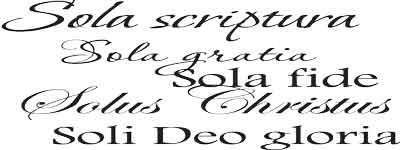
“Soli Deo Gloria” – Glory To God Alone
“Solus Christus” – Christ Alone
“Sola Scriptura” – Scripture Alone
“Sola Fide” – Faith Alone
“Sola Gratia” – Grace Alone
May we serve the lord with joy and seek to be forgotten, that those we speak to will remember the Christ of Whom we spoke.
Stuart L. Brogden
Nov 2008.
Watch the words of this man who was gloriously saved by the grace of our God.
Let all the saints of the living God PRAISE HIS NAME!
In 1497, Pope Alexander had a crisis of his own making that was threatening to undermine his ability to govern the Catholic Church. A romantic rivalry between two of his sons (he had at least six children) had become a source of intrigue around Rome. In fact, this scandal was so lurid, it was appalling even to those accustomed to flagrant immorality from the papacy. 
The two sons in question were Cesare and Juan, and they were both in love with their sister, Lucrezia. The plot thickened, as the Pope refused to let either of his sons marry his daughter, as he was sleeping with her himself. As the famous biographer and historian William Manchester wrote, “Even for those times, this was scandalous.”
When one of the sons, Juan, turned up murdered, suspicion was split between the father and brother. When Lucrezia turned up pregnant, that same divided suspicion remained. Rome had long been accustomed to assassinations, orgies, and public rioting from the Pope’s family. But this scandal involved all three simultaneously, and even the public was beginning to demand change. Alexander decided he needed to marry his daughter off to a powerful Duke, consolidating the Pope’s power, and ending the scandal.
There were numerous problems with this plan. First, Lucrezia was already married (technically speaking…it was a political alliance thing). No problem, that marriage could be annulled by the Pope. But in order for that to happen, the Pope and a Vatican council had to certify that she was a virgin. This would be impossible to do with a straight face, seeing as how she was known to be the Pope’s lover, was six months pregnant, and visibly showing. So the Vatican council acted without the straight face, and when they declared her a virgin, witnesses said that laughter echoed throughout the Vatican. One poet, Jacopo Sannazaro, wrote a poem commemorating the declaration. Translated from the Latin, it reads:
Here lies Lucrezia, who was really a tart,
The daughter, wife, and daughter in-law of Alexander.
In Latin it rhymed. But regardless, the third obstacle was insurmountable, and the marriage was halted when the groom was murdered by Cesare.
This lead to the uncomfortable development that the Pope’s daughter gave birth to a son, Giovanni, and there was no way of knowing if the father was the Pope’s son or the Pope himself. By the time the child was 3 years old, his mother was 21. It became necessary politically for the Pope to marry her off, and the Pope chose the Duke of Ferrara. The new problem was that Canonical Law forbade the Pope from recognizing his own illegitimate children (only if they were fathered while he was Pope, which in this case was obvious; in fact the public labeled Giovanni “the Roman Child”). That difficulty here was notably compounded by they fact that the mother of his son was also his daughter. But…if the Pope recognized Cesare (his other son and her other lover) as Giovanni’s father, then the Duke of Ferrara would likely not marry Lucrezia for fear of losing his title as Duke.
If that is confusing, here it is simply: The Pope was in a Catch-22. Either the Giovanni was his, or his son’s. One option was permissible legally, the other was possible politically. So what would he do?
First, read/remember yesterday’s post on Papal Infallibility.
Here is his solution, in the words of William Manchester:
The Pope, deciding to legitimatize his daughter’s child, issued two extraordinary bulls September 1, 1501. The first, which was made public, identified the three-year-old boy as the offspring of Cesare and an unmarried woman… The second, a secret bull, acknowledged Giovanni to be the son of the pope and the same woman.
In other words, Giovanni had two fathers. And, don’t loose sight of the fact that he was born only three months after the Vatican and Pope had declared his mother a virgin. That is a truly immaculate conception!
 I was alerted to this story by reading E. R. Chamberlin’s book The Bad Popes. Believe me when I say that this affair is not even in the top five as far as radically immoral acts committed by the Popes of that time. In fact, some of the stories were so graphic and stunning that I paused to ask myself why I was even reading them. The answer is two-fold. First, it is a powerful reminder that Luther’s Reformation was not in a vacuum. Theology has consequences, and bad theology destroys lives. In this case, bad theology had the potential to destroy a continent, which it did. The dark ages were so backwards and perverse, in large part because of the rampant immorality of the Popes.
Secondly, it is a reminder that the strongest argument that Catholic Apologists use today-that the Catholic Church has an unbroken chain of tradition stretching back to the Apostles-is pure fabrication. Not only is it fabrication in the historic sense (because the papacy did not being in any recognizable way until the 400’s), but it is fabrication in the ethical sense. Many Popes, Luther said, “have so often contradicted themselves,” and he did not simply mean on the finer points of theology. When Alexander declared his daughter (whom he had been sleeping with) to be a virgin, only to see her give birth 3 months later, Luther was 16 years old. When Alexander issued official Church Bulls declaring that his son had two fathers, Luther was 19 years-old. He entered the monastery four years later.
It would be another twelve years before he posted his thesis on the church door. From that point forward, it is simply no longer feasible to maintain that Catholics and Protestants essentially believe the same things. There are substantive differences, one of which is the concept of papal authority, and another of which is the claim that the Roman Catholic Church has a glorious and unbroken continuity of being Christ’s seat on Earth.
They may have a tradition, but is neither glorious nor unbroken.
Distributed by http://www.worldviewweekend.com
 One of the hallmarks of reformed theology is captured in the cry of Sola Scriptura! We recall from 2 Peter 1:3 that the Lord has given us all we need for life and godliness – and this applies no less to life in the local church than to the individual Christian. As we consider the various way local churches deploy the office of deacon, it is painfully apparent that many of us have lost sight of the completeness of the wisdom our Lord has provided us and the reason for it – that how we serve Him and one another would be to the glory of His name and the good of His people.
The Scriptures are clear in describing two distinct offices (by this I mean positions with defined responsibilities) within the local church: elder/overseer/pastor and deacon are identified and qualified in 1 Tim 3. The men who serve in these offices are co-laborers, with distinctly different roles within the church. The account in Acts 6 gives a clear delineation between the two offices (with the Apostles as the spiritual shepherds at this time, prior to New Covenant elders), showing the service aspect of deacon ministry contrasted with the ministry of the word and prayer.
Read the rest of the article here.
A gem from A. W. Pink:
Self-elevated little popes!
(Arthur Pink, “Private Judgment” 1950)
“But you are not to be called ‘Rabbi,’ for you have only one Master and you are all brothers.” Matthew 23:8
In every generation, there are those of an officious spirit who aspire to leadership, demanding deference from their fellows. Such men insist upon unqualified subjection from their followers. Their interpretation of the Scriptures must not be challenged, their dictates are final. Everyone must believe precisely what they teach, and order all the details of his life by the rules of conduct which they prescribe–or else be branded as a heretic.
There have been, and still are, many such self-elevated little popes in Christendom, who deem themselves to be entitled to implicit credence and obedience, whose decisions must be accepted without question. They are nothing but arrogant usurpers, for Christ alone is the Master of Christians; and since all of His disciples are “brethren,” they possess equal rights and privileges.
“Do not call anyone on earth your father; for One is your Father–He who is in Heaven.” Matthew 23:9. This dehortation has ever been needed by God’s people, for they are the most part simple and unsophisticated, trustful and easily imposed upon. In those verses, the Lord Jesus was enforcing the duty of private judgment, bidding believers to allow none to be the dictators of their faith, or lords of their lives.
No man is to be heeded in spiritual matters, any further than he can produce a plain and decisive, “Thus says the LORD” as the foundation of his appeal. To be in subjection to any ecclesiastical authority which is not warranted by Holy Writ, or to comply with the whims of men–is to renounce your Christian freedom. Allow none to have dominion over your mind and conscience. Be regulated only by the teaching of God’s Word, and firmly refuse to be brought into bondage to “the commandments and doctrines of men.” Instead, “Stand fast in the liberty with which Christ has made us free,” yielding unreservedly to His authority alone.
God does not require the minds and consciences of His children to be enslaved by any ecclesiastical dominion. Each one has the right to exercise his own judgment.
“Be shepherds of God’s flock that is under your care . . . not greedy for money, but eager to serve; not lording it over those entrusted to you, but being examples to the flock.” 1 Peter 5:2-3. Instead of lording it over God’s heritage, preachers are to be “examples to the flock”–personal patterns of good works, holiness, and self-sacrifice; models of piety, humility, and charity.
Love of power has been as common a sin in the pulpit, as love of money, and many of the worst evils which have befallen Christendom, have issued from a lusting after dominion and ecclesiastical honors. Such is poor human nature, that good men find it hard to keep from being puffed up and misusing any measure of authority when it is committed unto them, and from not doing more harm than good with the same. Pastors are to make self-abnegation, and not self-exaltation, their constant aim.
The right of private judgment does not mean that each Christian may be a law unto himself, and still less lord over himself. We must beware of allowing liberty to degenerate into license! No, it means the right to form our own views from Scriptures, to be in bondage to no ecclesiastical authority, and to be subject unto God alone. Two extremes are to be guarded against:
1. slavery to human authority and tradition, and
2. the spirit of self-will and pride.
Private judgment does not mean private imagination, but a deliberate conviction based on Holy Writ! Though I must not resign my mind and conscience to others, or deliver my reason and faith over blindfold to any church–yet I ought to be very slow in rejecting the approved judgment of God’s true servants. Self-conceit is to be rigidly restrained. Private judgment is to be exercised humbly, soberly, and impartially, with a willingness to receive light from any quarter.
Ponder the Word for yourself; but mortify the spirit of haughty self-sufficiency, and be ready to avail yourself of anything likely to afford you a better understanding of God’s truth. Above all, daily beg the Holy Spirit to be your teacher! And always accord your brethren the same right and privilege, which you claim for yourself.
By Larry DeBruyn.
Bible Interpretation 101 teaches that every text without a context is pretext. Extracting Psalm 46:10 to be an endorsement of meditative-listening prayer is just such a pretext. Here’s why.
After reading Ephesians 1:15-23 (lectio divina, i.e. Latin for reading sacred things) at the Passion2012 conference, and while standing on stage with the other keynote speakers beneath a giant screen reading Jesus, speak to me,
Beth Moore tells the audience:Without any comment please, let’s pause and be still,
and ask Jesus to speak His word to us.
Held in Atlanta, GA, last January 1-3, at the Georgia Dome, and attended by over 42,000 college age youth, one can observe Lecrae (a converted rap and Hip Hop artist), Francis Chan, Louie Giglio and John Piper, along with thousands of youth, participating in the mystical practice of contemplative or “listening” prayer at Moore’s behest, and this despite the fact that Scripture provides no instruction or any illustration for engaging in such a “spiritual” activity.[1]
Those promoting contemplative or “listening” prayer refer to this Scripture as a biblical endorsement for pursuing this spiritual discipline. As a precondition for experiencing Soul-to-soul communication from God, contemplative Christians advocate cultivating quietude for the purpose of creating a spiritual tabula rasa(i.e., Latin for blank slate) in which personal communication from God can be received. Influential Christian leaders and spiritual directors encourage listening prayer (praying without words) as a means to experience ”God’s guidance in everyday life.” At face value, Psalm 46 verse 10 appears to endorse this increasingly popular but ancient and mystical way to pray.
A marketing executive from a Fortune 50 company was presenting his firm’s  plan for success in the world’s market place. He laid out three key points that he lifted from various sources that are essential to his plan:
Corporate marketing says:
#1 “To reach the wallet, hit the heart.” How many commercials for expensive items aim for one’s emotional center (prestige, self-worth, happiness), making no effort to justify their product on its merits? Where’s your heart supposed to be?
#2 “Family is the target & kids are the key.” Politicians and marketing people all know most Americans worship their children – or at least feel guilty because they don’t and end up letting children lead the family. Too many parents surrender decisions to cultural experts or their selfish kids, who learn very quickly how to manipulate mom & dad. What’s the proper role of children?
#3 “Top 4 influences in culture are sports, music, film, & fashion.” This is the one that made me take notice and write down all three points. Who – or what – is your god?
Let’s put aside the wisdom of the spirit of the age and find out what the Bible says about these 3 points.
#1 Where’s your heart supposed to be?
Matthew 6:19 – 21 “Lay not up for yourselves treasures upon earth, where moth and rust doth corrupt, and where thieves break through and steal: But lay up for yourselves treasures in heaven, where neither moth nor rust doth corrupt, and where thieves do not break through nor steal: For where your treasure is, there will your heart be also.”
Proverbs 15:6 “In the house of the righteous is much treasure: but in the revenues of the wicked is trouble.”
Isaiah 33:5 – 6 “The LORD is exalted; for he dwelleth on high: he hath filled Zion with judgment and righteousness. And wisdom and knowledge shall be the stability of thy times, and strength of salvation: the fear of the LORD is his treasure.”
Luke 12:16 – 21 “And he spake a parable unto them, saying, The ground of a certain rich man brought forth plentifully: And he thought within himself, saying, What shall I do, because I have no room where to bestow my fruits? And he said, This will I do: I will pull down my barns, and build greater; and there will I bestow all my fruits and my goods. And I will say to my soul, Soul, thou hast much goods laid up for many years; take thine ease, eat, drink, and be merry. But God said unto him, Thou fool, this night thy soul shall be required of thee: then whose shall those things be, which thou hast provided? So is he that layeth up treasure for himself, and is not rich toward God.”
Luke 18:22 – 24 “Now when Jesus heard these things, he said unto him, Yet lackest thou one thing: sell all that thou hast, and distribute unto the poor, and thou shalt have treasure in heaven: and come, follow me. And when he heard this, he was very sorrowful: for he was very rich. And when Jesus saw that he was very sorrowful, he said, How hardly shall they that have riches enter into the kingdom of God!”
James 5:1 – 3 “Go to now, ye rich men, weep and howl for your miseries that shall come upon you. Your riches are corrupted, and your garments are motheaten. Your gold and silver is cankered; and the rust of them shall be a witness against you, and shall eat your flesh as it were fire. Ye have heaped treasure together for the last days.”
#2 What’s the proper role of children?
Exodus 20:12 “Honour thy father and thy mother: that thy days may be long upon the land which the LORD thy God giveth thee.”
Exodus 21:15 & 17 “And he that smiteth his father, or his mother, shall be surely put to death. … And he that curseth his father, or his mother, shall surely be put to death.”
Proverbs 10:1 “A wise son maketh a glad father: but a foolish son is the heaviness of his mother.”
Proverbs 23:22 “Hearken unto thy father that begat thee, and despise not thy mother when she is old.”
Matthew 15:4 – 9 “For God commanded, saying, Honour thy father and mother: and, He that curseth father or mother, let him die the death. But ye say, Whosoever shall say to his father or his mother, It is a gift, by whatsoever thou mightest be profited by me; And honour not his father or his mother, he shall be free. Thus have ye made the commandment of God of none effect by your tradition. Ye hypocrites, well did Esaias prophesy of you, saying, This people draweth nigh unto me with their mouth, and honoureth me with their lips; but their heart is far from me. But in vain they do worship me, teaching for doctrines the commandments of men.
Ephesians 6:2 – 4 “Honour thy father and mother; which is the first commandment with promise; That it may be well with thee, and thou mayest live long on the earth. And, ye fathers, provoke not your children to wrath: but bring them up in the nurture and admonition of the Lord.”
#3 Who – or what – is your god?
1 Corinthians 8:1 – 6 “Now as touching things offered unto idols, we know that we all have knowledge. Knowledge puffeth up, but charity edifieth. And if any man think that he knoweth any thing, he knoweth nothing yet as he ought to know. But if any man love God, the same is known of him. As concerning therefore the eating of those things that are offered in sacrifice unto idols, we know that an idol is nothing in the world, and that there is none other God but one. For though there be that are called gods, whether in heaven or in earth, (as there be gods many, and lords many,) But to us there is but one God, the Father, of whom are all things, and we in him; and one Lord Jesus Christ, by whom are all things, and we by him.”
Matthew 13:22 “He also that received seed among the thorns is he that heareth the word; and the care of this world, and the deceitfulness of riches, choke the word, and he becometh unfruitful.”
John 17:14 – 16 “I have given them thy word; and the world hath hated them, because they are not of the world, even as I am not of the world. I pray not that thou shouldest take them out of the world, but that thou shouldest keep them from the evil. They are not of the world, even as I am not of the world.”
James 4:4 “Ye adulterers and adulteresses, know ye not that the friendship of the world is enmity with God? whosoever therefore will be a friend of the world is the enemy of God.”
1 John 2:15 – 16 “Love not the world, neither the things that are in the world. If any man love the world, the love of the Father is not in him. For all that is in the world, the lust of the flesh, and the lust of the eyes, and the pride of life, is not of the Father, but is of the world.”
Be known as a child of the King, be not mistaken for a worldling. 1 Peter 2:9 “But ye are a chosen generation, a royal priesthood, an holy nation, a peculiar people; that ye should show forth the praises of him who hath called you out of darkness into his marvellous light.”
The following was written by Michael Horton. I agree with him – any departure from the sufficiency of Scripture for all we need for life and godliness will cause us to fall into a ditch. The only source of God’s revealed will is found in holy writ – let the saints of the living God be content with what He has provided us and resist those who call us to listen to “the voice within.”
Many critics of the Reformation have attempted to portray it as the invitation to individualism, as people discover for themselves from the Bible what they will and will not believe. “Never mind the church. Away with creeds and the church’s teaching office! We have the Bible and that’s enough.” But this was not the reformers’ doctrine of sola Scriptura–only Scripture. Luther said of individualistic approaches to the Bible, “That would mean that each man would go to hell in his own way.”
On one side, the reformers faced the Roman Church, which believed its teaching authority to be final and absolute. The Roman Catholics said that tradition can be a form of infallible revelation even in the contemporary church; one needs an infallible Bible and an infallible interpreter of that sacred book. On the other side were the Anabaptist radicals, who believed that they not only did not need the teaching office of the church; they really didn’t seem to need the Bible either, since the Holy Spirit spoke to them–or at least to their leaders–directly. Instead of one Pope, Anabaptism produced numerous “infallible” messengers who heard the voice of God. Against both positions, the Reformation insisted that the Bible was the sole final authority in determining doctrine and life. In interpreting it, the whole church must be included, including the laity, and they must be guided by the teachers in the church. Those teachers, though not infallible, should have considerable interpretive authority. The creeds were binding and the newly reformed Protestant communions quickly drafted confessions of faith that received the assent of the whole church, not merely the teachers.
Today, we are faced with similar challenges even within evangelicalism. On one hand, there is the tendency to say, as Luther characterized the problem, “I go to church, hear what my priest says, and him I believe.” Calvin complained to Cardinal Sadoleto that the sermons before the Reformation were part trivial pursuit, part story-telling. Today, this same process of “dumbing down” has meant that we are, in George Gallup’s words, “a nation of biblical illiterates.” Perhaps we have a high view of the Bible’s inspiration: 80% of adult Americans believe that the Bible is the literal or inspired Word of God. But 30% of the teenagers who attend church regularly do not even know why Easter is celebrated. “The decline in Bible reading,” says Gallup, “is due in part to the widely held conviction that the Bible is inaccessible, and to less emphasis on religious training in the churches.” Just as Rome’s infallibility rested on the belief that the Bible itself was difficult, obscure, and confusing, so today people want the “net breakdown” from the professionals: what does it mean for me and how will it help me and make me happy? But those who read the Bible for more than devotional meditations know how clear it is–at least on the main points it addresses–and how it ends up making religion less confusing and obscure. Again today, the Bible–especially in mainline Protestant churches–is a mysterious book that can only be understood by a small cadre of biblical scholars who are “in the know.”
But we have the other side, too. There is a popular trend in many “evangelical” churches to emphasize direct communication with the Holy Spirit apart from the Word. In these circles, tradition and the teaching ministry of the church through the ages are not only treated as fallible (as the reformers believed), but as objects of mockery. The sentiments of Thomas Muntzer, who complained that Luther was “one of our scribes who wants to send the Holy Ghost off to college,” would find a prime-time spot on the nation’s leading evangelical radio and television broadcasts. Calvin said of these folks, “When the fanatics boast extravagantly of the Spirit, the tendency is always to bury the Word of God so they may make room for their own falsehoods.”
Christianity is not a spirituality, but a religion. Wade Clark Roof and other sociologists have pointed out that evangelicals today are indistinguishable from the general cultural trends, especially when it comes to preferring to think of their relationship to God more in terms of an experience than in terms of a relationship that is mediated through words. Ours is a visual or image-based society, much like the Middle Ages, and yet Christianity can only flourish through words, ideas, beliefs, announcements, arguments. There can be no communication with God apart from the written and living Word. Everything in the Christian faith depends on the spoken and written Word delivered by God to us through the prophets and apostles.
Further, sola Scriptura meant that the Word of God was sufficient. Although Rome believed it was infallible, the official theology was shaped more by the insights of Plato and Aristotle than by Scripture. Similarly today, psychology threatens to reshape the understanding of the self, as even in the evangelical pulpit sin becomes “addiction”; the Fall as an event is replaced with one’s “victim” status; salvation is increasingly communicated as mental health, peace of mind, and self-esteem, and my personal happiness and self-fulfillment are center-stage rather than God’s holiness and mercy, justice and love, glory and compassion. Does the Bible define the human problem and its solution? Or when we really want facts, do we turn somewhere else, to a modern secular authority who will really carry weight in my sermon? Of course, the Bible will be cited to bolster the argument. Political ideology, sociology, marketing, and other secular “authorities” must never be allowed priority in answering questions the Bible addresses. That is, in part, what this affirmation means, and evangelicals today seem as confused on this point as was the medieval church.
Dear Praise Band,
 and celebrate your faithfulness–schlepping to church early, Sunday after Sunday, making time for practice mid-week, learning and writing new songs, and so much more. Like those skilled artists and artisans that God used to create the tabernacle (Exodus 36), you are willing to put your artistic gifts in service to the Triune God.
Jamie
Postscript to “An Open Letter to Praise Bands”
Voddie Baucham has written a though provoking article (just read some of the more than 300 comments that follow it!) about the current cultural battle over the covenant of marriage. Here is a small excerpt, here is a link to the entire article. 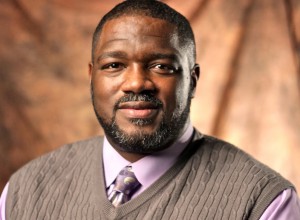
It’s hard to deny that homosexual marriage appears to be a foregone conclusion in America. This is a frightening prospect not only for those of us who understand marriage to be a testimony of the relationship between Christ and his bride, the church, but also for all who value the family and its contribution to the well-being of society and human thriving. And while it’s difficult to watch a coordinated, well-funded, well-connected propaganda strategy undermine thousands of years of human history, it’s especially disconcerting to witness the use of the civil rights struggle as the vehicle for the strategy.
The idea that same-sex “marriage” is the next leg in the civil rights race is ubiquitous. One of the clearest examples of the conflation of homosexual “marriage” and civil rights is Michael Gross’s article in The Advocate, in which he coins the now-popular phrase “Gay is the new black.”1 Gross is not alone in his conflation of the two issues, however. At a 2005 banquet, Julian Bond, former head of the NAACP, said, “Sexual disposition parallels race. I was born this way. I have no choice. I wouldn’t change it if I could. Sexuality is unchangeable.”2
I ran across this while reading on James White’s web site. I pray it is encouraging to you, my brother or sister in Christ; and that it might provoke a lost sheep to consider the God-Man, Jesus – Who is the Christ.
In response to Kamal Saleh’s video found here:
http://www.youtube.com/watch?v=YNGqrzkFp_4
James White of Alpha and Omega Ministries (www.aomin.org) teamed up with Ivey Conerly ( http://www.ivhisson.com/ ) to produce a Christian response. Our hope and prayer is that the message of the Gospel will be clearly presented to all who watch this video, but especially to Muslims who are led to listen and consider our words.
A written response to Kamal’s video can be found here: http://www.aomin.org/aoblog/index.php?itemid=4948
A 52 minute video response, point by point, can be found here:
http://t.co/hrx8AKqeMy sincere thanks to Ivey and Marcus for their great work. Soli Deo Gloria!
Please note: comments are not active for the simple reason that atheists (and others) cannot control their tongues, or their keyboards, and we have no interest in providing a forum for such things. If you wish to discuss the claims made in this video, listen to The Dividing Line and call in when we have open phones, toll free. See:
“There never was a man in the world without a creed. What is a creed? A creed is what you believe. What is a confession? It is a declaration of what you believe. That declaration may be oral or it may be committed to writing, but the creed is there either expressed or implied.”—B.H. Carrol
1652 by H. Jessey, a servany of Jesus Christ
Prov. 22.6 Catechise or begin the child in his way, according to his 1capacitie: and when he is old, he will not depart from it.
2 Tim. 3.15. From 2infancy thou hast known the holy Scriptures, which are able to make thee wise unto salvation.
1Heb. mouth 2Gr. an infant
Q. Who made you?
A. God made me. (Psal. 100.3. Know that the Lord is God, he made us, and not we.)
Q. When did God make you?
A. God made me before I was born. (Psal. 139.13,16, next proof.)
Q. Where did God make you?
A. God made me in my Mother’s womb. (Job 31.15. Did not he that made me in the womb, make him?)
Q. Wherefore did God make you?
A. God made me that I should serve him. (Psal. 100.3. Serve the Lord, —he made us. Luke 1.74.)
Q. Must you not then learn to know God, that so you may rightly serve him?
A. Yea I must learn to know God. (See the first proof 1 Chro. 28.9: Know the God of thy Fathers.)
Q. When must you learn to know God?
A. I must learn to know God now, when I am but a child. (2 Tim. 3,14,15. Eccles. 12.1,2. Prov. 22.6. Remember now thy Creator. See the Title page.)
Q. How may you learn to know God?
A. I may learn to know God by his word, and by his workes. (Deut. 17.19. Psai. 91.7. 11.1 John 39.40. Rom. 1.19,20. He shall read it all the dayes of his life, that he may learn to fear the Lord his God. The Heavens declare the glory of God. Psa. 19.1.
You are encouraged to read the complete catechism – and find many other excellent resources to build up your faith in Christ – right here.
 In this week’s sermon, The Subtlety of Satan, Pastor Murphy gives a scathing indictment on what today’s version of a “Christian” is:
“(Today’s Christian is) someone who has made the decision to be an emotionally well-adjusted, self-actualized risk-taking leader who knows his purpose, lives a no regret life of significance, has overcome his fears, enjoys a healthy marriage, is an attentive parent celebrating recovery from all their hurts, their habits, their hang-ups, and that practices biblical stress relief techniques, is financially free from consumer debt, fosters emotionally healthy relationships with his peers, attends a weekly life group, volunteers regularly at church, tithes off his gross, and has taken at least one humanitarian aid trip to a third world nation. . . . Never once do you read in that modern contextualized interpretation that a Christian is one who sees their sin, confesses their sin, repents of their sin, and receives the gift of salvation in Christ alone. That’s how far we’ve come. So Christianity now is dictated and defined by culture.”
Pastor Murphy also exhorts his congregation to “connect the dots,” between the many dangers we are warned about repeatedly in Scripture and what is being taught under our noses in many churches and by many Christian authors and leaders today.
”The mood is that if you have a reformed soteriology you get a pass on everything else.” -John MacArthur
What Mac says is so true – Calvinistic preachers are assumed to be orthodox because they have one doctrine correct. Yet those who serve as elders in the local church are to preach the whole counsel of God’s Word. This will humble any man and cause the sheep to be less dependent on the preacher and more on the Lord.
As we’ve pointed out in other posts, here and here, for example, the Bible has plenty of warnings about being deceived and misled by men. No man is above having his teaching tested against Scripture, because only the God Man Jesus was and is without error – and He is the Word of God!
HT: Sola Sisters
The clarion call of the mush-mouthed preachers of lies that please the flesh is  “God is love!” – as if almighty God was a one-dimensional character who is simpering in inability masquerading as “love”. The Creator and sustainer of all things is complex beyond our ability to comprehend. He is holy and His love is not captive by the creature. His love is primarily directed to and for Himself. We who are redeemed are loved with an everlasting love that God has set upon His elect – that we would shine the light of His Truth for the glory of His name.
God is sovereign, not trapped by a Greco-Roman perspective of human love that we may project upon our image of God. We must submit our mind to the Word of God and embrace what He has revealed – about Himself and us.
I don’t know the man preaching this sermon, but it will be good for your soul; and the glory of God.
A most excellent post by Ken Silva at Apprising Ministries.
Or do you not know that the unrighteous will not inherit the kingdom of God? Do not be deceived: neither the sexually immoral, nor idolaters, nor adulterers, nor men who practice homosexuality, nor thieves, nor the greedy, nor drunkards, nor revilers, nor swindlers will inherit the kingdom of God. (1 Corinthians 6:9-10) 
It’s Not Loving And Tolerant To Withhold Truth From Someone; It’s Hateful And Harmful
The homoppression I refer to here is not telling the truth to someone, claiming to be Christian, who self-identifies as lesbian, gay, bisexual, transgendered, queer (LGBTQ) and thereby leaving them under oppression in their sin of practicing the sexual immorality of sexual relations with another of the same sex aka homosexuality.
As with any other sin e.g. heterosexual adultery or fornication, we are specifically commanded to tell people the truth according to God’s Word:
Brothers, if anyone is caught in any transgression, you who are spiritual should restore him in a spirit of gentleness. Keep watch on yourself, lest you too be tempted. Bear one another’s burdens, and so fulfill the law of Christ. (Galatians 6:1-2)
Here the Emerging Church-friendly comment of L. Ann Jervis concerning the above Scripture will prove helpful:
Addressing his readers as brothers, Paul turns to a fuller description of how a community living by the Spirit should behave. He first says that if someone is caught in a sin those who are spiritual should restore him gently. In contrast to 5:21, where Paul warned that those who do sinful acts would not inherit the kingdom of God, here Paul addresses the practical situation of a believer doing wrong.
This circumstance does not call for the believer to be excommunicated or handed over to Satan (cf. 1 Cor. 5:5). Instead, the transgressor is to be restored, “put in order,” corrected for his or her own good.1
Well, we can’t very well restore someone until they are first “corrected for his or her own good,” now can we? Don’t go running down the rabbit trails. Sin, is sin; period. As our opening text tells us with crystalline clarity, unless one is willing to forsake it in the first place, i.e. repent, they will not enter the Kingdom of God.
However it’s also wrong, not to mention downright cruel and unloving, to simply leave people who are professing to be believers under the oppression of their sin should they transgress. And after-all, as Dr. Walter Martin (1928-1989) used to say, “Christians can do a lot a stupid things.”
So the issue isn’t about whether or not Christians can commit sexual sin; only those with their heads deeply buried beneath the sand will deny that. Rather, the heart of the matter, is the appalling homoppression and unloving refusal to follow what the Bible says concerning those openly practicing the sin of homosexuality.
Unfortunately, many today are flat-out lying to these LGBTQ people, precious souls for whom Jesus also died, and telling them that they are fine in the practice of their sin. However, the absolute truth is neither they, nor anyone else, can ever be in right standing with God while remaining in willful sin.
Take for example this tweet from Huffington Post a while ago today:
(source)
The link takes up to the HuffPost piece I’m Not Saying You’re Homophobic; I’m Just Saying You’re Homophobic by Mark Sandlin, a PC(USA) Minister & co-founder of The Christian Left, who immediately reveals his own absolutely untenable position:
Until today, I’ve restrained from calling people “homophobic.” I’ve called their laws homophobic, their ideas homophobic, their words homophobic, but never them. So, today I’m coming out as a person who calls other people homophobic.
Why? Well, because they are. Homophobia is the fear of homosexuality. At this point, it is impossible for me to believe that most people who hide behind the Bible or denominational polity haven’t had more than ample time to recognize that those two things simply don’t support their belief that homosexuality is a sin. (source)
Well, no matter how many times apostates like Sandlin repeat their man-pleasing mantra that the Bible doesn’t teach homosexual relations is sin, they cannot change e.g. our opening text. It’s simply laughable to suggest that Christians faithful to the Word of our Lord are fearful of homosexuality.
All Sandlin has done in his screedal post is to find a Matthew Vines to tell him what he already wanted to hear (cf. 2 Timothy 4:3-4):
“It’s still commonplace for straight Christians to say, ‘Yes, I believe that homosexuality is a sin, but don’t blame me — I’m just reading the Bible. That’s just what it says.’ Well, first of all, no, you are not just reading the Bible. You are taking a few verses out of context and extracting from them an absolute condemnation that was never intended.” (source)
Those of us know the Bible also know that Vines is only repeating the mythology of the evil pro-homosexual lobby that’s currently tearing apart the mortally wounded mainline denominations. They’ll receive even more footing soon within mainstream evangelicalism as it more openly embraces women claiming to be pastors.
So, why has Apprising Ministries “singled out” those practicing homosexuality? I’m glad you asked; 1) first of all we have not merely singled out homosexuality, and 2) I’ve yet to notice websites such as Christ-Followers In Fornication, or Thieves 4 Jesus, or Adultermergent.
I have, however, been led by apostate Emergence Christianity theologian Dr. Tony Jones to Queermergent. Jones is also “theologian in residence” at the Emergent Church gathering of his equally apostate “pastor” Doug Pagitt; and I’ve told you about Doug Pagitt. The Emerging Church, And Affirming Homosexuality.
As I close this out, for now, I’ll give you a glaring example—over at The Gay Christian Network (GCN)—of the homoppression of which I speak. We turn to their help section under “frequently asked questions.” There we find a number of questions, which if one is not careful can send us off chasing rabbits.
One critical question is: ”Does the Bible condemn gay sex?” And we’re told:
The Bible doesn’t discuss gay feelings, but it does discuss gay sex. There are only a handful of passages which mention same-gender sexual relationships, and all of them are negative.
There are basically two ways to interpret these passages, and gay Christians are divided on which is the appropriate one.
One view holds that the Bible does condemn gay sex, and that gay Christians should commit themselves to lifelong celibacy. This is the predominant view in the Roman Catholic Church, for example.
The other view holds that the Bible condemns certain sexual practices – including the homosexual sex rites of ancient pagan idol worship – but that God blesses a loving, monogamous, Christ-centered, same-sex marriage. A lot of information on this view can be found in the “Bible & theology” section of our resource page. (source, emphasis mine)
Let’s be careful not wrestle with the snake here and just stick to the most important concerns, which I have highlighted above. Kernels of truth within these eternally deadly lies would be: 1) The Bible condemns “gay sex”; and 2) it’s true, sadly, professing Christians are divided concerning these passages.
However, the fatal poison that’s been injected is that there are two legitimate ways to interpret those admittedly negative passages. Frankly, the Christians who would try to reinterpret the Bible in this area are thinking with their feelings; they are most certainly not going by what the text of Scripture actually says.
Well-meaning or not, they are still falling for the oldest lie the enemy has: “Did God actually say” (cf. Genesis 3:1)? Tragically, because I happen to love LGBTQ people enough to tell them the truth, someone like me absolutely does run the risk of being branded homophobic; that no matter how gently I express my views.
But rather, it’s really people like Mark Sandlin and Gay Christian Network who are, in very fact, actually perpetrating a type of homoppression—albeit sincerely—by lying to them in Jesus’ Name. And shouldn’t the Body of Christ also love these people enough to admonish them to stop this madness; before it’s too late…
L. Ann Jervis, New International Biblical Commentary [Peabody: Hendrickson, 1999], 153, bold hers.
The battle continues to rage within the evangelical community – for whom did  Christ die? Did He die for all who ever lived or did He die for the elect? Read the lyrics below and listen to the sermon from James McClarty and humbly see if what these men represent is true. Not, do you like it; not, does it line up with your thinking. Is it in line with the clear teaching and intent of God’s Word, for the glory of His name?
You can download the sermon here.
Mission Accomplished, Shai Linne:
Here’s a controversial subject that tends to divide
For years it’s had Christians lining up on both sides
By God’s grace, I’ll address this without pride
The question concerns those for whom Christ died
Was He trying to save everybody worldwide?
Was He trying to make the entire world His Bride?
Does man’s unbelief keep the Savior’s hands tied?
Biblically, each of these must be denied
It’s true, Jesus gave up His life for His Bride
But His Bride is the elect, to whom His death is applied
If on judgment day, you see that you can’t hide
And because of your sin, God’s wrath on you abides
And hell is the place you eternally reside
That means your wrath from God hasn’t been satisfied
But we believe His mission was accomplished when He died
But how the cross relates to those in hell?
Well, they be saying:Lord knows He tried
Father, Son and Spirit: three and yet one
Working as a unit to get things done
Our salvation began in eternity past
God certainly has to bring all His purpose to pass
A triune, eternal bond no one could ever sever
When it comes to the church, peep how they work together
The Father foreknew first, the Son came to earth
To die- the Holy Spirit gives the new birth
The Father elects them, the Son pays their debt and protects them
The Spirit is the One who resurrects them
The Father chooses them, the Son gets bruised for them
The Spirit renews them and produces fruit in them
Everybody’s not elect, the Father decides
And it’s only the elect in whom the Spirit resides
The Father and the Spirit- completely unified
But when it comes to Christ and those in hell?
Well, they be saying:Lord knows He tried
My third and final verse- here’s the situation
Just a couple more things for your consideration
If saving everybody was why Christ came in history
With so many in hell, we’d have to say He failed miserably
So many think He only came to make it possible
Let’s follow this solution to a conclusion that’s logical
What about those who were already in the grave?
The Old Testament wicked- condemned as depraved
Did He die for them? C’mon, behave
But worst of all, you’re saying the cross by itself doesn’t save
That we must do something to give the cross its power
That means, at the end of the day, the glory’s ours
That man-centered thinking is not recommended
The cross will save all for whom it was intended
Because for the elect, God’s wrath was satisfied
But still, when it comes to those in hell
Well, they be saying:Lord knows He tried
Considering the recent dust up in my church group (we southern Baptists ain’t – yet – a denomination), documented here and rightly rebutted here, it may be beneficial  to review the theological presuppositions at work in both camps. The snippet below is from page 5 of a 15 page document entitled “Prevenient Grace and Semi-Pelagian” (click the title for the whole article). The author makes a compelling argument that there ain’t much tangible difference between the two, although I personally disagree with him as to whether or not Arminianism is heresy (how can you read any of the 5 points of the remonstrance and not consider it heresy?).
Summarizing, most Arminians hold to these distinctive features of prevenient grace. 1) It is bestowed upon all men at birth. 2) It mitigates the effects of the fall mainly by restoring to man libertarian free will that is able to respond positively to the gospel by exercising faith. 3) It allows men to be enlightened concerning the truth of the gospel. 4) It is not saving grace but it leads to faith which does save. 5) It is resistible by virtue of the fact that it enables the ability of the will to act contrary to it if one so chooses. Thus, in order to activate its power one must cooperate with it by not resisting it. 6) It precedes regeneration and thus the spiritual transformation of the believer.
Let us examine ourselves and repent of any and all man-centered, flesh gratifying false theology.
Soli Deo Gloria!


 Christ Alone Wyoming