Christianity’s Identity Crises

Christianity’s Identity Crises

antique-185371_640-640x400Among the liberal “Christian” sites that I peruse on a daily basis is Jim Wallis’ website/magazine Sojourners.  Yes, this happy conservative Christian reads through many liberal sites daily.  It is good to stay current on those who teach a message opposite yours.  One of today’s featured articles at “Sojo” was titled: “Rob Bell, Oprah Winfrey, and Christianity’s Identity Crises.”  That is a great title.  I could write a very lengthy article entitled the same.  It’s content would be radically different.  But perhaps the very first sentence of that article could be endorsed word for word:

Christianity is facing an identity crisis that boils down to one question: Who is God?

I think this is stunningly accurate.  Jesus asked his disciples this very question: “Who do you say that I am?”  It was Peter who answered: “You are the Christ.”  This answer was a good one.  Jesus replied: “Blessed are you [Peter]!” This was recorded in Matthew 16.  Christianity depends, has always depended, on the answer to that question.

What happens when we are not correct in our identification of God?  What happens when we do not know who He is?  How could we possibly worship Him?  Sojo and C.Jay Engel agree: Christianity must answer this question.  Our identity as Christians depends on it.  Unfortunately, Sojo, Rob Bell, and Oprah, much to the surprise of no one, take a far different path than I do in seeking an answer.

For instance, the article reports that in a conversation between Bell and Oprah, the following exchange took place (italics original):

Rob: For many people … God is against us. God doesn’t want human flourishing. God is the one waiting to punish or torment …

Oprah: Yeah. Because when you say to people, “God is love,” there’s a whole other group of people who say, “Yeah, he may be love, but God is also judgment and wrath and punishing …

Rob: Right … People immediately take that to mean, whatever struggle I’m going through, whatever life is really like for me, God is against me.

This is a common liberal structure of argumentation.  It can be difficult to quickly break down, primarily because, as conservatives, we are mentally preparing for a proposition about God which can be used a representative of their position.  We want Bell or Oprah to say something like: “God is always for us and this means that He will not punish us because of how we act.”  That way, we can whip out verses A, B, and C to counter the proposition.  But anyone who reads liberals (please don’t read this word as a derogatory term) like Rob Bell knows that he likes the mysterious, come-to-your-own-conclusions,” type of conversation.  For the record, I do not in any sense oppose the “whip out the verse” type of argument, unless it lacks a spirit of love.  It is to our society’s detriment that we fear leaping to the Scriptures to prove our case.

So therefore, in order to actually analyze a positive assertion that may be held by the liberal in the quest to answer Who is God?, we must look beyond conversations such as the one excerpted above.  The liberal, as clearly shown above, enjoys making claims about what people tend to think (feel), but they rarely make a truth claim that they will stand behind.  They will talk all day about how “many people” feel that God is this or that, but they are never willing to show why the “many people” are right or wrong.”  The conservative, who believes that truth is propositional, must either refuse to get involved to deeply in these conversations at all, or else push the liberal to offer a proposition so that a more productive discussion can ensue.  When the conservative comes to the table with his theory of truth and tries to debate the liberal who has an entirely different framework, it is obvious that not much will be accomplished.

Thus, we seek something more substantive in the article with which to interact.

Here is a set of assertions written by the Sojo article which does not rely on the “many people feel or think” argument:

The crisis facing Christianity is whether God is for human flourishing or against it; whether God is love or a mixture of love and hate. Of course, this crisis is nothing new. Humans have always assumed the divine was a mixture of good and evil, of being for humans sometimes and against us at other times.

“The crisis facing Christianity is….”  This is good.  It is a statement that does not rely on the subjectivity of the masses.  We can interact with this.  We will start by disagreeing with the first dichotomy.  God is not for either one of those as an end in itself.  God is for His own glory and He glorifies Himself by portraying Himself to the world.  He portrays His love, His justice, His foreknowledge, His mercy, His wrath, His wisdom, His grace, His anger, and on and on.  He will make the human flourish or not flourish based on whether it gives Him glory.  If He was for human flourishing as an ultimate, none would be eternally punished.  This is Bell’s position, but it is not Biblical.  If He was against human flourishing as an ultimate, none would be eternally saved.  This too is wrong.  For some are saved and some are not.  Thus, this is a bad way of representing the crisis.  What we should say is that the crisis is whether God is ultimately for His own glory.  And also whether God demonstrates His glory be saving some and not saving others.  Some humans will flourish, others will not.

On the second dichotomy, this one has always confused me.  That is, I don’t know what the philosophical problem is.  Let’s say that God loves when people get along.  What then does he think about people unnecessarily fighting?  Does He love that?  It would seem that if you love something, you must logically hate that “something’s” opposite.  And isn’t this a good thing?  Can’t we agree that the activity of rape should be hated –and is hated by God?  Certainly God does not love such an atrocious crime!  What else is left?  Is He neutral toward it?  What, then, does the word justice even mean?  Hence, this dichotomy, while perhaps more understandable, is at least misleading.  A better way of framing this is by asking, what, exactly, does God hate and what does He love?

Moving on.  The author writes:

I’m in the midst of reading the revised and expand version of Michael Hardin’s book The Jesus Driven Life. Michael brilliantly speaks to the history of this crisis. From nearly the beginning of religion, the human experience of the sacred has been marked by ambivalence. The gods were fickle and you never knew where you stood with them. They were loving and wrathful, forgiving and judgmental.

Michael refers to this as the Janus-faced gods. Janus was a god of Rome, and the god that January is named after. Janus was literally two-faced, but the metaphorical way we use the term “two-faced” is a good way to understand Janus, and indeed, all the archaic gods. Christianity’s identity crisis stems from our conception of God remaining infected by Janus. In fact, many theologians hold to a god that looks more like Janus than the God revealed by Jesus.

That last sentence.  I’d like to know who he is talking about.  Hint: it is not the liberals (like Bell and Oprah).  More likely, it is the conservative theologians whom he refers to.  This is a common liberal argument that can be seen often in liberal writing.  But our reply is to point out that, in actuality, it is the Conservative who avoids the problem of the so-called Janus-faced god and the liberal who pushes it.  The reason I say this is simple.  The Conservative trusts that the propositions of Scripture are literally true.  This is different than “true literally!” (oh! please dear reader, don’t misunderstand me!).  As Gordon H. Clark once explained:

This thesis that the Bible is literally true does not imply that the Bible is true literally. Figures of speech occur in the Bible, and they are not true literally. They are true figuratively. But they are literally true. The statements may be in figurative language, but when they are called true the term true is to be understood literally.

Thus, the phrase “never knew where you stood with them” cannot by applied to conservative Christian worldview in the least.  The Scriptures are very clear where we stand and what God’s response is to both faith as well as sin.  On the other hand, what about the liberal who understands the nature of Scripture far differently and embraces things like “mystery” and “subjective” and who certainly don’t take the Scriptures as literal truth?  How could they possibly know where they stand with God?  The “God revealed by Jesus” is one of clarity and absolutes.  There should be no question as to where we stand: for those who believe in Christ, they are saved.  This, the basis of the Christian doctrine of assurance.

For the conservative then, the crisis of Christianity, Who is God?, is a matter of life and death.

Here comes the most important quote of the Sojo article.

In Jesus, we discover that God has nothing to do with violence or retribution, but everything to do with a love that is for human flourishing. As Michael puts it:

“By removing retribution from the work and character of God, Jesus … opened up a new way, a path, which he also invites us to travel. Sadly, few have found that this path and church history replete with hundreds, even thousands of examples of a Janus-faced god, a god who is merciful and wrathful, loving and punishing. Some have said that we need to hold to both of these sides together. Jesus didn’t and neither should we. It is time for us to follow Jesus in reconsidering what divinity without retribution looks like.” (70)

John 3:36 reads: “Whoever believes in the Son has eternal life; whoever does not obey the Son shall not see life, but the wrath of God remains on him.”  This is the opposite of what Sojo writes.  This verse shows us two things.  One, it shows us that God is a wrathful God toward those who do not believe in Christ.  Two, it shows us something that we noted above; namely, that God is not for or against human flourishing as an absolute.  For some are saved and others are not.  It depends solely on how God wants to demonstrate His glory through them.

The quote from Michael Hardin’s book too is very misguided.  I’m curious what basis Hardin has to say that Jesus removed an aspect of God’s character!  What does that even mean?  He literally (or figuratively?) took a part of “Who” God is, His very character, and removed it?  That is remarkable, not to mention patently unbiblical.  That seems like a doctrine that comes from the same place as our modern Federal Reserve-monopolized dollars: straight out of thin air.

Hardin apparently does not like the idea that God can be both merciful and wrathful depending on the situation and the person that he is dealing with.  But the Bible is full of examples of believing Christ leads to life (because of God’s grace) and rejecting Christ leads to wrath (because of God’s justice).  To say that Jesus didn’t support this is absurd.  It may seem a bit tedious to share some verses contradicting Hardin, but is a simple rebuttal indeed.  We only have to look at one gospel to find some examples.

1. “And do not fear those who kill the body but cannot kill the soul. Rather fear him who can destroy both soul and body in hell.” (Matthew 10:28)

2. “Then he began to denounce the cities where most of his mighty works had been done, because they did not repent. “Woe to you, Chorazin! Woe to you, Bethsaida! For if the mighty works done in you had been done in Tyre and Sidon, they would have repented long ago in sackcloth and ashes. But I tell you, it will be more bearable on the day of judgment for Tyre and Sidon than for you. And you, Capernaum, will you be exalted to heaven? You will be brought down to Hades. For if the mighty works done in you had been done in Sodom, it would have remained until this day. But I tell you that it will be more tolerable on the day of judgment for the land of Sodom than for you.” (Matthew 11:20-24)

3. “The field is the world, and the good seed stands for the sons of the kingdom. The weeds are the sons of the evil one, and the enemy who sows them is the devil. The harvest is the end of the age, and the harvesters are angels. “As the weeds are pulled up and burned in the fire, so it will be at the end of the age. The Son of Man will send out his angels, and they will weed out of his kingdom everything that causes sin and all who do evil. They will throw them into the fiery furnace, where there will be weeping and gnashing of teeth.” (Matthew 13:38-42)

4. “Then he will say to those on his left, ‘Depart from me, you cursed, into the eternal fire prepared for the devil and his angels.” […] “And these will go away into eternal punishment, but the righteous into eternal life.” (Matthew 25:41 and 46)

And this is not even to mention the fact that the rest of the New Testament, which records the words of God written by other people besides Jesus, supports the idea that faith leads to life and faithlessness leads to death.  Hardin’s final statement as copied above was this: “it is time for us to follow Jesus in reconsidering what divinity without retribution looks like.”  Not only is he not following Jesus in such an endeavor, but he is also taking a path which leads away from the Scriptures completely.

The Sojo article contains the following in its concluding paragraph:

Christianity is suffering from an identity crisis and I thank God for it. I’m also thankful that we have Rob, Oprah, and Michael to help guide us through the crisis….

Lesson: You are not going to make it through the identity crisis successfully if you rely on Rob, Oprah, and Michael to be your guides.

But I think the identity crisis is spot on.  ”Who is God?” There is only one answer and Christianity must depend on the Scriptures to find that answer.  Sadly, much of what is called “Christianity” today does not, in fact, rely on the Bible and therefore has failed in the midst of crisis.  And if you fail in this area, if you fail on the very fundamental of the nature and person of our God, your faith is in the wrong object.  It is “your faith that saves you,” and we therefore better answer our question right.  Thanks be to God for giving us His word.

_______

“For the Lord your God is God of gods and Lord of lords, the great, the mighty, and the awesome God, who is not partial and takes no bribe. He executes justice for the fatherless and the widow, and loves the sojourner, giving him food and clothing. Love the sojourner, therefore, for you were sojourners in the land of Egypt. You shall fear the Lord your God. You shall serve him and hold fast to him, and by his name you shall swear. He is your praise. He is your God, who has done for you these great and terrifying things that your eyes have seen. Your fathers went down to Egypt seventy persons, and now the Lord your God has made you as numerous as the stars of heaven.” (Deuteronomy 10:17-22)

Cross Encounters Radio Addresses the False Teachings of Bethel “Church”

Kris VallotonOn Cross Encounters Radio, we have been setting up special broadcasts to address the false teachings of the Bethel “church” in Redding, California. Today, Tony Miano took to task the false gospel statements of senior associate pastor Chris Valloton. I highly recommend you check out the article Tony wrote in association with this broadcast, both of which can be found below:

“This article is the second in an ongoing series of articles looking at the false teaching and false practices of Bethel Church, in Redding, CA. In this article I will address the false gospel of false prophet and teacher, Kris Vallotton, Senior Associate Pastor at Bethel Church.

Here is Vallotton’s biography, posted on the Bethel Church website:
“Kris Vallotton is a noted prophetic voice in Northern California, and has trained prophetic teams in this region. He is a sought after speaker with a vision for equipping an “Elijah generation” for the end-time harvest. Kathy’s practical wisdom and prophetic insight combine to give her a unique and profound ministry as both an instructor and the school’s administrator. Kathy is also an anointed worship leader,assisting with the training of the worship teams at the school. Both Kris and his wife Kathy have a vision to raise up a company of warriors to impact this generation for Christ. Their goal is to see the fulfillment of Isaiah 61 with their own eyes. This prophecy begins with individual people getting delivered and healed–it ends with the ruined cities being restored. Kris says it is time for the fire of God to burn up His enemies and warm the hearts of the lost. This mandate has become their mission. God has instructed them to gather together warriors with like hearts, then train and equip them, and send them into the Harvest. Holy Spirit fortifications must be established in the midst of the darkest places of the planet earth. Kris is currently Senior Associate Pastor at Bethel Church in Redding, California and Kris and his wife Kathy are Overseers at Bethel’s School of Supernatural Ministry. They have four children and five grandchildren.”

Read the article here: Bethel Church: The False Gospel of Kris Vallotton

School Shooter Needed the Gospel

shootingMy heart is heavy today. As I got up and started my day, I began to see posts on Facebook that things were not well in a town near me. Sadly, a school I once attended many years ago was rocked by violence this morning. As of time I am sitting to write this, four casualties have resulted from a shooting in the school. Current reports state there have been two deaths – one being the suspect from a possible self inflicted gun shot, the other a school staff member – and two children in critical condition. The news of these events grieves my heart terribly. Partly because I once attended this school in my youth. I have many fond memories of friends and teachers there. To see it rocked by such violence, to imagine what it might have been like had my father gotten such a call as many parents did today, to think on those kids who will be emotionally and physically scarred by the tragedy, causes me to weep. But also, as I look at this I cannot but help but weep for the one who stepped out of this world in his sinful state.

While many political pundits and news agency talking heads will spend days and weeks debating the events of today, and many will ultimately blame lack of school security, others claiming gun control needs to be more strict, none will truly acknowledge the root cause of this tragedy. None will recognize that it was the sinful heart of a young man that caused the loss of life and critical injuries that happened today. From the secular worldview, our children are either blank slates or inherently good. This worldview believes that all we need are the right conditions for our children to blossom into the greatest and brightest examples of humanity. However, that is not what God’s word teaches.

Following God’s judgment through a worldwide flood, Noah and his family came out of the ark. One of the first tasks Moses did was to make a burnt offering to the Lord. In Genesis 8: 21 we read, “And when the Lord smelled the pleasing aroma, the Lord said in his heart, “I will never again curse the ground because of man, for the intention of man’s heart is evil from his youth. Neither will I ever again strike down every living creature as I have done.” God promised that even though man was wicked from his youth, He would never again destroy all of humanity through a worldwide flood. God in this passage declares that there is no person that is innocent or sinless during the formative years of his or her life. We do not learn to sin later, we are not influenced to sin by environment. We are sinful from birth, as David writes in Psalm 51: 5, “Behold, I was brought forth in iniquity, and in sin did my mother conceive me.” Because we are born sinners, we sin naturally. It is part of our character and nature to rebel against the very Creator who gives us life. It is that rebellion, that willful disobedience against God that will one day be brought into judgment. We will stand before God, with every disobedient thought, word and deed laid bare before Him. No claim that we were innocents let down by society will stand. Our utter sinfulness will send us straight to Hell.

There may be those who read this now who are very upset with me that I would choose this incident to claim the shooter was a wicked sinner deserving of Hell. Some may feel I am dishonoring his parents, trying to capitalize on their loss to promote my faith. Nothing could be further from the truth. I weep for this child. I am heartbroken that, despite the wickedness and harm he committed, he is now standing before the Judge of the universe and the evil that he did will be judged eternally. I weep because it is a child like this that we as Christians are commanded to share the truth of the gospel with. The truth that God forgives sins. That all the anger and hatred inside his heart, no matter the motivations, would be forgiven through the vicarious atonement of Jesus Christ who died on the cross to take the punishment for his sins. That if he repented – that if he turned from the anger and hatred in his heart, that if he viewed himself not as a good person, but as one who was in rebellion against God – and turned to Christ as the only source of his salvation, he could be made righteous in the eyes of God. I weep because today, many in our churches are not sharing this gospel message. Perhaps it is fear that motivates them, fear of rejection, fear of being hated for the word’s sake. Or maybe it is a lack of biblical understanding, that the sharing of the gospel is not a gift given to some, but a command to all because we are in a spiritual war for souls. I weep, because many people like this young shooter, and those he affected, will step off into eternity today, and tomorrow and next week, with no knowledge that God has made a way of salvation for them.

I know that it is the individual who must answer to God for their sin, make no mistake. I do not blame my fellow brethren for the sins of those who going to Hell. But I implore you, can you not look at this scene and weep knowing that maybe you had a chance to share the gospel with someone; however, you put it off for another day and that day never came? Parents took their children to school today fully believing they would come home. Today some are waiting in a hospital to find out if they will ever come home. Other parents are weeping, trying to understand how their precious loved one could ever have done this, and crushed that they will never have the chance to ask him why. There are thousands more who will repeat this scenario tomorrow, never believing tragedy and loss will strike them. Christians, should we be so naive? Should we believe that there is always tomorrow to give the life giving message of the gospel, when we can’t even be sure they will be with us at the end of the day? I beg you, don’t delay another moment. Proclaim the gospel today!

Be a Diligent Student of the Word

BibleApproximately two months ago, I took a leave of absence from the internet. I took the month of August and devoted my time to anything BUT the internet. That was a new experience for me. I spend quite a bit of time on social media, especially since I blog and co-host a radio program. So the idea of separating myself from the world wide web was surprising. In fact, several of my friends were quick to assert I wouldn’t last a week. They have no idea how close that came to being true. There were quite a few times I grabbed my smartphone out of sheer habit to see if I had messages or comments, only to realize that I had logged myself out of all my apps. However, the alternate effect was that, for the first time in quite a while, I had a lot more time to do the things I should have been doing all along. Chief among those things was my time of personal bible study. I won’t say that I never read my Bible, but I found that I was not making the time necessary to be a diligent student of the Word.

As I took the time that I so often spent on Facebook or Twitter to devote to other things, I began to realize that, while I had an operating knowledge of Scripture and theology, I saw that I could not readily point to the verses I needed to know to explain my position on a doctrinal matter. In fact, like many Christians, when I read my devotions, I found that by the end of my reading time, I could not easily tell you what I had read. I could read multiple chapters in a short period of time, but I found my retention was not what it should be. As I began to spend more time in the Word I began to realize that much of my own understanding of theology was informed from what I have learned from my pastor, from what I have gleaned from para-church resources (podcasts, websites, etc), and from books written on those topics. While all of these have great value, they should support my personal study of God’s word, not be the primary source.

As I became determined to become more proficient in my reading and understanding of the Bible, I decided to use a technique that John MacArthur teaches. This method involves taking one book of the Bible and reading it through daily (or for a larger text, a portion of it) for an entire month. While I would not say that this is a technique every Christian must use, I found that by reading and re-reading a text multiple times, I began to see and understand aspects of doctrine unfold and was making the connections I had always assumed based on what I heard others teach. This had a profound effect on me.

As a blog writer, a radio co-host and someone who makes YouTube videos to teach a Christian worldview, I began to realize that much of my own biblical knowledge was not gained through the constant study of God’s word. Now, I am not saying that those sources that I learned from were insufficient by any means. I am grateful beyond measure to those who take that time and energy to educate people in theology and doctrine. However, never should I make an effort to teach something, be it here on DefCon or on Cross Encounters Radio, that I haven’t thoroughly sought out in scripture myself. This understanding actually paralyzed me for a brief time as I began to question my right to do anything given my lack of personal scripture knowledge. However, I understood that God was not calling me to cease my efforts to proclaim His gospel, but to call me into deeper study of His word. His intent was not to shame me for my ignorance, but to desire more strongly to know Him as He has revealed Himself in Scripture.

I write this because I as I began to delve into the pastoral epistles, I learned that God commands us to be diligent students of the Word. Repeatedly Paul writes to Timothy, commending him to be bound to the word of God. In 1 Timothy, Paul first warns against engaging in the irreverent pursuits of those who would be teachers of the law that have no true understanding of it. He also establishes the standards for those who would be teachers within the church. Paul then writes in 1 Timothy 4: 6-8, “If you put these things before the brothers, you will be a good servant of Christ Jesus, being trained in the words of the faith and of the good doctrine that you have followed. Have nothing to do with irreverent, silly myths. Rather train yourself for godliness; for while bodily training is of some value, godliness is of value in every way, as it holds promise for the present life and also for the life to come.” Paul commends Timothy to avoid that which is worthless and to train himself up in the scriptures.

Later, Paul writes his final letter to Timothy, the last instructions he would be able to pass on to his son in the faith. In 2 Timothy 2: 15 writes, “Do your best to present yourself to God as one approved, a worker who has no need to be ashamed, rightly handling the word of truth.” Knowing that he will no longer be able to stand along Timothy to teach and guide him, Paul instructs the young preacher to present himself as one who so thoroughly knows the word of God that those who hear him know he is rightly teaching and applying it.

In the following chapter Paul says, “But as for you, continue in what you have learned and have firmly believed, knowing from whom you learned it and how from childhood you have been acquainted with the sacred writings, which are able to make you wise for salvation through faith in Christ Jesus. All Scripture is breathed out by God and profitable for teaching, for reproof, for correction, and for training in righteousness, that the man of God may be complete, equipped for every good work,” (2 Timothy 3: 14-17). Paul makes it clear that Timothy had been a student of the word since his youth and instructs him to preach from the word alone to the church. That in the word he would find all that he needed to instruct, commend and correct those who sat under him.

As I have poured over these pages repeatedly, I have come to this understanding: that while Paul’s letter primarily instructs a young pastor in the commission of his calling, they have great application in the life of the believer. If the calling of a pastor is to know the word of God so thoroughly that he may shepherd the sheep of Christ, how much more should we, the sheep, be diligent students as well. All that we need for life and godliness are found in the 66 books of the Bible. We need not consult any other source for our daily lives. Yet today, many Christians look to outside sources and spend scant little time delving into the very words our Savior inspired.

Far too often we seek comfort in self help books, or psychological counseling to treat depression, anxiety and many other issues. Yet, God has created us and knows our hearts and minds far more intimately than we ever can. How is it we will trust other sinful creatures to give us the words of comfort and yet neglect the One who gives us the words of eternal life? We take child training courses and go to seminars on how to raise up loving, respectful children. However, those worldly minded speakers, no matter how well intended they may be, believe we are all good by nature and just need to create the right environment to cause our children to blossom. God declares that we are conceived in sin and there is nothing good about us outside of Christ. To raise up our children, we should be turning to the word of God, not Oprah, teaching them they need to repent before the blood stained cross of Jesus Christ. Our personal relationships are not about learning each others’ love languages, but knowing that, despite how much our spouse has grieved us, that we have sinned against God all the more. Our love can only grow and our relationships have true meaning when we learn to forgive one another in the manner that Christ forgives us.

Not one of these examples can occur rightly if we do not become students of the Word. We cannot understand and apply the principles found in the Bible if we have not read them. We cannot understand those principles rightly if we do not understand the context in which they are taught. We cannot understand the context until we have spent more than just a few minutes reading the one verse out of a devotional that was given to us at Christmas. Please understand, I am not saying that we must spend every single minute of everyday reading the Bible cover to cover. However, if we only give the scriptures a token review, a chapter reading here or there, how can we ever expect to understand the deep and wonderful truths that God has revealed to us in His word? How can we hope to live godly lives, marked by repentance and holiness if we do not even learn what is meant by those terms in scripture? God has bestowed upon we who believe the greatest gift of all, His mercy and forgiveness through the shed blood of His Son. And He has given to us all that we need to live in accordance with the gratitude that we should be showing in the gift of His revealed word. I beg you to read these words, consider the time and study you have given that gift thus far. Have you, as I did, taken it for granted and relied solely upon what you have heard? Or are you willing to be a good Berean, studying the word to see if these things be true? I commend you, be a diligent student of the Word.

Is Homosexuality a Choice?

Those who hold to a secular, humanistic worldview have a penchant for being inconsistent. However, they are normally consistently inconsistent. Their answers have to change to suit their sinful lifestyles, and when the answers provide or offer tolerance to all (except for true believers), those answers have to change again just like the faulty science or research they want to appeal to in order to try and prove why they are the way they are.

One question that is often asked though is, “When did YOU choose to be heterosexual or homosexual?” They ask what they feel is the perfect question knowing that the answer given will quantify their own sin, grant them the right to be intolerant towards true Christians, and free themselves from the bonds of the laws of God.

So, let’s look at this question. When did I choose my sexual orientation? The question itself is wrong and is completely predicated on the removal of God from the equation.

If we are but a mere by-product of millions of years of evolution, then there would certainly be no “choices” in aspects of life such as sexual orientation and morality. Instead, my DNA or genes would influence who I was. It would then have an impact on my upbringing, environment, education, government, home life, etc., etc. The reason is because Darwinian evolution believes in the continued improvement and betterment of the species of animal known as man.

Thus, if I am merely an animal and one that is continuously evolving, I would be forced to accept that whether I was good or bad would be based on my DNA. This is why Hitler believed he was right to exterminate all peoples that he did not like. He was living out his beliefs.

It is this reason why Margaret Sanger and Planned Parenthood can operate with impunity in the wanton murder of millions of babies in the mother’s womb. They are acting out the logical conclusions of their belief. Evolution makes us better and abortion simply weeds out the weak and inconsequential in their minds.

Therefore, if I am but an evolutionary blip, then I cannot choose. I could no more choose who I want to have sex with than what morals I wanted to practice. In other words, if my evolutionary genes did not offer me the ability to make moral choices, I could kill with no conscience, or assault another person, and should have the freedom to do so.

After all, we do not kill animals that use their base instincts to kill or assault another animal, so why should we do this with human animals? There must be a level of consistency if we are going to apply evolutionary beliefs and still say that how I live or who I sleep with is not a choice.

However, there is another option. The option has a name and He is God. He alone is God and He will not give His glory to another. He demands worship and praise from all of creation, including man. This is the only God of the Bible.

This belief found in the pages of Scripture approaches the creation of man, not from the aspect of evolution, but from the aspect that God is Who He says He is and that He did what He says He did.

This belief is to be reflected in every aspect of every person who has ever lived. Sadly, sin entered the equation when Adam willfully and deliberately disobeyed God. When sin entered the world, it was passed to all of Adam & Eve’s children and their descendants.

Everything that God made in the beginning was good and with no imperfections. Even Satan was created as Lucifer and he was the highest of all the angelic beings. He worshiped at the foot of the throne of God and sang the praises of God. But pride entered his heart and he was cast from heaven.

He fell to earth and chose to deceive humanity into thinking they could be like God and know good and evil. Everything that God made Satan has tried over and over to make an evil counterpart. For example, God created marriage between one man and one woman until death parts them, but Satan quickly introduced polygamy, sex with children, bestiality, living together outside of marriage and homosexuality, and then persuaded mankind that these would be just as acceptable as long as they were simply committed to a “loving” relationship.

While DNA continues to grow weaker and more diluted from one generation to another, the one constant is that sin remains. It totally engulfs a person and makes them slaves to their depraved nature.

In one sense, man does not choose to make wise and good decisions because he is at enmity with God. Thus a person who practices sin is simply living out what is in their heart. A person can be just as sinful as a heterosexual as a person can be who is a homosexual. Satan seeks to persuade mankind that evolution is the answer and that God’s laws are not the moral basis of how the world is run.

However, there are morals and there are absolutes. God did not create but two genders – male and female. Not man, but God created the institution of marriage, thus He alone has the right to set the rules – one man and one woman for life. Not man, but God created government, thus He alone has the right to demand the rules be honored and obeyed.

In conclusion, this brings us back to the question of when did I choose my sexual orientation. I did not choose because there is nothing to choose. God who sets the rules made me a male. Therefore, He did the choosing for me. He instilled in my heart the desire to marry a woman who would be my companion.

The “choice” that I have is whether I am going to honor the God who created me and live according to what He made me, OR, I can disobey, dishonor, and show my hatred for the Creator by living in a way that evidences my rebellion. Males are designed by God to be the counterpart to females. God did not create males to have sexual relationships with other males, nor did He create females to have sexual relationships with other females.

Further, God did not create man to live outside the boundary of His laws. This means that God established the morals. We do not kill because God said do not kill. We do not commit adultery because God said do not commit adultery. We do not steal because God said do not steal.

As a human being, I am created in the image of God. I am NOT a by-product of evolution or an evolutionary process. I am NOT free to live any way that I want in opposition to God without being willing to pay the price for my sin and folly. I am bound by my conscience that was placed in me by God. I am bound by His laws because God is the giver of all that pertains to morality. I cannot and would not have any morals apart from God giving them because the theory of evolution does not lean towards the production of morality. Morals cannot appear out of thin air, there must be an Originator.

So, to answer from a Biblical perspective – when did I choose my sexual orientation? I did not choose because God made me a male. This means I am hardwired in every way to respond to a female. God does not make mistakes. If a male wants to respond to another male, or a female to a female, or a human to an animal, they can do so, but not because God created them to do so, but because Satan who hates mankind, and hates God even more, has duped mankind into believing that we were born in a certain way and that we do not have to obey God.

Therefore, the real question that must be answered has nothing to do with sexual orientation, but is about God. A person in the LGBT community can try to use this question to prove who they are, but they can only do so by appealing to evolution and not God.

The real questions that humanity faces are really about God. Is He real or is He but a figment of a deluded segment of mankind? If He is real, then His laws are just as real and we are bound to obey them or pay the price.

If He is but a figment, then I fear for the world because rape, assault, murder, and sexual perversions will continue and grow worse. Man left to himself will never be good because evolution does not permit man to be good. It requires him to do whatever is necessary to fulfill the mantra of the survival of the fittest.

So, here are the “choices” each reader has to make. Do you obey God or do you obey Satan? Do you believe you are here through random mutations and thus incapable of choosing either your morality or your sexual orientation, or do you believe that God created you in the very image of God?

To be consistent, you cannot have it both ways. You cannot believe in God and believe in evolution. You cannot obey God and obey Satan. You cannot be a good moral person and be a person who holds to no absolute truths. You cannot be a follower of Christ and be a person who willfully breaks His laws.

If you realize in any way that you have hope in something that provides no hope, then I have some additional information that you might like to read.

Before time began, God purposed in Himself that He would provide a means of restoring fellowship with fallen man. He desires to have fellowship just as He did with Adam and Eve in the garden, but He cannot stand to look upon sin. In addition, He told Adam and Eve that if they sinned, they would surely die.

This created a dilemma. How could a holy God look upon sinful man and have that fellowship restored? The answer is so simple that even a child can come to the point where they believe in the truth of God’s Word.

When the time was right (Galatians 4:4), God the Son laid aside His glory and took upon Himself human flesh and became a man (Philippians 2). Coming to this earth, He lived a perfect, sinless life. He did not sin, nor could He sin. John the Baptist saw Him coming across the hills of Judea and said, “Behold the Lamb of God that takes away the sin of the world.”

This means that Jesus Christ was willing to fulfill the law in its entirety and to also be the substitutionary atonement for our sins. In order to be able to face God, this substitution means that something or somebody had to die in our place and atone for the wrath of God. So, Jesus Christ went to the cross of Calvary and there took our sin upon Himself and suffered the entire wrath of God so that we do not have to do so if we but confess and repent of our sin while placing our faith in Jesus Christ alone for our salvation.

2 Corinthians 5:21 sums up the wonder of this message. “For our sake (humans) He (God the Father) made Him (Jesus Christ) to be sin Who knew no sin, so that in Him (Jesus Christ – God the Son) we (humans) might become the righteousness of God.” What is a further wonder is that the Bible states clearly that WHOEVER wants to come to Christ may come. He will make you a brand new creation and you will no longer be a slave to your sin.

If you have any further questions, feel free to email me at Love4Liberia@gmail.com and I would be willing to provide additional answers from God’s holy and infallible Book, the Bible.

“Evolution vs. God” by Ray Comfort

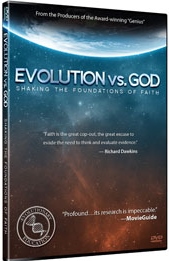
Evolution_vs._God You may have heard the rumblings on the internet that atheists are aghast at Ray Comfort’s newest film, Evolution vs. God. Their weeping and gnashing of teeth comes with good reason for Ray kicks out the legs of their worldview with one simple question, “Can you show me evidence for Darwinian evolution that I do not have to accept by faith?” This film takes professing evolutionary experts and their students to task by causing them to admit that the evolutionary theory is not provable by operational science. It demonstrates that evolutionary theory, at its heart, is really nothing more than a concerted effort to cause man to reject the knowledge of God that he already has so that he may pursue the sinful desires of his flesh. I highly encourage DefCon readers to take the time to watch this film, then go to www.evolutionvsgod.com and help support getting this film into the hands of university students across the country.

A Defense of Credo-Baptism

I testify that baptism or dipping in water is one of the commandment of this Lord

Jesus Christ.

By John Clark, Physician of Rhode Island in America, 1652

That this commandment of Jesus is by way of dipping, and, as it were by drowning, overwhelming or burying in water and not by sprinkling with water, appears many ways.

1. In that although there be frequent mention made of that appointment of Christ in His last will and testament, yet is it never expresses by the word that may be rendered rantism, or sprinkling, but by the word that is rendered baptism, or dipping.

2. In that the word by which it is so frequently expressed doth in proper English signify to dip, to plunge under water, and as it were, to drown, but yet so as with safety so that the party (as to the manner) may be drowned again and again, see the instance of Naaman. He dipped himself seven times in Jordan (2 King5:14) and to this sense of the word (at least in that place) both the Greek, Latin and English Churches agree.

3. In that the phrase (in which there is mention made of such an appointment of Christ) doth necessarily import such a thing, and, therefore, when mention is made of baptizing, there generally followeth that word the preposition (iv) which is commonly translated in or into which suits the dipping, and not the preposition (sun) which signifies with and so suit with sprinkling. It may as well be rendered I baptize you in water and he shall baptize in the Holy Spirit (Mar 1:8) as it is rendered John did baptize in the wilderness and in the river of Jordan (vs 4, 5) or that John was in the Spirit on the Lord’s day (Rev 1:10) and they were baptized in the cloud and in the Sea (1 Cor 10:2). Yea, it might as well be rendered I baptize, or dip you, into water as it is rendered they were casting a net into the Sea (Mar 1:16) for the words are the same and it would be an improper speech to say John did baptize with the wilderness and they were casting a net with the Sea.

4. That this appointment of Christ is by way of dipping, and not sprinkling, appears in that for the resemblance and likeness hereunto. The Israelites passing under the cloud and through the Sea where the Egyptians that were their lords and commanders, their pursuers and enemies, that sought their destruction were drowned, left behind and seen no more, is by the Holy Spirit called a baptism (1 Cor 10:1,2) They were baptized in the cloud etc. Observe, it is not here rendered with the cloud and with the Sea, as in the other place (Mar 1:8) with water, because it suits with sprinkling although the word be the same, but in the cloud and in the Sea which suits with dipping or overwhelming. So, with the appointment of Christ, they passing through the midst of the red or bloody Sea on dry land which stood on both sides as a wall, and being under the Cloud, were as men, in a carnal eye, overwhelmed and drowned and yet truly saved and safe from their enemies.

5. That this appointment of Christ was not by sprinkling, but by dipping, or putting the person into or under the water appears by Phillip’s baptizing the Eunuch. It is said They went down into the water, both Philip the baptizer and the Eunuch that was the person to be baptized, and being there in the water, Philip baptized, or dipped him in that water as John did Jesus in the river of Jordan. Then it is said as they descended, or went down into the water, so they ascended or went straight way up out of the water. See Acts 8:38, 39; Matt 3:16. Mark the expression: “And Jesus, when He was baptized, went up straightway out of the water..”, therefore had he been down in the water.

6. That this appointment of Christ was not by sprinkling, but by dipping, or , as it were a drowning, appears in that John the Baptizer, his work being to baptize, remains in the wilderness by the river of Jordan and afterward in Aenon. The reason that this is rendered by the Spirit of God why there he abode, was, because there was much water there, which need not have been if that appointment could have been performed by sprinkling and not by dipping. See Luke 3:2,3 John 3:23.

7. That this appointment of Christ was not to be performed by sprinkling, but by dipping etc. Appears from the nature of the Ordinance itself. It is such an Ordinance as whereby the person that submitteth thereto doth visibly put on Christ Jesus the Lord and is hereby visibly planted into His death, holding forth therein a lively similitude and likeness unto His death. Whereby only through faith he now professeth he hath escaped death and is in hope to obtain life and peace everlasting and so to have fellowship with Him in His death as to be dead with Him and thereupon to reckon himself to be dead indeed unto sin, Satan, the law and the curse. See Gal 3:27; Rom 8:2,3; 5:7,8,11; 1 Cor 15:29. But the planting of a person into the likeness of death is no ways resembled by sprinkling. But by dipping it is lively set forth and demonstrated.

8. This appointment of Christ, Baptism, is an ordinance whereby the person that submitteth thereto, doth visibly and clearly resemble the burial of Christ, and his being buried with Him. So, as in respect of the old man, the former lusts and conversation, like the Egyptians, to be taken out of the way and seen no more. See Romans 6:4,6; Col 2:12. But sprinkling doth no way lively resemble the burial of Christ, or the persons being buried with Him as dipping doth.

 9. This appointment of Christ, Baptism, is an ordinance whereby the person that submitteth thereto doth visibly and lively hold forth herein the resurrection of Christ, declares Him Whose life was taken from the Earth to be alive again, Who although he died and was buried, yet was He not left in the grave to see corruption, but was raised again and behold He liveth for evermore. As hereby he holds forth the resurrection of Christ, so doth he also his own being planted in the likeness thereof so as to reckon himself to be in his soul and spirit quickened and risen with Christ from henceforth to live unto God the fountain of life and to Christ Jesus the Lord Who died for him, and rose again and so to walk in newness of life in this present evil world, being also begotten unto a lively hope that in the world to come, he shall be raised and quickened both in should and body to a life everlasting. See (Rom 6:4,5,8,11; Acts 8:33,35,36; Col 2:12; Rom 8:11; 1 Cor 15:29; 1 Pet 1:3. Sprinkling doth no way lively resemble the resurrection of Christ, or the souls or bodies rising, or being raised by Him, as the way of dipping doth. Therefore, this appointment of Christ was, and still is, to be performed by way of dipping or putting the person into or under the water and not by sprinkling.

 That this dipping in or into water in the name of Jesus is one of the commandments of this Lord Jesus Christ doth evidently appear Matt 28:19; Mark 16:15, 16 compared with Acts 2:38, 41; 8:36, 38 and 10:47, 48. And that it is also to be observed by all that trust in Christ, as other of is commands, as He is Lord, until He come again, is likewise expressly manifested to be His will: Matt 28:20; Gal 1:7, 8; Jude 3; 2 Tim 2:2; Col 2:5, 6; Rev 2:25; 3:11 Hold fast till I come. Rev 22:14, 19; Heb 12:25

A visible believer or disciple of Christ Jesus (that is, one that manifesteth repentance towards God and faith in Jesus Christ) is the only person that is to be baptized with that visible baptism or dipping of Jesus Christ in water

 That a visible disciple or scholar of Christ, one that manifesteth himself to have heard Him, to have been taught by Him and to have yielded himself to Him as his teacher, is the only person, etc. Will be made manifest:

 1. By the commission itself and the argument stands thus-they and they only have right t this ordinance and appointment of Jesus Christ, whom the Ordainer Himself, Christ Jesus the Lord, hath appointed it to disciples and to believers and to such only. The first proposition cannot be denied and the second will easily be roved. See the commission by which the apostles were warranted to administer this ordinance. So must all baptize or they will appear but usurpers (Mat 28:18, 19). All power is given to me in heaven and in earth, saith the Lord, Go ye therefore and disciplize or make disciples not among the Jews only, but among the Gentiles and Nations and baptize them. If the question should have been made, Lord whom shall we baptize of the Nations among the Jews and Gentiles? His answer was given in the words before. He would have given no other. You shall baptize amongst the Nations Jews and Gentiles, such as first been taught, and by teaching have been made my disciples. Mar 16:16 go ye into all the World, saith the Lord, and preach the gospel to every creature-to the Gentiles as well as the Jews. He that believeth and is baptized shall be saved etc. If the question should be here propounded again who among the religious and strict Jews and the loose and profane Gentiles should be baptized, the answer is plain-those to whom the Gospel first hath been preached and they through that Gospel have also believed.

 2. By the practice of the commissioners of Christ who were faithful unto their Lord and to the charge which He gave them. The argument stands thus: Such as faithful Apostles, and first commissioners of Christ Jesus the Lord administered this ordinance of baptism unto such and only such ought to be made partakers thereof. But the Apostles and first commissioners of Christ administered not this ordinance unto carnal babes, infants of days(these are by the scriptures declared to be conceived in sin to be brought forth in iniquity, and in being born of the flesh to be but flesh, and so by nature the Children of wrath, one as well as another, being also untaught), but to such as first were taught and were ordained by the immortal seed of the world to be born again and as new born babes in Christ, having tasted of the sincere milk of the word, desire still more of the same that they might grow up thereby and such as appeared to be converted and to become as little ones, such little ones as believed in Jesus.

 The first proposition I suppose none that own Christ and his Apostles will dare to deny. And the second which is more questionable will also be proved. See Acts 2:38, etc. Although Peter with the 11 calls upon the convicted Jews to repent and to be baptized every one in the name of the Lord Jesus for the remission of sins, and tells them that then they shall be made partakers of the Holy Spirit, and that they should not need to distrust it, he shows them the largeness of the promise that was made concerning the pouring forth of the Holy Spirit, it being promised to be poured forth upon all flesh as they had expressed in the beginning of their discourse out of Joel 5:16, 17 and therefore saith ‘tis to you and to your children and to all that are a far off even as many(of you, your children and such as are a far off) as the Lord our God shall call. Yet, he baptized none, but such as were called by the holding forth the word of salvation by Jesus Christ as appears in the words. For they that gladly received his word were baptized and they only, for they that were baptized were added and continued together in the disciples’ doctrine and in fellowship and in breaking of bread and in prayer and continued daily with one accord in the Temple, and breaking bread from house to house, did eat their meat with gladness and singleness of heart. This place, therefore, if rightly considered, will be so far from affording a ground for the baptizing of the children of believing parents, because here it is said the promise is to you and your children, that it will sufficiently evince the contrary. Such an apprehension is accompanied with 2 or 3 evident mistakes. There is a mistake in the promise, in the parties to whom the promise belongs and the manner how it is to them and their children.

 1. There is a mistake if the promise in that it is looked at as the covenant of Grace which doth ingratiate the soul into and gives it an interest in all the privileges of the Gospel of Christ. So in order doth go before baptism or any other visible ordinance and appointment of His whereas is very truth by promise there, is meant that Holy Spirit of promise which they which believed in Christ, and obeyed Him, should, according to promise, receive after He was ascended unto the right hand of the Father as appears John 7:39; 14:16; 16:7. That which He had here shed abroad in a powerful manner upon the Apostles, and that which these Jews also believing and obeying the Gospel of Christ should also receive and therefore saith Peter, Repent and be baptized and ye shall receive etc. And was no other than that which was of old prophesied of by Joel as is declared in v.16 and so is a promise that follows faith and obedience and not such as goes before to give right to this appointment of Christ.

 2. There is a mistake in the parties to whom the promise belongs. For whereas it is said to you and to your children, and thereupon it is conceived to be meant believers, and their infants of days which upon that account are to be baptized, it is plain and evident when the apostle spoke these words to them, they could not be looked upon as believers, forasmuch as they being pricked at the heart and only convinced of their evil in murdering the Lord of life, propounded what they should do to be saved which is far from believing. To which the apostle replies, Repent and be baptized in the name of the Jesus for the remission of sins. To conceive that by their children were meant infants of days, it may be as well as understood by your sons and daughters which should so receive of the promise of the Spirit as to prophecy mentioned in the seventeenth verse of this chapter to which these words are related: and to make it appear that the promise was not so either to them or their children (as yet manifested) to give them right unto baptism. After many more words used by the apostle to persuade them to save themselves from this adulterous generation, it is said, but as many as gladly received his word, were baptized and but only such and not their infants of days. They that were baptized continued together in such appointments of Christ as infants are in no measure capable of.

3. There is a mistake in the manner how this promise is to them and their children, not spoken to them now as believers and their children as having right and interest peculiar by them, but, indeed, to them and their children no otherwise than to all that are a far off. If taken in the general, cannot be understood but with respect to the general promise which is to pour forth His Spirit upon all flesh. But, if with the restriction, which is, even as many as the Lord our God shall call, then parents and children, Jews and Gentiles, such as are near, and such as are a far off, must be called by the word of His grace before they can have a peculiar right and interest in this Spirit of promise. So a child that is called to believe and obey the Gospel may have this promise made good unto him before his father, and a Gentile that is a far off before a Jew that is near.

This will appear also by other instances as of Philip baptizing in Samaria. They were men and women that he baptized there, such as believed and received the word with great joy (Acts 8:8, 12). When the Eunuch seeing the water, asked what should let him to be baptized. Philip intimates that although he had been taught, yet want of a manifestation of faith would be a let (v. 36, 37) and whereas there is mention made of whole houses that were baptized, that the commissioner might appear faithful unto their Lord, and keep close to the very words of their commission, you shall find they were first taught, and by teaching, were made His disciples, and gladly received His word. See it in Cornilius’ household (Acts 10:44, 47) compared with the jailers’ household (Acts 16: 32, 34). They spake unto him the word of God and unto all that were in his house, and he set meat before them, and rejoicing, believing in God with all his house. See it also in Crispus’ household (Acts 18: 8-11), Stephanus’ household (1 Cor 1:16, 17 compared with 16:15). And as for Lydia’s household (Acts 16), the Spirit of God being more silent therein, they that cannot interpret it by the other four, nor yet by the commission itself, nor by the commissioners’ faithful observance thereof in all other instances, let them prove, if they can, these three particulars: a. That Lydia ever had a husband. B. In case she had, that ever she had any children by him, and if so, then in the c. That they were not dead or so grown up that they might hear and receive the word gladly as well as their mother.

 A third argument to prove that a visible believer is the person that according to the mind of Christ is to be baptized in water may be taken from the order which the Spirit of Christ lays down: faith and baptism, in the scriptures of truth, putting faith still in the first place witness Mark 16: 15, 16, Matt 28: 19; Heb 6; Eph 4.

 A fourth argument may be taken from the nature of the ordinance and a fifth from John’s baptism. Yea, much more might be said to this point, but this may suffice.

 The only person that is to walk in the visible order of his house and so to wait for his coming the second time in the form of a Lord and King with his glorious Kingdom according to promise.

 That he is the only person that is to enter into and walk in the visible order of His house will evidently appear, if the order in which our Lord left His house when he went to His father to receive His Kingdom, be duly considered. In His last will and testament, we shall find it thus recorded. When our Lord was about to be gone, he gave order unto His apostles whom He made stewards in His house of the mysteries of God to make Him disciples of all Nations and that such as were to be made should then be baptized and so visibly be planted into Christ and put on Christ, and having so received Him, should walk in Him, observing all things whatsoever He had commanded. The first thing whereof as touching order was to be added or joined one to another in the fellowship of the Gospel by a mutual professed subjection to the Scepter of Christ and being a company thus called out of the world, from worldly vanities, and worldly worships after Christ Jesus the Lord (which is the proper English of these words-the Church of Christ, and is in other terms called the Household of faith) should steadfastly continue together in the Apostles’ doctrine, the consolation, reproof, and instruction thereof, in fellowship, the mutual support both inward and outward, in breaking of bread, thereby remembering the death of our Lord whose soul was made an offering for sin. As His flesh is meat indeed, and His blood drink indeed by the help of the Spirit to nourish our souls and spirits up unto eternal life and in prayer, one with and for another. This is the absolute order which the Lord hath appointed in His last will and testament. This appeareth both by His own precept and command, and by the practice of such as first trusted in Him. And, if so, then neither infants of days, nor yet such as profess themselves to be believers in Jesus, but refuse as a manifestation thereof, according to the practice of such as first trusted in Christ, to yield themselves to be planted into the death, burial and resurrection of Christ, and so visibly to put Christ on, as did the Christians of old, I say, such have no right to enter into, or walk in the order of the Gospel of Christ. To conclude the point the argument stands thus: they, and they only , have visible right to enter and walk in the visible order of Christ’s house, and so to wait for His coming, whom Christ Jesus Himself being the Lord of the house, hath appointed, and His Apostles being His stewards, have approved of, but such as first have been taught and made disciples or scholars of Jesus and believers in Christ, and afterwards have been baptized or dipped and thereby visible and lively planted in to the death, burial and resurrection of Christ, are they, and they only, whom Christ hath appointed and the apostles approved of. See His commission. Peruse their practice, ergo, they and they only have visible right to enter into and walk in the order of Christ’s house and so to wait for His coming the second time in the for of a King with His glorious Kingdom according to promise. See for a further confirmation of the last clause in the first epistle to the Corinthians !: 7; 1 The 1: 10; 2 The 3: 5.

This is how good God is!

The video you are about to see is Todd Friel of Wretched Radio speaking to a group of atheist students, among others, at a college. It is part of a video titled “Wretched Worldview: Atheism – A Christian Response.” Todd gives a wonderful picture of the gospel in this video as he pleads with the atheists in the auditorium to repent and trust in Jesus Christ. I ask you to watch this and observe how we as Christians can compassionately and lovingly share the gospel with anyone.

wretchednetwork's avatarWretched with Todd Friel

View original post

CARM Takes on Matthew Vines

CARMIf you are not familiar with Matthew Vines, he is a pro homosexual activist who spoke at College Hill United Methodist Church in Kansas. During that speech, Mr. Vines advocated that the Bible does not condemn same sex monogamous relationships. Mr. Vines went to great lengths to redefine the very meaning of scripture as he attempted to explain what God actually meant, by his own assessment, when He inspired the writers of the Bible to pen the words we read today. Unlike many who have taken Christians to task on this issue, Mr. Vines presents himself as a kind and polite person, one with whom you would like to sit down and have a conversation with. He does not attempt to make the vitriolic speech that many who have advocated “gay rights” have used. His demeanor makes his redefining of scripture more acceptable in the eyes of those who have not made the effort to understand what God has truly said on the matter of homosexuality. As a result, Mr. Vines, and the views he espouses, are more easily received, even by those to claim to be followers of Jesus Christ.

Last year I posted an article titled “Christians Are We Ready” where I referenced a series of audio messages prepared by Dr. James White addressing this very speech by Matthew Vines. I continue to heartily recommend those messages to every Christian as they directly dismantle the very arguments made by Mr. Vines. Now I would like to refer our readers to yet another resource that will further equip us. CARM has prepared a section on their apologetics site that continues to expound on this issue. Homosexuality is one of the defining arguments of our day. Christians must be prepared to answer the challenges presented by those who would promote their belief that sexual immorality is acceptable in the eyes of God. Therefore, I ask you to visit the following link at CARM and become equipped to answer when people ask you why you believe homosexuality is a sin. Let us be fully prepared, not so we can prove ourselves morally better, but so that we can graciously and compassionately warn those of the judgment to come for their sin, and that there is yet salvation in Jesus Christ.

http://carm.org/matthew-vines

“Blessed is the man”–Psalm 1:1

Psalm 1_1

There are at least 50 places in the Bible that use the word, “Blessed.” Or “Blessed be…” Psalm 128:1Blessed is the man who fears the LORD. Matthew 11:6“Blessed is he who is not offended because of Me.” And of course, all the Beatitudes begin with the phrase, “Blessed are…” Matthew 5:3-8“Blessed are the poor in spirit…they that mourn…the meek…those who hunger and thirst for righteousness.” 2nd Corinthians 11:31Blessed be the God and Father of our Lord Jesus Christ. Revelation 20:6Blessed and holy is he who has a part in the first resurrection.

When referring to God, the word “blessed” means “glorified, revered.” When referring to a person, that word “blessed” can also be defined as one who is “happy,” or “to be congratulated.” Today, we’re going to look at what type of person is truly “blessed,” and is deserving of “congratulations.” We’re going to read the first two verses of the first Psalm, and look a little deeper at what the psalmist is saying here.

If we want to be blessed in this life—and especially in the life to come—there are some things we need to avoid. Some people just don’t get that. They think that true joy and happiness come from the things we do and the things we get right now, here in this life. But we’ll talk more about Joel Osteen some other time. And when things don’t quite work out the way they expected them to, and their lives start crumbling around them, and they wonder how it happened, and how they can fix it. And how many times, when we tell them that if they would just stop doing things the way they’re doing them, and trust God, and follow His ways that they will be better able to deal with their situation. It doesn’t mean that their lives will suddenly turn to sunshine and unicorns, but they’ll have a more lasting and true peace about those things.

But, they usually want to hear about how they can keep doing the same thing they’ve been doing, the same way they’ve been doing it—even if it’s the wrong thing to do, and the wrong way to do it—they want to keep doing the same thing, but get a different result. And that is the definition of what? Insanity. Instead of turning to the LORD. When we turn to God for answers—He may not FIX our problems, but He will give us the strength and the patience we need to endure until those storms pass. So, how does one find true blessedness?

Psalm 1:1Blessed is the man who walks not in the counsel of the ungodly, nor stands in the path of sinners, nor sits in the seat of the scornful. We are blessed when we avoid the ways of the world. What we see here in verse 1 is a progression. When we get caught up in sin, is it because we charge right into it? Do we wake up one day and say, “It looks so nice outside. I think I’ll get hooked on meth today!” I can’t imagine that sentence has ever passed through anybody’s lips. But how many times—especially for believers—is it very gradual, and very subtle? How many times have we wound up somewhere doing something that we were so absolutely sure “that would NEEEVVVER happen.” And then you look up one day and you think, “What the heck am I doing here!!”

It’s a slow fade when you give yourself away
It’s a slow fade when black and white have turned to gray
Thoughts invade, choices are made, a price will be paid
When you give yourself away
People never crumble in a day
It’s a slow fade
–Casting Crowns, “Slow Fade”

Blessed is the man who walks not in the counsel of the ungodly. We need to be really careful about who we look to for advice. There are many psychologists and psychiatrists, and therapists, that—they have all these years of school, and college, and you walk in and they have these fancy diplomas on their wall—and they don’t know a thing about how to help you get through your problems. Other than, “Here, take this pill! It will make you happy!” Many times, our problems—whether they are physical, or emotional, or psychological—most of the time, the root of that problem is spiritual. We may be looking at our problem through our own eyes, and the problem looks impossible—to us. But is anything impossible with God?

Another example: when somebody does something to us, what does the world say we’re supposed to do? Get even with them. What did Jesus say to do? Yeah, you know, that whole “Turn the other cheek” thing.

“You don’t know what Naomi said about me!” They blasphemed Christ.
“But Joseph’s been cheating with my girlfriend!” His people committed harlotry with other gods.
“That drunk driver killed my baby daughter!” And your sins nailed Jesus to the cross.

And I guarantee you one thing: what you’re fixin’ to do to that person is a whole lot worse than what they did to you. It’s never about “getting even”, now, is it? Isn’t it always “get even—and then some”? Somebody does something to you, you have to do worse to them, right? No. Walk away. Don’t walk in the counsel of someone who says you need to “get even” with the one who offended you and hurt your delicate little feelings.

Blessed is the man who walks not in the counsel of the ungodly, nor stands in the path of sinners. How many of y’all remember what high school was like? Not every school is the same, but in most, you’ve got your jocks over here, your cheerleaders over here, your science geeks over here, then you’ve got a group made up of kids who aren’t in ANY group. They’ve made their own group. “We are the ‘not-in-any-group’ group!” You could tell what type of person somebody was by the group they hung out with. The same when it comes to us, and which group we belong to—do we stand with saints or do we stand with sinners. There’s no neutral territory. Hebrews 3:12Beware, brethren, lest there be in any of you an evil heart of unbelief in departing from the living God. Unbelief is evil. I’m sure we’ve all heard someone say they know a friend who is “walking with one foot in the world, and one foot in the kingdom.” That is an absolute impossibility. One cannot walk with one foot in the world and one foot in the kingdom. They will either have both feet in the world or both feet in the kingdom. Matthew 6:24“No man can serve two masters…” James 4:4The friendship of the world is hostility with God. So which path do we stand in? Do we take sides with the world, or with God?

Now, does that mean we can’t have friends who aren’t Christians? No, it does not. We are, in fact, encouraged to have non-Christian friends rather than friends who claim to be Christians, but are living an immoral lifestyle. 1st Corinthians 5:9-11I wrote to you in my epistle not to keep company with sexually immoral people. Yet I certainly did not mean with the sexually immoral people of this world, or with the covetous, or extortioners, or idolaters, since then you would need to go out of the world. But now I have written to you not to keep company with anyone named a brother, who is sexually immoral, or covetous, or an idolater, or a reviler, or a drunkard, or an extortioner—not even to eat with such a person. Let me give you one example of this. I found a video while back from a ministry in Los Angeles. A woman from this ministry was talking to a couple of young men outside the BET awards. They wanted to see all the big-name rappers. These men said, “Yeah, we’re Christians.” And during the course of this interview, these men said (I kid you not) that these rappers were—quote—“God-fearing men.” Apparently, in some people’s eyes God-fearing men rap about going to clubs, having multiple sexual partners, drugs. And these men who claimed to be Christians were standing in the same path with them! Psalm 101:3I will set nothing wicked before my eyes; I hate the work of those who fall away; it shall not cling to me. Philippians 4:8Whatsoever things are true, whatsoever things are honest…just… pure…lovely…of good report…any virtue…any praise, think on these things. We can have non-Christian friends—we should, so we can let our light shine before them, they can glorify our Father in Heaven—that doesn’t mean we should be imitating them.

Blessed is the man who walks not in the counsel of the ungodly, nor stands in the path of sinners, nor sits in the seat of the scornful. This is the most dangerous of all. Because if you are walking or standing, you can look around and eventually you’ll say, “What am I doing? I’m outta here!!!” But when you sit at someone’s table, you are making yourself comfortable with what they are offering you. When you see a friend—especially one who claims to be a brother—you see them doing something you know is sinful, and not only do you say nothing to him, but you take part in it, you are “sitting in the seat of the scornful.” Proverbs 23:6-8Do not eat the bread of [the greedy], nor desire his delicacies; for as he thinks in his heart, so is he. “Eat and drink!” he says to you, but his heart is not with you. The morsel you have eaten, you will vomit up, and waste your pleasant words. In other words, don’t partake of another’s evil, because they may act like they’re your friend, but when it’s all said and done they don’t care about you, and you’re going to be in worse shape than you were before.

Another thing to consider: think about how Jehovah’s Witnesses and Mormons go about their work. Do they just stand outside the Wal-Mart and hand out tracts? No. They knock on your door. They want to come into your house. And what do they want to do? They want to sit down with you. And they want you to be comfortable. And if you know what Jehovah’s Witnesses and Mormons believe, then you know Satan is coming through that door too, right? 2nd John 9-11He who abides in the doctrine of Christ has both the Father and the Son. If anyone comes to you and does not bring this doctrine, do not receive him into your house nor greet him; for he who greets him shares in his evil deeds. When we lived in our last house, we lived about 3 blocks away from a Mormon church. And on 3 separate occasions we had some Mormon missionaries come to our door. And it was cold outside. And we stood at the door. And they tried to tell me all about their polygamous prophet. And I want you to know, they did not step one foot in our house. And they probably about froze. But I was not about to let them in the house. Why? Because I was not a good neighbor? No. Because God tells us not to! You want to preach your false god, you can do it from outside my door. But you ain’t stepping foot inside.

Now, Psalm 1:2 kinda gives us the other side of the coin. It shows us what we can do to find true blessedness. Psalm 1:2But his delight is in the law of the LORD, and in His law he meditates day and night. What is the Law? It’s all those 613 commandments in Exodus, Leviticus, Numbers and Deuteronomy. Which is the great commandment? Matthew 22:37-38“‘You shall love the LORD your God with all your heart, with all your soul, and with all your mind.’ This is the first and great commandment.” This is what we meditate on day and night. Love the LORD our God with everything in us, and our neighbor as ourselves. Where does it teach us to do that? The Law. You can watch talk shows, read all kinds of books written by people who don’t know the LORD—and don’t want to know Him. You can get all kinds of advice from the newest, trendiest pop psychologist. But you will never know how to please the LORD if you don’t read His word.

Charles Spurgeon said,

“‘His delight is in the law of the Lord.’ He is not under the law as a curse and condemnation, but he is in it, and he delights to be in it as his rule of life; he delights, moreover, to meditate in it, to read it by day, and think upon it by night. He takes a text and carries it with him all day long; and in the night-watches, when sleep forsakes his eyelids; he [reflects] upon the Word of God. In the day of his prosperity he sings psalms out of the Word of God, and in the night of his affliction he comforts himself with promises out of the same book.”

He’s saying that “day and night” doesn’t just mean the sun coming up and going down. But the day can also refer to when things are going good, and the night when things aren’t so good. And in it all, we know that God is sovereign over it all, that nothing happens in our lives that He does not allow, and if He does allow it to happen it is so we can glorify Him in the midst of our trouble. Psalm 30:5Weeping may endure for a night, but joy cometh in the morning.

Blessed be Your name
In the land that is plentiful
Where your streams of abundance flow
Blessed be Your name

Blessed be Your name
When I’m found in the desert place
Though I walk through the wilderness
Blessed be Your name

Blessed be Your name
When the sun’s shining down on me
When the world’s ‘all as it should be’
Blessed be Your name

Blessed be Your name
On the road marked with suffering
Though there’s pain in the offering
Blessed be Your name
–Matt Redman, “Blessed Be Your Name”

When things look bleak, we have promises from God that He will see us through it. When we have joy, we can find countless ways to praise Him for His goodness! No other religion on earth gives any assurance that you are pleasing that particular deity. Not the Buddhist god, nor the Hindu god, nor the god of the Jehovah’s Witnesses or the god of the Mormons. And especially not the god if the Muslims. But if we know Christ then we can know, without a doubt, that we are indeed children of the One, True, Living God. Let me finish up this quote from Spurgeon.

“‘The law of the Lord’ is the daily bread of the true believer. And yet, in David’s day, how small was the volume of inspiration, for they had scarcely anything save the first five books of Moses! How much more, then, should we prize the whole written Word which it is our privilege to have in all our houses!”

Think about that for a second. When these Psalms were written, all they had was the Torah. They didn’t have the book of Romans. Or Matthew, Mark, Luke, or John. They did not know about the cross. They did not know that the sinless Son of God would be made sin for us, so that we could be the righteousness of God in Christ. All they knew was “LAW”. Consider this also: there are some parts of the world where if you get caught with a Bible, you’re dead! There are still other places that have never seen one! Yet how casually do we treat it, we who can go into any Wal-Mart or Target, without fear of prosecution—or persecution—and pick one up, and it’ll cost you 5 bucks. Some countries, it’ll cost you your life! But blessed are we when we take this book, and read it, and study it, and believe in the promises contained inside and understand that this is the perfect word of God, not just a bunch of stories. “Bunch of stories from old Jewish guys.” No, they are not. This beloved book is no less than a collection of 66 love letters from God to His people.

I’ll close with an example of a man who did not walk in the counsel of the ungodly. In Luke chapter 23, after Jesus has given up the ghost it says in Luke 23:50-53

  • Now behold, there was a man named Joseph, a council member, and a good and just man—a good and just man, in the middle of that Sanhedrin that wanted Jesus dead.
  • He had not consented to their decision and action—a good and just man in the middle of a bunch of blasphemers—but he voiced his opposition, and did not walk in the counsel of the ungodly.
  • And he was looking for the kingdom of God—His delight was in the Law of the LORD and on that Law he meditated day and night.
  • This man went to Pilate and asked for the body of Jesus. Then he took it down and wrapped it in a linen shroud and laid him in a tomb cut in stone, where no one had ever been laid—When it was all said and done, he took the Word of God, went to great lengths to care for it, and laid it in his own tomb—knowing that Christ’s body wasn’t going to be there forever. And three days later, it wasn’t.

We don’t need advice from the ungodly. We don’t need to imitate sinners and we certainly do not need to partake of and feel comfortable conforming to the ways of those who mock and scorn God. Let us meditate on the Law of the LORD, let it be our guide to living lives that please Him, knowing that our God and Savior Jesus Christ fulfilled all 613 commands contained therein, freeing us from its yoke and giving us life and life more abundantly! Praise Him for His indescribable Gift! (2nd Corinthians 9:15).

Are You Resisting Sanctification?

sadness-man-in-the-shadow-1368461366ES7 I have been noticing a pattern of sin in my life that I know has always been there, but I never really recognized it for what it was. When God redeemed and made me a new creation almost 13 years ago, He gave me a new nature. As part of that nature, God made me aware of my sin, not in a generic sense, but in a very specific one. No longer did I feel bad about coveting, lusting, lying or hating just because bad consequences occurred. I actually began to hate my sin because I saw it for what it was, a rebellious act toward a kind and loving God. A God who mercifully redeemed me by the shed blood of Jesus Christ. And instead of just trying to find someway to justify my sin, I now wanted to repent of those things because I loved my Savior.

That battle to repent from my sins and to live a life that is pleasing to God has never been an easy one. In fact, one besetting sin stuck with me for over three years before God helped me to see just how wicked it was. Today I struggle with that sin, but I no longer dive head long into it. I make great efforts to never again set my feet anywhere near the path that leads me there. I rejoice when God gives me victory over sin, but I am ever aware that this wicked flesh is always waiting to find reason to transgress God’s law for its own satisfaction.

However, as of lately, I have become aware of multiple areas of sin in my life. Perhaps it is because my family and I have been going through many trials that I am more sensitive to His working in me. We certainly have had to rely on the Lord far more than ever before. As a result of that, I am becoming more aware of His working in our lives. And perhaps that is what has opened my own eyes to the sins I had previously ignored. Yet, it is my reaction to these areas of sin that is an even greater problem than the sins themselves. It is this area that I desire to share with you in hopes you can be edified and strengthened.

I have noticed that whenever I have begun to see an area of sin in my life that God is exposing, my first reaction, almost without fail, is to become upset, despondent, sad or depressed. I will practically shut down and begin to focus solely on myself and my failure to live up to the perceived standard I am supposed to live up to. I then complain about what a terrible Christian I am. I begin to seek comfort with family and friends, telling them about how bad I realize I am in the eyes of God. When they console me and tell me I am being too hard on myself, I feel refreshed, thinking I clearly have misunderstood what God was showing me. I then proceed on with my life as if nothing had ever happened.

Did you catch the sin? I see that God is showing me an area, or even areas, of sin, but rather than admit it and repent, I become introspective and complain to others. That is the sin. As a Christian, I am one time sanctified, made righteous in the eyes of God through the propitiatory sacrifice of Jesus Christ. In other words, my rebellion and wickedness is placed on Jesus at the cross, His perfect righteousness is accounted to me through repentance and faith. From that moment on, I am seen in God’s eyes as perfect, because all my sin – past, present and future – was punished at the cross. So no matter how often I stumble into sin, I am secure in the Father because I was purchased by the Son.

However, it does not stop there. Throughout my walk as a Christian, I am sanctified by God. That means that He is continually working to make me more like His Son. He is ever growing me through the reading of His word, expanding my understanding of the richness of His grace. He leads me in deeper prayer and worship, causing me to love Him more, and in turn, loving others around me. He causes me to care less about myself and to desire to serve Him alone. And He is also constantly exposing areas of sin in my life, leading me to repentance. God is purging me of my sins so that I may reflect my Savior in my thoughts, words and deeds. This process of sanctification is ongoing, never ending, right up until the day God calls me home. On that day, I will be glorified. I will be made perfect and will sin no more. But until that day, God sanctifies me and every other Christian He has redeemed in Christ. So the process of sanctification should be welcome in the life of every Christian. After all, God is refining us in the fire, removing the dross which is the sin for which Christ died. Yet, I find that rather than embrace sanctification, I am actually resisting it.

When I become morose over an area of sin in my life I am actually doing a couple of things. First, I am actually denying my own sinfulness. By acting shocked that God has revealed more sin in my life, I am claiming I should be able to not sin. If I am in fact, as the Bible describes me, a wretched sinner deserving nothing but judgment from God, then I should not be surprised that everything I do is tainted by sin. I should expect, daily, God to be showing me areas from which I need to repent. I should express concern over sin in my life, because sin is wickedness against God; however, I should not become distraught over it. By succumbing to emotional turmoil, I am actually stating that I believe I am capable of not sinning. I am ascribing to myself a kind of sinless perfection that exists only in God Himself.

Secondly, when I become this despondent over my sin, my inclination is to seek comfort in the eyes of others. By seeking their comfort, rather than repenting before God, I am actually trying to deny that sin which God has revealed. As I described above, I have personally complained to family and friends when I start seeing new sins in my life. I seek their comfort because I secretly believe that they will dull the edge of the sword which God used to expose me. When we run to others, asking them to reaffirm our personal image of ourselves, we are asking them to actually act in God’s stead as our judge. We value their opinion over God’s word because we believe their personal relationship with us will prevent them from saying anything too harsh about us, even if it is true. We are further sinning because we are setting up men in the place of God to judge us. And if you doubt this, check your reaction when a loved one doesn’t affirm you, but rather points out that sin God is revealing. If you are even more hurt by what they say, then you know that you were not asking for the truth from them, but a lie which would make you feel better.

So by ascribing to ourselves a kind of pseudo-perfectionism and getting others to affirm it, we are actively resisting God’s work of sanctification. We are denying that we need to repent before the Lord and submit to His holy work in us. This is utterly sinful, yet we can submit to it so easily. We can justify this mindset because we know that we should not sin, especially because we have a new understanding of how evil sin is. So we make the mistake of setting up personal, legalistic standards that we can then judge the progress of our Christian growth by. In doing so, we actually are falling back on idolatry because we become the judges of ourselves rather than God. In God’s eyes we are completely sinful and only the blood of Christ makes us righteous. In our own eyes, if we can reach certain benchmarks, we can declare we are righteous by what we do. When God exposes sins that we were previously unaware of, it deals a serious blow to the idolatrous view of ourselves. Wanting to reassert that view, we can easily fall into the trap of resisting God’s work of sanctification.

So what are we to do? The first thing is to remember who we are in Christ. Before we were redeemed, we were rebellious and wicked sinners bound for Hell. There was absolutely nothing good about us. By recognizing this, we can do away with the absurd notion that we are capable of not sinning at all. We will sin, even as new creations in Christ. But because we have been bought by His precious blood and have been made new by the Holy Spirit, we have been set free from the bondage of sin. We no longer have to sin. We will be tempted because our flesh is weak and longs to be satisfied. Because of that, we will fall into sin. Yet, because the power of the Holy Spirit resides in us, we can trust in God, being slaves to Him, to give us a way of escape when temptation comes. So we recognize that we are not capable of perfection of our own accord, but only in the power of Christ can we resist temptation and sin.

The other thing we can do is embrace sanctification. Rather than retreating into ourselves and grumbling over newly discovered sins (or the discovery that we are still struggling with the same ones) we should rejoice that our heavenly Father is at work in us. By revealing this area of wickedness, God is seeking to make us more like His Son. He is refining us into a tool fit for His use. If I am overly concerned that I am still sinning, yet I do not repent, it is like I am refusing to sharpen the blade on a dull axe. Instead of making the tool fit for use, I am demanding that God use the tool in its busted condition. It is a ridiculous notion to think that I am already a tool that is perfect in design and will never fail. But if I yield to the sanctification of God, He takes me as that busted and worthless tool and makes me into one that is perfectly designed for the job He has in store.

My encouragement to my brethren is to examine your own heart when it comes to sanctification. If you are angry at your sins, depressed and begging for affirmation, then you are denying the need for God’s perfect work in your life. If this is happening, repent, turn from that wickedness and yield to God. It is part of His perfect plan and will that you be made into a tool fit for His use and His glory. Therefore, I urge you to submit to and rejoice in His sanctifying work in you.

Tragedy in My Own Neighborhood

dead body outline Last week, a terrible tragedy struck in two homes just a stone’s throw from my own house. As of the writing of this article, one man is currently in custody on nineteen criminal charges, including the murder of five people. When I first heard of this terrible crime, my first thought, in fact my overriding thought the entire week, has been for the safety of my family. While that is a right and good thing to be concerned for, I have to confess, I have given little thought to the soul of the man who committed the murders. I have given thought to his crime, to the court system that will soon try and likely convict him, and the to application of justice against one who would harm innocent victims in this manner. Yet, at a time like this, I believe it is right that, as Christians, we should very concerned about the judgment of God which rests on the soul of this man.

A similar tragedy occurred less than two years ago in another city near my home when a man entered a restaurant and opened fire. Several people were hurt and killed, including three National Guard soldiers. In the wake of that tragedy, a man had responded to an online news article by stating he hoped the murderer would never be forgiven by God and would forever burn in hell. The anger in that statement shook me to the core. It is right for us to feel a righteous anger at the unjust murder of any person. But for someone to wish the eternal, conscious torment of Hell on a person startled me. I believe the author of that comment did not understand his own sinfulness and the necessity of God’s justice to be applied against himself one day. Had he understood the righteousness and holiness of God, he would have seen his own anger and hatred for what it was, a sin against the God who he wished would cause the murder to be eternally condemned. I wrote my thoughts on that tragedy then, asking those who profess Christ as Lord to consider our reactions to such terrible crimes and to pray for those who commit them.

I want to be careful not to simply repeat what I wrote then; however, certain themes and principles bear repetition. When I heard of the horrendous nature of this crime, I could not help but feel anger at the loss of life and pouring of such evil near my home. Yet, according the word of God, all of us are wicked in the eyes of God. Jeremiah wrote, “The heart is deceitful above all things, and desperately sick; who can understand it?” (Jer. 17:9). Every person in this world possesses a heart of wickedness, born under the curse of the original sin of our federal representative, Adam. When he rebelled against God in the garden, all of Adam’s descendants were forever tainted with sin. Thus, all that we can conceive of and do is affected by our self serving, sinful nature. Nothing we can do of ourselves will ever be “good.”

In fact, the apostle Paul wrote in Romans 3: 9-18:

“What then? Are we Jews any better off? No, not at all. For we have already charged that all, both Jews and Greeks, are under sin, as it is written:
None is righteous, no, not one;
no one understands;
no one seeks for God.
All have turned aside; together they have become worthless;
no one does good,
not even one.”
Their throat is an open grave;
they use their tongues to deceive.
The venom of asps is under their lips.
Their mouth is full of curses and bitterness.
Their feet are swift to shed blood;
in their paths are ruin and misery,
and the way of peace they have not known.
There is no fear of God before their eyes.”

Quoting from the Psalms, Paul makes the case that there is nothing about us that is good in the eyes of God. Even when we claim we believe in God and are trying to obey Him, Paul makes it clear that none of us actually are seeking after the true God. Because of our sin nature, we in fact create idolatrous versions of God. We seek to worship a god of our own creation, one who either will not take our sin seriously, or one which will allow us to do some sort of work to personally make up for it. Neither is the true God, but is in fact a god of self. We are worshiping our own perceived innate goodness, thus proving we are the very wicked sinners who Paul is writing about. Outside the regenerative work of Jesus Christ, we cannot truly seek after and worship God. Therefore, we will pursue the wicked desires of our own heart while professing our own self righteousness along the way.

Matthew 5:21-22 records the words of Jesus who said, “You have heard that it was said to those of old, ‘You shall not murder; and whoever murders will be liable to judgment.’ But I say to you that everyone who is angry with his brother will be liable to judgment; whoever insults his brother will be liable to the council; and whoever says, ‘You fool!’ will be liable to the hell of fire.” Chris Himself declared that a person who harbors anger and insults another person will be judged the same as one who commits murder. In other words, whenever you have been angry at or felt hatred for another human being, God has seen you as wicked a sinner as the man who killed five people in my town. That is applicable to each and every one of us, myself included. That should terrify us. When I am horrified that my neighborhood was rocked by such evil, I should also remember that, in the eyes of God, I am as terrible a sinner as the one who committed the evil. God judges the thoughts and intents of the heart, not just the actions.

This brings me back to my original statement. When I thought of the tragedy committed by this man, I gave no thought to his eternal state before the Lord. I focused solely on the crime and the danger to my family. As a Christian, I know that I have sinned in the areas of anger and hatred. Yet, God in His mercy has forgiven me through the shed blood of Jesus Christ. I rightly deserve His wrath, but Christ took the righteous judgment of God upon Himself for me at the cross. He suffered and died for the sins of my heart. He was buried, yet rose again, defeating death and granting me eternal life. If I know that I was deserving of such condemnation, but was forgiven, then I must desire to see even the most vile and wicked murderer to receive the precious gift of the gospel.

Does this mean that I should not be concerned about the terrible events in my neighborhood, and shouldn’t bother taking steps to protect my family. Certainly not. Knowing that I live in the midst of a wicked and perverse people, wisdom dictates that I be aware of the dangers that surround us and take to the proper steps to keep my family from harm. But I must also desire to bring the precious gospel to that same wicked and perverse people. I was a wicked sinner just as they were, yet I was saved by the blood of Christ. If I ever believe that somehow the crimes of someone are beyond the saving grace of Jesus, or that, because that criminal was so vicious, I simply could never share the gospel with them, then I prove myself an even greater sinner than the murderer. I write this to encourage my brethren to look at the tragedies that surround you in light of the gospel. Certainly, we can feel fear, sadness and even righteous anger. But never let us see ourselves as better than those who committed these crimes. Let us pray for them and even go to great lengths to bring the life saving gospel to their perishing souls.

Cross Encounters Radio: How Can a Person Know They are Saved?

20121217-090608.jpg I was blessed to be able to sit in as host to Cross Encounters Radio this week. In preparation for the show, we had asked listeners to let us know what topics they would like to hear discussed. One topic came up repeatedly, how can a person know they are truly saved, and conversely, what are the marks of a false convert. I pray that this discussion during the first hour of the show brings glory to God and is edifying to the saints. If you do find it is blessing, would you consider sharing this with others, for I believe this is a vitally important topic for Christians to understand. Thank you.

http://www.blogtalkradio.com/cross-encounters/2013/05/06/cross-encounters–how-can-a-person-know-they-are-saved

A Lone Voice

I always thought that you would have to be old to look back over your life and see substantial cultural change. But now, we have seen a major cultural change over the last few years.

In 1991, Magic Johnson was diagnosed with HIV. Isaiah Thomas began to question whether Magic was a homosexual. In 1991, it was obvious why Magic Johnson would have been offended that his friend was questioning whether he was homosexual. I seriously doubt articles were written rebuking him. For the vast majority of men around in the 1990s, having someone doubt that you were 100% heterosexual was very offensive.

But sports writers today don’t see it that way. For example, this guy says:

It doesn’t matter how you got [HIV]. It doesn’t matter if some people thought you were gay, because there’s absolutely nothing wrong with being gay. It’s as ridiculous as freaking out over whether or not people think you’re secretly left-handed.

Today, the big sports news is that Jason Collins announced he’s homosexual. He plays for the Boston Celtics. We are being assaulted with sports writers and newspapers falling all over themselves to applaud Jason Collins.

There is one exception to the deluge of accolades Collins is receiving. Chris Broussard had this to say on ESPN:

I think he did a great job answering the question.

As seemingly uniform as the honor Collins is receiving is the disdain Broussard is receiving.

For example, ESPN says, “We regret that a respectful discussion of personal viewpoints became a distraction from today’s news. ESPN is fully committed to diversity and welcomes Jason Collins’ announcement.”

It seems they’re not as excited about the diversity that Broussard brings. Some of those who pride themselves on their tolerance of perversion, cannot find it in themselves to tolerate Christianity, and are calling for Broussard’s career as an NBA commentator to be ended. This obvious inconsistency is because we all have a God-given conscience, and when Broussard calls sin a sin, he’s hitting the raw nerve that we all have–our conscience. For those who hate God, that is just too much to deal with, so they lash out at the messenger.

I doubt Broussard thought about whether he was putting his career at risk. Will those of us who do have the opportunity to think about what we’ll say choose career suicide and possible poverty or will we deny Christ and the truth? I think that we will all have to make that decision as the culture becomes more evil, but we should all make it today if we haven’t already. As for me, I choose Christ.

Matthew 16:26 says, “For what will it profit a man if he gains the whole world and forfeits his soul?”

Matthew 10:28 says, “Do not fear those who kill the body but are unable to kill the soul; but rather fear Him who is able to destroy both soul and body in hell.”

Comparison Between Particular and General Baptists

I recently read this book which documents how Baptists throughout the past few centuries have been known as men of the 41HUukthTrL._SY300_book. Whether a man was a general or particular Baptist, a common thread through them was a high and proper regard for the Word of God. This is, one hand, a most encouraging book, as it shows how Baptists have been faithful to the Word of God in face of opposition from within and without the camp of Christ. On the other hand, it is a reminder that sin yet inhabits the saints of God and some will be led astray – and worse: there are false brothers within the camp and some will be shown by their works and doctrine to be no child of God. Heart-breaking as it is, such false ones must be treated as such and not as brothers. Perhaps God will yet bring them to repentance and faith. Our call is to be faithful to the message He has given us and not curry favor with men.

It is a very good book – I was surprised by it. One excellent tool in this book is the chart below, documenting the differences between these two main groups of Baptists: those who hold to the particular redemption that Christ applies only to the elect and those who hold to a general redemption in which Christ died for all men.

Comparison Between Particular and Genera – L. Russ Bush

Forgiveness For Mothers Who Murder Their Children

I am asking our readers who care about the lives of unborn children to watch the video below. Tony Miano just released a video which I believe rightly strikes the balance between compassionately calling abortion what it is, murder, and proclaiming that there is forgiveness for murderers in Jesus Christ. Please take fifteen minutes of your day to watch this and then share it with everyone you know.

A New Direction

Street SignHaving been the head administrator for the last several months, I have been blessed to work with some truly wonderful brethren and to interact with a great many of our readers personally. Having been here for nearly two years, I believe that many of the articles we have written have truly been beneficial and God honoring. And I believe those articles have helped many readers to understand the holy nature of God better, causing them to glorify the Lord. With that being said, I have also had the opportunity to be moderator of the comments and the interactions we have with our readers. I have seen the reactions that some of the things we have written cause, not all of the reactions we have received have been pleasant, or even God honoring. In fact, there have often been times where things have gotten downright snarky.

Now, I have never been one who feels that Christians should cower in a corner and not stand up for the truth. I believe that we must stand and proclaim the only truth there is, the word of God. If we were to fail to proclaim the truth for fear of how we would be received, we would be sinning against God Himself. We must not, in fact cannot, compromise the truth of the gospel. However, in standing up for the truth, it is possible for us to be so caustic or arrogant in what we say that we can do just as much damage as we hope to defend against. I fear that in our efforts to defend the solid truths of the gospel, we as a blog, have crossed that line on more than one occasion. The result has been that we have engendered a spirit of divisiveness and even bitterness among ourselves and our readers. For this, I must sincerely apologize.

As Christians we are called to proclaim the truth of the gospel to a lost and dying world. And we are to do so with all the love and compassion we can possibly show. We are heralds of the true and living gospel, proclaiming salvation through Christ alone. We are also called to use our gifts to edify and strengthen the body of Christ. To build it up for good works that glorify our Savior. If we fail to obey these commands from our Lord, we are indeed in sin. Many times throughout the run of this blog, various authors have attempted to make the call for all of us to eliminate the sometimes caustic and arrogant attacks we level at each other. There have been pleas to speak the truth in love and compassion, both to the lost and the saved who frequent our pages. Yet, I continue to see the end result of that which we have posted. I have seen the arguing and spitefulness we have been responsible for. Thus, we have failed to heed our own call.

Now, in fairness to my gifted pool of contributors, I know that the proclamation and defense of the truth will always have its detractors. There will be no end of those who wish to argue and pervert the truth. Therefore, now matter how much love and compassion we write with, there will be those who seek to stir up strife for their own gain. It is not those who concern me. It is those with whom we are true brethren, those with whom we may disagree but are yet in the faith, that we have sometimes eviscerated with our words that I am compelled to apologize to, and ask forgiveness from. While none of us have ever set out to purposefully harm our brethren, our desire to defend the theologies we are passionate about has sometimes been misplaced. As lead administrator, it is my duty to keep this matter in check. I have failed in this and ask for forgiveness from those we have hurt.

One reason I believe that much of this is has occurred is that we are part of that blogosphere that is known as “discernment” ministry. We have long tried to warn believers that there are enemies in the camp. However, in our zeal to defend the bride of Christ, we have sometimes gone after even true brethren for even perceived minor wrongdoings. This has created that spirit of divisiveness and bitterness I mentioned above. While we are supposed to defend the truth of God’s word, we are also to evidence our faith by how we love the brethren. But we when have wrongly taken them to task, what we have actually shown is that we are very good at eating our own.

To that end, I want to say that as head administrator, I am changing the direction of DefCon. I want to take us out of the discernment arena and get us back into the gospel arena. Henceforth, our articles will focus on those things that teach and edify the body, rather than be a constant barrage of what is bad in Christendom. We will seek to teach and expound, building up the body to magnify God and do good works. We will write about how Christians should interact in this world from a gospel centered worldview, about the absolute need to be busy proclaiming the gospel, on things which educate them on areas of biblical parenting, relationships, etc. Along the way, it may be necessary to warn our readers against obvious goats in the camp. We will write about these assaults on the gospel, but no longer will it be our sole focus.

With this new direction will come new responsibilities for us as writers. We must keep our motivations and feelings in check. We must balance our passion for the truth with our need to love our brethren, and even our enemies. We must strive to honor God and His word above all else. I ask our readers to pray for us during this time of transition. Petition God that we would be honest, faithful and true to His word. That we would be a blessing to Him and not a curse. I also ask that you would stand with us, continue to read and comment on our articles. Be encouraging where we are getting it right, and call us, lovingly, into account when we blow it.

Defending Contending has been a blessing to a great many people over the years. As the broken and busted vessel that God has blessed to run it, I desire to see it be an even greater blessing in years to come. I thank you all for your continued prayers and support. May God bless us as we seek this new direction for His glory.

Made Sufficient: A Theology of Preaching

preachMade Sufficient: A Theology of Preaching

INTRODUCTION

Life in our culture today has one very common personal philosophy that will be heard anywhere you go: “You can be anything you set your mind to.” Our school systems, parental urgings, and media culture all cheer us on with shouts of “be all we can be, “just do it,” and “you can make friends and influence people!” We live in a world of driven and purposeful self-sufficiency. If you are a doctor and you find a new condition you are not familiar with, you study, research, prepare, and build the knowledge base and skill set within yourself to accomplish the task. You work hard to achieve the skills required for the task. If an engineer is faced with a new complicated project, they also turn to the books and the training. Study, prepare, practice, test, do all things to develop the personal skills to become competent and capable.

Coming to scripture with this worldview is dangerous enough for the average Christian, but it’s a death wish for those aspiring to the pulpit. In so many ways, our career success cultural handicap has created “you can achieve anything you set your mind to” preaching. Young men feeling the call to preaching start with the philosophy that hard work and personal development of precise skills is all that is needed to assume the pulpit and to receive the celebration and cheers of men. This is why Paul’s words to the Corinthians regarding the ministry of the New Covenant is so shocking.[1] You can just about hear the needle scratching across the record as our culture engages with Paul’s words from 2 Corinthians 2:16b-17,

…who is sufficient for these things? For we are not, like so many, peddlers of God’s word, but as men of sincerity, as commissioned by God, in the sight of God we speak in Christ[2]

and 2 Corinthians 3:5-6,

Not that we are sufficient in ourselves to claim anything as coming from us, but our sufficiency is from God, who has made us sufficient to be ministers of a new covenant, not of the letter but of the Spirit.

The World’s response to Paul is: “Who is sufficient for these things? I am of course! I can do anything I set my mind to. I will work hard and become sufficient to preach.” This response, whether voiced or felt secretly deep in our heart is the issue at hand. The biblical act of preaching is not a calling that can be professionalized. Preaching is not something that can be undertaken or mastered by sheer personal will. Preaching is an act like no other. Preaching is not a career choice. Preaching is a supernatural calling to proclaim God’s Word as a reconciled ambassador for Christ. It is only through God that we are made sufficient to speak on His behalf.

MADE SUFFICIENT

Preaching the Word of God is every bit as challenging as walking a tightrope hundreds of feet above the ground. Lean too far in one direction and you fall to a certain death. Overcorrect and lean too far the other direction and you experience the same results. One missed step and you are in great danger. Preaching is similar, not in physical balance and concentration, but in spiritual balance and humility. On one side we can fall into the certain dangers of self-sufficiency and on the other, the certain peril of lazy unpreparedness. The rope itself, on which we safely traverse to the other side, is humility grounded in the knowledge that we are not sufficient to accomplish this task in our own strength and skills, but we are made sufficient by the power of the one of whom we speak. To make the point of how God accommodates our weakness by providing preachers to speak on His behalf, Peter Adam[3], in his little book, Speaking God’s Words, quotes John Calvin, from his Institutes, on the power of God in preaching through the man, rather than the power coming from the man himself:[4]

it forms a most excellent and useful training to humility, when he accustoms us to obey his word though preached by men like ourselves, or, it may be, our inferiors in worth. Did he himself speak from heaven, it were no wonder if his sacred oracles were received by all ears and minds reverently and without delay. For who would not dread his present power? Who would not fall prostrate at the first view of his great majesty? Who would not be overpowered by that immeasurable splendour? But when a feeble man, sprung from the dust, speaks in the name of God, we give the best proof of our piety and obedience, by listening with docility to his servant, though not in any respect our superior. [5]

All men would fall on their faces in reverence if God came down from Heaven and preached to us. However, God chose to use feeble broken men sprung up from the dust to deliver His message to the World (Ex 4:10-12, 1 Cor 1:17-21,1 Thes 2:1-4, 1 Tim 1:12-15). To understand how this feeble, unremarkable, inferior  man can faithfully represent the infinite, holy, omnipresent God of the universe, we must understand the theology of preaching.

Continue reading