 It is not your hold on Christ that saves you; it is Christ. It is not your joy in Christ that saves you; it is Christ. It is not even your faith in Christ, though that be the instrument; it is Christ’s blood and merit.
– Charles Spurgeon
1834 – 1892

It is not your hold on Christ that saves you; it is Christ. It is not your joy in Christ that saves you; it is Christ. It is not even your faith in Christ, though that be the instrument; it is Christ’s blood and merit.
– Charles Spurgeon
1834 – 1892
 Not, how much of my money will I give to God, but how much of God’s money will I keep for myself.
– John Wesley
1703 – 1791
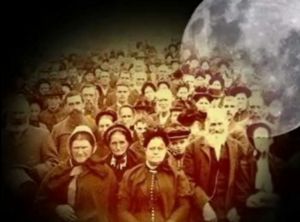 Those who have studied Mormonism’s history have seen that much of the Book of Mormon was written largely in part thanks to other sources that were available to Joseph Smith at the time he lived.
The two most notable examples are Joseph Smith’s plagiarism of the King James Bible, and Joseph Smith’s not-so-unique tales of native American Indians being ancestors of Israelites. The former was the standard translation of the Bible used in America at that time, and the latter was a popular notion advanced in numerous books during Joseph Smith’s time.
Even Mormons (including LDS general authority member and apologist B.H. Roberts) have had to concede the uncanny similarities between the Book of Mormon and other works of men available to Joseph Smith at the time.
In fact, there’s been much discussion about writings by Solomon Spaulding and Ethan Smith which are eerily similar to that of the Book of Mormon and predate the Book of Mormon.
You can read more on Solomon Spaulding’s manuscript here, and view the numerous similarities between Ethan Smith’s work and Joseph Smith’s Book of Mormon here.

But the Indians-are-Hebrews stories aren’t the only tales that were circulating during Joseph Smith’s time
There is another Mormon teaching that was espoused by early Mormon leaders that–like the Indian/Hebrew theory–was also not original to Mormonism. I’m speaking of the Mormon teaching that the moon was inhabited by men.
Oliver B. Huntington, who was a close associate of Joseph Smith and remained a faithful Mormon his whole life, said:
Astronomers and philosophers have, from time almost immemorial until very recently, asserted that the moon was uninhabited, that it had no atmosphere, etc. But recent discoveries, through the means of powerful telescopes, have given scientists a doubt or two upon the old theory. Nearly all the great discoveries of men in the last half century have, in one way or another, either directly or indirectly, contributed to prove Joseph Smith to be a prophet. As far back as 1837, I know that he said the moon was inhabited by men and women the same as this earth, and that they lived to a greater age than we do, that they live generally to near the age of a 1000 years. He described the men as averaging near six feet in height, and dressing quite uniformly in something near the Quaker style. In my Patriarchal blessing, given by the father of Joseph the Prophet, in Kirtland, 1837, I was told that I should preach the gospel before I was 21 years of age; that I should preach the gospel to the inhabitants upon the islands of the sea, and–to the inhabitants of the moon, even the planet you can now behold with your eyes. Young Woman’s Journal, Volume 3, pages 263-264, 1892
Huntington also said the following of Joseph Smith’s teaching regarding moon people:
The inhabitants of the moon are more of a uniform size than the inhabitants of the earth, being about 6 feet in height. They dress very much like the quaker style and are quite general in style, or fashion of dress. They live to be very old; coming generally, near a thousand years.” This is the description of them as given by Joseph the Seer, and he could “see” whatever he asked the father in the name of Jesus to see. The Journal of Oliver B. Huntington, Volume 3, Page 166
William A. Linn had this to say about Martin Harris, one of the three Witnesses to the Book of Mormon:
Daniel Hendrix relates that as he and [Martin] Harris were riding to the village one evening, and he remarked on the beauty of the moon, Harris replied that if his companion could only see it as he had, he might well call it beautiful, explaining that he had actually visited the moon, and added that it “was only the faithful who were permitted to visit celestial regions.” William A. Linn, The Story of the Mormons, Page 35, 1902
Of, course, not to be outdone by all the grandiose claims, Mormon Prophet Brigham Young went even farther by alleging that there are solar inhabitants as well:
We are called ignorant; so we are: but what of it? Are not all ignorant? I rather think so. Who can tell us of the inhabitants of this little planet that shines of an evening, called the moon? When we view its face we may see what is termed “the man in the moon,” and what some philosophers declare are the shadows of mountains. But these sayings are very vague, and amount to nothing; and when you inquire about the inhabitants of that sphere you find that the most learned are as ignorant in regard to them as the most ignorant of their fellows. So it is with regard to the inhabitants of the sun. Do you think it is inhabited? I rather think it is. Do you think there is any life there? No question of it; it was not made in vain. It was made to give light to those who dwell upon it, and to other planets; and so will this earth when it is celestialized. Journal of Discourses, Volume 13, Page 271, 1870
 So where did early Mormon leaders devise such tall tales about moon people and sun dwellers?
Well, all of the above quotes from Mormonism arose after 1835, the year when a tale of lunar habitation by humans was being spun by a paper called the New York Sun. A tale that later became known as The Great Moon Hoax.
In August of 1835 (just two years before Oliver B. Huntington said Joseph Smith began talking about inhabitants of the moon) the New York Sun (a paper from Joseph Smith’s own home state) reported that British astronomer Sir John Herschel discovered people living on the moon (as well as unicorns and hut-dwelling, fire-wielding bi-ped beavers).
Of course, thanks to advancements in astronomy, we now know for certain that men do not live on the moon (or the sun) and modern Mormons have since back-peddled from these teachings (painting over them with a veneer that these were only their leaders’ “opinion”). But even though they recognized the foolishness of these teachings, they still believe in extra-terrestrial habitation on other planets . . . just not on our moon or sun.
Mormon prophet Brigham Young said:
Mankind are here because they are the offspring of parents who were first brought here from another planet, and power was given them to propagate their species. Journal of Discourses, Volume 7, Page 285, 1859
Joseph Fielding Smith, tenth prophet/president of the Mormon organization, said:
We are not the only people that the Lord has created. We have brothers and sisters on other earths. They look like us because they, too, are the children of God and were created in his image, for they are also his offspring. Doctrines of Salvation, Volume 1, Page 62
Recognizing the prophets’ errors of claiming the moon and sun are inhabited is honest and the right thing to do, but why still cling to the idea that other planets are inhabited?
I’m still waiting for LDS apologists to finally concede that the Book of Mormon was just Joseph Smith’s “opinion” as well since advancements in archeology have not revealed one city, town, sword, shield, coin or other artifact or location in Book of Mormon history; advancements in DNA science have proven that American Indians are not descendants of ancient Hebrews as the Book of Mormon claims; that there is not one ancient manuscript to support the authenticity of the Book of Mormon; that the “Reformed Egyptian” language Joseph Smith supposedly translated the Book of Mormon from has never existed; and that the Book of Mormon (called “the most correct of any book on earth”), has undergone 3,913 documented changes, corrections, and alterations since it’s original 1830 publication.
But I suppose, even in the face of all that evidence, the odds of Mormons admitting that the Book of Mormon was a fabrication is as slim as finding Quakers living on the moon.
 Your sermon of the week is Sovereign Election, Israel & Eschatology (a.k.a. Why Every Self-Respecting Calvinist is a Premillennialist) by John MacArthur. This is the message that caused a stir a few years ago when MacArthur delivered it at the Shepherd’s Conference.
Not all the contributors on this blog agree with MacArthur on this subject, but I wanted to make it available here for those who have not listened to it yet.
You may also want to hear the opposition’s position to the Premil view posted last week by ATG.
For a more in-depth examination of this subject, I highly recommend MacArthur’s six -part series found on this previous post. (I actually prefer MacArthur’s six-part series as he has more time to unpack his points, and makes a more convincing argument for the Premil position, than he does in today’s single message.)
You can download this week’s message by MacArthur by going to the page found on this link, or just right-click and save this link.

Image from StormBringer
 The Roman Catholic Church teaches that infants are forgiven of original sin when a priest pours water over the baby in the sacrament of baptism. There are two serious problems with this practice. First, there is no occurrence of infant baptism in the New Testament, and second, one must believe in Jesus in order to be forgiven. Clearly a baby cannot respond in faith to the Gospel and thus be forgiven.
– Mike Gendron

vs

Christian apologist Walter Martin takes on Mormon apologist Van Hale in a debate entitled Is Mormonism Christian? It is another fine job by Walter Martin in defending the faith from those who would seek to pervert it.
Years after this debate, Van Hale publicly announced (in 2005) that he cannot accept the Book of Mormon as real history about real people (see here). I’m not sure if his debate with Dr. Martin helped bring him to that point, but it is an interesting piece of history.
You can download all three parts of this debate here:
Is Mormonism Christian? (Part One)
Is Mormonism Christian? (Part Two)
Is Mormonism Christian? (Part Three)
______________________________________
Check out another great debate between Walter Martin and anti-theist Madalyn Murray O’Hair here.
 I often hear the lament from anti-theists about Christian hypocrisy as the impetus behind their rejection of God, but rarely is atheist hypocrisy ever mentioned. So let’s look at two glaring hypocrisies of atheism, part one today, and part two coming soon.
________________________________
I recall a time a few years ago when I posted a gospel tract on the community bulletin board of a local coffee shop.
Shortly thereafter, as I sat sipping my hot beverage, a woman in her thirties entered the shop and made her way over to the bulletin board. Upon seeing the tract, she quickly removed it and promptly found a table where she sat and thumbed through the little booklet. Her behavior led me to speculate that she was familiar with what she held in her hands, and I watched from a distance.
Then this woman took out a pen and began to write on the tract (both the front and rear covers). This greatly piqued my interest of course, and I continued to observe.
A short while later another woman entered the establishment and approached the table where the first woman sat. The second woman greeted the first and the first woman gleefully showed the second woman the cover of the tract. The second woman gave a smirk while the first had a grin ear to ear. She then promptly returned the tract to the bulletin board.
My party and I left at the same time as the two women did but my curiosity got the best of me so I returned to the bulletin board inside the business and retrieved the tract. And there I read what the woman in all her giddy-like-a-school-girl excitement had written on the tract.
On the front:
“There is no God!”
On the back:
“Shame on God!”
There you have it . . . classic anti-theist hypocrisy: “Shame on the very thing I believe doesn’t exist.”
How can someone say on one hand, “There is no God!” then on the other hand say, “Shame on God!”? That is either blatant hypocrisy or a mild case of schizophrenia.
You can’t claim that someone or something doesn’t exist, then offer an opinion on that someone or something. Let me offer an example.
If I said that the Loch Ness Monster does not exist, but then warned you that you should be careful while swimming in Loch Ness because the Monster might get you, would you not be justified in questioning the truthfulness of my original claim that Nessie doesn’t exist?
So I came to the realization that most self-proclaimed atheists aren’t atheists because they disbelieve the existence of God, but it’s simply because they hate Him. They don’t want to be limited or prohibited in their lifestyle choices, nor be confronted with their sin, so they self-inflict a seared conscience upon themselves.
I would prefer if these professing atheists would be upfront and honest about their beliefs and come to terms with the fact that they simply hate God and His laws, instead of hiding behind a pretentious facade of pseudo-intellectualism in their declaration that the very thing they hate does not exist.
A little honesty and candor is all I’m seeking. Is that too much to ask for?
 Does God’s lavish, unexplainable grace offend you? Does it bother you that His grace can be extended to a wretch such as a serial killer, or is it only good for you?
I am happy to present another powerful and convicting message by Akash Sant Singh as your sermon of the week: God’s Audacious Grace.
 Your sermon of the week is an old-fashioned, southern-style preaching experience by R.G. Lee (1886-1978) entitled, Payday Someday.
I can’t think of a better way to begin 2012 than with this powerful sermon given many years ago, the likes of which are hard to find nowadays coming from pulpits across America.
 Does any Christian reader imagine for a moment that when he or she shall stand before their holy Lord, that they will regret having lived “too strictly” on earth? Is there the slightest danger of His reproving any of His own because they were “too extreme” in “abstaining from fleshly lusts, which war against the soul” (1 Peter 2:11)? We may gain the good will and good works of worldly religionists today, by our compromising on “little points,” but shall we receive His smile and approval on that day? Oh to be more concerned about what He thinks, and less concerned about what perishing mortals think.
– A.W. Pink
1886 – 1952
 As a follow-up to yesterday’s post (found here), and as a testament to the legacy of Joseph Smith (who was born 206 years ago today), I wanted to direct your attention to the resignation letter of former LDS stake bishop, Steve Bloor.
Here is an excerpt:
“I didn’t realise for instance that Joseph Smith practised polygamy, and was married to 33 women, most under the age of 20, one as young as 14. That some of Joseph’s wives were already married to other men when he married them; a practice called polyandry. All of these facts can be confirmed by a simple look at the church’s own website, familysearch.org. . . . There are many other issues, like; there are several accounts of the First Vision and Joseph Smith’s initial personal journal entry about the First Vision didn’t include seeing God the Father and Jesus Christ, but an angel. Then over the years the story got embellished till it changed to what we have today. Yet I was told it was the most momentous event to occur in this dispensation. Why didn’t Joseph initially record it correctly? And there are so many other things that have just dissolved my faith to the point I can no longer bear a testimony of the truthfulness of this church or even God. Can you imagine how I now feel? It’s like my whole world is crumbling around me. I no longer know what I believe, or who I can trust. I don’t even know who I am, it is a most frightening experience. At the moment it feels like a death in the family. My death!”
 The Puritan/Presbyterian wing of the Reformation accomplished a purity in worship not seen since the apostolic church. This purity was attained by making the Scriptures of the Old and New Testaments the only infallible standard and authority in determining worship ordinances. Any ordinances solely based on church tradition or man’s authority were discarded. However, this purity attained by our spiritual forefathers has, with the passage of time, been cast aside. Pragmatism, tradition and human opinion are exalted in determining how God’s people are to worship Him. The attitude among many in church leadership positions is to give the people what they want, rather than to submit to God’s divine revelation. . . . . God has set down in Scripture how He is to be worshiped. Man is not to add to or detract from what God says. . . . .
 Steve Bloor penned a letter to his congregation after resigning from his position as Bishop in his LDS stake.
What he did took much courage and I commend him for not only being willing to investigate his organization’s history, but also for acting upon what he discovered and not putting the problems of Mormonism on the proverbial Mormon shelf.
Here’s an excerpt from his letter:
I realise this will shock you. It has truly shocked me how quickly a testimony of the Church can unravel when Joseph Smith’s divine calling as God’s prophet is undermined by learning the truth about him.
I have come to believe over the last month that there are so many inconsistencies and problems with the historicity of the Book of Mormon, as well as the divinity of Joseph Smith’s calling as prophet, that I can no longer, in good faith, fulfill my calling as Bishop of Helston Ward.
You can read his entire letter here.
 Something for you to consider (and discuss) from the article, Multi-Site Churches Are from the Devil:
“. . . I think the kind of multi-site churches (realizing there are a few different approaches) that feature one pastor being beamed into several sites around a region—and in some cases around the country or world—is simply idolatry. It’s certainly cult of personality multiplied and digitized for a consumer audience. As a brilliant young man remarked to me this morning, ‘The pastor now becomes the new icon in the midst of the Protestant worship service.’ I think that’s well said. Video multi-site tends to idolatry, pride, and self-promotion—even where the ambition of spreading the gospel is genuine.”
Read the entire article from Thabiti Anyabwile here.
 . . . [W]e must restore to the family the responsibility of ministering to youth. In many churches–but by no means all–the purpose of the youth group is founded on premises that are an impediment to the training of godly children. Some of these false premises are: 1) That young people need a place where their problems are understood–where others of the same age share the same struggles; 2) that as it is often difficult for parents to communicate with and understand their teenagers, a youth leader who can identify with the young people is needed; 3) that it is important for young people to have fun and to see that “church people” have fun too; 4) that a youth group is needed to reach unsaved youth, and by getting them involved in fun activities, they will be more receptive to the presentation of the gospel.
Following the trends of secular culture, age-segregated groups have been established in church educational programs. Christopher Schlect, in his book Critique of Modern Youth Ministry, explains that the “divisions breed immaturity because they hinder younger people from associating with and learning from their elders.” The group can become the source of authority, thus diminishing the authority of the father and mother.
– William & Colleen Dedrick
From: The Little Book of Christian Character & Manners
 I recently finished reading an intriguing story by ALOE (A Lady Of England) to my children entitled, The Giant Killer (1856).
This allegorical tale (told in a fashion similar to Bunyan’s Pilgrim’s Progress) is about a noble knight named Fides who battles giant sins such as Giant Untruth, Giant Hate, and Giant Pride. Reading this to my children gave us much to talk about and helped them understand the battles with sin that we all face.
Lamplighter Publishing describes the book as follows:
The battle continues to rage, day by day and moment by moment. But must we meet the enemy blindfolded? In order to subdue, we must see the real foe; in order to conquer, we must face the true enemy. Through this allegorical tale, we will be better equipped to recognize, then to effectively slay, the many Giants who confront us. We will break through the web of Sloth, struggle out of the pit of Selfishness, choke up the fount of Anger, flee the secret lurking-place of Untruth, and triumph over our most malicious enemy—Pride. The Giant Killer is the tool to reach for if you or your loved ones need encouragement or confidence to enter into the battlefield once again. If you feel that you have nothing firm upon which to lay hold, this book will help you to grasp the strong cord of Love as your means of safety and deliverance.
And here is a reader’s review:
Another wonderful book from Lamplighter Publishing, The Giant Killer is an allegorical story of Christian warfare. Constantine and Adolphus, twin brothers, are sent to live with the Roby family to have Mr. Roby educate them. The spoiled 10-year-olds have much to learn about kindness, thankfulness, and manners. Mrs. Roby teaches these children and her own about godly character traits through stories about “The Giant Killer.” The Giant Killer must fight and conquer the Giants of Sloth, Selfishness, Untruth, Hate and Pride with the sword and armor given to him by his King. Your children will learn as these fictional children did to fight the enemies of the King that are in their own hearts.
Although this is not the best Lamplighter book I’ve ever read (The Basket of Flowers still holds the position of number one for me), it is still a good book that I recommend, and espeically for Christian parents to read to their children.
 A sobering examination into what the technology age has wrought on our families in this article from the New York Times.
Excerpt:
Sometimes they hold hands while looking at their screens. But failing that, the couple has developed a form of physical shorthand, an “ ‘I’m still here’ signal” in which “one of us will tap the other one a couple of times with an index finger.”
If last week’s sermon on marriage by Albert Martin (found here) was a left hook, today’s message is an uppercut.
God’s view on marriage and divorce is a message that I strongly encourage DefCon readers to listen to whether you are married, divorced, widowed, or single (yes, that’s intended to be all-inclusive).
What a wonderfully convicting and encouraging message Akash brings from the book of Malachi. You won’t want to miss this one.
 Your sermon of the week is the three-part message, Biblical Nonconformity, by Robert Briggs.
 Christ Alone Wyoming