Book recommendation: “Under the Banner of Heaven” by Jon Krakauer.

I recently finished Jon Krakauer’s book, Under the Banner of Heaven: A Story of Violent Faith. I found the book to be very revealing of early Mormon history (much of the stuff modern day Mormons prefer you didn’t know about). Namely this book tackled Mormonism’s twin doctrines of polygamy and Blood Atonement (and detailing the hellish results those unbiblical doctrines wrought on Mormons and non-Mormons alike).

Although this work was a scathing revelation of Mormonism’s twisted and violent history, I could not help but detect the author’s occasional sympathetic bent toward Joseph Smith and the Mormon organization as a whole.

Sympathy or poor research in some instances (I am not certain which), but one example of less-than accurate reporting is when Krakauer said that when Joseph Smith fired his gun at the angry mob (the gun that was smuggled into the Carthage jail), he wounded “at least one.”

However, Mormonism’s own History of the Church cites that Jospeh Smith actually “snapped the pistol six successive times; only three of the barrels, however, were discharged. I afterwards understood that two or three were wounded by these discharges, two of whom, I am informed, died.”

I must say that there’s a chasm of difference between “wounding at least one” and “two or three were wounded . . . two of whom . . . died.”

Another instance in the book where the author would have done well to have done better research is when he writes that Calvinists teach that God is “bent on making humans atone for Adam’s original sin.”

If Krakauer did his homework he would have known that that is not the historic Calvinist position (and never has been). Calvinism teaches that God’s Son (and Him alone) is the only One able to atone for mankind’s sin that was inherited through Adam and for the sins man commits daily. It is actually the belief of Mormonism (and Roman Catholics, and Jehovah’s Witnesses, and Seventh Day Adventists, and Muslims, etc.) that man can atone for or add to Christ’s atoning work on the cross; and this in direct opposition to Galatians 5:4.

In all, although the author was incorrect on a few points, I found the book to be a fascinating look into both the mainstream LDS organization (the one’s who broke away from the original teachings of Joseph Smith and Brigham Young) and the varios fundamental LDS organizations (the one’s who still follow the original teachings of Joseph Smith and Brigham Young) with the Lafferty brothers’ murder of Erica Lafferty and her baby, Erica, on July 24, 1984, as the back drop of the book.

The book, although containing a critical overtone toward all religion, horrifyingly exposes the results of following Joseph Smith and Brigham Young’s teachings faithfully, showing that Mormonism (much like Islam) is a violent religion full of lies, deception, adultery, sexual immorality, and forever marked by the bloodshed of innocent men, women, and children.

The passing of blogging pioneer, Jim Bublitz.

Coming on the heels of Phil Johnson’s announcement of his retiring from blogging, it is with sadness that I report that I’ve been notified by Lyn of Saved by Grace (and confirmed by Lane Chaplin on his Facebook page), that retired blogger, Jim Bublitz, has passed away.

Bublitz, who retired from blogging due to illness in 2008, was one of, if not the blogger, who inspired me to enter the world of blogging. In fact, Jim’s blog, Old Truth, was the first Christian blog (along with Ingrid Schleuter’s Slice of Laodicea) that I came across and was the inspiration and impetus behind the blog you are reading right now.

You can still read Jim’s blog (which I encourage you to do) at OldTruth.com.

I do not know any further details of Jim’s passing, but I’m certain more information will come out in the next few days.

Please keep the Bublitz family in your prayers.

Debate: Mariology – Who is Mary according to Scripture?

When you build a theology on pagan goddess worship, man’s traditions, a dead religion of works, and arguing from silence, you will always lose the debate when faced with God’s Word.

See also: It’s All About Mary?

HT: Cup of Joe

Sermon of the week: “Jesus Christ Teaches Limited Atonement” by James McClarty.

The battle continues to rage within the evangelical community – for whom did Christ die? Did He die for all who ever lived or did He die for the elect? Read the lyrics below and listen to the sermon from James McClarty and humbly see if what these men represent is true. Not, do you like it; not, does it line up with your thinking. Is it in line with the clear teaching and intent of God’s Word, for the glory of His name?

You can download the sermon here.

Mission Accomplished, Shai Linne:

Here’s a controversial subject that tends to divide
For years it’s had Christians lining up on both sides
By God’s grace, I’ll address this without pride
The question concerns those for whom Christ died
Was He trying to save everybody worldwide?
Was He trying to make the entire world His Bride?
Does man’s unbelief keep the Savior’s hands tied?
Biblically, each of these must be denied
It’s true, Jesus gave up His life for His Bride
But His Bride is the elect, to whom His death is applied
If on judgment day, you see that you can’t hide
And because of your sin, God’s wrath on you abides
And hell is the place you eternally reside
That means your wrath from God hasn’t been satisfied
But we believe His mission was accomplished when He died
But how the cross relates to those in hell?
Well, they be saying:

Lord knows He tried

Father, Son and Spirit: three and yet one
Working as a unit to get things done
Our salvation began in eternity past
God certainly has to bring all His purpose to pass
A triune, eternal bond no one could ever sever
When it comes to the church, peep how they work together
The Father foreknew first, the Son came to earth
To die- the Holy Spirit gives the new birth
The Father elects them, the Son pays their debt and protects them
The Spirit is the One who resurrects them
The Father chooses them, the Son gets bruised for them
The Spirit renews them and produces fruit in them
Everybody’s not elect, the Father decides
And it’s only the elect in whom the Spirit resides
The Father and the Spirit- completely unified
But when it comes to Christ and those in hell?
Well, they be saying:

Lord knows He tried

My third and final verse- here’s the situation
Just a couple more things for your consideration
If saving everybody was why Christ came in history
With so many in hell, we’d have to say He failed miserably
So many think He only came to make it possible
Let’s follow this solution to a conclusion that’s logical
What about those who were already in the grave?
The Old Testament wicked- condemned as depraved
Did He die for them? C’mon, behave
But worst of all, you’re saying the cross by itself doesn’t save
That we must do something to give the cross its power
That means, at the end of the day, the glory’s ours
That man-centered thinking is not recommended
The cross will save all for whom it was intended
Because for the elect, God’s wrath was satisfied
But still, when it comes to those in hell
Well, they be saying:

Lord knows He tried

Like a lamb to the slaughter? The final moments of Joseph Smith.

The following article from the Mormonism Research Ministry was written by Bill McKeever:

“The events leading to the death of Mormon founder Joseph Smith are much like the events surrounding his life—full of contradiction. To hear Mormons tell the story, Smith did no wrong; for others, he did no right. Like most stories, the truth lies somewhere in the middle.”

Continue reading here.

Roman Catholic cardinal claims Adam and Eve were a mythology.

Below is the article from The Australian:


AUSTRALIA’S Cardinal George Pell has described the biblical story of Adam and Eve as a sophisticated myth used to explain evil and suffering rather than a scientific truth.

Cardinal Pell last night appeared on the ABC’s Q&A program, where he was debating British evolutionary biologist and atheist Richard Dawkins.

Cardinal Pell said humans “probably” evolved from Neanderthals but it was impossible to say exactly when there was a first human. “But we have to say if there are humans, there must have been a first one,” he said.

According to Genesis, God created Adam and Eve as the first man and woman.

Asked by journalist Tony Jones if he believed in the existence of an actual Garden of Eden with an Adam and Eve, Cardinal Pell said it was not a matter of science but rather a beautiful mythological account.

“It’s a very sophisticated mythology to try to explain the evil and the suffering in the world,” he said.

“It’s certainly not a scientific truth. And it’s a religious story told for religious purposes.”

Cardinal Pell argued that the “great atheist movements” of Hitler and Stalin were the personification of social Darwinism.

“It’s the struggle for survival, the strong take what they can, and the weak give what they must and there’s nothing to restrain them.” he said. “And we’ve seen that in the two great atheist movements of the last century.”

Professor Dawkins, author of The God Delusion, rejected the notion as “ridiculous”.

He said Stalin was an atheist and Hitler was not, and they each perpetrated their acts for different reasons.

Towards the end of the debate, the head of the Catholic Church in Australia appeared to lament his struggle to promote Christ.

“My life would be much easier if I didn’t have to go into bat for . . . Christian principles,” he said.

Cardinal Pell then mused that he sometimes wondered if he should regret his life’s work, before asserting: “No, no.”

Sola Scriptura (72)

bible page . . . so much the more also Jesus has become the guarantee of a better covenant. The former priests, on the one hand, existed in greater numbers because they were prevented by death from continuing, but Jesus, on the other hand, because He continues forever, holds His priesthood permanently.Therefore He is able also to save forever those who draw near to God through Him, since He always lives to make intercession for them. For it was fitting for us to have such a high priest, holy, innocent, undefiled, separated from sinners and exalted above the heavens; who does not need daily, like those high priests, to offer up sacrifices, first for His own sins and then for the sins of the people, because this He did once for all when He offered up Himself.

-Hebrews 7:22-27

The attack on fathers.

PX001126 Stupid. Lazy. Uninvolved. Ignorant. Timid. Detached. Neurotic. Weak. Powerless. Unreliable. Ineffectual. Irresponsible.

What do all these words have in common? They are all descriptions of how men and fathers are depicted in today’s Western culture.

Television is a great example of the problem. Whether it’s Archie Bunker from All in the Family, Al Bundy from Married With Children, George Castanza from Seinfeld, Peter Griffin from Family Guy, or Homer Simpson from The Simpsons men are often portrayed as fools and inferior to not only their wives, but to their own children as well. And this isn’t even considering the latest onslaught of one-parent homes (homes absent of any father), and those normalizing homosexuality. These trends have been increasing every year and it seems to show no sign of stopping.

The problem is especially pervasive in shows geared toward children as Hollywood and the current culture is hell-bent on turning the hearts of the children away from their parents–especially their fathers.

If you still need convincing, turn on Nickelodeon or The Disney Channel and watch how men are depicted. It won’t take long for you to see what I mean. Even the commercials feed into this distortion of manhood. In so many cases all authority figures are depicted as incompetent including teachers and police officers, but none are so marginalized as fathers.

Mothers are depicted as much more capable of navigating through life than their incompetent spouses, but even they take a back seat when it comes to the kids themselves. Watch these same channels and observe how the kids are depicted. They’re the ones in control, who are running the show, making all of the important decisions, saving the world, and doing it all with zero or minimal input from their parents–especially that detached lump on the couch they call dad.

William Leith recently wrote an eye-opening piece in England’s Daily Mail in which he asked Why Do All My Son’s Books Tell Him All Men Are Useless? I highly encourage you to read the article; here are some excerpts:

“A recent academic study confirmed that men – particularly fathers – are under-represented in almost all children’s books. And when they do appear, like the fathers in Gorilla and Zoo, they are often withdrawn, or obsessed with themselves, or just utterly ineffectual.”

Leith continues:

“Why had this never bothered me? Because it’s all around us, everywhere we look. For years, men in our stories – not just for children, but adults, too – have been losing their authority. Not just years – decades. It’s crept up on us and now it’s everywhere. Remember when movie stars were strong and decisive? That was a long time ago now: John Wayne, Gary Cooper, Errol Flynn. Then came a new, softer type – Cary Grant and James Stewart were strong, yes, but against a background of self-doubt. And then came Jack Lemmon, Dustin Hoffman, Woody Allen, Bill Murray, Kevin Spacey – neurotic, bumbling, deeply flawed anti-heroes.”

Now I’ll readily admit that there are many, many men today who refuse to grow up (they’re known as Rejuveniles), but the situation begs the question: Is our culture’s entertainment merely reflecting the problem of the modern American male, or are these men actually the product of their culture’s entertainment?

_________________________________________________________________________________

For an absolutely wonderful story in which the father is refreshingly portrayed positively, I cannot recommend enough the book A Basket of Flowers; it’s one of my favorites.

See also:

How to make your husband a false convert and cause your kids to reject the Christian faith

Working moms

Thabiti Anyabwile on the altar call.

The following article, What About Altar Calls?, is from Thabiti Anyabwile:

I’m sometimes asked by people why we don’t do “altar calls” at our services. Like the people who ask the question, the churches in my personal background pretty much all practiced “altar calls” at the conclusion of a sermon or service. I’ve seen them done in very poor fashion, and I’ve seen some pastors be really clear about the gospel, repentance, faith, and the fact that “coming forward” does not save. I date my own conversion to the preaching of Exodus 32, which concluded with an altar call.

So, why don’t we practice “altar calls”? I don’t think the pastor who practices an “invitation” at the end of a sermon is in sin, but he may not be acting wisely either. This list of reasons, compiled by Pastor Ryan Kelly of Desert Springs Church, is a pretty good summation of some of my thinking (HT: Z).

1. The altar call is simply and completely absent from the pages of the N.T.

2. The altar call is historically absent until the 19th century, and its use at that time (via Charles Finney) was directly based upon bad theology and a man-centered, manipulative methodology.

3. The altar call very easily confuses the physical act of “coming forward” with the spiritual act of “coming to Christ.” These two can happen simultaneously, but too often people believe that coming to Christ is going forward (and vice-versa).

4. The altar call can easily deceive people about the reality of their spiritual state and the biblical basis for assurance. The Bible never offers us assurance on the ground that we “went forward.”

5. The altar call partially replaces baptism as the means of public profession of faith.

6. The altar call can mislead us to think that salvation (or any official response to God’s Word) happens primarily on Sundays, only at the end of the service, and only “up front.”

7. The altar call can confuse people regarding “sacred” things and “sacred” places, as the name “altar call” suggests.

8. The altar call is not sensitive to our cautious and relational age where most people come to faith over a period of time and often with the interaction of a good friend.

9. The altar call is often seen as “the most important part of the service”, and this de-emphasizes the truly more important parts of corporate worship which God has prescribed (preaching, prayer, fellowship, singing).

10. God is glorified to powerfully bless the things He has prescribed (preaching, prayer, fellowship, singing), not the things we have invented. We should always be leery of adding to God’s prescriptions for His corporate worship.

Numbers 1, 2, 3, 4, 5, and 10 of Ryan’s list are the most compelling reasons in my opinion. These would seem very serious objections for anyone who takes seriously the idea that our Christian lives and gatherings should conform to what the NT commands, models, and prohibits. Perhaps I would add an 11th: The “altar call” teaches the congregation to evaluate the “success” or “effectiveness” of the ministry on outward, visible actions and results.

Further, the need to be pastorally careful and sensitive with the souls of men needing to repent and believe couldn’t be more urgent. So, anything that obscures the reality of God the Holy Spirit’s work in conversion and the necessity of repentance and faith must be regarded–at best–a practice with potential to undermine the very work we’re giving our lives to.

Do people “respond” to the word of God at our services? They do. And we give them a number of ways they may follow up on what they’ve heard, from talking to an elder or Christian friend after the service, to scheduling an appointment during the week, to letting us know they would like us to visit with them, and so on. One thing I appreciate about our approach is that it allows us to meet, listen, question, encourage, teach and pray in a much more thorough way. By God’s grace we’re seeing people converted and profess their faith in baptism as the Spirit opens their hearts. We’re not perfect by any means. But I do hope we’re being faithful to the scripture’s commands, examples, and restrictions.

What do you think about Kelly’s list? Are you “for” or “against” and why? Would you add anything to or challenge anything on the list?

A video on the LDS by the BBC.

This was a well done piece on Mormonism by the BBC.

Although the impetus for the documentary was presidential candidate Mitt Romney, this video uses his potential presidency as a springboard to delve into Mormonism’s seedy underbelly (unfortunately they never mention such morsels as Mormonism’s racism and blasphemous doctrines like Blood Atonement, paying for your own sins in Hell, and their god having physical relations with Mary to conceive Jesus . . . just to name a few).

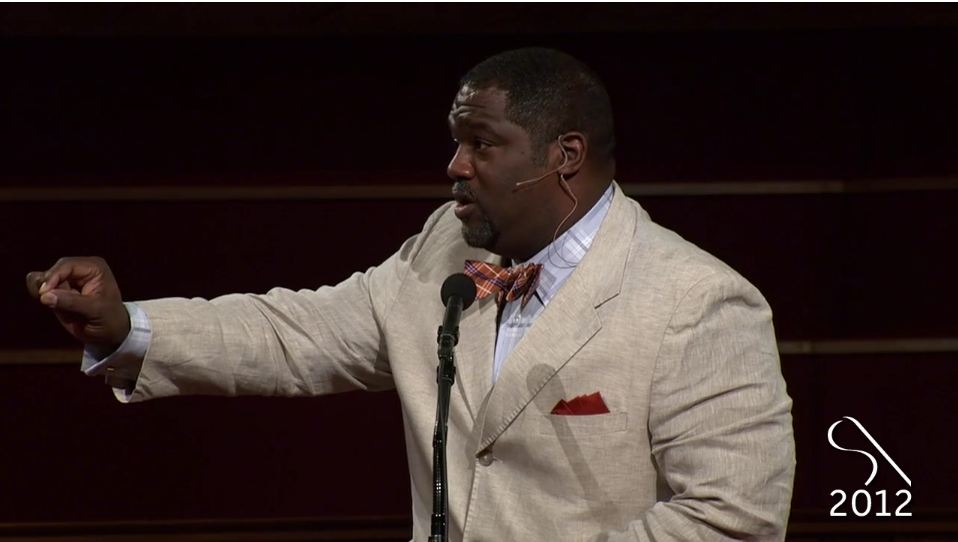
Sermon of the Week: “Marriage” by Voddie Baucham.

Regarding the highly visible tragic failure and death of Joe Paterno, having been disqualified by his actions and those of his subordinates, Baucham asks if Paterno would have been disqualified if he had been an adulterer or abusive husband or derelict father.  No profession in our culture disqualifies a man for his failure as a husband or father – except that of the church elder.

The man of God, called to serve His church as an undershepherd, is held to a higher standard than any other man. Further – the elders of a church must also be exemplary in these roles to be qualified! Not perfect – such a false human standard cannot relate with compassion with sinful people.

We learn from Ephesians 5 that family is important because of its portrayal of Christ and His people. To live a life worthy of the gospel, we must be faithful husbands and fathers before we can be faithful preachers and pastors.

You must listen to whole thing – it’s only 40 minutes. The message really takes off around 16 minutes in. Some humor with a hammer wrapped in love.  Voddie gives a glorious word picture of the covenant of marriage, and the provision for how we do this. MP3 download here.