Rare Jewel of Christian Contentment 4

Contentment is an inward, quiet, gracious frame of spirit. It is an inward frame of spirit and a gracious frame. Contentment is a soul business.

a. It is a grace that spreads itself through the whole soul. In some, there is a partial contentment. It is not the [whole] frame of the soul, but [only] some part of the soul has some contentment. Many a man may be satisfied in his judgment about a thing, who cannot for his life rule his affections, his thoughts, or his will. I do not doubt that many of you know this in your own experience, if you observe the workings of your own hearts.

the-rare-jewel-of-christian-contentment-by-jeremiah-burroughs

But there is a great deal of hope of attaining contentment, if you can sit down and say, “I see good reason to be contented.” Yet even when you have [gotten this] far, you may still have much to do with your hearts afterwards. There is such unruliness in our thoughts and affections that our judgments are not always able to rule them. That is what makes me say that contentment is an inward frame of spirit. The whole soul—judgment, thoughts, will, affections—all are satisfied and quiet.

b. Spiritual contentment comes from the frame of the soul. The contentment of a man or woman who is rightly content does not come so much from outward arguments or help, as from the disposition of their own hearts. Let me explain myself. Someone is disturbed. If you come and bring some great thing to please him, perhaps it will quiet him, and he will be “contented.” It is the thing you bring that quiets him, not the disposition of his own spirit, but the external thing you bring him. But when a Christian is content in the right way, the quiet comes more from the disposition of his own heart than from any external argument or from the possession of anything in the world. To be content because of some external thing is like warming a man’s clothes by the fire. But to be content through an inward disposition of the soul is like the warmth that a man’s clothes have from the natural heat of the body.

–Jeremiah Burroughs

Don’t Be Offended

Years ago, I heard a testimony by a man who said that he was determined to not get offended. At the time, I thought that was an interesting goal but not one I’d ever considered. The older I get, the more I realize what a worthy goal that is. How many relationships have ceased, or at least been greatly strained, because one person became offended over something another person did or didn’t do.

I can’t say that I have mastered this but it is something that I am asking God’s help in. I find that, often, the person who caused the offense does not realize they have done so and, in this age of not wanting to offend others, the offended does not follow the Biblical principle of going to their friend to let them know they’re hurt or offended. This is so sad!

restoregalatians

One thing that helps me is realizing that I am not always easy to get along with either. There really is something to showing the grace to others that you would like to receive in return.If someone has offended you to the point that it is affecting your relationship, I would recommend that you go to that person and talk to them. Explain that you were offended by their actions and how you would like things to play out in the future.

If they listen and are willing to work through things, you have saved your relationship. If they aren’t, then you may need to distance but at least you did what you could. Then ask God to give you a pure heart toward that person. If you continue to let it fester, it could turn into bitterness, which may affect other relationships and will hinder your relationship with God. Pray too that God will give you an open heart if you are struggling with bitterness over a damaged relationship. Humility is the best path to pursue when striving to walk the path toward the future.

Brethren, Pray For Me

Brethren, Pray For Me

2 Thess 3:1-2 Finally, brethren, pray for us, that the word of the Lord may have free course, and be glorified, even as it is with you: And that we may be delivered from unreasonable and wicked men: for all men have not faith.

One thing that is hardly addressed these days is the desperate need of prayer for pastors and missionaries. These men are in the forefront of the spiritual battle. We see so many fall to the wayside due to many reasons both physical and spiritual. Sometimes, they give in to the pressure of being told not to stand for the truth, maybe they become afraid in the battle, or grow weary because of the fight. Maybe they have been ill used by the congregation and their very soul is tattered and torn, maybe they struggle against sin or a specific sin, maybe their family is falling apart and they feel overwhelmed by everything going on, or maybe they are in a deep depression at this point.

Yes, we can all feel those things at one point or another yet how few people realize the tremendous pressure these men are under. They are in the front line of fire, spiritually speaking, and there is much they have to endure that most wouldn’t allow. A lot of people in the congregation think that because they pay the pastor or missionary that he has to obey them in everything. Don’t get me wrong as I believe in accountability but the people don’t own the heart and soul of the pastor and missionary. God owns their soul and is the One whose will should be followed completely and wholeheartedly.

Preaching in the right spirit and with all a person’s heart is quite similar to a day’s work. It’s easy to complain that the pastor doesn’t do anything but a person who says that hasn’t watched a true pastor give himself up in his preaching.

pastorprayer

Brothers and sisters, pray for your pastor. Pray that he will stand true to the Word of God and do what’s right regardless of the cost. Pray that his heart will be touched by what he studies and that the Holy Spirit will speak to him, first, then speak through him when he preaches. Pray that his heart will be renewed day by day. If he has a secular job as well as the ministry, buckle down and pray the Lord will give him strength for both positions. It’s not easy on a pastor to work, take time out for his family, and do what he needs to do for the family of God. Pray also for the health of the pastor who works as he will very seldom get time off.

Brothers and sisters, pray for the missionaries. Pray the same thing for the missionaries except they need added encouragement when they live in a different country. There will be culture shock on their parts and will need extra grace to adjust.

One more thing, pray that the Lord will cover both pastors and missionaries with His cloak of protection. May they each stand firm and do the Lord’s will. A strong man of God will mean one who’s ready to follow the Lord and guide his ministry in the way that they should go but a weak man of God means his ministry will fall into apostasy.

You Are…

You are my Glory and my Hope
Perfect in all Your ways
You are the One in Whom I rest
You are my Hope and Stay

You are my Wisdom and my Rock
The Blesser of my soul
The Hearer of my painful cries
You’re holy and faithful

You are the One in whom I trust
The Strength’ner of my heart
You are my Shield and Protection
You’ll never more depart

You uphold all your righteous ones
You are my Hiding Place
You are the One Who gives me food
My Light, my Truth, my Grace

You are Alpha and Omega
You are the First and Last
When You come back to take me home
My sin will all be past.

Words by Violet Escalera – January 2017
(Can be sung to the tune of Amazing Grace)

http://www.youtube.com/watch?v=J-zRLbdgj7Q

If You Love Me…Part 2

The last section we dealt with loving and obeying the Lord by obeying His Word. Now, let me hasten to add that obedience to the Lord should not cause us heartburn. 1 John talks about loving the Lord and chapter 5:1-3, “Whosoever believeth that Jesus is the Christ is born of God: and every one that loveth him that begat loveth him also that is begotten of him. By this we know that we love the children of God, when we love God, and keep his commandments. For this is the love of God, that we keep his commandments: and his commandments are not grievous.”

It should be our joy to obey the Lord in all things. He is our Father and His great love for us should give us joy to know we please Him when we follow His will, not ours. If His commandments aren’t grievous to us then the joy should bound through our lives and within our hearts as we do His will.

lovegod

Does this mean we won’t experience heartache or that we have to paste a smile on our face and pretend we are something that we aren’t? Of course not! The tears of sorrow and heartbreak will flow for us as it does for unbelievers. The only difference is that the Lord will comfort us in the midst of our sorrows and heartache. He will give us peace while we continue on our earthly pilgrimage. You see, loving the Lord doesn’t mean that we always will do what is right.

The psalmist said in Psalm 37:23-24, “The steps of a good man are ordered by the Lord: and He delighteth in his way. Though he fall, he shall not be utterly cast down: for He upholdeth him with His hand.”

The Lord is with us and will always be there to give us strength in His path. No matter how difficult the way may seem, it’s a lot easier than trying to make it without the Lord. Family and friends will fail but our love should be always on the Lord and following His will. In fact, some of the worst enemies can be those within our own household because they have to live with the guilt and shame of their own sin by watching us seeking to live a life pleasing to Him.

Yes, we will also fail at times and probably respond in ways that are ungodly and not Christ honoring but the difference should be seeking forgiveness despite our failure. Loving the Lord is not mere sentimentality that makes our hearts feel warm and fuzzy on a cold day. We are in the midst of a long, hard battle that won’t end in this life. Part of that battle is following the Lord’s will in every area of life. Put on the whole armor of God, not just part of it.

Psalm 73:25-26 give us a very clear understanding of what the Lord should be to us. “Whom have I in heaven but Thee? There is none upon earth that I desire beside Thee.” No matter what the thing or person is here on earth, no one and nothing should mean as much to us as the Lord, whether in heaven or earth. He is the only true God and worthy of all praise, honor, and glory! Love the Lord at all cost because He is the only One who can satisfy you!

Devotional with Charles Spurgeon

February 2

“Without the shedding of blood is no remission.” — Heb 9:22

This is the voice of unalterable truth. In none of the Jewish ceremonies were sins, even typically, removed without blood-shedding. In no case, by no means can sin be pardoned without atonement. It is clear, then, that there is no hope for me out of Christ; for there is no other blood-shedding which is worth a thought as an atonement for sin.

Am I, then, believing in him? Is the blood of his atonement truly applied to my soul? All men are on a level as to their need of him. If we be never so moral, generous, amiable, or patriotic, the rule will not be altered to make an exception for us. Sin will yield to nothing less potent than the blood of him whom God hath set forth as a propitiation. What a blessing that there is the one way of pardon! Why should we seek another?

bloodatonement

Persons of merely formal religion cannot understand how we can rejoice that all our sins are forgiven us for Christ’s sake. Their works, and prayers, and ceremonies, give them very poor comfort; and well may they be uneasy, for they are neglecting the one great salvation, and endeavouring to get remission without blood.

My soul, sit down, and behold the justice of God as bound to punish sin; see that punishment all executed upon thy Lord Jesus, and fall down in humble joy, and kiss the dear feet of him whose blood has made atonement for thee. It is in vain when conscience is aroused to fly to feelings and evidences for comfort: this is a habit which we learned in the Egypt of our legal bondage. The only restorative for a guilty conscience is a sight of Jesus suffering on the cross. “The blood is the life thereof,” says the Levitical law, and let us rest assured that it is the life of faith and joy and every other holy grace.

“Oh! how sweet to view the flowing
Of my Saviour’s precious blood;
With divine assurance knowing
He has made my peace with God.”

The Awe-Full Psalm

A dear friend and brother in Christ wrote this recently. It is a wonderful reminder of how awesome is our God and how much we have to be thankful for, regardless of our station or circumstances in this age.

psalms1188

My favorite hymn is, “How Sweet and Aweful is the Place” written by Issac Watts. Some modern versions use alternate words like awesome, awe-filled, or sacred, but the word was originally used in a way that literally meant, “full of awe.”

This hymn paints a picture of God’s elect worshipping Him in spirit and in truth, something we also see portrayed in Psalm 118. Take a look at them in parallel:

How sweet and awful is the place
With Christ within the doors,
While everlasting love displays
The choicest of her stores.

Give thanks to the Lord, for He is good;
For His lovingkindness is everlasting.
Oh let Israel say,
“His lovingkindness is everlasting.”
Oh let the house of Aaron say,
“His lovingkindness is everlasting.”
Oh let those who fear the Lord say,
“His lovingkindness is everlasting.” (Psalm 118:1-4)

The everlasting love of God has been shown to His people since Eden. All those who fear the Lord, regardless every generation, find solace in Christ alone.


While all our hearts and all our songs
Join 
to admire the feast,
Each of us 
cry, with thankful tongues,
“Lord, why was I a guest?”

From my distress I called upon the Lord;
The Lord answered me and set me in a large place.
The Lord is for me; I will not fear;
What can man do to me?
The Lord is for me among those who help me;
Therefore I will look with satisfaction on those who hate me.
It is better to take refuge in the Lord
Than to trust in man.
It is better to take refuge in the Lord
Than to trust in princes. (Psalm 118:5-9)

Dining with rulers is hard enough, but having a seat at the Lord’s table? How much better is that refuge than trusting in man, his princes, or temporal promises?


“Why was I made to hear thy voice,
And enter while there’s room,
When thousands make a wretched choice,
And rather starve than come?”

All nations surrounded me;
In the name of the 
Lord I will surely cut them off.
They surrounded me, yes, they surrounded me;
In the name of the 
Lord I will surely cut them off.
They surrounded me like bees;
They were extinguished as a fire of thorns;
In the name of the 
Lord I will surely cut them off.
You pushed me violently so that I was falling,
But the Lord helped me.
The Lord is my strength and song,
And He has become my salvation. (Psalm 118:10-14)

Salvation only comes through the Lord, yet we do not call to Him on our own. We were among the wretched who looked to God’s people with disdain! Why, oh why, did God choose to save us from that state of pure rebellion against Him?


‘Twas the same love that spread the feast
That sweetly drew us in;
Else we had still refused to taste,
And perished in our sin.

The sound of joyful shouting and salvation is in the tents of the righteous;
The right hand of the Lord does valiantly.
The right hand of the Lord is exalted;
The right hand of the Lord does valiantly.
I will not die, but live,
And tell of the works of the Lord.
The Lord has disciplined me severely,
But He has not given me over to death. (Psalm 118:15-18)

The love of God is far greater than any man could tell. He sweetly drew us in, His right hand holds us fast, and we are now destined not to die, but live in His presence forever!


Pity the nations, O our God,
Constrain the earth to come;
Send thy victorious Word abroad,
And bring the strangers home.

Open to me the gates of righteousness;
I shall enter through them, I shall give thanks to the Lord.
This is the gate of the Lord;
The righteous will enter through it.
I shall give thanks to You, for You have answered me,
And You have become my salvation. (Psalm 118:19-21)

Asking Christ to constrain His arrival seems terrible at first – why delay such a wonderful event? Consider how the gates swung open for us when we did not deserve it. Does this motivate you to ask for more time to share that news?


We long to see thy churches full,
That all the chosen race
May, with one voice and heart and soul,
Sing thy redeeming grace.

The stone which the builders rejected
Has become the chief 
corner stone.
This is the Lord’s doing;
It is marvelous in our eyes.
This is the day which the Lord has made;
Let us rejoice and be glad in it.
O Lord, do save, we beseech You;
O Lord, we beseech You, do send prosperity!
Blessed is the one who comes in the name of the Lord;
We have blessed you from the house of the Lord.
The Lord is God, and He has given us light;
Bind the festival sacrifice with cords to the horns of the altar.
You are my God, and I give thanks to You;
You are my God, I extol You.
Give thanks to the Lord, for He is good;
For His lovingkindness is everlasting. (Psalm 118:22-29)

Christ was the stone rejected by man, exalted by God. The number of elect God granted Him is entirely the Lord’s doing, which should be marvelous to our eyes. Such everlasting lovingkindness makes us want to sing of that redeeming grace with our fellow believers for all eternity.

Issac Watts did not relate this hymn to Psalm 118 when he penned these beautiful words. Yet, through the same providence he described, we still hear the truths of Scripture burst out of the pages several hundred years later. The message is clear in both texts: God’s plan will succeed, and we must praise Him in response!

Do justly. Love kindness. Walk humbly. Stay tuned.

In Christ,

CK Hicks

“I will always be ready to remind you of these things, even though you already know them, and have been established in the truth which is present with you.” (2 Peter 1:12)

Thirsting For God

Psalm 41:1-2 To the chief Musician, Maschil, for the sons of Korah. As the hart panteth after the waterbrooks, so panteth my soul after thee, O God. My soul thirsteth for God, for the living God: when shall I come and appear before God?

The years have come and gone and I see myself not much wiser than I was when the Lord first brought me to Himself compared to actual years of a person. For instance, I was saved 25 years ago and yet I have to wonder about my spiritual growth. As I’ve contemplated life and it’s difficulties, I’ve also contemplated why it seems I’ve hardly grown in that amount of time. Yes, there have been times where I’ve been fervent and desired change but was it for the right reasons?

Not too long ago, Sony Elise posted about sin and holiness. In it she said, “I feel like, in many churches, more emphasis is placed on God’s forgiveness as opposed to His holiness. I am so grateful for God’s mercy and forgiveness, but there are often still consequences to the fleshly decisions that we make. This is one reason that it is important to walk in the Spirit so that you do not fulfill the lusts of the flesh (Galatians 5:16).” This can also be said about each true believer within their personal lives.

hart_for_god_wide

Why is holiness so important? It’s because God hates sin. If we love Him then we should love what He loves and hate what He hates. How can we pant for the Lord and long after Him if we are willing to entertain sin within our lives? Is it easy to get caught up in daily living and forget the Lord is sovereign and in control of each situation we are involved in? Yes! Is it easy to live as if we were atheists and completely shut out the Lord except for Sunday? Yes! Is it easy to get angry at those who hurt us and aren’t willing to make things right? Yes, again! And it’s so easy to fall over and over again!

We are all sinners but if we are true believers then we should seek to make things right! What if they aren’t willing to do so or even listen to us? Then we must forgive and move on! We can mourn over what happened but there comes a time when the Lord says, “It’s time for you to love me even more! Who do you have in heaven but Me? There is none on earth that you should desire except Me. Your heart and your flesh fail continuously but I am the strength of your heart. I am your Portion forever.”

My heart should respond with, “Yes, Lord! You are all that and more! My heart pants for You as the deer pants for the water and even more than that! My soul thirsts for You and I cannot be satisfied unless You fill me to overflowing with You! I want to do Your will no matter how hard it is, no matter what persecutions and sorrows I will go through, no matter who stands with me or doesn’t because I love You beyond life itself!” Yes, it will still be easy to fall and live that life without the Lord but let those of us, who are true believers, beg for God to give us such a love for Him that we hate what He hates and love what He loves.

Let holiness and grace reign in our hearts so completely that when people are around us, even though we sin regularly, they can say, “He or she has been with Christ!” They may not like us for the conviction within their hearts but we need to be like Him.

I long to be like the Lord Jesus but I fail miserably on a daily basis and yet…I want to be holy as He is holy. I want to thirst for Him to fill me in such a way that I seek to love Him and do what He wants in every way!

Let me see my sin, dear Lord,
as though I were looking through Your eyes,
My heart and the blackness that is within,
the sin for which You died
Let Your horror of sin be my heartbreak
Blur mine eyes with tears of agony
For if once I could see my sin the way You see
I would seek to hate my sin for love of Thee.

Change my sin sick soul, dear Lord,
so that I will become more like Christ
Make me pure and white within, dear Lord,
give me strength to follow You in this fight
May I stand for truth whatever happens
Give my heart holy tenacity
For Your death on the cross is what gave life to me
Now I want my life wholly given to Thee.

Speaking Graciously

Truth in grace. I love the new blog title. I’ve said for years that some people have no problem “speaking the truth” (or what they perceive that truth to be) but they forget the “in love” part.  If we love each other, our words will be “gracious, seasoned with salt, so that you may know how you ought to answer each person” (Col. 4:6).

col46

People complain about the internet being a place where some say things that they would never say to a person’s face. I personally love this mode of communication because it gives me time to think through how to respond to a person or situation. Not that I always do it perfectly, but I have the opportunity to slow down and allow God to speak through me as opposed to speaking off the top of my head words that might be full of pride and ignorance.

Whatever we do, whether in word or deed, we are to do it to the glory of God (Col. 3:17). I pray that I will never lose sight of that truth.


Contentment

Contentment…this can be a difficult subject both in learning and in life. This is something the Lord wants each of His children to learn, it is also something we should be willing to take great pains to learn. What is even harder but should be concerning to each of us who are the children of God is contentment in the midst of trials. You see, contentment in the Lord seems to be simple enough.

The Lord uses each situation for us to learn dependence on Him and a desire to fulfill His will. Yet, in the midst of that, as the backdrop of life, the trials we face are there for us to learn to be contented in the midst of that specific trial knowing Who is in control and the plans He has or us is not only for His honor and glory but also for the good of those who love Him and are called according to His purpose.

The Lord clearly told His disciples that the servant is not above the Master and if the world hated the Master and treated Him horribly then it would treat His servants just as bad, if not worse. As we grow in the grace of the Lord we find that life does not get easier but harder. Each trial or tribulation we face is that much harder than the last but, for each one, we are given the grace and strength to get through.

contentment-newlife

When we fight the Lord, instead of gracefully letting Him have His way, we find that the way is so much more difficult than it should be. Fighting only brings anger and frustration our way instead of the peace that passes all understanding. It becomes easy to fume and fret about what we have to face in life. Instead of having a quiet spirit that comes from the Lord, we then have a complaining and fretful spirit. This brings us to a point of having to be disciplined by the Lord.

As the trial or tribulation comes into our lives we begin fretting and fuming that we don’t want it to happen. We were content for things to be as they were and yet it takes those trials to make us more like the Lord Jesus Christ, to grow in faith.

Many times we are like the child that grows impatient and demands their own way when things are not done exactly the way they want them. They sulk and throw temper tantrums because they think that all should be exactly as they would have it, not as the parents know is best for them. They want the candy, the fruit, the dessert, the sweets, the play time, the whatever the case may be instead of spending their time studying, or wanting to eat the proper and healthy foods the parents know they should have so they will grow up strong and wise.

The Lord knows exactly what we need in our lives to make us wise and strong believers. To fret against His wise bestowments (wise even in the midst of our trials) tells Him that we love this world more than Him. How can we desire the world above Him? Is wealth, comfort, life, health, friends, entertainment, sports, family, or anything else more important than Him? To put anything before Him is to worship the created thing more than the Creator, who gave His only begotten Son for our worthless souls.

As each trial comes into our lives let us be willing to thank the Lord for what He taught us already in the past trials and be willing to trust that “God is good all the time and all the time God is good.”

Moving Forward

Hello Brothers and Sisters,

Of recent times, I have been doing much soul-searching in particular as it applies to Defending Contending. I have seriously considering everything from closing it down to transferring ownership to another person. However, the more I have considered this, the more tense I became. This was not because it has been mine for so long, but because this has been an opportunity that the Lord has used to help me to grow and to be able to share with others. I have been writing at Defending Contending for 9 years come the end of January 2017.

During that time, there have been things I have both read and written that I have cringed. There are posts written that have caused my heart to break before the Lord and I have had to seek repentance for my own stubbornness and lack of Christ-likeness. We have gained many viewers and lost more than we have gained. I believe that we are in a state of flux within evangelical Christianity and my heart has long been to reach out to our readers in a way that still point out the truth without being hateful, spiteful, or vitriolic in any manner even when we disagree with others.

With that in mind, I believe for the time being that a change in direction will be a profitable move. I want to lay these out just briefly.

climateoftruth

1. A new name – Truth In Grace — Reason is simply because we are truly called to preach and teach truth, but I believe we are called to do so with grace. The new picture on the website says, “Truth without grace is a prison; Grace without truth is chaos.”
2. A new tagline – “Sharing truth and faith in a spirit of love and grace.”
3. A new direction with posts
4. Additional contributors — I have just this evening reached out to two people that I believe could be a blessing to our readers.

I believe that this new direction, name change, and tagline are still very much in line with where The Pilgrim was going with the blog when he started it. Yes, we have all had to learn and I pray this will continue to reach others with a gracious spirit years in to the future.

However, I know that with the additions and changes, there will be other differences to deal with which is another reason for writing. Not all of us, even now, are in full agreement on every aspect of doctrine. I have no doubt that our differences are not salvific in nature, but I also understand that can be debated by some if they choose a hard line on some points.

For example, through the ages, men like Spurgeon, Sproul, MacArthur, Wilkerson, Conway, Baucham, Lloyd-Jones, etc. would have all agreed on many points of foundational truths that are unassailable, but they would have disagreed on some doctrines that, in my humble opinion, do not make a difference in whether a person is a true believer or not. Another example would be where Lloyd-Jones stood on the work and role of the Holy Spirit as compared to say Sproul or MacArthur. Yet, I have no doubt that they would have been gracious to each other and would have learned from each other.

Many of you know that I hold to the doctrines of grace, but it is not a drum that I have ever made a point of beating others up on. I can respectfully agree to disagree with another and still call them my brother or sister in Christ. I can disagree on things like family integrated or Sunday school, or in the style and meaning of missions, or in the version or music styles I choose to use and still call the other side of the coin a brother or sister in Christ.

Not everybody who has or who will write at DefCon are staunch Calvinists. Each of us are at different points in our Christian walk, and even one who is mature in the faith in many areas can still have much to learn as though they were a new believer. Brothers and sisters, as I get older, my heart’s desire is that my mind would be brought into closer communion with the Lord of glory. We will not be found in glory based on or divided into groups according to what we believed on certain issues. We will be in glory because of what Christ alone has done for us.

I know that each of you will have to make decisions as to what direction you will go into the future. As for me, this is where I believe the Lord would have me to walk. My issue will be that every post provides encouragement, edification, or exhortation according to the principles of God’s Word. Simply put, my intention is not to linger on one issue, one doctrine, or even appear as though we are nothing but a discernment blog. The new blog will be so much more, as the Lord blesses and is glorified.

If you have any questions, thoughts, or concerns, please feel free to reach back out to me.

I am so thankful for all we have been through down through each season that you have been part of our readership. My prayer is that this will continue for a long time, but it needs to move in a new direction effective immediately. You are my brothers and sisters in Christ even if we do not ultimately agree in the end. Thank you for your understanding.

In Christian love and grace,

Mark Anthony

No Disappointment

Disappointment is defined as “the feeling of sadness or displeasure caused by the non-fulfillment of one’s hopes or expectations.”

There are many things in life that can and do cause disappointment. Disappointments are like storms that can threaten to overwhelm your heart and soul. It could be the loss of a promotion when you feel that you were qualified for the position that was given to another person. Maybe the disappointment brings sadness when holiday times do not measure up to your hopes or expectations.

What about when your children do not follow your commands? We say that they have disappointed us. Simply put, our minds and hearts are sad or displeased because our children failed to live up to our hopes or expectations.

As we grow older in life, we find that our hopes or expectations of a good long life free of health issues produces disappointments. We realize that life is not easy and that our hopes continue to be dashed with each advancing year and trip to the doctor. One day they take tests and reveal a life-threatening illness, or maybe they are just not able to determine what is causing the severe pain. Either way, we have feelings of sadness because this is not what we could have imagined when we were young and in excellent health.

calmstorm

Life is full of times that cause sadness and displeasure. Life is full of sadness because we are fallen creatures. Sin has caused our minds and hearts to run from what is perfect or ideal in each situation. Our chosen paths do not reflect the image in which we were created and thus we end up with more sadness and displeasure.

Our hopes and expectations do not come to fruition and then we try to make sense of the aftermath. What do we do with that disappointment? Do we allow it to overwhelm us or do we strive to rise above the clouds of despair and set new goals?

The Scriptures are full of times when disappointment was the order of the day throughout different periods of history. Adam and Eve must have been disappointed when they learned the news of Cain killing his own brother. Despite having prepared for 120 years, Noah must have felt a keen disappointment that there were only seven other people in the boat with him while the remainder of the world perished.

Surely, Joseph was disappointed when he was sold into slavery by his brothers and realized that he would probably never see them again. Yet, there was a ray of hope, grace, and redemption at the end of the account. Joseph and his brothers were ultimately reconciled and Joseph revealed the answer to life’s most poignant disappointments.

Are you ready for this? In this answer, you too can understand what many cannot or will not grasp. The answer to all the disappointments is a full recognition of who is in charge of every aspect of your life. Without taking full knowledge of this answer, you and I will long struggle with what happens to us from day to day. We will continue to be filled with sadness and displeasure when our hopes and expectations flee from us like dew before the morning sun. As James 4:14 puts it so eloquently, “Yet you do not know what tomorrow will bring. What is your life? For you are a mist that appears for a little time and then vanishes.”

Joseph had to go through a great deal of disappointments in order for him to finally learn the truth. Life was not about him. It was not about his brothers. In fact, life was not even about the hardships that he had endured. Was his life full of various disappointments? Yes, of course, but those disappointments are not ultimately what made Joseph such a wise person.

His point of wisdom is found in Genesis 50:20.

“As for you, you meant evil against me, but God meant it for good, to bring it about that many people should be kept alive, as they are today.”

The Hebrew word for evil is also translated in other verses as wickedness, mischief, hurt, trouble, affliction, adversity, harm, or sad. In other words, it is not just the evil out of the heart of man that God means for good to us. There is a reason why you are going through the disappointments of life.

To take the cue from Joseph, maybe we should memorize this verse in Genesis 50. When the disappointments of life come, then we should be learning to say:

“As for you, you meant hurt or trouble or affliction or adversity or disappointment to or against me, BUT God meant it for good.”

joseph

Understanding this will enable us to put aside feelings of sadness and displeasure when it seems like our lives are falling apart. Instead of allowing disappointment to overwhelm us like shadows in the valleys of life, we can appreciate verses like James 4:15 where the apostle continues by sharing with true believers, “Instead you ought to say, “If the Lord wills, we will live and do this or that.”

Or, we can even appreciate opening up the wonderful passage in Romans 8 where we learn that all the things that God is working together in our lives is for the express purpose of making us more like His Son, Jesus Christ. This is the total sovereignty of God in action. Our biggest problem as true believers is that we fail to note this every day. Disappointments come and go, yet one thing remains sure –

There’s no disappointment in Jesus!

*****

There was a hymn written before World War 2 that is rarely heard anymore, but I leave the words for you to consider. May they be an encouragement to your heart and mind.

There’s No Disappointment in Jesus

1) There’s no disappointment in Jesus,
He’s more than my tongue can tell;
His love is so sure
And so steadfast,
His friendship divine will not fail.

Chorus
There’s no disappointment in Jesus,
He’s all that He promised to be;
His love and His care
Comfort me everywhere;
He is no disappointment to me.

2) There’s no disappointment in Jesus,
Tho’ sorrows may press me sore.
He comforts with tender compassion,
His love cheers my heart evermore.

3) There’s no disappointment in Jesus,
He satisfies me alway;
So strong and so willing to help me,
In Him I find comfort each day,

John C. Hallett © 1940 Renewal 1968 Word Music, LLC

Love Mercy

He has shown you, O man, what is good; and what does the LORD require of you, but to do justly, and to love mercy, and to walk humbly with your God? (Micah 6:8).

But if you had known what this means, I will have mercy, and not sacrifice, you would not have condemned the guiltless (Matthew 12:7).

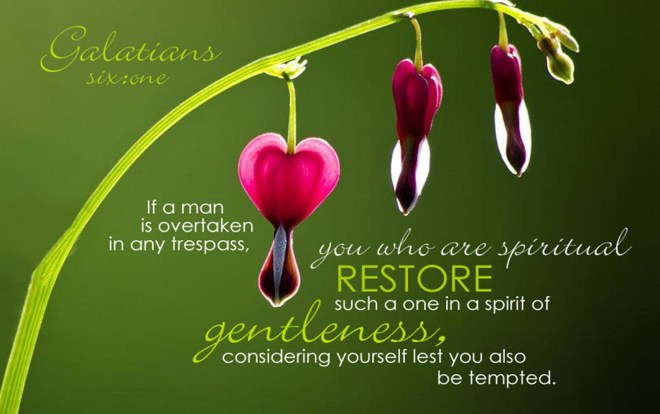
A while back, I came to the conclusion that I would rather err on the side of mercy when relating to others. I’m not talking about being soft on sin. But I am talking about walking graciously toward others who may not be at the same place in their walk with the Lord as you or I may be. And, if a brother or sister is caught in sin, learning how to “restore such a one in the spirit of meekness” (Gal. 6:1).

When I look at others who are covered with the scars of bad decisions they have made, I do not lose sight of the fact that there but for the grace of God go I. God has spared me from a lot in life but that is a testimony to His goodness, not mine.

mercifulgod

Luke 6:36 tells us:

Be you therefore merciful, as your Father also is merciful.

Matthew 5:7 says:

Blessed are the merciful, for they shall obtain mercy.

I have received so much mercy in my life. How could I be so heartless as to not show mercy in return?

Dictionary.com defines “mercy” as:

1. compassionate or kindly forbearance shown toward an offender, an enemy, or other person in one’s power; compassion, pity, or benevolence:
2. the disposition to be compassionate or forbearing:
3. the discretionary power of a judge to pardon someone or to mitigate punishment, especially to send to prison rather than invoke the death penalty:
4. an act of kindness, compassion, or favor:
5. something that gives evidence of divine favor; blessing.
I want to be that person that doesn’t hesitate to put an arm around a struggling sinner who is broken instead of the one who says (even in the heart), “If you just hadn’t done that stupid thing, you wouldn’t be in this predicament.”
 
There are times when pious, religious people may need a firm rebuke but only if it can be done in humility with the purpose of the sinner coming to repentance and being restored. But there are other times that we must help to lift up the broken so they can find that hope that will lift them out of the pit they find themselves in.
Several times in the Gospels, we read that “Jesus had compassion.” We need to follow His example. Won’t you show mercy to someone today?

Costing Everything

We have used this video before about 3 years ago, but I feel compelled to share it again. Our family watched “God’s Not Dead 2” last night and found it to be a blessing. However, one aspect that stood out to me is the reality that persecution is coming, and it is coming sooner than we hope and think that it will come. To follow after Christ though requires that we are willing to understand that ultimately it will cost us everything.

Jesus’ Punishment Not Like Ours

Jesus’ Punishment Not Like Ours

There are certain denominations that don’t believe in the eternal conscious torment of the sinner, even among professing evangelical circles. I will deal with this in future articles, but they often bring up the inequality of punishment that Christ receives as a substitution for sinners. Someone like me who believes that hell is eternal conscious torment is often accused of not seeing the cross in just terms because Christ didn’t suffer eternally. There are some opponents who are inevitably annihilationist that will admit, however, that Jesus also was not annihilated. So in either case, Jesus’ punishment does not equally demonstrate the punishment of the wicked. Yet some within this camp further affirm that Jesus dying was the punishment. In other words, because Jesus died, that is how He was able to equally take our punishment because we die. And He rose again, defeating death on our behalf so that the righteous can have immortality. In essence, the moment that Jesus died is when Jesus took the punishment and only in dying, therefore, can we justly say He took our place, since death is the punishment.

While I do not holistically disagree with the conclusion, I also do not fully agree with the premise. Jesus’ experienced God’s wrath for us on the cross. The punishment was not solely death, but suffering God’s wrath because sin was laid upon Him. Death is the result of sin, and Jesus should have died long before He hung on that cross because of the way He was beaten. But because He was sinless, and had not yet had sin placed upon Him (which was a picture of the day of atonement), the body He had was not yet ready to die. It was only after sin was laid upon Him, and God’s wrath poured upon Him that He could cry, “It is finished!” This is penal substitution which some who reject eternal conscious torment love to also subtly (and boldly) deny. They also do this by not explicitly affirming it with plain speech. They rather affirm some type of substitution, but not penal substitution. But I digress. The point is how do we reconcile the fact that Jesus was able to endure sufficiently and efficaciously God’s wrath that He will forever pour out on sinners? If the annihilationist position is true, why would Jesus have to experience the Father’s wrath if the punishment is truly realized in His death as some teach?

These are questions that seem weighty, but can be answered easily. Let’s make this plain. Jesus did not suffer punishment the same way that we will suffer punishment. Whether you believe annihilationism (in any form) or eternal conscious torment, one truth about Christ’s atonement will remain the same. Jesus suffered more for sinners than any sinner will ever suffer for their own sin. Why? Because of who He was! Listen, we are not just talking about a regular Joe Schmoe. We are talking about the precious Lamb of God! God of very God. The Holiest of Holies. The High and Mighty Son. The Prince of Peace. He humbled Himself, was born of a virgin, lived a sinless life, was ridiculed, mocked, and beaten by His own creation who He could have crushed like grasshoppers. Yet, He endured suffering in obedience to the Father to fulfill all that was written concerning Him. In one sense, He did not need to hang for hours. He didn’t need to continue bearing with the mocking and jeering that He did on behalf of sinners. But He chose to. And whether God chose to do it with a paper cut, or He chose to do with all of His eternal might, because of who Jesus was, just one tiny drop of blood spilled from an open wound inflicted upon Him would have been sufficient to save infinite legions of depraved sinners. But because dying is a part of the punishment, He could have just had His throat slit like the lambs of the Old Testament. He could have had a swifter execution. But instead He chose one of the most excruciating and humiliating ways to die. And endured God’s wrath as He bore it all!

I pray you don’t miss this. The punishment of Jesus will never match the punishment we receive because Jesus should not have been punished. If it were not for the grace of God, the punishment of Jesus would never have happened. If it were not for the justice of God, the punishment of Jesus would not be necessary. So in one sense, I agree with those who are opponents of eternal conscious torment that the punishment on Jesus doesn’t seem fair and equal. Because it wasn’t! What’s fair is that >>>> I <<<< should have been slaughtered! I should have experienced God’s wrath for all eternity without mercy and grace. Jesus enduring even a millisecond of God’s wrath on my behalf and in my place is infinitely more grace than I will EVER deserve. So when I hear from certain circles concerning their rejection of penal substitution and eternal conscious torment on how it seems cruel, I agree. Jesus should have wiped us all out! It’s seems cruel that it took the matchless, priceless, and spotless God-Man in order for wicked and depraved sinners like us to be free. That Jesus, in His willingness and obedience, stepped into time, clothed Himself in sinless flesh, and subjected Himself to something worse than an everyday criminal’s death. It was one of the most tortuously notorious executions invented by man. A punishment reserved for the worse of the worst. Yet He suffered more than just a criminal’s death so that criminals like me can be saved. Why would He do such a thing?! It is more than cruel, it should not have happened! God would have been perfectly justified in giving us what we deserve, and never thinking twice about it. And in light of what the Father did to Jesus, eternal conscious punishment in Hell seems like an act of mercy in comparison to what Jesus endured for us. But the Triune God, by His mercy and grace, had an eternally bigger plan to save sinners from their sin, and to separate a people unto Himself, so that they can enjoy the greatest blessing ever to receive –Himself.

Jesus was more than a substitute. He was THE Surpassing Substitute. He was more than what you could expect a substitute to ever be. Sacrifices in the Old Testament typified substitution, but Jesus outshines them all! But Jesus wasn’t just a substitute, He was THE Perfect Penal Substitute. He didn’t just suffer a little of God’s wrath, but endured as much as was necessary to appease and satisfy His justice as a propitiation for our sins. And this was still infinitely more than He deserved. He endure more suffering, more pain, more sorrow, more agony not because of how long He was on the cross, but because He was on the cross! I cannot stress this enough.

Jesus is more valuable and more beautiful than any being in the universe because He was God. He gave Himself for our sins. The punishment was not exactly what we should have received in its duration. But it was way more than we’ll ever experience, because He was innocent. This finite duration of punishment was of infinite value. If we can grasp this, when we look at Jesus on the cross, we should no longer wonder how He could sufficiently endure God’s eternal wrath in such a finite amount of time, but wonder why He was on the cross in the first place. We should no longer ponder how does the punishment match the crime, but the fact that He had to be punished in the first place. We should be more offended at Christ having to take such a punishment than the eternal conscious torment of the wicked. Because if we value Jesus as He should be valued, it should be no surprise that God would eternally pour out His wrath on those that choose their sin over Him.

Jesus’ punishment is by far a greater offense than sinners suffering in Hell forever (although paradoxically, it is a glorious grace because of Him who regenerated me because of it). I am more humbled and broken about my sin when I see the Lamb of God crushed by the Father, than by millions of souls weeping and gnashing in Hell. Jesus shouldn’t have suffered and died on that cross. But praise God He did. For it was the only way I would see Jesus as preciously and magnificently as I do today (and it grows daily). And even still, this article falls miserably short in comparison to the glory and majesty of who He is and what He has accomplished for those of us who have repented and believed His glorious gospel.

One final word. While I get what people say when they sing or read that “it should have been us upon that cross,” I can no longer say that this is fully the case for me. I don’t seek to undo thousands of pages that say something to this effect, because, for the most part, I don’t disagree. I should have experienced my punishment for my own sin. And it is from this sentiment that this understanding springs forth. So when people say this, I don’t fret. But I have recently come to appreciate the crucifixion of Christ in a way that has become exceptionally humbling for me, and I sought to share it with all. I pray that this article brings you to the same place it has brought me. To a place of deeper reverence, worship, obedience, and understanding concerning what Jesus accomplished on our behalf.

-Until we go home

Do Not Pass Me By

Savior, Savior, hear my humble cry
While on others Thou art calling, do not pass me by

Do you ever feel that way? As though God is so busy tending to everyone else’s cries that He doesn’t have time to hear yours? I expect everyone has wondered that at some time or other but, for those who have walked with the Lord for any length of time, you know that He is never too busy for anyone who cries out to Him.

answered-prayer

I heard someone say that, when we have walked with God a while, it’s not as important that we receive immediate answers to our prayers. In fact, it’s during the waiting periods, when we’re not hearing anything, that the greatest growth can come if we let patience have her perfect work.

There are still times I wish God would answer me sooner but I can honestly say that I never doubt that He hears me and that He cares. If our prayers were always answered right away, there would be no need for faith.

If you are asking the Savior not to pass you by today, take courage. He has not forgotten you. Your answer is on the way. It may not be the answer you want but it will come. Let your trial draw you closer to Him. And know He loves you more than you could ever imagine.

Speak the Truth in Love

I don’t know what your first thought was when you saw the title to this post, but my emphasis is going to be on two small, but very powerful words: in love.

We live in a world where people are willing, and often way too eager, to give their opinions on things. Gone are the days when people would weigh their words and find a way to be gracious toward others (at least to their face).

Although there is a need for honesty in a time where it’s near impossible to know who to trust, many forget that, if they don’t have love, they are merely a noisy gong or a clanging cymbal (1 Corinthians 13). If something needs to be said, there is a way to say it, and that way is with grace and humility.

One could argue that Jesus was not always graceful when He confronted sin, but I don’t feel like this gives us the right to get in people’s face, tear them down, call them names, etc. Jesus taught His disciples to love each other and to think of others as better than themselves. If you truly believe that the person you are confronting is better than you, you will consider your words carefully before you say them.

truthinlove3

People are more likely to receive a rebuke if they know you love them and truly care about them. If you are more concerned with being right than you are about the other person being right with God, then hold your tongue and do not attempt to address the issue. More often than not, you will just make things worse, and they may harden their heart even further and never repent.

I see this in doctrinal debate too. I love being around people who are strong in their faith and know what they believe, but some have a hard time having strong beliefs without condemning those who have different beliefs. Within the Church, there are different callings, gifts, and, yes, even doctrines. Just because someone believes differently than you do does not mean they do not love Jesus. If you are a true Believer, you are most likely at a different place in your spiritual walk than you were ten years ago. We should all be constantly learning and growing, so learn to bear with those who are at a different place than you are.

In John 17:21, Jesus prayed that we would be one, just as He and the Father are one, but that unity will not come by fighting each other. You are responsible to study to show yourself approved (2 Timothy 2:15) and to be ready to give an answer for the hope that lies within you (1 Peter 3:15), but there is a way to do those things, and the answer is lovingly.

I leave you with these words from the apostle Paul: “Let your speech always be gracious, seasoned with salt, so that you may know how you ought to answer each person” (Colossians 4:6). That is my prayer for all of us. Don’t let the enemy use you to bring strife and division among God’s people. Instead, encourage each other to love and good works and, if rebuke is necessary, ask God to help you to do it in love.

A Harsh Gospel?

There is a troubling trend found more and more within the ranks of Christendom, particularly within the American version. I already know that there are those on both sides of these issues that will disagree with me, some may even do some vehemently. This post is not really an attempt to change everybody’s mind but written with the prayer that the rhetoric will be toned down and that more will realize that while true biblical doctrine divides, principles and practices should not.

There is a huge difference between the ministry of the Old Testament prophets and the work of the early New Testament Church. First and foremost, there should be a clear understanding that the Old Testament national Israel was not, is not, and never will be the same as the New Testament Church. They are two distinct entities and each of them have a special part in the sovereign purposes of God, but they are not the same.

Second, the Old Testament prophets were with very few exceptions sent to proclaim a specific message of judgment to the tribes of Israel. Those messages of judgment were not given to the New Testament Church. So, whether we are looking at Elijah, or Jonah, or Zephaniah, we must be careful that we look at each prophet in the context of their message and the people to who they were called.

OT-Prophet

Strangely, when we arrive at the New Testament era, we find a unique message and ministry started by the Lord Jesus Christ Himself. While He called out the religious rabble with firm words and righteous anger, His approach to unbelievers brought a message of hope, faith, and love.  The hope was found in following the truth that Jesus Christ is God. The faith was that which the Holy Spirit gave ears to hear and that faith was subsequently placed solely on Jesus Christ for salvation. The love was shown ultimately in the way that Christ died on the Cross because God so loved the world. Yes, the sacrifice was given to appease the wrath of God the Father, but there was still love from Christ towards mankind. Even in one of His final sayings on the Cross, we hear Him saying, “Father, forgive them for they do not know what they are doing.”

Zacchaeus found himself in a tree straining to hear Jesus Christ. He was approached by the Messiah with a message of hope that saw the salvation of a hated tax collector.

On several occasions, even the Gentiles came to hear Jesus Christ. Some of them believed the words and placed their faith in the Messiah for their salvation.

While on a walk through the country of the hated Samaritans, Jesus Christ sat beside a well waiting for a woman to approach. In the conversation, there was conviction of sin, hope of being able to worship something that she did not presently have, and ultimately faith was placed in the Savior. This woman then left her pots and went to the city to share the truth that there was a Messiah who could save them.

We could give many more examples, but I use these few to point out a vast difference between the love, gentleness, and compassion found in the New Testament with what I am seeing transpire today.

This post is not written with the intention of trying to stop any ministries from taking place. If you are under the authority of a local church and believe that God has placed a particular burden on your heart, then by all means, fulfill that to the best of your ability. Being part of the local church should help each person to be accountable to the means whereby God has given gifts. Today, there are far too many Lone Rangers who refuse accountability. Their best answer to troubles or questions about their style is normally best answered by simply unfriending the offending individual on Facebook or writing comments in a vitriolic manner all the while spinning strawmen to cover their lack of Biblical principles and Scriptures in defense of what they are doing.

So, what am I referring to? Let me give a few examples.

First, I firmly believe that the Great Commission is the responsibility of every blood-bought child of God to share with others the wonder of who Jesus Christ is and the message of hope that brings no condemnation to those who are in Christ Jesus. However, I do NOT believe that each person is given the same task of how they go about doing that. Some may knock on doors, while others will pass out tracts at every opportunity they are given. Still others will stand on street corners and proclaim the wonders of the Savior.

None of these are wrong in and of themselves, but it is wrong for me or anybody else to declare that EVERY believer must do it JUST like me. There is NOT one example of the entire early New Testament Church all striving to exhibit their gifts in identical fashion on a Tuesday afternoon in the cities of Ephesus, Rome, or in the churches of Asia Minor. Paul makes it clear that we all have gifts differing one from another.

Second, in our messages, we are not the ones who are called to produce the judgment of God upon sinful creatures. We must be mindful that if it were not for the grace of God that we would each still be trapped in our sins. Ultimately, the only judgment that can be handed out will be from God. However, this does NOT mean we are to refrain from pointing out the COMING judgment to a lost and dying world.

Third, we are in error if we forget that the world is going to act exactly what it is – LOST. This means they will be willing to do, to live, to act, and to speak in every way that alienates them further from a holy and righteous God. Lost people do NOT act like believers. Lost people do NOT believe like Christians. Lost people do NOT care about God. Lost people do NOT care about the law of Jesus Christ.

Fourth, we must remember that our message must be one of compassion. I have seen many ministries through my own years of ministry that have stood on corners, pounded on doors, and screamed at places like abortion clinics for the wickedness that is found within. Sadly, all the yelling and lack of love will only make us look like nutjobs from Westboro Baptist Church holding their picket signs. The world mixes us together when our lives and our words do NOT reflect Jesus Christ.

gospelmessage

The unregenerate person will NEVER like the message we proclaim, but it should be the message they hate and hear that brings them to conviction through the work of the Holy Spirit.

Now with these few thoughts in mind, let me be a little more pointed.

Jesus Christ did NOT stand at the bottom of the tree and scream at Zacchaeus, “You filthy tax collector! You collaborator with those nasty Romans!”

Jesus Christ did NOT sit at the well in Samaria and scream names and nastiness at the woman who came for water and left with living water. He never yelled, “Hey, you adulterer, you two-bit low life!”

Jesus Christ did NOT hang on the Cross and belittle either of the two thieves and murderers who hung on either side of Him with words like, “You two thieves are just the scum of the earth! You deserve to hang there and pay the penalty for your crimes.”

The apostle Paul did not launch a campaign to go and picket Mars Hill. He was invited by divine appointment to stand and share the truth of the gospel. When he was done, some wanted to hear him further, while others left mocking the message. Not once do we find Paul blogging on the Jerusalem net about all the ones who rejected the call to salvation. Paul did not picket the coliseum in any city, and neither are we given any record of anybody else in the early Church doing that. Paul did not offer to take Onesimus back to Colosse and stand on the street corner outside of Philemon’s house railing about the evils of slavery and how Philemon MUST repent or they would never be able to fellowship together.

No, no, and a further resounding NO!

As believers, we are called to share the message of salvation. We are called to love the Lord Jesus with all of our heart, soul, and mind. Further, we are then called to love our neighbor AS OURSELVES. There is no third law to love ourselves. We do a great job of doing that already because of our sinful nature.

However, the message we share must be given with love and compassion. If the best we can do is shout and call names at those who pass us by, we will never accomplish what we have been called to do. We are NOT Lone Rangers, but we are Ambassadors of the Most High. Therefore, we MUST conduct our business for the Master in a way that reflects such love and grace as has been shown to us.

In conclusion, I do not wish for anybody to misunderstand my words today. I am NOT calling on anybody to stop standing outside of abortion clinics. I am NOT calling on street preachers to desist. I am NOT calling on individuals to stop passing out gospel tracts. I am NOT calling on anybody to stop warning about the judgment to come.

What I am calling for is more grace, love, and compassion in the way we minister. You will never be able to witness to the Mormon or the JW or the liar or the adulterer or the woman who had her baby murdered or the drug addict or the drunkard or anybody else when you are not willing to love them for who they are right now. It is not up to us to change them in order for them to become a new believer in Christ. That job belongs to God ALONE.

PS — Remember that we each will give account to God for what we do for Him, not to each other, and certainly not to the faceless comments on Facebook, Twitter, or any other social media. We can each fulfill our ministry by being the part of the body He has called us to be, but that does NOT mean we cannot still fellowship with others who are a different part and who have a different role.

1 Corinthians 13:13, “So now faith, hope, and love abide, these three; but the greatest of these is love.”

 

The Impeccability of Christ – Pink

This is a good reminder as we move into the weekend that Christ was not only sinless and did no sin, but that He could not have sinned. It was not within His nature. If you get this part of theology incorrect, you will get other parts wrong. We hope you will enjoy this writing from A.W. Pink.

**************

We are living in a world of sin, and the fearful havoc it has wrought is evident on every side. How refreshing, then, to fix our gaze upon One who is immaculately holy, and who passed through this scene unspoilt by its evil. Such was the Lord Jesus Christ, the Son of God incarnate. For thirty-three years He was in immediate contact with sin, yet He was never, to the slightest degree, contaminated. He touched the leper, yet was not defiled, even ceremonially. Just as the rays of the sun shine upon a stagnant pool without being sullied thereby, so Christ was unaffected by the iniquity which surrounded Him. He ‘did no sin’ (1 Pet. 2:22), ‘in Him is no sin’ (1 John 3:5 and contrast 1:8), He ‘knew no sin’ (2 Cor. 5:21), He was ‘without sin’ (Heb. 4:15). He was ‘holy, harmless, undefiled, separate from sinners’ (Heb. 7:26).

But not only was Christ sinless, He was impeccable, that is, incapable of sinning. No attempt to set forth the doctrine of His wondrous and peerless person would be complete, without considering this blessed perfection. Sad indeed is it to behold the widespread ignorance thereon today, and sadder still to hear and read this precious truth denied. The last Adam differed from the first Adam in His impeccability. Christ was not only able to overcome temptation, but He was unable to be overcome by it. Necessarily so, for He was ‘the Almighty’ (Rev. 1:8). True, Christ was man, but He was the God-man, and as such, absolute Master and Lord of all things. Being Master of all things—as His dominion over the winds and waves, diseases and death, clearly demonstrated—it was impossible that anything should master Him.

The immutability of Christ proves His impeccability, or incapability of sinning: ‘Jesus Christ the same yesterday, and today, and forever’ (Heb. 13:8). Because He was not susceptible to any change, it was impossible for the incarnate Son of God to sin. Herein we behold again His uniqueness. Sinless angels fell, sinless Adam fell: they were but creatures, and creaturehood and mutability are, really, correlative terms. But was not the manhood of Christ created? Yes, but it was never placed on probation, it never had a separate existence. From the very first moment of its conception in the virgin’s womb, the humanity of Christ was taken into union with His Deity; and therefore could not sin.

The omnipotence of Christ proves His impeccability. That the Lord Jesus, even during the days of His humiliation, was possessed of omnipotence, is clear from many passages of Scripture. ‘What things so ever He (the Father) doeth, these also doeth the Son likewise….For as the Father raiseth up the dead, and quickeneth, even so the Son quickeneth whom He will’ (John 5:19, 21). When we say that Christ possessed omnipotence during His earthly sojourn, we do not mean that He was so endowed by the Holy Spirit, but that He was essentially, inherently, personally, omnipotent. Now to speak of an omnipotent person yielding to sin, is a contradiction in terms. All temptation to sin must proceed from a created being, and hence it is a finite power; but impossible is it for a finite power to overcome omnipotency.

The constitution of Christ’s person proves His impeccability. In Him were united (in a manner altogether incomprehensible to created intelligence) the Divine and the human natures. Now ‘God cannot be tempted with evil’ (James 1:13); ‘it is impossible for God to lie’ (Heb. 6:18). And Christ was ‘God manifest in flesh’ (1 Tim. 3:16); ‘Immanuel’—God with us (Matt. 1:23). Personality centered not in His humanity. Christ was a Divine person, who had been ‘made in the likeness of men’ (Phil. 2:7). Utterly impossible was it, then, for the God-man to sin. To affirm the contrary, is to be guilty of the most awful blasphemy. It is irreverent speculation to discuss what the human nature of Christ might have done if it had been alone. It never was alone; it never had a separate existence; from the first moment of its being it was united to a Divine person.

It is objected to the truth of Christ’s impeccability that it is inconsistent with His temptability. A person who cannot sin, it is argued, cannot be tempted to sin. As well might one reason that because an army cannot be defeated, it cannot be attacked. ‘Temptability depends upon the constitutional susceptibility, while impeccability depends upon the will. So far as His natural susceptibility, both physical and mental, was concerned, Jesus Christ was open to all forms of human temptation, excepting those that spring out of lust, or corruption of nature. But His peccability, or the possibility of being overcome by these temptations, would depend upon the amount of voluntary resistance which He was able to bring to bear against them. Those temptations were very strong, but if the self-determination of His holy will was stronger than they, then they could not induce Him to sin, and He would be impeccable. And yet plainly He would be temptable’ (W.G. Shedd, 1889).

Probably there were many reasons why God ordained that His incarnate Son should be tempted by men, by the Devil, by circumstances. One of these was to demonstrate His impeccability. Throw a lighted match into a barrel of gunpowder, and there will be an explosion; throw it into a barrel of water, and the match will be quenched. This, in a very crude way, may be taken to illustrate the difference between Satan’s tempting us and his tempting of the God-man. In us, there is that which is susceptible to his ‘fiery darts’; but the Holy One could say, ‘The prince of this world cometh and hath nothing in Me’ (John 14:30). The Lord Jesus was exposed to a far more severe testing and trying than the first Adam was, in order to make manifest His mighty power of resistance.

‘We have not an high priest which cannot be touched with the feeling of our infirmities; but was in all points tempted like as we are, without sin’ (Heb. 4:15). ‘This text teaches that the temptations of Christ were ‘without sin’ in their source and nature, and not merely, as the passage is sometimes explained, that they were ‘without sin’ in their result. The meaning is not, that our Lord was tempted in every respect exactly as fallen man is-by inward lust, as well as by other temptations—only He did not outwardly yield to any temptation; but that He was tempted in every way that man is, excepting by that class of temptations that are sinful, because originating in evil and forbidden desire.

‘The fact that Christ was almighty and victorious in His resistance does not unfit Him to be an example for imitation to a weak and sorely-tempted believer. Because our Lord overcame His temptations, it does not follow that His conflict and success was an easy one for Him. His victory cost Him tears and blood. ‘His visage was so marred more than any man’ (Isa. 52:14). There was the ‘travail of His soul’ (Isa. 52:14). In the struggle He cried, ‘O My Father, if it be possible let this cup pass from Me’ (Matt. 26:39). Because an army is victorious, it by no means follows that the victory was a cheap one’ (W.G.T. Shedd).

One other objection may, perhaps, be noted, though we hesitate to defile these pages by even transcribing the filthy exhalations of the carnal mind. If the humanity of Christ was, because of its union to His Divine person, incapable of sinning, then in view of its being Divinely sustained how could it hunger and thirst, suffer and die? and seeing it did, then why was it incapable of yielding to temptation? It is sufficient answer to this impious question to point out that, while the Mediator was commissioned to die (John 10:18), He was not commissioned to sin. The human nature of Christ was permitted to function freely and normally: hence it wearied and wept; but to sin is not a normal act of human nature.

To be the Redeemer of His people, Christ must be ‘mighty to save, travelling in the greatness of His strength’ (Isa. 63:1). He must have power to overcome all temptation when it assails His person, in order that He may be able to ‘succour them that are tempted’ (Heb. 2:18). Here then is one of the solid planks in that platform on which the faith of the Christian rests: because the Lord Jesus is Almighty, having absolute power over sin, the feeble and sorely-tried saint may turn to Him in implicit confidence, seeking His efficacious aid. Only He who triumphed over sin, both in life and in death, can save me from my sins.

Taken from Studies in the Scriptures, Sept. 1932.

HT: Grace Online Library