I wanted to share with the readers of DefCon an article by Bobby Gonzales that raises a good question:
“One of the marks of a Christian is a desire to share the good news of the life-transforming gospel with others. In the words of the apostles, ‘We cannot but speak of what we have seen and heard’ (Acts 4:20). But what if a friend, fellow worker, schoolmate, or family member asks us to desist? Does there come a time when we should refrain from speaking to a person about Jesus and Christianity?”
Continue reading the article hereon the It Is Written blog.
While some professing Christians are busy blurring the lines between Christianity and Mormonism (see here and here for example), at least the secular media isn’t being hoodwinked by Mormonism’s slick PR campaign.
Case in point: The following video that aired on MSNBC. I do not know who Lawrence O’Donnell is, but hats off to him for his courage to peel back the facade of Mormonism on national television.
And in the event that the inevitable Mormon apologist comes along and attempts to obfuscate Mormonism’s long history of racism with that was just Brigham Young’s opinion, or the LDS church never taught that, or this was an isolated remark taken out of context,or the myriad of other lies used to hide Mormonism’s history, I simply direct your attention to this post where many more racist quotes from Mormon leaders can be read.
Richard J. Mouw wrote an astounding article for CNN in which he used the subject of presidential candidate Mitt Romney in an attempt to legitimize Mormonism.
Mouw, the president of Fuller Theological Seminary who claims to “know cults” and has “studied them and taught about them for a long time,” for some reason seems utterly incapable of spotting one right in front of him.
God gave us a means by which to identify a false prophet, false teacher, or cult. Through the pen of Paul He told us in Galatians 1:6-9 to watch out for anyone (even an angel from Heaven) that preaches “another gospel.” If anyone (which includes religious organizations) preaches “another gospel,” they are anathema! Mr. Mouw, however, is actively directing us away from Scripture and toward human reasoning by advancing his own means of how to identify those that are accursed. From Mouw’s article:
“[A cult’s] adherents are taught to think that they are the only ones who benefit from divine approval. They don’t like to engage in serious, respectful give-and-take dialogue with people with whom they disagree. Nor do they promote the kind of scholarship that works alongside others in pursuing the truth. Jehovah’s Witnesses, for instance, haven’t established a university. They don’t sponsor a law school or offer graduate-level courses in world religions. The same goes for Christian Science. If you want to call those groups cults I will not argue with you. But Brigham Young University is a world-class educational institution, with professors who’ve earned doctorates from some of the best universities in the world. Several of the top leaders of the Church of Jesus Christ of Latter-day Saints have PhDs from Ivy League schools.”
You read that right (I actually had to read it twice). The Jehovah’s Witnesses and Christian Science are cults because they have not established a university, sponsored a law school, or offered graduate-level courses in world religions, but Mormonism is not a cult because they founded Brigham Young University and several of their top leaders have earned degrees from Ivy League schools.
Is the Watchtower organization taking notes?
So, according to Mr. Mouw, is there anything else that differentiates a cult from biblical Christianity besides whether or not they’ve established colleges? How about the person and work of Christ?
Nope.
“Cults do not engage in . . . self-examining conversations. If they do, they do not remain cults.”
Really?
Well, what about the presence of a works righteousness theology being the hallmark of a cult? Surely that is something Mr. Mouw would recognize as error, right?
“These [Mormon] folks talk admiringly of the evangelical Billy Graham and the Catholic Mother Teresa, and they enjoy reading the evangelical C.S. Lewis and Father Henri Nouwen, a Catholic. That is not the kind of thing you run into in anti-Christian cults.”
So, an apostate organization only needs to pay lip service to Graham, Lewis, Teresa, and Nouwen to no longer bear the status of a cult?
Mormons have been very successful at disguising their true beliefs by adopting Christian terminology with radically different definitions (it has obviously worked to pull the wool over Mouw’s eyes), but now they’re taking the deception a step further. By appealing to two prominent Protestant icons (both with arguably suspect theology) and two Romanist icons, they have now been able to convince Mouw that they are no longer a cult and that their false gospel is somehow no longer a threat to a man’s soul. (Whatever happened to discernment?)
Got up this morning.
Watched the morning news.
Read my favorite blogs.
Listened to songs.
Checked my email.
In a nutshell this is what I read and heard….
Celebrating 16 years of life,
university bomb scares, city budgets in crisis,
failure to launch missile,
inconceivableness of God,
political verbal clean-up, journaling, abuse survival,
fire drill notice, relay for life tonight, raising money at NPR,
new student, shopping carts and life,
life jackets for the spiritually needy, crisis web site listings,
pets and hairless rats, foster pets, donkeys in need,
hunger, football coach in trouble, racism, shootings, hate
the love of God, living life after Easter, debt,
pictures from vacation, train trip with sons,
science and God, adults who cut, majestic mountains, art,
and loneliness.
In a nutshell……what I need now………………”Be still and know that I AM GOD.”
When one gets a glimpse into the evils of Romanism perpetuated in the name of Jesus throughout history, words are hard to find to express the tempest of emotions roiling within. Here, the account of Sarah J. Richardson and her years spent in the Grey Nunnery at Montreal are no exception. Incredulity, shock, grief, loathing and more will flood your heart as you read the incredible account of her years spent imprisoned in this whitewashed sepulcher, which indeed appeared outwardly beautiful, but inwardly was full of all manner of dead men’s bones and uncleanness.
The book starts by providing a little background on Sarah’s earliest years and how her partially intoxicated father, in an act he thought for her best interests, gave his daughter away to the nunnery. Sarah recalls this painful time of parting from her father by writing:
I am sure my father did not realize what he was doing. Had he waited for a little reflection, he would never have consented to such an arrangement, and my fate would have been quite different. But as it was, he immediately sent for the priest, and gave me to him, to be provided for, as his own child, until I was of age. I was then to be allowed to go out into the world if I chose. To this, Priest Dow consented. … Though I was at that time but six years old, I remember perfectly, all that passed upon that memorable occasion. I did not then comprehend the full meaning of what was said, but I understood enough to fill my heart with sorrow and apprehension.
But reflect on what he was doing was not to be for Sarah’s father, for his mind was made up and for his rashness he would never again see his daughter. And so Sarah was torn away from her family and the world at large and carried away unto the world of the convent from which the eyes of most are prevented from venturing too deep into its hidden recesses.
From here Sarah begins the recollection of her life and the strict discipline and monastic life she was subjected to. Something for which Roman Catholics are well known for where self-denial and beating of the body are held in high esteem. As far as discipline is concerned, the nunnery was marked by it where the slightest infringement of the law of the land could yield the harshest of penalties. One such law was that the children were not to speak, nay not even to groan or turn on their sides at night lest they cause the least bit of disturbance to the “holy” silence so cherished in convents.
This “holy” silence was to be observed throughout the convent where the nuns had to walk on their tip toes, and upon opening and closing a door had to do so with the utmost of care so as to not disturb the “peace.” A rule which Sarah found herself mistakenly breaking when one morning in haste, she closed the door much to quickly where “it came together with a loud crash.” We pick up her story where she writes about what happened next.
On entering the room, I found the Superior waiting for me; in her hand she held a stick about a foot long, to the end of which was attached nine leather strings, some twelve or fifteen inches long, and about the size of a man’s little finger. She bade me come to her, in a voice so cold and stern it sent a thrill of terror through my frame, and I trembled with the apprehension of some impending evil. I had no idea that she was about to punish me, for I was not aware that I had done anything to deserve it; but her looks frightened me, and I feared,–I know not what. She took hold of my arm, and without saying a word, gave me ten or twelve strokes over the head and shoulders with this miniature cat-o’-nine-tails. … But when I began to cry, and beg to go to my father, she sternly bade me stop crying at once, for I could not go to my father. I must stay there, she said, and learn to remember all her commands and obey then. She then taught me the following verse:
I am a little nun,
The sisters I will mind;
When I am pretty and learn,
Then they will use me kind.
I must not be so noisy
When I go about the house,
I’ll close the doors so softly
They’ll think I am a mouse.
And so began the life of Sarah in the convent. A life which would be filled with torments and griefs that far surpassed her beating for closing the door too loudly. Beatings not for her alone though but for all within its walls who dared to violate the orders of the Superior and priests, not matter how inane or petty they were.
More can be said but the reader of this post is encouraged to take the time and read this book for themselves. In posting this I know many will outright dismiss Sarah’s account as the ravings of a lunatic or the ramblings of yet another anti-Catholic conspirator. To this charge the reader would be well advised to study the history of Rome before making such a hasty verdict. For we only need to look back a few years to recall the horrors and abject wickedness of Romanism brought into the light as the “sex scandal” became headline news. Horrors that if protested against before this story broke, would have met with the same denial, incredulity and ridicule.
Or, one should peer back a little into history at the time of the inquisitions to find that men were of such hardened hearts that they could inflict the most horrible of terrors upon those who would not submit to the Papacy. All of which that Rome would assiduously deny until there was so much proof she could do nothing but slink back into her corner.
Toward the end of this video Joel Osteen says that he’s heard that Mormon presidential candidate Mitt Romney “believes in Jesus as his savior just like I do.”
This is inevitable result of having absolutely no doctrinal foundation other than “God loves you and has a wonderful plan for your life.”
When you place so little value on understanding doctrine (the very thing that defines who Jesus is) and instead spend so much time trying to live your best life now and becoming a better you, the line between truth and error become so blurred that black and white becomes gray, and countless souls perish because of it.
I wanted to pass on a good article entitled “You Are Not a Rock Star, and Other Nuggets for Worship Leaders” written by Clint Archer:
I use “worship leader” in the vernacular sense of the guy who leads the music. Of course, musical worship is only a smidgen of the worship that happens on Sunday. It’s one candle arrayed alongside the worship of preaching, fellowship, serving, giving, and parking far away so that the elderly can park closer.
But when people talk about liking “the worship” they generally mean “the band.” One congregant who should avoid this is the worship leader. Here are four tips for the leader of a worship band…
Thanks to Banner of Truth for reprinting this letter from Charles Hodge to Pope Pius the Ninth. In today’s atmosphere of blur-the-lines doctrinal positions it’s refreshing to see how men of old stood their ground on principles and refused to compromise truth on the alter of ecumenicalism.
~~~~~~~~~~~~~~~~~~~~~~~~~~~~~~~~~~~~~~~~~~~~~~
The text of a letter written by Charles Hodge of Princeton Theological Seminary on behalf of the two General Assemblies of the Presbyterian Church in the USA, explaining why the Pope’s invitation to Protestants to send delegates to the first Vatican Council of 1869-70 was being declined.
To Pius the Ninth, Bishop of Rome,
By your encyclical letter dated 1869 you invite Protestants to send delegates to the Council called to meet at Rome during the month of December of the current year. That letter has been brought to the attention of the two General Assemblies of the Presbyterian Church in the United States of America. Those Assemblies represent about five thousand ministers and a still larger number of Christian congregations.
Believing as we do, that it is the will of Christ that his Church on earth should be united, and recognizing the duty of doing all we consistently can to promote Christian charity and fellowship, we deem it right briefly to present the reasons which forbid our participation in the deliberations of the approaching Council.
Why don’t our works work? . . . God simply won’t allow anyone to make Him a debtor. . . . In other words, God will not permit a man to believe that He owes him salvation in exchange for his rule-keeping. Salvation must be by grace alone–the free gift of God. No matter what kind of rule-keeping you involve yourself in, whether religious ceremonies and rites, or deeds of charity and sacrifice, God cannot be made to owe you salvation in return. Salvation is not God’s obligation; it is His gift. . . . God will never reward the effort you exert to save yourself. He will not let you make the cross a meaningless act. He will not obligate Himself to save you because you do what you believe are good works.
I was privileged to be able to read this book before it went to print. My short review is below, but first – here is a short promotional video from the author, for the book which can be purchased here: http://www.freegracepress.org/?p=1050
Review of Jeffery D. Johnson’s THE CHURCH: WHY BOTHER?
By Stuart L. Brogden, Jan 2012
The table of contents highlights key areas of ecclesiology that gives the reader high hopes from the beginning. In his Introduction, Johnson rightly begins with a contrast between “easy-believism” and “Lordship salvation”, describing the link between one’s view of soteriology and ecclesiology. A low view of God brings about easy-believism and a hatred for the sovereignty of God. In his discussion of Lordship salvation, the author explains the biblical view of this transaction – such that no one reading would be able to keep their straw-man view of Lordship salvation (professing it is works-based) in hand. Grace alone accompanied by repentance – a stark contrast to the normal process of decisional regeneration. The Introduction comes to a satisfying close by telling us the reason for the book: to “show how a high view of God and a low view of man should shape our understanding of the nature, purpose and functions of the local church.” To that end, Johnson has review questions at the end of each chapter, for group discussions. Furthermore, each chapter has a sub-title, providing insight to what lies ahead.
Chapter 1 (“Wow, What Nice Facilities You Have”) focuses on the nature of the church; Johnson provides a solid, biblical portrayal of the New Testament church, as a Truth bearer comprised of justified, sanctified believers who are united for the life of the brotherhood and proclamation of God’s Word. Frank Viola should read this book 🙂 Chapter 2 (“Church, Why Are We Here?”) is all about the purpose of the church – to glorify God by upholding the Truth, bringing the saints to maturity, and to evangelize the lost. This is accomplished by standing firm on the whole counsel of God’s Word, fostering holiness in its members. Chapter 3 (“Culturally Acceptable, I Mean ‘Relevant’”) then tells us the nature of the church. Johnson draws a clear line between God’s prescription and description of the church and natural man’s view with this piercing analysis: “When the line between a holy church and secular world is blurred, undoubtedly the church will become anthropocentric (man-centered) rather than Christocentric (Christ-centered).” The chapter is a fine description of both sides of this issue, leaving no doubt where Truth lies – the church must reflect Christ if it to bring glory to God or be any good to man.
Next, in chapter 4 (“Programs, Programs, Programs”), the author reviews the activities of the church. Rather than embracing myriad programs of all stripes to reach the culture, the church has 5 basic activities for use in fulfilling the first and most important part of its two-fold mission(to glorify God): to worship God 1) by preaching the Word; 2) through prayer; 3) through fellowship; 4) through the ordinances; and 5) through song. There may be other activities in a church, but they must not be permitted to overshadow these 5 or push them aside. This leads to the next chapter (#5 – “Hey God, Look at Me Worship”), which covers worship. Johnson provides 6 aspects of right worship – all of which are from, through, and to God and Christ. He then defends “Biblical Regulated Worship” with 6 principles, including a detailed examination of the need for holiness and demand that it not be sensual. His 5th principle is one that would benefit many in the home-church movement – worship must be orderly. Lastly, he re-emphasizes the reality that any worship of God that does not come from His Holy Word is the product of man’s imagination and not fit for use in His body; the church does not have the authority to be creative in worship.
Chapter 6 (“Drive-thru Membership”) is about membership, emphasizing the importance of belonging – in contrast to the cultural concept of association by convenience. Johnson describes the terrible impact of post-modern, self-absorbed thinking which reduces membership to a social experiment. He moves on to describe the spiritual union enjoyed by those in the local church, which is the result of the Holy Spirit working therein. This chapter has a rather long and beneficial description of the necessity, seriousness, responsibilities and privileges, and terms of church membership. The section on responsibilities and privileges details responsibilities toward God, one another, church leadership and those outside the church. This leads naturally to the discussion in chapter 7 (“Church Discipline, What’s That?”) on church discipline, starting with this: “The church must deal with the leaven before it contaminates the spiritual integrity of the whole church (1 Cor 5:7-8).” The author provides 5 steps of church discipline; describes the attitude of church discipline; the purpose, authority, and efficacy of church discipline. All of this is founded on Scripture and reasoned faithfully.
Authority within the church is the subject of chapter 8 (“The Survey, ‘Says’”), in which Johnson begins by summarizing the nature of the church (covered in chapter 1) and quickly moves to a short examination of cultural influences that undermine the authority God has given each church; summing it thusly: “The church abrogates its authority by putting the potential visitor in charge.” He then provides a concise review of the biblical authority in each church followed by a good review of the basic government thereof. The chart comparing qualifications for elders and deacons is very helpful to anyone studying the two offices of the church. A large bit of this chapter is devoted to describing the pastor – he is called by God, called to be shepherds, called to serve, called to preach, called to counsel, and called to live an exemplary life. Our author then provides a short summary the responsibilities of elders and of church members (using the unfortunate term “laity”). This chapter is packed with much good information not found nor discussed in many churches, as so many are allergic to spiritual authority.
Chapter 9 (“We Need Concession, Not Confessions”) – the last chapter of the book – discusses doctrinal standards within the church. Johnson begins by examining how many churches have abandoned confessions in favor of vague, ambiguous statements motivated by (1.) indifference, (2.) ignorance, (3.) pragmatism, and (4.) mysticism. This chapter is focused on mysticism, as the author believes it to be the root of the others. He gives short reviews of the first 3 rationales and moves to a somewhat longer review of mysticism, describing its nature, its influence, and the corrective action. Johnson admits some parallels between Christianity and mysticism, acknowledging the saving knowledge one has of Christ cannot be communicated to others; knowing Christ is a gift from God to each one called. Yet God is – within limits He established – knowable by man in general and in a saving way by the elect. This is the conflict with mysticism, which is founded on the presumption of the ultimate unknown being that which is sought. The fact that man cannot know God completely does not make mysticism correct, as God is known by many and can be known. Johnson uses this confusion in the ranks as a platform to encourage the use of confessions – to equip the saints with biblical truth upon which their experiences and emotions are rooted. That of God which is knowable is summed up in a good confession and this provides a useful tool to defend against mindless chatter about “just being biblical” or “all I need is Jesus”. We do need to be biblical and Christians do need Jesus – but we must be equipped by the biblical revelation, not led astray by human ignorance.
Not to be overlooked is the appendix, which provides excellent tools helpful in generating a church membership agreement, outlining responsibilities of church and members.
Those churches which have neglected the serious aspect of membership would benefit greatly from a close study of this entire book, including the appendix. For a short book, this book is a great resource for any pastor or church member who wants to better understand what the Word of God says about His church. It is easy to grasp the author’s message and short enough for even the post-modern ADHD adult to get through. It will benefit the soul of anyone who reads it. May God use this book for His glory and the good of His people.
I frequently hear anti-theists lament the hypocrisy they see in the lives of professing Christians, oftentimes citing such hypocrisies as part of their reason for rejecting Christianity. But there is a glaring hypocrisy that frequently comes from the anti-theist camp that seems to escape their own notice. Although this hypocrisy is abundantly present in many of the anti-theist rants against Christianity, I have yet to see anyone bring attention to it. So allow me to point it out.
Anti-theists spend an inordinate amount of time devoted to expressing a hatred toward, and the mocking of a God they claim doesn’t exist (chew on the rationality of that for a while). They also spend a lot of time mocking Christians who actually live according to the principles set forth in Scripture; those Christians who strive to follow the commands of Christ.
So many times when an atheist sees a Christian being obedient to the commands of Christ (i.e. practice what they preach), they get mocked as “fuddy duddies,” “prudes,” and “fundies” by pretentious anti-theists.
Now the hypocrisy comes:
As soon as some anti-theists observe legitimate (or perceived) hypocrisy in the lives of pseudo-Christians, they wail that this somehow not only “proves” that God doesn’t exist, but that the behavior of these professing Christians justifies these anti-theists’ continued willful enmity toward God and Christianity.
“You Christians are hypocrites; you don’t practice what you preach, and that’ just another reason why I reject the existence of your God.”
So which is it, dear atheist? You can’t have it both ways. You can’t on the one hand accuse Christians of hypocrisy for not practicing what they preach, and then, on the other hand, mock them when they do.
To be consistent, if the professing Christian not practicing what the Bible teaches is one reason to reject Christianity, then wouldn’t the Christian practicing what the Bible teaches be one reason to embrace Christianity?
So I ask you this day, which would you rather see, Christians following their Lord’s commands, or those shallow, Sunday-only Christians who claim to follow Christ but who live just like you?
Choose this day who you’ll mock . . . then remain consistent.
Anyone who is involved in personal evangelism can share countless examples of persons who, though presently living in gross sin, will nonetheless tell the evangelist that they are fine because they “made a decision for Christ” a certain number of years ago. They have never had any change in their life; they have no interest in church, the Bible, or even God. But they have made their “decision.” Can we not see how dangerous such a system is to the souls of men?
I know – our (unregenerate) children are to be sent into the world’s system of “education” to be salt and light; ignoring the context which tells us it is Christians – not unsaved children of Christians – who are to be godly influences in the culture.
EDIT – for clarification: I think that if children are converted and have a credible witness of saving faith, AND a desire to contend for the faith in a government school, that’s a fine decision for parents and the child to make. At some point, every Christian will enter into the world and must know how to live for the glory of God while participating in a worldly system that is hateful toward God. The MAIN point of this article and book and video is to warn parents that the government school system IS evil and not to be deceived nor ignorant about that. Our children are more valuable than saving money and their spiritual welfare is our highest priority in their lives.
I know – we all pay taxes for the government school and it would be dumb to not get any return on that money; ignoring the fact that government schools are moral agents that indoctrinate all children into a worldly, humanistic worldview that is hateful towards God.
All the while, we sit in silent defiance of God’s commands that we who are His train up our children in godliness, in the fear and admonition of our Lord – praying that they might be saved and that, regardless of anything else, He would be glorified by and in our service.
To help Christians understand what it as stake, here’s an 8 minute video and free 600 page ebook. May God have mercy on us!

 I wanted to share with the readers of DefCon an article by Bobby Gonzales that raises a good question: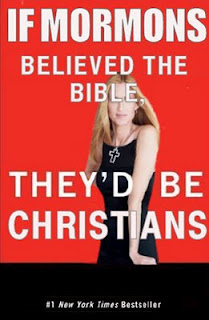


 The day is coming when hypocrites will be stripped of their fig-leaves.
 When one gets a glimpse into the evils of Romanism perpetuated in the name of Jesus throughout history, words are hard to find to express the tempest of emotions roiling within. Here, the account of Sarah J. Richardson and her years spent in the Grey Nunnery at Montreal are no exception. Incredulity, shock, grief, loathing and more will flood your heart as you read the incredible account of her years spent imprisoned in this whitewashed sepulcher, which indeed appeared outwardly beautiful, but inwardly was full of all manner of dead men’s bones and uncleanness.






 Christ Alone Wyoming