
Evangelism
Is the gospel an offer?
Is the gospel an offer?
First, what is an offer? From Webster’s 1828 Dictionary:
OF’FER, verb transitive [Latin offero; ob and fero, to bring.]
- Literally, to bring to or before; hence, to present for acceptance or rejection; to exhibit something that may be taken or received or not. He offered me a sum of money. He offered me his umbrella to defend me from the rain.
Does that sound like what the Bible describes as the gospel, something He offers up to be accepted or rejected?
After condemning the Pharisees with the parable of the tenants, Jesus tells them, (Matthew 21:43) Therefore I tell you, the kingdom of God will be taken away from you and given to a nation producing its fruit. The kingdom of God will be TAKEN from national Israel and GIVEN to spiritual Israel; God takes from one and gives to another.
Many people who claim the gospel is an offer turn to any of several places where God calls people to come to Him. In the first place, the English word, come, is an imperative – a command. When a mother tells her toddler “come here,” she is not inviting him, she’s not offering him the option; she’s commanding him. When the queen of England bids an entertainer to sing for her, everybody calls it a “command performance” because the queen issued the “invitation.” So many who call God sovereign posit Him as someone who offers and invites His creatures to come into His kingdom – as if He were less than the queen of England, less than a mother of small children.
How much more greater and grander and beyond our ability to comprehend is the Creator and Judge of all flesh? When the Lord of glory tells His chosen ones, “Come!” it is, as everyone who embraces the doctrines of grace knows, an irresistible call. When you and I preach the gospel, we try to persuade men – the general call we give (not knowing who the elect are) can be resisted or accepted. Yet our words, our persuasive speech is not what saves anyone. The Spirit of God moves as does the wind – no man controls nor is able to know for sure where He goes. And He gives life to that which was dead, and those called by God to come are no more able to say no than Lazarus was, being 4 days dead in the tomb. Jesus did not invite Lazarus to come forth, didn’t offer him another few years in the flesh. He commanded Lazarus to come forth; and Lazarus did so.
Preach the gospel to every creature, we are told. Nothing about offering the kingdom to anyone. Nothing about inviting them – compel them to come, the master of the wedding feast said. How do we compel people to come to Christ? By being faithful with our proclamation of His gospel. It is the power of God unto salvation for those who are being saved. He compels His chosen ones to come to the wedding feast.
Throughout Acts, we read of the kingdom being preached and proclaimed, not one instance of the kingdom being offered. We read in Revelation that God has made us a kingdom of priest unto Him. Of 158 occurrences of “kingdom” in the HCSB new testament, not one of them can be portrayed as being offered to anyone.
A similar survey of “gospel” shows us the same results. Of 78 occurrences, we see much about proclaiming and preaching and announcing the gospel. People hear the gospel; the gospel is confessed and presented and it is preserved. The gospel is veiled to those who are perishing (2 Cor 4:3). The gospel is established and advanced. People are called by God through the gospel. No occurrence of the gospel being offered.
Why does this matter?
If the gospel and the kingdom are offered to sinners, God is put in the position of “the anxious seller,” hoping people will accept Him. The Bible does not give any hint of God in this light. He commands the clouds where to go and drop rain, He gives life to that which was dead, He calls into existence things that do not exist.
While none of us is able to describe God comprehensively, each of us who name Christ as Lord should seek to never reduce Him in any of His attributes. God speaks and His sheep hear His voice. He needs not offer His kingdom to anyone – He gives it to whom He pleases.
The Death of Mr. Hof
Dennis Hof is dead. Many people do not know the man, but his life of vulgarity and degradation have destroyed many homes for many years. You see, Dennis Hof ran several houses of prostitution in the state of Nevada. One of the many stunts that the man offered was for veterans returning from war to give him a call. He would extend the red carpet to anybody who wanted to come to one of his businesses and treat them royalty.
In this life, we never know whose life we will touch and almost seven years to the month, this man and I met in September 2011. I was a funeral director working in Carson City, Nevada. I also served as the chaplain for anybody who did not have a minister.
One day, we received a call to collect the remains of a man who had worked on the staff of one of Mr. Hof’s houses of prostitution. The wife came to the funeral home to make the arrangements. In the process, she asked if I knew somebody who could preach the man’s funeral and I told her that I would be willing to do so.
She asked what kind of message I would preach and how I conducted funerals. I told her that I pulled no punches. I said, “Ma’am, I am a true believer in the Lord Jesus Christ first. Second, I will not allow anybody to dictate to me what I should or should not preach, even at a funeral. Third, I do not preach anybody into heaven or hell for I do not the condition of their heart. However, I will preach the truth and I always give a gospel message.”
We completed the arrangements and she stood to leave. I could tell something was bothering her and asked if there was anything else I could do.Before she left, she turned to me and said, “I am so glad I came here. There are not many who would be willing to preach my husband’s funeral, and if they would be willing, then they would not preach the truth.”

I thanked her for her time and she left the building. In just a minute though, she came back in.
“Mark, there is something else you need to know. I do not know all that my husband did at Mr. Hof’s business, but you need to know that he and several of his ladies will be at the funeral.”
At the time, I had no clue who Mr. Hof was and it did not matter to me whether he was connected to the prostitution business or not. I told this man’s wife that I would still teach the truth. She thanked me and then left. I would not see her before the funeral.
The owner of the funeral home received a few phone calls and a couple of individuals who came to inform the staff that “Mr. Dennis Hof will be attending the funeral.” The police even came to ensure us that they would be providing additional security.
The day of the funeral arrived and the funeral home chapel was packed. There were people lining every aisle and even into the side rooms listening in. The only exception to the seats being full were six or seven seats across one side at the very front and two very imposing men stood with very dark sunglasses keeping people from taking the seats.
A few minutes after the funeral was supposed to start, I had still not been given the ok to start and the front seats were still empty. A ripple of words began to filter through the assembled crowds and somebody whispered to the man’s wife. She stood and walked up to me. Leaning down she whispered, “Mr. Hof has arrived.”
I nodded that I understood and waited. In a couple of minutes, the main doors opened and 4 or 5 women dressed extremely provacatively pranced down the center of the chapel and found their seats. They were followed by a woman dressed all in black and a large man that I knew must be Mr. Hof. Coming down the center aisle, he stopped to greet several people, shook several hands, and finally took a seat right on the front row.
Looking over at me, he said, “Hey preacher-man, you can get started now.”
Several people chuckled and I knew that the service was not going to get any easier. A tradition in Nevada that is not found everywhere is allowing people to stand and offer their condolences or to share an anecdote of the person’s life. This was scheduled to take place at the very end of the service.
Praying for wisdom, I started the service. The family had selected some songs and one of the man’s daughters read a brief eulogy. When I stood to deliver the message, I knew that what I had to say needed to be said last, so I asked for friends and family to share any thoughts.
Several things that were shared are not printable and perfectly described the debauched life that the deceased must have lived. The brothel madam (Mr. Hof’s other half) stood and gave a raunchy anecdote about the man and then Mr. Hof stood to speak. He wasted no time trying to make everybody laugh and more than a few grew extremely embarrassed at what was shared.
He finally wound down and looked at me with a smirk. “I guess it is time to hear the preacher-man with the few minutes we have left.” Sitting down, he crossed his arms and stared at me.
Standing to my feet, I began.
“Thank you for your attendance today and despite the length of time that has been taken, the wife of the deceased asked me to preach a message. I will share this in its entirety.”
If looks could kill, the entire front row would have been in attendance at a second funeral.
“The Bible tells us clearly in Hebrews 9 that once a person passes away, there is a judgment which will follow.”
Over the next 30 minutes, I followed the pattern of the apostle Paul in preaching to Agrippa in the Book of Acts. God gave me the strength to preach sin, righteousness, and the coming judgment.
On the front row and possibly for the first and only time in his life, Mr. Hof and his ladies heard the truth. They heard that judgment was real and that everyone will face it at the moment of death. However, they also heard that God is merciful to those who call upon Him and repent and turn away from their sins. As I closed, I appealed to each person who was in attendance.
I looked each one of those women and Mr. Hof in the eyes as I scanned the room. In my concluding remarks, I told them that I stood ready to answer any questions they may have, but that they could not walk away and think they could make a mockery of God because ONLY the fool says in his or her heart that there is no God.
As I did in every funeral I preached (a total of 271 over 8 years), I said something like this.
“I do not know where the deceased stood before God. However, if they could return for just one more minute of life, they would implore you to make things right with God. They would tell you that heaven and hell are real. They would tell you to not put off the reality of eternity for all of us will face it the moment we cross from death into the life after.”

Mr. Hof was furious and I honestly wondered if he was going to say anything else or come to the front and accost me in some way.
I gave a final prayer and dismissed everybody. Most ignored me on the way out including most of the women from Mr. Hof’s ranch. However, one of the women stopped as if she was going to say something. Her face was a wreck from tears that ran freely down her face. She turned to walk away as Mr. Hof walked up behind her.
“Ma’am, is there anything I can do for you?”
She turned back and said with sobs, “I heard you speak the truth today, but I am not sure that I can change now. Please pray for me!”
I put out my hand and shook Mr. Hof’s hand. I told him that I would be praying that he would know the truth that I preached. He only glared at me and didn’t say another word to me. He turned on his heel and left just as the wife of the deceased walked up to me and gave me a hug.
“I know Mr. Hof is very angry right now, but I want to tell you that I am so glad you were the one preaching. Thank you for sharing the gospel. My husband was not a believer and things were not good for us the last few years after he took the job. However, I can say that all of these people needed to hear what you said.”
I told her again that I would be praying for them and with that everybody was gone. I have never forgotten the events of that day, nor have I forgotten each person that I personally interacted with that day. A man had gone into eternity and I had been granted the privilege of preaching as a dying man to dying men.
From all the news reports today, Mr. Hof died in the midst of enjoying his sin and his debauched life. Now, he faces the God of all creation and I could not help but wonder if he has ever remembered the words that I preached that day back in 2011.
Sin brings judgment and now he faces judgment alone without any of the women he sought to keep entrapped in a life of destruction. I do not rejoice in the death of this man, but pity those he left behind. I have sorrow for those he has destroyed.
Tomorrow, his family and friends will be making final arrangements for the earthly remains of Mr. Dennis Hof, but eternity has already started for his man.
Here now the Word of the Lord God –
“For I have no pleasure in the death of anyone, declares the Lord GOD; so turn, and live.” – Ezekiel 18:32
This is still the only message to be preached to unbelievers. TURN AND LIVE!
Missing in the Church
Leonard Ravenhill is the type of preacher that is needed today. Yet, many places no longer have times of prayer. Churches are kept afloat by sermonettes or entertainment, not because of the clear message of the Gospel. The Gospel is all about Jesus Christ, and not about what we bring to the equation.
May God daily, even hourly, bring His holiness to our attention so that we will humble ourselves before Him. If we are ever to see revival, which we desperately need in this day and hour, we must get back to the basics.
NOT Part of the Gospel
John MacArthur has started a new series from Ezekiel 18 entitled, “Social Justice and the Gospel.” He is very thorough and rightly concludes from Scripture that “social justice” is NOT part of the Gospel. Too many, even in evangelicalism, are being taken in by a society that thinks it is entitled. In doing so, pastors are failing their congregations by adding to the truth of God’s Word. I encourage you to listen to this series.
All for 25 Feet
Almost 63 years ago, life ended for the lack of just 25 feet.
On August 26, 2018, as I have done many times in the past, I stood on a summit called Libby Flats. This windswept plateau is located about a twenty-minute drive from the town of Centennial, Wyoming. The beautiful town is nestled at the base of the Snowy Range and boasts a population of just 270. Libby Flats is at an elevation of 10,869 feet.
As the cold winds gusted up to 40+mph, I stared in awe at the beauty of the creation surrounding our family. From a vantage point that is higher than every state east of the Rockies, it seemed as though you could see into tomorrow.
An elderly man was visiting the summit as well. Together we looked up at Medicine Bow Peak and began to ponder the brevity of life. Medicine Bow is a rocky outcrop that sits at 12,014 feet above sea level. From our vantage point just 1,145 feet below, you cannot miss the only peak that juts up from the landscape.
Yet, on October 6, 1955 and in daylight, a United Airlines flight took a shortcut to save a little bit of time. Just 25 feet from clearing the only obstacle in its flight path, the life of Flight 409 came to an abrupt and fiery end. But it was not just the ripping and shrieking of metal that hit the rocks. On board the flight from Denver to Salt Lake City were 66 souls.

Ponder that for a moment, 66 souls crossed the line from the land of the living into the vastness and never-ending continuum known as eternity. Life ended all because flight plans were not followed, life ended because a pilot thought he could get away with taking a shortcut.
In the subsequent investigation, it was learned that Flight 409 was not unique. Many pilots did the same thing. Each pilot plotted his course, but then deviated substantially from that path. The last time it happened resulted in a devastating loss of military members, normal families, and two infants.
Together, the old man and I talked about what that last moment would have entailed. In a just a couple of seconds, the pilot and co-pilot would have realized their mistake and maybe together tried hauling back on the yoke. Desperately fighting for their survival, they knew immediately that just 25 feet of unyielding rock came between them and life.
It is said that the one thing we learn from history is that we never learn from history. Life is no different today than it was 66 years ago, or even 2,066 years ago.
People are still dying from trying to take shortcuts in life. They have a purpose in life, but people think they can save time by cutting through the mountains. Instead of just flying around them and enjoying the beauty, they miss their purpose and their perspective.
I looked one last time at Medicine Bow Peak and wondered if there were areas in my life where I was on course to crash just 25 feet short. If we are not careful, we can bring ruin to our lives and even destruction by thinking we can take unscheduled shortcuts.
My dad always told me growing up that if something was worth doing, it was worth doing right. In turn, I have taught my five children the same thing. Life is short enough without getting caught up in the shortcuts that life sometimes has to offer.
Drugs, sex, alcohol, workaholic tendencies, destructive habits — all of these can seem like what you think you need to make life work. For a while, life will fly smoothly along under your wings until the moment that it all comes apart.
Plan your life accordingly. Don’t allow deliberate shortcuts to creep in and take over your flight plans. Life can be difficult, but the peaks of difficulties can be overcome.
However, you cannot fly blindly. Enjoy the reason why you are here. When your life and mine comes to an end, our epitaph should not read as an accident.
Enjoy life. Live with purpose. For the true believer, the only real purpose will be living for Christ each and every day. There is a saying I have heard since I was a child, “Only one life, it will soon be past. Only what’s done for Christ will last.”
As I pondered the brevity of life on the mountain, I also could not help but wonder where each of those 66 souls ended up in eternity. Despite what the world wants us to believe, there are only two destinations. For those without faith in Christ alone, there is only hell. For those with faith in Christ alone, a joy-filled eternity awaits those who cross from these Shadowlands into the presence of the Savior.
Evangelism
Winning souls begins on our knees
Crying out to God to hear our pleas.
O’ Lord, we pray save those who are lost
Send us near and far whatever the cost.
Can we not pray but only one hour?
Rescuing the dying in God’s holy power?
It is appointed unto man once to die
O’ for lost souls we must cry!

Will a man be willing to lose everything
For one to repent and the angels to sing?
O’ believer, the day of their salvation is at hand
What will you say to the Lord when you stand?
We are bought with a price and we’re not our own
The orders have been given and we’re not alone.
God is with us wherever we are
To be a soul-winner must be our par.
Some say that soul-winning isn’t in their DNA
Tell that to Jesus, what will He say?
Brother and sister what about you?
Remember Jesus died for you too.
Jim Kelley
Give Me Souls
Give me souls or I die
To the LORD I did sigh.
Cause me not to drift or sleep
Rather for souls I must weep.
The fields are white already
Guide my ship completely steady.
Many encompass me near & far
Winning souls must be my par.
LORD forgive my selfish report
While souls perish in Hell’s resort.
Lead me to the Rock that is higher than I
O’ God, give me souls or I die!
On my knees I come to Thee
Brokenhearted as You can see.
Take my life and let it be
Consecrated, LORD to Thee.
May my path be forever in You
Proclaiming the gospel whatever I do.
Dying to self, I must and I cry
O’ LORD, give me souls or I die!
Jim Kelley
Testimony of Salvation
Brief introduction — I had the privilege of meeting Jim when he became a member of the church my father started at RAF Fairford, England back in 1984 or 1985. Jim served and grew in that mission work while serving in the US Air Force. He would later visit me at Northland Baptist Bible College while looking at schools where he could train for the ministry. Jim lives on the East Coast now with his dear wife, and he continues to be a faithful Bible teacher as he strives to become more like Jesus Christ. Here is his testimony. It has been a blessing getting back in contact with Jim and renewing our friendship.
**************
Having been born into a Catholic family my earliest years in life for church was the Catholic church. After my dad divorced and remarried another woman the Catholic church “ex-communicated” our family. After the ex-communication we no longer went to any church.
When I was nine years old my two sisters and I were playing in our front yard when a church bus driver pulled alongside the curb and asked us if we would like to start going to church on the bus. After getting our parents approval we started going to a Baptist church.
Sunday School was fun for me because we played games and had snacks. There was no such “monster” as children’s church in those days and we would sit together as “bus kids” with the bus captain in the adult service. I didn’t pay much attention to the pastor except on occasion and I would go forward during the altar call telling the pastor that I do bad things and he would tell me that we all do bad things and he told be to back and sit down.
Eventually our parents began to attend the Sunday morning services and we sat with our parents rather than the bus kids. At this point and time I was now ten years old and one particular Sunday morning during the adult service I was pestering my sisters. My dad looked at me and told me to shut up, sit straight, and pay attention to the pastor.
My dad was a strict father and I knew that there would be serious consequences if I didn’t do what he told me to do. I shut my mouth and sat up straight, and paid sincere attention to the pastor. As he was faithfully preaching the gospel about sinners dying and going to hell and Jesus having died and shed His blood to save us the Holy Spirit of God convicted me as a lost sinner.
Now I didn’t want to go to church anymore because I was running from God and myself. A few Sunday’s after my initial “conviction” as a lost sinner the Spirit of God was impressing upon me that I needed to get saved and what was I going to do about it? I had this all happening inwardly and I started to question whether this was really God or just “all in my head.” I decided to “test” God and find out if this was really happening or not.
As the Lord was impressing upon me as to what I would do I said, “I’m going to wait until I’m grown up, and God impressed upon me that if I wait until I am grown up that I’ll grow up hard-hearted and lost. Again, the Lord was impressing upon me “what are you going to do?” I still questioned the validity of what was occurring and I said within myself, “I’m going to wait.” It was then that I sensed the Holy Spirit’s presence leaving from me and I knew that this was real.
At that moment as I was still sitting in the pew I surrendered myself to Jesus Christ and acknowledged myself as a sinner and with a true heart of repentance I placed my faith in Jesus Christ and His shed blood to wash my sins away. I didn’t understand at that moment that I had indeed been saved right then and there. I thought that I had to go forward to the altar to get saved.
When the altar call was given I couldn’t get there fast enough and when the pastor asked me why I was there I told him that I needed to get saved. He said, “excuse me?” I cried, and told him that I needed to get saved and that I didn’t want to go to hell. We knelt down at the altar and he did not tell me to repeat after him. He prayed that God would saved me and as I was praying in agreement the Holy Spirit confirmed within me that I was already saved in the pew.
When the pastor and I stood up we faced the congregation and he announced that I had just gotten saved. The pastor looked at me and asked me, “now that you’re saved what do you want to do with your life?” I told him, “I’m only ten years old and I don’t know what I want to do with my life.” The pastor encouraged me to tell the folks something since I now know Jesus. My reply was: “I just want to do what Jesus wants me to do.”
As a newborn babe in Christ at the physical age of ten I was telling everyone about Jesus. When my mom would go to the grocery store with my two sisters and myself I would tell the clerk at the check-out about Jesus. I went on and on to the point that I drove my dad crazy and one day he told me to stop talking about Jesus because he’s heard it over and over again. I stopped talking about Jesus to my dad but I never stopped talking about Jesus to others.
To God be the glory to save a sinner such as me!
Jim Kelley
Someone Like Me
I wonder if a person can truly be converted if she doesn’t understand how truly vile she is without God. Is this why many who grow up in church look the part a long time before they realize they are not truly saved? We like singing songs like, “I am so glad that Jesus loves me” as we subconciously think, After all, how could He not?
I know how easy it is to make verbal claims about “All have sinned” and “I’m a sinner saved by grace” while mentally going down the list of sins and thinking that I must be okay since I don’t do these things, all the while forgetting one of the worst sins–pride.
If you think about it, pride is probably the root of every other sin there is. If you kill someone, you are not thinking about the person whose life you are taking; you are more concerned with how you will feel after that person is not around anymore. If you have an affair, you are not worried about the family you are hurting; you are preoccupied with what will bring you pleasure. If you are a glutton, you are more than likely not thinking about anything other than satisfying your cravings. Pride and selfishness are not little sins.
I would encourage you to compare yourself to Scripture instead of to other people. When you truly see yourself in the light of God’s Word, you cannot honestly think that you are OK. You might even find yourself crying out with Peter, “Lord, depart from me for I am wicked.” Once you hit that place, you will finally understand how amazing God’s grace really is and then you will be singing from your heart, “I once was lost, but now I’m found. I was blind but now I see.
Christian & a Transgender Dialogue
In these two videos, Ryan Haines engages in a conversation with Seraphim Step. They are good friends. Seraphim identifies as a transgender individual and Ryan is a true believer in the Lord Jesus Christ.
My purpose in sharing these two videos is because, as Christians, we are called to share the truth of God’s Word. 1 Peter 3:15 reveals that we should be ready to give an answer to anybody who asks us for a reason for the hope that is within us. Peter continues though by clarifying that we are to do so with meekness and fear. Belittling those who live under the judgment of God does not show them the love of Christ. We do not have to love, like, or endorse any actions within the LGBTQ community, but we can and should share that Christ came to the earth to save sinners.
In the first of the two videos, they discuss the terms about what transgenderism is all about, and how Seraphim came to the opinion that he was trapped in a male body and has made the decision to have surgery. This surgery is for the purpose of supposedly completing the transformation from male to female. Unless your children are older, this may not be an appropriate video for them to see even though the two do not discuss anything explicit.
The second video is an open and Biblical explanation by Ryan sharing lovingly about the God of creation. He tells the viewer why and how God created two genders – male and female, and covers the Biblical mandate for marriage and the sexual relationship that was created for good.
One of the areas that I appreciated hearing from Ryan is the defining of Biblical terms such as “abomination” and what qualifies as an abomination before a holy and just God. If the term abomination is used just to define sexual immorality, the person using the term is not being faithful to Scripture. Ultimately, ALL sin is an abomination before God.
The bottom line is that true believers in the Lord Jesus Christ should be willing to reach out to those who have chosen a path that goes against the holiness of God. We can show friendship toward those who are searching for truth. God does forgive sin and He also brings healing.
What if Today Happened to You?
Today was a special service at our little mission. There was rejoicing, a time of prayer, and worship of the Most High. While we spent time in prayer specifically for the persecuted church, every part of our service, including the time of fellowship afterwards, was intended to bring honor and glory to the Lord Jesus Christ.
Each person that came today woke up to a dreary, grey, overcast sky and drove in a vehicle in a country that freely allows us to travel. But still we came.
Each person that came today had the privilege of coming to a building where we have freedom to worship as we see fit and not having to hide in a cave, or in the forest, or out on a dreary plain just to worship without fear of being reported to the authorities. But still we entered.
Each person that came today had no thoughts of any news that might or might not be taking place around the world. But still we worshipped.
Each person that came today had the opportunity to have a better understanding of what the persecuted church experiences every day. But still we prayed.
Each person that came today was reminded that there is an eternity to look forward where there will be no sin, no tears, no dying, no fears, and only joy in the presence of the Savior. But still we sang.
Each person that came today heard the truth of Scripture being boldly proclaimed that Jesus Christ alone saves sinners. But still we listened.
Each person that came today left after service to gusts of wind blowing across the parking lot, and a sky that was clearing with beautiful sunshine. But still we left.
Each person that came today read the news this afternoon that while we were worshipping, there were others who were doing the same but who did not go home for the wickedness of the heart of man was made evident as several in a Baptist church in south Texas went out into eternity. But still we grieve.

Tonight and in the coming weeks, there will be much soul-searching by many who go to services. Many parents will have concern for their safety and that of their children. Many will wonder if it is safe to go and worship with other believers, or will more lives come to an end. Many church leaders will face the daunting task of determining what kind of security they believe is necessary to help provide protection for those who come.
Yet, through the difficulty of following the news, these things remain true. The dangers are real. The reasons why this young man chose to kill will remain unanswered because he went out to eternity where he faced God as Judge.
Every day across this world, there are millions of Christ followers who live in danger of being harmed or being killed. Millions understand the risks of coming together knowing that it could be their last week. From places like North Korea, Somalia, Sudan, Eritrea, Saudi Arabia, Iraq, Iran, and many other countries, especially in the 10/40 window, there is the cry of the persecuted church. They are being harmed or killed simply because they have called on the name of the Lord Jesus Christ.
BUT still they went, still they entered, still they worshipped, still they prayed, still they sang, still they listened, still they left, and still they grieved.
The world is going to get worse. The Bible promises that this will be the case. Others will die for their faith. Others will have to determine whether dying for Christ is better than living for self. Others will have to decide if they will be bold for Christ and accept the martyr’s crown, or if they will deny the Christ who died for them and so forget that the servant is not above the Master.

What if tomorrow doesn’t take place like you think it will? What if tomorrow you are called to stand before God?
What if today happened to you?
The Biblical Gospel
This is third message I taught on evangelism last year, but forgot to post this one! 
You can listen to this message here.
Biblical Gospel. What is more important to those made in God’s image than being cleansed from the sin that stains and separates us from our Creator? Jesus said it’s more important than the whole world! And he said to all, “If anyone would come after me, let him deny himself and take up his cross daily and follow me. For whoever would save his life will lose it, but whoever loses his life for my sake will save it. For what does it profit a man if he gains the whole world and loses or forfeits himself? For whoever is ashamed of me and of my words, of him will the Son of Man be ashamed when he comes in his glory and the glory of the Father and of the holy angels (Luke 9:23-26.) If we take God at His Word, we will want to get this part right. Proclaiming His message of reconciliation is the only role He has given us in His grand plan of redemption. We can’t save anyone’s soul, we can’t know who God will save. All we can do, and it is a glorious privilege, is to be faithful with His Gospel, trusting Him to do what only He can do.
First, the gospel is not an urgent call to obey the Law, based on and extracted from the Mosaic Covenant. The Law of God demands perfect obedience and the Scriptures remind us of what we know to be true, we cannot do it (Romans 3:9-18). The Law demands to be answered, but, as an old Baptist hymn reminds us, the lost man senses something is wrong and often runs to the wrong place:
I felt the arrows of distress
And found I had no shield, no hiding place
Holy justice stood in view
To Sinai’s fiery mount I flew
But justice cried with frowning face
“This mountain is no hiding place!” 25
If we cannot answer Mount Sinai’s demand for justice, how can we face the Holy God who shakes the earth (Hebrews 12:18-29) with His demands? The holiness of God causes man to tremble (Isaiah 6) and that is what we hold up in the gospel. The Law may be useful to break the pride of some men, but the Law is not the gospel. Jesus Christ and Him crucified – the holy One of God sacrificed for sinners; that is the gospel!
God the judge provides the God-Man as the justifier; that is the mystery and the glory of God’s gospel. 1 Corinthians 15:1-8 is considered by many to be the best summary of the gospel given to us in the Scriptures.
Now I would remind you, brothers, of the gospel I preached to you, which you received, in which you stand, and by which you are being saved, if you hold fast to the word I preached to you—unless you believed in vain. For I delivered to you as of first importance what I also received: that Christ died for our sins in accordance with the Scriptures, that he was buried, that he was raised on the third day in accordance with the Scriptures, and that he appeared to Cephas, then to the twelve. Then he appeared to more than five hundred brothers at one time, most of whom are still alive, though some have fallen asleep. Then he appeared to James, then to all the apostles. Last of all, as to one untimely born, he appeared also to me.
This message proclaims the mighty work of redemption completed by the biblical Jesus; no pale, culturally relevant imitation will suffice. This biblical gospel is tied to a place in time and space, the hill and the grave-site near Jerusalem; where the Lamb of God was slain as a wrath-satisfying (propitiating) sacrifice to save sinners and make them presentable to God the Father. And, lastly, this God-Man was raised from the dead and seen by many people. The resurrection of Jesus is one of the most substantiated events of the ancient world, and it gives us the firm hope that He will raise us from our graves one day and make us like Himself and make His home among us (Revelation 21:3).
The biblical gospel recognizes that, as Jonah declared from the belly of the fish, Salvation is of YHWH! We are told that we can plant seed (which is the proclamation of the gospel – Mark 4:14), we can water (which is making disciples of those God has saved – Acts 18:27), but it is God Who gives the increase (which is the work of reclaiming ruined sinners, see 1 Timothy 1:15). People become the children of God, not according to blood, to the will of flesh or the will of man; but according to the will of God (John 1:10-13).
Within the pale of those Christians who agree that there is no other name, there are those who mistakenly think man has something to do with securing reconciliation with God. Mostly, this is the result of poor teaching, which takes a verse here and there out of context and settles in one’s mind as “gospel.” Since Scripture cannot be broken, it will not contradict itself. Therefore, we must seek to understand the whole counsel of God’s Word, not just a few “proof texts,” to rightly comprehend this most important doctrine. If anything man does contributes to his justification, to being reconciled to Holy God, then that man’s gospel is polluted, reducing the supreme work of redemption completed by Jesus to something that doesn’t quite save anyone. If the work of Jesus is not enough, nothing we can do can close the rift. We must think carefully and deliberately to weed out any shred of self-confidence or self-will regarding this most important change, of being made a new creature (2 Corinthians 5:17). Salvation is a monergistic work of God; man plays no role in being raised from the dead any more than he did in being born physically (John 3:1-8). Man is by nature spiritually dead, following after the spiritual father of fallen humanity, this according to the Word of God. Paul’s letter to the church, those who had been redeemed, at Ephesus provides an excellent summary of man’s problem and God’s redemptive answer (Ephesians 2:1-10):
And you were dead in the trespasses and sins in which you once walked, following the course of this world, following the prince of the power of the air, the spirit that is now at work in the sons of disobedience — among whom we all once lived in the passions of our flesh, carrying out the desires of the body and the mind, and were by nature children of wrath, like the rest of mankind.
But God, being rich in mercy, because of the great love with which he loved us, even when we were dead in our trespasses, made us alive together with Christ — by grace you have been saved — and raised us up with him and seated us with him in the heavenly places in Christ Jesus, so that in the coming ages he might show the immeasurable riches of his grace in kindness toward us in Christ Jesus. For by grace you have been saved through faith. And this is not your own doing; it is the gift of God, not a result of works, so that no one may boast. For we are his workmanship, created in Christ Jesus for good works, which God prepared beforehand, that we should walk in them.
This passage shows that there is no “demilitarized zone” in the spiritual realm; one is a child of Satan unless and until God gives new life and faith to the sinner, adopting him as His child. We who have been chosen by God to be reconciled to Him by His gift of grace, were chosen for this redemption before the foundation of the world, just as those who were left to serve and worship the beast, who was allowed to make war on the saints and to conquer them. And authority was given it over every tribe and people and language and nation, and all who dwell on earth will worship it, everyone whose name has not been written before the foundation of the world in the book of life of the Lamb who was slain (Revelation 13:5-8). This is seen again a few chapters later as people who marvel at the beast are described as the dwellers on earth whose names have not been written in the book of life from the foundation of the world (Revelation 17:8).
Christians were chosen and given saving grace in Christ before the foundation of the world (1 Timothy 1:8&9; Ephesians 1:4), predestined for adoption as sons through Jesus Christ according to His will (Ephesians 1:5), and we were formed and predestined for good works (Ephesians 2:10). There is no biblical support for man choosing to save himself or for a saved man to continue in sin with no concern for being obedient to his Savior and Lord. When we recognize that God saves sinners, and we do not, the pressure is off us. Our mission is to proclaim His gospel. He has given us the means, planting and watering, and reserved the ends, spiritual life, to Himself. How wretched the is the Christian who thinks he failed to save some because he said something just less than perfect!
We must embrace the truth of Scripture, even if it goes against what we’ve learned from our favorite author or preacher. For the word of God is living and active, sharper than any two-edged sword, piercing to the division of soul and of spirit, of joints and of marrow, and discerning the thoughts and intentions of the heart (Hebrews 4:12). God’s Word is sharp and, as wielded by the Holy Spirit, cuts like a scalpel, bringing healing to our broken souls. False teaching is seen as less threatening, like a butter knife. And it works the same way, tearing the flesh as it pierces, bringing destruction rather than healing. Good counsel presents the truth of Scripture; this is biblical love, even though our beloved traditions may have to be abandoned.
Many claim the gospel is summed up in John 3:16. Let us briefly examine this verse to see if this is so, as good Bereans. Here’s the verse, from the King James: For God so loved the world, that he gave his only begotten Son, that whosoever believeth in him should not perish, but have everlasting life. That settles it for many, who do not stop to take note of the context or see if the words may have had a different meaning when written 500 years ago than they do today. But contrary to a popular hermeneutic which declares, “when the plain sense of Scripture makes common sense, seek no other sense,” the plain sense of Scripture often contradicts the true meaning of Scripture and our common sense often makes no heavenly sense. The genre of the text we are reading will indicate how we are to read it: poetry and apocalyptic books cannot be taken literally, and even historical narratives are full of word pictures that must be interpreted rightly to get God’s view of His Scriptures. The Jews of the first century had common sense and they took certain prophecies in the plain sense. This caused them to look for a king like David, a man of war, and miss the true meaning of their own Scripture.
In regards to John 3:16, let us examine a couple of key words upon which the meaning of this verse hang. In English, the word “so” can be either an adverb or an adjective. We see it in verse 14: And as Moses lifted up the serpent in the wilderness, even so must the Son of man be lifted up (KJV). Here, the word “so” is an adverb, meaning “in like manner” or “in the same way,” describing the nature of something. Many people think the word “so” is an adjective in verse 16, describing the degree of the thing that follows: God loves the world SO much. The problem with this view is that the Greek word translated as “so” in English (houtos – Strong’s #3779) is rarely used as an adjective. Strong’s Greek and Hebrew dictionary defines it only as an adverb. Houtos shows up more than 200 places in the Greek New Testament. In only four occurrences it is definitely an adjective: Galatians 1:6; 3:3; Hebrews 12:21 (houto); and Revelation 16:18. In more than 97% of the uses the word houtos is an adverb.6 Now looking back to John’s gospel, let us read a little more for context:
John 3:14-16 (KJV) And as Moses lifted up the serpent in the wilderness, even so must the Son of man be lifted up: That whosoever believeth in him should not perish, but have eternal life. For God so loved the world, that he gave his only begotten Son, that whosoever believeth in him should not perish, but have everlasting life.
Is there a compelling argument that John’s use of houtos changes from the common adverb in verse 14 to the extremely rare adjective in verse16? If its use in verse 16 is as an adjective, the Bible tells us God loved the world to such a great degree that He sent Christ to die for the same world He said we are not to love (1 John 2:15). Since Jesus said Scripture cannot be broken (John 10:35) we must interpret Scripture with Scripture and lean not on our own understanding (Proverbs 3:5), even if the plain sense makes common sense to us. Our common sense is our understanding, not God’s. I do not have space here to examine “the world” and how it is used; but since not everybody at all times in every nation, tribe, and tongue has been forgiven, it is reasonable and in keeping with Christ’s high priestly prayer in John 17 that Jesus did not come to save the whole world in the comprehensive sense some assert. As noted in Ephesians 5:25, Jesus gave His life for the church, not everybody in the world. And since “the world” often means a region (Luke 2:1; John 12:19), or the system which lies under Satan’s rule (John 15:19; 17:13; 1 Corinthians 2:12), we have no reason to assume this term means everyone everywhere as regards salvation, as the Lamb of God died for the redeemed, not the damned.
Here’s this passage from John 3 in the Holman Christian Standard Bible:
Just as Moses lifted up the snake in the wilderness, so the Son of Man must be lifted up, so that everyone who believes in Him will have eternal life. “For God loved the world in this way: He gave His One and Only Son, so that everyone who believes in Him will not perish but have eternal life.
This is more in line with the common use of the Greek and keeps consistency within the passage and with the whole teaching of the redemptive work of the Lord Jesus. The ESV has a note in the margin agreeing with the HCSB on verse 16a.
If Christ died for all people, either hell is not a place of wrath poured out on sins (because people there had their sins paid for by the One Whose death satisfied the Father’s wrath and wouldn’t pay again) or the blood of Christ is not truly sufficient to save anyone or does not satisfy the Father’s wrath (as not everyone gets saved). Each of these consequences of that perspective contradict clear teachings in Scripture. Therefore, we can strenuously teach and believe that when Jesus says He gave His life for His sheep (John 10:11) and He gave Himself for the church (Ephesians 5:25) He meant exactly that!
If man is free to resist, God is not free to act, for He is bound by man’s freedom. If God is to be free to act, man must be bound by the will of God. … But in a fallen world, God’s grace must be irresistible or man’s will can remain forever opposed to God, and the will of the creature overrides the will of the Creator. (Arthur C. Custance, The Sovereignty of Grace)
“No one can come to me unless the Father who sent me draws him.” (John 6:44) The Greek word behind “draws” conveys the notion of dragging. The gracious act of the Holy Spirit giving life to that which was dead is overwhelming; it’s irresistible, just as when Jesus commanded Lazarus, by name, to come out of the tomb. The man, who had been dead four days, responded to the call of Christ, and rose up and came out of the grave; alive again. No one can come to the Father of his personal volition; all are useless and dead in sin. No one can refuse the call of the Father; though he may seek refuge in the belly of a big fish. God’s will shall be accomplished in this grand redemptive plan of His; Christ Jesus will have His full reward for the suffering He faced on their account.
When we proclaim the gospel to lost people, we don’t have to tell them God loves them and has a wonderful plan for their lives. We don’t have to believe that God will save the ones we are speaking to. We have to be faithful to His gospel – Jesus came to save sinners, repent and believe on Him! His Word and His Spirit will do the work of saving souls. We are blessed to be able to participate as workers who are nothing, as Paul referred to himself and Apollos as those who planted and watered.
For I delivered to you as of first importance what I also received: that Christ died for our sins in accordance with the Scriptures, that he was buried, that he was raised on the third day in accordance with the Scriptures.
As an aid in help man see the biblical case for the awesome work God does when a sinner is redeemed, theologians have developed a systematic theology (a process of taking the whole counsel of God into account) of salvation.
- Order of Salvation (Ordo Salutis)
Predestination – As it refers to the elect, God did, in eternity past, chose who He would save. By default, all not so chosen are left to their sinful desires and predestined to eternal torment. (Ephesians 1:3-14)
Effectual Calling (Regeneration) – While God’s choosing of His elect took place before the foundation of the world, each of us was called and born again in time, as the Holy Spirit worked by the sowing of the Word. In Mark 3:13 we see the effective call of the apostles, Jesus called those whom He selected. How much more valuable is the call to salvation, and yet many declare man chooses. Only those with ears to hear, those whose names were written in the Lamb’s book of life before the foundation of the world (Rev 13:8), hear and respond to the call – our nature being changed so we could hear and joyfully answer (Matthew 22:8-14; 2 Timothy 1:9). As Conrad Mbewe put it, making sure we get the sequence right: “We’re born again in order for us to repent & believe; & not that we repent & believe in order to be born again. Regeneration comes first!”8
Faith/Repentance – The soil having been prepared, the seed having been sown, true growth – root and fruit – begin to emerge. As the Spirit of the living God gives ears to hear, so He gives faith & repentance to God’s elect only; and without fail (Mark 4:10-20; Acts 20:17-21).
Justification (Legal Declaration) – Those whom God chose and called and brought to faith & repentance, He declares to be NOT GUILTY! No, that’s not enough. He declares us to be RIGHTEOUS! Our legal system lets people off with the lower standard; God’s justice demands perfection and the earned righteousness of Christ is credited to each of our accounts, irreversible. The calling of God is without repentance; no undoing what He has predetermined to do. His will is what history records (Romans 3:27 & 28; 8:29 & 30).
Adoption – Herein is the kindness of God towards those He has redeemed. Knowing we are weak minded and forgetful, creator God adopts us into His family! No longer strangers, we are sons and daughters, joint heirs with Christ Jesus (Romans 8:14 & 15; Galatians 4:3-7; Ephesians 1:3-6).
Definitive Sanctification – That fertile soil allows the seed to sprout and put down roots and begin “above ground” growth. There will be evidence of being made a new creature in Christ. We do not have a litmus test of tongues or other gifts, but we do expect to see some evidence, as no one born again by the Spirit of God can be unchanged (2 Corinthians 5:17; Mark 4:20).
Progressive Sanctification (Preservation of the Saints) – As we mature in Christ, our appetites change. Things that used to appeal to us and draw us into sin are less attractive; the Truth of Scripture that proclaims the glories of God and sinfulness of man nourish our souls, whereas they used to repel our flesh (Hebrews 12:1 & 2; 1 Thessalonians 5:23 & 24).
Glorification – At the end of all things, we will be made like our Savior, free from temptation and unable to sin (Philippians 3:17-21).
With each aspect of this Ordo Solutis, God is the one who either does it outright or enables us to cooperate with Him in the work. There is nothing we do outright; God is the source of all good and we have nothing that He has not given us (1 Corinthians 4:7).
The Biblical gospel – one of the marks of a biblical church; and that’s what a Baptist church should be.
Real Christian Love for Homosexuals
This is a gracious message from John MacArthur on the matter of homosexuality. There is forgiveness that is found in Jesus Christ.
Salvation is of the Lord!
Authentic Evangelism and Its Counterfeit
Of all the charges we have been given by God, is there any more serious and important than the gospel? If we rightly believe that  reconciliation of sinners with holy God is the most vital part of life, then the role given us by God in His grand redemptive plan must be worthy of our close attention. It is call to properly understanding and proclaiming that gospel our author strives to impress upon the reader in this fine book.
Seiver’s book is presented in 3 parts, focusing on the necessity of evangelism, the biblical pattern for evangelism, and the theological foundation for evangelism – which takes up the largest space in this book. This reflects what should be common knowledge among the children of God – our practice in all things related to our faith is informed and formed by what we think of ourselves and of God; our theology. This is why, for example, the first 11 chapters of Romans is a seminary in theology and the last 5 are how it works out in the lives of individuals and the local church.
One statement from the introduction that sticks out – the gospel “is not even primarily about sinners going to heaven when they die. It is about the manifestation of God’s glory in the contrivance and execution of the plan of redemption.” Being reconciled to God, being with Him in a state of being unable to sin, showing forth the glorious saving grace found only in Christ Jesus – that is the great prize. Since the Bible tells us (Mark 4 – parable of the seeds) that good soil will produce much fruit, and that the seed is the Word of God, we conclude two things that Randy puts before us: The Gospel is God’s message, not ours; and the fruit produced by our message will reflect its source. A false gospel will produce false converts – God promises to attend the proclamation of His Word, not the “wisdom of man”.
Part 1 defines Calvinism, Arminianism, and these views affect evangelism; about which he says, “We can define evangelism as the proclamation of the good news that God has universally published his terms of peace … this proffered pardon is not based in any sense on the sinner’s willingness to return to God or on his believing acceptance of the terms of peace. Pardon is based solely on Jesus’ redemptive accomplishments on the sinner’s behalf.” Our author bids us cast aside our traditions and concepts and jargon that is not found in the Bible; this should be solid ground but I have been amazed at how few people agree with the idea or with working it out to align with Scripture. This will be the rub for many who read this book. I would encourage anyone interested in the idea of biblical evangelism to take and read.
Bottom line from part 1: “People become effective evangelists when they are so filled with the knowledge of God’s glory and of his truth that they simply cannot be quiet.” That is what the Bible records and that is very good counsel.
Part 2 opens with this jewel: “Whenever we search for a biblical pattern for any aspect of the church’s life and ministry we need to understand that such a pattern is established in the didactic passages of the New Testament Scriptures, not in the historical and hortatory passages.” I dare say that many of the errors so prevalent in church life today are the result of normalizing narratives. Combine that with the long ending of Mark and you have people handling snakes and drinking poison as if commanded to do so by God to demonstrate faith in Him. As you read the chapters in this part, your thoughts of evangelism will likely be shaken, as many of the practices in our churches are not found in the Bible, but are established only as traditions of men. Randy sums much of this section up with this: “the message preached to the unconverted included no call for them to believe that Jesus died for them. It simply demands that sinners leave their sin and their wicked and misguided thoughts about God and return to his way. It assures them that when they account God to be faithful to keep his promise, he will pardon them in Jesus’ name (by his authority and through his merit).”
Part 3 is the longest, focused on the proper theology behind evangelism. He spends time presenting a biblical view of God and tells us, “It is never right to conclude that God is unfair [unrighteous] because he did not act in a way that meets our standard of right and wrong.” It is OK for the Christian to admit he doesn’t understand something; it is flat out wrong to say something clearly taught as God’s will is not right. We are reminded of our main goal in life – the glorify our God, and our author highlights how ur gospel proclamation fits into this: “We preach the gospel because it is in line with God’s great purpose—that is, to make his glory known in the earth.” What can be more glorious than the displayed mercy of holy God as He redeems sinners and makes them fit for His house? If some do not hear our message, we do not lose heart – our goal is to be pleasing to our Savior. He bids us to sow the seed He has given to us, not to presume to know or determine the nature of the soil into which we sow.
This section of the book covers other topics, such as the authority of Scripture, the nature and purpose of salvation, God’s eternal purpose, repentance and faith, and conferring assurance.
You are likely to disagree with some of Mr. Seiver’s conclusions or the details of this or that. But unless you want to sit in judgment on God, you will find yourself in vigorous agreement with his over-arching thrust – salvation is of the Lord!
Captive to the Word of God
Now available on Amazon, Barnes & Noble and other fine bookstores. In four parts, Captive to the Word of God examines the history of Baptists and the distinctives that mark them; how Baptists  fit into and should view reformed theology; a Baptist view of the covenants in Scripture; and what these theological and doctrinal concepts look like when practiced in a local church.
Here’s what people are saying about this book:
As a fellow Baptist I am extremely grateful to Stuart for writing and publishing this well written and well researched book. When God drew me out of the mediocrity of American Evangelicalism in 2004 I had the Word of God and works of Luther, Calvin, Sproul, Pink, Packer, Boice, Clark, Edwards, Owen, Horton, Spurgeon, and Bunyan to wade through in an attempt to get a grasp on what Stuart has clearly organized and presented in this fine work. In the above list of names only two of them are Baptists (Spurgeon and Bunyan). I did learn much of my Reformation Theology from all those listed, but I learned how to get things right Biblically through the teachings of those two men. If I had had this book back then it would have been most useful! Why? Stuart gives us the history of the Baptist very succinctly and then history of the Reformation itself and why it was necessary. In part 3 Stuart gives us the proper interpretation of Covenant Theology by Baptists which keeps us from the errors made by so many in todays mess of Evangelicalism. Lastly, Stuart gives us proper soteriology in Part 4 which is sadly missing in our day, which is a large part of why Evangelicalism has lost its way.
I highly recommend Stuart L Brogden’s new book to you. If you are being drawn by God to know Him and your role in His Church then this book is a wonderful place to start. You won’t be disappointed.
Jon J. Cardwell, pastor of Sovereign Grace Baptist Church, Anniston, Alabama and author of Christ and Him Crucified
As we live in times of enormous dysfunction, disagreement, and even disunion in local gatherings professing to have faith in Jesus Christ, Stuart Brogden’s voice rises in the wilderness as a servant and workman of Christ who, by God’s grace and in His providence, has been made manifest among us. Although his message is couched in a Particular Baptist perspective, the underlying theme of his treatise is found in the main title of his book: Captive to the Word of God. A thorough and thoughtful passion for God’s Word has always been needed by the Christian believer, and today, more than ever. Too many, these days, are departing from their First Love, Jesus Christ, because they have divorced who He is and what He has done from what has been written of Him from Genesis to Revelation. Whether you identify with Baptists or not, Stuart Brogden provokes us to love God’s Word unto loving Christ… and loving Christ and His holy Word as much as a sinner saved by grace is able, by God’s grace.
Rev. Jeff Canfield, D. Min., Pastor at Word of Life Church, Sullivan, Indiana and author of A Call to Honor and When Church and Government Collide
Stuart Brogden’s excellent work, subtitled, A Particular Baptist Perspective on Reformed and Covenant Theology, is not only rich in church history, but also in theological substance. Mr. Brogden details the Baptist view of Reformed and Covenant Theology in a scholarly and authoritative manner. Without a doubt, this work should be considered a necessary addition to any serious theological student’s study library, as well as a wonderful resource for any pastor, teacher, or professor.
Jeffrey D. Johnson, pastor at Grace Baptist Church, Conway, Arkansas and author of The Fatal Flaw of the Theology Behind Infant Baptism
Eliza Spurgeon told her son: “I have often prayed for your conversion, but I never thought you would become a Baptist.” With his quick wit, the young Charles responded: “Mother, that shows you that God has not only answered your prayers, but has done exceeding abundantly above all you asked or thought.” Like Charles Spurgeon, I am joyful to be a Baptist but concerned we have lost sight of what it means to be a Baptist. With confessions of faith being stored in the attic as archaic relics of the past, it is no wonder that the labels defining denominational distinctives are being dropped from churches’ names. To recover the Baptist name, it is vital that we recover the historic Baptist distinctives. For this reason I cannot recommend Captive to the Word of God enough. Stuart Brogden covers all the major components of the Baptist faith and traces every doctrinal tenant back to the Scriptures. Above everything else, Brogden explains why Baptists are called “people of the book.” In my opinion, this helpful work needs to be required reading for all Baptist seminary students. In fact, everyone who wants to know what it means to be a Baptist should read this book. Since I love the historic Baptist faith, I love this book.
Click the pic or the link to be taken to the Amazon page. Also, now available on Kindle!
My goal in writing this is to examine my own beliefs, strengthen my fellow Baptists, provoke fellow Christians to think biblically, and be a faithful steward of all the Lord has given me. My goal in life is to serve our God for the glory of His name and the good of His people, and to be remembered by my family and our God. May all who have benefited from anything I have said or done forget my name; may it be the name of the Lord Jesus that is remembered. A more excellent way to sum this up was written by an 18th century pastor, William Mason in his booklet, The Believer’s Pocket Companion:
The design of my writings is to stir up and quicken the Lord’s children in the way of . . .
greater trust in Christ,
more intense looking to Christ,
greater dependence upon Him,
and more consistent abiding in Him
- so that they may . . .
enjoy more sweet fellowship with Him,
find more of the His inestimable preciousness,
and experience more of His wonderful love, which surpasses knowledge.
Amen and amen!
Billy Graham’s Gospel
Many people have benefited from Billy Graham and many of those never examined what Graham has been teaching these many decades. We read in the Word of God this brutal judgment:
I am astonished that you are so quickly deserting him who called you in the grace of Christ and are turning to a different gospel— not that there is another one, but there are some who trouble you and want to distort the gospel of Christ. But even if we or an angel from heaven should preach to you a gospel contrary to the one we preached to you, let him be accursed. As we have said before, so now I say again: If anyone is preaching to you a gospel contrary to the one you received, let him be accursed.
Here is a 40 minute review of Billy Graham’s gospel and how it compares to the biblical gospel. Contrary to those who consider Billy Graham to be their pope, may this sermon open your eyes. (Note – the preacher errs in thinking law is part of the biblical gospel – that is as wrong as Graham’s gospel.) http://www.sermonaudio.com/playpopup.asp?SID=86111517593
Evangelism by the Book
The book I mentioned last time is called Just Do Something: A Liberating Approach to Finding God’s Will. Highly recommended. The author is Kevin DeYoung.
Evangelism: When We Scatter. I call this lesson Evangelism by the Book. Last time I reviewed several methods used by many people that simply are not evangelistic. This week, we turn to the Word of God to see how we should go about this holy task. Paul’s letter to the  Colossians helps. You can listen to this message here.
Continue steadfastly in prayer, being watchful in it with thanksgiving. At the same time, pray also for us, that God may open to us a door for the word, to declare the mystery of Christ, on account of which I am in prison— that I may make it clear, which is how I ought to speak. Walk in wisdom toward outsiders, making the best use of the time. Let your speech always be gracious, seasoned with salt, so that you may know how you ought to answer each person (Colossians 4:2-6).
With Paul’s persistent desire to take the gospel to all the world, he asked a gathered group of God’s people to pray for him to have the open way to keep on proclaiming the gospel. Wanting the saints at Colossi at Arpelar to work with him in this endeavor, he told them and us to be wise in how we engage lost people, always speaking truth with grace to each person. We are ambassadors of His gospel not one of our own choosing; we should seek to honor Him as we scatter to take His message to our area and the world.
One of the major purposes we are left on this planet after being raised from spiritual death is to take the gospel to every nation, tongue, and tribe; being evangelists and ambassadors of reconciliation. We need to clarify what evangelism, having spent time reviewing what it isn’t. Ephesians 4 teaches that the local church is to be equipped so the sheep will not be tossed about by the wiles of men. YHWH tells us, So Jesus also suffered outside the gate in order to sanctify the people through his own blood. Therefore let us go to him outside the camp and bear the reproach he endured (Hebrews 13:12-13). By this, God means we are to go therefore and make disciples of all nations (Matthew 28:19); making disciples of those that have answered the call. Evangelism is our outward work; discipleship is our inward work. No church is healthy unless she is active and obedient in both endeavors.
Continue reading
Evangelism – what it is NOT
I recently began a short, 3-part series on evangelism. Week 1 is what evangelism is not, week 2 is a look at biblical evangelism, and week 3 is a look at the biblical gospel.
These are the points in lesson one on evangelism – what it is NOT:
Evangelism is not inviting people to church nor is giving your testimony of how the Lord saved you.
Evangelism is not telling people about your church or pastor nor is it providing food and shelter to those in need.
Evangelism is not praying for people nor is it leading them to pray to receive Christ.
Evangelism is not telling people they are sinners nor is it pressing the “10 Commandments” on them.
Evangelism is not telling people Jesus loves them nor is it telling them God has a plan for their lives.
Evangelism is not befriending lost people in hopes they will see Jesus in you nor is it telling them to ask Jesus into their hearts.
Evangelism is not 4 spiritual laws nor is it presenting evidence that demands a verdict.
Most Baptist would have my head on a pole for this.
You can listen to that message here if you wish. There’s much more than just these points in the message.
The Shepherd and His Sheepdogs
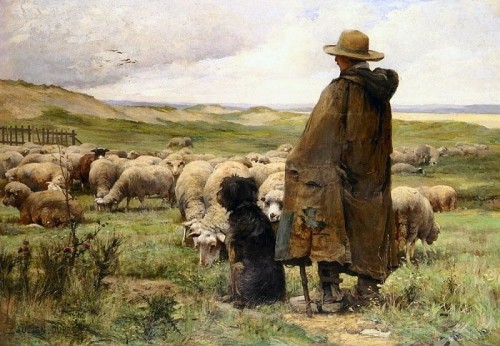
One of the things I am passionate about is closing the gap between Evangelists, Pastors, and Teachers within the body of Christ. We have become so segregated in our roles that it is almost as if they never overlap. The Pastor is in charge of the sheep, and the Evangelist is in charge of bringing the lost sheep into the fold. My dear readers, this is wrong! Just as equally wrong is the idea that the Evangelist is incapable of preaching on any other topic other than evangelism, that the burden of biblical counseling should only be left upon the head Pastor, or that Eldership belongs only to the pastors or teachers of the congregation. In accordance with Ephesians 4:11-15, I would encourage all of us to view the roles/gifts these kind of men bring to our local congregations and the universal body of Christ.
I remember an illustration a famous preacher gave one time about how the sheepdog is like the Evangelist that barks at the sheep and the sheep run into the sheepfold. Meanwhile, the sheep are taken care of by the pastor(s) of the flock. I submit to you that I have a better illustration. The Evangelist and the Pastors and Teachers are all sheepdogs. And whether they hold to the office of Elder within a particular church or not, they are going to be called by God to gather the lost sheep, rally the sheep, guide the sheep, discipline the sheep, and keep the sheep bonded in the unity and fellowship of the Holy Spirit. But you know what, they do it all underneath the command of The Shepherd! Don’t miss this point. The Shepherd guides and gives commands to the sheepdogs as to what He wants, in accordance with His will. Let me further explain what I mean.
When I visited a farm in Washington, they were having a Scottish Border Collie demonstration. They showed how these dogs rally the sheep and guide them into the sheepfold underneath the command of the shepherd. The shepherd would whistle and call out commands that would inform the dog to run, lie down, or walk at a specific pace or in a certain direction. It is really a sight to see. I wanted to upload the video I captured, but my phone crashed before I could. So I could only find this video to give some visual illustration of what I am talking about. If you watched the video, you will notice that even though the dog may have some natural instinct on what to do, the sheepdog, nevertheless, must still be underneath the guidance and direction of the shepherd. And this is where Ephesians 4:11-16 comes in.
In the work of the ministry, all those who are gifts to the body as Ephesians says overlap in some way concerning their work among the sheep. I hope to write a book about how the Evangelist needs to be reclaimed and reintegrated back into our local churches, but for now, understand that true Evangelists are not lone wolves. They are sheepdogs, just like the pastors and teachers, among the body that listen to the voice of The Good Shepherd, my Lord Jesus. Although there can be street preachers who may not necessarily be Evangelists in accordance with Ephesians 4 (which isn’t a bad thing), and there may be some who claim to be Evangelists but preach a false gospel and disdain the body of Christ (which is a bad thing), an Evangelist called by God will fulfill their ministry not just by calling the lost to repentance and bringing people into the fold, but by building up the body, perfecting the saints, teaching sound doctrine, and many other things that seem to be only “the pastors job.”
If you think about this, this is one of the reasons why the plurality of Elders is not just biblical, but essential wisdom. I strongly assert that Evangelists are an essential piece on God’s chess board. Even if it was just one man in a small congregation, he should nevertheless do the work of an evangelist (2 Tim 4:5). Also, even though an Evangelist may be typified by church planting, missionary work (local or overseas), and/or proclaiming the gospel among the heathen in the local area, the pastors and teachers among us should be doing some of the very same things! And if you’re thinking consistently about the Great Commission, every Christian is called to do their part in the work of making disciples. But regarding our ministerial duty to the body, as sheepdogs, we are called as a team that heeds the voice of our Shepherd to do the joyous labor of serving the body while we endeavor in the very same mission. And whether it is building up the body by adding to the church, or by edifying and perfecting those already added, Evangelists, Pastors, and Teachers must rally together more than ever underneath the sound of Jesus’ voice to protect, guide, unify, and edify His sheep.
I am pleading with those of you who are leaders to stop putting Evangelists in the evangelistic sand box to play outside the church as if that is their sole domain. We can do better than this! There are many Evangelists who are fit to lead and exegete the Scriptures and can provide relief to their fellow sheepdogs. Their heart may lie in a passion for lost souls, but that doesn’t mean they don’t have a passion for God’s people either. We may differ in personalities, strengths, and abilities, but so do the many of pastors and teachers in our congregations. Evangelists are no different. We desire to train and build up and lead the sheep just as much as any of the others who are called to the work.
One thing I remember about my time at that farm was all the sheepdogs on the sidelines, chained to the fence, aching to get in the field and work among the sheep. They were zealous, eager, knowledgeable, and would jump up and down while they watched their fellow sheepdogs do the work they were also bred for. But when they were let loose, they all attentively obeyed the voice of the Shepherd. And if either them stepped out of line, or did not obey, they would be disciplined just as much as the sheep. And this applies to all sheepdogs! Some of us have been standing on the sidelines waiting for our local congregations to let us join in on the work for too long. Although anyone called by God will fulfill their calling whether blind leaders recognize it or not, they nevertheless desire to work hand in hand with other sheepdogs. The problem is, we have too many wolves in the pulpits who desire to devour the sheep and not obey the voice of the Shepherd. And unfortunately, there are too many goats that don’t mind serving themselves up on their plate every Sunday.
But that aside, if you are reading this, and you are a leader/elder/pastor among your congregation, I plead with you to join arms with your fellow sheepdog, the Evangelist. I’d love to help you on how you can best approach this. You can contact me here, and we can correspond through email. Or if you are reading this and you feel like you are called as an Evangelist, I would love to help you to study thoroughly what that means and equip you to know how you can support and approach your local church. You can also contact me here. Keep in mind, though, that in some churches, their ecclesiastical government may require that you submit underneath the Eldership. In other congregations, the Evangelist may be appointed as one of the Elders. But whatever government your church may have, one thing remains true – there are sheepdogs that are eager and called to do the work of the ministry within the body of Christ. Some are already obeying the voice of their Heavenly Shepherd. As a church, as leader, as a Christian, will you do the same?
-Until we go home
 Christ Alone Wyoming