The Primacy of the Abrahamic Covenant

Why does it matter how one views the covenant with Abraham? Are there actually different views Covenant Viewon it? My experience leads me to believe that most folks don’t really think too much about such things. Yet this singular item is, in fact, the biggest wedge between Reformed Baptists and our Presbyterian brothers.

As pointed out in this book review, the matter of covenants in the Bible and how one looks at and considers them makes a huge difference in myriad other doctrines that sprout forth. To help understand this issue further, I commend this sermon by Jeffrey Johnson, on the topic of the Abrahamic Covenant.

In addition to Johnson’s wonderful book, I recommend this new addition to anyone’s library.

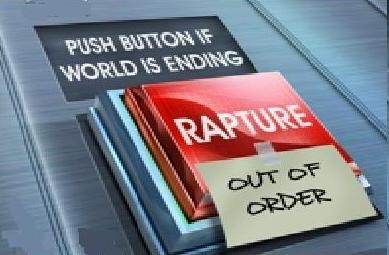
Is the Pretribulation Rapture Biblical?

Is the Pretribulation Rapture Biblical?

Brian M. Schwertley

One of the most popular teachings today in Evangelical and Charismatic pretribchurches is the doctrine of the pretribulation rapture. The pretribulation rapture teaching is that there are two separate comings of Christ. The first coming is secret and occurs before the future seven year tribulation. At this coming Jesus comes for the saints (i.e., all genuine believers) both living and dead. These saints meet the Lord in the air and then are taken to heaven to escape the horrible judgments that take place during the seven year tribulation. At the end of the great tribulation Jesus returns to the earth with the saints. This coming is not secret but is observed by all. At this coming Christ crushes His opposition, judges mankind and sets up a one thousand year reign of saints upon the earth (the millennium). Some pretribulation advocates speak of two separate comings while others prefer to speak of one coming in two separate stages or phases (phase one is the secret rapture and phase two is the visible coming in judgment). Hal Lindsey likes to refer to the rapture as “the great snatch.” He writes: “The word for ‘caught up’ actually means to ‘snatch up,’ and that’s why I like to call this marvelous coming event ‘The Great Snatch’! It’s usually referred to as the ‘Rapture,’ from the Latin word rapere, which means to ‘take away’ or ‘snatch out.’”1
     Although the pretribulation rapture doctrine is very popular and is even considered so crucial to Christianity that it is made a test of a person’s orthodoxy in some denominations, Bible colleges and seminaries, the exegetical and theological arguments used by its advocates are all classic cases of forcing one’s theological presuppositions onto particular texts (eisegesis). The purpose of this brief study is to show that the pretribulation rapture theory is not plainly taught or directly stated in any place in Scripture, cannot be deduced from biblical teaching, contradicts the general teaching of the Bible regarding Christ’s second coming and was never taught in any branch of the church prior to 1830.


The Origin of the Pretribulation Rapture Teaching

Whenever a Christian encounters a doctrine that has not been taught by anyone in any branch of Christ’s church for over eighteen centuries, one should be very suspect of that teaching. This fact in and of itself does not prove that the new teaching is false. But, it should definitely raise one’s suspicions, for if something is taught in Scripture, it is not unreasonable to expect at least a few theologians and exegetes to have discovered it before. The teaching of a secret pretribulation rapture is a doctrine that never existed before 1830. Did the pretribulation rapture come into existence by a careful exegesis of Scripture? No. The first person to teach the doctrine was a young woman named Margaret Macdonald. Margaret was not a theologian or Bible expositor but was a prophetess in the Irvingite sect (the Catholic Apostolic Church). Christian journalist Dave MacPherson has written a book on the subject of the origin of the pre-tribulation rapture. He writes: “We have seen that a young Scottish lassie named Margaret Macdonald had a private revelation in Port Glasgow, Scotland, in the early part of 1830 that a select group of Christians would be caught up to meet Christ in the air before the days of Antichrist. An eye-and-ear witness, Robert Norton M.D., preserved her handwritten account of her pre-trib rapture revelation in two of his books, and said it was the first time anyone ever split the second coming into two distinct parts or stages. His writings, along with much other Catholic Apostolic Church literature, have been hidden many decades from the mainstream of Evangelical thought and only recently surfaced. Margaret’s views were well-known to those who visited her home, among them John Darby of the Brethren. Within a few months her distinctive prophetic outlook was mirrored in the September, 1830 issue of The Morning Watch and the early Brethren assembly at Plymouth, England. Early disciples of the pre-trib interpretation often called it a new doctrine.”2
 Read the rest of this article here.

Responsibility of Elders

My church held a conference on church membership last fall. We had several well known speakers, Captureincluding Michael Horton, our own Voddie Baucham, Ken Jones, and Thabiti Anyabwile from Grand Cayman.

Here is Thabiti’s most excellent message on the responsibilities of those who serve the local church as elders: Responsiblity of elders

When Will Christ Return?

When Will Christ Return?

A defense of Reformed A-millennialism

by Dan Harrisimages

Taken from http://www.mountainretreatorg.net in compliance with their copyright.

Introduction

When will Christ return? Will He return before or after the Great Tribulation? This is a question that has baffled many, and has been the source of much debate among Christian groups. Historically, there were as many, or more who believed in a post-tribulation return of Christ as believed in a pre-tribulation return of Christ. Today, with the tele-popularization of dispensational pre-millennialism by tele-evangelistic groups, including those of Pat Robertson, Billy Graham, Jerry Falwell, Ed Dobson, Jack Van Impe and John MacArthur, by the growth of the charismatic movement, by the popularity of the Scofield, and the Ryrie reference Bibles, and of late with the popularity of the Left Behind series of novels, little more is heard of the historic teaching of a-millennialism. Many would give a strange look to a Christian who would say that he does not believe in a Pre-tribulation rapture, nor in the future re-establishment of Israel as the people of God. Yet such was the doctrine of most of the great reformers, including Martin Luther, John Calvin, and William Tyndale, is presented in the Westminster Confession, and is the position held by most Reformed, Presbyterian, Reformed Baptist, and Lutheran churches.

Very few people today question the teachings of their churches or of their educators. People on the most part have a blind-faith in what they have been taught. Yet the Bible forbids that we should trust in what we are taught, especially when it comes to the Bible. Rather we’re to be as the Bereans and search the scriptures to see if the doctrines are true (Acts 17:11). “Study to show thyself approved unto God”( 2 Timothy 2:15 ).

Certainly the author would not suggest that all who adhere to the Pre-Tribulation, pre-millennial return of Christ fail to diligently search the scriptures. Certainly there are also those among the reformed groups that have accepted a-millennialism because their church teaches it. Yet pre-tribulation, pre-millennialism is gaining much ground among those who do not search the scriptures because of the tele-popularization of this teaching.

What are the differences between Pre-tribulation-Pre-millennialism and A-millennialism?

The main difference between Pre-millennialist (whether Pre-trib, Mid-trib, or Post-trib) and a-millennialist is their interpretation of Revelation chapter twenty.

In Revelation 20, there is a period of 1000 years (a millennium) in which Satan is bound, and in which the believers reign with Christ. The pre-millennialist believe that this era follows the return of Christ. Hence they believe Christ will return pre-millennially. The a-millennialist believe that the millennium is symbolic of the whole New Testament era. Hence they believe that Christ will return a-millennially, that is, there will be no future millennium era.

Which view does the Bible teach? Both of these groups will say that the Bible clearly teaches its view. How can both of these groups be totally convinced that they are correct? Certainly we cannot say that one of these groups is not composed of diligent Bible students. Certainly both of these groups have those among them that do diligently study the scriptures. The main difference between these groups is how they go about interpreting the scriptures.

The one group primarily interprets prophesy by looking at the New Testament as a parenthesis within the Old Testament prophesies, (hence the Old Testament prophesies are complete in themselves, and the New Testament is a separate plan of God that was not revealed in the Old Testament. [This is what they call the “mystery” of Ephesians 3:3-6 and Revelation 10:7] ). While the other group uses the New Testament in its interpretation of the Old Testament. This group believes that the key to interpreting Old Testament Prophesy is found in the New Testament. The first group is the Pre-tribulation Pre-millennialist, the second is the A-millennialist.

In this essay the author will show why he believes that the second group is preferable to the first. This will require a diligent survey of the scriptures. For this, one must put aside what he has been taught and search the scriptures for himself and see what the Bible teaches.

Certainly the author of this essay is not infallible. Hence one should not put trust in what is written herein, but should diligently check to see if this is supported by the scriptures. If it is not faithful to the scriptures, then it, along with anything that one has been taught which may not be faithful to the scriptures must be disregarded.

Here are reasons why the author believes in a Post-tribulation, a-millennial return of Christ:

Read the entire 24 page article here

If God starts it–He WILL finish it!

road to nowhere 11

I have always heard that if you are going to teach something, you should teach what you are passionate about. I am passionate—more like adamant—about the eternal security of the believer. Or as Steve Lawson would say, “I’m not just dogmatic–I am bulldogmatic” about this subject. I am absolutely convinced that if a person is truly saved, they are saved forever. And today we’re going to see why.

Let me start with an illustration—and when I say “Let me” I’m not looking for your permission, I’m telling you in a nice way, “I’m doing this whether you like it or not.” Let me start with an illustration. Have you ever been to Bryson City, NC? It is a tourist town nestled in the Smoky Mountains. And in Bryson City there is an odd sort of tourist attraction. It’s a bit of an unintentional tourist attraction. If you take Everett Street out of the city, it eventually becomes Fontana Road. Go past Swain County High School about 6 miles, and you come to a tunnel. And on the other side of the tunnel is…wait for it…NOTHING!

Fontana Road has actually gained a more colorful nickname by the locals, many of whom call it, the Road to Nowhere. It stands as a monument to governmental efficiency. Actually, there’s a good reason they didn’t finish it. During the construction process they found rock that was highly acidic, and if they were to disturb it, the acid would cause severe environmental damage. For all you children of the ’70’s, I will leave off any references to “acid rock”.

tunnel

We have our own “Road to Nowhere” here in Knoxville, it is called the James White Parkway (named after the man who founded Knoxville, TN. Not the wonderful Christian apologist. But if I had my way…). Got started and has still not been finished, and it appears it never will be finished. The Foothills Parkway, which was originally supposed to be 72 miles long, running from Tennessee to North Carolina–how many miles are complete, anybody know? About 22.

So, my point is this: do men begin projects that they do not finish? Wives, please hold your comments about husbands until we are finished, OK? My dad was notorious for that. So many times we begin things we have every intention of finishing–but for whatever reason, those things remain unfinished.

On the other hand, if God starts something, will HE finish it? Oh, absolutely. And that is a truth we find in our text today. And that text is Philippians 1:6. No, I actually need to start at verse 3. Philippians 1:3-6 (NASB)3 I thank my God in all my remembrance of you, 4 always offering prayer with joy in my every prayer for you all, 5 in view of your participation in the gospel from the first day until now. 6 For I am confident of this very thing, that He who began a good work in you will perfect it until the day of Christ Jesus. Of all the verses that so clearly spell out the fact that a saved person is saved forever, this is one of the clearest. When I first got saved, I was like a lot of people probably are. I thought that, “Well, yeah, you can be wicked enough to lose your salvation!” But that’s because I was looking at it in the same way as anyone else who thinks you can lose your salvation—I was only looking at salvation from the human side, not taking into account that it is not that we save ourselves, but that God saves us, sets us apart as His own, and will do everything He has to do to keep the one He has adopted. I like what John Calvin said about this verse—

“Let believers exercise themselves in constant meditation upon the favors which God confers, that they may encourage and confirm hope as to the time to come, and always ponder this in their mind: God does not forsake the work which his own hands have begun, as the Prophet bears witness, (Psalm 138:8; Isaiah 64:8) we are the work of his hands; therefore he will complete what he has begun in us. When I say that we are the work of his hands, I do not refer to mere creation, but to the calling by which we are adopted into the number of his sons.”

And in that quote, he lists two Old Testament verses to support is argument, Isaiah 64:8But now, O LORD, You are our Father, we are the clay, and You our potter; and all of us are the work of Your hand. Psalm 138:8The LORD will accomplish what concerns me; Your lovingkindness, O LORD, is everlasting; do not forsake the works of Your hands. So in these three verses—Philippians 1:6, Psalm 138:8 and Isaiah 64:8—we see this most beautiful picture that God has taken us mere lumps of clay, and is shaping us, molding us, making of us a vessel of mercy to show His grace, and that He will not leave that good work undone.

OK, so let’s look at our text from Philippians. Let’s start off by talking about the good work. What is the good work? Salvation. Who began the good work? God did. Otherwise, Paul would have said, You who began the good work in you… Right? But he didn’t say that. He said He who began the good work. So obviously somebody other than you began the good work in you. Somebody not named “You” began the work of salvation in you. In fact, Paul uses the word ἐνάρχομαι (enarchomai). It means “to begin”. You hear the word “arch” in there, like archangel or archetype. It comes from the same Greek word as ἀρχή (arche). John 1:1 (Greek NT)ἐν ἀρχή (en arche) In the beginning. The word Paul uses refers to the very beginning of something. Not, “You had the idea, and God showed you the rest.” God started it. When Jesus asked His disciples “Whom do men say that I, the Son of Man, am?” and Simon Peter said “Thou art the Christ”, Christ did not say, “Good job Peter! How did you ever figure that out? You’re one smart cookie” I don’t think the phrase “smart cookie” was part of the Greek or Hebrew lexicon at the time, but anyway. It was GOD who showed Simon that Jesus is the Christ. Simon didn’t have the idea in his head and God came along and said, “Yep, you got it!”

Titus 3:4-64 But when the kindness of God our Savior and His love for mankind appeared, 5 He saved us, not on the basis of deeds which we have done in righteousness, but according to His mercy, by the washing of regeneration and renewing by the Holy Spirit, 6 whom He poured out upon us richly through Jesus Christ our Savior. Did God look down on creation, and say, “Hey, ya know, that Donny guy, he’s a pretty good fellow. I think I’ll save him”? No, because there is no such thing as a “good person”. We are all wretched and wicked and we all deserve Hell. If you have a problem with that, then go to your Bible and rip the entire 3rd chapter out of the book of Romans. We are, as he would tell the Ephesians, dead in trespasses and sins. And by the word “dead” he means……DEAD! But God grants new life to us, washes us, puts His Holy Spirit in us, and opens our eyes to the truth. We have an example of this action by God in Acts 16:14A woman named Lydia, from the city of Thyatira, a seller of purple fabrics, a worshiper of God, was listening; and the Lord opened her heart to respond to the things spoken by Paul. When we send out missionaries, mission teams, when we commission them to the work, what do we often ask in prayer? We pray God would grant His missionaries mercy; that He would protect them, but what do we pray for the people they witness to? Do we say, “Lord, I hope the people are smart enough to believe us!” or “Give us eloquent speech so we can convince them to follow us!” No, we pray that God would open their hearts to believe the gospel. Because one cannot believe the gospel, cannot confess Jesus Christ as Lord unless the Holy Spirit acts on their heart (1st Corinthians 12:3).

Next let’s look at the word confident. When we think of confidence, what do we normally think of? Someone that can walk into any situation, and they are “confident” they can get the job done. The heart surgeon, or the brain surgeon. “I am Dr. Big Man, and I am going to save your life!” That is self-confidence. And in some circumstances that can be a good thing. I want the guy cracking my chest open and holding my still-beating heart in his hands to know what he’s doing. “Gee, I hope I can get this thingy back in there!” is not something I want to hear him say. But when it comes to salvation, is self-confidence a good thing? Absolutely not!! But the person who says you can lose your salvation is indeed basing your continuing in salvation on your confidence in yourself. When you boil it all down, that person is saying, “Great! God has saved you! Now, make sure you do enough good things, and you don’t do enough bad things so you lose that salvation!” That is basically what they are saying—that God started it, but now it’s up to you to keep it going. That was the whole problem with Galatia. The Judaizers were telling the new Christians in Galatia that yes, you may have been saved by grace, but you keep yourself saved by keeping the Law of Moses.

And that is basically what these people do—they set the person up to embrace a form of legalism. If you do this many of this sin and that many of that sin, and if you don’t do this or this then you’re lost again. Galatians 3:3Having begun by the Spirit, are you now being perfected by the flesh? Having been saved by the washing of regeneration by God, are you now kept by obeying a list of rules and regulations that if you don’t live up to them God will disown you? Paul put no confidence in his flesh. Paul is not confident in man’s ability to keep himself. Just the opposite—he knows than man’s flesh is weak and he cannot save himself. And he certainly cannot keep himself saved. In fact, if one says that a saved person can be wicked enough to lose their salvation they are, by default, saying that one can be righteous enough to keep it. Paul’s confidence is in God and in God’s ability to keep that person. Being confident of this. Confident that God began the work, and that if He has begun the work He will perfect it.

That word perfect. That is the key to this whole verse. The Greek is ἐπιτελέω (epiteleo). The root word is τελέω (teleo). Does anybody know what the 3rd person passive indicative of that word is? How can you not know the 3rd person passive indicative of τελέω (teleo)? What’s wrong with you people? The 3rd person passive indicative of τελέω (teleo) is τετέλεσται (tetelestai). Do you know where we find the word τετέλεσται (tetelestai) in the gospels?

John 19:30 (Greek NT)τετέλεσται (tetelestai) “It is finished.”

Did Jesus complete the work of redemption and salvation on the cross? If God begins a good work in you will He complete it? ἐπιτελέω (epiteleo). τετέλεσται (tetelestai). If you are saved, your salvation is every bit as complete as Christ’s work on the cross. He who began a good work…will complete it.

Unfinished bridge, discontinuity, interruption.

Let’s look at some other verses that say pretty much the same thing. Hebrews 10:14—and of course we can’t start with verse 14, let’s start with verse 11. Hebrews 10:11-1411 Every priest stands daily ministering and offering time after time the same sacrifices, which can never take away sins. Under the old covenant, if you sinned today, you bring an animal to the priest, he would kill it, cut it up, burn it. You sin tomorrow, does that animal you brought yesterday do you any good today? No. So what do you do? You bring another one. The priest kills it, cuts it up, burns it. You sin again the next day–you get the picture. The goat that was killed on the Day of Atonement one year—was it still good the next year? No. What did they have to do? Bring another animal. The year after that, are the two goats you brought the previous two years any good? No, you bring another one. 12 but He, having offered one sacrifice for sins fora little while—no? One sacrifice for how long? For all time. 12 but He, having offered one sacrifice for sins for all time, sat down at the right hand of God. Did the priests ever get to sit down? When you have 2 million plus people, you’ve got a whole lot of sin. And when you had a whole lot of sin you had a whole lot of animals that needed to be killed, cut up and burned. How many sacrifices did Christ offer? One When He finished that one sacrifice, how many more sacrifices did He have to make? NONE. So what did He do? He sat down. Why? Because He was done. τετέλεσται (tetelestai). 13 waiting from that time onward until His enemies be made a footstool for His feet. And here we go. 14 For by one offering He has perfected……for the time being those who are sanctified. Is that what that says? No. NKJV–He has perfected forever those who are sanctified. I mentioned before that when I first got saved I did not believe in eternal security. Wasn’t gonna have it; wasn’t even gonna hear it. But after a while I started reading more, and just when I was about to the point of accepting it, I read this verse. Game over. Period, paragraph. He has perfected forever those who are sanctified. And actually, the ESV describes us as those who are being sanctified—much closer to the Greek.

Listen to the tenses. He has perfected. And by the way, the word perfected in Hebrews 10:14? Guess what Greek word that comes from? τελέω (teleo). Who has been perfected? Those who are being sanctified. This verse cannot be talking about some future, possible, “do everything you can to get there, maybe you’ll get there and maybe you won’t” kind of idea. Those who are right now being sanctified have been already perfected.

Now, someone may ask, “Well, what about the one who believes for 20 years and turns his back on Christ? What do you say about that one?” I asked one of our pastors about that way back then. He said, “That person was never saved to begin with.” And I thought that was kind of a cop-out. But in reality, that’s the truth. If someone believes for a little while—goes to church and listens to Christian music and even teaches or sings in the choir—if they turn their back and walk away from Christ, that is one who went out from us but they were not of us—how do we know they were not of us? Because if they had been of us, they would have continued with us (1st John 2:19). That was a work that was not begun by God. That was a work begun by the flesh, and anytime a person seems to get saved, and seems to continue in the way for a little while, but they defect and return to their old ways, it is proof that they were never saved to begin with. God did not begin the work in them because if it was God who began that work in that person, would He complete it? Of course He would! He who began a good work…will complete it. But if the work is not completed, then it was never started by God.

“Many will say to Me, ‘Lord, Lord! We’ve done all these great things in Your Name!’” What will Jesus say? “I never knew you. I didn’t begin a work in you. Be gone!” Turn to 2nd Timothy 1:12For this reason I also suffer these things; nevertheless I am not ashamed, for I know whom I have believed and am…pretty sure that He might keep what I have committed to Him for a little while. No, that’s not what it says. I know whom I have believed and am persuaded—same word he uses in Philippians 1:6 as confidentI am persuaded that He is able to keep what I have committed to Him until that Day. What was Paul committing to Him until that Day? His eternal soul. Can we trust God with our eternal soul? If we cannot trust God with our eternal soul, then what kind of hope could we ever have? Read through all of Paul’s letters. See if you ever read where Paul uses words like ‘maybe’ or ‘perhaps’ or ‘he might’ or ‘it’s possible’ or ‘for the time being’. Paul does not use wishy-washy, milquetoast, equivocating language. When Paul writes he uses words like ‘confident’ and ‘able’ and ‘He will’ and ‘I believe’ and ‘until that Day’. What kind of hope could we ever have if we can’t even trust God to keep our eternal soul?

But I can lay my head on my pillow at night, knowing that I am trusting my eternal soul to a God who is not only able, but also faithful to keep that soul safe. Chris H, I love ya brother. You’re a fine pastor, I’m sure you are a good father, a decent man. But I’m not gonna trust you with my eternal soul. Because you’re human. And humans fail. Manfred, I’m not trusting you either. Jungle Missionary, sorry. My wife Laurie, I love you honey. But I’m not trusting you either. I’m not trusting anybody who contributes to this blog, or comments on it. I’m not trusting John MacArthur or RC Sproul or Ligon Duncan or Voddie Baucham. And in fact, out of all the 7 or so billion people on planet earth—out of all those 7 billion people, do you know who is the LAST person on earth I would trust with my eternal soul?

ME.

If it is up to me to keep my soul safe until the day of Christ—I might as well pack for an eternal marshmallow roast right now because I know me—I’m gonna screw it up!! And if it is up to me to keep myself saved I will more than surely lose it. And so will you if keeping your salvation were up to you.

But this is the good news–it’s not up to us!! God does not leave our eternal salvation in our hands because we would all surely be lost! I know whom I have believed and I am convinced that He is able to guard what I have entrusted to Him until that day. And why can I trust Him with My soul? Because if He began the work, He will complete it. He did not leave it up to me to complete it. Let me show you another passage.

Ephesians 1:13-14. These are two verses in a long, long paragraph. But we’re just gonna take a look at one concept in this passage. And we are going to read it from the King James. Ephesians 1:13-14 (KJV)13 In whom ye also trusted, after that ye heard the word of truth, the gospel of your salvation: in whom also after that ye believed, ye were sealed with that Holy Spirit of promise, 14 which is the earnest of our inheritance until the redemption of the purchased possession, unto the praise of his glory. OK, did you see that word in verse 14? Your translation may say ‘pledge’. ‘Guarantee’ is the most common rendering. I like earnest. I like the translation ‘earnest’ because it carries a certain meaning. Much like the word ‘betrothed’ in the gospels, Mary was betrothed to Joseph, that betrothal being more than simply an engagement. An earnest was a down payment, but it was more than that. By putting down an earnest, the buyer was pledging, as solemnly as possible, that he would pay the rest of the money and finalize the transaction. Now, who is the one paying the earnest? God. How? By sealing us with the Holy Spirit. Now listen carefully and if you remember nothing else that you have read, please remember this: If God puts down the down payment, who will complete the transaction? If God gives us the Holy Spirit now, promising that He will complete the transaction, will He complete that transaction? If God put down the down payment, then how in the world can yo ever hope to come up with enough to finish paying it off? That kind of thinking is nothing short of absurd. And it has led countless Christians into lives of legalism and Law-keeping trying to do what only God can do.

So, here are some questions you need to answer:

If God begins your salvation, will He finish it? YES.
Is He able to keep your soul until the day of Christ? YES.
If He put down the down payment, will He finish the transaction? YES.
Has He perfected forever those that He has set apart? YES.
Is He able to save to the uttermost those who come to God through Him? YES.
Does He ever live to make intercession for us? YES.
If the Father draws a person to Christ, will Christ lift him up on the last day? YES.
Is He the Good Shepherd who will not lose even one of His sheep? YES.
If one of His sheep wanders off, will He go bring them back? YES.
Do His sheep know His voice and will they follow Him? YES.
Will His sheep follow a stranger? NO.
Can anyone snatch His sheep from His hand? NO.
Can anything separate us from the love of God which is in Christ Jesus? NO.

So to argue that one who is truly saved can be lost again, you would have to throw out all that Scripture. You would have to cut it out of your Bible, or use your Sharpie™ as a highlighter through those passages. The person might argue, “But doesn’t it say ‘He who endures to the end will be saved’?” Yes. And that person will endure who has been sanctified by God, who began the good work and will complete it.

One last verse. 1st John 5:4For whatever is born of God overcomes the world. Are you born of God? Will you overcome the world? I rest my case.

Made Sufficient: A Theology of Preaching

preachMade Sufficient: A Theology of Preaching

INTRODUCTION

Life in our culture today has one very common personal philosophy that will be heard anywhere you go: “You can be anything you set your mind to.” Our school systems, parental urgings, and media culture all cheer us on with shouts of “be all we can be, “just do it,” and “you can make friends and influence people!” We live in a world of driven and purposeful self-sufficiency. If you are a doctor and you find a new condition you are not familiar with, you study, research, prepare, and build the knowledge base and skill set within yourself to accomplish the task. You work hard to achieve the skills required for the task. If an engineer is faced with a new complicated project, they also turn to the books and the training. Study, prepare, practice, test, do all things to develop the personal skills to become competent and capable.

Coming to scripture with this worldview is dangerous enough for the average Christian, but it’s a death wish for those aspiring to the pulpit. In so many ways, our career success cultural handicap has created “you can achieve anything you set your mind to” preaching. Young men feeling the call to preaching start with the philosophy that hard work and personal development of precise skills is all that is needed to assume the pulpit and to receive the celebration and cheers of men. This is why Paul’s words to the Corinthians regarding the ministry of the New Covenant is so shocking.[1] You can just about hear the needle scratching across the record as our culture engages with Paul’s words from 2 Corinthians 2:16b-17,

…who is sufficient for these things? For we are not, like so many, peddlers of God’s word, but as men of sincerity, as commissioned by God, in the sight of God we speak in Christ[2]

and 2 Corinthians 3:5-6,

Not that we are sufficient in ourselves to claim anything as coming from us, but our sufficiency is from God, who has made us sufficient to be ministers of a new covenant, not of the letter but of the Spirit.

The World’s response to Paul is: “Who is sufficient for these things? I am of course! I can do anything I set my mind to. I will work hard and become sufficient to preach.” This response, whether voiced or felt secretly deep in our heart is the issue at hand. The biblical act of preaching is not a calling that can be professionalized. Preaching is not something that can be undertaken or mastered by sheer personal will. Preaching is an act like no other. Preaching is not a career choice. Preaching is a supernatural calling to proclaim God’s Word as a reconciled ambassador for Christ. It is only through God that we are made sufficient to speak on His behalf.

MADE SUFFICIENT

Preaching the Word of God is every bit as challenging as walking a tightrope hundreds of feet above the ground. Lean too far in one direction and you fall to a certain death. Overcorrect and lean too far the other direction and you experience the same results. One missed step and you are in great danger. Preaching is similar, not in physical balance and concentration, but in spiritual balance and humility. On one side we can fall into the certain dangers of self-sufficiency and on the other, the certain peril of lazy unpreparedness. The rope itself, on which we safely traverse to the other side, is humility grounded in the knowledge that we are not sufficient to accomplish this task in our own strength and skills, but we are made sufficient by the power of the one of whom we speak. To make the point of how God accommodates our weakness by providing preachers to speak on His behalf, Peter Adam[3], in his little book, Speaking God’s Words, quotes John Calvin, from his Institutes, on the power of God in preaching through the man, rather than the power coming from the man himself:[4]

it forms a most excellent and useful training to humility, when he accustoms us to obey his word though preached by men like ourselves, or, it may be, our inferiors in worth. Did he himself speak from heaven, it were no wonder if his sacred oracles were received by all ears and minds reverently and without delay. For who would not dread his present power? Who would not fall prostrate at the first view of his great majesty? Who would not be overpowered by that immeasurable splendour? But when a feeble man, sprung from the dust, speaks in the name of God, we give the best proof of our piety and obedience, by listening with docility to his servant, though not in any respect our superior. [5]

All men would fall on their faces in reverence if God came down from Heaven and preached to us. However, God chose to use feeble broken men sprung up from the dust to deliver His message to the World (Ex 4:10-12, 1 Cor 1:17-21,1 Thes 2:1-4, 1 Tim 1:12-15). To understand how this feeble, unremarkable, inferior  man can faithfully represent the infinite, holy, omnipresent God of the universe, we must understand the theology of preaching.

Continue reading

Civil Disobedience and the Christian

The concept of civil disobedience is not new. Neither is the question of how far a government imagescan go before the Christian is permitted to disobey. This concept of civil disobedience is/ought to be an escalation from the peaceful petition that ought to be the Christian’s first response to objectionable laws. Was Rosa Parks right in her act of civil disobedience? How do we answer such questions?

We must be informed by the Word of God – not our personal preferences and presuppositions.

World Magazine recently published an article focused on this question, you can read it here. Here’s a small excerpt:

Does submitting to civil authorities mean obeying laws that are immoral? We are commanded by God to share the gospel. What if a law barred us from doing so, even privately? We see that obeying government authorities isn’t absolute. It should be clear to Christians that unless there is legal recourse against obeying a law that compels us to sin, we are justified in disobeying it. Is it a sin to offer employees “mini-abortion drugs”?

It is clear from Scripture that Christians are able (obligated, I contend) to disobey the governing authorities if proclamation of the Gospel is outlawed – see Acts chapter 4. Is that the right standard to compare other issues to, as if they become justifiable since Gospel proclamation is?

This question of submitting to political authority has been addressed here at Def Con in the past – see this post as brother Conrad Mbewe examines part of 1 Peter.

The question of disobedience to the governing authorities must be anchored in Scripture – as with anything of import. If God has given us instructions, we who claim to be His must submit to what He was revealed to us! Do you have a pet issue (perhaps home schooling) that would cause you to reflexively rebel against the governing authorities without seeking wisdom from God in humility?  We must be on guard against these issues that are close to us – for it in these that we are most vulnerable to slip into disobedience to God, thinking we are merely exercising our rights – forgetting that we are aliens in this present age, with our citizenship and home in a city whose builder is God.

Since I mentioned home schooling, let me briefly comment on that. In the US of A, it is not now and never has been against the law to home school your own children. Read that carefully. It is not now and never has been against the law to home school your own children. It has been and still is in many places in this country against the law to home school your children in lieu of sending them off the approved institution, but never illegal to home school in addition to the approved educational process. The Bible clearly holds parents responsible for training (educating) their children in the things of God. Rightly done, this covers all academic areas. But the Bible also records for us humble servants of YHWH who submit to pagan education and work diligently to prosper their pagan rulers (Joseph and Daniel come to mind). We must seek wisdom from God’s Word before we decide to go against the governing authorities – for there is no governing authority except those that have been established by God.

So – is it right and honorable to refuse to provide medical insurance that covers abortion? Certainly! The law is set up to allow people to pay for non-compliance. It is a very high price tag for businesses that might cause them to completely change their business model (contractors or part time employees) or liquidation. But think on this: the Bible does not reveal God’s will for man-made institutions. He has created government, family, and the church. Those institutions have responsibility before God as does each individual. A Christian who owns a company has a responsibility before God and he has the same obligation to seek wisdom from God’s Word on this as with personal issues. (Not being addressed in this article are those hell-bound folk who will also answer to God and have no grace to cover them on Judgment Day.)

The Christian that wants to participate in civil disobedience ought to step back and think. Rebellion is as witchcraft. Failure to rightly submit to the governing authorities is rebellion, is as witchcraft. Is that something we want to play games with? 1 Peter 2 gives a “Reader’s Digest” version of God’s commandment:

    Be subject for the Lord’s sake to every human institution, whether it be to the emperor as supreme, or to governors as sent by him to punish those who do evil and to praise those who do good. For this is the will of God, that by doing good you should put to silence the ignorance of foolish people. Live as people who are free, not using your freedom as a cover-up for evil, but living as servants of God. Honor everyone. Love the brotherhood. Fear God. Honor the emperor.

Let’s wrap up with the obvious text, Romans 13, which includes this nugget: “whoever resists the authorities resists what God has appointed, and those who resist will incur judgment.” Read the whole chapter, with a humble attitude. I know it’s easy to despise a government that does not rule the way I want it to. I like my elected officials to have an affection for and submission to the Constitution (at the national level) just like I like my church elders to have an affection for and submission to the Scriptures. But civil governments are mostly occupied by folks not reconciled to God, while church leaders ought to be – and therefore, subject to stricter standards. Most of the things that cause me to consider civil disobedience do not meet the biblical test – they reflect my fleshly desires or my innate sense of self-righteousness. How do you see yourself?

Okay. Your assignment. Voddie Baucham preaching on Romans 13 in two sermons. Listen to part one and part two before commenting. It wouldn’t hurt to listen to Conrad Mbewe’s message from 1 Peter (at the link early in this article). Then let’s discuss like mature, humble blood-bought children of the Creator God and Ruler of the universe.

Unity in Truth

A dear friend and brother in Christ, who used to host a Christian talk show on radio many years ago handed this me during the growing conflict I was experiencing in the seeker sensitive church we were in at the time. While it is likely this counsel could be improved upon (as is the case with all works of man), I think it good and godly counsel.

Having Harmony in Your Church Through Humility in Handling Doctrine

Discord in most churches is caused primarily by the straining out of gnats and swallowing of camels, If a church does not have agreement on the essentials, it is not a church of Jesus Christ, On the other hand, members of the church who think that every little pet opinion or “favorite” emphasis is worthy of debate (and the risk of unity), dishonor Christ also, Too few Christians can distinguish and discern which doctrines have what degree of gravity, Thus, we end up with either large congregations that ignore doctrine for the sake of gladhanded surface hospitality or small fortresses of “defenders of the only way” where you feel like you’re on trial whenever you speak!

Here are four broad areas of doctrine. If you will attempt to distinguish which area a given issue belongs to, you will have an easier time dealing with that issue. Thus, less chance of getting personally uptight and less chance of offending another. This material will help when used correctly, Two cautions before we start:

1.Truth offends. The assumption in this material is that we are dealing to some degree with lovers of truth. Unfortunately, our churches are not full of such people, You will encounter that problem.

2.Some doctrines overlap. This material and chart are convenient general categories, not rigid compartmentalizations, There is especially some blurry areas between II and 111 and between 111 and IV, Not only that, but when you are in a lively discussion of some issue, other issues come up which could put you in several categories at once.

You might be talking about some doctrine where you are aware that you are building a case from a very thorough connection of Scripture. The person you are trying to convince may refuse to yield to a passage of God’s Word.

All of a sudden, you are into the IMPERATIVE of the authority of Scripture as well as an open discussion of your original issue. These situations will require more wisdom yet.

Nonetheless, despite these two cautions, working with this material can revolutionize your spiritual walk with regard to harmony, discernment, unity and pride,

EXPLANATION OF CHART COLUMN 1

The first column is the type of truth you are dealing with, A BIBLICAL IMPERATIVE, BIBLICAL IMPLICATION or BIBICAL INTERPRETATION, Notice the first three deal with items directly from Scripture, but Item IV concerns things created in you by the Holy Spirit through your own context, your own understanding of principles and your own application to various areas of life,

COLUMN 2,

The second column explains how to recognize these areas, This column gives the definition of the first column, BIBLICAL IMPERATIVES are the foundational truths such as the Deity of Christ, the Authority of Scripture, the Trinity and the Substitutionary Atonement. People who deny these truths are not Christians.

A BIBLICAL IMPLICATION also has no room for denial because it is an area where the Bible cannot teach but one thing. However, misunderstanding is possible because the truth is not stated in so many words. Rather it is woven through the fabric of Scripture. Even if you have a few passages where you are thoroughly convinced that your conclusion is obvious, you are humble enough to admit not only that a different view could be held by true Christians, but lo and behold, great people of God through the centuries have not been as certain as you are.

Thus, you become willing to patiently learn how to present your case and give folks lots of room to discover the conviction you have. For example, should Christians send their kids to government schools? For example, how fallen is man’s will? For example, Covenant vs Believers Baptism,

I believe firmly and staunchly in what I’ve concluded the Bible teaches on each of these. But, 1 view you as a Christian, and will not doubt the genuineness of your salvation for having not yet come to the same conclusions.

A BIBLICAL INTERPRETATION hinges on one passage or the interpretation techniques used for several passages, For example, Daniel 9,..where does the countdown of the 490 years start? Your answer from Isaiah and Ezra will influence your entire view of eschatology. So why should we argue about the interpretation of Revelation 5 if we already know our impasse is in the middle of Isaiah? Or perhaps the interpretation of the words °a cause” in the sin of being angry at a brother without cause! It comes down to an understanding of a particular, If we view it differently—and we both honestly can view it differently—that’s it! Fortunately, God has seen to it that no essential matter of faith or life is in this category,

Finally the DAILY WALK INDIVIDUALIZATION, Friends, if we haven’t got chapter and verse—even if we believe we have the mind of Christ on the matter—we must humbly avoid playing God over another conscience, Does Walt Disney promote the occult in Fantasia? Are certain beats of music admissable? Should you pray before, or after, your morning shower? Come on, folks! Romans 14 insists that we acknowledge liberty and conscience in these areas,

COLUMN 3 & 4

Columns 3 and 4 prescribe the limits of what we do with these doctrines. This will be as helpful as the recognition,

A BIBLICAL IMPERATIVE is not compromised or glossed over with anyone. Earnestly contend!! Don’t get off on blood transfusions, time travel and other things with cults and secularists, The only questions between you and them are: Who is God? Who is man? Who is Christ? What is truth? Stay on the subject with them,

BIBLICAL IMPLICATIONS are to be worked out carefully among believers, You have an obligation to the brethren on both sides. Be able to articulate what you believe and love them in what you consider their “future maturity”,

BIBLICAL INTERPRETATION makes for “iron sharpens iron” discussions with friends, but the church today should not be divided on predictive prophecy,

On DAILY WALK INDIVIDUALIZATION you may set an example, if you wish, but you are confusing your own authority with the Bibles if you command something that it doesn’t.

Clipboard01

Divided We Fall

7100094_f496It was a post from my friend and fellow evangelist, Bobby McCreery, that got me thinking. He wrote, “I’m no expert, but it seems one reason revival tarries is the fact that there is so much division in the body of Christ. So many brothers biting and devouring each other over secondary and tertiary issues like baptism and eschatology grieves my heart. I am not saying these issues are not important. I am saying my prayer is that our love for Christ would cause us to love one another in spite of our differences.” I could not help but echo the sentiment of my friend. So often in the Christian community we are ready to go to the mats over issues that, while important, are secondary to the essential doctrines of the faith.

These essential issues – such as: the nature of God; the deity of Christ; the Trinity; salvation by grace alone, through faith, in Christ alone; the sufficiency of scripture (and that scripture is inerrant); justification; and imputation – are what all Christians should be willing to go to the grave over. They are so essential to the very nature of our faith, that to remove any one of them would do irreparable damage to Christianity. These are doctrines that we must be absolutely unified on. Yet today, the doctrines which, while important, do not cause the cause of Christ to crumble have been elevated to first order status. Christians are going to war over doctrines which have been debate by good and godly men for centuries. What is worse, where some of the learned men of the past have been willing to call each other brethren despite their differences, today, Christians are declaring each other false believers, false teachers, or even worse, heretics. And all the while, we ignore the words of our Savior, “By this all people will know that you are my disciples, if you have love for one another,” (John 13:35 ESV).

This is not to say that every discussion or disagreement over doctrinal issues is a failure to show love to each other. In fact, it is very important that we as Christians be willing to wrangle over tough doctrinal teachings so that we may come to a full and mature understanding of our faith. But in so doing, we are not to despise one another for differing beliefs. In 1 Corinthians 8, Paul teaches more mature believers in the faith that while we are free to eat meat sacrificed to idols (because it is only meat and the idol has no power at all) those who are weak, or lacking maturity in doctrine, may see this as sin. Paul calls on the more mature Christians to be willing to abstain from eating meat around them in order to keep from adversely affecting the weaker brethren’s conscience.

Inherent in this teaching we see a couple of principles. First, that of the opposing views, one is right, one is wrong. Those who are right have a greater and more mature understanding of the teachings. Second, those Christians who are more mature are taught to not lord over the weaker brethren due to their advanced wisdom. They are in fact, called to work with the less mature brethren at their own level. Incumbent in this is that the mature brethren will instruct, in love, the weaker. In other words, we are told it is less important to prove our being right in this matter than it is to love our weaker brethren and to build them up in the faith.

Now, I would agree that this matter of meat sacrificed to idols is not a debate of eschatology, soteriology or baptism. However, the principle, I believe remains. When we discuss our viewpoints of doctrine, it must always be with the mindset that we are talking with fellow believers. One of us is going to be wrong in our beliefs, but unless this is a core matter, one can still be a Christian if they are indeed wrong. Thus, the debate is not about finding a tare among the wheat, but the education and edification of our brethren. If we approach the matter purely from the standpoint that anyone who does not understand the wisdom in this view of doctrine must change their mind or else, then we have wrongly declared hosts of brethren anathema, even though they have agreement on the core essentials.

Often times, disagreements on secondary issues can turn into nasty, knock down, drag out arguments. The unfortunate result is that some Christians end up becoming unwilling to affirm other Christians as brethren when they refuse to see their “wisdom” in an area of doctrine. However, in Romans 14, Paul admonishes Christians who debate over the eating of certain foods or days on which one should worship. Remember, in this passage, Paul is talking specifically about Christians. So when he asks, “Who are you to pass judgment on the servant of another?” (v. 4a) he is pointing out that those who are in disagreement on this secondary matter should not be calling into question the salvation of the other. He goes on to say, “It is before his own master that he stands or falls,” (v. 4b). Paul is saying that only God can make that final determination when it comes to a brother’s wrong understanding of a secondary doctrine. That means it is not up to us to declare them anathema!

In this same passage, when writing of the debate over days of worship, Paul writes “Each one should be fully convinced in his own mind,” (v. 5b). Did we just read that correctly? Did Paul just say that two Christians could have two separate viewpoints on a matter of secondary doctrine? Yes! Paul just taught us that we can disagree and still be brethren. Why? Because “the one who observes the day, observes it in honor of the Lord. The one who eats, eats in honor of the Lord, since he gives thanks to God, while the one who abstains, abstains in honor of the Lord and gives thanks to God,” (v. 6). In other words, even though we may disagree with brothers and sisters in areas of secondary doctrinal matters, we all worship the Lord and submit to our beliefs in honor of Him. It is in fact possible to rightly worship God with differing views on non-essential matters.

Paul repeatedly teaches for unity among Christians who have differing view points. In 1 Corinthians 1, Paul calls out those who evidently decided that some apostles and teachers were better than others. Believers had aligned themselves under Paul, Peter and Apollos. Some were rejecting the other three and saying, “I follow Christ,” (v. 12). Paul admonishes this manner of division saying “Is Christ divided? Was Paul crucified for you? Or were you baptized in the name of Paul?” (v. 13). Like matters of secondary doctrinal matters, we can even get into arguments over who preaches better, or which preacher has the right doctrine (because after all, that’s the doctrine I believe!). Paul calls the brethren into unity under Christ, even though there were differences between the teachers they sat under.

Again, I know some are going to say, “but (insert doctrine here) is not what Paul was writing about! So this does not apply to my situation.” The issue at hand though is the principle that Paul was teaching, which goes back to what Christ taught His disciples. There are going to be differing viewpoints among Christians on a variety of secondary doctrinal matters. We can discuss and debate the matters, but only if we are doing so with unity amongst the brethren and love for one another in mind. If we are seeking to prove ourselves right at the expense of others, if we are willing to declare brethren anathema because they do not believe as we do, if we just become downright mean and nasty to one another, then we have failed to obey the command of our Lord and Savior. And to make matters worse, as my friend said in the quote at the beginning of the article, revival tarries. Why? Because, while we are hacking and slashing at each other, the gospel is not preached to the world. And what little of the gospel message that does make it into the hands of unbelievers is now tainted by our lack of love for those within the Christian camp. So, the world marches on, blindly unaware of its headlong plunge into Hell, while we sit arrogantly smug that we proved ourselves right to someone we should have been linking arms with in the proclamation of the gospel.

Christians this must not be so. We must be above the petty bickering, back biting, and name calling. Let us discuss and debate, let us educate and edify. Let us be a blessing to one another, even when we disagree. But more importantly, let us be unified in the core essentials of the faith and let us proclaim, as one voice, the gospel of Jesus Christ, which is the power of God unto salvation.

The Dogma of Papal Infallibility

What Roman Catholics refer to as “the Dogma of Papal Infallibility” is one of the most  Papalstunning of all of RCC doctrine. According to this dogma, the Pope-when he speaks on matters concerning the church-is protected from the possibility­ of error. Note that it is not that what he says is always true, but something more radical is claimed: there is not even the possibility of him speaking something untrue.

When this dogma was first codified (the first Vatican Council in 1870) they obviously defined it in more constrained terms than it had been practiced through history. Now, it only applies to matters concerning “faith and morals,” and when the Pope binds “the whole Church” to the declaration. While it was codified by the First Vatican Council, it in effect has been practiced throughout much of Roman Catholic Church history.

In fact much of RCC doctrine rests on nothing other than this authority. For one clear example, in 1950 Pope Pious XII declared that Mary did not die a physical death, but was “assumed” (assunta) up to heaven. This is a teaching with no biblical evidence (although Pope John Paul II did allege that it was the fulfillment of Jesus’ promise in John 14:3), and even less credible historical evidence. Actually, no one in the first 300 years of church history had even claimed such a thing had happened.

Because it is such an important part of what separates the RCC from Protestants, an obvious question to ask is, “are there times when the Popes have contradicted each other?” If so, that would be a glaring piece of evidence that the RCC’s claims to authority and doctrine are indeed fallible.

First, let me explain why this is important to me. Discussing theology with a Catholic can be frustrating, and usually goes in one of two ways. Either they claim to believe everything I believe, but they just also claim to have an unbroken tradition of history behind them. Or they respond to my biblical objections to RCC doctrine by saying Protestants are wrong because their interpretations contradict the interpretations of the RCC, which we know to be infallible.

Read the rest of this article here.

Worth a Bar of Gold?

Recently I saw a video taken at the Bank of England in which a gentleman had the privilege of being able to view rooms full of real gold. The gold was stacked from floor to ceiling with about 1 ton of gold on each shelf. The narrator commented that the total amount of gold was worth about $315 Billion at current prices and that the total amount of gold ever mined would equal about 60′ cubed. Again, according to the video, this is an amount that would easily fit under the legs of the Eiffel Tower in Paris.

While it was a staggering amount of gold, one comment the man made really made me pay attention. He said, “If I was actually worth my weight in gold, I would weigh about the equivalent of 6 bars of gold (28 lbs. each = 164 lbs.). This means I would be worth a little over $4 million dollars.” His next comment was even more astounding – “I was a bit disappointed because I thought I would be worth more.”

goldbars

This brings us to the question of what are we worth. Unfortunately, many have taken the worth of our lives and translated this to something called self-esteem. This is supposedly a term used to indicate that we have intrinsic value within ourselves. The psychology of self-esteem continues to be taught and drummed into our heads and the heads of our children on a daily basis. For example, you go to make a purchase and the salesperson will comment, “You should go ahead and buy this because you are worth it. You owe it to yourself to treat yourself nicely!” Sadly, this then is translated in the church that you should think more highly of yourself because you are worth something to God. Multiple books, videos, seminars, etc., etc., etc., are then offered in our so-called Christian bookstores to feed the same thought process that we are to love ourselves because of our own self-imposed self-worth.

Of course, there are major differences between a human and a bar of gold. From a metallurgical standpoint, a bar of gold is definitely worth more than the elements found in the human body. From a financial perspective, gold has more buying capability as one bar of gold is worth about $768,000. You cannot take 28 lbs of an arm and a leg and make any purchases.

The purpose of this post though is not to dwell on those aspects as much as it is to consider what our worth might be from a spiritual perspective. James 4 makes it clear that our life is actually like a vapor that is here for a short time and then vanishes away. In other words, your life and mine is nothing more than a puff of steam from a kettle filled with boiling water. While down through history, people have bartered their lives away to pay off debts, there was never any guarantee that the life of the individual would even be present at the end of the day. An interesting note was that the oldest bar of gold in the Bank of England is about 96 years old. The narrator noted that gold never changes. It does not go through a process of oxidation. It has no smell and certainly does not rust. That old gold bar looks exactly the same today as it did when it was first minted in 1916.

As much as we are taught to think highly of ourselves and to love ourselves, the sad and very biblical reality is that our lives are not worth what we think they are. This means further that any value attached to us can only be found outside of ourselves.

This is a special time of year in that many are celebrating Xmas, but they are not celebrating Christ. Purchases are being made to satisfy greed and lust, but little to no thought is being made of Christ. “X” is used to indicate an unknown quantity. People today are purchasing what they cannot afford to appease people who will never be happy with money they do not have in order to celebrate what they cannot understand. There is an unknown quantity that is missing in the lives of billions of people around the world – that quantity is not the element AU, more commonly known as gold. This rare element was discovered approximately 5,000 years ago and has been used in a variety of ways down through the centuries.

The element that is missing though is the Lord Jesus Christ. Say what you will about Kwanzaa, Hanukkah, or Winter Festival, these are not the original reasons why people celebrated this time of year. While Jesus was not born on December 25 or even in the wintertime, He did lay aside His glory and came to earth to be born in a manger. He left a place that uses gold as street paving material in order that He might be robed in human flesh. But His purpose for coming was not to live, nor was it to make all humans worth their weight in gold. After approximately 33 years, He laid down His life and died for a special group of people, namely, His elect Bride. This was not done because of their intrinsic value, but simply because He chose them from among the children of men. He set His love upon them and upon whosoever will may come. Jesus Christ came to atone for our sins and to suffer the wrath of God the Father on our behalf.

So, while our life may never be worth a bar of gold on this earth, our lives were purchased with the blood of the spotless Lamb of God. In the light of eternity, this means that our value is found in Jesus Christ alone. It has nothing to do with us, and it certainly has nothing to do with the tons of gold that will one day melt away with a fervent heat. What a marvelous thought!

1 Peter 1:18-19, “Forasmuch as ye know that ye were not redeemed with corruptible things, as silver and gold, from your vain conversation received by tradition from your fathers; But with the precious blood of Christ, as of a lamb without blemish and without spot.”

In conclusion, each gold bar that is minted is marked with a specific identification marker so that it cannot be mixed up with any other bars. The identification tag stamped into the gold bar tells exactly how much it weighs down to the 1000th of an ounce. It also tells where it was minted and where it came from. How much more special the thought that each child of the living and thrice-holy God has marked each of us as His own. He has given us a new name and clothed us with the righteousness of Jesus Christ. One day, He will allow the trumpet to be sounded and we will rise to be with Him forever. Heaven will resound with the praises as we sing glory, praise and honor to the Lamb that was slain! Amen and amen!

What’s Wrong with being “Seeker Sensitve”?

Seeker Sensitive

The Greek word (ekklesia) we interpret as “church” means “the called out ones”. Those who are not redeemed are not part of the church.  

Isaiah 43:1 But now thus saith the LORD that created thee, O Jacob, and he that formed thee, O Israel, Fear not: for I have redeemed thee, I have called thee by thy name; thou art mine.

2 Cor 4:1 – 5 Therefore seeing we have this ministry, as we have received mercy, we faint not; But have renounced the hidden things of dishonesty, not walking in craftiness, nor handling the word of God deceitfully; but by manifestation of the truth commending ourselves to every man’s conscience in the sight of God. But if our gospel be hid, it is hid to them that are lost: In whom the god of this world hath blinded the minds of them which believe not, lest the light of the glorious gospel of Christ, who is the image of God, should shine unto them. For we preach not ourselves, but Christ Jesus the Lord; and ourselves your servants for Jesus’ sake.

1 Cor 1:1 – 2 Paul, called to be an apostle of Jesus Christ through the will of God, and Sosthenes our brother, Unto the church of God which is at Corinth, to them that are sanctified in Christ Jesus, called to be saints, with all that in every place call upon the name of Jesus Christ our Lord, both theirs and ours

The mission of the church is more accurately found in Ephesians 4:12 & 13 – “the church exists For the perfecting of the saints, for the work of the ministry, for the edifying of the body of Christ: Till we all come in the unity of the faith, and of the knowledge of the Son of God, unto a perfect man, unto the measure of the stature of the fullness of Christ.” Titus chapter 2 seems to sum up the mission of the church very nicely.

There is no place in scripture where saints are told to bring lost souls to the gathering nor is this portrayed in any scriptural narratives. The only place I know where scripture comments on lost people being in church is 1 Corinthians chapter 14. Paul is wrapping up his comments on the lust for gifts exhibited by the church in Corinth. “In the law it is written, With men of other tongues and other lips will I speak unto this people; and yet for all that will they not hear me, saith the Lord. Wherefore tongues are for a sign, not to them that believe, but to them that believe not: but prophesying serveth not for them that believe not, but for them which believe. If therefore the whole church be come together into one place, and all speak with tongues, and there come in those that are unlearned, or unbelievers, will they not say that ye are mad? But if all prophesy, and there come in one that believeth not, or one unlearned, he is convinced of all, he is judged of all: And thus are the secrets of his heart made manifest; and so falling down on his face he will worship God, and report that God is in you of a truth.” It’s clear in this passage that the priority is on the clear proclamation of God’s Word – not on being mindful of making lost folks feel comfortable.

When church leaders focus on lost people, they disobey scripture (Colossians 3:1 – 3, 2 Corinthians 4:18, etc.) and they will be distracted from the right focus on God. Seeking to be appealing to men, elders must turn from seeking to please the Lord – this is disobedience as well. And no man can do both (Galatians 1:10). Furthermore, such a focus on man inevitably leads to the practice of teaching men they can choose Christ – as the natural man wants to be in control of his life. The lost man is dead in his sin (Ephesians 2:1 – 5) and cannot seek God lest he be drawn to Him by Him (Romans 3:10 – 11, John 6:43 – 44, John 1:12 – 13) nor can he comprehend the things of God (1 Corinthians 2:12 – 14, Ephesians 4:17 – 19). It is demeaning to God to pretend man can have a hand in saving himself, giving himself spiritual birth (1 Peter 1:2 – 5, John 15:16). Those who teach and preach are held to a higher standard by God (James 3:1) because they represent God to people. They, therefore, ought to be very careful to only speak for God what He has declared in His Word.

These men pleasers tend to teach people that evangelism consists of inviting lost neighbors to church, so they can hear the preacher. The Bible knows of no such evangelism, telling us to go and preach Christ to the world (Matthew 28:19, Mark 16:14 – 15, Col 1:23). It’s the work of the church to disciple babes in Christ, to bring them to a full understanding of our glorious Lord (1 Corinthians 4:17, 1 Timothy 1:1 – 4, 1 Timothy 4:6 – 11, Titus chapter 2, 2 Peter 3:17 – 18, Ephesians 4:11 – 16).

Our audience – as regards any Christian ministry – is God, not man. His Word – alone – tells us how He wants to be represented to His creature. Our job is not be creative in finding ways to make heathens like the church – the cross is an offense to them (1 Corinthians 1:26 – 29, 1 Peter 2:7 – 8, Galatians 5:11). Our job is to proclaim Christ crucified, trusting God to call to new life those He predestined to be His children (Ephesians 1:3 – 6, Romans 8:32 – 34, John 1:13, Romans 9:6 – 11, Romans 11:5 – 6, 2 Peter 1:2 – 11), making disciples of those are redeemed by Christ. Anything that glorifies man – his status, position, abilities – is sin (Isaiah 48:9 – 11). The aim of each child of God is glorify Him – this is the foundation of everything we do. We cannot love one another properly without God’s glory being the basis. We cannot love lost folks properly if our reason for doing so is anything other than bringing God glory. Any other reason will lead us astray, into doing things for pragmatic reasons, mindful of results and numbers instead of God and His glory.

Soli Deo Gloria”Glory To God Alone

Solus Christus”Christ Alone

Sola Scriptura”Scripture Alone

Sola Fide”Faith Alone

Sola Gratia”Grace Alone

May we serve the lord with joy and seek to be forgotten, that those we speak to will remember the Christ of Whom we spoke.

Stuart L. Brogden

Nov 2008.

Important Article Regarding Mark Cahill

Recently, CARM published an article regarding evangelist Mark Cahill. This article was authored by my friend and mentor, Tony Miano, who has had direct interaction with Mr. Cahill. The article was written as a public rebuke of Mr. Cahill’s uncharitable and derogatory treatment of Christians who believe in the Doctrines of Grace. Mr. Cahill has been spoken to privately and publicly on several occasions regarding his unbiblical behavior, however, he continues to publicly decry those who believe in reformed doctrine, going so far as to even refer to them as worshipping a false god. Because of his continued unbiblical behavior, this article been written to caution Christians in their dealings with him.

The article was not written in an effort to be judgmental of Mr. Cahill, nor to decry his Arminian beliefs, rather it was written to caution the brethren in supporting him until such a time as he repents of his mistreatment of other Christians. Part of the article reads as follows:

“Throughout my conversation with Mark, I asserted that I do not believe Calvinists and Arminians worship different gods or believe different gospels. I assured him that so long as we agree we are saved by the grace of God alone, through faith alone, in Jesus Christ alone (the Jesus of the Scriptures) we are brothers in Christ. I told Mark I would welcome the opportunity to evangelize the lost with him, and he was welcome atop my box to open-air preach, anytime. Sadly, by the end of our phone conversation, Mark would not affirm me as his brother in Christ. I repeatedly asked Mark if I was his brother in Christ. He refused to answer.

Sadly, Mark Cahill’s ongoing campaign to marginalize, vilify, and otherwise mistreat Calvinists has necessitated the writing of this article.

This article will document how, for more than two years, Mark Cahill has quietly and behind the scenes engaged in a campaign of misrepresentation, malignment, and malevolence toward Christians who ascribe to Calvinism and to those who associate with Calvinists. The timing of this article coincides with the recent publication of Mark Cahill’s new book, The Watchmen, in which he speaks disparagingly about Calvinism. It also coincides with the recent development of Mark speaking disparagingly about Calvinism during some of his recent public speaking engagements.”

I encourage the readers of this blog to go to the main article here and read it in it’s entirety.

I do wish to make the disclaimer now that this is not going to be an open forum to assault and argue the viewpoints of Calvinists and Arminians. This article is for the sole purpose of calling a Christian brother to repentance. Therefore, comments that are submitted which intend to do otherwise will not be allowed. Please read the CARM article and share it with others. And please be in prayer for Mark Cahill that he would repent of this behavior and be reconciled to his brethren. Thank you.

Papal Contradictions and the Roman Child

by Jesse Johnson

In 1497, Pope Alexander had a crisis of his own making that was threatening to undermine his ability to govern the Catholic Church. A romantic rivalry between two of his sons (he had at least six children) had become a source of intrigue around Rome. In fact, this scandal was so lurid, it was appalling even to those accustomed to flagrant immorality from the papacy. 

The two sons in question were Cesare and Juan, and they were both in love with their sister, Lucrezia. The plot thickened, as the Pope refused to let either of his sons marry his daughter, as he was sleeping with her himself. As the famous biographer and historian William Manchester wrote, “Even for those times, this was scandalous.”

When one of the sons, Juan, turned up murdered, suspicion was split between the father and brother. When Lucrezia turned up pregnant, that same divided suspicion remained. Rome had long been accustomed to assassinations, orgies, and public rioting from the Pope’s family. But this scandal involved all three simultaneously, and even the public was beginning to demand change. Alexander decided he needed to marry his daughter off to a powerful Duke, consolidating the Pope’s power, and ending the scandal.

There were numerous problems with this plan. First, Lucrezia was already married (technically speaking…it was a political alliance thing). No problem, that marriage could be annulled by the Pope. But in order for that to happen, the Pope and a Vatican council had to certify that she was a virgin. This would be impossible to do with a straight face, seeing as how she was known to be the Pope’s lover, was six months pregnant, and visibly showing. So the Vatican council acted without the straight face, and when they declared her a virgin, witnesses said that laughter echoed throughout the Vatican. One poet, Jacopo Sannazaro, wrote a poem commemorating the declaration. Translated from the Latin, it reads:

Here lies Lucrezia, who was really a tart,
The daughter, wife, and daughter in-law of Alexander.

In Latin it rhymed. But regardless, the third obstacle was insurmountable, and the marriage was halted when the groom was murdered by Cesare.

This lead to the uncomfortable development that the Pope’s daughter gave birth to a son, Giovanni, and there was no way of knowing if the father was the Pope’s son or the Pope himself. By the time the child was 3 years old, his mother was 21. It became necessary politically for the Pope to marry her off, and the Pope chose the Duke of Ferrara. The new problem was that Canonical Law forbade the Pope from recognizing his own illegitimate children (only if they were fathered while he was Pope, which in this case was obvious; in fact the public labeled Giovanni “the Roman Child”). That difficulty here was notably compounded by they fact that the mother of his son was also his daughter. But…if the Pope recognized Cesare (his other son and her other lover) as Giovanni’s father, then the Duke of Ferrara would likely not marry Lucrezia for fear of losing his title as Duke.

If that is confusing, here it is simply: The Pope was in a Catch-22. Either the Giovanni was his, or his son’s. One option was permissible legally, the other was possible politically. So what would he do?

First, read/remember yesterday’s post on Papal Infallibility.

Here is his solution, in the words of William Manchester:

The Pope, deciding to legitimatize his daughter’s child, issued two extraordinary bulls September 1, 1501. The first, which was made public, identified the three-year-old boy as the offspring of Cesare and an unmarried woman… The second, a secret bull, acknowledged Giovanni to be the son of the pope and the same woman.

In other words, Giovanni had two fathers. And, don’t loose sight of the fact that he was born only three months after the Vatican and Pope had declared his mother a virgin. That is a truly immaculate conception!

The Bad PopesI was alerted to this story by reading E. R. Chamberlin’s book The Bad Popes. Believe me when I say that this affair is not even in the top five as far as radically immoral acts committed by the Popes of that time. In fact, some of the stories were so graphic and stunning that I paused to ask myself why I was even reading them. The answer is two-fold. First, it is a powerful reminder that Luther’s Reformation was not in a vacuum. Theology has consequences, and bad theology destroys lives. In this case, bad theology had the potential to destroy a continent, which it did. The dark ages were so backwards and perverse, in large part because of the rampant immorality of the Popes.

Secondly, it is a reminder that the strongest argument that Catholic Apologists use today-that the Catholic Church has an unbroken chain of tradition stretching back to the Apostles-is pure fabrication. Not only is it fabrication in the historic sense (because the papacy did not being in any recognizable way until the 400’s), but it is fabrication in the ethical sense. Many Popes, Luther said, “have so often contradicted themselves,” and he did not simply mean on the finer points of theology. When Alexander declared his daughter (whom he had been sleeping with) to be a virgin, only to see her give birth 3 months later, Luther was 16 years old. When Alexander issued official Church Bulls declaring that his son had two fathers, Luther was 19 years-old. He entered the monastery four years later.

It would be another twelve years before he posted his thesis on the church door. From that point forward, it is simply no longer feasible to maintain that Catholics and Protestants essentially believe the same things. There are substantive differences, one of which is the concept of papal authority, and another of which is the claim that the Roman Catholic Church has a glorious and unbroken continuity of being Christ’s seat on Earth.

They may have a tradition, but is neither glorious nor unbroken.

Distributed by http://www.worldviewweekend.com

Things I have learned–Foster Parenting Vs. Adoption

Ephesians 1:3-53 Blessed be the God and Father of our Lord Jesus Christ, who has blessed us with every spiritual blessing in the heavenly places in Christ, 4 just as He chose us in Him before the foundation of the world, that we should be holy and without blame before Him in love, 5 having predestined us to adoption as sons by Jesus Christ to Himself.

Foster parent.

The term conjures up various images in different people depending on their own experiences, the experiences of others, or simply the way foster parents are portrayed in the various media. And the many who do foster do indeed come at it from various angles and for varied reasons. Some do it out of a desire to give hope and a chance to kids that come from broken, crime-riddled, and abusive homes. Some do it (as in our case) in the midst of an emergency when no other family member is suitable to care for the children. And, yes, some do indeed do it for the money. Depending on the ages of the children, the number you take, and so forth, one can come out ahead financially.

But no matter what the reason is that someone decides to be a foster parent, they all have one thing in common. If the burden is too much, or if the children are too much for them to handle, or if they just tire of the children, they can call the agency and the children will be placed with another family. In other words, the family fostering the children can simply send them back.

Most Arminians think of God as being a foster parent, rather than being the adoptive Father that He is. If we are smart enough (so the thinking goes) to take advantage of the opportunity that God has placed before us, and our “free” will makes the right decision, then God will gladly adopt us into His family. But, if we act up too much, or we get on His nerves one too many times, then He will just as quickly send us back to our old master, Satan. One Arminian author, writing on the Synod of Dordt, said the following:

True believers can fall from true faith and can fall into such sins as cannot be consistent with true and justifying faith; not only is it possible for this to happen, but it even happens frequently. True believers are able to fall through their own fault into shameful and atrocious deeds, to persevere and to die in them; and therefore finally to fall and to perish. (Peter Y. DeJong, Crisis in the Reformed Churches: Essays in Commemoration of the Great Synod of Dordt, 1618-1619, 220ff).

In other words, we are foster children who can bug our Foster Father to the point He pushes us out the door. To the Arminian, when we become children of God, it is only a probationary relationship. At any point in time, God may, in His (supposed) capriciousness, end the relationship. “Yes, you have believed, and according to My word I have given you the right to be My child (John 1:12). But at this point I just don’t think this is working out. So I think it’s best if we just part ways. Sorry.” Continue reading

Deacon Ministry in a Reformed Baptist Church

One of the hallmarks of reformed theology is captured in the cry of Sola Scriptura! We recall from 2 Peter 1:3 that the Lord has given us all we need for life and godliness – and this applies no less to life in the local church than to the individual Christian. As we consider the various way local churches deploy the office of deacon, it is painfully apparent that many of us have lost sight of the completeness of the wisdom our Lord has provided us and the reason for it – that how we serve Him and one another would be to the glory of His name and the good of His people.

The Scriptures are clear in describing two distinct offices (by this I mean positions with defined responsibilities) within the local church: elder/overseer/pastor and deacon are identified and qualified in 1 Tim 3. The men who serve in these offices are co-laborers, with distinctly different roles within the church. The account in Acts 6 gives a clear delineation between the two offices (with the Apostles as the spiritual shepherds at this time, prior to New Covenant elders), showing the service aspect of deacon ministry contrasted with the ministry of the word and prayer.
Read the rest of the article here.

Self-elevated little popes!

A gem from A. W. Pink:

Self-elevated little popes!

(Arthur Pink, “Private Judgment” 1950)

“But you are not to be called ‘Rabbi,’ for you have only one Master and you are all brothers.” Matthew 23:8

In every generation, there are those of an officious spirit who aspire to leadership, demanding deference from their fellows. Such men insist upon unqualified subjection from their followers. Their interpretation of the Scriptures must not be challenged, their dictates are final. Everyone must believe precisely what they teach, and order all the details of his life by the rules of conduct which they prescribe–or else be branded as a heretic.

There have been, and still are, many such self-elevated little popes in Christendom, who deem themselves to be entitled to implicit credence and obedience, whose decisions must be accepted without question. They are nothing but arrogant usurpers, for Christ alone is the Master of Christians; and since all of His disciples are “brethren,” they possess equal rights and privileges.

“Do not call anyone on earth your father; for One is your Father–He who is in Heaven.” Matthew 23:9. This dehortation has ever been needed by God’s people, for they are the most part simple and unsophisticated, trustful and easily imposed upon. In those verses, the Lord Jesus was enforcing the duty of private judgment, bidding believers to allow none to be the dictators of their faith, or lords of their lives.

No man is to be heeded in spiritual matters, any further than he can produce a plain and decisive, “Thus says the LORD” as the foundation of his appeal. To be in subjection to any ecclesiastical authority which is not warranted by Holy Writ, or to comply with the whims of men–is to renounce your Christian freedom. Allow none to have dominion over your mind and conscience. Be regulated only by the teaching of God’s Word, and firmly refuse to be brought into bondage to “the commandments and doctrines of men.” Instead, “Stand fast in the liberty with which Christ has made us free,” yielding unreservedly to His authority alone.

God does not require the minds and consciences of His children to be enslaved by any ecclesiastical dominion. Each one has the right to exercise his own judgment.

“Be shepherds of God’s flock that is under your care . . . not greedy for money, but eager to serve; not lording it over those entrusted to you, but being examples to the flock.” 1 Peter 5:2-3. Instead of lording it over God’s heritage, preachers are to be “examples to the flock”–personal patterns of good works, holiness, and self-sacrifice; models of piety, humility, and charity.

Love of power has been as common a sin in the pulpit, as love of money, and many of the worst evils which have befallen Christendom, have issued from a lusting after dominion and ecclesiastical honors. Such is poor human nature, that good men find it hard to keep from being puffed up and misusing any measure of authority when it is committed unto them, and from not doing more harm than good with the same. Pastors are to make self-abnegation, and not self-exaltation, their constant aim.

The right of private judgment does not mean that each Christian may be a law unto himself, and still less lord over himself. We must beware of allowing liberty to degenerate into license! No, it means the right to form our own views from Scriptures, to be in bondage to no ecclesiastical authority, and to be subject unto God alone. Two extremes are to be guarded against:
1. slavery to human authority and tradition, and
2. the spirit of self-will and pride.

Private judgment does not mean private imagination, but a deliberate conviction based on Holy Writ! Though I must not resign my mind and conscience to others, or deliver my reason and faith over blindfold to any church–yet I ought to be very slow in rejecting the approved judgment of God’s true servants. Self-conceit is to be rigidly restrained. Private judgment is to be exercised humbly, soberly, and impartially, with a willingness to receive light from any quarter.

Ponder the Word for yourself; but mortify the spirit of haughty self-sufficiency, and be ready to avail yourself of anything likely to afford you a better understanding of God’s truth. Above all, daily beg the Holy Spirit to be your teacher! And always accord your brethren the same right and privilege, which you claim for yourself.

HT: http://gracegems.org/Pink/private_judgment1.htm

BE STILL: CONTEMPLATIVE OR LISTENING PRAYER 7 PSALM 46:10

By Larry DeBruyn.

Bible Interpretation 101 teaches that every text without a context is pretext. Extracting Psalm 46:10 to be an endorsement of meditative-listening prayer is just such a pretext. Here’s why.

After reading Ephesians 1:15-23 (lectio divina, i.e. Latin for reading sacred things) at the Passion 2012 conference, and while standing on stage with the other keynote speakers beneath a giant screen reading Jesus, speak to me,
Beth Moore tells the audience:
Without any comment please, let’s pause and be still,
and ask Jesus to speak His word to us.
Held in Atlanta, GA, last January 1-3, at the Georgia Dome, and attended by over 42,000 college age youth, one can observe Lecrae (a converted rap and Hip Hop artist), Francis Chan, Louie Giglio and John Piper, along with thousands of youth, participating in the mystical practice of contemplative or “listening” prayer at Moore’s behest, and this despite the fact that Scripture provides no instruction or any illustration for engaging in such a “spiritual” activity.[1] 
“Be still, and know that I am God . . .” (Psalm 46:10)

Those promoting contemplative or “listening” prayer refer to this Scripture as a biblical endorsement for pursuing this spiritual discipline. As a precondition for experiencing Soul-to-soul communication from God, contemplative Christians advocate cultivating quietude for the purpose of creating a spiritual tabula rasa(i.e., Latin for blank slate) in which personal communication from God can be received. Influential Christian leaders and spiritual directors encourage listening prayer (praying without words) as a means to experience ”God’s guidance in everyday life.” At face value, Psalm 46 verse 10 appears to endorse this increasingly popular but ancient and mystical way to pray.

Read the rest of the article here.