Instructions for the Ignorant

Instruction for the Ignorant:

BEING A SALVE TO CURE THAT GREAT WANT OF KNOWLEDGE, WHICH SO MUCH REIGNS BOTH IN YOUNG AND OLD.

PREPARED AND PRESENTED TO THEM IN A PLAIN AND EASY DIALOGUE, FITTED TO THE CAPACITY OF THE WEAKEST.

‘My people are destroyed for lack of knowledge.’–Hosea 4:6

Bunyan’s Catechisminstructions-for-the-ignorant

ADVERTISEMENT BY THE EDITOR.

This little catechism is upon a plan perfectly new and unique. It was first published as a pocket volume in 1675, and has been republished in every collection of the author’s works; and recently in a separate tract. The earliest edition that has been discovered bears the date of 1691; from which our copy has been prepared for the press. This is the first book of this class that was composed upon the broad basis of Christianity, perfectly free from sectarian bias or peculiarity. It is an exhibition of scriptural truths, before which error falls without the trouble of pulling it down. It is in the world, like the ark of God in the temple of Dagon. It is alike admirably calculated to convey the most important truths to the inmates of a palace or of a workhouse,–to the young or to the aged,–to the ignorant Roman Catholic, or to the equally ignorant Protestant. Its broad catholicity is its distinguishing excellence. In the separate communions included within the general church of Christ are various, and in many respects, inestimable compendiums of Christian truth, arranged for the catechetical instruction of the young and ignorant; but it cannot be denied that these, one and all, exhibit some marks of sectarian feeling and dogmatic teaching in the details that relate to the special views which each communion takes of certain scriptural doctrines. The reason why this should be the case is very obvious: there would be no differences of opinion amongst Christians except from conviction that these differences are essential, and such conviction naturally leads to these points of disagreement being (may we not say?) rather too obtrusively enforced as part and portion of a saving belief. All Bunyan’s efforts were to awaken sinners to a sense of their degradation, misery, and danger, and to direct them to the only refuge from the wrath to come–the hope set before them in the gospel; and then leaving the pious convert to the guidance of his Bible in forming his connections in the pilgrimage of life. Bunyan is solemnly in earnest; his desire is, that poor sinners should be relieved from ignorance, darkness, and destruction, and be introduced into the glorious liberty of the sons of God. May his impressive injunction be indelibly fixed upon our souls, ‘To read, ponder over, and receive the wholesome medicine as we shall answer in the day of the terrible judgment.’–GEO. OFFOR.

Read this 24 page catechism here.

Making Your Calling and Election Sure

This is a wonderful post by Mike Ratcliff. It is most important for every professing Christian to strive for holiness and not take the grace of Christ for granted. Here’s the introduction, make sure you head over to Mike’s blog to read the whole article. It will convict you if you are a child of the living God, for none of us walk entirely as we ought.

How can we know if we are truly in Christ? Or you may ask, “What is the fruit which genuine believers bear?” If true salvation is as impacting on a believers life as we contend then there should be verifiable evidence or fruit manifested in that life. The problem is in knowing what evidences really prove the presence of God in a person’s life and those that do not. I have noticed most professing Christians look at the wrong things in their self-evaluations to determine if they are in Christ. Real evidence of the presence of God in a person’s life will be the fruits of salvation. These fruits will in turn lead to outward manifestations of “goodness” or “religiosity” which, unfortunately, can be counterfeited. These outward manifestations are often what we look at to determine if we are a “good Christian” or not. My brethren, this is a fallacy. Any activity or attitude that can be counterfeited by a false believer cannot be used to verify ones salvation.

Let’s take a close look at these evidences that should never be used to verify our salvation. 

Read the rest here.

Thanksgiving Perspectives

This Thanksgiving Day, we are providing a post written by the Pilgrim from Thanksgiving 2009. So much has happened and changed in the world in the last 4 years, but there are also many things that have not. This is a reminder we should have in front of us every year.

*********

As we in America celebrate Thanksgiving, and all the great freedoms, advancements, and benefits that the exporting of Christianity to this land brought with it, let us not forget about those millions of other people who are trapped in the bondage of their nations who are held captive to false religions and the human wreckage that those false religions bring.

Becoming Last had a post containing some pictures which reminded me exactly how thankful we should be, and exactly how starkly different the continent of North America may have turned out had the light of Christianity not pierced the darkness that covered this land.

The pictures in the post came from a piece in the Sacramento Bee. I’ve included some of these sobering but needful reminders below.


Let us not go to our graves having done nothing to see the advancement of the gospel to the uttermost parts of the world, where the worship of idols and demons keeps millions, if not billions, of souls in bondage.

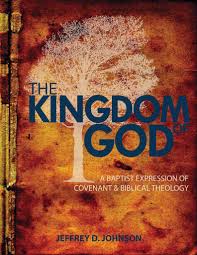
The Kingdom of God

The Kingdom of God by Jeffrey Johnson

Although I had been raised in a family that attended various churches, from non-imagesdenominational military chapels with no discernible doctrine to Nazarene churches with Arminian theology (later in life I was to wonder why those preachers ever preached anything other then Hebrews chapter 6), I was never with an interest in the Word of God. When I was redeemed, I began my search for meaning in the Scriptures and found the popular dispensational teaching of my Baptist church to be very suspect and off track. Once I began learning the doctrines of grace (known as Calvinism), the Scriptures came into a more clear view and then reformed theology was opened to me and I saw the larger redemptive story in the Bible; the main point of the Scripture is to show man how sinful he is and point him to the promised Redeemer.

But something still wasn’t right. The predominate teaching in the reformed world is from the Presbyterians. And while I can accept their church practices (though I cannot agree with them), I could not see how they made the church equal to the nation of Israel. This perspective, and a couple others closely related to it, cause our Presbyterian brothers to view virtually all Scripture as applicable to the church. It was the complete opposite of what I was taught in my dispensational churches, where there is near complete separation between the church and the nation of Israel. Neither system made sense to me.

By the providential hand of God, the early part of the 21st century has brought us a renewed interest in historical Baptist views. While several very good books have been written in this rather large field, the one that made the biggest impact on me was The Fatal Flaw of the Theology Behind Infant Baptism, by a man who has become a dear friend to me, Jeffrey D. Johnson. That book made a very clear, biblical argument against the underlying theology of paedobaptism and introduced me to an historic and biblical Baptist view of covenant theology. This title, plus a couple of books on biblical theology (a process that keeps systematic theology from losing its place in Scripture – biblical theology is the contextual study of what the Bible says. The historic, redemptive context of a passage provides more clues to its meaning than anything other than related Scripture.), were foundational in helping me the Word of God even more clearly.

And now, much to my joy, our brother and servant of God, Jeff Johnson, has written another book: The Kingdom of God, A Baptist Expression of Covenant and Biblical Theology, due out early next year. Rather than a polemic pointing out the errors of paedobaptist theology (in an effort to convince Baptist to stay in the camp and comprehend a better view of the covenants), Jeff’s new book is a focused apologetic in favor of the historic Baptist view of covenant theology and biblical theology.

Is this stuff important? While it’s not as important as a biblical comprehension of who you are and who is the Christ, it is pretty important stuff. Because it will help the reader see the importance of approaching the Scriptures with humility rather than with unexamined presuppositions that subtly influence your understanding of what you read. When we open the Bible, we are taking into our minds the Word of God. The right fear of God and humility because we rightly see ourselves are essential attitudes for certain understanding of His Word and the covenants revealed therein. Charles Spurgeon went as far as to say, “The doctrine of the covenant lies at the root of all true theology. It has been said that he who well understands the distinction between the covenant of works and the covenant of grace, is a master of divinity. I am persuaded that most of the mistakes which men make concerning the doctrines of Scripture are based on fundamental errors with regard to the covenants of law and grace”

Johnson’s writing style is straight forward and easy to read. The main focus on his study of covenant theology is the Abrahamic Covenant and the duality therein. Failure to see the continuity as well as the discontinuity would leave one embracing paedobaptist theology on the first hand or dispenationalism on the other. From an early chapter in his new book, “In one sense, the debate between the continuity and discontinuity of the Old and New Covenants centers on the true identity of the people of God and the relationship between Abraham’s physical seed and Abraham’s spiritual seed, which returns us to the original question. Who are the true people of God? Are God’s people “the nation of Israel”? Are the people of God “believers and their seed?” Are the people of God “believers only?” Are God’s people some sort of combination of the two groups? The differing answers given to this question are what separate these theological positions from one another.”

He ends this section of the book with an examination of the covenant theology revealed in the book of Romans, showing how the Apostle who wrote Galatians was consistent in his theology, even when it went against his deepest human concerns.

The second part of the book is relatively short introduction to biblical theology which makes this topic approachable by any child of God. The historical record from Scripture shows the rise and fall of kingdoms and peoples, all of which were brought to pass to deliver, preserve, and protect the promised Seed. Creator God is the God of means as well as ends. Biblical theology helps us see His hand of providence in history and keeps us from falling into the error of thinking man is in charge of his own destiny.

There is a BONUS appendix in this book, where brother Johnson takes a quick look at The New Perspectives on Paul. Some who are impressed with the wisdom of man have been swept away by this new view; Jeff shows us why the wisdom of God is to be trusted – even in the face of all the king’s men with all their advanced degrees. The biblical Apostle Paul, not the one found in The New Perspectives, told us he did not come to us with brilliance of speech or wisdom, for he didn’t think it was a good idea to know anything among us except Jesus Christ and Him crucified. He came to us in weakness, in fear, in much trembling. His speech and proclamation were not with impressive words of wisdom but with a powerful demonstration by the Spirit, so that our faith would not rest on the wisdom of men but on God’s power.

40% off: Pre-publication sale for The Kingdom of God: A Baptist Expression of Covenant & Biblical Theology.  280 page, hardcover with dust jacket.  Retail price $28.00.  No payment necessary until after it is released. To reserve a copy, email freegracepress@gmail.com. Reserve two copies for 50%, plus free shipping. This is a pre-publication sale only. This offer ends on 27 November.

Truth and Error

Truth and error

Near Truth:  Departing from what God has said is serious. quote-a-rusty-nail-placed-near-a-faithful-compass-will-sway-it-from-the-truth-and-wreck-the-argosy-walter-scott-166220

God’s Truth: Genesis 2:16 – 17 “And the LORD God commanded the man, saying, Of every tree of the garden thou mayest freely eat: But of the tree of the knowledge of good and evil, thou shalt not eat of it: for in the day that thou eatest thereof thou shalt surely die.”

The temptation: Genesis 3:1 “Now the serpent was more subtle than any beast of the field which the LORD God had made. And he said unto the woman, Yea, hath God said, Ye shall not eat of every tree of the garden?

Near Truth: Genesis 3:2 – 3 “And the woman said unto the serpent, We may eat of the fruit of the trees of the garden: But of the fruit of the tree which is in the midst of the garden, God hath said, Ye shall not eat of it, neither shall ye touch it, lest ye die.”

Consequence: Genesis 3:16 – 19 & 22 – 24 “Unto the woman he said, I will greatly multiply thy sorrow and thy conception; in sorrow thou shalt bring forth children; and thy desire shall be to thy husband, and he shall rule over thee. And unto Adam he said, Because thou hast hearkened unto the voice of thy wife, and hast eaten of the tree, of which I commanded thee, saying, Thou shalt not eat of it: cursed is the ground for thy sake; in sorrow shalt thou eat of it all the days of thy life; Thorns also and thistles shall it bring forth to thee; and thou shalt eat the herb of the field; In the sweat of thy face shalt thou eat bread, till thou return unto the ground; for out of it wast thou taken: for dust thou art, and unto dust shalt thou return…. And the LORD God said, Behold, the man is become as one of us, to know good and evil: and now, lest he put forth his hand, and take also of the tree of life, and eat, and live for ever: Therefore the LORD God sent him forth from the garden of Eden, to till the ground from whence he was taken. So he drove out the man; and he placed at the east of the garden of Eden Cherubims, and a flaming sword which turned every way, to keep the way of the tree of life.”

Lesson: That which sounds like Truth may not be. If one simple Truth (Do not eat from the tree of knowledge of good and evil) cannot be held in a more perfect mind than we have, how much more need do we have than Adam and Eve to study the Word of God in order to not depart from it? We have been given much more Truth and have a great need for the Holy Spirit to teach us.


Pragmatism: Doing God’s work our way can be dangerous, methods do matter.

God’s way: Numbers 4:14 – 15 “And they (Aaron and his sons) shall put upon it all the vessels thereof, wherewith they minister about it, even the censers, the fleshhooks, and the shovels, and the basins, all the vessels of the altar; and they shall spread upon it a covering of badgers’ skins, and put to the staves of it. And when Aaron and his sons have made an end of covering the sanctuary, and all the vessels of the sanctuary, as the camp is to set forward; after that, the sons of Kohath shall come to bear it: but they shall not touch any holy thing, lest they die. These things are the burden of the sons of Kohath in the tabernacle of the congregation.”

Man’s way: 2 Samuel 6:2 – 4, 6 -7 “And David arose, and went with all the people that were with him from Baale of Judah, to bring up from thence the ark of God, whose name is called by the name of the LORD of hosts that dwelleth between the cherubims. And they set the ark of God upon a new cart, and brought it out of the house of Abinadab that was in Gibeah: and Uzzah and Ahio, the sons of Abinadab, drave the new cart. And they brought it out of the house of Abinadab which was at Gibeah, accompanying the ark of God: and Ahio went before the ark. … And when they came to Nachon’s threshingfloor, Uzzah put forth his hand to the ark of God, and took hold of it; for the oxen shook it. And the anger of the LORD was kindled against Uzzah; and God smote him there for his error; and there he died by the ark of God.

Consequence: Departure from God’s clear instruction can kill a man.

Lesson: Focusing on “what works” is not normally the right thing to do. We know not what the future holds, therefore we know not “what works”. Man vainly imagines what is good and strives to acheive it. God tells us to obey Him and trust Him for the results.


Carelessness.

God’s way: Exodus 28:40 – 43 “And for Aaron’s sons thou shalt make coats, and thou shalt make for them girdles, and bonnets shalt thou make for them, for glory and for beauty. And thou shalt put them upon Aaron thy brother, and his sons with him; and shalt anoint them, and consecrate them, and sanctify them, that they may minister unto me in the priest’s office. And thou shalt make them linen breeches to cover their nakedness; from the loins even unto the thighs they shall reach: And they shall be upon Aaron, and upon his sons, when they come in unto the tabernacle of the congregation, or when they come near unto the altar to minister in the holy place; that they bear not iniquity, and die: it shall be a statute for ever unto him and his seed after him.”

Man’s way: Numbers 3:2 – 4 “And these are the names of the sons of Aaron; Nadab the firstborn, and Abihu, Eleazar, and Ithamar. These are the names of the sons of Aaron, the priests which were anointed, whom he consecrated to minister in the priest’s office. And Nadab and Abihu died before the LORD, when they offered strange fire before the LORD, in the wilderness of Sinai, and they had no children: and Eleazar and Ithamar ministered in the priest’s office in the sight of Aaron their father.”

Consequence: Negligence of God’s clear instruction can kill a man.

Lesson: God does not depend on any man or group of men. If we are careless with our charge, He will use others.

(Note: I am not, in these two examples, advocating that Christians should adhere to Levitical requirements; merely pointing out that God is serious about telling us what He requires.)


Doctrine: Compromising on God’s established teachings is evil.

God’s way: Ephesians 2:13 – 22 “But now in Christ Jesus ye who sometimes were far off are made nigh by the blood of Christ. For he is our peace, who hath made both one, and hath broken down the middle wall of partition between us; Having abolished in his flesh the enmity, even the law of commandments contained in ordinances; for to make in himself of twain one new man, so making peace; And that he might reconcile both unto God in one body by the cross, having slain the enmity thereby: And came and preached peace to you which were afar off, and to them that were nigh. For through him we both have access by one Spirit unto the Father. Now therefore ye are no more strangers and foreigners, but fellowcitizens with the saints, and of the household of God; And are built upon the foundation of the apostles and prophets, Jesus Christ himself being the chief corner stone; In whom all the building fitly framed together groweth unto an holy temple in the Lord: In whom ye also are builded together for an habitation of God through the Spirit.”

Man’s way: Galatians 2:11 – 14 “But when Peter was come to Antioch, I withstood him to the face, because he was to be blamed. For before that certain came from James, he did eat with the Gentiles: but when they were come, he withdrew and separated himself, fearing them which were of the circumcision. And the other Jews dissembled likewise with him; insomuch that Barnabas also was carried away with their dissimulation. But when I saw that they walked not uprightly according to the truth of the gospel, I said unto Peter before them all, If thou, being a Jew, livest after the manner of Gentiles, and not as do the Jews, why compellest thou the Gentiles to live as do the Jews?

Consequence: Polluting God’s doctrine with traditions of men will be noticed.

Lesson: Our public reputation and ego are of no consideration to God. His teachings – His doctrine – will be taught correctly or the false teacher will (sooner or later) be disciplined.


Summary: The Scriptures are full of instruction from God to us – as individuals and as a church. Being cavalier with our personal walk or public service is sin. Each man should humbly submit himself to the Holy Spirit of God for instruction and discipline, and be on guard to not let his heart become hard. It is the nature of deception for the one being deceived to be ignorant of his condition. Do not trust yourself. Submit to God. Study His Word. Fellowship with others who are serious about their walk with the Redeemer of your soul.

The Reformation We Need

BibleNone of us, as individuals or as local churches, has arrived. We all have need of continual repentance and reformation, knowing that sin easily entangles us and we all have different blind spot and unexamined presuppositions.

This sermon addresses three basic areas where men tend to go astray and exhorts all to repent and follow after Christ as revealed in the Scripture.

Voddie Baucham presents “The Reformation We Need” at the 2013 Founders Breakfast in Houston last month.

God’s Wonderful Plan for Your Life!

Does God love you and have a wonderful plan for your life? Have you heard preachers declare this and then leave you  191324132_640wondering how on Earth are you supposed to determine what that wonderful plan is? Does the almighty creator and ruler of all things have one person you are to fall in love with and marry? Is there one job and place you are seek and find? I submit that God does have a wonderful plan for your life – and it’s the same as His plan for me and every other Christian: to conform us ever more to the image of Christ. As for these other pieces of life on this temporary planet which is not our home, we’ll discuss a little, later, to see how they fit in.

Listen to the message here.

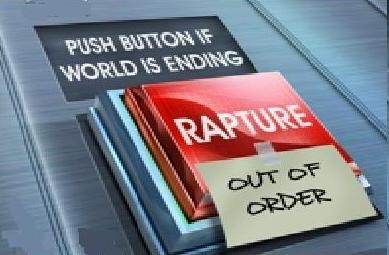
Is the Pretribulation Rapture Biblical?

Is the Pretribulation Rapture Biblical?

Brian M. Schwertley

One of the most popular teachings today in Evangelical and Charismatic pretribchurches is the doctrine of the pretribulation rapture. The pretribulation rapture teaching is that there are two separate comings of Christ. The first coming is secret and occurs before the future seven year tribulation. At this coming Jesus comes for the saints (i.e., all genuine believers) both living and dead. These saints meet the Lord in the air and then are taken to heaven to escape the horrible judgments that take place during the seven year tribulation. At the end of the great tribulation Jesus returns to the earth with the saints. This coming is not secret but is observed by all. At this coming Christ crushes His opposition, judges mankind and sets up a one thousand year reign of saints upon the earth (the millennium). Some pretribulation advocates speak of two separate comings while others prefer to speak of one coming in two separate stages or phases (phase one is the secret rapture and phase two is the visible coming in judgment). Hal Lindsey likes to refer to the rapture as “the great snatch.” He writes: “The word for ‘caught up’ actually means to ‘snatch up,’ and that’s why I like to call this marvelous coming event ‘The Great Snatch’! It’s usually referred to as the ‘Rapture,’ from the Latin word rapere, which means to ‘take away’ or ‘snatch out.’”1
     Although the pretribulation rapture doctrine is very popular and is even considered so crucial to Christianity that it is made a test of a person’s orthodoxy in some denominations, Bible colleges and seminaries, the exegetical and theological arguments used by its advocates are all classic cases of forcing one’s theological presuppositions onto particular texts (eisegesis). The purpose of this brief study is to show that the pretribulation rapture theory is not plainly taught or directly stated in any place in Scripture, cannot be deduced from biblical teaching, contradicts the general teaching of the Bible regarding Christ’s second coming and was never taught in any branch of the church prior to 1830.


The Origin of the Pretribulation Rapture Teaching

Whenever a Christian encounters a doctrine that has not been taught by anyone in any branch of Christ’s church for over eighteen centuries, one should be very suspect of that teaching. This fact in and of itself does not prove that the new teaching is false. But, it should definitely raise one’s suspicions, for if something is taught in Scripture, it is not unreasonable to expect at least a few theologians and exegetes to have discovered it before. The teaching of a secret pretribulation rapture is a doctrine that never existed before 1830. Did the pretribulation rapture come into existence by a careful exegesis of Scripture? No. The first person to teach the doctrine was a young woman named Margaret Macdonald. Margaret was not a theologian or Bible expositor but was a prophetess in the Irvingite sect (the Catholic Apostolic Church). Christian journalist Dave MacPherson has written a book on the subject of the origin of the pre-tribulation rapture. He writes: “We have seen that a young Scottish lassie named Margaret Macdonald had a private revelation in Port Glasgow, Scotland, in the early part of 1830 that a select group of Christians would be caught up to meet Christ in the air before the days of Antichrist. An eye-and-ear witness, Robert Norton M.D., preserved her handwritten account of her pre-trib rapture revelation in two of his books, and said it was the first time anyone ever split the second coming into two distinct parts or stages. His writings, along with much other Catholic Apostolic Church literature, have been hidden many decades from the mainstream of Evangelical thought and only recently surfaced. Margaret’s views were well-known to those who visited her home, among them John Darby of the Brethren. Within a few months her distinctive prophetic outlook was mirrored in the September, 1830 issue of The Morning Watch and the early Brethren assembly at Plymouth, England. Early disciples of the pre-trib interpretation often called it a new doctrine.”2
 Read the rest of this article here.

Responsibility of Elders

My church held a conference on church membership last fall. We had several well known speakers, Captureincluding Michael Horton, our own Voddie Baucham, Ken Jones, and Thabiti Anyabwile from Grand Cayman.

Here is Thabiti’s most excellent message on the responsibilities of those who serve the local church as elders: Responsiblity of elders

What was Mohler Thinking?

Nearly 4 years ago, Albert Mohler and Danny Akins co-authored an article that never should have 1614332826_Do_Babies_go_to_Heaven_300x245_xlargebeen written. The Bible does not give enough information to be dogmatic about the eternal destiny of infants. It’s bad enough that Doug Wilson (of Federal Vision infamy) believes that a trinitarian baptism make babies (including Roman Catholic babies) Christian, we have otherwise sober Calvinist Baptists telling us ALL babies are saved – if they die before they sin. The hinge pin of Scripture they base this upon is 2 Cor 5:10, which, if taken as a solitary proof text, says one is judged for the deeds he has done in the body, whether good or evil. Their argument is that a baby is unable to do any evil deeds – yet they do not tell concerned parents at what age a baby is able to sin.

God chose before the foundation of the world those whom He would save. It is possible that omniscient God knew/ordained the early death of each infant who dies and sovereignly elected each one. But the Bible must be tortured to pull this doctrine out of it.

Mohler and Akins admit that every infant has the stain of original sin. They spend a few short paragraphs explaining the wretched state of unredeemed humanity – which includes infants. Then they have this:

What, then is our basis for claiming that all those who die in infancy are among the elect? First, the Bible teaches that we are to be judged on the basis of our deeds committed “in the body.”(2) That is, we will face the judgment seat of Christ and be judged, not on the basis of original sin, but for our sins committed during our own lifetimes. Each will answer “according to what he has done,”(3) and not for the sin of Adam. The imputation of Adam’s sin and guilt explains our inability to respond to God without regeneration, but the Bible does not teach that we will answer for Adam’s sin. We will answer for our own. But what about infants? Have those who die in infancy committed such sins in the body? We believe not.

They claim that since the children of the Exodus were not killed, but allowed to go into the promised land – babies go to heaven. This interpretation is not found anywhere the Bible that I am aware of. They claim that since Jesus said “Permit the children to come to Me; do not hinder them; for the Kingdom of God belongs to such as these” that actual children go to heaven. Child-like faith is what the Lord was talking about – not having any guile. Yet though Mohler and Akins repeatedly state that infants go to heaven they do not address the question of age of accountability. For IF one teaches the salvation of infants who die, one MUST be able to tell parents how old the baby must be in order to be accountable – how else can this false comfort be provided? It is reasonable that man wants to comfort fellow man. Christian man must not make up doctrines to provide false comfort. The entire Bible tells us Christ is our refuge and in Him alone we are safe. He is our protector, provider, and shepherd. Tenuous “promises” taken from muddied waters into which Scripture was stirred is not how we are to seek understanding or comfort.

We must be content to trust God, rather than make up doctrines that our natural minds embrace. It is reasonable to infer than God puts children in Christian homes because children are a blessing from God and Christians will be able to train the children as God commands. It is a stretch beyond the snapping point to say that children of Christians are New Covenant members – yet this is what Mohler and Akins are saying, for none outside the New Covenant can be saved. But the authors go beyond that and claim that ALL infants who die as such (again – with no line drawn as to how old one can be and claim this promise) were elect.

I am not going to recap the entire article – please read it and decide for yourself. But it is not helpful at all, consisting of man’s reason in an area God has not spoken clearly on.

Civil Disobedience and the Christian

The concept of civil disobedience is not new. Neither is the question of how far a government imagescan go before the Christian is permitted to disobey. This concept of civil disobedience is/ought to be an escalation from the peaceful petition that ought to be the Christian’s first response to objectionable laws. Was Rosa Parks right in her act of civil disobedience? How do we answer such questions?

We must be informed by the Word of God – not our personal preferences and presuppositions.

World Magazine recently published an article focused on this question, you can read it here. Here’s a small excerpt:

Does submitting to civil authorities mean obeying laws that are immoral? We are commanded by God to share the gospel. What if a law barred us from doing so, even privately? We see that obeying government authorities isn’t absolute. It should be clear to Christians that unless there is legal recourse against obeying a law that compels us to sin, we are justified in disobeying it. Is it a sin to offer employees “mini-abortion drugs”?

It is clear from Scripture that Christians are able (obligated, I contend) to disobey the governing authorities if proclamation of the Gospel is outlawed – see Acts chapter 4. Is that the right standard to compare other issues to, as if they become justifiable since Gospel proclamation is?

This question of submitting to political authority has been addressed here at Def Con in the past – see this post as brother Conrad Mbewe examines part of 1 Peter.

The question of disobedience to the governing authorities must be anchored in Scripture – as with anything of import. If God has given us instructions, we who claim to be His must submit to what He was revealed to us! Do you have a pet issue (perhaps home schooling) that would cause you to reflexively rebel against the governing authorities without seeking wisdom from God in humility?  We must be on guard against these issues that are close to us – for it in these that we are most vulnerable to slip into disobedience to God, thinking we are merely exercising our rights – forgetting that we are aliens in this present age, with our citizenship and home in a city whose builder is God.

Since I mentioned home schooling, let me briefly comment on that. In the US of A, it is not now and never has been against the law to home school your own children. Read that carefully. It is not now and never has been against the law to home school your own children. It has been and still is in many places in this country against the law to home school your children in lieu of sending them off the approved institution, but never illegal to home school in addition to the approved educational process. The Bible clearly holds parents responsible for training (educating) their children in the things of God. Rightly done, this covers all academic areas. But the Bible also records for us humble servants of YHWH who submit to pagan education and work diligently to prosper their pagan rulers (Joseph and Daniel come to mind). We must seek wisdom from God’s Word before we decide to go against the governing authorities – for there is no governing authority except those that have been established by God.

So – is it right and honorable to refuse to provide medical insurance that covers abortion? Certainly! The law is set up to allow people to pay for non-compliance. It is a very high price tag for businesses that might cause them to completely change their business model (contractors or part time employees) or liquidation. But think on this: the Bible does not reveal God’s will for man-made institutions. He has created government, family, and the church. Those institutions have responsibility before God as does each individual. A Christian who owns a company has a responsibility before God and he has the same obligation to seek wisdom from God’s Word on this as with personal issues. (Not being addressed in this article are those hell-bound folk who will also answer to God and have no grace to cover them on Judgment Day.)

The Christian that wants to participate in civil disobedience ought to step back and think. Rebellion is as witchcraft. Failure to rightly submit to the governing authorities is rebellion, is as witchcraft. Is that something we want to play games with? 1 Peter 2 gives a “Reader’s Digest” version of God’s commandment:

    Be subject for the Lord’s sake to every human institution, whether it be to the emperor as supreme, or to governors as sent by him to punish those who do evil and to praise those who do good. For this is the will of God, that by doing good you should put to silence the ignorance of foolish people. Live as people who are free, not using your freedom as a cover-up for evil, but living as servants of God. Honor everyone. Love the brotherhood. Fear God. Honor the emperor.

Let’s wrap up with the obvious text, Romans 13, which includes this nugget: “whoever resists the authorities resists what God has appointed, and those who resist will incur judgment.” Read the whole chapter, with a humble attitude. I know it’s easy to despise a government that does not rule the way I want it to. I like my elected officials to have an affection for and submission to the Constitution (at the national level) just like I like my church elders to have an affection for and submission to the Scriptures. But civil governments are mostly occupied by folks not reconciled to God, while church leaders ought to be – and therefore, subject to stricter standards. Most of the things that cause me to consider civil disobedience do not meet the biblical test – they reflect my fleshly desires or my innate sense of self-righteousness. How do you see yourself?

Okay. Your assignment. Voddie Baucham preaching on Romans 13 in two sermons. Listen to part one and part two before commenting. It wouldn’t hurt to listen to Conrad Mbewe’s message from 1 Peter (at the link early in this article). Then let’s discuss like mature, humble blood-bought children of the Creator God and Ruler of the universe.

Unity in Truth

A dear friend and brother in Christ, who used to host a Christian talk show on radio many years ago handed this me during the growing conflict I was experiencing in the seeker sensitive church we were in at the time. While it is likely this counsel could be improved upon (as is the case with all works of man), I think it good and godly counsel.

Having Harmony in Your Church Through Humility in Handling Doctrine

Discord in most churches is caused primarily by the straining out of gnats and swallowing of camels, If a church does not have agreement on the essentials, it is not a church of Jesus Christ, On the other hand, members of the church who think that every little pet opinion or “favorite” emphasis is worthy of debate (and the risk of unity), dishonor Christ also, Too few Christians can distinguish and discern which doctrines have what degree of gravity, Thus, we end up with either large congregations that ignore doctrine for the sake of gladhanded surface hospitality or small fortresses of “defenders of the only way” where you feel like you’re on trial whenever you speak!

Here are four broad areas of doctrine. If you will attempt to distinguish which area a given issue belongs to, you will have an easier time dealing with that issue. Thus, less chance of getting personally uptight and less chance of offending another. This material will help when used correctly, Two cautions before we start:

1.Truth offends. The assumption in this material is that we are dealing to some degree with lovers of truth. Unfortunately, our churches are not full of such people, You will encounter that problem.

2.Some doctrines overlap. This material and chart are convenient general categories, not rigid compartmentalizations, There is especially some blurry areas between II and 111 and between 111 and IV, Not only that, but when you are in a lively discussion of some issue, other issues come up which could put you in several categories at once.

You might be talking about some doctrine where you are aware that you are building a case from a very thorough connection of Scripture. The person you are trying to convince may refuse to yield to a passage of God’s Word.

All of a sudden, you are into the IMPERATIVE of the authority of Scripture as well as an open discussion of your original issue. These situations will require more wisdom yet.

Nonetheless, despite these two cautions, working with this material can revolutionize your spiritual walk with regard to harmony, discernment, unity and pride,

EXPLANATION OF CHART COLUMN 1

The first column is the type of truth you are dealing with, A BIBLICAL IMPERATIVE, BIBLICAL IMPLICATION or BIBICAL INTERPRETATION, Notice the first three deal with items directly from Scripture, but Item IV concerns things created in you by the Holy Spirit through your own context, your own understanding of principles and your own application to various areas of life,

COLUMN 2,

The second column explains how to recognize these areas, This column gives the definition of the first column, BIBLICAL IMPERATIVES are the foundational truths such as the Deity of Christ, the Authority of Scripture, the Trinity and the Substitutionary Atonement. People who deny these truths are not Christians.

A BIBLICAL IMPLICATION also has no room for denial because it is an area where the Bible cannot teach but one thing. However, misunderstanding is possible because the truth is not stated in so many words. Rather it is woven through the fabric of Scripture. Even if you have a few passages where you are thoroughly convinced that your conclusion is obvious, you are humble enough to admit not only that a different view could be held by true Christians, but lo and behold, great people of God through the centuries have not been as certain as you are.

Thus, you become willing to patiently learn how to present your case and give folks lots of room to discover the conviction you have. For example, should Christians send their kids to government schools? For example, how fallen is man’s will? For example, Covenant vs Believers Baptism,

I believe firmly and staunchly in what I’ve concluded the Bible teaches on each of these. But, 1 view you as a Christian, and will not doubt the genuineness of your salvation for having not yet come to the same conclusions.

A BIBLICAL INTERPRETATION hinges on one passage or the interpretation techniques used for several passages, For example, Daniel 9,..where does the countdown of the 490 years start? Your answer from Isaiah and Ezra will influence your entire view of eschatology. So why should we argue about the interpretation of Revelation 5 if we already know our impasse is in the middle of Isaiah? Or perhaps the interpretation of the words °a cause” in the sin of being angry at a brother without cause! It comes down to an understanding of a particular, If we view it differently—and we both honestly can view it differently—that’s it! Fortunately, God has seen to it that no essential matter of faith or life is in this category,

Finally the DAILY WALK INDIVIDUALIZATION, Friends, if we haven’t got chapter and verse—even if we believe we have the mind of Christ on the matter—we must humbly avoid playing God over another conscience, Does Walt Disney promote the occult in Fantasia? Are certain beats of music admissable? Should you pray before, or after, your morning shower? Come on, folks! Romans 14 insists that we acknowledge liberty and conscience in these areas,

COLUMN 3 & 4

Columns 3 and 4 prescribe the limits of what we do with these doctrines. This will be as helpful as the recognition,

A BIBLICAL IMPERATIVE is not compromised or glossed over with anyone. Earnestly contend!! Don’t get off on blood transfusions, time travel and other things with cults and secularists, The only questions between you and them are: Who is God? Who is man? Who is Christ? What is truth? Stay on the subject with them,

BIBLICAL IMPLICATIONS are to be worked out carefully among believers, You have an obligation to the brethren on both sides. Be able to articulate what you believe and love them in what you consider their “future maturity”,

BIBLICAL INTERPRETATION makes for “iron sharpens iron” discussions with friends, but the church today should not be divided on predictive prophecy,

On DAILY WALK INDIVIDUALIZATION you may set an example, if you wish, but you are confusing your own authority with the Bibles if you command something that it doesn’t.

Clipboard01

The Dogma of Papal Infallibility

What Roman Catholics refer to as “the Dogma of Papal Infallibility” is one of the most  Papalstunning of all of RCC doctrine. According to this dogma, the Pope-when he speaks on matters concerning the church-is protected from the possibility­ of error. Note that it is not that what he says is always true, but something more radical is claimed: there is not even the possibility of him speaking something untrue.

When this dogma was first codified (the first Vatican Council in 1870) they obviously defined it in more constrained terms than it had been practiced through history. Now, it only applies to matters concerning “faith and morals,” and when the Pope binds “the whole Church” to the declaration. While it was codified by the First Vatican Council, it in effect has been practiced throughout much of Roman Catholic Church history.

In fact much of RCC doctrine rests on nothing other than this authority. For one clear example, in 1950 Pope Pious XII declared that Mary did not die a physical death, but was “assumed” (assunta) up to heaven. This is a teaching with no biblical evidence (although Pope John Paul II did allege that it was the fulfillment of Jesus’ promise in John 14:3), and even less credible historical evidence. Actually, no one in the first 300 years of church history had even claimed such a thing had happened.

Because it is such an important part of what separates the RCC from Protestants, an obvious question to ask is, “are there times when the Popes have contradicted each other?” If so, that would be a glaring piece of evidence that the RCC’s claims to authority and doctrine are indeed fallible.

First, let me explain why this is important to me. Discussing theology with a Catholic can be frustrating, and usually goes in one of two ways. Either they claim to believe everything I believe, but they just also claim to have an unbroken tradition of history behind them. Or they respond to my biblical objections to RCC doctrine by saying Protestants are wrong because their interpretations contradict the interpretations of the RCC, which we know to be infallible.

Read the rest of this article here.

What’s Wrong with being “Seeker Sensitve”?

Seeker Sensitive

The Greek word (ekklesia) we interpret as “church” means “the called out ones”. Those who are not redeemed are not part of the church.  

Isaiah 43:1 But now thus saith the LORD that created thee, O Jacob, and he that formed thee, O Israel, Fear not: for I have redeemed thee, I have called thee by thy name; thou art mine.

2 Cor 4:1 – 5 Therefore seeing we have this ministry, as we have received mercy, we faint not; But have renounced the hidden things of dishonesty, not walking in craftiness, nor handling the word of God deceitfully; but by manifestation of the truth commending ourselves to every man’s conscience in the sight of God. But if our gospel be hid, it is hid to them that are lost: In whom the god of this world hath blinded the minds of them which believe not, lest the light of the glorious gospel of Christ, who is the image of God, should shine unto them. For we preach not ourselves, but Christ Jesus the Lord; and ourselves your servants for Jesus’ sake.

1 Cor 1:1 – 2 Paul, called to be an apostle of Jesus Christ through the will of God, and Sosthenes our brother, Unto the church of God which is at Corinth, to them that are sanctified in Christ Jesus, called to be saints, with all that in every place call upon the name of Jesus Christ our Lord, both theirs and ours

The mission of the church is more accurately found in Ephesians 4:12 & 13 – “the church exists For the perfecting of the saints, for the work of the ministry, for the edifying of the body of Christ: Till we all come in the unity of the faith, and of the knowledge of the Son of God, unto a perfect man, unto the measure of the stature of the fullness of Christ.” Titus chapter 2 seems to sum up the mission of the church very nicely.

There is no place in scripture where saints are told to bring lost souls to the gathering nor is this portrayed in any scriptural narratives. The only place I know where scripture comments on lost people being in church is 1 Corinthians chapter 14. Paul is wrapping up his comments on the lust for gifts exhibited by the church in Corinth. “In the law it is written, With men of other tongues and other lips will I speak unto this people; and yet for all that will they not hear me, saith the Lord. Wherefore tongues are for a sign, not to them that believe, but to them that believe not: but prophesying serveth not for them that believe not, but for them which believe. If therefore the whole church be come together into one place, and all speak with tongues, and there come in those that are unlearned, or unbelievers, will they not say that ye are mad? But if all prophesy, and there come in one that believeth not, or one unlearned, he is convinced of all, he is judged of all: And thus are the secrets of his heart made manifest; and so falling down on his face he will worship God, and report that God is in you of a truth.” It’s clear in this passage that the priority is on the clear proclamation of God’s Word – not on being mindful of making lost folks feel comfortable.

When church leaders focus on lost people, they disobey scripture (Colossians 3:1 – 3, 2 Corinthians 4:18, etc.) and they will be distracted from the right focus on God. Seeking to be appealing to men, elders must turn from seeking to please the Lord – this is disobedience as well. And no man can do both (Galatians 1:10). Furthermore, such a focus on man inevitably leads to the practice of teaching men they can choose Christ – as the natural man wants to be in control of his life. The lost man is dead in his sin (Ephesians 2:1 – 5) and cannot seek God lest he be drawn to Him by Him (Romans 3:10 – 11, John 6:43 – 44, John 1:12 – 13) nor can he comprehend the things of God (1 Corinthians 2:12 – 14, Ephesians 4:17 – 19). It is demeaning to God to pretend man can have a hand in saving himself, giving himself spiritual birth (1 Peter 1:2 – 5, John 15:16). Those who teach and preach are held to a higher standard by God (James 3:1) because they represent God to people. They, therefore, ought to be very careful to only speak for God what He has declared in His Word.

These men pleasers tend to teach people that evangelism consists of inviting lost neighbors to church, so they can hear the preacher. The Bible knows of no such evangelism, telling us to go and preach Christ to the world (Matthew 28:19, Mark 16:14 – 15, Col 1:23). It’s the work of the church to disciple babes in Christ, to bring them to a full understanding of our glorious Lord (1 Corinthians 4:17, 1 Timothy 1:1 – 4, 1 Timothy 4:6 – 11, Titus chapter 2, 2 Peter 3:17 – 18, Ephesians 4:11 – 16).

Our audience – as regards any Christian ministry – is God, not man. His Word – alone – tells us how He wants to be represented to His creature. Our job is not be creative in finding ways to make heathens like the church – the cross is an offense to them (1 Corinthians 1:26 – 29, 1 Peter 2:7 – 8, Galatians 5:11). Our job is to proclaim Christ crucified, trusting God to call to new life those He predestined to be His children (Ephesians 1:3 – 6, Romans 8:32 – 34, John 1:13, Romans 9:6 – 11, Romans 11:5 – 6, 2 Peter 1:2 – 11), making disciples of those are redeemed by Christ. Anything that glorifies man – his status, position, abilities – is sin (Isaiah 48:9 – 11). The aim of each child of God is glorify Him – this is the foundation of everything we do. We cannot love one another properly without God’s glory being the basis. We cannot love lost folks properly if our reason for doing so is anything other than bringing God glory. Any other reason will lead us astray, into doing things for pragmatic reasons, mindful of results and numbers instead of God and His glory.

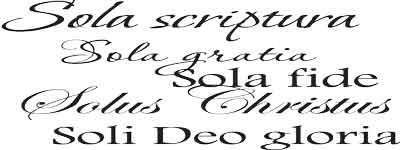
Soli Deo Gloria”Glory To God Alone

Solus Christus”Christ Alone

Sola Scriptura”Scripture Alone

Sola Fide”Faith Alone

Sola Gratia”Grace Alone

May we serve the lord with joy and seek to be forgotten, that those we speak to will remember the Christ of Whom we spoke.

Stuart L. Brogden

Nov 2008.

Papal Contradictions and the Roman Child

by Jesse Johnson

In 1497, Pope Alexander had a crisis of his own making that was threatening to undermine his ability to govern the Catholic Church. A romantic rivalry between two of his sons (he had at least six children) had become a source of intrigue around Rome. In fact, this scandal was so lurid, it was appalling even to those accustomed to flagrant immorality from the papacy. 

The two sons in question were Cesare and Juan, and they were both in love with their sister, Lucrezia. The plot thickened, as the Pope refused to let either of his sons marry his daughter, as he was sleeping with her himself. As the famous biographer and historian William Manchester wrote, “Even for those times, this was scandalous.”

When one of the sons, Juan, turned up murdered, suspicion was split between the father and brother. When Lucrezia turned up pregnant, that same divided suspicion remained. Rome had long been accustomed to assassinations, orgies, and public rioting from the Pope’s family. But this scandal involved all three simultaneously, and even the public was beginning to demand change. Alexander decided he needed to marry his daughter off to a powerful Duke, consolidating the Pope’s power, and ending the scandal.

There were numerous problems with this plan. First, Lucrezia was already married (technically speaking…it was a political alliance thing). No problem, that marriage could be annulled by the Pope. But in order for that to happen, the Pope and a Vatican council had to certify that she was a virgin. This would be impossible to do with a straight face, seeing as how she was known to be the Pope’s lover, was six months pregnant, and visibly showing. So the Vatican council acted without the straight face, and when they declared her a virgin, witnesses said that laughter echoed throughout the Vatican. One poet, Jacopo Sannazaro, wrote a poem commemorating the declaration. Translated from the Latin, it reads:

Here lies Lucrezia, who was really a tart,
The daughter, wife, and daughter in-law of Alexander.

In Latin it rhymed. But regardless, the third obstacle was insurmountable, and the marriage was halted when the groom was murdered by Cesare.

This lead to the uncomfortable development that the Pope’s daughter gave birth to a son, Giovanni, and there was no way of knowing if the father was the Pope’s son or the Pope himself. By the time the child was 3 years old, his mother was 21. It became necessary politically for the Pope to marry her off, and the Pope chose the Duke of Ferrara. The new problem was that Canonical Law forbade the Pope from recognizing his own illegitimate children (only if they were fathered while he was Pope, which in this case was obvious; in fact the public labeled Giovanni “the Roman Child”). That difficulty here was notably compounded by they fact that the mother of his son was also his daughter. But…if the Pope recognized Cesare (his other son and her other lover) as Giovanni’s father, then the Duke of Ferrara would likely not marry Lucrezia for fear of losing his title as Duke.

If that is confusing, here it is simply: The Pope was in a Catch-22. Either the Giovanni was his, or his son’s. One option was permissible legally, the other was possible politically. So what would he do?

First, read/remember yesterday’s post on Papal Infallibility.

Here is his solution, in the words of William Manchester:

The Pope, deciding to legitimatize his daughter’s child, issued two extraordinary bulls September 1, 1501. The first, which was made public, identified the three-year-old boy as the offspring of Cesare and an unmarried woman… The second, a secret bull, acknowledged Giovanni to be the son of the pope and the same woman.

In other words, Giovanni had two fathers. And, don’t loose sight of the fact that he was born only three months after the Vatican and Pope had declared his mother a virgin. That is a truly immaculate conception!

The Bad PopesI was alerted to this story by reading E. R. Chamberlin’s book The Bad Popes. Believe me when I say that this affair is not even in the top five as far as radically immoral acts committed by the Popes of that time. In fact, some of the stories were so graphic and stunning that I paused to ask myself why I was even reading them. The answer is two-fold. First, it is a powerful reminder that Luther’s Reformation was not in a vacuum. Theology has consequences, and bad theology destroys lives. In this case, bad theology had the potential to destroy a continent, which it did. The dark ages were so backwards and perverse, in large part because of the rampant immorality of the Popes.

Secondly, it is a reminder that the strongest argument that Catholic Apologists use today-that the Catholic Church has an unbroken chain of tradition stretching back to the Apostles-is pure fabrication. Not only is it fabrication in the historic sense (because the papacy did not being in any recognizable way until the 400’s), but it is fabrication in the ethical sense. Many Popes, Luther said, “have so often contradicted themselves,” and he did not simply mean on the finer points of theology. When Alexander declared his daughter (whom he had been sleeping with) to be a virgin, only to see her give birth 3 months later, Luther was 16 years old. When Alexander issued official Church Bulls declaring that his son had two fathers, Luther was 19 years-old. He entered the monastery four years later.

It would be another twelve years before he posted his thesis on the church door. From that point forward, it is simply no longer feasible to maintain that Catholics and Protestants essentially believe the same things. There are substantive differences, one of which is the concept of papal authority, and another of which is the claim that the Roman Catholic Church has a glorious and unbroken continuity of being Christ’s seat on Earth.

They may have a tradition, but is neither glorious nor unbroken.

Distributed by http://www.worldviewweekend.com

Self-elevated little popes!

A gem from A. W. Pink:

Self-elevated little popes!

(Arthur Pink, “Private Judgment” 1950)

“But you are not to be called ‘Rabbi,’ for you have only one Master and you are all brothers.” Matthew 23:8

In every generation, there are those of an officious spirit who aspire to leadership, demanding deference from their fellows. Such men insist upon unqualified subjection from their followers. Their interpretation of the Scriptures must not be challenged, their dictates are final. Everyone must believe precisely what they teach, and order all the details of his life by the rules of conduct which they prescribe–or else be branded as a heretic.

There have been, and still are, many such self-elevated little popes in Christendom, who deem themselves to be entitled to implicit credence and obedience, whose decisions must be accepted without question. They are nothing but arrogant usurpers, for Christ alone is the Master of Christians; and since all of His disciples are “brethren,” they possess equal rights and privileges.

“Do not call anyone on earth your father; for One is your Father–He who is in Heaven.” Matthew 23:9. This dehortation has ever been needed by God’s people, for they are the most part simple and unsophisticated, trustful and easily imposed upon. In those verses, the Lord Jesus was enforcing the duty of private judgment, bidding believers to allow none to be the dictators of their faith, or lords of their lives.

No man is to be heeded in spiritual matters, any further than he can produce a plain and decisive, “Thus says the LORD” as the foundation of his appeal. To be in subjection to any ecclesiastical authority which is not warranted by Holy Writ, or to comply with the whims of men–is to renounce your Christian freedom. Allow none to have dominion over your mind and conscience. Be regulated only by the teaching of God’s Word, and firmly refuse to be brought into bondage to “the commandments and doctrines of men.” Instead, “Stand fast in the liberty with which Christ has made us free,” yielding unreservedly to His authority alone.

God does not require the minds and consciences of His children to be enslaved by any ecclesiastical dominion. Each one has the right to exercise his own judgment.

“Be shepherds of God’s flock that is under your care . . . not greedy for money, but eager to serve; not lording it over those entrusted to you, but being examples to the flock.” 1 Peter 5:2-3. Instead of lording it over God’s heritage, preachers are to be “examples to the flock”–personal patterns of good works, holiness, and self-sacrifice; models of piety, humility, and charity.

Love of power has been as common a sin in the pulpit, as love of money, and many of the worst evils which have befallen Christendom, have issued from a lusting after dominion and ecclesiastical honors. Such is poor human nature, that good men find it hard to keep from being puffed up and misusing any measure of authority when it is committed unto them, and from not doing more harm than good with the same. Pastors are to make self-abnegation, and not self-exaltation, their constant aim.

The right of private judgment does not mean that each Christian may be a law unto himself, and still less lord over himself. We must beware of allowing liberty to degenerate into license! No, it means the right to form our own views from Scriptures, to be in bondage to no ecclesiastical authority, and to be subject unto God alone. Two extremes are to be guarded against:
1. slavery to human authority and tradition, and
2. the spirit of self-will and pride.

Private judgment does not mean private imagination, but a deliberate conviction based on Holy Writ! Though I must not resign my mind and conscience to others, or deliver my reason and faith over blindfold to any church–yet I ought to be very slow in rejecting the approved judgment of God’s true servants. Self-conceit is to be rigidly restrained. Private judgment is to be exercised humbly, soberly, and impartially, with a willingness to receive light from any quarter.

Ponder the Word for yourself; but mortify the spirit of haughty self-sufficiency, and be ready to avail yourself of anything likely to afford you a better understanding of God’s truth. Above all, daily beg the Holy Spirit to be your teacher! And always accord your brethren the same right and privilege, which you claim for yourself.

HT: http://gracegems.org/Pink/private_judgment1.htm

SOLA SCRIPTURA OUR ONLY FOUNDATION

The following was written by Michael Horton. I agree with him – any departure from the sufficiency of Scripture for all we need for life and godliness will cause us to fall into a ditch. The only source of God’s revealed will is found in holy writ – let the saints of the living God be content with what He has provided us and resist those who call us to listen to “the voice within.”

Many critics of the Reformation have attempted to portray it as the invitation to individualism, as people discover for themselves from the Bible what they will and will not believe. “Never mind the church. Away with creeds and the church’s teaching office! We have the Bible and that’s enough.” But this was not the reformers’ doctrine of sola Scriptura–only Scripture. Luther said of individualistic approaches to the Bible, “That would mean that each man would go to hell in his own way.”

On one side, the reformers faced the Roman Church, which believed its teaching authority to be final and absolute. The Roman Catholics said that tradition can be a form of infallible revelation even in the contemporary church; one needs an infallible Bible and an infallible interpreter of that sacred book. On the other side were the Anabaptist radicals, who believed that they not only did not need the teaching office of the church; they really didn’t seem to need the Bible either, since the Holy Spirit spoke to them–or at least to their leaders–directly. Instead of one Pope, Anabaptism produced numerous “infallible” messengers who heard the voice of God. Against both positions, the Reformation insisted that the Bible was the sole final authority in determining doctrine and life. In interpreting it, the whole church must be included, including the laity, and they must be guided by the teachers in the church. Those teachers, though not infallible, should have considerable interpretive authority. The creeds were binding and the newly reformed Protestant communions quickly drafted confessions of faith that received the assent of the whole church, not merely the teachers.

Today, we are faced with similar challenges even within evangelicalism. On one hand, there is the tendency to say, as Luther characterized the problem, “I go to church, hear what my priest says, and him I believe.” Calvin complained to Cardinal Sadoleto that the sermons before the Reformation were part trivial pursuit, part story-telling. Today, this same process of “dumbing down” has meant that we are, in George Gallup’s words, “a nation of biblical illiterates.” Perhaps we have a high view of the Bible’s inspiration: 80% of adult Americans believe that the Bible is the literal or inspired Word of God. But 30% of the teenagers who attend church regularly do not even know why Easter is celebrated. “The decline in Bible reading,” says Gallup, “is due in part to the widely held conviction that the Bible is inaccessible, and to less emphasis on religious training in the churches.” Just as Rome’s infallibility rested on the belief that the Bible itself was difficult, obscure, and confusing, so today people want the “net breakdown” from the professionals: what does it mean for me and how will it help me and make me happy? But those who read the Bible for more than devotional meditations know how clear it is–at least on the main points it addresses–and how it ends up making religion less confusing and obscure. Again today, the Bible–especially in mainline Protestant churches–is a mysterious book that can only be understood by a small cadre of biblical scholars who are “in the know.”

But we have the other side, too. There is a popular trend in many “evangelical” churches to emphasize direct communication with the Holy Spirit apart from the Word. In these circles, tradition and the teaching ministry of the church through the ages are not only treated as fallible (as the reformers believed), but as objects of mockery. The sentiments of Thomas Muntzer, who complained that Luther was “one of our scribes who wants to send the Holy Ghost off to college,” would find a prime-time spot on the nation’s leading evangelical radio and television broadcasts. Calvin said of these folks, “When the fanatics boast extravagantly of the Spirit, the tendency is always to bury the Word of God so they may make room for their own falsehoods.”

Christianity is not a spirituality, but a religion. Wade Clark Roof and other sociologists have pointed out that evangelicals today are indistinguishable from the general cultural trends, especially when it comes to preferring to think of their relationship to God more in terms of an experience than in terms of a relationship that is mediated through words. Ours is a visual or image-based society, much like the Middle Ages, and yet Christianity can only flourish through words, ideas, beliefs, announcements, arguments. There can be no communication with God apart from the written and living Word. Everything in the Christian faith depends on the spoken and written Word delivered by God to us through the prophets and apostles.

Further, sola Scriptura meant that the Word of God was sufficient. Although Rome believed it was infallible, the official theology was shaped more by the insights of Plato and Aristotle than by Scripture. Similarly today, psychology threatens to reshape the understanding of the self, as even in the evangelical pulpit sin becomes “addiction”; the Fall as an event is replaced with one’s “victim” status; salvation is increasingly communicated as mental health, peace of mind, and self-esteem, and my personal happiness and self-fulfillment are center-stage rather than God’s holiness and mercy, justice and love, glory and compassion. Does the Bible define the human problem and its solution? Or when we really want facts, do we turn somewhere else, to a modern secular authority who will really carry weight in my sermon? Of course, the Bible will be cited to bolster the argument. Political ideology, sociology, marketing, and other secular “authorities” must never be allowed priority in answering questions the Bible addresses. That is, in part, what this affirmation means, and evangelicals today seem as confused on this point as was the medieval church.

An Open Letter to Praise Bands

Dear Praise Band,

I so appreciate your willingness and desire to offer up your gifts to God in worship. I appreciate your devotion and celebrate your faithfulness–schlepping to church early, Sunday after Sunday, making time for practice mid-week, learning and writing new songs, and so much more. Like those skilled artists and artisans that God used to create the tabernacle (Exodus 36), you are willing to put your artistic gifts in service to the Triune God.
So please receive this little missive in the spirit it is meant: as an encouragement to reflect on the practice of “leading worship.” It seems to me that you are often simply co-opted into a practice without being encouraged to reflect on its rationale, its “reason why.” In other words, it seems to me that you are often recruited to “lead worship” without much opportunity to pause and reflect on the nature of “worship” and what it would mean to “lead.”
In particular, my concern is that we, the church, have unwittingly encouraged you to simply import musical practices into Christian worship that–while they might be appropriate elsewhere–are detrimental to congregational worship. More pointedly, using language I first employed in Desiring the Kingdom, I sometimes worry that we’ve unwittingly encouraged you to import certain forms of performancethat are, in effect, “secular liturgies” and not just neutral “methods.” Without us realizing it, the dominant practices of performance train us to relate to music (and musicians) in a certain way: as something for our pleasure, as entertainment, as a largely passive experience. The function and goal of music in these “secular liturgies” is quite different from the function and goal of music in Christian worship.
So let me offer just a few brief axioms with the hope of encouraging new reflection on the practice of “leading worship”:
1. If we, the congregation, can’t hear ourselves, it’s not worship. Christian worship is not a concert. In a concert (a particular “form of performance”), we often expect to be overwhelmed by sound, particularly in certain styles of music. In a concert, we come to expect that weird sort of sensory deprivation that happens from sensory overload, when the pounding of the bass on our chest and the wash of music over the crowd leaves us with the rush of a certain aural vertigo. And there’s nothing wrong with concerts! It’s just that Christian worship is not a concert. Christian worship is a collective, communal, congregational practice–and the gathered sound and harmony of a congregation singing as one is integral to the practice of worship. It is a way of “performing” the reality that, in Christ, we are one body. But that requires that we actually be able to hear ourselves, and hear our sisters and brothers singing alongside us. When the amped sound of the praise band overwhelms congregational voices, we can’t hear ourselves sing–so we lose that communal aspect of the congregation and are encouraged to effectively become “private,” passive worshipers.
2. If we, the congregation, can’t sing along, it’s not worship. In other forms of musical performance, musicians and bands will want to improvise and “be creative,” offering new renditions and exhibiting their virtuosity with all sorts of different trills and pauses and improvisations on the received tune. Again, that can be a delightful aspect of a concert, but in Christian worship it just means that we, the congregation, can’t sing along. And so your virtuosity gives rise to our passivity; your creativity simply encourages our silence. And while you may be worshiping with your creativity, the same creativity actually shuts down congregational song.
3. If you, the praise band, are the center of attention, it’s not worship. I know it’s generally not your fault that we’ve put you at the front of the church. And I know you want to model worship for us to imitate. But because we’ve encouraged you to basically import forms of performance from the concert venue into the sanctuary, we might not realize that we’ve also unwittingly encouraged a sense that you are the center of attention. And when your performance becomes a display of your virtuosity–even with the best of intentions–it’s difficult to counter the temptation to make the praise band the focus of our attention. When the praise band goes into long riffs that you might intend as “offerings to God,” we the congregation become utterly passive, and because we’ve adopted habits of relating to music from the Grammys and the concert venue, we unwittingly make you the center of attention. I wonder if there might be some intentional reflection on placement (to the side? leading from behind?) and performance that might help us counter these habits we bring with us to worship.
Please consider these points carefully and recognize what I am not saying. This isn’t just some plea for “traditional” worship and a critique of “contemporary” worship. Don’t mistake this as a defense of pipe organs and a critique of guitars and drums (or banjos and mandolins). My concern isn’t with style, but with form: What are we trying to do when we “lead worship?” If we are intentional about worship as a communal, congregational practice that brings us into a dialogical encounter with the living God–that worship is not merely expressive but also formative–then we can do that with cellos or steel guitars, pipe organs or African drums.
Much, much more could be said. But let me stop here, and please receive this as the encouragement it’s meant to be. I would love to see you continue to offer your artistic gifts in worship to the Triune God who is teaching us a new song.
Most sincerely,

Jamie

Postscript to “An Open Letter to Praise Bands”

So, I guess my little “Open Letter to Praise Bands” generated some interest. I’m glad that it could be a catalyst or foil for some intentional reflection on the howof Christian worship. I won’t even attempt to address the array of responses it has generated. I’m content to let some misreadings spin themselves out. So I’m not out to police the ways I’ve been misunderstood.
However, I do think it’s important to name an issue in the background that affects how we can have this conversation: not all Christians share the same theology of worship. Indeed, my concern is that some sectors of North American Christianity don’t have much of a theology of worship at all. Many of us–including many congregations–have only an implicit understanding of what worship is, and we have not always made that explicit, nor have we subjected our assumptions to rigorous biblical and theological evaluation.
It is my passion for theological intentionality about worship that generated my book Desiring the Kingdom: Worship, Worldview, and Cultural Formation. It’s not fair to ask those who read a blog post to read an entire book, but I would invite those who both agreed and those who disagreed with my “Open Letter” to consider Desiring the Kingdom as a fuller articulation of the theology of worship behind my criticisms.
Many of the negative reactions to my missive stem from a fundamentally different understanding of what worship is. That means we are working from fundamentally different starting points. So when someone thinks that I “misunderstand” what’s happening in worship, actually I just disagree with the assumptions behind such worship.
I think this is why some have missed two crucial points in my “Open Letter”–points that were admittedly touched on just briefly. Let me reiterate them here:
1. Worship is not only expressive, it is also formative. It is not only how we express our devotion to God, it is also how the Spirit shapes and forms us to bear God’s image to the world. This is why the form of worship needs to be intentional: worship isn’t just something that we do; it does something to us. And this is why worship in a congregational setting is a communal practice of a congregation by which the Spirit grabs hold of us. How we worship shapes us, and how we worship collectively is an important way of learning to be the body of Christ. (For a helpful account of how our congregational practice of singing embodies the oneness of the body of Christ, see Steve Guthrie’s marvelous chapter, “The Wisdom of Song.”)
2. Because worship is formative, and not merely expressive, that means other cultural practices actually function as “competing” liturgies, rivals to Christian worship. In Desiring the Kingdom, I analyze examples of such “secular liturgies,” including the mall, the stadium, and the university. The point is that such loaded cultural practices are actually shaping our loves and desires by the very form of the practice, not merely by the “content” they offer. If we aren’t aware of this, we can unwittingly adopt what seem to be “neutral” or benign practices without recognizing that they are liturgies that come loaded with a rival vision of “the good life.” If we adopt such practices uncritically, it won’t matter what “content” we convey by them, the practices themselves are ordered to another kingdom. And insofar as we are immersed in them, we are unwittingly mis-shaped by the practices.
Again, there’s much more to be said about this, and a blog isn’t the venue. I do invite those who have been prompted to think about these matters to consider Desiring the Kingdom as a way to continue the conversation.