We Are Justified by Faith

“Then what becomes of our boasting? It is excluded. By what kind of law? By a law of works? No, but by the law of faith. For we hold that one is justified by faith apart from the works of the law,” (Romans 3: 27, 28)

As I began my morning devotions today, this passage in the book of Romans jumped out at me. Have you ever really stopped to consider it’s meaning? We are justified, not by our works, but by faith. Faith in what? In the finished work of Jesus Christ on the cross. It is this very principle that is the heart and soul of the Christian faith. Where every other man-made religious system determines your justification on what you can do, Christianity bases it solely on what has been done by God. This is where out assurance lies, it is where our guarantee of salvation lies. The shed blood of Christ on the cross, His work on our behalf. Christ gave everything, we can contribute nothing. And it is the faith that Christ has completed that work on our behalf through which God justifies us. Our complete and total trust that Christ’s work is sufficient to satisfy the righteous wrath of God. Our surrender to His transforming our hearts of stone into hearts of flesh. That alone makes us right before God and nothing else.

I believe that one of the most challenging walks of the Christians life is struggling with the assurance that we are saved. We so often look at our lives, the constant struggle that we have with our sinful flesh, and we are tempted to believe that we cannot possibly be saved because of those sins. We see that we are supposed to be new creations, yet we continually fall into sin. As a result, we cannot believe we really are new creations because we are not doing what we are supposed to be doing. In the end, we actually evaluate our new birth in the same way that the false religions of this world do, through our works.

Yet, as we read the passage penned by Paul to the Romans, what is he challenging them with? He asks “what becomes of our boasting?” Think about that for a moment. When we actually accomplish something in our lives, what is inevitable result? We are proud of what we have accomplished. Pride swells up in our hearts and we can’t wait to tell someone all about it. But through the law of faith, such prideful boasting is “excluded.” Why? Because our faith is in the accomplished work of someone else! We cannot tell people how we did something great because the things we have done sent Christ to the cross! Jesus alone accomplished salvation through His death and resurrection. Jesus alone was completely obedient to His Father and fulfilled all the righteous requirements of the law. The only boasting we can do is to say we were so wicked and vile that He had to save us through His work. We can rejoice because we don’t have to boast! We don’t have to rely on our sinful works to accomplish righteousness! We can rest because all the work of justification was accomplished at the cross!

If you struggle with your assurance in your faith, look to this passage and remember that it is God who alone is the just and the justifier. It is He who has made you a new creation and it is His work that is progessively sanctifying you. If you are one who has truly repented and placed their faith in Christ, then God’s work in your life will reveal itself in your hatred for your sin, your desire to walk and grow in faith, in your love for God’s Word, and in your desire to be more like your Savior. But these are the result of your justification, not the cause of it. You are justified by the One who said “It is finished.” Look to His finished work and rest.

What’s Wrong with being “Seeker Sensitve”?

Seeker Sensitive

The Greek word (ekklesia) we interpret as “church” means “the called out ones”. Those who are not redeemed are not part of the church.  

Isaiah 43:1 But now thus saith the LORD that created thee, O Jacob, and he that formed thee, O Israel, Fear not: for I have redeemed thee, I have called thee by thy name; thou art mine.

2 Cor 4:1 – 5 Therefore seeing we have this ministry, as we have received mercy, we faint not; But have renounced the hidden things of dishonesty, not walking in craftiness, nor handling the word of God deceitfully; but by manifestation of the truth commending ourselves to every man’s conscience in the sight of God. But if our gospel be hid, it is hid to them that are lost: In whom the god of this world hath blinded the minds of them which believe not, lest the light of the glorious gospel of Christ, who is the image of God, should shine unto them. For we preach not ourselves, but Christ Jesus the Lord; and ourselves your servants for Jesus’ sake.

1 Cor 1:1 – 2 Paul, called to be an apostle of Jesus Christ through the will of God, and Sosthenes our brother, Unto the church of God which is at Corinth, to them that are sanctified in Christ Jesus, called to be saints, with all that in every place call upon the name of Jesus Christ our Lord, both theirs and ours

The mission of the church is more accurately found in Ephesians 4:12 & 13 – “the church exists For the perfecting of the saints, for the work of the ministry, for the edifying of the body of Christ: Till we all come in the unity of the faith, and of the knowledge of the Son of God, unto a perfect man, unto the measure of the stature of the fullness of Christ.” Titus chapter 2 seems to sum up the mission of the church very nicely.

There is no place in scripture where saints are told to bring lost souls to the gathering nor is this portrayed in any scriptural narratives. The only place I know where scripture comments on lost people being in church is 1 Corinthians chapter 14. Paul is wrapping up his comments on the lust for gifts exhibited by the church in Corinth. “In the law it is written, With men of other tongues and other lips will I speak unto this people; and yet for all that will they not hear me, saith the Lord. Wherefore tongues are for a sign, not to them that believe, but to them that believe not: but prophesying serveth not for them that believe not, but for them which believe. If therefore the whole church be come together into one place, and all speak with tongues, and there come in those that are unlearned, or unbelievers, will they not say that ye are mad? But if all prophesy, and there come in one that believeth not, or one unlearned, he is convinced of all, he is judged of all: And thus are the secrets of his heart made manifest; and so falling down on his face he will worship God, and report that God is in you of a truth.” It’s clear in this passage that the priority is on the clear proclamation of God’s Word – not on being mindful of making lost folks feel comfortable.

When church leaders focus on lost people, they disobey scripture (Colossians 3:1 – 3, 2 Corinthians 4:18, etc.) and they will be distracted from the right focus on God. Seeking to be appealing to men, elders must turn from seeking to please the Lord – this is disobedience as well. And no man can do both (Galatians 1:10). Furthermore, such a focus on man inevitably leads to the practice of teaching men they can choose Christ – as the natural man wants to be in control of his life. The lost man is dead in his sin (Ephesians 2:1 – 5) and cannot seek God lest he be drawn to Him by Him (Romans 3:10 – 11, John 6:43 – 44, John 1:12 – 13) nor can he comprehend the things of God (1 Corinthians 2:12 – 14, Ephesians 4:17 – 19). It is demeaning to God to pretend man can have a hand in saving himself, giving himself spiritual birth (1 Peter 1:2 – 5, John 15:16). Those who teach and preach are held to a higher standard by God (James 3:1) because they represent God to people. They, therefore, ought to be very careful to only speak for God what He has declared in His Word.

These men pleasers tend to teach people that evangelism consists of inviting lost neighbors to church, so they can hear the preacher. The Bible knows of no such evangelism, telling us to go and preach Christ to the world (Matthew 28:19, Mark 16:14 – 15, Col 1:23). It’s the work of the church to disciple babes in Christ, to bring them to a full understanding of our glorious Lord (1 Corinthians 4:17, 1 Timothy 1:1 – 4, 1 Timothy 4:6 – 11, Titus chapter 2, 2 Peter 3:17 – 18, Ephesians 4:11 – 16).

Our audience – as regards any Christian ministry – is God, not man. His Word – alone – tells us how He wants to be represented to His creature. Our job is not be creative in finding ways to make heathens like the church – the cross is an offense to them (1 Corinthians 1:26 – 29, 1 Peter 2:7 – 8, Galatians 5:11). Our job is to proclaim Christ crucified, trusting God to call to new life those He predestined to be His children (Ephesians 1:3 – 6, Romans 8:32 – 34, John 1:13, Romans 9:6 – 11, Romans 11:5 – 6, 2 Peter 1:2 – 11), making disciples of those are redeemed by Christ. Anything that glorifies man – his status, position, abilities – is sin (Isaiah 48:9 – 11). The aim of each child of God is glorify Him – this is the foundation of everything we do. We cannot love one another properly without God’s glory being the basis. We cannot love lost folks properly if our reason for doing so is anything other than bringing God glory. Any other reason will lead us astray, into doing things for pragmatic reasons, mindful of results and numbers instead of God and His glory.

Soli Deo Gloria”Glory To God Alone

Solus Christus”Christ Alone

Sola Scriptura”Scripture Alone

Sola Fide”Faith Alone

Sola Gratia”Grace Alone

May we serve the lord with joy and seek to be forgotten, that those we speak to will remember the Christ of Whom we spoke.

Stuart L. Brogden

Nov 2008.

Where is the Anguish?

I just listened to this sermon segment from David Wilkerson on anguish. I wholeheartedly agree and have to ask, where is the anguish in the church today? We weep and wail over an election, but where is the weeping and wailing over the sins of the people in our nation, our communities or even in our local churches? We should be driven by anguish to deep prayer and an unquenchable desire to share the gospel, yet the Church is more consumed with making friends with the world. Please watch this video and ask yourself, where is the anguish today?

Obama Was Re-elected??

Yesterday, November 6, 2012, was election day in America. Two major party candidates, incumbent President, Barack Obama and challenger, Mitt Romney, waited for the results as the American people cast their votes. In the end, President Obama retained his office for another four years. Today, a great many Christians, greatly dismayed by the election results, are asking themselves, “Now what?”

From the moment I saw the results come in, I observed just about every possible response on social media. Some expressed outrage, others denied Mr. Obama would ever be their president, some half-jokingly talked of joining Texas in a secession from the Union. Yet, some remembered the scriptures and God’s sovereignty, “Daniel answered and said: “Blessed be the name of God forever and ever, to whom belong wisdom and might. He changes times and seasons; he removes kings and sets up kings…” (Daniel 2:20-21a).” There are no powers and authorities in this world that God has not established. Some He sets up for a blessing, some He establishes in judgment. But all are set in power for God’s glory alone.

The reason I write this is to encourage and remind the brethren that our hope is not in the governments and powers of this world, but in the King is the true power and authority over all things. When Jesus stood before Pilate, He said, “My kingdom is not of this world. If my kingdom were of this world, my servants would have been fighting, that I might not be delivered over to the Jews. But my kingdom is not from the world,” (John 18:36). Jesus established at that time that we are not to seek deliverance in worldly authority, but in Him alone. Therefore, our joy is not contingent on which candidate is elected, it is in the One who rules over us eternally. We do not find peace in presidents, congressman and governors, but in the One who willingly allowed those earthly authorities to crucify Him on our behalf.

Knowing this, we can read and submit to Romans 13: 1-7, “Let every person be subject to the governing authorities. For there is no authority except from God, and those that exist have been instituted by God. Therefore whoever resists the authorities resists what God has appointed, and those who resist will incur judgment. For rulers are not a terror to good conduct, but to bad. Would you have no fear of the one who is in authority? Then do what is good, and you will receive his approval, for he is God’s servant for your good. But if you do wrong, be afraid, for he does not bear the sword in vain. For he is the servant of God, an avenger who carries out God’s wrath on the wrongdoer. Therefore one must be in subjection, not only to avoid God’s wrath but also for the sake of conscience. For because of this you also pay taxes, for the authorities are ministers of God, attending to this very thing. Pay to all what is owed to them: taxes to whom taxes are owed, revenue to whom revenue is owed, respect to whom respect is owed, honor to whom honor is owed.” We submit, not because we believe in all the party platforms of the person in authority. We submit, because we honor the Lord who saved us and placed that person in power.

Now before everyone thinks I am suggesting that means we should just bow before every unjust ruling the government enforces, I am not advocating some sort of weak kneed, wishy-washy pacivity. Remember that when commanded by the Sanhedrin to cease preaching the name of Christ, Peter and John said, “Whether it is right in the sight of God to listen to you rather than to God, you must judge, for we cannot but speak of what we have seen and heard,” (Acts 4:19-20). When it came to obeying the commands of God, specifically in this case, the preaching of the gospel, the apostles understood, their obedience to the Lord superseded man’s authority. No earthly authority can command us to disobey the express commands of our Lord and Savior. If and when we are commanded to cease serving and obeying the Lord, then we may stand in opposition to earthly authorities.

This also does not mean that we stand idly by while we watch the authorities God has established abuse their power by promoting immoral and sinful laws. When we see the propagation of laws allowing for the wanton murder of children through abortion, or when we see the religious institution of marriage profaned through promotion of state recognized homosexual unions, we should stand up proclaiming “Thus saith the Lord…” in opposition to them. We should call our representatives and demand they honor the commands of God. We should file suit when unjust laws are passed. We should work within the God ordained governmental system to bring righteous laws into place. However, our hope is NOT in the establishment of those laws, it is in the One who established the system itself. We honor Him when we work peaceably within the system, rather than in rebelliousness or talk of secession.

So if our hope is not within the system, but in the Lord, what do we do? In 1 Timothy 2:1-3, we read, “First of all, then, I urge that supplications, prayers, intercessions, and thanksgivings be made for all people, for kings and all who are in high positions, that we may lead a peaceful and quiet life, godly and dignified in every way. This is good, and it is pleasing in the sight of God our Savior…” In other words, we need to be in continual prayer for those in authority over us, that they would come to repentance and faith in Christ, that God would grant them wisdom in their decisions and that they would honor God in their deeds. Also, we need to be about the preaching of the gospel to all we meet. Our hope for a country that is righteous and honoring to God is not in elected officials, but in the hearts that are changed through the power of the gospel. Only God can regenerate a sin hardened heart. Only by someone being made a new creation, with a heart inclined to obey God, will men and women desire to live in a culture that is free from immorality and decadence. While we do not preach the gospel to make culture better, but to save souls, a by product of regenerated hearts is a culture that begins to honor the Lord.

My encouragement to those who read this is to remember that our hope is not in who did or did not get elected last night. Our hope is in the sovereign Lord who saved us. Seek to honor and obey Him above all.

Important Article Regarding Mark Cahill

Recently, CARM published an article regarding evangelist Mark Cahill. This article was authored by my friend and mentor, Tony Miano, who has had direct interaction with Mr. Cahill. The article was written as a public rebuke of Mr. Cahill’s uncharitable and derogatory treatment of Christians who believe in the Doctrines of Grace. Mr. Cahill has been spoken to privately and publicly on several occasions regarding his unbiblical behavior, however, he continues to publicly decry those who believe in reformed doctrine, going so far as to even refer to them as worshipping a false god. Because of his continued unbiblical behavior, this article been written to caution Christians in their dealings with him.

The article was not written in an effort to be judgmental of Mr. Cahill, nor to decry his Arminian beliefs, rather it was written to caution the brethren in supporting him until such a time as he repents of his mistreatment of other Christians. Part of the article reads as follows:

“Throughout my conversation with Mark, I asserted that I do not believe Calvinists and Arminians worship different gods or believe different gospels. I assured him that so long as we agree we are saved by the grace of God alone, through faith alone, in Jesus Christ alone (the Jesus of the Scriptures) we are brothers in Christ. I told Mark I would welcome the opportunity to evangelize the lost with him, and he was welcome atop my box to open-air preach, anytime. Sadly, by the end of our phone conversation, Mark would not affirm me as his brother in Christ. I repeatedly asked Mark if I was his brother in Christ. He refused to answer.

Sadly, Mark Cahill’s ongoing campaign to marginalize, vilify, and otherwise mistreat Calvinists has necessitated the writing of this article.

This article will document how, for more than two years, Mark Cahill has quietly and behind the scenes engaged in a campaign of misrepresentation, malignment, and malevolence toward Christians who ascribe to Calvinism and to those who associate with Calvinists. The timing of this article coincides with the recent publication of Mark Cahill’s new book, The Watchmen, in which he speaks disparagingly about Calvinism. It also coincides with the recent development of Mark speaking disparagingly about Calvinism during some of his recent public speaking engagements.”

I encourage the readers of this blog to go to the main article here and read it in it’s entirety.

I do wish to make the disclaimer now that this is not going to be an open forum to assault and argue the viewpoints of Calvinists and Arminians. This article is for the sole purpose of calling a Christian brother to repentance. Therefore, comments that are submitted which intend to do otherwise will not be allowed. Please read the CARM article and share it with others. And please be in prayer for Mark Cahill that he would repent of this behavior and be reconciled to his brethren. Thank you.

I Want to Start Sharing the Gospel, Part 3

In my previous two articles, I laid the foundation that Christians need be built up in study of the word, in prayer and in worship in preparation for sharing the gospel. These are essential to Christian wisdom and growth; it also equips us through God’s power, rather than our own feeble efforts. I also discussed unbiblical methods of evangelism and why Christians should not use them. Today, I want to share the biblical method of evangelism and why a Christian should be sharing the gospel in this manner.

The Gospel

First, let us understand what the gospel actually is. In 1 Timothy 1:15, Paul writes, “The saying is trustworthy and deserving of full acceptance, that Christ Jesus came into the world to save sinners, of whom I am the foremost.” In Romans 5:8, he writes, “but God shows his love for us in that while we were still sinners, Christ died for us.” And in John 3:16, Christ Himself states, “For God so loved the word, that he gave his only Son, that whoever believes in him should not perish but have eternal life.” That is the gospel, that Jesus Christ, the eternally begotten Son of God, who took on human flesh, came to die for sinners, so that, through repentance and faith, they could be granted eternal life! That is the message that we as Christians want to share with a lost and unregenerate world, that their sins can be forgiven if they would but repent and trust in Christ’s propitiatory sacrifice for their sins. But before a sinner can repent, they must understand that they ARE a sinner!

Law to the Proud

Most gospel presentations today are devoid of any actual effort to tell the sinner they are in fact a sinner. Those who propose such unbiblical methods argue that doing so is judgmental or legalistic. However, the apostle Paul did not agree with that. He stated, “…Yet if it had not been for the law, I would not have known sin…” (Romans 7: 7). It is by the very law of God that mankind is made aware of his sin. In fact, Romans 3:19 states, “Now we know that whatever the laws says, it speaks to those who are under the law, so that every mouth may be stopped, and the whole world may be held accountable to God.” So the first thing that a Christian needs to address with the unregenerate sinner is the fact that he or she is guilty of breaking God’s law.

Before we start running out into the world and making wild accusations of everyone we meet, please understand, I am not advocating Westboro Baptist style, “God hates you,” hellfire preaching. In no way should any Christian slam down the ten commandments and start telling people just how wicked they are. Any presentation of the law and gospel message must be tempered with mercy, compassion and grace. It must be with the remembrance that we once were in the same position as the person we are speaking to. Never should it be filled with hate and vitriol, never should it be with the appearance that we see ourselves as better than someone else. Always in love and compassion should the law be given.

The law is essential to break up the stony ground of the unregenerate heart. The best way to illustrate this is by asking the average person if they thought they were a good person. The vast majority will tell you that they believe they are good. They pay their taxes, occasionally help the neighbor, they take care of their kids, they don’t sell drugs and certainly never murdered anyone. So, in their eyes, they are really good people. The problem is that they are comparing themselves to others in the world. They comparison they must make is against the holy righteousness of God. Against His perfect standard none are “good” (see Romans 3:10-20)

Often times, a good way to expose this is to simply illustrate their sins through the use of the Ten Commandments. While there a great many more laws written in the Old Testament, the Ten Commandments are most familiar to people and speak directly to the conscience, the law God has already written on their heart. By leading a person through the commandments, by asking simple questions such as “How many lies have you told? How many things have you taken that did not belong to you? How often did you disobey your parents? Have you ever used God’s name in a low or filthy way? Has God always been the most important thing in your life?’ we can lead a person into the understanding that, in the eyes of God, they are not a good person, but a sinner.

Often times, the sinner will still attempt to justify themselves by stating their good deeds outweigh their bad, but we need to remind them that God is a good judge who will by no means ignore their guilt. As God is perfect, holy and righteous, to be able to earn His favor and enter Heaven, we must be likewise. In fact Christ said, “For I tell you, unless your righteousness exceeds that of the scribes and Pharisees, you will never enter the kingdom of heaven,” (Matthew 5:20). And, “You therefore must be perfect, as your heavenly Father is perfect,” (Matthew 5:48).

Other times, the person may appeal to God’s mercy and say that if they just ask for forgiveness and He will let them in because He is good. We must help them to see that if God is indeed good, He cannot let the guilty go free. Imagine a judge in a courtroom allowing a murderer to walk away, even though he confessed to his terrible crime, simply because he said, “I’m sorry.” That would be an unjust and capricious application of the law. And if we can see that in this sin filled world, how much more can we expect a perfectly holy God to uphold His laws? The law of God must be upheld, judgment of the guilty must happen or God is not good at all.

When the sinner understands that they are guilty in the courtroom of God, that their “good deeds” cannot wipeout their guilt (and are actually filthy rags in the sight of God, see Isaiah 64:6) and that they will be justly sentenced to condemnation for eternity, it is then that we can truly proclaim the goods news to them!

Grace to the Humble

When the lost sinner sees him or herself as justly condemned before a holy, righteous and perfect Judge, it is truly a humbling experience. Yet, there are many who will still proclaim their self righteousness, or will deny the right of God to judge them. For those who arrogantly stand in opposition to the law, I do not encourage the proclamation of God’s grace. I say this because “…the law was our guardian until Christ came, in order that we might be justified by faith,” (Galatians 3:24). If one does not see they are justly condemned through their violations of the law, then they cannot receive the grace of Christ by faith. For those, I would say it is better to allow them to consider the law alone until such a time as they are humbled and understand their need for a savior.

But for those who are known humbled and broken, we can proclaim the good news! We can explain to them that Jesus Christ is the eternal Son of God, who took on human flesh, lived a life of perfection in every thought word and deed. This is extremely important. If Christ is not God eternally, then He is only a man or a created being. If He is a created being, then His life and death are only applicable to Himself and has no bearing in our lives. Yet as God, as the Creator of the entire universe, every aspect of who He is has bearing on every aspect of our lives. And Christ as God eternally, took on human flesh! He now has two natures, divine and human. Not only is He our Creator and Lord, but He is the perfect Man, our perfect representative before God. Remember that our first representative, Adam, fell in the garden and all mankind fell under the power of sin. Yet, our second representative, the last Adam, lived a life of perfection in every aspect of the law! Never once did He sin!

Christ’s perfect obedience to the law is essential to understanding the gospel. You and I are justly deserving of judgment because of our sin, yet Christ, in His perfection was undeserving of any judgment whatsoever. But Christ willingly presented Himself as a sacrifice. He willingly allowed Himself to be arrested, put under an illegal trial, was falsely charged despite no two witnesses being present who could agree, and was brought before Pilate for execution. Despite all this, Christ made no defense of Himself, much to the Roman governor’s surprise. And He allowed Himself to be beaten, mocked and crucified (the most horrible form of execution ever devised). He was guiltless yet He willingly died. Why? Because “…the wages of sin is death…” (Romans 6:23) and “…without the shedding of blood, there is no forgiveness of sins,” (Hebrews 9:22). In other words, every sinner is condemned to an eternal death and torment. Yet, through the shedding of the blood of the perfect sacrifice, through the blood of the Son of God, mankind can receive forgiveness. Because Christ took on the debt that we all deserve, because He paid the fine we cannot pay. He is guiltless, we are guilty. We deserve judgment, He did not. Yet, He willingly took our place on the cross and shed His blood so that the judgment of God could be satisfied. The law could be fulfilled and the debt paid, the guilty made guiltless before God.

But that is not the only thing we need to share! See, three days later, Christ rose Himself from the grave! He defeated death and provided a way of eternal life. Now, not only can the guilty have the slate wiped clean, they can be granted eternal life, not based on their merits, but on the perfect and righteous merits of Jesus Christ. Sins can be forgiven and life eternal can be granted!

However, before the sinner can have access to this, they must acknowledge their sinfulness before God and must turn from it. In other words, they must repent! See, it is not enough for the sinner to just merely assent he or she has sinned and Christ died for that. Imagine a man who has committed adultery but wants his wife to forgive him. Would she simply receive him back if he merely said, “yep, it was wrong,” with no indication that he had changed his ways? Of course not. And anyone who makes a mere assent without a life indicating they have turned from sin has not truly repented. This is not to say that salvation will only come after a lifetime of repentance, but that one who truly repents will evidence that by an ongoing life of repentance.

The sinner must also fully trust in the completed work of Jesus Christ at the cross alone for their salvation. Imagine being in Court and sentenced to a billion dollar fine. Someone pays that fine for you, yet you attempt to come in each week and pay back a measly nickel to add your works to it. You would not esteem the sacrifice of the one who paid your fine, you would be trusting in your own pitiful works to justify yourself. Thus the sinner cannot justify themselves by their works, but must trust in Christ alone. They must surrender the entirety of their lives into the hands of the Lord and Savior Jesus Christ. Through repentance and faith alone can a sinner be saved.

Conclusion

A truly biblical presentation of the gospel is one that uses the law to break up the stony heart and exposes the wretched sinfulness of the hearer. It brings them to the courtroom of God where they will see themselves rightly condemned. It then transitions to the glorious grace of our Lord Jesus Christ who died to pay the debt that they owe. It presents the sinner with the fact that if they would but repent and trust in the Savior, they can be saved.

I encourage every person who has read these articles to understand the great command they have been given by our Lord. We have been given the duty to share the greatest possible news in the world, the Christ came to save sinners! No other task is greater than this. No other duty has greater honor than to serve our Lord and Savior on the front lines of a spiritual battle. But remember this, we are only the tools in His hands. Victory is Christ’s alone. While we must fully prepare ourselves, while we must rightly present the truth, salvation is by Him alone. Thus present the gospel and do so fervently and urgently. Yet trust in His power alone to save the lost.

Papal Contradictions and the Roman Child

by Jesse Johnson

In 1497, Pope Alexander had a crisis of his own making that was threatening to undermine his ability to govern the Catholic Church. A romantic rivalry between two of his sons (he had at least six children) had become a source of intrigue around Rome. In fact, this scandal was so lurid, it was appalling even to those accustomed to flagrant immorality from the papacy. 

The two sons in question were Cesare and Juan, and they were both in love with their sister, Lucrezia. The plot thickened, as the Pope refused to let either of his sons marry his daughter, as he was sleeping with her himself. As the famous biographer and historian William Manchester wrote, “Even for those times, this was scandalous.”

When one of the sons, Juan, turned up murdered, suspicion was split between the father and brother. When Lucrezia turned up pregnant, that same divided suspicion remained. Rome had long been accustomed to assassinations, orgies, and public rioting from the Pope’s family. But this scandal involved all three simultaneously, and even the public was beginning to demand change. Alexander decided he needed to marry his daughter off to a powerful Duke, consolidating the Pope’s power, and ending the scandal.

There were numerous problems with this plan. First, Lucrezia was already married (technically speaking…it was a political alliance thing). No problem, that marriage could be annulled by the Pope. But in order for that to happen, the Pope and a Vatican council had to certify that she was a virgin. This would be impossible to do with a straight face, seeing as how she was known to be the Pope’s lover, was six months pregnant, and visibly showing. So the Vatican council acted without the straight face, and when they declared her a virgin, witnesses said that laughter echoed throughout the Vatican. One poet, Jacopo Sannazaro, wrote a poem commemorating the declaration. Translated from the Latin, it reads:

Here lies Lucrezia, who was really a tart,
The daughter, wife, and daughter in-law of Alexander.

In Latin it rhymed. But regardless, the third obstacle was insurmountable, and the marriage was halted when the groom was murdered by Cesare.

This lead to the uncomfortable development that the Pope’s daughter gave birth to a son, Giovanni, and there was no way of knowing if the father was the Pope’s son or the Pope himself. By the time the child was 3 years old, his mother was 21. It became necessary politically for the Pope to marry her off, and the Pope chose the Duke of Ferrara. The new problem was that Canonical Law forbade the Pope from recognizing his own illegitimate children (only if they were fathered while he was Pope, which in this case was obvious; in fact the public labeled Giovanni “the Roman Child”). That difficulty here was notably compounded by they fact that the mother of his son was also his daughter. But…if the Pope recognized Cesare (his other son and her other lover) as Giovanni’s father, then the Duke of Ferrara would likely not marry Lucrezia for fear of losing his title as Duke.

If that is confusing, here it is simply: The Pope was in a Catch-22. Either the Giovanni was his, or his son’s. One option was permissible legally, the other was possible politically. So what would he do?

First, read/remember yesterday’s post on Papal Infallibility.

Here is his solution, in the words of William Manchester:

The Pope, deciding to legitimatize his daughter’s child, issued two extraordinary bulls September 1, 1501. The first, which was made public, identified the three-year-old boy as the offspring of Cesare and an unmarried woman… The second, a secret bull, acknowledged Giovanni to be the son of the pope and the same woman.

In other words, Giovanni had two fathers. And, don’t loose sight of the fact that he was born only three months after the Vatican and Pope had declared his mother a virgin. That is a truly immaculate conception!

The Bad PopesI was alerted to this story by reading E. R. Chamberlin’s book The Bad Popes. Believe me when I say that this affair is not even in the top five as far as radically immoral acts committed by the Popes of that time. In fact, some of the stories were so graphic and stunning that I paused to ask myself why I was even reading them. The answer is two-fold. First, it is a powerful reminder that Luther’s Reformation was not in a vacuum. Theology has consequences, and bad theology destroys lives. In this case, bad theology had the potential to destroy a continent, which it did. The dark ages were so backwards and perverse, in large part because of the rampant immorality of the Popes.

Secondly, it is a reminder that the strongest argument that Catholic Apologists use today-that the Catholic Church has an unbroken chain of tradition stretching back to the Apostles-is pure fabrication. Not only is it fabrication in the historic sense (because the papacy did not being in any recognizable way until the 400’s), but it is fabrication in the ethical sense. Many Popes, Luther said, “have so often contradicted themselves,” and he did not simply mean on the finer points of theology. When Alexander declared his daughter (whom he had been sleeping with) to be a virgin, only to see her give birth 3 months later, Luther was 16 years old. When Alexander issued official Church Bulls declaring that his son had two fathers, Luther was 19 years-old. He entered the monastery four years later.

It would be another twelve years before he posted his thesis on the church door. From that point forward, it is simply no longer feasible to maintain that Catholics and Protestants essentially believe the same things. There are substantive differences, one of which is the concept of papal authority, and another of which is the claim that the Roman Catholic Church has a glorious and unbroken continuity of being Christ’s seat on Earth.

They may have a tradition, but is neither glorious nor unbroken.

Distributed by http://www.worldviewweekend.com

Happy Reformation Day!

In honor of Reformation Day, we share a scene from “Luther”, Martin Luther’s famous speech in the Diet of Worms. Give glory to God for those godly men who have stood up throughout history to preach the true gospel.

Quotes (945)

“The thing we kick against the most is the question of pain and suffering. We have naturally the idea that if we are happy and peaceful we are all right…Happiness is not a sign that we are right with God; happiness is a sign of satisfaction, that is all, and the majority of us can be satisfied on too low a level. Jesus Christ disturbs every kind of satisfaction that is less than delight in God. Every strand of sentimental satisfaction is an indication of how much farther we have to go before we understand the life of God, it is the satisfaction of a smug self-interest which God by circumstances and pain shocks us out of as we go in the discipline of life.”

Oswald Chambers
1874-1917

I Want to Start Sharing the Gospel, Part 2

In my last article, I shared three things that I believe every Christian must be doing before they step out into the world to start sharing the gospel of Jesus Christ: study the Word of God, pray, and give worship and praise to the Lord who saved you. All three of these things are the necessisties of any Christian walk. There can be no growth and maturing without them. And they are absolutely essential in preparing one’s self for the spiritual warfare that is the saving of souls. Today, in the theme of preparing ourselves for witnessing, I want to address some rather unbliblical methods that are being employed by Christians, ministries and churches that should avoided. Believe it or not, it really does make a difference about how you share your faith. The methods that I want to share today are very popular, but they are antithetical to the gospel and have often been responsible for creating false converts, those who profess a faith in Christ, but have never truly repented and put their faith in them. If we are to be obedient to the command to preach the gospel, then we want to avoid those methods that are not in line with God’s word.

God Has a Wonderful Plan for Your Life

Perhaps one of the most common evangelistic approaches today is for the Christian to approach an unrepentant, unregenerate sinner and to explain to him or her that God deeply and truly loves that person and has a “wonderful plan” for their life. The pitch usually states that all the joys of this world are insufficient, always leaving us wanting more. We chase after the elusive concept of happiness, but are never really satisfied. But if the sinner will just “accept Jesus” who died for their sins (a concept only briefly mentioned and never explained) then God will grant them peace, love and joy in abundance, fulfilling all the wants and desires the world never could. The sinner is then encouraged to pray a prayer, to make Jesus their Lord, and then is told without question that they are a Christian and to never, ever doubt it.

This approach sounds so kind and loving, ensuring the lost person that the promises of God will be extended to them without question, so how could there be anything wrong with it? Unfortunately, there is a lot wrong. Let’s start with the fact that the presentation that God “loves the sinner” is innacurate. A sinner, by definition, is a lawbreaker and rebel against the Lord who created him or her. Remember that God is holy and righteous, so much so that a guilty sinner cannot stand in His presence and not be destroyed. In fact, Psalm 7: 11 states, “God is a just judge, and is angry with the wicked every day.” It is a false statement to tell a sinner that God loves them when there are standing in a rebellious state before Him. Such a claim leaves the sinner believing God likes them “for who they are” and that their sins are not really an abomination before Him. If they do not understand the nature of their sin, sinners will not repent before a holy God.

Another problem is the promise that God has a wonderful plan for the sinner. This is problematic on many levels. First off, in their sinful state, the only plan God has for them is judgment. Certainly, this in not “wonderful.” Secondly, if a person truly becomes a Christian, Jesus taught His followers, “Most assuredly, I say to you, a servant is not greater than his master; nor is he who is sent greater than he who sent him,” (John 13: 16). If Christ is the Christian’s master, and Christ was so hated by the world that He was persecuted and crucified, what is the promise for the Christian? Followers of Christ can expect the world to hate and persecute them, and that life in this world will not be comfortable for them. The promises of peace and having an “abundant life” for the Christian are not tied to worldly comforts, but having peace with God through Christ’s shed blood and by no longer being shackled to our sinful nature. Yet, to the unregenerate sinner, such a promise of a “wonderful life” is devoid of such meaning because they lack understanding of their sinful state and coming judgement. Christians dare not use the fruits of salvation as a draw card to entice the unbeliever into becoming a Christian.

Just Let People See Jesus in You

In our current, post-modern culture, telling someone that their life is considered sinful before God and they are pending His righteous judgment is probably the worst “sin” a person can commit. In fact, telling people that your beliefs are right and their’s are wrong is equally terrible in the eyes of society. So the church has developed a much less assertive method of evangelism. This is the “live your life in such a way that people just have to ask you about it” method. I have heard on many occasions from professing Christians that we shouldn’t be pushy or preachy with unbelievers. We should just live good and kind lives. This will clearly lead those around us to see there is something different about us and cause them to ask us what it is. When they do, then we can tell them that Jesus gives us that joy and peace that the rest of the world lacks. Unfortunately, when you press the issue, most Christians will admit that this rarely, if ever happens.

The sad truth of the matter is that this method of evangelism accomplishes nothing. While the Christian must live a life of obedience to God, without an explanation of what the gospel is and why we obey the Lord out of love, the sinner has nothing to differentiate our “good lives” from that of the Hindu, the Muslim or the atheist. Their standard of “good” is a worldly standard, and they will equate the goodness of the Christian is the same as any other religious, or non-religious, person. In other words, they have no real reason to believe that your “good life” is any different than anyone else’s, so there is no need to believe there is anything special about it.

The other problem with this is that the unsaved person is standing before God with His holy and righteous wrath awaiting them. If we desire to see them saved from the fires of Hell, why are we hoping to entice them with a few good works? To borrow an analogy from Ray Comfort, if you saw a neighbor’s house on fire, would you walk up and down the sidewalk in a happy and kind manner hoping to draw them out? Or would you run up to the door, yelling and screaming about the danger they were in and urging them to flee to safety? If you truly care about the unsaved sinner, you will warn them about the danger now, while there is still time.

Friendship Evangelism

Friendship evangelism is a modern concept that teaches the Christian must befriend and nuture a realtionship with a person before the subject of Jesus ever comes up. In fact, it is stressed that the Christian must “earn the right” to share the gospel with that person before they ever open their mouth on the subject. The belief is that if we, as Christians, do not earn this right, then we could drive off the person by being too “preachy” or “judgmental” and they will never “accept Jesus.”

Such a method denies several things. First, it denies the very power of the gospel itself. If the gospel is the power of God unto salvation (Romans 1:16), then I never need to dress it up, ease it in, or earn the right to proclaim it. It is the very message of God that Jesus Christ came into this world to save sinners. There is no more important message to share with someone, a message that has eternal consequences. To delay sharing it because I need to “earn the right” denies that the simple proclamation of it is insufficient and that I must add something to it, my own work, before it can be used.

Secondly, it denies the manner throughout scripture we see it proclaimed. During His earthly ministry, Christ confronted sinners with their desperate need for salvation. In John 3, Nicodemus comes to Jesus by night with great flowing words of praise. Christ did not even hesitate, but told him, “Most assuredly, I say to you, unless one is born again, he cannot see the kingdom of God,” (John 3: 3) Jesus did not attempt to win this influential teacher as a friend, rather he drove straight into the heart of the matter, wasting no time. In the following chapter, Jesus speaks to the woman at the well in Samaria. Once again, we see our Lord wasting no time addressing the alduterous lifestyle of a woman who just met him. He did not attempt a long, extended effort at befriending her, Jesus spoke plainly to her about her greatest need. And if theses examples are not enough, look to Peter at Pentecost where he addressed the crowds and 3,000 came to repentance and faith (Acts 2). Or look to Paul on Mars Hill in Athens where Paul spoke to a crowd of pagan philosophers (Acts 17). In neither case did either of these apostles attempt to befriend the crowds, they simply proclaimed the gospel, trusting in the power of God to bring salvation.

Lastly, it denies the command of God Himself. Jesus commanded His disciples, “Go into all the world and preach the gospel to every creature,” (Mark 16: 15) and to “…make disciples of all the nations…” (Matthew 28:19). If we practice friendship evangelism, as it is defined today, then we are stating we do not have to follow this command until we feel we are good and ready. We are going to delay the need to obey God’s command until such a time as we feel comfortable to do so. Yet, nowhere in scripture is such a caveat given. Nowhere does Christ command that the gospel message be delayed until a more opportune time. In fact, we are reminded continually that we do not know the hour of Christ’s return, or even when our last breath with be. The gospel message is one that must be proclaimed with urgency. To delay that because we must make them our friend first denies that God will take that person out of this life at a time of His choosing, which could be well before that “friendship” is established. If we practice this method, we are assuming God will allow that person to never encounter death until we have share the gospel with them. That is a dangerous presumption to make. We should never delay this most important message of all.

So What Do I Actually Say?

There is in fact a truly biblical method of evangelism. A method that exposes the unregenerate sinner to his condemned state before God and his desperate need for a Savior. In my next article I will address this method specifically.

Things I have learned–Foster Parenting Vs. Adoption

Ephesians 1:3-53 Blessed be the God and Father of our Lord Jesus Christ, who has blessed us with every spiritual blessing in the heavenly places in Christ, 4 just as He chose us in Him before the foundation of the world, that we should be holy and without blame before Him in love, 5 having predestined us to adoption as sons by Jesus Christ to Himself.

Foster parent.

The term conjures up various images in different people depending on their own experiences, the experiences of others, or simply the way foster parents are portrayed in the various media. And the many who do foster do indeed come at it from various angles and for varied reasons. Some do it out of a desire to give hope and a chance to kids that come from broken, crime-riddled, and abusive homes. Some do it (as in our case) in the midst of an emergency when no other family member is suitable to care for the children. And, yes, some do indeed do it for the money. Depending on the ages of the children, the number you take, and so forth, one can come out ahead financially.

But no matter what the reason is that someone decides to be a foster parent, they all have one thing in common. If the burden is too much, or if the children are too much for them to handle, or if they just tire of the children, they can call the agency and the children will be placed with another family. In other words, the family fostering the children can simply send them back.

Most Arminians think of God as being a foster parent, rather than being the adoptive Father that He is. If we are smart enough (so the thinking goes) to take advantage of the opportunity that God has placed before us, and our “free” will makes the right decision, then God will gladly adopt us into His family. But, if we act up too much, or we get on His nerves one too many times, then He will just as quickly send us back to our old master, Satan. One Arminian author, writing on the Synod of Dordt, said the following:

True believers can fall from true faith and can fall into such sins as cannot be consistent with true and justifying faith; not only is it possible for this to happen, but it even happens frequently. True believers are able to fall through their own fault into shameful and atrocious deeds, to persevere and to die in them; and therefore finally to fall and to perish. (Peter Y. DeJong, Crisis in the Reformed Churches: Essays in Commemoration of the Great Synod of Dordt, 1618-1619, 220ff).

In other words, we are foster children who can bug our Foster Father to the point He pushes us out the door. To the Arminian, when we become children of God, it is only a probationary relationship. At any point in time, God may, in His (supposed) capriciousness, end the relationship. “Yes, you have believed, and according to My word I have given you the right to be My child (John 1:12). But at this point I just don’t think this is working out. So I think it’s best if we just part ways. Sorry.” Continue reading

Deacon Ministry in a Reformed Baptist Church

One of the hallmarks of reformed theology is captured in the cry of Sola Scriptura! We recall from 2 Peter 1:3 that the Lord has given us all we need for life and godliness – and this applies no less to life in the local church than to the individual Christian. As we consider the various way local churches deploy the office of deacon, it is painfully apparent that many of us have lost sight of the completeness of the wisdom our Lord has provided us and the reason for it – that how we serve Him and one another would be to the glory of His name and the good of His people.

The Scriptures are clear in describing two distinct offices (by this I mean positions with defined responsibilities) within the local church: elder/overseer/pastor and deacon are identified and qualified in 1 Tim 3. The men who serve in these offices are co-laborers, with distinctly different roles within the church. The account in Acts 6 gives a clear delineation between the two offices (with the Apostles as the spiritual shepherds at this time, prior to New Covenant elders), showing the service aspect of deacon ministry contrasted with the ministry of the word and prayer.
Read the rest of the article here.

I Want to Start Sharing the Gospel, But Now What?

If you have been reading my articles lately, you have probably noticed a very consistent theme, that being that Christians are commanded to share the gospel with the lost. I have been writing these articles for the very purpose of awakening the church to the desperate need in our world for the glorious gospel of Jesus Christ to be preached. It has been my sincere hope and prayer that these articles may have caused even a small number of Christians to stop and evaluate whether they have been obedient to the command of our Lord and Savior, Jesus Christ. If you are one that has realized he or she has not been doing so, but realize you need to be, you may be asking, “What do I do now? Just how do I go about doing this?” It is my hope and prayer that over the next few articles I can answer these questions and help equip you to biblically share the great and glorious message that Jesus Christ came to save sinners. Today, there are three things I want to encourage you to do as you go about preparing yourself to evangelize the lost.

First and foremost, before we ever wade out into the world to share the gospel, we need to be about the business of praying to God. A Christian must pray that God would give him wisdom, boldness and an unquenching thirst to preach the gospel to the lost. Christians must pray for humility, confessing their sins and repenting of them, and praying that they would not seek their own recognition and glory. Rather, Christians should pray that they would seek only to glorify the Lord by preaching His truth, not seeking to persuade with our own vain philosophies, but by speaking His revealed Word. Christians must pray for the Lord to break through the hardened, stony hearts of sinners and that He would reveal their need for Christ as their Savior. That He would cause the scales to fall from the eyes of the lost and cause them to see Christ in all His glory. Christians should also pray for steadfastness, an unwavering desire to preach the true gospel, no matter the opposition, or even persecution, that they may face. We must pray that we never become weary in doing good even when the world seeks to shut us up, when our friends and family tell us to stop being “so preachy” and even when our local churches refuse to support us because we are “judgmental.” We must pray that we would never stop sharing the gospel because we seek to please God alone and desire to bring a lost and dying world to Him. Prayer is one of our most potent and valuable weapons because it causes us to come to the throne of grace, seeking the power and equipping of our sovereign Lord. Never seek to accomplish the task of evangelism under your own “power.” Rather seek the power of God Himself to do the work.

Secondly, Christians need to become thoroughly equipped in the study of the scriptures. Human wisdom and philosophy can accomplish precious little when it comes to proclamation of the gospel. Remember that those who are lost are slaves to sin and are spiritually dead. Our words alone will never penetrate the rocky soil of an unregenerate heart. Only the Words of God Himself can break up that stone and make the heart into fertile soil. Therefore, we must be diligent to study the Bible daily, but not just to find scriptures that bolster our arguments. Such study accomplishes little because we are not seeking the actual context and application of God’s Word. If we fail to discern the true meaning of a passage, we may end up ripping scriptures out of context and doing damage to the message itself. Rather, we should study that we might grow in all wisdom and understanding. We should study so that our lives are so impacted by the Word, that every aspect of how we live changes to reflect the image of our Savior. In doing so, not only will we gain the words necessary to share with the lost, we will actually demonstrate that we believe them because our lives will reflect it. All the objections and obstacles that man can offer against God find their demise in the very words of our Lord. Study, memorize and learn to apply all of the scriptures on a daily basis.

Third, remember that you were once a lost and condemned sinner too. Remember that you had sinned against the very Creator who gave you life and breath through your wicked works. Remember that you had broken His laws, that you had been a liar, a thief, an idolator, a blashpember, one who lusted and fornicated, who harbored unjust anger in your heart, one who had sought only to please himself above all others. That in your sinned darkened stated, had you died and stood before God, who is perfectly righteous and holy, you would have been judged guilty and rightly condemned to an eternity it Hell. Yet, while you were still a sinner, God sent His Son, Jesus Christ, to die for you on the cross. That Christ lived the life of perfect obedience to the law that you could not. That He willingly went to the cross to suffer a brutal and humiliating death, the one that you deserved. That three days later, He rose again, defeating death and giving you a promise of eternal life. Remember that one day, God sent someone to you to share this glorious message of salvation. That He opened your eyes and softened your heart. That God miraculously granted you repentance and faith and caused you to be born again. And as you remember these things, glorify the Lord through worship and praise. Remember that you were once dead and He made you alive. Rejoice that God took an unworthy sinner like you (and me) and adopted you as His child. Then, in your praise and adoration of Him, seek to obey His command to preach this glorious message to others.

By equipping ourselves in these three areas – prayer, study and worship – we prepare ourselves for the spiritual warfare of saving souls. We are equipped with God’s power rather than our own and we are using His weapons in this battle. The preaching of the gospel is not an effort to improve lives, change minds or rescue the culture. The preaching of the gospel is two things: first, it is the glorification of our great God and Savior; second, it is a rescue mission to save souls on a path to Hell. Therefore, we dare not treat this lightly. Let us be fully prepared, with all God has to offer us, before we step foot onto the battlefied.

In my next article, I intend to speak on the biblical presentation of the gospel and to point out the errors of modern evangelical “evangelism.”

Tony Miano: “Don’t Give Up on Society”

This last Sunday on Cross Encounters Radio, Tony Miano and I shared a recent sermon he preached in Lancaster, Pennsylvania, entitled “Don’t Give Up on Society.” The main points of the message are: 1) Christians must remember who they were before they came to faith in Christ; 2) Christians must remember who they are in Christ; and 3) Christians must remember what God has commanded them to do. This was a powerful sermon that I believe Christians should take the time to listen to.

Listen online

Download Message

Sermon of the Week – Crisis of Faith and the Goodness of God by Brian Borgman (Conclusion)

This week’s Sermon Feature is the conclusion to the 4 part “Crisis of Faith and the Goodness of God” by Pastor Brian Borgman of Minden, NV.

If we haven’t had a Crisis of Faith yet in our walk with God, we will someday. Pastor Brian addresses the heartache and struggles in this encouraging and edifying sermon series from Psalm 73. Enjoy Part 4 of 4 as this week’s Sermon of the Week. Be sure to listen to Parts 1, 2, and 3 as well.

Play MP3 for Crisis of Faith – Part 4 of 4

Download MP3

You may have to click “maybe later” past the “sign up” page on Sermon Audio for the download the audio file.

Pastor Brian’s Church: Grace Nevada

Self-elevated little popes!

A gem from A. W. Pink:

Self-elevated little popes!

(Arthur Pink, “Private Judgment” 1950)

“But you are not to be called ‘Rabbi,’ for you have only one Master and you are all brothers.” Matthew 23:8

In every generation, there are those of an officious spirit who aspire to leadership, demanding deference from their fellows. Such men insist upon unqualified subjection from their followers. Their interpretation of the Scriptures must not be challenged, their dictates are final. Everyone must believe precisely what they teach, and order all the details of his life by the rules of conduct which they prescribe–or else be branded as a heretic.

There have been, and still are, many such self-elevated little popes in Christendom, who deem themselves to be entitled to implicit credence and obedience, whose decisions must be accepted without question. They are nothing but arrogant usurpers, for Christ alone is the Master of Christians; and since all of His disciples are “brethren,” they possess equal rights and privileges.

“Do not call anyone on earth your father; for One is your Father–He who is in Heaven.” Matthew 23:9. This dehortation has ever been needed by God’s people, for they are the most part simple and unsophisticated, trustful and easily imposed upon. In those verses, the Lord Jesus was enforcing the duty of private judgment, bidding believers to allow none to be the dictators of their faith, or lords of their lives.

No man is to be heeded in spiritual matters, any further than he can produce a plain and decisive, “Thus says the LORD” as the foundation of his appeal. To be in subjection to any ecclesiastical authority which is not warranted by Holy Writ, or to comply with the whims of men–is to renounce your Christian freedom. Allow none to have dominion over your mind and conscience. Be regulated only by the teaching of God’s Word, and firmly refuse to be brought into bondage to “the commandments and doctrines of men.” Instead, “Stand fast in the liberty with which Christ has made us free,” yielding unreservedly to His authority alone.

God does not require the minds and consciences of His children to be enslaved by any ecclesiastical dominion. Each one has the right to exercise his own judgment.

“Be shepherds of God’s flock that is under your care . . . not greedy for money, but eager to serve; not lording it over those entrusted to you, but being examples to the flock.” 1 Peter 5:2-3. Instead of lording it over God’s heritage, preachers are to be “examples to the flock”–personal patterns of good works, holiness, and self-sacrifice; models of piety, humility, and charity.

Love of power has been as common a sin in the pulpit, as love of money, and many of the worst evils which have befallen Christendom, have issued from a lusting after dominion and ecclesiastical honors. Such is poor human nature, that good men find it hard to keep from being puffed up and misusing any measure of authority when it is committed unto them, and from not doing more harm than good with the same. Pastors are to make self-abnegation, and not self-exaltation, their constant aim.

The right of private judgment does not mean that each Christian may be a law unto himself, and still less lord over himself. We must beware of allowing liberty to degenerate into license! No, it means the right to form our own views from Scriptures, to be in bondage to no ecclesiastical authority, and to be subject unto God alone. Two extremes are to be guarded against:
1. slavery to human authority and tradition, and
2. the spirit of self-will and pride.

Private judgment does not mean private imagination, but a deliberate conviction based on Holy Writ! Though I must not resign my mind and conscience to others, or deliver my reason and faith over blindfold to any church–yet I ought to be very slow in rejecting the approved judgment of God’s true servants. Self-conceit is to be rigidly restrained. Private judgment is to be exercised humbly, soberly, and impartially, with a willingness to receive light from any quarter.

Ponder the Word for yourself; but mortify the spirit of haughty self-sufficiency, and be ready to avail yourself of anything likely to afford you a better understanding of God’s truth. Above all, daily beg the Holy Spirit to be your teacher! And always accord your brethren the same right and privilege, which you claim for yourself.

HT: http://gracegems.org/Pink/private_judgment1.htm

Quotes: Charles Spurgeon on Humility in the Pulpit

From the Prince of Preachers, Charles Spurgeon, in his work “The Soulwinner”:

“In the matter of soul-winning, humility makes you feel that you are nothing and nobody, and that, if God gives you success in the work, you will be driven to ascribe to Him all the glory, for none of the credit of it could properly belong to you. If you do not have success, humility will lead you to blame your own folly and weakness, not God’s sovereignty. Why should God give the blessing, and then let you run away with the glory of it? The glory of the salvation of souls belongs to Him, and to Him alone. Then why should you try to steal it? You know how many attempt this theft. ‘When I was preaching at such-and-such a place, fifteen persons came into the vestry at the close of service, and thanked me for the sermon I had preached.’ You and your blessed sermon be hanged, – I might have used a stronger word if I had liked, for really you are worthy of condemnation whenever you take to yourself the honour which belongeth unto God only. You remember the story of the young prince, who came into the room where he thought his dying father was sleeping, and put the king’s crown on his head to see how it would fit him. The king, who was watching him, said, ‘Wait a little while, my son, wait till I am dead.’ So, when you feel any inclination to put the crown of glory on your head, just fancy that you hear God saying to you, ‘Wait till I am dead, before you try on My crown.’ As that will never be, you had better leave the crown alone, and let Him wear it to who it rightly belongs. Our song must ever be, ‘Not unto us, O Lord, not unto us, but unto Thy name give glory, for Thy mercy, and for Thy truth’s sake.'”

Controversial?

A Georgia member of the House of Representatives recently stated that he believes the Bible, and that evolution is false, and the earth is approximately 9000 years old. That’s not controversial as far as I’m concerned.

But since some people think it’s controversial, I appreciate the stand he’s taken. The truth will ultimately win the day, and isn’t determined by popular vote.

Here’s the story from the Washington Post.

ATHENS, Ga. (AP) Georgia Rep. Paul Broun said in videotaped remarks that evolution, embryology and the Big Bang theory are “lies straight from the pit of hell” meant to convince people that they do not need a savior.
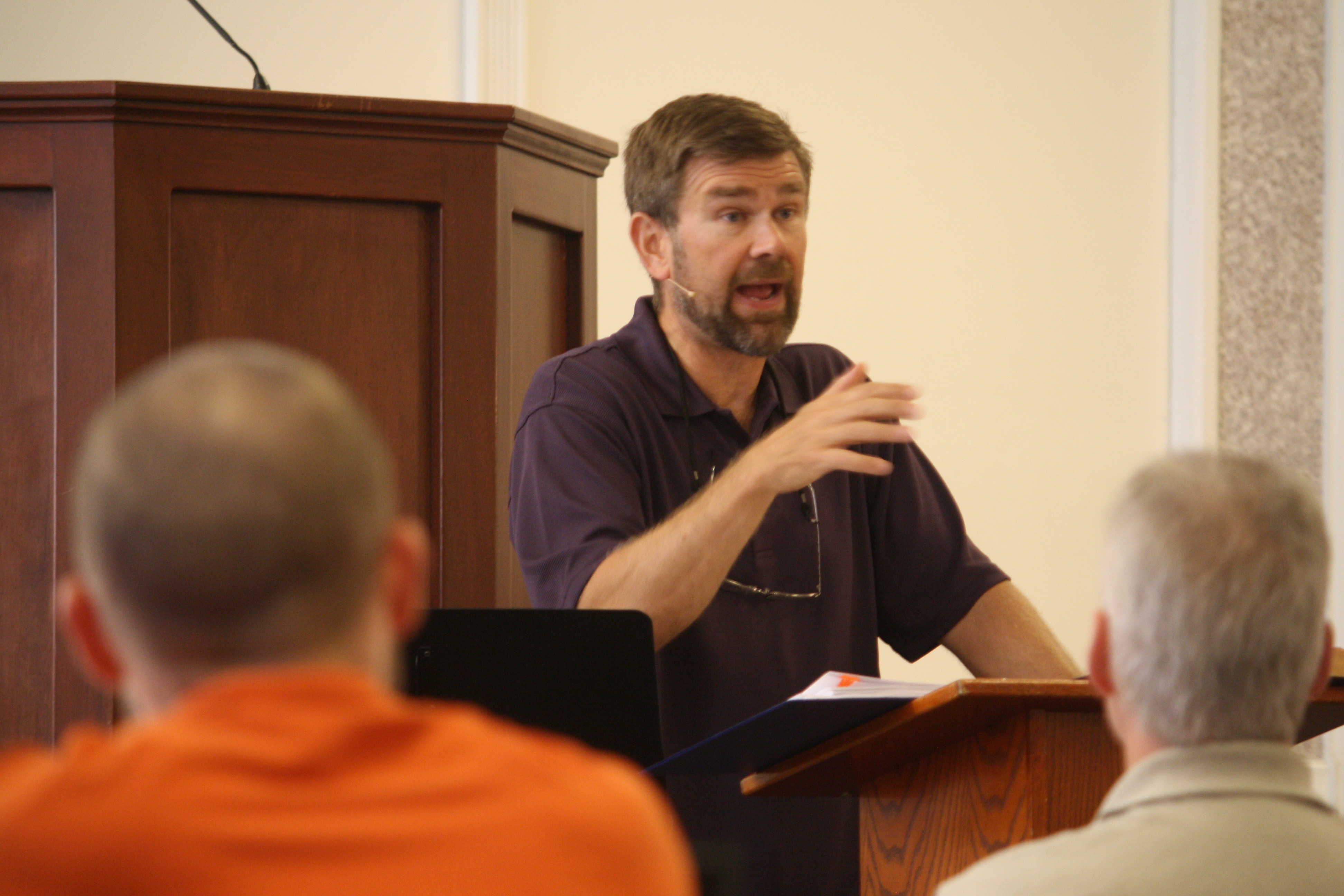
The Republican lawmaker made those comments during a speech Sept. 27 at a sportsman’s banquet at Liberty Baptist Church in Hartwell. Broun, a medical doctor, is running for re-election in November unopposed by Democrats.

“God’s word is true,” Broun said, according to a video posted on the church’s website. “I’ve come to understand that. All that stuff I was taught about evolution and embryology and Big Bang theory, all that is lies straight from the pit of hell. And it’s lies to try to keep me and all the folks who are taught that from understanding that they need a savior.”

Broun also said that he believes the Earth is about 9,000 years old and that it was made in six days. Those beliefs are held by fundamentalist Christians who believe the creation accounts in the Bible to be literally true.

Broun spokeswoman Meredith Griffanti told the Athens Banner-Herald (http://bit.ly/Us4O0Z ) that Broun was recorded speaking off-the-record to a church group about his religious beliefs. He sits on the House Committee on Science, Space and Technology.

It seems unlikely that Broun’s remarks were supposed to be kept private. The banquet was advertised, Broun spoke before an audience and the video of his remarks was posted on the church’s website.

Sermon of the Week – Crisis of Faith and the Goodness of God by Brian Borgman (Part 3)

Crisis of Faith and the Goodness of God – Part 3 of 4

by Pastor Brian Borgman.

Continuing on this week with part 3 of this 4 part sermon series. If we haven’t had a Crisis of Faith yet in our walk with God, we will someday. Pastor Brian addresses the heartache and struggles in this encouraging and edifying sermon series from Psalm 73. Enjoy Part 3 of 4 as this week’s Sermon of the Week.

Play MP3 for Crisis of Faith – Part 3 of 4

Download MP3

You may have to click “maybe later” past the “sign up” page on Sermon Audio for the download the audio file.

Pastor Brian’s Church: Grace Nevada