The Pastor and Church Discipline

Here is the fourth in a series on Pastoral Theology from Reformed Baptist Seminary. This is the second message from Donny Martin. Church discipline is never easy and while necessary for the purity of the local church, it should be approached with much grace and humility. Far too often, church discipline devolves into a verbal slugfest rather than a means whereby the local church seeks to bring full restoration to a fallen brother or sister in Christ.

“Church discipline is the church’s Christ-given kingdom responsibility to teach, mature, reform, correct, and restore its membership through the means of instruction, mutual body life ministry, correction and censures that range from preaching and teaching, through suspension from the Lord’s Supper, to expulsion from the fellowship of Christ’s visible church.”

Our prayer is that it will be both an encouragement to pastors or future pastors and even to those who serve in other aspects of ministry but not necessarily leadership roles.

A New Direction

Street SignHaving been the head administrator for the last several months, I have been blessed to work with some truly wonderful brethren and to interact with a great many of our readers personally. Having been here for nearly two years, I believe that many of the articles we have written have truly been beneficial and God honoring. And I believe those articles have helped many readers to understand the holy nature of God better, causing them to glorify the Lord. With that being said, I have also had the opportunity to be moderator of the comments and the interactions we have with our readers. I have seen the reactions that some of the things we have written cause, not all of the reactions we have received have been pleasant, or even God honoring. In fact, there have often been times where things have gotten downright snarky.

Now, I have never been one who feels that Christians should cower in a corner and not stand up for the truth. I believe that we must stand and proclaim the only truth there is, the word of God. If we were to fail to proclaim the truth for fear of how we would be received, we would be sinning against God Himself. We must not, in fact cannot, compromise the truth of the gospel. However, in standing up for the truth, it is possible for us to be so caustic or arrogant in what we say that we can do just as much damage as we hope to defend against. I fear that in our efforts to defend the solid truths of the gospel, we as a blog, have crossed that line on more than one occasion. The result has been that we have engendered a spirit of divisiveness and even bitterness among ourselves and our readers. For this, I must sincerely apologize.

As Christians we are called to proclaim the truth of the gospel to a lost and dying world. And we are to do so with all the love and compassion we can possibly show. We are heralds of the true and living gospel, proclaiming salvation through Christ alone. We are also called to use our gifts to edify and strengthen the body of Christ. To build it up for good works that glorify our Savior. If we fail to obey these commands from our Lord, we are indeed in sin. Many times throughout the run of this blog, various authors have attempted to make the call for all of us to eliminate the sometimes caustic and arrogant attacks we level at each other. There have been pleas to speak the truth in love and compassion, both to the lost and the saved who frequent our pages. Yet, I continue to see the end result of that which we have posted. I have seen the arguing and spitefulness we have been responsible for. Thus, we have failed to heed our own call.

Now, in fairness to my gifted pool of contributors, I know that the proclamation and defense of the truth will always have its detractors. There will be no end of those who wish to argue and pervert the truth. Therefore, now matter how much love and compassion we write with, there will be those who seek to stir up strife for their own gain. It is not those who concern me. It is those with whom we are true brethren, those with whom we may disagree but are yet in the faith, that we have sometimes eviscerated with our words that I am compelled to apologize to, and ask forgiveness from. While none of us have ever set out to purposefully harm our brethren, our desire to defend the theologies we are passionate about has sometimes been misplaced. As lead administrator, it is my duty to keep this matter in check. I have failed in this and ask for forgiveness from those we have hurt.

One reason I believe that much of this is has occurred is that we are part of that blogosphere that is known as “discernment” ministry. We have long tried to warn believers that there are enemies in the camp. However, in our zeal to defend the bride of Christ, we have sometimes gone after even true brethren for even perceived minor wrongdoings. This has created that spirit of divisiveness and bitterness I mentioned above. While we are supposed to defend the truth of God’s word, we are also to evidence our faith by how we love the brethren. But we when have wrongly taken them to task, what we have actually shown is that we are very good at eating our own.

To that end, I want to say that as head administrator, I am changing the direction of DefCon. I want to take us out of the discernment arena and get us back into the gospel arena. Henceforth, our articles will focus on those things that teach and edify the body, rather than be a constant barrage of what is bad in Christendom. We will seek to teach and expound, building up the body to magnify God and do good works. We will write about how Christians should interact in this world from a gospel centered worldview, about the absolute need to be busy proclaiming the gospel, on things which educate them on areas of biblical parenting, relationships, etc. Along the way, it may be necessary to warn our readers against obvious goats in the camp. We will write about these assaults on the gospel, but no longer will it be our sole focus.

With this new direction will come new responsibilities for us as writers. We must keep our motivations and feelings in check. We must balance our passion for the truth with our need to love our brethren, and even our enemies. We must strive to honor God and His word above all else. I ask our readers to pray for us during this time of transition. Petition God that we would be honest, faithful and true to His word. That we would be a blessing to Him and not a curse. I also ask that you would stand with us, continue to read and comment on our articles. Be encouraging where we are getting it right, and call us, lovingly, into account when we blow it.

Defending Contending has been a blessing to a great many people over the years. As the broken and busted vessel that God has blessed to run it, I desire to see it be an even greater blessing in years to come. I thank you all for your continued prayers and support. May God bless us as we seek this new direction for His glory.

Beams, Logs, and Motes, oh My!

There are times in our lives when we are in need of somebody taking a two-by-twice and giving us a good whollop in order to get through our thick skulls exactly what we should be or should not be doing.

While I cannot count the number of times I have either heard or read the words of Paul in Romans 7, the reading often has conjured the following image in my mind.

“The good I am supposed to be doing is not what I am doing, and the bad I am not supposed to be doing is exactly what I find myself doing.”

I tend to think that I am so thankful that there is a reason for why I am doing what I do. The grace of God sure is great and His tender mercies are new every morning. However, in my surmising, what I have failed to remember is the further truth that the apostle Paul enunciates very clearly, “Wretched man that I am! Who shall deliver me from this body of death?”

We like the grace part, the tender mercies part, and the words that seem to allow us a “Get Out of Jail” free card when we do sin. Obviously, it must not really be me doing these things, but just my old nature that keeps getting in the way. We appreciate the fact that Paul evidences to us that he was human just like us and that his struggles empower us to work through our own struggles.

Taking this a step further, we recognize our own failings so well that we somehow have come to the conclusion that we have splintered the beams and logs in our own eyes and that all is well. The truth is that it stinks in Denmark and I don’t think it is the cheese.

Our perception of our own miserable failings have enabled us to think that as long as we “claim the victory” and/or “claim Paul’s words as our own” that this equates to having the freedom to chew on all of our Christian brethren who are not nearly as spiritual as we are. We find fault, we nit-pick at others, we castigate, we shoot our own wounded in the trenches, and at the end of the day manage to lay down at night with what we think is a clear conscience before God.

The harsh reality is that our lives are at times no better than those in the church at Ephesus, in that, we have left our first love of the Savior. We have traded in the clear revelation of Jesus Christ for an opportunity to try and justify our own actions, words, or thoughts. The truth is that we can, if we are honest, sometimes be more in love with ourselves than with the Savior.

Or, we may be more like Sardis, in that, our works are not perfect before God. We do not give Him our best in every area of our lives, just the areas that others see. In the cold, dark corners of our heart, we find ourselves attached to the flesh. We are loathe to refrain ourselves from that which brings temporary pleasure. In the meantime, the works we do before God are mere religiosity and not actually from the heart.

Or, is it possible that we are representations of the problems found in Laodicea? In short, we are lukewarm. We are not on fire, but to look at us neither are we stone-cold dead. We are rich and think we are in need of nothing. However, the Searcher of all hearts knows the truth.

Each of the members of these assemblies were called to repentance. They, just as we do, needed to realize and repeat the words of Paul –

“WRETCHED MAN THAT I AM! WHO SHALL DELIVER ME FROM THIS BODY OF DEATH?”

Why is it so much easier to find fault with others than to see the wretchedness of our own souls? Why is it so much easier to call for the repentance of others than it is to cry for continued mercy from God and ask for deliverance from the body of death?

Gypsy Smith, a minister from England in the 19th and 20th centuries, was once asked about the pursuit of revival by an individual attending his services. His reply was, “Go home, find a piece of chalk, draw a small circle on the ground, and then kneel inside the circle? Once you have done this, plead and pray for God to begin the revival with everybody inside the circle. When He changes your heart and the prayer is answered, the revival will be under way.”

How often have we prayed for those around us that God would do a work of grace and shine His mercy upon them when we should be praying for our own souls? Do we pray for revival with a heart that asks God to begin the work with us?

I, for one, have been guilty at times, even here on DefCon, of being more concerned about the foibles, the sins, the errors, and the frailties of others than I have in searching the truth of what is in my own heart. I cannot help but wonder if I had spent even half so much time asking God to reveal the dark crevices of my own heart what it would reveal.

I wonder what a difference it would make both in myself as well as in the way that I approach others. Would the revelation of my inner self cause me to be more and more dependent on the mercies of a Sovereign Savior who paid for the sins, errors, and frailties that I seek to cover?

Would I be much quicker in praying the words of King David in Psalm 51 for my own sin against God than I am in my willingness to write a blog about the sins of others?

Would I be much quicker in throwing aside the shabby, rotten clothes of my self-righteousness and self-importance in order that Jesus Christ may be glorified and in order that we may see the Holy Spirit do His work instead of thinking I can do a better job?

While on my part this is not a free ticket or a stepping away from standing for the truth, my prayer is that the areas the Lord is working on in my life of late will help me to be more careful in what or how I speak or write to or about others. Not everybody who differs in some areas of doctrine is to be considered an unbeliever. I know that I should learn to be more gracious in various areas of my deportment seeking to recognize that while my position may be biblical, my disposition may not be.

From my heart, I wish to acknowledge again that not all of my words here have been gracious. There are times when I was more concerned about tearing others down than remembering the grace of God that has been shed abroad in my own heart. I know that there are still beams or logs that need to be removed and my prayer is that the discipline of a loving Father will be a constant reminder that I truly am a wretched man. I need the constant reminder that I must be delivered daily from this body of death. In my flesh, there is NO good thing and it must be put to death. Yes, the putting to death, or mortification of the body, is not easy, but it is necessary.

With those words in mind, I want to conclude with the words of a beautiful old hymn. However, before I do, I want to apologize for where I have lacked in grace towards our readers. I ask that you forgive me for not always being more desirous of pointing to the Savior than I have, at times, been desirous to point out the sinners. It is my intention to still write truth, but I hope and pray that I will search my own heart before I consider putting either pen to paper or fingers to a keyboard.

Marvelous grace of our loving Lord,
Grace that exceeds our sin and our guilt!
Yonder on Calvary’s mount outpoured,
There where the blood of the Lamb was spilled.

Refrain:
Grace, grace, God’s grace,
Grace that will pardon and cleanse within;
Grace, grace, God’s grace,
Grace that is greater than all our sin.

Sin and despair, like the sea waves cold,
Threaten the soul with infinite loss;
Grace that is greater, yes, grace untold,
Points to the refuge, the mighty cross.

Dark is the stain that we cannot hide.
What can avail to wash it away?
Look! There is flowing a crimson tide,
Brighter than snow you may be today.

Marvelous, infinite, matchless grace,
Freely bestowed on all who believe!
You that are longing to see His face,
Will you this moment His grace receive?

The Pastor and Conflict Resolution

Here is the third in a series on Pastoral Theology from Reformed Baptist Seminary. This message is from Donny Martin. Who of us, especially in church leadership, has not had to deal with conflicts in a local church setting? In this video, Pastor Martin approaches this teaching session from the aspect of dealing with conflict resolution by and because of the gospel. As he states right from the beginning, “The gospel brings the greatest conflict resolution vertically and horizontally in our lives. The reality is that there is the common and painful reality of life in a fallen world.”

Our prayer is that it will be both an encouragement to pastors or future pastors and even to those who serve in other aspects of ministry but not necessarily leadership roles.

The Pastor as a Man and His Relations

Here is the second in a series on Pastoral Theology from Reformed Baptist Seminary. This second message is from Bob Selph and is just as excellent as the first video posted yesterday. Our prayer is that it will be both an encouragement to pastors or future pastors and even to those who serve in other aspects of ministry but not necessarily leadership roles.

The Pastoral Office

I would like to put up an excellent series from the Reformed Baptist Seminary. This first video lecture comes from Bob Selph. I believe that every person who aspires to the ministry should listen to this series. Please enjoy and may the Lord be glorified in each of our ministries.

Responsibility of Elders

My church held a conference on church membership last fall. We had several well known speakers, Captureincluding Michael Horton, our own Voddie Baucham, Ken Jones, and Thabiti Anyabwile from Grand Cayman.

Here is Thabiti’s most excellent message on the responsibilities of those who serve the local church as elders: Responsiblity of elders

A Christian Stands From His Wheelchair to Preach the Gospel

The preacher you are about to watch is a friend and dear brother in Christ. His name is Richard Story. Richard was severely injured in a car accident in 2006. He is confined to a wheelchair and needs the assistance of his loving bride to accomplish most tasks we take for granted. Recently, Richard wanted to obedient his Savior’s command to preach the gospel. This meant overcoming a great many hurdles, including a fear of people brought on by his condition which left him isolated from the world.

To that end, Richard had a cross made with the words “Are You Ready” on it. With great planning and effort, Richard regularly sits on a street corner in his community being a witness for his Lord. Yet, Richard continues to grow in his efforts to share the gospel. In this video, Richard has joined numerous evangelists from around the country during the recent Super Bowl Outreach in New Orleans. This is Richard’s first time preaching in the open air. I am delighted to call this man my friend and brother in Christ. I share this with our readers to encourage you to follow Richard’s example, to let no obstacle prevent you from sharing the gospel of our Lord and Savior.

THE POWER OF THE CHURCH

He is the radiance of the glory of God and the exact imprint of his nature, and he upholds the universe by the word of his power. (Hebrews 1:30000023

The true power of the church lies in Christ personally. You may have all the stars that ever made bright the Milky Way with their combined sheen, but there is no power in them to kill evil or conquer sin

The stars of the church shine because God makes them shine. Their shining is not their own: it is a borrowed light with which they are radiant. But the power that overcomes evil, wounds the heart, pierces the conscience, and kills reigning sin is of the Lord alone.

“Out of his mouth went a sharp two-edged sword” (Revelation 1:16). Glory not, therefore, in men; for power belongs unto God. The power lies in Christ’s Word. “Out of his mouth went a sharp two-edged sword.”

“He that hath my word, let him speak my word faithfully…saith the LORD” (Jeremiah 23:28). People are disturbed and troubled by the real gospel: under the false gospel they can sleep unto destruction. Bring out the sword: it is made to wound; let it exercise its salutary sharpness.

The gospel has two edges so that none may play with it. When they think to run their fingers along the back of it, they will find themselves cut to the bone. Whether we regard its threats or its promises, it cuts at sin.

Let us therefore know that the power of the church does not lie anywhere but in the Word as Jesus himself speaks it. Let us keep to his own pure, unadulterated, unblunted Word, and let us pray him to send it forth with power out of his own mouth into the hearts and consciences of men.1

Charles Spurgeon

[1] Charles Spurgeon, At the Master’s Feet [Grand Rapids: Zondervan, 2005], January 27.

Hat tip to http://apprising.org/

If God starts it–He WILL finish it!

road to nowhere 11

I have always heard that if you are going to teach something, you should teach what you are passionate about. I am passionate—more like adamant—about the eternal security of the believer. Or as Steve Lawson would say, “I’m not just dogmatic–I am bulldogmatic” about this subject. I am absolutely convinced that if a person is truly saved, they are saved forever. And today we’re going to see why.

Let me start with an illustration—and when I say “Let me” I’m not looking for your permission, I’m telling you in a nice way, “I’m doing this whether you like it or not.” Let me start with an illustration. Have you ever been to Bryson City, NC? It is a tourist town nestled in the Smoky Mountains. And in Bryson City there is an odd sort of tourist attraction. It’s a bit of an unintentional tourist attraction. If you take Everett Street out of the city, it eventually becomes Fontana Road. Go past Swain County High School about 6 miles, and you come to a tunnel. And on the other side of the tunnel is…wait for it…NOTHING!

Fontana Road has actually gained a more colorful nickname by the locals, many of whom call it, the Road to Nowhere. It stands as a monument to governmental efficiency. Actually, there’s a good reason they didn’t finish it. During the construction process they found rock that was highly acidic, and if they were to disturb it, the acid would cause severe environmental damage. For all you children of the ’70’s, I will leave off any references to “acid rock”.

tunnel

We have our own “Road to Nowhere” here in Knoxville, it is called the James White Parkway (named after the man who founded Knoxville, TN. Not the wonderful Christian apologist. But if I had my way…). Got started and has still not been finished, and it appears it never will be finished. The Foothills Parkway, which was originally supposed to be 72 miles long, running from Tennessee to North Carolina–how many miles are complete, anybody know? About 22.

So, my point is this: do men begin projects that they do not finish? Wives, please hold your comments about husbands until we are finished, OK? My dad was notorious for that. So many times we begin things we have every intention of finishing–but for whatever reason, those things remain unfinished.

On the other hand, if God starts something, will HE finish it? Oh, absolutely. And that is a truth we find in our text today. And that text is Philippians 1:6. No, I actually need to start at verse 3. Philippians 1:3-6 (NASB)3 I thank my God in all my remembrance of you, 4 always offering prayer with joy in my every prayer for you all, 5 in view of your participation in the gospel from the first day until now. 6 For I am confident of this very thing, that He who began a good work in you will perfect it until the day of Christ Jesus. Of all the verses that so clearly spell out the fact that a saved person is saved forever, this is one of the clearest. When I first got saved, I was like a lot of people probably are. I thought that, “Well, yeah, you can be wicked enough to lose your salvation!” But that’s because I was looking at it in the same way as anyone else who thinks you can lose your salvation—I was only looking at salvation from the human side, not taking into account that it is not that we save ourselves, but that God saves us, sets us apart as His own, and will do everything He has to do to keep the one He has adopted. I like what John Calvin said about this verse—

“Let believers exercise themselves in constant meditation upon the favors which God confers, that they may encourage and confirm hope as to the time to come, and always ponder this in their mind: God does not forsake the work which his own hands have begun, as the Prophet bears witness, (Psalm 138:8; Isaiah 64:8) we are the work of his hands; therefore he will complete what he has begun in us. When I say that we are the work of his hands, I do not refer to mere creation, but to the calling by which we are adopted into the number of his sons.”

And in that quote, he lists two Old Testament verses to support is argument, Isaiah 64:8But now, O LORD, You are our Father, we are the clay, and You our potter; and all of us are the work of Your hand. Psalm 138:8The LORD will accomplish what concerns me; Your lovingkindness, O LORD, is everlasting; do not forsake the works of Your hands. So in these three verses—Philippians 1:6, Psalm 138:8 and Isaiah 64:8—we see this most beautiful picture that God has taken us mere lumps of clay, and is shaping us, molding us, making of us a vessel of mercy to show His grace, and that He will not leave that good work undone.

OK, so let’s look at our text from Philippians. Let’s start off by talking about the good work. What is the good work? Salvation. Who began the good work? God did. Otherwise, Paul would have said, You who began the good work in you… Right? But he didn’t say that. He said He who began the good work. So obviously somebody other than you began the good work in you. Somebody not named “You” began the work of salvation in you. In fact, Paul uses the word ἐνάρχομαι (enarchomai). It means “to begin”. You hear the word “arch” in there, like archangel or archetype. It comes from the same Greek word as ἀρχή (arche). John 1:1 (Greek NT)ἐν ἀρχή (en arche) In the beginning. The word Paul uses refers to the very beginning of something. Not, “You had the idea, and God showed you the rest.” God started it. When Jesus asked His disciples “Whom do men say that I, the Son of Man, am?” and Simon Peter said “Thou art the Christ”, Christ did not say, “Good job Peter! How did you ever figure that out? You’re one smart cookie” I don’t think the phrase “smart cookie” was part of the Greek or Hebrew lexicon at the time, but anyway. It was GOD who showed Simon that Jesus is the Christ. Simon didn’t have the idea in his head and God came along and said, “Yep, you got it!”

Titus 3:4-64 But when the kindness of God our Savior and His love for mankind appeared, 5 He saved us, not on the basis of deeds which we have done in righteousness, but according to His mercy, by the washing of regeneration and renewing by the Holy Spirit, 6 whom He poured out upon us richly through Jesus Christ our Savior. Did God look down on creation, and say, “Hey, ya know, that Donny guy, he’s a pretty good fellow. I think I’ll save him”? No, because there is no such thing as a “good person”. We are all wretched and wicked and we all deserve Hell. If you have a problem with that, then go to your Bible and rip the entire 3rd chapter out of the book of Romans. We are, as he would tell the Ephesians, dead in trespasses and sins. And by the word “dead” he means……DEAD! But God grants new life to us, washes us, puts His Holy Spirit in us, and opens our eyes to the truth. We have an example of this action by God in Acts 16:14A woman named Lydia, from the city of Thyatira, a seller of purple fabrics, a worshiper of God, was listening; and the Lord opened her heart to respond to the things spoken by Paul. When we send out missionaries, mission teams, when we commission them to the work, what do we often ask in prayer? We pray God would grant His missionaries mercy; that He would protect them, but what do we pray for the people they witness to? Do we say, “Lord, I hope the people are smart enough to believe us!” or “Give us eloquent speech so we can convince them to follow us!” No, we pray that God would open their hearts to believe the gospel. Because one cannot believe the gospel, cannot confess Jesus Christ as Lord unless the Holy Spirit acts on their heart (1st Corinthians 12:3).

Next let’s look at the word confident. When we think of confidence, what do we normally think of? Someone that can walk into any situation, and they are “confident” they can get the job done. The heart surgeon, or the brain surgeon. “I am Dr. Big Man, and I am going to save your life!” That is self-confidence. And in some circumstances that can be a good thing. I want the guy cracking my chest open and holding my still-beating heart in his hands to know what he’s doing. “Gee, I hope I can get this thingy back in there!” is not something I want to hear him say. But when it comes to salvation, is self-confidence a good thing? Absolutely not!! But the person who says you can lose your salvation is indeed basing your continuing in salvation on your confidence in yourself. When you boil it all down, that person is saying, “Great! God has saved you! Now, make sure you do enough good things, and you don’t do enough bad things so you lose that salvation!” That is basically what they are saying—that God started it, but now it’s up to you to keep it going. That was the whole problem with Galatia. The Judaizers were telling the new Christians in Galatia that yes, you may have been saved by grace, but you keep yourself saved by keeping the Law of Moses.

And that is basically what these people do—they set the person up to embrace a form of legalism. If you do this many of this sin and that many of that sin, and if you don’t do this or this then you’re lost again. Galatians 3:3Having begun by the Spirit, are you now being perfected by the flesh? Having been saved by the washing of regeneration by God, are you now kept by obeying a list of rules and regulations that if you don’t live up to them God will disown you? Paul put no confidence in his flesh. Paul is not confident in man’s ability to keep himself. Just the opposite—he knows than man’s flesh is weak and he cannot save himself. And he certainly cannot keep himself saved. In fact, if one says that a saved person can be wicked enough to lose their salvation they are, by default, saying that one can be righteous enough to keep it. Paul’s confidence is in God and in God’s ability to keep that person. Being confident of this. Confident that God began the work, and that if He has begun the work He will perfect it.

That word perfect. That is the key to this whole verse. The Greek is ἐπιτελέω (epiteleo). The root word is τελέω (teleo). Does anybody know what the 3rd person passive indicative of that word is? How can you not know the 3rd person passive indicative of τελέω (teleo)? What’s wrong with you people? The 3rd person passive indicative of τελέω (teleo) is τετέλεσται (tetelestai). Do you know where we find the word τετέλεσται (tetelestai) in the gospels?

John 19:30 (Greek NT)τετέλεσται (tetelestai) “It is finished.”

Did Jesus complete the work of redemption and salvation on the cross? If God begins a good work in you will He complete it? ἐπιτελέω (epiteleo). τετέλεσται (tetelestai). If you are saved, your salvation is every bit as complete as Christ’s work on the cross. He who began a good work…will complete it.

Unfinished bridge, discontinuity, interruption.

Let’s look at some other verses that say pretty much the same thing. Hebrews 10:14—and of course we can’t start with verse 14, let’s start with verse 11. Hebrews 10:11-1411 Every priest stands daily ministering and offering time after time the same sacrifices, which can never take away sins. Under the old covenant, if you sinned today, you bring an animal to the priest, he would kill it, cut it up, burn it. You sin tomorrow, does that animal you brought yesterday do you any good today? No. So what do you do? You bring another one. The priest kills it, cuts it up, burns it. You sin again the next day–you get the picture. The goat that was killed on the Day of Atonement one year—was it still good the next year? No. What did they have to do? Bring another animal. The year after that, are the two goats you brought the previous two years any good? No, you bring another one. 12 but He, having offered one sacrifice for sins fora little while—no? One sacrifice for how long? For all time. 12 but He, having offered one sacrifice for sins for all time, sat down at the right hand of God. Did the priests ever get to sit down? When you have 2 million plus people, you’ve got a whole lot of sin. And when you had a whole lot of sin you had a whole lot of animals that needed to be killed, cut up and burned. How many sacrifices did Christ offer? One When He finished that one sacrifice, how many more sacrifices did He have to make? NONE. So what did He do? He sat down. Why? Because He was done. τετέλεσται (tetelestai). 13 waiting from that time onward until His enemies be made a footstool for His feet. And here we go. 14 For by one offering He has perfected……for the time being those who are sanctified. Is that what that says? No. NKJV–He has perfected forever those who are sanctified. I mentioned before that when I first got saved I did not believe in eternal security. Wasn’t gonna have it; wasn’t even gonna hear it. But after a while I started reading more, and just when I was about to the point of accepting it, I read this verse. Game over. Period, paragraph. He has perfected forever those who are sanctified. And actually, the ESV describes us as those who are being sanctified—much closer to the Greek.

Listen to the tenses. He has perfected. And by the way, the word perfected in Hebrews 10:14? Guess what Greek word that comes from? τελέω (teleo). Who has been perfected? Those who are being sanctified. This verse cannot be talking about some future, possible, “do everything you can to get there, maybe you’ll get there and maybe you won’t” kind of idea. Those who are right now being sanctified have been already perfected.

Now, someone may ask, “Well, what about the one who believes for 20 years and turns his back on Christ? What do you say about that one?” I asked one of our pastors about that way back then. He said, “That person was never saved to begin with.” And I thought that was kind of a cop-out. But in reality, that’s the truth. If someone believes for a little while—goes to church and listens to Christian music and even teaches or sings in the choir—if they turn their back and walk away from Christ, that is one who went out from us but they were not of us—how do we know they were not of us? Because if they had been of us, they would have continued with us (1st John 2:19). That was a work that was not begun by God. That was a work begun by the flesh, and anytime a person seems to get saved, and seems to continue in the way for a little while, but they defect and return to their old ways, it is proof that they were never saved to begin with. God did not begin the work in them because if it was God who began that work in that person, would He complete it? Of course He would! He who began a good work…will complete it. But if the work is not completed, then it was never started by God.

“Many will say to Me, ‘Lord, Lord! We’ve done all these great things in Your Name!’” What will Jesus say? “I never knew you. I didn’t begin a work in you. Be gone!” Turn to 2nd Timothy 1:12For this reason I also suffer these things; nevertheless I am not ashamed, for I know whom I have believed and am…pretty sure that He might keep what I have committed to Him for a little while. No, that’s not what it says. I know whom I have believed and am persuaded—same word he uses in Philippians 1:6 as confidentI am persuaded that He is able to keep what I have committed to Him until that Day. What was Paul committing to Him until that Day? His eternal soul. Can we trust God with our eternal soul? If we cannot trust God with our eternal soul, then what kind of hope could we ever have? Read through all of Paul’s letters. See if you ever read where Paul uses words like ‘maybe’ or ‘perhaps’ or ‘he might’ or ‘it’s possible’ or ‘for the time being’. Paul does not use wishy-washy, milquetoast, equivocating language. When Paul writes he uses words like ‘confident’ and ‘able’ and ‘He will’ and ‘I believe’ and ‘until that Day’. What kind of hope could we ever have if we can’t even trust God to keep our eternal soul?

But I can lay my head on my pillow at night, knowing that I am trusting my eternal soul to a God who is not only able, but also faithful to keep that soul safe. Chris H, I love ya brother. You’re a fine pastor, I’m sure you are a good father, a decent man. But I’m not gonna trust you with my eternal soul. Because you’re human. And humans fail. Manfred, I’m not trusting you either. Jungle Missionary, sorry. My wife Laurie, I love you honey. But I’m not trusting you either. I’m not trusting anybody who contributes to this blog, or comments on it. I’m not trusting John MacArthur or RC Sproul or Ligon Duncan or Voddie Baucham. And in fact, out of all the 7 or so billion people on planet earth—out of all those 7 billion people, do you know who is the LAST person on earth I would trust with my eternal soul?

ME.

If it is up to me to keep my soul safe until the day of Christ—I might as well pack for an eternal marshmallow roast right now because I know me—I’m gonna screw it up!! And if it is up to me to keep myself saved I will more than surely lose it. And so will you if keeping your salvation were up to you.

But this is the good news–it’s not up to us!! God does not leave our eternal salvation in our hands because we would all surely be lost! I know whom I have believed and I am convinced that He is able to guard what I have entrusted to Him until that day. And why can I trust Him with My soul? Because if He began the work, He will complete it. He did not leave it up to me to complete it. Let me show you another passage.

Ephesians 1:13-14. These are two verses in a long, long paragraph. But we’re just gonna take a look at one concept in this passage. And we are going to read it from the King James. Ephesians 1:13-14 (KJV)13 In whom ye also trusted, after that ye heard the word of truth, the gospel of your salvation: in whom also after that ye believed, ye were sealed with that Holy Spirit of promise, 14 which is the earnest of our inheritance until the redemption of the purchased possession, unto the praise of his glory. OK, did you see that word in verse 14? Your translation may say ‘pledge’. ‘Guarantee’ is the most common rendering. I like earnest. I like the translation ‘earnest’ because it carries a certain meaning. Much like the word ‘betrothed’ in the gospels, Mary was betrothed to Joseph, that betrothal being more than simply an engagement. An earnest was a down payment, but it was more than that. By putting down an earnest, the buyer was pledging, as solemnly as possible, that he would pay the rest of the money and finalize the transaction. Now, who is the one paying the earnest? God. How? By sealing us with the Holy Spirit. Now listen carefully and if you remember nothing else that you have read, please remember this: If God puts down the down payment, who will complete the transaction? If God gives us the Holy Spirit now, promising that He will complete the transaction, will He complete that transaction? If God put down the down payment, then how in the world can yo ever hope to come up with enough to finish paying it off? That kind of thinking is nothing short of absurd. And it has led countless Christians into lives of legalism and Law-keeping trying to do what only God can do.

So, here are some questions you need to answer:

If God begins your salvation, will He finish it? YES.
Is He able to keep your soul until the day of Christ? YES.
If He put down the down payment, will He finish the transaction? YES.
Has He perfected forever those that He has set apart? YES.
Is He able to save to the uttermost those who come to God through Him? YES.
Does He ever live to make intercession for us? YES.
If the Father draws a person to Christ, will Christ lift him up on the last day? YES.
Is He the Good Shepherd who will not lose even one of His sheep? YES.
If one of His sheep wanders off, will He go bring them back? YES.
Do His sheep know His voice and will they follow Him? YES.
Will His sheep follow a stranger? NO.
Can anyone snatch His sheep from His hand? NO.
Can anything separate us from the love of God which is in Christ Jesus? NO.

So to argue that one who is truly saved can be lost again, you would have to throw out all that Scripture. You would have to cut it out of your Bible, or use your Sharpie™ as a highlighter through those passages. The person might argue, “But doesn’t it say ‘He who endures to the end will be saved’?” Yes. And that person will endure who has been sanctified by God, who began the good work and will complete it.

One last verse. 1st John 5:4For whatever is born of God overcomes the world. Are you born of God? Will you overcome the world? I rest my case.

Do You Follow a Celebrity Pastor?

20130111-145456.jpgIn most cases, when you hear the phrase “celebrity pastor,” you tend to think of individuals like Rick Warren, Joel Osteen, Steven Furtick or Ed Young, Jr. In each one of these cases, if you are one who believes that preachers should actually preach the Word of God, you probably get a very bad taste in your mouth. You immediately want to scream, “False teachers! Away with them!!” And quite honestly, that’s how I feel too. But there is another kind of celebrity preacher, one that many of us don’t realize is a celebrity. But yet, they are celebrities because folks like you and me have made them into celebrities. Yes, that’s right, I said we made them that way. Those of us who appreciate sound, biblical preaching, who detest the seeker friendly, rockstar image of those “other” pastors, we have celebrities of our own. And that can be a problem.

Many of us greatly appreciate the preaching of godly men like R. C. Sproul, John MacArthur, James White, David Platt and Voddie Baucham. We are blessed to hear these men rightly exposit the Word of God. We love how they take great time and care to preach the Word in context so that God is magnified and we rightly understand our need for His forgiveness through Jesus Christ. So much do we appreciate their godly work that we listen to countless sermons online (or on our iPods), we read the books they have written, we share copious quotes from them via Facebook and Twitter. We even will go to conferences, sometimes at great expense to our finances and time, so that we can hear them magnificently handle the Word of God. And, without even realizing it, we have created them in our minds as the “ideal” preacher, the kind that these rockstar pastors should really model themselves after. In other words, they have become a celebrity in our mind.

This is not to say that good godly preachers like these should not be esteemed. It is a rare treasure these days, it seems, to find a pastor who is willing to be in the public view that will unashamedly stand on the Word of God. We should give them due respect for their duty and devotion to Jesus Christ, for their unflinching stance for the preaching of the true gospel. What I am talking about is that we actually may create an unhealthy, or at least unbalanced, image of these men when compared to the local church. Think through this with me for a moment, how many times have you shared or tweeted quotes from your pastor? You know, the man who has faithfully preached in the same pulpit for five, ten, or even twenty years. Do you follow him on Facebook or Twitter? Do you wish he would at least get with the times to get on Facebook or Twitter like the other guys do? Have you ever stopped and told your pastor about the great sermon that R. C. Sproul preached, or recommended that he read the latest book by David Platt? Have you spent an inordinate amount of time talking to people in your congregation about the conference you just came back from where John MacArthur was the keynote speaker, or complained that you couldn’t go to it at all?

Imagine yourself in the place of your pastor. He’s not famous. Maybe he only has a congregation of a couple hundred people, maybe it’s only fifty. He spends all week preparing a sermon meant for you and those you attend church with. He loses several hours of sleep each week when he is called out to the hospital to minister to a dying parishioner, to counsel a loved one who is severely depressed, to comfort family who lost a child in an accident. He’s never written a book, he doesn’t have a podcast, his budget barely even allows for a computer to keep records on, much less the high tech equipment and talent to set up a nice website. Yet, each week, he dutifully climbs up to that podium and faithfully preaches the word of God to a body of believers. He is just as important as the big names mentioned above, yet he’ll never see the notoriety they do.

Now see yourself through his eyes. You love your pastor dearly and you listen and grow form his devotion to the Word each week. Yet, during the rest of the week, you are downloading sermons from Sproul, MacArthur or Platt. You pour over their books and study notes. When you have a theological question, you pull out their study bibles. You go to their conferences and you come back far more excited than you ever do at the home bible study he heads up. All of this creates an enormous amount of pressure for your pastor. He cannot hope to ever hold the position these godly men do, yet he somehow has to keep the attention of his congregation so he can keep preaching the Word to them. Does he then sacrifice his time to minister to his flock so he can begin writing that book? Should he mimic their teaching styles, or preach the things they preach about? What about those conferences? He could never host one himself, so should he join with other churches to put one on? If so, how selective should he be about who to partner with? You see the dilemma he is faced with? In the eyes of the local pastor, his congregation is enamored with the “big time” preachers. There is a lot of pressure to measure up.

Now please understand, I am not saying that Christians should only ever listen to just the teachings of their local pastor. We can benefit greatly from the godly teachings of pastors, great and small. It is certainly worth our time to read and learn from many great learned scholars, for it will help in our growth and understanding of scripture. We have the liberty to even attend the conferences where these men preach, and can be greatly edified by it. But there must be a proper balance. God put us in a certain place, at a certain local church, for a reason. Scripture teaches us that all Christians are bestowed gifts by the Holy Spirit for the edification of the body of Christ. And where you are planted is where you are to employ those gifts! If you spend most of your time following the “big guys” then your local body is being starved of the gifts you were given for their benefit. When you take time and money to attend that big conference while your local church struggles with its annual budget, you may well be misappropriating the finances God gave you for that body’s benefit. When you share the podcasts and videos of the other pastors, folks may flock to their godly teaching and benefit from it. However, if you took your internet savvy, could you not create a site for your church? You could then share those weekly sermons so that other may benefit from the teaching you have grown under.

The point of this article is not to decry our love for great and godly preachers, but to draw our attention back to our local churches. Let us spend maybe less time, effort and money building up the big names, for God will maintain their ministries with or without us. But let us take just a bit more time, a bit more care and certainly more effort to build up our local congregations. As we build up and edify the local body, we can send out more laborers for the harvest into our local communities. And as more laborers go out, the gospel reaches more people and the local church grows. The more the church grows, the more great and godly preachers can go out into the world and accomplish the work that we are expecting the big name preachers to do. Let us be about the business of supporting our local churches brethren and let the “celebrity” preachers be an added benefit to where we are already being blessed

Civil Disobedience and the Christian

The concept of civil disobedience is not new. Neither is the question of how far a government imagescan go before the Christian is permitted to disobey. This concept of civil disobedience is/ought to be an escalation from the peaceful petition that ought to be the Christian’s first response to objectionable laws. Was Rosa Parks right in her act of civil disobedience? How do we answer such questions?

We must be informed by the Word of God – not our personal preferences and presuppositions.

World Magazine recently published an article focused on this question, you can read it here. Here’s a small excerpt:

Does submitting to civil authorities mean obeying laws that are immoral? We are commanded by God to share the gospel. What if a law barred us from doing so, even privately? We see that obeying government authorities isn’t absolute. It should be clear to Christians that unless there is legal recourse against obeying a law that compels us to sin, we are justified in disobeying it. Is it a sin to offer employees “mini-abortion drugs”?

It is clear from Scripture that Christians are able (obligated, I contend) to disobey the governing authorities if proclamation of the Gospel is outlawed – see Acts chapter 4. Is that the right standard to compare other issues to, as if they become justifiable since Gospel proclamation is?

This question of submitting to political authority has been addressed here at Def Con in the past – see this post as brother Conrad Mbewe examines part of 1 Peter.

The question of disobedience to the governing authorities must be anchored in Scripture – as with anything of import. If God has given us instructions, we who claim to be His must submit to what He was revealed to us! Do you have a pet issue (perhaps home schooling) that would cause you to reflexively rebel against the governing authorities without seeking wisdom from God in humility?  We must be on guard against these issues that are close to us – for it in these that we are most vulnerable to slip into disobedience to God, thinking we are merely exercising our rights – forgetting that we are aliens in this present age, with our citizenship and home in a city whose builder is God.

Since I mentioned home schooling, let me briefly comment on that. In the US of A, it is not now and never has been against the law to home school your own children. Read that carefully. It is not now and never has been against the law to home school your own children. It has been and still is in many places in this country against the law to home school your children in lieu of sending them off the approved institution, but never illegal to home school in addition to the approved educational process. The Bible clearly holds parents responsible for training (educating) their children in the things of God. Rightly done, this covers all academic areas. But the Bible also records for us humble servants of YHWH who submit to pagan education and work diligently to prosper their pagan rulers (Joseph and Daniel come to mind). We must seek wisdom from God’s Word before we decide to go against the governing authorities – for there is no governing authority except those that have been established by God.

So – is it right and honorable to refuse to provide medical insurance that covers abortion? Certainly! The law is set up to allow people to pay for non-compliance. It is a very high price tag for businesses that might cause them to completely change their business model (contractors or part time employees) or liquidation. But think on this: the Bible does not reveal God’s will for man-made institutions. He has created government, family, and the church. Those institutions have responsibility before God as does each individual. A Christian who owns a company has a responsibility before God and he has the same obligation to seek wisdom from God’s Word on this as with personal issues. (Not being addressed in this article are those hell-bound folk who will also answer to God and have no grace to cover them on Judgment Day.)

The Christian that wants to participate in civil disobedience ought to step back and think. Rebellion is as witchcraft. Failure to rightly submit to the governing authorities is rebellion, is as witchcraft. Is that something we want to play games with? 1 Peter 2 gives a “Reader’s Digest” version of God’s commandment:

    Be subject for the Lord’s sake to every human institution, whether it be to the emperor as supreme, or to governors as sent by him to punish those who do evil and to praise those who do good. For this is the will of God, that by doing good you should put to silence the ignorance of foolish people. Live as people who are free, not using your freedom as a cover-up for evil, but living as servants of God. Honor everyone. Love the brotherhood. Fear God. Honor the emperor.

Let’s wrap up with the obvious text, Romans 13, which includes this nugget: “whoever resists the authorities resists what God has appointed, and those who resist will incur judgment.” Read the whole chapter, with a humble attitude. I know it’s easy to despise a government that does not rule the way I want it to. I like my elected officials to have an affection for and submission to the Constitution (at the national level) just like I like my church elders to have an affection for and submission to the Scriptures. But civil governments are mostly occupied by folks not reconciled to God, while church leaders ought to be – and therefore, subject to stricter standards. Most of the things that cause me to consider civil disobedience do not meet the biblical test – they reflect my fleshly desires or my innate sense of self-righteousness. How do you see yourself?

Okay. Your assignment. Voddie Baucham preaching on Romans 13 in two sermons. Listen to part one and part two before commenting. It wouldn’t hurt to listen to Conrad Mbewe’s message from 1 Peter (at the link early in this article). Then let’s discuss like mature, humble blood-bought children of the Creator God and Ruler of the universe.

Stay the Course and Never Compromise!

In light of some of the recent posts and comments, I would like to share a few thoughts from my heart, but I want to do so by beginning with a story.

Over five years ago, an unknown blogger started an unknown blog that would eventually become very well known with thousands of readers. The unknown blogger was The Pilgrim and he began a blog that was then called Reformation Nation. Five years later, the site has been visited almost 3 million times, has over 25,000 published comments, spams innumerable, and people who are either still with us or have left angry, mad, or upset.

In late 2007, I was pastoring a small mission work and the Pilgrim, along with his family, wandered in on a Wednesday evening and listened to an exposition from Psalm 1. That night began what has become a very close friendship that climaxed, in my estimation, with one of the best memories of my life. He decided to join my wife and I on a mission trip to Liberia, West Africa. This was not easy for him as he had never been outside the USA, much less having been on an airplane.

The blog quickly became Defending Contending and I was invited to be the first of several contributors that would join in the fight. The Pilgrim and his family became a very important part of our ministry and in various ways they became a huge encouragement to us and still are to this day. Those times as a mission pastor were not easy, and there were times that I wanted to quit. I wondered whether it was worth the fight. Yet through it all, the Pilgrim was one of the few who always sought to give encouragement no matter how he was feeling, and no matter what he and his family were going through.

One of his catchphrases was and still is, “Stay the course, Never Compromise!”

NoCompromiseThis little phrase encouraged me, as it has others, not to give up when the going was tough. It encouraged me when my health had declined to the point that I wondered whether I would make it back to the US. It encouraged me when we wrote blogs that seemed like they only garnered bad comments, or when we were concerned that the fight should be left to others, or when the thought that giving up was more than passing jumble of words. Yes, there were times when we both wondered if we were going overboard. In our minds, we thought at times that maybe it would be easier to follow the sage advice, “If you can’t beat ‘em, then join ‘em!”

But then, I would remember the phrase again, “Stay the course, Never Compromise!” Either the Pilgrim would have to remind me, or I would seek to remind him.

Was it necessary? Was it worth the fight? Have we stayed the course? Have we sought to compromise?

I believe the answer is and remains that it was necessary, it has been worth the fight, we have sought to stay the course, and to the best of our knowledge we have tried not to compromise.

The purpose of this post and the lengthy introduction and story is to talk about the Pilgrim’s little phrase that has meant so much to me and to others.

First, what does it mean to stay the course and what course are we meant to be taking? After all, there are many blogs out there. There are many paths that can be taken. Some would make us popular and the blog could probably have become very famous had we made some different decisions. So, what course are we to stay?

The apostle Paul never set out to be popular, and it was clear from his writings that he never had a mega-church. He never saw his letters become best-sellers. He never owned his own personal Learjet and was never chauffeured around in bullet-proof vehicles. His final days did not live up to the vague, empty promises made by the health, wealth, and prosperity proponents of the 21st century. In fact, his final days were not spent in luxury but in the damp, dank interior of the Mamertine Prison in Rome. Then for the sake of the Master for whom he was nothing but a slave, he became a martyr and was beheaded at the command of Nero.

Yet, he stayed the course. Listen to what he had to say in Acts 20:24, “But none of these things move me, neither count I my life dear unto myself, so that I might finish my course with joy, and the ministry, which I have received of the Lord Jesus, to testify the gospel of the grace of God.” Notice that his course was not to enjoy life. It was not to have his best life now. It was not to be fulfilled or to build his self-esteem so he could feel better about himself.

Paul was a servant. Actually, he was more than a servant; he was a bondslave. He was a doulos of Jesus Christ and of such had no control over what he could say or do or even how he could live. He recognized his position and rejoiced that he was even called upon to suffer just as the disciples of Christ had done when they were beaten for giving forth the precious words of life.

He actually notes about himself in 2 Cor. 10:10, “For his letters, say they, are weighty and powerful; but his bodily presence is weak, and his speech contemptible.” It would appear that Paul never read the great Roman philosopher Dalius Carnegius scroll entitled, “How to Win Friends and Influence Senators!” If he did, it certainly did not make an impression on him.

History also reveals that he somehow overlooked another popular speaker’s scroll entitled, “The Power of Positive Thinking.” Listen to another passage from Paul’s writing from 1 Corinthians 2:1-5, “And I, brethren, when I came to you, came not with excellency of speech or of wisdom, declaring unto you the testimony of God. For I determined not to know any thing among you, save Jesus Christ, and him crucified. And I was with you in weakness, and in fear, and in much trembling. And my speech and my preaching [was] not with enticing words of man’s wisdom, but in demonstration of the Spirit and of power: That your faith should not stand in the wisdom of men, but in the power of God.”

Paul made it clear what the course was. It was to know NOTHING BUT Jesus Christ and him CRUCIFIED! That was definitely not a popular subject matter. Nobody liked crucifixion. I am sure that everybody did not want to be reminded that the Christian walk was not a bed of roses. There may have been some that thought that following Christ was easy as long as they could first go and bury their dead. Or, maybe it was necessary to first throw a party or to sell off the family business?

After the events of Acts 5 and the account of Ananias and Sapphira, there was no doubt that staying the course meant that people FEARED to join themselves unto the number of those who claimed to be followers of The Way. They were afraid to claim something that they were not just as Ananias and Sapphira had done. It cost that couple their lives when they lied to the Holy Spirit. God knew they were phonies and their lives did not match up what they claimed. There was no desire for forgiveness ever recorded, but the church remained pure and continued to grow.

Those who joined themselves to the church were not looking for fame or fortune. They didn’t come for the lattes, mochas, or cool, hip, relevant messages preached by a guy wearing a “Jesus is my homeboy” t-shirt. To join the early New Testament church meant you knew you might leave home for a church service and that you could be lion food that same night. They also knew what it meant to “stay the course.”

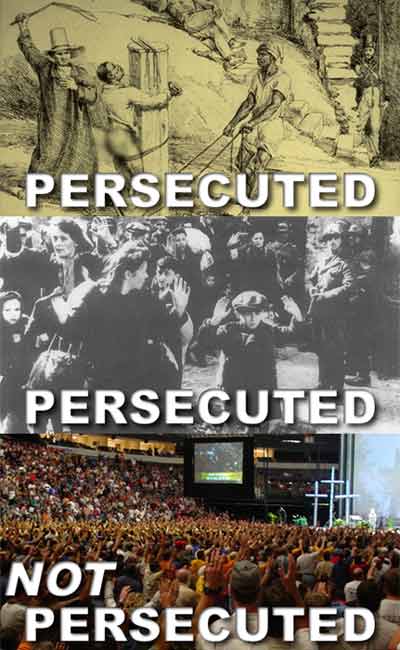
not-persecuted Staying the course meant being willing to take a stand when it is not popular. Staying the course means that you will gain the strength necessary to stare evil in the face, even if it means you must give your life for the testimony of Jesus Christ. When you stay the course, it means that you DO NOT QUIT doing what is right. A saying I heard all growing up is worth repeating, “Two wrongs NEVER make a right.”

Paul had only one desire and that was to finish the course. He did not start out well being a religious leader and putting believers to death. Although he did not start well, he wanted to finish well and with that in mind, he concludes his ministry with 2 Tim. 4:7, “I have fought a good fight, I have finished my course, I have kept the faith.”

Notice that he tells young Timothy that he “kept the faith.” This is where the rest of the Pilgrim’s favorite phrase comes in – “NEVER COMPROMISE!”

Today, as a blogger, it would be easy for us to stop telling the truth. It would be easy for us to join with others and seek to hold hands with all denominations and religions all for the sake of unity, but done at the expense of doctrinal purity.

But, it would be compromise!

At DefCon, we could openly embrace all those who claim to know Jesus simply because they know what His name is, yet have no evidence of fruit.

But, it would be compromise!

We could change from being a blog that takes a stand for truth and only give nice fluffy messages about how our readers could live their best lives now.

But, it would be compromise!

We could tell our readers how much God loves you that He has a wonderful plan for their lives that includes no hardships. That would be to join the mainstream of what passes for evangelical Christianity.

And, it would be compromise!

We could refrain from Paul’s admonition to warn others of the wolves that are desirous of eating the flock.

But, it would be compromise!

Yes, there are many things we could do differently that would please many of our former readers. There are areas of doctrine that could be ignored and whole passages of Scripture completely obliterated from our Bibles all for the sake of unity. We could refrain from warning others of the coming wrath of God. We could refrain from shedding tears at the apostasy that is so prevalent in modern churches. We could keep from warning others that it is only going to get worse.

But, it would be compromise!

To compromise is to give up on God! It is to give up on the Scriptures! It is to say to the world that the world is more important than the truth of God’s Holy infallible and inerrant words. To compromise means that we would have to stop telling people of the dangers of the cults and religions that are taking their people down to hell. To compromise does not necessarily mean huge changes overnight. Compromise takes shape just one small step at a time, but the end result is still the same! DESTRUCTION!

Hebrews 4:12 tells us that the Word of God is quick (alive) and powerful and sharper than any two-edged sword. It pierces down to the very core of our being. To compromise means that we would no longer believe in the regenerating power of God to break the dead heart of stone and make a new creation in Christ. You see to compromise means that we would be admitting that God is NOT the same yesterday, today or forever. It would mean that we believe that the message has to be different because of the changing times.

To compromise means that we will not have stayed the course. We must learn and pray that God will give us the grace, the strength, the humility AND the boldness to stand alongside the Martin Luther’s of the world who have come and gone. We must learn to re-echo those famous words with the same fervor and passion of those who were willing to DIE for their faith.

NoCompromise To compromise means that we do not count as dear that great cloud of witnesses who laid down their lives for the sake of the gospel. It means that we do not stand with our fellow brothers and sisters around the world who suffer today for their faith. It also means that we show to the world that our faith is only for when it is an easy walk, not a path wrought with difficulties, trials, and tribulations.

Listen again to the words of a man, who like Paul, refused to compromise.

“Unless I am convinced by the testimony of the Scriptures or by clear reason (for I do not trust either in the pope or in councils alone, since it is well known that they have often erred and contradicted themselves), I am bound by the Scriptures I have quoted and my conscience is captive to the Word of God. I cannot and will not recant anything, since it is neither safe nor right to go against conscience. Here I stand for I can do no other. May God help me. Amen.”

To my fellow contributors, nobody said it would ever be easy. There are far too many who have given up already, and I for one do not want to be just another web statistic. I do not want people to say, “DefCon used to stand for the truth, but they gave up. They quit! They compromised for the sake of getting more readers!”

With God as our helper, we will stay the course and we will never compromise. I would hope that if we ever veer from our path that somebody else would be granted the strength to call us on the carpet. If we ever cease to use the Word of God as our mainstay, then I hope that somebody will seek to remind us of our duty and our call to be obedient servants. Our goal should be not to gain or hear the praise of man but to hear those wonderful words one day in eternity, “Well done, you were a good and faithful servant!”

Soldiers have no recourse to change their orders like so many are doing today. 2 Timothy 2 tells us that we are called to be good soldiers of Jesus Christ. No soldier that goes to war entangles himself with the affairs of this world. Our Commander in Chief has not authorized easy deployments, nor has He changed the battle plan!

To conclude, we at Defending Contending make no apologies for our stand for truth. Our conscience is captive to the Word of God. Our prayer is that we will continue to walk the paths that have been walked before us. Our prayer is that our words will give strength and courage to those who follow us, and that they too will heed the words of our dear friend and brother, The Pilgrim,

“STAY THE COURSE, AND NEVER COMPROMISE!”

Can We Call Them Brothers in Christ?

John-Piper-Rick-Warren3Recently, we received an email here at DefCon that I believe addressed a very valid and important question.  The reader asked our opinion on a discussion he was having with someone regarding Rick Warren, Mark Driscoll and John Piper. The question asked during his discussion was how can a Christian call any of these men a “true brother in Christ,” especially given the various concerns raised about them, even here on this blog. As the head administrator of this site, the task was mine to attempt to answer this particular question. After thinking the matter through, I responded to our reader with what I believe is a balanced and biblical stance on the matter. My desire is to share that response here on DefCon so that others who have a similar question may benefit from it. My response was a follows:

“Hello there. This is the Chris Hohnholz, the head administrator of DefCon. Thanks much for writing to us. I have given your email a lot of thought and will do my best to give you a decent answer. Before I do though, I want to make it clear that I am speaking only for myself. Even though I run this blog, I do not claim to speak for all the writers, not even the author of the article you linked. I say that as a means of ensuring that anything that I might blow it on is not conveyed to my writers.

mark-driscollMy thought on this is that there is a difference between not supporting or endorsing a pastor and declaring that said pastor is not a brother in Christ. To give a separate example, I’m sure you are aware of the chaos James MacDonald has caused with his Elephant Room nonsense. In years past, he has been considered a respected pastor. Even folks of a reformed theology have at least considered him within orthodoxy. Yet with his endorsing pastors who are questionable, and now declaring T.D. Jakes (who is a heretic) to be within the camp, he is NOT someone we would support or endorse. However, does his current sinful behavior mean he is not saved. I do not believe we can declare that at this time. If he truly is saved, I believe the Holy Spirit will bring him into repentance. If he is not, I think we will see him walk further and further from the truth. But until one or the other happens, I will not declare he is not a brother, but I will warn folks against what he is doing.

I think much can be said of the three pastors you have written Todd about. With Warren, I really worry about him because everything he is about is antithetical to the Bible. I think his smiling and charismatic personality carries with it a dangerous man-centered message that will definitely lead people and ministries astray. That alone makes me wonder about his salvation, but I would stop short of that because I simply haven’t seen him teach anything that is directly heretical. Much the same with Driscoll. He teaches orthodox messages, but his willingness to taint that message with foul language, to give graphic sexual messages and his unbiblical “visions” from God make him someone I wouldn’t endorse at all. But I really don’t know about him not being a brother. Is he simply just ignorant on these things or is he deliberately teaching things that will one day bear out as heretical. I can only say that we should be warning folks against him. Piper is the one who really perplexes me. He has preached so many great and godly messages that still continue to edify the saints. Yet, he is willing to lock arms with folks like Warren, he is willing to appear in conferences where contemplative prayer is going on without so much as a peep in refutation. He is giving those folks a platform that they never should have. I do believe Piper is a brother, but he is flat out wrong in what he is doing. As such, I don’t support what he is doing.

I do not know if this answer helps you in any way, but I believe that until these men either establish themselves as heretical or they repent and prove themselves as faithful brethren, our best bet is to warn against what they have said or done, but to reserve judgment of their state of salvation.

Again, I am thankful for your writing to us and am equally grateful for your support of our blog. May God bless you.

Chris Hohnholz
DefCon Administrator”

What Will it Take?

question-mark3-misallphotoWell, as we set upon the end of one year and the beginning of another, I cannot help but look back and reflect on this last year.  I think we can safely say that we have seen definitive evidence of the decline of the church’s influence in the American culture.  With the re-election of a president that is one of the most pro-abortion, anti-life records in political history, a president who has openly promoted the profanation of marriage by endorsing homosexual unions, it has become clear that our country has embraced a non-Christian ideology.  This is not major news, many Christians have been sounding the alarm for years, but it has gone unheeded.  But now as we face a new year before us, my question for the church in America is “What is it going to take?”

Consider this, we have seen the growth of megachurches and seeker friendly country clubs for years now.  Every week, hundreds, even thousands of people walk the aisles, prayer “the prayer,” sign a card and are proclaimed “Christians” in their congregations.  Those people are never taught about sin, righteousness, judgment, condemnation, the wrath of God, repentance or the sacrifice of Christ.  Instead, they are given gospel-light messages that consist of Christ loving them so much that He’d rather die than live without them.  They are told that God only has their best life in mind and all they have to do is follow a ten step program to get a better job, better marriage, or better kids.  There is no call to holiness, no attempt to cause the people to question their worldly mindsets, no testing to see if they are actually in the faith.  What is left are a room full of goats who have been mesmerized into believing they are in fact sheep.

In these same churches, the sheep that do exist are either marginalized or simply shoved out the door to make way for the vision of the “goat-herder in chief.”  This has allowed the growth of these country clubs masquerading as churches to go virtually unchecked.  With little to no opposition inside the churches, they grow like a virus in a compromised immune system, with almost the same deadly effect.  The more churches that adopt worldly advertisement growth techniques, the less the true Word of God is preached.  The less it is preached, the worse the compromise within the body and the more sin is tolerated.  The end results are people who claim to be Christian, or even “spiritual,” but who have no personal sense of the wickedness of their sin.  Thus they allow and even promote blatantly sinful behavior. Can the re-election of a man who is anti-christian, anti-life and pro-homosexuality be a surprise then?

That is not to say that there are no real Christians in America.  They are still many sound biblical churches faithfully preaching the Word of God.  But I fear that even truly born again Christians have become more affected by worldly philosophy than they realize.  Go into most churches today and ask Christians what is more loving, to confront sin and unrighteousness boldly, pointing people to the need of Christ’s propitiatory death on the cross, or to win friends through kind works, easing them into the gospel.  Inevitably, many will choose the latter.  Most Christians today have succumbed to the world’s belief that it is simply unkind to point out sin and to warn of the judgment to come.  They believe the message is “too harsh” and will drive people away.  The result is that a small percentage of truly born again Christians are going out of their way to share the gospel with the lost in our country.  And an equally small number are trying to call out the churches who aren’t even on the biblical program.

So how did this year end with the country embracing a false Christian president who embraces universalism, denounces true Christianity, promotes murder of the unborn and homosexuality?  Simply because the church has allowed our influence to wane.  We have allowed the propagation of false churches by not calling out with a unified voice against them.  We have not resoundingly called them false teachers and have been willing to work in conjunction with them as “co-belligerents.”  As they grew, we simply let them go on unchecked.  Additionally, we have not combated the false gospel of “Jesus loves you just the way you are,” with the bold proclamation that all mankind is deserving of the wrath of God and the only escape is Jesus Christ.

The American culture has watched a watered down version of the gospel propagate throughout the country and sees it for the phony message that it is.  They have no desire to be a part of it and walk further and further away from it.  Yet, the true gospel has not been preached with boldness and regularity.  The true church has involved itself in any number of other activities – politics, protests, Tea Parties, etc. – yet does not offer the true message of salvation to a world immersing itself in sin.  The country sees the true church as harsh and judgmental for it does not call to the world in compassion to the Savior.

So today, on December 31, 2012, I ask you as a member of the true church of Jesus Christ, “What will it take?”  Will you, in this next year, be willing to step up to the plate?  Will you stand against the false gospel of the country club churches?  Will you call them out for the false teachers they are?  Will you work to make sure your church steers away from such nonsense?  Will you get you and your congregation worked up to preach the true gospel to a lost and dying people?  If not, what will it take?

Unity in Truth

A dear friend and brother in Christ, who used to host a Christian talk show on radio many years ago handed this me during the growing conflict I was experiencing in the seeker sensitive church we were in at the time. While it is likely this counsel could be improved upon (as is the case with all works of man), I think it good and godly counsel.

Having Harmony in Your Church Through Humility in Handling Doctrine

Discord in most churches is caused primarily by the straining out of gnats and swallowing of camels, If a church does not have agreement on the essentials, it is not a church of Jesus Christ, On the other hand, members of the church who think that every little pet opinion or “favorite” emphasis is worthy of debate (and the risk of unity), dishonor Christ also, Too few Christians can distinguish and discern which doctrines have what degree of gravity, Thus, we end up with either large congregations that ignore doctrine for the sake of gladhanded surface hospitality or small fortresses of “defenders of the only way” where you feel like you’re on trial whenever you speak!

Here are four broad areas of doctrine. If you will attempt to distinguish which area a given issue belongs to, you will have an easier time dealing with that issue. Thus, less chance of getting personally uptight and less chance of offending another. This material will help when used correctly, Two cautions before we start:

1.Truth offends. The assumption in this material is that we are dealing to some degree with lovers of truth. Unfortunately, our churches are not full of such people, You will encounter that problem.

2.Some doctrines overlap. This material and chart are convenient general categories, not rigid compartmentalizations, There is especially some blurry areas between II and 111 and between 111 and IV, Not only that, but when you are in a lively discussion of some issue, other issues come up which could put you in several categories at once.

You might be talking about some doctrine where you are aware that you are building a case from a very thorough connection of Scripture. The person you are trying to convince may refuse to yield to a passage of God’s Word.

All of a sudden, you are into the IMPERATIVE of the authority of Scripture as well as an open discussion of your original issue. These situations will require more wisdom yet.

Nonetheless, despite these two cautions, working with this material can revolutionize your spiritual walk with regard to harmony, discernment, unity and pride,

EXPLANATION OF CHART COLUMN 1

The first column is the type of truth you are dealing with, A BIBLICAL IMPERATIVE, BIBLICAL IMPLICATION or BIBICAL INTERPRETATION, Notice the first three deal with items directly from Scripture, but Item IV concerns things created in you by the Holy Spirit through your own context, your own understanding of principles and your own application to various areas of life,

COLUMN 2,

The second column explains how to recognize these areas, This column gives the definition of the first column, BIBLICAL IMPERATIVES are the foundational truths such as the Deity of Christ, the Authority of Scripture, the Trinity and the Substitutionary Atonement. People who deny these truths are not Christians.

A BIBLICAL IMPLICATION also has no room for denial because it is an area where the Bible cannot teach but one thing. However, misunderstanding is possible because the truth is not stated in so many words. Rather it is woven through the fabric of Scripture. Even if you have a few passages where you are thoroughly convinced that your conclusion is obvious, you are humble enough to admit not only that a different view could be held by true Christians, but lo and behold, great people of God through the centuries have not been as certain as you are.

Thus, you become willing to patiently learn how to present your case and give folks lots of room to discover the conviction you have. For example, should Christians send their kids to government schools? For example, how fallen is man’s will? For example, Covenant vs Believers Baptism,

I believe firmly and staunchly in what I’ve concluded the Bible teaches on each of these. But, 1 view you as a Christian, and will not doubt the genuineness of your salvation for having not yet come to the same conclusions.

A BIBLICAL INTERPRETATION hinges on one passage or the interpretation techniques used for several passages, For example, Daniel 9,..where does the countdown of the 490 years start? Your answer from Isaiah and Ezra will influence your entire view of eschatology. So why should we argue about the interpretation of Revelation 5 if we already know our impasse is in the middle of Isaiah? Or perhaps the interpretation of the words °a cause” in the sin of being angry at a brother without cause! It comes down to an understanding of a particular, If we view it differently—and we both honestly can view it differently—that’s it! Fortunately, God has seen to it that no essential matter of faith or life is in this category,

Finally the DAILY WALK INDIVIDUALIZATION, Friends, if we haven’t got chapter and verse—even if we believe we have the mind of Christ on the matter—we must humbly avoid playing God over another conscience, Does Walt Disney promote the occult in Fantasia? Are certain beats of music admissable? Should you pray before, or after, your morning shower? Come on, folks! Romans 14 insists that we acknowledge liberty and conscience in these areas,

COLUMN 3 & 4

Columns 3 and 4 prescribe the limits of what we do with these doctrines. This will be as helpful as the recognition,

A BIBLICAL IMPERATIVE is not compromised or glossed over with anyone. Earnestly contend!! Don’t get off on blood transfusions, time travel and other things with cults and secularists, The only questions between you and them are: Who is God? Who is man? Who is Christ? What is truth? Stay on the subject with them,

BIBLICAL IMPLICATIONS are to be worked out carefully among believers, You have an obligation to the brethren on both sides. Be able to articulate what you believe and love them in what you consider their “future maturity”,

BIBLICAL INTERPRETATION makes for “iron sharpens iron” discussions with friends, but the church today should not be divided on predictive prophecy,

On DAILY WALK INDIVIDUALIZATION you may set an example, if you wish, but you are confusing your own authority with the Bibles if you command something that it doesn’t.

Clipboard01

It’s About The Cross

While many will discuss whether Christians should even participate in Christmas celebrations (which is discussion worth having) one thing thing we all agree upon is that almost 2,000 years ago Christ took on human flesh and was born into this world. The Incarnation is truly one of the greatest miracles of God. Divinity took on humanity, He became like us. But He did not do this for a parlor trick, or because He was bored. Christ became man so that He could die for us. God took on flesh so that He could be executed in our place, to pay the price for our sins. Then He rose three days later, proving His power of death and giving a promise of eternal life to those who would repent and trust in Him.

As we consider the season of Christmas, and whether we should or should not celebrate it, let us dwell on the miracle of the Incarnation. Let us be in awe of His death and resurrection. And let us share with everyone, “It’s about the cross.”

Divided We Fall

7100094_f496It was a post from my friend and fellow evangelist, Bobby McCreery, that got me thinking. He wrote, “I’m no expert, but it seems one reason revival tarries is the fact that there is so much division in the body of Christ. So many brothers biting and devouring each other over secondary and tertiary issues like baptism and eschatology grieves my heart. I am not saying these issues are not important. I am saying my prayer is that our love for Christ would cause us to love one another in spite of our differences.” I could not help but echo the sentiment of my friend. So often in the Christian community we are ready to go to the mats over issues that, while important, are secondary to the essential doctrines of the faith.

These essential issues – such as: the nature of God; the deity of Christ; the Trinity; salvation by grace alone, through faith, in Christ alone; the sufficiency of scripture (and that scripture is inerrant); justification; and imputation – are what all Christians should be willing to go to the grave over. They are so essential to the very nature of our faith, that to remove any one of them would do irreparable damage to Christianity. These are doctrines that we must be absolutely unified on. Yet today, the doctrines which, while important, do not cause the cause of Christ to crumble have been elevated to first order status. Christians are going to war over doctrines which have been debate by good and godly men for centuries. What is worse, where some of the learned men of the past have been willing to call each other brethren despite their differences, today, Christians are declaring each other false believers, false teachers, or even worse, heretics. And all the while, we ignore the words of our Savior, “By this all people will know that you are my disciples, if you have love for one another,” (John 13:35 ESV).

This is not to say that every discussion or disagreement over doctrinal issues is a failure to show love to each other. In fact, it is very important that we as Christians be willing to wrangle over tough doctrinal teachings so that we may come to a full and mature understanding of our faith. But in so doing, we are not to despise one another for differing beliefs. In 1 Corinthians 8, Paul teaches more mature believers in the faith that while we are free to eat meat sacrificed to idols (because it is only meat and the idol has no power at all) those who are weak, or lacking maturity in doctrine, may see this as sin. Paul calls on the more mature Christians to be willing to abstain from eating meat around them in order to keep from adversely affecting the weaker brethren’s conscience.

Inherent in this teaching we see a couple of principles. First, that of the opposing views, one is right, one is wrong. Those who are right have a greater and more mature understanding of the teachings. Second, those Christians who are more mature are taught to not lord over the weaker brethren due to their advanced wisdom. They are in fact, called to work with the less mature brethren at their own level. Incumbent in this is that the mature brethren will instruct, in love, the weaker. In other words, we are told it is less important to prove our being right in this matter than it is to love our weaker brethren and to build them up in the faith.

Now, I would agree that this matter of meat sacrificed to idols is not a debate of eschatology, soteriology or baptism. However, the principle, I believe remains. When we discuss our viewpoints of doctrine, it must always be with the mindset that we are talking with fellow believers. One of us is going to be wrong in our beliefs, but unless this is a core matter, one can still be a Christian if they are indeed wrong. Thus, the debate is not about finding a tare among the wheat, but the education and edification of our brethren. If we approach the matter purely from the standpoint that anyone who does not understand the wisdom in this view of doctrine must change their mind or else, then we have wrongly declared hosts of brethren anathema, even though they have agreement on the core essentials.

Often times, disagreements on secondary issues can turn into nasty, knock down, drag out arguments. The unfortunate result is that some Christians end up becoming unwilling to affirm other Christians as brethren when they refuse to see their “wisdom” in an area of doctrine. However, in Romans 14, Paul admonishes Christians who debate over the eating of certain foods or days on which one should worship. Remember, in this passage, Paul is talking specifically about Christians. So when he asks, “Who are you to pass judgment on the servant of another?” (v. 4a) he is pointing out that those who are in disagreement on this secondary matter should not be calling into question the salvation of the other. He goes on to say, “It is before his own master that he stands or falls,” (v. 4b). Paul is saying that only God can make that final determination when it comes to a brother’s wrong understanding of a secondary doctrine. That means it is not up to us to declare them anathema!

In this same passage, when writing of the debate over days of worship, Paul writes “Each one should be fully convinced in his own mind,” (v. 5b). Did we just read that correctly? Did Paul just say that two Christians could have two separate viewpoints on a matter of secondary doctrine? Yes! Paul just taught us that we can disagree and still be brethren. Why? Because “the one who observes the day, observes it in honor of the Lord. The one who eats, eats in honor of the Lord, since he gives thanks to God, while the one who abstains, abstains in honor of the Lord and gives thanks to God,” (v. 6). In other words, even though we may disagree with brothers and sisters in areas of secondary doctrinal matters, we all worship the Lord and submit to our beliefs in honor of Him. It is in fact possible to rightly worship God with differing views on non-essential matters.

Paul repeatedly teaches for unity among Christians who have differing view points. In 1 Corinthians 1, Paul calls out those who evidently decided that some apostles and teachers were better than others. Believers had aligned themselves under Paul, Peter and Apollos. Some were rejecting the other three and saying, “I follow Christ,” (v. 12). Paul admonishes this manner of division saying “Is Christ divided? Was Paul crucified for you? Or were you baptized in the name of Paul?” (v. 13). Like matters of secondary doctrinal matters, we can even get into arguments over who preaches better, or which preacher has the right doctrine (because after all, that’s the doctrine I believe!). Paul calls the brethren into unity under Christ, even though there were differences between the teachers they sat under.

Again, I know some are going to say, “but (insert doctrine here) is not what Paul was writing about! So this does not apply to my situation.” The issue at hand though is the principle that Paul was teaching, which goes back to what Christ taught His disciples. There are going to be differing viewpoints among Christians on a variety of secondary doctrinal matters. We can discuss and debate the matters, but only if we are doing so with unity amongst the brethren and love for one another in mind. If we are seeking to prove ourselves right at the expense of others, if we are willing to declare brethren anathema because they do not believe as we do, if we just become downright mean and nasty to one another, then we have failed to obey the command of our Lord and Savior. And to make matters worse, as my friend said in the quote at the beginning of the article, revival tarries. Why? Because, while we are hacking and slashing at each other, the gospel is not preached to the world. And what little of the gospel message that does make it into the hands of unbelievers is now tainted by our lack of love for those within the Christian camp. So, the world marches on, blindly unaware of its headlong plunge into Hell, while we sit arrogantly smug that we proved ourselves right to someone we should have been linking arms with in the proclamation of the gospel.

Christians this must not be so. We must be above the petty bickering, back biting, and name calling. Let us discuss and debate, let us educate and edify. Let us be a blessing to one another, even when we disagree. But more importantly, let us be unified in the core essentials of the faith and let us proclaim, as one voice, the gospel of Jesus Christ, which is the power of God unto salvation.

Wisdom from Albert Mohler in the Wake of Tragedy

The following article from Albert Mohler gives wise counsel on how Christians should handle the recent tragedy in Connecticut. I highly recommend all Christians take the time to read this and put it into practice.

rachelweeps5-300x262“It has happened again. This time tragedy came to Connecticut, where a lone gunman entered two classrooms at Sandy Hook Elementary School in Newtown and opened fire, killing at least twenty children and six adults, before turning his weapons of death upon himself. The young victims, still to be officially identified, ranged in age from five to ten years. The murderer was himself young, reported to be twenty years old. According to press reports, he murdered his mother, a teacher at Sandy Hook, in her home before the rampage at the school.

Apparently, matricide preceded mass murder. Some of the children were in kindergarten, not even able to tie their own shoes. The word kindergarten comes from the German, meaning a garden for children. Sandy Hook Elementary School was no garden today. It was a place of murder, mayhem, and undisguised evil.

The calculated and premeditated nature of this crime, combined with the horror of at least twenty murdered children, makes the news almost unspeakable and unbearable. The grief of parents and loved ones in Newtown is beyond words. Yet, even in the face of such a tragedy, Christians must speak. We will have to speak in public about this evil, and we will have to speak in private about this horrible crime. How should Christians think and pray in the aftermath of such a colossal crime?”

Read the rest of the article here.

Worth a Bar of Gold?

Recently I saw a video taken at the Bank of England in which a gentleman had the privilege of being able to view rooms full of real gold. The gold was stacked from floor to ceiling with about 1 ton of gold on each shelf. The narrator commented that the total amount of gold was worth about $315 Billion at current prices and that the total amount of gold ever mined would equal about 60′ cubed. Again, according to the video, this is an amount that would easily fit under the legs of the Eiffel Tower in Paris.

While it was a staggering amount of gold, one comment the man made really made me pay attention. He said, “If I was actually worth my weight in gold, I would weigh about the equivalent of 6 bars of gold (28 lbs. each = 164 lbs.). This means I would be worth a little over $4 million dollars.” His next comment was even more astounding – “I was a bit disappointed because I thought I would be worth more.”

goldbars

This brings us to the question of what are we worth. Unfortunately, many have taken the worth of our lives and translated this to something called self-esteem. This is supposedly a term used to indicate that we have intrinsic value within ourselves. The psychology of self-esteem continues to be taught and drummed into our heads and the heads of our children on a daily basis. For example, you go to make a purchase and the salesperson will comment, “You should go ahead and buy this because you are worth it. You owe it to yourself to treat yourself nicely!” Sadly, this then is translated in the church that you should think more highly of yourself because you are worth something to God. Multiple books, videos, seminars, etc., etc., etc., are then offered in our so-called Christian bookstores to feed the same thought process that we are to love ourselves because of our own self-imposed self-worth.

Of course, there are major differences between a human and a bar of gold. From a metallurgical standpoint, a bar of gold is definitely worth more than the elements found in the human body. From a financial perspective, gold has more buying capability as one bar of gold is worth about $768,000. You cannot take 28 lbs of an arm and a leg and make any purchases.

The purpose of this post though is not to dwell on those aspects as much as it is to consider what our worth might be from a spiritual perspective. James 4 makes it clear that our life is actually like a vapor that is here for a short time and then vanishes away. In other words, your life and mine is nothing more than a puff of steam from a kettle filled with boiling water. While down through history, people have bartered their lives away to pay off debts, there was never any guarantee that the life of the individual would even be present at the end of the day. An interesting note was that the oldest bar of gold in the Bank of England is about 96 years old. The narrator noted that gold never changes. It does not go through a process of oxidation. It has no smell and certainly does not rust. That old gold bar looks exactly the same today as it did when it was first minted in 1916.

As much as we are taught to think highly of ourselves and to love ourselves, the sad and very biblical reality is that our lives are not worth what we think they are. This means further that any value attached to us can only be found outside of ourselves.

This is a special time of year in that many are celebrating Xmas, but they are not celebrating Christ. Purchases are being made to satisfy greed and lust, but little to no thought is being made of Christ. “X” is used to indicate an unknown quantity. People today are purchasing what they cannot afford to appease people who will never be happy with money they do not have in order to celebrate what they cannot understand. There is an unknown quantity that is missing in the lives of billions of people around the world – that quantity is not the element AU, more commonly known as gold. This rare element was discovered approximately 5,000 years ago and has been used in a variety of ways down through the centuries.

The element that is missing though is the Lord Jesus Christ. Say what you will about Kwanzaa, Hanukkah, or Winter Festival, these are not the original reasons why people celebrated this time of year. While Jesus was not born on December 25 or even in the wintertime, He did lay aside His glory and came to earth to be born in a manger. He left a place that uses gold as street paving material in order that He might be robed in human flesh. But His purpose for coming was not to live, nor was it to make all humans worth their weight in gold. After approximately 33 years, He laid down His life and died for a special group of people, namely, His elect Bride. This was not done because of their intrinsic value, but simply because He chose them from among the children of men. He set His love upon them and upon whosoever will may come. Jesus Christ came to atone for our sins and to suffer the wrath of God the Father on our behalf.

So, while our life may never be worth a bar of gold on this earth, our lives were purchased with the blood of the spotless Lamb of God. In the light of eternity, this means that our value is found in Jesus Christ alone. It has nothing to do with us, and it certainly has nothing to do with the tons of gold that will one day melt away with a fervent heat. What a marvelous thought!

1 Peter 1:18-19, “Forasmuch as ye know that ye were not redeemed with corruptible things, as silver and gold, from your vain conversation received by tradition from your fathers; But with the precious blood of Christ, as of a lamb without blemish and without spot.”

In conclusion, each gold bar that is minted is marked with a specific identification marker so that it cannot be mixed up with any other bars. The identification tag stamped into the gold bar tells exactly how much it weighs down to the 1000th of an ounce. It also tells where it was minted and where it came from. How much more special the thought that each child of the living and thrice-holy God has marked each of us as His own. He has given us a new name and clothed us with the righteousness of Jesus Christ. One day, He will allow the trumpet to be sounded and we will rise to be with Him forever. Heaven will resound with the praises as we sing glory, praise and honor to the Lamb that was slain! Amen and amen!